Resident Evil: Welcome to Raccoon City (2021)
I have seen 2 of the 6 films in the Resident Evil cinematic franchise. Beyond the actor Colin Salmon getting diced into cubes by some laser grid, I cannot recollect anything specific about those movies. That is how much of an impression they made upon me. My interest in the first film came from George A. Romero’s initial association with the production. However, when he left the project my attention waned. I eventually saw Resident Evil (2002) when it was released to the home media market and that was the end of the matter. It was an adequate, quick fix of entertainment and nothing more. As I had no major association with the video game franchise beyond playing Resident Evil: Code Veronica on the Dreamcast, I subsequently didn’t keep up with the subsequent movie beyond the first sequel. However, the franchise went on to gross $1.25 billion at the box office over the next 14 years.
I have seen 2 of the 6 films in the Resident Evil cinematic franchise. Beyond the actor Colin Salmon getting diced into cubes by some laser grid, I cannot recollect anything specific about those movies. That is how much of an impression they made upon me. My interest in the first film came from George A. Romero’s initial association with the production. However, when he left the project my attention waned. I eventually saw Resident Evil (2002) when it was released to the home media market and that was the end of the matter. It was an adequate, quick fix of entertainment and nothing more. As I had no major association with the video game franchise beyond playing Resident Evil: Code Veronica on the Dreamcast, I subsequently didn’t keep up with the subsequent movie beyond the first sequel. However, the franchise went on to gross $1.25 billion at the box office over the next 14 years.
So it comes as no surprise that after a gap of 5 years that the film series has now been rebooted with Resident Evil: Welcome to Raccoon City. I’m sure that the success of new video games as well as remakes of earlier instalments have highlighted to the cinematic rights holders that “there's gold in them thar hills”. Like it’s predecessors Resident Evil: Welcome to Raccoon City is what is broadly termed as a “medium budget” production (between $2 - 80 million). The cast is largely made up of television actors and the majority of the film takes place in building interiors. Despite it’s $25 million production costs Resident Evil: Welcome to Raccoon City does not look cheap. The location photography is suitably convincing and sells the idea of a remote, snowbound industrial town in the midwest American mountains. Compared to earlier films, this reboot seems to draw far more heavily upon the story and the atmosphere of the first two video games. It is this aspect that is the film’s best asset but also its weakness.
In 1998, Claire Redfield (Kaya Scodelario) travels back to her childhood town of Raccoon City, in the mountains of the midwest. She gets a lift from a trucker who subsequently runs over a woman who appears to just step out into the road. When the pair get out to investigate, the body mysteriously vanishes leaving only a pool of blood. On arrival in Raccoon City, Claire visits her estranged brother Chris (Robbie Amell), a cop in the RPD. The police department consists of a skeleton crew as the town is being closed by its owners, the Umbrella Corporation, who are relocating their business interests elsewhere. It is not long until police officers go missing and the town inhabitants start exhibiting signs of a dangerous contagion. Claire soon discovers that Dr. William Birkin (Neal McDonough), a sinister physician from the orphanage in which she was raised, is involved in secret experiments on behalf of the Umbrella Corporation.
Movies based upon video game franchises do not have the most impressive track record with regard to being creative and innovative cinematic endeavours. My expectations for Resident Evil: Welcome to Raccoon City were very low. However, upon viewing I found the film to be satisfactory. I know this sounds very much like damning with faint praise but this is a perfectly adequate horror movie which offers an acceptable experience for those unfamiliar with the source material, as well as a reasonable interpretation of the first two games in the series. There are some clever references such as a scene where Chris is in a darkened room trying to illuminate it with a faulty zippo lighter. Each time it briefly lights it shows zombies getting closer. As the story takes place in the nineties there are some nice pop culture references such as data being held on a PalmPilot. Cinematographer, Maxime Alexandre, lights the proceedings in the style of Mario Bava. Johannes Roberts directs with enthusiasm.
To put things in perspective when I say adequate, I mean moderately entertaining. Resident Evil: Welcome to Raccoon City does not reinvent the wheel in any way, shape or form. Characters are painted with broad strokes and some function purely as Redshirts. Performances are okay but this is not really a film driven by acting prowess but by action set pieces and gore. The latter is present and sufficiently entertaining. Although there are CGI bullet hits and blood spray, there are also some quite good physical effects. As I previously mentioned the story focuses upon the claustrophobic elements of the video games and has a very straightforward narrative arc. Hence the story is somewhat simplistic. It may give those familiar with Resident Evil what they want but casual viewers only get a fairly basic linear story. However, it provides enough action and gore to suffice along with a modicum of wit and style. There are far worse horror films to invest your time in.










Ghostbusters: Afterlife (2021)
Broke and down on her luck, Callie Spengler along with her two children Phoebe and Trevor, inherit a farm owned by her estranged Father, Egon Spengler. Earth tremors and other unexplained incidents subsequently occur and Phoebe soon discovers her family heritage. That is the plot of Ghostbusters: Afterlife in a nutshell. If you are looking for innovation and a new take on the existing lore then you will be disappointed. This film is the embodiment of a fan service and a concerted attempt to repurpose an older franchise for a new generation. Ghostbusters: Afterlife is heavily invested in paying tribute to the original 1984 film. Rather than just make a few subtle references to the source material, director Jason Reitman bludgeons the audience with a continuous barrage of recreations of set pieces, callbacks and homages. After the first ten minutes it is quite clear what is on offer and it does at times become a little wearing. It’s a bit like watching a very good quality tribute band. But if this is what you want then you’ll be rewarded in spades.
Broke and down on her luck, Callie Spengler along with her two children Phoebe and Trevor, inherit a farm owned by her estranged Father, Egon Spengler. Earth tremors and other unexplained incidents subsequently occur and Phoebe soon discovers her family heritage. That is the plot of Ghostbusters: Afterlife in a nutshell. If you are looking for innovation and a new take on the existing lore then you will be disappointed. This film is the embodiment of a fan service and a concerted attempt to repurpose an older franchise for a new generation. Ghostbusters: Afterlife is heavily invested in paying tribute to the original 1984 film. Rather than just make a few subtle references to the source material, director Jason Reitman bludgeons the audience with a continuous barrage of recreations of set pieces, callbacks and homages. After the first ten minutes it is quite clear what is on offer and it does at times become a little wearing. It’s a bit like watching a very good quality tribute band. But if this is what you want then you’ll be rewarded in spades.
As you would expect from a tent-pole movie such as Ghostbusters: Afterlife, the production values are very high and the visual effects exemplary. Despite using modern CGI and animatronics, the look and feel of the proton packs, ghost traps and supernatural beasts is very authentic. Muncher, a new variant on Slimer, is clearly in the same idiom and an enjoyable variant. For me, the best aspect of this two hour fan service was composer Rob Simonsen’s loving recreation and adaptation of Elmer Bernstein classic score. Bernstein’s son Peter acted as consultant, providing guidance on the orchestration. Simonsen even includes a ondes martenot throughout the score, played by Cynthia Millar, who also played the same instrument on Bernstein's 1984 Ghostbusters score. Seldom does an iconic film soundtrack get so lovingly reinterpreted.
Any film centred on a cast of young or teenage actors is always taking a calculated risk as far it’s a difficult thing to get right. A few directors such as the great Joe Dante (Gremlins, Explorers and The Hole) have an inherent ability to portray young people authentically. Not everyone else fairs so well. However, in the case of Ghostbusters: Afterlife, Phoebe Spengler (Mckenna Grace) carries the film. She is charming, funny and her burgeoning friendship with fellow nerd and social outcast, Podcast (Logan Kim) is quite droll. The teenage romance between her brother Trevor (Finn Wolfhard) and “carhop” Lucky Domingo (Celeste O'Connor ) is not so endearing, being somewhat contrived and formulaic. The ageless Paul Rudd does compensate by providing some amusing leftfield comic relief as Gary Grooberson; Phoebe and Podcast's summer school science teacher.
For many viewers the main attraction of Ghostbusters: Afterlife is the appearance of the original actors. They are together on screen for approximately 10 minutes at the climax of the film. Dan Ackroyd, Bill Murray and Ernie Hudson each get a small scene to themselves during the course of the film. Ray Stanz speaks to Phoebe on the phone as a means to expedite the story. Peter Venkman has a mid-credit scene with Dana Barrett (Sigourney Weaver) and Winston Zeddemore (Ernie Hudson) has a rather portentous post credit scene which heavily implies an immediate sequel or at least further entries in the series. Some may balk at the brevity of these vignettes but I personally found them very enjoyable. However, considering the respective age of all concerned, this was a prudent decision as an entire movie based upon their geriatric antics would have strained credibility.
Is Ghostbusters: Afterlife entertaining? Yes, I liked the majority of the film and the story did pick up after the first 30 minutes. I suspect that some content may have been removed to bring the running time down to manageable 2 hours. The town Summerville is conspicuously empty at the film’s denouement and the missing population is not explained. The humour is dry and at times surprisingly adult but the original 1984 film had a similar tone. However, I did find myself being continuously pulled out of my sense of immersion due to the hamfisted barrage of references to the source material. Fans are sometimes too close to that which they love and can lose their sense of objectivity. I certainly think that is the case here. Hence, be aware of this before watching Ghostbusters: Afterlife so you can adjust your expectations accordingly.




Catch Us If You Can (1965)
Catch Us If You Can is a very curious cinematic vehicle for the popular sixties band, The Dave Clark Five. At first glance, especially during the opening credits, it comes across as a zany comedy in a similar idiom to The Beatles’ A Hards Days Night. However, within 15 minutes the plot takes an unexpected turn and the film becomes a rather well observed analysis of sixties youth marketing and the perennial subject of “the price of fame”. The songs are not played by the band on screen but are instead just part of the overall musical soundtrack. It’s a very different approach but that seems to be the defining quality of the film. It is not as expected, which is both its primary virtue and its main failing. The fact that this film was released under the title of Having a Wild Weekend just makes things more confusing. It is certainly not for everyone but that can be said about many of the films directed by John Boorman. Catch Us If You Can marks his cinematic debut.
Catch Us If You Can is a very curious cinematic vehicle for the popular sixties band, The Dave Clark Five. At first glance, especially during the opening credits, it comes across as a zany comedy in a similar idiom to The Beatles’ A Hards Days Night. However, within 15 minutes the plot takes an unexpected turn and the film becomes a rather well observed analysis of sixties youth marketing and the perennial subject of “the price of fame”. The songs are not played by the band on screen but are instead just part of the overall musical soundtrack. It’s a very different approach but that seems to be the defining quality of the film. It is not as expected, which is both its primary virtue and its main failing. The fact that this film was released under the title of Having a Wild Weekend just makes things more confusing. It is certainly not for everyone but that can be said about many of the films directed by John Boorman. Catch Us If You Can marks his cinematic debut.
A group of London stuntmen are contracted to work for an advertising agency that is shooting a commercial for the Meat Industry at Smithfield market. Steve (Dave Clark) finds the arthouse approach to the filming tiresome and after a take, decides to drive off in an E-type Jaguar that is being used for the shoot. The actress and model starring in the commercial, Dinah (Barbara Ferris), decides to come with him in defiance of her mentor, the advertising executive Leon Zissell (David de Keyser), The two go searching for some meaning to their lives. Steve seeks out his mentor Louie who trained him in Judo when he was a youth. Dinah wants to go to a deserted resort island off the coast of Devon. Meanwhile, Zissell sees an opportunity to turn their impromptu excursion into a major publicity stunt and claims Dinah has been kidnapped. Steve’s friends attempt to keep Zissell’s henchmen and publicity machine away from the couple while they make their journey.
Over the course of an hour and a half, the story veers from the superficial to philosophical self examination. This ranges from scuba diving in a London open air pool, to debating counterculture with a group of hippies living in a Ministry of Defence village. There are times when you ponder whether you should be laughing at events and dialogue, or whether it is all in earnest. I can’t help but think it’s the latter and that Boorman was trying to give audiences something different. A critique of the very culture they consumed and were part of. Hardly surprising when you realise that the screenplay is by the playwright Peter Nichols. The ending of the film is rather poignant but also somewhat bleak. Those expecting the traditional boy meets girl, boy gets girl narrative will need to look elsewhere. This is more of a case of girl leaves boy, for older controlling man because they’re locked in a strange interdependent, symbiotic relationship.
Another noteworthy point is that this film isn’t scared to fly in the face of the squeaky clean image that the Beatles perpetuated in their feature films. It touches upon drugs, although the lead character doesn’t use them and there’s an undercurrent of unrequited love. There’s a curious vignette where Dinah and Steve meet an eccentric married couple played by Robin Bailey and the marvellous Yootha Joyce. There is a strong element of concealed passion as they flirt with their young counterparts. Is it sexual or is it a longing for youth and its accompanying optimism. Again the dialogue takes an existential turn as the cast reflect upon the nature of hope. “The young are callously hopeful. I’m Not. Then you should be, to set us an example”. These subtle adult themes appear not to have escaped the notice of the contemporary ratings board. Hence the current UK re-release of the film is rated 12 by the BBFC.
Setting aside the rather bespoke nature of the film the essential question one inevitably has to ask is does it work? Yes it does within the confines of its remit but it makes for ponderous viewing. I’m not sure that fans of The Dave Clark Five expected or wanted a film of this nature. It’s not unreasonable to assume that they wanted a wacky comedy in the idiom of Help, where the band play exaggerated and witty versions of themselves. Instead they got a drama about a group of stuntmen, a possessive advertising executive and an oppressed model. Dave Clark is filled with existential angst and is brooding but it hardly makes him a compelling lead. The rest of the band make sardonic quips but have far less screen time. However, sixties cinema was open to experimentation and Catch Us If You Can is certainly a horse of a different colour. It wrong foots viewer expectations in the same way Mrs. Brown You’ve Got a Lovely Daughter does.
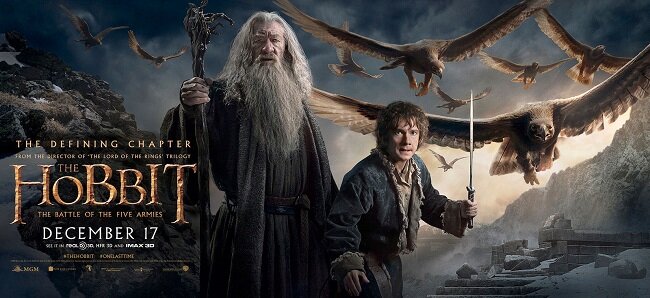
The Hobbit: The Battle of the Five Armies Extended Edition (2014)
This December marks the 20th anniversary of the release of The Fellowship of the Ring, the first instalment of Peter Jacksons' adaptation of J.R.R. Tolkien’s iconic novel, The Lord of the Rings. To celebrate this occasion, I shall post new reviews of the extended edition of all three films, as well as those of The Hobbit trilogy, which were made a decade later.
The Battle of the Five Armies is noticeably shorter than it's two predecessors, mainly because there is insufficient narrative to sustain the proceedings. Even the extended edition which adds a further 20 minutes to the running time, increasing it to 164 minutes, is mainly driven by one ongoing action sequence which is the titular battle. After the somewhat languid pace of the first movie and the bloated excess of the second, this further change of pace seems somewhat perplexing. Despite the more economical running time, events occur very rapidly. Perhaps a little too rapidly. It can be cogently argued that it somewhat diminishes the impact of some of them. Perhaps the biggest issue being the demise of Smaug. It comes promptly at the start of The Battle of the Five Armies and although spectacular, it quickly negates a major plot element.
This December marks the 20th anniversary of the release of The Fellowship of the Ring, the first instalment of Peter Jacksons' adaptation of J.R.R. Tolkien’s iconic novel, The Lord of the Rings. To celebrate this occasion, I shall post new reviews of the extended edition of all three films, as well as those of The Hobbit trilogy, which were made a decade later.
The Battle of the Five Armies is noticeably shorter than it's two predecessors, mainly because there is insufficient narrative to sustain the proceedings. Even the extended edition which adds a further 20 minutes to the running time, increasing it to 164 minutes, is mainly driven by one ongoing action sequence which is the titular battle. After the somewhat languid pace of the first movie and the bloated excess of the second, this further change of pace seems somewhat perplexing. Despite the more economical running time, events occur very rapidly. Perhaps a little too rapidly. It can be cogently argued that it somewhat diminishes the impact of some of them. Perhaps the biggest issue being the demise of Smaug. It comes promptly at the start of The Battle of the Five Armies and although spectacular, it quickly negates a major plot element.
Smaug is killed by Bard but his body falls on Lake Town leaving it in utter ruin. The survivors of Esgaroth are aided by the Wood Elves and both parties subsequently seek restitution from the Dwarves. The men of Lake Town hold the Dwarves accountable for their current situation and the Elves who harbour a longstanding grudge regarding outstanding debts that the Dwarves have not paid. However, Thorin refuses to help which leads to a diplomatic impasse. He summons his cousin Dain from the Iron Hills to provide reinforcements. In the meantime Azog then springs his trap and lays siege to Erebor and all camped outside, resulting in the battle between Dwarves, Elves, Men and Orcs. The film does resolve the major storylines, yet it does feel both a little rushed and contrived. Again the screenplay feels the need to reference and link to future events featured in The Lord of the Rings.
Lore purists will find The Battle of the Five Armies the hardest to stomach because Peter Jackson really does indulge his penchant for narrative simplification, restructuring events and the fetishization of weapons, armour and fantasy combat. The Fili, Tauriel, Legolas love triangle and associated fallout is simply too contrived and unengaging. The White Council's assault on Dol Guldur featuring a 92 year old Christopher Lee beating seven bells out of the Ringwraiths, although thoroughly amusing, does raise an eyebrow. The fact that you can conveniently ride from Lake Town to Mount Gundabad in a day and that Middle-earth is populated with Frank Herbert style giant worms, may also come as a surprise to the faithful. The less said about Beorn free falling from an eagle and turning into a Werebear on the way down, the better.
As I have mentioned in my previous reviews, the depiction of Thorin in these movies is woefully lacking, turning him into a broody, pouting, inaccessible caricature. This time round for want of a better description, Thorin goes a bit "Macbeth". I'll give credit where credit is due and state that Richard Armitage does provide a good performance. But the screenplay doesn't really do the character justice and the plot device about the "Dragon's sickness" is arbitrary to say the least. Yet every now and then, there are sequences and passages of dialogue that come directly from the book. Once again, for everything that Peter Jackson gets right, there's also something that is way off the mark. The pivotal point of the movie should have been Thorin's death but it lacks any emotional impact and is only saved by the presence of Martin Freeman.
Dain Ironfoot (Billy Connolly) makes an impressive entrance riding a War Boar and has an expanded role in the extended version. Beorn and Radagast appear briefly but serve no major purpose than to provide reinforcements to the climactic battle. And what on earth possessed Peter Jackson to kill off Stephen Fry so quickly in the story and yet keep Alfrid Lickspittle as some crass source of so-called comic relief? Mercifully, we still have stalwart performances from Martin Freeman and Sir Ian McKellen who do much of the heavy lifting. Lee Pace proves to be a more interesting character this time round, as Thranduil's motives prove to be less binary than those of Thorin Oakenshield. He tempers his desires for restitution when he sees the extent of the Elven dead and sees the folly of his actions.
As ever the set pieces are immaculately produced and push the violence levels for this kind of movie to the limit. They stay on the right side of the ratings board mainly because the bulk of the decapitations, impalements and bludgeonings happen to non-humans. The death of more central characters tend to be more discrete. The main problem with the frenetic action is that it strives to continuously outdo itself, resulting in scenes that tax the audience's credibility even for this genre of movie. For example Legolas climbs a flight of stone steps leading to a crumbling tower, literally as they fall away beneath him, proving that Elves are indifferent to the laws of physics. A better director would restrain themselves, rather than allow such self indulgence and excess. Also some of the mutilated Orcs and Trolls seem more at home in Clive Barker’s Hellraiser than in Tolkien’s The Hobbit.
If you like the aesthetic that Peter Jackson has created over the years, as well as grandiose spectacle, then The Battle of the Five Armies will prove to be an entertaining diversion. If you want anything more, then prepare to be disappointed. I find it ironic that a trilogy of movies about the adventures of Bilbo Baggins, seems so content to include so little of him on screen. By changing the shift of the story from his perspective, to that of the wider events in Middle-earth, something very important has been lost from these sprawling adaptations. Peter Jackson and his team may well be very knowledgeable in the works of Professor Tolkien but I do wonder if he has fully understood them. As I've said before, these movies are very much Jacksons’ interpretation of The Hobbit. I wonder if there would have been a greater emotional depth and perception of the source text, if these films had been directed by Guillermo del Toro as they were originally intended?


The Hobbit: The Desolation of Smaug Extended Edition (2013)
This December marks the 20th anniversary of the release of The Fellowship of the Ring, the first instalment of Peter Jacksons' adaptation of J.R.R. Tolkien’s iconic novel, The Lord of the Rings. To celebrate this occasion, I shall post new reviews of the extended edition of all three films, as well as those of The Hobbit trilogy, which were made a decade later.
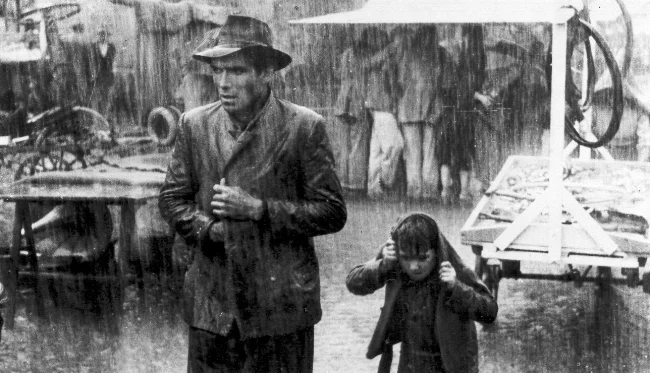
I love the medium of film immensely. I like a wide range of genres and will happily watch weighty human dramas as well as the worst sort of trashy exploitation fodder. The key to reconciling such widely differing types of cinema is to judge them within their own context. Therefore don't compare the respective worth of Citizen Kane with The Golden Voyage of Sinbad, or Bicycle Thieves with The Medusa Touch. So because of the nature of Peter Jackson's adaptation of The Hobbit, I am prepared to make concessions to the fact that it is a big budget fantasy blockbuster franchise. Also the source material from which the film derives is quite sparse, often being nothing more than footnotes, or summations of history. Thus there is scope for a lot of "adaptation", artistic license and creativity. Jackson got a lot of this right with The Lord of the Rings trilogy, over a decade ago. I do not believe that to be the case this time round.
This December marks the 20th anniversary of the release of The Fellowship of the Ring, the first instalment of Peter Jacksons' adaptation of J.R.R. Tolkien’s iconic novel, The Lord of the Rings. To celebrate this occasion, I shall post new reviews of the extended edition of all three films, as well as those of The Hobbit trilogy, which were made a decade later.
I love the medium of film immensely. I like a wide range of genres and will happily watch weighty human dramas as well as the worst sort of trashy exploitation fodder. The key to reconciling such widely differing types of cinema is to judge them within their own context. Therefore don't compare the respective worth of Citizen Kane with The Golden Voyage of Sinbad, or Bicycle Thieves with The Medusa Touch. So because of the nature of Peter Jackson's adaptation of The Hobbit, I am prepared to make concessions to the fact that it is a big budget fantasy blockbuster franchise. Also the source material from which the film derives is quite sparse, often being nothing more than footnotes, or summations of history. Thus there is scope for a lot of "adaptation", artistic license and creativity. Jackson got a lot of this right with The Lord of the Rings trilogy, over a decade ago. I do not believe that to be the case this time round.
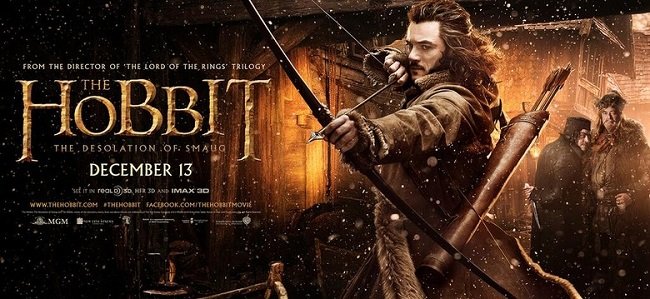
The Desolation of Smaug sets off at breakneck pace and continues at that speed throughout it's 186 minute running time. The extended edition is 25 minutes longer than the theatrical version. Again most of the new material is embellishments and does not significantly alter the storyline. Many of the new characters that are introduced are quite intriguing because the screenwriters have been effectively handed a blank canvas, due to the original text being so vague or simplistic (remember that Tolkien's book is a children's story). Thus we meet Beorn (Mikael Persbrandt) the skin-changer along with his Bear alter ego. This bold interpretation has him the last of his race, after being hunted for sport by the Orcs. The Elven King Thranduil, played by Lee Pace, is a greatly expanded role. He is shown as a ruler keen to secure his kingdom’s borders from the ills of the world and possibly someone who blames the Dwarves of Erebor indirectly for a family death. His riding an Elk is a wonderful visual embellishment and conceit. However, not all of the new ideas work. I found the concept of “the tombs of the ringwraiths” to be fundamentally lore breaking and foolish.
Modern film making, especially with regard to digital effects and editing afford directors far more visual freedom. As a result, the cinematography of Andrew Lesnie never remains still. He is unquestionably the master of crane and tracking shot, but it beggars the question are they always required? Would the story arc really suffer that much, if the pace slowed just for a while, to allow the viewer to digest the events that have happened so far? Tolkien certainly understood this issue of pace in his writing. Blame can also be laid at the door of editor Jabez Olssen, who constructs action scenes that are so fluid and rapidly cut together they are difficult to follow at times. And there are many such scenes in The Desolation of Smaug and they divert the story progression significantly.
After escaping the Orc, the Dwarves journey through Mirkwood only to be captured by the Elven King Thranduil (Lee Pace). Bilbo's battle with the spiders is concisely distilled. I loved the way he could understand their language when he put on the ring. Jackson excels at little embellishments like this. However, conversely his efforts to bolster the continuity with the previous trilogy can also be somewhat heavy handed. Bilbo's struggle with the allure of his newly found "precious" are far from subtle. The Dwarves' captivity and escape is deftly handled and I was even happy to go along with the introduction of Tauriel (Evangeline Lilly). I gritted my teeth and rolled with the return of Legolas (Orlando Bloom) and the contrived interaction he had with Gimli's Father, Gloin. The introduction of the Bard (Luke Evans) and the expanded role he plays within the story is quite inventive. I think it helps having him as a quasi Robin Hood figure with the Lake Town community makes him more plausible as a future leader. Stephen Fry’s cameo as the Master was indulgent but droll. The addition of Alfrid Lickspittle (Ryan Gage) as a comic foil is not so successful.
It was about two thirds into the movie that I began to feel that the narrative was becoming too ponderous and drawn out. It began to sag under the weight of its self satisfied approach. This was no longer Peter Jackson's adaptation of Tolkien’s The Hobbit, but simply Peter Jackson's The Hobbit. A lot of the “creative ideas” were not working and by the time the plot reached Smaug, I was fast losing interest. Tauriel “spiritual romance” with injured Kili (Aidan Turner) was stilted and frankly poorly written. Gandalf's excursion into Dol Guldur was melodramatic and contrived, especially the unnecessary manner that Sauron reveals himself to be the Necromancer. The idea of introducing Bolg, son of Azog as a second tier bad guy, to me just showed that the screenwriters (Peter Jackson, Fran Walsh and Philippa Boyens) are tying themselves in knots with their desire to dovetail in everything and anything from a lore perspective.
Now on the subject of Smaug “the chiefest and greatest of all calamities”, I must praise all at Weta Digital for creating the most awesome and truly terrifying dragon since Vermithrax Pejorative from Dragonslayer. Benedict Cumberbatch is perfect voice casting and I was initially impressed with the scenes between him and Bilbo. They captured the spirit of the book superbly. Sadly the director’s need for yet another inexorably long action scene that wasn't in the least required, soon killed my interest. Hence we had the preposterous attempts by Thorin and company to try and kill Smaug by smothering him in molten gold. The very climax of The Desolation of Smaug, that should have been the film’s crowning glory, was for me quite the opposite. I actually found myself wishing for the final thirty minutes of the movie to end as soon as possible.
The second movie in any trilogy is always a very difficult beast to master. There is a requirement for characters to grow and evolve. In box office terms there is a need to provide not just more of the same but increase the sense of spectacle. If done well you will potentially have a movie that is better than the first. Consider The Empire Strikes Back, Spiderman 2 or Aliens. Unfortunately this cannot be said of The Desolation of Smaug. New characters are lost in a cacophony of action scenes and mayhem. Be warned this movie pushes what you can get away within the PG-13 rating. And there are too many clumsy nods to The Lord of the Rings. It seems at times like a list of essential similarities, tropes and idioms is being ticked off. With regard to Jackson’s blank cheque to expand on story points and fill in the so-called blanks, there reached a point where I thought that he had simply strayed too far from what was canonically acceptable.
Like the previous film, one of my main criticisms is based upon the portrayal of certain characters. Bilbo has precious little to do in this instalment. Furthermore the significance of actions and his personal growth is not explored sufficiently. In the book it is this part of the story where the Dwarves begin to deem him a hobbit of merit and value his contributions to their quest. This theme is conspicuously lacking in The Desolation of Smaug. Also again I protest at Jackson's interpretation of Thorin Oakenshiled. In this film he becomes borderline unlikeable. The entire approach is just too binary and formulaic. This is a character that I am supposed to revere, admire and feel for. Again, as with the previous film, those feelings are reserved for Balin instead, played by the superb Ken Stott.
Raiders of the Lost Ark and movies like it have proven that blockbusters can be populist, stylish and entertaining as well as commercially successful. The Desolation of Smaug did indeed clean up at the box office. However it is a very self indulgent piece of cinema and sadly the embodiment of style over substance. Yes, I enjoyed facets of the production and found elements to praise. However, I will not allow my affection for the original book or for Peter Jackson's previous trilogy to colour my judgement. I have to call a spade a spade and say that The Desolation of Smaug is too focused on being a spectacle, at the expense of the story and cast. The extended edition does precious little to remedy this. It is too loud and sprawling and certainly will test the casual viewer’s patience.
Not Every Film Needs a Sequel
Sequels are not a modern cinematic invention, nor are lucrative film franchises. Son of Kong (1933) followed King Kong (1933) within a year. Universal ran a horror movie franchise starting with Dracula in 1931 which ran until 1956, ending with The Creature Walks Among Us. However, although striking it rich at the box office has always been the focus of mainstream Hollywood filmmaking, the studio system of the so-called golden age at least was committed towards making quality cinema and films were not just about brand recognition. As well as seeking big hits the major studios were also content to produce smaller budget films that were moderately successful. However, this approach changed substantially in the late sixties and early seventies when the major film studios of Hollywood were bought by corporations. Creativity and entertainment were subsequently tempered by a business strategy that saw art as a product to be sold and marketed.
Sequels are not a modern cinematic invention, nor are lucrative film franchises. Son of Kong (1933) followed King Kong (1933) within a year. Universal ran a horror movie franchise starting with Dracula in 1931 which ran until 1956, ending with The Creature Walks Among Us. However, although striking it rich at the box office has always been the focus of mainstream Hollywood filmmaking, the studio system of the so-called golden age at least was committed towards making quality cinema and films were not just about brand recognition. As well as seeking big hits the major studios were also content to produce smaller budget films that were moderately successful. However, this approach changed substantially in the late sixties and early seventies when the major film studios of Hollywood were bought by corporations. Creativity and entertainment were subsequently tempered by a business strategy that saw art as a product to be sold and marketed.
That’s not to say that good films haven’t been made since then, just that the current ethos makes things harder. The bloated structure inherent in modern business, means that as a script or concept passes through every corporate fiefdom, where “value is added” as everyone desperately tries to justify their existence in the chain of command. At present mainstream Western filmmaking is risk averse, while seeking infinite growth. Hence franchises, brand recognition, reboots, sequels and anything other than an original idea is looked to as a source of potential box office success. Perhaps the apex of this business strategy is the Marvel Cinematic Universe. A sprawling chain of films, more akin to a product line of toys. They are well made, formulaic and entirely self serving while marketed as a fan service. They certainly are entertaining to their fans but they are also profoundly changing the way films are perceived among those who have grown up with them.
I belong to a film related Discord server. One that tries to promote a broad spectrum of films from all countries and times. There was recently a big discussion around John Carpenter’s The Thing (1982) and it was very interesting to read the thoughts and opinions of those younger viewers who were not initially familiar with it. They knew it only by its reputation as being a horror movie milestone. After a specific weekend when everyone endeavoured to watch the film, the discussion picked up anew. Some of the reactions were quite surprising. A common “complaint” was that the nature of the mutating lifeform was never clarified in any detail. IE What was it, where did it come from and what did it want. Another recurring comment was regarding the ending. “Oh you can’t leave the story there. What happened next?” or words to that effect. And then there was the furious over analysis of the most trivial of plot points. Turns out people were looking for Easter eggs. Someone even watched the credits to see if there was a post credit sequence.
Simply put, there seems to be a broad cultural difference in one’s expectations about a film, based upon one’s age group and overall exposure to film. Because episodic cinema is now an integral aspect of big franchises, I understand why some people would see this as the industry standard. Yet not every story needs a further instalment. All too often sequels that try to extend a successful standalone film into a bigger franchise, just dilute the quality of the narrative. There are a few exceptions to this rule. Mad Max 2, Aliens and Psycho II, but by and large sequels tend to just tread familiar territory and add little that is new. A good standalone film is like a snapshot of life. In our own lifetime, we may have one single event that is radically different from daily life but once it passes, we return to the safe mundanity of our daily routine. The stories in films are somewhat like this. Unless of course you’re John McClane.
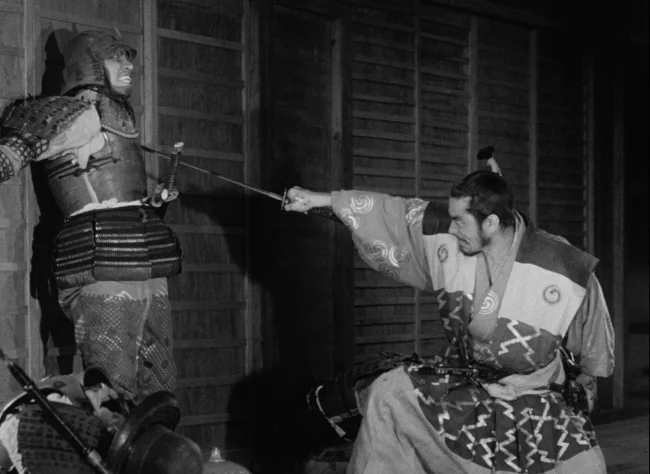
If a film is conceived from its pre-production to be the first in a franchise, then it has an impact on the way the story and the character arcs develop. Some instalment will inevitably be stronger and more compelling than others. The final film in a series also has to contend with meeting audiences expectations, which is a difficult thing to do. Another pitfall associated with any franchise is whether there will even be an end to the story, due to the law of diminishing box office returns. A regular film tells a complete story or provides as previously stated, a snapshot of a fictional world. The viewer at least has the satisfaction of having seen a complete and self contained cinematic work. Consider Akira Kurosawa’s Seven Samurai. It has a near perfect story arc which concludes in a definitive fashion. There is no need for a sequel because the film isn’t just about the characters or the deeds that they undertake. Its artistic merit resides within experiencing the film itself. Everything that there is to be gained is there already.
The Hobbit: An Unexpected Journey Extended Edition (2012)
This December marks the 20th anniversary of the release of The Fellowship of the Ring. The first instalment of Peter Jacksons' adaptation of J.R.R. Tolkien’s iconic novel, The Lord of the Rings. To celebrate this occasion, I shall post new reviews of the extended edition of all three films, as well as those of The Hobbit trilogy, which were made a decade later.
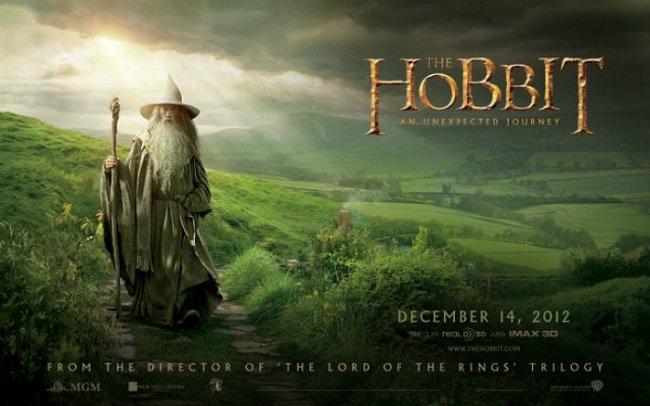
Firstly let me start by saying I think the word unexpected is very apt in respect of the first instalment of Peter Jackson's three part adaptation of Tolkien's prequel to The Lord of the Rings. It is genuinely surprising how well parts of the narrative had been adapted and interpreted. Similarly there are other aspects that are less successful. Overall the good outweighs the bad but only the most ardent fanboy or girl would think the movie flawless. When one considers its problematic production along with the change of directors, this is quite an achievement. I wonder how much of Guillermo del Toro’s material survived into Peter Jacksons, Fran Walsh and Philippa Boyens revised screenplay? Secondly, a decade on from The Lord of the Rings, there has been a further move away from physical visual effects and filming on photographic film. Both of these changes are noticeable in An Unexpected Journey but the presence of Peter Jackson and his very specific style of filmmaking maintains a very strong sense of continuity.
This December marks the 20th anniversary of the release of The Fellowship of the Ring. The first instalment of Peter Jacksons' adaptation of J.R.R. Tolkien’s iconic novel, The Lord of the Rings. To celebrate this occasion, I shall post new reviews of the extended edition of all three films, as well as those of The Hobbit trilogy, which were made a decade later.
Firstly let me start by saying I think the word unexpected is very apt in respect of the first instalment of Peter Jackson's three part adaptation of Tolkien's prequel to The Lord of the Rings. It is genuinely surprising how well parts of the narrative had been adapted and interpreted. Similarly there are other aspects that are less successful. Overall the good outweighs the bad but only the most ardent fanboy or girl would think the movie flawless. When one considers its problematic production along with the change of directors, this is quite an achievement. I wonder how much of Guillermo del Toro’s material survived into Peter Jacksons, Fran Walsh and Philippa Boyens revised screenplay? Secondly, a decade on from The Lord of the Rings, there has been a further move away from physical visual effects and filming on photographic film. Both of these changes are noticeable in An Unexpected Journey but the presence of Peter Jackson and his very specific style of filmmaking maintains a very strong sense of continuity.
Many of the production staff who worked on the original trilogy are present again for The Hobbit. Artists John Howe and Alan Lee as well as cinematography by Andrew Lesnie ensure that there’s a seamless continuation of the established aesthetic of Middle-earth. Howard Shore's magnificent score utilises leitmotifs we have previously heard in The Lord of the Rings trilogy. Furthermore, his new material is very strong and introduces some very portentous themes for the new characters. The film is technically superb but one expects nothing less from this film maker. Therefore I would like to focus more upon the narrative than the production design, because The Hobbit has been greatly expanded to accommodate its trilogy format. Is the story treated appropriately and presented in a way that will please both consummate fans and newcomers alike?
Broadly speaking I’d say yes. At least in this first instalment, An Unexpected Journey. If you are a Tolkien purist then you may be disappointed or upset by some of the changes that have been made. I sympathise with this perspective but understand the fact that Peter Jackson has to make the story accessible to a wider audience and that cinema is a very different medium to the written page. The key word is “adaptation” and the fact that film requires archetypes who have clear and traditional story arcs. Therefore characters and lore are altered to provide us with a definite hero and villain. That is not to say that the script deviates radically from the book, as it does not. The nuts and bolts of the story are there. But as with The Lord of the Rings, characters have to be refined and events compressed or augmented to satisfy the required tropes of cinematic “high adventure”.
Hence we just get a far more heroic Thorin Oakenshield played by an exuberant and somewhat bombastic Richard Armitage. The character is simplified and presented as someone to root for. He is an exiled King whose family has suffered death and ruin. We also get a specific enemy to boo and hiss in the form of albino orc Azog. The role of Radagast the Brown (Sylvester McCoy) is expanded upon and acts as a conduit between the central plot and the backstory of the rise of the Necromancer in Dol Guldur. McCoy’s performance is mercurial and quite engaging. Once again Ian McKellen dominates the screen as Gandalf, a role he seems sublimely suited for. The casting of Martin Freeman as the young Bilbo Baggins is similarly perfectly conceived. He plays the hobbit with an air of curiosity and confusion, as he strays from his comfortable home in The Shire, out into the wider and more dangerous world.
However I do think that An Unexpected Journey has a pacing issue. We start with a rather traditional framing device in which old Bilbo (Ian Holm) is writing his memoirs on the eve of his going away birthday as depicted in The Fellowship of the Ring. The story then shows the fall of Dale and Erebor to the Dragon Smaug (who is teased and not fully seen). Finally after establishing the entire point of Bilbo’s forthcoming adventure to retake Erebor, events turn to a younger Bilbo (Martin Freeman) and his subsequent meeting with Gandalf. Introducing the twelve dwarves is another problematic aspect of the film. Some are granted a fair amount of screen time where others are hastily added to the narrative. The use of songs directly from the text is another embellishment that although is laudable from a lore standpoint, is questionable from a cinematic perspective. It takes a while for the movie to get under way from Bag End. It's curious because Peter Jackson has managed to take lengthy passages of text in the past and condense them quickly and efficiently without any dramatic loss. Consider the Council of Elrond in The Fellowship of the Ring.
With regard to the expansion of text, some of it works very well. I found myself pleasantly surprised by Sylvester McCoy's portrayal of Radagast (although I still think the Bunny Sled is a bridge too far) as well as the depiction of the White Council. I loved the way Gandalf rolled his eyes at the arrival of Saruman (Christopher Lee) and the way that Galadriel (Cate Blanchett) clearly holds Mithrandir in high regard. The film also greatly benefits from its mainly British and Antipodean cast. The commonalities between cultures, idioms and dialect aids the realisation of Tolkien's written work. The humour present in the film is not out of place, especially in the way that Elves and Dwarves do not get along. However, where An Unexpected Journey succeeds the best is in the way it handles the most iconic scenes from the book. Bilbo's encounter with Gollum (Andy Serkis) is truly menacing and a highlight of the film. The exchange of riddles is superbly realised and the chemistry between the two performers is palpable.
Peter Jackson has gained a reputation over the years for being able to craft complex and frenetic action scenes. It has become a selling point. Sadly my biggest criticism about An Unexpected Journey, is that there are possibly too many action scenes, with some too close together. The escape from the Great Goblin (Barry Humphries) is a very complex and extravagant set piece. Blink and you’ll miss what’s happening as Goblin limbs and heads fly left, right and centre. As soon as Bilbo and the Dwarves escape the Misty Mountains there is immediately another fiery denouement, as Thorin and company climb a copse of fir trees to avoid a Azog and a pack of wargs. Although technically well implemented it is somewhat taxing to the senses and after a while actually becomes quite dull. I appreciate the need to end the film on a high point and dramatic climax but again there persists this sense of uneven pacing. I must add that the ending is tempered by a wonderful codicil involving Smaug that is certainly a wonderful taster of things to come.
I am a Tolkien fan and also someone who enjoys quality film making. Sometimes you have to curb your enthusiasm for much beloved source material, as the requirements of film as a medium are specific and different. “Show don’t tell” is the defining mantra of cinema which can be difficult when adapting lore heavy, narrative books. There are flaws in An Unexpected Journey but they do not derail the entire story. The film is still very creative and can be exciting. It is also quite strong in content with quite hard edged action sequences. At its heart still lies director Peter Jackson's love for the Professor's work and despite moments of indulgence, this still comes across. Compromise is not always a dirty word and in this case is possibly a necessary tool in bringing this story to as wide an audience as possible. However, Jackson still makes the mistake of reducing complex and venerable characters to somewhat binary representations. Thorin is not easy to warm too and it is Balin (Ken Stott) who comes across as far more sympathetic, likeable and wise.
The extended edition of An Unexpected Journey includes 13 minutes of additional material to the theatrical release, which brings the running time to 182 minutes. The extra scenes are mainly embellishments and I would argue that they do not dramatically alter the tone and feel of the film. My thoughts are mostly the same for both the theatrical and extended edition. I suspect the uneven pacing that I’ve referenced stems from Peter Jacksons’ extrapolation of the story. The White Council scenes are a great idea but they also smack of a need to “join the dots” between this trilogy and the former. The flashback to the Battle of Azanulbizar is also well conceived as a means to give weight to the recurring theme of the misfortunes of Durin’s folk and to bolster the kingly nature of Thorin. However, the fact that Thorin is subsequently somewhat bellicose undermines this. However, Martin Freeman stands out and often compensates for the excessive action scenes. Existing Tolkien fans are probably better disposed to this new trilogy by default. However, although entertaining, there is a somewhat forced quality to this adaptation of The Hobbit. Casual viewers may well find it a little too self serving.
JFK Revisited: Through the Looking Glass (2021)
I am not a fan of conspiracy theories, nor those who are heavily invested in them. There are many reasons to repudiate such ideas but for me the main one is just a simple observation on human nature. Any major conspiracy, plot or cover up requires large swaths of people to participate and remain quiet about the facts. Yet one of the most common attributes of the human condition is peoples total inability to shut up. Simply put, most conspiracy theories don’t hold water because someone would have blabbed. Hence, documentaries about how the moon landings were faked or how 9/11 was an “inside job” tend not to “butter any parsnips” with me. However, JFK Revisited: Through the Looking Glass is a surprisingly different beast. I was surprised by its measured approach and its inferred conclusion. Has old age mellowed the filmmaker Oliver Stone?
I am not a fan of conspiracy theories, nor those who are heavily invested in them. There are many reasons to repudiate such ideas but for me the main one is just a simple observation on human nature. Any major conspiracy, plot or cover up requires large swaths of people to participate and remain quiet about the facts. Yet one of the most common attributes of the human condition is peoples total inability to shut up. Simply put, most conspiracy theories don’t hold water because someone would have blabbed. Hence, documentaries about how the moon landings were faked or how 9/11 was an “inside job” tend not to “butter any parsnips” with me. However, JFK Revisited: Through the Looking Glass is a surprisingly different beast. I was surprised by its measured approach and its inferred conclusion. Has old age mellowed the filmmaker Oliver Stone?
The assassination of John F. Kennedy, the 35th President of the United States, in 1963 was a landmark event. The murder of a serving president is no small beer and it has left a deep scar on the psyche of America. Especially in light of JFK’s policy of domestic reform and diplomatic engagement with the nation’s supposed “enemies”. Almost immediately after the tragic events it became apparent that there were inconsistencies in the evidence gathered from the subsequent investigation. These have never really gone away or been satisfactorily explained, so it was inevitable that legitimate reservations by both the press and the public would eventually lead to conspiracy theories concerning the true nature of the shooting. Then in 1991, filmmaker Oliver Stone explored the subject in-depth with his drama JFK.
Thirty years later, the director and writer returns to the subject with the documentary JFK Revisited: Through the Looking Glass. Due to a great deal of information now being formally declassified by the US government and available for public scrutiny, new information has come to light that seems to indicate a specific culprit. It would appear that a great deal of evidence was amassed by the Warren Commission which investigated the assassination and anything that didn’t support the clear narrative of “a lone gunman, working alone” was simply kept out of the final report. It is this information that is scrutinised and presented in this two hour documentary. The first part, narrated by Whoopi Goldberg, focuses on the new evidence. The second part, narrated by Donal Sutherland, explores the potential motives of the suspected party.
As for the finger of blame, it points squarely at the CIA. Furthermore, it does so in the most unsensational manner. By the time JFK Revisited: Through the Looking Glass reaches its conclusion, the evidence seems to be tediously plausible. There are no hyperbolic theories about secret organisations or complex plots financed by foreign powers to shoot the president. Just a rather credible assertion that the head of the CIA and a few hawkish senior members of the military didn’t like Kennedy’s policies or political leanings. The fact that he wanted to curtail US involvement in Vietnam was seen as unacceptable, unpatriotic and very bad for the economy. Hence the documentary implies that existing CIA assets were used and that Lee Harvey Oswald was specifically chosen because he could be conveniently disavowed and presented as a crank, as he was approaching the end of his operational use.
JFK Revisited: Through the Looking Glass does get a little over excited at times. The documentary does seem in a hurry to supply fact after fact for the viewer’s edification. A pause in the narrative from time to time would help audiences digest what they are being presented. Regardless of the pace this documentary is never dull, nor does it adopt the strident tone that those who immerse themselves in conspiracy theories often do. Even if you don’t agree with the manner in which the new evidence is interpreted, JFK Revisited: Through the Looking Glass most definitely shows that the overall 1963/4 investigation was flawed and therefore questionable. And because many politicians, journalists and writers have been sceptical for so long, the overall “conclusion” seems very plausible because it is not in any way unreasonable or extreme. Oliver Stone is also right that the debacle over JFK still has an impact on US politics today. He claims that Trump is a symptom of the ongoing fallout.







Classic Movie Themes: Halloween
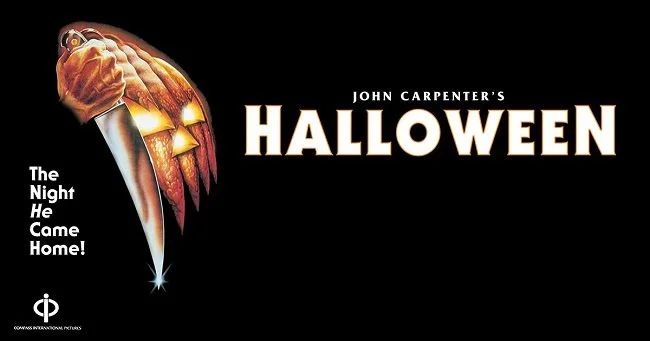
Halloween (1978) is both a genre and cinematic milestone. It made stars of Jamie Lee Curtis and director John Carpenter as well as kickstarting the slasher genre that dominated the box office for the next 15 years. Unlike many of the inferior imitations that followed in its wake, Halloween is not a gorefest but a far more suspenseful and unsettling film. It’s shocks and sinister atmosphere are the result of sumptuous panavision cinematography by Dean Cundey and inventive editing by Tommy Wallace and Charles Bornstein. Another invaluable asset to the film’s effectiveness is John Carpenter minimalistic synth and piano score which perfectly embellishes the film with an air of menace. After 33 years and various re-arrangements in subsequent sequels, the original Halloween Theme is still as effective today as it was when the film was first released.
Halloween (1978) is both a genre and cinematic milestone. It made stars of Jamie Lee Curtis and director John Carpenter as well as kickstarting the slasher genre that dominated the box office for the next 15 years. Unlike many of the inferior imitations that followed in its wake, Halloween is not a gorefest but a far more suspenseful and unsettling film. It’s shocks and sinister atmosphere are the result of sumptuous panavision cinematography by Dean Cundey and inventive editing by Tommy Wallace and Charles Bornstein. Another invaluable asset to the film’s effectiveness is John Carpenter minimalistic synth and piano score which perfectly embellishes the film with an air of menace. After 33 years and various re-arrangements in subsequent sequels, the original Halloween Theme is still as effective today as it was when the film was first released.
John Carpenter wanted a unique sound for Halloween despite the production’s modest budget. When composing the main theme he used the uncommon 5/4 time beat for a bongo drum and transferred that to piano, which resulted in the iconic melody. This uncommon sound works extremely well, clearly establishing a mood and tone that suits the film. Yet it also holds up well as a standalone piece of music. When used in the film, it is a practical audio cue to alert the audience to the presence of The Shape and potential onscreen danger. Yet the piece does not diminish in power, despite its repetition.The staccato piano rhythm with additional synthesizer chords combine to produce an evocative and infinitely flexible cue. It creates a palpable atmosphere for the film and its antagonist, yet it isn’t weighed down by excessive musical complexity.
30 years later and Halloween (2018) has proved to be a very interesting belated sequel. It features a new score by Carpenter, alongside his son, Cody Carpenter and godson Daniel Davies. The soundtrack revises the main theme and classic elements from the original as well as adding several new tracks. There is a broader use of contemporary synthesizers this time, as well as some interesting experimentation with guitar sounds. They add a real edge to a score which proves to be anything but an exercise in nostalgia. There is one cue that encapsulates the best elements of both the old and the new. The Shape Hunts Allyson. Featuring tremulous keyboards and punctuated witty grinding guitars and synths it captures an onscreen chase superbly. A variation of this cue was subsequently used at the climax of Halloween Kills (2021) and again is superbly effective in its powerful simplicity.







Finch (2021)
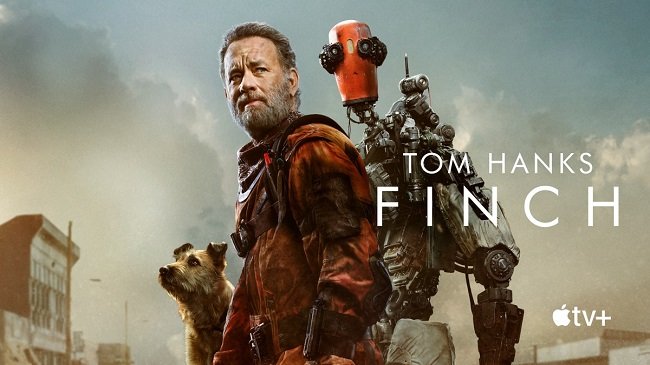
On paper Finch has little originality. The moment I read the plot synopsis and saw the first trailer I instantly thought of other such films as Silent Running, Short Circuit and Chappie. However, irrespective of its derivative concept and the fact it channels many of the major tropes of the genre, it does have three cards to play. Namely strong performances by Tom Hanks, Caleb Landry Jones and canine actor Seamus. Although not a genre milestone, Finch is a curiously pleasant post apocalyptic road movie. Despite travelling through the sun bleached vistas of a ravaged America, the story focuses on the three protagonists and their relationship. It is no small feat to find genuine sentiment in such a harsh environment and indeed in such a genre but Finch proves to be an engaging emotional journey. Once again the most effective explorations of the human condition are often through characters who are conspicuously not.
On paper Finch has little originality. The moment I read the plot synopsis and saw the first trailer I instantly thought of other such films as Silent Running, Short Circuit and Chappie. However, irrespective of its derivative concept and the fact it channels many of the major tropes of the genre, it does have three cards to play. Namely strong performances by Tom Hanks, Caleb Landry Jones and canine actor Seamus. Although not a genre milestone, Finch is a curiously pleasant post apocalyptic road movie. Despite travelling through the sun bleached vistas of a ravaged America, the story focuses on the three protagonists and their relationship. It is no small feat to find genuine sentiment in such a harsh environment and indeed in such a genre but Finch proves to be an engaging emotional journey. Once again the most effective explorations of the human condition are often through characters who are conspicuously not.
After a solar flare has destroyed the ozone layer, the planet Earth is a largely-uninhabitable wasteland scorched by ultraviolet radiation and subject to extreme weather events. Robotics engineer Finch Weinberg (Tom Hanks), lives with his dog Goodyear and a drone-robot Dewey in an underground laboratory in St. Louis. Whenever he ventures outside to search for supplies he is forced to wear an environment suit. Dying of radiation sickness, Finch builds an advanced humanoid robot to take care of his dog Goodyear once he dies. When a massive storm approaches St. Louis and threatens their safety, Finch, Jeff (as the robot name’s itself) Goodyear and Dewey head for San Francisco in a campervan. Due to their hasty departure, Jeff has only assimilated 72 percent of the data uploaded to him, leaving him with the mental capacity of a child. Despite his deteriorating health, Finch tries to teach Jeff about life and how to protect Goodyear. He also emphasises the dangers of the world that they live in.
Finch has solid production values and presents a credible vision of a world blighted by climate change. The CGI FX are at times understated, focusing on extreme weather and sun baked environments. Jo Willems cinematography and is both sweeping when dealing with the landscape and intimate when focusing on Finch and Jeff’s relationship. The screenplay by Craig Luck and Ivor Powell alludes to numerous big ideas and themes and is intelligent in subtle ways. The storm that drives Finch and his companions from his home is scheduled to last 40 days; a suitably biblical period of time. Yet despite the scope of the setting, Finch is content to think small in so far as characters and motivation. This is a story of a man with his own Father issues, struggling to become one himself. At the heart of the film is the perennial notion that when we come close to losing our own humanity, we find it again from the most unlikely sources. Performances are spot on and Hanks manages to smooth out some of the screenplays rough edges by the sheer weight of his on screen personality .
Some critics have focused upon what they see is a lack of jeopardy in the story. The fundamentals of survival are not focused upon as an ongoing problem. Food, water and power are not used to incur a sense of threat for the sake of the plot. The one encounter with humans is kept remote and we never directly see them. We hear their movement and finally they manifest themselves as the drivers of a car pursuing Finch. The film prefers to dwell on Finch’s fear of his fellow man, rather than the direct danger of his pursuers. The only time we get a wider understanding of man’s inhumanity to man is during a flashback sequence and that is mitigated to a degree by the idea that people do terrible things when hungry. What I believe that some reviews have overlooked is the fact that Jeff and Goodyear will be left alone when Finch dies and that is the central narrative source of concern.
I have no problems with sentiment in films if it is handled well. Too often it is not and US cinema has a penchant for mawkish, contrived, button pushing pathos rather than the more difficult, organically generated type. Fortunately director Miguel Sapochnik manages to avoid such pitfalls and when emotions come to a head, they are sincere and heartwarming. It makes a change to see the depiction of an artificial lifeform as an eager and curious child, as opposed to a psychotic killer or minor deity sent to save us. Overall, Finch is quite a satisfying post apocalyptic adventure, driven by characters and performances, rather than action and spectacle. Although it draws upon many familiar ideas, it still manages to provide an entertaining two hours and ends on a suitably upbeat note. It may also serve as a suitable starting point for viewers seeking similar genre offerings.





Broadening Your Cinematic Horizons
I haven’t been to the cinema since December 2019 when I saw the last Star Wars: The Rise of Skywalker. Increasing ticket prices, along with the pandemic have kept me away. But perhaps the biggest contributory factor to my ongoing cinematic abstinence has been just a lack of interesting films being released. My local multiplex has become a platform for mainly big cinematic franchises. Compared to the seventies and eighties, there is considerably less choice regarding the types of films being shown. I am not saying that a broad variety of films are no longer being made, because that is not the case. What has changed is the medium by which we view them. Human dramas, art house films, comedies and many other genres that don’t command major box office taking are no longer being shown theatrically and are finding a home elsewhere.
I haven’t been to the cinema since December 2019 when I saw the last Star Wars: The Rise of Skywalker. Increasing ticket prices, along with the pandemic have kept me away. But perhaps the biggest contributory factor to my ongoing cinematic abstinence has been just a lack of interesting films being released. My local multiplex has become a platform for mainly big cinematic franchises. Compared to the seventies and eighties, there is considerably less choice regarding the types of films being shown. I am not saying that a broad variety of films are no longer being made, because that is not the case. What has changed is the medium by which we view them. Human dramas, art house films, comedies and many other genres that don’t command major box office taking are no longer being shown theatrically and are finding a home elsewhere.
This change in the way consumers access “content” has already happened within both the TV and music industries. Previously, a broad, centralised market which meant a common exposure to a variety of material has now shifted to niche platforms, channels and stations. The perennial business mantra of “greater choice” has led to audiences finding what they like but at the cost of being aware of any other kind of material. With regard to cinema such changes also have consequences. The segregation of content to specific platforms means that at the very least you’re limiting your choice to big cinematic franchises and tentpole releases. However, at worst, it leads to a form of cinematic ignorance which then contributes to a decline in the art of filmmaking. Hollywood is not known for taking risks. Until superhero movies stop making them money, that is what they’re going to continue to produce.
I count myself fortunate, as I was raised during the seventies and the three major UK TV channels used to regularly show old movies and by that I mean material from the early thirties to the late sixties. It would often take several years for major cinematic releases to get their first broadcast on analog, terrestrial television. In the eighties, video rental subsequently bridged the gap affording an opportunity to watch more recent material within the home. Hence I had a great deal of exposure to a very broad range of films. In an age where there were no video games or internet, often I would watch something with my parents out of default of anything else to do. Yet like watching “Top of the Pops”, the UKs premier music show at the time, I was presented with a wide variety of genres. As a result, I became accustomed to differing acting styles that evolved over the years as well as the pace of editing.
Two other factors secured my love of film and made it more than just a casual pastime for me. The first was joining the film club at school. I was again very fortunate to go to a senior school that focused not only on academia but the arts as well. One chemistry teacher had an abiding love of cinema and used to show fairly recent films. Afterwards there would be a discussion about the plot and the techniques used. It was a most illuminating experience. The second was joining the British Film Institute and attending screenings of classic films at the National Film Theatre on the London Southbank. It was here that I saw such giants of cinema as Ray Harryhausen and Vic Armstrong. Enjoying such events with an audience of like minded people is also a key factor and something I’ll discuss further in this post. Cinema is not a lone experience. Much of its enjoyment comes from the group experience and then discussing things afterwards.
As someone who enjoys cinema and all manner of films, I like to encourage those who are similarly disposed towards the medium to broaden their cinematic horizons. This is not driven by elitist snobbery but more of a sense of “why miss out on so much good stuff”? For example, if you like cheese why just limit yourself to cheddar? If such a philosophy seems reasonable to you and you would like to become more experimental in your viewing habits, here are a few suggestions that may help you achieve that endeavour.
Do not put arbitrary limits upon what you will or won’t watch. That’s not to say that you should throw caution to the wind. Still exercise some sense of choice but temper it. If you like contemporary horror, then why not try one from the nineties or an earlier period? Take measured steps, rather than jump into the deep end but do step outside of your usual comfort zone.
Context is king. Film reflects the prevailing social views and conventions of the time. Culture has changed greatly over the last 100 hundred years. Therefore, modern audiences will often be confronted with opinions and ideologies that are very different to what they are now. Hence it helps greatly to cultivate a sense of detachment when watching older films. You can enjoy or at least appreciate the artistry of a film such as Gone With the Wind, without endorsing its dated racial representations and social philosophies. Film in many ways are invaluable historical documents (not as in Galaxy Quest, though) and a window on the past.
Watching a film as part of a group can radically change the overall viewing experience. Charlie Chaplin viewed alone can seem very dated, repetitive and even unfunny. But watching the same material with friends or as part of a wider audience can change the dynamic. Horror and comedy produce discernable emotions and we pick up on that both consciously and subconsciously. You may well find Chaplin far more approachable in such an environment. With this in mind, join a film club. Alternatively, watch a live stream and participate in a shared experience that way. Talk and discuss both before and after watching a film (but never during).
Seek out informed people on social media. Learning about the provenance of a classic film or finding out about its troubled production history can really add to your enjoyment. It also helps to become familiar with the basics of filmmaking. If you understand the essentials of editing, framing shots, script writing, narrative arcs and styles of acting, it allows you to appreciate why some films are either venerated or reviled.
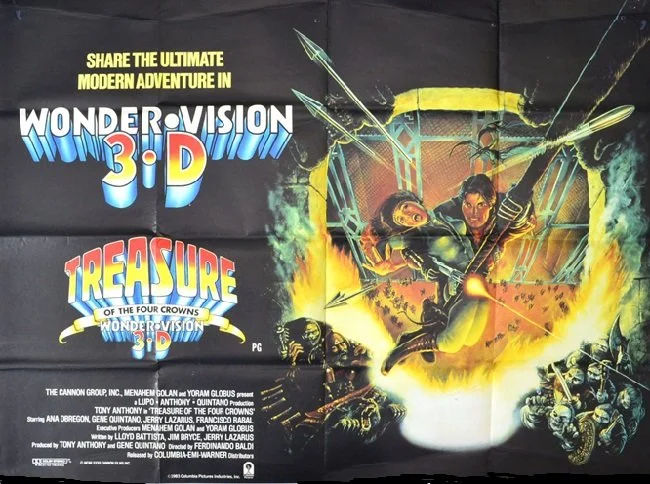
Eschew film snobbery. Cinema can be high art, mainstream entertainment and exploitative trash. It is perfectly feasible to be able to like and find merit in all of these manifestations. Also, don’t feel obliged to slavishly join the prevailing consensus of so-called “classics”. Don’t be deliberately contrary but if you don’t feel especially moved by a much loved film, then that’s fine. Just remember that the reverse is true. People are allowed to dislike the films you hold dear. Judge films on their own merit and within an appropriate context. Don’t make the mistake of comparing apples with oranges. One can admire Citizen Kane as well as enjoy the fun inherent in Treasure of the Four Crowns but to directly hold one up against the other is illogical.
If possible, find streaming platforms or TV channels that curate content that suits your needs. If you’re based in the UK then I wholeheartedly recommend Talking Pictures TV. It shows a wealth of old, obscure and even cult material. We also have the benefit of living in an age where most content can be watched in high definition. Seek out broadcasts and streams that show films in their correct aspect ratio, preferably without adverts and on screen graphics. However, don’t miss an opportunity to see something just because it’s not presented in an optimal fashion.
Finally, a love of film is like many other hobbies; inherently social. Talk about what you’ve watched and enjoyed. Write a blog, make videos on YouTube, or just chat on Twitter. Word of mouth and recommendations from friends can lead you to discover some real hidden gems (and a few turkeys). Don’t be afraid to experiment. If something doesn’t grab your attention then stop watching and try something else. Watching a film isn’t a legally binding contract in which once started, you’re compelled to continue to the end. As I said previously, why limit yourself. There are so many good films out there, from all over the world, covering every aspect of the human condition.
Revisiting Peter Jackson's The Lord of the Rings
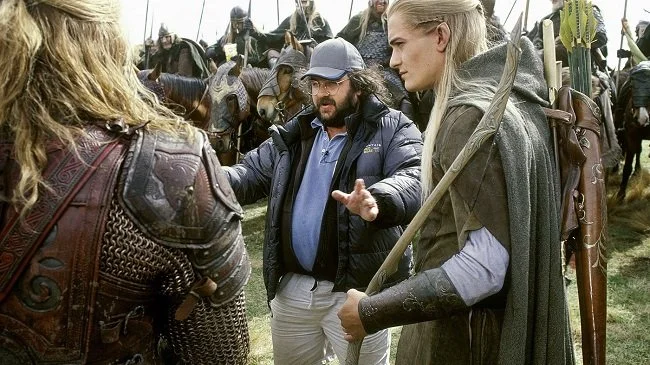
In December it will be the twenty year anniversary of the release of The Fellowship of the Ring. The first entry in Peter Jackson’s trilogy of film adaptations of Professor Tolkien’s iconic novel, The Lord of the Rings. I was utterly swept up in the hype and media frenzy that persisted for three years around these movies between 2001 and 2003. I certainly have fond memories of seeing each film on the first day of its release at the prestigious Leicester Square Odeon in London. Broadly speaking I was very impressed with all three films at the time of their release. However, over the years excitement and fandom has been tempered with a greater degree of critical analysis and appraisal. Having recently watched the Extended Editions of all three films, remastered in 4K, I now think it would be pertinent to revise my thoughts on them and repost them here on Contains Moderate Peril. This initial post is intended more as an overview on the trilogy. I shall write three new in depth reviews in due course.
In December it will be the twenty year anniversary of the release of The Fellowship of the Ring. The first entry in Peter Jackson’s trilogy of film adaptations of Professor Tolkien’s iconic novel, The Lord of the Rings. I was utterly swept up in the hype and media frenzy that persisted for three years around these movies between 2001 and 2003. I certainly have fond memories of seeing each film on the first day of its release at the prestigious Leicester Square Odeon in London. Broadly speaking I was very impressed with all three films at the time of their release. However, over the years excitement and fandom has been tempered with a greater degree of critical analysis and appraisal. Having recently watched the Extended Editions of all three films, remastered in 4K, I now think it would be pertinent to revise my thoughts on them and repost them here on Contains Moderate Peril. This initial post is intended more as an overview on the trilogy. I shall write three new in depth reviews in due course.
One of the most striking aspects of Peter Jackson’s films is the overall production design and the aesthetics of Middle-earth in the Third Age. Fans had already started becoming accustomed to a common visual approach to Tolkien’s work, care of John Howe and Alan Lee, the artists that publisher Harper Collins had been using for several years prior to 1999 when filming started. Inviting both to be artistic designers on the films provided a sense not only of continuity but also of a formal aesthetic across the entire intellectual property. Both artists have a knack for combining real world historical elements, with fantasy creating styles of armour, weapons, architecture and clothing that looks real and credible. There is incredible attention to detail present in every element of the production, just as there is in Tolkien’s source text.
In a similar vein, filming in New Zealand was a wise decision as it provides such a diversity of environment and ecosystems. It really is ideal for recreating much of Middle-earth. Jackson’s visual realisation of The Shire is very lush and green. Similarly, the Southern Alps of the South Island effectively capture the spirit of Tolkien’s descriptions of the Misty Mountains and are very imposing. Filming outside of the US also had definite cost benefits to the overall production. However, not every geographical aspect of Middle-earth is as well represented. I have always felt that the Rangitata Valley did not adequately capture the rolling grass plains of Rohan. To my mind it wasn’t green enough. Rohirric culture is based upon both Goths, Scandinavians and the medieval Anglo-Saxons and so I envisage Rohan being more akin to European grasslands. However, such criticisms are far from a deal breaker in respect of one’s appraisal of the overall trilogy.
A key element in Tolkien’s writing is the use of music and how it is an integral part of all the cultures of Middle-earth. Composer Howard Shore wisely made Tolkien’s songs a key part of his soundtrack. As well as writing leitmotifs for central characters and recurring story themes, he also incorporated Sindarin text and other dialects into much of the ambient music to further embellish scenes. It really adds to the overall feeling of “world building”. In many ways his music for all three films feels like a character in its own right. His music also allows for the compression of the narrative and to convey plot points. When Aragorn heals the sick after The Battle of the Pelennor Fields, the music succinctly reinforces the visual images. Rather than having to explain that "the hands of the king are the hands of a healer" what the film shows is further reinforced by the accompanying score. However, although this is a joy for Tolkien fans, its subtleties may be lost on the casual viewer.
Peter Jackson also made a wise decision by casting a group of international character actors rather than smothering his production with box office stars. Sean Connery as Gandalf may well have broadened the appeal of the films but ultimately his larger than life persona would have been a poor fit for the nuances of the character. Casting Ian McKellen was a far more practical choice and proved infinitely more beneficial as the actor utterly made the role his own. Christopher Lee was another cany choice. Not only was he an experienced and subtle actor but a Tolkien scholar as well. The narrative complexity of The Lord of the Rings feature films did not need the additional burden of celebrity stars bringing their own baggage to the production. Using lesser known actors allowed audiences to focus upon their performances rather than be distracted by their sheer presence.
Tolkien’s body of work is remarkable for the way it successfully manages to encompass era defining events, yet still being able to tell the story of those caught up in them. This is something a lot harder to do on screen. Peter Jackson excels at creating complex and large scale set pieces but sometimes they tend to dominate the proceedings at the expense of narrative depth. It was one of the criticisms that Christopher Tolkien made, who felt that the focus of the movie was on action and spectacle at the expense of story and lore. I feel the reality lies somewhere in the middle. Certainly the Extended Editions of all three films addresses this issue, reinstating story content that was excised from the theatrical edits. Ultimately viewers have to come to terms with the fact that these three movies are Jackson’s “adaptation” and reflect upon the meaning of that term.
Hence we come to the thorny issue of how any film version of a complex book leads to key plot elements and characters being either simplified or removed for reason of accessibility. Personally I don’t especially like the “streamlining” of certain characters for the sake of the wider story, although I understand why Jackson did this. I feel that his portrayal of Theoden is somewhat bland, portraying him as a grief stricken King who is indecisive. I also feel it is incorrect to depict Aragorn as conflicted with self doubt. But these were done to make the plot more straightforward and understandable among mainstream viewers, who are not familiar with the books. I do like the extrapolation of the roles and relationship between Saruman and Wormtongue. Also having several Orc characters act as narrative conduits also works well. It is sad that Gil Galad and Elendil were also watered down or removed but it would have bloated the screenplay too much to include all canonical characters.
Twenty years on, I am not quite so enamoured with Peter Jackson’s trilogy and feel that there are elements that could have been improved or handled differently. However, there is still an inherent power to his films and he still merits a great deal of praise for crafting such an imposing adaptation of a book that many claimed was “unfilmable”. He definitely got specific elements one hundred percent right. The Amazon television production set in the Second Age of Middle-earth that is currently being filmed, is maintaining the same design and visual aesthetic. Howard Shore is also involved to keep a sense of musical continuity. All of which raises the point, will the next adaptation of The Lord of the Rings be via the medium of streaming television, rather than cinema? Such a platform is not burdened by running time constraints. It could therefore facilitate a more comprehensive realistion. Whatever the future brings, I don’t think Peter Jackson’s film will be the only ever adaptation of The Lord of the Rings.

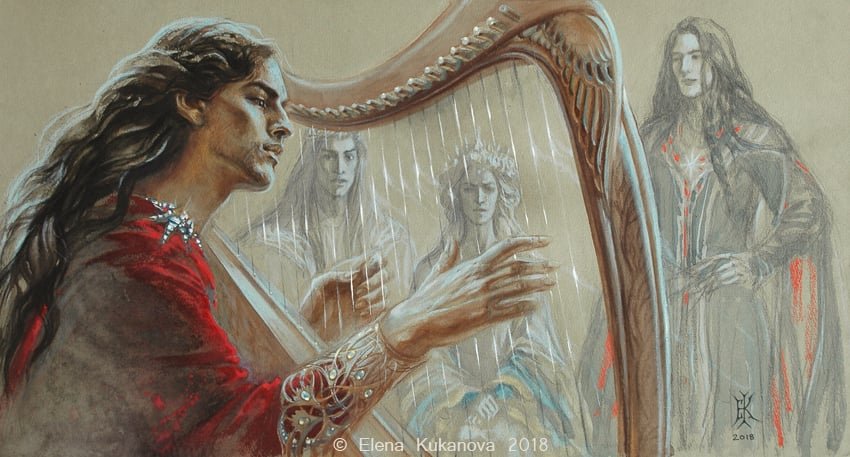

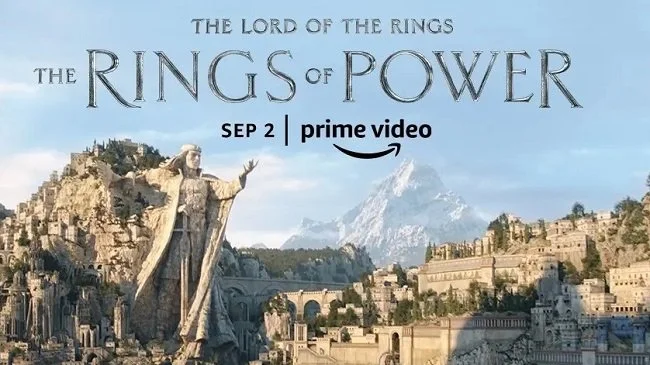

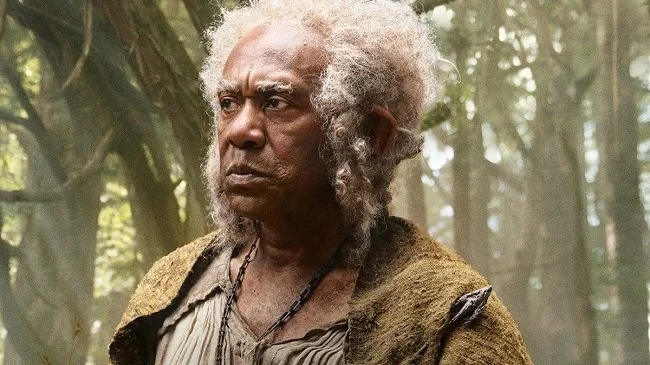


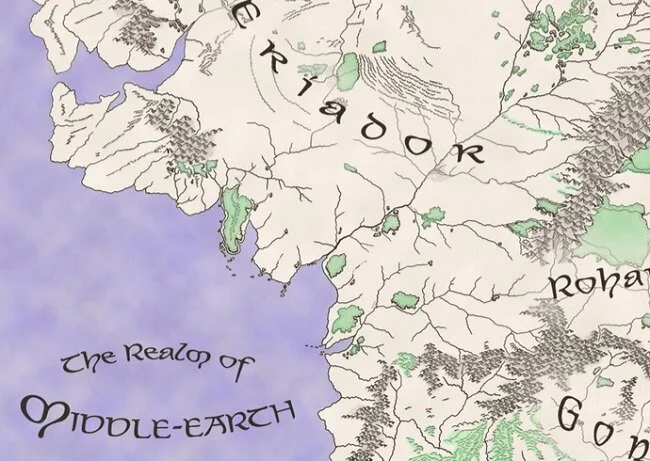
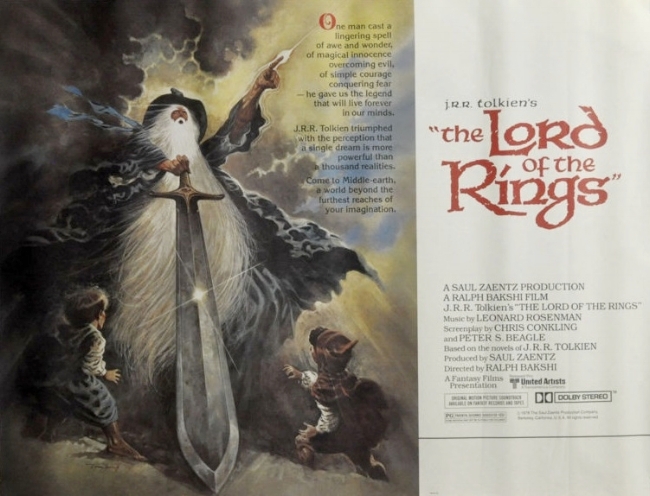

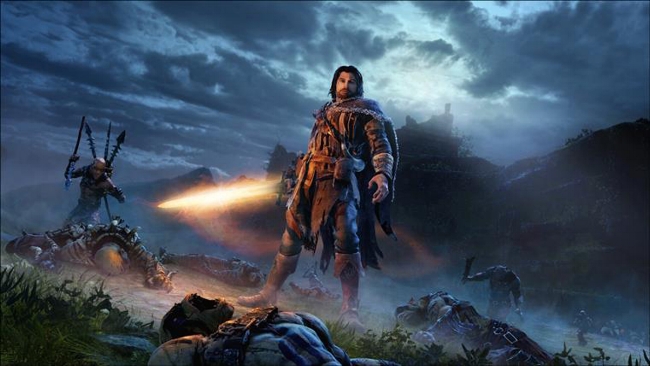
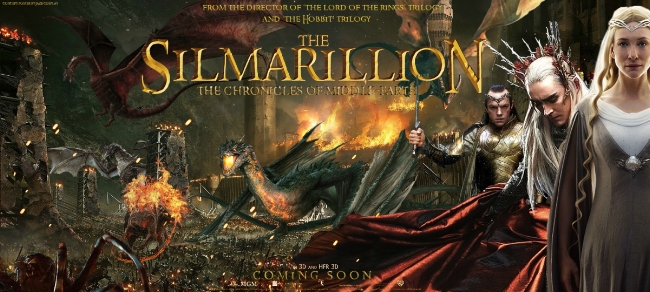
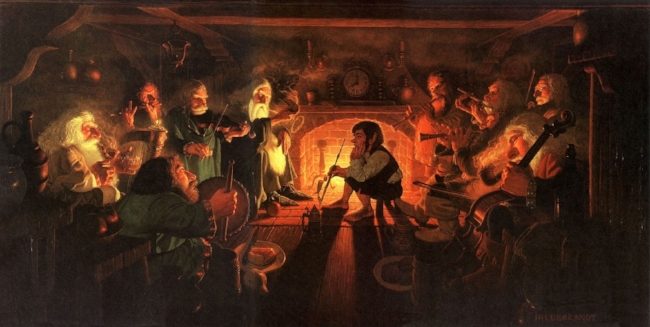
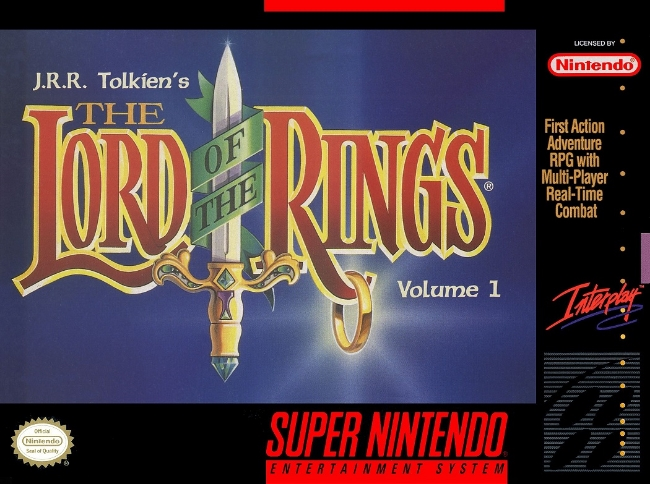
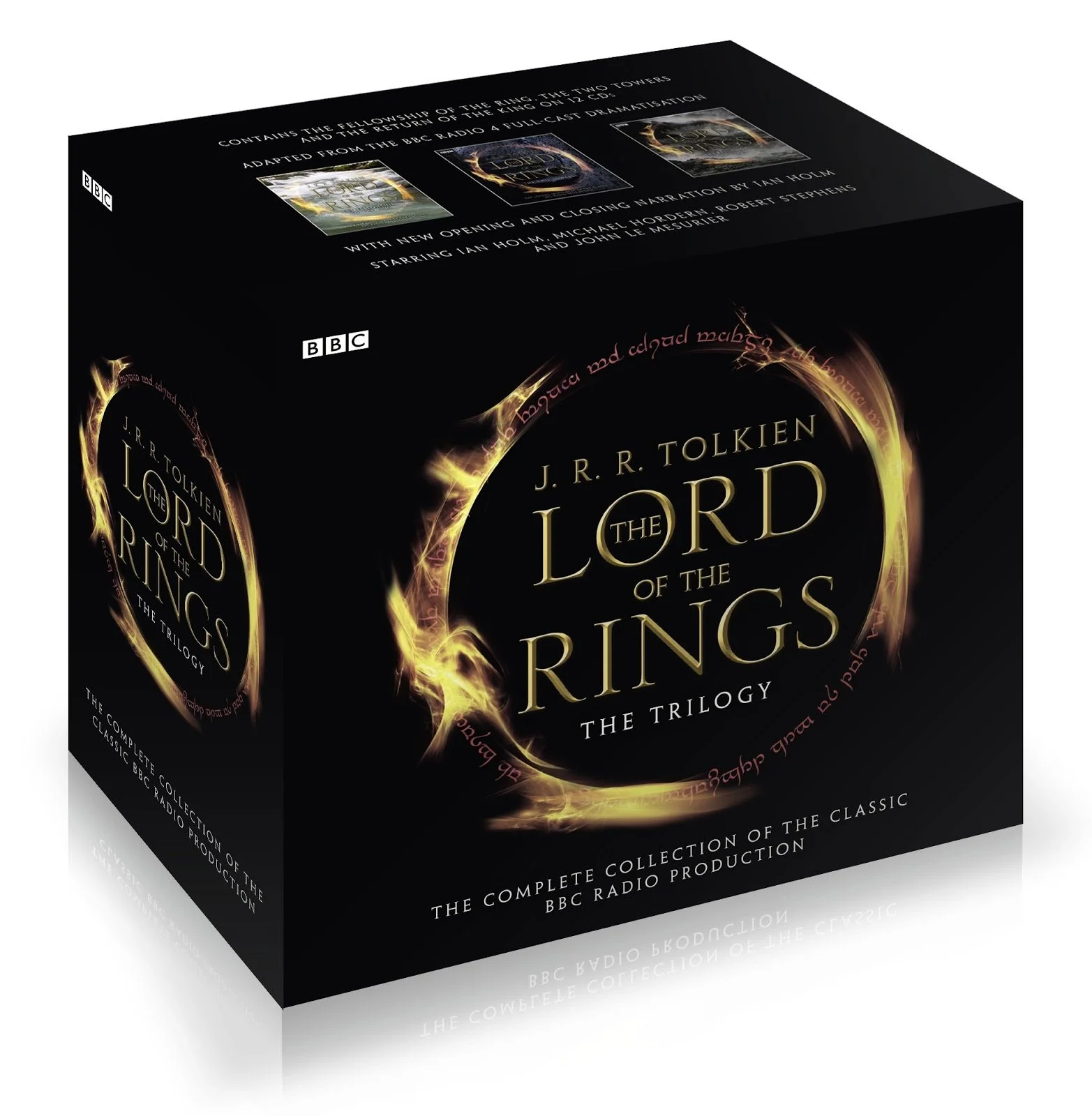
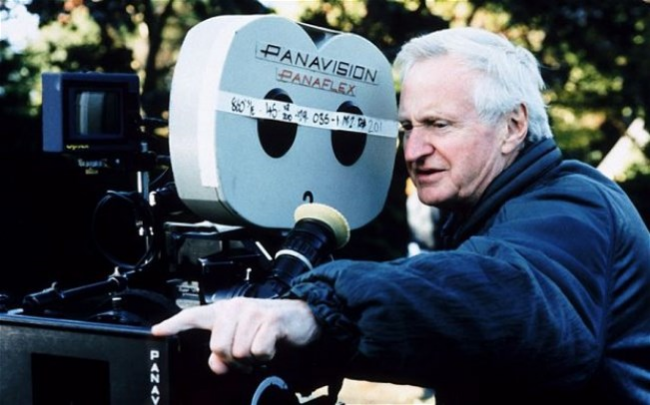

Retroactive Continuity
If you are old enough to remember the popular eighties “soap opera” Dallas, then you will no doubt be au fait with the infamous ninth season of the show. Having painted themselves into a corner with the death of a popular character, the writing team effectively revealed in the season finale that everything that had transpired in the previous thirty episodes had been “all a dream”. Let us take a moment to reflect upon the hubris of this “creative” decision. Did fans complain and roll their eyes at this utterly trite plot device? Yes, they most certainly did. But they also kept watching and the ratings increased. It got the writers out of a fix of their own making and allowed them to move on as if nothing had happened. It was a very high profile example of so-called retroactive continuity being used in a mainstream TV franchise and my first experience of such a narrative device.
If you are old enough to remember the popular eighties “soap opera” Dallas, then you will no doubt be au fait with the infamous ninth season of the show. Having painted themselves into a corner with the death of a popular character, the writing team effectively revealed in the season finale that everything that had transpired in the previous thirty episodes had been “all a dream”. Let us take a moment to reflect upon the hubris of this “creative” decision. Did fans complain and roll their eyes at this utterly trite plot device? Yes, they most certainly did. But they also kept watching and the ratings increased. It got the writers out of a fix of their own making and allowed them to move on as if nothing had happened. It was a very high profile example of so-called retroactive continuity being used in a mainstream TV franchise and my first experience of such a narrative device.
Nowadays, retroactive continuity or retcon is used far more often. It can be something as straightforward as replacing an actor for an established role with a new actor, as in Iron Man where James Rhodey Rhodes was first played by Terence Howard and then Don Cheadle. Or something more impactful such as rebooting a franchise as with Casino Royale in 2006 or Star Trek in 2009. Daniel Craig’s tenure as James Bond effectively began an entirely new five-film, self-contained story arc for 007 that ignored everything that had happened in the previous films. J.J. Abrams’ Star Trek used the narrative conceit of an alternative timeline as a means to tell new stories with existing characters. All of these examples successfully managed to retcon their respective franchises without any major critical or financial consequences. Most fans managed to successfully suspend their sense of disbelief and overcome any continuity or logical flaws. But the process isn’t always as seamless as this.
Take the Halloween horror film franchise. The original 1978 movie spawned a direct sequel Halloween II in 1981. This ended with the central antagonist dying in a fiery conflagration. Hence Halloween III: Season of the Witch (1982) is a standalone story. Creator John Carpenter then sold his interests in the franchise and so three inferior sequels were churned out based on the premise that Michael Myers had survived. Halloween IV: The Return of Michael Myers (1988), Halloween V: The Revenge of Michael Myers (1989) and Halloween VI: The Curse of Michael Myers (1995). Then in 1998 the first retcon took place with Halloween H20. This was a direct sequel to the first two films and ignored the story arc of parts 4 to 6. This was then followed by a further sequel Halloween: Resurrection in 2002. The franchise was then rebooted in 2007 with director Rob Zombie remaking the original film and then a sequel the following year. In 2018 a further retcon saw a new direct sequel to Carpenter’s original, confusingly called Halloween. A follow up, Halloween Kills, was released recently.
Retroactive continuity can be a useful tool in so far that changing established narrative events can provide a means to perpetuate a commercially viable and popular cinematic franchise. However there are consequences. Alien 3 featured a retcon that completely negated everything that happened in the previous movie, Aliens. A facehugger miraculously survived and managed to impregnate Ripley while she was in cryonic stasis. A convenient spaceship crash subsequently eliminated the characters of corporal Hicks and the child Newt. Something fans felt was especially mean spirited. The first season of the TV show Star Trek: Discovery saw a major visual and design retcon. Set just before the TOS era the production aesthetic was radically different from the established canon. Fans were not pleased and adjustments were made in the second season. And not only did Highlander II retcon the entire premise of the previous film, it subsequently retconned itself when three separate edits produced radically different stories.
The retcon has been an established part of film making for decades. Universal Studios used it extensively in the thirties and forties over the course of their commercially successful series of horror movies. Onscreen events were reframed to accommodate sequels, actors were replaced and lore bent to facilitate new plots. However, it can be cogently argued that the increase in retroactive continuity in recent years both in TV and cinema, ultimately stems from a creative system that is extremely risk averse. Experimentation with new and original concepts is an expensive gamble, compared to the proven track record of established franchises. Furthermore, if a franchise should suffer a less well received instalment, judicious retconning can be used to correct any mistakes. However retconning cannot cure an audience of boredom brought about by a continuous diet of the same content, just packaged differently. Ultimately, established trends run their course as the western and musical genres have proven.
Halloween Kills (2021)
Director and co-writer David Gordon Green scored a major hit with his direct sequel to John Carpenter’s 1978 masterpiece, Halloween. He managed to bring a fresh perspective and modern sensibilities to the slasher genre and furthermore gave us a very entertaining and tense horror film. It was a superb bookend to the original film and the only real criticism that could be levelled at it was the confusing decision to call it Halloween, just like the original, rather than something that clearly indicated that it was a sequel. Irrespective of this the film fared very well both with critics and audiences, becoming a box office hit. However, financial success all too often begets further demand. Hence a film that was originally intended to be a standalone and definitive sequel, suddenly morphed into the first instalment of a new trilogy. Halloween Kills is the second instalment of this new story arc and compared to its predecessor it is far less coherent and relevant.
Director and co-writer David Gordon Green scored a major hit with his direct sequel to John Carpenter’s 1978 masterpiece, Halloween. He managed to bring a fresh perspective and modern sensibilities to the slasher genre and furthermore gave us a very entertaining and tense horror film. It was a superb bookend to the original film and the only real criticism that could be levelled at it was the confusing decision to call it Halloween, just like the original, rather than something that clearly indicated that it was a sequel. Irrespective of this the film fared very well both with critics and audiences, becoming a box office hit. However, financial success all too often begets further demand. Hence a film that was originally intended to be a standalone and definitive sequel, suddenly morphed into the first instalment of a new trilogy. Halloween Kills is the second instalment of this new story arc and compared to its predecessor it is far less coherent and relevant.
Halloween Kills picks up immediately after the events of the previous film. Laurie Strode (Jamie Lee Curtis), her daughter Karen (Judie Greer) and her granddaughter Allyson (Andi Matichak) escape from Laurie’s house which they’ve set on fire with Michael Myers trapped inside. As they travel to hospital, firefighters attempt to put out the blaze and in doing so, accidentally set Michael free from the basement. He subsequently murders them all and heads into town. Meanwhile, a group of survivors from Michael’s original killing spree are commemorating their experience in a bar. This consists of Tommy Doyle (Anthony Michael Hall), Marion Chambers (Nancy Stephens), Lindsey Wallace (Kyle Richards) and Lonnie Elam (Robert Longstreet). After seeing news reports on Michael’s escape they decide that they can no longer live their life in fear and decide to go out and hunt him down. Back at the hospital Laurie undergoes emergency surgery. Karen is happy to leave matters to the authorities but Allyson wishes to join Tommy Doyle and seek revenge.
Halloween Kills has a strong pre-credit sequence in which an injured Officer Hawkins (Will Patton) is found after being attacked in the previous film. Hawkins then has a flashback to 1978 when he was a rookie officer and encountered Michael Myers for the first time. The continuity with John Carpenter’s original film is outstanding. The seventies aesthetic is strong and there are numerous references to events in the first film, such as the dead dog in the Myers house and the fact that Dr. Loomis shot Michael “six times”. The Dr. also makes an appearance courtesy of a double and not CGI. It is a gripping opening gambit with a sad subplot which sets the bar quite high. Unfortunately, this level of tension and narrative intrigue is not maintained throughout the remainder of the film. After the flashback events return to Haddonfield on 31st October 2018 and the film follows three story elements. Tommy Doyle searching for Michael, events in the hospital as Laurie recovers and of course Michael’s renewed murder spree.
Often horror films are guilty of not trying hard enough with regard to their story and characters. In the case of Halloween Kills, it is the opposite. It is clear that writers Scott Teems, Danny McBride and David Gordon Green want to imbue the proceedings with a sense of continuity and lore. This is a laudable endeavour but the net results are scenes that often feel like they are extremely contrived and elaborate set pieces that are designed to mirror a sequence from Carpenter’s original. We see this when Marion Chambers finds herself once again trapped in a car with Michael Myers on the roof, reaching for her through the windows. The early scene in the bar where the survivors of Michael’s first rampage meet up each year is filled with expository dialogue that just serves to bring the casual viewer up to speed with events.
Halloween Kills also reflects contemporary audience tastes and hence the set pieces and kills are not only violent but dwelt upon. Although creative and gory they are far removed from Carpenter’s original which was more focused on suspense. One series of murders features an amusing reference to Halloween III: Season of the Witch with the victims wearing Silver Shamrock masks. Yet despite many good ideas and call backs to the franchise’s lore, the story doesn’t fit together seamlessly. It often feels episodic and that it’s overreaching itself. The film’s main idea that fear is infectious and succumbing to it eventually turns us into monsters is never really developed beyond its initial premise. Late in the story arc, Officer Hawkins and Laurie (who is underused throughout the film) contemplate the nature of evil and exactly what Michael Myers is. But it comes far too late and again seems to have been introduced just so the writers can crowbar the story to fit a specific scene that the director decided to end on.
Halloween Kills is not a bad film. It is handsomely made and all involved in the production are obviously invested in trying to do the best that they can (the score is again outstanding). Instead I think over ambitious is a farer and more accurate label. If you are a casual viewer and not invested in this franchise, then you will get an adequate horror film with some strong shocks. But when viewed in comparison with the 2018 film, this instalment undoes much of its good work in revitalising the story and finding new angles to explore. Hence fans of the first movie are inevitably going to be disappointed. Essentially Halloween Kills feels like it is treading water until its next instalment Halloween Ends; a problem that can sometimes blight the middle film in a trilogy. Therefore some viewers may prefer to dispense with this new story arc and simply view the 1978 film as a standalone story. If you seek a definitive conclusion, perhaps you can find that in Halloween II (1981).
Bloodbath at the House of Death (1984)
During the early eighties Kenny Everett was one of the most popular comedians on UK television. His mix of “zany” characters, slapstick and innuendo filled the gap between traditional comedians and their sketch show format and the anarchy of the new alternative comedy scene. Therefore his foray into feature films in 1984 was a logical progression of his growing success. Bloodbath at the House of Death was conceived as a satire on the Hammer Horror genre, although the script by Barry Cryer and Ray Cameron touched upon everything from An American Werewolf in London, Alien, The Amityville Horror, The Legend of Hell House and The Entity. Featuring a solid cast of British character actors and a cameo appearance by the great Vincent Price, on paper the film had all the trappings of a potential box office success. Sadly, it failed to meet expectations and was savaged by the UK press who used it as a means to attack Kenny Everett for his perceived transgressions.
During the early eighties Kenny Everett was one of the most popular comedians on UK television. His mix of “zany” characters, slapstick and innuendo filled the gap between traditional comedians and their sketch show format and the anarchy of the new alternative comedy scene. Therefore his foray into feature films in 1984 was a logical progression of his growing success. Bloodbath at the House of Death was conceived as a satire on the Hammer Horror genre, although the script by Barry Cryer and Ray Cameron touched upon everything from An American Werewolf in London, Alien, The Amityville Horror, The Legend of Hell House and The Entity. Featuring a solid cast of British character actors and a cameo appearance by the great Vincent Price, on paper the film had all the trappings of a potential box office success. Sadly, it failed to meet expectations and was savaged by the UK press who used it as a means to attack Kenny Everett for his perceived transgressions.
In 1975 Headstone Manor, a "businessman's weekend retreat and girls summer camp", is waylaid by a group of satanic monks who kill all 18 residents. Eight years later, Doctor Lukas Mandeville (Kenny Everett) and Doctor Barbara Coyle (Pamela Stephenson) are sent to investigate radioactive readings in the area that have been traced to Headstone Manor. The manor is known by locals as the House of Death. Along with fellow scientists Elliot Broome (Gareth Hunt), Stephen Wilson (Don Warrington), John Harrison (Jone Fortune), Sheila Finch (Sheila Steafel), Henry Noland (John Stephen Hill) and Deborah Kedding (Cleo Rocos), Mandeville and Coyle set up their equipment in the house and await any developments. Meanwhile the Sinister Man (Vincent Price), a 700-year-old Satanic priest, prepares a rite in the nearby woods to purge the house of its unwanted guests.
The most obvious flaw in Bloodbath at the House of Death is its poor script, which is a surprise considering the involvement of veteran writer and comedian Barry Cryer. A satire of this nature needs a constant barrage of visual and verbal gags, as well as the humour derived from the main story. Blazing Saddles achieves this perfectly. Here there just aren’t enough jokes and out of those on offer, many fail to land. There are a few scenes that show promise. Mandeville and Coyle visit a local pub which is very much in the idiom of The Slaughtered Lamb from An American Werewolf in London. He gets into an argument with the barmaid regarding exactly how many people were murdered at Headstone Manor. More and more people join in, calculators are used and the confusion grows. It all culminates in a drunken song in which the entire pub recounts the murders to the tune of The 12 Days of Christmas. Sadly these sort of well conceived vignettes are few and far between.
All too often Bloodbath at the House of Death falls back on easy gags. Doctor Coyle encounters an amorous poltergeist which provides an opportunity for some nudity. There are also some cheap gore effects which are presented more for amusement than shock, such as a decapitation by can opener. The presence of Vincent Price (telling one of his underlings to “piss off”) does a little to elevate the proceedings but he is gone too quickly. And of course, this being the eighties we have two upper class comedy homosexual scientists, because that is “funny” by default. Why Kenny Everett, a gay man himself, accommodated such a pointless embellishment is somewhat odd. The final twenty minutes of the film in which doppelgängers of all the scientists attempt to kill and replace the originals leads to a lot of confusion and at one point a major continuity error. The head of the BBFC at the time, James Ferman, thought the reels had been shown out of order.
Hence, with the greatest will in the world, Bloodbath at the House of Death cannot be held up as an overlooked classic. This low budget production seems to have been made rather quickly to capitalize upon Kenny Everett’s success and therein probably explains the lacklustre screenplay. However, as mentioned earlier, the film was pilloried by the UK press far beyond it’s obvious failings. This is due to Kenny’s appearance in 1983 at the Young Conservatives Conference, prior to the general election held later that year. Goaded by Michael Winner, Kenny made several quips that although funny, were not really appropriate for such an event. Poe faced members of the establishment then deliberately took them out of context and turned upon him. The film provided a further opportunity to continue this public scolding the following year. Thus, Bloodbath at the House of Death was quickly withdrawn from UK cinemas due to poor performance. It now serves as an interesting cinematic curiosity. An example of how success on TV doesn’t always translate to the big screen.
Night of the Animated Dead (2021)
George A. Romero’s Night of the Living Dead is a true genre milestone that is praised not only by horror film fans but mainstream critics alike. If you are interested in watching an intelligent, well researched and entertaining documentary about the film’s provenance and cultural impact then I thoroughly recommend Birth of the Living Dead (2013) by Rob Kuhn. It tells you pretty much all you need to know about why this classic film is so important. As for Night of the Living Dead itself, it still holds up well after 53 years. It is the immediacy and relatability of the premise and overall story that still makes the film relevant. The zombies are purely a “MacGuffin” and the real focus of the plot is how people behave under pressure in life threatening situations. It’s a film about how we can react to the same situation differently and how cultural baggage and the need for people to be “right”, hinders co-operation and thwarts progress.
George A. Romero’s Night of the Living Dead is a true genre milestone that is praised not only by horror film fans but mainstream critics alike. If you are interested in watching an intelligent, well researched and entertaining documentary about the film’s provenance and cultural impact then I thoroughly recommend Birth of the Living Dead (2013) by Rob Kuhn. It tells you pretty much all you need to know about why this classic film is so important. As for Night of the Living Dead itself, it still holds up well after 53 years. It is the immediacy and relatability of the premise and overall story that still makes the film relevant. The zombies are purely a “MacGuffin” and the real focus of the plot is how people behave under pressure in life threatening situations. It’s a film about how we can react to the same situation differently and how cultural baggage and the need for people to be “right”, hinders co-operation and thwarts progress.
The legacy of Night of the Living Dead is far reaching. It turned zombies from a minor horror subset into an entire genre of their own and propagated the idea of the “zombie apocalypse”. A plot device that can be used to scrutinise and explore all the various facets of the human condition or to provide an endless litany of gore and body horror. The central premise of Romero’s film lends itself to reinvention and interpretation. It has already been officially “remade” in 1990 which added an interesting feminist angle to the story. And there have been numerous unofficial remakes and variations on the same theme from all over the globe. All add something to the basics of the story. Which brings me on to Night of the Animated Dead (2021). The title clearly sets out the film’s pitch. This is an animated feature film remake which closely follows the narrative structure of the original.
According to director Jason Axxin “This is a remake of the original movie. It’s essentially a way to make a classic more accessible to modern audiences. This is in color and there’s a lot more gore and violence. If you were ever hesitant to watch the original film, this is the version to see. It’s a fast-paced roller coaster ride of violence”. Frankly I find this statement and its premise somewhat spurious. Is Night of the Living Dead really outside of a modern audience's frame of reference? If so, that doesn’t say a lot for the average cinema goer. However, if we are to take Axxin’s comments in good faith, the only credible comparison I can come up with is that this version of Night of the Living Dead is intended to be the cinematic equivalent of a Reader’s Digest Condensed Books. A streamlined and somewhat lurid distillation of Romero’s vision. It is also devoid of any character and is possibly the most redundant film I’ve seen since Gus Van Sant’s remake of Psycho in 1998.
Despite having a competent voice cast, featuring Dulé Hill, Katharine Isabelle, Josh Duhamel, Nancy Travis, James Roday Rodriguez, Jimmi Simpson and Will Sasso, the animation style lacks any distinction or innovation. Classic scenes are lovingly recreated but the overall design slavishly adheres to that of the 1968 film and therefore fails to add anything new and say anything different. The minimalist style doesn’t really bring the story or themes into sharp relief and the character designs are somewhat lacking. The screenplay is credited to John A. Russo who wrote the original, as it is a verbatim summary of the 1968 version. The score by Nima Fakhrara is used sparingly and is evocative of the library music that Romero used. As for the “gore” it lacks any real impact due to its rather crude realisation. It comes off as a rather unnecessary embellishment.
I appreciate that there were probably budgetary restrictions that had an impact on the production. Setting aside such considerations, Night of the Animated Dead provides a simplified, less nuanced version of Night of the Living Dead. It hits all the essential beats of Romero’s classic but offers nothing beyond that other than its own inherent novelty. The animation is functional but far from accomplished. That said, Night of the Animated Dead is not an utter disaster. It manages to hold your interest. However, a film being mildly engaging due to its pointlessness is not really a great selling point. If you are a diehard horror fan who is curious to see an ill conceived project, then by all means watch Night of the Animated Dead. But I cannot recommend it in any way as a substitute to the original. At best it is just a minor footnote that serves to highlight the merits of the 1968 version and the talent of George A. Romero.





The Thomas Crown Affair (1968)
Millionaire businessman Thomas Crown (Steve McQueen) arranges for four men to steal $2,660,527.62 from a Boston bank. The men, who have never met before or seen Crown, successfully carry out the robbery. A fifth man then transports the stolen money and dumps it in a cemetery trash can. Crown retrieves the money, flies to Geneva and deposits it in a Swiss bank account. Eddy Malone (Paul Burke), the Boston police detective in charge of the case makes no progress until the bank’s insurance company assigns him one of their top investigators, Vicki Anderson (Faye Dunaway). Anderson thinks like a thief and works based upon her instincts. Looking through the evidence, she deduces that Crown is the culprit, potentially committing crimes just for amusement. Anderson subsequently meets Crown socially. Despite the situation and their respective positions, they are immediately attracted to each other and begin a relationship.
Millionaire businessman Thomas Crown (Steve McQueen) arranges for four men to steal $2,660,527.62 from a Boston bank. The men, who have never met before or seen Crown, successfully carry out the robbery. A fifth man then transports the stolen money and dumps it in a cemetery trash can. Crown retrieves the money, flies to Geneva and deposits it in a Swiss bank account. Eddy Malone (Paul Burke), the Boston police detective in charge of the case makes no progress until the bank’s insurance company assigns him one of their top investigators, Vicki Anderson (Faye Dunaway). Anderson thinks like a thief and works based upon her instincts. Looking through the evidence, she deduces that Crown is the culprit, potentially committing crimes just for amusement. Anderson subsequently meets Crown socially. Despite the situation and their respective positions, they are immediately attracted to each other and begin a relationship.
The Thomas Crown Affair is neo noir and a microcosm of Hollywood progressive cinema from the late sixties. It has a French cinematic aesthetic in its lighting and framing. Haskell Wexler’s cinematography is very fluid. The film makes extensive use of split screen and "multi-dynamic image technique", images shifting on moving panes. Director Norman Jewison directs confidently and with style focusing often on what is not being said, rather than what is. McQueen and Dunaway are charismatic and beautiful. They exude sex appeal and the pair carry what is essentially a dialogue light love story, through their onscreen presence. Noel Harrison’s performance of the song, The Windmills of Your mind, is suitably haunting and alludes to the complexities of Thomas Crown’s personality. It is all very arty, drawing upon all the prevailing cinematic trends and tropes of the time.
All of which is why I found The Thomas Crown Affair to be an interesting example of filmmaking from the sixties, rather than being an interesting film per se. Pop culture has evolved and the concept of the millionaire playboy and their “jet set” lifestyles is no longer universally admired and desired. Millionaires are now more often and not seen as Bond villains or at the very least, socially and emotionally dysfunctional. Hence the premise of The Thomas Crown Affair is dated with its self indulgent playboy master criminal. The more interesting aspect of the screenplay by Alan Trustman is the exploration of the “burden of wealth” and how having everything means you have nothing. Sadly, this is not explored sufficiently, as is the subplot about Crown’s dead wife. The bittersweet ending does work well and still rings very true. But the journey to this point is far too enamoured with presentation rather than feelings.
Perhaps the most problematic aspect of The Thomas Crown Affair is the soundtrack by French composer Michael Legrand. Norman Jewison originally wanted Henry Mancini to write the score for the film but he was unavailable and so recommended Legrand. His jazz heavy music was intentionally written for the rough cut of the film. Hence it had to be edited to fit on screen events in the final cut, which further makes the music an incongruous match. Plus jazz is a very broad church, musically speaking. Lalo Schifrin’s score for Bullitt, released the same year as The Thomas Crown Affair, is still cool as hell and funky. Legrands’ approach is far less melodic and far more kinetic. It is often very intrusive and frankly distracting. It ultimately makes a problematic film, even harder to watch for a modern audience. I may give the 1999 remake a watch to see if it handles the subject any better.
Yet More Cult Movie Soundtracks
Tenebrae (1982) is probably Dario Argento’s most accessible “giallo” for mainstream audiences. Although violent, it is not as narratively complex as Deep Red (1975) or as bat shit crazy as Phenomena (1985). The story centres on popular American novelist Peter Neal (Anthony Fanciosa) who is in Rome to promote his latest book. Events take a turn for the worst when a series of murders appear to have been inspired by his work. The plot twists and turns, the director explores themes such as dualism along with sexual aberration and blood is copiously spattered across the white walled interiors of modernist buildings. It is slick, disturbing and has a pounding synth and rock score by former Goblin members, Claudio Simonetti, Fabio Pignatelli, and Massimo Morante.
Tenebrae (1982) is probably Dario Argento’s most accessible “giallo” for mainstream audiences. Although violent, it is not as narratively complex as Deep Red (1975) or as bat shit crazy as Phenomena (1985). The story centres on popular American novelist Peter Neal (Anthony Fanciosa) who is in Rome to promote his latest book. Events take a turn for the worst when a series of murders appear to have been inspired by his work. The plot twists and turns, the director explores themes such as dualism along with sexual aberration and blood is copiously spattered across the white walled interiors of modernist buildings. It is slick, disturbing and has a pounding synth and rock score by former Goblin members, Claudio Simonetti, Fabio Pignatelli, and Massimo Morante.
One Million Years B.C. (1966) is a delightful collaboration between Hammer Studios and stop motion animation legend Ray Harryhausen. It is the tale of how caveman Tumak (John Richardson) is banished from his native Rock tribe and after a long journey encounters the Shell tribe who live on the shores of the sea. It’s historically inaccurate, with dinosaurs, faux prehistoric languages and Raquel Welch in a fur bikini. It is also great fun and features a superbly percussive and quasi-biblical themed score by Italian composer Mario Nascimbene. Nascimbene was an innovator and often incorporated non-orchestral instruments and random noises, such as objects being banged together or clockwork mechanisms, into his music to underpin the stories it was telling. There is a portentous quality to his main opening theme as the earth is created and primitive man emerges.
Get Carter (1971) is a classic, iconic British gangster film featuring a smoldering performance by Michae Caine. The musical score was composed and performed by Roy Budd and the other members of his jazz trio, Jeff Clyne (double bass) and Chris Karan (percussion). The musicians recorded the soundtrack live, direct to picture, playing along with the film. Budd did not use overdubs, simultaneously playing a real harpsichord, a Wurlitzer electric piano and a grand piano. The opening theme tune, which plays out as Caine travels to Newcastle by train, is extremely evocative and enigmatic with its catchy baseline, pumping tabla and echoing keyboards. The music is innovative and a radical change from the established genre formula of the previous decade which often featured a full orchestral score.
Witchfinder General (1968) is an bleak and harrowing exploration of man’s inhumanity to man, presented in a very dispassionate fashion. Matthew Hopkins (Vincent Price) is an opportunistic “witch-hunter”, who plays upon the superstitions of local villagers in remote East Anglia and takes advantage of the lawless times, brought about by the English Civil War. Price’s performance is extremely menacing and his usual camp demeanour is conspicuously absent. Director Michael Reeves paints a stark picture of the treatment of women in the 17th century. Yet despite the beatings, torture and rape, composer Paul Ferris crafts a charming and melancholic soundtrack. There is a gentle love theme that has subsequently been used in the low budget Vietnam War film How Sleep the Brave (1981) and even featured an advert for Vaseline Intensive Care hand lotion in the late seventies.
Journey to the Far Side of the Sun AKA Doppelgänger (1969) is the only live action feature film that Thunderbirds creator, Gerry Anderson, produced. It is an intriguing, cerebral science fiction film in which a new planet is discovered in an identical orbit to that of earth but on the exact opposite side of the sun. A joint manned mission is hastily arranged by EUROSEC and NASA to send astronauts Colonel Glenn Ross (Roy Thinnes) and Dr John Kane (Ian Hendry) to investigate. Upon arrival the pair crash on the new planet in a remote and barren region. Ross subsequently awakes to find himself back on earth in a EUROSEC hospital. Exactly what happened and how is he back home? Journey to the Far Side of the Sun is like an expanded episode of the Twilight Zone and boasts great production design by Century 21 Studios under the direction of special effects genius Derek Meddings. The miniature work is outstanding. There is also a rousing score by longtime Anderson collaborator Barry Gray. Gray always expressed what was happening on screen quite clearly in his music, scoring in a very narrative fashion. The highlight of the film is a pre-credit sequence where scientist and spy Dr Hassler (Herbert Lom) removes a camera hidden in his glass eye and develops photographs of secret files. Gray’s flamboyant score featuring an Ondes Martenot works perfectly with the onscreen gadgetry and red light illumination of the dark room.
For further thoughts on cult movie music, please see previous posts Cult Movie Soundtracks and More Cult Movie Soundtracks.
The Legend of Hell House (1973)
There is a school of thought that the key to crafting a good horror or supernatural film lies with creating an atmosphere that impacts upon the viewer’s mind and emotions, rather than relying solely upon visual effects, gore and spectacle. Director Robert Wise clearly demonstrated this in his 1963 film The Haunting, based upon Shirley Jackson’s book The Haunting of Hill House. In many ways the film is seen as vindicating this particular theory. The Legend Of Hell House, made a decade later, is another example of this approach to genre film making. Directed by John Hough and written by Twilight Zone veteran and cult author Richard Matheson, it is another meticulously crafted piece of cinema with a focus on increasing tension and a sense of disquiet. Rather than intermittently scalding the viewer with jump scares, the film’s atmosphere is more akin to placing the audience in water and slowly bringing them to a boil.
There is a school of thought that the key to crafting a good horror or supernatural film lies with creating an atmosphere that impacts upon the viewer’s mind and emotions, rather than relying solely upon visual effects, gore and spectacle. Director Robert Wise clearly demonstrated this in his 1963 film The Haunting, based upon Shirley Jackson’s book The Haunting of Hill House. In many ways the film is seen as vindicating this particular theory. The Legend Of Hell House, made a decade later, is another example of this approach to genre film making. Directed by John Hough and written by Twilight Zone veteran and cult author Richard Matheson, it is another meticulously crafted piece of cinema with a focus on increasing tension and a sense of disquiet. Rather than intermittently scalding the viewer with jump scares, the film’s atmosphere is more akin to placing the audience in water and slowly bringing them to a boil.
Physicist Dr. Lionel Barrett (Clive Revill) is contracted by eccentric millionaire Mr. Deutsch to make an investigation into "survival after death". He must conduct his experiment in "the one place where it has yet to be refuted". The Belasco House, the "Mount Everest of haunted houses", originally owned by the notorious "Roaring Giant" Emeric Belasco. A six-foot-five perverted millionaire and alleged murderer, who disappeared soon after a massacre was discovered at his home. The house is believed to be haunted by numerous spirits, all victims of Belasco's twisted and sadistic desires. Accompanying Barrett are his wife, Ann (Gayle Hunnicutt), as well as two mediums. The first is mental medium and spiritualist minister Florence Tanner (Pamela Franklin) and the second is physical medium Benjamin Franklin "Ben" Fischer (Roddy McDowell). Ben is the only survivor of a previous investigation conducted 20 years before. All others involved either died or subsequently went mad.
British TV and film director John Hough had a very eclectic background prior to making this film. Yet despite only making one previous horror film (Twins of Evil for Hammer studios) he certainly shows a flair for the genre here. Using a very direct style bordering on a faux documentary, The Legend Of Hell House moves efficiently through its story. The Pre-credits sequence clearly sets out the film’s remit and then wastes no time in exploring it. It is not long before there is a seance with ectoplasm manifesting around Florence. And then both Florence and Ann are subject to nocturnal disturbances and whisperings. The spirit activity also plays heavily upon their sexual desires, especially Ann who is repressed. There are some intermittent jump scares and sudden jolts but Hough focuses more upon the characters reaction to the increasingly malevolent atmosphere, as the house itself preys upon each of the four researcher’s weaknesses.
Underpinning the proceedings is a discordant and sinister electronic score from former BBC Radiophonic workshop pioneers Delia Derbyshire and Brian Hodgson. It is composed mainly of sounds and rhythms rather than traditional music and motifs and it works incredibly well. The cast are all on top form and acquit themselves well, especially McDowell. His calm demeanour hides the true horror of his previous experience at the Belasco House. There is a disquieting scene in which he finally lowers his psychic barriers to the evil presence. The camera spends several seconds holding McDowell in a close shot only for him to scream directly into the camera. Gayle Hunnicutt also gives a very sympathetic performance, as the spirit exploits her latent desires. Screenwriter Richard Matheson, who adapted his own novel, has toned down the sexual content and it is handled intelligently rather than explicitly. Viewers are made abundantly aware how human lust becomes a point of leverage by the force inhabiting the house.
The Legend Of Hell House remains a genuinely creepy and undeniably uneasy viewing experience. It explores the conflicts between traditional spiritualism and scientific enquiry into the so-called supernatural with an honest eye. The two make for curious bedfellows but this idea works well with the confines of this story. The ending is a curious blend of both methodologies which I felt was genuinely innovative. I would also like to note how the Blu-ray release of The Legend Of Hell House benefits greatly by having subtitles. They show what many of the inaudible whispering voices are saying which greatly enhances the story. Over the years The Legend Of Hell House has grown in reputation. It received mixed reviews upon its theatrical release in 1973 but has garnered more attention over time by critics who see it as a more cerebral work, rather than standard horror exploitation fodder. Discerning genre fans with an interest in noteworthy films should certainly add it to their watch list.
The Chairman (1969)
The Cold War was a mainstay of many a thriller and action movie throughout the sixties, seventies and eighties. However, all too often it was depicted in terms of the US versus the Soviet Union. China didn’t seem to feature so much, although it was just as equally an “enemy” of the West. Hence when I recently read about The Chairman (which has just had a Blu-ray release), it was of interest to me. An espionage story, starring Gregory Peck with a hidden bug implanted in his skull, infiltrating China to steal a secret enzyme formula is quite an intriguing premise. Furthermore, director J. Lee Thompson had previously worked with Peck on The Guns of Navarone, which is a solid action movie. Therefore I was initially optimistic that this film which I was previously unaware of, would be an interesting diversion. Unfortunately, having now seen The Chairman, all I can really describe it as is a cinematic curiosity. One of numerous films produced by a big studio in the late sixties that failed to satisfy anyone's expectations.
The Cold War was a mainstay of many a thriller and action movie throughout the sixties, seventies and eighties. However, all too often it was depicted in terms of the US versus the Soviet Union. China didn’t seem to feature so much, although it was just as equally an “enemy” of the West. Hence when I recently read about The Chairman (which has just had a Blu-ray release), it was of interest to me. An espionage story, starring Gregory Peck with a hidden bug implanted in his skull, infiltrating China to steal a secret enzyme formula is quite an intriguing premise. Furthermore, director J. Lee Thompson had previously worked with Peck on The Guns of Navarone, which is a solid action movie. Therefore I was initially optimistic that this film which I was previously unaware of, would be an interesting diversion. Unfortunately, having now seen The Chairman, all I can really describe it as is a cinematic curiosity. One of numerous films produced by a big studio in the late sixties that failed to satisfy anyone's expectations.
Nobel Prize-winning scientist Dr John Hathaway (Gregory Peck) receives a letter from a former Professor Soong Li (Keye Luke), who now resides in The People's Republic of China, requesting his assistance. Raising concerns with the US authorities, Hathaway is "invited" by Lt. General Shelby (Arthur Hill) to visit the Professor, who has allegedly developed an enzyme that allows crops to grow in any kind of climate. Hathaway subsequently agrees and finds himself embroiled in a joint operation between the U.S. and the Soviet Union. A transmitter is implanted in Hathaway's skull which can be monitored by a satellite. He is not informed that the device also includes explosives that can be triggered by the Americans if necessary. Neither the U.S. nor the Soviet Union wants the enzyme to remain exclusively in Chinese hands. Hathaway flies to Hong Kong to request “authorisation” to visit China and meets Security Chief Yin (Eric Young) who is deeply suspicious of his motives.
The Chairman has high tech trappings, similar to those seen in The Forbin Project or even Fantastic Voyage. Staff sit at computers monitoring Hathaways pulse and respiration, big screens track his locations and military staff pace up and down drinking coffee from plastic cups. The basic premise is sound and Peck makes for an unlikely hero. But once the plot has been established, very little happens. Hathaway goes to Hong Kong, meets the shadowy figure of Yin and then is granted permission to travel to China. There is a brief diversion when a Chinese agent attempts to seduce him while another searches his apartment but nothing is made of the plot device. On arrival in China Peck is given an official tour of the country, with a few nods to the continuous military presence everywhere. He next meets Mao Tse Tung (the chairman of the communist party and leader of China) who needs his help in finding a way to mass produce the enzyme. They trade political views and philosophy over a game of table tennis.
Peck is always compelling to watch and it’s interesting to see a story which attempts to explore the fear of China at the time. But there simply isn’t sufficient to sustain the narrative. There is an action sequence at the end of the film when Hathaway flees the remote experimental compound with the help of a deep cover Soviet operative played by Burt Kwouk. There’s then a chase to the border and an attempt to penetrate the minefield and electrified fences. But it’s too little, too late. The film ends with all three superpowers sitting on the information they all share and Peck attempting to place the information in the public domain for the benefit of mankind. It is a suitable ending and the film is quite concise at 98 minutes but it all feels very undeveloped and unremarkable. The main point of note is a solid score by the ever dependable Jerry Goldsmith.