
Caring for the Elderly Part 13
The funeral service for my late Father was held today. As ever I would like to collate my thoughts and present them here in the hope that I may be able to assist someone else who is currently dealing with a bereavement. Funerals can be challenging at any time but are further complicated at the moment due to the various restrictions imposed due to the global COVID-19 pandemic. However, there is still scope to give a loved one a fitting send off. You just have to be a little more creative about it and try to be understanding of the current regulations regarding social gatherings. Despite my concerns today’s service at our local Borough crematorium went well, if such a term is appropriate. I feel that my Father was honoured appropriately and that his family and friends were able to pay their respects and celebrate his life in a manner that he would approve of.
The funeral service for my late Father was held today. As ever I would like to collate my thoughts and present them here in the hope that I may be able to assist someone else who is currently dealing with a bereavement. Funerals can be challenging at any time but are further complicated at the moment due to the various restrictions imposed due to the global COVID-19 pandemic. However, there is still scope to give a loved one a fitting send off. You just have to be a little more creative about it and try to be understanding of the current regulations regarding social gatherings. Despite my concerns today’s service at our local Borough crematorium went well, if such a term is appropriate. I feel that my Father was honoured appropriately and that his family and friends were able to pay their respects and celebrate his life in a manner that he would approve of.
When my Father died on September 16th one of the first tasks that followed was the registering of his death. During that process there was the option to include the details of which Funeral Directors you are utilising. As I had done some research prior to speaking to the registrar, I had already chosen the Co-op Funeralcare as my vendor of choice. I made this decision based on recommendations from two friends who had used their service and because of the comprehensive FAQ the company has on their website. They have clear guidance of what to do after a bereavement from registering the death, notifying all relevant third parties, administering a will and the etiquette and protocol of arranging a funeral. The information is clear and accessible. Co-op Funeralcare also has a range of products which suit a variety of budgets. They also offer environmentally friendly options and can accommodate humanist and non-religious services.
I subsequently booked an appointment with my local branch of Co-op Funeralcare and was seen five days after my Father’s death on 21st September. The Funeral Arranger was sympathetic, supportive and exceedingly helpful. We discussed a range of potential options for my Father’s funeral in a relaxed atmosphere. The offices are designed to be “homely” and less like standard corporate premises. The first question discussed is whether the deceased was to be buried or cremated. Cremation was the case in this instance. I then picked a coffin from an extensive range. As the family did not wish a viewing, there was no requirement for an open casket, embalming or any other morticians services. We then moved on to the logistics of the service. Usually the coffin is brought to the crematorium via a hearse. There are limousines available to bring family members. However, due to the lockdown there are restrictions on the use of limousines, so it is more efficient to simply make your own way to the crematorium. My Father wasn’t a religious man so there was no requirement for a minister of any kind. Hence, the overall costs for the funeral were quite low.
All of this was arranged on my first visit to the funeral directors. When I left, the date had been set for the service, which was to be held at the local Borough Crematorium. With regard to the costs, there were several payment plans available from the funeral directors, depending on the customer’s financial circumstances. I paid the entire cost by bank transfer the following day. Over the next week there were a few additional tasks to sort out. I had to choose two pieces of music to be played at the service. One for when guests arrive and take their seats in the chapel. The other at the end when they exit into the garden of remembrance. For the former I opted for Tchaikovsky: Souvenir d'un lieu cher, Op.42 - 3. Mélodie performed by Janine Jansen. I chose this because my Father played the violin in his youth and loved such music. For the second piece my Father had specifically requested Ich hatt' einen Kameraden ("The Good Comrade"). This is a popular tune played at German military funerals. My Father had a penchant for military culture, having done his National Service after WWII and then joined the Territorial Army in the Fifties. I must admit I was pleasantly surprised when the funeral director’s managed to find the latter track performed on the Trumpet by Dirk Jess. Apparently a lot of UK funeral directors use the Wesley Media library which is quite comprehensive.
I took some clothes to the funeral directors. Although my Father was in a closed casket, I wanted him dressed in his regimental blazer and tie, rather than just a funeral shroud. Another aspect associated with funerals are floral tributes. My Father left instructions that attendees not buy any as he considered this wasteful. Instead he suggested that a charitable donation was made in his name, in lieu of flowers. In this case his charity of choice was The Royal British Legion, which provides financial, social and emotional support to members and veterans of the British Armed Forces, their families and dependants. However, I did order a floral spray for the coffin, so it was not completely unadorned when placed on the catafalque. The final arrangement I had to make was creating and printing an Order of Service. There are plenty of online printers that offer this service, providing templates in all the most common formats, so this was not a major problem. Adobe also offers a free online service for editing photos. This proved useful in restoring an old photo of my Father, for use in the Order of Service.
Once all of the above preparations were made, it was simply a case of inviting family and friends to the service. Under current rules up to 30 people can attend a funeral in the UK. The service is allotted 30 minutes running time. Which brings me to today’s events; the funeral service itself. We all met at the Eltham Crematorium which has an outside waiting area inbetween it’s two chapels. At present the internal waiting rooms are closed. The noticeboard told us which of the two chapels our service had been assigned. The hearse arrived and I was greeted by the funeral director. We had been given a choice in advance as to whether a party of mourners wished to carry the coffin into the chapel. We decline this and my Father’s coffin was carried in by staff with suitable reverence. The first piece of music played and we entered and sat on the pews in a socially distanced manner. There were ten people in total. I welcome all attendees and then read my eulogy to my father. My Aunt, his only surviving Sister (93) then gave some lovely personal reminiscences about their childhood. Finally, one of my Father’s best friends spoke of their 65 year friendship and how they met in the Territorial Army. There was then a minute's silence for prayer and reflection. We then exited in the garden of remembrance and made small talk, as you do at such events. As there was no function or wake in light of the pandemic, we said our goodbyes and departed.
So these are my recent experiences of arranging and attending a funeral for a loved one in 2020. Due to my Father’s specific wishes, I don’t know if the service would have been radically different even if there wasn’t a pandemic. We may have used the limousine service and perhaps have sung a few of his favourite hymns but beyond that I don’t think there would have been too many further embellishments. Overall I did not find this an emotionally overwhelming experience and certainly feel that Co-op Funeralcare did much to make the arrangements and logistics as straightforward as possible. In the space of three weeks, I have administered as many of my Father’s affairs as I can. Some must now be dealt with by solicitors. I think the funeral service struck the right tone. There was deference and dignity but the speeches focused on celebrating my Father’s life. And so, now that everything that can be done, has been done, it’s a question of moving forward. In a week I can collect my father’s ashes. I’m sure the reality of my loss will catch up with me then and I shall grieve in my own way. But life goes on.



Caring for the Elderly Part 12
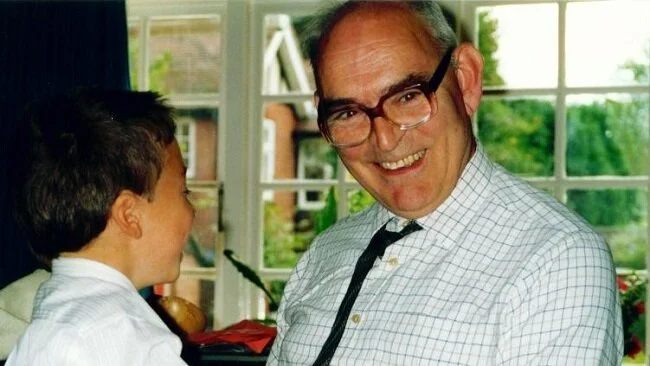
Long-term care can often end with a bereavement; which is a complex subject in itself. I will not be discussing grief in this post, as that is an immensely personal and subjective experience that we deal with in our own way. Instead, I would like to talk about the administrative and logistical problems that arise after someone has died and use my own recent experiences as an example. My Father died on Wednesday 16th September. He had a series of strokes in 2016 which left him disabled. Over the last four years his level of health has slowly deteriorated and his quality of life has subsequently diminished. This year saw a noticeable change not only in his well being but overall attitude. His stoical outlook finally faded and he lost all interest in life. He fell ill in mid August with Sepsis and then developed a lung infection. When I saw him last on Friday 4th September he told me he was tired and wanted “an end to it all”. Six days later he asked the Senior Doctor on the ward to stop treatment, which wasn’t working anyway. He died a week later on Wednesday 16th September. He was 91.
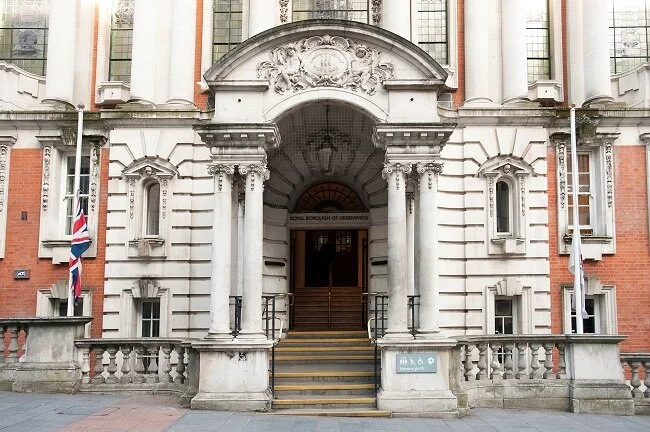
Greenwich Town Hall
Long-term care can often end with a bereavement; which is a complex subject in itself. I will not be discussing grief in this post, as that is an immensely personal and subjective experience that we deal with in our own way. Instead, I would like to talk about the administrative and logistical problems that arise after someone has died and use my own recent experiences as an example. My Father died on Wednesday 16th September. He had a series of strokes in 2016 which left him disabled. Over the last four years his level of health has slowly deteriorated and his quality of life has subsequently diminished. This year saw a noticeable change not only in his well being but overall attitude. His stoical outlook finally faded and he lost all interest in life. He fell ill in mid August with Sepsis and then developed a lung infection. When I saw him last on Friday 4th September he told me he was tired and wanted “an end to it all”. Six days later he asked the Senior Doctor on the ward to stop treatment, which wasn’t working anyway. He died a week later on Wednesday 16th September. He was 91.
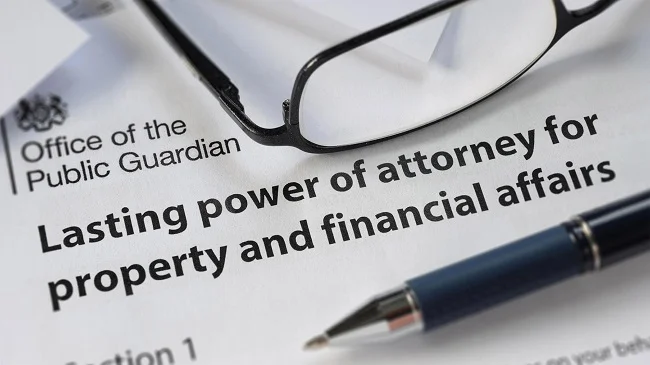
In the UK the first and most important administrative task that needs to be done after a bereavement is to register the death of the deceased. Because my father died in Queen Elizabeth Hospital and not at home, his death had to be registered with Royal Borough of Greenwich and not Bexley where he lived. The Medical Examiner discussed my Father’s care with the Doctor who was responsible for his medical treatment and then called me to explain what cause of death they would be putting on the death certificate was Aspiration Pneumonia. They then notified the Registrar who set up a telephone interview with me. Traditional face to face meetings are suspended due to COVID-19. This phone call took place two day later. I went through some personal details that are required when registering a death. These are similar to those that are entered on a Marriage Certificate. I ordered 5 copies of my Father’s Death Certificate for administrative purposes. There was a fee for these. The registrar then gave me a code for the “Tell Us Once” website. This is a government online portal that confirms the details shown on the Death Certificate and notifies all relevant departments, such as tax, state pension etc.
What has become apparent during the course of my administrative endeavours is that it’s somewhat easier dealing with a bereavement if there’s a surviving spouse or partner. There is not always an immediate requirement for Probate in certain circumstances and fortunately my Mother meets these criteria. Therefore, the two most important administrative tasks currently outstanding are transferring my Father’s Teacher Pension to my Mother, along with having the deeds to the house put in her name. Both of these are common changes of circumstances and are well documented on their respective websites. The transfer of the pension requires the completion of a form and copies of my parents Marriage Certificate and my Father’s Death certificate. The house deeds are all managed via the Land Registry. This task is a little more complex but again due to the pandemic is now handled via the post, which means I don’t have to travel to the regional office in Croydon. I recently found a lot of paperwork pertaining to my parents paying off their mortgage in 1986, so I should have everything necessary. If I don’t the Land Registry can provide duplicates. Again there will be fees involved but nothing too expensive (although that is a relative term).
After the aforementioned tasks are completed, there are a few more outstanding changes of circumstance to be made but these are less complex. The UK has an ageing population and therefore bereavements are a common occurrence. Hence a lot of companies have a dedicated phone line and protocols in place to deal with such circumstances. So transferring account ownership of utility services such as gas, electricity, water, internet access along with Council Tax is relatively simple. Claiming the life insurance policy that my Mother had for my Father also appears to be straightforward and only requires the completion of a form along with a copy of the Death Certificate. My parents shared a joint bank account from which all major household bills are paid. The only change required here is to take my Father’s name off the account. His personal account is now “frozen” and will be closed. The assets will be paid to my Mother. All of which are within the tax threshold so there’s no dealings with HMRC.
Eltham Chapel
The only other administrative and logistical matter arising from my Father’s death is his funeral. Like most of the UK population, my Father will be cremated. At present Government Guidelines allow up to 30 people to attend the service, however, there is a major caveat regarding this depending upon the capacity of the Crematorium. Social distancing has to be observed. As of writing this post I haven’t yet been to the Funeral Directors, although I have an appointment for Monday. It will be interesting to see what size restrictions there will be if any. There will only be about 10 people well enough to come to my Father’s funeral anyway. Both my Mother and Sister will not be able to attend due to ill health. I’m also curious to see if Co-op Funeralcare (who I have contracted to deal with proceedings) offer more contemporary services. My Father stipulated that he didn’t want any floral tributes so I wonder if the funeral directors will set up a “JustGiving” page for charitable donations or whether that falls to me?
Once all the above has been carried out then all the major administrative tasks arising from My father’s death will have been done. Then there’s the more difficult task of going through his personal effects and deciding what to do with them all. This is another one of those situations where there isn’t a standard solution. For some people, this part of a bereavement is the most difficult to deal with, as it brings to mind so many personal memories. However, I am not overly sentimental about such things and my parents' house is cluttered and needs to be clear out. This will create space so I can make some home improvements. Hopefully this will help me make my Mother’s daily life better. Dealing with all these administrative issues is a very curious experience. I have experienced it once before when my Father-in-law died, so I was somewhat prepared this time. As bank accounts are closed and my Father’s details are erased from various companies and public bodies, it does bring home the fact that life goes on, regardless of an individual or a family's grief. But these tasks, painful as they may appear, have to be done. Ignoring them only makes a difficult situation worse.
Caring for the Elderly: Part 9
I always try to write the posts in this series in way that proves useful to others who are facing a similar experience. Caring, old age, illness and our own mortality are all matters that will cross our path sooner or later. This time I shall be addressing a subject that many of us tread carefully around. Some people will not countenance discussing it in any way, shape or form as it makes us uncomfortable or even scared. In Western culture death is often the elephant in the room; a topic that should not be avoided but frequently is, due to etiquette and other curious societal foibles. Hence, we use phrase like “passed” or “gone” instead of dead and we often invoke religious based platitudes, regardless of whether we have any particular faith or not. Simply put, our response to the inevitability of our own demise and that of those who we love is ambiguous to say the least. I hope in the years to come we grow up in this respect and find a comfortable means of making death socially acceptable to discuss and plan for.
I always try to write the posts in this series in way that proves useful to others who are facing a similar experience. Caring, old age, illness and our own mortality are all matters that will cross our path sooner or later. This time I shall be addressing a subject that many of us tread carefully around. Some people will not countenance discussing it in any way, shape or form as it makes us uncomfortable or even scared. In Western culture death is often the elephant in the room; a topic that should not be avoided but frequently is, due to etiquette and other curious societal foibles. Hence, we use phrase like “passed” or “gone” instead of dead and we often invoke religious based platitudes, regardless of whether we have any particular faith or not. Simply put, our response to the inevitability of our own demise and that of those who we love is ambiguous to say the least. I hope in the years to come we grow up in this respect and find a comfortable means of making death socially acceptable to discuss and plan for.
My Mother recently celebrated her 89th birthday. My Father was 90 in the Summer. As we’re currently halfway through November the subject of Christmas cards has raised its head. It’s a ritual for many households at this time of year. Due to my parents age and general health, writing is a challenge, so I usually address all of the envelopes and add any important messages or postscripts in Christmas cards. All the pair of them have to do is sign their name but even this has to be done over a period of days. Sadly, one of the most striking aspects of this process is the number of names in my parent’s address book that have been struck through. So many family members, friends and colleagues are no longer with us. Each year the number of cards sent, reduces further. Every now and then in the following spring, they’ll be a letter from a son or a daughter politely pointing out that the recipient of a recent card is now deceased. This gradual attrition of one’s social circle is yet another factor that can add to the inherent sadness of many elderly people.
Despite being 90 years old, my Father is the “baby” of his family. He has two Sisters; one is 92 and another who’s 94. Sadly, despite being a fixed constant in an ever-changing universe, my eldest Aunt was recently diagnosed with a terminal condition and is currently at home receiving palliative care. My Father has spoken to here on the phone but due to ill health he is not able to visit her. However, both are very pragmatic individuals who understand the nature of old age and its consequences. Yet their stoical nature doesn’t make the situation any easier. Usually in life, whenever we are faced with difficult matters, if we keep ourselves busy, throw ourselves into our work or at least have some degree of agency with regard to the problem, it greatly helps us to cope. Yet both my Father and my Aunt are at a stage where life is something that just happens to them, rather than an activity they’re actively participating in.
I feel that this is perhaps one of the biggest challenge’s carers face. Is there a way to find a positive aspect in such bleak situations? Well I believe so. Let us for a moment return to the Christmas card situation. Rather than focusing upon the absence of cards from those who are long gone, I try to draw attention to those that have been received. When a card arrives from surviving family, I encourage my parents to reflect on past good times. “Oh look, here’s one from Uncle Bill. Remember that time he took us Shrimping”. Often this can lead to a positive discussion and raise spirits. Naturally, conversations regarding the imminent death of a loved one are harder to spin in this fashion. But I tend to take comfort in a quote from Doctor Seuss, the American children’s author. “Don't cry because it's over, smile because it happened”. I think this especially relevant with regard to those we love. My 94-year-old Aunt has always been a force for good in my life. She has always been wise, patient, exciting (she had a Tiger skin in her lounge and stuffed animals due to her world travels) and most of all supportive. I think that these are the things that we should focus on at such times. I believe that is what my father is currently doing. It may not totally assuage the situation but I feel that it helps.