
Caring for the Elderly Part 15
In this latest post I wish to discuss hospital admissions and how they can become a regular occurrence when caring for the elderly. Being immobile, losing agency with respect to one’s personal hygiene and being dependent on medical equipment can lead to health related problems, irrespective of good home care. For example, my late Father had limited mobility and spent most of his day sitting. Hence, he used a memory foam cushion to protest against pressure sores. He also slept in a hospital bed equipped with an air mattress for similar reasons. Despite having attentive carers twice a day, he was subject to regular skin complaints due to his diet (he was fed via a PEG tube) and lack of sunlight. Perhaps the biggest source of problems came from being catheterised. Despite scrupulous cleanliness he would still regularly contract urinary tract infections. As a result hospital admissions were frequent.
In this latest post I wish to discuss hospital admissions and how they can become a regular occurrence when caring for the elderly. Being immobile, losing agency with respect to one’s personal hygiene and being dependent on medical equipment can lead to health related problems, irrespective of good home care. For example, my late Father had limited mobility and spent most of his day sitting. Hence, he used a memory foam cushion to protest against pressure sores. He also slept in a hospital bed equipped with an air mattress for similar reasons. Despite having attentive carers twice a day, he was subject to regular skin complaints due to his diet (he was fed via a PEG tube) and lack of sunlight. Perhaps the biggest source of problems came from being catheterised. Despite scrupulous cleanliness he would still regularly contract urinary tract infections. As a result hospital admissions were frequent.
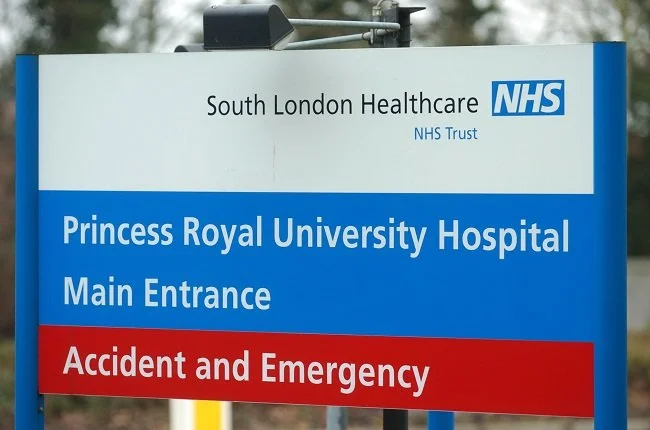
For the elderly a stay in hospital is often a double edged sword. The focus of care is often upon the problem that was the cause of the admission. Sometimes this to the detriment of other secondary issues. Due to the rapid deterioration of my Mother’s mental state in early December, she was admitted to hospital on the 16th of that month to see if it could be determined what was the cause. Due to her lack of “capacity” she was taken against her wishes, which in itself was a very traumatic event for both her and our family. She spent two weeks in one hospital where it was discovered that she had COVID-19 but was asymptomatic. During that time staff did a multitude of tests to see if there was a physiological reason for her mental decline. None was found, thus making her diagnosis more likely to be dementia brought on by old age, She was then transferred to a second hospital for another two weeks and stayed on a geriatric ward. She was discharged on Monday 17th January.
The four week stay in hospital, over Christmas and New Year, has taken a heavy toll on my Mother. The change of environment, the disruption to her routine, the tests and fear of being in hospital without seeing a familiar face has left her even more fretful and suspicious. She has lost more weight, now being about 112 lbs. She has become even frailer and can no longer stand to use the Molift for transport to the commode. Hence she is now permanently bedbound and cannot feed herself without assistance. Something the hospital staff neglected to tell me until 30 minutes prior to her discharge. In many ways my Mother is the embodiment of that rather arbitrary adage “if you don’t use it, you lose it”. And although in the great scheme of things it’s not so important, several items that went into the hospital with my Mother have failed to come back with her. Such as her Pro Heel Boots that protect her feet, which cost £80.
The pandemic has certainly made hospital stays a lot more complicated and this has naturally had an impact on what staff can and cannot do. It is reasonable to bear this in mind when making any assessment about the overall virtues of a stay in hospital. But COVID-19 notwithstanding, I believe that some hospital stays for the elderly can be a major contribution to their ongoing decline. In my Mother’s case the staff focused on trying to determine the cause of her mental state to the detriment of her physical wellbeing. She may well be COVID-19 free but at a terrible cost to her overall health. Furthermore, as they haven’t found a physical reason for her decline in capacity, both the medical staff and social services do not feel inclined to pursue a mental health diagnosis. Put frankly, no one wants to use the term dementia. There seems to be a deliberate policy of using far more vague and nebulous medical terms such as delirium and confusion. Possibly because the term dementia immediately dictates a very specific and expensive course of action. One that social services and the NHS may be reluctant to take.
At present my Mother is back home and bed bound. She is still confused, hearing voices and talking to them. She is distressed and tearful a lot of the time. She has four care visits a day. Each one involves two carers. She is dependent upon them to eat and drink. Both my Sister and I have tried to get her to drink water at times outside of the care visits but she will not take anything from either of us, as she believes we are trying to do her harm. After three days there have already been several incidents of her not allowing the carers to help her. Hence we find ourselves as a family exactly back in the same situation we were in when she was admitted. Naturally I am monitoring the situation but if my Mother continues to not drink sufficiently and to neglect herself, she is likely to get ill and be admitted to hospital again. I’m not sure if she would survive another stay at the age of 91 and in her current physical and psychological condition.





Caring for the Elderly Part 14
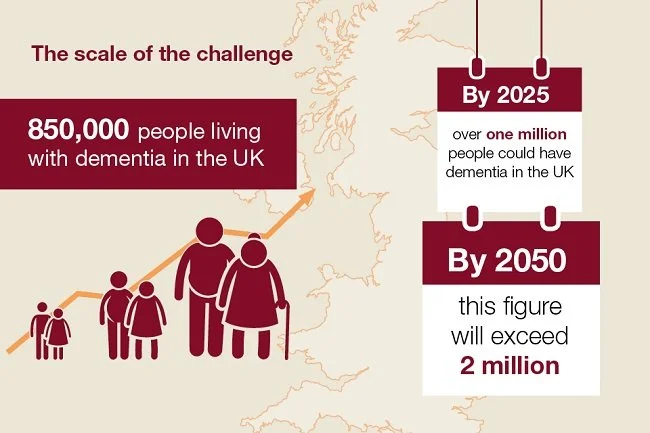
It has been over a year since I’ve written about this subject. The last post was about my late Father’s funeral. Since then life has gone on and my Mother’s ongoing care has become a fixed and somewhat uneventful regime. There are benefits to be gained from such a routine as it offers stability and certainty for both the carer and person being cared for. However, recently there has been a significant change in the status quo that warrants writing about. As always, my desire is to share some points and present my personal experiences in the hope that they may prove useful and informative to those in a similar situation or who may be just embarking upon their caring journey. The main subject of this post is a difficult one and something that is very hard to come to terms with. It is dementia. A medical condition that affects 1 in 6 people over the age of 80 in the UK.
It has been over a year since I’ve written about this subject. The last post was about my late Father’s funeral. Since then life has gone on and my Mother’s ongoing care has become a fixed and somewhat uneventful regime. There are benefits to be gained from such a routine as it offers stability and certainty for both the carer and person being cared for. However, recently there has been a significant change in the status quo that warrants writing about. As always, my desire is to share some points and present my personal experiences in the hope that they may prove useful and informative to those in a similar situation or who may be just embarking upon their caring journey. The main subject of this post is a difficult one and something that is very hard to come to terms with. It is dementia. A medical condition that affects 1 in 6 people over the age of 80 in the UK.
Dementia is a term used to describe a spectrum of symptoms affecting memory, thinking and social abilities severely enough to interfere with a patient's daily life. It isn't a specific disease per se. Several diseases can cause dementia. Though dementia generally involves memory loss, such symptoms have many different causes. Having memory loss alone doesn't mean you have dementia, although it's often one of the early signs of the condition. Alzheimer's disease is the most common cause of a progressive dementia in older adults but there are a number of other causes of dementia. Damage to or loss of nerve cells connected to the brain is the most common. Depending on which part of the brain is damaged, dementia can affect people differently and cause different symptoms. Depending on the cause, some dementia symptoms can be reversible. Others are progressive.
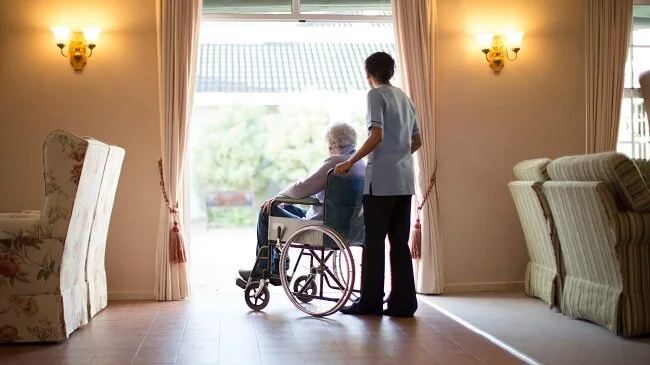
Due to my Mother’s lack of mobility she spends her days confined to one room. Each day she is washed and dressed with the assistance of carers and then transferred from her hospital bed to an orthopaedic chair in her room. Reading is her main form of entertainment. Due to her failing eyesight and hearing she has abandoned TV and music. She sadly reached this state of health just as the pandemic started in early 2020, so most of the home support services that usually are available have not been accessible. Hence visitors, day trips outside of the home, access to activity groups and physiotherapy have not been a regular option. Hence her engagement with the world is limited to myself, my sister and a handful of carers. Occasionally there have been visits from wider family but most of her peers and her own family have died. At the age of 91, my Mother has found herself socially isolated by ill health and circumstance. Her days are long, uneventful and she has nothing but her own thoughts and memories to reflect upon.
We all talk to ourselves from time to time when alone, and so I did not think it unusual when my Mother initially started doing this. Considering her environment and routine, it seemed quite logical. However, last weekend I noticed that it was a far more complicated dialogue that she was having. Instead of making the odd comment to jolly herself along like “oh you’ve lost your place in the book again. Where did I put that bookmark”, her conversations started becoming clearly addressed to third parties. Furthermore, these conversations were clearly upsetting her. Then this week, the morning carers started noticing that my Mother was agitated and engaged in arguments with people who were not there. She would become quite upset and cry. So when a convenient opportunity presented itself, I decided to broach the subject with her when she was having a calm moment. I was both heartbroken and fascinated by her comments.
My Mother is currently hearing voices. It would appear that her inner monologue and her subconscious thoughts are manifesting themselves as external voices. You or I may sometimes think when we’re down “have I made the right choices in my life” or “what will become of me”. For my Mother these thoughts manifest themselves as voices, external to herself. Often they will be the voices of deceased family members and friends. Often the conversations are very negative. It would appear the voices are encouraging her to be distrustful and are misleading her. What made this all the more troubling is that as my Mother told me this, she was lucid and clear. She paused from time to time because she was hearing another conversation in parallel while explaining things to me. Furthermore, she knows that this situation isn’t right and suspects that she is unwell. When I suggested she may have an infection she said quite candidly, “No, this is my imagination talking to me and I can’t stop it. I’m old and broken”.
Needless to say I called the family Doctor’s Surgery and a GP came to the home and thoroughly examined my Mother. No signs of an infection were found and subsequent tests have proven negative. My Mother may have had another stroke but the diagnosis is currently pointing to dementia. It does run in my Mother’s family. She has been referred to the Frailty Clinic. This specialist team conducts a Comprehensive Geriatric Assessment process to understand a person’s health and social care needs. The assessment enables early interventions to be tailored-made to the individual, to optimise their health and ensure a better quality of life. Interventions can include changes to medication, referral onto other services as well as discussing preferences for future care. The appointment is followed with a letter to the GP, summarising the clinic assessment outcomes and any recommendations. As present this service may be reduced due to current COVID-19 precautions but it does sound hopeful and interesting.
If my Mother is confirmed to have dementia and that the long term prognosis is that it will get worse over time, then the immediate practical question is how does this impact upon her ongoing care at home. Initial discussions with the Doctor focused upon whether my Mother is a danger to herself. At present this is not the case therefore, if we set aside for a moment my Mother’s auditory hallucinations and the upset it causes her, her daily care needs can be met. The carers are used to dealing with patients with such symptoms and so far my Mother’s eating and recreational habits have remained the same. However, one cannot ignore the emotional trauma that both my Mother, myself and my sister feel about the reality of the situation. I think the most harrowing aspect at present is that my Mother knows that she is not well.
I count myself fortunate that I live in a Borough where the NHS support services are quite robust. My local Doctors Surgery are also invaluable. So far everything that has been discussed as far as treatment has been done. A District Nurse came earlier today to take bloods to do comprehensive testing. I don’t feel abandoned in any way by the authorities. Maintaining a positive outlook, supporting my Mother and keeping an eye on my Sister’s wellbeing is a harder task. I find that if I engage with my Mother she stays relatively calm. However, I cannot be with her all day, everyday as I have other people dependent upon me. At present I am adopting a very “here and now” approach to this situation and I feel that is the best policy. Deal with things as and when they occur and don’t worry about what may happen a month or two from now. Writing about things is also a useful means for me to come to terms with them. In the meantime I shall keep concentrating on supporting my Mother.