
A Year in TV
Let it suffice to say that due to current “circumstances”, Mrs P and I have watched a lot more TV this year. However, rather than just reiterate what we’ve viewed, which is already covered in my recurring blog post The Idiot Box, I thought I’d take the time to reflect upon some wider issues. TV has become a major source not only of entertainment but psychological support during this year’s social restrictions. The closure of cinemas for the majority of the past twelve months has meant that TV has had little or no competition. Furthermore, many of the films that may well have drawn audiences away, have come to the smaller screens a lot quicker. Never has so much TV been voraciously consumed. There’s also been a degree of nostalgia as viewers have watched popular shows at broadly similar times, reviving that sense of a shared experience that was so common in the seventies and eighties. However, the pandemic has also caused a slow down in TV production. Will the shortage of new content that many have predicted finally manifest itself next year?
Let it suffice to say that due to current “circumstances”, Mrs P and I have watched a lot more TV this year. However, rather than just reiterate what we’ve viewed, which is already covered in my recurring blog post The Idiot Box, I thought I’d take the time to reflect upon some wider issues. TV has become a major source not only of entertainment but psychological support during this year’s social restrictions. The closure of cinemas for the majority of the past twelve months has meant that TV has had little or no competition. Furthermore, many of the films that may well have drawn audiences away, have come to the smaller screens a lot quicker. Never has so much TV been voraciously consumed. There’s also been a degree of nostalgia as viewers have watched popular shows at broadly similar times, reviving that sense of a shared experience that was so common in the seventies and eighties. However, the pandemic has also caused a slow down in TV production. Will the shortage of new content that many have predicted finally manifest itself next year?
Naturally, I am not the only blogger to have regularly written about their revised viewing habits this year. Wilhelm Arcturus has also been doing so and recently he posted a very interesting summary of his experiences and posed some very interesting talking points. His thoughts have inspired reciprocal blog posts by Bhagpuss and MagiWasTaken, both of whom have given their own perspective on the issues that he has raised. So I’ve decided to follow suit, as I think that we are seeing a gradual sea change in the way we consume TV content. I’ve written in the past about so-called TV Poverty and the notion that unless you pay for content, your choice will ultimately be limited. Can traditional broadcast television maintain its audience and more importantly, advertising revenue, indefinitely? I think not. The cosy and somewhat quaint notion of the nuclear family, gathered around the TV, enjoying a shared experience is fast becoming obsolete.
Here are the bullet points that Wilhelm collated in his original post. I shall address them accordingly:
“No commercials is pretty nice”. Yes, I agree. I hate commercials, on screen graphics, promotional banners about what is on next, continuity announcers talking over program credits and basically anything that intrudes on a TV show. All of which are absent from premium streaming TV services. However, commercial channels often have on demand players and these sadly still have advert breaks etc.
“I still won’t buy pay-per-view”. I will only pay to see something if there is a pressing need to do so for review purposes and if it cannot be sourced elsewhere. For example, I took out a free trial to Shudder so I could see the Zoom based horror film Host. I subscribed to BritBox so I could evaluate the new series of the puppet based satirical comedy show, Spitting Image. But I seldom pay to watch a new release film. I have more to say on this subject in my thoughts on the next point.
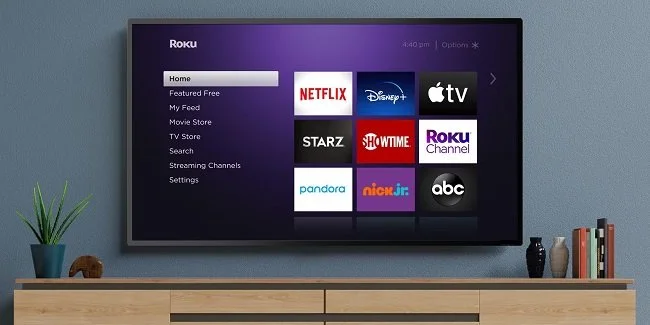
“There are too damn many streaming services”. Yes there are. New ones seem to be appearing every day. Furthermore, you cannot subscribe to all of them. I have a budget for such leisure activities and it can only sustain so many streaming services. At present I subscribe to Netflix, Amazon Prime and BritBox. However, I indulge in that phenomenon that is “subscription sharing”. Most services allow you to access content from several devices, so myself and other family members “share” login credentials. Hence I can access Disney + and Now TV. In the past when Contains Moderate Peril was a bigger concern I got myself on the press list for a few marketing and distribution companies. This allowed me to see films and other content for review purposes. Let it suffice to say I still have access to some of these industry channels.
“Finding things is hard”: Never a truer word spoken. You can waste hours of your life, slowly trawling through various categories or pitifully typing via the TV remote control, the name of a show or film that the streaming service in question doesn’t have. I find the easiest thing to do before watching is to search what content is available and where, via a web browser on a phone or PC. I then add the program I desire to my “wish list”, so it’s waiting for me when I watch the TV in the lounge. I see that Amazon’s Alexa has an add-on device you can attach to the TV, that can search through all your subscribed services but from what I’ve seen, it’s not especially reliable
“I am torn on weekly versus all at once content”. I’m not. I’ve never liked waiting so having an entire season available as soon as it’s launched is fine with me. I also find that binge watching greatly helps me keep up with a show’s plot, especially if it’s complex. Again, being able to watch a season in its entirety makes reviewing it a lot easier. Waiting for weekly content is consequently a nuisance. I’m currently waiting for all episodes of Season 3 of Star Trek: Discovery to become available so I can binge watch it. The weekly wait for The Mandalorian was frustrating, although I can understand why Disney made such a decision.
“We have been biased towards shows versus movies”. Mainstream cinema has become somewhat bland and safe. Especially the major studio output. TV on the other hand is becoming experimental and diverse, although that’s not always the case. For example, if a fantasy based TV show is successful, then the following year you’ll find a wealth of others. However, the scope and quality of TV shows on streaming platforms has become broader. From an actors point of view, a feature film may offer you a two hour window to develop a character. A TV show can offer ten or more. Plus cinemas are often havens for assholes who are hell bent on doing absolutely anything other than sit quietly and apply themselves to a film. At least at home you can control this problem. And if you can’t, then those assholes spoiling your viewing are your own family.
“I could cut the cord were it not for sports”. Although we have cable services in the UK, satellite was the first to corner the subscription market. And hence this is where a lot of the sport “is at”. The BBC struggles to secure broadcast rights for major sporting fixtures due to the bidding wars that have come along with the advent of third party broadcasters with much bigger content budgets. Either way, it’s irrelevant to me as “I don’t do sport”. Our household said goodbye to satellite TV circa 2006.
“It really sucks when the internet goes down”. British Telecommunications is my ISP and I live 15 minutes walk from the local exchange/data centre. I pay for a “fibre to the cabinet” internet connection, with the bridging connection being over copper phone lines. The cabinet is at the end of my road. Thus I have a robust connection. I’ve endured one internet outage that lasted under 3 hours, over the last 5 years. I can’t vouch for other countries but in the UK, if you live in one of the major cities, then the internet connections tend to be pretty stable as they have to serve the needs of numerous domestic and business customers. Out in the rural areas it is another story altogether.
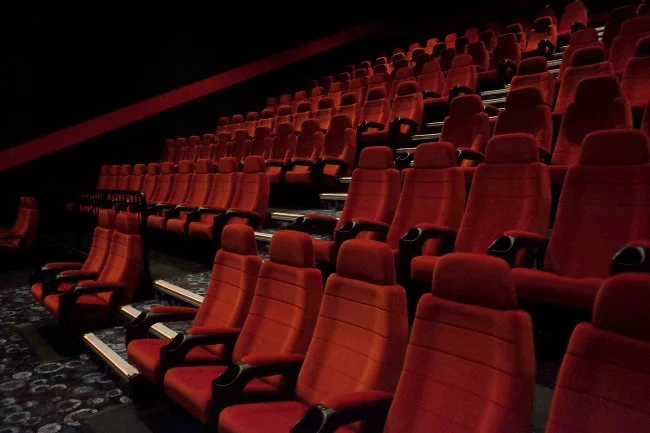
“It does not replace the theater experience”. Viewing at home does not replace cinema viewing. I enjoy going to film festivals and the National Film Theatre where audiences are civilised. I don’t miss my local multiplex where often the films are shown out of focus, in the wrong aspect ratio or with the lights still left on. And some audiences just cannot behave. Why go to see a visual, narrative driven medium if you’re going to talk through it or fuck about on your phone (or in my Dad’s case during WW II, someone was sitting in the audience plucking a chicken). In the New Year, we’re buying a 43 inch 4K HDR TV and a new media player that can handle the same format. This may not be comparable to the cinema experience but it’s not far off.
“I still cannot watch exactly what I want on demand”. Despite the wealth of material that is available on streaming services, there’s always something that falls between the cracks and is conspicuously absent. BBC iPlayer has some great, classic documentary series such as Civilisation and Life on Earth. However, Jacob Bronowski’s The Ascent of Man is not available. And it is exactly this which is the Achilles Heel of all streaming services. Content is licensed and therefore comes and goes, which is infuriating. However, there are ways to “address this”. An essential pro-tip is to sign up to a quality VPN service. For example, Netflix has a lot of regional variations. Changing regions enables you to potentially access material you otherwise wouldn’t be able to. And for everything else that you may require that the streaming services cannot provide, all I can say is “seek and the internet will provide”.
So what of 2021? Well, if there is a shortage of new content to watch, I’ll catch up with older material I may have missed such as shows like Justified or I’ll re-watch some classics like The Prisoner. Digital terrestrial network TV produces little to enthral me these days. The BBC tries its best to maintain standards but quality has given way to populist entertainment. And for every robust and well written drama such as Endeavour, the commercial stations in the UK produce twice as many reality shows. But the arguments for public broadcasting are not popular at present and if we give way to untrammelled “market forces”, certain content will decline rapidly. However, I’ll cross that bridge as and when we as a nation come to it. In the meantime, I will use the various means I’ve described above to ensure I have access to suitable material in the year ahead.



















Binge-viewing
During the seventies I watched TV programs as and when they were broadcast. This was not through choice but because that was the only means available. Therefore the advent of the VCR in the eighties was a very liberating experience. However although I was free from having to watch at a specific time, I still tended to view recorded programs on a weekly basis, rather than allow them to accumulate. All the technology was doing was freeing me from the broadcasters schedule and allowing me to create my own.
During the seventies I watched TV programs as and when they were broadcast. This was not through choice but because that was the only means available. Therefore the advent of the VCR in the eighties was a very liberating experience. However although I was free from having to watch at a specific time, I still tended to view recorded programs on a weekly basis, rather than allow them to accumulate. All the technology was doing was freeing me from the broadcasters schedule and allowing me to create my own.
TV audiences had a very different relationship with the shows they watched during the seventies and eighties. Families often watched together and the previous night’s viewing was usually the topic of discussion at work or school the following day. If you missed an episode of your favourite show then you would have to wait months or even a year before it was re-run. The advent of the VCR improved this situation significantly but the esoteric nature of setting the timer still meant that this was not a full proof system.
Nowadays unless you are technophobic or a militant Luddite, it is far easier to access the shows that you want and watch them at your leisure than watch live. VOD, DVRs, the ubiquity of the “plus one” channel and even the old school DVD boxset ensure that you can keep abreast of your favourite TV shows. This shift in availability has led to the phenomenon of binge-viewing; something that I personally have resisted until recently but have now fully embraced.
There are three major reasons why I have adopted this viewing habit for some of the shows that I currently watch. Firstly, my life like many others peoples, no longer follows a traditional nine to five schedule. My working pattern is irregular and my online activities, especially those associated with the blog and podcast, span multiple different time zones. Therefore I do not like being tied to third party schedules. Secondly, TV shows are a lot more complex these days; frequently have long term story arcs. Watching episodes back to back provides a greater understanding of the plot. Thirdly, binge viewing can be an efficient means to catch up with shows that straddle multiple seasons. At present I can blitz out season two of The Blacklist and be ready for new content when season three starts in October.
The way we consume TV content is also having an impact upon the way the material is created. VOD providers have market research that suggests that viewers like slightly shorter seasons. Sometimes twenty plus episodes can be too much, where a season consisting of eight or thirteen episodes is sufficient to tell an in-depth tale. Recent examples of this are True Detective and Penny Dreadful on cable and Under the Dome and Hannibal on Network TV. All maintain a standard of writing and storytelling yet do not outstay their welcome with weak or superfluous episodes.
Binge-viewing is not relevant to all genres of TV programs. Many sporting events are still best viewed live. On most days, rolling news is often cyclical, so watching for hours will provide only a finite amount of information. Also binge viewing may not appeal to all age groups. My own parents who are in their eighties are still very much creatures of habit and like to adhere to the networks schedules. If it’s Tuesday then it’s Pork Chops for dinner and NCIS at 9:00 PM. The notion of watching an entire season will invoke judgemental comments about over indulgence and a lack of self-control.
However I think the future of TV lies with content delivery upon demand. Perhaps Kevin Spacey summed it up best in 2013, while speaking at the Edinburgh Television Festival:
“The audience wants control. They want freedom. If they want to binge then we should let them binge. Give people what they want, when they want it, in the form they want it in, at a reasonable price, and they’ll more likely pay for it rather than steal it.
For years, particularly with the advent of the Internet, people have been griping about lessening attention spans. But if someone can watch an entire season of a TV series in one day, doesn’t that show an incredible attention span? The audience has spoken: They want stories. They’re dying for them. All we have to do is give it to them.”