The Haunted Doll’s House (2012)
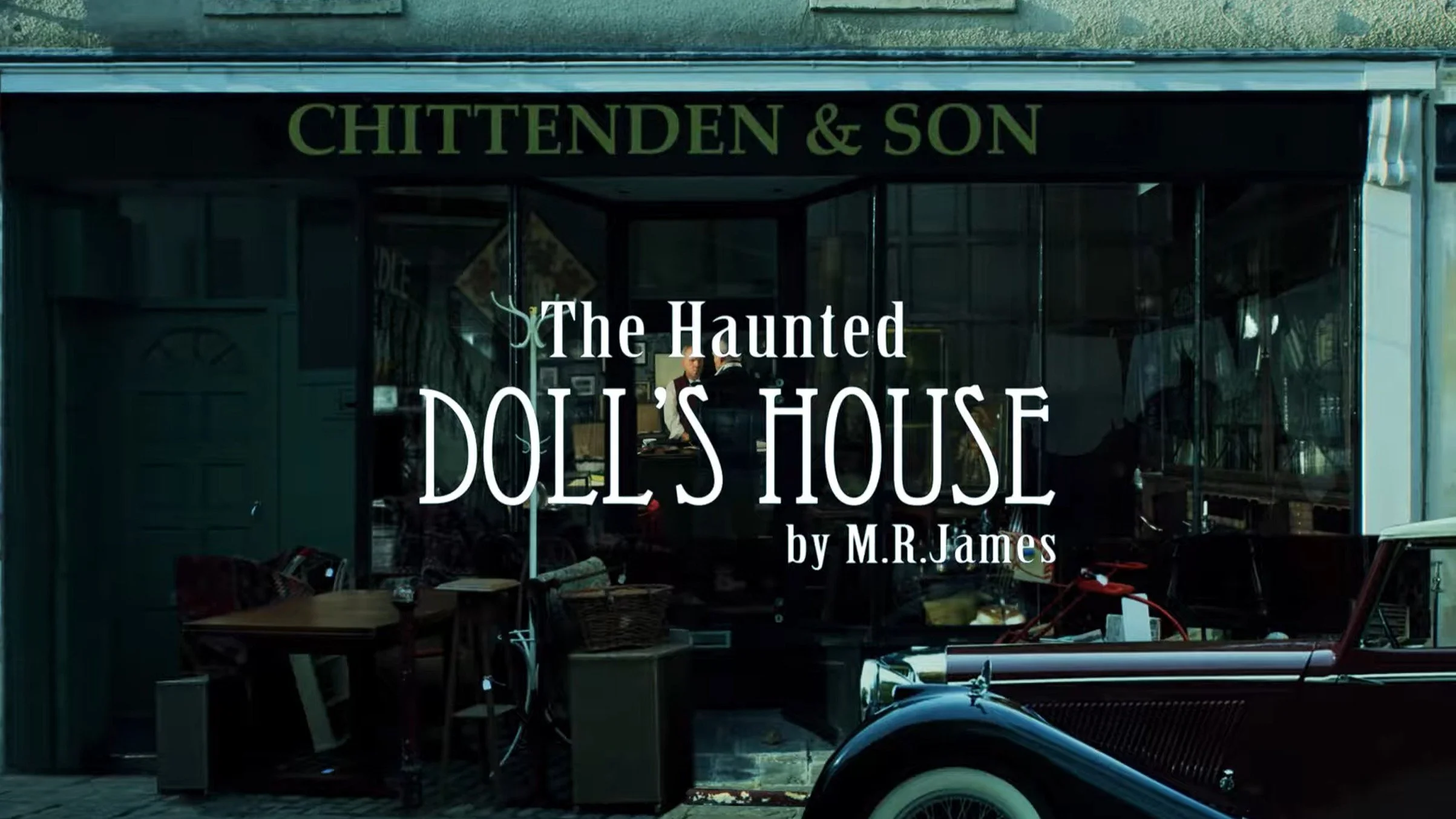
The Haunted Dolls House is a short film based on a story by M.R. James about a unique antique that is subject to supernatural phenomenon. Adapted by Stephen Gray and David Lilley, this is the third of three short films based upon James’ work that the pair have made. It stars Steven Dolton as Mr. Dillet, a collector of antique dolls houses, who acquires a bargain only to discover that it harbours a ghostly secret. Made on an extremely modest budget over the course of 2012 this clever, innovative and rather sinister adaptation is a fine example of short film creativity. It manages to offer a unique visual depiction of M.R. James’ classic story whilst capturing the unsettling quality of the author’s work. Like so many independently made short films it is clearly a labour of love, made with modest resources. It succinctly captures the spirit of the author’s work and is both innovative and rewarding.
The Haunted Doll’s House is a short film based on a story by M.R. James about a unique antique that is subject to supernatural phenomenon. Adapted by Stephen Gray and David Lilley, this is the third of three short films based upon James’ work that the pair have made. It stars Steven Dolton as Mr. Dillet, a collector of antique doll’s houses, who acquires a bargain only to discover that it harbours a ghostly secret. Made on an extremely modest budget over the course of 2012 this clever, innovative and rather sinister adaptation is a fine example of short film creativity. It manages to offer a unique visual depiction of M.R. James’ classic story whilst capturing the unsettling quality of the author’s work. Like so many independently made short films it is clearly a labour of love, made with modest resources. It succinctly captures the spirit of the author’s work and is both innovative and rewarding.
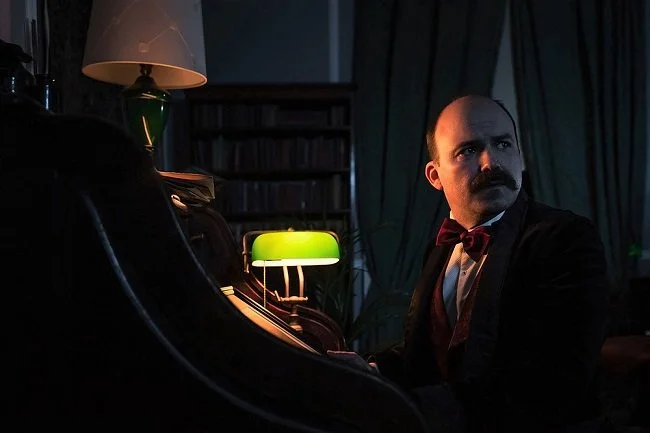
The Haunted Doll’s House creates an interesting period atmosphere of the early nineteen twenties and sets the scenes for the ghostly events. Professional antique collector Mr. Dillet seems very pleased with his latest acquisition and sits late into the night cataloguing its contents by dictating into a Phonograph Recorder. However, as Mr. Dilet lists the respective details, they seem to become more intricate each time he checks them. Perhaps he is just overly tired? He subsequently retires to bed for the evening, however he is woken during the night when a strange light illuminates the doll's house. It would appear that the latest addition to his collection has something to show him. A rather disturbing story plays out among the antique’s occupants; a family of dolls consisting of a husband and wife, two children and a bedridden Grandfather.
The director's use of stop motion animation is a major positive asset for this adaptation. The minimalist character design of the dolls and the lack of dialogue do not in any way hinder the narrative. The silent actions of the puppets not only clearly convey the story but embellish it with a great deal of atmosphere and pathos. In many ways it plays out like a sinister episode of Camberwick Green and I do not mean that in a derogatory manner but as the highest possible compliment. The transition from animation to live action is cleverly done and provides an appropriate codicil to this supernatural tale. The Haunted Doll’s House makes good use of its eleven minute running time making it an ideal seasonal ghost story. It is a fine example of the high quality independent short films that you can often find online, if you take the time to search them out. The Haunted Doll’s House is available to watch on YouTube.
H. P. Lovecraft's The Shadow Out of Time (2012)
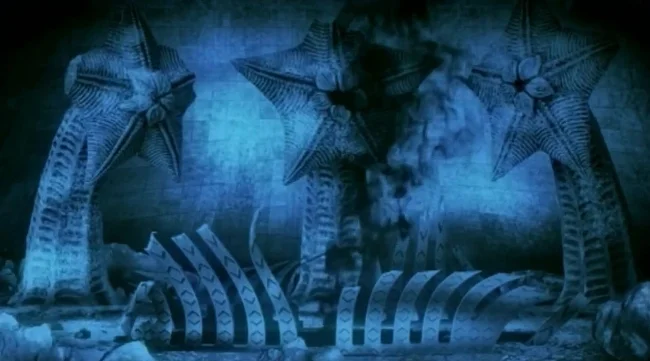
The writings of H. P. Lovecraft have been an inspiration for many a film maker. Their brooding atmosphere along with intriguing blend of science and the occult, offers a wealth of themes to be explored. Unfortunately, there have been very few movies that have come anywhere near to capturing the spirit of the author. So, it was with great interest that I watched the fifteen-minute short film The Shadow Out of Time. This low budget production made by independent film makers Richard Svensson, Daniel Lennéer and Christopher Johansson, succinctly distils a classic Lovecraftian tale without losing any of the ambience of the source text. It puts to shame some of the hand-fisted adaptations that have preceded it.
The writings of H. P. Lovecraft have been an inspiration for many a film maker. Their brooding atmosphere along with intriguing blend of science and the occult, offers a wealth of themes to be explored. Unfortunately, there have been very few movies that have come anywhere near to capturing the spirit of the author. So, it was with great interest that I watched the fifteen-minute short film The Shadow Out of Time. This low budget production made by independent film makers Richard Svensson, Daniel Lennéer and Christopher Johansson, succinctly distils a classic Lovecraftian tale without losing any of the ambience of the source text. It puts to shame some of the hand-fisted adaptations that have preceded it.
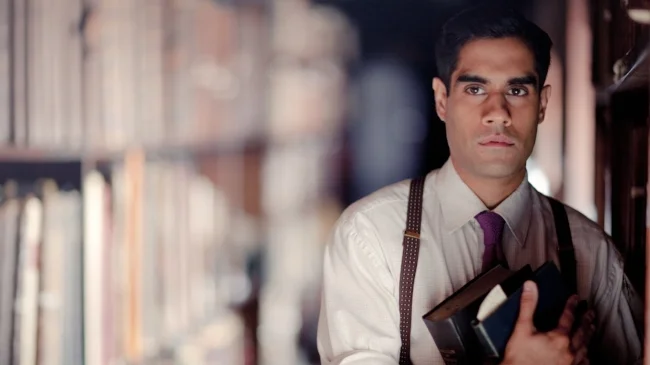
The plot follows an academic, Nathaniel Wingate Peaslee who collapses during a lecture to find that he has exchanged bodies with an extraterrestrial life form from Earth's past history. His own body is occupied by the alien who spend the next two years studying the present era. Eventually the process is reversed and Peaslee attributes the events to a mental collapse. However, it becomes apparent that he is not the only one to have had this experience. His resulting investigation leads him to Australia and an uncomfortable truth emerges. The story touches upon the experiences of both individuals and hints at a further menace that threatens the future of both species. Told via narration, the film is set in the 1900s and reflects the cinematic style of the time.
The period setting along with its stylised format really enhances the unfolding story. Åke Rosén performance is very much in the appropriate idiom and John Hutch narration embellishes without descending into melodramatics. Overall this is a polished production when you consider the budgetary and the logistical constraints imposed upon the film makers. It never ceases to amaze me the dedication and love that fans can muster to create such outstanding work using just “over the counter” hardware and software. Therefore, I thoroughly recommend The Shadow Out of Time and would urge readers to check out the creators You Tube channel for further H. P. Lovecraft adaptations.