
World War Z: The Complete Edition by Max Brooks (2013)
The zombie genre is a narrative seam that has been heavily mined in recent years. There seems to have been a never-ending supply of films, television shows and video games involving the undead over the last two decades. Which is why the notion of society being destroyed by its own citizens has somewhat lost its intellectual and horrific lustre. Hence I can understand people rolling their eyes at the mention of the novel World War Z by Max Brooks. The 2013 film adaptation starring Brad Pitt, which jettisoned most of the source text's innovations, isn’t the best advertisement for the book’s virtues. However, if you take the time to look beyond the hyperbolic title, you’ll find World War Z a work of singular intelligence which uses the zombie genre as a means to explore multiple socio-economic and political themes.
The zombie genre is a narrative seam that has been heavily mined in recent years. There seems to have been a never-ending supply of films, television shows and video games involving the undead over the last two decades. Which is why the notion of society being destroyed by its own citizens has somewhat lost its intellectual and horrific lustre. Hence I can understand people rolling their eyes at the mention of the novel World War Z by Max Brooks. The 2013 film adaptation starring Brad Pitt, which jettisoned most of the source text's innovations, isn’t the best advertisement for the book’s virtues. However, if you take the time to look beyond the hyperbolic title, you’ll find World War Z a work of singular intelligence which uses the zombie genre as a means to explore multiple socio-economic and political themes.
Instead of a traditional novel with several central characters and a linear story arc, World War Z is a collection of fictional interviews that take place between survivors of the zombie apocalypse from around the world and a fictional version of the author Max Brooks. Each personal vignette provides a first hand account of a specific event within the history of the zombie apocalypse and its subsequent consequences upon the narrator or the wider world. These personal anecdotes often obliquely reference wider happenings such as a specific government policy, military engagement or a mass migration. They frequently allude to things that the reader doesn’t directly know about. However, there is always sufficient information to deduce what is being inferred, be it wide scale cannibalism, emergency legislation to deal with civil unrest, or the collapse of specific public institutions.
Hence we hear from Fernando Oliveira, a Brazilian former surgeon, who recollects how the zombie virus was initially spread via the illegal organ trade that he was part of. Then there is Jurgen Warmbrunn, a Mossad agent, who co-write the first formal document recommending countermeasures against the undead. He reflects on how it was distributed to all major governments around the world, who subsequently dismissed it. There are also interviews with everyday people, such as Jesika Hendricks, an American-Canadian woman. She recounts how she survived the first winter after the Great Panic when she and her parents fled north, hoping the cold would freeze the zombies. These interviews personalise the global disaster, while simultaneously exploring the failings of government and how capitalism is ill equipped to deal with catastrophic events.
There is a lot of interesting analysis of both contemporary society and politics within World War Z. Both the public and the incumbent US government, initially refuse to countenance what is exactly going on, leading to a period of history referred to as the Great Denial. The pharmaceutical industry quickly exploits the situation by producing a placebo drug, which the government happily greenlights to buy time. When the modern US military finally faces a massed attack of undead outside Yonkers, their tactics and weapons fail. The shock and awe they depend on to psychologically crush their opponents, is absent in an enemy that is oblivious to their technological superiority. Perhaps the most fascinating aspect of the story is the US government's attempts to repurpose the surviving workforce, with 65% having no viable skills, apart from manual labour, in a post apocalyptic world.
The audiobook version of World War Z has a somewhat complicated history. Random House published an abridged version running 5 hours and 59 minutes in 2007. The book is read by Brooks (who previously had a career in voice acting) and includes Carl Reiner, Mark Hamill and Henry Rollins portraying some of the characters interviewed. Later in 2013, Random House released a revised 12 hours and 9 minutes audiobook titled World War Z: The Complete Edition (Movie Tie-in Edition): An Oral History of the Zombie War. It contains the entirety of the original, abridged audiobook, as well as new recordings of the previous absent material by such actors as Simon Pegg, Jeri Ryan and Parminder Nagra. There is also an alternative version available on Audible UK, with a completely different voice cast.
For the purpose of this review I listened to the rather ponderously named World War Z: The Complete Edition (Movie Tie-in Edition): An Oral History of the Zombie War. Although a lengthy production, the interview format easily allowed me to listen in stages over the course of the week. Sometimes an all star cast can be an impediment to an audiobook adaptation, with individual voice actors becoming the focus of attention instead of the prose. However, in this instance the robust cast imbues the interviews with a sense of credibility, making the various recollections very personal and human. There are no accompanying audio effects and the adaptation lacks a musical score. A simple ominous sting separates each personal recollection. This minimalist approach works very well, as it would have been a mistake to over embellish the production.
Nineteen years on from its publication, World War Z remains relevant, thought provoking and even a little portentous. The COVID-19 pandemic, although far from a zombie apocalypse, certainly shared some parallels with the themes of the book. There was government denial, flagrant business profiteering and a public that was unprepared for such a radical change to their daily existence. The current decline in democratic processes and politics in western civilisation has created an atmosphere of impending societal collapse. Is the broken world that is so vividly depicted within the pages of World War Z an indication of our own future? Max Brooks wrote metaphorically of zombies undoing our civilisation. We currently seem to be doing something similar but without the metaphor.


The Battersea Poltergeist
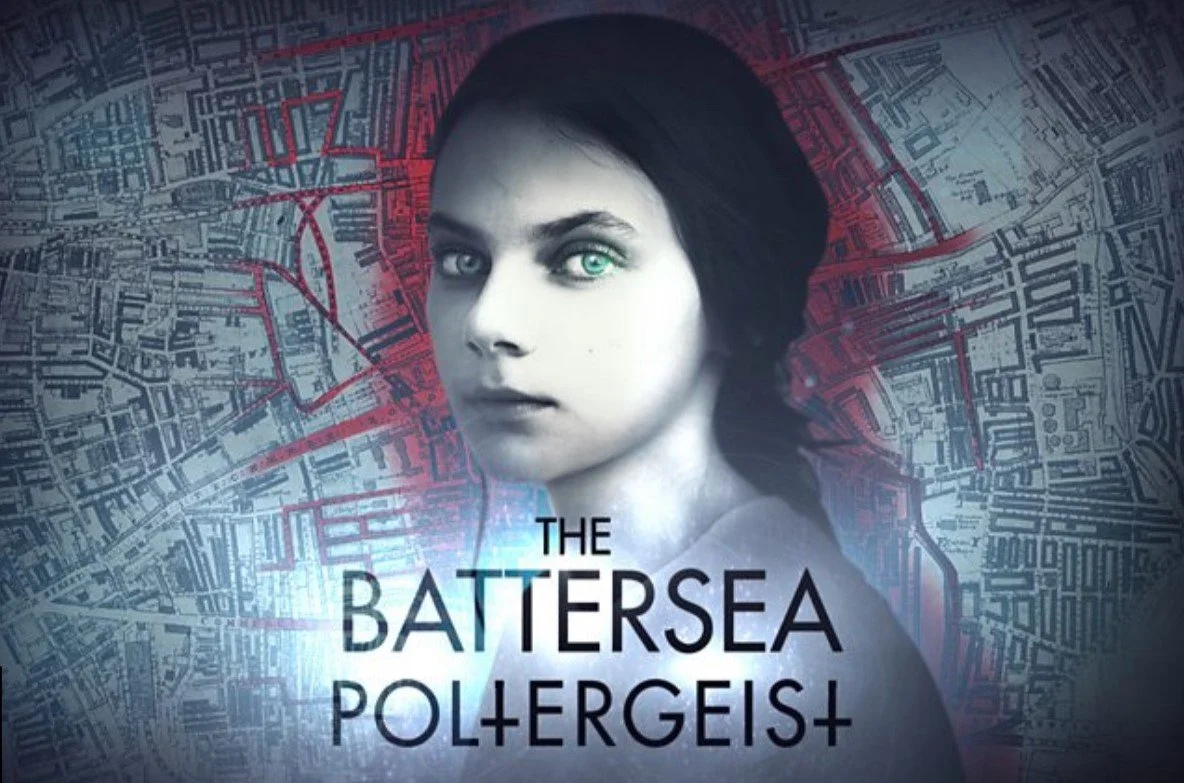
I was unaware of the The Battersea Poltergeist podcast and accompanying online interest during its initial release. Created by Bafflegab Productions and presented by Danny Robins, who is well known in this field with similar shows such as Haunted and Uncanny, it was broadcast on BBC Sounds and BBC Radio 4 between February and March 2021 during lockdown. The Battersea Poltergeist is a documentary of a true story with dramatized re-enactments. The show alternates between interviews, discussions and research into the case with short vignettes from a cast of actors recreating events for dramatic effect. It was released episodically and gained a lot of online and press interest at the time. Hence there were additional episodes interspersed throughout the initial run which provided “case updates” and listener feedback and questions.
I was unaware of the The Battersea Poltergeist podcast and accompanying online interest during its initial release. Created by Bafflegab Productions and presented by Danny Robins, who is well known in this field with similar shows such as Haunted and Uncanny, it was broadcast on BBC Sounds and BBC Radio 4 between February and March 2021 during lockdown. The Battersea Poltergeist is a documentary of a true story with dramatized re-enactments. The show alternates between interviews, discussions and research into the case with short vignettes from a cast of actors recreating events for dramatic effect. It was released episodically and gained a lot of online and press interest at the time. Hence there were additional episodes interspersed throughout the initial run which provided “case updates” and listener feedback and questions.
The case of The Battersea Poltergeist began in March 1956, when Wally and Kitty Hitchens reported “disturbances” in their rented terraced house on Wycliffe Road in south-west London. Crockery was thrown across the room, bedsheets pulled from the bed and banging sounds emanated from the walls and the floor. At times these were so loud, they could be heard by neighbours. Later, several fires began in the house and words were written on the walls. The police investigated, as did several reporters though none appeared to take the matter seriously. There was also a questionable séance which appeared to worsen the situation .The case came to the attention of paranormal investigator Harold Chibbett, who spent months with the family and made comprehensive notes. At the centre of these activities was 15 year old Shirley Hitchens, who named the unruly ghost Donald.
Medium Harry Hank, centre, conducts an séance with Shirley Hitchens and her father Wally (on the right)
Presenter Danny Robins begins the podcast by telling us: “I don’t believe in ghosts.” He then proceeds to go through Chibbett’s original case file, collate newspaper reports and other public records. Several people connected to the case are interviewed including Shirley Hitchens, who is now 80. The investigations are overseen by several experts including parapsychologist Evelyn Hollow and psychology professor Ciarán O’Keeffe. Bridging the investigative sections are dramatised segments, starring Toby Jones as Harold Chibbett and Dafne Keen as the young Shirley Hitchens. Although somewhat contrived they do add to the show’s atmosphere, capturing the frustration and terror experienced by the Hitchens family. They also highlight the UK class divide of the times and the way the family were perceived by the press and other institutions.
I recently binged all 9 episodes of The Battersea Poltergeist as well as the “case updates” and found the show thoroughly entertaining and interesting. Robins and producer/director Simon Barnard have gone to great lengths to make this podcast engaging and informative. I especially enjoyed the dramatic recreations mainly due to the calibre of the cast. There is also a very atmospheric soundtrack and theme song by Nadine Shah and Ben Hillier. However, I did find some of the dialogue a little too contemporary, often using phrases and idioms that were anachronistic. That aside, the show made a broad attempt to provide balance to both sides of the argument, although this does result in a degree of cakeism.
The Hitchens Family circa 1956
As I expected, the overall results of the investigation are logically inconclusive, affording both sides of the debate to be able to claim victory. The predictably ambivalent and non-commital nature of the series’ conclusion is convenient and beneficial to the production team who ultimately are providing entertainment as well as an investigation. It is an inherent failing of this particular genre, or perhaps a deliberate choice, that the audience is always presented with a binary choice. I personally would prefer a more nuanced approach and possibly a third option, namely that there is insufficient data to draw any definitive conclusion. However, such a stance lacks the passion and potential entertainment that arises from a more adversarial approach. If you listen to The Battersea Poltergeist expecting a clear conclusion then you’ll be disappointed. It’s more about the journey and because of the inherent ambivalence of this case, that journey has the ability to keep going.
Unnatural Causes by Dr Richard Shepherd (2018)
Dr Richard Shepherd is a senior forensic pathologist with over 30 years’ experience, consisting of 23,000 postmortems. His book, Unnatural Causes, explores his career and his devotion to the truth in determining how each of his cases died. Over the course of his career this includes victims of mass disasters, homicides, and those who have died in their own homes from unknown causes. Dr Shepherd’s job is to ascertain a cause of death based upon the facts and data presented. Each case is described with detail and empathy and it’s surprising how much the reader becomes immersed in the methodical approach that each postmortem entails. Furthermore, it is very satisfying to learn of Dr Shepherd’s verdict. However, far from being a technical dissertation on a succession of cases, this is a deeply personal and humane book which addresses the impact of the author’s career upon himself and his family. It is written with a surprising degree of literary flair and is profoundly thought provoking and moving.
Dr Richard Shepherd is a senior forensic pathologist with over 30 years’ experience, consisting of 23,000 postmortems. His book, Unnatural Causes, explores his career and his devotion to the truth in determining how each of his cases died. Over the course of his career this includes victims of mass disasters, homicides, and those who have died in their own homes from unknown causes. Dr Shepherd’s job is to ascertain a cause of death based upon the facts and data presented. Each case is described with detail and empathy and it’s surprising how much the reader becomes immersed in the methodical approach that each postmortem entails. Furthermore, it is very satisfying to learn of Dr Shepherd’s verdict. However, far from being a technical dissertation on a succession of cases, this is a deeply personal and humane book which addresses the impact of the author’s career upon himself and his family. It is written with a surprising degree of literary flair and is profoundly thought provoking and moving.
There are many standout cases and medical anecdotes throughout Unnatural Causes. Too many to choose from. However, one that proved to be particularly poignant is a case regarding an old lady who lived alone. She was found dead by her cleaner, naked under her kitchen table with the room in a state of disarray. Neighbours implied she may have been going senile and the police suspected a burglary due to the way the furniture and kitchen drawers have been disturbed. The medical conclusion was quite contradictory. The victim had in fact died of hyperthermia. Survivors of this condition have described feeling very hot as their temperature dropped and thought that removing their clothes was an appropriate response. Furthermore, victims of hypothermia will often seek to die in an enclosed space as they lose their cognitive ability. “Hide-and-die” syndrome as it has been named. What made this case especially sad was that it was the first in which Dr Shepherd noticed that there was no family to mourn the bereaved.
As well as exploring interesting medical phenomena and procedures Unnatural Causes is also a rather succinct history of many of the major tragedies that have occurred in the UK between the 1980 and 2015. From the Hungerford massacre and the King’s Cross fire of 1987 to the Clapham Junction rail crash in 1988 and the Marchioness disaster of 1989. Dr Shepherd taps into the mood and shock that each event brought the nation and touches upon the ramifications, such as the creation of modern “health and safety” culture that many of us now just take for granted and complain about. His observations about corporate and state attitudes to risk and the lack of accountability are still very pertinent. His thoughts and reflections upon several high-profile cases are also thought provoking. Such as the carrying out of Stephen Lawrence’s postmortem and that of Princess Diana and Dr Harold Shipman. The political and social fall out of all three cases are still being felt today.
In addition to the wealth of medical analysis and exploration of the duty of care that a forensic pathologist has, Dr Shepherd does not avoid addressing the realities of his work upon himself and the personal cost to his mental health and his immediate family that his career has caused. The very nature of a forensic pathologist means that your work hours are irregular, and this alone will put an immense strain upon any relationship. Then there is the emotional compartmentalisation and the requirement to maintain a professional detachment in one’s work. This is a reflective and poignant memoir and a meditation on the duality of both life and death. It is also an attempt to reconcile the scientific necessity to determine a cause of death with the common misconception that a postmortem is an act of violation. Something that many bereaved families feel at times. Dr Shepherd addresses this wisely and with great sympathy but clearly states that it is an act of great compassion. Determining a cause of death is a sign of a caring society. Unnatural Causes is a moving, informative, and genuinely humane book that will fascinate both medical professionals and casual readers alike.

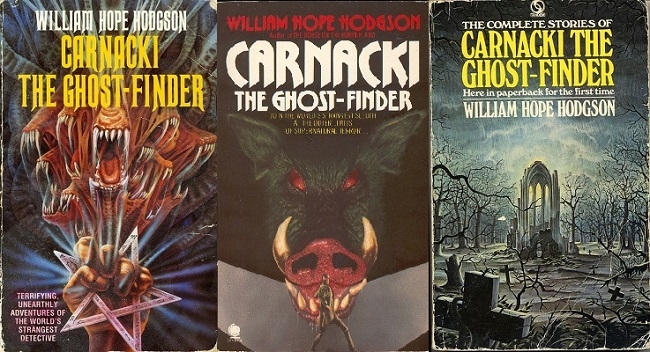
The Case of Charles Dexter Ward by H. P. Lovecraft - Read by Neil Hellegers
Charles Dexter Ward is a young man from a prominent Rhode Island family with a keen interest in history. He spends much of his childhood wandering the streets of ancient Providence, drawn inexorably to its architecture, as well as it’s colourful heritage. As an adult he continues his antiquarian leanings and subsequently discovers a hitherto unknown ancestor, Joseph Curwen. One with a shadowy past which hints at the pursuit of alchemy and other arcane practises. Charles decides to uncover the truth regarding Joseph Curwen and over time his interest changes into obsession. His Father begins to worry about his son’s fixation and the family Doctor, Marinus Bicknell Willett, decides to keep an eye upon the youth’s state of mind. A series of curious events hint at a growing eldritch malevolence and Doctor Willett begins to suspect that Charles is in grave danger from a menace stretching across time.
Charles Dexter Ward is a young man from a prominent Rhode Island family with a keen interest in history. He spends much of his childhood wandering the streets of ancient Providence, drawn inexorably to its architecture, as well as it’s colourful heritage. As an adult he continues his antiquarian leanings and subsequently discovers a hitherto unknown ancestor, Joseph Curwen. One with a shadowy past which hints at the pursuit of alchemy and other arcane practises. Charles decides to uncover the truth regarding Joseph Curwen and over time his interest changes into obsession. His Father begins to worry about his son’s fixation and the family Doctor, Marinus Bicknell Willett, decides to keep an eye upon the youth’s state of mind. A series of curious events hint at a growing eldritch malevolence and Doctor Willett begins to suspect that Charles is in grave danger from a menace stretching across time.
The Case of Charles Dexter Ward by H. P. Lovecraft, is a short novel that first appeared in Weird Tales in 1941. It is an uncomplicated story with a straightforward narrative arc. A young man’s obsession with an unsavoury ancestor leads to him replicating his alchemical and cabalistic research with suitably unpleasant results. However, it’s strength lies in the details that Lovecraft lavishes upon the proceedings. The loquacious descriptions of Providence, the historical details of 18th century life and culture in the State of Rhode Island and the inclusion of real characters from the era, such as Abraham Whipple, John and Moses Brown and Esek Hopkins is compelling. Once again Lovecraft alludes to ancient and arcane forces lurking beyond the veil of human understanding and perception. As ever the terror he evokes lies in the suggestion of something unfathomably evil and utterly alien impinging upon our world.
This unabridged reading of The Case of Charles Dexter Ward by Neil Hellegers is well paced and atmospheric. Hellegers, who has a great deal of experience with recording audio books, has clear diction and measured intonation, providing subtle detail to each character. His pronunciation of some of the complex names in the Cthulhu Mythos is assured. The story’s six hour running time is broken down into manageable audio chapters. Overall this is a well presented and exclusive reading of Lovecraft’s story, to be found only on Audible. It is accessible to both those familiar with the writings of H. P. Lovecraft and those who are new to his body or work. It certainly features one of his most notable and sinister villains. The story leaves several plot devices purposely vague and it is enjoyable to ponder on them after listening.
At the Mountains of Madness by H.P. Lovecraft - Read by Richard Coyle
At the Mountains of Madness is a story told from a first-person perspective by geologist William Dyer, a professor from Miskatonic University in Arkham, a fictional town in Essex County, Massachusetts USA. When a new scientific expedition to Antarctica is announced, Dyer breaks his silence and discloses hitherto unknown and closely kept secrets about his own explorations of the continent and exactly what befell his own expedition. He details how his team found the preserved remains of 14 prehistoric life forms unknown to science and outside of the existing geological and evolutionary timescale. He goes on to recount how some of the men and sled dogs are killed under mysterious circumstances. Dyer and graduate student Danforth, subsequently explored a mountain range by plane and discovered a vast, abandoned stone city, which is alien to any form of human architecture. What is the secret of this ancient ruin? Can Dyer convince subsequent explorers to stay clear of “the mountains of madness”.
At the Mountains of Madness is a story told from a first-person perspective by geologist William Dyer, a professor from Miskatonic University in Arkham, a fictional town in Essex County, Massachusetts USA. When a new scientific expedition to Antarctica is announced, Dyer breaks his silence and discloses hitherto unknown and closely kept secrets about his own explorations of the continent and exactly what befell his own expedition. He details how his team found the preserved remains of 14 prehistoric life forms unknown to science and outside of the existing geological and evolutionary timescale. He goes on to recount how some of the men and sled dogs are killed under mysterious circumstances. Dyer and graduate student Danforth, subsequently explored a mountain range by plane and discovered a vast, abandoned stone city, which is alien to any form of human architecture. What is the secret of this ancient ruin? Can Dyer convince subsequent explorers to stay clear of “the mountains of madness”.
At the Mountains of Madness was written by H.P. Lovecraft in 1931. The novella was originally serialised in Astounding Stories magazine in the US. While considered by fans to be an integral part of the Cthulhu Mythos some critics have argued that the author was attempting to “demythologise” his earlier work. I do not hold with this school of thought but I do consider the novella to be one of the author’s best works. It has a cosmic scope of vision and its sinister tone hints at so much more than the immediate horror. At the Mountains of Madness has proven so popular there have been several aborted attempts to bring it to the silver screen, with names such as Steven Spielberg and Guillermo Del Toro associated with the production. In the meantime the 2010 adaptation by Ladbroke Radio productions for BBC Radio 4 Extra, offers a superb five part dramatisation.
Read by actor Richard Coyle and accompanied with ambient music and sound effects, this concise audio version of the novella is a brooding and atmospheric affair. Purists should note that this is an abridged adaptation but the story does not suffer in any way by having some of the descriptive fat paired away. As for Richard Coyle his narration is authoritative and emotive. His dramatic range is extensive and he breathes life into the descriptions of the Cyclopean ruins. He clearly conveys the confusion and fear that Dyer feels as he explores the hidden city. This is a concise and well paced adaptation that breaks the story into five parts, with each episode running approximately 33 minutes. It is a very accessible version of Lovecraft’s classic tale and a great point of entry into the Cthulhu Mythos for those who are unfamiliar with it. At the Mountains of Madness is currently available on Audible.
The Silmarillion by J. R. R. Tolkien - Read by Martin Shaw (1998)
Let’s not be coy about this. J. R. R. Tolkien’s The Silmarillion is not in any way a light read. It has a complex narrative, filled with staggering amounts of lore to digest. I certainly wouldn’t recommend it to anyone as their first point of entry into the Tolkien Legendarium. I think this is a book that you tackle after The Hobbit and The Lord of the Rings, if you are sufficiently enamoured with the threads of a wider backstory that are alluded to in both those volumes. If that is the case then brace yourself. However, despite its sprawling histories and dense genealogies, The Silmarillion is an incredibly rewarding book. There is an air of majesty surrounding the epic stories it contains and its themes about the eternal struggle between the dark and the light are timeless. Due to the immense detail that Tolkien lavishes upon the text, Middle-earth feels like a genuine living, breathing world. A world of languages, culture, geography and history. To date it has never been equalled.
Let’s not be coy about this. J. R. R. Tolkien’s The Silmarillion is not in any way a light read. It has a complex narrative, filled with staggering amounts of lore to digest. I certainly wouldn’t recommend it to anyone as their first point of entry into the Tolkien Legendarium. I think this is a book that you tackle after The Hobbit and The Lord of the Rings, if you are sufficiently enamoured with the threads of a wider backstory that are alluded to in both those volumes. If that is the case then brace yourself. However, despite its sprawling histories and dense genealogies, The Silmarillion is an incredibly rewarding book. There is an air of majesty surrounding the epic stories it contains and its themes about the eternal struggle between the dark and the light are timeless. Due to the immense detail that Tolkien lavishes upon the text, Middle-earth feels like a genuine living, breathing world. A world of languages, culture, geography and history. To date it has never been equalled.
The Silmarillion is the jewel in the crown of J.R.R. Tolkien’s imaginative writing, a collection of narratives ranging in time from the Elder Days of Middle-earth, through the Second Age and the rise of Sauron, to the end of the War of the Ring. The Ainulindalë is a myth of the Creation. In the Valaquenta the nature and powers of the gods is described. Quenta Silmarillion is set in an age when Morgoth was the first Dark Lord and dwelt in Middle-earth. The Elves made war upon him in his impenetrable fortress in Angband for the recovery of the Silmarils. Three jewels containing the last remaining pure light of Valinor, seized by Morgoth and set in his iron crown. The Akallabêth recounts the downfall of the great island kingdom of Númenor at the end of the Second Age. Of the Rings of Power tells of the great events at the end of the Third Age, as told in The Lord of the Rings.
The Silmarillion is a history, albeit an invented one. The book is not linear, nor is it always chronological. It blends expository mythological texts with more traditional story-telling. Despite this structure, it is hard not to feel a sense of awe at the totality of Tolkien’s visions. The book is a prodigious chronicle, highlighting events and individuals with a scope too large to easily summarise. Needless to say, it can often be difficult to keep track of all the characters. Often one story dovetails or impacts upon another, so that it frequently feels like a single narrative rather than a collection of smaller stories. There are events such as the founding of great cities, establishing dynasties, the sundering of peoples and the inevitable waging of war. Throughout these events there is tragedy, beauty, torture, escapes, murders and betrayals. Some characters are noble where others are blighted by hubris, although it often goes ill for them. Although these tales are long and complex, they’re never dull.
The HarperCollins audiobook, recorded in 1998 by British actor Martin Shaw, is possibly the most accessible way for relatively new fans of Tolikien’s writings to tackle The Silmarillion. Shaw narrates with a strong degree of reverence that borders on religious solemnity, guiding listeners carefully through epic battles and epochal events, as well as the legions of protagonists, antagonists and side characters. Shaw skilfully handles the difficult pronunciations of Tolkien's invented languages and inspires a frisson of pleasure when he breaks the straight narration to slip into character voices. The measured pacing of his reading is invaluable to the listener in allowing them to reflect upon the unfolding story and then digest it. I would also recommend listening to this audiobook while having a map of Beleriand to hand. Seeing the geography of the regions discussed is a major asset in understanding the events described. The Silmarillion read by Martin Shaw is currently available on Audible and would make a welcome addition to any Tolkien fan’s library.
Unfinished Tales by J. R. R. Tolkien - Read by Timothy and Samuel West (2021)
First published in 1980, Unfinished Tales is a collection of stories by J. R. R. Tolkien, that spans from the Elder Days of Middle-earth to the end of the War of the Ring. For those who have read both The Silmarillion and The Lord of the Rings, this book provides additional insights and more detailed accounts of many key events of the First, Second and Third age. Such as Gandalf’s informative tale of how he came to send the Dwarves to Bag-End in search of a burglar, the appearance of the sea deity Ulmo before Tuor on the coast of Beleriand and an in depth description of the military organization of the Riders of Rohan. This collection of stories and essays by J. R. R. Tolkien were never fully completed during the author’s lifetime but were posthumously edited by his son Christopher Tolkien and present with notes, annotations and were required a detailed commentary.
First published in 1980, Unfinished Tales is a collection of stories by J. R. R. Tolkien, that spans from the Elder Days of Middle-earth to the end of the War of the Ring. For those who have read both The Silmarillion and The Lord of the Rings, this book provides additional insights and more detailed accounts of many key events of the First, Second and Third age. Such as Gandalf’s informative tale of how he came to send the Dwarves to Bag-End in search of a burglar, the appearance of the sea deity Ulmo before Tuor on the coast of Beleriand and an in depth description of the military organization of the Riders of Rohan. This collection of stories and essays by J. R. R. Tolkien were never fully completed during the author’s lifetime but were posthumously edited by his son Christopher Tolkien and present with notes, annotations and were required a detailed commentary.
Unfinished Tales also contains the only stories about the island of Numenor before its downfall, and all that is known about the Five Wizards that made up the Istari. Christopher Tolkien’s notes are invaluable, highlighting any deviations in lore with other books in the Tolkien Legendarium. They also help the reader to grasp the evolution of many of the tales and subject matter and provide a sense of context within the rest of his Father’s writings. The commercial success of Unfinished Tales demonstrated that there was still a strong demand for Tolkien's work after his death and that readers would avidly consume any material that provided further insight into the history of Middle-earth. Encouraged by the result, Christopher Tolkien embarked upon the more ambitious twelve-volume work entitled The History of Middle-earth which encompasses nearly the entire body of his Father's writings about Middle-earth.
This May HarperCollins released a new unabridged audio recording of this seminal text featuring the combined vocal talents of Father and Son, Timothy West CBE and Samuel West. The production is exemplary and the quality of reading outstanding. Both Messr West Senior and Junior, being established actors, navigate the choppy waters of pronouncing names correctly with ease. I would go so far as to say that their combined flawless diction adds immensely to the proceedings. The central narrative is told by Samuel West and his Father Timothy reads Christopher Tolkien’s annotations and notes. Furthermore, they read at a measured pace allowing the listener to digest the narrative which at times can be quite complex. It is a far cry from previous unofficial audio versions which have been read in the most perfunctory fashion and without any degree of enthusiasm. Hence I wholeheartedly recommend this version of Unfinished Tales due to its accessibility and quality.
The Demon-Haunted World by Carl Sagan
“For me, it is far better to grasp the Universe as it really is than to persist in delusion, however satisfying and reassuring.”
The problems that beset the modern world are complicated and nuanced. Thus any potential solutions will be equally complex and subtle. There are no quick fixes for issues such as climate change or nuclear proliferation and anyone trying to sell you one is either a charlatan or a fool. In his book, The Demon-Haunted World, Carl Sagan strongly advocates that adopting a scientific approach to thinking is essential in a modern democracy. By this he means questioning ideas critically and requiring evidence based arguments. If something cannot be effectively measured, tested or verified we should be deeply sceptical of it. He even goes so far as to argue that it is patriotic to ask questions and that any person, institution or organisation that avoids such scrutiny should be deemed suspect. Published in 1995 Sagan’s concerns regarding the coming century have proven sadly accurate. A quarter of a century ago, he predicted the rise of misinformation, fake news and alternative facts. When information is controlled and a population lacks critical thinking it becomes "unable to distinguish between what feels good and what’s true".
“For me, it is far better to grasp the Universe as it really is than to persist in delusion, however satisfying and reassuring.”
The problems that beset the modern world are complicated and nuanced. Thus any potential solutions will be equally complex and subtle. There are no quick fixes for issues such as climate change or nuclear proliferation and anyone trying to sell you one is either a charlatan or a fool. In his book, The Demon-Haunted World, Carl Sagan strongly advocates that adopting a scientific approach to thinking is essential in a modern democracy. By this he means questioning ideas critically and requiring evidence based arguments. If something cannot be effectively measured, tested or verified we should be deeply sceptical of it. He even goes so far as to argue that it is patriotic to ask questions and that any person, institution or organisation that avoids such scrutiny should be deemed suspect. Published in 1995 Sagan’s concerns regarding the coming century have proven sadly accurate. A quarter of a century ago, he predicted the rise of misinformation, fake news and alternative facts. When information is controlled and a population lacks critical thinking it becomes "unable to distinguish between what feels good and what’s true".
Presented as a collection of essays The Demon-Haunted World can be read in a linear fashion, or you can select specific chapters as each is broadly self contained. Sagan recounts his own relationship with science in the fifties and sixties and how it enthused him, especially when he learned how to think critically and reason for himself. He then focuses on how such skills are conspicuously absent from Western teaching curriculums, leaving us with a society that is unable and at times unwilling to think independently. He reflects upon how knowledge and academia are often seen as elitist and “uncool”. However, he remains empathetic and non-judgemental throughout, advocating that people are not too stupid too learn but that society has instilled in them a mindset that they can’t, as it’s too hard. Hence he addresses the allure of pseudoscience, horoscopes, crystals, conspiracy theories and his analysis shows that they’re similar to the superstitions that were prevalent in the past.
"The dumbing down of American is most evident in the slow decay of substantive content in the enormously influential media, the 30 second sound bites (now down to 10 seconds or less), lowest common denominator programming, credulous presentations on pseudoscience and superstition, but especially a kind of celebration of ignorance.”
In fact Sagan is incredibly generous in his assessment of many examples of science-woo. He acknowledges that they come from a desire to know the universe and that the methodology is what leads to incorrect conclusions. Another argument he explores is that societal change, especially the move from an industrial economy to a more information based model means that power and decision making is centralised into the hands of smaller groups. This can lead to people refraining from asking questions per se because religious, political, scientific and technological authorities do all the heavy lifting for us. The resultant information is then refracted through the prism of a small group of closely aligned and partisan media that have a monopoly on communication platforms. However, applying the scientific method to our daily thinking is a way to break this cycle.
After forensically dissecting such subjects as possessions, demons, UFOs and reincarnation The Demon-Haunted World then addresses issues stemming from science itself. The misuse and morality of science, especially the misuse of psychiatric authority. It is to Sagan’s credit that he is comfortable applying the same scepticism to both pseudoscience and science itself. But perhaps the best parts of the book and when he offers a simple set of processes that are beneficial to adopt when pondering weighty subjects. What he calls the “baloney detection kit”. Nine intellectual tools, such as Occam’s Razor, to test the validity of a premise, idea or more importantly, political statement. Again it is important to stress that Sagan teaches compassionately, unapologetically and poetically how to ask questions for yourself. He is reassuring and encouraging and not as didactic as one may assume.
“Science is an attempt, largely successful, to understand the world, to get a grip on things, to get hold of ourselves, to steer a safe course. Microbiology and meteorology now explain what only a few centuries ago was considered sufficient cause to burn women to death.”
It is the book’s tone that is a constant delight, considering the weighty and somewhat dry nature of the subject of science based critical thinking. I am a great admirer of Richard Dawkins but although a fine thinker, he is not the diplomat and people person that Sagan was. The unifying ideal that Sagan continuously returns to is the search for answers from all quarters of society, be they scientific or not. However he clearly highlights the failings of contemporary western education and how we are not taught to ask questions. Instead we are told what the current accepted wisdom is and what must be done to arrive at the correct conclusion. He is particularly scathing of the US being a result oriented society, obsessed with grades along with an erroneous concept of what achievement actually is. Furthermore he is mindful of how this coupled with indifferent thinking puts both democracy and freedom at risk. And again, Carl Sagan deduced all this twenty five years ago.
The Demon-Haunted World is a book about finding a sense of wonder in life and that science driven, critical thinking does not diminish that. Sagan was a great communicator and he makes some of the more complex scientific ideas as accessible as they can be made. However, as a scientist he does like to cite multiple examples to illustrate and validate his points, so this is a book that requires focus. Therefore the chapter by chapter approach can serve well. I tackled this book via an audio version, featuring unabridged readings by Cary Elswes, Seth McFarlane, LeVar Burton and Carl Sagan’s wife, Ann Druyan. Overall, I feel that this is one of the most profound and thought provoking books I’ve experienced in recent years. It does highlight growing causes for concern but it also provides a sense of hope. I believe that the scientific method not only equips us as a society to tackle the major issues facing the world but that it can also make us more effective citizens. By questioning and assessing what those in authority advocate, we can determine the validity and rectitude of their claims.
“Claims that cannot be tested, assertions immune to disproof are veridically worthless, whatever value they may have in inspiring us or in exciting our sense of wonder.”
Audiobooks
In my youth I was a prodigious reader. I spent many a happy weekend visiting my local library and often spent my pocket money on books as a child. Overtime, I changed from reading fiction to non-fiction. More recently, a lot of my reading has been done online, consumed either via my office PC or tablet. That’s not to say that I don’t buy paperback or hardback books anymore. I still consider this to be the preferred experience. There is something fundamentally exciting about sitting down in a comfy chair, reading at your own pace, away from distractions. However last year I injured my left arm and I have subsequently found holding a large hardback book to be a difficult experience. So for the sake of convenience I started listening to audiobooks instead. I’ve always enjoyed them considering them a great alternative to traditional print media. What my recent foray into this format has taught me is how much the medium of the audiobook has grown.
In my youth I was a prodigious reader. I spent many a happy weekend visiting my local library and often spent my pocket money on books as a child. Overtime, I changed from reading fiction to non-fiction. More recently, a lot of my reading has been done online, consumed either via my office PC or tablet. That’s not to say that I don’t buy paperback or hardback books anymore. I still consider this to be the preferred experience. There is something fundamentally exciting about sitting down in a comfy chair, reading at your own pace, away from distractions. However last year I injured my left arm and I have subsequently found holding a large hardback book to be a difficult experience. So for the sake of convenience I started listening to audiobooks instead. I’ve always enjoyed them considering them a great alternative to traditional print media. What my recent foray into this format has taught me is how much the medium of the audiobook has grown.
As an Amazon Prime customer the most immediate port of call for audiobooks is the Audible service. There is a 30 day trial which gives you 1 credit, allowing you to purchase for free any available title. This is particularly beneficial as you can choose a new release if you see fit. Of course other providers are available and should not be overlooked. After my trial expired I was offered a further discount if I continued as a subscriber, which I accepted. The terms were favourable. Hence since last November I have acquired 5 audiobooks and only spent £12. There’s always a deal to be had and Amazon would rather have some of your money rather than none. The books can be downloaded and accessed whether you are currently subscribing or not and played on a variety of platforms. I find the seamless integration with the Amazon Echo very useful. I also like the feature where you can continue listening from where you previously finished, across multiple devices.
Although I enjoy reading for myself, I also like being read to. I think the key to a good audiobook is finding an appropriate narrator. If this is done correctly, then an audiobook becomes a far more satisfying experience. I would also argue that the sharing of stories touches something very primeval within us and elicits not only an intellectual response but something very emotional as well. There are other benefits to audiobooks as well. For example when listening to the works of J.R.R. Tolkien it is interesting to hear the correct pronunciation of the various languages. Also, leisurely paced narration that follows the punctuation correctly, allows the listener to ponder and digest what they’re listening to. And then there is the calming quality of certain narrators who bring an additional quality to the proceedings due to their dulcet tones.
At present my listening tastes favour non-fiction. I like material that makes you think and has a degree of factual and intellectual rigour. Hence I have listened to the following over the last 4 months:
How Not to Be Wrong: The Art of Changing Your Mind by James O'Brien.
Politically Homeless by Matt Forde.
How to Be a Liberal: The Story of Liberalism and the Fight for Its Life by Ian Dunt.
I'm a Joke and So Are You: Reflections on Humour and Humanity by Robin Ince.
The Demon-Haunted World: Science as a Candle in the Dark by Carl Sagan.
All of these have been very rewarding and food for thought. All except the Carl Sagan book are read by their respective authors.
The Lord of the Rings Unabridged Audio Soundscape Project
I have reviewed several audio recordings of J.R.R. Tolkien’s The Lord of the Rings over the years. My personal favourite is the BBC Radio adaptation from 1981, which has a superb cast of British character actors and does a wonderful job of adapting the text without diminishing the scope of the narrative. This is a dramatisation, rather than a straightforward reading of the book. However, if the latter is what you are looking for then the go to version is 1990 recording by Robert Inglis. He provides unique voices for all characters and even sings the songs included in the source text. And then there is the quirky Mind’s Eye Production from 1979, which is another dramatisation. This is a flawed version with a focus upon the character dialogue with much of the lore removed. Yet it has its charm and includes the often omitted Tom Bombadil. However, quite recently I accidentally stumbled upon a fourth adaptation and was surprised not only by the quality of the production but the curious history associated with it.
I have reviewed several audio recordings of J.R.R. Tolkien’s The Lord of the Rings over the years. My personal favourite is the BBC Radio adaptation from 1981, which has a superb cast of British character actors and does a wonderful job of adapting the text without diminishing the scope of the narrative. This is a dramatisation, rather than a straightforward reading of the book. However, if the latter is what you are looking for then the go to version is 1990 recording by Robert Inglis. He provides unique voices for all characters and even sings the songs included in the source text. And then there is the quirky Mind’s Eye Production from 1979, which is another dramatisation. This is a flawed version with a focus upon the character dialogue with much of the lore removed. Yet it has its charm and includes the often omitted Tom Bombadil. However, quite recently I accidentally stumbled upon a fourth adaptation and was surprised not only by the quality of the production but the curious history associated with it.
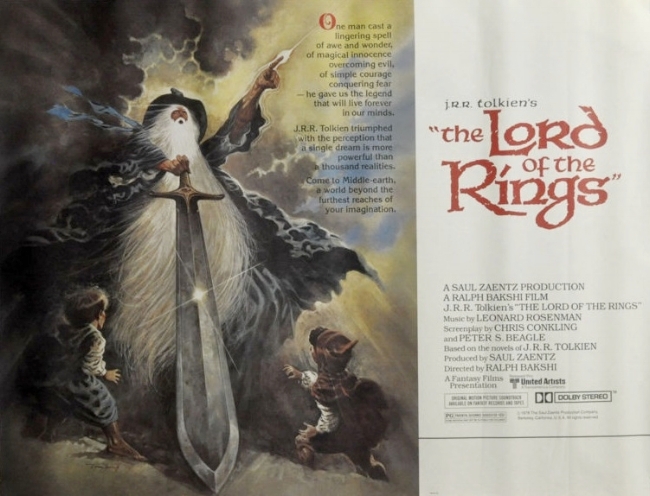
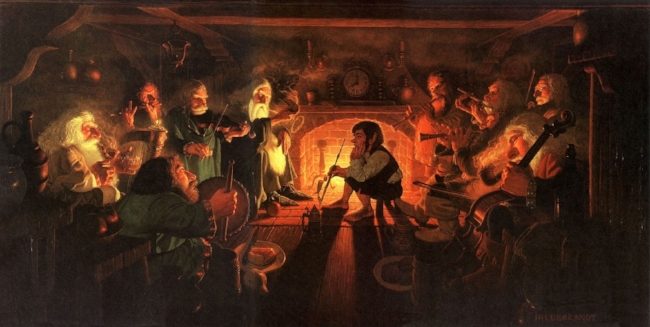
The Lord of the Rings Unabridged Audio Soundscape Project, to give it its official title, is a reading by American filmmaker and artist, Phil Dragash from 2013. This 48 hour long version features a spirited reading by Mr Dragash, who gives all major characters distinct personalities, as well as ambient sound effects and music by Howard Shore from the feature film trilogy. This adaptation is presented as three books with each chapter being an individual recording. Initially this unique production was available on YouTube and the audio was accompanied by hand painted artwork, again by Phil Dragash. Sadly due to copyright reasons, this impressive one man creation was taken down and is not readily available as it does somewhat stray from the traditional boundaries of what is a “fan production”. However the excellent original artwork is still available on Phil’s website.
The Lord of the Rings Unabridged Audio Soundscape Project is the very definition of a labour of love. It would appear that this recording took three years to produce and refine. It is made to a very high standard, although there are a few misread lines here and there. Phil does well with providing interesting voices for so many characters and despite not being a professional actor he interprets the dialogue well and provides it with dramatic inflection. The sound effects add to the atmosphere, as does the clever use of Howard Shore’s iconic score. It provides an emotional anchor and a sense of familiarity to the proceedings. Sadly, it also raises legal issues which is why this production is not widely available. However, Google is your friend. Seek and you will find as they say. You will be rewarded with a distinctive audio adaptation of The Lord of the Rings, comparable to both the BBC and Rob Inglis versions.




The Lord of the Rings - BBC Radio Adaptation (1981)
In 1981 BBC Radio 4 produced an ambitious adaptation of The Lord of the Rings, presenting Tolkien’s novel in twenty six, thirty minute episodes. As with all adaptations some material had to be removed, but overall the BBC production was not excessively abridged and followed the plot faithfully. The characterisations and dialogue were extremely well realised and music by composer Stephen Oliver was very much in the style and idiom of Tolkien. This was a production of the highest pedigree and a major event for the BBC at the time. The series was heavily promoted, receiving front page status in The Radio Times, the UK’s premier TV guide and bestselling magazine. Although initial reviews were varied, the series immediately gained a cult following with fans trading episodes recorded on cassette tape. Word of mouth and substantial listening figures soon lead to revised opinions from the press, along with the immortal slogan "Radio is Hobbit 4-ming".
In 1981 BBC Radio 4 produced an ambitious adaptation of The Lord of the Rings, presenting Tolkien’s novel in twenty six, thirty minute episodes. As with all adaptations some material had to be removed, but overall the BBC production was not excessively abridged and followed the plot faithfully. The characterisations and dialogue were extremely well realised and music by composer Stephen Oliver was very much in the style and idiom of Tolkien. This was a production of the highest pedigree and a major event for the BBC at the time. The series was heavily promoted, receiving front page status in The Radio Times, the UK’s premier TV guide and bestselling magazine. Although initial reviews were varied, the series immediately gained a cult following with fans trading episodes recorded on cassette tape. Word of mouth and substantial listening figures soon lead to revised opinions from the press, along with the immortal slogan "Radio is Hobbit 4-ming".
The trilogy was adapted for radio by the then novice writer Brian Sibley and veteran dramatist Michael Bakewell. It was directed by Jane Morgan and Penny Leicester, who were both experienced in radio dramas. The cast was made up of numerous fine British actors and voice artists such as Ian Holm as Frodo Baggins, John Le Mesurier as Bilbo Baggins and Sir Michael Horden as Gandalf. It also featured Robert Stephens as Aragorn and Peter Woodthorpe as Gollum. The adaptation excised a lot of the "excess fat" from the source text allowing the actors to concentrates on plot, character development and atmosphere. The attention to detail of this production was extremely high with Christopher Tolkien approving the scripts, leading to an authentic depiction of Middle Earth. Great care was taken with pronunciation of words and the delivery of dialogue spoken in Elvish and the Black Speech.
Upon its initial release each of the original twenty six episodes received two broadcasts per week, this remains standard practice for many BBC radio serials. After a successful first run the twenty six part series was subsequently edited into thirteen hour-long episodes, restoring some dialogue originally cut for timing, re-arranging some scenes for dramatic impact and adding linking narration and music cues. The re-edited version was released on both cassette tape and CD boxsets during the eighties and nineties and included bonus material such as the Stephen Oliver’s complete soundtrack for the series. It is this version of the BBC adaptation that has proven most popular and has been most commonly distributed and syndicated over the years.
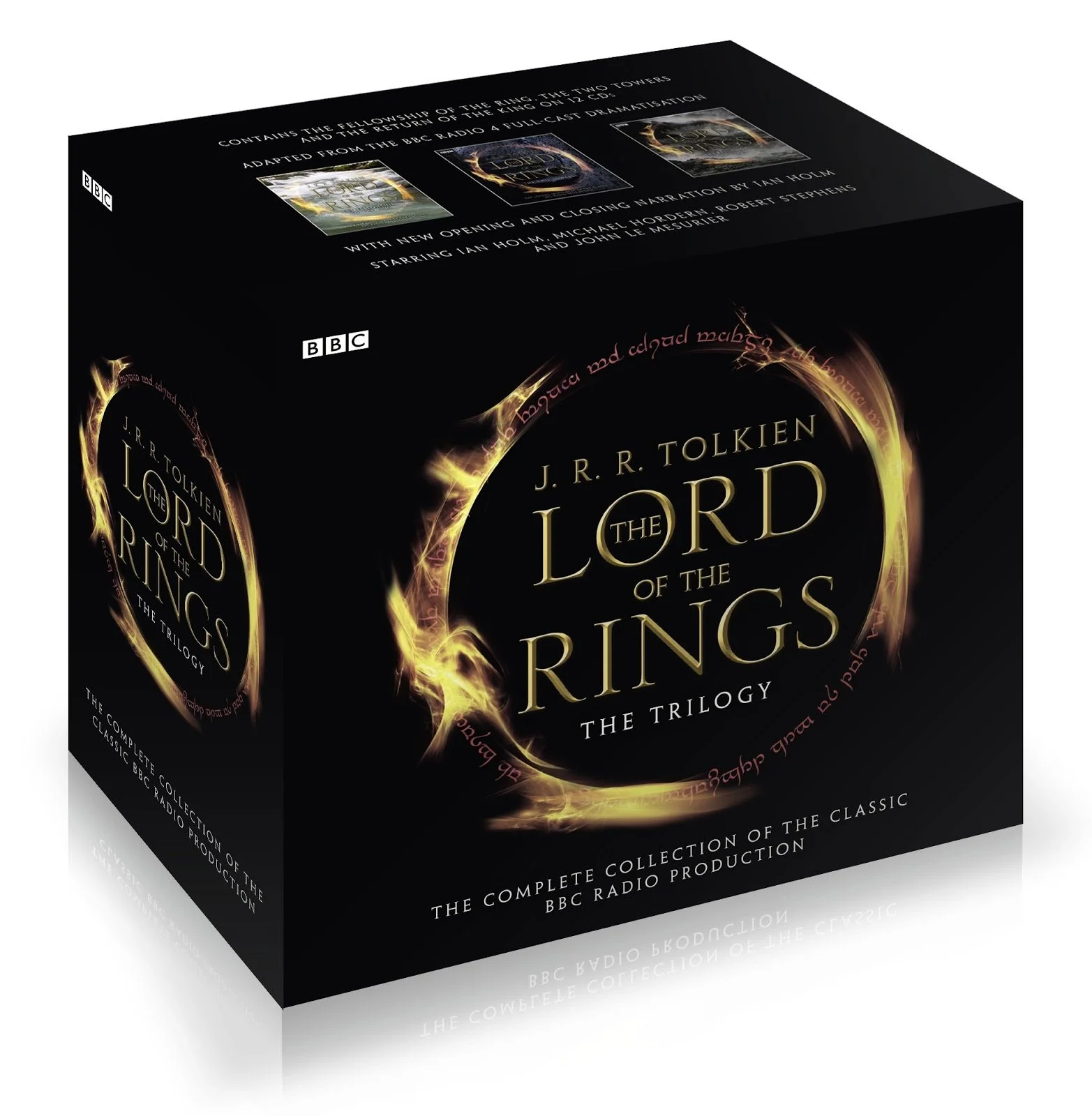
In 2002 due to the commercial success of Peter Jackson's cinematic adaptations of The Lord of the Rings, the BBC re-issued a revised version of their 1981 series. This comprised of three CD sets corresponding to the three original book volumes (The Fellowship of the Ring, The Two Towers and The Return of the King). This version omitted the original episode divisions and included a new opening and closing narration recorded by Ian Holm. The re-edited version also included some additional music cues. However some fans felt that the re-arranging the material in this way actually spoilt the drama and the flow of the narrative. The original edit of the radio series was constructed so that the separate stories of Frodo and Sam ran in parallel to that of the rest of the Fellowship. It heightened the drama and afforded listeners a clearer understanding of the time line.
Tolkien's linear style proved to be a good fit for radio, with Sibley and Bakewell’s adaptation confidently staying true to the source text. Like Peter Jackson’s movies, some story elements have been cut, such as Tom Bombadil, along with the journey through the Old Forest and the Barrow Downs. However the Scouring of the Shire has been included, ensuring that Tolkien’s codicil is in place and therefore ending the tale correctly. One of the reasons this particular adaptation was so successful was due to the care and attention spent on the voice casting as well as the prudent use of music and song. Tolkien went to great pains to make both language and verse and integral part of Middle-earth and Sibley and Bakewell did not shy away from exploring this facet of the story. The BBC Radiophonic workshop also provided some pertinent sound effects and ambient sounds. As a result both the One Ring and the Nazgul have their own distinct audio characteristics.
Because the production elected to intercut the separate storylines to facilitate a more familiar style of narrative, there was a requirement to bridge a few expository gaps. Writers Brian Sibley and Michael Bakewell tackled this issue in an innovative fashion, adapting text from Tolkien’s later book Unfinished Tales which subsequently explained these literary grey areas. For example during the Nazgul’s quest for the One Ring, they visit Isengard and challenge Saruman over the whereabouts of The Shire. He advises them to pursue Gandalf. However as they follow Mithrandir’s trail they chance upon Grima Wormtongue, who is hurrying to Isengard with a message. It is he that gives up the location of the Shire upon threat of death. These narrative additions help with the flow of the story without breaking the lore.
This exceptional adaptation still remains accessible to both established Tolkien fans and those who have yet to read the trilogy. It is also a quintessential example of BBC Radio drama at its best. Although I enjoyed Peter Jackson’s movies upon their initial release, I feel that the BBC radio adaptation, despite being a different medium, is the better of the two. Peter Woodthorpe’s Gollum is a far more nuanced and sinister portrayal than Andy Serkis’s bi-polar performance. Also Jack May’s King Theoden is far more sympathetic and regal than Bernard Hill’s. Apart from reading the source text, this is the next best way to lose oneself in Tolkien’s classic story. It allows the listener to enjoy the outstanding vocal performances while conjuring up their own depictions of the characters in their mind’s eye. Where Peter Jackson’s movies are very much his interpretation of Middle-earth, the BBC radio adaptation of The Lord of the Rings is a far more faithful and nuanced dramatisation. Due to the medium of radio the strong story and characters are not overwhelmed or marginalised by spectacle.

The Lord of the Rings - The Mind's Eye Radio Adaptation (1979)
When discussing the various audio dramatizations of J. R. R. Tolkien's The Lord of the Rings, people often think of the BBC Radio adaptation by default. However it should be noted that it was not the first. An earlier version was made and broadcast in 1979 on US National Public Radio and was subsequently released as an audiobook. It was produced by The Mind's Eye, a company who were responsible for numerous adaptations of classic literature for radio at the time. The script written by Bernard Mayes is a somewhat abridged version of the book. The eleven hour running time focuses significantly on the dialogue, with much of the back history, lore and expositionary narration removed.
When discussing the various audio dramatizations of J. R. R. Tolkien's The Lord of the Rings, people often think of the BBC Radio adaptation by default. However it should be noted that it was not the first. An earlier version was made and broadcast in 1979 on US National Public Radio and was subsequently released as an audiobook. It was produced by The Mind's Eye, a company who were responsible for numerous adaptations of classic literature for radio at the time. The script written by Bernard Mayes is a somewhat abridged version of the book. The eleven hour running time focuses significantly on the dialogue, with much of the back history, lore and expositionary narration removed.
The production was very low budget, drawing upon local amateur actors and friends of the producer. There was extensive use of library music and homemade sound effects. Due to scheduling issues the cast often recorded their lines separately resulting in some curiously stilted exchanges of dialogue in key scenes. The voice cast also had to provide multiple character voices which at times causes a degree of confusion. It is also clear that none of the production were Tolkien scholars. The pronunciation of many names and places are often incorrect and the clumsy adaptation results in several plot holes and unresolved storylines.
However despite these flaws this production proved popular at the time of its broadcast. Its simplicity is actually quite a benefit, making this adaptation accessible for a younger audience or those with only a passing interest in Tolkien's work. It should also be noted that this production does not omit Tom Bombadil and presents his part of the story in quite an effective fashion. This production has been distributed by several audio book companies over the years and can even be found on "You Tube". Although purists may eschew The Mind’s Eye production for its obvious faults, there is still much to enjoy from this drama, if it is approached in the right fashion.
The Complete Ghost Stories of M R James – Read By David Collings (2007)
The supernatural fiction of Montague Rhodes James is a major milestone in the history of the literary ghost story. His work tangibly helped shape the genre as we know it today, focusing on classic themes such as retribution, vengeance and other aspects of traditional mythology literature. The protagonists are often socially dysfunctional intellectuals who face peril due to their excessive curiosity. The very physical nature of horror often masquerades for deeper psychological issues. They also serve as an invaluable window into the socioeconomic structure of Edwardian Britain.
The supernatural fiction of Montague Rhodes James is a major milestone in the history of the literary ghost story. His work tangibly helped shape the genre as we know it today, focusing on classic themes such as retribution, vengeance and other aspects of traditional mythology literature. The protagonists are often socially dysfunctional intellectuals who face peril due to their excessive curiosity. The very physical nature of horror often masquerades for deeper psychological issues. They also serve as an invaluable window into the socioeconomic structure of Edwardian Britain.
In more recent years critics have tried to determine if the author’s personal life and idiosyncrasies are reflected in his written work. Is there a hidden subtext within the narrative, hinting at inner conflict and repression in James own life? It’s quite possibly so. Either way there is no doubt that M R James is one of the finest authors of short stories, this country has known. His influence is still seen today in the works of Brian Lumley, James Herbert and Clive Barker. Furthermore his stories still have the capacity to disturb the reader.
Recently I was pleased to discover a comprehensive audio book featuring the complete collection of M R James ghost stories, read by David Collings. Previously selected stories had been recorded in the middle Eighties by the great Sir Michael Horden. Sadly these are no longer available. The new recordings are presented in two volumes by Craftsman Audio Books. They contain all short stories in chronological order and are unabridged. Atmospheric music is used strategically to bridge the material.
David Collings reads the works of M R James as they’re meant to be heard. He is word perfect and his delivery is smooth and lyrical. He alternates between regional accents and Latin with polished aplomb. Collings must be an M R James aficionado as he brings out all the sly humour of the Edwardian text, adding charm and chilling nuance to every story. Although I am a strong advocate of reading for oneself this material lends itself strongly to the audio book format and is an utter delight. I cannot praise this collection enough and consider it to be the perfect way to while away the cold winter nights.