
Spock
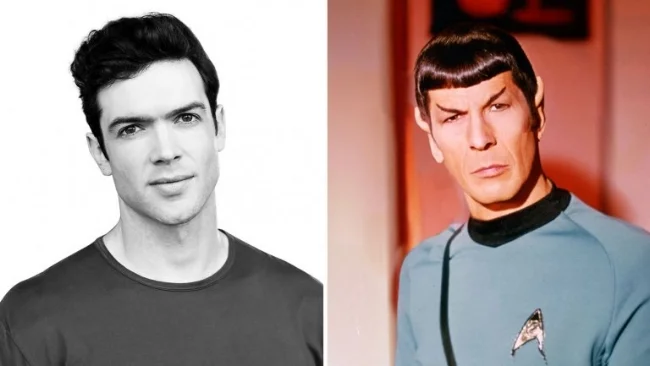
I’ve written in the past about the problems that can arise from untempered fandom. If enthusiasm and inspired love are not balanced by contextual reason and a healthy dose of reality, then it can get a little bit over zealous. Need I cite Star Wars fans and The Last Jedi as an example of unchecked fandom. However, I am now going to stray a little into the “Twilight Zone” of fandom myself, although I shall attempt to apply a healthy dose of realism into the proceedings. Because I want to discuss the fact that Ethan Peck has been cast to play one of the most iconic characters in popular culture. Yes, Gregory Peck’s grandson (and there’s plenty of “baggage” there) has been cast to play Spock in season two of Star Trek: Discovery. Furthermore, rather than be concerned, I am very excited by this development and I really look forward to seeing how this pans out.
I’ve written in the past about the problems that can arise from untempered fandom. If enthusiasm and inspired love are not balanced by contextual reason and a healthy dose of reality, then it can get a little bit over zealous. Need I cite Star Wars fans and The Last Jedi as an example of unchecked fandom. However, I am now going to stray a little into the “Twilight Zone” of fandom myself, although I shall attempt to apply a healthy dose of realism into the proceedings. Because I want to discuss the fact that Ethan Peck has been cast to play one of the most iconic characters in popular culture. Yes, Gregory Peck’s grandson (and there’s plenty of “baggage” there) has been cast to play Spock in season two of Star Trek: Discovery. Furthermore, rather than be concerned, I am very excited by this development and I really look forward to seeing how this pans out.
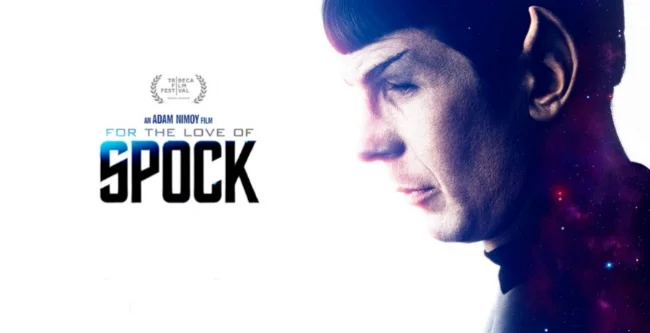
As a fan of not only Star Trek but wider popular culture, I believe that specific iconic characters are extremely pertinent and in their own way, beacons of hope and cultural touchstones for good in contemporary society. I personally believe that Spock as a fictious character is a positive force in the world, comparable to the likes of Sherlock Holmes. These characters are inspirational, provide hope and area source of introspection and self-reflection. The genius of Star Trek and other science fiction vehicles is that they provide alien characters and culture as a medium to examine the human condition. Leonard Nimoy struggled with this complex conundrum throughout his life, but he ultimately reconciled himself to the positive aspects of embracing such a multifaceted character as Spock, and saw him as a force for good. I sincerely hope that Ethan Peck has a similar opportunity, because we really need the wisdom and “humanity” of Spock in the wider world at the moment.
I like many others, was initially flummoxed by the aesthetic changes that came with Star Trek: Discovery. However, after a while I adjusted to this shift and focused upon the narrative of the new show and soon found that it embraced much of what I consider to be the core values of classic TOS. Considering the timeline and the specific lore that this new show has chosen to explore, ignoring Spock Prime is not really an option and I had a gut feeling that the character would have to be brought into the narrative at some point. It’s a bold move considering the esteem in which Spock is held by fans and the fact that only two other actors have ever played the character as an adult. I personally am not au fait with Ethan Peck’s previous work as an actor. However, I am prepared to continence the fact that the showrunners of Star Trek: Discovery are not going to doing anything rash when it comes to casting such a key role in Star Trek lore.
So rather than wringing my hands and focusing on the negative, I am prepared as a Star Trek fan to take a calculated gamble and remain positive about not only the casting of Ethan Peck, but the fact that the current writers wish to explore this legendary character further. So, I shall be looking forward to season two of Star Trek: Discovery when it premieres at the end of the year. I’m sure that the exploration of Spock’s career, prior to him meeting James T. Kirk will be insightful and informative. I believe that the essential character of Spock still has much to teach us and that this significant period of his life, associated with Captain Christopher Pike will be an most illuminating. As for actor Ethan Peck, welcome to the Star Trek family and I hope that this iconic role that you’ve bravely accepted will be both challenging and rewarding.




![Star Trek Discovery S01E01 The Vulcan Hello.mkv_snapshot_07.19_[2017.09.25_17.54.13].jpg](https://images.squarespace-cdn.com/content/v1/54e310f0e4b0f4a6ba3ac899/1506359625650-D976K1OBW47HSSSFN2S2/Star+Trek+Discovery+S01E01+The+Vulcan+Hello.mkv_snapshot_07.19_%5B2017.09.25_17.54.13%5D.jpg)


Star Trek: Discovery
Finally, it’s arrived. The first new Star Trek TV show for twelve years. Star Trek: Discovery became available for Netflix UK customers to watch at 8:00 AM this morning. Needless to say, I cleared my schedule in advance so I could sit down and watch this much-anticipated show. Furthermore, I made it my business to avoid Twitter and the internet until I had finished viewing the first two episodes because I knew in advance that Star Trek: Discovery was going to be controversial and divide fans. Having now seen The Vulcan Hello and Battle at the Binary Stars and taken time to reflect upon both episodes, I have reached the following conclusion. From what we’ve seen so far, the spirit and emotional heart of Star Trek, is reflected in the new show. I found the characters to be interesting and well defined. Lead performances by Michelle Yeoh, Sonequa Martin-Green and Doug Jones were good and there’s an intriguing crew dynamic. The story has already touched upon numerous canonical themes and I am eager to learn more about the main characters and the universe they inhabit. I therefore shall continue to watch Star Trek: Discovery. However, not everyone feels the same, as my subsequent forays online have shown. Much has changed in this new iteration of Star Trek and as we know, some fans do not like change in any way, shape, or form.
Finally, it’s arrived. The first new Star Trek TV show for twelve years. Star Trek: Discovery became available for Netflix UK customers to watch at 8:00 AM this morning. Needless to say, I cleared my schedule in advance so I could sit down and watch this much-anticipated show. Furthermore, I made it my business to avoid Twitter and the internet until I had finished viewing the first two episodes because I knew in advance that Star Trek: Discovery was going to be controversial and divide fans. Having now seen The Vulcan Hello and Battle at the Binary Stars and taken time to reflect upon both episodes, I have reached the following conclusion. From what we’ve seen so far, the spirit and emotional heart of Star Trek, is reflected in the new show. I found the characters to be interesting and well defined. Lead performances by Michelle Yeoh, Sonequa Martin-Green and Doug Jones were good and there’s an intriguing crew dynamic. The story has already touched upon numerous canonical themes and I am eager to learn more about the main characters and the universe they inhabit. I therefore shall continue to watch Star Trek: Discovery. However, not everyone feels the same, as my subsequent forays online have shown. Much has changed in this new iteration of Star Trek and as we know, some fans do not like change in any way, shape, or form.
Two standout alterations that become very apparent after watching Star Trek: Discovery are its narrative format and visual aesthetics. This new show has opted for longer-form, serialised storytelling, rather than the traditional, self-contained, story per episode format. Star Trek has always had long term narrative arcs, especially in later shows such as Deep Space Nine and Enterprise but this is different. Star Trek: Discovery has chosen to take a different route, opting to pitch a single and hopefully multi-faceted narrative split over fifteen episodes. However, it is the decision to deviate from the established aesthetic style that is proving to be the biggest stumbling block for purist fans. The visual design of specific races, ships, uniforms and period technology has been clearly established and maintained since the eighties. Thus, fans have specific pre-existing notions of what this period in Star Trek history should look like. This is the era of Christopher Pike, Captain of the Enterprise a decade before James T. Kirk. However, all of this has been effectively jettisoned. Klingons have been redesigned and look far more alien now. The aesthetic of the ships and technology looks far more like that seen in the Kelvin Timeline, despite the new show being set in the prime universe.
![Star Trek Discovery S01E02 Battle at the Binary Stars.mkv_snapshot_21.38_[2017.09.25_18.01.26].jpg](https://images.squarespace-cdn.com/content/v1/54e310f0e4b0f4a6ba3ac899/1506359677594-87VFFU39Q5TUG5SO42RX/Star+Trek+Discovery+S01E02+Battle+at+the+Binary+Stars.mkv_snapshot_21.38_%5B2017.09.25_18.01.26%5D.jpg)
Star Trek: Discovery has had a troubled journey to our screens. Show runner Bryan Fuller left after a “difficult relationship” with CBS. The production was delayed and there have been constant rumours about arguments over what direction the story should take. Certain executives have balked at being restrained by the established canon and it would appear that they have won the argument because Star Trek: Discovery has a very different look. However, there is a counter argument to be had for creating a show with a broader appeal, so as to guarantee the future of the franchise. Core Star Trek fans are ageing. New blood can revitalise a declining show. Take Doctor Who for example. From what we’ve seen so far from Star Trek: Discovery it has certainly not set the barrier to entry to high. The show is accessible to those who are not overly familiar with the lore. In fact, I have spoken to several colleagues who have opted to watch out of curiosity. So far, their feedback has been overwhelmingly positive. However, it is unrealistic to expect those purist fans who are unhappy about the changes that have been made, to simply shrug their shoulders and leave quietly. There will be social media drama.
I have always enjoyed Star Trek in all its manifestations. However, as a fan of this and other genre franchises, I find myself becoming less zealous in towing the perceived status quo, the older I get. If I was given a preference, then I would have liked to have seen a new Star Trek show set after The Next Generation. But I wasn’t and so I’ll content myself with what’s on offer. I consider myself, sufficiently mature and emotionally literate to be able to accommodate the stylistic changes the producers wish to make. As long as their current vision of Star Trek stays true to Gene Roddenberry’s ideals, as well as the socio-political tone that the show established throughout the eighties and nineties, then I can be flexible. Jettisoning the established aesthetic is a big ask but ultimately for me it is not a deal breaker. Sadly, for some it will be. Once again, we return us to the thorny issue of fandom and whether it does have any moral claim of influence over an intellectual property. Should a new show be made with fans in mind first and then a wider audience second, or vice versa? The answers to these and other questions are ultimately dependent on what audience figures are like. If Star Trek: Discovery proves to be a critical and commercial success, then the complaints of naysayers will fall upon stony ground. If the show alternatively bombs, then the future of Star Trek may well be in jeopardy.