
The Idiot Box
Thoughts on TV shows and my current viewing habits.
I last wrote a blog post in this series back in February 2022. Then for various reasons, I stopped. Possibly because my relationship with TV has changed in recent years. It’s fair to say at present that viewers are spoilt for choice. There are lots of very good shows around. Conversely, there is also a lot of bland, generic, filler as well. I appreciate that not every television series has to be an industry milestone and there are times when I’m content to watch undemanding content. However, I am very protective of how I spend my leisure time at present. I am not prepared to sink 6 or 8 hours into a show that is just “okay”. Hence I’m becoming very particular about what I watch. If something isn’t working for me in any fashion then I just abandon it and am happy to do so.
Thoughts on TV shows and my current viewing habits.
I last wrote a blog post in this series back in February 2022. Then for various reasons, I stopped. Possibly because my relationship with TV has changed in recent years. It’s fair to say at present that viewers are spoilt for choice. There are lots of very good shows around. Conversely, there is also a lot of bland, generic, filler as well. I appreciate that not every television series has to be an industry milestone and there are times when I’m content to watch undemanding content. However, I am very protective of how I spend my leisure time at present. I am not prepared to sink 6 or 8 hours into a show that is just “okay”. Hence I’m becoming very particular about what I watch. If something isn’t working for me in any fashion then I just abandon it and am happy to do so.
NCIS: Origins. The first season of this prequel to NCIS has been a proverbial breath of fresh air. Where NCIS has become a cartoonish caricature of itself, NCIS: Origins is the polar opposite. The characters are well defined, plausible and interesting. The cast is good and the stories are centred around everyday cases, rather than hyperbolic “let’s save the world” scenarios. It really is a case of less is more. Mercifully, CBS have had the sense to renew the show for a second season. As for NCIS, it continues its slow decline, as it gradually morphs from a military police procedural drama into something akin to Murder She Wrote.
Teacup. Loosely based upon the novel Stinger by Robert R. McCammon, Teacup centres around a group of neighbours in rural Georgia who are trapped on a farm and forced to confront a mysterious and deadly threat. As they struggle to survive, they must overcome rising tensions and uncover the truth behind the strange occurrences. Teacup has a strong start and then continues the pace over its subsequent 8 episodes. The shorter 30 minute episode format works to the show’s advantage. There are some solid jump scares and a fair amount of gore. I like the idea of a horror film turned into an episodic TV show but commissioning network Peacock obviously didn’t and cancelled the show.
Dept. Q. Every now and then, someone makes a police procedural drama which takes a different approach to the genre. Based on a series of books by Danish writer Jussi Adler-Olsen, Dept. Q relocates the stories from Copenhagen to Edinburgh. Detective Chief Inspector Carl Morck (Matthew Goode), a disliked but talented detective, returns to police work after being shot and is given a cold case unit to run. It is naturally a “poison chalice”, set up for political reasons. He is assisted by enigmatic, civilian employee Akram (Alexej Manvelov) who may have worked for the Syrian Police prior to moving to Scotland. This nine part Netflix drama is well written, with an involving plot and compelling characters. It doesn’t pull its punches and the language is ripe. Its inherent differences to standard genre fodder is what makes it such good viewing. Akram is also one of the most enigmatic characters I’ve seen in a drama for a while.
Bookish. Set in London after WWII, Bookish is a beautiful distillation of the classic detective and whodunnit genres. Blending Sherlock Holmes, Poirot and Miss Marple (and much more) Bookish is written and stars Mark Gatiss. In lesser hands this could have ended up a rather self congratulatory fan service but, here it is a multifaceted drama that blends the cosy, with the classic detective tropes. It also alludes to wider social commentary, with the lead character, Gabriel Book, being in "lavender marriage” with his wife Trottie. Beautifully shot in both the UK and Belgium and sporting an interesting modern take on period music, Bookish has all the hallmarks of a genuine hit show.
Star Trek: Strange New Worlds. I am very pleased to see this iteration of Star Trek return for a third season. It’s nearly been two years since the last episode was broadcast. Despite being set in a time period where large swathes of the existing, canonical lore can potentially hem the show in, it still manages to innovate and expand in a very creative way. Furthermore it does this without crossing too many lines with its retconning. There are several standout characters, especially Doctor M’Benga, played by the superb Babs Olusanmokun. I am also happy with the return of classic crew members such as Spock and Scotty and the opportunity to explore their past more. I feel this show totally eclipsed Star Trek: Discovery, from which it was a spinoff. I look forward to watching the remainder of the season.

Classic Movie Themes: Star Trek First Contact
Jerry Goldsmith’s contribution to Star Trek is immense. Yet simply listing the films and TV episodes he wrote music for does not adequately encapsulate the significance of his contribution to the franchise. His majestic, thoughtful and uplifting musical scores provide an emotional foundation that reflects the core ethos of Star Trek. They also create an invaluable sense of continuity that spans multiple shows and movies. Perhaps the most obvious example of this is his iconic title music for Star Trek: The Motion Picture (1979) that was subsequently adopted as the theme tune for Star Trek: The Next Generation. His work was held in such high regard, when Star Trek V: The Final Frontier (1989) ran into production issues, it was thought that a Jerry Goldsmith soundtrack may well elevate the film. Sadly it didn’t but his work on that instalment was outstanding and among his best.
Jerry Goldsmith’s contribution to Star Trek is immense. Yet simply listing the films and TV episodes he wrote music for does not adequately encapsulate the significance of his contribution to the franchise. His majestic, thoughtful and uplifting musical scores provide an emotional foundation that reflects the core ethos of Star Trek. They also create an invaluable sense of continuity that spans multiple shows and movies. Perhaps the most obvious example of this is his iconic title music for Star Trek: The Motion Picture (1979) that was subsequently adopted as the theme tune for Star Trek: The Next Generation. His work was held in such high regard, when Star Trek V: The Final Frontier (1989) ran into production issues, it was thought that a Jerry Goldsmith soundtrack may well elevate the film. Sadly it didn’t but his work on that instalment was outstanding and among his best.
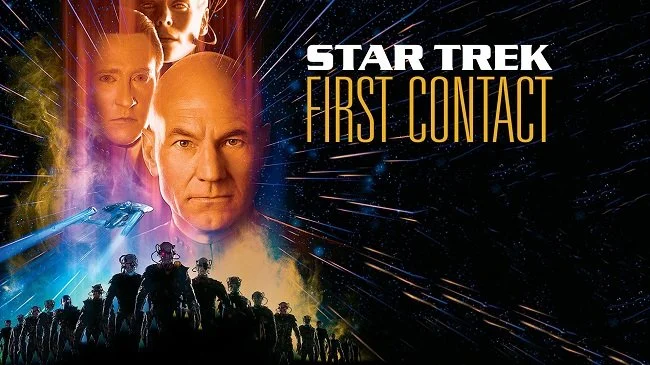
Jerry Goldsmith returned to the franchise in 1995, writing the dignified and portentous Star Trek: Voyager theme. Again this succinctly showed the importance the producer’s of the franchise attached to his work. Then in 1996 Goldsmith wrote the score for Star Trek: First Contact. Again his music demonstrates his ability to imbue the film’s narrative themes and visual effects with an appropriate sense of awe and majesty. Although contemporary in his outlook, with an inherent ability to stay current, Goldsmith had studied with some of the finest composers from the golden age of Hollywood. Hence, there are a few cues from First Contact where the influence of the great Miklós Rózsa are quite apparent and beautifully realised. Fans will argue that his score for Star Trek: The Motion Picture is his greatest work in relation to the franchise but I think that the soundtrack for Star Trek: First Contact has more emotional content.
The track “First Contact” which comes at the climax of the film is in many ways the highlight of the entire score. Goldsmith uses English and French horns as Picard and Data reflect upon the nature of temptation after defeating the Borg Queen. When the alien vessel lands and its crew disembarks to make first contact, the melody takes on a profoundly ethereal and even religious quality, especially when the church organ reiterates the theme. This reaches a triumphant peak when it is revealed that the first visitors to Earth are Vulcan. The cue then takes a melancholy turn as Picard and Lily bid a touching farewell. “First Contact” is a sublime six minutes and four seconds which demonstrates why Jerry Goldsmith was such a superb and varied composer. It not only highlights his legacy to Star Trek but also his status as one of the best film composers of his generation.






The Center Seat: 55 years of Star Trek
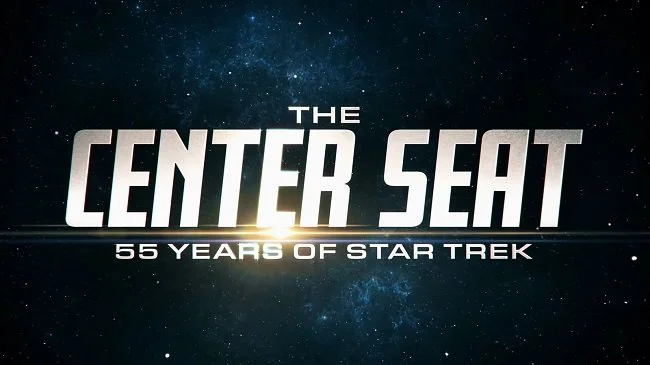
Star Trek documentaries are very much like Bruce Lee documentaries, in so far as they’re both a saturated market and more often than not, new content frequently ends up covering the same ground. However, fans tend to watch anything new in the hope that they will find a few new nuggets of information. Brian Volk-Weiss’ new 11 part series, The Center Seat: 55 years of Star Trek, not only covers established facts about the iconic show but also expands upon them as well as providing a wealth of new information. Volk-Weiss has previously explored popular culture with documentaries such as The Toys That Made Us and The Movies That Made Us. The Center Seat: 55 years of Star Trek is an in-depth chronological study of the Star Trek franchise, from its creation at Desilu Productions in 1965 all the way through to the latest iterations, Star Trek: Picard and Star Trek: Discovery.
Star Trek documentaries are very much like Bruce Lee documentaries, in so far as they’re both a saturated market and more often than not, new content frequently ends up covering the same ground. However, fans tend to watch anything new in the hope that they will find a few new nuggets of information. Brian Volk-Weiss’ new 11 part series, The Center Seat: 55 years of Star Trek, not only covers established facts about the iconic show but also expands upon them as well as providing a wealth of new information. Volk-Weiss has previously explored popular culture with documentaries such as The Toys That Made Us and The Movies That Made Us. The Center Seat: 55 years of Star Trek is an in-depth chronological study of the Star Trek franchise, from its creation at Desilu Productions in 1965 all the way through to the latest iterations, Star Trek: Picard and Star Trek: Discovery.
Part of what makes The Center Seat so enjoyable is that the 11 episodes, each running just under an hour, provides adequate time to explore the production history of each show and the various movies. The often overlooked Star Trek: The Animated Series gets an entire episode to itself as do each of the shows from the Rick Berman-era. The analysis of Star Trek: The Motion Picture is especially rigorous and does not shy away from the clash of egos between cast members, as well as the problematic writing process as Gene Roddenberry and Harold Livingston fought over the script. The show also takes the time to discuss the decision to have a title song, rather than a theme for Enterprise and the fact that to date, it still polarises opinion. Perhaps the most significant episode of The Center Seat is the first, which focuses on the importance of Lucille Ball. She used her industry leverage and wealth to get Star Trek made, backing not one but two pilot shows.
However, despite having 11 episodes at their disposal, there is still a lot of content missing from The Center Seat. There is a conspicuous lack of contemporary interviews with William Shatner, Avery Brooks and Scott Bakula. Although there is a lot of footage from all things Star Trek, the licensing arrangements seems to exclude music by any of the composers associated with the shows. It strikes me as remiss to have a documentary about such an iconic show and not mention Alexander Courage’s theme or the subsequent work by Jerry Goldsmith and James Horner. There is also some controversy over the inclusion of at least one Star Trek writer/historian whose accounts of events have been called into question for factual inaccuracies. The show also seems to be selective about which controversies it explores as well as which actors personal problems it focuses upon.
The Center Seat is an entertaining and fairly comprehensive exploration of the Star Trek franchise. This documentary series will probably best suit new fans or those who are not overly familiar with the associated history of the various shows. That being the case then it offers a broad overview and clearly shows that success and popularity is far from a smooth ride. Those who are well versed in the franchise's legendarium will probably be familiar with half or more of the show content. I found a lot of crossover between material in this show and the extras I’ve watched over the years on various DVDs I’ve owned. It is also worth noting that there are two versions of The Center Seat. One is obviously re-edited for syndication, consisting of 10 x 42 minute episodes. This version was shown on The History Channel. Then there is a longer 11 x 58 minute version. I watched the latter and this is the one that I recommend.




![Star Trek Discovery S01E01 The Vulcan Hello.mkv_snapshot_07.19_[2017.09.25_17.54.13].jpg](https://images.squarespace-cdn.com/content/v1/54e310f0e4b0f4a6ba3ac899/1506359625650-D976K1OBW47HSSSFN2S2/Star+Trek+Discovery+S01E01+The+Vulcan+Hello.mkv_snapshot_07.19_%5B2017.09.25_17.54.13%5D.jpg)


Complex Lore and Enigmatic Themes
I recently watched the first trailer for the new Obi-Wan Kenobi television show that is premiering on Disney + in May. I am interested in this latest instalment in the Star Wars franchise and curious as to whether Liam Neeson will make an appearance. I also watched a 20 minute fan video in which they “analysed” the entire trailer. They discussed the content of this 2 minute preview and then did a great deal of speculating about potential themes and characters that may feature in the show. They were clearly enthusiastic about what they had seen and were very knowledgeable about the subject. This resonated with me, as I like to be well versed about the things I enjoy. However, it is worth remembering that fandom can tip into obsession and gatekeeping. Hence I feel there is a subject to explore here.
I recently watched the first trailer for the new Obi-Wan Kenobi television show that is premiering on Disney + in May. I am interested in this latest instalment in the Star Wars franchise and curious as to whether Liam Neeson will make an appearance. I also watched a 20 minute fan video in which they “analysed” the entire trailer. They discussed the content of this 2 minute preview and then did a great deal of speculating about potential themes and characters that may feature in the show. They were clearly enthusiastic about what they had seen and were very knowledgeable about the subject. This resonated with me, as I like to be well versed about the things I enjoy. However, it is worth remembering that fandom can tip into obsession and gatekeeping. Hence I feel there is a subject to explore here.
Fantasy, science fiction and similar hybrid genres thrive on world building and lore. These facets give them credibility and breathe life into fictional worlds and people. They also provide parallels with our own lives which provides a means for us to connect to them. Star Wars, despite all the technology, offers a universe that looks used and lived in. Middle-earth is steeped in history and complex societies. Again despite obvious differences there are commonalities in the hierarchies, rituals and personal aspirations of the protagonists. And as well as lore, there are also enigmas. Fantasy and science fiction are often rife with things that are strange and ill defined. Often these are mystical and symbolic. The Force, Tom Bombadil and Jason Voorhees are prime examples of this. Successful fantasy and science fiction find the right balance between detailed lore and enigmatic themes.
Achieving this balance is very difficult. The original Star Wars trilogy handled the arcane and esoteric nature of the Force well. It was broadly defined as an energy field created by all life that connected everything in the universe. However, the specifics of this were vague and nebulous which played well with the concept that the Jedi were more of a religious and philosophical order than a paramilitary organisation. However, when the prequels introduced the concept of Midi-chlorians it somewhat diminished the enigma surrounding the Force and it suddenly just became yet more technobabble. It is interesting to note that this addition to the franchise’s lore was not well received by fans. It was subsequently not alluded to in later films and television shows, indicating that the producers and writers felt it was a mistake.
Another genre example of lore versus enigma is the difference in Klingon anatomy between the original series and the revival shows. The main reason is simple. There wasn’t a budget for complex prosthetics in the sixties show. However, from Star Trek: The Motion Picture onwards, Klingons acquired their forehead ridges as a way to make them more alien. This however left a lore contradiction, which was beautifully alluded to in the episode “Trials and Tribble-ations” of Star Trek: Deep Space Nine. Several crew members from the 24th century including Worf, find themselves on Deep Space Station K7 in the 23rd century, during the events of “Trouble with Tribbles”. Upon seeing the Klingons from the previous era, one of the crew asks Worf why there’s a physical difference. He enigmatically replies “We do not discuss it with outsiders”. This beautifully vague but droll answer works perfectly. Sadly it was ruined a few years later when an episode of Star Trek: Enterprise explained away the difference as a genetic experiment that went wrong.
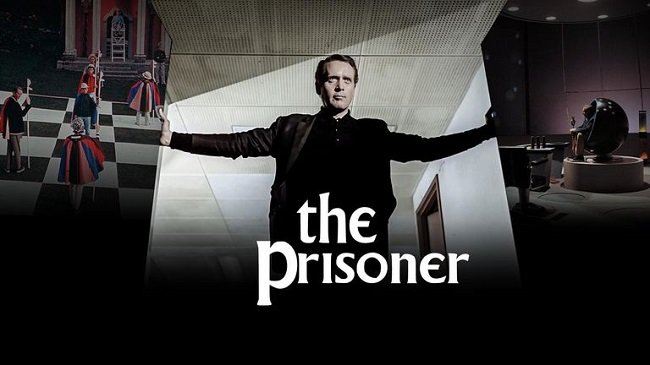
However, it is not always an excess of lore that can quash the soul from a popular show or film. Sometimes being deliberately too vague, refusing to expedite the plot and simply replacing one mystery with two others can be very frustrating. It may also be due to the writers being out of their depth or making things up as they go along. Lost encapsulated this for me and the show’s manipulative narrative quickly killed my interest. Don’t get me wrong, I don’t like to be spoon fed stories and explanations and I don’t mind thinking when watching. The ending of John Carpenter’s The Thing is enigmatic and quite bleak but I consider it a perfect conclusion to the film. However, perhaps the television show that really stepped over the line for not making any real effort to explain itself and turning the enigma “up to 11” is The Prisoner. It’s still a great show to watch and is very thought provoking but the final episode doesn’t deliver a stone cold conclusion. Something that people who watched it originally still seethe over.
We live in a culture of binge watching TV shows which some viewers dissect and analyse. The interconnected nature of the Marvel Cinematic Universe is a prime example of this and it does it extremely well. But not all television shows and films are like this and do not require such scrutiny. I worry that some viewers are so invested in searching for what they think may be hidden or trying to pre-empt an unfolding narrative, that they miss being in the moment and simply enjoying the show as it happens. Excessive analysis often leads to disappointment. It is important to remember that what you’re watching is a writer(s) thoughts on how a narrative should move forward. They are not obliged to try to make what’s in your or my head. Therefore I see both lore and enigmatic themes as an embellishment to a good fantasy or science fiction show or film. Things to be enjoyed but not the “be-all and end-all” of the production. If either becomes the major focus of either the writers or fans then it will end up undermining the central narrative and themes.





Classic TV Themes: Star Trek
Before we start, no I am not writing about Alexander Courage’s classic main theme for the original Star Trek show. I can add nothing further to that particular discussion and it remains iconic and inspiring, even when distilled down to just the initial fanfare. In this post I want to draw your attention to another piece of music from Star Trek that has permeated its way into popular culture. A cue that when heard, if the listener is familiar with its provenance, will instantly conjure up images of flying drop kicks, ear claps and judo chops. A piece of music that can be added to pretty much any video footage and instantly make it more heroic. Yes, I am talking about what has become generically known as Star Trek “fight music”. Or more specifically, the "The Ancient Battle/2nd Kroykah" cue from Amok Time (S02E01) composed by Gerald Fried. The scene during the koon-ut-kal-if-fee ritual in which Spock fights Kirk on the planet Vulcan for complicated “reasons”.
Before we start, no I am not writing about Alexander Courage’s classic main theme for the original Star Trek show. I can add nothing further to that particular discussion and it remains iconic and inspiring, even when distilled down to just the initial fanfare. In this post I want to draw your attention to another piece of music from Star Trek that has permeated its way into popular culture. A cue that when heard, if the listener is familiar with its provenance, will instantly conjure up images of flying drop kicks, ear claps and judo chops. A piece of music that can be added to pretty much any video footage and instantly make it more heroic. Yes, I am talking about what has become generically known as Star Trek “fight music”. Or more specifically, the "The Ancient Battle/2nd Kroykah" cue from Amok Time (S02E01) composed by Gerald Fried. The scene during the koon-ut-kal-if-fee ritual in which Spock fights Kirk on the planet Vulcan for complicated “reasons”.
Veteran composer Gerald Fried had written scores for Stanley Kubrick (The Killing and Paths of Glory) and had an established reputation for providing quality material for TV, having notably provided incidental music for numerous episodes of The Man from U.N.C.L.E. Fried wrote the music scores for five episodes of the first season of Star Trek. Over the years the "The Ancient Battle/2nd Kroykah" cue has gained a curious cult following. This may be because the music was re-used in many more episodes throughout the second season and became among the most memorable pieces of the entire show. It featured in the Jim Carrey film The Cable Guy and was further referenced again by Michael Giacchino in Star Trek Into Darkness in a fight between Spock and Khan Noonien Singh. It is also used in the Coliseum mission in Star Trek Online.
So here for your edification and enjoyment is the complete "The Ancient Battle/2nd Kroykah" cue by Gerald Fried. It is a very flamboyant piece of music with a very sixties idiom and arrangement (dig the Bass line). For those with a liking for memes, even when played over the most mundane and arbitrary video footage, it immediately elevates the status of that material. Hence you will find YouTube videos of cats fighting and people struggling to put out their bins, with this track playing in accompaniment. I personally like the cue for what it is. It always elicits fond memories of Star Trek TOS which was a staple of my youth. It also reminds me that music was a far more prominent aspect of TV shows back in the sixties and seventies and that a lot more time and effort was spent on writing a score. So grab a Lirpa, rip your T-Shirt at the shoulder and do some forward rolls. It’s time to fight!
Star Trek: The Motion Picture - Director's Edition HD Recreation v3 (1979)
Star Trek: The Motion Picture is a wonderful paradox in the Star Trek cinematic pantheon. It is possibly the most hardcore science fiction story that the franchise has explored and is both simultaneously Trek-like and un-Trek-like. Director Robert Wise and the production team worked hard to deliver a completed film for the scheduled December 1979 release date. However, he felt that the theatrical version was only a “rough cut”. Hence in late 2001 he supervised a Director’s Edition of the film which runs 136 minutes (4 minutes longer than the theatrical release)and reinstates some additional scenes and replaces some of the optical effects with new CGI creations. Critics were divided as to whether the Director’s Edition improved the film overall but Wise felt that this version was much closer to his original vision. The Director’s Edition was released exclusively on DVD in standard definition.
Star Trek: The Motion Picture is a wonderful paradox in the Star Trek cinematic pantheon. It is possibly the most hardcore science fiction story that the franchise has explored and is both simultaneously Trek-like and un-Trek-like. Director Robert Wise and the production team worked hard to deliver a completed film for the scheduled December 1979 release date. However, he felt that the theatrical version was only a “rough cut”. Hence in late 2001 he supervised a Director’s Edition of the film which runs 136 minutes (4 minutes longer than the theatrical release)and reinstates some additional scenes and replaces some of the optical effects with new CGI creations. Critics were divided as to whether the Director’s Edition improved the film overall but Wise felt that this version was much closer to his original vision. The Director’s Edition was released exclusively on DVD in standard definition.
To date, only the theatrical version of Star Trek: The Motion Picture has been released on Blu-ray. The main stumbling block regarding the Director’s Edition appears to be the CGI FXs that were created by Foundation Imaging. There is an ongoing debate over whether the source material still exists (allegedly it does) and whether it is at a sufficient resolution for use in a high definition format. Until these matters are resolved, the Director’s Edition remains conspicuously absent on regular Blu-ray and UHD. However, never underestimate the resourcefulness of fans. I recently discovered a fan edit called Star Trek: The Motion Picture - Director's Edition HD Recreation v3. Created by the delightfully named ElectricTriangle. This is a robust recreation of the Director’s Edition but in 1080p. Like most fan edits it is not intended for commercial sale and is therefore not widely available.
I was fortunate enough to see a Star Trek: The Motion Picture - Director's Edition HD Recreation v3 recently and it achieves exactly what it sets out to do. ElectricTriangle has primarily sourced their fan edit from HDTV, which uses the same transfer as the Director’s Edition. The HDTV version suffers from a degree of low detail and compression but it has superior grain and contrast than the current Blu-ray release. The unique footage from the Director’s Edition DVD has been upscaled and some material color-corrected. To recreate some of the specific changes in the Director’s Edition, ElectricTriangle had to combine HD and upscaled SD footage and create some additional animation to seamlessly join them. There are in fact two finished versions of Star Trek: The Motion Picture - Director's Edition HD Recreation v3. A primary version uses the DE DVD effects when appropriate but also uses the original theatrical unaltered effects to preserve HD quality. And then there’s a purist edition that includes most all of the shots altered for the DE DVD. These have been upscaled. Both versions contain the additional dialogue scenes featured in the DE DVD.
Until Paramount decides to pay for a restoration of the Director’s Edition in high definition, ElectricTriangles version remains the last word with regard to Star Trek: The Motion Picture, unofficially speaking. It is as near as damn it, identical to Robert Wise’s extended cut and looks very handsome in 1080p. However, it should be noted that irrespective of the changes that both Robert Wise and in this case ElectricTriangle have made, the film remains slow and dialogue driven. That’s just the way the film was made and you cannot edit this quality away. However, the sedate pace affords the viewer plenty of time to appreciate Jerry Goldsmith’s sumptuous score, which remains one of the film’s greatest assets. To paraphrase the tagline that accompanied the film upon its original release, “the human adventure is just beginning”. It’s just that it’s not in a hurry.
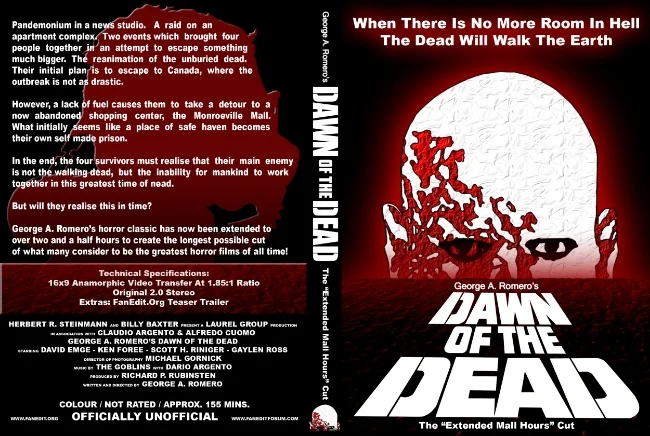
Star Trek: Beyond the Barrier (1989)
Fan Edits are a curious film sub genre. Some simply reinstate deleted scenes to maximise the running time of a movie. Others will remove footage and seek to reorder events in the name of coherency. But a few are far more ambitious. Rather than just reshape what is there, they will shoot new footage to replace material deemed substandard and seek to totally reimagine a movie. On even rarer occasions a few manage to actually improve upon the original, rather than just offering an augmented version. Which leads me onto Star Trek: beyond the Barrier, an interesting and very enjoyable fan edit of Star Trek V: The Final Frontier by Anti-Matter from deLimited Productions. It attempts to repair many of the problems found in the theatrical release of the movie. Some would argue that such a task is a Kobayashi Maru test in itself. However, the results are surprisingly good and some tongue in cheek humour shows that the creator understands the nature of their task.
Fan Edits are a curious film sub genre. Some simply reinstate deleted scenes to maximise the running time of a movie. Others will remove footage and seek to reorder events in the name of coherency. But a few are far more ambitious. Rather than just reshape what is there, they will shoot new footage to replace material deemed substandard and seek to totally reimagine a movie. On even rarer occasions a few manage to actually improve upon the original, rather than just offering an augmented version. Which leads me onto Star Trek: beyond the Barrier, an interesting and very enjoyable fan edit of Star Trek V: The Final Frontier by Anti-Matter from deLimited Productions. It attempts to repair many of the problems found in the theatrical release of the movie. Some would argue that such a task is a Kobayashi Maru test in itself. However, the results are surprisingly good and some tongue in cheek humour shows that the creator understands the nature of their task.
Star Trek V: The Final Frontier had a troubled production that is very well documented. The film’s Wikipedia page provides a lot of detail but to summarise, the budget was cut during production due to other studio projects under performing at the box office and the contracted effects company failed to deliver acceptable material. The screenplay lapses into self satire, possibly to compensate for the production deficiencies and it diminishes the story’s impact. However, despite these substantial issues, there are some good ideas and several key scenes involving the Trek Trinity (Kirk, Spock and McCoy) which are very good. As ever, Jerry Goldsmith’s score is sublime and does a lot of the “heavy lifting”, dramatically speaking. William Shatner’s direction is far from bad and he certainly got a raw deal on this production. This is what Anti-Matter deals with in Star Trek: Beyond the Barrier.
The theatrical release of Star Trek V: The Final Frontier is 106 minutes. Star Trek: Beyond the Barrier has a leaner running time of 93 minutes. The most noticeable content excised are the humorous scenes. Gone is Kirk falling from the El Capitan, Checkov and Sulu getting lost in Yosemite, Uhura’s “fan dance”, Scotty knocking himself out on a bulkhead and Uhura subsequently flirting with him. All these scenes undermine the characters and the plot. There are some subtle dialogue alterations making Spock’s references to Sybok being his brother more figurative. When the main protagonists finally meet the entity on Sha Ka Ree, some of the scenes are ordered differently. Along with these changes, much of the visual effects footage has been replaced with new CGI material. There are also some wholly original visual effects sequences briefly showing the true nature of the entity, along with its single minion.
Anti-Matter took a crash course in 3D animation to create his new content and although it is clearly generated on consumer software, it is superior to the sub par optical effects that were used in the theatrical release. Despite removing much of the humorous content from the film, he adds a new and rather unique sight gag. Let it suffice to say that Captain Klaa is now shooting at some rather different space junk. Although I like most of the changes they’ve made, I still think the ending is a little muddled. The twist that the entity is evil is now somewhat diluted. However, I like the new additional material inferring its escape along with its minion. Perhaps this edit's greatest success is the way it focuses upon the key scenes with Kirk, Spock and McCoy that work, emphasizing their dramatic power. Overall Star Trek: Beyond the Barrier does not fix all the problems of the theatrical release but it does present its best content more effectively. I therefore recommend it to Star Trek fans and those with an interest in fan edits per se.
Star Trek Online: Beginners Guide Part 2 - Careers, Factions and Species
Welcome to the second part of my Star Trek Online: Beginners Guide. I thought it may be useful to write a series of posts, offering practical information for those who are just starting out in STO. Nothing fancy or in any way definitive. Just a few basic tips that may help orientate the new player. I’ve been playing STO since its launch in 2010 and this MMO has seen a lot of changes. The game features a lot of systems and mechanics that are not always immediately intuitive to grasp. So I’ll be doing my best to cover a selection of these in each post and try to provide a broad overview. Like a lot of advice, it can be subjective. Ultimately it comes down to each player how they wish to play. In this instalment, I shall be writing about career paths, factions and races.
Welcome to the second part of my Star Trek Online: Beginners Guide. I thought it may be useful to write a series of posts, offering practical information for those who are just starting out in STO. Nothing fancy or in any way definitive. Just a few basic tips that may help orientate the new player. I’ve been playing STO since its launch in 2010 and this MMO has seen a lot of changes. The game features a lot of systems and mechanics that are not always immediately intuitive to grasp. So I’ll be doing my best to cover a selection of these in each post and try to provide a broad overview. Like a lot of advice, it can be subjective. Ultimately it comes down to each player how they wish to play. In this instalment, I shall be writing about career paths, factions and species.
Q: Which career is best for new players?
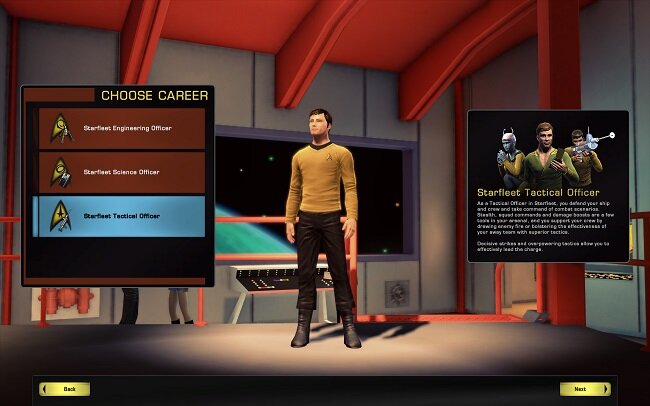
A: The answer to this conundrum really comes down to playstyle and personal choice. There is no optimal path as such in STO. Yes some builds can deliver higher DPS but game skill also plays a part. Having the so-called “best” doesn’t mean you’ll perform in a comparable fashion. So to begin with there are three career paths in STO. A Tactical Captain deals damage, an Engineering Captain is designed to absorb damage and is thus a tank and a Science Captain focuses on buffs, debuffs, energy drain, hold and heals. All three careers have their own strengths and weaknesses. However, these can be tempered by your choice of traits, skills, ground and space gear and ship. And this is where the enjoyment lies; creating your own hybrid build. IE an Engineer using a heavy cruiser to tank, or a Science Captain focusing on healing while using a fast tactical escort.
Q: What faction should I choose?
A: At present there are six factions in Star Trek Online.
Starfleet (the 25th century Federation faction).
Klingon Defence Force.
Romulan Republic.
TOS Starfleet (the 23rd century Federation faction).
Dominion.
DSC Starfleet (the 23rd century Federation faction, Discovery era and pre-TOS).
All of which offer levelling from 1 to 65 (the present level cap) apart from the Dominion which starts at 60 and extends to 65. Each faction has bespoke traits and offer an initially unique storyline for approximately a third of the game. There then comes a point when certain missions are completed, the main story becomes centralised and applicable to all factions. At this juncture, Dominion faction players and Romulan Republic players must decide whether to ally themselves with either Starfleet or the KDF. Once this choice is made, it cannot be changed. However, at this point, as the story is the same to all factions, the only major differences are the NPCs who bestow missions and more importantly what vessels you have access to. The latter is an important consideration.
Personally, I don’t think any faction has a superior story arc. All have been overhauled over the years and are now very well realised. I think most players choose a faction based upon their personal relationship with Star Trek. I was raised on reruns of Star Trek TOS, so the TOS Starfleet faction certainly provided a great “fan service”. If you love Klingon culture then the KDF faction is an ideal choice. Remember that STO has a wealth of voice acting from original cast members which greatly adds to the game’s ambience. It can be argued that the Dominion faction and DSC Starfleet faction storylines are a little shorter than others but such brevity may suit some players. It should also be noted that developers Cryptic have been pragmatic and created the most ships for the most popular faction in the game, which is Starfleet. There are not quite as many vessels available for some factions. However, the allegiance system has addressed this. Plus there are some unique crossfaction vessels.
Q: What species should I pick?
A: Again, there is no single species that has a definite advantage over others in STO, although some have desirable unique traits. But as I previously mentioned, there are many other factors that affect your build and its viability, so it is ultimately a matter of choice. Each faction has a variety of races available. Lore dictates that certain races cannot be accessed by certain factions but Cryptic have been quite inventive with regard to fudging this to a degree. At present the following species are available to the following factions.
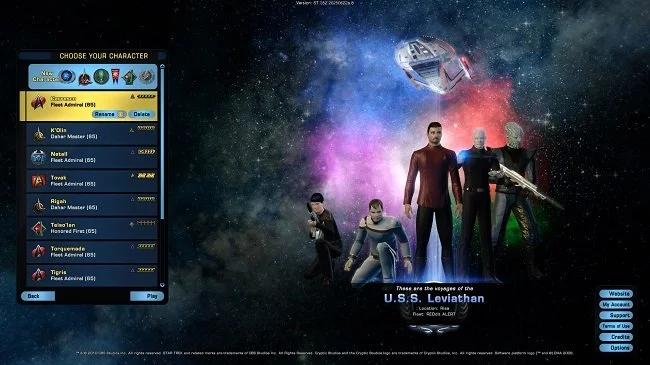
Starfleet: Andorian, Bajoran, Benzite, Betazoid, Bolian, Caitian*, Cardassian*, Ferengi, Human, Klingon*, Liberated Borg**, Pakled, Rigelian, Saurian, Talaxian**, Tellarite, Trill, Trill (Joined)*, Vulcan, Alien.
Klingon Defense Force: Cardassian*, Ferasan*, Gorn, Klingon, Lethean, Liberated Borg**, Nausicaan, Orion, Talaxian**, Trill (Joined)*, Alien.
Romulan Republic: Romulan, Reman, Liberated Borg**, Alien
TOS Starfleet: Andorian, Human, Tellarite, Vulcan.
Dominion: Jem’Hadar, Jem’Hadar Vanguard*.
DSC Starfleet: Human, Vulcan, Alien.
* Purchasable from C-Store
** Requires lifetime subscription
If you cannot make up your mind or because of your choice cannot access a specific species, then consider picking “alien” as a race. It has the most visual customisation options available in the game and hence you can create an avatar that looks Human, Vulcan, Andorian etc. You can also create faux Cardassians and replicate a passable facsimile of many other races in the game. Another advantage of the “alien” is that it doesn’t have fixed racial traits and the player can choose an additional ground and space trait instead.


Star Trek Day
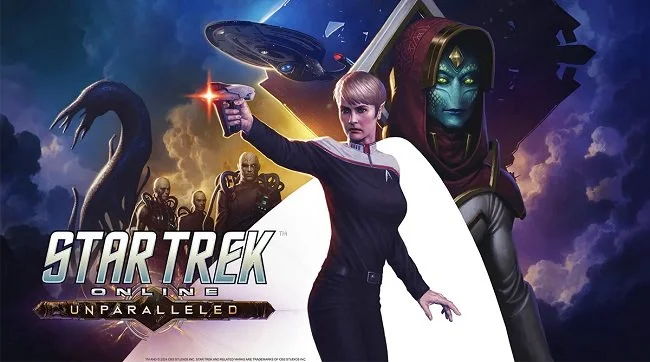
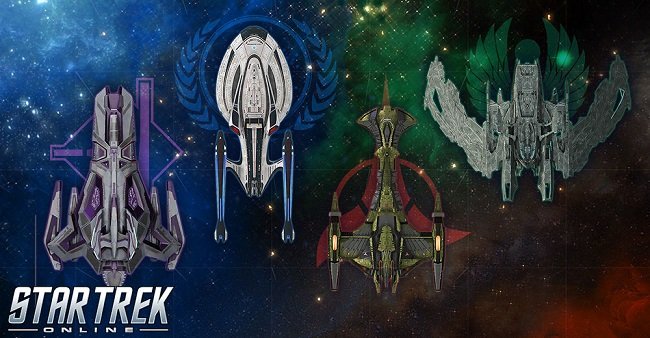
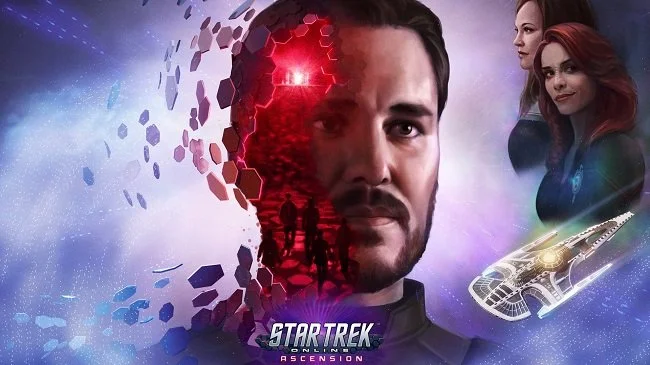
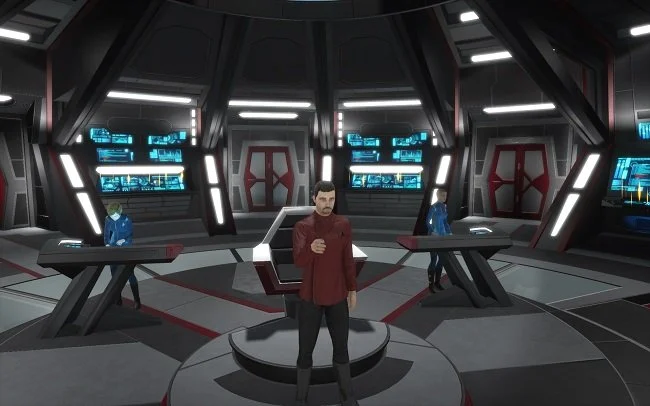
Today is Star Trek Day. An officially sanctioned celebration of all things Star Trek. The date reflects the launch of the original television show, back in the sixties. Naturally, there are a multitude of events going on over at the official Star Trek website. And as ever, the MMORPG Star Trek Online is taking part in the celebrations. “On September 8th, 1966, the world first met a group of people, and a ship, that would change our lives forever. Pitched as “wagon train to the stars,” and brought to TV by the force of Lucille Ball’s will, Gene Roddenberry’s Star Trek hit tiny television screens around the world and immediately captured hearts and minds. Through three seasons, and decades in syndication, The Original Series started a movement that still lasts today, more than half a century later. We live in a time where there’s more new Star Trek than ever before, and we’re joining with the rest of our Star Trek Family to celebrate the franchise’s birthday”.
Today is Star Trek Day. An officially sanctioned celebration of all things Star Trek. The date reflects the launch of the original television show, back in the sixties. Naturally, there are a multitude of events going on over at the official Star Trek website. And as ever, the MMORPG Star Trek Online is taking part in the celebrations. “On September 8th, 1966, the world first met a group of people, and a ship, that would change our lives forever. Pitched as “wagon train to the stars,” and brought to TV by the force of Lucille Ball’s will, Gene Roddenberry’s Star Trek hit tiny television screens around the world and immediately captured hearts and minds. Through three seasons, and decades in syndication, The Original Series started a movement that still lasts today, more than half a century later. We live in a time where there’s more new Star Trek than ever before, and we’re joining with the rest of our Star Trek Family to celebrate the franchise’s birthday”.
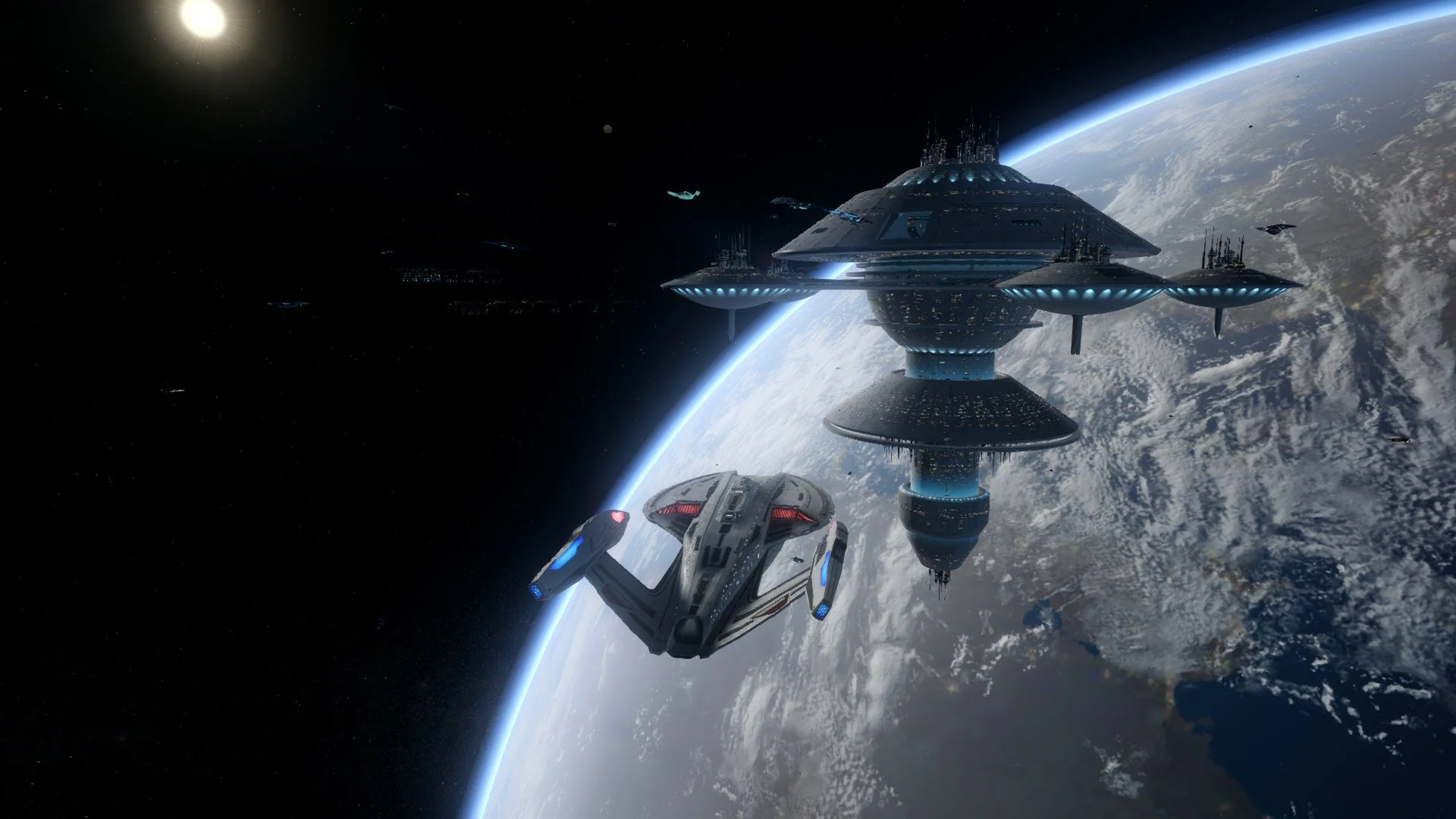
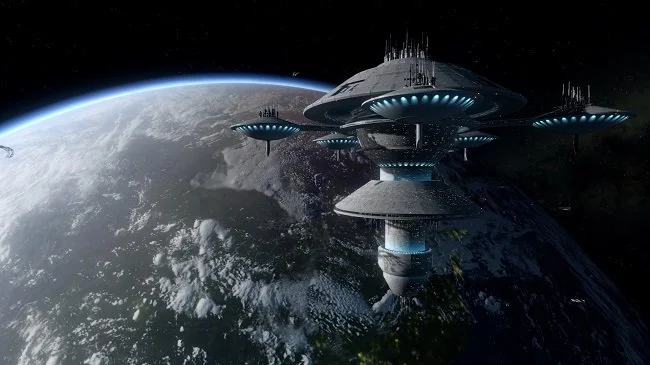
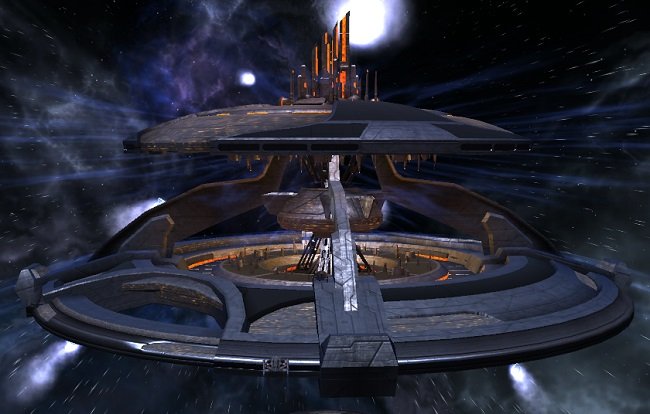
As of today in Star Trek Online, there is a special Starfleet Museum in orbit above Deep Space Nine and Earth Space Dock. The museum contains ten iconic ships from Star Trek movies, television, and the MMORPG. After receiving a message from Federation President Okeg, you undertake a mission to hail each ship. The ship responds with a quote from their respective Captains, along with some lore facts and behind the scenes information about the TV show, movie or game that featured them. Hailing all ten of the ships will complete an accolade and grant you a special title: Historical Documents Expert. It’s a simple but enjoyable mission that doesn’t take too long. It also serves as a reminder that the reach of Star Trek is truly global and spans over five decades. There have been times when Star Trek has been off the air and had a doubtful future. However, we find ourselves enjoying the opposite at present with multiple shows on offer.
Star Trek TOS was one of the first shows I remember sitting down and watching as a family. If memory serves it used to be shown mid-evening on the BBC when it was repeated in the early seventies. As a child the show left a major impression upon me. Obviously the action and special effects were a big selling point but I also recall how the friendship between Kirk, McCoy and Spock was a source of intrigue. They argued and often disagreed and yet they maintained a strong bond and obviously had a great deal of respect for each other. Although I didn’t express it in such terms at the time, there was an important social dynamic going on. Upon reflection I feel that their friendship is one of the most honest and credible you’ll find in popular culture. The fact that the show also depicted equality “at work” was not lost upon me. I greatly enjoyed Star Trek TAS as well in my youth and I’m pleased to see it is now considered canonical.
Sadly over the years we have not seen Gene Roddenberry’s vision of the future come to pass. Yes, a lot of the technology depicted in the show has begun to emerge and Star Trek has influenced multiple generations of viewers to follow their dreams and pursue a career in science, medicine and other professions. The film and TV industry is rife with creative talents who cite the show as a major influence. But the sad reality is that the dream of a united world that looks to the star for fulfilment is nowhere in sight. Our leaders tend to be the opposite of Jean Luc Picard or Kathryn Janeway. Measured diplomacy, tempered with wisdom and optimism is in short supply these days. Hence Star Trek remains a franchise about what some of us would like to see society become. Others however, prefer to look to the Romulan Star Empire for inspiration. However, despite my ever growing cynicism, I’m not done with Star Trek yet. I still see it as a force for good and positive change. May it continue to live long and prosper.
Star Trek Online: Beginners Guide Part 1 - The Cost of Playing
I’ve mentioned in the past that a lot of important information regarding the MMORPG Star Trek Online is centralised within the official subreddit. That’s fine if you enjoy using this platform but it’s not for everyone. I’ve always found Reddit somewhat esoteric and I don’t really like the way it visually displays information. I have to use a browser addon to make it more user friendly. Unlike other communities, STO does not seem to have that many fan produced blogs. However, I may be wrong regarding this, so feel free to correct me (and provide URLs). In the meantime, I thought it may be useful to write a series of simple guides, offering practical information for those who are new to STO. Nothing fancy or in any way definitive. Just a few basic tips that may help orientate the new player. This time we’re going to look at the business model for STO and the cost of playing the game.
I’ve mentioned in the past that a lot of important information regarding the MMORPG Star Trek Online is centralised within the official subreddit. That’s fine if you enjoy using this platform but it’s not for everyone. I’ve always found Reddit somewhat esoteric and I don’t really like the way it visually displays information. I have to use a browser addon to make it more user friendly. Unlike other communities, STO does not seem to have that many fan produced blogs. However, I may be wrong regarding this, so feel free to correct me (and provide URLs). In the meantime, I thought it may be useful to write a series of simple guides, offering practical information for those who are new to STO. Nothing fancy or in any way definitive. Just a few basic tips that may help orientate the new player. This time we’re going to look at the business model for STO and the cost of playing the game.
Q: What is the business model for STO?
A: STO is a free to play game. Unlike some other MMOs there are no major impediments to new players. Story based content is not locked behind any sort of paywall. Once a player has completed the tutorial and reached level 10 (which is easy to do) they can play the latest material. Some content is scalable. STO has several earnable in-game currencies; Energy Credits, Dilithium and Lobi Crystals. You can also purchase Zen for real money. This currency is used to buy in-game store items such as ships, character slots and bank space etc. If you don’t want to spend any real money, you can grind Dilithium and exchange it for Zen, legitimately within the game.
Q: Is there a subscription?
A: STO used to have a subscription option but this was removed from the game in December 2018. If you play for free, you have Silver account status. This applies a degree of limitations upon the game, such as an Energy Credit cap of 15 million and your overall number of character slots, bank slots, Bridge Officer and ship slots. None of these are a deal breaker for new players. If you enjoy the game and wish to create multiple alts or feel that you need more space, you can purchase all these additional resources via the store. Gold account status used to be gained by subscribing but now it is only available by the purchase of a lifetime account.
Q: Are there any essential items to purchase?
A: Although I wouldn’t define it as “essential” the Elite Services Starter Pack does offer a lot of benefits to a new player. It costs 1,000 Zen and can be found in the C-Store. It includes 36 bank slots and 36 inventory spaces, two Bridge Officer slots and three retrain tokens (for reallocating your skill points). If these items were bought separately it would cost the player 2,250 Zen. Hence, the Elite Services Starter Pack is a real bargain working out at less than $10. Again if you don’t want to buy any Zen with real money, you can grind Dilithium by playing game content and exchange it for Zen. It will take about one week to earn sufficient Zen for the Elite Services Starter Pack.
Q: Is the Lifetime subscription worth it ?
A: This very much depends on how often you play STO. I would not encourage new players to contemplate such a purchase until they have played STO for a while and determined how invested they are in the game. If it becomes your MMO of choice and you log on several times a week or more, then it does offer value for money. Upon purchase you immediately unlock Veteran Rewards which include unique ships, uniforms and other game rewards. But perhaps the biggest incentive is a monthly stipend of 500 Zen. A Lifetime subscription retails at $299 but there are often sales throughout the year when the price is dropped to $199.
Q: Should I buy a ship straight away?
A: Unless you have your heart set on a specific ship and are happy to pay real money, once again I would advise those just starting out to not do so. The game provides the player with 5 free ships as they progress through the game. This occurs at levels 10, 20, 30, 40 and 61. The ships are level specific. If you follow the story, then a free shuttle is also available. STO holds several events throughout the year which also allow players to earn a Tier 6 ship. However, part of the appeal of STO is its expansive collection of iconic ships. Developer’s Cryptic rely on the sale of these for much of their revenue. They recently made many Tier 6 ships scalable, so they can be used by new players and will level with them. So it ultimately comes down to your personal choice and budget. However, a free player will not be penalised for not spending money. They simply have less choice. Again, if you’re prepared to invest the time then you can earn the appropriate currencies to obtain a Tier 6 ship at no financial cost.
Star Trek Online: City on the Edge of Never
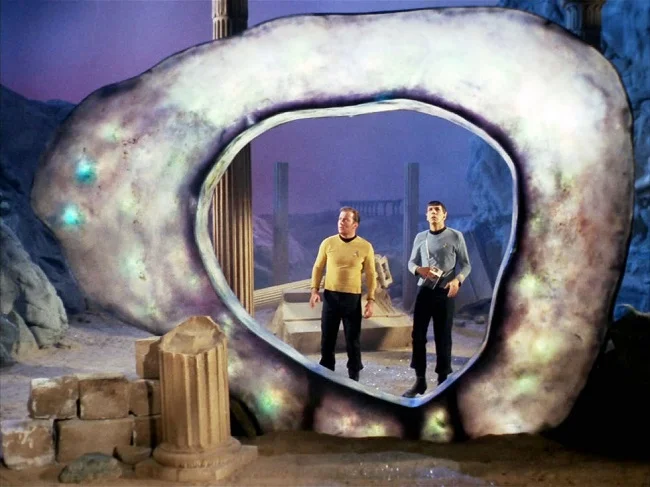
Out of the original seventy-nine episodes of Star Trek, one of the most respected and beloved is The City of the Edge of Forever. Written by Harlan Ellison the story is one of the more thoughtful and tragic in Trek Canon. It was also the first episode to feature a temporal plotline. Doctor Leonard McCoy (DeForest Kelley) accidently receives an overdose of medication and flees the Enterprise while in a delusional state. Beaming down to an alien planet he uses a temporal gateway (The Guardian of Forever) to travels back in time to earth during the Great Depression. By doing so he accidentally changes history. Captain Kirk (William Shatner) and Spock (Leonard Nimoy) follow him through the gateway to New York in hope of correcting the timeline. While awaiting the arrival of McCoy, Kirk falls in love with Edith Keeler (Joan Collins) who runs the 21st Street Mission. However he and Spock soon determine that to restore the timeline they must allow her to die.
Out of the original seventy-nine episodes of Star Trek, one of the most respected and beloved is The City of the Edge of Forever. Written by Harlan Ellison the story is one of the more thoughtful and tragic in Trek Canon. It was also the first episode to feature a temporal plotline. Doctor Leonard McCoy (DeForest Kelley) accidently receives an overdose of medication and flees the Enterprise while in a delusional state. Beaming down to an alien planet he uses a temporal gateway (The Guardian of Forever) to travels back in time to earth during the Great Depression. By doing so he accidentally changes history. Captain Kirk (William Shatner) and Spock (Leonard Nimoy) follow him through the gateway to New York in hope of correcting the timeline. While awaiting the arrival of McCoy, Kirk falls in love with Edith Keeler (Joan Collins) who runs the 21st Street Mission. However he and Spock soon determine that to restore the timeline they must allow her to die.
One of the most enjoyable elements of the MMORPG Star Trek Online, are the various game missions that reference plot lines and characters from all of the Star Trek franchises. One such mission is City on the Edge of Never which involves the player character travelling to the Gateway system and using the Guardian of Forever to travel through time to 2270 to stop Klingons intent on altering history. The episode has the Guardian projecting a time portal into space, allowing the player to take their vessel through to the past. It also features voice acting by Nimoy which adds further to the sense of nostalgia. City on the Edge of Never is a part of the Klingon War story arc and is certainly one of the more engaging missions. Due to its iconic nature it was well received by reviewers upon the release of STO back in 2010. Kotaku writer Mike Fahey said "This mission might have just made the entire game for me. Everything about it was simply perfect. If Star Trek Online fails for some reason, this mission will always be remembered”.
Sadly this mission, along with several others has been temporarily removed from the game as part of an ongoing content revamp. Cryptic mentioned in a previous Priory One podcast interview that the missions were supposed to get revamped before the end of 2018, but the developer who was undertaking the task is on leave. However, it was still their intention to see the content restored to the game. At present the absence of these missions, especially City on the Edge of Never, does have an impact upon the overall story arc of the Klingon War. The storyline is somewhat briefer and lacking in its original impact. For fans who feel that TOS era specific content is a little thin on the ground in STO, the swift return of these missions couldn’t come sooner. It would also be interesting if Cryptic could expand further upon use of the Guardian of Forever. Some additional scientific research missions under the Vulcan Science Council would be a welcome addition to the game and a pleasant addition to the non-combat related content.
New Ships, Keybinds and Voice Acting
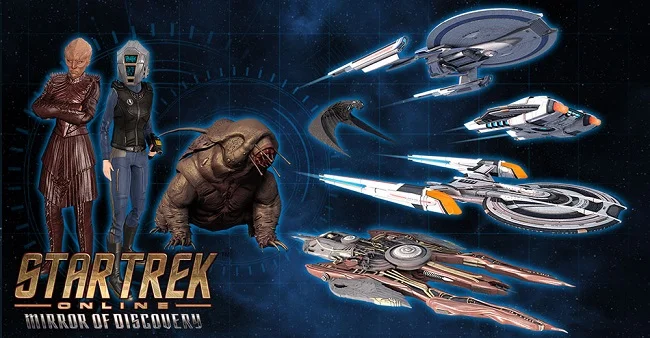
There has been a degree of controversy over the Discovery Operation Pack that has recently been made available for purchase in Star Trek Online. The bundle featuring ships, bridge officers, cosmetic items and more is displeasing some core players who feel that it is over priced and lacks anything relevant for Romulan and Klingon races. Personally, I’m only interested in two specific items from the pack, such as the Tier 6 Gagarin Miracle Worker Battlecruiser and the combat pet Tardigrade but at present they cannot be purchased separately. So, I shall not be parting with any money at present. The Gagarin Miracle Worker Battlecruiser is relatively similar to the Tucker Tactical Miracle Worker Cruiser, which I already own. However, it is an improvement aesthetically speaking (a subjective point, admittedly), so for me the obvious compromise is to purchase the fleet version and forgo the unique space trait and settle for an additional console slot. As I’m not a high-end player, the look and feel of a ship has as much appeal to me as its stats.
There has been a degree of controversy over the Discovery Operation Pack that has recently been made available for purchase in Star Trek Online. The bundle featuring ships, bridge officers, cosmetic items and more is displeasing some core players who feel that it is over priced and lacks anything relevant for Romulan and Klingon races. Personally, I’m only interested in two specific items from the pack, such as the Tier 6 Gagarin Miracle Worker Battlecruiser and the combat pet Tardigrade but at present they cannot be purchased separately. So, I shall not be parting with any money at present. The Gagarin Miracle Worker Battlecruiser is relatively similar to the Tucker Tactical Miracle Worker Cruiser, which I already own. However, it is an improvement aesthetically speaking (a subjective point, admittedly), so for me the obvious compromise is to purchase the fleet version and forgo the unique space trait and settle for an additional console slot. As I’m not a high-end player, the look and feel of a ship has as much appeal to me as its stats.
Although not as bad as some MMOs, STO does suffer from a degree of skills bloat, which means that space combat can be somewhat of a “clickfest” at times. Therefore, a lot of players, especially those who pursue high DPS, use keybinds to facilitate the efficient activation of skills. There are third party tools that allow multiple abilities to be assigned to a single hotkey. Most people tend to use the spacebar for this, which can then be quickly used to activate each skill, one after the other. It certainly removes extraneous mouse movement and furious clicking but after some recent experimentation, I have decided return to the old school approach. Manually picking skills and making tactical decisions is half of the fun of space combat and automating this process robs the game of some of its allure, or at least for me it does. Oddly enough, while doing some research as to how to use keybinds and what software to use, I discovered that the console version of STO allows players to automate skills use, as well as weapons fire. On the PC version, only the latter is available. I wonder if Cryptic intend to address this disparity?
Finally, I read this week about allegations of sexual misconduct made against voice artists and actor Vic Mignogna. I am only familiar with the man through Star Trek Continues and his voice work in STO as Captain Isaac Garrett and was not aware that he was well known in the Anime community for his vocal talents. A few contributors to the STO subreddit have raised the question as to whether his dialogue should now be removed and replaced with an alternative actor. It certainly made me stop and think. I am by no means an advocate of kneejerk reactions, but I can also understand why companies, especially those based in leisure industries would want to distance themselves from such a situation until due process has run its course. It will be interesting to see what (if anything) developers Cryptic decided to do. Irrespective of Vic Mignogna’s respective innocence or guilt, the entire matter is escalating and potentially getting subsumed into the wider ongoing culture wars. #Animegate is sadly now a thing and as such I wouldn’t want to see that anywhere near STO or take root in its community.
Star Trek Online: Ninth Anniversary and Stuff
I have suffixed the title of this post “and stuff” so I can address several Star Trek Online related thoughts in a single blog post. Despite the fact that I frequently play STO it is does oddly get neglected in my writing. So, let us start with the issue of the ninth anniversary. As ever Q is back with the anniversary event and once again, we are stabilising Omega Molecules. This year’s reward is a Tier 6 Vulcan T’Pau Scout Ship. There are also emotes and sundry other items to earn during the duration of the festivities, but I more interested in the anniversary itself. Not many MMOs make it to nine years and if they do, they aren’t necessarily in as good shape as STO. The game has a stable and loyal playerbase and is currently tied-in to Star Trek: Discovery. Further established Trek actors are supplying voice acting and the game seems to be doing well across both PC and consoles. Like LOTRO, STO uses the IP well and seems to “fill in the gaps” in the existing lore as well as expand and extrapolate established canon. One of the best things about STO is that there’s always something to do in-game as well as new content in the pipeline. Perhaps this along with the handling of the IP is why the game endures.
I have suffixed the title of this post “and stuff” so I can address several Star Trek Online related thoughts in a single blog post. Despite the fact that I frequently play STO it is does oddly get neglected in my writing. So, let us start with the issue of the ninth anniversary. As ever Q is back with the anniversary event and once again, we are stabilising Omega Molecules. This year’s reward is a Tier 6 Vulcan T’Pau Scout Ship. There are also emotes and sundry other items to earn during the duration of the festivities, but I more interested in the anniversary itself. Not many MMOs make it to nine years and if they do, they aren’t necessarily in as good shape as STO. The game has a stable and loyal playerbase and is currently tied-in to Star Trek: Discovery. Further established Trek actors are supplying voice acting and the game seems to be doing well across both PC and consoles. Like LOTRO, STO uses the IP well and seems to “fill in the gaps” in the existing lore as well as expand and extrapolate established canon. One of the best things about STO is that there’s always something to do in-game as well as new content in the pipeline. Perhaps this along with the handling of the IP is why the game endures.
In October last year, Cryptic released a new Star Trek: Discovery themed “starting experience” that allows players to create characters from 2256. As ever there’s a fairly involved narrative which references Klingon lore from that era and the war with the Federation. There’s the added bonus of Jeffrey Combs playing Captain Thy'kir Shran, the great-grandson of Thy'lek Shran from Star Trek: Enterprise. However, due to the main story of STO being set in 2409, the writers have to once again fall back on that old tried and tested Trek “get out of jail card”, time travel. Hence, Agent Daniels makes a further appearance and uses more temporal shenanigans to bridge the timelines. It’s an acceptable plot device if you’re new to the game, but it’s already been previously used in 2016 in the Agents of Yesterday expansion. Plus, if you don’t create a new character and play through this specific tutorial, the follow up story set in the twenty fifth century that is available to established alts, is a little confusing to say the least.
Now I happen to enjoy Star Trek: Discovery and am therefore happy to have content from this era along with voice acting from Mary Wiseman added to the game. But there is a downside to this. In an attempt to streamline and coherently curate all the previous episodes of STO, Cryptic have had to alter their running order. Some stories have been taken out of the chronological sequence and categorised as Side Content: The Galaxy at Large. If you are a dedicated trek fan who starts playing the MMO from scratch, you may have to play a fair amount of content across multiple factions before everything falls into place. After nine years that game does seem to be sagging under its irregular narrative growth. But despite these occasional quirks the stories available do all have a strong Trek feel to them. Last summers Victory is Life expansion contained some of the best written material outside of the shows themselves. It certainly tapped into the best elements of Star Trek: Deep Space Nine. It’s a shame it is not officially canonical.
Another issue that Cryptic have been trying to address of late is encouraging players to participate more in the various group PVE missions or Task Force Operations as they have been renamed. This content provides among other rewards, rep tokens which are required for reputation faction advancement. In the past it would be difficult for players to find a group for some of the less popular TFOs, so the developers came up with the Universal Endeavor system. This offers daily TFO challenges along with bespoke rewards. They also added a facility to join a random TFO with enhanced loot. As of the 23rd January and the start of the 16th STO season, Personal Endeavors have been added to the game, offering three random tasks that can be completed by replaying missions, running TFO or visiting the various battlezones in the game. If you are presented with a task that is not to your liking, you can reroll another using tokens that are given as part of the Personal Endeavors rewards. The system also provides perk points that can be spent to unlock account-wide bonuses that apply to all characters equally. For the casual player this offers an enjoyable challenge, where the dedicated min-maxer will have yet a further set of options to tweak their build.
After a year of trying a variety of ships in STO I have returned to my Tucker Tactical Miracle Worker Cruiser. The prevailing game meta has changed once again and frankly I’m not quite au fait with the latest popular theories, so I have opted for a lore-based phaser beam weapons and selected gear for a standard Auxiliary to Battery build. Everything equipped is Mark XV and upgraded to Epic level. As I no longer have any DPs parsers installed and I’m not inclined to go down the rabbit hole, I have no idea what my “official numbers” are like, but stuff dies and dies quickly, and I no longer fly like a complete fool which helps a lot. Overall, I find myself well placed at present to enjoy STO. I bought the game on launch and it took both me and Cryptic a while to find our respective feet. I played the game on and off during it’s first four years and it wasn’t until the launch of the Delta Recruitment Event in May 2015 that it fully got a hold on me. By then a lot had been done to file down the rough edges. STO still has some that need attention but I’m glad that nine years on the game is still alive and kicking. I mean what other MMO has Horta combat pets or Gorn’s in Hawaiian shirts?
Classic TV Themes: Star Trek Enterprise
Star Trek: Enterprise was the first show in the Star Trek pantheon to have a song performed by an established artist play over the opening credits, rather than a traditional theme tune. Up until 2001, the franchise had maintained a more formal approach, established with the iconic introduction to the original series composed by Alexander Courage. Needless to say, such a radical departure from established practise brought about consternation and debate among fans. In some respects, you can argue that point about the entire show itself, but that as they say, is an entirely different blog post. Needless to say, the dislike and hatred that the song Where My Heart Will Take Me engendered in certain quarters, lead to a petition to have it removed. Needless to say, this movement failed, and the show continued using it for four seasons. Seventeen years on this particular debacle has now died down and the song is often just referenced ironically by fans as an amusing anecdote and piece of Trek trivia.
Star Trek: Enterprise was the first show in the Star Trek pantheon to have a song performed by an established artist play over the opening credits, rather than a traditional theme tune. Up until 2001, the franchise had maintained a more formal approach, established with the iconic introduction to the original series composed by Alexander Courage. Needless to say, such a radical departure from established practise brought about consternation and debate among fans. In some respects, you can argue that point about the entire show itself, but that as they say, is an entirely different blog post. Needless to say, the dislike and hatred that the song Where My Heart Will Take Me engendered in certain quarters, lead to a petition to have it removed. Needless to say, this movement failed, and the show continued using it for four seasons. Seventeen years on this particular debacle has now died down and the song is often just referenced ironically by fans as an amusing anecdote and piece of Trek trivia.
As for the song itself, it has quite an interesting history. It was originally called Faith of the Heart and was written by songwriter Dianne warren, who has a history of penning songs for the likes of Whitney Houston, Barbara Streisand and Aretha Franklin. Faith of the Heart was originally recorded by Rod Stewart and featured in the Robin Williams movie Patch Adams in 1999. It was subsequently covered by country artist Susan Ashton. Broadly both these versions were well received. English tenor Russell Watson then covered the song on his 2001 album Encore under the title Where My Heart Will Take Me. It is this version that is used on the first two seasons of Star Trek: Enterprise albeit in an edited version, reducing a 4.14-minute recording to a more appropriate 1:28-minutes to accommodate the opening credits. This version is very much a power ballad and very much wears its heart on its sleeve, candidly extoling the sort of sentiment and philosophy of Starfleet. The song is intended to be a metaphor for earth struggle to reach the stars and the challenges ahead. Curiously, from season three onwards, the song was re-recorded again with Russell Watson but with a more upbeat tempo. It is quite a different arrangement.
Executive producer, Rick Berman, praised Where My Heart Will Take Me, saying that it was a song "that's got a lot of hopefulness and uplifting qualities to it. And I like it. I've met a lot of other people who like it, but I've also heard a tremendous amount of banter about people who don't”. Enterprise co-creator Brannon Braga also defended the song, saying of the criticisms, "There are some people who love the song and there are people who think it's cheesy. They came with a petition with 1,000 signatures. But plenty of people find the song very uplifting”. Watson also said in response to the reaction to the song, "Something new happens, and people aren't quite sure of it. But they'll get used to it. By the time they've watched the 20th episode, they'll be thinking, well, it's not that bad after all".
After the strong themes from established artists used on previous shows, especially those from the iconic composer Jerry Goldsmith, was a song of this idiom a step too far? The medium of the power ballad has its place in musical styles and when done well can provide a unifying anthem, but was Star Trek an appropriate vehicle? When one considers the grandeur and dignity of previous themes (take for example the beauty and scope of the Star Trek: Voyager) was such a seismic shift a good choice? Replacing the subtle emotional resonance of an orchestral piece with the more arbitrary, less sophisticated manipulation of a power ballad designed to hit you hard in “feels”, does seem a little cheap. However, despite initially feeling this way, Where My Heart Will Take Me has indeed grown on me as Russell Watson surmised. Star Trek: Enterprise was itself quite a radical change in the franchise and the song does reflect the aspirations of an incipient Starfleet and the core themes of the show. It may not be the most nuanced of songs, but it certainly captures the essential principles of Star Trek with its optimism and hope. For that I kind of grudgingly respect it. However, some remain implacably opposed to it. Simon peg allegedly won’t watch the show due to theme, but it can be argued that some won’t watch the Kelvin Timeline movies due to his portrayal of Scotty. As for the song, perhaps the best thing to do is to decide for yourself.
Spock
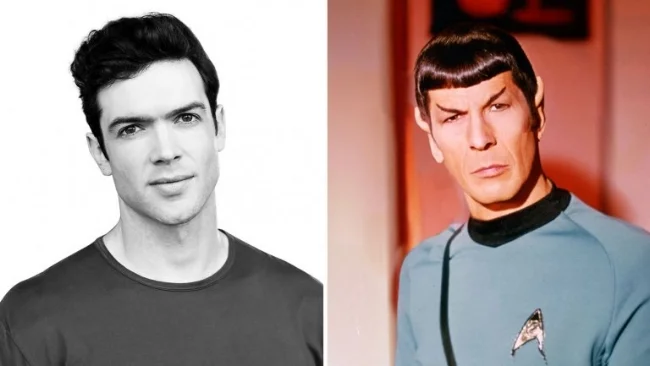
I’ve written in the past about the problems that can arise from untempered fandom. If enthusiasm and inspired love are not balanced by contextual reason and a healthy dose of reality, then it can get a little bit over zealous. Need I cite Star Wars fans and The Last Jedi as an example of unchecked fandom. However, I am now going to stray a little into the “Twilight Zone” of fandom myself, although I shall attempt to apply a healthy dose of realism into the proceedings. Because I want to discuss the fact that Ethan Peck has been cast to play one of the most iconic characters in popular culture. Yes, Gregory Peck’s grandson (and there’s plenty of “baggage” there) has been cast to play Spock in season two of Star Trek: Discovery. Furthermore, rather than be concerned, I am very excited by this development and I really look forward to seeing how this pans out.
I’ve written in the past about the problems that can arise from untempered fandom. If enthusiasm and inspired love are not balanced by contextual reason and a healthy dose of reality, then it can get a little bit over zealous. Need I cite Star Wars fans and The Last Jedi as an example of unchecked fandom. However, I am now going to stray a little into the “Twilight Zone” of fandom myself, although I shall attempt to apply a healthy dose of realism into the proceedings. Because I want to discuss the fact that Ethan Peck has been cast to play one of the most iconic characters in popular culture. Yes, Gregory Peck’s grandson (and there’s plenty of “baggage” there) has been cast to play Spock in season two of Star Trek: Discovery. Furthermore, rather than be concerned, I am very excited by this development and I really look forward to seeing how this pans out.
As a fan of not only Star Trek but wider popular culture, I believe that specific iconic characters are extremely pertinent and in their own way, beacons of hope and cultural touchstones for good in contemporary society. I personally believe that Spock as a fictious character is a positive force in the world, comparable to the likes of Sherlock Holmes. These characters are inspirational, provide hope and area source of introspection and self-reflection. The genius of Star Trek and other science fiction vehicles is that they provide alien characters and culture as a medium to examine the human condition. Leonard Nimoy struggled with this complex conundrum throughout his life, but he ultimately reconciled himself to the positive aspects of embracing such a multifaceted character as Spock, and saw him as a force for good. I sincerely hope that Ethan Peck has a similar opportunity, because we really need the wisdom and “humanity” of Spock in the wider world at the moment.
I like many others, was initially flummoxed by the aesthetic changes that came with Star Trek: Discovery. However, after a while I adjusted to this shift and focused upon the narrative of the new show and soon found that it embraced much of what I consider to be the core values of classic TOS. Considering the timeline and the specific lore that this new show has chosen to explore, ignoring Spock Prime is not really an option and I had a gut feeling that the character would have to be brought into the narrative at some point. It’s a bold move considering the esteem in which Spock is held by fans and the fact that only two other actors have ever played the character as an adult. I personally am not au fait with Ethan Peck’s previous work as an actor. However, I am prepared to continence the fact that the showrunners of Star Trek: Discovery are not going to doing anything rash when it comes to casting such a key role in Star Trek lore.
So rather than wringing my hands and focusing on the negative, I am prepared as a Star Trek fan to take a calculated gamble and remain positive about not only the casting of Ethan Peck, but the fact that the current writers wish to explore this legendary character further. So, I shall be looking forward to season two of Star Trek: Discovery when it premieres at the end of the year. I’m sure that the exploration of Spock’s career, prior to him meeting James T. Kirk will be insightful and informative. I believe that the essential character of Spock still has much to teach us and that this significant period of his life, associated with Captain Christopher Pike will be an most illuminating. As for actor Ethan Peck, welcome to the Star Trek family and I hope that this iconic role that you’ve bravely accepted will be both challenging and rewarding.
Star Trek Into Darkness (2013)
After a prodigious marketing campaign and a great deal of internet speculation about one specific character, Star Trek Into Darkness was released to broadly strong reviews and solid box office returns in early May 2013. Finally, all the questions that had kept fans and website pundits endlessly theorising, were answered. For a second time running, Paramount Pictures managed to produce an action-filled blockbuster which still offered a strong plot, with complex and adult themes, explored by well-rounded characters. Batman Begins seems to have set a trend of framing material from a traditional pulp background, within broader intellectual parameters. Star Trek: Into Darkness managed to do this while cleverly re-imagining iconic material from its own lore. However, as with any substantial franchise movies, not everyone was satisfied or pleased. Many fans railed against the new Kelvin Timeline and continue to do so.
After a prodigious marketing campaign and a great deal of internet speculation about one specific character, Star Trek Into Darkness was released to broadly strong reviews and solid box office returns in early May 2013. Finally, all the questions that had kept fans and website pundits endlessly theorising, were answered. For a second time running, Paramount Pictures managed to produce an action-filled blockbuster which still offered a strong plot, with complex and adult themes, explored by well-rounded characters. Batman Begins seems to have set a trend of framing material from a traditional pulp background, within broader intellectual parameters. Star Trek: Into Darkness managed to do this while cleverly re-imagining iconic material from its own lore. However, as with any substantial franchise movies, not everyone was satisfied or pleased. Many fans railed against the new Kelvin Timeline and continue to do so.
After breaking the prime directive whilst rescuing Spock (Zachary Quinto), Captain Kirk finds himself demoted to first officer and the command of the Enterprise is returned to Christopher Pike (Bruce Greenwood). A Terrorist attack by a former section 31 agent, John Harrison (Benedict Cumberbatch), sees him promptly reinstated. Yet Kirk's propensity for headstrong decisions and his obstinate refusal to accept "no win" scenarios quickly puts his crew at risk. He soon finds out that there is more to John Harrison than meets the eye. And is the new science officer, Carol Marcus (Alice Eve) the daughter of Starfleet Admiral Marcus, to be trusted?
There are strong moral themes explored in Star Trek Into Darkness. Seeing the emotional growth of Jim Kirk is very intriguing as he learns first hand that there are direct consequences to his devil may care attitude. Spock also struggles with his human and emotional heritage, but this handled in a subtly different fashion to how it has been in the past. All other major characters are given roles to explore and broadly they work. Checkov seems to come off worst in this instalment but Simon Pegg's Scotty has improved no end. The friendship that exists between the classic trilogy is strengthened remains the foundation of the story. Spock’s brief interaction with his older self is intelligently explored and as ever a highlight of the movie. His love interest works surprisingly well with Uhura (Zoe Saldana). McCoy has as ever a monopoly on dry quips and Karl Urban delivers them with aplomb. His casting is truly sublime.
It is fair to say that a familiarity with the existing canon helps in getting the most from Star Trek Into Darkness. Where The Hobbit movies diluted their source material to make them accessible to a wider audience, Star Trek Into Darkness does the opposite and is aimed squarely at fans first. Although Benedict Cumberbatch fairs well as Khan there should have been a further exposition of the importance of character and his place in History. As it is, the situation does lead to some gaps the plot. Also references to Section 31 and its significance are glossed over. Perhaps, like so many movies these days, the narrative was pruned to accommodate a focus on action. There are certainly lines in all three trailers that are not in the final cut of the movie.
I believe the movies greatest asset is its ability to turn existing lore completely on its head, yet it does so in a manner that isn't disrespectful or undermines it. Towards the end of Star Trek Into Darkness the plot parallels some very iconic scenes from Star Trek II: The Wrath of Khan. Yet because we know what happened in that context, it cannot be replicated in this new time stream. Writers Roberto Orci, Alex Kurtzman and Damon Lindelof manage to come up with an innovative new spin on proceedings. They succeed in raising a wry smile and touching an emotional nerve simultaneously. It is this approach along with the traditional focus on character and story that elevates this second movie above standard multiplex fare.
It would be wrong of me not to mention Michael Giacchino's score, which is exceptionally good. The main theme that was introduced in the 2009 movie is back and works well with multiple arrangements. It stands on its own two feet and is the equal of Jerry Goldsmith's classic motif. It is also beautifully interwoven with Alexander Courage's original Star Trek theme over the end credits. The piano piece London Calling, played during the introduction of Thomas Harewood (Noel Clarke) and his sick child, is beautiful and underpins the silent montage perfectly. This is how cinematic scoring should be done and demonstrates its clear contribution to the movie.
For those looking forward to a major Klingon subplot, there may be some disappointment. Their involvement with the proceedings is brief but action packed. They have also been subject to a makeover of their traditional iconic appearance. It is changes such this as well as alterations to the Enterprise's design that purists balk at. The fact that director J. J. Abrams does not claim to be a fully-fledged fan boy but simply has a grounded appreciation of the franchise, has both positive and negative aspects to it. It gives him freedom to experiment but the potential to tread on toes as well. Yet all these matters of debate are mainly window dressing for core fans to argue over. Overall, I do not think any harm was been done to the central themes we expect from Star Trek.
Star Trek (2009)
The reinvention of any popular franchise certainly comes with many risks. Twelve years ago, Casino Royale was hailed as a triumph in rebooting the 007 brand. It was hard edged, back to basics movie that made the spy genre relevant to a contemporary audience, without diluting its source material excessively. Yet this process went a step too far with Quantum of Solace, with a film that simply didn't feel Bond enough. Needless to say, the rights holders corrected this error. The success of the BBC's relaunch of Doctor Who hinged on making the formula accessible to modern viewers. Yet the new format of standalone episodes, celebrity guest stars and an emphasis on action over story, can be difficult to maintain and requires the involvement of top writers to keep the momentum going. Then of course there are the fans.
The reinvention of any popular franchise certainly comes with many risks. Twelve years ago, Casino Royale was hailed as a triumph in rebooting the 007 brand. It was hard edged, back to basics movie that made the spy genre relevant to a contemporary audience, without diluting its source material excessively. Yet this process went a step too far with Quantum of Solace, with a film that simply didn't feel Bond enough. Needless to say, the rights holders corrected this error. The success of the BBC's relaunch of Doctor Who hinged on making the formula accessible to modern viewers. Yet the new format of standalone episodes, celebrity guest stars and an emphasis on action over story, can be difficult to maintain and requires the involvement of top writers to keep the momentum going. Then of course there are the fans.
Considering these points, the 2009 reboot of the Star Trek franchise was a substantial risk. Yet a recent third viewing has verified my initial assessment of a job well done. I personally thought that writers Roberto Orci and Alex Kurtzman, were quite inventive in finding a way to circumnavigate the enormous wealth of existing lore and sundry baggage associated with the iconic franchise. The alternative time line concept certainly allows future sequels to wipe the slate clean if they so choose. Yet reinventing the wheel can be a double-edged sword and although purist fans do not determine the box office success of a movie, they can prove to be a very vocal and negative group to deal with. Hence despite a worldwide gross of $385,680,446 and broad mainstream critical approval, Star Trek has a clear group of detractors.
J.J. Abram certainly succeeded in casting actors that do more than just mimic the performances of the original series. The cast find the right balance between homage to the original cast and defining their own roles and making their own mark. This aspect of the production seems the least disputed and has managed to satisfy a lot of fans expectations. I personally felt that Karl Urban's Leornard "Bones"McCoy, was perhaps the most successful performance getting the tone exactly right. Zachary Quinto was a solid match fro Spock and I could not fault his interpretation of the role. However, the late Leonard Nimoy still remains the focus of every scene he is in. I don't know if it because the man and the character have become so interwoven, or because Spock is simply one of the most intriguing, well written and iconic fictional creations of the last forty years.
One of the outstanding aspects of the previous films in the franchise has been the superb scores, by such great composers as Jerry Goldsmith and James Horner. Michael Giacchino new soundtrack is bold and different but compliments the film exceptionally. He defies the obvious pitfall of utilising Alexander Courage's iconic original theme, too frequently in the movie and chooses to use it at the end. His new main theme is both dignified and portentous. It reinforces the sense of starting anew. The audio design for the entire film is very modern, yet veteran sound engineer Ben Burt still managed to ensure that certain aspects maintained a retro quality.
Star Trek is an integral part of popular culture and it its remarkable that the franchise has been revived so successfully, when you consider how much scope there was to get it wrong. However, the frenetic style of modern cinema is quite evident and the there’s predilection towards resolving conflicts by violence, which potentially flies in the face of Gene Roddenberry's original ideology. But the underlying theme of relationships, friendships, discovering ourselves though others and finding our place in the world still remain. I'm sure in the weeks to come the internet will be filled with information, dissections and pondering over the latest entry in the series, currently being developed by Quentin Tarantino. In the meantime, I am very pleased that something I have always enjoyed has so far been treated with respect and has remained thoroughly entertaining.
Star Trek: Discovery
Finally, it’s arrived. The first new Star Trek TV show for twelve years. Star Trek: Discovery became available for Netflix UK customers to watch at 8:00 AM this morning. Needless to say, I cleared my schedule in advance so I could sit down and watch this much-anticipated show. Furthermore, I made it my business to avoid Twitter and the internet until I had finished viewing the first two episodes because I knew in advance that Star Trek: Discovery was going to be controversial and divide fans. Having now seen The Vulcan Hello and Battle at the Binary Stars and taken time to reflect upon both episodes, I have reached the following conclusion. From what we’ve seen so far, the spirit and emotional heart of Star Trek, is reflected in the new show. I found the characters to be interesting and well defined. Lead performances by Michelle Yeoh, Sonequa Martin-Green and Doug Jones were good and there’s an intriguing crew dynamic. The story has already touched upon numerous canonical themes and I am eager to learn more about the main characters and the universe they inhabit. I therefore shall continue to watch Star Trek: Discovery. However, not everyone feels the same, as my subsequent forays online have shown. Much has changed in this new iteration of Star Trek and as we know, some fans do not like change in any way, shape, or form.
Finally, it’s arrived. The first new Star Trek TV show for twelve years. Star Trek: Discovery became available for Netflix UK customers to watch at 8:00 AM this morning. Needless to say, I cleared my schedule in advance so I could sit down and watch this much-anticipated show. Furthermore, I made it my business to avoid Twitter and the internet until I had finished viewing the first two episodes because I knew in advance that Star Trek: Discovery was going to be controversial and divide fans. Having now seen The Vulcan Hello and Battle at the Binary Stars and taken time to reflect upon both episodes, I have reached the following conclusion. From what we’ve seen so far, the spirit and emotional heart of Star Trek, is reflected in the new show. I found the characters to be interesting and well defined. Lead performances by Michelle Yeoh, Sonequa Martin-Green and Doug Jones were good and there’s an intriguing crew dynamic. The story has already touched upon numerous canonical themes and I am eager to learn more about the main characters and the universe they inhabit. I therefore shall continue to watch Star Trek: Discovery. However, not everyone feels the same, as my subsequent forays online have shown. Much has changed in this new iteration of Star Trek and as we know, some fans do not like change in any way, shape, or form.
Two standout alterations that become very apparent after watching Star Trek: Discovery are its narrative format and visual aesthetics. This new show has opted for longer-form, serialised storytelling, rather than the traditional, self-contained, story per episode format. Star Trek has always had long term narrative arcs, especially in later shows such as Deep Space Nine and Enterprise but this is different. Star Trek: Discovery has chosen to take a different route, opting to pitch a single and hopefully multi-faceted narrative split over fifteen episodes. However, it is the decision to deviate from the established aesthetic style that is proving to be the biggest stumbling block for purist fans. The visual design of specific races, ships, uniforms and period technology has been clearly established and maintained since the eighties. Thus, fans have specific pre-existing notions of what this period in Star Trek history should look like. This is the era of Christopher Pike, Captain of the Enterprise a decade before James T. Kirk. However, all of this has been effectively jettisoned. Klingons have been redesigned and look far more alien now. The aesthetic of the ships and technology looks far more like that seen in the Kelvin Timeline, despite the new show being set in the prime universe.
![Star Trek Discovery S01E02 Battle at the Binary Stars.mkv_snapshot_21.38_[2017.09.25_18.01.26].jpg](https://images.squarespace-cdn.com/content/v1/54e310f0e4b0f4a6ba3ac899/1506359677594-87VFFU39Q5TUG5SO42RX/Star+Trek+Discovery+S01E02+Battle+at+the+Binary+Stars.mkv_snapshot_21.38_%5B2017.09.25_18.01.26%5D.jpg)
Star Trek: Discovery has had a troubled journey to our screens. Show runner Bryan Fuller left after a “difficult relationship” with CBS. The production was delayed and there have been constant rumours about arguments over what direction the story should take. Certain executives have balked at being restrained by the established canon and it would appear that they have won the argument because Star Trek: Discovery has a very different look. However, there is a counter argument to be had for creating a show with a broader appeal, so as to guarantee the future of the franchise. Core Star Trek fans are ageing. New blood can revitalise a declining show. Take Doctor Who for example. From what we’ve seen so far from Star Trek: Discovery it has certainly not set the barrier to entry to high. The show is accessible to those who are not overly familiar with the lore. In fact, I have spoken to several colleagues who have opted to watch out of curiosity. So far, their feedback has been overwhelmingly positive. However, it is unrealistic to expect those purist fans who are unhappy about the changes that have been made, to simply shrug their shoulders and leave quietly. There will be social media drama.
I have always enjoyed Star Trek in all its manifestations. However, as a fan of this and other genre franchises, I find myself becoming less zealous in towing the perceived status quo, the older I get. If I was given a preference, then I would have liked to have seen a new Star Trek show set after The Next Generation. But I wasn’t and so I’ll content myself with what’s on offer. I consider myself, sufficiently mature and emotionally literate to be able to accommodate the stylistic changes the producers wish to make. As long as their current vision of Star Trek stays true to Gene Roddenberry’s ideals, as well as the socio-political tone that the show established throughout the eighties and nineties, then I can be flexible. Jettisoning the established aesthetic is a big ask but ultimately for me it is not a deal breaker. Sadly, for some it will be. Once again, we return us to the thorny issue of fandom and whether it does have any moral claim of influence over an intellectual property. Should a new show be made with fans in mind first and then a wider audience second, or vice versa? The answers to these and other questions are ultimately dependent on what audience figures are like. If Star Trek: Discovery proves to be a critical and commercial success, then the complaints of naysayers will fall upon stony ground. If the show alternatively bombs, then the future of Star Trek may well be in jeopardy.
Fans and Communities
Over the years I have been a participant in several fan based communities. These have ranged from running film clubs, to creating and publishing fanzines in the pre-internet days. More recently this has included running websites, blogging and creating podcasts. It’s a curious thing the way fandom is cyclical and one’s involvement with such communities seems to ebb and flow. It’s something I’ve been thinking about a lot of late. Several of the You Tube channels I enjoy have reduced their output or stopped due, to changes in advertising policy and monetisation. The Newbie Blogger Initiative failed to manifest itself this year and many of my immediate colleagues in blogging and podcasting have also begun to fade away or moved on to pastures new. The sad thing is, the true value of many community contributors is never really realised until after they’ve gone.
Over the years I have been a participant in several fan based communities. These have ranged from running film clubs, to creating and publishing fanzines in the pre-internet days. More recently this has included running websites, blogging and creating podcasts. It’s a curious thing the way fandom is cyclical and one’s involvement with such communities seems to ebb and flow. It’s something I’ve been thinking about a lot of late. Several of the You Tube channels I enjoy have reduced their output or stopped due, to changes in advertising policy and monetisation. The Newbie Blogger Initiative failed to manifest itself this year and many of my immediate colleagues in blogging and podcasting have also begun to fade away or moved on to pastures new. The sad thing is, the true value of many community contributors is never really realised until after they’ve gone.
So where to start regarding fans and communities? Well fans are far more than just mere customers. Sadly, not all of the gaming industry understands this or more importantly, appreciates it. The distinction is quite clear, though. I am a customer of Vodafone. I use their services for a monthly fee and that is the extent of my relationship with them. I do not write about my experiences using their products, nor do I create guides regarding their use. Neither do I arrange social events around their services. Fans conversely do a lot of these sort of thing and more for the games that they love. Furthermore, they are not the sole beneficiaries of such undertakings. A vibrant community is a great marketing and promotional asset for any games developer. Being free, it also has the best price.
Often the debates about community are applicable beyond gaming and relevant to wider social activities. Communities often arise organically, with fans creating a site and tweeting about what they enjoy. Soon bridges are built with other likeminded individuals and an informal network manifests itself. Often specific groups or individuals gain prominence within these social groups, through their own hard work and dedication to the things that they love. More often than not these figureheads have not actively sought such a position. It simply occurs through the dynamics of human interaction.
Now this raises some interesting questions. I read a reddit post recently in which someone thought that there was a burden of responsibility upon high profile community participants (IE popular You Tubers) or websites. To a degree, I believe that they are right, although I think it is very dependent upon what the said individual or site does within the community. Providing guides, sharing experiences or collating data is usually benign and neutral. Providing news or opinion is more complex and possibly does require a degree of responsibility and self-moderation. However, readers of specific sites or followers of certain individuals also have a duty to exercise their own common sense. It is a mistake to put people on pedestals.
Something I have mentioned before with regard to MMO communities is that in the past they have usually formed and grown outside of the influence of the commercial entities that run the games. For more recent titles such as SWTOR and especially Guild Wars 2, this process has been more centralised under the auspices of the developers. Both of those games have a wealth of information created by players but it is more often than not it is found within the official forums for that title. I may be wrong but I have never been aware of either SWTOR or Guild Wars 2 having the same sort of independent community as such titles as LOTRO or WoW. Communities can be a great asset but when it is not directly under any form of centralised control by the developers or publishers, then it can be a "problem". It will be interesting to observe what sort of online societies develops around future MMOs.
Moving away from gaming and looking at other areas of fandom, a common problem that occurs is the impact that increased public interest can have upon a community. This usually happens when an activity or pastime gains mainstream attention and becomes more widely accessible. Cosplay is something that in recent years has become increasingly popular. It is no longer perceived as the prerogative of a small niche group and is beginning to become quite a major marketing and promotional tool. Some perceive this process as democratisation, where others see something they love being usurped by those that simply wish to exploit it for financial gain. Is the community simply growing or is it being reinvented at the expense of some and the advantage of others?
Ultimately, fans, communities and their resulting social interaction are a complex and fluid situation. With regard to gaming there most certainly is an expiry date for most communities. The natural attrition we see as a game wanes in popularity is a perfectly normal thing, linked to factors such as lifespan and individuals ongoing engagement. Most fans directly or indirectly benefit from the services that arise from healthy communities. Although those that form the foundations of these communities seldom seek any praise it is often due. However, it is wise to note that the opposite can occur sometimes, when certain quarters turn bad and seek to disrupt, divide and destroy.
So where does Contains Moderate Peril fit into all this? Well I'm not entirely sure. I've always liked to maintain a tangential relationship to most traditional hierarchies, neither leading or following but simply contributing. Yet to my own surprise I've found myself involved pro-actively in several group projects in recent years, mainly because I wanted to see them succeed, not only for my benefit but for others. Some have proven to be an invaluable undertaking and have introduced myself and others to a wealth of new and talented writers. Furthermore, I put a lot more stock in the ideas, opinions and views of those who walk the walk, rather than the information that comes solely from a corporate PR department.
Involvement in any community has its ups and downs and can be very hard work. But the rewards and the pleasure that it brings by far outweigh any negatives in my view. So, I advocate involvement and participation. This can take all manner of forms and every little helps. You don't have to selflessly give up your time with big undertakings. Give what you can afford to give. Just reading, supporting and expressing an opinion is a positive contribution. Also, don't become too emotionally attached to things. Communities never stand still. Situations move on and change. As for those who become high profile, or go the extra mile; be reasonable when they decide to hang up their spurs. They’ve probably earned it.


Star Trek Continues
Fans are often a very creative and resourceful bunch. Star Trek fans especially so. At present, there’s a lack of new officially endorsed canonical content being produced. The movies set in the Kelvin Timeline are not universally embraced by Trekkies and usually take three years to produce. The new TV show Star Trek: Discovery has been subject to several production delays and still seems a long way off. So, the fans solution in recent years, has been to make their own original content. Hence there is a wealth of unofficial, independently made shows available online, set in various incarnations of the Star Trek universe. Although many of these productions are lovingly crafted and driven by passion, often they lack the professional polish of the genuine article. Frequently their weakness lies in the quality of the acting and writing. Then there is Star Trek Continues.
Fans are often a very creative and resourceful bunch. Star Trek fans especially so. At present, there’s a lack of new officially endorsed canonical content being produced. The movies set in the Kelvin Timeline are not universally embraced by all Trekkies and usually take three years to produce. The new TV show Star Trek: Discovery has been subject to several production delays and still seems a long way off. So, the fans solution in recent years, has been to make their own original content. Hence there is a wealth of unofficial, independently made shows available online, set in various incarnations of the Star Trek universe. Although many of these productions are lovingly crafted and driven by passion, often they lack the professional polish of the genuine article. Frequently their weakness lies in the quality of the acting and writing. Then there is Star Trek Continues.
I discovered Star Trek Continues by accident a year ago, when I read a promotional piece regarding the Kickstarter campaign to fund a second season. This led me to the first three episodes that had been made last year, which are currently available online. After five minutes of watching the Pilgrim of Eternity, a direct sequel to the 1966 original episode Who Mourns for Adonais, I was hooked. So I subsequently binge viewed every other piece of video available on the You Tube channel, because I was staggered that a production of this quality had escaped my notice for so long.
Star Trek Continues is a highly-polished product, boasting a convincing recreation of the sets and costumes from the original show, as well as a talented cast. This includes James Doohan's son Chris Doohan as Scotty and Grant Imahara from Mythbusters as Sulu. Central to all the proceedings is Vic Mignogna, who plays James T. Kirk. Mignogna is an extremely talented voice actor and the driving force behind this project. He credibly channels his inner Bill Shatner, without over egging his performance or lapsing into an impression. The show also features actors such as Michael Forest (as Greek god Apollo) reprising their roles from the original series. There are also appearances from the likes of Jamie Bamber from Battlestar Galactica, ex Doctor Who Colin Baker and seventies cult actor Lou Ferrigno.
Star Trek Continues manages to not only recreate the aesthetic, style and ambience of the original Star Trek series, right the way down to the pacing, editing and soundtrack. It also successfully captures the sentiment of Gene Roddenberry's iconic show. The screenplays for each of these new episodes do seem to recreate that unique style and idiom of the original. In some respects, it's quite difficult to convey exactly what it is that they get right. Where so many other fan productions dangerous flirt with parody, Star Trek Continues seems to strike exactly the right tone. There’s humour, drama and a willingness to tackle topical social issues. Go see for yourself over on You Tube and all will become apparent.
Now in light of the recent court ruling against Axanar Productions Inc, whose fan films were deemed to be a copyright infringement, CBS and Paramount introduced very specific guidelines regarding the creation of future fan generated content. Many, including myself, thought this would curtail any future episodes of Star Trek Continues from being made. However, I was greatly surprised to see a new episode released recently. The blog on the Star Trek Continues website clarified the situation and states that the original schedule of thirteen episodes has been reduced to eleven. However, the format of the show remains the same despite the guidelines that CBS and Paramount have set for fan films. Star Trek Continues claims to have no “special” status with the copyright holders but they do seem to enjoy a cordial relationship with them. As a result, we can expect another three episodes of Star Trek Continues, which is an agreeable stopgap, until Star Trek: Discovery is released.