
The Return of Star Wars Battlefront II and Error Code: 721
There has been a resurgence of people playing Star Wars Battlefront II recently. Possibly because the game was discounted on many outlets on May 4th and may be due to the success of Andor season 2. There’s a lot more people streaming it as well as videos on YouTube. Whatever the reason, it is always good to see a deserving game enjoying a renaissance. Star Wars Battlefront II was blighted at launch, back in November 2017 by some egregious business decisions and it took nearly a year for the game to recover from the negative publicity and player animosity. Setting this historical debacle aside for one moment, there was always a handsome and engaging game to be found. One that used the licensed intellectual property well. Which is why I recently reinstalled the game and resumed playing its multiplayer mode.
There has been a resurgence of people playing Star Wars Battlefront II recently. Possibly because the game was discounted on many outlets on May 4th and may be due to the success of Andor season 2. There’s a lot more people streaming it as well as videos on YouTube. Whatever the reason, it is always good to see a deserving game enjoying a renaissance. Star Wars Battlefront II was blighted at launch, back in November 2017 by some egregious business decisions and it took nearly a year for the game to recover from the negative publicity and player animosity. Setting this historical debacle aside for one moment, there was always a handsome and engaging game to be found. One that used the licensed intellectual property well. Which is why I recently reinstalled the game and resumed playing its multiplayer mode.
However, the welcome return of this old favourite has also been accompanied by another not so pleasant reappearance. Namely the dreaded “Error Code:721”. This error code in Star Wars Battlefront II typically indicates a failure to connect to the EA servers. It is a bug that has plagued the game throughout its lifecycle. Furthermore because Star Wars Battlefront II is no longer being actively patched by EA the error code has made its presence felt once again, now that people have resumed playing. While it's often only a temporary server issue often linked to the number of people playing, some users have found success with the following troubleshooting steps to work round the problem.
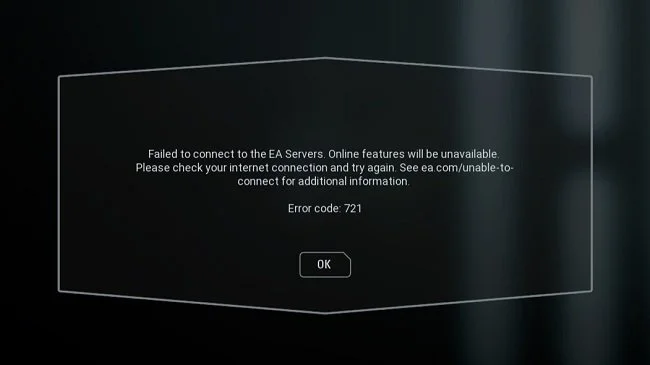
Check the EA Servers: Wait for a bit to see if the issue is a general server outage.
DirectX12: Ensure DirectX12 is disabled in the game's video settings and that Windows Defender isn't blocking it.
EA App: If playing on PC, try launching the game through the EA app and adding "-dx11" to the advanced launch box.
Persistence: Keep attempting to connect to the game by repeatedly clicking the "Connect" button.
Restart: Rebooting your PC or console might resolve the issue.
Verify Game Files: On PC, you can verify the game files through the EA app to ensure they are not corrupted.
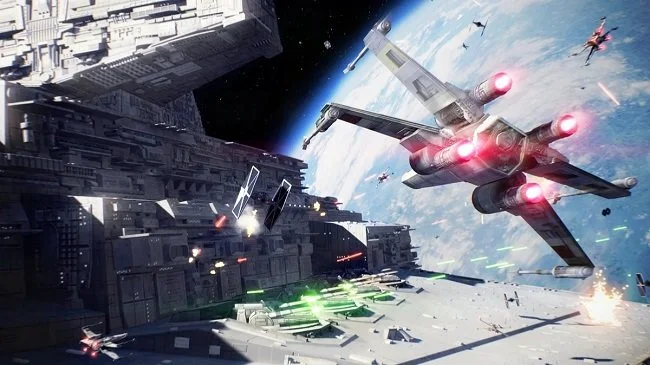
I find that the best way to beat this bug is by hammering the “connect” option and eventually my game client will be flagged as being online. Hopefully if you’re having a similar issue, one of the above suggestions will work for you. As for Star Wars Battlefront II, it is still worth playing. All lootbox mechanics have been removed and cosmetics skins are now unlocked by gameplay milestones. There are a variety of game modes and you can play in either first or third person, depending upon your preference. It should be noted that you can also shoot Ewoks. At present the servers are active and there is no major difficulty finding a multiplayer game. Eight years on the game is still visually stunning and exudes the Star Wars aesthetic. Furthermore, the recent renewed interest in may well create momentum for a Star Wars Battlefront III.



Thoughts on Andor
Season 2 of Andor has received praise from both critics and fans alike. It finally seems to have put to bed the common argument that Star Wars as a franchise has traditionally been light on narrative depth, character development and the exploration of the themes that its main story is predicated upon. Andor shows the realities of opposing authoritarian regimes and exists within shades of grey, rather than purille, binary positions. Many have drawn parallels with the current state of geopolitics, especially that of the United States. I certainly found the second season of Andor to be engaging and thought provoking. I also enjoyed the performances of many of the British actors who by default are cast in all the major Empire roles. I thought Anton Lesser was especially noteworthy as a senior officer in the Imperial Security Bureau.
Season 2 of Andor has received praise from both critics and fans alike. It finally seems to have put to bed the common argument that Star Wars as a franchise has traditionally been light on narrative depth, character development and the exploration of the themes that its main story is predicated upon. Andor shows the realities of opposing authoritarian regimes and exists within shades of grey, rather than purille, binary positions. Many have drawn parallels with the current state of geopolitics, especially that of the United States. I certainly found the second season of Andor to be engaging and thought provoking. I also enjoyed the performances of many of the British actors who by default are cast in all the major Empire roles. I thought Anton Lesser was especially noteworthy as a senior officer in the Imperial Security Bureau.
Setting aside for a moment the praise for Andor, I do think there is a rather interesting fact that has contributed to the show’s mainstream and critical success. For this iteration of Star Wars to be embraced by a wider and possibly more cerebral audience, it appears to have shed many of the science fantasy tropes that have been integral to the franchise’s appeal for decades. Namely, the Jedi Knights, the Sith and the force. Andor leans into the technological aesthetic that is synonymous with Star Wars but ignores the quasi religious presence of the Jedi and the Sith. Their theological battles are conspicuously absent. What you are left with is a clever parable about an authoritarian regime, and the resistance against it. Although very entertaining Andor is far more akin to the BBC show Secret Army from 1977, than being just more Star Wars. There are also shades of John le Carré.
George Lucas dealt in clear archetypes and the medium of high adventure when he conceived and originally wrote Star Wars. I don’t believe he ever intended the source material to be anything more than “modern legends”. A vehicle for traditional morality tales. I do not doubt that he drew upon contemporary sociopolitical events for inspiration but I in no way think that Star Wars was intended to be a indepth exploration of them. Which is why Andor is such a different beast. It is a good show but it is effectively using the aesthetic and lore of Star Wars to pitch to an alternative audience and in a very different way. Just as Christopher Nolan’s Batman films took a stylised property with a broad spectrum of prior interpretations and crashed it headlong into “reality”. Andor is very much Star Wars evolved. However, will that ongoing process eventually be to the detriment of the original content?







Too Much Star Wars
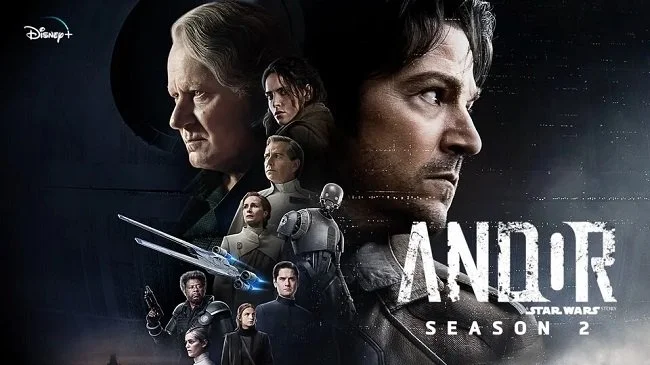
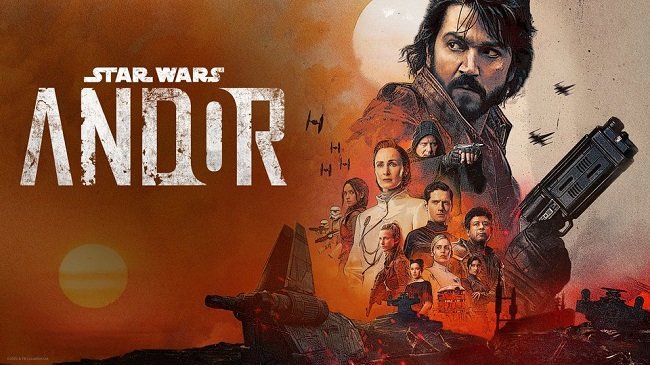
We all knew it had to happen sooner or later. According to reports, Lucasfilm is planning to reduce its Star Wars related output on Disney+. Specifically, from 2025 there will be only one live-action television series per year. For comparison, Disney+ commissioned three shows in 2022 and two shows in both 2023 and 2024. It should be noted that this reduced output doesn’t include animated shows. It would appear that senior management at Disney have finally figured out something most of us have known for a while. That saturating the market with content based upon a specific intellectual property, is ultimately detrimental to its popularity and financial viability. To use an old adage “familiarity breeds contempt”. At present, hardcore fans are “unhappy” with the way the IP is being developed, while casual fans are somewhat burned out by the excess of content and its varying quality.
We all knew it had to happen sooner or later. According to reports, Lucasfilm is planning to reduce its Star Wars related output on Disney+. Specifically, from 2025 there will be only one live-action television series per year. For comparison, Disney+ commissioned three shows in 2022 and two shows in both 2023 and 2024. It should be noted that this reduced output doesn’t include animated shows. It would appear that senior management at Disney have finally figured out something most of us have known for a while. That saturating the market with content based upon a specific intellectual property, is ultimately detrimental to its popularity and financial viability. To use an old adage “familiarity breeds contempt”. At present, hardcore fans are “unhappy” with the way the IP is being developed, while casual fans are somewhat burned out by the excess of content and its varying quality.
In recent years, the Star Wars franchise has evolved an increasingly complex lore, as it attempts to codify into canon all things alluded to in the original films. This matter is further complicated as Disney picks and chooses what material from the expanded universe it wishes to use. Hence a reciprocal need has grown, requiring viewers to be au fait with this continuously growing mythology. Someone watching The Rise of Skywalker or season 2 of The Mandolorian with no prior knowledge of the franchise would struggle with much of the plot beyond the obvious. This growing interdependence may well be appealing to hardcore fans, but it can equally be off putting those just dipping their toes into the franchise. It’s a stark contrast to the first Star Wars movie which dealt in archetypes and addressed the themes of good and evil with broad brushstrokes.
From a business perspective, Disney’s decision is a sensible move. Star Wars remains the goose that lays the golden egg but it needs to be handled with care and consideration. Over the last 47 years, fans have gone from a lengthy period without new content, to an abundance of it in the last decade. I am reminded of the old aphorism regarding buses. You wait ages for one and then several turn up simultaneously. Furthermore, Star Wars is an intellectual property in transition at present. It was conceived during the seventies when the world was a very different place to how it is today. Its narrative simplicity was an antidote to the prevailing political and cultural cynicism of the time. However, Star Wars today has to appeal to a more diverse and sophisticated audience. Andor has shown that the source material can be updated to encompass more complex and adult themes. But this process is still a work in progress.
Which brings us to what is paradoxically the franchise’s greatest strength and sadly its most obvious Achilles’ heel; its fans. Star Wars fans are steadfast, engaged and passionate about that which they love. However, some are also possessive to the point of mania. They fail to see that fandom is not the same as ownership and that they are not the exclusive audience for this franchise. As to what happens next, now that Disney has made this decision, remains to be seen. Fans of all shades seem to agree that this is the right thing to do. Many think that Disney needs to reconsider what they do next with the franchise. I even saw one comment on a subreddit that simply said “make Star Wars great again”. The only flaw with this plea is that there is no clear consensus as to how you exactly achieve that. On mature reflection, perhaps owning the biggest pop culture franchise ever, isn’t as great as it sounds.
Andor (2022)
Andor is not like other entries in the Star Wars canon. It explores the human, social and political consequences of rebelling against an oppressive, totalitarian regime. The writing is intelligent and well observed, choosing to focus on the average citizens of the Empire and the nature of their daily lives. Andor also explores the ineffectual politicians and the way the senate are self serving and ultimately impotent. The Emperor is remote and instead we see how Imperial colonialism works at a grassroots level. It is an all too familiar depiction, born out of historical fact, such as Vichy France during World War II. Petty thugs and aspiring psychopaths happily align themselves with their Imperial overlords and actively oppress their own people. As for the Empire, and in particular the ISB (Imperial Security Bureau) it is rife with infighting, personal fiefdoms and all the flaws of similar institutions from the real world.
Andor is not like other entries in the Star Wars canon. It explores the human, social and political consequences of rebelling against an oppressive, totalitarian regime. The writing is intelligent and well observed, choosing to focus on the average citizens of the Empire and the nature of their daily lives. Andor also explores the ineffectual politicians and the way the senate are self serving and ultimately impotent. The Emperor is remote and instead we see how Imperial colonialism works at a grassroots level. It is an all too familiar depiction, born out of historical fact, such as Vichy France during World War II. Petty thugs and aspiring psychopaths happily align themselves with their Imperial overlords and actively oppress their own people. As for the Empire, and in particular the ISB (Imperial Security Bureau) it is rife with infighting, personal fiefdoms and all the flaws of similar institutions from the real world.
Andor is by far the most nuanced and thoughtful entry so far in Disney’s Star Wars universe. However, although I and others are happy to heap praise upon the production it does have one particular Achilles Heel. Andor conspicuously highlights how puerile and unsophisticated all previous entries in the established canon are. When George Lucas wrote Star Wars it was designed to be a traditional high adventure. A mythology that dealt in archetypes, intended to convey a simple moral message. The baddies were bad and the goodies were good. Evil was defeated and the galaxy restored to order under the benevolent guidance of the New Republic. Lucas painted with broad brushstrokes and hence the realities of a revolution were not explored beyond a superficial manner. This approach worked fine for a self-contained trilogy of films pitched at a broad and youthful audience 45 years ago.
That audience has now grown up and some have become writers, producers and directors in the film and TV industry. Finally with Andor, the Star Wars franchise is being treated as more than just a big budget, science fantasy genre vehicle. Andor is essentially a political drama. If you took away the veneer of technology and the wider science fiction trappings this could easily be a drama about the Roman or British Empire and a critically acclaimed costume drama. I am reminded of how in 2006, the James Bond franchise was reinvented in a similar more adult fashion, with the release of Casino Royale. The caricature excesses of the Roger Moore era and the glossy, generic formula of the Brosnan period were laid to rest with a far more gritty, personal and character driven depiction of Bond. Very few franchises attempt such a revision and even fewer succeed if they try. Yet Andor has.
I am curious to see where Star Wars goes after this. Can this franchise sustain weighty dramas such as Andor as well as episodic, action fodder in the cliffhanger serial idiom, such as The Book of Boba Fett? Or are they destined to become ill suited bedfellows? Furthermore, does this more cerebral revisionist approach to the rebellion render the original trilogy obsolete due to their lightweight portrayal of political turmoil? Depending on how any future spinoff shows are presented and received, I suppose the fans will determine the answer. Personally, I would like more of this adult idiom, rather than a return to the established space opera genre. Star Wars has now undeniably changed, due to Andor. Although it has effectively solved the problem of the franchises’ simplicity, it may also have paved the way for further issues that will have to be addressed at a later date.
Complex Lore and Enigmatic Themes
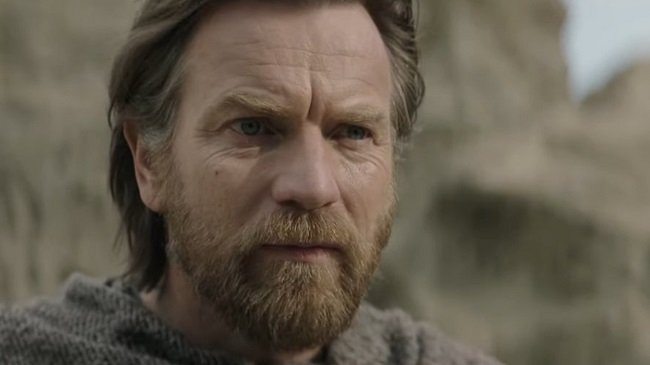
I recently watched the first trailer for the new Obi-Wan Kenobi television show that is premiering on Disney + in May. I am interested in this latest instalment in the Star Wars franchise and curious as to whether Liam Neeson will make an appearance. I also watched a 20 minute fan video in which they “analysed” the entire trailer. They discussed the content of this 2 minute preview and then did a great deal of speculating about potential themes and characters that may feature in the show. They were clearly enthusiastic about what they had seen and were very knowledgeable about the subject. This resonated with me, as I like to be well versed about the things I enjoy. However, it is worth remembering that fandom can tip into obsession and gatekeeping. Hence I feel there is a subject to explore here.
I recently watched the first trailer for the new Obi-Wan Kenobi television show that is premiering on Disney + in May. I am interested in this latest instalment in the Star Wars franchise and curious as to whether Liam Neeson will make an appearance. I also watched a 20 minute fan video in which they “analysed” the entire trailer. They discussed the content of this 2 minute preview and then did a great deal of speculating about potential themes and characters that may feature in the show. They were clearly enthusiastic about what they had seen and were very knowledgeable about the subject. This resonated with me, as I like to be well versed about the things I enjoy. However, it is worth remembering that fandom can tip into obsession and gatekeeping. Hence I feel there is a subject to explore here.
Fantasy, science fiction and similar hybrid genres thrive on world building and lore. These facets give them credibility and breathe life into fictional worlds and people. They also provide parallels with our own lives which provides a means for us to connect to them. Star Wars, despite all the technology, offers a universe that looks used and lived in. Middle-earth is steeped in history and complex societies. Again despite obvious differences there are commonalities in the hierarchies, rituals and personal aspirations of the protagonists. And as well as lore, there are also enigmas. Fantasy and science fiction are often rife with things that are strange and ill defined. Often these are mystical and symbolic. The Force, Tom Bombadil and Jason Voorhees are prime examples of this. Successful fantasy and science fiction find the right balance between detailed lore and enigmatic themes.
Achieving this balance is very difficult. The original Star Wars trilogy handled the arcane and esoteric nature of the Force well. It was broadly defined as an energy field created by all life that connected everything in the universe. However, the specifics of this were vague and nebulous which played well with the concept that the Jedi were more of a religious and philosophical order than a paramilitary organisation. However, when the prequels introduced the concept of Midi-chlorians it somewhat diminished the enigma surrounding the Force and it suddenly just became yet more technobabble. It is interesting to note that this addition to the franchise’s lore was not well received by fans. It was subsequently not alluded to in later films and television shows, indicating that the producers and writers felt it was a mistake.
Another genre example of lore versus enigma is the difference in Klingon anatomy between the original series and the revival shows. The main reason is simple. There wasn’t a budget for complex prosthetics in the sixties show. However, from Star Trek: The Motion Picture onwards, Klingons acquired their forehead ridges as a way to make them more alien. This however left a lore contradiction, which was beautifully alluded to in the episode “Trials and Tribble-ations” of Star Trek: Deep Space Nine. Several crew members from the 24th century including Worf, find themselves on Deep Space Station K7 in the 23rd century, during the events of “Trouble with Tribbles”. Upon seeing the Klingons from the previous era, one of the crew asks Worf why there’s a physical difference. He enigmatically replies “We do not discuss it with outsiders”. This beautifully vague but droll answer works perfectly. Sadly it was ruined a few years later when an episode of Star Trek: Enterprise explained away the difference as a genetic experiment that went wrong.
However, it is not always an excess of lore that can quash the soul from a popular show or film. Sometimes being deliberately too vague, refusing to expedite the plot and simply replacing one mystery with two others can be very frustrating. It may also be due to the writers being out of their depth or making things up as they go along. Lost encapsulated this for me and the show’s manipulative narrative quickly killed my interest. Don’t get me wrong, I don’t like to be spoon fed stories and explanations and I don’t mind thinking when watching. The ending of John Carpenter’s The Thing is enigmatic and quite bleak but I consider it a perfect conclusion to the film. However, perhaps the television show that really stepped over the line for not making any real effort to explain itself and turning the enigma “up to 11” is The Prisoner. It’s still a great show to watch and is very thought provoking but the final episode doesn’t deliver a stone cold conclusion. Something that people who watched it originally still seethe over.
We live in a culture of binge watching TV shows which some viewers dissect and analyse. The interconnected nature of the Marvel Cinematic Universe is a prime example of this and it does it extremely well. But not all television shows and films are like this and do not require such scrutiny. I worry that some viewers are so invested in searching for what they think may be hidden or trying to pre-empt an unfolding narrative, that they miss being in the moment and simply enjoying the show as it happens. Excessive analysis often leads to disappointment. It is important to remember that what you’re watching is a writer(s) thoughts on how a narrative should move forward. They are not obliged to try to make what’s in your or my head. Therefore I see both lore and enigmatic themes as an embellishment to a good fantasy or science fiction show or film. Things to be enjoyed but not the “be-all and end-all” of the production. If either becomes the major focus of either the writers or fans then it will end up undermining the central narrative and themes.



The Book of Boba Fett (2022)
As of today, the final episode of The Book of Boba Fett has aired on Disney + and this spinoff show from The Mandalorian has finished its first season. It has been a curious seven part story and not at all what I was expecting. Initially focusing upon the trials and tribulations of the iconic Bounty Hunter Boba Fett as he fights for Jabba the Hutt’s former territory, the story creatively explained what happened to him after he was swallowed by the Sarlacc. However, the plot took an unexpected turn focusing upon the fate of Din Djarin and Grogu from The Mandalorian, before the climatic final instalment. It’s certainly been an entertaining ride but the show’s somewhat eclectic nature has been a little confusing. Having a dedicated story about Boba Fett and then undermining it by focusing upon other iconic characters seems somewhat contradictory. Thankfully, the final episode put both shows back on track.
As of today, the final episode of The Book of Boba Fett has aired on Disney + and this spinoff show from The Mandalorian has finished its first season. It has been a curious seven part story and not at all what I was expecting. Initially focusing upon the trials and tribulations of the iconic Bounty Hunter Boba Fett as he fights for Jabba the Hutt’s former territory, the story creatively explained what happened to him after he was swallowed by the Sarlacc. However, the plot took an unexpected turn focusing upon the fate of Din Djarin and Grogu from The Mandalorian, before the climatic final instalment. It’s certainly been an entertaining ride but the show’s somewhat eclectic nature has been a little confusing. Having a dedicated story about Boba Fett and then undermining it by focusing upon other iconic characters seems somewhat contradictory. Thankfully, the final episode put both shows back on track.
I am still of the opinion that as a franchise, Star Wars works best on TV in an episodic format. George Lucas often cited cliffhanger serials such as Flash Gordon and Buck Rogers as a source of inspiration. The reason that The Mandalorian works so much better than the last three Star Wars feature films is because the writing is consistent. The former was obviously conceived and planned in advance by a single writer/showrunner and their support team. Whereas the movies seemed to be “made up as they went along”. The changes in writers and directors clearly had a negative impact on the way the franchise was received by viewers. It ultimately seemed to self plagiarise and contradict its own lore. This has not been the case with The Mandalorian and now The Book of Boba Fett which seem to be very aware of established lore and adept at drawing upon it.
I am not a scholar of Star Wars lore and have watched only the feature films and very little of the animated shows. Nor have I read many of the books, graphic novels and comics which have flooded the market over the last 25 years. Much of these are no longer canonical. Hence, my viewing of The Mandalorian and The Book of Boba Fett has not been hampered by an excess of fan based baggage. I have watched these shows for entertainment first and fandom second. Broadly speaking I have enjoyed them and they deliver what I want and expect from the franchise. They certainly feel more like direct “relatives” of the original trilogy than the three Disney feature films. Creator and writer Jon Favreau seems to grasp how Star Wars works better than J.J. Abrams. I haven’t liked all aspects of these shows. The Mod gang of Mos Espa was a homage too far in my opinion but it’s not a deal breaker.
Some folk seem to have a problem with the idea of Boba Fett’s character arc and the franchise reinventing him as a “good guy”. I do not. There are lots of both fictional and historical characters that have changed due to personal circumstances as well as the political and social realities of the world. As so much of The Book of Boba Fett seems to be couched in Western mythology, I’ll cite Wyatt Earp or Pat Garrett as examples. Plus there is human nature to consider. Many real soldiers tire of their profession and look to escape it all in later life. Plus if you consider the character of Boba Fett just on the strength of his appearances in The Empire Strikes Back and Return of the Jedi, then there isn’t really a lot of backstory or narrative depth. He is a bounty hunter and beyond that pretty much nothing is established. That’s a blank canvas as far as I can see.
One of the most enjoyable aspects of The Book of Boba Fett has been the way the show draws heavily and not too subtly upon a lot of classic cinema. Some of these homages are quite obvious where others are more low key. Certainly the entirety of Boba Fett’s time among the Tusken tribe, is straight out of A Man Called Horse. The idea of the outlander who is adopted by a tribe and then eventually becomes its ruler is an established literary trope. The Pyke Syndicate spice train attack was also a major nod to David Lean’s Lawrence of Arabia. There are also numerous references both big and small to the works of Akira Kurosawa and Sergio Leone, especially with the introduction of Cad Bane. Then we had a bomb in a club which was straight out of Brian De Palma’s The Untouchables and you’d have to have a bag over your head not to spot the King Kong reference in the season finale.
I consider all of these cinematic references to be a good thing. If it encourages younger Star Wars fans to watch these films and widen their knowledge of cinema, then I deem that to be a good thing. Overall I found The Book of Bobba Fett entertaining. It does Star Wars “well”. I’ve read some reviews that imply that the show is poking fun at fans and that it isn’t as deep as the original movies. I consider this perspective to be risible. Star Wars is a lot of things but it has never been “deep”. It is effectively a Western style soap opera set in space. It has always been entertaining, popular entertainment. It deals in archetypes and established tropes but it has never been a cerebral competitor to other popular franchises like Tolkien’s legendarium or Frank Herbert’s work. The existing TV format seems to be a perfect fit for the franchise and I hope it continues in this idiom. No more bloated films driven by focus groups and corporate memos, thank you.
Fandom or Obsession?
In my youth, I took my fandom very seriously. I would brook no criticism of the various objects of my affection. I would robustly defend them in lengthy forum comments, filled with the sort of detail and lack of self awareness that only an ardent fan can bring to bear. Nowadays, it’s a different story altogether (insert Airplane gag here). I still enjoy Thunderbirds, Star Trek, The Lord of the Rings but I do not consider them unassailable, sacred cows. If other’s scorn them, that is their prerogative. Age not only brings you more keys and things that require charging, it also grants the realisation that it doesn’t matter what others think. Furthermore, reboots, reimaginings and revivals cannot harm your memories or “ruin your childhood”. Has Gus Van Sant’s ill conceived 1998 remake of Psycho harmed in any way Hitchcock’s classic original. Any answer other than “no” is at the least spurious and at worst naval gazing bullshit, served on a platter of hyperbole and attention seeking.
In my youth, I took my fandom very seriously. I would brook no criticism of the various objects of my affection. I would robustly defend them in lengthy forum comments, filled with the sort of detail and lack of self awareness that only an ardent fan can bring to bear. Nowadays, it’s a different story altogether (insert Airplane gag here). I still enjoy Thunderbirds, Star Trek, The Lord of the Rings but I do not consider them unassailable, sacred cows. If other’s scorn them, that is their prerogative. Age not only brings you more keys and things that require charging, it also grants the realisation that it doesn’t matter what others think. Furthermore, reboots, reimaginings and revivals cannot harm your memories or “ruin your childhood”. Has Gus Van Sant’s ill conceived 1998 remake of Psycho harmed in any way Hitchcock’s classic original. Any answer other than “no” is at the least spurious and at worst naval gazing bullshit, served on a platter of hyperbole and attention seeking.
For me fandom is a benign activity which I share with others via this blog or twitter and occasionally takes me to the BFI Southbank in London, where I spend several hours enjoying the company of like minded individuals. However, and this is a big “however”, there appear to be an ever growing group of fans at the extreme end of the spectrum. Fandom turned up to 11 to use a Spinal Tap analogy. When these folk latch onto something that they like they go all in. The thing that they love preoccupies them constantly and they analyse and dissect every conceivable aspect of that which they love. It is easy and possibly a little condescending to invoke an analogy of the conspiracy theorist that has a “wall” with all their data on it but there is a grain of truth in the imagery. YouTube is filled with videos where fans discuss the most extravagant theories and hypothesise about meaning, subtext and future developments of the things they like.
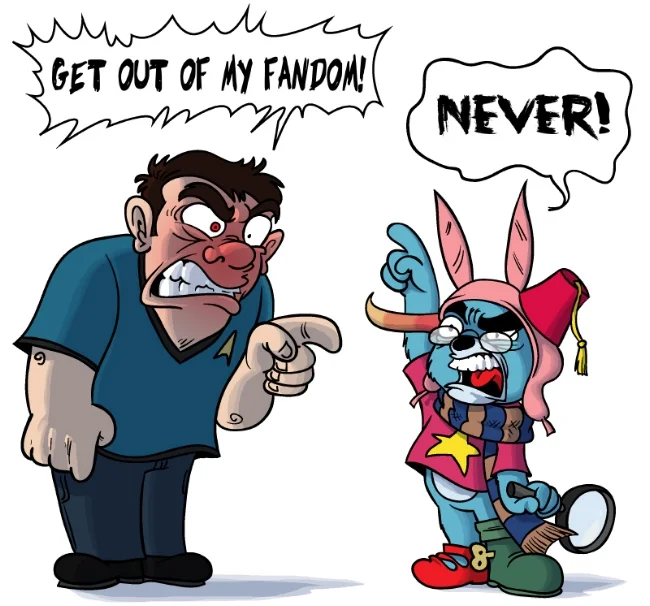
Films and especially television shows are naturally a focal point for fandom. They also provide the perfect environment for the über fan. Now if folk wish to dedicate themselves to such levels of devotion, so be it. Sadly, this position is often just one step away from crossing the line and becoming the toxic, fundamentalist fandom we’ve all seen in recent years. Consider the associated gatekeeping, zealotry and non-inclusional bullshit that has emerged around the Star Wars franchise in recent years. Not every über fan is guilty of such behaviour but if you draw a venn diagram you’ll find that many toxic fans are those who have become wedded to their “cause”. But if we set aside for a moment the matter of toxic fandom and simply concentrate on borderline obsessive fandom, it seems to come at a rather big price. Because there is a fundamental flaw inherent in investing really heavily in a TV show, book or film. You may well have placed it upon a pedestal for your personal adulation but you have no control over it and are ultimately dependent upon its creator to determine its course of direction.
All of which brings me on to Line of Duty, known jokingly by those “without a dog in the fight” as Lionel Duty, courtesy of UK comedian Gary Delaney. For those who may not know, Line of Duty is a British police procedural television series created by Jed Mercurio. It has run for six seasons and has gained enormous popularity due to its densely plotted storyline and robust performances by its cast of character actors. Audience figures have grown from 3.8 million viewers to 12.85 million over the last nine years. The latest season has turned analysis of the show into a national pastime, which has then been splashed across most of the national tabloids, throwing further fuel onto the fire. Naturally Line of Duty has its devoted über fans and they have devoted a lot of time and energy into hypothesising about the season conclusion. Last night, the final episode was broadcast and the relevant storylines neatly tied up. And within minutes the internet was filled with the bitter tears of fundamentalist fans who were “disappointed”, like the children of Thulsa Doom at the end of Conan the Barbarian.
Which one is Lionel?
It is not my intention to mock, judge or indulge in schadenfreude. Okay it is just a little bit. But I think there is one observation worth making about this situation. It was both predictable and inevitable. Lionel Duty fans are pissed at Jed Mercurio because he ultimately wrote what was in his own head, rather than what was in theirs. Damn these authors with their creative control over their intellectual property. I think when fans go all in and stray from affection into obsession, then they ultimately separate themselves from the source of their fandom. The continuous analysis, discussion and conjecture becomes more important than the source material. Sadly, fans disappointed with the conclusion of Line of Duty have made the same mistake as gamers who have pre-ordered games only to find them underwhelming upon release. Both groups filled the gaps in their knowledge with their own aspirations, only for reality to teach them otherwise. My advice is to temper your fandom and not to lose sight of its context. Because it would appear that über fans are perpetually dissatisfied and this entire scenario will happen again when the next “big thing” arrives.


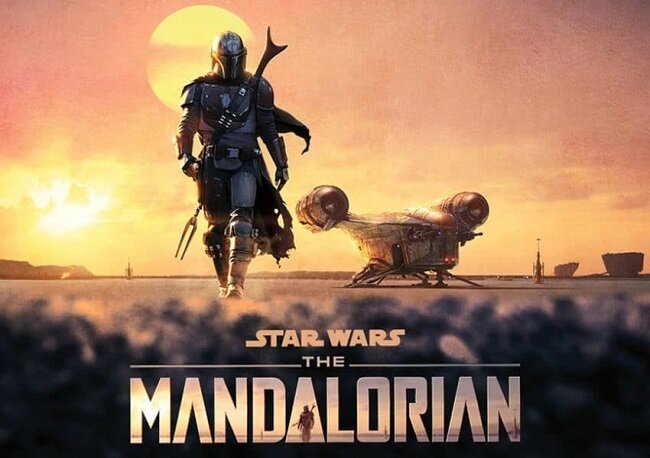
The Mandalorian (2019 - Present)
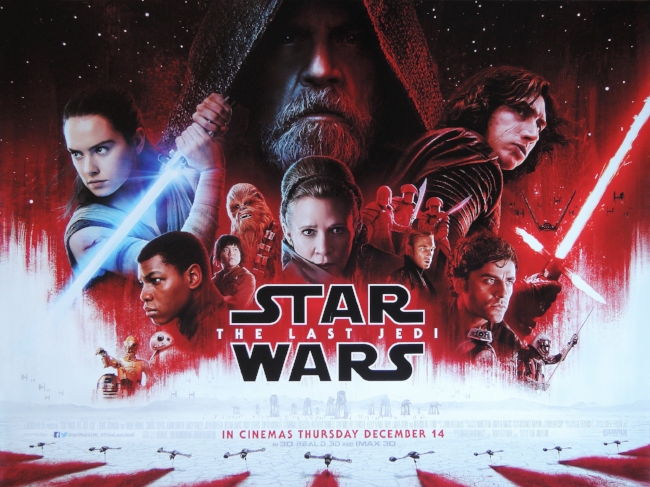
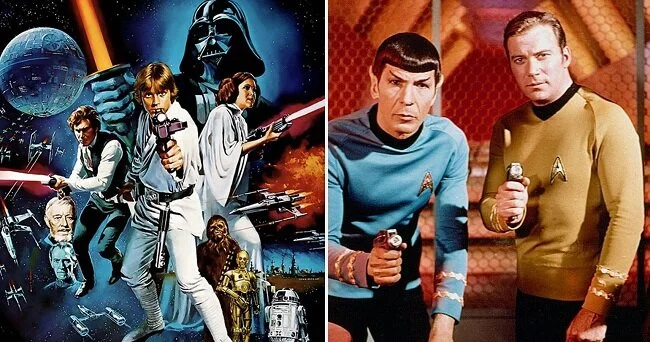
Over the years, I have had what I would describe as an ever diminishing relationship with Star Wars as a franchise. I grew up with the original trilogy, seeing them all when they were originally released. Those three films were a wonderful, self-contained story. I also broadly enjoyed aspects of the Expanded Universe, as it was confined to other mediums such as books or comics. Hence it was an optional extra, as it were. Sadly, over the years, the additional film trilogies proved to be inferior products that suffered under the weight of their own ever expanding lore. The fetishisation of the hardware, actions scenes and overall aesthetic by both the filmmakers and the fans, came at the expense of good narrative content and character development. The one film that tried to take the franchise in a more mature and thoughtful direction, The Last Jedi, proved controversial and divisive. Overall it was the animated TV show Rebels that best showed an understanding of the franchise.
Over the years, I have had what I would describe as an ever diminishing relationship with Star Wars as a franchise. I grew up with the original trilogy, seeing them all when they were originally released. Those three films were a wonderful, self-contained story. I also broadly enjoyed aspects of the Expanded Universe, as it was confined to other mediums such as books or comics. Hence it was an optional extra, as it were. Sadly, over the years, the additional film trilogies proved to be inferior products that suffered under the weight of their own ever expanding lore. The fetishisation of the hardware, actions scenes and overall aesthetic by both the filmmakers and the fans, came at the expense of good narrative content and character development. The one film that tried to take the franchise in a more mature and thoughtful direction, The Last Jedi, proved controversial and divisive. Overall it was the animated TV show Rebels that best showed an understanding of the franchise.
Last year, after the release of The Rise of Skywalker, I was pretty much done with Star Wars. Disney made a major mistake in not having a clearly defined story arc before they made their new trilogy, instead preferring to make it up as each new director was brought onboard. The franchise effectively descended into self parody as it desperately tried to plunder it’s own back catalogue in an attempt to please both fans and stick to a financially successful formula. The other major nail in the coffin was the zealotry of the fanbase. The hubris, bigotry and utter myopia of large swathes of this group, poisoned the well and turned Star Wars into a byword for everything that is wrong and toxic about fandom. And then, just as I was about to walk away and focus on that other major science fiction franchise that is currently experiencing a “renaissance”, along came The Mandalorian which quickly and calmly changed the entire direction and timbre of the Star Wars universe.
John Woo reference
The Mandalorian is an episodic show, much in the idiom of old cliffhanger cinematic serials like Flash Gordon (1936). The very things that inspired George Lucas originally. Some episodes have a plot that moves the story arc forward. Others have minimal dialogue and instead rely on the maxim of “show, don’t tell” to present their narrative . This approach works well for those familiar with the franchise and those without any prior knowledge. Another standout aspect of this show and something the original trilogy did well, is presenting the audience with a functional universe that feels lived in. The technology is not laboriously explained as with Star Trek. And although there is a wealth of lore in the Star Wars universe, this show exploits that with just enough information. Canonical characters are introduced in ways you can quickly come to grips without tons of exposition. The plot obliquely touches upon wider issues, like the way the New Republic struggles with filling the power vacuum left by the Empire. There is also a strong moral undercurrent to the proceedings.
Akira Kurosawa reference
The Mandalorian is clearly made by people who have a strong understanding of what works best with Star Wars. The production team are also extremely cinematically and pop culture literate. The references come thick and fast. Broadly, The Mandalorian has the structure and style of a Western. And a Sergio Leone Western at that. There are obvious elements of the Manga, Lone Wolf and Cub. Plus endless stylistic and visual homages to John Woo, Akira Kurosawa and many more iconic filmmakers. The visual effects work is great but this isn’t a showreel. The stories and characters are still front and centre. The appeal of “The Child” is also a major asset. Now that he has a name and a backstory, he’s transcended just being cute. And it would be remiss of me not to mention the soundtrack by Ludwig Göransson who has chosen to avoid writing in the idiom of John Williams and has instead delivered a more “organic” score. Overall The Mandalorian is an intelligent and well judged reset of a franchise that was until now, poorly managed. Let us hope it continues to maintain such a high standard.
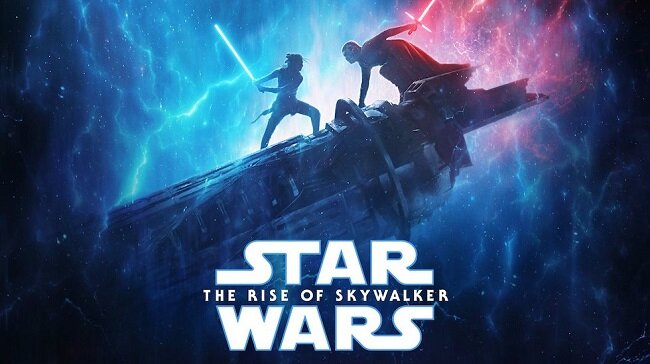
Star Wars: The Rise of Skywalker (2019)
Two years ago The Last Jedi was released to mixed reviews. A vocal percentage of fans complained bitterly about various aspects of the movie. Some of their assertions such as the episodic pacing of parts of the story had merit. While other criticisms regarding diversity and gender categorically did not. However, Disney were cognisant of the fact that Star Wars fans were not universally enthralled by the movie although it turned a healthy profit. And then the following Easter Solo “underperformed” at the box office and journalists started talking about how the franchise had overreached itself and was in decline. Alarm bells obviously went off at board level and something had to be done. It would appear that The Rise of Skywalker is very much a movie designed to put the franchise back on track and wrap up the narrative proceedings of the last 42 years. However, there is a cost in offering such a colossal “fan service”. The latest instalment starts at a breakneck pace and continues in that idiom for over two hours. Action scenes, canonical references and homages are piled on, one after another. But narratively things are somewhat thin, recycling ideas and concepts from earlier movies. Some of the plot devices are never explained and therefore seem somewhat contrived. The Rise of Skywalker is most certainly entertaining. But it requires its core audience to be forgiving and to a degree complicit in its indulgences and failings.
Two years ago The Last Jedi was released to mixed reviews. A vocal percentage of fans complained bitterly about various aspects of the movie. Some of their assertions such as the episodic pacing of parts of the story had merit. While other criticisms regarding diversity and gender categorically did not. However, Disney were cognisant of the fact that Star Wars fans were not universally enthralled by the movie although it turned a healthy profit. And then the following Easter Solo “underperformed” at the box office and journalists started talking about how the franchise had overreached itself and was in decline. Alarm bells obviously went off at board level and something had to be done. It would appear that The Rise of Skywalker is very much a movie designed to put the franchise back on track and wrap up the narrative proceedings of the last 42 years. However, there is a cost in offering such a colossal “fan service”. The latest instalment starts at a breakneck pace and continues in that idiom for over two hours. Action scenes, canonical references and homages are piled on, one after another. But narratively things are somewhat thin, recycling ideas and concepts from earlier movies. Some of the plot devices are never explained and therefore seem somewhat contrived. The Rise of Skywalker is most certainly entertaining. But it requires its core audience to be forgiving and to a degree complicit in its indulgences and failings.
If you have seen any of the marketing and advertising material associated with The Rise of Skywalker, then you will already know one of the key plot points of the film. Emperor Palpatine survived the destruction of the second Death Star and is “recovering” on the Sith home world of Exegol. When tracked down and confronted by Kylo Ren, Palpatine reveals that he was behind the creation of the First order and manipulated Supreme Leader Snoke. The Emperor then offers Ren a secret fleet of Star Destroyers along with complete control of the galaxy, if he hunts down and kills Rey. Meanwhile, a spy within the First Order informs the Resistance of Kylo Ren’s activities. Rey, Poe, Finn and Chewbacca subsequently embark on a search for Exogel, using Luke Skywalker’s notes on Jedi texts. Will Kylo Ren carry out the Emperor’s wishes and betray Rey? Will Rey give in to the dark side of the force and discover her true destiny? Will the Resistance fight alone or will the oppressed citizens of the galaxy rise up and fight the First Order in one final struggle?
The Rise of Skywalker is a finely tooled but somewhat arbitrary conclusion to the Star Wars franchise. Director J. J. Abrams turns the action and pacing up to eleven, offering a cavalcade of digital set pieces and bombastic spectacles. The weightier plot elements raised by The Last Jedi have been jettisoned in favour of action, melodrama and keeping core fans happy. Where Rian Johnson reflected upon the hubris of the Jedi and how they were the architects of their own demise, Abrams is more content to shoehorn in as many cameos possible into the movies 142-minute running time. Furthermore, the object lesson that General Leia taught Poe Dameron about the nature of command, which was so well written by Rian Johnson, has now been forgotten in this instalment. Poe has reverted back to a headstrong character who rashly rushes into situations. The film parallels several iconic scenes from both The Empire Strikes Back and Return of the Jedi. It is debatable as to whether this is a cunning plot device showing history between Jedi and Sith repeating itself, or whether it is simply lazy writing designed to get the story out of the corner it has painted itself into.
As you would expect with this franchise, the quality of the production is outstanding. The scope of many of the digital action scenes are breath taking and there is also a lot of great physical effects and old school stunt work. As ever the Star Wars universe looks and feels very credible and lived in. Yes, the science behind many ideas is way off base but that was never what this series was about. Star Wars has always been and remains science fantasy and high adventure, as opposed to pure science fiction. Dan Mindel’s cinematography is very creative and often it’s the minor attention to detail that makes a scene. For example, there’s a wonderful reverse tracking shot where Poe and Finn advance along a corridor picking off Stormtroopers who fall dead, into the frame. The obvious physical humour of the previous movie has gone and the emphasis is once again on dry quips and asides. This is much more like A New Hope and is far less of a distraction. As ever I cannot praise enough, the artistry of the great John Williams. Once again, his score permeates every aspect of the film and is a living character, providing the emotional heart and soul of the proceedings. And as far as I’m concerned, whenever an actor from the classic trilogy was on screen, The Rise of Skywalker really hit its stride. Yes you can argue the Lando Calrissian was an underdeveloped character to begin with but Billy Dee Williams has a presence and a natural charisma. It was great to see him fly the Millennium Falcon one more time.
Although I will happily admit that The Rise of Skywalker is very entertaining and winds up the story suitably, I can’t help but feel I’ve been shamelessly manipulated; in the same way as watching a renown illusionist do a show at Las Vegas. It’s all great fun but you know that everything is a contrivance and a deliberate misdirection. Key cast members are sent to classic locations and iconic structures have conveniently survived catastrophic events. The story also feigns the death or imperils much loved characters, only to reveal these events to be bluffs later on. And too many of the major plot twists and turn just defy established lore for the sake of narrative convenience. I was often reminded while watching The Rise of Skywalker, of the classic Simpson’s episode “When You Dish Upon a Star” during which Homer pitches a movie screenplay about “"killer robot driving instructor that travels back in time for some reason". Every time something implausible, contradictory or convenient happens in The Rise of Skywalker, I would just think “for some reason” and it pretty much summed things up every time.
I suspect that for many Star Wars fans, the fundamental flaws inherent in The Rise of Skywalker will be outweighed by the cameos, homages and overall fan service that Disney have produced. I did just that and accepted the movie for what it is and broadly I enjoyed it. For example, exactly why Dominic Monaghan had such an obvious guest appearance, I’m not quite sure. But as C-3PO once said “It’s nice to see a familiar face”. As for the staggering crass expositionary dialogue that crops up from time to time, you have to remember that event movies such as this bring a lot of casual viewers and non-fans to the movie theatre. Plus the last instalment in any major, much beloved franchise is always a tough gig to undertake. However, there will be those who will not be at all pleased about this movie and I fully expect an internet outrage at some point soon. Once again, if a film is poorly made or under written, then these are legitimate grounds for criticism and complaint. If you’re peeved because a film didn’t pan out the way you wanted it to, then tough luck. Frankly it is good that the original Star Wars story arc has come to an end. Its broadly been a fun ride but the franchise has attained too much pop culture baggage. I personally think that the standalone movies about classic characters and scenarios are the way forward. I really like Rogue One and I’m currently enjoying The Mandalorian. As for classic Star Wars, I’ll settle for this ending on the understanding that it’s now time to part company.
"Maclunkey"
I will try and keep this post as brief as possible because rants and tirades aren’t as funny as many writers think they are. Rather than “frothing at the mouth” I think a more accurate description of my feelings can be summed up just by a deep sigh and a shake of the head. So, where to begin? Well during the course of the day, several memes, humorous quips and oblique references appeared in my Twitter timeline featuring the phrase “Maclunkey”. As the joke didn’t immediately become apparent and I couldn’t reference the phrase (I initially thought it was about the band Mclusky) I took to Google to find out what this was all about. I like to keep abreast as to what are the current talking points online and I don’t want to be that old guy who doesn’t understand “the kids of today” or “that there interweb”. Fortunately, a brief internet search provided a clear answer. I shall now attempt to distil the relevant facts for the benefit of those who are still in the dark.
I will try and keep this post as brief as possible because rants and tirades aren’t as funny as many writers think they are. Rather than “frothing at the mouth” I think a more accurate description of my feelings can be summed up just by a deep sigh and a shake of the head. So, where to begin? Well during the course of the day, several memes, humorous quips and oblique references appeared in my Twitter timeline featuring the phrase “Maclunkey”. As the joke didn’t immediately become apparent and I couldn’t reference the phrase (I initially thought it was about the band Mclusky) I took to Google to find out what this was all about. I like to keep abreast as to what are the current talking points online and I don’t want to be that old guy who doesn’t understand “the kids of today” or “that there interweb”. Fortunately, a brief internet search provided a clear answer. I shall now attempt to distil the relevant facts for the benefit of those who are still in the dark.
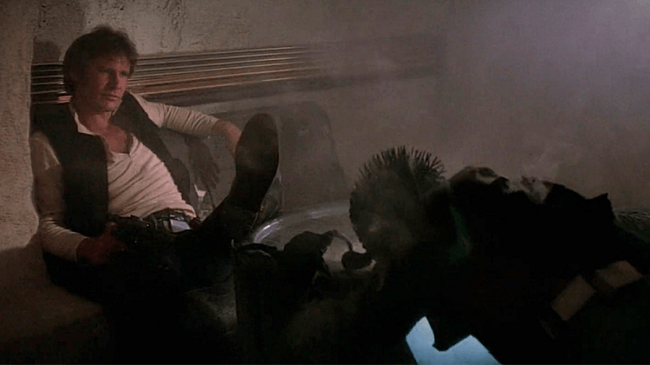
The Disney Plus streaming service has launched in the US, Canada and the Netherlands. It’s basically their version of Netflix with content from their back catalogue. Disney Plus broadcasts in 4K which means that Star Wars fans get to see the original trilogy and the various prequels and sequels in UHD format. Now despite the departure of George Lucas after the sale of the IP to Disney, it would appear that the current owners have taken a leaf out of the formers book and are still “tinkering” with (or fucking about with, depending upon your perspective) the original movies. It would appear that yet another change has been made to the iconic Han Solo shooting Greedo scene. Have they removed the awful change where Greedo draws his weapon, shoots first and misses? No. They’ve augmented the entire clusterfuck even further. According to Star Wars Visual Comparisons “Han and Greedo also now shoot each other at the same time”. And in this new version Greedo apparently says “Maclunkey” just before getting shot. Furthermore, according an article by Vanity Fair the "Maclunkey" change is the work of George Lucas, made before Lucasfilm was sold to Disney in 2012. The plot thickens.
Courtesy of Star Wars Visual Comparisons
For me Star Wars will always been an integral part of my youth. It was a cultural phenomenon and heralded a major shift in film making. However, despite its many merits, I do not put Star Wars on a pedestal. Like so many other movies that have connected with the wider public and become a part of the popular culture, there are many factors that have determined this. Time being one of them. The original movies maintained their mystique for so long because up until 1999, there were only three. Then the tinkering began. And the prequels and then the sequels. The reasons that diamonds are so sought after and desirable is because they are a rare commodity. If you flood the market with more diamonds then they become worthless. If you keep messing with a classic movie you eventually ruin it. Or become Ridley Scott. Disney is killing Star Wars, along with the fundamentalist fans. This entire “Maclunkey” debacle (because that’s what it’s becoming) will simply lead to more fundamentalist fanboy anger. It further tarnishes the franchise. And itt can potentially kill some fans interest in something they use to like. It’s a shame that George Lucas sold the franchise to Disney. Or perhaps we now see why he did. May be the Goose that lays golden eggs is in fact an Albatross.
Peter Mayhew (1944 - 2019)
Peter Mayhew was working as an Orderly in the radiology department of King's College Hospital, London in 1976 when he was “discovered” by George Lucas. Lucas was looking to find someone suitably tall to play the Wookie Chewbacca in Star Wars. Legend has it that Mayhew simply stood up from his seat to great Lucas and immediately clinched the part. The rest they say is history. Peter Mayhew went on to play the role in another five movies, and despite not gaining the immediate fame of regular actors, became a firm favourite among fans at conventions. He was also held in very high regard by his professional acting peers. As for the role of Chewbacca, he made it his own and approached the character seriously and with genuine love. Despite a lack of conventional dialogue, Mayhew imbued Chewbacca with a personality and a distinctive sense of style. No mean achievement for a man who never intended for any of this to happen.
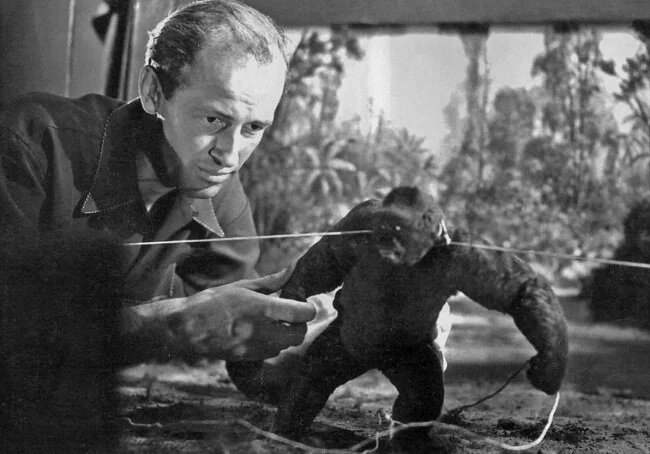
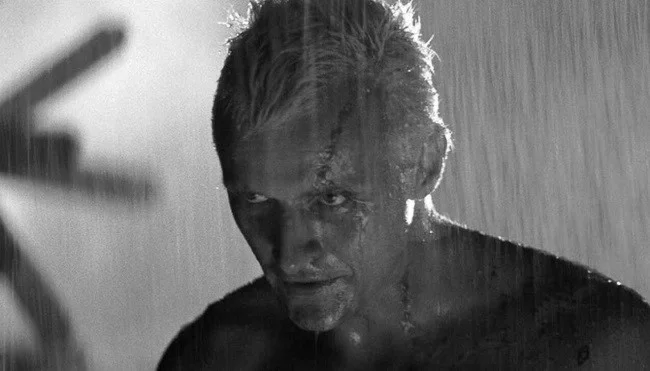
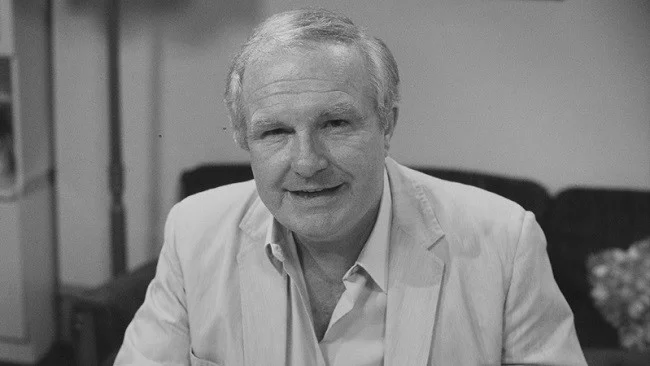
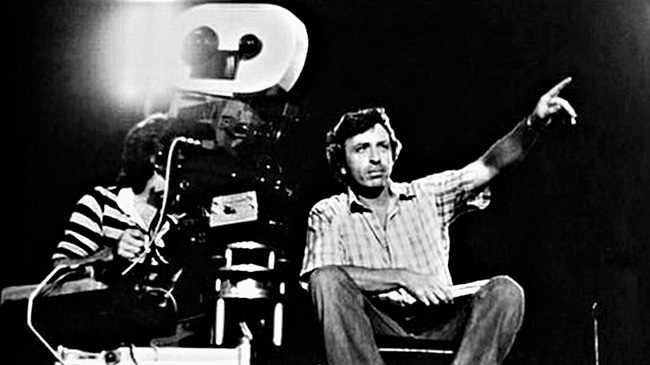
Stuart Freeborn and Peter Mayhew
Peter Mayhew was working as an Orderly in the radiology department of King's College Hospital, London in 1976 when he was “discovered” by George Lucas. Lucas was looking to find someone suitably tall to play the Wookie Chewbacca in Star Wars. Legend has it that Mayhew simply stood up from his seat to great Lucas and immediately clinched the part. The rest they say is history. Peter Mayhew went on to play the role in another five movies, and despite not gaining the immediate fame of regular actors, became a firm favourite among fans at conventions. He was also held in very high regard by his professional acting peers. As for the role of Chewbacca, he made it his own and approached the character seriously and with genuine love. Despite a lack of conventional dialogue, Mayhew imbued Chewbacca with a personality and a distinctive sense of style. No mean achievement for a man who never intended for any of this to happen.
There’s something inherently appealing about the character of Chewbacca; the loyal and imposing companion of Han Solo. There are elements of older classical archetypes in the role which is why the Wookie has proven so appealing to fans. Who hasn’t at some point in their life wished for an imposing, resolute companion, who sticks with you through the good times and the bad? Someone who tolerates your shortcomings and will give you a kick up the backside when you stray, yet still remains ever true. Chewbacca was all those things and judging from the tributes that have appeared in the last 24 hours, so was Peter Mayhew himself. He was always well received on the convention circuit and spoke passionately about his role and relevance of his character. He was also in recent years, very supportive of passing the baton onto the younger generation. Actor Joonas Suotamo has stated that Mayhew acted like a “one-of-a-kind gentleman” and whose “tutelage and kindness” made taking over the iconic role much easier.
Not many professional actors would be keen to take a major role in a film that not only hid their face but subsequently replaced their dialogue with growls and roars. However, that was not a problem for Peter Mayhew. He would happily deliver his lines in his own dulcet tones for others to respond to, irrespective that he knew they’d later be removed. Such behind the scenes footage is both incongruous and humorous to watch. Yet it also shows Peter’s dedication to the role and ethos that if a jobs worth doing, it’s worth doing properly. The picture above is far from canonical and is simply a photoshopped creation intended to raise a wry smile. Yet it also represents the timeless appeal of characters such as Chewbacca and again reinforces the trope of the faithful companion, friend and confidant. As for Peter Mayhew, it is pleasant to know that despite being subsumed into one of the biggest franchises ever, far from letting the experience spoil his life, he managed to achieve the complete opposite. He saw fame and his characters’ cult status as a positive thing and an opportunity to do good.
The Lucas Legacy
I was perusing the net recently and came across a story about how a Star Wars fan film that had built up a head of steam online, has been slapped with a copyright strike from Disney. Nothing unusual there as the company is virtually legendary with respect to its litigious proclivities. However, someone over a Lucasfilm interceded and got the strike lifted, because the fan film creator had allegedly sought prior permission and supposedly received it. George Lucas has always maintained an equitable attitude towards fan usage of the Star Wars IP, something he tried to impress upon Disney when he sold the rights to them back in 2012. But it is very difficult to have a balanced discussion about George Lucas as the man is such a paradox. On one hand he is possibly one of the greatest contributors to twentieth century pop culture and has influenced a generation of film makers, writers and fans. On the other he is the man who single headedly has managed to queer his own pitch, with the way he has continuously tinkered with his body of work and appended it with supplemental material that many deemed substandard or to the detriment of the original. He is also still vilified in some quarters for his business arrangement with Disney.
I was perusing the net recently and came across a story about how a Star Wars fan film that had built up a head of steam online, has been slapped with a copyright strike from Disney. Nothing unusual there as the company is virtually legendary with respect to its litigious proclivities. However, someone over a Lucasfilm interceded and got the strike lifted, because the fan film creator had allegedly sought prior permission and supposedly received it. George Lucas has always maintained an equitable attitude towards fan usage of the Star Wars IP, something he tried to impress upon Disney when he sold the rights to them back in 2012. But it is very difficult to have a balanced discussion about George Lucas as the man is such a paradox. On one hand he is possibly one of the greatest contributors to twentieth century pop culture and has influenced a generation of film makers, writers and fans. On the other he is the man who single headedly has managed to queer his own pitch, with the way he has continuously tinkered with his body of work and appended it with supplemental material that many deemed substandard or to the detriment of the original. He is also still vilified in some quarters for his business arrangement with Disney.
Lucas announced back in October 2012 an interview with the New York Times, that he was "retiring" from the sort of film making he had become closely associated with over the last three decades. He was however still going to pursue creating more "personal" films. He also made some fairly broad statements about getting mainstream Hollywood to buy into his last project Red Tails and the movie industries overall inadequacies in dealing with issues of race and African-American history in films per se. He took time to pointedly described how he had to finance Red Tails himself. Sadly, the movie was met with relative indifference at the box office and garnered the usual criticism associated with his work. IE too much emphasis on spectacle and not enough attention of characters and script. Since then Lucas has not produced any major cinematic works and has continued to pursue his philanthropic and charitable endeavours.
There are some who feel that Mr. Lucas is a misunderstood film maker who has suffered at the hands of a rabid and unreasonable fan base and a system that hates him for bypassing their rules. Then there are those who simply see him as a gifted technician, well versed in the mechanics of film making but lacking in the narrative skills shown by the true “greats”. As per usual, the truth more than likely lies somewhere in between these two positions and is far more nuanced. As for his last movie Red Tails (which he produced and then took over the reshoots from incumbent director Anthony Hemmingway), it’s a distinctly average film. It is visually impressive as you would expect, but the story is incredibly formulaic, and the characters are weak. The issue of racism is not given the depth or intelligence required to explore it effectively and the dialogue is unconvincing. Whether the films reception was a key factor in Lucas choosing to semi-retire from the wider industry, is up for debate. For decades he has been a prisoner of his own success and at times it does seems like he still struggles to come to terms with it all. “On the Internet, all those same guys that are complaining I made a change are completely changing the movie … I’m saying: ‘Fine. But my movie, with my name on it, that says I did it, needs to be the way I want it. Why would I make any more when everybody yells at you all the time and says what a terrible person you are?”
Although I fully understand and even agree in principle with his sentiments, such a position is purely an ideological one and is not very practical in reality. Star Wars has become an integral part of popular culture and although there is no legal precedence, the public feel that they have some collective emotional ownership of it and are therefore not going to take an even-handed view to alterations and new material (as the Disney movies have shown). Lucas should have learnt from others who have participated in films and TV that has grown bigger than themselves. You come to terms with it and try to work within the confines that it sets, or you simply withdraw. Lucas may think that the restraints of the Star Wars phenomenon has limited his options and thus he has not had the critical success he looked for. I think more blame can be attributed to his skills set. The original trilogy although overall his own work, had the creative input of additional screenwriters and directors to smooth the rough edges and curb his excesses. The prequels did not and therefore their ideas and visual style were marred by poor dialogue and turgid stories. In fact, I would draw a parallel between George Lucas's career and that of M. Night Shyamalan. Both are talents that possibly require the counterbalance of a third party to reach their full potential.
Of course, George Lucas has not fully retired and has provided himself with a get out of jail card, with the ongoing development of a fifth Indiana Jones film. However, it should be noted that he is only involved as an executive producer and is not contributing to the story. Yet regardless of any future film output, his long-term legacy is clearly established and of considerable magnitude. He created a mythology for a generation that had none and has been instrumental in pushing back the technical boundaries of the film industry. He has demonstrated that the mainstream studios do not need to have it their own way all the time and he has influenced an inordinate amount of people globally to pursue their creative dreams. However, it can be argued that he has also set a precedent of style over substance and spectacle over narrative. Yet, whatever your opinion on the man and his work, we have not heard the last of him. Lucas is by nature a “fixer” and I suspect he has something he still wants to put right or follow up upon before he’s “done”.
Fundamentalist Fandom
Naïve (adjective): (of a person or action) showing a lack of experience, wisdom, or judgement. I have chosen this word over delusional, foolish or puerile in an attempt to keep this post measured and level headed. Because this is a discussion about fandom and it’s a subject that is seldom driven by cool, even handed, mature reflection. Fandom is about passion, strong emotional connections and a sense of community. These can be and often are positive things. Yet fandom can also be about myopia, zealotry and gate-keeping. Something that that is supposed to bring people together can degenerate into a “them and us” scenario. Just another binary, tribal, world view that screams at anyone or anything that is not “the same”. And in recent years, due to the internet and social media, fandom has now developed an erroneous sense of ownership. By loving something and venerating it, you (allegedly) have an inherent stake in it and a right to say how it evolves. Which leads me neatly on to “Remake the Last Jedi” movement and the staggering naivety that underpins it.
Naïve (adjective): (of a person or action) showing a lack of experience, wisdom, or judgement. I have chosen this word over delusional, foolish or puerile in an attempt to keep this post measured and level headed. Because this is a discussion about fandom and it’s a subject that is seldom driven by cool, even handed, mature reflection. Fandom is about passion, strong emotional connections and a sense of community. These can be and often are positive things. Yet fandom can also be about myopia, zealotry and gate-keeping. Something that that is supposed to bring people together can degenerate into a “them and us” scenario. Just another binary, tribal, world view that screams at anyone or anything that is not “the same”. And in recent years, due to the internet and social media, fandom has now developed an erroneous sense of ownership. By loving something and venerating it, you (allegedly) have an inherent stake in it and a right to say how it evolves. Which leads me neatly on to “Remake the Last Jedi” movement and the staggering naivety that underpins it.
For those who may not be aware (and in some ways I envy you) a group of “devoted” Star Wars fans are currently lobbying, campaigning and generally advocating that the recent instalment in the franchise, Star Wars: The Last Jedi, is remade because it wasn’t to fans liking. Take a moment to read the official statement from their website. “Welcome to the Rebellion. This is a campaign to provide Disney an opportunity to course correct with the Star Wars franchise. The fans are completely divided, and the core goal of Star Wars has been abandoned. The goal is to not make one half of the fandom happy over the other, it is to make a film that the fandom in general as a whole enjoys. The hero archetypes of the original films are what made these so great, it made characters that everyone could relate to regardless of their background and beliefs. No longer having this core element along with poor storytelling, has made the franchise divisive and in disarray”.
"I felt a grave disturbance in the force. As though thousands of voices cried out because they were incapable of acting like fucking adults..."
It’s difficult to know exactly where so start with such spurious reasoning as this. The above statement seems to be predicated on numerous false axioms and driven by a quite frankly staggering degree of hubris. Yet these seem to be common facets of fandom these days. However, let’s try and remain rational and the unpick Gordian knot that is zealous, fundamentalist fandom. First off, Star Wars: The Last Jedi grossed $1,332,539,889 internationally, which is broadly five times it’s budget. Star Wars: The Force Awakens made $2,068,223,624 at the global box office, which is about eight times its production costs. So, although there was a drop-in revenue with regard to Star Wars: The Last Jedi, the movie can hardly be described as a financial flop. It can be cogently argued that the high gross of the first Star Wars sequel was primarily driven by curiosity in the franchises re-launch. The bottom line is that Star Wars: The Last Jedi was broadly a financial and critical success. The fact that it was not well received by some fans is simply a foot note to this. A tangential incident and an event of no more significance than a reflection of the capricious nature of fandom.
So, I think we can safely say that from Disney’s perspective there is no pressing need to “course correct” the Star Wars franchise. Certainly not from a financial perspective. But that’s not what is meant is it. The course correction referred to by “Remake the Last Jedi” is the narrative and specifically, its racial and gender diversity. Because apparently anything that isn’t a white hero, a white secondary hero, and venerable old sage like white hero and a solitary sassy girl who needs to be rescued, isn’t living up to “hero archetypes of the original films”. Archetypes that were steeped in the prevailing socio-political-economic attitude of the times (IE the seventies), which as we know from history where a veritable golden age of equality and moral rectitude. Make no mistake, these trite excuses trotted out with tedious predictability are just the usual smokescreen for a section of society who don’t like the slow and gradual diminishment of their demographic privilege. Once again, we see a percentage of fans that are angry because they didn’t get a movie made exclusively on their terms, servicing their questionable needs.
"Well if I can't have it my way, I'd sooner see the whole thing burn..."
Another myth that is being perpetuated here is that Star Wars movies and indeed any franchise movies per se, are made exclusively to cater to the needs of core fans. They are not. I’ll say that again in case the sound of certain parties’ jaws dropping and hitting the ground drowned me out. Just because you like something and you’re vocal about your appreciation of it, it doesn’t make you the exclusive customer. It’s a simple question of numbers and economics. The box office returns from fans alone are not going to make a healthy profit for the studio. This matter came up recently with the Warcraft movie, which I happened to think was a above average genre outing. Many of those who have avid played the game over the years felt that the movie was too broad and covered to much familiar territory. Why didn’t the film concentrate on more specific aspects of the lore? Well the answer boils down to accessibility. To ensure adequate box office returns, the movie had to provide an overview of the established lore and a means for the casual viewer to get up to speed. This is something that Peter Jackson wrestled with when he adapted (and that is the key word) The Lord of the Rings. If a studio focuses solely upon fans, then they are effectively setting boundaries on a movies appeal. Steven Spielberg struggled with this issue more recently with Ready Player One. As a result, the films narrative suffered. Movies are made for profit first, art second. More bums on seats means more money.
Furthermore, irrespective of the credibility of the arguments put forward by “Remake the Last Jedi”, there is another major pachyderm on the mezzanine to consider. Namely the legal possibility of remaking such a film is negligible. Putting aside the immense loss of face a studio would suffer in conceding that one of its products is so bad, that they felt compelled to let “joe public” remake it, the legal logistics of such an undertaking would be prodigious, requiring support and sign off from multiple parties. Although it’s far from a like-for-like comparison, look at the fate of Star Trek Axanar when it attempted to “rub” another studio’s “rhubarb”. That project has ended exactly everyone thought it would. So, because there is no conceivable situation where such a project could be facilitated, this entire “Remake the Last Jedi” endeavour is nothing more than a public act of showing one’s displeasure. Now in principle, I have no problem with that as I support the right for peaceful protest. However, those protesting do not have the right to avoid scrutiny of their cause and subsequent judgements of its righteousness. For me and many others, it is absent in this case.
"Excuse me, I'd like to borrow your franchise please..."
Steeping asides from the specifics of this incident, there is much to reflect upon in a wider context. The growth of this more zealous form of fandom is extremely counterproductive. It perpetuates a stereotype or fans being dysfunctional social misfits, drives away moderate and even-handed supporters and validates the notion held by some, that pop culture having an infantilising effect upon society. Certainly, there are elements here of “me, me” culture present in the “Remake the Last Jedi” movement. This ties in with the wider growth of “faith and feeling over facts” and the compulsion to make every nuanced discussion into a trite binary argument that demands you to pick a side. In many ways this is just another aspect of growing cultural decline that accounts for so many of the political “upsets” we’ve seen of late. Now, I’m sure some readers may be inclined towards dismissing “Remake the Last Jedi” out of hand as just being the an excessively vocal minority taking advantage of social media and it’s reach. But I think it is symptomatic of a more comprehensive shift in the western zeitgeist and that it’s not a change for the better. I fully expect something similar and more incredible to occur soon. Also, it’s only a matter of time before something tragic happens.

















Star Wars Begins (2011)
Star Wars Begins is a detailed documentary by film maker Jamie Benning that explores the creation of what is now considered to be the most iconic movie of the seventies; namely Star Wars. It features a wealth of deleted scenes, alternate takes, behind-the-scenes footage, bloopers, original on set audio recordings and a great deal of commentary by the original cast and crew. As far as I’m concerned, it is the most thorough and in-depth analysis of Star Wars I have yet to see. Frankly it beats hands down, any of the officially sanctioned documentaries that have appeared over the year on the various DVD and Blu-ray releases of the trilogy.
Star Wars Begins is a detailed documentary by film maker Jamie Benning that explores the creation of what is now considered to be the most iconic movie of the seventies; namely Star Wars. It features a wealth of deleted scenes, alternate takes, behind-the-scenes footage, bloopers, original on set audio recordings and a great deal of commentary by the original cast and crew. As far as I’m concerned, it is the most thorough and in-depth analysis of Star Wars I have yet to see. Frankly it beats hands down, any of the officially sanctioned documentaries that have appeared over the year on the various DVD and Blu-ray releases of the trilogy.
It is Benning’s feature-length approach of his documentary that follows the flow of the original movie, that makes it so compelling. As the Star Wars itself plays, all aspects of the production are crossed referenced and annotated as they appear on screen. The documentary is also a very illuminating insight into the US and British movie industry of the times. Despite having a prodigious wealth of information to convey, the documentary handles the pace of material well and the viewer has time to digest what is shown and discussed without getting overwhelmed. This is a considerable achievement for a documentary, which can be a difficult format to master. Star Wars Begins is most certainly a painstaking labour of love, but the hard work pays off with an even-handed film that finds the right balance between interesting facts and pacing.
The documentary also succeeds in catering to both hardcore fans and the more casual viewer. If you have not seen some of the famous deleted scenes, such as Han's original meeting with Jabba the Hutt or Luke's dialogue with his friend Biggs Darklighter then you are in for a treat. Some of the original on-set audio is extremely amusing such as actor Dave Prowse speaking Darth Vader's lines in a West Country accent. Overall what the documentary does is offer a totally fresh perspective on Star Wars which helps re-invigorate one’s enjoyment of the classic trilogy. Until Disney’s renewal of the franchise in recent years, the second trilogy of prequels did cast a shadow over the original three movies.
Another thing I've learned from Star Wars Begins is that some aspects of the original movie were intended to be more violent. This is something that has always been present in Lucas's work but certainly it didn't come to the forefront until the second trilogy. For example, stills from the Cantina set show that Ponda Baba's initial fate was meant to be far more unpleasant than just losing his arm. Then there is the matter of Han Solo shooting Greedo from under the table. The entire "Han shot first" debacle shows that the character was initially intended to be perceived in a very different way. Yet movies are often by nature evolutionary things, especially on big productions. Often scenes will be reshot if they don’t work out, or if a better idea is mooted. Plus, as Star Wars Begins points out, a production of this nature had never been done before and many of those involved were flying by the seat of their pants.
Director Benning has also made similar documentaries for both The Empire Strikes Back and Return of the Jedi. It should be noted that these ‘filmumentaries’ are unofficial and fall within a somewhat grey area with regard to their “status”. They are completely non-profit making and made with full acknowledgement to the appropriate copyright holders. So far, the new copyright holders Disney seem content to let sleeping dogs lie, however there is no guarantee that things will remain that way. Therefore, I would urge all fans of Star Wars to seek them out and watch them while they're still available on Jamie Benning's Vimeo channel because they are quite unique.
Jedi Junkies (2010)
Certain groups just lend themselves to ridicule from the media and in popular culture in general, irrespective of whether they deserve it or not. Star Wars fans are a prime example of this. Their love of the lore, predilection for cosplay and hunger for collectables at first glance makes them an easy target. Film maker Mark Edlitz, takes a decidedly different approach in his documentary Jedi Junkies. Instead of finger-pointing and making cheap jokes, Jedi Junkies puts a very human face on a group of enthusiasts, showing their passion to be in essence, no different to that of sports fans or other more mainstream hobbies and pastimes.
Certain groups just lend themselves to ridicule from the media and in popular culture in general, irrespective of whether they deserve it or not. Star Wars fans are a prime example of this. Their love of the lore, predilection for cosplay and hunger for collectables at first glance makes them an easy target. Film maker Mark Edlitz, takes a decidedly different approach in his documentary Jedi Junkies. Instead of finger-pointing and making cheap jokes, Jedi Junkies puts a very human face on a group of enthusiasts, showing their passion to be in essence, no different to that of sports fans or other more mainstream hobbies and pastimes.
Eduardo Sanchez with perosnal collection
The documentary follows a varied group of individuals as they indulge in their particular branch of fandom. We get to meet compulsive memorabilia collectors, the New York Jedis and their lightsabre displays, the tribute band Aerosith (that really made me chuckle) then the guy who decided to build a life-size replica of the Millennium Falcon in his yard. By and large, most of these fans come across very well, often showing a thoughtful and philosophical nature. However not all do though, with Mr Millennium Falcon being a little too self-satisfied. It isn't a particularly good replica anyway. But overall Jedi Junkies simply shows us people socialising among their peer groups, having fun through common interests. What could be more normal and healthy?
The New York Jedi lightsabre masterclass
Another thing that Mark Edlitz does in this film, is intersperse the footage of fans, with sound-bites from academics commenting on the nature of fandom, collecting and their respective social dynamics. What these professional opinions do is punctuate the documentary, allowing the viewer to make a considered opinion, rather than simply label the fans themselves. It’s a very important distinction. The section on cosplay, specifically the Leia Slave outfit is sensitively handled and certainly avoids condescension, objectification or simply being rude. These ladies surely get enough flak already.
Slave Leia cosplay
The wheel is slowly turning with regard to fandom. Niche market past times which previously were the prerogative of a few, are now high-profile moneymaking interests. It is curious how financial viability seems to eradicate traditional prejudice or scorn. However, fans have yet to reach the promised land and although Jedi Junkies is a measured look at their world, there are still people who will shake their heads at their choice of activities. It's a curious paradox that the fundamentals of collecting stamps are really no different to collecting Star Wars memorabilia and that the respective social acceptance of either group is arbitrary and subjective. Overall, I whole heartedly recommend Jedi Junkies. It is an excellent counterpoint to The People vs. George Lucas
Star Wars: The Last Jedi (2017)
Star Wars has always been about high adventure. The franchise has been outstanding in its creative vision, as well as eminently enjoyable but it has never been as deep as some of the themes and ideas that it has touched upon. George Lucas tried to provide a more complex narrative with his prequels, but it became lost in the clumsy screenplays. Instead of creating political intrigue and complexity, it all seemed somewhat incoherent and naive. Finally, Star Wars: The Last Jedi manages to achieve something that we saw briefly in Episode V. Thematic depth. The latest movie takes a franchise that has primarily been about spectacle as well as entertainment and re-invigorates it with a far greater narrative scope. There are real performances from Mark Hamill and Adam Driver, as well as complex philosophical musings on weighty themes. Finally, Star Wars like a fine wine, has matured and can now provide fans with a more substantial and nuanced story. Simply put, Star Wars has grown up and hence forward it can be more than just a space opera.
Star Wars has always been about high adventure. The franchise has been outstanding in its creative vision, as well as eminently enjoyable but it has never been as deep as some of the themes and ideas that it has touched upon. George Lucas tried to provide a more complex narrative with his prequels, but it became lost in the clumsy screenplays. Instead of creating political intrigue and complexity, it all seemed somewhat incoherent and naive. Finally, Star Wars: The Last Jedi manages to achieve something that we saw briefly in Episode V. Thematic depth. The latest movie takes a franchise that has primarily been about spectacle as well as entertainment and re-invigorates it with a far greater narrative scope. There are real performances from Mark Hamill and Adam Driver, as well as complex philosophical musings on weighty themes. Finally, Star Wars like a fine wine, has matured and can now provide fans with a more substantial and nuanced story. Simply put, Star Wars has grown up and hence forward it can be more than just a space opera.
Rian Johnson continues where JJ Abrams left off and it soon becomes clear that The Last Jedi is not going to be such an obvious reworking of A New Hope as The Force Awakens was. He carefully directs and manages multiple plot threads as they simultaneously play out. To prevent any major spoilers, I’ll summarise the plot simply. Rey begins her Jedi training with a reluctant Luke Skywalker, who is unsettled by her immense potential with the Force and psychic connection with Kylo Ren. Meanwhile, the Resistance retreats from the might of the First Order who are on the verge of finally eliminating them. Can Fin and Resistance engineer Rose Tico them find a way to infiltrate the First Order command ship and sabotage it, buying time for the Resistance fleet to escape. As ever there’s a lot going on and the movie ensures that there are the required set pieces, drama and plot twists, tempered with humour and fan boy references. But writer/director Rian Johnson brings more to the table this time and the central themes are timeless conundrums that have provided drama since the theatre of ancient Greece.
During the second act of The Last Jedi, the narrative splits into three stories. Finn and Rose Tico pursue an elusive pirate and computer coder who may be able to assist them. X-wing pilot Poe Dameron clashes with Vice Admiral Amilyn Holdo over her strategy as the Resistance retreats from the First Order. And Rey seeks the help of an indifferent Luke Skywalker on the remote planet of Ahch-To. It is this latter thread that is the heart of the movie. The trinity of Luke, Rey and Kylo Ren and how they are bound together is by far the most engaging idea. There is an Arthurian quality to this aspect of the film. I was very much reminded of Malory’s Le Morte D’arthur and the notion of a “A king without a sword, a land without a king”. At one-point Luke Skywalker admits that the Jedi may have fundamentally misinterpreted the force because all their actions have ultimately been ruinous. It’s minor comment with a great deal of weight, like a major shift in religion dogma, or when a long held scientific theory is overturned. This notion could lead to a possible renaissance in Jedi culture, led by Rey in future movies.
The Last Jedi, like The Force Awakens, further highlights the passing of the torch from old characters to new. Rose Tico (Kelly Marie Tran) is particularly interesting, providing a window into the world of all those people living under the First Order. All she has known is oppression and cruelty, which she succinctly articulates while on the Casino world of Canto Bight. Yet her motivation in the face of such injustice is not based upon revenge or hatred. I cannot remember the exact line, but she philosophically muses that “It’s not about destroying what you hate, but saving what you love”. Then there is the is Vice Admiral Amilyn Holdo played by the dignified Laura Dern. Wise and experienced in both politics and war she clashes with the impetuous Poe Dameron who foolishly misreads her motives. Benicio del Toro also appears as the enigmatic “scoundrel” DJ. I was surprised how he effectively points out that the war is not as black and white as Finn suspects. It’s interesting the way the moral absolutes of the previous films are not universally upheld this time round. Again, this is evidence that the narrative has become deeper and more nuanced.
Of course, it wouldn’t be a Star Wars film without John Williams. It is an undisputable fact that his scores for the previous seven movies have been integral to their success. The Last Jedi presents him with a wonderful opportunity to revisit many beloved themes. The late Carrie Fisher plays a pivotal role in the films proceeding and it was extremely poignant to hear the Princess Leia theme once again. It’s a truly exquisite piece and within the context of the film, profoundly moving. Again, I have to be careful to avoid spoilers but let it suffice to say that a much-loved character returns and it was an absolute pleasure to listen to the subtle reworking of their leitmotif. Yet of all the music that has featured in the Star Wars movies, for me the jewel in the crown is the sublime and moving Force theme. It plays out at the climax of The Last Jedi and considering the importance of the scene, it is especially poignant
However, with most movies, there are a few negative points to reflect upon. None of them are sufficient to undermine the movie overall but they do at times cause a lull in the proceedings. There was a little too much humour for my taste. Some of it works but other jokes, quips and sight gags fall short. I think the The Force Awakens found a better balance in this respect. There is also an excess of production affectations and visual FX indulgences, particularly with regard to some of the exotic alien lifeforms The Porg’s are somewhat superfluous and seem to be present only as comic foils to Chewbacca. There is also a curious rock dwelling creature that Luke milk’s. Why? Furthermore, the native caretakers of the Jedi Temple on Ahch-To serve no purpose other than to be the butt of some arbitrary slapstick humour. Also, as with the previous movie there are still many unanswered questions and unfilled gaps in the plot. We still know very little about Supreme Leader Snoke, apart from the fact that he is powerful in the ways of the force. It would have been nice to have known a little more about his backstory and his motivation. I was somewhat surprised by the way his story line panned out. Despite its 152-minute running time I still get the impression that significant parts of The Last Jedi were excised. For example, Captain Phasma remains woefully underused.
One thing is very clear. The ending of The Last Jedi closes the book on many aspects of the Star Wars universe that I and so many others grew up with. It leaves scope for a lot of new characters to step in and take multiple plot points and new concepts forward. All things considered this tonal shift in the franchise may not be to all fans liking but these films are not the exclusive province on the self-perceived faithful. Star Wars has grown beyond the confines of the original trilogy. Imbuing the narrative with these Wagnerian undertones such as pondering fate, the nature of our own deeds and the price we ultimately pay has finally allowed Star Wars to become a new incarnation of the classic mythology that George Lucas set out to replicate. Sadly, he lacked the literary skill to realise that dream. Rian Johnson thankfully does not. Hence the plot device of the Jedi order having to completely rethink its appraisal and relationship with the force raises many interesting possibilities. Simply put, after forty years, Star Wars has finally transcended its pulp origins and taken its first step towards becoming the quality fantasy drama it deserves to be.
Is Vanity the Achilles Heel of the Game Industry?
On the eve of the launch of Star Wars Battlefront II last Friday, DICE General Manager Oskar Garbrielson released a statement stating that paid microtransactions were to be disabled in the game for the immediate future. It was a major reverse of policy after several weeks of increasing debate and acrimony about the subject from Star Wars fans and wider gamers. It has now come to light that the decision was due to pressure from the rights holders themselves. Disney Head of Consumer Products and Interactive Media Jimmy Pitaro is apparently the driving force behind this U-turn. Naturally with a major movie release only weeks away and the prospect of huge merchandise sales over the holiday season, no one at Disney wanted to see a media circus that could impact upon their bottom line. What happens in the new year when the controversy has died down and the movie leaves the cinemas, remains to be seen. I suspect we have not seen the back of the loot crate issue but for the meantime the problem has been side-lined.
On the eve of the launch of Star Wars Battlefront II last Friday, DICE General Manager Oskar Garbrielson released a statement stating that paid microtransactions were to be disabled in the game for the immediate future. It was a major reverse of policy after several weeks of increasing debate and acrimony about the subject from Star Wars fans and wider gamers. It has now come to light that the decision was due to pressure from the rights holders themselves. Disney Head of Consumer Products and Interactive Media Jimmy Pitaro is apparently the driving force behind this U-turn. Naturally with a major movie release only weeks away and the prospect of huge merchandise sales over the holiday season, no one at Disney wanted to see a media circus that could impact upon their bottom line. What happens in the new year when the controversy has died down and the movie leaves the cinemas, remains to be seen. I suspect we have not seen the back of the loot crate issue but for the meantime the problem has been side-lined.
This entire matter is emblematic of a wider issue surrounding marketing, branding and PR. One that bleeds through into multiple facets of day to day life. We live in a curious world where politicians, communities and businesses are often very protective of their “image” and “reputation”. These may be hard earned through years of doing the right thing or simply be the product of proactive PR and spin. But the bottom line is no one wants to be negatively labelled these days, even if that label is justified. Hence, we live in a world were racists don’t like to be called such and companies hate to be perceived as “greedy”, although that is the nature of the very system that predicates their existence. Everyone seems to want to act with impunity but still be seen as a good guy and be able to hang out with fans at community events and bask in the warm glow of public adulation. It’s hypocritical and it stinks. Sadly, we allow it.
So, EA and DICE were told to stand down and this whole problem has temporarily been defused because Disney doesn’t want their image tarnished, although a little research will show they’re far from angels. Has this move worked? Well initial sales may be a little slow of Star Wars Battlefront II but it’s early days yet and I don’t see the game bombing any time soon. Fans also have very short memories and are their own worst enemy in so far as making a stand. People like to posture but they seldom care to go without and that is the only way to effect real change. What happens next with this game is still up for grabs. However, it does prove that vanity and “public perception” are the industries Achilles Heel and we should as gaming consumers continue to use this to effect the changes that we want. All we need to do now is figure out exactly what those are, as a cursory glance around the internet shows that gamers do not share a universal “dream”.
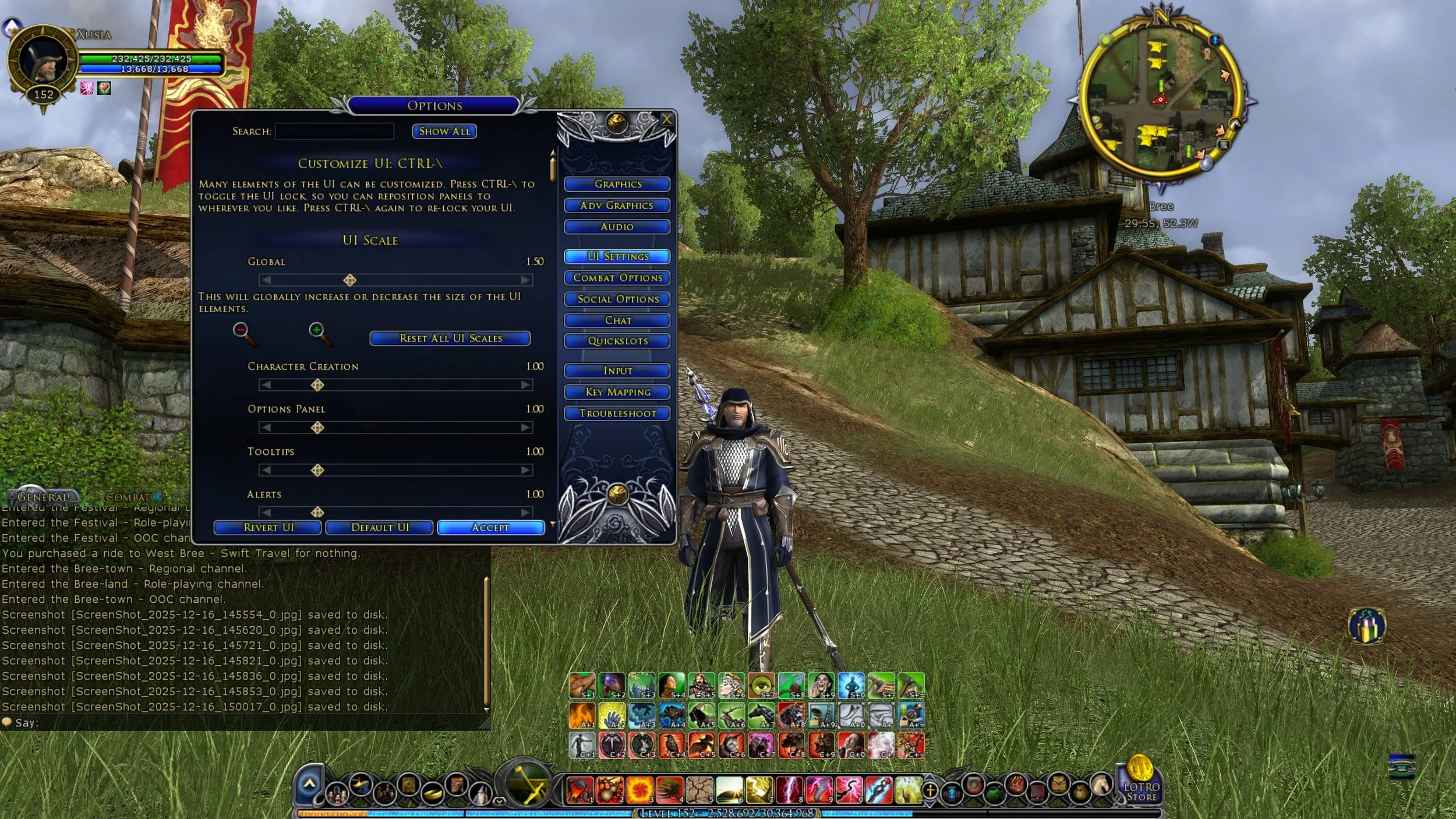



Star Wars Revisited (2008)
Back in 2008, I discovered a fan edit of George A. Romero’s iconic Dawn of The Dead and was very impressed with the way that enthusiasts can now re-edit and re-imagine any film of their choice, using commonly available tools. I subsequently spent some time looking into this entire sub-genre further and found that one of the most popular franchises to be fan edited was naturally Star Wars. One of the first fans edits of this kind I watched was a "Grindhouse" version of A New Hope that had been retitled The War of The Stars. It was fun and tried to be different but overall it was simply an amusing diversion. Something that could viewed as a in joke among fans. Not all of the fan edits out there are particularly good and as a genre it can be very uneven. Yet through word of mouth it became quite apparent that one particular Star Wars fan edit seemed to be getting a great deal of attention and praise from both the fan and wider community. Namely Star Wars Revisited by Adywan.
Back in 2008, I discovered a fan edit of George A. Romero’s iconic Dawn of The Dead and was very impressed with the way that enthusiasts can now re-edit and re-imagine any film of their choice, using commonly available tools. I subsequently spent some time looking into this entire sub-genre further and found that one of the most popular franchises to be fan edited was naturally Star Wars. One of the first fans edits of this kind I watched was a "Grindhouse" version of A New Hope that had been retitled The War of The Stars. It was fun and tried to be different but overall it was simply an amusing diversion. Something that could viewed as a in joke among fans. Not all of the fan edits out there are particularly good and as a genre it can be very uneven. Yet through word of mouth it became quite apparent that one particular Star Wars fan edit seemed to be getting a great deal of attention and praise from both the fan and wider community. Namely Star Wars Revisited by Adywan.
Now, I need to impress upon you, that Star Wars Revisited isn't just a case of moving a few scenes around and adding deleted footage from alternate sources. This is a labour of love of unparalleled magnitude. Material has been re-shot, miniatures remade and animatronics reproduced. All of which has then been seamlessly integrated into the film. Certain scenes have been modified to either replace the changes made by George Lucas. Other material has been replaced to improve perceived deficiencies. Star Wars Revisited is more than an attempt to present the movie as it was seen back upon its 1977 release. It is also a revisionist piece of work driven by an inherent love of the source material. It is quite staggering what has been achieved, especially when you consider that this is the work of a member of the public and not a film studio.
Now the changes are far too numerous for me to list here. For those of you that wish to digest them in detail, follow the link to the Star Wars Revisited blog. I've added a few screen captures below to give you a taste of the changes that have been made. NB Star Wars Revisited was created using standard definition source material. Adywan has announced that he will be producing a 720p version.
Imperial Star Destroyers now patrol around the Death Star as well as the sentry TIE Fighters. The infamous "Imperial March" from TESB has been added to the score for this scene.
When the Rebel HQ picks up "enemy fighters" on their long range scanners, we now get to see the incoming squadron sent to engage the Rebels.
Finally, Chewie gets a medal! It's very clever the way the new scene has been edited so that Princess Leia can put it round the Wookies neck.
Because of the viral nature of the internet, Adywan's fan edit has built up quite a following within the Star Wars community. Star Wars Revisited has been well received, so as a result, he has been diligently working on a revisited version of The Empire Strikes Back for the last few years. This has recently been released and I shall be focusing on the specifics of that edition in another blog post. In the meantime, I would recommend readers to seek out Star Wars Revisited. Now there are obviously some copyright issues regarding fan editing, so common sense dictates that we tread around that issue quite carefully. I will therefore not link to it directly. However, Google is your friend. Track this version down and watch it. Then ponder what a resourceful fan has managed to achieve on their own and compare it to the multiple changes that George Lucas has made over the years. I would be very interested to hear your opinion as to which is the better cut of the movie.
Star Wars Battlefront 2: Update
Having completed my ten-hour Play First Trial of Star Wars Battlefront 2, I wanted to elaborate further upon my initial thoughts of the game. It should be noted that the demo that EA offers via Origin Access, comes with several caveats. Only the first three missions of the campaign are available, although these are sufficient to give to the you a good handle on the game’s various combat mechanics. You play as Imperial Special Forces Agent Iden Versio, the leader of Inferno Squad. The story starts during the Battle of Endor and addresses the fate of the Empire, after the Emperor’s demise. Unlike many games from this genre, the single player campaign is well written and engaging. When this part of the demo ended I found myself wanting to play more and see where the narrative went. Out of the ten hours given for the demo, I spent about three on the campaign. The rest of the time I spent in multiplayer, which is the game’s raison d'être.
Having completed my ten-hour Play First Trial of Star Wars Battlefront 2, I wanted to elaborate further upon my initial thoughts of the game. It should be noted that the demo that EA offers via Origin Access, comes with several caveats. Only the first three missions of the campaign are available, although these are sufficient to give to the you a good handle on the game’s various combat mechanics. You play as Imperial Special Forces Agent Iden Versio, the leader of Inferno Squad. The story starts during the Battle of Endor and addresses the fate of the Empire, after the Emperor’s demise. Unlike many games from this genre, the single player campaign is well written and engaging. When this part of the demo ended I found myself wanting to play more and see where the narrative went. Out of the ten hours given for the demo, I spent about three on the campaign. The rest of the time I spent in multiplayer, which is the game’s raison d'être.
I’m not a huge fan of the ground based multiplayer modes. I find that my reactions are too slow for me to make any meaningful progress. However, Galactic Assault features large team orientated, objective based maps and due to the volume of players is more forgiving to the less skilled. I only spent an hour or so with type of combat before moving on to Starfighter Assault mode. Here two teams of up to 24 players, with an additional 40 AI fighters, compete in multi-stage battles between swift starfighters and powerful hero ships. There are also huge capital ships to be dealt with as well as environmental objectives. Space combat, which was conspicuously absent in the last instalment of the game, is the jewel in the crown of Star Wars Battlefront 2. The combat is fast, fluid and immense fun. The ships handle well and each class has its virtues. I was expecting to have to use my Xbox Controller for this stage of the game but I found that a keyboard and mouse works quite well.
I spent six hours playing Starfighter Assault and learning curve wasn’t too hard. As ever situational awareness is the key to success, as well as firing in controlled and measured bursts. Timing is everything. It also pays to stay with your wingmen and provide cover for each other. Out of all the ships, I found the TIE fighter most to my liking. It is a simple and efficient vessel. As for the hero ships, which become available to fly when you’ve amassed sufficient points in combat, I soon learned to avoid them. Although they do provide increased firepower, they’re also prime targets and other players flock to take them down. Again, for those who are not so confident with one on one combat, there are capital ships to destroy. Because progress is based on points and not just kills, even the novice player can make progress. For me the space combat is the selling point of this game. It is enthralling and entertaining.
Sadly, I must now return to the subject of the loot crates and star cards. Although skill, experience and reactions determine a player’s performance, equipping a star card with a suitable modifier makes a significant difference. While initially playing Starfighter Assault, it became apparent that other players had quicker weapons cooldowns, increased armour or it took less time for their missiles to lock on. I found this out because whenever you’re defeated, your foes details display on screen listing their username, ship class and all the modifiers they have equipped. It’s far from a subtle advertisement for loot crates. Furthermore, I when I experimented with modifiers myself, after buying some loot crates with earned currency, I soon got lucky and obtained some beneficial star cards myself. These did improve my performance by enhancing my ships durability. Thus, those players who do not wish to grind for upgrades can simply throw their wallets at the problem. Theoretically, a new player could have a significantly improved starfighter just after a few hours, if they’re prepared to pay.
I’m wont badger readers any further about the iniquities of microtransactions in triple A titles. I will simply say I think it’s bad for gaming in the long term. However, I suspect that EA have taken a calculated gamble on using this franchise as a guinea pig for this form of monetisation. Star Wars Battlefront 2 is a solid and immensely enjoyable game and I’m certain many players are going to put aside their moral objections and buy this title because, hey, it’s Star Wars. I myself was not going to buy the game after the trial on principle but have now been informed that it has already been purchased as a gift for my upcoming birthday. I will however not pay for any loot crates with real money and will simply rely upon grinding. I shall also be keeping my eyes open for news regarding sales of Star Wars Battlefront 2 when it launches officially on 16th November. Then we will find how much of a stumbling block microtransactions are and whether gamers worry about cognitive dissonance.
Star Wars Battlefront II
Star Wars Battlefront II looks superb, even on an ageing PC such as mine. It absolutely exudes Star Wars ambience, with its aesthetics and sound design. If you are looking for a game that show cases the cutting edge of game graphics, then look no further. However, I cannot praise the game play and mechanics in the same ways as its visuals. Star Wars Battlefront II is hobbled by a progression system that is tied and potentially undermined by its loot crate mechanic. Furthermore, I won’t say “this is a real shame” as if it’s something that just happened by accident because it patently isn’t. The game was design this way. EA elected to block player progression and then provide a means to circumnavigate it, through the spending of additional funds.
Star Wars Battlefront II looks superb, even on an ageing PC such as mine. It absolutely exudes Star Wars ambience, with its aesthetics and sound design. If you are looking for a game that show cases the cutting edge of game graphics, then look no further. However, I cannot praise the game play and mechanics in the same ways as its visuals. Star Wars Battlefront II is hobbled by a progression system that is tied and potentially undermined by its loot crate mechanic. Furthermore, I won’t say “this is a real shame” as if it’s something that just happened by accident because it patently isn’t. The game was design this way. EA elected to block player progression and then provide a means to circumnavigate it, through the spending of additional funds.
Weapons and characters in Star Wars Battlefront II can have their base skills upgraded. In most games with a similar mechanic, as you level up you earn skills points that you then spend to unlock modifiers and upgrades. Here they are dependent on star cards which are only available from loot crates. Theoretically you could simply earn everything you need by grinding through the game and earning the necessary currency and depending on chance. However, it would be a tortuously slow process. Naturally, paying for additional loot crates is the solution that EA have seen fit to implement. You can therefore spend additional money over the cost of the base game and gain modifiers that give you a significant advantage.
Even if you set aside for a moment the questionable ethics of this business model, Star Wars Battlefront II has no match making system in place. Thus, a new player will immediately compete against those who have purchased a clear advantage. These manifests themselves as reduced timers for weapon over heating or quicker weapons lock on in space combat. The net result is that the new player will die more frequently. Even those adept at the FPS genre will find that they have to play far harder for less results. Whether the player has the patience to plod through the game until they have unlocked all the necessary skills without paying for them, ultimately come down to their temperament. All I have to add to this sorry state of affairs is that fun and success should not be the prerogative of those who pay extra. This is supposed to be a “game”.
There is a single player campaign with this instalment of the franchise and from what I’ve seen so far, it is not too bad. The voice acting is solid and the story from an imperial perspective is enjoyable. EA have also made it clear that all future maps and DLC for the game will be free but given that your performance through any additional material is dependent on the skills that you’ve unlocked, we are forced to return to the issue of the loot crates and how not using them diminishes your success in the game. The sad reality is that this system gates player performance and therefore player fun. So, I cannot personally recommend Star Wars Battlefront II. It is immensely enjoyable in principle and embodies Star Wars in many respects but is flawed by an unpleasant and egregious business model.
NB. I shall post an update to this post when I've completed by ten hour trial.