

The Passage of Time
Today is my 58th birthday. It would appear that I have existed for nearly six decades. Put another way, I am over half a century old. All of which has given me pause for thought with regard to the passage of time. A phrase that is often bandied about, but what exactly does it mean? As I understand it, the “passage of time” refers to our perception of the flow of time and how we experience its movement. This is something distinct and different from objective time as measured by clocks. Our subjective experience of time can vary due to multiple factors. Two common examples are how time can feel like it's flying by when we're having fun and enjoying something or dragging its feet when you’re enduring something dull. Other factors are whether we are applying ourselves to a task, concentrating and general activity. Such focus can make time pass quickly.
Today is my 58th birthday. It would appear that I have existed for nearly six decades. Put another way, I am over half a century old. All of which has given me pause for thought with regard to the passage of time. A phrase that is often bandied about, but what exactly does it mean? As I understand it, the “passage of time” refers to our perception of the flow of time and how we experience its movement. This is something distinct and different from objective time as measured by clocks. Our subjective experience of time can vary due to multiple factors. Two common examples are how time can feel like it's flying by when we're having fun and enjoying something or dragging its feet when you’re enduring something dull. Other factors are whether we are applying ourselves to a task, concentrating and general activity. Such focus can make time pass quickly.
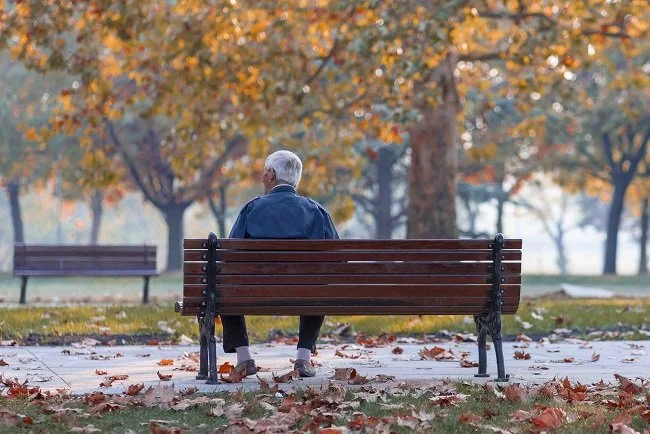
Perhaps the most important consideration regarding the passage of time is our age. Current research suggests that as we age, our perception of time passing can change. Older adults often feel like time is accelerating and the passage of days, weeks and months is quick. Some argue it is because we become aware of the wealth of years that are behind us and the finite amount of time ahead of us. Conversely, young children feel that the passage of time is slow. School days drag and the Summer holidays seem infinite This time the theory is reversed. Children have only experienced a short passage of time,over their lives. They still have a substantial amount of years ahead of them and that impacts on their perception. I suspect these ideas to be true, as I certainly feel that time goes faster for me. Even though I am now retired, my week has a schedule and regular events. All of which seem to fly past.
As for my actual age, I am beginning to think that it can no longer be conveniently crowbarred into that catch all phrase, “Middle-age”. I have even given some thought as to how much time I have left. My parents both lived into their early nineties which is a very good “innings” to coin a very British phrase. However, before I consider this longevity to be an immutable family trait, I should take into consideration several Uncles and Aunts that died early, mainly through heart disease which is conspicuously inheritable. Some people consider it morbid to dwell on one’s mortality. I think it should be given some thought from time to time. Due to medical advances, I may have more time left than I think but how much of that will be of an acceptable quality? Sadly, there’s no way at present of knowing, so I simply consider myself fortunate to still be here and enjoying a good standard of life.
Does the passage of time confer wisdom by default? I think not. I know people who journey through life with their eyes figuratively closed. Something I try not to do. I think mistakes have to be made to teach some lessons, which is why I find any philosophies that eschew failure or seek to avoid it are problematic. Time is also not necessarily a healer, although it can provide a sense of perspective and allow one to grow tolerant of our hurts. The passage of time is a fundamental aspect of human experience, influencing our memories, expectations and sense of self. Philosophers have long debated the nature of time and its relationship to consciousness. Overall, I think the passage of time is an interplay between objective time and our subjective experiences. It may just be a confidence trick, created by the Swiss and the Royal Observatory at Greenwich.

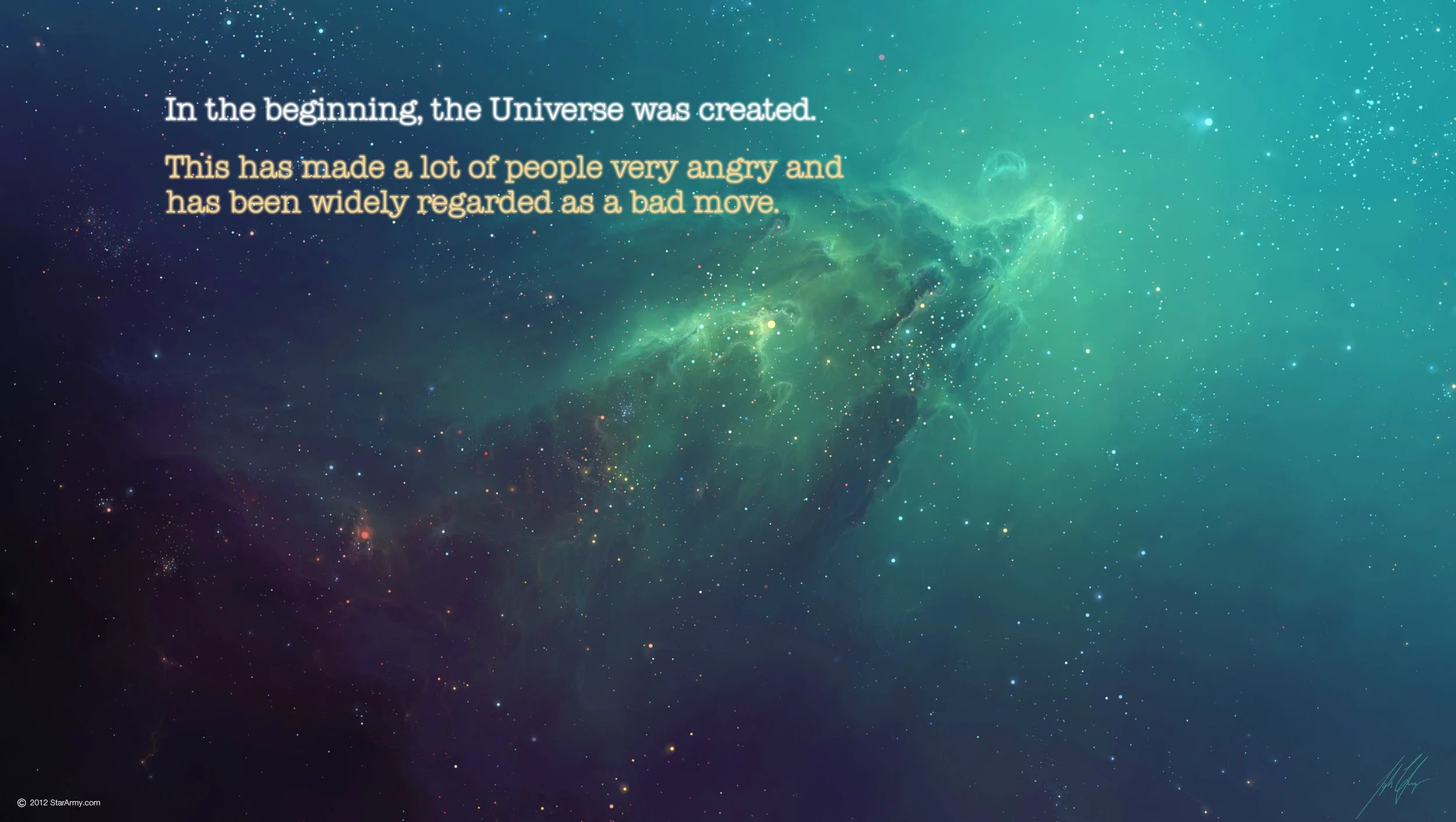
"42"
I am getting old. I shall be 58 in December. Now, as soon as you say something like that these days, some folk will get uncomfortable and say things like “age is relative” or “you’re as old as you feel”. Well I don’t measure my age in geological terms, so it’s not relative and I’m not feeling anyone especially young at the moment, so both schools or thoughts can sod off. I am getting old by the yardstick we measure human life by, namely years. I have specific, age related health issues and I just don’t feel as energised as I did a decade ago. There are minor signs, such as deciding to go to bed earlier and taking longer to get dressed after taking a shower. I’m not at death’s door but I am slowing up physically. It would also appear that my reactions are also slowing down as I tend to get massacred in any FPS I play these days. So far, my mental faculties seem to be holding up. However, that is the one thing I worry about the most. The potential loss of cognitive abilities scares the shit out of me.
I am getting old. I shall be 58 in December. Now, as soon as you say something like that these days, some folk will get uncomfortable and say things like “age is relative” or “you’re as old as you feel”. Well I don’t measure my age in geological terms, so it’s not relative and I’m not feeling anyone especially young at the moment, so both schools or thoughts can sod off. I am getting old by the yardstick we measure human life by, namely years. I have specific, age related health issues and I just don’t feel as energised as I did a decade ago. There are minor signs, such as deciding to go to bed earlier and taking longer to get dressed after taking a shower. I’m not at death’s door but I am slowing up physically. It would also appear that my reactions are also slowing down as I tend to get massacred in any FPS I play these days. So far, my mental faculties seem to be holding up. However, that is the one thing I worry about the most. The potential loss of cognitive abilities scares the shit out of me.
As you get older, you tend to become more philosophical. Possibly because you have less immediate demands upon you, so you have more time to think and reflect upon “life, the universe and everything”. These musings are vastly different from those you had with your friends, as a teenager. Those late night discussions were often ill informed, naive and tempered by substance abuse. The sort of personal reflections I indulge in now are couched in hard experiences and not all of them are good. I also have a lifetime association with organised religion, both tangential and direct, to draw upon. Another factor is that I’ve read prodigiously over the course of my life, across a range of disciplines. Hence, I reached a point in my life where it is assumed by my peers that I should know something by now. I’ve even had a younger acquaintance ask me if I’m any closer to figuring it all out.
Well it is my considered opinion that all questions about the so-called meaning of life are pretty much pointless. Why, you ask? Because there basically isn’t one. Human life on this planet is just an accidental by product of other natural processes. There isn’t a plan. There’s nothing next, it doesn’t get better and your time here is broadly irrelevant and futile. Not futile enough for me to top myself. There are still plenty of pointless distractions to pursue or indulge in the meantime. But overall, what you see is what you get in life. Through a caprice of birth you either get lucky and have decades of hedonistic pleasure, or you work hard for not much and experience intermittent moments of joy, or you have an utterly terrible life filled with pain, suffering and misery. Life is inherently unfair and human beings continuously act against their own best interests. If you pick up a history book you’ll see that we make the same mistakes, again and again. Like Electronic Arts.
So what do you do in light of this revelation? Well it’s up to us to impose our own meaning and purpose upon our lives. Also, accept the fact that some things are nothing more than the sum of their parts. One of the questions that has always gotten on my Tatty Bojangles is this “science can explain the how and why but not the meaning”. Well Colin, because it’s always some p’tak called Colin who trots this drivel out, have you ever considered that there’s no requirement for everything to have a meaning? But I digress, if you’re finding it hard, coming up with ideas for the purpose of life, consider this one. “Try to be nice to people, avoid eating fat, read a good book every now and then, get some walking in, and try to live together in peace and harmony with people of all creeds and nations”. If that’s too complex, how about this one? “Everyone you meet is fighting a battle you know nothing about. Be kind. Always”. Even to Colin, I guess.

Smiling
Prior to writing this post, I clocked a picture on a news website of the now disgraced TV presenter (and nonce) Gregg Wallace. I noticed that he doesn’t smile as such but tends to “gurn” instead. So does UK politician (and cunt) Nigel Farage. He always has his mouth open and his face contorted in some curious rictus, in most of the pictures you see of him. Mind you, I also don’t photograph especially well and any pictures of me smiling tend to look sinister or with a heavy hint of irony. The bottom line is not everyone is good at smiling. It doesn’t come naturally to all of us. This can be a problem at times or in social situations, because smiling is an integral part of our culture. On many occasions, I’ve been walking along, my face in a state of natural repose, only to be harangued by some twat shouting “cheer up, it may never happen”. A phrase I haven’t quite fathomed out, even to this day.
Conrad Veidt as Gwynplaine, in The Man Who Laughs (1928)
Prior to writing this post, I clocked a picture on a news website of the now disgraced TV presenter (and nonce) Gregg Wallace. I noticed that he doesn’t smile as such but tends to “gurn” instead. So does UK politician (and cunt) Nigel Farage. He always has his mouth open and his face contorted in some curious rictus, in most of the pictures you see of him. Mind you, I also don’t photograph especially well and any pictures of me smiling tend to look sinister or with a heavy hint of irony. The bottom line is not everyone is good at smiling. It doesn’t come naturally to all of us. This can be a problem at times or in social situations, because smiling is an integral part of our culture. On many occasions, I’ve been walking along, my face in a state of natural repose, only to be harangued by some twat shouting “cheer up, it may never happen”. A phrase I haven’t quite fathomed out, even to this day.
Firstly, let us first define what smiling is. According to Google, to smile is “to form one’s features into a pleased, kind, or amused expression, typically with the corners of the mouth turned up and the front teeth exposed”. As to the function of smiling within society, it is a powerful form of non-verbal communication that serves multiple functions. These include expressing emotions, improving mood, and influencing social interactions. It's a universal signal of happiness and can foster positive connections with others. It is a tool for social bonding and has positive benefits such as stress reduction and mood enhancement. Outside of human society among the other primates, smiling primarily serves as a social signal, often indicating appeasement, submission, or even fear, rather than a straightforward expression of happiness. Fascinating stuff.
Amanda Bearse in Fright Night (1985)
Setting aside the sociological and behavioural complexities of smiling, let us focus on the realities of smiling in society. Smiling is a facet of expected behaviour. On paper that’s not such a bad thing. A smile lets other people know that things are okay. It can be a polite social nicety like saying please and thank you. However, there is scope for this simple social cue to become a far more tyrannical tool, especially for women. Across most forms of media, it is rare to find an image of a woman who is not smiling. Something which is not true of men. Research shows that women smile 62 times per day on average, while men smile only 8 times. Smiling is therefore seen by many as a social expectation, even obligation. A curious offshoot of asking how someone is, with the understanding that you don’t answer negatively. Hence, the cat calls and the aforementioned comments.
One of the things that boils my piss, to invoke a contemporary expression, is the inherently flawed assumption that if you’re not smiling, you’re unhappy. My default facial expression is one of repose. IE neutral. I am not in any specific emotional state and more than likely contemplating something like a sandwich or what are the toilets like in Star Trek. The complexities of my psychological disposition, conveyed via the medium of my face, is obviously too complex a concept for some people who exist in a simple binary state. They, however, they can fuck off with their unwarranted social expectations. I will smile as and when I see fit and not before. I believe that any form of social expression, if used ad nauseum, loses its value. Which is exactly what has happened to smiling. Those who smile incessantly are either lying bastards, trying to sell you something or a couple of sandwiches short of a picnic.















Loneliness
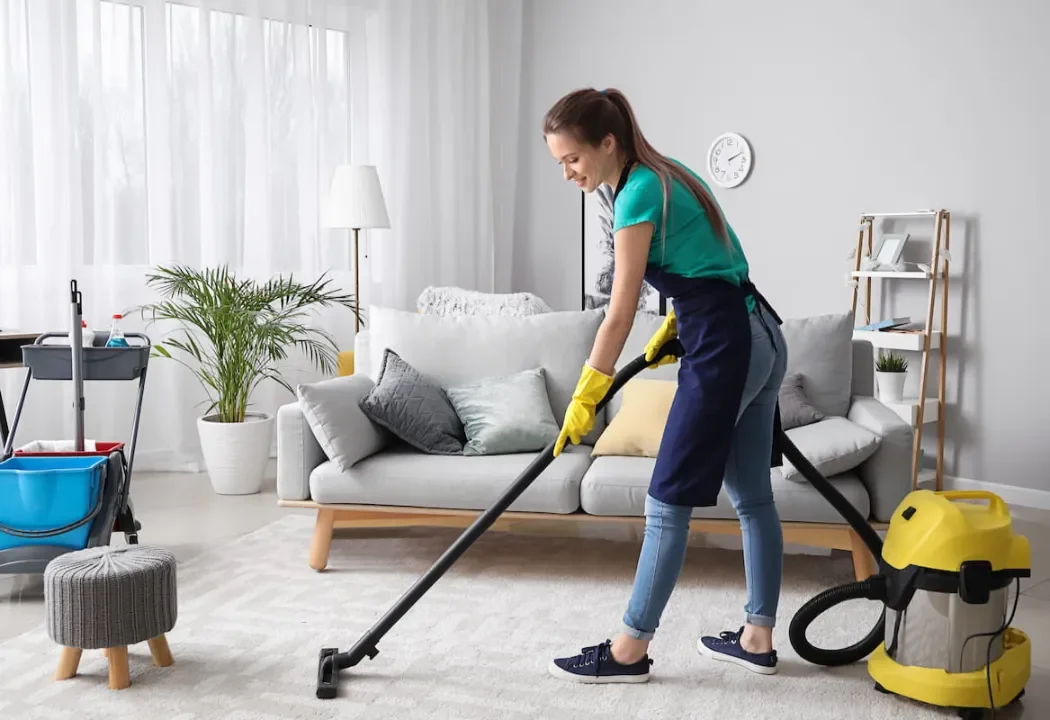
I was consulting my list of blog topics, when I spotted the subject of loneliness among the various talking points I’ve collated. “Hah”, I thought. “That will do”, hoping to quickly write four or more paragraphs off the top of my head. However, during the course of some lightning research I discovered the following website, Campaign to End Loneliness and realised that this may not be a subject one can easily extemporise about without being too general or indeed, insensitive. Loneliness exists on a spectrum and is highly subjective. Some of the examples cited by Campaign to End Loneliness, may well sound quite trivial while others are truly heart breaking. All of which highlights, like so many things in life, that the subject is nuanced, subjective and one needs to avoid generalisation. Which raises the point, what can I contribute to such a discussion? My own experiences.
Loneliness
I was consulting my list of blog topics, when I spotted the subject of loneliness among the various talking points I’ve collated. “Hah”, I thought. “That will do”, hoping to quickly write four or more paragraphs off the top of my head. However, during the course of some lightning research I discovered the following website, Campaign to End Loneliness and realised that this may not be a subject one can easily extemporise about without being too general or indeed, insensitive. Loneliness exists on a spectrum and is highly subjective. Some of the examples cited by Campaign to End Loneliness, may well sound quite trivial while others are truly heart breaking. All of which highlights, like so many things in life, that the subject is nuanced, subjective and one needs to avoid generalisation. Which raises the point, what can I contribute to such a discussion? My own experiences.
When I was a teenager, I had a wide circle of friends. I found that being humorous was an easy means to ensure that I was socially engaged. However, as I grew older and wiser, I discovered and began to enjoy the merit of more serious friendships. All too often in life, we find that our social activities are driven by the practical realities of our lives. Hence you become friends with people that you work with, or with other parents or with the family of your partner. Such friendships are subject to change and it is not unusual to find yourself at a point in life where your social circle has shrunk. The matter is compounded by the fact that men are especially poor at maintaining friendships in later life, especially once they’re in a relationship. Hence I now find myself with a reduced social circle. This is not necessarily a complaint but undoubtedly it is a fact.
Shared interests
Now I live with Mrs P who I have known since 1990. We get on well and have shared interests. But we do not live in each other's pockets to coin a phrase and pursue other hobbies and pastimes outside of those that we both enjoy. No matter how much we love and respect our respective partners, most people cannot get by exclusively with one person’s company. This is where friends meet our other needs and if they are absent, they are sorely missed. I have several long term friends but not all of them live immediately to hand. We meet up every quarter and when we do, simply pick up where we left off. But in day-to-day life, I have found that I speak to less and less people. I am not much on small talk and lots of people don’t care for weighty philosophical talking points as an opening gambit when striking up a casual conversation.
I used to find that the internet was a great way of filling this social and conversational gap. Blogging and becoming part of a community certainly has many social aspects to it. When I started podcasting, that meant maintaining a weekly recording schedule and having regular conversations about the subjects I was passionate about with my co-host Brian and guests. I felt engaged and very content. But nothing lasts forever and despite numerous attempts to kickstart the habit, the podcasting community that we belonged to has come to an end. I still enjoy social media and use Twitter but that too has become fragmented. Many of the people I followed have moved to Mastodon, which doesn’t have the same reach. Another factor is that many friends I have met online have chosen to step away from online engagement, as it comes with as many negative connotations as it does positive.
My local pub
So I find myself at the age of 55 feeling at times somewhat lonely. It isn’t a constant feeling and it is certainly not debilitating. However, I do feel there are gaps in my social interactions and it feels at times quite tangible. I profoundly miss my father who was excellent company and a knowledgeable man. He had a knack of hoarding data and could often surprise you with the things that he knew about. He also wasn’t afraid of modernity and would like to know about new technology and social trends. I also occasionally miss the cut and thrust of the work environment. But overall it is just the lack of intelligent company. All too often I’ll read something that I find intriguing and worthy of comment, only to realise that there’s no one around to share the anecdote with. Similarly, if I wanted to nip down the pub and just talk bollocks over a beer, that is something that has to be prearranged.
Naturally, I don’t compare my nominal experiences of loneliness with those who live alone and have no friends or human contact. The relative nature of loneliness per se, means you shouldn’t really try and set one person’s experience against another. What may seem minor to you may be crippling to another. Plus, being a retired man, I certainly have the means to improve my situation. If I want company, to stop feeling removed or isolated, then I need to seek out appropriate social groups. It’s not as if there’s a shortage of such things these days. Problems don’t put themselves right and you sometimes have to step outside of your comfort or indolence zone. Who knows, trying to resolve this matter itself may well be worthy of a blog post. Perhaps such a foray into socialising will remedy the issue or prove that friendships are harder to find and keep these days. Time will tell.