UK Heatwave
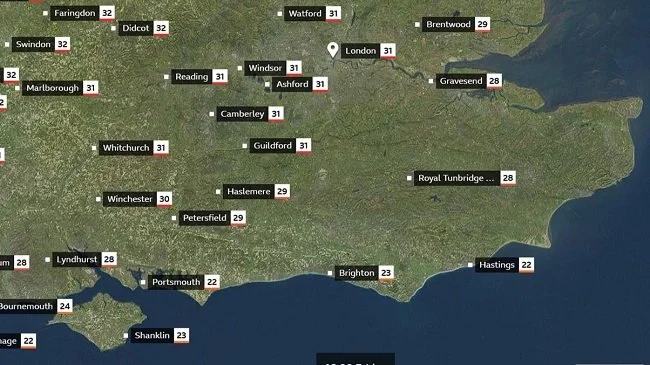
Temperatures are forecast to increase across the UK over the weekend. They have gradually risen over the last few days and are expected to reach the official “heatwave” threshold in some places for the third time this year. Highs of 34°C (93.2°F) are likely today and possibly on Saturday and Sunday, with above average temperatures continuing into early next week. The UK Met Office has predicted that south-east Wales, central southern and south-east England are likely to see the hottest weather. The UK Health Security Agency (UKHSA) has extended yellow heat health alerts to cover every region in England, which will remain in place until 10:00 BST on Tuesday 15 July. The warnings mean that health and social care services could be significantly affected by the weather, due to increased demand or a rise in deaths.
Temperatures are forecast to increase across the UK over the weekend. They have gradually risen over the last few days and are expected to reach the official “heatwave” threshold in some places for the third time this year. Highs of 34°C (93.2°F) are likely today and possibly on Saturday and Sunday, with above average temperatures continuing into early next week. The UK Met Office has predicted that south-east Wales, central southern and south-east England are likely to see the hottest weather. The UK Health Security Agency (UKHSA) has extended yellow heat health alerts to cover every region in England, which will remain in place until 10:00 BST on Tuesday 15 July. The warnings mean that health and social care services could be significantly affected by the weather, due to increased demand or a rise in deaths.
Such extremes of temperature are becoming common in the UK. Growing up, I have memories of the summer of 1976. The unprecedented heatwave led to drought conditions in rural areas and a temporary water shortage. That was an anomaly at the time and for many years it remained a talking point and source of nostalgia. Since then there have been periods that have met the heatwave criteria in 2018, 2019, 2021 and 2022. While linking climate change with specific individual extreme weather events can be difficult, scientists say climate change is generally making heatwaves hotter, longer and more frequent. UK temperatures over the next few days will be around 7-10°C (44-50°F) above average for mid-July. The main problem arising from this phenomenon is the country’s inability to cope. The UK’s infrastructure, architecture and institutions are predicated on the notion that the country has a temperate climate.
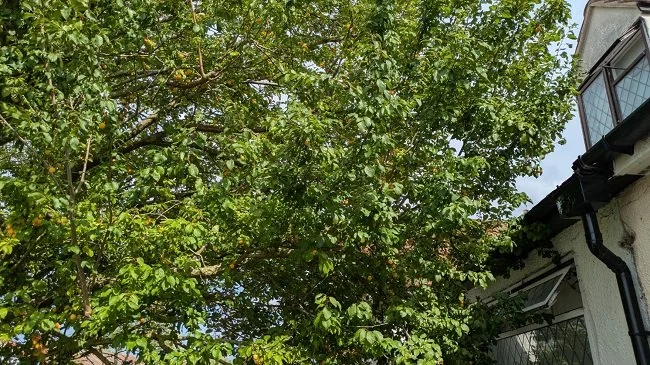
The UK is ill-equipped to deal with high temperatures due to a combination of factors. Older buildings are particularly vulnerable, often designed to retain heat in the winter but becoming excessively hot in the summer. I live in a brick bungalow that was built in the early 1930s. It has been insulated with modern materials and although it retains heat during cold weather it fails to prevent heat transfer during summer, causing indoor temperatures to rise significantly. Air conditioning is not a standard feature in most UK homes or on public transport, although the latter is getting better. Buses in London now have better climate control but travelling on the underground or railway is often unpleasantly hot. Also, simple solutions such as awnings and canopies are still not standard features on UK buildings.
Hence a heatwave in the UK is seldom universally welcomed. I personally find that once the temperature rises above 25°C (77°F) then I am out of my comfort zone. However, I have invested in several good quality fans in the last few years and although they only circulate the air, they do make things more tolerable. As for my definition of a “good quality” fan, it is defined by whether or not the device is quiet. Thankfully, my office is in the front of the house overlooking the street and facing North. The lounge at the back of the property looks out over the garden and gets a lot hotter due to the aspect and the glass patio doors. Subsequently, Mrs P and I keep the curtains and blinds shut all day in the lounge and kitchen and it does make a difference. Hopefully we will cope with the coming heatwave. Others may not be so lucky.
Countries that regularly face high temperatures usually develop an appropriate culture of safety and responsibility. The importance of staying hydrated and liberal use of sun protection products become an everyday part of life during the summer. Hats also become more than just de rigeur. There is also a heightened awareness of fire safety with rural areas being increasingly dry. Sadly, this mindset is not commonplace in the UK and many people are irresponsible once the weather gets hot. Hence, there are numerous cases of heat exhaustion, sunburn and dehydration. Sadly, pets also suffer in this weather. No doubt there will be increased reports of such in the UK media next week, although the tabloids will reserve the most vitriol for the various hosepipe bans that have been announced. In the meantime, stay cool. Literally.