Supermarket Loyalty Cards
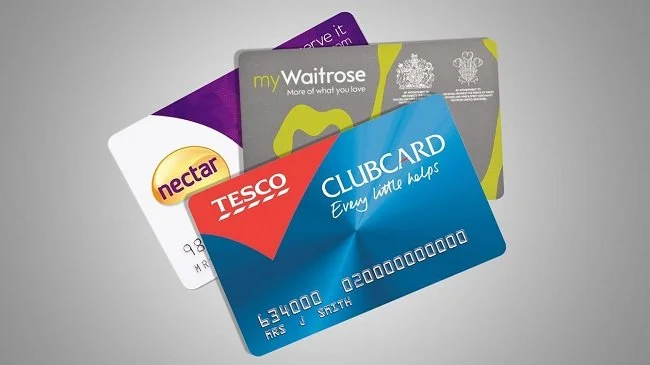
In the dim and distant past, UK supermarket loyalty cards used to be about earning points that could be traded for luxury items. This would be merchandise or services. Air Miles being a prime example. This changed over time and supermarkets moved to a system where you earned points via purchases that had a nominal financial value. The customer could then offset these accumulated points against their grocery bill. A couple of years ago, around the time the “cost of living crisis” began, some UK loyalty cards added an additional system and started offering discounted prices on specific products. For example a pack of 9 Andrex Complete Clean toilet rolls retails at the standard price of £5.95 but if you have a loyalty card, you can purchase it at the lower price of £4.65 instead.
In the dim and distant past, UK supermarket loyalty cards used to be about earning points that could be traded for luxury items. This would be merchandise or services. Air Miles being a prime example. This changed over time and supermarkets moved to a system where you earned points via purchases that had a nominal financial value. The customer could then offset these accumulated points against their grocery bill. A couple of years ago, around the time the “cost of living crisis” began, some UK loyalty cards added an additional system and started offering discounted prices on specific products. For example a pack of 9 Andrex Complete Clean toilet rolls retails at the standard price of £5.95 but if you have a loyalty card, you can purchase it at the lower price of £4.65 instead.
Although overall inflation is reducing in the UK, food inflation remains high, as do energy prices. These may well stay that way due to potential global factors that could come into play next year. Hence supermarket loyalty cards will continue to play a major role in keeping the price of a weekly or monthly grocery shop manageable. The discounts on offer are such that our household currently has four loyalty cards from the following stores. Tesco, Sainsbury’s Morrison’s and the Co-op. We shop at specific stores for particular products that are maintained at a discount price. We have found it possible to make savings of £40 or even £50 a month, if we keep an eye on prices across all four stores. Often this means having an app installed on my phone and being notified of offers.
Naturally, the increase in this loyalty card culture has generated a great deal of interest. How do the big supermarkets accommodate such competitive pricing? Is it simply a question of loss leading, or is it a case of inflating the original price and then offering the minimum retail price as the discount? Is this practice sustainable? There have also been claims that the system is unfair and biassed towards those who can afford to shop at the top tier supermarkets. The counter argument is that the budget stores are already offering discounted products by default, as it is essentially the foundation of their business model. Whatever the methodology and irrespective of the ethics of supermarket loyalty cards, it certainly isn’t impacting upon profits. Tesco, the UK’s number one supermarket chain, had a turnover of £48 billion in 2023.
Unless you are so wealthy that the cost of living is not a consideration, most people have some requirement to “shop smart” these days. We make use of loyalty scheme discount prices and buy some products in bulk from outlets such as Amazon. Tea has fluctuated in price over the last eighteen months, mainly due to adverse weather conditions in the countries of origin. As Mrs P is highly unlikely to stop drinking the stuff anytime soon, we tend to buy a half dozen boxes at a time. The panic buying we all saw at the start of the pandemic is another reason why we like to maintain a small stock of some products such as toilet rolls, cleaning products and pasta. Until the economic situation improves, we will continue to make use of any scheme or process that allows us to keep our grocery bill as low as reasonably possible. Perhaps we can gamify the process to stop it from becoming a chore.


Going to the Supermarket
When I was a child growing up in the seventies, my parents used local shops such as the grocers, butchers and bakers for their regular shopping needs. All were small, independent, family run businesses. Sadly, those days are long gone. Nowadays, most of us go to a supermarket or local store of some kind, for our respective shopping requirements. The frequency of such visits may depend on your pay cycle and whether you prefer to shop daily, weekly or monthly. In the UK, store loyalty has been an important factor for many years. More recently, because of the cost of living crisis, many shoppers are now going to stores where it is more economical. Store and brand loyalty are being tested and not necessarily winning. The march of online shopping has also stalled, as convenience is no longer trumping cost. Things are changing and changing fast. Who said retail was dull?
Sainsbury’s Crayford
When I was a child growing up in the seventies, my parents used local shops such as the grocers, butchers and bakers for their regular shopping needs. All were small, independent, family run businesses. Sadly, those days are long gone. Nowadays, most of us go to a supermarket or local store of some kind, for our respective shopping requirements. The frequency of such visits may depend on your pay cycle and whether you prefer to shop daily, weekly or monthly. In the UK, store loyalty has been an important factor for many years. More recently, because of the cost of living crisis, many shoppers are now going to stores where it is more economical. Store and brand loyalty are being tested and not necessarily winning. The march of online shopping has also stalled, as convenience is no longer trumping cost. Things are changing and changing fast. Who said retail was dull?
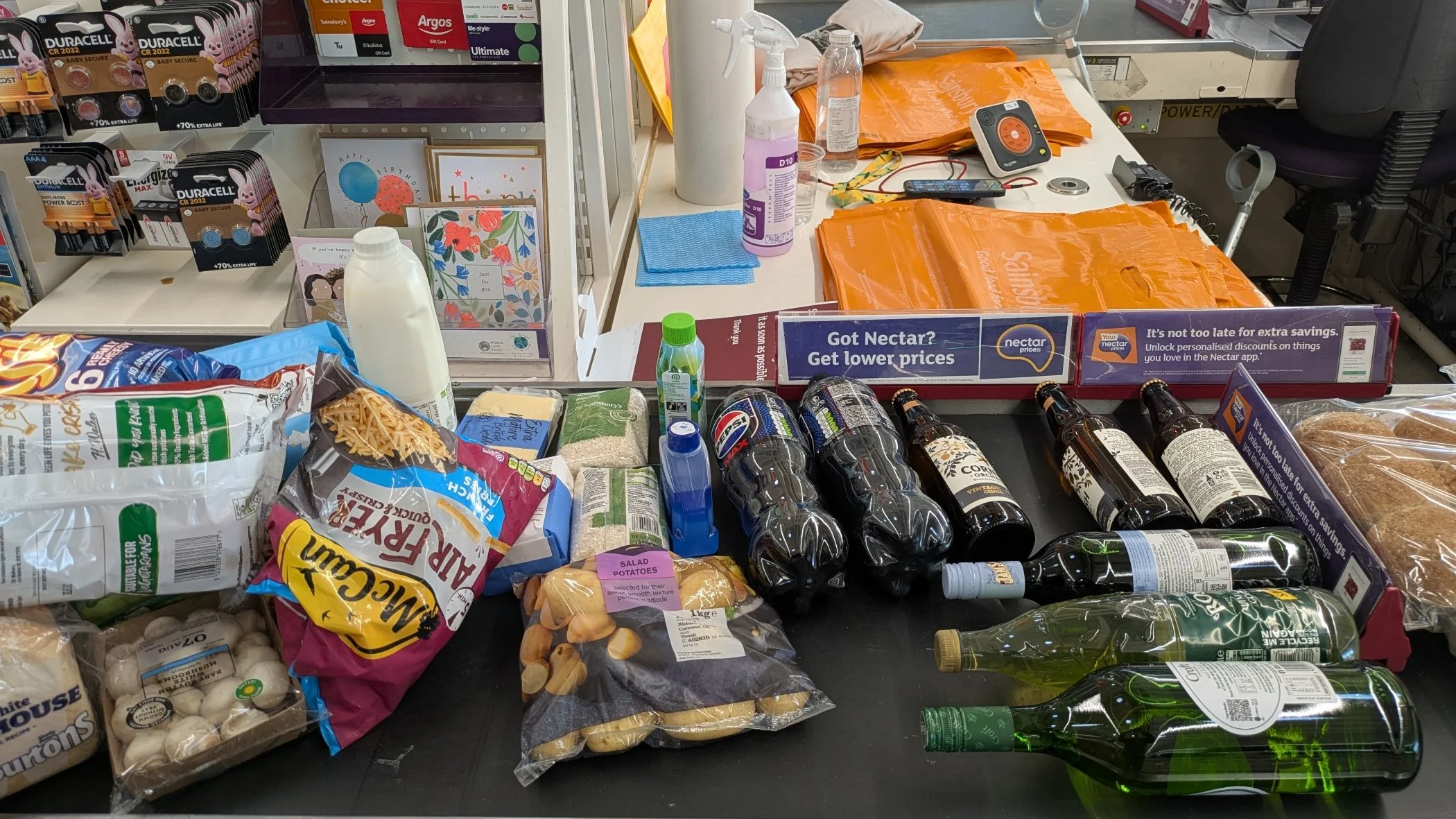
Mrs P and I go to Sainsbury’s at Crayford twice a month. We supplement these major shopping expeditions with additional ad hoc visits to smaller, local stores. Sainsbury’s is the second biggest supermarket chain in the UK with an annual turnover of £33 billion. It occupies the top tier of the UK supermarket industry, although its appeal has broadened in recent years as it has aggressively expanded its discount policy. We usually shop at the Crayford branch because it is the biggest store in the area and the largest in the UK of this particular chain. There are several advantages to using this particular store. It does not require a pound coin to unlock the shopping trolley. More importantly, due to its size the Crayford Sainsbury’s carries a much broader range of stock than smaller local stores, which focus mainly on what sells the most.
A selection of mushrooms
Like many people, we have a shopping routine. We go armed with a list of items we know that we require but we also investigate most isles to find any interesting special offers. We work our way through the store in a logical fashion so unlike The Clash, we’re never lost in the supermarket. There are some products that we always buy a specific brand of, such as coffee, sausages, eggs. However, in recent years we have become less entrenched in such practices and experiment a lot. Stores own brands have improved greatly both at the luxury and “value” end of the market. We therefore buy a lot of products that are Sainsbury’s own brand. As a retired couple, we prepare about two thirds of our weekly meals from scratch. The rest tend to be ready meals or frozen foods for convenience. Quality is a key factor when we shop. We would rather pay a little more for something that is good, than endure a cheaper and potentially inferior product.
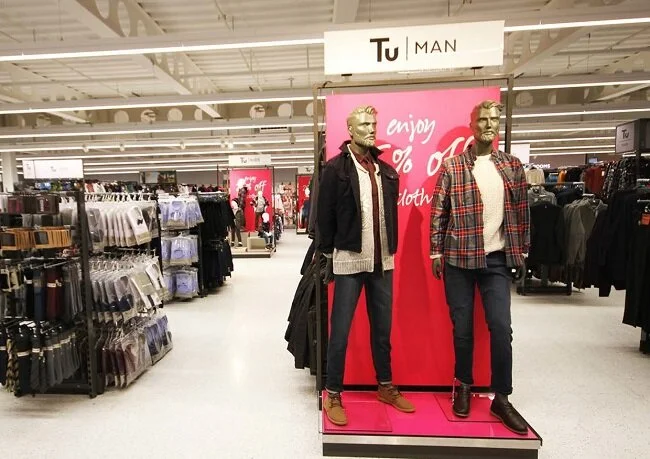
After we finish perusing the shelves we will sometimes go to the mezzanine floor of Crayford Sainsbury’s, as it has a clothing department. This is especially good for children’s clothes and school uniforms. Again a lot of the products are exclusive to Sainsbury’s who have their own clothing range by Tu. I often buy t-shirts, socks, fleeces and hoodies here as the prices are significantly cheaper than branded names, yet the quality is good. There is also a substantial home section in the Caryford store which sells bedding, towels, kitchenware and electrical goods. I often find myself drifting towards the stationary much to Mrs P’s chagrin. When we finally have everything we need, we opt to use the traditional checkouts manned by a member of staff, rather than self service, which I strongly oppose. We have a specific bag packing regime that I still have yet to fully master, again much to Mrs P’s annoyance. It is somewhere between atomic weight and the Dewey Decimal system.
Cheese
Store snobbery and store loyalty are major factors in the UK supermarket hierarchy. The UK is a country riven by social distinctions and it permeates everything including where you shop and what you buy. We go to Sainsbury’s mainly because of food quality and choice. There is a wide variety of fresh fruit and vegetables available. Often this extends into multiple choices of specific items, such as mushrooms. I have a liking for cheese and the store stocks many types from all over the UK and Europe. The meat and fish is sourced mainly from the UK and is excellent quality. Another factor that is important to us is the range of product sizes. Smaller households do not always require the same quantity of a product and it is nice to be able to buy the amount that you need and no more. In the past Sainsbury’s used to charge a premium for its upmarket standing but in recent years they have attempted to price match other stores. Customers with store loyalty cards often can buy popular products at noticeably cheaper prices.
However, although I don’t mind going shopping at the store in person, I do find that the volume of customers can be an impediment at times. But then again the human factor is the Achilles Heel of most business enterprises. Hence Mrs P and I tend to go early in the morning in the middle of the week, when crowds are less. Also, during the pandemic, I very much enjoyed the convenience of home deliveries and still use them to bulk buy specific items like 2 litre bottles of carbonated drinks, wine and beer. Although the latter items do greatly increase the cost of shopping. On average a couple in the UK spend about £280 - £300 a month on food shopping. We spend nearer £450 a month, although that total is higher due to alcohol which is currently increasing in price. We also buy more than two people need due to ad hoc visits by grandchildren.
Red wine
Although it is customary to talk about quality and choice with regard to supermarkets, in reality most people in the UK shop where they can afford, as opposed to where they’d actually like. However, German chains Aldi and Lidl have recently upset the status quo by courting the discount market, yet still providing good quality products. In the seventies, where you shopped was very much a social marker. This is no longer the case and stores such as Aldi have a very eclectic customer base. We go there exclusively for household cleaning products, with their own brands of washing detergent and fabric conditioner being excellent but far more economical than leading brands. The UK is also at a turning point with regard to food supply, having left the EU. Just in time supply chains are no longer just in time and the country is having to rethink its sourcing strategy. In the meantime food inflation is high. As a result customers are being a lot more canny about what they buy and where from.