
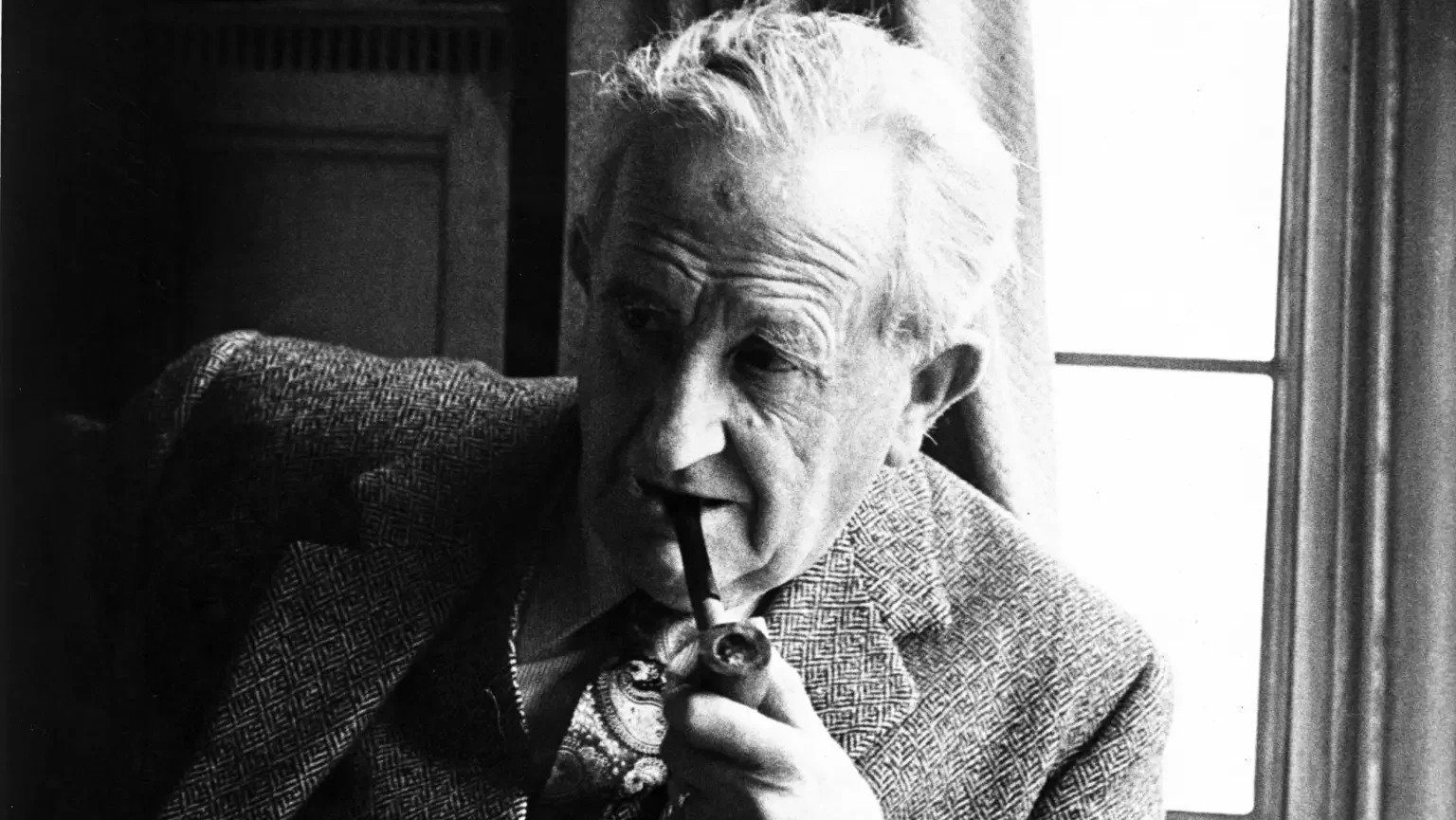
Conservatives and Tolkien
I don’t know if you have noticed that there are quite a lot of companies that have names taken from Tolkien’s Legendarium. At first glance, this seems innocuous enough. Tolkien’s writings grew in popularity over the seventies and eighties but since the release of the film trilogy at the start of the twenty-first century, his work has become more well known and been assimilated into our wider pop culture. Hence, it seems quite logical that a startup tech company, for example, would choose a name from his writings. No doubt the founders grew up reading The Lord of the Rings and are fans. That all seems plausible. However if you take a further look, it gets somewhat more complex. Here are four companies that have Tolkien based names.
I don’t know if you have noticed that there are quite a lot of companies that have names taken from Tolkien’s Legendarium. At first glance, this seems innocuous enough. Tolkien’s writings grew in popularity over the seventies and eighties but since the release of the film trilogy at the start of the twenty-first century, his work has become more well known and been assimilated into our wider pop culture. Hence, it seems quite logical that a startup tech company, for example, would choose a name from his writings. No doubt the founders grew up reading The Lord of the Rings and are fans. That all seems plausible. However if you take a further look, it gets somewhat more complex. Here are four companies that have Tolkien based names.
Palantir Technologies is a private American software and services company, specializing in data analysis. Named after the “seeing stones” from Tolkien's legendarium, Palantir's original clients were federal agencies of the United States Intelligence Community like CIA and NSA.
Lembas Capital is a San Francisco-based investment firm named after the Elven waybread that appears in The Lord of the Rings and The Silmarillion. The company invests in both public equity and private equity.
Valar Ventures, named after the Valar, is a US-based venture capital fund founded by Andrew McCormack.
Anduril Industries, named after Aragorn' sword, is an American defence technology company that specializes in autonomous systems.
I don’t consider banks, armaments suppliers and intelligence gatherers to be benign. Yes there are other companies with Tolkieneque names that are doing benevolent things but there are enough doing the opposite for me to consider that there’s something else going on. In this case, the common thread is that political conservatism embraces and feels an affinity to the writings of Professor Tolkien. In fact conservatives from both the US and Europe often cite The Lord of the Rings as a source of inspiration.
Why is this you may ask? Mainly because right-wing politicians are drawn to Tolkien's themes of the heroic struggle against corrupt systems, the return of a legitimate ruler to restore social order and a conservatively hierarchical worldview that reflects medieval Catholic ideas. There is also a suspicion of social modernity. The appeal lies in the narrative of a righteous hero or group challenging a “moribund establishment” to build a “brave new world that reflects a former past glory”. Such ideas resonate with right-wing figures who see themselves as fighting for traditional values against societal collapse. Politicians such as US Vice President J.D. Vance, former Member of theEuropean Parliament Lord Hannan and the Italian Prime Minister Giorgia Meloni.
Here are some of the key themes and interpretations that appeal to conservatives.
Heroic Mission and World-Making: Politicians see a parallel between their own political aspirations and Tolkien's heroes, who feel a "duty to save the world" and build a better future.
"Return of the King" and Feudal Order: The core narrative of both The Hobbit and The Lord of the Rings involves the re-establishment of a rightful monarch and the restoration of a pre-existing feudal social structure after a period of chaos. This narrative strongly appeals to conservative viewpoints.
Conservative Values and Hierarchy: Tolkien's work is seen by some as aligning with conservative principles due to its depiction of a divinely ordained natural hierarchy, echoing medieval Catholic notions of the "Great Chain of Being" and a worldview that favors traditional social orders over modernity.
Critique of Modernity: Influenced by his experiences and his devout, pre-Vatican II Catholic faith, Tolkien harbored a deep suspicion of modernity, a sentiment that resonates with many on the right who view modern trends as destructive.
Anti-Totalitarianism: While some interpretations of Tolkien focus on conservative themes, others emphasise his opposition to totalitarian systems. This could also appeal to those who view themselves as fighting against oppressive governments or ideologies.
Like many things political, there is an inherent contradiction to much of the above. The drive to build a better world usually means a better world for that specific political class. The restoration of a prior status quo seldom means it is an equitable one. Critiques of modernity are usually against changes in social attitudes, though not technology as that is a useful tool. As for opposing totalitarianism, this usually means circumnavigating legitimate opposing views or institutions that don’t allow conservatives a free hand. But such is the nature of politics and its use of semantics. As for the question of whether these specific interpretations of Tolkien’s work are actually there in the source text, that is highly subjective.
It helps us understand things much better if we can actually determine what were Tolkien’s own personal politics? Well he most certainly was a conservative both politically and socially but within the context of the times he grew up in. Hence despite the sharing of the term, I don’t really think there is a great similarity between Tolkien’s form of Catholic conservatism and his post WWI social sensibilities and a modern American neocon. Tolkien by his own admission disliked political organisations and institutions, claiming an affinity to non-violent anarchism. He was also anti-fascist and sceptical of industrial capitalism, albeit from a romantic perspective. He was also an ardent environmentalist.
Perhaps Tolkien’s biggest appeal to conservatives is his passion for mythology. Myths are a lens through which we explore the mysteries of the world around us and then use to codify and quantify it. Change the myth and you can change the world, as JRR Tolkien well knew. Which is why he spent his life creating new myths to help us better understand the modern world. An understanding tempered by his own world views. It is this that attracts many politicians on the right, who see mythology as means to frame their populist ideas. Political narrative and mythology have many similarities and are rife with archetypes and heroes.
I’m sure we’re now at the point where some readers may argue “so what if the right finds inspiration in Tolkien’s work” as well as “many fans will interpret things in that which they hold dear, irrespective of whether it is truly there or not”. All of which is true. We all see things through the prism or our own passions, or bias if you prefer. However we live in a world where nuance is in decline. The claiming of aspects of pop culture by specific groups can sometimes have negative consequences, mainly for that which is being claimed. Already because conservatives have stated an affinity for Tolkien’s work, some on the left are already seeking to find content connecting it to the right. Hence there have been claims, unsubstantiated in my view, that The Lord of the Rings is inherently racist and therefore by extension, so was the author and those who read it. There is a risk that the failings of the right may inadvertently blight the cultural standing of Tolkien work, simply by an act of non consensual association.
Which is why I feel the need to push back against the risk of such a thing. I do not believe that Tolkien’s work should just be surrendered to the politically and socially conservative. I’d also prefer not to see certain types of companies usurping Tolkien’s work for their own agendas and chronically misinterpreting his work. Or worse still, doing so just to be associated with something that is “cool”. Perhaps Robert T. Tally Jr. professor of English at Texas State University, said it best “In 2024, a number of prominent right-wingers embrace Tolkien’s work as the inspiration for their own ultraconservative worldview. While some Marxists may look upon this scene with bemusement, fantasy as a mode and a genre is far too important to allow the right-wingers to take for themselves, and that includes the works of Tolkien”.











Managed Decline
“Managed decline” is a phrase that refers to the processes associated with the end of a specific lifecycle, with the goal of minimizing costs or other forms of loss. The concept originated in business where it referred to the management of companies and industries. More recently it is used in wider contexts. The concept gained prominence with regard to urban policy, particularly in the UK during the eighties when several major cities suffered economic and political collapse. Of late, the term has been applied to the UK, encompassing a systematic weakening of the economy, social structures, and cultural values, as well as its global political and diplomatic force. In each case, managed decline involves making strategic choices about resource allocation and accepting the consequences of those decisions. It is a complex issue with ethical and practical considerations, often sparking debate about the best way to address decline and reverse the process.
“Managed decline” is a phrase that refers to the processes associated with the end of a specific lifecycle, with the goal of minimizing costs or other forms of loss. The concept originated in business where it referred to the management of companies and industries. More recently it is used in wider contexts. The concept gained prominence with regard to urban policy, particularly in the UK during the eighties when several major cities suffered economic and political collapse. Of late, the term has been applied to the UK, encompassing a systematic weakening of the economy, social structures, and cultural values, as well as its global political and diplomatic force. In each case, managed decline involves making strategic choices about resource allocation and accepting the consequences of those decisions. It is a complex issue with ethical and practical considerations, often sparking debate about the best way to address decline and reverse the process.
When I was in my early twenties and beginning my working life (circa 1990) there was still a strong belief held within the UK that overall, things improved for each generation. By this we meant working conditions and pay, opportunities, both career and social, as well as healthcare and life expectancy. To a degree it held true. By the time I was thirty I was earning far more each year in IT than my father had ever earned as a mechanical engineer. However, there were some disadvantages to this era, the most noticeable being buying a house. In the UK there has always been and remains a strong culture of home ownership. Like it or not, it is considered one of the criteria by which we define success. Sadly from the nineties onwards, buying a home has become increasingly more expensive to the point where it becomes an impossibility for those on low pay or a single income.
My son’s generation (he is in his early thirties) has a very different perspective on their personal future and that of the nation. The post war social contract is dead and the welfare state is unsustainable. Jobs seldom offer a salary sufficient to cover living costs, therefore one’s future is one of constant work and managing personal debt. As for retirement, it is seen as an impossible dream. The expectation is that one will have to work continuously, primarily to pay for rented accommodation. As for wider political issues, there is a growing consensus that traditional politics and parties cannot or will not fix the most immediate problems. Hence there is a growing interest in new parties and populism and a misplaced hope that they will reset the status quo. Sadly, populist leaders around the world have proven they are not up to the job and despite promises simply increase the existing wealth gaps and social disparity.
I no longer believe that the problems facing the UK can be fixed. The existing political system is not fit for purpose and attracts the worst of us. We have an ageing population and a diminishing workforce that expects continued access to the welfare state and healthcare at the standard that they have always enjoyed. All of us want national infrastructure and institutions such as the courts, police and schools etc to work but no one wants to pay the increased costs required to run them. As for the loaded subject of immigration, the real issue is not illegal immigrants but the number of legitimate migrants who come to the UK to fill the jobs caused by the ever increasing skills gap. We are failing to learn the skills required for a modern economy and today’s world. Both these issues are integral to our current problems and contribute to our national decline.
Another factor is the breakdown of social interaction and our national discourse, the replacing of community with the cult of the individual and the erosion of critical thinking. Nuance, context, knowledge and reason are now rare skills which are often met with hostility. Social media and the internet are certainly a factor in this cultural shift. All of which makes discussion and compromise impossible. Everything from what is your favourite brand of coffee to national politics is presented as a binary choice. Those who don’t favour your choice are, by default, your enemy. This cancerous mindset is spreading everywhere and into everything. Unable to counter “feelings” with logical arguments, the rational thinkers retreat, ceding territory to the furious hard of thinking. Nothing gets better because those who now have what they craved, namely power without knowledge, just break things and move on when they lose interest or fail to achieve their misplaced goal. Of course it’s always someone else’s fault.
Managed decline is a gradual process, although global events can exacerbate it. Hence I don’t see an immediate economic and social collapse. Governments will continue to tinker at the periphery of problems and there may be occasional lulls in problems and even minor economic booms, depending on wider global economic issues. But I do see pay stagnation, increases in the cost of living, public services struggling to work and infrastructure failing. Food shortages are also possible due to war and failing supply chains. Crime will increase as poverty grows and civil unrest will increase as frustration grows. As ever, it will be the poor and vulnerable who will bear the brunt of these problems. Civil rights and freedoms will also be curtailed as we voluntarily give more and more information to big companies. As AI becomes more ubiquitous it won’t be a case of robots oppressing us but simply a case of “the computer says no” because you failed to meet some spurious criteria within an algorithm.
What does one do in the face of such inevitability? At 57 I’m pretty much going to do nothing, because there is nothing I can do. There are no credible political parties and the process of government as it stands is unable to facilitate change. As for the younger generation, posting “ I stand with [insert cause here]” on social media, that isn’t going to help either. Traditional forms of lobbying and striving for political change are no longer effective. Plus, we don’t all want the same thing, due to the way we compartmentalise our lives and pick “sides”. Hence the future politically in the UK will be distinctly Pythonesque. Frankly, there comes a point where you have to cease feeling concerned and powerless about domestic and global politics because it is such a burden. So you just continue to live your life, the best you can, doing small acts of kindness as and when you can. Perhaps I’ll be dead before the worst of it happens, although I suspect that isn’t going to be the case.






Politicians
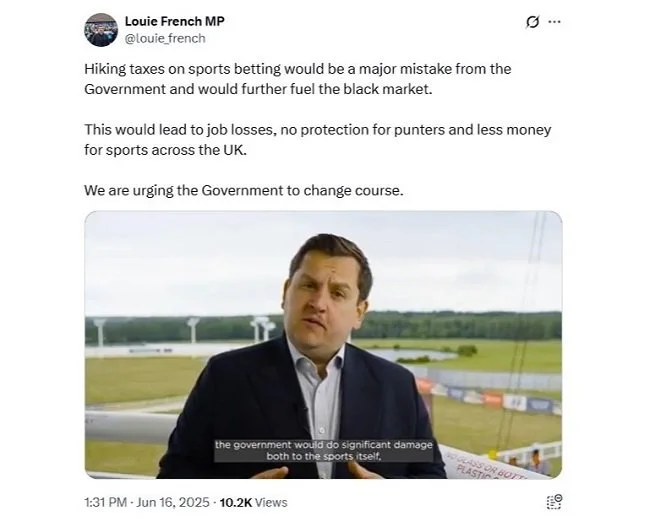
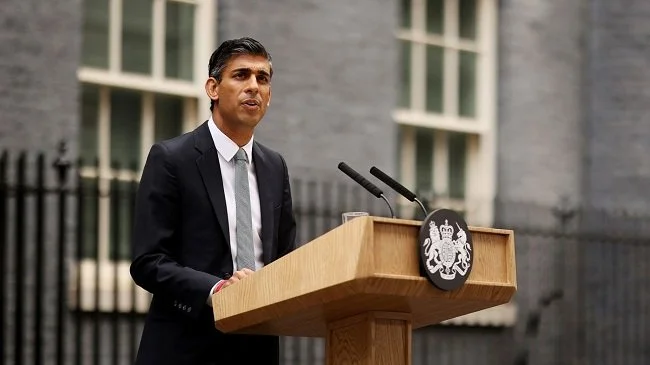
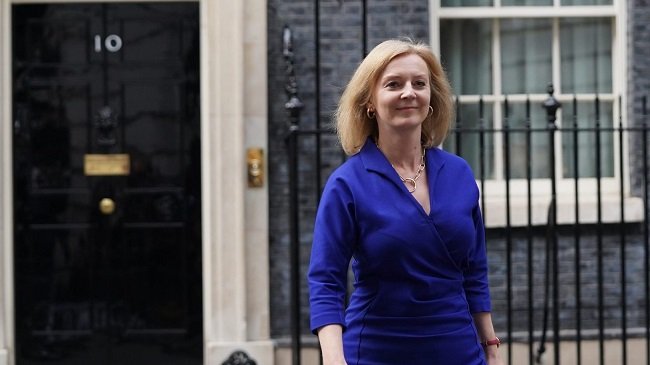
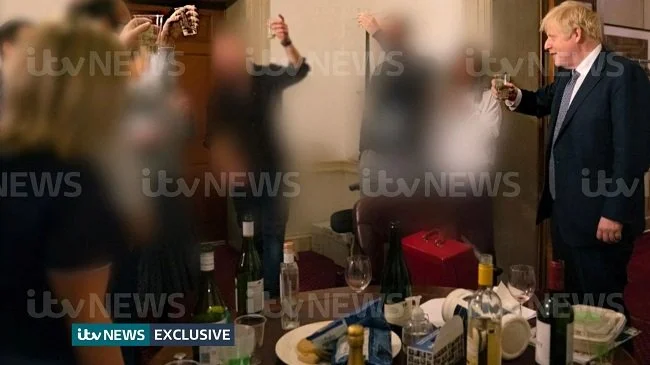
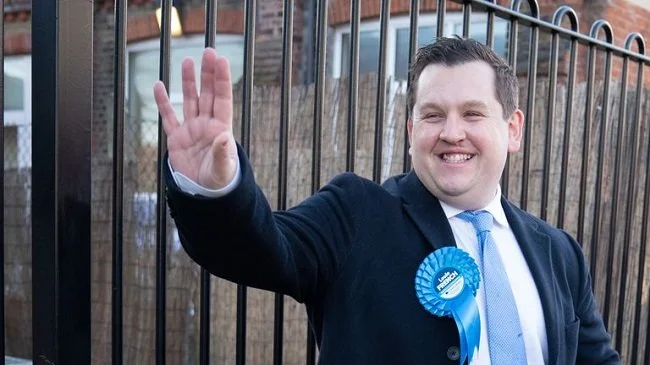
I still maintain a legacy presence on Twitter/X and I follow my local MP (member of Parliament) Louie French. It’s not something I especially relish as I am not a supporter of the Conservative party (or any other) and I did not vote for him in the last election. I just like to know what he is up to as he is the political representative for our constituency. As the Conservatives are out of power at present, to all intent and purposes, Mr French is a backbench MP although he has a minor position as Shadow Parliamentary Undersecretary (Culture, Media and Sport). However, with that being said he is hardly a key member of the shadow cabinet. Hence he focuses on constituency work and that which is generated by his shadow posting. He will also lend his voice, when required, to any major policy decision or statement made by his party.
I still maintain a legacy presence on Twitter/X and I follow my local MP (member of Parliament) Louie French. It’s not something I especially relish as I am not a supporter of the Conservative party (or any other) and I did not vote for him in the last election. I just like to know what he is up to as he is the political representative for our constituency. As the Conservatives are out of power at present, to all intent and purposes, Mr French is a backbench MP although he has a minor position as Shadow Parliamentary Undersecretary (Culture, Media and Sport). However, with that being said he is hardly a key member of the shadow cabinet. Hence he focuses on constituency work and that which is generated by his shadow posting. He will also lend his voice, when required, to any major policy decision or statement made by his party.
Like most contemporary parliamentary representatives he uses social media as a major communication tool. Hence it is a valuable source of information. I can also look on the UK parliamentary website and see when he has spoken in the House of Commons, any bills he is associated with or advocates for, as well as his overall voting record. There is also a list of interests that he has declared, most of which are declarations of meetings and hospitality via the sports industry as that is his current shadow brief. All the above is occasionally supplemented by news reports or newspaper articles in which Mr French features. All of which provides a constituent such as I, a useful means to assess how well our MP is performing. I try to set aside my personal bias regarding his political party of choice and their historical legacy to which he has contributed.
After reflecting upon all of the information at my disposal regarding my local MP, I am struck by how generic, superficial and tediously partisan his political activities and communications are. Every point made is always couched within a statement that seeks to blame others and ruffle the feathers of the electorate. Any point of contention or debate pertaining to services or activities in London is always portrayed as the fault of the current mayor Sadiq Khan, a Labour party politician. This always comes with an undercurrent of dog whistle racism although I sure it would be denied. It simply seems to be a standard political tool if you are on the right of politics. Essentially Mr French conducts his politics in trite, factually dubious, soundbites. It is always simplistic, partisan and imbued with a false sense of rectitude and misplaced confidence.
The tragedy of this situation is that it is representative of the broader manner in which politics is conducted nationally in the UK. There are few exceptional politicians these days. The defining term that springs to mind of our overall political representation is mediocrity. Gone are the days where your MP was well educated, well versed in business or statecraft and conducted themselves with decorum and dignity. Too many contemporary MPs seem to be ill equipped across multiple disciplines to do the job in hand. They all seem to indulge in the worst sort of political communication, which makes it impossible for them to be able to express an opinion or answer a question in case it comes back to haunt them at a future date. They are disingenuous, often petulant and petty when rightly challenged to justify their position and more often than not utterly forgettable. Politics is simply a stepping stone in a wider career and is not driven by passion, ideology or love of one’s country.
I am reminded of the following quote from the BBC comedy Yes Minister/Yes Prime Minister. In which the fictional Prime Minister James Hacker (played superbly by Paul Eddington) rails against his backbenchers and MPs per se. It is as relevant now as it was back in 1986 when the episode was first broadcast. “Being an MP is a vast subsidised ego trip. It's a job for which you need no qualifications, no compulsory hours of work, no performance standards. A warm room and subsidised meals for a bunch of self-opinionated windbags and busybodies who suddenly find people taking them seriously because they got letters MP after their names”. If we wish to improve the calibre of our national politics, then we need to start by establishing a set of standards and criteria that prospective MPs must meet.
"Awful April" and the UK Cost of Living
Sunday 6th April is the start of a new financial year, here in the UK. According to data from numerous financial and economic institutions, an estimated million plus households will be facing annual increases of £400 to £500 as the proverbial “cost of living” goes up. Everything from Council Tax to Mobile and Broadband costs are being increased. Future cost hikes are expected in our energy and water utilities. As bills start going up across the country today, average wages remain stagnant. Middle-income and poorer households have been worst hit by this wage related issue. Hence the tabloid press have labelled the start of the new financial year as “Awful April”. Hyperbole aside, this is a very real issue which due to its complex, global causes, doesn’t have a quick fix solution.
Sunday 6th April is the start of a new financial year, here in the UK. According to data from numerous financial and economic institutions, an estimated million plus households will be facing annual increases of £400 to £500 as the proverbial “cost of living” goes up. Everything from Council Tax to Mobile and Broadband costs are being increased. Future cost hikes are expected in our energy and water utilities. As bills start going up across the country today, average wages remain stagnant. Middle-income and poorer households have been worst hit by this wage related issue. Hence the tabloid press have labelled the start of the new financial year as “Awful April”. Hyperbole aside, this is a very real issue which due to its complex, global causes, doesn’t have a quick fix solution.
Here a some of the increases the UK public face:
The majority (88%) of households in England will face a maximum increase in council tax of 4.99% which adds an average of £109 to a typical band D bill. Due to some councils facing severe financial hardship Bradford, Newham, Birmingham, Somerset, plus Windsor and Maidenhead have been granted permission to raise council tax above the current 4.99% cap.
Average energy bills are expected to rise to £1849 annually. Energy regulator Ofgem has increased the price cap for the third time, resulting in an extra £9.25 per month. Fixed-rate deals will see no change in cost until their term expires.
Water bills are expected to rise by 26%, which is £123 annually. Last March, private water firms in England reported a £1.7 billion pre-tax profit. Yet the public still endure an expensive service, regular leaks and sewage discharges into the UK waterways and coastal areas.
As of April 1st, 2025, food inflation in the UK continues to rise, with food prices overall 2.4% higher than last March. This itself was up from 2.1% in February, according to the British Retail Consortium-NIQ shop price index.
There are also scheduled increases in the cost of UK vehicle tax, TV license, mobile and broadband services and many other consumer industries.
These factors combined with the prospects of a global trade war and other geopolitical problems, mean that the economic prospects for the next financial year are far from good. The dour economic outlook makes it increasingly difficult for the UK government to rebuild the country’s crumbling public services and hamper wider plans to grow the economy. As for the public, wage stagnation coupled with the freezing of income tax thresholds until April 2028, will mean that many households will struggle financially. Shortfalls in disposable income frequently leads to daily expenditure being paid for by credit card. As of April 2024, UK households held an average of £2,487 in credit card debt, with total outstanding credit card debt reaching £70.1 billion. This is a 7.02% increase year-over-year.
Wealth and poverty can be relative things. For example, does choosing not to get into debt to finance a family holiday make you poor or just financially prudent? Can you be poor with an annual salary over £100,000 a year? As ever in life, simple or binary answers tend to be spurious and inaccurate. Nuance, complexity and context are required to reach a greater understanding. However, there comes a point when the realities of increasing monthly costs upon a household budget is no longer debateable. I do not consider my own financial situation to be dire, however the recent increases in the cost of living, especially with regard to food inflation have been clearly noticed and felt. As it is unlikely that any major changes or assistance are going to be forthcoming from the state, I suspect many of us will be looking at our own personal budgets and determining what costs can be reduced in the months to come. “Awful April” may well become a much longer affliction.
An Uncertain World
I consider myself to be a grounded, rational individual. I am not excessively emotional. I like facts, data and reason as opposed to hyperbole, rhetoric and bluster. That being said, I am aware that the world is an imperfect place. Opinions are often not based upon empirical fact but personal perspective. Hence many people experience reality differently to me. They are driven by their feelings and other factors. However, despite these differences in philosophy, for most of my life the world has remained functional and over time slowly improved in subtle ways. Deference to expertise, a sense of community and basic pragmatism meant that people broadly pulled in the same direction. Of course there has always been dissent but it has been within a stable system. However, of late I feel that this era is now finally over. Things are no longer stable. We live in an uncertain world.
I consider myself to be a grounded, rational individual. I am not excessively emotional. I like facts, data and reason as opposed to hyperbole, rhetoric and bluster. That being said, I am aware that the world is an imperfect place. Opinions are often not based upon empirical fact but personal perspective. Hence many people experience reality differently to me. They are driven by their feelings and other factors. However, despite these differences in philosophy, for most of my life the world has remained functional and over time slowly improved in subtle ways. Deference to expertise, a sense of community and basic pragmatism meant that people broadly pulled in the same direction. Of course there has always been dissent but it has been within a stable system. However, of late I feel that this era is now finally over. Things are no longer stable. We live in an uncertain world.
Looking back at my youth, the seventies were economically and socially challenging. Not only here in the UK but across the western world. The energy crisis, war in the Middle East and the threat of nuclear attack were pressing concerns on top of the demands of day-to-day life. However, there was always the hope that cool heads would prevail. Changes in government meant that people with plans would strive to tackle and solve pressing issues. People broadly believed that public institutions were ultimately run by those who were suitably skilled. There was faith that the state worked and a degree of consensus regarding national aspiration. It wasn’t perfect by any means but the nation functioned and gave citizens a sense of stability. Democracy worked because people believed in it and understood their role. They also remembered the carnage of World War II and when democracy failed.
Today, I look around the UK and see a nation that is far from united. Politics, social debate and general interaction has become petty, nasty and ignorant. The cult of the individual rules and life is refracted through the prism of “what’s in it for me”. Everyone wants the benefits of first class public services but no one wants to pay for it. People no longer have any real grasp of how things work, be it the state or more tangible things like the internet. Critical thinking is in decline, as are attention spans. The world is becoming infantilised. People want change but lack the skills and patience to seek and implement any. Then there is the matter of wealth and power becoming further entrenched with an ever diminishing group of individuals. Inequality is rife, yet we still allow the wealthy to convince us that it is the most vulnerable in the world that are our enemy.
Such a state of affairs is worrying. I am no longer confident that the best of us will intercede and address the world’s problems. I believe that we’ll keep putting those who just make cheap promises in charge and they’ll just make things worse. This will then feed further decline. If certain politicians fail in the next 5 to 10 years, I can see the public giving up on democracy. Furthermore, I believe that a substantial percentage of the population are simply intellectually and emotionally unequipped to deal with any serious disruption to their normal life that may potentially occur. Trade wars, collapse of the global supply chain and terrorisms are all potential threats. Civil unrest is another possibility. Shortages, travel restrictions and disruptions to power and internet services would not be well received. As for the idea of ordnance being dropped on civilian targets, it would be beyond the comprehension of many.
I am not a blind optimist but I usually see the value in maintaining some sense of positive and practical hope that things will get better. Sadly, when 2025 arrived a few weeks ago I looked around and simply couldn’t see any sources of inspiration. In political terms the right is in ascendance across the western hemisphere and the centre ground and left are in retreat. I see no possibility of any sort of social or political reconciliation. We live in an age where everyone hates someone. History and reality demonstrate that populists seldom get anything done that is universally beneficial and they tend to break social and political institutions, making it very difficult for their successors to repair things. It pains me to say it but things are going to get a lot worse before they get any better, assuming that that is even a possibility at a later date.
Depressing isn’t it. As for the question “what are you going to do about it”, the answer is precious little. There is always activism, protest and lobbying but I suspect that such things are going to get a lot harder to do in the immediate future. For a lot of people, the current geopolitical situation is a mandatory train ride to the terminus, whether you like it or not. In the meantime you determine who you can trust, then keep your head down and try to get by. All of the various post war generations have been cosseted to a greater or lesser degree and it would be wise for them to adjust their expectations accordingly. As for hope, you must look for it in unexpected places and maintain your own personal morale the best you can. Take comfort in the fact that tyrants, fools and bullies are all mortal and eventually die. The darkness is not forever but it may be your children that see the dawn, not you.
Newspapers
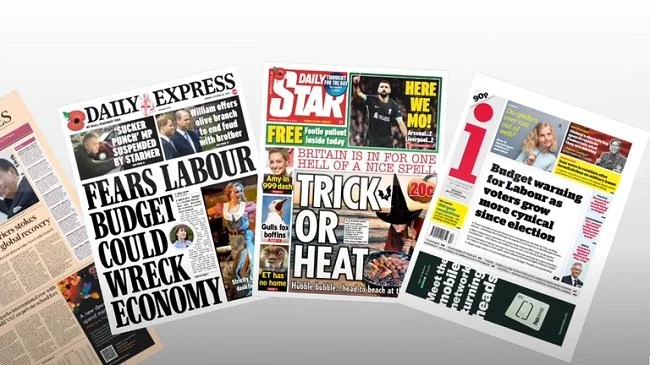
Newspapers were an integral part of UK culture in the seventies. During the week, they were delivered prior to going to work, so you would peruse them over breakfast. Alternatively you would buy one en route to your place of employment and read it on the bus or train. In a world before 24 hour, rolling news, they were the primary means of keeping the public abreast of events and as such, enjoyed a substantial audience. On occasions a newspaper story could make or break a political career or launch a crusading campaign to address a social ill. Newspapers were a force to be reckoned with and therefore a significant part of the socio-political landscape. However, due to a strong union presence within the workforce, the UKs newspapers often lagged behind other industries with regard to the technology.
A selection of UK newspapers
Newspapers were an integral part of UK culture in the seventies. During the week, they were delivered prior to going to work, so you would peruse them over breakfast. Alternatively you would buy one en route to your place of employment and read it on the bus or train. In a world before 24 hour, rolling news, they were the primary means of keeping the public abreast of events and as such, enjoyed a substantial audience. On occasions a newspaper story could make or break a political career or launch a crusading campaign to address a social ill. Newspapers were a force to be reckoned with and therefore a significant part of the socio-political landscape. However, due to a strong union presence within the workforce, the UKs newspapers often lagged behind other industries with regard to the technology.
Like so many other products, there has always been a hierarchy of newspapers in the UK. Different papers are targeted at specific demographics. The broadsheet newspapers tend to take a more intellectual approach with their journalism, whereas the tabloids are aimed at a more broader readership. I am reminded of a quote from the sitcom Yes, Minister which although 40 years old, still has a degree of truth about newspapers readership. “The Daily Mirror is read by people who think they run the country; The Guardian is read by people who think they ought to run the country; The Times is read by the people who actually do run the country; The Daily Mail is read by the wives of the people who run the country; The Financial Times is read by people who own the country; The Morning Star is read by people who think the country ought to be run by another country; and The Daily Telegraph is read by people who think it is”.
Daily Mail hyperbole
However, things change. Over the course of my life there has been a steady decline in newspaper sales. Dedicated television channels, providing 24 hour coverage is one reason. The internet is another. A story can be quickly disseminated online and be constantly updated as events unfold. Traditional print media lags behind and by the time it reaches the reader, is yesterday’s news. As a result modern newspapers tend to deal more in editorials and opinion pieces, rather than hard news. Sadly, the majority of the UK print media is owned by those with a right wing bias. Something that is at odds with the UK electorate which is broadly centrist. Hence the decline in sales. The only group that still cleaves to print media are over 65 and so the most popular newspapers, such as the Daily Mail and The Daily Express, exclusively cater to them. Neither of these two newspapers reflect a reality that I recognise.
Curiously, despite a decline in sales, there is still a perception that newspapers are at the cutting edge of journalism and have an influence on the wider news agenda. Television and radio news in the UK still often follows and expands upon headlines found in the popular press. Furthermore politicians still spend a considerable amount of time and effort trying to generate headlines in the newspapers. They go out of their way to cultivate relationships with political journalists and will often seek to disclose information to the press as part of the policy agenda. Similarly, newspapers will seek to influence politicians by directly and indirectly lobbying on specific subjects. The Brexit referendum of 2016, was heavily influenced by lengthy and substantive campaigning by the majority of the UK press. All of which were owned by individuals who had openly declared their support for leaving the EU.
Rupert Murdoch, owner of 33% of UK newspapers
Beyond the obvious political and philosophical bias, most tabloid newspapers nowadays are simply a vehicle for celebrity gossip, scandals and doom mongering. They also peddle conspiracy theories, bogus science and perhaps the biggest lie of all, that all of the problems in the UK are someone else’s fault. These publications are inherently parasitical and are not in any way a force for good. Yet in spite of these issues, there is still good journalism to be found within the UK, although much of it resides online. Some newspapers, such as the “i” are even bucking the trend and increasing their readership. Perhaps newspapers aren’t quite dead yet and despite their tawdry current state, people still believe in the noble qualities they remember from the past. Whether the tide will turn remains to be seen.
The First Past the Post Electoral System
The First Past the Post (FPTP) electoral system used in the United Kingdom, as well as in several other countries such as the US and India, has both advantages and disadvantages. However, despite being a simple and straightforward system it has been abandoned by many democracies in favour of more proportional and equitable methods. The primary criticism against FPTP is that it allows a minority of the electorate to return a majority government. Since 1935, there have been majority governments 90% of the time, but not one of them had the support of a majority of voters. At present, the current UK government has a majority of seats with just 43.6% of the votes. In the 2019 election they gained an extra 48 seats despite an increase of only 1.2% of the vote share.
The First Past the Post (FPTP) electoral system used in the United Kingdom, as well as in several other countries such as the US and India, has both advantages and disadvantages. However, despite being a simple and straightforward system it has been abandoned by many democracies in favour of more proportional and equitable methods. The primary criticism against FPTP is that it allows a minority of the electorate to return a majority government. Since 1935, there have been majority governments 90% of the time, but not one of them had the support of a majority of voters. At present, the current UK government has a majority of seats with just 43.6% of the votes. In the 2019 election they gained an extra 48 seats despite an increase of only 1.2% of the vote share.
Under First Past the Post, the UK Parliament does not accurately reflect the way the electorate votes. Hence, millions of people do not get the representation they choose. In the 2024 general election, the combined vote share for Labour and the Conservatives reached a record low, with smaller parties doing well. Yet the election was highly disproportionate, as Labour won 63% of seats (411) with only 34% of the vote, while Reform won under 0.8% of seats (5) with 14.3% of the vote. The Liberal Democrats recorded their best ever seat result (72), despite receiving only around half the votes they did in 2010. A Parliament that fails to reflect how people vote can lack popular support and have its legitimacy questioned. However, such complaints have always been countered with arguments that FPTP delivers strong governments with the ability to implement their respective manifestos.
Here are some of the key pros and cons of the First Past the Post system :
Pros:
1. Simplicity: FPTP is a straightforward system where voters mark an "X" next to their preferred candidate, and the candidate with the most votes wins. The simplicity makes the electoral process easy to understand and administer.
2. Strong Government: FPTP often leads to a single-party majority in the House of Commons, which can result in a more stable and decisive government. This majority typically allows the winning party to implement its agenda without needing to form coalitions and compromise on key policies.
3. Local Representation: Each regional constituency is represented by a single elected member, which helps establish a direct link between constituents and their representative. This can enhance local representation and also provides the electorate with clear accountability.
4. Prevents Extreme Parties: FPTP tends to favour larger, more established parties, making it difficult for smaller or more extreme parties to gain representation. This can be seen as an advantage if stability and moderation are priorities.
Cons:
1. Disproportionate Representation: FPTP can lead to a significant mismatch between the proportion of votes a party receives nationally and the number of seats it wins. This can result in a parliament that does not accurately reflect the diverse political views of the population.
2. Wasted Votes: In FPTP, votes cast for losing candidates and those beyond the necessary majority for the winning candidate are considered “wasted”. This results in “safe seats” with an incumbent candidate who has an established majority. This can lead to a sense of disenfranchisement among voters whose preferred candidate or party does not win as their vote effectively doesn’t count.
3. Regional Biases: The system can reinforce regional biases, as parties may focus on winning in specific geographic areas rather than seeking support across the entire country. This can lead to neglect of certain regions and communities.
4. Limited Choice: FPTP tends to limit voters' choices to candidates from the major parties, as smaller parties may struggle to gain a foothold. This can result in a lack of diversity and stifled political competition. It also fosters a sense of dissatisfaction among the electorate if a substantial percentage vote for a particular party yet it gains no seats.
5. Tactical Voting: Voters may feel compelled to vote strategically rather than for their preferred candidate or party, especially if they believe that their preferred choice has little chance of winning. This can distort the true preferences of the electorate.
Ultimately, the choice of an electoral system involves a trade-off between various principles, such as simplicity, proportionality, and stability. Different systems prioritise different aspects, and no system is perfect. The debate over electoral systems often revolves around finding a balance that aligns with the values and goals of a particular society. At present, neither of the two main political parties have made any kind of electoral pledge to alter the UK voting system. Both benefit from FPTP as it currently stands, so it is only the smaller parties that advocate for change.
Political Language and Rhetoric
Politicians have a distinct way of talking when being interviewed or giving a press conference. It is often characterised by a strategic use of language, centred around rhetorical devices, persuasion techniques and a careful framing of messages. Direct answers to questions are usually avoided, with tangential responses being preferred. Opinions and specific perspectives are frequently presented as facts. There is also a propensity to focus on “problems” and apportioning blame, rather than “solutions”. It’s important to note that the use of language in politics is a complex and dynamic process influenced by various factors, including cultural context, media dynamics, and the evolving political landscape. Different politicians may employ different communication strategies based on their individual styles and objectives. Here are some key aspects of how politicians use language:
Politicians have a distinct way of talking when being interviewed or giving a press conference. It is often characterised by a strategic use of language, centred around rhetorical devices, persuasion techniques and a careful framing of messages. Direct answers to questions are usually avoided, with tangential responses being preferred. Opinions and specific perspectives are frequently presented as facts. There is also a propensity to focus on “problems” and apportioning blame, rather than “solutions”. It’s important to note that the use of language in politics is a complex and dynamic process influenced by various factors, including cultural context, media dynamics, and the evolving political landscape. Different politicians may employ different communication strategies based on their individual styles and objectives. Here are some key aspects of how politicians use language:
Persuasion and Rhetoric:
Emotional Appeals: Politicians often use emotionally charged language to connect with the audience. Appeals to fear, hope, anger, or empathy can be powerful tools for swaying public opinion.
Repetition: Politicians frequently repeat key phrases or slogans to reinforce their message and make it more memorable. This repetition can help shape public perception.
Framing:
Positive Framing: Politicians strive to present their policies, actions, or ideas in a positive light. They carefully choose words and phrases that cast their initiatives in the best possible way.
Negative Framing: Similarly, politicians may use negative framing to criticise opponents, policies, or situations. This can influence public perception and create a sense of urgency or concern.
Ambiguity and Vagueness:
Strategic Ambiguity: Politicians may use vague language to avoid committing to specific positions, especially on contentious issues. This allows them flexibility and can help them appeal to a broader audience.
Plausible Deniability: Vague language can also provide politicians with a degree of plausible deniability, making it harder for opponents to pin them down on particular statements.
Slogans and Catchphrases:
Memorable Messaging: Politicians often rely on catchy slogans and memorable catch phrases to encapsulate their key messages. These can serve as rallying cries and make complex issues more digestible for the public.
Euphemisms and Loaded Language:
Euphemisms: Politicians may use euphemisms to soften the impact of certain policies or decisions. This can make potentially unpopular actions more palatable to the public.
Loaded Language: The choice of words matters. Politicians might use loaded language to evoke strong emotions or to frame an issue in a particular way that aligns with their agenda.
Adaptation to Audience:
Tailoring Messages: Politicians often tailor their language to different audiences. The way they speak to a group of business leaders may differ from how they address a community gathering. This adaptability helps them connect with diverse constituencies.
Sound Bites and Media Interaction:
Media-Friendly Phrases: Politicians understand the importance of concise and media-friendly sound bites. They craft messages that can easily be quoted and shared in news coverage, ensuring that their perspectives are highlighted.
Understanding the way politicians use language can empower individuals to critically evaluate political discourse and understand the underlying messages being conveyed. It’s essential for the electorate of any country to be aware of how language is used to shape political narratives and to engage in informed and thoughtful analysis. Whether politicians should be expressing themselves in such a fashion is another matter altogether. It can be argued that the public has been tolerant for too long of what is essentially an oblique means of communication. In the UK, in recent years there has been a robust campaign to ensure that all government literature and websites are written in clear, plain English. It has proven very effective. Perhaps it is time for a similar lobby to be made regarding the manner in which politicians express themselves, seeking for a more clear and precise style.
The Case for a Written UK Constitution
The United Kingdom is one of the few democratic countries in the world that does not have a single, written constitution. Others include Canada, New Zealand and Israel. To date, its constitution is a combination of written and unwritten sources, including statutes, common law, conventions and somewhat esoterically, royal prerogatives. The reason for this is predominantly historical. Since 1688, Britain has not experienced a revolution or regime change, which often leads to a constitutional initiative, such as the American or the French Revolution. Britain’s constitution has evolved slowly over time under relative stability and as such, it has never been deemed necessary to list the fundamental laws and principles of the country's political system.
The United Kingdom is one of the few democratic countries in the world that does not have a single, written constitution. Others include Canada, New Zealand and Israel. To date, its constitution is a combination of written and unwritten sources, including statutes, common law, conventions and somewhat esoterically, royal prerogatives. The reason for this is predominantly historical. Since 1688, Britain has not experienced a revolution or regime change, which often leads to a constitutional initiative, such as the American or the French Revolution. Britain’s constitution has evolved slowly over time under relative stability and as such, it has never been deemed necessary to list the fundamental laws and principles of the country's political system.
The current constitution is deficient for three reasons. Its lack of clarity, its failure to properly protect fundamental rights and the inadequacy of the current devolution settlement for Scotland and Wales. Firstly, the fact that the UK’s constitution is not codified in a single document means that the place of certain key governmental mechanisms lack clarity. For example, the legal status of referendums has never been properly set out. Secondly, although Britain does have a Human Rights Act, that legislation does not enjoy the same status as a list of fundamental rights in a codified constitution. As it is not entrenched, it does not have any special protection and can be amended or overturned. The current devolution settlement requires a written constitution that properly sets out the position of the devolved administrations of Scotland and Wales and their respective powers.
Bearing this in mind, here are some arguments in favour of the UK adopting a written constitution:
Clarity and Accessibility:
A written constitution would provide a clear and easily accessible document outlining the fundamental principles and rights of all UK citizens. This can enhance public understanding of their rights and the functioning of the government. It would also provide those in government with clear parameters within which they have to work.
Legal Certainty:
A formal constitution would bring legal certainty, as it would serve as a supreme law that can be referred to in all legal disputes. This contrasts with the current situation where constitutional principles are dispersed among various sources which often leads to confusion and misinterpretation (both willful and accidental).
Protection of Rights:
Explicitly enumerating individual rights within the framework of a written constitution, would provide a stronger legal basis for citizens to challenge any encroachments on their rights. This may contribute to a more robust protection of civil liberties and greater public awareness of said rights.
Limitation of Government Power:
A clearly written, unambiguous constitution could establish clear checks and balances on the powers of different branches of government. Thus limiting the potential for abuse of power and ensuring a more effective separation of powers.
Modernisation and Adaptability:
Another key benefit of a written constitution, is the ability to be able to make relevant amendments and updates that reflect changing societal values and circumstances. This adaptability is often considered crucial in a rapidly evolving world. New socio-political issues, especially those driven by technology and the global environment, often need to be addressed as quickly as they emerge.
International Reputation:
Having a written constitution could enhance the UK's international reputation by aligning its governance structure with the constitutional norms followed by most democratic nations. Many international institutions are built upon mutually held ideas and concepts. Enshrining commonly held values and ideas often affords diplomatic, political and commercial benefits.
Citizen Engagement:
Having a clear constitution can positively impact civic education and engagement. Citizens can become more aware of the mechanics of government as well as their constitutional rights and responsibilities. A better informed electorate can make more effective political choices and become more active in local and national government.
Reducing Constitutional Uncertainty:
The lack of a written constitution can lead to uncertainty, particularly during times of constitutional crisis. The events arising from the Brexit referendum and the political deadlock that reached a peak in 2019 being a clear example. Having a clear and precise constitutional framework could provide a clear route for resolving such situations.
Judicial Review:
A written constitution would enhance the role of the judiciary in interpreting and enforcing constitutional principles through judicial review. This would therefore provide a strong mechanism for holding the government accountable, aiding or sanctioning them when circumstances required. It would also facilitate definitive answers on constitutional interpretation, far more efficiently.
Symbolic Value:
It can be argued that there is a positive, symbolic value to adopting a written constitution. It signals a commitment to transparency, democracy and the rule of law. It provides a cultural foundation upon which to build and a degree of social stability in knowing that certain principles are enshrined in law.
It is important to note that this is not an exhaustive list and opinions on this matter will naturally vary. There are also arguments against adopting a written constitution, with some people favouring the flexibility and evolutionary nature of the UK's current constitutional arrangements. The debate over whether the UK should have a written constitution continues and any constitutional change would likely be a significant and complex process.
“Trial by Media” and the Court of Public Opinion
On Friday 15th September the former actor and comedian turned internet social commentator, Russell Brand, released a video on his YouTube channel addressing allegations about his personal life, ahead of a forthcoming UK current affairs documentary. Brand vehemently denied what he described as “very serious criminal allegations”. The following day Channel Four broadcast “Russell Brand: In Plain Sight”. During the course of the program Brand was accused by one woman of rape and by three others of sexual assaults, and emotional abuse between 2006 and 2013. During the course of the week, further claims have been made against him and that his “predatory” behaviour was an open secret within the TV industry. Furthermore, women would warn each other in advance if they had any dealing with him. All of which has played out against a mixture of broadsheet analysis, tabloid hyperbole, performative politics and internet bluster.
On Friday 15th September the former actor and comedian turned internet social commentator, Russell Brand, released a video on his YouTube channel addressing allegations about his personal life, ahead of a forthcoming UK current affairs documentary. Brand vehemently denied what he described as “very serious criminal allegations”. The following day Channel Four broadcast “Russell Brand: In Plain Sight”. During the course of the program Brand was accused by one woman of rape and by three others of sexual assaults, and emotional abuse between 2006 and 2013. During the course of the week, further claims have been made against him and that his “predatory” behaviour was an open secret within the TV industry. Furthermore, women would warn each other in advance if they had any dealing with him. All of which has played out against a mixture of broadsheet analysis, tabloid hyperbole, performative politics and internet bluster.
Is this debacle becoming the 21st century version of “l’affaire Dreyfus” It certainly makes you wonder. Another historical phrase that springs to mind is “Star Chamber”. Because contemporary discourse around political and social issues has become so emotionally (and not intellectually) partisan, it has become increasingly difficult to address topical matters of this kind in a measured and intelligent manner. Plus Brand himself is a polarising figure, that the mainstream media has actively cultivated in an odd, symbiotic or even a parasitic relationship over the years. The man generates headlines due to his behaviour and the press then perpetuates “interest” in such matters in the way they choose to report and depict such behaviour. However, now it seems expedient to turn on the proverbial goose that lays the golden egg and join the opprobrium and censure because that is now a superior business model.
At present, there is a growing amount of information in the public domain to suggest that Brand’s behaviour in the past has been unacceptable and has been indulged by those who should not have allowed it. Possibly because it was good business and irrespective of the consequences, which is a sad but familiar story. As members of the public, we are entitled to consider the information presented, seek out further data and then reflect upon its authenticity and relevance. We can then determine if the information has a moral and ethical dimension in comparison to our own personal standards. However, what happens next seems to be the point of dispute. To what extent (if any) should public opinion have any impact upon the individual at the centre of the allegations? In the case of Russell Brand should public opprobrium have a direct influence upon his life? We may judge his behaviour, lifestyle and morality but should public opinion be allowed to directly or indirectly levy sanctions?
Transgressions of the law are dealt with by the legal system, which is independent, accountable and transparent. Cases can be presented and punished if a conviction is secured. If a case cannot be proven, then the accused can consider themselves absolved. If need be, they can seek restitution. At some point, Russell Brand may well appear in court if charges are made, and the CPS deem it in the public interest to prosecute. However, successfully securing a conviction is notoriously difficult when it comes to sexual offences. Procedural, cultural and personal biases impede the process and juries are reluctant to convict when evidence ultimately comes down to contradictory, personal testimony. Hence a legal resolution is difficult, despite the fact it is the preferential route. But what happens if there is no legal approach to resolve the situation? We are left in a state of limbo where nothing has been formally resolved but remains nebulous and unproven. It can be damaging to all concerned parties.
As mentioned previously, the public are entitled to consider matters and withdraw support if they see fit to do so. Hence people who previously followed Russell Brand on social media can unsubscribe and cease any payments if they wish. With regard to YouTube demonetising his channel, this is nothing more than standard business practice. It is common protocol for companies to distance themselves from anyone when serious allegations are made against them. It is not so much a moral sanction against the one accused, but more a question of ensuring that the business, in this case YouTube, does not incur any legal entanglements in a wider context and to avoid negative PR. However, do not attribute such corporate behaviour as something driven by morality, as YouTube seems to enforce its terms and conditions very selectively.
However, what is thoroughly questionable is the chair of the UK Culture, Media and Sport Committee, Dame Caroline Dinneage, writing to the video hosting service Rumble requesting that Russell Brand’s channel there is demonetised. “We would be grateful if you could confirm whether Mr Brand is able to monetise his content, including his videos relating to the serious accusations against him. If so, we would like to know whether Rumble intends to join YouTube in suspending Mr Brand’s ability to earn money on the platform”. It should be noted that Caroline Dinneage, although a peer, does not represent the UK government and that the committee has no authority outside of the UK. Publicly assuming that unproven criminal accusations are true and then “championing” them for political gain, undermines trust and the assumption of good faith of politicians and national institutions. However, politicians can seldom resist the gravitational pull of a passing bandwagon.
With all these things in mind, it would appear that the Russell Brand situation is currently at an impasse. Allegations have been made but as of yet, no criminal proceedings are being undertaken. The polarising nature of Russell Brand, the complaints and the tone of public discourse around them has led to this whole matter becoming part of the wider, ongoing culture wars. Women’s groups and other sociopolitical lobby groups do not feel obliged to maintain a position of “innocent until proven guilty”. And libertarians and other groups leaning towards Brand’s stance on conspiracy theories and the “deep state”, are rallying to his support as they see what is happening to him as part of a larger crackdown on dissent. Elon Musk, Joe Rogan and GB News are not allies some would wish to be associated with. The recent addition of support from former comedian Michael Barrymore seems to imply that anyone with a beef against the media may be a potential ally.
Hence, while this impasse remains, the so-called “court of public opinion” and “trial by media” are left unchecked and unchallenged. I have my own opinions about Russell Brand, but I am reticent to voice them as they contribute to the ongoing drip effect of speculation and personal bias that makes resolving the matter legally more difficult. It is possible that I could be called for jury service and find myself participating in his trial. Yet we live in an age of celebrity tittle-tattle and gossip. Many of us wag our finger disapprovingly but such content is voraciously consumed. People wear their bias openly on their sleeve these days, where in the past they tried to hide it. They are quick to pass judgement regardless of what facts later emerge. Let us not forget the case of singer Cliff Richard. Sadly, until events move forward all we are left with is the “court of public opinion” which is unfair, unreliable and unsanctioned. It is also open to manipulation. From both sides. In the days to come it would be wise to keep an eye on Brand supporters. I suspect some pushback is due.
Falling Out Over Politics
For those who live outside of the UK, let me categorically state that Brexit has broken British politics. Prior to 2016, national politics still broadly functioned along traditional party political lines, with income and class substantially determining voter allegiance. The big three cities (London, Birmingham and Liverpool) maintained their liberal dispositions and Scotland, Northern Ireland and Wales were dominated by their regional politics. Brexit changed all this creating fault lines that fell outside of the existing political status quo. Opinions differed based upon where you lived, how politically literate you were and even education. Your party political allegiance no longer indicated what stance you took on this matter. Furthermore, the discourse around this complex subject was quickly debased into a bipartisan culture war that was toxic and dangerous.
“You cannot reason a person out of a position he did not reason himself into in the first place.” Jonathan Swift
For those who live outside of the UK, let me categorically state that Brexit has broken British politics. Prior to 2016, national politics still broadly functioned along traditional party political lines, with income and class substantially determining voter allegiance. The big three cities (London, Birmingham and Liverpool) maintained their liberal dispositions and Scotland, Northern Ireland and Wales were dominated by their regional politics. Brexit changed all this creating fault lines that fell outside of the existing political status quo. Opinions differed based upon where you lived, how politically literate you were and even education. Your party political allegiance no longer indicated what stance you took on this matter. Furthermore, the discourse around this complex subject was quickly debased into a bipartisan culture war that was toxic and dangerous.
Seven years on, party politics are now fractured by factionalism and public discourse per se has taken on a more emotive and contentious tone. Brexit has divided not only politics but family and friends. The nature of the debate both in parliament and the national media has been far from convivial and has shown that many ideas and concepts that many thought were universally embraced, are in fact not. The COVID-19 pandemic and subsequent lockdown, the economic impact of the war in Ukraine and the rise of social media culture has further exacerbated political and societal divides. So I find it somewhat risible when I read such naive comments as “it’s amazing that people fall out over political opinions”, as I did on a national news website recently. The days of politely agreeing to disagree are long gone as UK politics becomes more like that of the US.
The generic nature of the two main UK political parties
To many observers outside of the UK, for decades our national politics has been a bland and somewhat predictable fight that took place in the centre ground. Extremes on both sides of the political divide have been confined to the wings. For anyone over a certain income, politics could be ignored because it did not appear to directly impact upon your life. It may well be a different matter for those on low incomes or marginalised minorities but as such groups did not have a substantive voice in political terms, the perception of a broad status quo that simply changed its custodian every 4 years, has endured. I have spoken many times to European friends who have struggled to discern any major political difference between the modern Conservative and Labour parties.
Hence during these times, if you differed with your friends, family or colleagues over fiscal policy, education or national infrastructure you could easily shrug it off. Even those invested in the distinct political ideology of a particular party tended to treat it more as an academic debate, rather than a religious credo. Obviously there would be some individuals who were diametrically opposed to others due to hardline political views but this was the exception and not the rule. Ultimately, any problems arising from political policy were the governments fault and not ours. All we have to do is turn up and vote every so many years and then complain during the intervening period. The Brexit referendum changed that due to its inherent nature and consequences. A referendum is a very direct form of politics which bypasses governmental policy and responsibility. The consequences therefore lie directly with the electorate, whether or not they understand and recognise this.
The realities of Brexit
As a result of the 2016 referendum the UK has left the European Union and there have been direct economic, sociopolitical and practical consequences, irrespective of one’s opinion of the rectitude of that decision. Businesses have subsequently closed, jobs have been lost and migrant employees have left the UK resulting in a labour shortage. The economy is stagnating and the cost of living is going up. Travelling to Europe has become more complex and costly. The consequences of Brexit are tangible and we all feel them. Hence it does not come as any surprise that friends, family and colleagues will come into conflict over this. Unlike a general election where the actions of the government can be blamed on its party membership that set policy, the ramifications of Brexit can be attributed to those who directly voted for it.
The UK is currently suffering from a stagnating economy, high inflation and labour shortages. Problems that have been exacerbated by nearly thirteen years of government by the same political party. Although the next election is not due until 2024, the Conservative Party are suffering greatly in the polls. The majority of the electorate attribute a lot of the aforementioned woes to their policies. However, due to the nature of the First Past the Post electoral system there is a chance that a targeted campaign of fear mongering and misinformation in the right marginal constituencies may well see them return to office. Despite having an electorate of 46.5 million, ultimately it is approximately 350,000 voters in swing seats that determine the outcome of UK General Elections. Such a clear disparity in the importance of an individual vote, makes the outcome of an election profoundly personal.
UK Doctors Demonstrating for increased pay
Some political journalists have suggested that politics may well “settle down” and return to being “remote” when the UK becomes economically stable once again. However, I think those days are gone, now that politics has embraced the culture wars and detached itself from facts, data, expertise and reasoned argument. The notion of doing what is collectively the best for all has been replaced with attacking and punishing groups that have been successfully “othered”. However, a growing part of the electorate have realised this, finding themselves on the wrong side of the dividing line. This shift in perception renders the voting habits of others highly personal. If your neighbour openly admits to voting for a party that subsequently limits your rights, taxes you further, or seeks to criminalise your actions then they are complicit in such outcomes.
I therefore suspect that falling out over politics is going to increase in the next decade. Politics in the UK is becoming more populist and less based in reality. Extreme policies are harmful to people and have real world consequences. Hence voting for such things is not something one can just shrug off. You will be judged by your actions. Such a sociopolitical climate will just further entrench tribalism. Your political views and affiliations will increasingly impact upon the decisions you make in life and shape your social circle, where you work and how you’re perceived by others. The notion of “I don’t date (insert political party here)” being part of your biography on a dating app, will no longer be some niche concept. It may even become a standard. If living in such a world worries you, then we need to make politics less partisan and return to agreeing to disagree. Sadly, I suspect that it is too late to put that particular genie back into the bottle.
Refugees, Gary Lineker and the UK Culture Wars
Okay, keep up as there’s a lot of ground to cover. The UK government is currently suffering in the opinion polls and after 13 years in office, is facing potential oblivion at the next general election. In an attempt to shore up support among the party faithful, the Prime Minister, Rishi Sunak, is currently pursuing a hardline with regard to immigration. According to Ipsos, as a political issue about 29% of the electorate consider immigration to be a major problem. The remainder either think current levels are manageable or have no substantive view on the matter. However, as a “culture war” issue that can be weaponized by the tabloid press, which often has direct links to the Conservative Party in the UK, immigration is a hill to die upon. Hence you will find a lot of rhetoric that is anti-immigration and any contrary view is tarred with trite pejorative terms such as “lefty”, “liberal” and “woke”.
Okay, keep up as there’s a lot of ground to cover. The UK government is currently suffering in the opinion polls and after 13 years in office, is facing potential oblivion at the next general election. In an attempt to shore up support among the party faithful, the Prime Minister, Rishi Sunak, is currently pursuing a hardline with regard to immigration. According to Ipsos, as a political issue about 29% of the electorate consider immigration to be a major problem. The remainder either think current levels are manageable or have no substantive view on the matter. However, as a “culture war” issue that can be weaponized by the tabloid press, which often has direct links to the Conservative Party in the UK, immigration is a hill to die upon. Hence you will find a lot of rhetoric that is anti-immigration and any contrary view is tarred with trite pejorative terms such as “lefty”, “liberal” and “woke”.
Which brings us to the new Illegal Migration Bill, which is intended to “take back control of our borders, once and for all”, according to PM Rishi Sunak. The proposed legislation is specifically designed to target the small boats that cross the English Channel from France to the UK. Under the new law, asylum claims by those who travel to the UK via illegal means will be rendered inadmissible. The migrants will be detained, deported and banned from returning, Furthermore, the Illegal Migration Bill will be applied retrospectively, impacting on those already awaiting an asylum claim while being “housed” at immigration processing centres. However, the proposed bill risks breaching the Human Rights Act. Furthermore, UNHCR (UN Refugee Agency) is “profoundly concerned” by the proposed plan which it sees as a “clear breach” of the 1951 Refugee Convention. Conversely, the UK Home Secretary, Suella Braverman, believes the bill is “compatible with international law.”
UK Home Secretary Suella Braverman
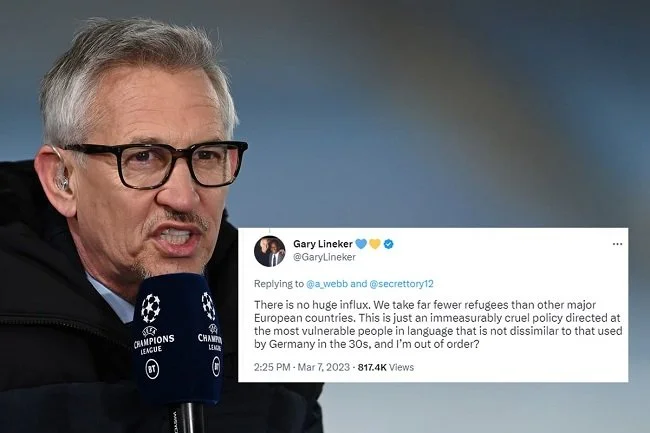
As the UK government indulges in what is essentially performative politics which do not address the real issues around immigration, there has been a degree of pushback and condemnation of the proposed legislation across the political spectrum of the commentariat. Enter Gary Lineker, retired professional football player, sports pundits and presenter of Match of the Day, the BBC’s flagship football program with an audience in excess of 20 million viewers. Gary is an active participant on Twitter and other social media and has expressed opinions in the past on politics and social issues. He is broadly left leaning and is well liked among both sports fans and the general public. The tabloid press and those on the political right loath him. On Tuesday March 7th Mr Lineker made the following tweet while discussing the Illegal Migration Bill with others online.
“This is just an immeasurably cruel policy directed at the most vulnerable people in language that is not dissimilar to that used by Germany in the '30s, and I'm out of order?”
Needless to say as UK political discourse is becoming very much like that of the US, a storm of “outrage” and “indignation” has ensued over the last 4 days. The tabloid press and some Conservative MPs are “offended” at being labelled “Nazis”, although this was not actually done. Demands have been made upon the BBC to take action against Mr Lineker. Hours of spittle flecked invective has spewed from the right of the commentariat and the story has dominated the mainstream news cycle. Sadly, an intelligent and rigorous debate over the rectitude of the Illegal Migration Bill has not taken place and instead we have endured a cavalcade of “pearl clutching” over a member of the electorate having the gall and the temerity to express an opinion. An opinion that is critical of the government and that some have chosen to take offence at.
UK Tabloid The Daily Mail reacts accordingly to Gary Lineker’s Tweet
I suspect that after Gary Lineker made his comments, those who see him as a political and cultural foe probably thought that this was a golden opportunity to attack and neutralise him. Especially if an apology or a suspension could be forced. However, events have not panned out as some have expected. Yesterday, the BBC after growing political pressure took action against Gary Lineker. Initially they had asked him to temporarily step back from presenting Match of the Day while they clarified their policy regarding employees and social media. However, when he refused to apologise for his comments on Twitter they suspended him. This course of action has raised serious questions about the impartiality and independence of the BBC. Have they caved in to political pressure from the government? Then there is the fundamental issue of freedom of speech and Mr Lineker’s right to express an opinion.
The matter has become further complicated by a show of solidarity for Mr Lineker by professional colleagues. Fellow Match of the Day presenters Ian Wright, Alan Shearer and Alex Scott have all declined to be on Saturday night’s show. Match of the Day commentator Steve Wilson has also decided not to take part on the show. Furthermore, a spokesman for the Professional Footballers Association said “We have been informed that players involved in today's games will not be asked to participate in interviews with Match of the Day”. And it would appear that Football Focus, another BBC sports show scheduled for Saturday, has been cancelled as staff have chosen to withdraw in support of Mr Lineker’s suspension. It appears that this turn of events has left the BBC without an exit strategy with regard to the overall situation.
BBC Sport Match of the Day
If one looks beyond the obvious culture war hyperbole of this debacle there are several serious points to consider. Firstly there’s the matter of whether Gary Lineker can express a personal opinion while employed by the BBC. If he were a journalist then he would not be able to do so but as a pundit and presenter, employed in a freelance capacity he is not bound by such rules. The rules are somewhat ambiguous, although he is expected broadly not to court controversy. But there have been many other individuals employed by the BBC that have not done so, such as the journalist Andrew Neil. As to the matter of the BBC’s impartiality to the government, this seems to have wavered recently with several political appointments. The current chairman of the BBC, Richard Sharp, donated £400,000 to the Conservative Party and helped to arrange an £800,000 loan for the former Prime Minister Boris Johnson. Another member of the BBC board, Sir Robbie Gibb, was the former communications director for ex-PM Theresa May.
Beyond the contortions of the BBC as it ties itself in knots, there is the wider issue of those in the government who are “offended” by Gary Lineker’s comments. Many of those currently “outraged” are railing against things that have not been said. Mr Lineker did not use the phrase Nazi or directly invoke the Holocaust in a casual fashion. He succinctly pointed out that the rhetoric surrounding the proposed new legislation and the wider debate regarding immigration was couched in the sort of language used in Germany during the 1930s and that this was divisive and problematic. A point that was recently made by 83 year old Holocaust survivor Joan Salter to Home Secretary, Suella Braverman. Such wilful ignorance and deliberate misinterpretation by some MPs is another example of the performative nature of modern politics. It also highlights the lack of self awareness of certain politicians who remain oblivious or indifferent to the offence their actions have caused to many voters.
Conservative MP Lee Anderson, known for his performative outrage, has a TV show on “news” channel GB News
The question on many people’s lips is how this matter will resolve itself. If Gary Lineker stays true to his principles he may end up terminating his association with the BBC and Match of the Day. The show may even fold entirely which would be a crushing blow to the BBC, whereas I’m sure Mr Lineker would quickly find alternative employment. As to the political pressure and the ire of the tabloid press, this may soon be directed elsewhere as the government lurches from one scandal to another. On March 20th former prime Minister Boris Johnson will be giving evidence to the Committee of Privileges as to whether he misled parliament. Plus there are the ongoing revelations being serialised in The Times newspaper regarding the leaked cabinet WhatsApp messages. Hence I suspect that this particular battle in the UK culture wars is not going to yield the results that some hope it will. I’m not even sure if the majority of the UK electorate have an appetite for such things.
UK Voter ID
Last April, the Election Act 2022 became law within the UK. The Act introduced a requirement for all those voting in-person to produce photo identification when attending a polling station. This is the first time that such an ID has been required. Prior to this, voters could either bring their polling card to verify their identity at the polling station, or confirm their registered address from the electoral roll with staff. Now a UK driving licence or passport are considered the primary means of identity. A list of additional photo identification that has been deemed acceptable, is available on the UK government website. For those members of the electorate who do not have any of the qualifying ID, there is a Voter Authority Certificate available, which can be applied for online. This photo ID is linked to the applicants National Insurance Number. For further impartial information on photo ID and registering to vote, visit the The Electoral Commission website.
Last April, the Election Act 2022 became law within the UK. The Act introduced a requirement for all those voting in-person to produce photo identification when attending a polling station. This is the first time that such an ID has been required. Prior to this, voters could either bring their polling card to verify their identity at the polling station, or confirm their registered address from the electoral roll with staff. Now a UK driving licence or passport are considered the primary means of identity. A list of additional photo identification that has been deemed acceptable, is available on the UK government website. For those members of the electorate who do not have any of the qualifying ID, there is a Voter Authority Certificate available, which can be applied for online. This photo ID is linked to the applicants National Insurance Number. For further impartial information on photo ID and registering to vote, visit the The Electoral Commission website.
At first glance, the Election Act 2022 will come as no surprise to those living in Europe. Many countries have a requirement for formal ID to be able to vote. However, many European countries have national identity cards schemes making voter ID easy and non-discriminatory. The UK does not currently have a national identity card scheme and has instead chosen to base its voter ID requirement upon documents that are purely optional and not universal among the electorate. Although the Voter Authority Certificate provides a photo ID that is acceptable it is not issued to voters by default and instead has to be personally applied for. In light of this, exactly why has the UK government made changes to a process that has existed and functioned in an acceptable manner for decades? Furthermore are these changes to the UK voting system for the better?
Previously your polling card or just confirming your name and address was sufficient evidence to allow you to vote in the UK
The central argument for the Elections Act 2022, as made by the UK government , is to address alleged voter fraud, especially with postal votes. Due to an ageing population and a workforce that increasingly works outside of traditional “office hours”, there has been an increase in postal voting in recent years. In the 2019 General election 18% of the UK electorate voted by post. However, in-depth analysis by The Electoral Commision and other independent bodies have found little evidence of any kind of voter fraud. Between 2015 and 2019, during which three general elections were held and 153 million in-person votes were cast, only 88 allegations were made of voter fraud. Between 2010 and 2018, there were just two convictions for voter fraud. Due to the size of the UK electorate and the manner in which ballot papers are manually counted, the process does not easily lend itself to fraud. Hence the government's arguments underpinning the Elections Act 2022 are spurious.
It seems to be an inevitable and logical conclusion that the primary reason for the Elections Act 2022 is to marginalise the 1.1 million voters that currently do not hold a UK passport or driving licence. This group is mainly made up of the long term sick, the disabled, those in low income jobs or unemployed. All of which are socioeconomic groups that statistically tend not to vote for the Conservative Party, which has been in office for the last 13 years. Another group who will be impacted by the new legislation are those between the ages of 18 and 25. In the 2019 United Kingdom general election 56% of voters aged 18–24 voted Labour, whereas 67% of 70+ voters voted Conservative, according to polling by YouGov. Upon considering these facts, the Elections Act 2022 is nothing more than a deliberate move to try and disenfranchise a specific part of the UK electorate for political reasons. It is no different from traditional gerrymandering in its insidious nature.
The Oyster card, which allows travel on the tube (metro) in London, is sufficient photo ID for the over 60s to vote, but insufficient ID for anyone under that age
Sadly, although the Elections Act 2022 is a poor and dishonest piece of legislation, it is a reality that has to be endured at the present. Perhaps if there is a change of government in the next election, this legislation will be amended or repealed. Perhaps it is time for the UK to finally have a mature and measured debate about national identity cards. However, those are matters for another day. In the meantime I urge everyone who is eligible to vote in the UK and who does not possess any of the requisite photo ID, to apply and obtain the Voter Authority Certificate. Due to the volatile nature of UK politics at present, there may well be an election sooner rather than later. Because of the nature of the First Past the Post voting system, it is important to ensure as large a voter turnout as possible, especially in marginal constituencies. Voting is a fundamental right of UK citizens and should not be interfered with by any party or institution.
What Do You Know About Your Political Representative?
I am writing this post from the perspective of a UK citizen, but the sentiments expressed are applicable to anyone who lives in a country where you have democratically elected local political representation. IE someone who is supposed to advocate on behalf of your community or for you personally as the duly elected political representative. Here in the UK, the country is divided into 650 constituencies, each returning one Member of Parliament. Irrespective of whether you voted for your MP or whether you support the political party that they belong to, they are obliged to represent you and advocate on your behalf, if you request it. Such is the relationship in principle between constituents and MPs in the UK. It is important to be aware that your local MP is not a delegate whose sole purpose is to represent majority constituency views. Under the UK political system, an MP makes decisions on behalf of constituents and can take a position counter to local opinion, if they feel that is in the best interest of the constituency.
I am writing this post from the perspective of a UK citizen, but the sentiments expressed are applicable to anyone who lives in a country where you have democratically elected local political representation. IE someone who is supposed to advocate on behalf of your community or for you personally as the duly elected political representative. Here in the UK, the country is divided into 650 constituencies, each returning one Member of Parliament. Irrespective of whether you voted for your MP or whether you support the political party that they belong to, they are obliged to represent you and advocate on your behalf, if you request it. Such is the relationship in principle between constituents and MPs in the UK. It is important to be aware that your local MP is not a delegate whose sole purpose is to represent majority constituency views. Under the UK political system, an MP makes decisions on behalf of constituents and can take a position counter to local opinion, if they feel that is in the best interest of the constituency.
Towards the end of 2021 our local MP and former cabinet minister James Brokenshire sadly died. Subsequently there was a by-election and Louie French was duly elected. Old Bexley and Sidcup constituency is considered a “safe seat” for the Conservative Party, although it should be noted that their majority dropped by 20%. This however is more to do with the electorate's dissatisfaction with the government and the state of UK politics, rather than a reflection upon Mr French. As an ex-councillor Mr French has already experience of local borough politics and it would appear, judging from his website, that he is primarily focused on addressing the needs of his constituents. He is currently campaigning for increased local funding and is against cuts to local services such as transport, healthcare and local policing. This is further reflected in his contributions to parliamentary debates which also shows an interest in animal welfare.
At present Mr French is a backbench MP and does not hold a ministerial position. Hence it is perfectly reasonable to see him advocate in such a practical fashion for the constituency that he represents. However, Mr French is a Conservative MP and as such is expected by default to vote with the government on any legislation they plan to pass. As a constituent of Old Bexley and Sidcup, I am curious to know what views Mr French holds on the major issues facing the UK at present. Although there is “government policy” and the official “party line”, there is not a consensus on taxation, public spending, Brexit and the cost of living crisis among MPs. The Conservative Party is currently rife with factions across a spectrum of right wing views. It should also be noted that in the General Election of 2019 the party effectively expelled all moderates and centrists. Hence I am keen to know where Mr French fits into this political landscape at present.
For the sake of transparency, I am not a supporter or member of any UK political party and vote tactically. I don’t subscribe to trite, blanket narratives such as “all politicians are liars” or “they’re just as bad as each other”. Such comments are designed to avoid any difficult thinking, to opt out of any responsibility as a voter and simply maintain the status quo. I am sceptical but not cynical and like logical, reasoned debate, driven by critical thinking. I despise the “footballification” of politics and blinkered tribalism. There are politicians that I admire and respect on both sides of the house, which reflects my own broad and diverse political outlook. Thus I want to know where Mr French stands on the UK Online Safety Bill, the Policing Bill, Brexit, trade deals, taxation, the current wave of strikes, the future of the NHS and much more. Because I’ve looked online and I can find little or no information regarding these points.
Louie French had only been a MP for 6 months last year, when Boris Johnson was ousted from office as Prime Minister. During the tumultuous events of last summer, I did not hear Mr French express any opinion on the matter. Was he unhappy with the PM’s conduct or did he see no problem at all? It is important to know because for myself and many other constituents, the PM’s behaviour was beyond the pale. Hence we expected some sort of indication of Mr French’s opinion. He has already said he has no intention of being a “career politician”, thus I see no reason why he needs to be deliberately ambiguous in what he says. One of the things that I dislike most about contemporary politics is the manner in which many MPs refuse to commit to any position or opinion, for fear that it may “come back to haunt them”. “Cakeism” is self-serving and a sad indictment of character.
And so we arrive at the point of this post. What do you know about your political representative? Because I believe if you are the right person to represent the needs of your local community at any level, then I think you need to be transparent in your views. I accept that someone can change their views and am politically and emotionally mature enough to see that as a positive thing. When facts change it is logical to change your mind. I will also concede that on some of the more “complex” political and social issues, it is a valid stance to still be “collating” your opinion. But I won’t accept that it is reasonable to willfully avoid expressing a view or an opinion, purely as a political tool and a matter of convenience. If an MP is effectively “too afraid” to say what they think, then perhaps they should reconsider their career. I for one would not want to be represented by such an individual.
Therefore I think it is fair to ask your political representative what they personally believe in, so you can assess them politically and get a measure of their character. I would also argue that you also need to know about their business interests and affiliations. Naturally, my outlook will put me at odds with current political practices. UK politics at times strives to exist separate from reality and observable facts. It tries to be everything to everyone, while simultaneously committing to nothing, yet claiming the exact opposite. Hence maintaining a coherent position is an anathema and political kryptonite. Yet that is what I and much of the electorate want. Because if you don’t say what you mean, how can you mean what you say? I shall monitor Mr French over the course of 2023 to see if he does express a view on anything other than his established brief. I may even ask him, as one of his constituents. Sadly, I don’t feel optimistic about the outcome.
Another New Prime Minister
It is difficult to write about the state of UK politics with any degree of intellectual rigour when the entire situation has become so utterly farcical. My initial reaction to the recent departure of Liz Truss after just 45 days in office, was to laugh with abject scorn and derision. She was destined to fail due to utter lack of ability. However, there is still the outstanding matter of the country lacking a credible and functional government to address inflation, the cost of living crisis and resolve all the issues stemming from Brexit. There are problematic national and international events taking place that need addressing. A united, pragmatic and empathetic government is required to solve both these short term and long term needs. Sadly, the governing party is riven with opposing factions and there is no commonly held policy or underlying ideology. The PM may well have changed but the underlying flaws remain.
It is difficult to write about the state of UK politics with any degree of intellectual rigour when the entire situation has become so utterly farcical. My initial reaction to the recent departure of Liz Truss after just 45 days in office, was to laugh with abject scorn and derision. She was destined to fail due to utter lack of ability. However, there is still the outstanding matter of the country lacking a credible and functional government to address inflation, the cost of living crisis and resolve all the issues stemming from Brexit. There are problematic national and international events taking place that need addressing. A united, pragmatic and empathetic government is required to solve both these short term and long term needs. Sadly, the governing party is riven with opposing factions and there is no commonly held policy or underlying ideology. The PM may well have changed but the underlying flaws remain.
The new incumbent of No 10 Downing Street, Rishi Sunak, has achieved one major milestone. He is the first British Asian Prime Minister and that is certainly noteworthy. However, beyond this I see no other reason to celebrate his appointment. He may have calmed the markets by representing the traditional face of Conservative fiscal prudence but he has no new policy announcements. Effectively, he intends to carry on with the conspicuously nebulous manifesto promises of 2019 and will no doubt usher in “Austerity 2.0” after his predecessor left a gaping hole in the nation’s finances and undermined our capacity to borrow cheaply. He has said nothing to allay the immediate fears of those on middle or low incomes. Furthermore, after promising to bring “integrity and accountability” back to UK politics he re-appointed Suella Braverman as Home Secretary, after she resigned for breaching the ministerial code 6 days earlier.
We are still two years away from a General Election and even if there was one announced tomorrow, I would still struggle to find a political party that came anywhere near representing what I consider to be the nation’s political and economic needs. I would vote Labour only to remove the current administration and not because I am overly enthused by the party. Ultimately I and many other voters are politically homeless and the current “First Past the Post” voting system does not favour new parties. Furthermore, over the course of my lifetime the UK electorate has become increasingly politically illiterate and increasingly impatient, resulting in certain socio-economic groups voting against their own interests. It raises the question as to how much responsibility do the electorate bear for the iniquities they inflict on themselves and others by their political choices? Overall I am not optimistic about the immediate future and I am reminded of that line from Gremlins 2 about “put everything you've got into canned food and shotguns”.
The New Prime Minister of the United Kingdom (Again)
Conservative Party has been in government in the UK since 2010. During that time there have been three Prime Ministers. Today we moved onto the fourth. After Boris Johnson resigned on 7th July, the nation has had to endure a tedious two month process in which the Conservative Party elects a new leader. That person then becomes the PM by default. Many readers unfamiliar with the UK political system may be surprised that a change of leader has not led to a General Election. That is because the Conservative Party still holds a parliamentary majority of 71 elected Members of Parliament. Hence it is still constitutionally quite able to govern, despite Boris Johnson being forced from office. Therefore party members vote for a new party leader who gets the top job by default. Remember that in the UK, the Prime Minister is not the head of state and does not have the executive powers of a President.
Conservative Party has been in government in the UK since 2010. During that time there have been three Prime Ministers. Today we moved onto the fourth. After Boris Johnson resigned on 7th July, the nation has had to endure a tedious two month process in which the Conservative Party elects a new leader. That person then becomes the PM by default. Many readers unfamiliar with the UK political system may be surprised that a change of leader has not led to a General Election. That is because the Conservative Party still holds a parliamentary majority of 71 elected Members of Parliament. Hence it is still constitutionally quite able to govern, despite Boris Johnson being forced from office. Therefore party members vote for a new party leader who gets the top job by default. Remember that in the UK, the Prime Minister is not the head of state and does not have the executive powers of a President.
This afternoon the results were formally announced, although polling and market research has strongly indicated that the former Foreign Secretary Liz Truss was more than likely to win. That has now been confirmed. Liz Truss received 81,326 votes (57%) and Rishi Sunak received 60,399 (43%) on a turnout of 141,725 (82.6%). 172,437 Conservative Party members were eligible to vote. If you want to drill down deeper into the numbers Truss received 47% of eligible Tory members. Although she has won the election, it is not a decisive victory. Previous Tory leaders won by greater margins (Boris Johnson 66% and Theresa May 60%). Nor does she enjoy unanimous support from her own MPs, as only 113 saw fit to vote for her as leader (Rishi Sunak earned 137 votes), prior to the ballot being put to the party membership. According to YouGov, only 12% of Britons expect Truss to be a good or great leader, while 52% expect her to be poor or terrible.
To say that Liz Truss has some major political and social problems to tackle in the first month of her leadership is an understatement. Those of a political bent will be aware of her rise through the political ranks of the Conservative Party. The wider public are not so familiar with her apart from what they’ve seen in recent weeks. What they have seen is someone campaigning, not to the nation, but to the party faithful. Hence a lot of what Liz Truss has said has been showboating to the home crowd and politically tone deaf to the wider public. If you use Google to research the new Prime Minister the first thing you’ll find are all the gaffs she’s made in previous years that have now all become memes. If you set aside politics and judge her on her oratorical skills, charisma and overall appeal, she comes up wanting. Those who cry “give her a chance” are spuriously appealing to the alleged sense of fair play of the UK electorate. A quality the government of the last 12 years sorely lacks. It is current Tory policy to change any rule that stands in its way.
Tomorrow the new Prime Minister will announce her new cabinet and it will no doubt be a dismal collection of the intellectually bankrupt and the hopelessly out of their depth. I very much doubt if any of the major political challenges will be addressed in the coming parliamentary session. Real help will not come regarding spiralling energy prices, the Northern Ireland protocol will continue to be insoluble for a pro Brexit government and the ongoing skills and labour shortage, combined with ongoing lack of funding will lead to more public institutions collapsing. Inflation, low wages and rising crime could all contribute to a volatile political climate in 2023. So far, rather than seeking new ideas, Liz Truss has indicated an ideological retreat into Thatcherism, advocating policies and dogma that are no longer relevant in the current political climate.
If you take the time to find and read the serious political pundits, not the client journalists found in the popular UK press, you’ll find a lot of speculation about how the Conservative and Unionist Party is heading for an electoral disaster in 2024 and potentially its own extinction. I sadly feel obliged to remind people that it is “the doom of men that they forget”. Logic and clear evidence no longer shift the political scales like they used to. At best I think a voting pact between all parties that aren’t the Conservatives, may prevail. Perhaps the next government will then be a coalition against them. However, the election is a long way off. Myself and many other politically homeless voters’ biggest concern is the human collateral damage that will be incurred while we wait. Sadly, there is no immediate light at the end of the tunnel and that it also appears to be inordinately long.
Partygate
I try to keep my thoughts on political matters to a minimum here at Contains Moderate Peril, mainly because UK politics and the current state of discourse associated with it has become an absolute shit show in recent years. Brexit broke traditional politics and has made matters far more tribal and partisan. The two main parties have declined from having clear ideologies, identities and manifestos, to becoming either a lobby group for the specific demographic group that supports them, or a conflicted, divided and schizoid shadow of its former self. I’ll let you work out which is which. Politics is no longer about governing a nation for the benefit of all its citizens. Now you simply pick a side and join the ongoing culture war against everyone and everything else. This rotten system produces rotten leaders. Hence, when Alexander Boris de Pfeffel Johnson became Prime Minister in December 2019, it was clear that the nation was taking a major risk on such a man. His failings as a politician and a person are a matter of public record for anyone who has the eyes to see them.
I try to keep my thoughts on political matters to a minimum here at Contains Moderate Peril, mainly because UK politics and the current state of discourse associated with it has become an absolute shit show in recent years. Brexit broke traditional politics and has made matters far more tribal and partisan. The two main parties have declined from having clear ideologies, identities and manifestos, to becoming either a lobby group for the specific demographic group that supports them, or a conflicted, divided and schizoid shadow of its former self. I’ll let you work out which is which. Politics is no longer about governing a nation for the benefit of all its citizens. Now you simply pick a side and join the ongoing culture war against everyone and everything else. This rotten system produces rotten leaders. Hence, when Alexander Boris de Pfeffel Johnson became Prime Minister in December 2019, it was clear that the nation was taking a major risk on such a man. His failings as a politician and a person are a matter of public record for anyone who has the eyes to see them.
Over the last 2 years, Johnson has overseen a litany of political failures. Sadly, the only people with the power to remove him from office are his own MPs. The Conservative party has a long and established history of regicide. They will circle the wagons and defend their leader without question in a crisis, until it becomes clear that the aforementioned leader is an electoral liability and they could lose their own seats. Then the knives are unsheathed, as Margaret Thatcher, John Major, William Hague, Iain Duncan Smith and Michael Howard all found out. However, Johnson is proving to be the most slippery of eels. The fact that there is no clear successor is an invaluable get out of jail card for the PM. The UK is also in the midst of a major cost of living crisis, there’s a war in Europe and the government is about to embark upon a trade dispute with the EU. All of which are sound reasons why no one possibly wants the job at present. However, there’s one scandal that just doesn’t want to go away, like a wayward stool in an avocado coloured, seventies toilet. Partygate.
For those who live outside of the UK who may not be fully up to speed with this issue, I’ll try my best to summarise. If you wish for more detail, then do watch this video from last month by BBC journalist Ros Atkins. From March to December 2020, the UK was subject to some very stringent COVID-19 restrictions. In the run up to Christmas, there were concerns about a resurgence of the virus, so the rules governing social distancing, gatherings and general interaction were tightened. Simply put, people could not meet friends and families, socialising was out of the question and the idea of traditional Christmas celebrations were out of the question. People could not visit sick and dying relatives in hospitals. Funerals were heavily restricted. UK citizens made major personal sacrifices for the greater public good. Unlike the Prime Minister, his staff and various other Cabinet Ministers who broke their own rules as they partied and fraternised. Johnson is far from a complicated individual. He likes to be perceived as a “good guy” and “fun”. Hence, he brought a “play hard” culture with him when he took office. He sadly neglected the “work hard” part.
Now if you are a hardened cynic or feel disposed towards being politically obtuse, you may ask “is this really such a big deal. It’s just a party”. To which I would reply, it wasn’t one there were over a dozen and at least 8 have been subject to a Police investigation resulting in 126 fines, including the Prime Minister himself. But the parties are in many respects a misdirection. To quote Bruce Lee “it is like a finger pointing away to the moon. Don't concentrate on the finger or you will miss all that heavenly glory”. The biggest issue stemming from so-called Partygate is the Prime Minister denying any malfeasance. On multiple occasions, Johnson stated categorically in the House of Commons that there were no parties and all COVID-19 related regulations were followed. Yet he was fined for attending his own birthday party. Something he has justified by claiming he didn’t know it was a party. Let us take a moment to reflect upon this state of affairs. Johnson has denied any wrongdoing time and time again. Yet he is now the only ever serving UK Prime Minister to receive a fine for breaking the law. Laws that he oversaw through Parliament.
Today, after last week’s announcement by the Metropolitan Police that no further criminal action would be taken against the Prime Minister, several photographs have reached ITV News showing Johnson attending what any sane person would classify as a party. The photo shows at least 7 guests, the PM and were taken by an official photographer. 9 people in a room drinking and clearly socialising, with 6 open bottles of alcohol in view. 7 if they also drank the hand sanitiser. Naturally like all modern digital photos, it contains data pertaining to where and when it was taken. Allegedly that was on November 13th 2020. On 8th December 2020, Labour MP Catherine West asked the Prime Minister in the Commons if a party had taken place in Downing Street on 13th November. Johnson replied “No - but I am sure that whatever happened, the guidance was followed and the rules were followed at all times”. Was this a lie and a clear example of the PM misleading Parliament? Something that has always been considered a resigning offence.
The scandal that is Partygate has been rumbling on since December 2021. The continual drip, drip of information, photos and tip offs grew to the point where it was dominating the political agenda by the end of January this year. Hence Johnson appointed senior civil servant Sue Gray, Second Permanent Secretary in the Cabinet Office, to investigate the matter. Her report has already been delayed once, when in February the Metropolitan Police retrospectively decided to investigate the alleged lockdown infractions. However, her report is due to be published this week and will certainly ensure that the story once again dominates the headlines. Already, several important questions have emerged, prior to its publication. Why did Ms Gray meet with the PM to discuss the report last week? Although Johnson is Ms Gray’s boss, is it appropriate for these parties to meet without the minutes of that meeting being fully disclosed? And why have the Metropolitan Police fined people who attended the party in the picture published today but have not sanctioned the PM for a second time?
A politician's relationship with the truth is often a strained one. However, the role of Prime Minister requires that basic standards are adhered to. For want of another phrase you have to be “sound”, in the Yes Minister and Yes Prime Minister sense of the word. The UK is still a major player on the international stage although that soft power is fast evaporating. A Prime Minister has to be considered trustworthy by their international allies as well as their own electorate. They have to uphold the rule of law and their word must be considered bond. A proven liar cannot do such things and is a calamity for both domestic and international politics. A democracy in which the truth is openly scorned and deemed an impediment is a broken democracy. Sadly, this is where the UK currently stands. If Johnson remains in office then the only remaining route is down. However, the Gray Report may be a scandal too far. There are two By-elections coming up and if the Conservatives lose these seats there may be repercussions for the PM from his own party. I suspect that the PM is in an extremely uncomfortable position at present, both politically and personally. Has good fortune finally deserted him? I do hope so.
What are You Doing and Where are You Going?
The title for this post is a quote from The Hobbit by J.R.R. Tolkien. I’ve used it as a verbal cue to try and give readers an overview of the point I’m striving to convey. Because I want to talk about modern life in western civilization, specifically its complexity and increasing uncertainty. If you’re extremely wealthy you can mitigate these two points but I’m working on the premise that most of the people who read Contains Moderate Peril are not. The blogging community, of which I am a participant, is a diverse group but from what I’ve observed it’s not populated by millionaires. In fact most of the people I know, both online and in person, are just holding down a job, trying to keep a roof over their head and pay the bills. Often they’re doing the job they do in default of anything else and they’re at the very least ambivalent towards it. The pandemic has also brought home how fragile so-called “normality” is. Modern politics are also volatile and life in general just doesn’t seem as certain as it was twenty years ago.
The title for this post is a quote from The Hobbit by J.R.R. Tolkien. I’ve used it as a verbal cue to try and give readers an overview of the point I’m striving to convey. Because I want to talk about modern life in western civilization, specifically its complexity and increasing uncertainty. If you’re extremely wealthy you can mitigate these two points but I’m working on the premise that most of the people who read Contains Moderate Peril are not. The blogging community, of which I am a participant, is a diverse group but from what I’ve observed it’s not populated by millionaires. In fact most of the people I know, both online and in person, are just holding down a job, trying to keep a roof over their head and pay the bills. Often they’re doing the job they do in default of anything else and they’re at the very least ambivalent towards it. The pandemic has also brought home how fragile so-called “normality” is. Modern politics are also volatile and life in general just doesn’t seem as certain as it was twenty years ago.
We all approach life and deal with its respective slings and arrows in our own way. I am of an age where I was culturally indoctrinated to have a plan. They were very popular in the seventies and eighties. Everyone seemed to have one. Paul Simon, Leonid Brezhnev, Baldrick to name but a few. As a child, the plan that my parents had for me was pretty much the standard one from that era. Go to school and get an education and good qualifications. Find a suitable career. If you’re not sure about a career, then get a good intermediary job. Find a suitable partner and get married. Buy a home, have children and try to improve your lot in life. It was pretty much the white, middle class equivalent of the Xenomorph’s life cycle from Alien. By and large I broadly tried to follow this strategy but I found that reality constantly got in the way and tried to obstruct both me and everyone else who was trying to navigate life’s choppy waters.
So here I am at the age of 54. Life has changed for both my family and me a lot in the last eight years in ways that I never really imagined. This is documented in other posts so I won’t cover old ground here. Returning to the title of this piece, I find myself at a time in my life where I am considering “what am I doing and where and I going?”, so to speak. There are many reasons why we all get philosophically introspective at times. Society expects us to have an orderly trajectory to our lives, passing certain milestones along the way. However, many of these expectations are unrealistic and unattainable, so we then devote an excess of our time and energy examining our perceived failures. It is hardly a recipe for personal happiness and contentment. The information age has also opened our eyes to the reality of our relationship with the government. The various social contracts that are supposed to exist between citizens and state are all broken. Working hard does not necessarily pay off, neither does “doing the right thing”.
It is therefore not unusual to wish for a fairer and stable world. A world where opportunities exist for all, a job pays sufficient to keep a roof over your head and there is equality before the law. Sadly, that is not the case. Here in the UK the political system is broken and taken advantage of. It’s binary nature and tribal culture often means people vote for what they believe is the least worst of two “evils”. Hence people end up directly and indirectly voting at times against their own interests. At present we have a politically and intellectually weak government who are greedy, petty and dangerous. We are isolated internationally during the midst of the biggest geopolitical problem since World War II. The immediate future for the UK is not good politically, economically or socially. It is more upsetting knowing that some of these problems we inflicted upon ourselves.
So returning to the original question of “what are you doing and where are you going?” I have a major decision ahead of me this year. My caring commitments will be coming to an end in April and I have to determine whether I shall be returning to the job market, or whether my personal finances will allow me to officially retire. I suspect that the latter may not be possible and the prospect of the modern work environment doesn’t fill me with joy. My long term plan is to move out of London and attempt to keep the world’s problems at arms length. I just want to live out the remainder of my days in as much peace and quiet as possible. However, that seems more and more like an aspiration rather than a definitive plan, especially if I am reliant upon a job. It seems like no one can escape uncertainty these days. Being free from worry seems to be becoming a prerogative exclusive to the rich. It would be nice to end this post on a positive note but I cannot think of one.
Old Bexley and Sidcup By-election Part 3
The Conservative Party successfully held onto their “safe seat” of Old Bexley and Sidcup in yesterday’s closely watched by-election. However their overall majority was reduced by more than half amid a very low voter turnout. Conservative councillor Louie French becomes the country’s newest MP after winning 11,189 votes, more than 50 per cent of those cast, in the seat previously held by the former cabinet minister James Brokenshire. Mr Brokenshire died in October from lung cancer aged 53. The closest challenger was Labour’s Daniel Francis, who secured 6,711 as the Tory majority fell from nearly 19,000 to 4,478, the equivalent of a vote share swing of 10 per cent to Labour. Turnout in the constituency was just 34%, down from the almost 70% who voted in the 2019 general election.
The Conservative Party successfully held onto their “safe seat” of Old Bexley and Sidcup in yesterday’s closely watched by-election. However their overall majority was reduced by more than half amid a very low voter turnout. Conservative councillor Louie French becomes the country’s newest MP after winning 11,189 votes, more than 50 per cent of those cast, in the seat previously held by the former cabinet minister James Brokenshire. Mr Brokenshire died in October from lung cancer aged 53. The closest challenger was Labour’s Daniel Francis, who secured 6,711 as the Tory majority fell from nearly 19,000 to 4,478, the equivalent of a vote share swing of 10 per cent to Labour. Turnout in the constituency was just 34%, down from the almost 70% who voted in the 2019 general election.
The results subsequently saw positive statements made by both the Conservatives and Labour. Mr French stated that such a victory for a sitting government was “almost unheard of”. Ellie Reeves MP, Labour's political lead for the 2021 Old Bexley and Sidcup by-election, remarked “There’s been a 10% swing over to Labour this evening”. Reform UK, formerly the Brexit Party, came third with 6.6% of the vote, with the party's leader and candidate Richard Tice describing it as a "massive result". Speaking after the results were announced, Mr Tice claimed “The reduction in the Conservatives’ majority in Old Bexley and Sidcup is a rejection of Boris Johnson personally because the Prime Minister is now viewed as a liability, not an asset in Tory heartlands”. The Green Party and Liberal Democrats both lost their deposits as they polled under 5% of the votes.
Old Bexley and Sidcup by-election 2021 results:
Louie French (Con) 11,189 (51.48%, -13.06%)
Daniel Francis (Lab) 6,711 (30.88%, +7.40%)
Richard Tice (Reform) 1,432 (6.59%)
Jonathan Rooks (Green) 830 (3.82%, +0.62%)
Simone Reynolds (Lib Dem) 647 (2.98%, -5.31%)
Elaine Cheeseman (Eng Dem) 271 (1.25%)
John Poynton (UKIP) 184 (0.85%)
Richard Hewison (Rejoin) 151 (0.69%)
David Kurten (Heritage) 116 (0.53%)
Carol Valinejad (CPA) 108 (0.50%)
Mad Mike Young (Loony) 94 (0.43%)
Although the retention of the constituency is a relief for the Conservative Party, the reduction in majority and the dismal voter turnout cannot be ignored. It is extremely disheartening to see two thirds of the electorate deciding not to bother to vote. COVID-19 and poor weather are convenient excuses but both those factors did not deter voters two years ago in the General Election of 12th December 2019. Brexit was a pressing political issue at the time but the demographics of a constituency such as Old Bexley and Sidcup means that they usually make an effort to vote. Hence such voter apathy is food for thought. Doorstep canvassing by all parties discovered a growing sense of disillusionment with the lack of political direction of the government and the inadequacy of the Prime Minister himself. Yet that despondency did not translate into votes for alternative parties.
As a floating voter who has no strong political attachment to either of the two main parties, I have reached a point where none of the choices available on the ballot paper seem appropriate or desirable. I did vote in this election but it had zero impact, due to the “winner takes all” approach that is entrenched in the UK’s political system. Unless you live in a marginal seat, voting against a majority incumbent is effectively redundant. Therefore, with a vote that feels meaningless and a paucity of parties to choose from, I fully understand why people turn their backs on politics. Especially the under 30 year olds. All the canvassing that I saw taking place seemed to be undertaken by the over 40s and pitched at a similar age demographic and above. All too often, UK politics just seems to be a form of lobbying for specific socioeconomic groups. Sadly, I do not see the situation improving anytime soon.
As for Louie French, it will be interesting to follow his voting record in parliament in the months to come to see where he fits within the spectrum of modern Conservatism. At present, as a new MP he is naturally focused upon the needs of his constituents. In his victory speech Mr French stated he will “work tirelessly to repay the trust you put in me”. But I am more intrigued to learn what his position is on several major forthcoming pieces of legislation, such as the UK Online Safety Bill and the new Policing Bill with its potential restrictions regarding the right to protest. I think his voting intentions along with the way he conducts his MPs finances will provide a measure of the man. I also suspect that despite the current drop in the overall majority for this MP, this may well increase in two year’s time when the next General Election is held.
Old Bexley and Sidcup By-election Part 2
Political events in the constituency of Old Bexley and Sidcup have moved forward in the last few weeks, following on from the death of incumbent MP James Brokenshire on 8th of October. Although no formal announcement has yet been made regarding the date of the forthcoming by-election, the major political parties have started announcing the names of their respective candidates. There were initial concerns among some constituents that this safe Conservative Party seat may have been used as a means of parachuting in a candidate favoured by central office, rather than one determined by the local Conservative Association. Fortunately, that has not been the case. The UK Government currently enjoys a parliamentary majority of 79 seats and is therefore not in any urgent need of fast pathing further political allies.
Political events in the constituency of Old Bexley and Sidcup have moved forward in the last few weeks, following on from the death of incumbent MP James Brokenshire on 8th of October. Although no formal announcement has yet been made regarding the date of the forthcoming by-election, the major political parties have started announcing the names of their respective candidates. There were initial concerns among some constituents that this safe Conservative Party seat may have been used as a means of parachuting in a candidate favoured by central office, rather than one determined by the local Conservative Association. Fortunately, that has not been the case. The UK Government currently enjoys a parliamentary majority of 79 seats and is therefore not in any urgent need of fast pathing further political allies.
At present three candidates have been confirmed as standing for election. Louie French who is standing for The Conservative Party. Mr French has been a Bexley councillor for the last eight years and was Deputy Leader of Bexley Council from 2018 to 2021. He is a resident of the Borough and has a background in the financial services industry, working in the City of London. The late James Brokenshire was both a friend and mentor to Louie, therefore from a party political perspective, he is a logical choice to stand as The Conservative Party candidate. His existing familiarity with the borough and its constituents offers practical continuity. Considering the voting habits of constituents and the historical track record of by-elections held in Old Bexley and Sidcup, unless something radical occurs it is safe to consider that Louie French is the favourite candidate to win the seat.
Daniel Francis, a Bexley councillor and former leader of Bexley’s Labour group on the council, has been selected as Labour’s parliamentary candidate for the upcoming Old by-election. Daniel Francis represents Belvedere Ward on Bexley Council and grew up locally. He is married with two primary school aged children, one of whom has cerebral palsy and he campaigns on accessibility issues. Mr Francis served as leader of Bexley Labour group from 2017 to 2021 and is the shadow cabinet member for environment, transport and leisure. He was first elected to the council in 2000. In the 2019 election, Labour polled 23.5% of the vote. Since the constituency of Old Bexley and Sidcup was created in 1983 the electorate has only elected Conservative Members of Parliament.
The third candidate to be announced is Richard Tice, the leader of the party Reform UK. Formerly known as the Brexit Party, Reform UK is now presenting itself as a broader political entity with policies encompassing wider and more traditional issues. The party lost its 29 MEPs when the UK left the EU on 31 January 2020. At present it has three councillors nationally. Reform UK has been seeking parliamentary seats since 2019 but has not been successful so far. Mr Tice is a British businessman and CEO of the property investment firm. It will be interesting to see whether the presence of Richard Tice as both a candidate and the leader of his party will gain any traction with constituents and whether Reform UK can transition successfully from a single issue party. Furthermore, will his participation in the by-election increase media attention?