
Keeping a Popular Franchise Relevant
I’ve written in the past about “how long should a TV show run for” and it remains a very interesting talking point. An ageing cast and a played out formula are not uncommon problems that can lead to a popular show being cancelled. But some long standing TV dramas have different issues that can blight them. Such as overly complicated lore, a vocal fanbase and a need to stay relevant in a way that some other shows don’t have to worry about. Martin Belam has recently written a very good article about this subject. He cites Doctor Who as a show that is extremely fatigued at present and suggests that maybe taking it off air and having some time out may well be the solution to its “problems”. I agree with him. Not only with regard to Doctor Who but basically any TV or movie franchise that has become ubiquitous and therefore tired as a result.
I’ve written in the past about “how long should a TV show run for” and it remains a very interesting talking point. An ageing cast and a played out formula are not uncommon problems that can lead to a popular show being cancelled. But some long standing TV dramas have different issues that can blight them. Such as overly complicated lore, a vocal fanbase and a need to stay relevant in a way that some other shows don’t have to worry about. Martin Belam has recently written a very good article about this subject. He cites Doctor Who as a show that is extremely fatigued at present and suggests that maybe taking it off air and having some time out may well be the solution to its “problems”. I agree with him. Not only with regard to Doctor Who but basically any TV or movie franchise that has become ubiquitous and therefore tired as a result.
Here are a few select quotes that I think are pertinent. Again these are specifically about Doctor Who but are equally applicable to comparable shows.
“Sometimes it feels like the show is being buried under the weight of its own continuity”.
“The decision to cast a woman as the Doctor has also meant the franchise became a pawn in the culture wars, further souring relationships in the fandom, and making the social media posts of the show’s creators and stars toxic to wade through”.
“It feels as if it is telling an increasingly self-absorbed meta-story about its own run, accompanied by a very vocal online fandom that isn’t quite sure what it wants, but knows it doesn’t want this”.
Doctor Who has been absent from our televisions in the past. It lost its way back in the middle to late eighties and was taken off air when audiences started declining. The sixteen year hiatus certainly made a difference and when it returned in 2005 it had totally reinvented itself and found exactly the right tone for a modern audience. James Bond is another prime example. The franchise has taken time out twice to rethink its direction. GoldenEye (1995) put the franchise back on track after the excesses of the Roger Moore era (The two Dalton movies were a change of tone too quickly). And Casino Royale (2006), possibly the best realisation of the character from the original text, made Bond relevant again after the franchise started losing ground to its competitors. However, taking a break doesn’t always guarantee an improved return. Dare I mention a certain franchise set in a galaxy, far, far away.
It is easy to see why owning a popular franchise is appealing to a TV network or film studio. Once established they become known quantities that need to be managed and curated. Spinoffs offer potential new content and do not pose the same risk as completely new products. You only have to look at Disney + to see a textbook example of such portfolio management. The BBC is not in such a position with Doctor Who. It doesn’t have the finances unless it goes into business partnership with a third party. Such a collaboration could potentially reinvigorate the franchise. But there is also equal scope for it to go the other way. A major US backer would naturally want a product tailored to its domestic market. All things considered, if Doctor Who doesn’t rethink its current direction it is destined to repeat the same mistakes of the late eighties, become a caricature of itself and get cancelled. Perhaps it is better to jump, than be pushed. A short hiatus may well be the solution.





Revisiting Doctor Who: Part 1
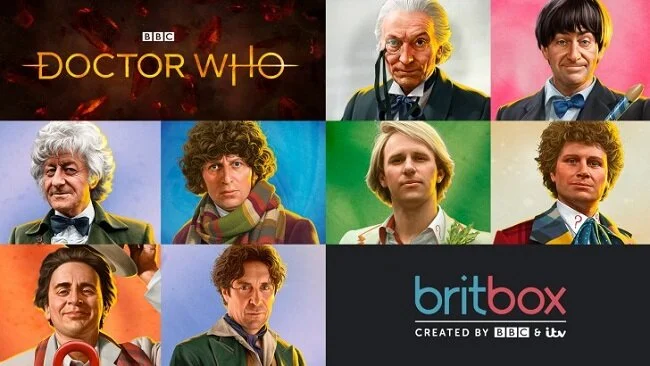
Last month, I tried a 30 day free trial of the streaming service BritBox. One of the main selling points was that the platform has an extensive back catalogue of Classic Doctor Who. Although I initially tried to keep up with the reboot of the franchise in 2005 my interest waned after several seasons. I am not opposed to any of the changes made and I am very pleased that the show has found a new audience. However, it doesn’t resonate with me so much anymore and I find that there is too much human drama for my liking. So I decided to revisit my youth and watch some classic Doctor Who; episodes that I haven’t seen in over forty years (yes, I’m that old). Now I’m fully aware of the potential issues that can come from returning to things that you enjoyed in one’s youth, so I believe I did my best in managing my expectations. However, the results of my nostalgia trip were interesting. The things I thought would be a problem nowadays weren’t so and the things I expected to hold up well despite the passage of time, didn’t always succeed. It’s been a curious experience.
Last month, I tried a 30 day free trial of the streaming service BritBox. One of the main selling points was that the platform has an extensive back catalogue of Classic Doctor Who. Although I initially tried to keep up with the reboot of the franchise in 2005 my interest waned after several seasons. I am not opposed to any of the changes made and I am very pleased that the show has found a new audience. However, it doesn’t resonate with me so much anymore and I find that there is too much human drama for my liking. So I decided to revisit my youth and watch some classic Doctor Who; episodes that I haven’t seen in over forty years (yes, I’m that old). Now I’m fully aware of the potential issues that can come from returning to things that you enjoyed in one’s youth, so I believe I did my best in managing my expectations. However, the results of my nostalgia trip were interesting. The things I thought would be a problem nowadays weren’t so and the things I expected to hold up well despite the passage of time, didn’t always succeed. It’s been a curious experience.
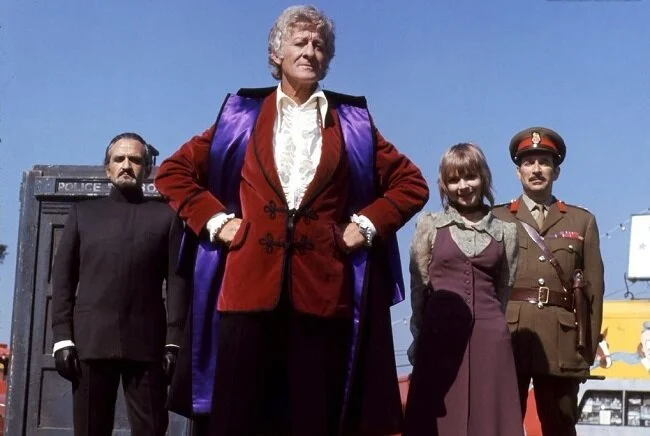
I chose to resume watching Doctor Who at the beginning of the John Pertwee era. I have vague memories of some of the later episodes so I thought it an appropriate place to begin. I decided to temporarily bypass the first and second incarnations of the Doctor, due to the number of missing episodes and my unfamiliarity with these actor’s portrayal of the iconic Timelord. Hence I began watching Spearhead from Space which provided some continuity for me as I was familiar with the UNIT storyline. Due to industrial action within the BBC at the time, this story was entirely shot on film which gives the four episodes a very unique aesthetic. It was customary at the time to film exterior scenes on 16mm stock and record on videotape all studio scenes. However, this exclusive use of film was deemed too costly and so was not maintained. It’s a shame as the look and feel of these episodes really adds something to the show and lends it a little more gravitas.
As for Pertwee himself, although a skilled actor with definite onscreen presence, I’m not sure if the new attributes he brought to the show improve the character overall. He is more suave and dynamic than his predecessors. But often the action sequences and hand to hand fight scenes feel a little incongruous. It seems like the production team were trying to straddle too many genres and this move into Bond territory feels a little forced. Another contrivance that ends up becoming counter productive is the plot line that sees the Doctor being stranded on earth as a form of punishment by the Timelords. Hence for the first few seasons the stories centre around his role at UNIT and it all gets a little too familiar. However, the appearance of Roger Delgado as the Master is a real asset. Delgado brings a great deal of charisma to the role and effortlessly switches from charming to sinister. He was an excellent foil for Pertwee and sadly his premature death robbed the show of a suitable climax to their ongoing story arc.
Despite attempts by the production team to broaden the scope and appeal of Doctor Who during Pertwee’s tenure, there are some fundamental issues to consider. Oddly enough I found the low budget production values quite endearing and the use of chroma key video compositing quite innovative. Pertwee often had fun during such cheap and cheerful VFX sequences and his gurning is now quite noticeable. For me the more important issue is the writing and the thematic shift which happened between 1970 and 1974. Clever and nuanced stories have always been the mainstay of Doctor Who. They’re still present in this era and they don’t shy away from difficult themes. The genocidal ending to The Silurians is a good example. However, there is a strong “Nigel Kneale-esque” tone to many of the stories and at times I felt that Bernard Quatermass would have been equally at home investigating them. Again I return to my point about the more action packed Doctor and trying to embrace too many genre tropes. The BBC just didn’t have the resources to do such things justice.
Sadly as an adult, I now see that even a BBC production such as Doctor Who did not escape the prevailing societal biases of its time. I appreciate that fans are immensely fond of many of the companions that have accompanied the Doctor in his travels over the years but Jo Grant (Katy Manning) is a terribly written character, enduring all the sexist stereotypes of the time. Her final appearance in The Green Death where she falls in love with a scientist and environmental activist (who is an equally contrived creation) is somewhat embarrassing as no cliche is left unturned. Another problem that I felt quite jarring is that a lot of the stories from this era are stretched out too long. What could be effectively handled in four installments is often expanded to six or seven episodes. Sometimes events and plot twists are not evenly spaced out throughout the story, resulting in occasional dull episodes and then a narrative rush at the denouement.
I did not watch all four seasons featuring John Pertwee’s Doctor. I chose to view selected stories recommended by several fansites. However, I feel I watched sufficient to make an informed decision about his tenure. I think that this was a period of experimentation where the show tried to encompass other elements from popular entertainment of the time. Not all of it worked but I admire those involved for thinking outside the box. Certainly, when the writing hit the mark it was very good indeed. My personal favourite stories being The Daemons and The Terror of the Autons. The latter is especially creepy. However, my revisiting of Doctor Who did not end with John Pertwee. I decided to push on and jump straight into the adventures of the Fourth Doctor. I make no bones about the fact that the Tom Baker era is the one I am most familiar with. I was seven by the time he took on this iconic role and at an age where his unique persona and style left a marked impression upon me. I shall cover my thoughts on the Baker episodes that I’ve recently watched on BritBox in future blog post.
The Idiot Box
Thoughts on TV shows and my current viewing habits.
The last instalment of The Idiot Box was back in February, just before the lockdown started here in the UK. Since then, like so many people, my leisure time has increased dramatically due to being confined at home and the constraints placed upon my real world activities. Hence our household has watched a lot more TV than usual as a means of occupying ourselves. In some respects this has been a boon, being presented with an opportunity to catch up with our viewing. All those miscellaneous programmes that you record on your DVR “for some particular reason” and swear blind that “you’ll get round to watching”, have finally been cleared. I’ve also started working my way through my “to do” list of movies and TV shows that I’m supposed to be reviewing. But there have also been some curious downsides as a result of the quarantine restrictions.
Thoughts on TV shows and my current viewing habits.
The last instalment of The Idiot Box was back in February, just before the lockdown started here in the UK. Since then, like so many people, my leisure time has increased dramatically due to being confined at home and the constraints placed upon my real world activities. Hence our household has watched a lot more TV than usual as a means of occupying ourselves. In some respects this has been a boon, being presented with an opportunity to catch up with our viewing. All those miscellaneous programmes that you record on your DVR “for some particular reason” and swear blind that “you’ll get round to watching”, have finally been cleared. I’ve also started working my way through my “to do” list of movies and TV shows that I’m supposed to be reviewing. But there have also been some curious downsides as a result of the quarantine restrictions.
Many of the ongoing TV shows that were approaching the end of their seasons in March and April, ended somewhat prematurely. NCIS usually finishes on a cliffhanger or features a story arc that will be continued in Autumn. That did not happen this time round. In fact many shows were two or three episodes short of a full season. Apparently the lockdown impacted upon post production and some episodes could not be completed. As mass gatherings have been prohibited, many TV (and radio) shows have not been recorded in front of “live audiences”. This does have an impact. Take for example the popular UK satirical news panel show, Have I Got News For You. This usually is recorded in a studio in front of several hundred people. This season the panel members interacted via videoconferencing (and the show was edited using Final Cut Pro X). The quality of material was just as good as usual but the lack of audience laughter altered the dynamic of the show. It oddly seemed less funny, which upon reflection wasn’t the case.
As I’m not a sports enthusiast, its conspicuous absence from TV has not been an issue. But I do appreciate that this is a major source of entertainment for many people and hence a major inconvenience. I cannot say for certain whether repeating classic content has been an adequate substitute or not but from those I have spoken with it has been a lacklustre replacement. Another issue stemming from the lockdown is the closure of ongoing TV and film productions. There’s a good chance that many eagerly awaited TV shows will not be ready on time and we have already seen the release date of numerous high profile movies postponed. Subsequently, there’s a real chance that there may be a shortage of new content on many of the major streaming services in Autumn. As for cinemas reopening, irrespective of whether this happens sooner or later, it will take a lot to convince me that it is safe to return to these air conditioned germ incubators.
In times of crisis, there are always winners and losers. Streaming TV subscription services have certainly been in the former group over the last four months. I already subscribe to Netflix and Amazon Prime which offers a broad range of material but with the increase in leisure time I decided to try a few others. My son has access to Disney+ so I got to check out what it has on offer recently. I can see why he has it, having twin five year old daughters who have totally bought into the “Disney Princess” concept. However, as I’m done with the MCU and my love affair with Star Wars is rapidly waning (apart for The Mandalorian), there’s not much for me or Mrs P. I also don’t care for the way that some films have been “tinkered” with to make them more family friendly, such as the adding of digital hair to hide Daryl Hannah’s minor nudity in Splash. And the withdrawal of the 30 day free trial just prior to the release of Hamilton on the platform was hardly good PR.
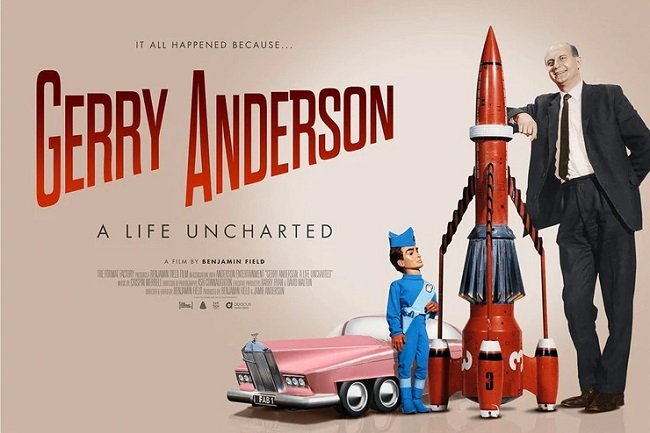
However BritBox has proven to be far more beneficial. If you like in depth and character driven dramas such as Broadchurch, Unforgotten and Call the Midwife then there’s plenty of such content. There’s also a wealth of classic British sitcoms and a good selection of classic movies. The main selling point for me is the extensive collection of Doctor Who episodes spanning all incarnations of the timelord. This has given me a great opportunity to re-evaluate material I previously watched when I was 5 years old and has proven quite a revelation. The other major selling point of BritBox is that they’ve recently added most of Gerry Anderson’s Supermarionation shows, so I’ve been revisiting Thunderbirds and Captain Scarlet yet again. I suspect that once the free 30 day trial has expired I shall continue subscribing for the immediate future.
So has there been any standout viewing in the Peril household over the last 4 months? Yes there has. Mrs P is a very social creature (yes that’s very ironic considering my temperament) and has found the lockdown very frustrating as it has curtailed her regular meetings with friends. However, one particular show which she binged watched (twice) on Netflix and found great enjoyment in is Schitt's Creek. She feels it takes a couple of episodes for the show to hit its stride but when it does the characters come to life and it is both equally touching and extremely funny. I’ll vouch for the fact then while she’s been watching it, you can hear constant uproarious laughter. For myself, my highlight of lockdown viewing has been Nebula-75 which is produced by a 3 man crew in self isolation. It’s available on YouTube. However, I shall dedicate a future blog post to this creative endeavour.
The Thirteenth Doctor
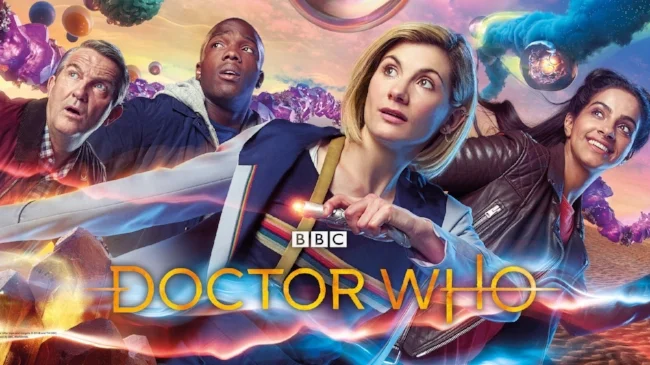
Last night Jodie Whittaker made her debut as the thirteenth incarnation of that iconic Time Lord known as The Doctor. And despite eighteen months of negative comments, criticism and bile from those who disliked the idea of a female lead, the first episode, The Woman Who Fell to Earth was watched in the UK by 8 million people. At this point, popular opinion appears to be broadly positive and the franchise has weathered the storm. Naturally, there are some fans who have elected not to continue watching and there are those who intend to remain in the wings spouting disproportionate criticisms because they feel that something has been taken away from them. However, churn is a common facet of all industries and TV entertainment is no different. The BBC may well lose some long-time viewers due to this casting change, but I think it will gain far more new ones. I say this with some confidence because I too have chosen to return to the Doctor Who fold.
Last night Jodie Whittaker made her debut as the thirteenth incarnation of that iconic Time Lord known as The Doctor. And despite eighteen months of negative comments, criticism and bile from those who disliked the idea of a female lead, the first episode, The Woman Who Fell to Earth was watched in the UK by 8 million people. At this point, popular opinion appears to be broadly positive and the franchise has weathered the storm. Naturally, there are some fans who have elected not to continue watching and there are those who intend to remain in the wings spouting disproportionate criticisms because they feel that something has been taken away from them. However, churn is a common facet of all industries and TV entertainment is no different. The BBC may well lose some long-time viewers due to this casting change, but I think it will gain far more new ones. I say this with some confidence because I too have chosen to return to the Doctor Who fold.
I started watching Doctor Who upon its return in 2005 and enjoyed the first couple of seasons. Despite growing up in the glory days of the Pertwee and Baker era, I happily made the transition to the new, modern and contemporary Doctor. However, as time progressed I felt that the show and the wider fan community were becoming a little too inward gazing. Furthermore, under Steven Moffat’s auspices, the show started to become excessively narratively convoluted, self-referential and frankly a little too smug for its own good. In many ways it came across as a massive fans service first and frequently felt like a big “in-joke” shared among fans but to the exclusion of the wider public. For many Doctor Who ceased to be a show that you could easily return to. Something that was reflected in the viewing figures, which more or less halved from the initial halcyon days of Russell T Davies’ creative tenure.
I suspect that the arrival of new show runner Chris Chibnall will address these issues. I am certainly not going to theorise in-depth about the long-term direction that the franchise will now take, purely on the strength of one episode. However, I think it gives viewers an indication of Mr. Chibnall’s approach. It was stripped back, immediate and very accessible. Yes, there was the signature techno-babble but it was an embellishment, rather than pivotal plot device that required viewers to take notes. The new companions were plausible, coming from a diverse city such as Sheffield. Although I do not doubt that the new season will honour many of the classic tropes and facets of established lore, I like the way that this fresh start has not thrown up any obvious barriers to entry. This is something that Star Trek: Discovery has managed to achieve. Perhaps it is this choice to shun exclusivity that has upset some fans. Regardless of the anger that is still raging in some quarters, I am happy to watch this new season of Doctor Who as it has seen fit to offer the wider public an olive branch. I suspect that if handled well, the new Doctor will settle in to the existing cannon just fine.
Doctor Who: BBC Cast Jodie Whittaker
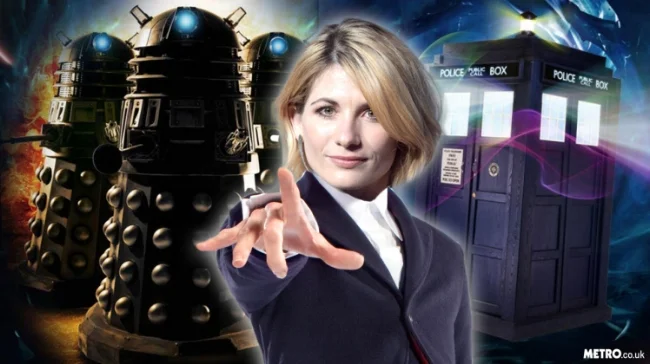
This afternoon, the BBC announced that Jodie Whittaker would be the thirteenth incarnation of the Time Lord, Doctor Who; the first woman to be given the role. Quite predictably, the internet went into meltdown, with cheers from some quarters and howls of derision from others. I make no bones about the fact that I got a great deal of Schadenfreude from this. Why exactly? Well we’ll come back to that point a little later. First off let me say that I really don’t mind about this casting decision. From what I’ve seen, Jodie Whittaker is an extremely competent actor and if given robust and engaging material, will excel as the new Doctor. I have no axe to grind here, either from a lore or a socio-political perspective. If the shit fits, wear it, is what I say.
This afternoon, the BBC announced that Jodie Whittaker would be the thirteenth incarnation of the Time Lord, Doctor Who; the first woman to be given the role. Quite predictably, the internet went into meltdown, with cheers from some quarters and howls of derision from others. I make no bones about the fact that I got a great deal of Schadenfreude from this. Why exactly? Well we’ll come back to that point a little later. First off let me say that I really don’t mind about this casting decision. From what I’ve seen, Jodie Whittaker is an extremely competent actor and if given robust and engaging material, will excel as the new Doctor. I have no axe to grind here, either from a lore or a socio-political perspective. If the shit fits, wear it, is what I say.
What I do find fascinating are some of the objections raised on Twitter and on the comments section of most major online news outlets. As there’s a lot of ground to cover I’ll try and keep it brief. Everyone, as ever, is entitled to their opinion but let us not forget that opinions are not of equal value. First off, if you object to the casting of Jodie Whittaker out of personal preference, IE there’s another actor you’d have rather seen play the role, then fine. That’s a perfectly okay stance to have. I got a Sainbury’s delivery the other day and they substituted toffee and vanilla ice cream cones with chocolate and nut ones. I prefer the former to the latter. Life is all about preferences of some kind, is it not?
However, there are objections being made which betray a mindset that there are clear gender roles within both fiction and real life and that a woman cannot be “The Doctor”. There are also certain fans who feel that the object of their affections should have some sort of protected status, define specifically by them. If they don’t like something, their fan status should be able to veto the offending decision. It is also not uncommon these days to see push back towards any sort of progressive socio-political decision. Culturally and politically, the west seems to be regressing with regard to social change. And let us not forget that incredulous notion, that a much loved worked of fiction can be “ruined” and that your fond memories can be sullied in some way. I guess this is some variant of the IPCRESS process.
All the above are frankly spurious objections. Some are born of sexism, some of fans intransigence or of outdated cultural conditioning and ideological baggage. Some protest are puerile, others mendacious and sadly a percentage are driven by pure hatred of any sort of social progression. What is important to bear in mind at present, is in the UK specifically, there is no clear majority mindset or consensus on political or social issues. We live in a very divided country and there is no prevailing moral stance. Recent political “surprises” such as Brexit have emboldened certain groups, who previously have kept their specific views hidden. Hence, we see claims that casting a woman is pandering to minority, despite the fact that women are hardly such a demographic. Yet sufficient people feel this way and are happy to express such an opinion.
I have no doubt that be it through personal preference, deep help beliefs or good old-fashioned prejudice, the next season of Doctor Who may well see some old school viewers refrain from watching. However, it is also very likely that this Doctor will also attract a new audience. And before we get into a debate about gender specific role models, can I put forward the rather quaint notion that a role model can potentially appeal to all, irrespective of gender, race, religion and shoe size. Yet despite the ongoing positivity in some quarters and the scope to broaden the viewer base for Doctor Who, it would be foolish to ignore certain practical business criteria. The BBC is a unique organisation but it is not immune from market forces. If for whatever reason they fumble the ball on the next season of Doctor Who and we see a substantial drop in global viewing figures and more importantly, sales, then this casting decision may well be reviewed. We do not yet live in an age where doing the right thing exclusively trumps business.
Finally, I want to return to my early point about Schadenfreude. Fellow blogger Syp (AKA Justin Olivetti) and all round nice guy tweeted this evening “It's like some people are genuinely excited that the new Doctor Who will upset others. Can't just be happy for what it is? I am”. I understand where this sentiment comes from and in principle, it is sound. Sadly, I do not think it is so easy to apply to many situations these days. This entire debacle over the thirteenth Doctor is in many ways a microcosm of the ongoing socio-political culture war. There is no overall prevailing ideology for change at present and politics is extremely sectarian. A percentage of the public have no appetite for further equality and would frankly like to see much of the progress of the recent decades rolled back. I do not wish to see this worldview fill the political vacuum. Sometimes you cannot steer the middle course and have to choose a side. You also have to robustly refute those views you feel are counterproductive. That at times means mocking and using humour, as it an effective political tool.
In the meantime, I shall await with a degree of excitement for the new season of Doctor Who that comes in 2018. I’m sure that the there’s a good chance that the current brouhaha will die down and if a good writing standard are maintained, the thirteenth Doctor will find her audience and keep the franchise popular and on course. Success in this instance would be the best way to counter future arguments along similar lines. Life is essentially about change and we need as a species to get better at dealing with it. Because the rancour that stems from resisting it, is frankly damaging to society.
Who Will be the Next Doctor?
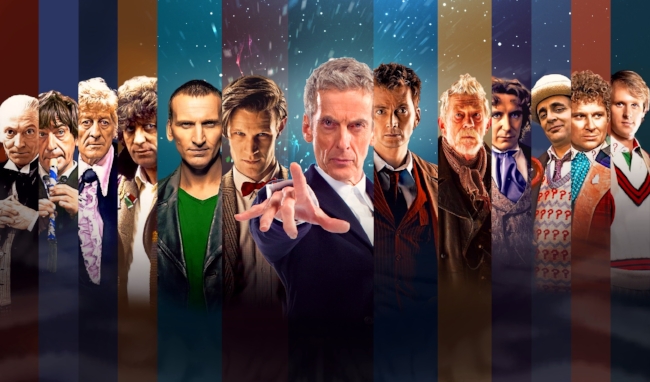
Idle speculation is a national pastime in the UK. Be it about the gender of the next royal baby or who’ll be managing some ailing football club, we’ll happily spend an inordinate amount of time and energy pondering such matters. Is such conjecture based on factually accurate data and a knowledgeable insight of the matter in hand? Unfortunately, not. The only requirements necessary to express an opinion are a rudimentary grasp of the English language, access to a web enabled device and a pulse. The latest matter to arise that offers the public an opportunity to indulge in some fevered speculation, is the news that Peter Capaldi will be quitting the role of Doctor Who at the end of the year. Therefore, who exactly would be the thirteenth incarnation of the Doctor.
Idle speculation is a national pastime in the UK. Be it about the gender of the next royal baby or who’ll be managing some ailing football club, we’ll happily spend an inordinate amount of time and energy pondering such matters. Is such conjecture based on factually accurate data and a knowledgeable insight of the matter in hand? Unfortunately, not. The only requirements necessary to express an opinion are a rudimentary grasp of the English language, access to a web enabled device and a pulse. The latest matter to arise that offers the public an opportunity to indulge in some fevered speculation, is the news that Peter Capaldi will be quitting the role of Doctor Who at the end of the year. Therefore, who exactly would be the thirteenth incarnation of the Doctor.
Now in the past, the pundits and those who work in the industry have favoured rather obvious, existing "stars". This was the case when David Tennant left the show. Such names as James Nesbitt, Catherine Tate, Catherine Zeta Jones and even David Walliams where bandied about. Then the BBC completely wrong footed everyone by casting Mr. Smith. This time round the press are considering a mixture of mainstream contenders as well as a few more obscure and outlandish candidates. So far, the following names seem to come up. Ben Whishaw, Richard Ayoade, David Harewood, Olivia Colman, Maxine Peake, Rory Kinnear, Sacha Dhawan, Emma Watson, Hayley Atwell, Tim Roth, Colin Morgan.
"Well you die and she leaves me and marries Richard Dawkins"
Now many may think that the debate regarding the next Doctor, is nothing more than a discussion about pop culture. It may even be labelled trivial by some. However, I think it also reveals a lot more about society and indicates wider views held by parts of the population. Because some people still find the idea of the Doctor being a woman or non-white unpalatable. It was something that first emerged in 2013 prior to Peter Capaldi getting the role. Similar objections have also surfaced in recent years when speculating about the next James Bond. Because of the current political climate, people are less reticent about expressing such views. Furthermore, such opinions may indicate that not everyone believes in such “shared values” as equality. Perhaps it is time to consider that societal norms are far more fluid.
Now there may well be individuals who object to such things purely for reasons of racism or misogyny. I don’t see the point of dwelling upon the like, because prejudice of this nature is simply irrational and illogical. Call it such and move on. However, I don’t think that all such objections are driven by bigotry. There are other factors in play here. Namely, fan’s misplaced sense of ownership. Fans tend to invest in a franchise, product or concept to the point where they feel that their boundless love gives them a degree of collective involvement or even ownership. This point can be argued philosophically until one is blue in the mouth but the reality of the situation is driven be the law. Fans despite what they may feel, are passive observers and financial donors and nothing more.
"It wasn't my fault, blame John Nathan-Turner"
Doctor Who, like any other intellectual property, belongs to a specific owner. In this case, it is the BBC. Therefore, it is very much their bat and ball to use an old phrase. They hire specific writers who are then given relative creative freedom to develop the character of the Doctor. The process is not driven by the will of the fan base. The self-appointed label of “fan” doesn’t give you any additional status or rights over than that of a casual viewer. If a show such as Doctor Who pursues a narrative direction that some fans do not like or cast an actor that a percentage object to, then it is simply a matter of differing opinions between creator and consumer. To frame such objections in any other way is spurious. Therefore, if don’t like the next actor to play the Doctor and feel that you’ve suffered a personal slight or grievance as a result, may I refer you to the wise words of Marcus Aurelius. “Reject your sense of injury and the injury itself disappears”.
The great thing about Doctor Who is that it's Science fiction. The very nature of the genre affords it a far greater degree of artistic freedom. Effectively, if the show ever paints itself into a corner, they can via the means of some clever pseudo-science, easily produce a get out of jail card and be back on track in no time. Therefore, issues such as race and gender can easily be explained, explored and accommodated by the lore, if there is the political will to do so by the show’s producers. Let us not forget that the biggest issues here are not complex social and philosophical ones but the simple fact that people often struggle with change. Yet it was change that saved Doctor Who to begin with and gave us single episode story-lines, less running up and down corridors and a sexier Doctor himself. The show simply had to evolve to remain relevant.
So, while this matter is being hotly debated, I see no reason why Contains Moderate Peril shouldn't contribute to the speculation and offer some of our own well-conceived suggestions. All our recommended actors have the potential to bring something unique and special to the role. I wonder what odds William Hill are giving?
- Grace Jones. This would see a return to a more eccentric.
- Jason Isaacs. Cool, suave, sexy etc.
- Meera Syal. A fine actress and a funny lady. I’m certain she’d bring something of note to the role.
- Susan Calman. She has already put herself forward on twitter with the caveat that Tom Hardy is her companion.
- Michael Ironside. Because he would just be bat-shit crazy and make the Daleks soil themselves.