Gerry Anderson: A Life Uncharted (2022)
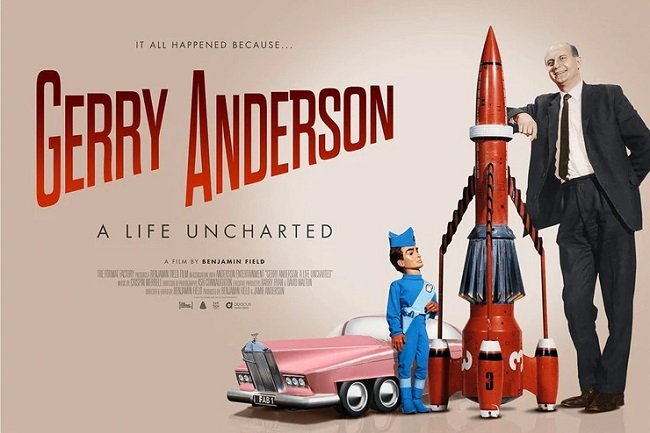
Gerry Anderson: A Life Uncharted is a documentary that focuses specifically on the man, rather than the shows that he created. If you are more interested in the latter then you would be better off watching Filmed in Supermarionation (2014), which provides a comprehensive overview of all productions, wrapped in a cosy blanket of nostalgia and fandom. Gerry Anderson: A Life Uncharted offers a more challenging viewing experience due to its honesty and candour. Gerry Anderson had a difficult childhood and suffered a bereavement early in life. During the course of this 88 minute exploration of his life it becomes clear that these traumas both drove his creativity as well as marred his own personal life. Furthermore, this documentary is also about a son looking for answers, as Jamie Anderson attempts to learn more about his father’s past.
Gerry Anderson: A Life Uncharted is a documentary that focuses specifically on the man, rather than the shows that he created. If you are more interested in the latter then you would be better off watching Filmed in Supermarionation (2014), which provides a comprehensive overview of all productions, wrapped in a cosy blanket of nostalgia and fandom. Gerry Anderson: A Life Uncharted offers a more challenging viewing experience due to its honesty and candour. Gerry Anderson had a difficult childhood and suffered a bereavement early in life. During the course of this 88 minute exploration of his life it becomes clear that these traumas both drove his creativity as well as marred his own personal life. Furthermore, this documentary is also about a son looking for answers, as Jamie Anderson attempts to learn more about his father’s past.
Gerry Anderson was born Gerald Alexander Abrahams in 1929. His secular Mother Deborah was frequently at odds with her Jewish husband Joseph and hence Gerry’s most formative years were blighted by the acrimonious and dysfunctional marriage of his parents. He was also subject to antisemitic abuse during his early school days which eventually led to his mother changing his surname by deed poll. Gerry idolised his older brother Lionel and always felt in his shadow. When Lionel died in a plane crash during World war II, Gerry was devastated. Needless to say these emotional issues both motivated and plagued him throughout his life. Gerry strove to escape the poverty of his youth and be successful. His scripts often featured strong father figures and absent mothers. His workaholic nature meant he often became estranged from his own family. He also struggled to maintain friendships beyond business.
Gerry Anderson: A Life Uncharted offers a broad spectrum of views and opinions. There is both old and new archive footage of Gerry talking quite candidly about his relationship with his parents, his failings as a parent and the deterioration of his marriage to Sylvia. It doesn’t always make for comfortable viewing but it is very credible and human. Contrary views are also aired from those who worked with him such as Roberta Leigh and three of his four children contribute in an equally candid fashion. From Gerry’s perspective, despite all his hard work he never seemed to reconcile himself to his success. He also felt that Sylvia over-stated her contribution to the success of AP Films and Century 21 and it is clear that he felt taken advantage of. Despite becoming successful and then subsequently losing it all, he eventually found happiness and stability with his third marriage to Mary Robbins.
A key part of Gerry Anderson: A Life Uncharted is its focus on Gerry’s struggle with dementia during the last few years of his life. It is a very personal account recounted from the perspective of son Jamie and mother and wife Mary. It will resonate with anyone who has first hand experience of a loved one succumbing to this condition and many of the anecdotes recounted will have a familiar ring to them. Yet despite the difficulty of dealing with such a debilitating illness, it is fascinating how Gerry managed to use his fame to raise public awareness, as well as £1 million for the Alzheimer's Society in a year. Tragically, when he finally passed away on Boxing Day 2012, Gerry had no memory of his life work or its popularity.
Gerry Anderson: A Life Uncharted takes a gamble by using deep fake technology in order to bring Gerry Anderson back to the screen, thus making the audio interviews more accessible. What viewers are presented with are a series of black and white scenes of Gerry sitting on a sofa talking to an interviewer off camera. The documentary clearly states its use before it begins and its inclusion does not in any way invalidate the authenticity or relevance of the actual audio interviews. Overall, if you wish to understand what drove Gerry Anderson to be so creative and successful, then Gerry Anderson: A Life Uncharted offers some insight. It also clearly shows the human cost as well. Fans who idolise their heroes may be uncomfortable with Gerry’s open admission of his own personal failings. Those with a capacity to separate their feelings of fandom from their curiosity will be rewarded with an engaging and somewhat melancholic documentary. Just bear in mind that some facts presented remain disputed and that this is documentary is weighted towards Gerry Anderson’s perspective.


General Rock Renton and the Moon Rangers
I am a big fan of the detective drama Endeavour, considering it to be one of the best UK shows currently in production. It has well rounded, interesting characters and their journey through the sixties affords the writer, Russell Lewis, plenty of opportunity to explore the political and social issues of the time. Lewis further embellishes the scripts with numerous period and contemporary pop culture references, all of which add to the shows charm and appeal. Tonight’s episode “Apollo” set against the historical moon landings of Apollo 11, saw Morse and Thursday investigating the death of a promising young astrophysicist and his girlfriend. Initially thought to be a car accident, it becomes clear that there is foul play. As ever the plot was complex and established story arcs were moved forward. Shaun Evans also made his directorial debut with this episode.
General Rock Renton and the Moon Rangers.
I am a big fan of the detective drama Endeavour, considering it to be one of the best UK shows currently in production. It has well rounded, interesting characters and their journey through the sixties affords the writer, Russell Lewis, plenty of opportunity to explore the political and social issues of the time. Lewis further embellishes the scripts with numerous period and contemporary pop culture references, all of which add to the shows charm and appeal. Tonight’s episode “Apollo” set against the historical moon landings of Apollo 11, saw Morse and Thursday investigating the death of a promising young astrophysicist and his girlfriend. Initially thought to be a car accident, it becomes clear that there is foul play. As ever the plot was complex and established story arcs were moved forward. Shaun Evans also made his directorial debut with this episode.
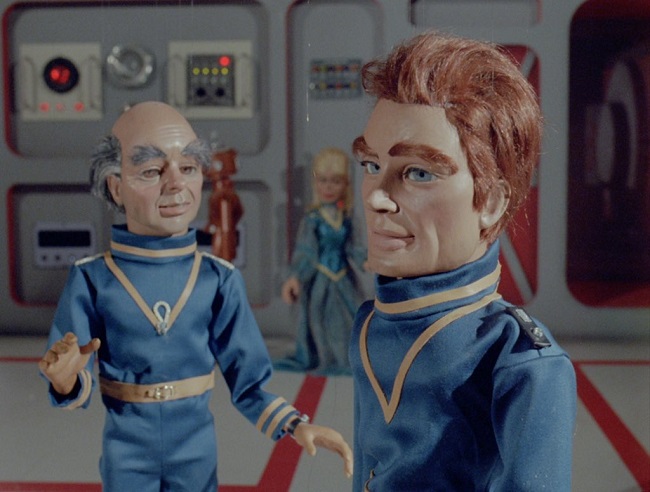
What made “Apollo” especially enjoyable for me, was the story featuring a pair of television producers who bore more than a passing resemblance to Gerry and Sylvia Anderson of Thunderbirds fame. Jeff and Hildegard Slayton (Matthew Cottle and Mary Stockley) ran a studio producing puppet shows very much in the “Supermarionation” idiom. As the murder victim was a scientific advisor on their latest show, Moon Rangers, Morse and Thursday had reason to visit the production studios which were not to dissimilar to those of Century 21 Television at Slough. Hence viewers were treated to footage of the Slayton’s watching daily rushes of a model car crash, the miniature crew blowing up a rocket on a replica moon surface and the puppeteers on a gantry over a miniature set operating marionettes. All of which lovingly referenced the halcyon days of Stingray and Thunderbirds.
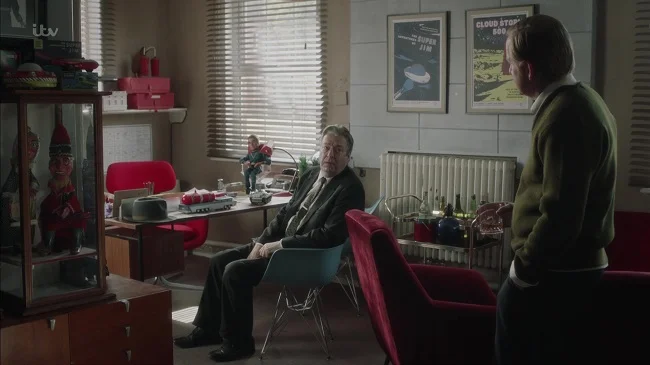
Note posters for faux shows “The Adventures of Super Jim” and “Cloud Stop 500”.
And how were such wonders so lovingly recreated? Via the talented folk over at Century 21 Films, the spiritual successor to the original Anderson production company. Having recreated several puppets for their 2014 documentary Filmed in Supermarionation, the team of talent staff subsequently formed a multi-faceted production company providing documentary services as well as miniature and other practical effects. In 2015 to celebrate the 50th anniversary of Thunderbirds, they produced three brand new episodes of the show using all the classic techniques. The series, produced in association with copyright holders ITV, was based upon three original 1960s voice recordings. With such talent available who else were Mammoth Screen, the producers of Endeavour, going contract to create the fictitious General Rock Renton and the Moon Rangers?
This possibly is the biggest and most complex, pop culture reference and homage to feature in Endeavour to date. However, I don’t see it as self-indulgent but an accurate portrayal of the public interest in science at the time. The real shows that the Anderson’s produced reflected and capitalised upon the optimistic attitude towards the space race. Therefore, having characters such as the Slaytons in Endeavour is a historically relevant. As for the Moon Rangers, for the casual viewer this was a nice period aside. For the Supermarionation aficionados, it was hog heaven. Miniatures, explosions, very familiar looking puppets and the voice talents of Justin Lee and the wonderful David Graham (Parker, Grandpa Pig and The Wise Old Elf). Even Century 21 Films director, Stephen La Rivière, got a cameo appearance as part of the puppet crew on the gantry. As a fan all I can really say is well done to all involved. You made one of my favourite shows, even better.
Gerry Anderson’s Firestorm
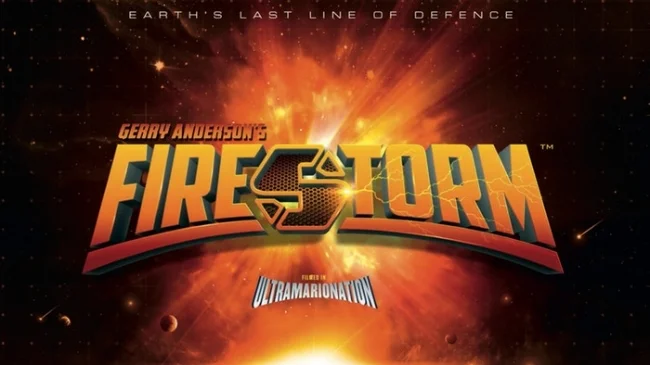
Firestorm originally started as a Japanese anime series co-created by Gerry Anderson and John Needham back in 2003. The show combined CGI animation for mecha and traditional cel animation for characters and the environment. Despite the quality of the production and an emphasis on the futuristic hardware that has always been a core tenet of Gerry Anderson productions, the anime version of Firestorm didn’t find an audience in Japan. The show subsequently failed to secure a wider release and so became a more obscure part of Anderson Canon. However, in 2014 Anderson Entertainment (under the auspices of Jamie Anderson, Gerry’s son) announced a crowdfunding campaign to produce a pilot episode for a new television series of Firestorm using practical film-making techniques including miniature effects and puppetry. It’s been a long road since then but today a debut “minisode” was shown at MCM Comic-Con London and simultaneously released on You Tube.
Firestorm originally started as a Japanese anime series co-created by Gerry Anderson and John Needham back in 2003. The show combined CGI animation for mecha and traditional cel animation for characters and the environment. Despite the quality of the production and an emphasis on the futuristic hardware that has always been a core tenet of Gerry Anderson productions, the anime version of Firestorm didn’t find an audience in Japan. The show subsequently failed to secure a wider release and so became a more obscure part of Anderson Canon. However, in 2014 Anderson Entertainment (under the auspices of Jamie Anderson, Gerry’s son) announced a crowdfunding campaign to produce a pilot episode for a new television series of Firestorm using practical film-making techniques including miniature effects and puppetry. It’s been a long road since then but today a debut “minisode” was shown at MCM Comic-Con London and simultaneously released on You Tube.
While making Firestorm, the production team returned Gerry Anderson’s original documents. The story is set in the year 2102 and follows the adventures of Firestorm, an elite international team comprising of Sam Scott, Nagisa Kisaragi and Drew McAllister. They battle ongoing acts of sabotage by the elusive Black Orchid organisations. The miniature effects crew includes film industry veterans Steve Begg, Bill Pearson and Mike Tucker (whose collective body of work include Bond films and Doctor Who). The puppets are produced by the company Mackinnon and Saunders. Firestorm is made in “Ultramarionation” (the spiritual successor to “Supermarionation”), which features rod operated and animatronic puppets, physical sets, and actual explosions. The debut “minisode” marks the first new Anderson production since 2005. If all goes to plan, there is the possibility of full series of 26 episodes of 22 minutes apiece, which will hopefully begin full production in 2019.
According to Jamie Anderson, Managing Director of Anderson Entertainment who will be producing the new series "We've updated the Firestorm concept my father created with the development of “Ultramarionation”, the next generation of production techniques to really bring the wow factor back to the small screen”. The short but succinct “minisode” certainly showcases all the major selling points of the new show. The puppetry is incredibly detailed, allowing the characters to walk, run and emote. The physical effects and miniatures are of the highest calibre. And most importantly of all, there is scope to give the characters interesting back stories and explore their lives. This was always the big selling point of previous Gerry Anderson productions, especially Thunderbirds. I hope that a suitable backer can be secured so we see a full and expanded series for this franchise. In the past Anderson productions have had a close business association with ITV, yet a show such a Firestorm would be a real catch for the likes of Netflix or Amazon Prime.
Classic TV Themes: Joe 90
You can write pages on Gerry Anderson's 1968 Supermarionation series Joe 90. There's the morally ambiguous premise of giving an emotionally immature nine-year-old the experiences of an adult. Then the psychological effects of allowing him to kill at will. Then there's the perennial issue of scientists prostituting their skills to the intelligence community. One can also reflect upon the absence of any major female characters in the series and how that may impact upon Joe himself. Finally, when one finally arrives she's a gold-digging bitch who tries to exploit Joe’s Dad, Professor McClaine. Joe 90 is certainly a psychiatrist’s dream subject.
You can write pages on Gerry Anderson's 1968 Supermarionation series Joe 90. There's the morally ambiguous premise of giving an emotionally immature nine-year-old the experiences of an adult. Then the psychological effects of allowing him to kill at will. Then there's the perennial issue of scientists prostituting their skills to the intelligence community. One can also reflect upon the absence of any major female characters in the series and how that may impact upon Joe himself. Finally, when one finally arrives she's a gold-digging bitch who tries to exploit Joe's Dad, Professor McClaine. Joe 90 is certainly a psychiatrist’s dream subject.
However, we won't dignify such pseudo-intellectual analysis here. Joe 90 simply has to be taken in context and viewed on its simple premise that every nine-year-old boy (at the time) wanted to be James Bond. If we apply modern sensibilities to everything made prior to 2000, then we’ll end up writing off everything. However, the most important aspect of Joe 90, that made the show so good was the get down funky theme tune, written by the immensely talented composer Barry Gray. Gerry Anderson wrote in his biography that the Joe 90 theme was a "dizzying piece of psychedelic pop art that could have been produced only in the late Sixties". A statement I whole heartedly concur with.
Curiously, when the series was syndicated internationally, changes were sometimes made. This was most noticeable for the Japanese release, where the catchy original title theme was completely replaced with a language specific song for that market. Now Japanese theme songs and pop music from the sixties is an entire sub-genre of its own, and I will not attempt explore this particular niche here. I will simply present you with both versions of the theme for your edification and entertainment. Feel free to comment.
1.) This is the original TV theme tune and not the commercial re-recording that was subsequently released as a single. This version includes the sound effects for the "BIG RAT" computer that gave Joe his special abilities.
2.) This is the Japanese theme song. If anyone can translate the lyrics, I would be very interested. It's not exactly Barry Gray, but it's kind of groovy in its own right.





Classic Movie Themes: Thunderbird 6
Despite the popularity of the TV show in 1965, the two spinoff Thunderbirds feature films were both box offices failures. This has often been attributed to the indifferently written screenplays that seem to have completely missed the sense of suspense that the fifty-minute episodes achieved. Both feature films feel rather slow and like extended episodes rather than big budget extravaganzas. They fail to do anything different with established characters and apart from showcasing more extensive miniature effects in a widescreen format, don’t really have much more to offer. It’s curious that the winning, character driven formula that worked on television was overlooked for these big screen outings.
Despite the popularity of the TV show in 1965, the two spinoff Thunderbirds feature films were both box offices failures. This has often been attributed to the indifferently written screenplays that seem to have completely missed the sense of suspense that the fifty-minute episodes achieved. Both feature films feel rather slow and like extended episodes rather than big budget extravaganzas. They fail to do anything different with established characters and apart from showcasing more extensive miniature effects in a widescreen format, don’t really have much more to offer. It’s curious that the winning, character driven formula that worked on television was overlooked for these big screen outings.
However, there is one aspect of both film productions that is flawless. Composer Barry Gray’s musical scores. Thunderbird 6 was his favourite of the two, as it afforded him a wider range of musical themes with its globetrotting storyline. Through the use of a 56-piece orchestra he successfully managed to vary many of the classic Thunderbird themes, using them as motifs to reflect either impending danger or regional locations. All of this is done with a generous helping of typically 1960s lounge jazz. The various locations visited throughout the film also provide local ethnic idioms to further embellish the score. As usual there are humorous pastiches to underpin comic moments by Parker or Brains, all of which are interpreted in Barry Gray’s very literal musical style.
It's all very well crafted and ingeniously orchestrated as you would expect from a master composer at the peak of his career. It may lack some of the more urgent style of the TV series, but this is down to the somewhat ponderous narrative that drive the score. Below are two musical cues that are my personal favourites. The first is the main opening theme from Thunderbird 6. It is not the traditional tune associated with the series, but a bespoke track designed to capture the spirit of international travel which was still considered “glamourous” at the time.
The next track was written for when Skyship 1 travels over the Grand Canyon. It is designed to reflect the beauty and awe of this geographical feature. It then segues into a more mysterious piece as the villains’ plot against International Rescue. The cue again embodies the class and flamboyance of Barry Gray’s talent.
Filmed in Supermarionation (2014)
Trying to encapsulate any artists body of work is a difficult enough task in itself. To then attempt to distil all associated anecdotes, vignettes and legends, while dispensing with the apocrypha, complicates matters further. Yet that's exactly what film maker Stephen La Rivière has done. The documentary Filmed in Supermarionation, is possibly the definitive history of the work of Gerry Anderson from 1957 to 1968. This insightful, meticulously researched exploration charts the rise of AP Films from its humble beginnings, to the halcyon days of Thunderbirds and the studios transition to Century 21 Productions. It also sheds some light into how things rather rapidly came to an end in the late sixties..
Trying to encapsulate any artists body of work is a difficult enough task in itself. To then attempt to distil all associated anecdotes, vignettes and legends, while dispensing with the apocrypha, complicates matters further. Yet that's exactly what film maker Stephen La Rivière has done. The documentary Filmed in Supermarionation, is possibly the definitive history of the work of Gerry Anderson from 1957 to 1968. This insightful, meticulously researched exploration charts the rise of AP Films from its humble beginnings, to the halcyon days of Thunderbirds and the studios transition to Century 21 Productions. It also sheds some light into how things rather rapidly came to an end in the late sixties.
Because Gerry Anderson is such an iconic figure in the world of popular culture there have been many attempts to delineate his career. Rather than simply retread familiar ground, Stephen La Rivière focuses upon the production crew and tells the story from their perspective. Over the course of two hours viewers are treated to an extremely interesting reunion of writers, directors, voice artists and puppeteers as they revists the Slough industrial unit that was once the home of AP Films. The interviews and various talking heads are linked by some wonder new material featuring Lady Penelope and Parker (lovingly voiced by the original artists Sylvia Anderson and David Graham). There is also extensive archive interviews with the late Gerry Anderson himself.
It is fascinating to consider that although making puppet shows for children was the farthest thing from Gerry's mind, when he formed a production company in 1957, it was still undertaken with great professionalism. Filmed in Supermaionation shows that the early shows, filmed at Islet Park in Maidenhead, were made on a wing and a prayer. Yet it was the team spirit and camaraderie that kept the business on track. By the time that Lew Grade became involved with the financing and the team had moved to Ipswich Road studios on the Slough Trading Estate, the entire production process had become a finely tuned machine. Yet the success and popularity of shows such as Fireball XL5 and Stingray did not seem to register with many of the cast and crew. It was still just an enjoyable, paying gig to them.
It is this quality that makes Filmed in Supermarionation so absorbing. There's a wealth of personal stories told from the voice artists perspective, such as Nicholas Parsons (Tex Tucker in Four Feather Falls), Shane Rimmer (Scott Tracy), Elizabeth Morgan (Destiny Angels) Matt Zimmerman (Alan Tracy) and even Robert Easton(Phones). The effects, art and directing departments are also well represented by Brian Johnson, Alan Pattillo, Desmond Saunders ( a total character), Alan Perry and Mike Trim. They also share some of their behind the scenes secrets and recreate some of the effects work for the viewers edification. The documentary also acknowledges the importance of Sylvia Andersons contributions to the studio output and pivotal role she played. It acknowledges the impact that breakdown of the Anderson's marriage had upon the business but it does not take sides or dish any dirt.
Sometimes films of this nature can be a little myopic when it comes to exploring some of the negative aspects of the matter in hand. This is not the case with Filmed in Supermaionation which tackles why the two Thunderbirds feature films failed at the box office. In fact some of the conjecture is very interesting and the simple fact that movie spinoffs were simply not "a thing" back then sounds very plausible in its simplicity. The fact that the final Supermarionation show, The Secret Service may have fallen victim to changing tastes and a studio over reaching itself is also honestly addressed. The closing anecdotes about Gerry Anderson taking up a suite of offices at Pinewood and the Slough studios being cleared and all contents destroyed is very poignant.
To effectively and efficiently tell a tale such as this, a film maker has to be realistic about what is and isn't covered. The two hour running time does not out stay it's welcome but director Stephen La Rivière has stated that about forty minutes of additional material had to excised from the documentary to accommodate a practical running time. The invaluable contribution that both Barry Gray and Derek Meddings made to the world of Supermarionation is unequivocally referenced. It's a shame that more time was not devoted to them but you just “can't get a quart in a pint pot”. As the documentary is exclusively about Gerry Anderson's Supermarionation shows, UFO, Space:1999, Terrahawks and Space Precinct are not referenced. The documentary focuses, quite rightly, on Thunderbirds which remains the jewel in the Anderson's crown.
Filmed in Supermarionation is subtle blend of a fan’s love for the object of their affection, as well as being a thorough critique of one of the UK's greatest technical innovators and consummate storytellers. Those who worked with the Andersons are still slightly bemused by the sheer impact their work had upon subsequent generations. Yet the documentary succinctly highlights all the reasons why these shows have remained so enduring. Perhaps the most important one is the sheer love that was poured into these productions by all involved. David Graham's closing ode to Parker regarding the impact the character had upon his life was very touching. I think it reflects the way the public continues to feel about Gerry Anderson’s unique and much loved body of work.
New Captain Scarlet (2005-6)
I’m not usually a big fan of “re-boots” and “re-imaginings” of classic material. There have been some successful examples in recent years, such as the Bond franchise and Doctor Who but many others have failed. Jonathan Frakes 2004 feature film Thunderbirds was the epitome of this. It total misjudged the target audience, completely failed to grasp the key aspects that made the original series so appealing and excluded the man himself, Gerry Anderson, from any involvement. It also failed to make use of any of Barry Grays sublime back catalogue of music, apart from the main theme. Conversely, the 2015 TV show Thunderbirds Are Go, managed to not only provide a suitable homage to the original show but successfully update the concept for a contemporary audience.
I’m not usually a big fan of “re-boots” and “re-imaginings” of classic material. There have been some successful examples in recent years, such as the Bond franchise and Doctor Who but many others have failed. Jonathan Frakes 2004 feature film Thunderbirds was the epitome of this. It total misjudged the target audience, completely failed to grasp the key aspects that made the original series so appealing and excluded the man himself, Gerry Anderson, from any involvement. It also failed to make use of any of Barry Grays sublime back catalogue of music, apart from the main theme. Conversely, the 2015 TV show Thunderbirds Are Go, managed to not only provide a suitable homage to the original show but successfully update the concept for a contemporary audience.
Yet Thunderbirds Are Go was not the first of Gerry Anderson’s shows to be remade. Anderson himself created New Captain Scarlet in 2005; a computer animated reworking of his original show Captain Scarlet and the Mysterons. Sadly, due to a catalogue of problems that occurred with the shows distribution, New Captain Scarlet is often overlooked. Twenty-six episodes where made in total and New Captain Scarlet premiered on ITV's children show The Ministry of Mayhem in February 2006. Despite Anderson's long business association with ITV, the programs were not treated with any semblance of respect. They were cut for violence (something Anderson has never shied away from) and each episode was split into three, seven minute segments, to be broadcast during The Ministry of Mayhem three hour running time. The end credits were also conspicuous by their absence. The viewers were not engaged and the critics simply passed on by.
Subsequently the series did not really get the attention or praise it deserved. I recently caught up with the seasons 1 & 2 on DVD and saw them as they were intended to be seen. The results are very good. The series holds true to the 1967 original. All the main members of Spectrum are present, although some such as Lieutenant Green have changed gender. Characters are expanded and their backstories are often quite adult. There are complex love triangles, moral dilemmas and as stated earlier, a surprising amount of violence. The stories are often morally ambiguous and do not always have a happy resolution. Each episode manages to cover a lot of ground in their twenty-five-minute running time. The iconic hardware from the original show has been updated obviously with an eye to the toy franchise. For example, the Spectrum Pursuit Vehicle has now become the Rhino.
My opinions on TV based computer animation are mainly based on the 1999 animated series Roughnecks:Starship Trooper Chronicles. That was a fine show for the times with very good graphics from Foundation Studios. Similarly, New Captain Scarlet, produced by British animators Indestructible Production Company, is also outstanding by the standards of the 2005. The main characters move fluidly due to the use of motion capture and are well rendered with a high level of detail. The action sequences are surprisingly good with a focus on hand to hand combat. Because of the current genre tastes, there is a propensity for the men to be somewhat buff and the female characters tend to be voluptuous. Terrain and lighting are also surprisingly detailed. As ever it is hair that is the major weakness. However, it is not obtrusive enough to spoil the proceedings.
There are a few negatives aspects to the show though. The contemporary soundtrack by Crispin Merrell is adequate but not in the league of the original iconic music by Barry Grey. This reduces the creepy ambience that made the 1967 series such a pleasure. There is also a lot more concessions made to the international market. As a result, there is a slight loss of “Britishness” from the proceedings. But these do not in any way out weight the positive aspects of New Captain Scarlet. All things considered, this is a very enjoyable production that maintains the style and substance of all Gerry Anderson's work. As with the original show the storylines are often a lot more adult than expected and there is a pleasingly dark tone to the narrative. At present New Captain Scarlet is only available on DVD, however the original masters for the show have recently been reclaimed and so fans remain hopeful of a full HD release on Blu-ray in the future.
The Secret Service (1968)
The Secret Service is somewhat of an enigma, being the last Supermarionation show that Gerry Anderson produced. It was poorly received not only by critics but also by its own financier, Sir Lew Grade and was therefore given a limited broadcast upon its initial release. However, it marked the end of an era for Century 21 productions as they turned their creative attentions to film and live action TV after a decade of puppets shows. Subsequently, The Secret Service fell into obscurity over the following years and never gained the same degree of attention from the public, as previous Supermarionation shows had.
The Secret Service is somewhat of an enigma, being the last Supermarionation show that Gerry Anderson produced. It was poorly received not only by critics but also by its own financier, Sir Lew Grade and was therefore given a limited broadcast upon its initial release. However, it marked the end of an era for Century 21 productions as they turned their creative attentions to film and live action TV after a decade of puppets shows. Subsequently, The Secret Service fell into obscurity over the following years and never gained the same degree of attention from the public, as previous Supermarionation shows had.
Having recently caught up with the entire series and being a consummate Gerry Anderson fan, it is hard for me to be excessively critical of the show. I have a lot of love for his earlier work, especially Thunderbirds and Captain Scarlet. The Secret Service has many of the aspect that made previous shows enjoyable and unique. There are quirky and amusing characters, a rich and detailed production design and superb miniature effects by the legendary Derek Meddings. Once again, the score and ambient sounds created by Barry Gray play an integral role in the show. Yet even I must admit that two major flaws standout and validate why this final series was Anderson’s weakest.
Firstly, from Four Feathers Fall to Joe 90, there had always been an element of substituting human footage for material that puppets could not do. This was usually limited to shots of hands. However in The Secret Service this technique was greatly expanded upon. There are long shots of characters walking into building, along with footage of them driving vehicles down country lanes. The central character Reverend Stanley Unwin, is directly modelled on its voice actor Stanley Unwin. Furthermore, live footage of the said actor is frequently intercut into each episode. Although it can be argued that this innovative approach covered some of the puppets technical deficiencies, it also breaks the shows immersion. Is this a puppet or live action drama?
Secondly, Stanley Unwin himself was a comedian who became well known for his use of “Unwinese”, a faux comic language of his own creation. It was an odd choice to cast such an actor with a uniquely English comic trait, namely our love of linguistic humour and word play, into a television show destined for international distribution. Gerry Anderson’s argument was that Stanley Unwin’s occasional lapse into this verbal slapstick was to purposely confound all viewers. However, I think that rather than amuse the viewers it simply perplexed them. It was sufficient for Sir Lew Grade to lose confidence in the production and pull the plug.
If like me you have been raised on Gerry Anderson’s back catalogue, The Secret Service, despite its shortcomings, is still engaging and quality entertainment. It is yet another example of Century 21 Productions refining their process. However, for the more casual viewer, who is broadly familiar with Thunderbirds, this may be a little too niche market and obscure. The show also seems to have a somewhat nebulous view on Christian denominations. Stanley Unwin seems to frequently alternate between the Anglican and Roman Catholic faiths. Therefore, I can really only recommend The Secret Service to hardcore Anderson fans and those who are simply curious and forgiving.
Historically, the failure of The Secret Service although marking the end of Supermarionation ultimately led to Century 21 productions first live action TV series, UFO. A show that was a possibly five years ahead of its time. With regard to The Secret Service, after a consistently successful decade, the concept of the puppet series had run its natural course by the late sixities. One of Gerry Anderson’s great strength from this era was his capacity to experiment. The Secret Service shows us that not all experiment work, but even those which are deemed failures can still be or merit and quality.