
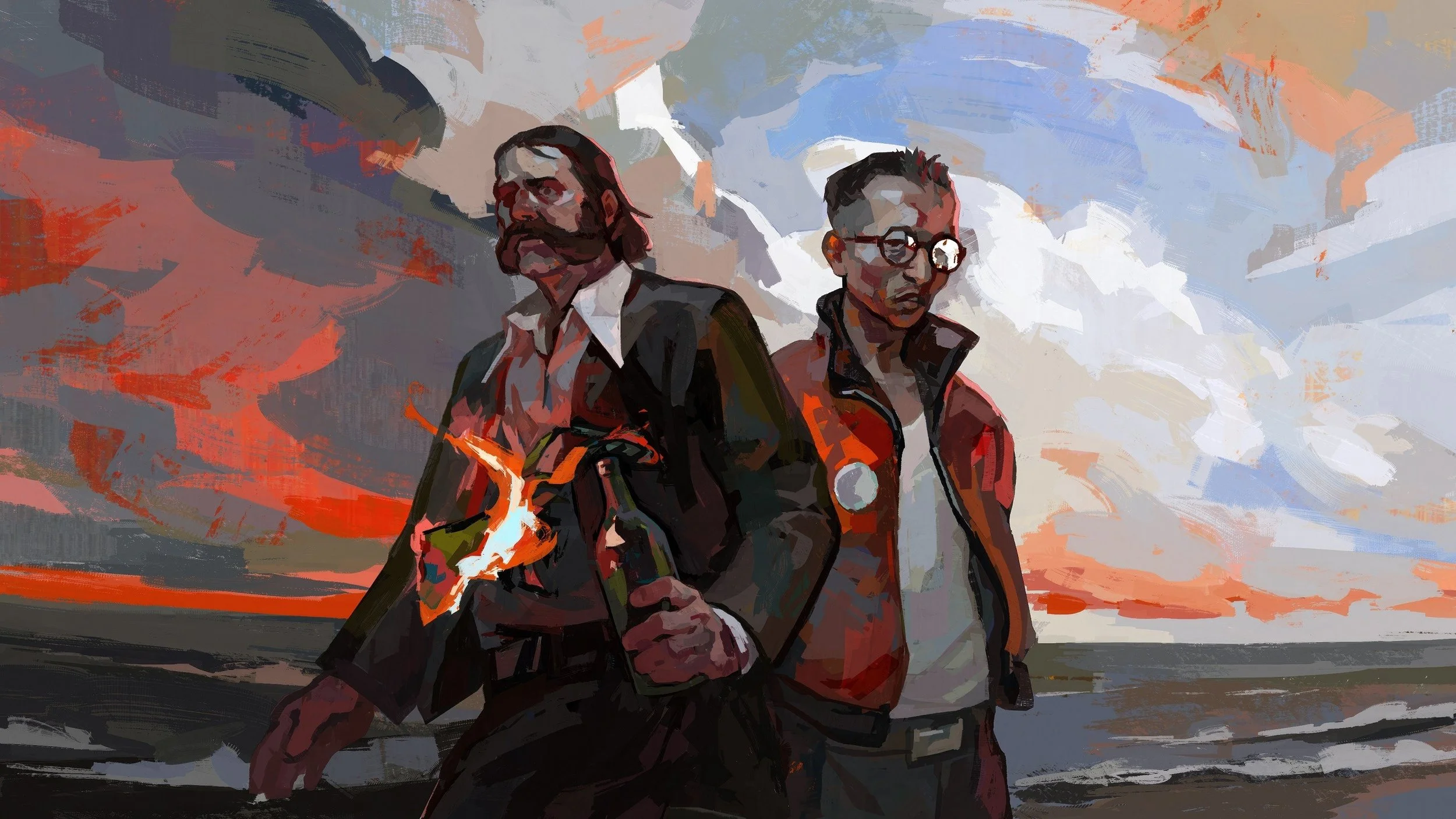
Disco Elysium: The Second Playthrough
I recently started playing through the RPG Disco Elysium for a second time. I did not complete the game last time I played in February and March but go about two thirds of the way through the story. As far as solving the central crime, I had established an accurate cause of death for the murder victim and broadly understood the events leading to their death. The main reason I did not complete the game was because I was playing on the Nintendo Switch and found it increasingly difficult to read the text on the small screen. The loading times were also excruciatingly slow. Playing the game while “docked” helped the former but not the latter issue. Hence I bought the PC version of Disco Elysium: The Final Cut for just £5 and started again from the beginning.
I recently started playing through the RPG Disco Elysium for a second time. I did not complete the game last time I played in February and March but go about two thirds of the way through the story. As far as solving the central crime, I had established an accurate cause of death for the murder victim and broadly understood the events leading to their death. The main reason I did not complete the game was because I was playing on the Nintendo Switch and found it increasingly difficult to read the text on the small screen. The loading times were also excruciatingly slow. Playing the game while “docked” helped the former but not the latter issue. Hence I bought the PC version of Disco Elysium: The Final Cut for just £5 and started again from the beginning.
The main reason I decided to play again is because I really want to reach the ending. I am invested in the unfolding story and empathetic towards the two main protagonists. I would like to see a positive conclusion to their investigation and their respective personal journeys although judging by the inherent tone of events so far, that may not be the case. I also appreciate the scope of the narrative and its intellectual depth. The game gives the player much to think about and I find that a rare quality these days. Disco Elysium: The Final Cut is also clearly not an American game and its European roots are writ large in its complex faux geo-politics, lore and racial dynamics. This is both a unique game and experience. One that I’m simply just not done with yet. I need to see it through.
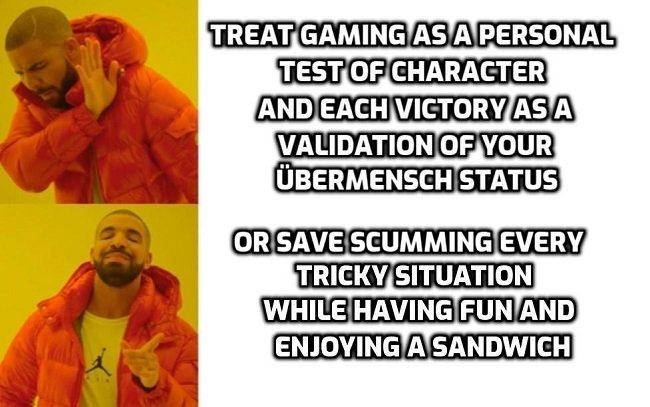
The main difference between this playthrough and the previous one, is that I have the benefit of hindsight. I know the sequence of events that I previously encountered and this time round I am seeking to pursue them in an optimal fashion. There is such breadth to the branching dialogue trees, that I don’t necessarily have to follow an identical path to last time. I have discovered much that is new to me, due to the game’s breadth. I am also judiciously “save scumming” and it has allowed me to uncover a lot more possible outcomes. This has helped no end with handling my interactions with various characters and afforded me a better perspective on their backstories. This second playthrough has allowed me to focus more on side quests. I don’t have to worry about earning rent as I know that on day 3 of the game, I can find alternative, free lodgings.
Playing on a PC, compared to my previous experience on the Switch, is also quite a revelation. I certainly appreciate the artstyle and design aspects of the game a lot more on a larger screen, at a higher resolution and with HDR. The game soundtrack by Sea Power is also striking, something I didn’t notice as much last time. However, the main benefit of this second play through is simply being able to read the dialogue text on screen, clearly and without impediment. The branching dialogue trees are key to this game and although Disco Elysium: The Final Cut is fully voice acted, it is important to be able to examine the text of what has been said and be able to digest it. There is a great deal of political, philosophical and theological content referenced throughout the game that is complex and requires consideration.
I am usually cautious about second playthroughs of games that I have found especially engaging. I have not replayed Skyrim, The Witcher III or Red Dead Redemption 2 as I wish to retain my first impressions of each respectively, as I feel they are all major gaming landmarks. Also because I invested a great deal of time into each and I would feel obliged to do the same again to attain a broadly comparable experience. On a practical level that isn’t viable. Because Disco Elysium is such a unique beast, I have returned to it to complete an experience, as opposed to revisiting a previous one. By finishing the game I believe I will have a better appreciation of it, as well as having the satisfaction of knowing what fate befalls Harry Du Bois and Kim Katsuragi. Two of the most well defined and intriguing characters in video games.








Disco Elysium
I’m a late convert to the church of Disco Elysium. Over 4 years late, although that can be a good thing in some respects. Pretty much everything that can be said about the game probably has been said already and I’ve missed it all. When purchasing the game, I knew there was a positive buzz around this RPG and it had something to do with its philosophical nature. Beyond that I wasn’t aware of the game's subtleties. I was just looking for something that I could play on my Nintendo Switch that wasn’t Mario. As Disco Elysium is a dialogue driven RPG, based upon choices rather than action, I thought buying the game on this platform was a good choice. So I started playing late on a Thursday night. 10 days later I am still utterly riveted, although this is one of the most emotionally gruelling gaming experiences of my life.
I’m a late convert to the church of Disco Elysium. Over 4 years late, although that can be a good thing in some respects. Pretty much everything that can be said about the game probably has been said already and I’ve missed it all. When purchasing the game, I knew there was a positive buzz around this RPG and it had something to do with its philosophical nature. Beyond that I wasn’t aware of the game's subtleties. I was just looking for something that I could play on my Nintendo Switch that wasn’t Mario. As Disco Elysium is a dialogue driven RPG, based upon choices rather than action, I thought buying the game on this platform was a good choice. So I started playing late on a Thursday night. 10 days later I am still utterly riveted, although this is one of the most emotionally gruelling gaming experiences of my life.
Disco Elysium is set in a coastal area of Martinaise, a dilapidated suburb of the city Revachol. The country is still in the process of healing from a communist revolution that transpired many years before the events of the game. However, the communist regime was deposed by a coalition of neighbouring capitalist countries and Revachol is now under “special administration” by the coalition. The player assumes the role of an emotionally broken detective suffering from alcohol induced amnesia, who is assigned to unravel a local murder. It becomes clear quickly that the case is politically complex and potentially career suicide. Throughout the investigation, the detective begins to regain memories of his own history, as well as confront various political, social and criminal influences that are associated with the case.
Most plot summaries of Disco Elysium fall woefully short of adequately explaining what actually unfolds within the games first few hours. Simply put, the game grabs your attention immediately, as your character slowly wakes from a drunken revelry and it refuses to let you go. The setting and the aesthetics all add to its compelling nature but it is the dialogue that seizes you by the throat and demands that you damn well apply yourself. It is difficult to describe to those who haven’t experienced it. It’s like you’ve awoken in a living neo noir movie. It has the visual style of David Lynch and you’re being aggressively interrogated simultaneously, by Albert Camus, Werner Herzog and Raymond Chandler. I can fully understand why some players will abandon the game within minutes of playing. Yet for some, the opening elicits a strong desire to fathom what the hell is going on. It is they who continue
Regular players of RPGs are au fait with branching narratives and multiple dialogue options. However, Disco Elysium does so much more with this game mechanic. Your character is advised, berated and tempted by multiple inner monologues which interject as a response to your dialogue choices with NPCs. These voices stem from the various 24 skills you have and their strength is dependent on the allocation of skills points you’ve made. If your character possesses elevated Drama skills you may excel in both identifying and constructing falsehoods; however, this proficiency could also render you susceptible to episodes of hysteria and paranoia. Similarly, a high level of Electrochemistry equips your character with immunity to the adverse effects of drugs and imparts valuable knowledge regarding them. Yet it may also result in substance abuse and other self-destructive, hedonistic behaviour.
Unlike traditional RPGs, Disco Elysium handles major in-game events and narrative decisions through skill checks, rather than combat. The amount of points you have in specific skills influences the outcome of such events but the game ultimately determines the outcome via the rolling of twin dice. Hence you can theoretically have a 68% chance of completing a skill check favourably but the RNG says “no” and you fail it. Skill checks are colour coded and white ones are repeatable but not all are. I experienced an interesting situation when talking to a witness and a skill check turned up in the list of dialogue responses. On this occasion I passed the skill check and discovered that the witness knew me. However, the game crashed and I had to repeat the scenario again. Second time round I failed the skill check and was presented with a totally different outcome.
Disco Elysium is a tale about a broken world. It explores the realities of poverty, the failings of multiple political ideologies and the emotional burden of having to endure all these iniquities in a world you cannot change. Many of the dialogue options offer the player the chance to cleave to a particular philosophical or political dogma. You can be a fascist, a liberal, or a communist if you see fit. Or you can try to navigate a path through the game without taking a side. If you choose the latter approach the game berates you. Eventually, to get things done, you will have to take some sort of moral or ethical stances. Just like in real life, your actions have consequences. If you try to play the game by taking what you feel is the optimal dialogue choice, the game will conspire against you. NPCs will be uncooperative and the story will get bogged down.
This can all be very daunting to players expecting a traditional RPG. Fortunately, Disco Elysium throws you a lifeline via your partner, Kim Kitsuragi, another detective who acts as a voice of professionalism and who offers advice or support in certain dialogue. He is a fascinating character, who like you feels the weight of the world that he lives in. However, he deals with it in a very different fashion. His monologues, which often occur after key plot points, are singularly thought provoking. It is details such as this that makes the game world so plausible. Yet there is a price for such credibility. Disco Elysium can be oppressive at times. It also has the capacity to make you genuinely sad. Some of the NPCs' backstories are very moving. Hence I find playing it in focused sessions of an hour to 90 minutes helps.
It is a truism that not all games are for everyone. That is very much the case with Disco Elysium. Gamers™ will probably chafe at the social and political content of the game. So who is the game aimed at? Anyone who likes games driven by stories, credible characters, and who isn’t averse to some introspection and learning. Disco Elysium is in many ways a form of therapy. A means of coming to terms with human frailty and finding hope in the most desperate of situations. Disco Elysium is a rare example of that much disputed concept, that some video games are art. It certainly argues the case for video games being a learning tool and it has much to teach. I am fascinated by its unique nature and feel compelled to play. It is certainly an anomaly. Don’t worry if you, like me, discover its virtues late in its lifecycle. I suspect that Disco Elysium will still be played and talked about a decade from now.