Fandom or Obsession?
In my youth, I took my fandom very seriously. I would brook no criticism of the various objects of my affection. I would robustly defend them in lengthy forum comments, filled with the sort of detail and lack of self awareness that only an ardent fan can bring to bear. Nowadays, it’s a different story altogether (insert Airplane gag here). I still enjoy Thunderbirds, Star Trek, The Lord of the Rings but I do not consider them unassailable, sacred cows. If other’s scorn them, that is their prerogative. Age not only brings you more keys and things that require charging, it also grants the realisation that it doesn’t matter what others think. Furthermore, reboots, reimaginings and revivals cannot harm your memories or “ruin your childhood”. Has Gus Van Sant’s ill conceived 1998 remake of Psycho harmed in any way Hitchcock’s classic original. Any answer other than “no” is at the least spurious and at worst naval gazing bullshit, served on a platter of hyperbole and attention seeking.
In my youth, I took my fandom very seriously. I would brook no criticism of the various objects of my affection. I would robustly defend them in lengthy forum comments, filled with the sort of detail and lack of self awareness that only an ardent fan can bring to bear. Nowadays, it’s a different story altogether (insert Airplane gag here). I still enjoy Thunderbirds, Star Trek, The Lord of the Rings but I do not consider them unassailable, sacred cows. If other’s scorn them, that is their prerogative. Age not only brings you more keys and things that require charging, it also grants the realisation that it doesn’t matter what others think. Furthermore, reboots, reimaginings and revivals cannot harm your memories or “ruin your childhood”. Has Gus Van Sant’s ill conceived 1998 remake of Psycho harmed in any way Hitchcock’s classic original. Any answer other than “no” is at the least spurious and at worst naval gazing bullshit, served on a platter of hyperbole and attention seeking.
For me fandom is a benign activity which I share with others via this blog or twitter and occasionally takes me to the BFI Southbank in London, where I spend several hours enjoying the company of like minded individuals. However, and this is a big “however”, there appear to be an ever growing group of fans at the extreme end of the spectrum. Fandom turned up to 11 to use a Spinal Tap analogy. When these folk latch onto something that they like they go all in. The thing that they love preoccupies them constantly and they analyse and dissect every conceivable aspect of that which they love. It is easy and possibly a little condescending to invoke an analogy of the conspiracy theorist that has a “wall” with all their data on it but there is a grain of truth in the imagery. YouTube is filled with videos where fans discuss the most extravagant theories and hypothesise about meaning, subtext and future developments of the things they like.
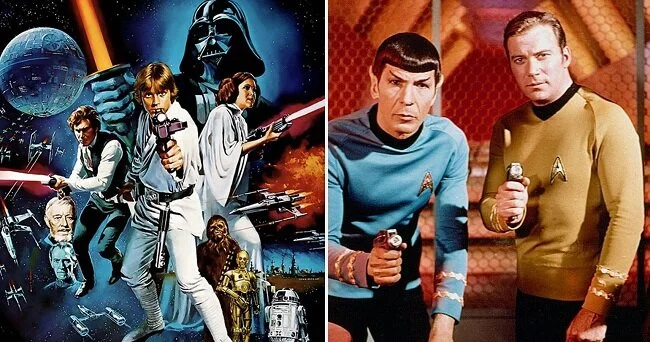
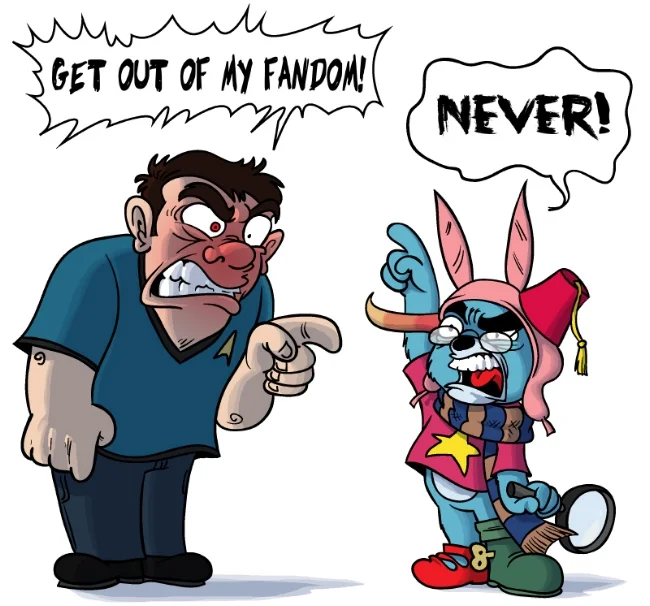
Films and especially television shows are naturally a focal point for fandom. They also provide the perfect environment for the über fan. Now if folk wish to dedicate themselves to such levels of devotion, so be it. Sadly, this position is often just one step away from crossing the line and becoming the toxic, fundamentalist fandom we’ve all seen in recent years. Consider the associated gatekeeping, zealotry and non-inclusional bullshit that has emerged around the Star Wars franchise in recent years. Not every über fan is guilty of such behaviour but if you draw a venn diagram you’ll find that many toxic fans are those who have become wedded to their “cause”. But if we set aside for a moment the matter of toxic fandom and simply concentrate on borderline obsessive fandom, it seems to come at a rather big price. Because there is a fundamental flaw inherent in investing really heavily in a TV show, book or film. You may well have placed it upon a pedestal for your personal adulation but you have no control over it and are ultimately dependent upon its creator to determine its course of direction.
All of which brings me on to Line of Duty, known jokingly by those “without a dog in the fight” as Lionel Duty, courtesy of UK comedian Gary Delaney. For those who may not know, Line of Duty is a British police procedural television series created by Jed Mercurio. It has run for six seasons and has gained enormous popularity due to its densely plotted storyline and robust performances by its cast of character actors. Audience figures have grown from 3.8 million viewers to 12.85 million over the last nine years. The latest season has turned analysis of the show into a national pastime, which has then been splashed across most of the national tabloids, throwing further fuel onto the fire. Naturally Line of Duty has its devoted über fans and they have devoted a lot of time and energy into hypothesising about the season conclusion. Last night, the final episode was broadcast and the relevant storylines neatly tied up. And within minutes the internet was filled with the bitter tears of fundamentalist fans who were “disappointed”, like the children of Thulsa Doom at the end of Conan the Barbarian.
Which one is Lionel?
It is not my intention to mock, judge or indulge in schadenfreude. Okay it is just a little bit. But I think there is one observation worth making about this situation. It was both predictable and inevitable. Lionel Duty fans are pissed at Jed Mercurio because he ultimately wrote what was in his own head, rather than what was in theirs. Damn these authors with their creative control over their intellectual property. I think when fans go all in and stray from affection into obsession, then they ultimately separate themselves from the source of their fandom. The continuous analysis, discussion and conjecture becomes more important than the source material. Sadly, fans disappointed with the conclusion of Line of Duty have made the same mistake as gamers who have pre-ordered games only to find them underwhelming upon release. Both groups filled the gaps in their knowledge with their own aspirations, only for reality to teach them otherwise. My advice is to temper your fandom and not to lose sight of its context. Because it would appear that über fans are perpetually dissatisfied and this entire scenario will happen again when the next “big thing” arrives.



Fans, Community Management and Social Media
When I first read about the furore caused by Jessica Price’s comments yesterday, I knew it wouldn’t end well. There’s a tedious inevitability to the outcome of most video game related “outrages” these days. For example, a senior member of staff from a major developer will same something crass, double down, dig a hole and then finally after being bitten on the ass by reality, will put out a mealy-mouthed half ass apology. The other scenario is that an employee affiliated to a studio says something completely left field, is presented with short window of opportunity to retract it and blame it on over the counter flu medication, before they get fired due to the ensuing PR shit storm. This particular controversy falls into the latter category. However, if you take a step back from the Jessica Price debacle you quickly notice it raises a lot of questions beyond her obvious transgression. Namely, the problem of always being “on the clock” when you work in certain professions, the need to separate your work and personal social media presence and the place “influencers have in the video games industry.
When I first read about the furore caused by Jessica Price’s comments yesterday, I knew it wouldn’t end well. There’s a tedious inevitability to the outcome of most video game related “outrages” these days. For example, a senior member of staff from a major developer will same something crass, double down, dig a hole and then finally after being bitten on the ass by reality, will put out a mealy-mouthed half ass apology. The other scenario is that an employee affiliated to a studio says something completely left field, is presented with short window of opportunity to retract it and blame it on over the counter flu medication, before they get fired due to the ensuing PR shit storm. This particular controversy falls into the latter category. However, if you take a step back from the Jessica Price debacle you quickly notice it raises a lot of questions beyond her obvious transgression. Namely, the problem of always being “on the clock” when you work in certain professions, the need to separate your work and personal social media presence and the place “influencers have in the video games industry.
First up, let’s deal with the most obvious things that standout from this “wee stooshie”. The moment you have your employers name in your twitter biography, you rightly or wrongly are now an ambassador for that company. This is a problematic foible of working in an age dominated by social media. I also think it is further exacerbated by the US work ethic which is curiously more zealous than its European counterpart. Work is more of defining factor in American culture to begin with. Irrespective of this, if you work for a major games developer and cite that in your profile then the fans will take it as read that you’re accessible 24/7 and they’ll cross examine you at every opportunity. It’s ironic but the term “emotional courtesan” that Jessica Price refutes in one of her tweets, is not a bad definition of the role that is thrust upon such employees. A company’s reputation and standing with its customers is one of its most prized assets. Questions regarding the capricious nature of fans and the fact that some totally lack any filter are ultimately irrelevant. You don’t upset the gravy train.
Next there’s the need to compartmentalise. If you work for a big player in any type of industry and feel that there are constraints placed upon your freedom of expression online as a result of that, then simply create separate social media accounts. Apply common sense to your work-related platforms and if need be follow a clear set of rules with regard to your customer interactions. As for your personal accounts, keep them separate and don’t make the mistake of getting drawn into needless arguments. Use mute or block judiciously if need be. And remember that Twitter is a public space and is therefore governed by rules of speech in such an environment. Ultimately if you want privacy in your discussion then use What’s App or something similar. Also, manners have declined in the last fifty years. Some people either lack a filter or simply refuse to use one for their own dysfunctional reasons. You have very little say or control over who decides to interject in any ongoing conversation. The sad reality is that your work related social media account forces you to do your job with one hand tied behind your back. It’s not a level playing field but if that’s place you’ve chosen to set up your stall, then that is how you have to roll with things.
Then there is the whole thorny issue of influencers. In this case, I’m not aware that You Tuber and Streamer Deroir has ever been considered a difficult or controversial individual. From what I’ve gleaned from the internet, they are a relatively benign community conduit. He’s even got an NPC named after him in the Mistlock Observatory. Therefore, it is not unreasonable for Deroir to want to interact with an ArenaNet employee such as Jessica Price. His comments were not in any way rude, so he really didn’t deserve the response he received. However, the wider gaming dependency upon influencers is a questionable practice. Not all are as measured as Deroir. It should not be forgotten that many influencers are not directly employed by the games developers and therefore not subject to the same scrutiny and security checks as regular staff. It’s a powerful position to be in and people are flawed. There have been instances of influencers going rogue in the past, although again I say this is clearly not one.
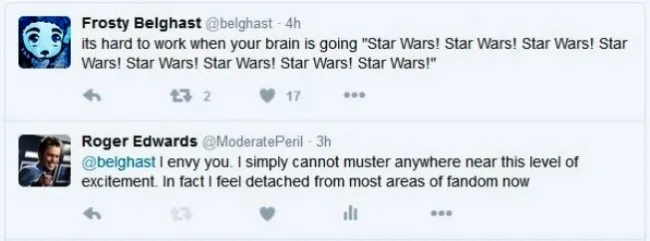
Finally, I am becoming increasingly sceptical of overt fandom of any kind. Pop culture, like politics and sports, is losing all semblance of measure and introspection and slowly becoming far more zealous. Everybody seems to have a stake or a personal claim on some part of the internet or aspect of fandom, regardless of whether it is legitimate or justified. Fandom isn’t collective ownership, although that is fast becoming a minority view. Dealing with such communities is becoming increasing hard. Who wants to navigate a daily diet of anger, accusations and bile? In the case of Jessica Price, her ill-conceived comments were wrong, and she has been sanctioned by her employers (The degree of which is subject to debate). However, what is worrying is the increasing trend that sees justifiable anger and complaint from legitimate quarters, being subsequently hi-jacked by those who simply smell blood in the water. The internet lynch mob is an extremely blunt tool and the dirty footprints of its affiliate members who often have their own agenda, ultimately just end up muddying the waters of measured and reasoned criticism. Thus, gaming culture declines further and it’s more mature and measured members find themselves moving ever further to its periphery, so as not be tarred with the same brush.