
The First World War (2003)
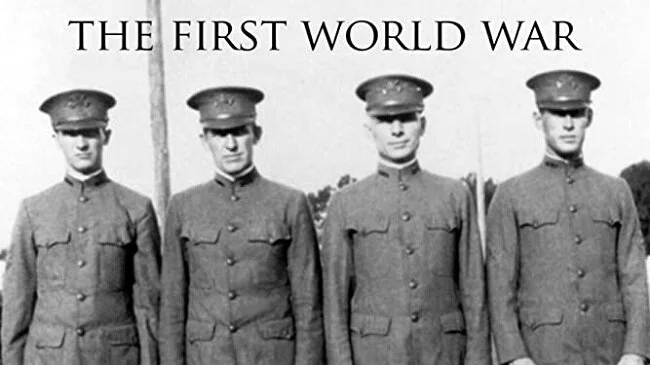
Over the years I have seen many documentaries about World War II. Although I do not claim in any way to be an expert, I believe I have a good grasp on the causes and the course of that six year conflict. However, it recently struck me that I could not say the same about World War I. In my youth I watched a repeat showing of the BBC documentary series The Great War (1964) but I remember very little of its prodigious 26 episodes. The one thing that stood out were the interviews with veterans. So I was very pleased when perusing BritBox over the weekend to find the 2003 documentary The First World War, based upon the book of the same name by Professor Hew Strachan. This ten part analysis takes a global view of the conflict, rather than excessively focusing upon the Western Front and also debunks a lot of the apocryphal ideas and notions that have persisted over the years. I found it so compelling that I binged watched the entire thing over two evenings.
Over the years I have seen many documentaries about World War II. Although I do not claim in any way to be an expert, I believe I have a good grasp on the causes and the course of that six year conflict. However, it recently struck me that I could not say the same about World War I. In my youth I watched a repeat showing of the BBC documentary series The Great War (1964) but I remember very little of its prodigious 26 episodes. The one thing that stood out were the interviews with veterans. So I was very pleased when perusing BritBox over the weekend to find the 2003 documentary The First World War, based upon the book of the same name by Professor Hew Strachan. This ten part analysis takes a global view of the conflict, rather than excessively focusing upon the Western Front and also debunks a lot of the apocryphal ideas and notions that have persisted over the years. I found it so compelling that I binged watched the entire thing over two evenings.
Rather than just overwhelm the viewer with an endless chronology of events, The First World War tackles a specific facet of the conflict in each episode. For example Jihad deals with events from the perspective of The Turkish Ottoman Empire and Blockade focuses upon U-Boat activities, the Battle of Jutland and other naval aspects of the war. It is a very manageable approach allowing for subjects to be explored without swamping the viewer. There is plenty of archive footage highlighting the points being made and the narrative is further supplemented by extracts from letters, journals and government records. The narration by Jonathan Lewis is measured, especially when discussing the staggering death and casualty figures. The documentary does not pull any punches when dealing with atrocities or the inherent carnage involved with war on such a scale. The stark black and white photographs and newsreel footage are often very shocking.
What I found most illuminating is the way The First World War eschews the binary approach that many previous documentaries have taken. It frequently shows the complexity and nuance surrounding so many aspects of the war. The intricate alliances between the various superpowers of the time are far from simple and the ethnic tensions within the Austro-Hungarian Empire are very involved. Key players such as Archduke Franz Ferdinand of Austria are revealed to be quite different from previous perceptions. The relationship between the United States and the British Empire is also shown to be far from cordial with the US benefitting immensely from loans and commerce with both England and Germany. Perhaps the most revealing arguments are those regarding military strategy. The cliché of Lions led by Donkeys is not shattered but is certainly tempered by the end of the series. Failures were at times due to incompetence but often many other factors conspired to derail events.
Yet despite the global perspective and geopolitical analysis, The First World War maintains a very personal and human perspective throughout its 8 hour plus running time. A letter to a family member or an anecdote about playing cards continuously reminds us that the mind boggling numbers of dead and wounded were all real people with family and lives waiting for them back home. The show also stresses how this war set in motion events that would return to haunt the world in less than twenty years hence. Yet it also genuinely tries to highlight some of the benefits that did occur after the armistice of 1918. The European Empires began to give way to nation states and democratic self governance. With a subject as big as World War I there are still some gaps in the history. I would have liked to have learned more about the role of Greece and the perspective of such countries as Canada, Australia and India. But overall The First World War is a very comprehensive and thoughtful exploration of events and is certainly a superb starting point for those seeking an intelligent overview on the subject.

The Vietnam War (2017)
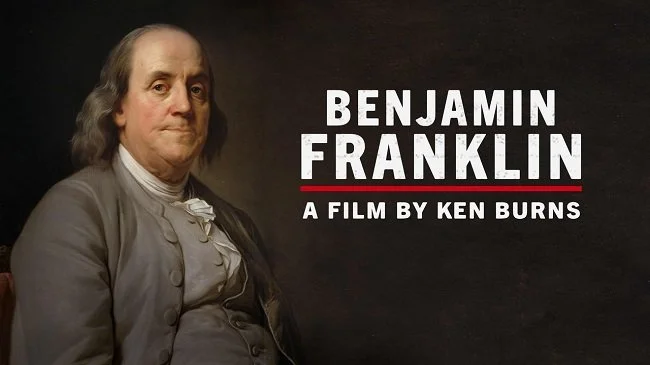
After watching several hours of the documentary, The Vietnam War, one has to wonder at the utter inability of the US government of the time, to think outside the box during the period of that conflict. Seldom does a military, political, and social analysis of an historical event go this deep. During its eighteen hour running time directors Ken Burns and Lynn Novick cover a wealth of issues associated with this conflict, exploring it from multiple perspectives. Not only do they shine a light upon the hubris and folly of both respective governments, they manage to keep a very intimate and human perspective. Personal stories from both sides are told and if there is a common theme, it is sadly one of tragedy and regret.
After watching several hours of the documentary, The Vietnam War, one has to wonder at the utter inability of the US government of the time, to think outside the box during the period of that conflict. Seldom does a military, political, and social analysis of an historical event go this deep. During its eighteen hour running time directors Ken Burns and Lynn Novick cover a wealth of issues associated with this conflict, exploring it from multiple perspectives. Not only do they shine a light upon the hubris and folly of both respective governments, they manage to keep a very intimate and human perspective. Personal stories from both sides are told and if there is a common theme, it is sadly one of tragedy and regret.
The Vietnam War attempts to seek answers and to do so, starts the tale with the French colonization of Indochina. Burns and Novick then progress through the policies of three U.S. Presidents: Kennedy, Johnson, and Nixon. But they also ensure that a Vietnamese perspective is maintained so they do not neglect the political turmoil and machinations of both North and South Vietnamese governments. There are numerous talking heads, both great and small during the course of the narrative. Soldiers, politicians and families provide candid insights into how the war impacted upon their lives. The documentary doesn’t forget the wider history of the time and there is much screen time dedicated to the US protest movement and how the war was greeted internationally.
There is a wealth of original news footage from the conflict, wisely chosen to highlight each point of discussion. It is often quite graphic and bleak. Yet this is how the news played out each night in homes around the world. The Vietnam War is not only a documentary about a military conflict but also one of how rolling news reshaped public opinion and brought an abstract, remote war starkly to the attention of the world. Something the US government did it best to contain but due to social and technological change, ultimately failed to do. There’s also a lot of audio recordings made by the US government, detailing meeting between the President LB Johnson, The secretary of Defence Robert McNamara and such like. These are utterly chilling because you soon get a sense that events have gone beyond their control, yet political considerations tie their hands and predetermine their course of action.
For me, what makes The Vietnam War stand out is the way it maintains a human perspective, despite the international nature of events. The story of Denton “Mogie” Crocker Jr runs throughout several episodes, following the honest dreams of a young man who believed in the moral rectitude of the war. Sadly, the reality of the situation soon became apparent to him and his tale ends in tragedy; just one tragedy among thousands on both sides. It’s a reoccurring theme, that so many soldiers were conscripted from small towns, frequently chosen from a specific social economic background and sent into a “no win” situation. Their commendable honesty and wholesome naivety is sharply contrasted by the hubris and obstinacy of both governments.
The Vietnam War is presented in ten substantial episodes. Like that definitive World War II documentary, The World at War, each strives to cover and explore a specific period of time and a particular milestone in the conflict. The events of the time are seen from multiple views and the documentary endeavours to be as even handed as it can. The soundtrack by Trent Reznor and Atticus Ross embellishes the proceeding without being too intrusive. There is also a healthy mix of popular music from the era, as well as news footage and commercials that help give the viewer a sense of the times. It would be remiss of me not to mention Peter Coyote’s narration, which never descends into melodrama. He clearly and succinctly describes the history of the war, subtly conveying the magnitude of events, allowing their own significance to give them weight. Overall, a major and often ignored part of American history is finally given the scrutiny that it deserves. It’s far from easy viewing but then again, the truth seldom is.







Five Came Back (2017)
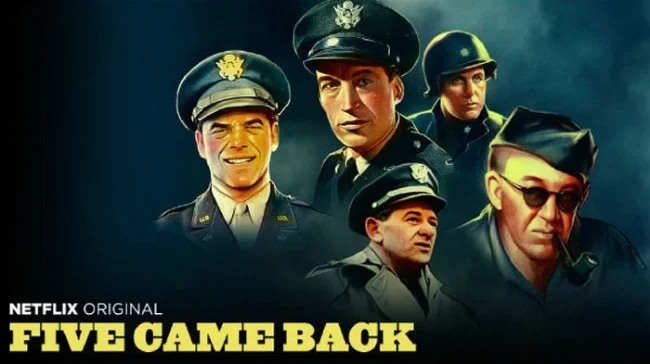
Five Came Back is a fascinating documentary about five remarkable Hollywood film directors who put themselves in harm’s way to film World War II for the US War Department. William Wyler, Frank Capra, George Stevens, John Ford and John Huston were in many ways a diverse bunch, yet the all represented a different facet of “America”. Certainly, all were idealists who felt it was their duty to use their talents to create accessible propaganda for the US public and more importantly, the 12 million men who were drafted. Despite the factual accuracy of this three-part documentary, there is an inherent romance to the tale and the way these Hollywood mavericks took on first American Isolationism, then the Third Reich and US military politics.
Five Came Back is a fascinating documentary about five remarkable Hollywood film directors who put themselves in harm’s way to film World War II for the US War Department. William Wyler, Frank Capra, George Stevens, John Ford and John Huston were in many ways a diverse bunch, yet the all represented a different facet of “America”. Certainly, all were idealists who felt it was their duty to use their talents to create accessible propaganda for the US public and more importantly, the 12 million men who were drafted. Despite the factual accuracy of this three-part documentary, there is an inherent romance to the tale and the way these Hollywood mavericks took on first American Isolationism, then the Third Reich and US military politics.
Narrated by Meryl Streep and based upon the Mark Harris Five Came Back: A Story of Hollywood and the Second World War, this Netflix documentary cleverly intercuts the story of these five legendary film makers, with soundbites from contemporary Hollywood luminaries, Steven Spielberg, Paul Greengrass, Guillermo del Toro, Francis Ford Coppola and Laurence Kasdan. It is here that the show excels itself, as these modern film makers clearly have a great deal of love and reverence for their predecessors and how they advanced the craft of film making. Greengrass, who comes from a documentary film making background is especially observant and analytical of John Ford’s urgent style. His genuine use of shaking footage, sprocket jumps and loss of focus has now become a mainstay of film makers trying to capture the authenticity he experienced.
Five Came Back these focuses on how these directors changed the public perception of the war in the US. There personal heritage played heavily on their motivation and creative output. Ford was a traditional American conservative, where Wyler and Capra were both immigrants, yet they all clearly saw the threat of Fascism and wished to contribute to the war effort. It was the fact that they were all old school film directors that gave them their specific edge. They were natural leaders, autocratic and skilled in marshalling logistics and people. George Stevens made films for the US Army Signal Corps and William Wyler made documentaries for the US Air Force. Frank Capra, was tasked with creating the documentary series Why We Fight to boost US troop morale. His master stroke was to take Leni Riefenstahl’s Nazi propaganda film Triumph of the Will and to lampoon and satirise it, making it look foolish and puerile.
Five Came Back explores the nature of propaganda and how cinema and newsreels played a key role during World War II. Over half of the US population went to the movie theatre every week and so the medium became the logical means to convey information and boost morale. Wyler, Ford, Capra, Stevens and Huston all experienced war via some of the most ferocious campaigns. North Africa, the landings in Southern Italy, D-Day and the Battle of Midway. They produced films that still pack an emotional punch today and each came home changed men. Curiously enough it can be argued that their personal experiences fuelled their finest work. Consider Shane (1953), It’s a Wonderful Life (1946), The Searchers (1956), The Best Years of Our Lives (1946) and The Treasure of the Sierra Madre (1948).
The World at War (1973)
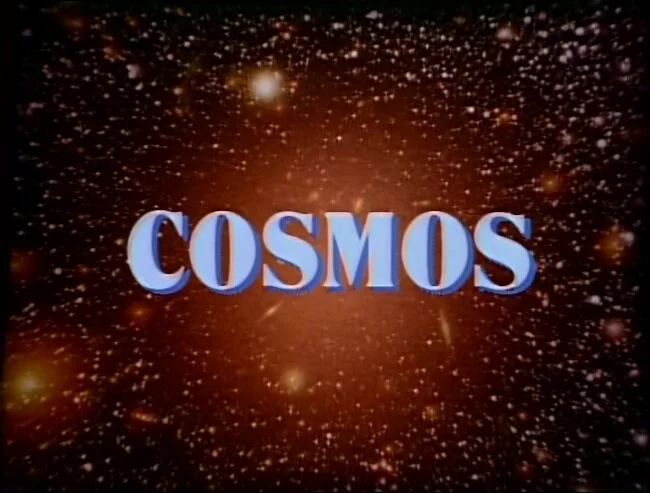
The seventies were a Golden Age for cerebral documentaries with such outstanding examples as The Ascent of Man, Cosmos and Life on Earth. Such shows were content driven, relying heavily upon the quality of the script along with the charisma and gravitas of the presenter. Jacob Bronowski, Carl Sagan and David Attenborough were exemplars of this. Jeremy Isaac’s The World at War is another archetype of quality documentary film making from this decade.
The seventies were a Golden Age for cerebral documentaries with such outstanding examples as The Ascent of Man, Cosmos and Life on Earth. Such shows were content driven, relying heavily upon the quality of the script along with the charisma and gravitas of the presenter. Jacob Bronowski, Carl Sagan and David Attenborough were exemplars of this. Jeremy Isaac’s The World at War is another archetype of quality documentary film making from this decade.
The World at War was first broadcast in the UK on Wednesday 26th October in 1973 on the ITV network. This was the year of the oil crisis, one of many miners' strike and Ted Heath's three-day week. World War II still loomed large in the nation’s collection psyche and influenced global politics. Forty Two years on, The World at War it is still being watched all over the world via DVDs, VoD and TV repeats. It can be cogently argued that the documentary still remains an powerful account of World War II. There are some areas that possibly may revision due to the emergence of de-classified information but as a whole this is still an in-depth, scholarly and accessible historical analysis.
Isaacs always was motivated by wanting to tell the story of World War II from a truly global perspective. At the time UK film makers and scholars still tended to follow a very UK-centric narrative adhering to Churchill’s "finest hour" mindset. Noble Frankland the director of the Imperial War Museum and the series historical adviser encouraged Isaacs to not only adopt this approach but emphasise the role of the Red Army and explore to a greater degree the significance of the war against Japan.
One of the most powerful features of the series was the use of in-depth conversations with ordinary people, often those who were directly involved in the event being explored. The first hand experiences of the average soldier at Anzio or the perspective of the civilians that endured the Blitz remains compelling viewing. The World at War also contains an unprecedented wealth of interviews with the politicians and military leaders of the time. Admiral Dönitz, Anthony Eden, Mark Clark and "Bomber" Harris are among those who shared their often contradictory views on the way key event unfolded. Perhaps the most significant contributor was Hitler's secretary Traudl Junge who paints a very human picture of the Führer's final days.
Two elements worthy of note are the series score by composer Carl Davis and narration by Laurence Olivier. Both underpin the archive newsreel footage and add gravitas to the overall narrative. The script although focusing upon the global scope of World War II, maintains a very human perspective with passages from letters, journals and popular songs from the time. Olivier’s understated delivery often affords the viewer opportunity to contemplate the magnitude of events. Davis’ score adds focus to each episode and never strays into melodrama.
Although the factual rigour of The World at War remains robust there are areas where the narrative requires updating and theatres of war that need a broader exploration. Since the shows original broadcast the facts regarding the breaking of the enigma code at Bletchley Park have come to light. As a result the episode "Wolfpack" about the battle of the Atlantic is now somewhat passé. Both China and India’s experiences during the war are conspicuous by their absence; likewise Yugoslavia’s war time ordeal is only alluded to.
The World at War was a significant undertaking for a major television network at the time and keenly reflected the production and audience standards of the decade. It is highly unlikely that a documentary series of this calibre could be produced today. Not only are there no longer any surviving interviewees with first-hand experience of the events in question, there may no longer be an appetite from the general public for such an in-depth analysis of a period of history we are becoming increasingly removed from.