
Dawn of the Dead: Complete Cut (1978)
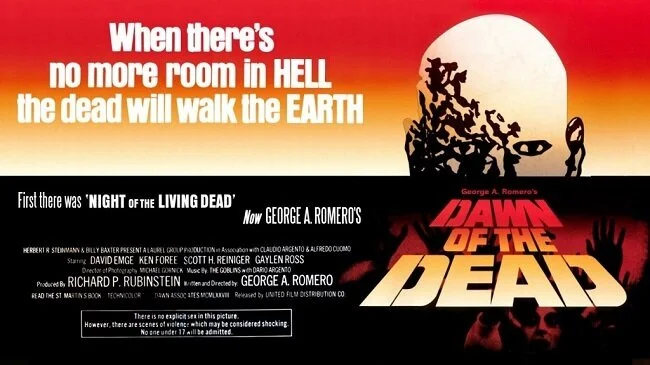
Five years ago, I wrote about a fan edit of George Romero’s horror classic Dawn of the Dead that attempted to recreate the original rough cut of the movie. The so-called “Extended Mall Hours” cut was composed of the 139 minute Cannes edit of the film and the 117 minute Dario Argento version. It was a very interesting project but as it consisted of DVD quality material (including deleted scenes) it was not an optimal presentation. Being a fan edit, there were obvious issues regarding legality, so I never really expected to see anything comparable to this version being officially sanctioned or released. So I was therefore most surprised to learn that a recent Blu-ray boxset release by Austrian distributors XT Video included a “Complete Cut” which similarly combines all available material. This is presented in 1080p, at a ratio of 1:85:1 and runs 155 minutes. It is superior in quality to the “Extended Mall Hours” cut and is most likely the nearest any fan is ever going to get to seeing Romero’s initial edit of the film.
Five years ago, I wrote about a fan edit of George Romero’s horror classic Dawn of the Dead that attempted to recreate the original rough cut of the movie. The so-called “Extended Mall Hours” cut was composed of the 139 minute Cannes edit of the film and the 117 minute Dario Argento version. It was a very interesting project but as it consisted of DVD quality material (including deleted scenes) it was not an optimal presentation. Being a fan edit, there were obvious issues regarding legality, so I never really expected to see anything comparable to this version being officially sanctioned or released. So I was therefore most surprised to learn that a recent Blu-ray boxset release by Austrian distributors XT Video included a “Complete Cut” which similarly combines all available material. This is presented in 1080p, at a ratio of 1:85:1 and runs 155 minutes. It is superior in quality to the “Extended Mall Hours” cut and is most likely the nearest any fan is ever going to get to seeing Romero’s initial edit of the film.
Having recently watched the “Complete Cut”, I again reiterate the same comments I made when watching the “Extended Mall Hours” fan edit. The film takes on a somewhat bleaker tone with some additional dialogue scenes between Peter and Stephen. The expanded “Biker Raid” adds to the action and certainly increases the threat that they pose to our protagonists. And there is a lot more additional zombie related violence. However, this version does a far better job of adjusting the soundtrack to accommodate the additional material. Some tracks by Goblin that were not used in previous edits of the film have been integrated back into the movie. Hence we do not get too much repetition of cues. The visual elements are of a superior quality this time round so there is no significant disparity between old and new material. The editing is also seamless and the addition of new content does not disrupt the narrative flow or the overall pacing of the film.
The addition of this version of Dawn of the Dead to the existing three cuts of the film raises the inevitable question of which is best? Although I often prefer the most comprehensive version of movies, I’d advise those who have not seen the film before to start with the standard theatrical version first. It has a sense of immediacy that makes it possibly the most accessible edit. Other versions are best watched once an opinion of the base movie has been established. Some of the material in the “Complete Cut” may mainly be of interest to completists who want to see additional zombie footage. However, some of the extra make up effects and action scenes are not quite as polished as those that have always been present, which may well be the reason that director George Romero removed them. However, if you are an aficionado then this version of the film is worth seeing for scholarly reasons. However, please note that the boxset that contains this cut was a limited edition and is now very expensive to obtain.




George A. Romero (1940 - 2017)
Writer and director George A. Romero will forever be synonymous with the zombie genre and horror movies per se, as his work in this field was pioneering and outstanding. Yet, because of the success of his seminal film, Night of the Living Dead, he also brought a great deal of attention to independent film making and the way film making was financed. He was an intelligent and thoughtful film maker who used the medium of genre movies to explore a variety of socio-political themes. His characters were often flawed but credible and he had a knack for finding humanity in the bleakest of dramatic situations. If Romero had explored such ideas in mainstream cinema he would have garnered far more praise and potentially have won critical acclaim from the cinematic establishment.
Writer and director George A. Romero will forever be synonymous with the zombie genre and horror movies per se, as his work in this field was pioneering and outstanding. Yet, because of the success of his seminal film, Night of the Living Dead, he also brought a great deal of attention to independent film making and the way film making was financed. He was an intelligent and thoughtful film maker who used the medium of genre movies to explore a variety of socio-political themes. His characters were often flawed but credible and he had a knack for finding humanity in the bleakest of dramatic situations. If Romero had explored such ideas in mainstream cinema he would have garnered far more praise and potentially have won critical acclaim from the cinematic establishment.
I had the pleasure of seeing George A. Romero interviewed at the British Film Institute several times over the last two decades. He was a quietly spoken, thoughtful man who was very cinematically literate. He was also very gracious towards his fans, who were often utterly besotted with him and his work. Yet, he took time to answer their questions in a comprehensive and positive way. It also became very clear that he was far removed from the “auteur director” moniker that he’d been saddled with. He spoke very generously about the talent he’d had the pleasure of working with over the years and he certainly lacked the ego we so often see from certain creative quarters. I think this contributed to the clarity and honesty of his film making.
In many ways Dawn of the Dead remains George A. Romero’s magnum opus. It is as pertinent today as a social and political commentary as it was in 1978 upon its release. As a personal preference, I would recommend The Extended Mall Hours Cut of the film which is a fan edit that combines all material seen in the Director’s Cut and Argento Cut of the film. It is as close an approximation of Romero’s original rough cut of the movie as you can find. This version delves in to the human element of the narrative further and really does add a somewhat different tone to the film’s final act. Seldom does mainstream cinema get this thoughtful and as introspective, let alone genre cinema. But that was George A. Romero’s gift. Free from studio interferences and financial imperatives, he could focus on credible and honest film making. He will be missed.

Birth of the Living Dead (2013)
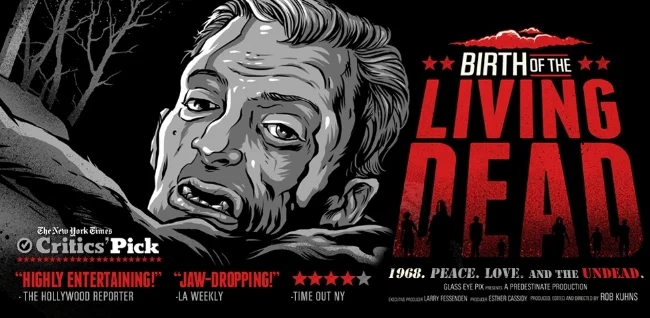
These day’s zombies are a somewhat ubiquitous plot device and enjoy an entire literary, artistic and cinematic sub-genre. The Walking Dead is one of the most popular TV shows internationally and hundreds of thousands of gamers fight the undead, online every day. Yet there was a time when zombies were just a minor subset of the horror genre and far from a popular one. That all changed in 1968, when a low-budget, independent film called Night of the Living Dead was released upon an unsuspecting public. The movie’s impact upon the film industry and popular culture was extraordinary. Rob Kuhns’ appropriately titled documentary Birth of the Living Dead analyses the creation of George A. Romero’s seminal classic and strives to determine how a single movie could have such impact.
These day’s zombies are a somewhat ubiquitous plot device and enjoy an entire literary, artistic and cinematic sub-genre. The Walking Dead is one of the most popular TV shows internationally and hundreds of thousands of gamers fight the undead, online every day. Yet there was a time when zombies were just a minor subset of the horror genre and far from a popular one. That all changed in 1968, when a low-budget, independent film called Night of the Living Dead was released upon an unsuspecting public. The movie’s impact upon the film industry and popular culture was extraordinary. Rob Kuhns’ appropriately titled documentary Birth of the Living Dead analyses the creation of George A. Romero’s seminal classic and strives to determine how a single movie could have such impact.
The then 27-year-old Romero, learnt his craft working for local television (mainly children shows) and producing commercials via his company Latent Image. Relative success and ambition lead to a decision to make a movie and it was determined that a horror production would be cheapest to make. It was also potentially the most lucrative. Having previously read Richard Matheson’s novel I Am Legend, Romero decided to adapt one of his own short stories into the movie. The project was financed via friends and business partner who all contributed the grand sum of $600 each. Film stock was bought, an abandoned farmhouse was rented and the guerrilla-style production commenced. “Who knew that we were ever going to finish this thing” Romero has retrospectively stated.
Kuhns specifically explores Night of the Living Dead in the social and political context of the era, focusing on the radical casting of African-American actor Duane Jones in the lead role. The character’s race was unspecified in the script and the fact that it’s never a narrative issue in the film itself was particularly ground breaking at time. Sidney Poitier was a major box office star in the late sixties, yet there were still major cultural constraints on the depiction of black characters in mainstream movies. The documentary also focuses on the social and political climate of America at the time and the fact that much of the prevailing cultural angst seems to have seeped into the finished movie.
Where Birth of the Living Dead succeeds the most is in cataloguing the minor and more mundane aspects of the film’s production. For example, one of the investors provided real entrails as they ran a meat packing business. A genuine television news broadcaster played such a character the film, authentically writing his own dialogue. Most of the cast members performed additional roles, including designing the producing the makeup effects and local residents were recruited to play the marauding zombie hordes. Full co-operation was gained from the local law enforcement authorities who provided dog handlers and even a police helicopter. At one point, it seemed that pretty much every local business in Pittsburgh was involved in some capacity.
Birth of the Living Dead provides a succinct overview about one of the most iconic movies of the sixties. It is affectionate and informative, although it does get a little bogged down when it tackles the socio-political element of the movie. There are some insightful interviews with horror filmmaker Larry Fessenden (who also executive produced the documentary), Walking Dead producer Gale Anne Hurd, and cultural commentators as Mark Harris, Elvis Mitchell and Jason Zinoman. At a little over seventy five minutes it manages to pack a lot in. I did find some of the material a little curious, such as the teacher at a Bronx elementary school who was enthusiastically extolling the virtues of the movie to a class of pre-teens. Also, the documentary does not in any way touch upon any of Romero's later work or sequels.
Documentaries have become increasingly more popular with mainstream viewers in recent years. The benchmark appears to be whether you can engage a viewer who is not overtly familiar with the subject matter. Birth of the Living Dead achieves this as well as appealing to the die-hard horror fan. There has been a great deal written about Romero's Night of the Living Dead over the years and a lot of DVD “extras” have paid lip service to his work. For the time being Birth of the Living Dead has put all such commentary in the shade, offering the definitive exploration of the movie.



Dawn of the Dead: The Extended Mall Hours Cut (1978)
In the last few years I’ve become acquainted with the concept of fan edits. Fan edit are versions of a film that has been modified by a viewer. This involves the removal, reordering, or the addition of new material to create a new interpretation of the film. Fan edits include the removal of scenes or dialogue, replacement of audio and visual elements, as well as adding material from sources such as deleted scenes or even other films. Due to the easy access to pro-quality software and high definition source material, such editions are often very professionally realised. Naturally fan edits often fall foul of copyright law.
In the last few years I’ve become acquainted with the concept of fan edits. Fan edit are versions of a film that has been modified by a viewer. This involves the removal, reordering, or the addition of new material to create a new interpretation of the film. Fan edits include the removal of scenes or dialogue, replacement of audio and visual elements, as well as adding material from sources such as deleted scenes or even other films. Due to the easy access to pro-quality software and high definition source material, such editions are often very professionally realised. Naturally fan edits often fall foul of copyright law.
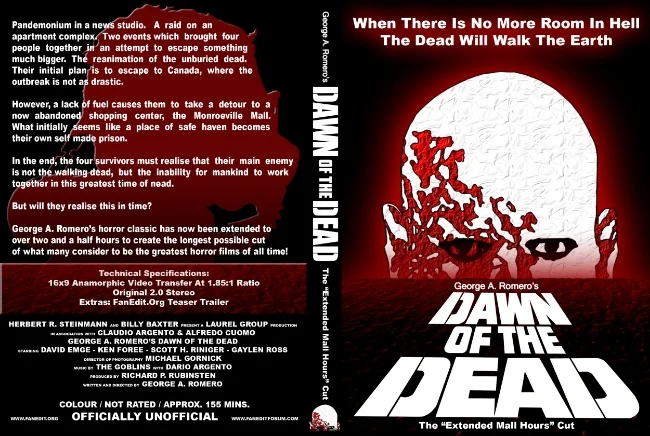
I was introduced to this sub-genre when I was tipped off about an extended version of George A. Romero's classic Zombie movie Dawn of the Dead. After a little investigation on the internet I discovered Dawn of the Dead: The Extended Mall Hours Cut. This fan edit produced by the intriguingly named Officially Unofficial, uses the 139 minute Cannes Cut of the film and the 117 minute Dario Argento version. Effectively this is the closest approximation of Romero’s original rough cut of the movie and clocks in at a total running time of 155 minutes.
There is quite a lot of extra footage in this fan edit. As well as miscellaneous scenes of violence in the mall sequences, there are various dialogue extensions which enhance the narrative and give more weight to the story. When the bikers arrive at the movies finale, there is an expanded scene where we see them planning their “attack strategy”. There also some extended dialogue between Peter and Stephen after they return from “shopping” the first time. The pair argue over how they would deal with Fran if she was ever bitten. It is a very different version of the film with a more depressing tone to the theatrical cut. The new material is integrated into this edit seamlessly.
Dawn of the Dead is a genre milestone and there is no need to review the films merits here as they’re clearly established. This fan edit does add an interesting new aspect to the movies pedigree, offering a slightly more human perspective to the narrative. There’s a subtle shift in tone which implies a sense of futility to the lead characters fight for survival. I would be most curious to learn what George A. Romero himself thought of this edit, if he were ever to see it.
UPDATE: There is now an official Blu-ray release of Dawn of the Dead called “The Complete Cut” that comprises of all available footage. It effectively replaces the unofficial “Extended Mall Hours Cut”.