
No Time to Die (2021)
Bond has left active service and is enjoying a tranquil life in Jamaica. His peace is short-lived when his old friend Felix Leiter from the CIA turns up asking for help. The mission to rescue a kidnapped scientist turns out to be far more treacherous than expected, leading Bond onto the trail of a mysterious villain armed with dangerous new technology.
Universal Pictures
The twenty fifth Bond film is a horse of a different colour but then again that adage could be applied to the last five instalments of the franchise. Bond has never had a continuous story arc or any major narrative continuity until Daniel Craig’s tenure as 007. Two Roger Moore films briefly alluded to Bond’s previous marriage as depicted in On Her Majesty's Secret Service (1969). However, we should remember that Casino Royale (2006) was effectively a reboot of the entire franchise depicting Bond’s first mission as a recently commissioned 00 agent. As well as the tonal shift in the franchise regarding humour, violence and the role of agents in a modern world, the last five films have taken a far more personal interest into Bond. It has very much been about him as opposed to just his actions. Therein lies the rub as they say. Some fans have not warmed to this sort of character analysis, although the box office clearly shows that it has gone down well with the wider audience.
Bond has left active service and is enjoying a tranquil life in Jamaica. His peace is short-lived when his old friend Felix Leiter from the CIA turns up asking for help. The mission to rescue a kidnapped scientist turns out to be far more treacherous than expected, leading Bond onto the trail of a mysterious villain armed with dangerous new technology.
Universal Pictures
The twenty fifth Bond film is a horse of a different colour but then again that adage could be applied to the last five instalments of the franchise. Bond has never had a continuous story arc or any major narrative continuity until Daniel Craig’s tenure as 007. Two Roger Moore films briefly alluded to Bond’s previous marriage as depicted in On Her Majesty's Secret Service (1969). However, we should remember that Casino Royale (2006) was effectively a reboot of the entire franchise depicting Bond’s first mission as a recently commissioned 00 agent. As well as the tonal shift in the franchise regarding humour, violence and the role of agents in a modern world, the last five films have taken a far more personal interest into Bond. It has very much been about him as opposed to just his actions. Therein lies the rub as they say. Some fans have not warmed to this sort of character analysis, although the box office clearly shows that it has gone down well with the wider audience.
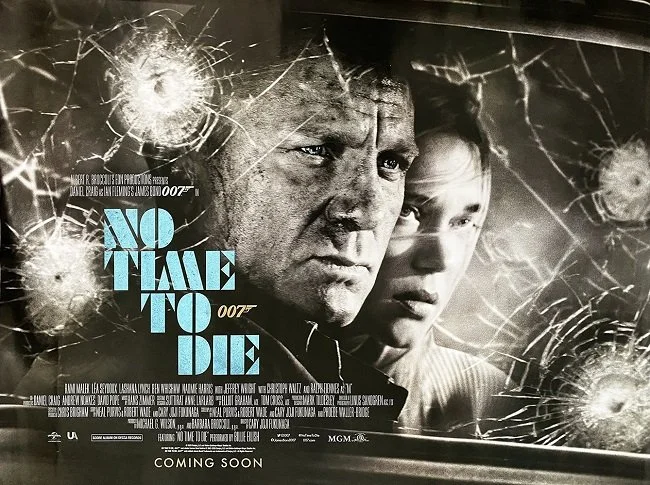
No Time to Die is by far the most intimate Bond movie to date. This is about Bonds relationship with Dr. Madeleine Swann (Léa Seydoux) and the void in his life when they part acrimoniously. The story explores perennial themes of how people in specific lines of work sacrifice so much of themselves. For every action set piece, and there are plenty of these, there are an equal amount of dramatic scenes in which Bond searches his soul and considers his future. The Bond of the seventies and eighties was seldom this thoughtful but this is clearly the way the franchise has been going since 2006. Director Cary Joji Fukunaga clearly is enamoured with On Her Majesty's Secret Service and references it with the use of subtle dialogue homages. “We have all the time in the world” Bond states at the beginning of the film and it’s not long before Louis Armstrong’s iconic song is played. Later, perceptive viewers will hear a clever reworking of John Barry’s famous instrumental theme from the 1969 film, as M expedites the plot. Hans Zimmer’s score is suitably intelligent and musically literate.
There are several extremely good vehicular stunt sequences in No Time to Die, as well as some solid hand to hand fights which are bone crunching and gritty. Although the gunfights are relatively bloodless, there is a realistic and callous quality to them. Rami Malek is notable as Lyutsifer Safin and provides the audience with a more interesting Bond villain than usual. His motivations are not about “world domination” but are far more personal. His enforcer, Primo (played by Muay Thai martial artist champion Dali Benssalah) is far from charismatic but has some very effective fight sequences. No Time to Die does not skimp on action, globe trotting or conspicuous product placement. The regular cast of Ralph Fiennes, Naomie Harris, Rory Kinnear and Ben Wishaw are as ever, robust and stalwart and it is interesting to see the franchise embracing modernity and featuring Lashana Lynch as Nomi; the latest agent to bear the number 007.
The success of whether No Time to Die resonates with viewers ultimately hinges upon whether one buys into the concept of a more personal Bond movie. It’s all a far cry from the self deprecating humour and two dimensional characterisation of the Roger Moore era. Eon productions seem to have learned a lot from the Jason Bourne films and the importance of a lead character with a soul, rather than just a series of action set pieces and an archetype as a hero. I was initially thrown by the tone of No Time to Die but upon reflection it is a rather sophisticated and appropriate ending to Bond’s story arc which started with Casino Royale. I suspect this film may find wider approval upon subsequent viewings and in time be appraised in a comparable manner to On Her Majesty's Secret Service. It will be interesting to see what direction the franchise takes with the 26th instalment. However, before that happens a new Bond needs to be found. I suspect that won’t be a walk in the park, either logistically or critically.


James Bond 007: Blood Stone
Over the Christmas Holidays, I inevitably watched a selection of James Bond movies because it is one of my seasonal rituals. As a child a Bond movie was always one of the TV highlights of Christmas or Boxing Day. Subsequently this habit has stuck with me over the years and so I dutifully watched On Her Majesty’s Secret Service, The Living Daylights and Licence to Kill. Naturally this raised my interest in all things Bond, so I decided to dust of the video game James Bond 007: Blood Stone. I originally bought this game upon release back in November 2010, unaware that the Bond franchise has always been an utter lottery when it comes to tie-in games. I initially played through it for a month or so, then deleted it from my hard drive. It was a classic example of me simply losing interest in a game and then removing it in one of my regular PC housekeeping exercises. To be fair I had a lot of other games on the go at the same time, so there was a good chance that I didn't give it the level of attention it deserved. So yesterday I decided to give it another go and re-installed the game via Steam. Thanks to the miracle of the internet, I downloaded the 9GB game in twenty minutes.
Over the Christmas Holidays, I inevitably watched a selection of James Bond movies because it is one of my seasonal rituals. As a child a Bond movie was always one of the TV highlights of Christmas or Boxing Day. Subsequently this habit has stuck with me over the years and so I dutifully watched On Her Majesty’s Secret Service, The Living Daylights and Licence to Kill. Naturally this raised my interest in all things Bond, so I decided to dust of the video game James Bond 007: Blood Stone. I originally bought this game upon release back in November 2010, unaware that the Bond franchise has always been an utter lottery when it comes to tie-in games. I initially played through it for a month or so, then deleted it from my hard drive. It was a classic example of me simply losing interest in a game and then removing it in one of my regular PC housekeeping exercises. To be fair I had a lot of other games on the go at the same time, so there was a good chance that I didn't give it the level of attention it deserved. So yesterday I decided to give it another go and re-installed the game via Steam. Thanks to the miracle of the internet, I downloaded the 9GB game in twenty minutes.
So, what does James Bond 007: Blood Stone have to offer, second time around? Well exactly the same frustrations that caused me to kick it into touch last time. The story is quite good for this sort of thing, being written by Bruce Feirstein who penned a few of the Pierce Brosnan movies. There is also voice acting from Daniel Craig and Judi Dench as well as a “Bondesque” soundtrack by Richard Jacques, which all do much to elevate the proceedings. The game is a third person cover based shooter with additional hand-to-hand combat and driving sequences. James Bond 007: Blood Stone features a focus aim system which allows players to lock onto targets after melee takedowns, providing guaranteed kills. The stealth kills are quite satisfying and look the part. Ben Cooke, who is Daniel Craig's stunt double in the films, provided the motion capture choreography for Bond's digital animation and is credited as the game's stunt coordinator. Like in recent Bond movies the vogue for gadgets in this game is far more subdued. There is a lot of hacking of electronic locks and computers via a smartphone, which mainly involves the use of quick time events. However, it also provides a means for highlighting waypoints, weapons and enemies as well as items that can be scanned for intel.
However, despite all these acceptable points, the game is a very clumsy console port. It has all the obvious hallmarks. First there’s the cartoon like cut scenes and a game engine that simply looks lacklustre on a decent PC. Then there’s the clumsy UI. However, the biggest failing and the main reason I ditched this title last time I played is the control system. The keyboard and mouse work fine for combat but are inadequate for steering vehicles. The PC version does support an Xbox controller but not simultaneously with the other input devices. So, whenever you reach a check point prior to a car chase, you have to wait for the chase to fail, then go into the game settings and change the input to a gamepad. Once that section is over, you then have to do the same again to return to the keyboard and mouse. This is frustrating to say the least and it doesn't take long for tempers to fray. I shall try to persevere with James Bond 007: Blood Stone but I can't make any promises as to whether I shall complete it. The whole thing just highlights the fact that Bond as a franchise has never really got the treatment it should have from the gaming industry. Apart from Goldeneye and Goldeneye Reloaded but they never got released on the PC platform anyway.
I would love to see a more complex and nuanced RPG, where you could play as Bond and have a story that has multiple endings. A game that as well as shooting sequences, offered other activities seen in classic Bond movies such as Skiing or Scuba Diving. A mini game based set in a Casino would also be a great addition. Perhaps setting the game in a specific time period to would add atmosphere and ambience, be it the suave sophistication of the sixties movies or the excess and grandiose scope of the seventies films. Games such as the The Witcher 3: Wild Hunt and Red Dead Redemption 2 have an excellent balance of narrative choice and action. This sort of game style and mechanic would be ideal for the world of James Bond with its focus on pithy dialogue and kiss-off lines. But I’m not particularly hopeful. Activision were the last licence holders for Bond video games and they struggled to do the franchise justice. James Bond 007: Blood Stone is a weak title which killed off its developer Bizarre Creations. Oddly enough the follow up game 007 Legends was even more of a dog’s dinner and also put pay to Eurocom, the studio that created it. For the present no one seems to want to tackle the possibilities presented with such an intellectual property, because it doesn’t immediately lend itself to live services or multiplayer gaming.
007 Legends
It's a curious thing that some of the most popular movie, TV and book franchises end up being made into the most tedious games. 007 Legends (released 2012) falls squarely into this category. It is woefully uninspired and lacking in any real substance. The previous game in the franchise, James Bond 007: Blood Stone released in 2010, was far from a masterpiece, but shines compared to the ineptitude of 007 Legends. Developers Eurocom seemed to have completely misjudged what it is about this particular intellectual property that the public enjoy. The results are a bastard hybrid FPS with just a thin veneer of 007 added to the proceedings. Curiously enough, this was the last game that Eurocom made before going out of business. Subsequently, 007 Legends has vanished from shelves and has been withdrawn from Steam. However, I still have a “hard” copy for the PC.
It's a curious thing that some of the most popular movie, TV and book franchises end up being made into the most tedious games. 007 Legends (released 2012) falls squarely into this category. It is woefully uninspired and lacking in any real substance. The previous game in the franchise, James Bond 007: Blood Stone released in 2010, was far from a masterpiece, but shines compared to the ineptitude of 007 Legends. Developers Eurocom seemed to have completely misjudged what it is about this particular intellectual property that the public enjoy. The results are a bastard hybrid FPS with just a thin veneer of 007 added to the proceedings. Curiously enough, this was the last game that Eurocom made before going out of business. Subsequently, 007 Legends has vanished from shelves and has been withdrawn from Steam. However, I still have a “hard” copy for the PC.
So where exactly does 007 Legends go wrong? Well to start it’s a formulaic FPS, with arbitrary stealth mechanics. The game engine is inadequate, and the game looks dated (even within the context of 2012). Like James Bond 007: Blood Stone there is a reliance on your in-game smart phone to crack security doors and hack computer systems. It’s hardly the most exciting gadget from Q branch. But it’s the narrative that’s the biggest failing. The game takes classic storylines from past Bond movies and re-imagines them as previous missions undertaken by the Daniel Craig's incarnation of Bond. Unfortunately taking such iconic enemies such as Goldfinger, Odd Job and Jaws out of their respective context doesn't really work. The banter and interaction all seem contrived and modernising these stories robs them of their period charm. It’s a real shame because there’s a grain of a good idea present, but its lost due to the poor realisation.
007 Legends is a who's who from the last fifty years of the Bond franchise, but its utterly lacking in emotional impact. Rather than capturing the spirit of Bond it simply feels like a 007 themed mod for another game. Uninspired character animation, repetitive use of similarly designed locations and appalling AI, culminate in a very dull gaming experience. Like many others, I was very disappointed with 007 Legends upon release and six years on, a second play through has not improved my overall opinion. Many of the levels are so generic, I once again found myself trying to bypass or skip content by simply running to the next checkpoint. Overall, this is a text book example of a product born of think tanks, focus groups and bean counters, who confuse bullet point summaries with true understanding. It is hardly a surprise that this game killed the Activision Bond franchise stone dead. Its subsequent disappearance may indicate that there were long term repercussions from the rights holders.
Skyfall (2012)
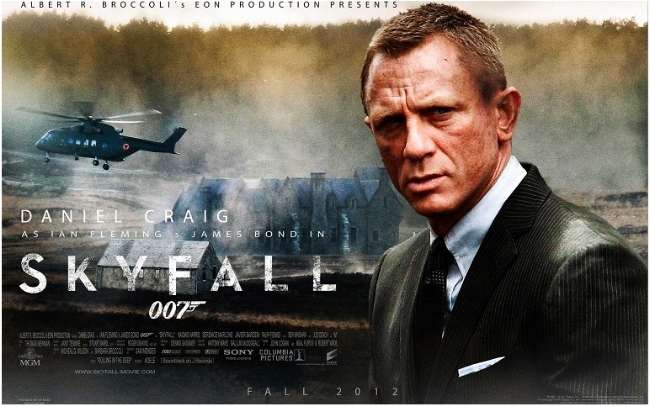
There's nothing better than being proved wrong and having your fears allayed. Sam Mendes was absolutely the right choice to direct the twenty third James Bond movie and delivered a film that embraces both the old and the new. Skyfall was an outstanding way to celebrate fiftieth anniversary of the franchise. This is one of the few occasions when the actual movie managed to live up to the respective hype and marketing. Skyfall is 143 minutes of pure Bond and much more. Seldom has series had this depth of story, characterisation and intelligence. It is a lot closer to Goldfinger than it is Moonraker and offers a fresh perspective on the iconic agent. This is not about defeating some villain in his volcano lair. Skyfall is about the very nature of espionage and the effects upon those who work in its twilight world.
There's nothing better than being proved wrong and having your fears allayed. Sam Mendes was absolutely the right choice to direct the twenty third James Bond movie and delivered a film that embraces both the old and the new. Skyfall was an outstanding way to celebrate fiftieth anniversary of the franchise. This is one of the few occasions when the actual movie managed to live up to the respective hype and marketing. Skyfall is 143 minutes of pure Bond and much more. Seldom has series had this depth of story, characterisation and intelligence. It is a lot closer to Goldfinger than it is Moonraker and offers a fresh perspective on the iconic agent. This is not about defeating some villain in his volcano lair. Skyfall is about the very nature of espionage and the effects upon those who work in its twilight world.
After an exhilarating chase scene set in Turkey, which is totally free from shaky cam and lightning editing that still plagues contemporary cinema, the iconic title credits roll. There are many familiar names that have long been associated with the series over the previous decades. Stunts co-ordinator Gary Powell, miniature and physical effects by Chris Corbould for example. Veteran editor Stuart Baird ensures that you get to see what is actually going on (thank you Mr. Baird). The stunning titles, once again created by Daniel Kleinman. There is also a lot of new talent. Production designer Dennis Gassner brings a fresh and exciting feel to the movie. Roger Deakins' photography is stunning with a vivid colour palette. London has seldom looked so good. The only aspect of the film that didn’t quite chime with me is Thomas Newman contemporary score. It does however touch upon the traditional bond themes and musical idioms.
The plot is simple yet provides a far greater degree of character development and exploration of wider themes. M (Judi Dench) is thrown to the wolves after losing a vital hard drive containing operational data, along with one of her best filed agents. Her replacement Gareth Mallory (Ralph Fiennes) is already waiting in the wings to reform the department. Matters get worse when M becomes the target of vengeful agent Silva (Javier Bardom). Enter 007 (Daniel Craig) returning to MI6 after being presumed dead. However, Bond is not at the top of his game, yet is the only operative that M can trust to resolve the situation. The trail takes Bond from Shanghai, to Macau and then on to London. It becomes clear that Bond must take charge of the fight and returns to his family home of Skyfall to await a final confrontation with Silva.
Sam Mendes crafts a Bond movie that includes all the best aspects of the franchise. The locations, set pieces and glamour are all present. He also manages to bring Bond into the twenty-first century and make MI6 relevant in the current political climate. Skyfall succeeds in being quite thought provoking and showcases exceptionally strong performances from Dame Judi Dench and Daniel Craig. The dynamic between these two characters comes full circle and is both touching and sad. The original gallows humour that Connery brought to the series and that Moore turned into high camp, is present and exceedingly dry. There are moments of self-reference but rather than being indulgences work very well. Adele's theme song is also a welcome throwback.
Javier Bardom is a charismatic villain. His charm and flamboyance are deceptive and when he descends into violence, it is all the more disturbing. Whilst on the subject of content, it should be noted that Skyfall is quite a hard PG-13 (12 certificate) movie. The fights are superbly choreographed and shot. Violence is not trivialised or mitigated with a crass quip. The new Q (Ben Wishaw) is engaging and the film is not smothered by an excess of gadgetry, although it clearly shows the role that technology plays in the world of espionage. It would be a crime for me not to mention the outstanding cameo made by Albert Finney. Let it suffice to say only an actor of his calibre could play such a part.
Considering the evolution of the action movie genre over the last four decades, Skyfall is a prime example of quality film making in an old school idiom. It works so well because all involved truly understand the material and the nature of the audience. Skyfall is in many ways Bond finally coming of age. Is it the best entry in the series? Very possibly. It has so much more to offer than just the superficial, featuring robust performances and a strong narrative arc. Furthermore, the movie's resolution offers a great deal of scope for further exploration of this new and revitalised James Bond. The franchise has been markedly changed by Skyfall successfully combining populist entertainment with quality acting and new found narrative depth.
The Living Daylights (1987)
Timothy Dalton is possibly the most technically accomplished and prestigious actor to have played the iconic MI5 agent, James Bond. He was in fact asked by Cubby Broccoli to play the role back in 1969 shortly after Connery's departure from the franchise. Broccoli had been impressed by Dalton’s performance in The Lion in Winter. However, Dalton himself felt he was too young for the job at the time. After Roger Moore retired from the role in 1985 it looked like Pierce Brosnan would certainly to get the part. However, due to contractual reasons and prior commitments, he was not unable to fulfil the proposed shooting schedule. So, Dalton landed what was at the time, the most prestigious action role in film making, by default.
Timothy Dalton is possibly the most technically accomplished and prestigious actor to have played the iconic MI5 agent, James Bond. He was in fact asked by Cubby Broccoli to play the role back in 1969 shortly after Connery's departure from the franchise. Broccoli had been impressed by Dalton’s performance in The Lion in Winter. However, Dalton himself felt he was too young for the job at the time. After Roger Moore retired from the role in 1985 it looked like Pierce Brosnan would certainly to get the part. However, due to contractual reasons and prior commitments, he was not unable to fulfil the proposed shooting schedule. So, Dalton landed what was at the time, the most prestigious action role in film making, by default.
By 1987 there had been a major shift in the production of action movies. The traditional spy genre was in decline. "Cop Buddy" films were becoming increasingly popular and relying more on the major set pieces to bolster their appeal. The ubiquitous action hero was being transformed by such films as Lethal Weapon, Die Hard and Rambo. The expensive and complex action sequences that had for over a decade had been the exclusive province of the Bond franchise, were now becoming common place in many other movies. The competition was raising their game, so Bond needed to modernise and shake off some of the more archaic aspects of his heritage if he wished to remain a viable franchise. The change of actor presented the production with an ideal opportunity to address this very issue.
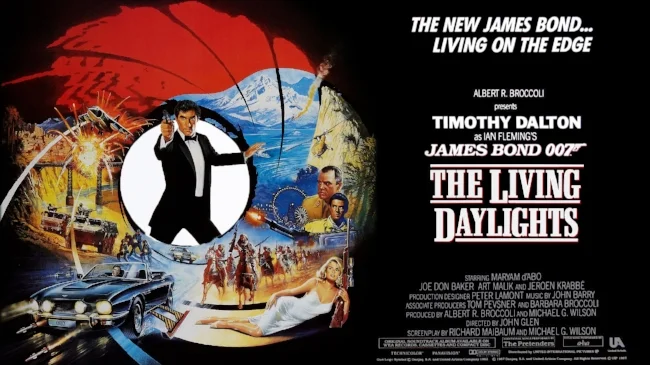
Director John Glenn decided to use Daltons acting skills as an opportunity to go back to basics and return Bond to the character found in the Fleming’s books. Out went the one liners to soft pedal the violence, that Moore had made his own during his tenure. The screenplay by Ricard Maibaum and Michael J. Wilson therefore maintained the charm along with the panache but it also introduced a ruthless and somewhat cold edge to Bond’s personality. Furthermore, the plot was dialled back from previous extremes to tell a more grounded story set in against the contemporary issues of the time. As a result, Bond this time round, finds himself up against rogue KGB officer, General Georgi Koskov (Jeroen Krabbé), who rekindles an old feud between the two governments respective security services, as a cover for his illegal arms and drugs trafficking in Afghanistan. As another concession to changing times was a subtle reduction in Bond’s promiscuity and a female lead (Maryam d'Abo) who had more depth than usual.
The Living Daylights is therefore a revisionist entry into the series. It stands out along with On Her Majesties Secret Service and For Your Eyes Only as being closer in spirit to the source text. As ever with the franchise this instalment has some very good action sequences and the hand to hand fights scenes are gritty and tough. This was the first film where Bond head butts an opponent, a move that had previously deemed “out of character”. The villainous Necros (Andreas Wisniewski) has a particularly vicious fight with a MI5 agent and at a one point, holds his face against a hot grill. It is a notable change of tone from the camper Roger Moore era. The Living Daylights also has less reliance on the ubiquitous gadgets of "Q" branch. They are present but not quite as preposterous. The overall effect of all these changes was to bring the series back in touch with reality after decades of excess and comic banter.
The Living Daylights also marks the last soundtrack in the Bond franchise to be scored by the great John Barry. He had up until this point written the score for eleven of the Bond films. His contribution to Bond per se is invaluable and certainly his unique lush style helped shaped the image and perception of the character. The title song for the movie, by Swedish band A-ha (Co-written by Barry) works very well as a signature motif throughout the film. The music cues used during Bonds roof top escape in Tangiers and the airfield battle in Afghanistan make use of clever variations of this theme. The film also features two songs by The Pretenders, who at one point were contracted to provide the title theme. However, the producers felt that A-ha were more commercially viable and hoped to repeat the success that they’d had with Duran Duran in the previous film. As ever the material from The Pretenders is of a high standard and Barry manages to work instrumental arrangements of both songs into both the romantic and action scenes. However, it is the piece Barry composed for the "Mujahadin" that stands out the most in the film. Its simplistic beauty encapsulates his talent and remains an example of his finest work.
The pre-digital visual effects work in The Living Daylights are also of note. Industry veteran John Richardson does wonders with traditional methods and techniques. The scale model Lockheed C-130 Hercules used at various points in the film is utterly convincing and the destruction of the Afghan trestle bridge at the film climax, is achieved by the use of a foreground miniature. The aerial sequences featuring stuntmen BJ Worth and Jake Lombard still impress thirty years on. Once again this proves how physical effects and genuine stunts have a great sense of credibility over their computer-generated counterparts. The climactic battle between Bond and Necros in the open cargo bay of a Hercules transporter is a benchmark in eighties action sequences.
Despite changes in public tastes and attitudes The Living Daylights still performed well at the box office. Critically the new bond movie met with a mixed reception but by and large Timothy Dalton was praised. His performance it tonally spot on and his acting range is more than adequate for the scope of the role. As an action movie it is well structured, involving with first class production values. As a Bond movie The Living Daylights has enjoyed a reassessment in recent years and is now seen as a wise change in the franchise’s game plan. However, as the eighties were drawing to a close, the producers were becoming increasingly concerned about the future of the franchise. They decided to tackle the competition head on with the next entry but the radical change in tone along with poor marketing ended up putting James Bond on hiatus for the next six years. It’s a shame because Dalton was never given an adequate chance to build a relationship with fans. I suspect he could have gone on to have made at least two more compelling movies but sadly he fell victim to production delays that ensued.
Licence to Kill (1989)
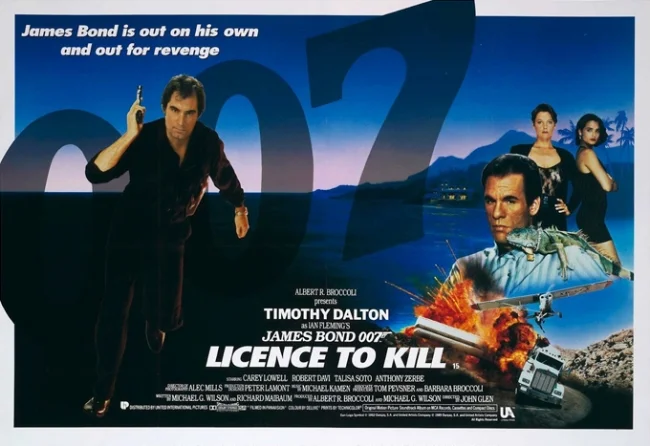
Licence to Kill was the sixteenth instalment in the James Bond series and the last to star Timothy Dalton as MI6 agent James Bond. He sadly only made two and remains an underrated Bond. Licence to Kill was also the first official James Bond film to use a title not derived from either an Ian Fleming novel or a short story. However, it does contain characters and elements from Fleming's novel "Live and Let Die" and the short story "The Hildebrand Rarity". The film follows Bond's dismissal from MI6 and his vendetta against a South American drug baron. The film was originally due to be called "Licence Revoked" but was changed allegedly to avoid confusion with American audience
Licence to Kill is the sixteenth instalment in the James Bond series and the last to star Timothy Dalton as MI6 agent James Bond. He sadly only made two movies and remains an underrated Bond. Licence to Kill was also the first official James Bond film to use a title not derived from either an Ian Fleming novel or a short story. However, it does contain characters and elements from Fleming's novel "Live and Let Die" and the short story "The Hildebrand Rarity". The film follows Bond's dismissal from MI6 and his vendetta against a South American drug baron after an attack on his friend Felix Leiter. The film was originally due to be called "Licence Revoked" but was changed allegedly to avoid confusion with American audiences.
Licence to Kill was one of the least commercially successful Bond films. It had production costs of approximately $36 million and made only $156 million back at the box office. The previous Bond outing, The Living Daylights had made over $196 million. This drop can be attributed to the decision to release the film in the summer, in direct competition with Lethal Weapon 2, Indiana Jones and the Last Crusade (starring former Bond Sean Connery) and Batman. Bond films have traditionally been Autumn releases. Due to the death of screenwriter Richard Maibaum and subsequent legal battles over the ownership of the James Bond series, there was a subsequent six year hiatus until the next Bond movie Goldeneye in 1995. Licence to Kill has many unique factors that make it a milestone within the Bond franchise.
Licence to Kill has many unique factors that make it a milestone within the Bond franchise. It the first Bond film to be rated PG-13 in the US and 15 in the UK; all previous films were PG. Violent scenes still had to be trimmed in both the UK and US to avoid a higher classification. Director John Glen decided to make the film stronger in tone to directly compete with the contemporary competition. Action films had become more prevalent during the eighties and often included expensive and elaborate set pieces. These had been in the past the exclusive province of the Bond films. However, the release of the James Bond "Ultimate Editions" on DVD in 2006, restored all previously cut material. The fully uncut print was also sourced for the more recent Blu-ray disc in 2009.
Licence to Kill featured another major change for the franchise. Veteran Bond composer, John Barry was not available at the time of the post production, as he was undergoing throat surgery. Therefore, the soundtrack was composed and conducted by Michael Kamen, a British composer who had already scored several action films such as Lethal weapon and Die hard. Licence to Kill, despite poor financial returns, did perform well with numerous critics. It is still a source of division among fans. It is hard edged, minimalist and reflects the tone of Fleming's early novels very well. Dalton's performance, the lack of fanciful gadgets and glib one liners, is a radical change in style from the self-parodying excesses of Moonraker. Director John Glen deemed it to be the best of his five Bond films. On reflection, the market at the time was simply not ready for such a radical shift in the franchise. It is ironic that Casino Royale successfully managed to make such a change seventeen years later.
Becoming Bond (2017)
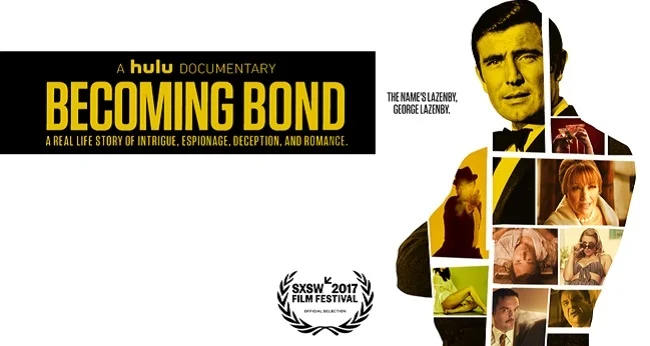
Becoming Bond is a curious documentary in so far as it’s totally dependent on whether the viewer believes the story that George Lazenby tells. Because George is obviously a well-practised raconteur one gets the impression that many of the anecdotes and vignettes he recounts have been embellished for artistic effect. He has that easy going, informal Australian charm and frequently smiles ironically, as director Josh Greenbaum, quizzes him off camera over the voracity of his tale. Mr. Lazenby also treads that fine line between being a likeable rogue and a bit of a dick, especially when he focuses on his youth. Yet he broadly keeps to the right side of this and maintains the audiences’ good will.
Becoming Bond is a curious documentary in so far as it’s totally dependent on whether the viewer believes the story that George Lazenby tells. Because George is obviously a well-practised raconteur one gets the impression that many of the anecdotes and vignettes he recounts have been embellished for artistic effect. He has that easy going, informal Australian charm and frequently smiles ironically, as director Josh Greenbaum, quizzes him off camera over the voracity of his tale. Mr. Lazenby also treads that fine line between being a likeable rogue and a bit of a dick, especially when he focuses on his youth. Yet he broadly keeps to the right side of this and maintains the audiences’ good will.
As he recounts his life story from his impoverished youth in Australia, to his days as a car salesman then a male model, the vignettes play out as an episodic drama. Josh Lawson (Superstore, House of Lies) plays Lazenby and there are several high-profile cameos from the likes of Jeff Garlin as Bond movie producer Harry Saltzman, former Bond Girl Jane Seymour as George's agent. These scenes usually have a comic tone, which at times come dangerously close to undermining the credibility of George’s story. Yet as soon as the narrative approaches such a tipping point, it’s reined in with a smile and a nod from Mr. Lazenby. There’s also a curiously melancholic streak in the proceeding with a reoccurring tale of a love lost.
George Lazenby is certainly not afraid of sharing his faults, making no attempt to dodge some of the less edifying aspects of his life and personality. He is also candid about his perceived arrogance which may be more of a failure by others to understand and appreciate Australian cultural foibles. When the story finally arrives at 1968 when Eon Productions were recasting the role of Bond, things become a lot clearer. Lazenby simply didn’t fully appreciate the consequences of taking onboard the most prodigious movie role of the time. He approached it in good faith and seemed to have fun making the actual film, yet he couldn’t cope with the requirements of stardom both leading up to and after the shoot. Certainly, the slave contract he was offered by Saltzman and Broccoli was iniquitous and would have driven any sane actor mad.
By the end of Becoming Bond, although I cannot say that I was fully conversant with the exact reasons why this man walked away from a six-movie contract and a million pounds in cash, I had a good idea. George Lazenby just wanted to be himself and not forever in the shadow of James Bond. Curiously enough, the late Roger Moore felt quite the opposite but that’s folk for you. No two are exactly alike. I genuinely felt sorry for the way that Lazenby was effectively hounded out of the movie industry, never having been a fan of closed shops or those with a strangle holds over certain businesses. Yet he found contentment in real estate, subsequently raised a family and seems to have come to terms with it all. Whether it all played out the way he tells it is debatable but he certainly offers viewers an entertaining autobiography to consider.





What is Your Favourite Bond Title Song?
There are many subjects that when mentioned will quickly start an argument. Who’s the best Doctor Who? (and it isn’t David Tennant), do Balrogs have wings? (no, read the text again) and of course that old chestnut, “Data or Spock?”. Then there’s the thorny issue of Bond film title songs. We now have twenty-four to choose from. Obviously, your age group and musical preferences will shape your opinion. As well as when you started viewing the franchise. I personally have very particular views on the subject, hence this post. So here for your edification are five of my personal favourites, each with a few thoughts about why they are of merit. Feel free to leave comments with your own opinions. I’m sure we won’t fall out over the matter. Unless you like Sheryl Crow.
There are many subjects that when mentioned will quickly start an argument. Who’s the best Doctor Who? (and it isn’t David Tennant), do Balrogs have wings? (no, read the text again) and of course that old chestnut, “Data or Spock?”. Then there’s the thorny issue of Bond film title songs. We now have twenty-four to choose from. Obviously, your age group and musical preferences will shape your opinion. As well as when you started viewing the franchise. I personally have very particular views on the subject, hence this post. So here for your edification are five of my personal favourites, each with a few thoughts about why they are of merit. Feel free to leave comments with your own opinions. I’m sure we won’t fall out over the matter. Unless you like Sheryl Crow.
First and in no order of preference we have Goldfinger. Composed by John Barry and with lyrics by Leslie Bricusse and Anthony Newley, this iconic song was performed by Shirley Bassey (although it was originally intended that Newley would record it). Like the film, it was a huge commercial success in both UK and US music charts. What can be said about this song, other than the fact that it personified the emerging Bond franchise at the time. Well it’s brassy and ballsy, plus Bassey's delivery of the lyrics is superb. The whole song just oozes sixties cool and has subsequently become indelibly associated with the series. Curiously enough, despite the songs success, Barry and Bricusse only collaborated on one further Bond title song.
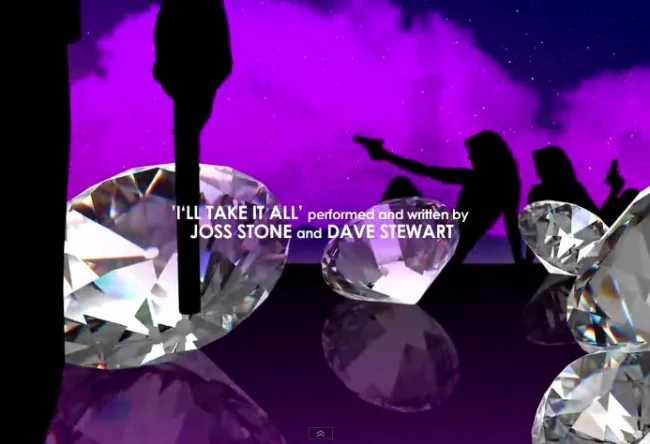
Next, we have my first of our controversial choices, because technically this is not a song from one of the film, but from an 007 game. However, before you all start spitting tacks and writing to your duly elected representative, I would point out that Bloodstone was an officially sanctioned product. Plus I really like this track and it is my blog, so there! Being editor has to have some benefits. I'll Take It All written by Dave Stewart and Joss Stone and performed by Joss Stone herself, is a solid Bond title song that understands the idiom and legacy of the franchise. It is yet another example of how the gaming industry equals the production values of the movie business. I'll Take It All is smart, powerfully delivered and could easily have graced the title credits in one of the more recent Bond films.
1977 saw the release of the biggest Bond film to date, namely The Spy Who Loved Me. Nobody Does It Better, a power ballad composed by Marvin Hamlisch with lyrics by Carole Bayer Sager, was performed by Carly Simon. It was the first Bond theme song to be titled differently from the name of the film, although the phrase "the spy who loved me" is included in the lyrics. In some ways, this song is the complete opposite of Goldfinger, representing what Bond had become in the seventies. It is a very sexual and self-assured composition, verging on self-parody. Therefore, is perfectly enshrines the Roger Moore years and is also a damn fine song in its own right.
Here is another wild card. The 1969 Geroge Lazenby Bond film, On Her Majesties Secret Service, differed from most others by having an instrumental theme song, played over the titles. Composer John Barry opted to use more electrical instruments and crafted a slick instrumental based around a Moog synthesizer and under pinned by his peerless use of brass. This musical piece is both clever and stylish and certainly imbued this particular Bond outing with a subtly different ambience. But On Her Majesties Secret Service was not a typical Bond film and has in recent years been re-evaluated. It is more thoughtful and experimental, which is exactly what Barry brought to the table with his core and main theme.
Finally, we have a personal favourite of mine, You Know My Name. This intelligent, strong and enigmatic song performed by ex Soundgarden frontman Chris Cornell, fits perfectly into the title of the 2006 Bond reboot Casino Royale. Written by David Arnold and Cornell himself, it has always amazed me that the film’s producers allowed such an experimental (by Bond standards) approach to the title song. The song itself is oblique and somewhat discordant, yet it encapsulates the new Bond of the twenty first century. Gone is the smug caricature. We now have a song that explores the social isolation and the uncertainty of carrying a license to kill. This track perfectly complements Daniel Kleinman's opening credits and sets a new standard for the franchise.
Everything or Nothing: The Untold Story of 007 (2012)
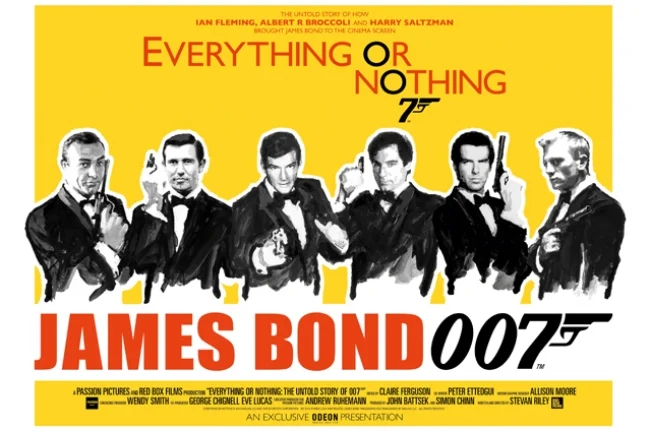
Everything or Nothing: The Untold Story of 007 is a lot more than just some bit of fluff, promotional documentary celebrating the 50th anniversary of the Bond movies. It is quite a frank insight into the history of the Bond franchise, although it is very much told from the perspective of EON productions. The movie title comes from the production company acronym “Everything or Nothing” which was formed by Harry Saltzman and Albert “Cubby” Broccoli. Although somewhat partisan in its tone, this is not a rose-tinted exploration of the staggering success of Ian Fleming’s iconic character. The documentary does in fact make you rethink many notions you may have had about certain high profile Hollywood stars and producers.
Everything or Nothing: The Untold Story of 007 is a lot more than just some bit of fluff, promotional documentary celebrating the 50th anniversary of the Bond movies. It is quite a frank insight into the history of the Bond franchise, although it is very much told from the perspective of EON productions. The movie title comes from the production company acronym “Everything or Nothing” which was formed by Harry Saltzman and Albert “Cubby” Broccoli. Although somewhat partisan in its tone, this is not a rose-tinted exploration of the staggering success of Ian Fleming’s iconic character. The documentary does in fact make you rethink many notions you may have had about certain high profile Hollywood stars and producers.
Initially focusing on author Ian Fleming’s struggles to get the novels filmed, the curious catalogue of failures that brought Saltzman, Broccoli and United Artists together are quite fascinating. As the franchise grew and started to gain momentum it seems inevitable that all parties would eventually fallout. Artistic differences, financial remuneration, taxes and ego all played a part. Then of course there was the problem of how a joint writing venture with Kevin McClory led to rights disputes and a series of legal battles that would drag on for decades. It ultimately led to the unofficial Bond movie Never Say Never Again being made in 1983. Unlike other popular franchises the Bond series has also had to face the trauma of recasting it’s lead actor not once but five times.
The documentary speaks to all actors who have played Bond, except Sean Connery, although his views are still adequately represented by archive footage. There is considerable candour from George Lazenby, Timothy Dalton and Pierce Brosnan. Lazenby is very clear as to why he lost the role that he worked so hard to obtain. Dalton’s Bond suffered by arriving at a time when the franchise was in transition. He still remains in my view the Bond that deserved at least more film. Brosnan also gives an honest account of the effects of playing such an iconic role and how he vividly remembers the filming of Goldeneye, but how the sequels are all blurs. Everything or Nothing: The Untold Story of 007 is greatly enhanced by well-placed clips from the various movies to under pin the narrative, as well judicious use of John Barry’s various scores.
As previously mentioned the documentary’s candid approach doesn’t always paint a favourable picture. Mr. Connery is shown to apparently hold a grudge. Money often seems to be the cause of disharmony within the core production team. Plus many have frequently been or still remain tax exiles, a stance that seems to be increasingly unpopular in contemporary society. Yet despite the troubles that have beset the franchise over its fifty years, it still managed to reinvent itself and remain popular, commercial and relevant. What Everything or Nothing: The Untold Story of 007 demonstrates is that regardless of talent, marketing and the full weight of Hollywood, to be truly successful still requires an element of luck as well as being in the right place at the right time. This is why so many other lesser franchises will never get to celebrate a 50th anniversary.
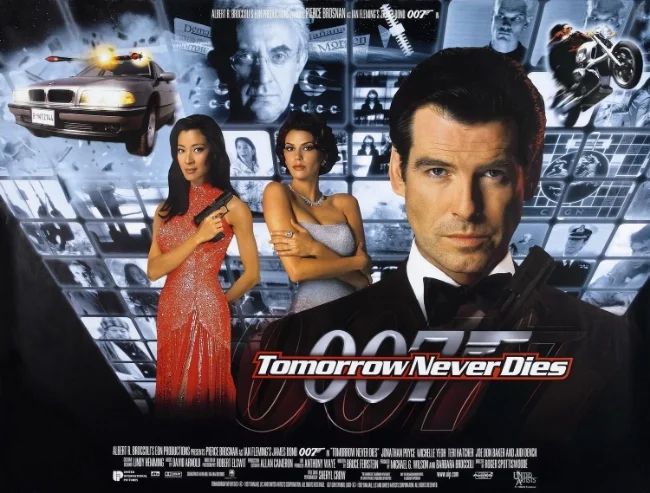
Tomorrow Never Dies (1997)
By the time the Bond franchise had reached its 18th incarnation in 1997 with Tomorrow Never Dies, the coveted opportunity to provide the title track was chosen through a competitive tender process. There were twelve submissions made for the movie, including songs from Swan Lee, Pulp, Saint Etienne, Marc Almond, Sheryl Crow and David Arnold. Arnold had already been personally recommended to compose the film’s soundtrack by Bond veteran John Barry, who had retired from the series in 1987.
By the time the Bond franchise had reached its 18th incarnation in 1997 with Tomorrow Never Dies, the coveted opportunity to provide the title track was chosen through a competitive tender process. There were twelve submissions made for the movie, including songs from Swan Lee, Pulp, Saint Etienne, Marc Almond, Sheryl Crow and David Arnold. Arnold had already been personally recommended to compose the film’s soundtrack by Bond veteran John Barry, who had retired from the series in 1987.
The producers eventually chose Sheryl Crow's track for the main titles, while David Arnold's song "Surrender" performed by K.D. Lang, was relegated to the end titles. Arnold’s song had obviously been a very serious contender at one point as its melody occurs in various cues throughout the film. The decision to parachute Crows song into the iconic title sequence was more than likely based on commercial considerations. However, "Surrender" is an infinitely superior song, written in a traditional Bond idiom and performed in a similarly appropriate fashion.
This is yet another example of the many “curious” business decisions that have been made regarding the Bond movies over the last fifty years. Others include the removal of George Lazenby after one movie and the decision to release Licence to Kill in the summer of 1989, thus competing with Lethal Weapon 2, Indiana Jones and the Last Crusade and Batman. Yet despite these odd choices the franchise still remains a major box office attraction and K.D. Lang’s "Surrender" is still the epitome of a Bond title song, even if it never quite achieved that status.
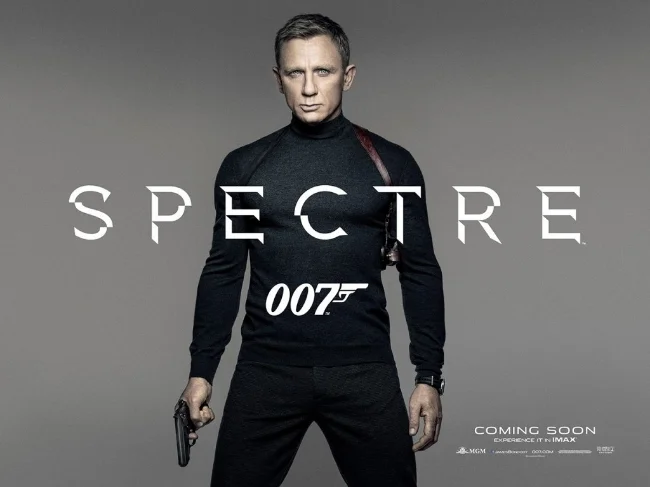
SPECTRE (2015)
Sam Mendes brought a degree of depth to Skyfall which we've not seen in a Bond movie for a long time. SPECTRE continues in the same vein as its predecessor with an involving plot, fully rounded characters and some finely honed set pieces. I like this approach to Bond and feel that a more cerebral interpretation of the character is not only beneficial for the franchise but to the genre itself. If SPECTRE does turn out to be Daniel Craig’s swansong as James Bond then it will be a fitting epitaph.
Sam Mendes brought a degree of depth to Skyfall which we've not seen in a Bond movie for a long time. SPECTRE continues in the same vein as its predecessor with an involving plot, fully rounded characters and some finely honed set pieces. I like this approach to Bond and feel that a more cerebral interpretation of the character is not only beneficial for the franchise but to the genre itself. If SPECTRE does turn out to be Daniel Craig’s swansong as James Bond then it will be a fitting epitaph.
Much has been made of SPECTRE’s running time, which at one hundred and forty eight minutes makes it the longest entry in the franchise since On Her Majesties Secret Service. However none of that time is squandered and the production balances the pace well between action scene and narrative exposition. The plot is straight forward but allows for moments of introspection. MI6 is under threat of closure and replacement by surveillance and drones. Bond goes AWOL after receiving a posthumous message from the previous M (Judi Dench). The tip leads him to the nebulous crime organisation SPECTRE and a face from his past in the guise of sockless villain, Franz Oberhauser (Christophe Waltz).
Daniel Craig once again shows his total ownership of this role, bringing nuance and subtlety. Bond is a complex man and not just a hired assassin. He has convictions, loyalties and weaknesses. SPECTRE also affords an opportunity for the supporting cast to do more than usual. Ben Whishaw excels as Q and has the lion share of the movies amusing quips. Ralph Fiennes again shows that M is more than just a bureaucrat. But it is Léa Seydoux as Dr Madeleine Swann who adds weight to SPECTRE. It makes a change to see such a well-crafted female lead in a Bond movie. Christope Waltz is suitably menacing although his evil propensities are somewhat telegraphed by his Nehru jacket.
SPECTRE benefits greatly from concise action scenes. The opening helicopter fight is gripping and impressive without being bloated or excessive. The production once again uses minimal CGI FX work, relying on superb miniature and physical effects. The demolition of the MI6 headquarters at Vauxhall is particularly impressive, maintaining a sense of scale and mass. It should be noted that SPECTRE pushes the limits of the 12 rating (UK). It is tonally very bleak and has two scenes that contain surprisingly unpleasant violence (all of which is justified). Bond movies have never been family films irrespective of what some viewers may erroneously think.
If I have a criticism with SPECTRE then it lies with Thomas Newman’s score. The soundtrack is perfectly functional and provides an adequate ambient back ground track. But it is no more than an accompaniment and never asserts any personal identity upon the proceedings. John Barry wrote cues that not only embellished the Bond franchise but which stayed with you when you left the movie theatre. I enjoyed SPECTRE a lot but remember nothing of Newman’s score.
Skyfall set a new benchmark for Bond and although SPECTRE does not necessarily exceed that standard, it most definitely provides more of the same. Where many film makers are hamstrung by the perceived constraints of the PG-13 action movie market, Sam Mendes proves that it doesn't have to be an artistic or creative handicap. SPECTRE is a robust and entertaining entry in to the canon, tempered by a healthy streak of gallows humour. It will be very interesting to see where Bond goes from here.
James Bond Novels
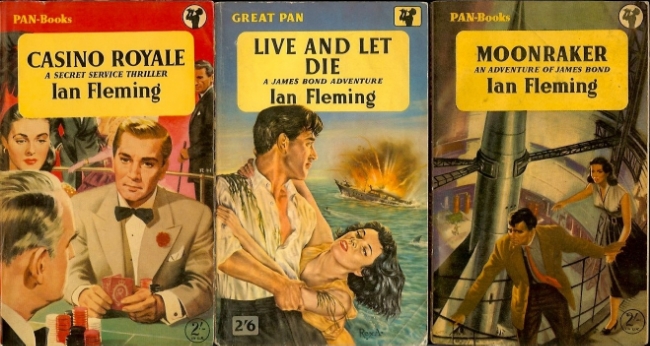
I recently started reading fiction again after spending half a year focused upon academic subjects and ploughing my way through numerous non-fiction books. I’ve always been a fan of the Bond franchise so decided it was time to familiarise myself with Ian Flemings’ the source material. The results so far have proven to be quite surprising and not at all as I expected. I managed to purchase the first seven novels in the series from a second hand book shop and have so far completed five of them. I also have audio book version available of the all of Fleming’s stories should I need to consume them in such a fashion.
I recently started reading fiction again after spending half a year focused upon academic subjects and ploughing my way through numerous non-fiction books. I’ve always been a fan of the Bond franchise so decided it was time to familiarise myself with Ian Flemings’ the source material. The results so far have proven to be quite surprising and not at all as I expected. I managed to purchase the first seven novels in the series from a second hand book shop and have so far completed five of them. I also have audio book version available of the all of Fleming’s stories should I need to consume them in such a fashion.
One of the first things that stands out when reading Fleming’s novels, is how the books notably vary from the films. The stories are often quite minimalist and not especially as epic in scope as the movies. The content is often quite adult and very much reflects the mood and prevailing sensibilities of the times. Remember that Fleming created these books during the 1950s which were a particularly hard time for the United Kingdom. The country was virtually bankrupt and dealing with the demise of its Empire. America was in ascendancy, both politically and economically and the Cold War dominated international foreign policy.
The Bond franchise focuses of many things that would appeal to the reading public of the time; namely the glamour and opulence that was missing from their lives. Fleming is a master at describing exotic foreign travel, fine cuisine and “playboy” lifestyle. The depiction of sexual activity is quite candid for the times, although it betrays the patronising attitude prevalent to women during that era. There are also a lot of themes that will strike today’s reader as simply xenophobic and racist. Context in key in not allowing such elements to impair ones enjoyment..
“Casino Royale” and “Live And Let Die” are both fairly straight forward thrillers. The events are far from incredulous and the stories progress at a rapid pace. The use of violence is striking and well written. Bond being tortured by having his genitals beaten still has the power to shock. But it is not until “Moonraker” that the books truly hit their stride. The storylines have become a little more complex and you feel that this is the Bond that you remember. “Diamonds Are Forever” and “From Russia With Love” further demonstrate this. The style is very compelling and the characters are well defined. The locations and organisations that feature are meticulously researched. Fleming shows a knack for maintaining tension.
The modern spy or espionage novels owe a tremendous amount to the legacy of Ian Fleming. His own experiences in Naval Intelligence and as a journalist afforded him the ability to create credible and absorbing stories. His own personality trait, such as his penchant for women and the “bon viveur” lifestyle, permeates his writing. For British readers enduring the hardship of the post-war austerity years, he gave glimpses of the world beyond their shores and a lifestyle they could only dream of.
It may be difficult for modern readers to connect to the world in which Bond exists, as it is now removed by several generations. It lacks a lot of the technology that people now associate with the franchise due to the movies. The books also showcase a lot of social conventions and geo-political outlooks that contemporary audience may struggle to identify with. However for those who are prepared to look beyond these points, and embrace the culture of the times, Fleming work provides an intriguing insight into post-colonial Britain that has long gone. He also still offers robust and entertaining spy yarns, especially in the later novels.
For Your Eyes Only (1981)
After the ludicrous (but fun) excesses of Moonraker, the twelfth James Bond film For Your Eyes Only took a “back to basics” approach to its plot. Former Bond editor John Glen was promoted to director and remained so for five movies. The movie is unusual compared to other Bond films in several ways. It directly references Tracy Bond, 007’s deceased wife, with an opening sequence showing Bond placing flowers on here grave. Apart from a passing comment in The Spy Who Loved Me, this has never been done since and has now been eliminated from the plot in the 2006 reboot of the franchise. For Your Eyes Only is also the first Bond movie to include the title song artist in the opening credits.
After the ludicrous (but fun) excesses of Moonraker, the twelfth James Bond film For Your Eyes Only took a “back to basics” approach to its plot. Former Bond editor John Glen was promoted to director and remained so for five movies. The movie is unusual compared to other Bond films in several ways. It directly references Tracy Bond, 007’s deceased wife, with an opening sequence showing Bond placing flowers on here grave. Apart from a passing comment in The Spy Who Loved Me, this has never been done since and has now been eliminated from the plot in the 2006 reboot of the franchise. For Your Eyes Only is also the first Bond movie to include the title song artist in the opening credits.
Bond regular John Barry was not available at the time to compose the film’s score, so personally recommended Bill Conti. Conti, famous for the soundtracks to the Rocky series, provided an interesting blend of traditional brass elements along with elements of funk and disco. It was not to everyone’s tastes and remains a hotly debated score within fan circles. This along with the producers decision to include some light comic relief with a scene featuring Prime Minister Margaret Thatcher (played by Janet brown) at the movies end, are the only weak points in an otherwise strong entry in the Bond canon.
The title song, written by Conti and Michael Leeson, was sung by Sheena Easton and proved to be a commercial success. However this was not the producer’s original choice. Blondie were initially sought to perform the title song and the band even went so far as to write an original track titled “For Your Eyes Only”. However they ultimately declined the offer to work on the movie as they would have been contractually bound to record a cover of Conti’s song, rather than use their own material. Blondie’s song subsequently appeared on their 1982 album The Hunter. The track displays all the hallmarks of singer Deborah Harry and guitarist/song writer Chris Stein and is radically different from Sheena Easton’s track. If used it certainly would have put a different inflection upon For Your Eyes Only.