
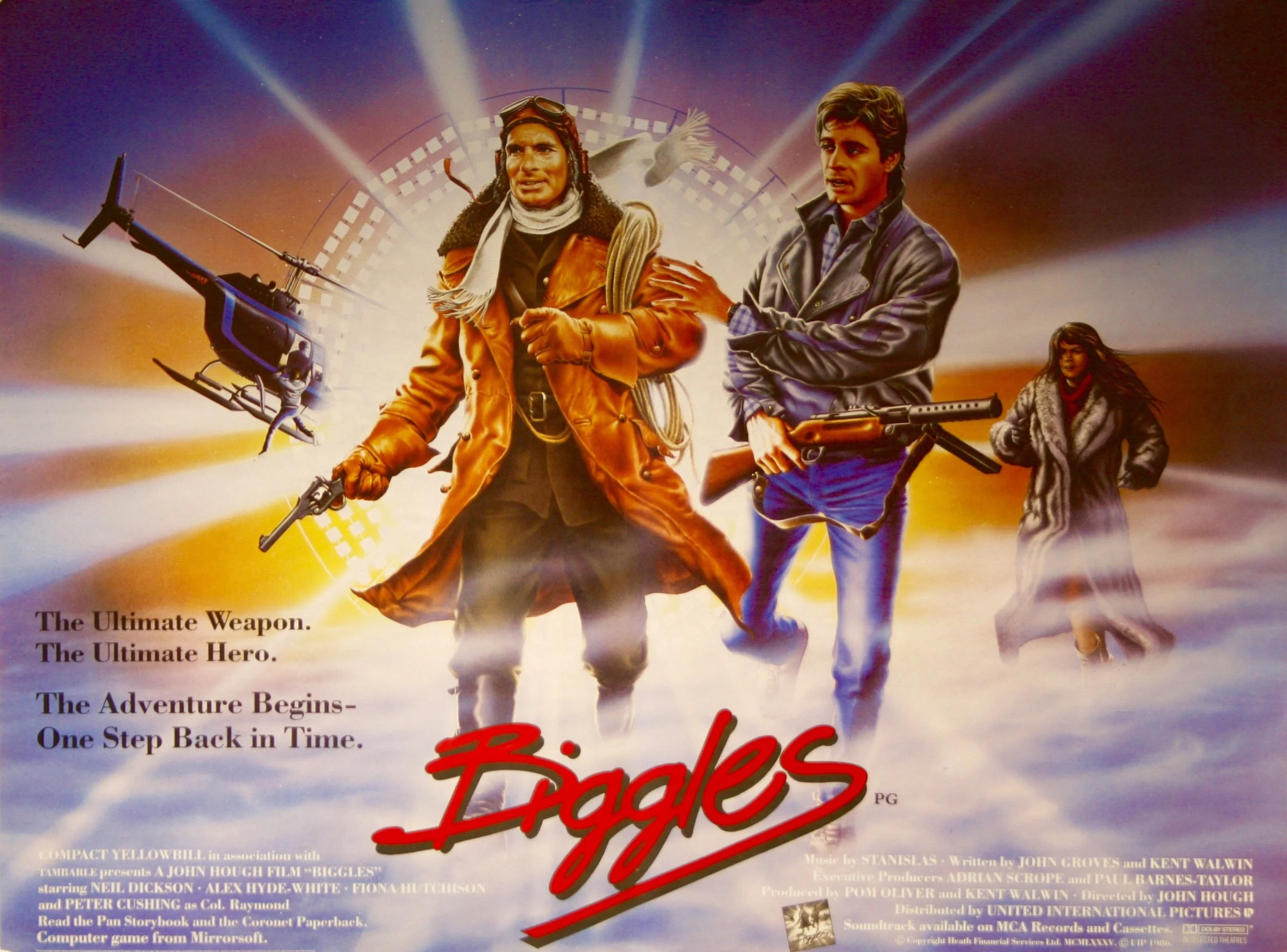
Biggles (1986)
After the success of Raiders of the Lost Ark in 1981, filmmakers scrambled to find existing intellectual properties that they could use for similar films. Hence archaic heroes such as Alan Quatermain were hastily given a modern makeover and thrust into generic movies, in a vague attempt to replicate Steven Spielberg’s successful formula. Which brings us neatly on to James Charles Bigglesworth AKA “Biggles”, a fictional pilot and adventurer from a series of books written by W. E. Johns between 1932 and 1968. Several attempts had been made in the past to bring this character to the silver screen, including one by Disney but they all failed. However, the commercial and critical success of Indiana Jones provided sufficient impetus to greenlight a new film. However, due to some curious production choices, when Biggles was finally released it was far from just a period set, action movie.
After the success of Raiders of the Lost Ark in 1981, filmmakers scrambled to find existing intellectual properties that they could use for similar films. Hence archaic heroes such as Alan Quatermain were hastily given a modern makeover and thrust into generic movies, in a vague attempt to replicate Steven Spielberg’s successful formula. Which brings us neatly on to James Charles Bigglesworth AKA “Biggles”, a fictional pilot and adventurer from a series of books written by W. E. Johns between 1932 and 1968. Several attempts had been made in the past to bring this character to the silver screen, including one by Disney but they all failed. However, the commercial and critical success of Indiana Jones provided sufficient impetus to greenlight a new film. However, due to some curious production choices, when Biggles was finally released it was far from just a period set, action movie.
Catering salesman Jim Ferguson (Alex Hyde-White), is unexpectedly transported from New York City to 1917 France, where he saves the life of Royal Flying Corps pilot James "Biggles" Bigglesworth (Neil Dickson) after he is shot down on a reconnaissance mission. Immediately afterwards, Jim is transported back to 1986, where his fiance Debbie (Fiona Hutchinson) struggles to believe his explanation as to what happened to him. However, Jim is subsequently visited by Biggles’ former commanding officer, Air Commodore William Raymond. Raymond tells him about his theory that Ferguson and Biggles are "time twins", spontaneously transported through time when the other is in mortal danger. Shortly after Jim is reunited with Biggles, along with Debbie who held onto Jim when he was transported across time. They discover that the Germans are working on a sonic weapon that could change the outcome of The Great War.
Yellowbill Productions acquired the rights to the Biggles books in 1981 and the initial aspirations of producer Kent Walwin were high. The plan was to produce a series of period set films, in the James Bond idiom, featuring action and drama. Both Jeremy Irons and Oliver Reed were originally associated with the production. Initial drafts of the screenplay were set in WWI and were faithful to W. E. Johns’ original novels. However, the producers subsequently decided to add a science fiction spin to the main story, possibly due to the imminent release of Back to the Future. Whatever the reason, the film morphed into a curious hybrid which didn’t really do justice to either the science fiction or period action genres. Furthermore, the production schedule was expedited so it could take advantage of UK tax breaks that were due to expire. As a result the screenplay was still being rewritten when director John Hough began filming.
As a result, Biggles (retitled Biggles: Adventures in Time in the US) is somewhat narratively and tonally inconsistent. Neil Dickson is well cast as James Charles Bigglesworth but has to compete for screen time with Jim Ferguson, his somewhat uninteresting time twin. The film briefly improves when Peter Cushing appears, in what was to be this iconic actor’s last role. But overall Biggles just doesn’t know what it wants to be. It feels like the writers have added multiple cinematic tropes to the screenplay out of desperation. Sadly, the romance and occasional slapstick humour fall flat. The action scenes, although well conceived, betray their low budget, featuring old tricks such as a plane flying behind a hill before exploding. Plus there’s a somewhat gory scene involving a soldier who is killed by the sonic weapon, which seems out of place.
Biggles failed at the UK box office and was equally unsuccessful when released later in the US. However, all things considered, a flawed film can still be an entertaining one. Biggles is all over the place but it does raise a wry smile from time to time. There’s plenty of the old “British stiff upper lip” with our hero telling his nemesis, Hauptmann Erich von Stalhein (Marcus Gilbert) “I'll not put a bullet in your head, old boy, because that’s not how we do business”. The flying scenes have a sense of momentum and are well shot by second unit director Terry Coles, who had done similar work on Battle of Britain. The soundtrack is also peppered with several very eighties songs from Mötley Crüe, Queen and Jon Anderson from Yes. Hence, if you’re looking for some undemanding entertainment or have an interest in the various films that tried to cash in on Indiana Jones, then you may wish to give Biggles a go.

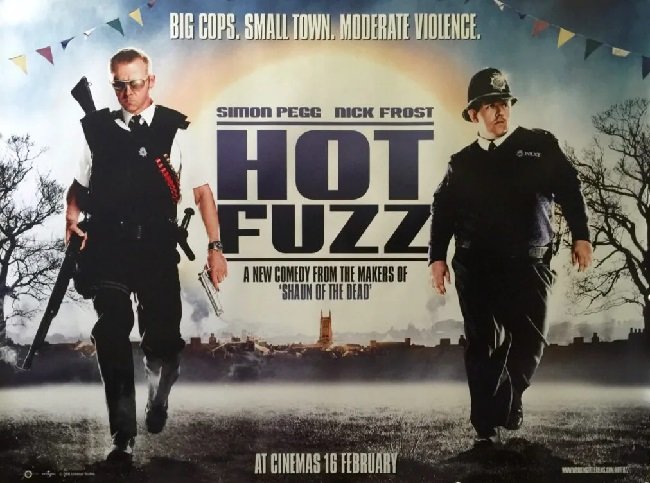
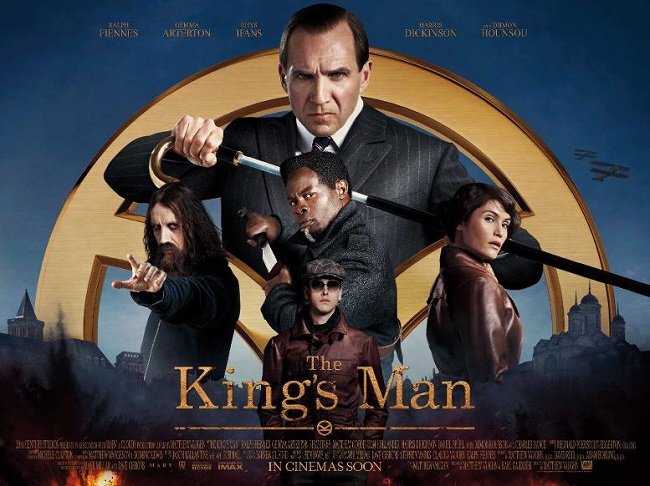
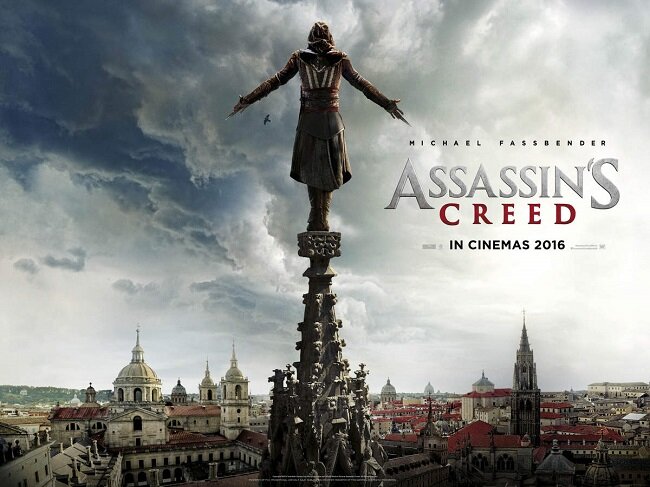






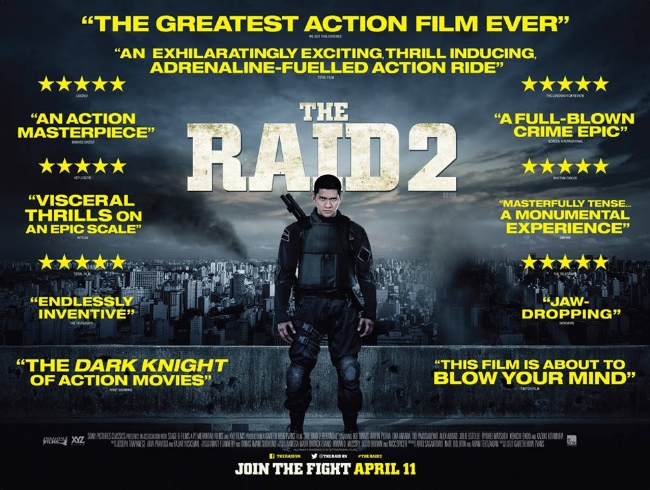
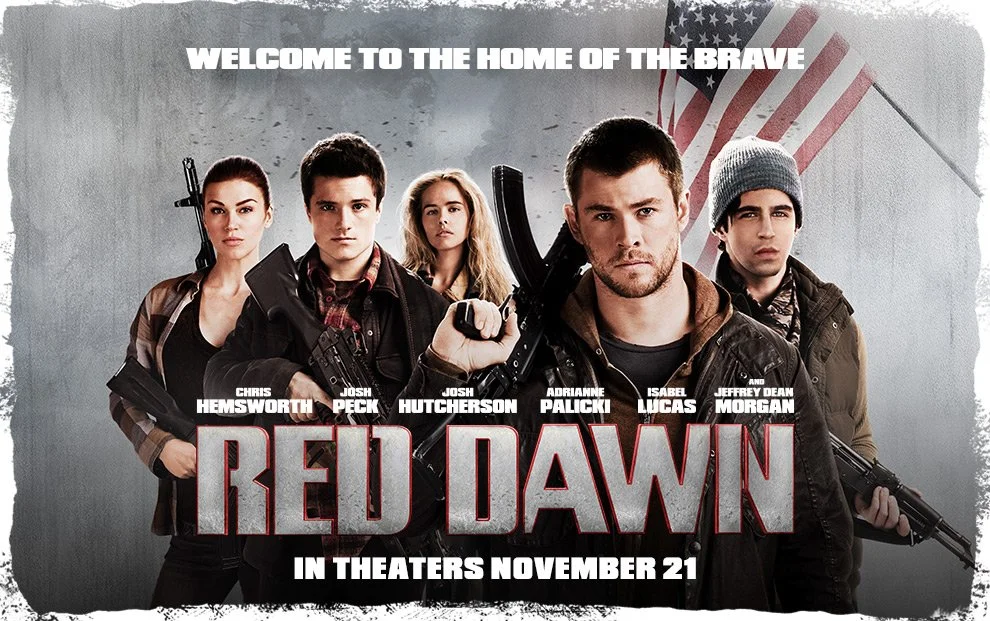
Red Dawn (2012)
Setting aside the hubris of remaking a film such as Red Dawn, the 2012 reboot had a troubled production. Shot over the course of late 2009, on location in Michigan, MGM intended to release the film in September 2010. However, the studio’s financial problems became unsustainable over the course of that year and the film was shelved, while a financial solution was sought. Furthermore, while Red Dawn was in post production, there was a major economic shift within Hollywood due to the increasing importance of the Chinese market. This was a significant problem for MGM because the new version of Red Dawn had the Chinese invading the USA instead of Russia. Hence there were reshoots and the need for additional visual effects, so that the Chinese could be replaced with North Koreans. MGM eventually went bankrupt and the distribution rights to Red Dawn were sold off. The film was eventually released in 2012.
Setting aside the hubris of remaking a film such as Red Dawn, the 2012 reboot had a troubled production. Shot over the course of late 2009, on location in Michigan, MGM intended to release the film in September 2010. However, the studio’s financial problems became unsustainable over the course of that year and the film was shelved, while a financial solution was sought. Furthermore, while Red Dawn was in post production, there was a major economic shift within Hollywood due to the increasing importance of the Chinese market. This was a significant problem for MGM because the new version of Red Dawn had the Chinese invading the USA instead of Russia. Hence there were reshoots and the need for additional visual effects, so that the Chinese could be replaced with North Koreans. MGM eventually went bankrupt and the distribution rights to Red Dawn were sold off. The film was eventually released in 2012.
Directed by stunt coordinator and second unit director Dan Bradley, Red Dawn offers nothing more than a formulaic narrative and a simplistic plot, supplemented by some distinctly PG-13 rated action scenes. Unlike the original film, written and directed by legendary filmmaker John Milius, there is little character development, a conspicuous lack of political commentary and nothing of note to say on the nature of war. Furthermore there is no credible attempt to explain how the US was invaded by North Korea. It is casually brushed aside after a vague opening montage and then conspicuously ignored for the remainder of the story. It is possible that such material may well have existed in the original cut of the film, when the enemy was China and there was no time or resources to replace it. Or it could just be poor writing.
Upon its release in 1984, the original version of Red Dawn was denounced as Reaganite propaganda by some critics. However, irrespective of director John Milius’ politics, the film had quite a powerful anti-war commentary. It also had characters you cared about with a credible story arc. You got to watch them grow up and make hard decisions. There was some depth to the proceedings, as well as things going “boom”. Dan Bradley’s remake has nothing other than things going “boom” and even that is not especially well done. The teenage cast lack a credible journey, simply morphing from green kids to crack troops, courtesy of a training montage. The main antagonist, Captain Cho (Will Yun Lee) lacks any backstory and is simply flagged as “bad” when he executes a lead character’s father. Calling Red Dawn perfunctory is generous.
Even the presence of Chris Hemsworth fails to improve the situation. Furthermore, this time round his character has prior military experience which mitigates the main theme of the story that wars are often fought by the young, who have to learn on their feet. The much revised script by Carl Ellsworth and Jeremy Passmore makes a few vague attempts to try and say something meaningful but these fail. Hence one character espouses “I miss Call of Duty” only for his colleague to admonish him with the philosophical retort “Dude, we're living Call of Duty... It sucks”. Viewers can’t even take solace in a gritty action scene, as the film is meticulously edited to meet the criteria of its chosen rating. The fire-fights are bloodless and there’s a single and rather obvious use of the word “Fuck” in a contrived kiss off line. Even the film’s title no longer makes any sense due to the plot changes.
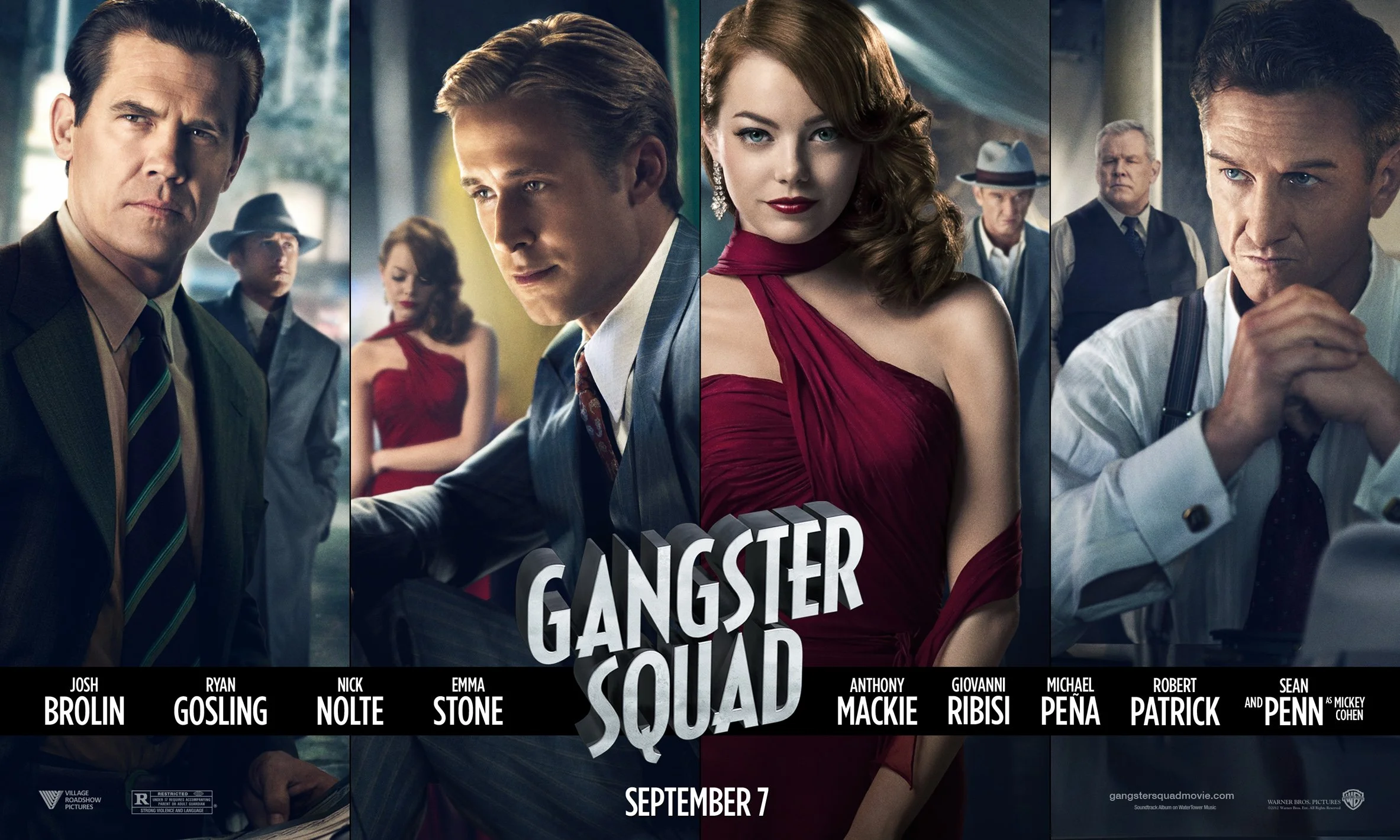
Gangster Squad (2013)
When I first saw the promotional trailer for Gangster Squad back in 2012, prior to its release, I wasn't especially impressed. I simply thought the film was another attempt to re-invent the gangster genre for a generation who were not especially familiar with it. I wasn't exactly overwhelmed with director Ruben Fleischer's resume either. I didn't particularly like Zombieland and haven't seen 30 Minutes Or Less. Then came the tragic mass shootings in Aurora, Colorado which led to the movie being delayed so that the original ending, which featured a shoot-out in a movie theatre, could be replaced. Hence when I finally watched this film recently, I wasn't expecting a movie up to the standards of say Once Upon A Time In America or Miller’s Crossing and it would seem that I was right do so. Gangster Squad is not especially noteworthy in any respect.
When I first saw the promotional trailer for Gangster Squad back in 2012, prior to its release, I wasn't especially impressed. I simply thought the film was another attempt to re-invent the gangster genre for a generation who were not especially familiar with it. I wasn't exactly overwhelmed with director Ruben Fleischer's resume either. I didn't particularly like Zombieland and haven't seen 30 Minutes Or Less. Then came the tragic mass shootings in Aurora, Colorado which led to the movie being delayed so that the original ending, which featured a shoot-out in a movie theatre, could be replaced. Hence when I finally watched this film recently, I wasn't expecting a movie up to the standards of say Once Upon A Time In America or Miller’s Crossing and it would seem that I was right do so. Gangster Squad is not especially noteworthy in any respect.
Set in 1949 Los Angeles, sadistic gangster Mickey Cohen (Sean Penn) expands his operations with the intention of controlling all criminal activity in the city. He has bribed sufficient officials and police, that no one is willing to cross him or testify against him. Everyone except Sergeant John O'Mara (Josh Brolin), a former World War II soldier, who wants to raise a family in a peaceful Los Angeles. Police Chief William Parker (Nick Nolte) decides to form a special unit to tackle Mickey Cohen, putting O'Mara in charge. O'Mara asks fellow cop and war veteran Jerry Wooters (Ryan Gosling) to join him. He initially refuses but reconsiders after he witnesses the murder of a young boy by Cohen's people. Despite initial setbacks, such as a casino raid thwarted by corrupt Burbank cops, the squad successfully starts to shut down key parts of Cohen’s operations, leading to violent reprisals.
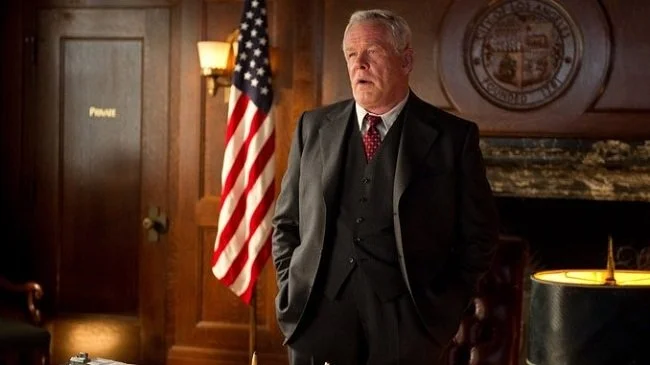
Gangster Squad has a beautiful production design and a great amount of period detail lavished upon it. Unfortunately no such attention has been lavished upon the plot with Will Beall's screenplay playing like an over simplified version of The Untouchables. The movie attempts to bolster the ailing narrative with numerous action set pieces but these violent punctuation points lack any impact and are simply present out of necessity. The plot has none of the usual subtexts about poverty, honour among thieves, political or religious oppression that you usually find in this genre. Instead it’s all somewhat perfunctory. Gangster Squad suffers from all the usual problems of contemporary action films and thrillers. It looks great but rings hollow. The sort of film that you struggle to remember any specific detail a year later.
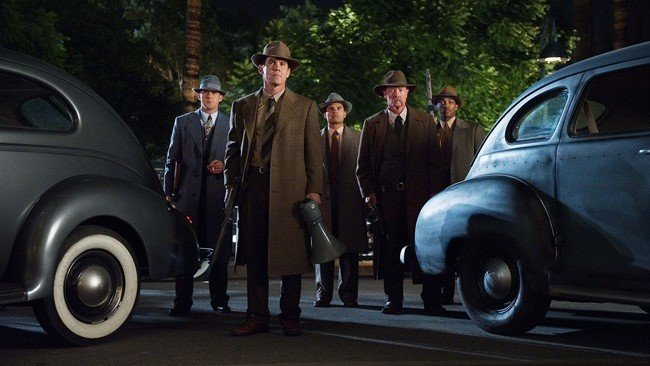
Sean Penn’s excessive performance as crime boss Cohen is trying and Emma Stone is miscast as a femme-fatale. The remainder of the cast, both old and young, struggle to bring any conviction to the uninspired dialogue. It is a criminal waste of such talents as Josh Brolin, Giovanni Ribisi and Nick Nolte. The movie’s hastily reshot conclusion is perfunctory, offering the spectacle of violence and precious little else. I was not overly concerned about the resulting plot holes arising from the rewrite, as I had precious little interest in the story or characters by this point. The overall impression I was left with after watching Gangster Squad, was that the entire production was a missed opportunity. It seems that everyone concerned with the film had obviously watched all the classics from the genre, but had sadly learned nothing from them.








A Working Man (2025)
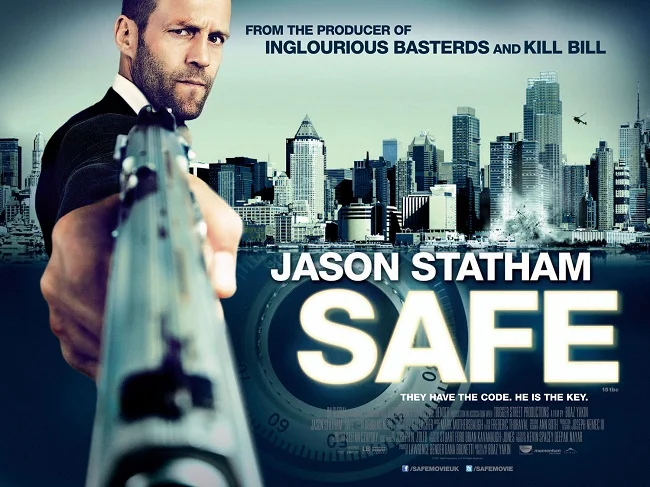
Levon Cade (Jason Staham) is a former Royal Marine Commando who has retired from military service and now works as the leader of a construction team in Chicago. He has a close relationship with Joe and Carla Garcia (Michael Peña and Noemi Gonzalez ) who run the company and considers them as family. Outside of work, Levon is involved in a bitter custody battle for his daughter, against her maternal grandfather, who blames Levon for his daughter’s suicide. When Garcia's teenage daughter Jenny (Arianna Rivas) goes missing, Levon reluctantly agrees to help her parents and get her back. Beginning his search at the nightclub where Jenny was last seen, he soon discovers that she was abducted by Russian traffickers. Furthermore, the culprit is Dimi Kolisnyk (Maximilian Osinski), the wayward son of a senior ranking gangster.
Levon Cade (Jason Staham) is a former Royal Marine Commando who has retired from military service and now works as the leader of a construction team in Chicago. He has a close relationship with Joe and Carla Garcia (Michael Peña and Noemi Gonzalez ) who run the company and considers them as family. Outside of work, Levon is involved in a bitter custody battle for his daughter, against her maternal grandfather, who blames Levon for his daughter’s suicide. When Garcia's teenage daughter Jenny (Arianna Rivas) goes missing, Levon reluctantly agrees to help her parents and get her back. Beginning his search at the nightclub where Jenny was last seen, he soon discovers that she was abducted by Russian traffickers. Furthermore, the culprit is Dimi Kolisnyk (Maximilian Osinski), the wayward son of a senior ranking gangster.
A Working Man is based upon the novel Levon's Trade by Chuck Dixon. The screenplay is by Sylvester Stallone and David Ayer who also directed the film. Stallone had originally intended the basic scenario of the book to be the basis of a television series but it was repurposed as a feature film. It was deemed a more marketable property due to the number of sequels written by the original author. Whether these ever see the light of day remains to be seen and is dependent upon the box office performance of A Working Man. The film has the solid production values associated with a medium budget feature film and a cast of dependable character actors in supporting roles. The action scenes are well conceived, realised but somewhat stylised. Firearms knock people off their feets and villains take multiple blows to the head before going down. Everything that you expect from the genre and the star is front and centre. Yet there is something missing.
A Working Man has a few interesting ideas, such as the lead character performing his own, amateur investigation. Ayer adds a few flamboyant touches, such as the leader of a drug dealing motorcycle gang who sits on a chrome throne made of exhaust pipes and fairings. There are also quite a lot of subplots for a film of this nature, with various elements of the Russian mafia working at odds with each other. Sadly, the main plot line about Jenny Garcia’s kidnapping founders as she decides to fight back and not to be a victim. By the climax of the film it has almost become an afterthought. Overall, A Working Man drags under the weight of a plot which pitches several ideas and then abandons them. Statham, as ever, does much of the heavy lifting through his screen presence and personality. However, compared to Ayer’s previous film The Beekeeper, this one fails to assert its difference, despite trying hard to do so. The word “adequate” springs to mind.
Hot Fuzz (2007)
PC Nicholas Angel (Simon Pegg) is an exemplary Police Officer, with a strict adherence to the letter of the law. As a result of making the rest of the London Metropolitan Police look bad, he is transferred to the rural town of Sandford, Gloucestershire. On arrival, Angel finds that the local Inspector, Frank Butterman (Jim Broadbent), takes a far more laissez-faire approach to policing. His colleagues are incompetent and he is further hampered by the Neighbourhood Watch Alliance (NWA), who prioritise low crime statistics over law enforcement due to their desire to win the title of “Village of the Year”. Furthermore, Angel is partnered with the Inspector’s son, Constable Danny Butterman (Nick Frost), who is infatuated with “buddy cop” movies and is in awe of Angel’s London experience. “Have you ever fired two guns while jumping through the air?” However, a sudden spate of grisly accidents lead Angel to believe that there's more to the seemingly tranquil and picture-perfect community than meets the eye.
PC Nicholas Angel (Simon Pegg) is an exemplary Police Officer, with a strict adherence to the letter of the law. As a result of making the rest of the London Metropolitan Police look bad, he is transferred to the rural town of Sandford, Gloucestershire. On arrival, Angel finds that the local Inspector, Frank Butterman (Jim Broadbent), takes a far more laissez-faire approach to policing. His colleagues are incompetent and he is further hampered by the Neighbourhood Watch Alliance (NWA), who prioritise low crime statistics over law enforcement due to their desire to win the title of “Village of the Year”. Furthermore, Angel is partnered with the Inspector’s son, Constable Danny Butterman (Nick Frost), who is infatuated with “buddy cop” movies and is in awe of Angel’s London experience. “Have you ever fired two guns while jumping through the air?” However, a sudden spate of grisly accidents lead Angel to believe that there's more to the seemingly tranquil and picture-perfect community than meets the eye.
Hot Fuzz, co-written and directed by Edgar Wright, is at first glance a satire on the buddy cop and action genres that dominated Hollywood during the eighties and nineties. Upon closer scrutiny, it also has wry takes on the Agatha Christie “whodunit”, folk horror and slasher movies. Thematically, there are references, asides and homages to such classic films as Dirty Harry, The Wicker Man and multiple John Woo titles. Stylistically, Hot Fuzz uses many visual techniques common in the work of director Tony Scott. Edgar Wright cleverly takes these elements and effectively uses them in the incongruous setting of a rural UK town. It is the depiction of these US and Hong Kong action movie tropes through the lens of British comedy with its uniquely dry perspective that makes these conceits work so well.
Hot Fuzz is bolstered by an excellent cast of UK character actors, such as Timothy Dalton, Edward Woodward and Billie Whitelaw, many of whom are sending up former roles they are well known for. Dalton particularly relishes his role as a moustache twirling villain who runs the town’s supermarket. There is also a very clear chemistry between Simon Pegg and Nick Frost which helps them navigate the clever and knowing script. The humour is broad, including slapstick, wordplay and dark satire. Yet despite its tongue in cheek nature, the film manages to tread that fine line between homage and plagiarism. There is also a very intelligent score by David Arnold, that draws on the established overwrought idiom of the action genre.
Peter Jackson uncredited cameo
Due to the amount of detail found in Hot Fuzz, the film holds up well to multiple viewings. Pausing playback to read a sign in a shop window or some other minor detail will often yield a hidden gag. Sadly, the frenetic editing and the hand cranked camera work do become somewhat tiresome after a time. The film’s two hour running time could have been tightened to something ten minutes shorter. Due to the ubiquitous nature of the action movie genre, Hot Fuzz is just a little too on the nose at times, hence it doesn’t quite hit the mark as assuredly as Wright’s previous film, Shaun of the Dead. However, these are minor quibbles. If you’re in the market for a film somewhere between the Bad Boys franchise and Inspector Morse, then Hot Fuzz has much to offer. A convoluted plot, a cast shamelessly sending themselves and the genre up, car chases, shootouts and so many throw away lines. “He’s not Judge Judy and executioner”.





The King's Man (2021)
As a collection of history's worst tyrants and criminal masterminds gather to plot a war to wipe out millions, one man must race against time to stop them. Discover the origins of the very first independent intelligence agency in The King's Man. Based on the Comic Book “The Secret Service” by Mark Millar and Dave Gibbons. 20th Century Studios
Matthew Vaughn’s The King’s Man is an inconsistent film, both narratively and tonally. It veers between serious themes and stylised, hyperbolic action. At times it does quite a good job of exploring such complex subjects as global politics, mechanised warfare and colonialism. Sadly it then wrenches the viewer out of these cerebral reveries as it lapses into the sort of over the top action sequences that were notable in the two earlier films. It’s a shame because The King’s Man gets so many other aspects of the production right. The casting is very interesting, especially Ralph Fiennes as the “pacifist” Duke of Oxford. He is actually a very good fit for the action genre. Djimon Hounsou and Gemma Arterton are given little backstory beyond being respectively the faithful manservant and the family nanny but both are notable due to their own inherent acting chops and personal charisma. Rhys Ifans obviously has a great time as Grigori Rasputin, ensuring all the man’s vices are robustly depicted.
As a collection of history's worst tyrants and criminal masterminds gather to plot a war to wipe out millions, one man must race against time to stop them. Discover the origins of the very first independent intelligence agency in The King's Man. Based on the Comic Book “The Secret Service” by Mark Millar and Dave Gibbons. 20th Century Studios
Matthew Vaughn’s The King’s Man is an inconsistent film, both narratively and tonally. It veers between serious themes and stylised, hyperbolic action. At times it does quite a good job of exploring such complex subjects as global politics, mechanised warfare and colonialism. Sadly it then wrenches the viewer out of these cerebral reveries as it lapses into the sort of over the top action sequences that were notable in the two earlier films. It’s a shame because The King’s Man gets so many other aspects of the production right. The casting is very interesting, especially Ralph Fiennes as the “pacifist” Duke of Oxford. He is actually a very good fit for the action genre. Djimon Hounsou and Gemma Arterton are given little backstory beyond being respectively the faithful manservant and the family nanny but both are notable due to their own inherent acting chops and personal charisma. Rhys Ifans obviously has a great time as Grigori Rasputin, ensuring all the man’s vices are robustly depicted.
The problem lies with The King’s Man essentially trying to do too much and cover too much ground in its 130 minute running time. First it’s a father-son film and then it’s a revisionist history drama like Trantino’s Inglourious Basterds. Then it hastily tries to establish the backstory of the Kingsman Independent Intelligence Service. As a result director Matthew Vaughn struggles to maintain a consistent style and tone. He does provide some creative flourishes especially with the subplot relating to Conrad Oxford, the Duke’s son who wishes to serve his country and play his part in World War I. There is a sense of impending doom as Conrad (Harris Dickinson) heads towards an inevitable personal tragedy but the way it manifests itself is quite a surprise. This culminates in a genuinely moving scene at the end of the film’s second act. However, it is quickly mitigated by the directors interpretation of historical events and choosing to depict the tragedy and slaughter of WW I as a petty squabble between an international family.
The King’s Man is certainly a better film than its predecessor; Kingsman: The Golden Circle (2017). That was a poorly conceived project, ruined by the presence of Eltom John and the mean spirited way in which Merlin (Mark Strong) was so ignominiously killed off. Although Matthew Vaughn is clearly a creative film director who has a natural affinity to genre source material, he does strike me as someone who would be well served by a trusted associate who knows him well enough to curb his excesses. Both previous films in this series were blighted by some singularly unpalatable and obsolete sexual humour that would be more at home in a seventies “eroitic adventure” such as Confessions of a Window Cleaner. This error is not repeated in The King’s Man but instead Vaughn often comes a little too close to trivialising the human tragedy of WWI. There’s also a mid-credit coda that is very ill judged, especially in light of more recent events. Watch with discretion and be prepared to “hold your nose” if you are overly politically sensitive. The action is good.
Assassin’s Creed (2016)
On paper, a video games franchise such as Assassin’s Creed lends itself perfectly to a cinematic adaptation. The parkour action scenes, the historical settings and the contemporary conspiracy theory themes are all elements that should play well with a modern youth audience. Hence with the backing of a major studio such as Twentieth Century Fox and a budget of $125 million, the 2016 movie should have been a guaranteed box office hit. The casting of Michael Fassbender, an actor who is comfortable with serious roles and big Hollywood franchises, should have carried this film comfortably over the finishing line. Director Justin Kurzel, who had found critical success with his adaptation of MacBeth a year previously, must have looked like a safe pair of hands to handle such a project. Sadly, that was not the case. Assassin’s Creed is not the sum of its parts, in fact many elements appear to be pulling in opposite directions. The resulting feature film is staggeringly dull, soulless and a chore to watch. A testament to how modern big budget franchise movies have become a production line, with all the art stripped from them.
On paper, a video games franchise such as Assassin’s Creed lends itself perfectly to a cinematic adaptation. The parkour action scenes, the historical settings and the contemporary conspiracy theory themes are all elements that should play well with a modern youth audience. Hence with the backing of a major studio such as Twentieth Century Fox and a budget of $125 million, the 2016 movie should have been a guaranteed box office hit. The casting of Michael Fassbender, an actor who is comfortable with serious roles and big Hollywood franchises, should have carried this film comfortably over the finishing line. Director Justin Kurzel, who had found critical success with his adaptation of MacBeth a year previously, must have looked like a safe pair of hands to handle such a project. Sadly, that was not the case. Assassin’s Creed is not the sum of its parts, in fact many elements appear to be pulling in opposite directions. The resulting feature film is staggeringly dull, soulless and a chore to watch. A testament to how modern big budget franchise movies have become a production line, with all the art stripped from them.
Convicted murder, Callum Lynch (Michael Fassbender), is sentenced to death by lethal injection in a prison in Texas. He awakes from his execution to find himself very much alive and in a high tech research laboratory in Madrid, run by the Abstergo Foundation and its sinister CEO Alan Rikkin (Jeremy Irons). Dr. Sofia Rikkin (Marion Cotillard) explains to Cal that she wishes to access inherited memories hidden in his DNA, of his ancestor Aguilar de Nerha, who was a member of the Assassins Brotherhood in 15th Century Spain. Abstergo Industries is actually funded and controlled by the Templars, an ancient order that has been at war with the Assassins Brotherhood for centuries. They seek the Apple of Eden, an artefact that holds the code to humanity’s ability for free will, which they seek to control. Cal is placed in the Animus, a machine which allows him to relive (and the scientists to observe) Aguilar's genetic memories, so that Abstergo can learn what he did with the Apple. Aguilar was previously charged with protecting the artefact from Templar Grand Master Tomas de Torquemada.
Within minutes of the film’s opening sequence which is set in 1492 Andalusia, the muddy colour palette and swooping camera it becomes clear that Assassin’s Creed has been shot using all the visual styles and editing techniques that are currently in vogue. It is the sort of movie where all concerned are far more enamoured by the aesthetic they have created rather than presenting the audience with a coherent and engaging narrative. Naturally, the production design and visual effects are top draw as you would expect from a mainstream film with this sort of budget. Yet the entire movie is presented in a singularly unappealing fashion and unfolds in a ponderous manner. The colours are muted, the camera refuses to stay still, inducing a sense of motion sickness. The editing is so rapid it often renders the onscreen action incomprehensible and the imagery strikes hard upon the senses. It is also clear that the film has chosen this technique to mask and reduce the levels of violence, so it can maintain the desired PG-13 rating.
There are three writers credited with the screenplay for Assassin’s Creed. Michael Lesslie, Adam Cooper and Bill Collage. Yet despite their efforts the story is perfunctory and the central characters are utterly forgettable. Action movies never used to be like this. In 1981 Raiders of the Lost Ark featured a wealth of interesting, enjoyable characters and the screenplay was savvy, filled with knowing genre references and droll, hard boiled dialogue. There is none of that here and a cast of solid actors are saddled with the most arbitrary of expository dialogue. Brendon Gleason has a cameo as Michael Fassbender’s Father. The relatively short role is supposed to provide an emotional epiphany within the story and create a sense of pathos but it is devoid of any dramatic resonance. It simply serves as an expostionary scene to move the story on. As for the more philosophical aspects of the plot regarding free will and determinism, these are abandoned immediately after they are mentioned.
Assassin’s Creed offers several clear nods to its source material. The costume design, hidden blades, parkour and historical setting certainly tap into the vibe of the first two games. The realisation of the Animus is also creative. Yet irrespective of the money and talent that is involved in the production, the film is staggeringly unexciting. In many ways it is a textbook example of all the artistic failings of corporate film making these days. Too much of our popular entertainment, be it music, TV or film are generic and made to an established formula. 40 years ago summer blockbusters were not only commercially successful but artistically created with flair and panache. The homogenous nature of their modern counterparts robs them of any unique personality of their own. For example, Assassin’s Creed runs for nearly 2 hours and features a musical score by Jed Kurzel that is essentially forgettable. I still recall the impact that James Horner’s soundtrack for Krull (1983) had upon me when I first saw it and it remains a personal favourite all these years later
Assassin’s Creed made a total profit of $240,697,856 internationally. It nearly doubled its investment yet was deemed a box office failure by those that financed it. A similar mindset is prevalent in the video game industry. Expectations regarding profit are often ambitious to say the least. Considering how poor the final movie is, I suspect that the entire project was a litany of continuous interventions by focus groups and sub-committees. So in many ways the studios are the architects of their own problem. To those who have a serious interest in cinema and are curious to see an example of when a film inherently fails on all levels, I would recommend Assassin’s Creed as a point of study. Beyond this niche market analysis, I cannot think of any positive points for the benefit of the casual viewer. Avid fans of the games will more than likely be disappointed as there is no exploration of their themes beyond the very superficial. Perhaps the failure of Assassin’s Creed will at least encourage the industry to rethink its approach to such movies and the wider action genre.
300: Rise of an Empire (2014)
300: Rise of an Empire is a curious beast, being neither a sequel nor a prequel. It is infact a tale that takes place simultaneously with those of the original movie. While Gerard Butler is busy making a last stand at the Battle of Thermopylae, fellow warrior and politician Themistokles, played by the singularly uncharismatic Sullivan Stapleton, leads a similar army of buffed Greeks against the Persian fleet. Once again we have a movie that is the epitome of style over substance, complete with a sound design that challenges what can physically be endured by human hearing. They say the first casualty of war is innocence but in this type of movie it's closely followed by historical accuracy and authentic depictions of ethnicity. 300: Rise of an Empire is a cinematic assault upon the senses but not in a good way like Mad Max: Fury Road.
300: Rise of an Empire is a curious beast, being neither a sequel nor a prequel. It is infact a tale that takes place simultaneously with those of the original movie. While Gerard Butler is busy making a last stand at the Battle of Thermopylae, fellow warrior and politician Themistokles, played by the singularly uncharismatic Sullivan Stapleton, leads a similar army of buffed Greeks against the Persian fleet. Once again we have a movie that is the epitome of style over substance, complete with a sound design that challenges what can physically be endured by human hearing. They say the first casualty of war is innocence but in this type of movie it's closely followed by historical accuracy and authentic depictions of ethnicity. 300: Rise of an Empire is a cinematic assault upon the senses but not in a good way like Mad Max: Fury Road.
Since the release of the original 300 back in 2007, the aesthetic created by Zack Snyder has been heavily replicated elsewhere. Although it was quite innovative at the time, reflecting the original style of Frank Miller's graphic novel, it is now a somewhat tired visual effect. The market is somewhat saturated by big budget spectacles these days and Hollywood's overall aesthetic style is becoming increasingly homogeneous and self plagiarising. The only major difference with this film is that director Noam Murro has added 3D to the mix, although it offers few benefits. The stylised violence continues to be a major element of the film and still happily ignores the realities of basic human anatomy. Hence the action scenes speed up and then slow down, while the camera swoops and soars around the CGI mayhem. Blood sprays like geysers. Teenage viewers may well get excited. Seasoned cinematic enthusiasts roll their eyes and check their watch.
Like Gerard Butler's performance in the 300, Eva Green shoulders the dramatic burden this time round and saves the entire movie from being a total dog’s dinner. She attacks the role of Artemisia with a maniacal fervour and is very watchable. Everything else is somewhat arbitrary. The plot is dutifully trotted out by means of a lengthy prologue. Queen Gorgo (Lena Headey) mourns her husband and sundry returning cast members from the previous film wring their hands at the wrongdoings of Persian King Xerxes (Rodrigo Santiago). There are also some oblique references to historical events and the prevailing philosophies of the age but they are never embellished upon or explored with any conviction. This is a movie about the carnage of battle and rippling muscles. To be fair, it wasn’t intended or marketed as a serious insight into the historical events of the time,
Beyond Eva Green's presence there is nothing much new to sell 300: Rise of an Empire. Same meat, different gravy, as the expression goes. It is squarely aimed at the same audience as the previous movie. One that likes this sort of visually self-indulgent, homo-erotic, historically superficial actionfest. It can even entertain an ageing and cynical cinemagoer like myself, if expectations are set suitably low and copious amounts of alcohol are consumed prior to watching. If you’re looking for a similar period film that’s a little bit more historically accurate and cerebral you can always try one of the four versions of Alexander, directed by Oliver Stone. As for the cries from certain quarters that 300: Rise of an Empire is yet another nail in the coffin of narrative cinema, ignore them because it's not. It's just a loud and excessive commercial movie. Hollywood has always made these.
The Ice Road (2021)
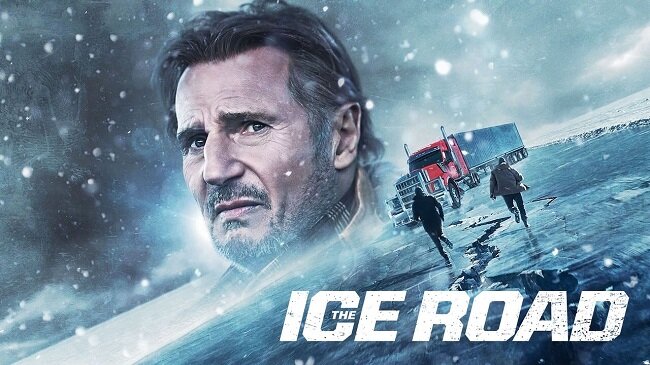
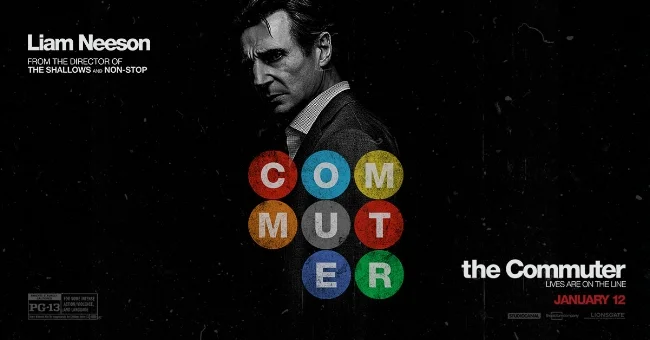
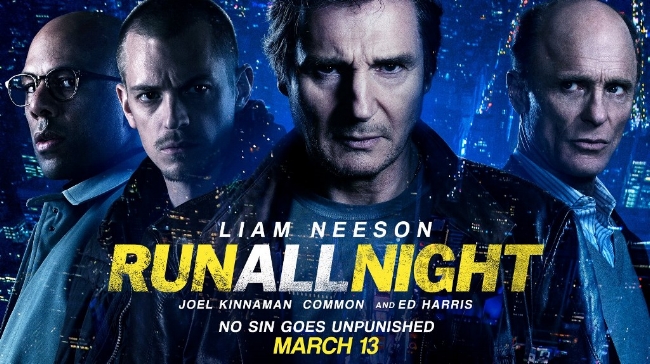
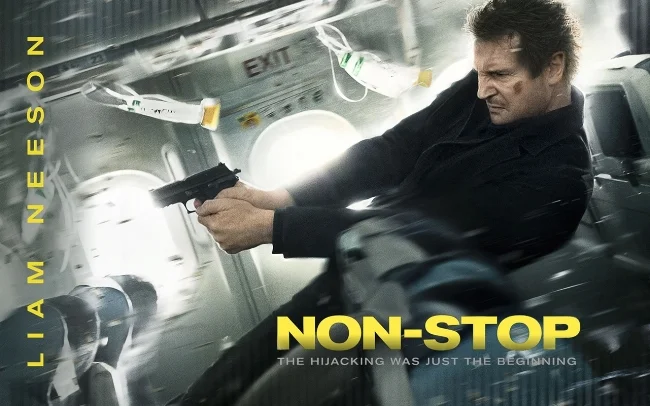
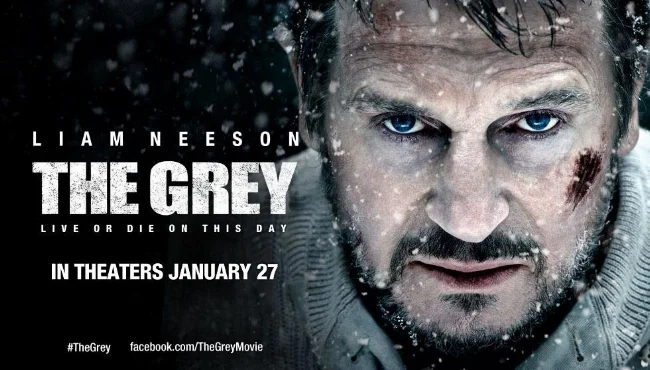
Back in September 2017, Liam Neeson stated in an interview with Sky News that he was retiring from the action genre, due to his age. He felt that audiences would question his credibility in such roles. After the release of The Commuter (2018) and Cold Pursuit (2019) Mr Neeson appeared to return to human dramas and films that focus on performance rather than punching man and beast. Ordinary Love and Made in Italy, both released in 2019, demonstrate the actor’s versatility and skill. People seem to forget that he is a thespian who was initially known for his character driven roles in films such as The Mission (1986), Rob Roy (1995 and Michael Collins (1996). It was only in 2008 that he reinvented himself as an action hero. It’s all a far cry from Schindler’s List and his performance that earned him an academy award nomination. The reason I mention all of this is because The Ice Road is the third action movie I’ve seen in 2021 that stars Liam Neeson.
Back in September 2017, Liam Neeson stated in an interview with Sky News that he was retiring from the action genre, due to his age. He felt that audiences would question his credibility in such roles. After the release of The Commuter (2018) and Cold Pursuit (2019) Mr Neeson appeared to return to human dramas and films that focus on performance rather than punching man and beast. Ordinary Love and Made in Italy, both released in 2019, demonstrate the actor’s versatility and skill. People seem to forget that he is a thespian who was initially known for his character driven roles in films such as The Mission (1986), Rob Roy (1995 and Michael Collins (1996). It was only in 2008 that he reinvented himself as an action hero. It’s all a far cry from Schindler’s List and his performance that earned him an academy award nomination. The reason I mention all of this is because The Ice Road is the third action movie I’ve seen in 2021 that stars Liam Neeson.
After a methane explosion, a remote mine caves in northern Canada trapping 26 men. The mine owners desperately mount a rescue mission that requires a wellhead and piping to be urgently delivered to the site of the disaster. As there is no airstrip in the area that can accommodate military transport planes, the equipment has to be driven by truck across the ice roads which are beginning to thaw in the spring weather. A team is hastily put together consisting of three trucks. These are driven by Jim Goldenrod (Lawrence Fishburne) an ice road veteran, the hot headed Tantoo (Amber Midthunder) whose brother is trapped in the mine and brothers Mike (Liam Neeson) and Gurty McCann (Marcus Thomas). Gurty is a Iraq War veteran suffering from PTSD and aphasia as well as an exceptional mechanic. They are joined by Tom Varnay (Benjamin Walker), an actuary from the mine’s insurance company. Racing against the clock, the team soon discover that there’s more than just the weather working against them.
The Ice Road is written and directed by Jonathan Hensleigh and is his first movie for a decade. Hensleigh wrote several high profile films in the nineties (including Die hard with a Vengeance and Armageddon)and has often employed an uncredited “script doctor”. His directorial debut, The Punisher in 2004, was well received due to its intelligent exploration of vigilante genre and use of physical stunt work rather than CGI. His subsequent films have not fared so well. Both Welcome to the Jungle (2007) and Kill the Irishman (2011) were criticised for being derivative. Sadly that still seems to be the case. The Ice Road feels like a simplified version of Henri-Georges Clouzot's iconic thriller The Wages of Fear (1953) and (or) William Friedkin’s Sorcerer (1977). One scene even feels like it’s been cribbed from the classic Thunderbirds episode Day of Disaster.
However, that being said, the budget for this film is modest and so the set pieces are not excessive in that “Fast and the Furious” idiom. The scope of the action is quite contained, although somewhat implausible. The laws of physics are bent but not broken and the ice and weather do feel like a legitimate threat. The characters are leaning towards the generic, however the interaction between Neeson and his troubled brother played by Marcus Thomas, does make the story a little more interesting. The Ice Road fits comfortably within its PG-13 rating and doesn’t overstay its welcome like so many modern action movies do. Overall, this movie provides some mid tier thrills and can be entertaining if you accept the premise. It is better than equally stupid The Hurricane Heist (2018). Neeson does much of the heavy lifting, as per usual. Sadly Lawrence Fishburne, another watchable actor, doesn’t have as much screen time as he deserves.


When Eight Bells Toll (1971)
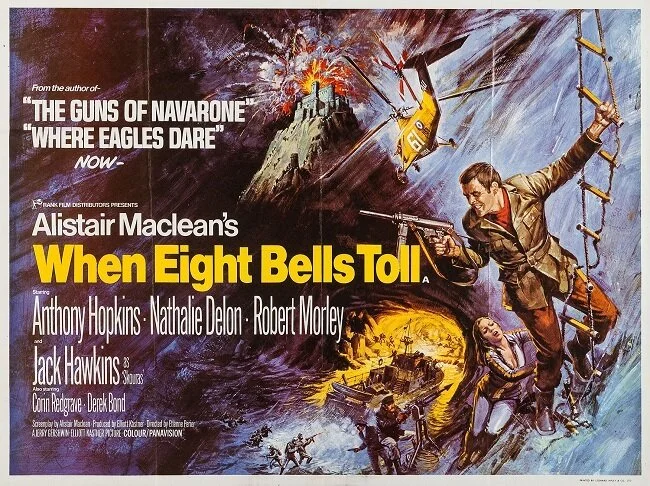
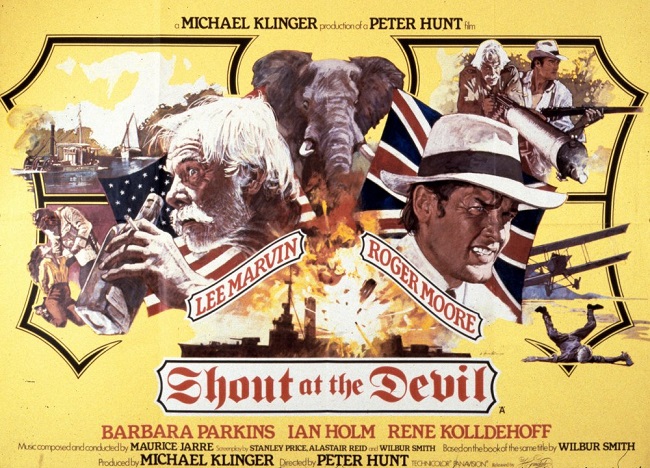
One of the stand out tropes of the modern action film is that the stakes are always cranked right up to 11. Terrorists, biological weapons and nuclear bombs are common threats in such movies with a hero or heroes trying to save the world from death and destruction or worse. However, back in the sixties and seventies, things were a little more straight forward and in some respects more credible. Take When Eight Bells Toll, released in 1971, for example. British Treasury secret agent Phillip Calvert investigates the theft of £8,000,000 in gold bullion by a gang of international smugglers. In the context of the times this was no small beer however it’s somewhat mundane compared to fighting super villains and their space lasers. Frankly I prefer these low key plot devices as they can make a film a little more plausible within the confines of the genre. A concept that is often forgotten today.
One of the stand out tropes of the modern action film is that the stakes are always cranked right up to 11. Terrorists, biological weapons and nuclear bombs are common threats in such movies with a hero or heroes trying to save the world from death and destruction or worse. However, back in the sixties and seventies, things were a little more straight forward and in some respects more credible. Take When Eight Bells Toll, released in 1971, for example. British Treasury secret agent Phillip Calvert investigates the theft of £8,000,000 in gold bullion by a gang of international smugglers. In the context of the times this was no small beer however it’s somewhat mundane compared to fighting super villains and their space lasers. Frankly I prefer these low key plot devices as they can make a film a little more plausible within the confines of the genre. A concept that is often forgotten today.
Phillip Calvert (Anthony Hopkins) an undercover British treasury agent along with his intelligence officer partner Hunslett (Corin Redgrave) are assigned to find five cargo ships that have gone missing in the Irish Sea. They track a ship,The Nantesville, which is carrying £8 million in gold bullion, to the Scottish Highlands before it mysteriously goes missing. Posing as marine biologists, Calvert and Hunslett find the local inhabitants both suspicious and hostile. A Cypriot shipping tycoon Sir Anthony Skouras (Jack Hawkins), whose luxury yacht Shangri-La is anchored off the coast, may be involved in the theft of the gold bullion. While searching the surrounding area by helicopter, Calvert makes contact with a group of remote shark fishermen who appear more friendly than Torbay's locals. Calvert also meets Lord Kirkside (Tom Chatto) and his teenage daughter in their remote hilltop castle. Both act strangely and are uncooperative. Calvert’s helicopter is then shot down and he only just manages to escape back to his boat. However, he then finds that Hunslett is missing.
Based upon a novel by Alistair MacLean, When Eight Bells Toll is a lean and focused thriller that eschews the excess of the James Bond franchise. There are no gadgets or globe trotting to exotic locations. The story confines itself to the sea and some remote Scottish islands.The plot moves fast and is punctuated by some low key but hard hitting action scenes. Veteran stunt arranger Bob Simmons stages the fights sequences and shootouts in an efficient manner. Anthony Hopkins trained and lost weight for the role and handles these scenes well. There is a casual efficiency to the violence. After one fight, Calvert wraps a length of chain around a incapcitated enemy and throws overboard. Later while breaking into Lord Kirkside’s castle he knocks out another heavy and promptly throws him out of a nearby window into the sea below. Although unpleasant it does bring an air of authenticity to the proceedings.
When Eight Bells Toll benefits from the casting of Anthony Hopkins. He brings his acting talent to bear on the role and is suitably sarcastic and menacing as a good spy should be. Screenplay is at its best when he is being upbraided by his superior officer, “Uncle Arthur”, played with aplomb by the great Robert Morley. Morley is sceptical of Calvert, suspecting he went to an “indifferent school”. The class divide and snobbery inherent in the UK government services is wittily explored but ultimately doesn’t get in the way of Uncle Arthur and Calverts business relationship. Jack Hawkins again has his voice dubbed by Charles Gray as his treatment for throat cancer had robbed him of his distinct voice. Perhaps the weakest role is that of Charlotte (Sir Anthony’s second wife) played by Nathelie Delon. The character is supposed to be scheming and duplicitous but is sadly underwritten, thus making Calvert’s involvement with her somewhat curious. Lavorski, the leader of the smuggling ring played by Ferdy Mayne, is also a two dimensional villain who we learn little about.
Overall When Eight Bells Toll is a concise and focused action movie which benefits from good performances from Hopkins and Morely as well as some solid set pieces. Sadly director Étienne Périer does not bring much flair to the production. Despite having some wonderful Scottish scenery the cinematography by Arthur Ibbetson is somewhat stark. Perhaps that was the look they were looking for, It contrasts with the interior shots which do feel very studio bound. The editing is also somewhat pedestrian. However, the film’s score by Angela Morley (credited as Walter Stott) is sublimely brassy and bombastic, reflecting the accepted musical idiom of the spy movie genre from that time. Sadly, despite the producer’s hope to start a franchise, there were no further Phillip Calvert films, which is a shame. The minimalism and lack of glamor is reminiscent of The Ipcress Files and Calvert is an interesting anti-hero.
Those Who Wish Me Dead (2021)
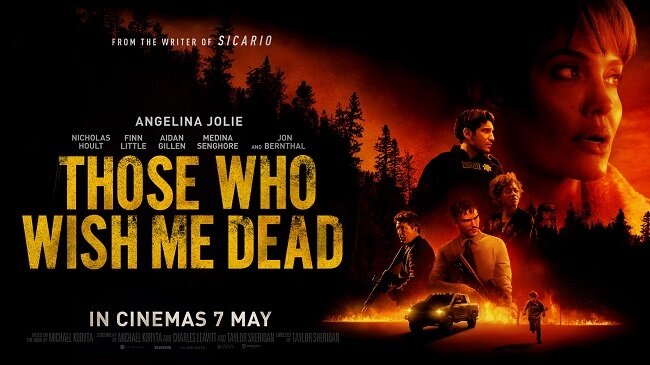
Forensic accountant Owen Casserly (Jake Weber) flees his home with his teenage son Connor (Finn Little) when he discovers he has been targeted by a pair of assassins (Nicholas Hoult and Aidan Gillen) who have been hired to stop him giving evidence in a major corruption case. Connor witnesses the murder of his father after their car is run off the road. Entrusted with important written evidence, he escapes into the dense forests of the Montana wilderness pursued by the killers. Seeking help he runs into smokejumper Hannah Faber (Angelina Jolie) who is stationed at a remote fire lookout tower. Hannah suffers from PTSD from a previous forest fire in which she was unable to save three young boys. Hannah attempts to lead Connor through the forest to safety. Meanwhile the assassins set fire to the forest to divert the attention of the authorities and cover their tracks.
Forensic accountant Owen Casserly (Jake Weber) flees his home with his teenage son Connor (Finn Little) when he discovers he has been targeted by a pair of assassins (Nicholas Hoult and Aidan Gillen) who have been hired to stop him giving evidence in a major corruption case. Connor witnesses the murder of his father after their car is run off the road. Entrusted with important written evidence, he escapes into the dense forests of the Montana wilderness pursued by the killers. Seeking help he runs into smokejumper Hannah Faber (Angelina Jolie) who is stationed at a remote fire lookout tower. Hannah suffers from PTSD from a previous forest fire in which she was unable to save three young boys. Hannah attempts to lead Connor through the forest to safety. Meanwhile the assassins set fire to the forest to divert the attention of the authorities and cover their tracks.
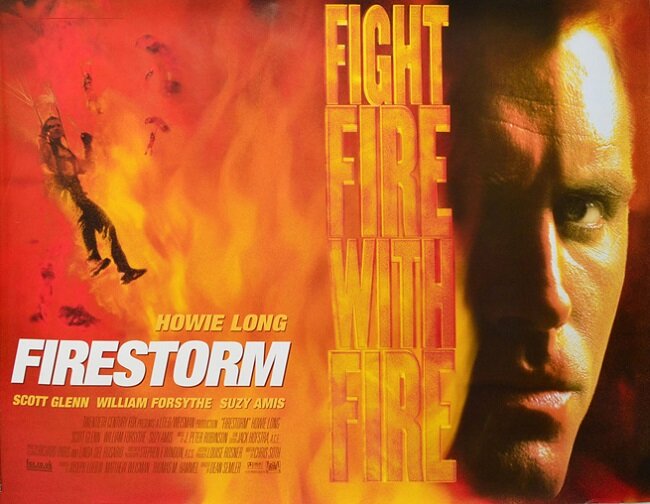
Upon reading the plot synopsis for Those Who Wish Me Dead, I immediately thought of the 1998 action movie Firestorm starring Howie Long. However upon further consideration the similarities lie purely in the setting. Those Who Wish Me Dead aspires to be a little more than just an action vehicle although it includes many familiar tropes. Angelina Jolie treads Liam Neeson territory with her “wounded Lion” role. The central character is a “wild card” with a past who is seeking redemption. However, despite a plethora of familiar plot themes, director Taylor Sheridan (Yellowstone) chooses to focus on character and story. There are some solid and somewhat brutal action scenes but they are not the heart of the proceedings. The film’s pacing is somewhat languid as a consequence. The writer of the source novel, Michael Koryta, is credited as having co-written the screenplay and it may be the case that he wanted to focus more on the characters nature, rather than their deeds.
Angelina Jolie acquits herself well and is very watchable, handling the physical demands of her role well. Finn Little similarly is a plausible young teenager, suitably traumatised and yet resourceful. Teenagers are so often depicted in a tiresomely formulaic manner in these sorts of films, so it is quite refreshing to have a more palatable character. Furthermore, Those Who Wish Me Dead flips several common place genre tropes. The two assassins are in fact brothers and this gives an interesting dynamic to their interactions. They’re both clearly psychotic and simply view their work as a process, which they undertake in a very matter of fact manner. We don’t necessarily learn a lot about them but they are more than just the standard “off the peg” bad guys required in action movies And then there’s the pregnant wife of the local sheriff, Alison played by (Medina Senghore) who quickly contradicts the woman in danger trope.
Overall Those Who Wish Me Dead is a more polished and finely honed action movie than your average studio genre material. It is raised to a higher standard because of the central performances and due to the competence of the cast. The digital FX work is also very good finding the right balance between creating spectacle and not overplaying its hand. As a result the burning forest seems a genuine threat. These high production values along with a story that is prepared to fly in the face of some of the genre’s more common attributes makes Those Who Wish Me Dead better than average. The presence of Angelina Jolie may well broaden the film’s appeal beyond action fans. She has the acting chops to play a firefighter, although she still doesn’t quite look the part. And if given a choice I would recommend Those Who Wish Me Dead over Firestorm.
Death Race (2008)
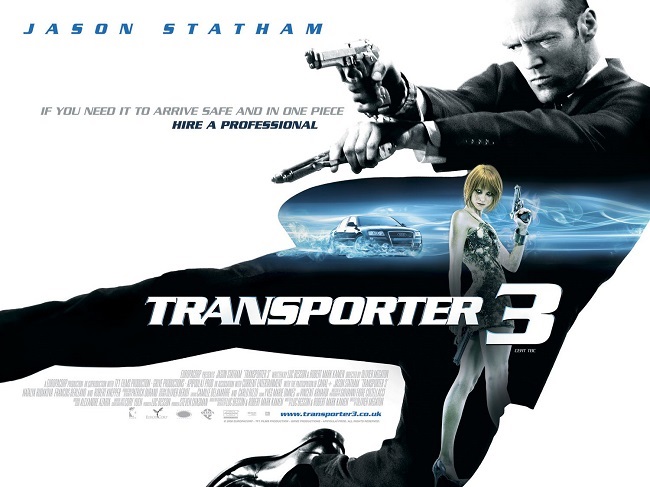
I must admit that I did not have particularly high hopes for Paul W S Anderson's remake of the 1975 Roger Corman produced cult classic. Anderson’s work varies greatly. Event Horizon and Soldier are solid genre films but I still have not fully come to terms with Alien vs. Predator. Jason Statham is also a name that divides the public, with solid material such as The Transporter and unfathomable tosh like Revolver. But despite these considerations, Death Race is in fact quite a surprise and does not follow the path that so many remakes do. It takes the basic themes and concept associated with the original and tries to do something different with them. It doesn’t reinvent the wheel nor is it a genre milestone. But it does offer a different spin on things, have some engaging action scenes and provide some dumb but enjoyable entertainment. When combined with snacks and some beer this is a passable way to kill 111 minutes.
I must admit that I did not have particularly high hopes for Paul W S Anderson's remake of the 1975 Roger Corman produced cult classic. Anderson’s work varies greatly. Event Horizon and Soldier are solid genre films but I still have not fully come to terms with Alien vs. Predator. Jason Statham is also a name that divides the public, with solid material such as The Transporter and unfathomable tosh like Revolver. But despite these considerations, Death Race is in fact quite a surprise and does not follow the path that so many remakes do. It takes the basic themes and concept associated with the original and tries to do something different with them. It doesn’t reinvent the wheel nor is it a genre milestone. But it does offer a different spin on things, have some engaging action scenes and provide some dumb but enjoyable entertainment. When combined with snacks and some beer this is a passable way to kill 111 minutes.
Death Race is not an exact retread of the original movie. It bears more similarities to Arnold Schwarzenegger's The Running Man but avoids any attempt at social commentary. The plot is very matter of fact and established very quickly. In the near future, the US has suffered a complete economic collapse. Unemployment and poverty stalk the land, like two giant stalking things (to quote Blackadder). Ex-professional driver Jensen Ames (Jason Statham) is framed for his wife’s murder and ends up in the proverbial big house. Evil Warden Hennessey (Joan Allen) who makes a profit from the prison system by staging a brutal set of fatal demolition derby’s, blackmails Jensen into driving under the guise of punters favourite, “Frankenstein”. The deal is that he’ll earn his freedom if he co-operates. He is aided in his endeavours by institutionalized mechanic “Coach” (Ian McShane) and his navigator Case (Natalie Martinez).
Death Race is actually an honest action movie, avoiding the usual pitfalls of being too OTT or having delusions of grandeur. The script is tight and serviceable, not straying from the accepted formula. There are no major surprises but it is not predictable to the point of tedium. The visual feel and production design are solid and the stunt driving and FXs work are good. There are several affectionate homage to well known road and action movies. The violence is strong but not gloating or gratuitous. For a genre piece, the actors and performances are above average. It’s nice to see Joan Allen indulge in action movie smacktalk. “Okay cocksucker. Fuck with me and we’ll see who shit’s on the sidewalk!” The soundtrack is also very appropriate for the subject matter, with a good selection of songs and metal riffs.
Director Anderson meets audience expectations with Death Race. Don’t get me wrong, this film is still a somewhat niche market product. Fans of costume dramas and character studies will still struggle to define the film's philosophical subtext. But for those wanting a fix of old school action with a squared jawed hero, you can’t go far wrong with Death Race. The film was sufficiently successful to spawn three direct-to-video sequels. Death Race 2 (2010), Death Race 3: Inferno (2013) and Death Race: Beyond Anarchy (2018). However, Jason Statham didn’t see fit to return so is conspicuously absent from them. He is replaced by Luke Goss in the first two follow ups and then Zach McGowan in the last. The budgets and quality decline exponentially as the franchise progresses, as is often the case with these sorts sequels. So I can’t recommend them to anyone but the most ardent genre aficionado.
Zero Dark Thirty (2012)
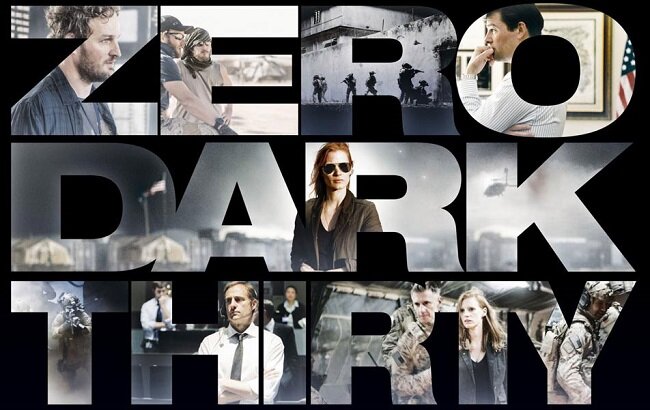
I did not watch Zero Dark Thirty upon its initial release, due to the politics surrounding it. I wanted to be able to view it free from bipartisan debate. Eight years on I believe this now achievable and although debate still exists it is now more measured and less strident. Zero Dark Thirty is certainly a compelling movie. It plays as a docudrama, providing an in-depth study of the US intelligence services hunt for Osama Bin Laden. It cannot be faulted on a technical level and the performances are very strong. It does not adopt a celebratory or triumphalist tone in its approach to the story. Director Kathryn Bigelow endeavours to keep the proceedings focused upon the intricacies of an intelligence driven manhunt. There is little or no tubthumping, jingoism. The decision to find Bin Laden is shown as a political and military exercise of foreign policy. The film solely focuses on the story from a US perspective but that is perfectly acceptable as it is not intended to be an exploration of geo-politics.
I did not watch Zero Dark Thirty upon its initial release, due to the politics surrounding it. I wanted to be able to view it free from bipartisan debate. Eight years on I believe this now achievable and although debate still exists it is now more measured and less strident. Zero Dark Thirty is certainly a compelling movie. It plays as a docudrama, providing an in-depth study of the US intelligence services hunt for Osama Bin Laden. It cannot be faulted on a technical level and the performances are very strong. It does not adopt a celebratory or triumphalist tone in its approach to the story. Director Kathryn Bigelow endeavours to keep the proceedings focused upon the intricacies of an intelligence driven manhunt. There is little or no tubthumping, jingoism. The decision to find Bin Laden is shown as a political and military exercise of foreign policy. The film solely focuses on the story from a US perspective but that is perfectly acceptable as it is not intended to be an exploration of geo-politics.
Do not expect to see all the traditional elements of narrative cinema in Zero Dark Thirty. CIA operative Maya (Jessica Chastain) is a driven woman but this is not really explored to any degree, because it is not the focus of the plot. Because she is a senior employee of the CIA, we simply have to assume that she is a patriot and hence culturally traumatised by the events of September 11th. All characters are presented in a similar fashion. We follow their actions and processes, as opposed to scrutinising their personalities and motivations. This is very much a movie about "how" and not "why". A lot is left to the viewer to consider and decide for themselves, should they see fit to do so. Such as is the use of torture effective? Was the US government right to invest so much resources into hunting one man? Was the death of Osama Bin Laden of any real military relevance or simply an act of national closure and political opportunism?
The final act of the movie reconstructs the Navy SEAL raid on the compound at Abbottabad. Those expecting a traditional action sequence will be disappointed. Technically accurate, it is bereft of all the faux melodrama usually associated with Hollywood's depiction of such events. It is depressingly plausible and in some ways anti-climatic. That is not to say that the part of the film is without suspense. It just has an overwhelming air of inevitability. A sentiment that seems to be felt by all involved as the decade long operation reaches its conclusion. The cast as well as the audience are left to ponder, was this a real victory or had its meaning ultimately been lost? Zero Dark Thirty ends it's two and a half hour journey on a note of emotional ambiguity. It makes for strangely fascinating viewing but does no more than present the viewer with the "facts", although there are hints at where the filmmaker's feelings lie.
Firestorm (1998)
Firestorm was originally written as a vehicle for Sylvester Stallone, however when the production company Savoy Pictures went bankrupt the screenplay was bought by Twentieth Fox and the scope of the movie reduced to suit a lower budget. It’s broadly similar to Cliffhanger in so far as the lead character is a specialist in a certain field who runs afoul of criminals in a perilous environment. Whereas Cliffhanger is set in the Rocky Mountains, Firestorm takes place in the forests of Northern Wyoming. After the script was revised four times, the finished screenplay was given a final “polish” by Graham Yost who has considerable experience with the action movie genre. As stallone was no longer associated with the project and the production had been repurposed to be less extravagant, the movie was assigned to former NFL star Howie Long. Long had already appeared in the John Woo movie Broken Arrow (1996) and the Firestorm was seen as a means to give him a star vehicle.
Firestorm was originally written as a vehicle for Sylvester Stallone, however when the production company Savoy Pictures went bankrupt the screenplay was bought by Twentieth Fox and the scope of the movie reduced to suit a lower budget. It’s broadly similar to Cliffhanger in so far as the lead character is a specialist in a certain field who runs afoul of criminals in a perilous environment. Whereas Cliffhanger is set in the Rocky Mountains, Firestorm takes place in the forests of Northern Wyoming. After the script was revised four times, the finished screenplay was given a final “polish” by Graham Yost who has considerable experience with the action movie genre. As stallone was no longer associated with the project and the production had been repurposed to be less extravagant, the movie was assigned to former NFL star Howie Long. Long had already appeared in the John Woo movie Broken Arrow (1996) and the Firestorm was seen as a means to give him a star vehicle.
Jesse Graves (Howie Long) is a “smokejumper”; an elite group of firefighters who parachute into areas on fire and tackle them from “ground zero”. He and his mentor Wynt Perkins (Scott Glenn) are dealing with a series of forest fires in Northern Wyoming which threaten to merge and cause a firestorm. When additional help is drafted in from the local state penitentiary, a group of convicts led by the notorious Randall Alexander Shaye (William Forsythe) use the fire as cover for an escape and go in search of Shaye’s stolen haul. Disguised as Canadian firefighters the gang kidnap Jennifer (Suzy Amis), a passing ornithologist who is in the forest studying a rare species. Jesse parachutes into the forest after seeing Shaye and his men from the air and quickly ascertains that they are not who they say they are. A game of cat and mouse ensues as Jesse rescues Jennifer and seeks to escape the blazing forest as well as Shaye who is hellbent in retrieving his cash and tidying up any loose ends.
Firestorm is both formulaic and by the book. It is tightly paced and does not out stay its welcome at a running time of 89 minutes. It is competently directed by Dean Semmler, who is an established cinematographer. As action vehicles are not usually designed to have complex narratives, the focus is mainly upon action scenes and the charisma of the lead actor. Howie Long certainly does not disgrace himself with his performance but the role is very two dimensional, presenting firefighter Jesse Long as nothing more than a squared jawed archetype. The presence of stalwart character actors such as Scott Glenn and Willaim Forsythe does much to bolster proceedings, as they effortlessly carry off their respective roles. As for the action scenes and visual effects, they are relatively low key and as a result work quite well. There’s a bike chase that ends in a high fall and parachute jump and some solid hand to hand fist fights. The blazing forest is a mixture of digital and physical effects.
Despite doing as much as possible with the resources at hand, Firestorm was not a box office success. Perhaps the audience wanted a more complex narrative or just more bang for their buck. Despite its R rating the movie is not excessively violent or profane. The bravura demise of the central villain and an unpleasant undercurrent of threatened sexual violence from a character who is a rapist, may have been the reason why the rating went above PG-13. Firestorm is not a terrible movie by genre standards nor is it an overlooked gem. It is filled with plot holes (exactly why are canadian firefighters in Wyoming?) and is a high concept idea designed to facilitate a series of action scenes. But this is standard practise in the action movie genre. There are also worse “charisma vacuums” than Howie Long (I’m looking at you Brian Bosworth). Perhaps the film’s failure was simply due to its timing or publicity. 22 years on it can provide an undemanding diversion if you require one.
Brick Mansions (2014)
The original French movies District 13 and its sequel District 13: Ultimatum, conceived and produced by Luc Besson, were enjoyable variations of the Escape from New York theme. Their charm lay in their European pedigree and the skilful use of parkour. The two leads, David Belle and Cyril Raffaelli, were eminently suited to the minimalist roles and the screenplays were fun. Half of these movies appeal was the fact that they were not mainstream US products. Brick Mansions is the Hollywood remake of District 13, as well as being Paul Walkers’ final movie. Sadly, this film is far from a fitting epitaph, being devoid of any charisma or innovations. It is blandly shot , poorly edited and has been stripped of everything that made the original entertaining.
The original French movies District 13 and its sequel District 13: Ultimatum, conceived and produced by Luc Besson, were enjoyable variations of the Escape from New York theme. Their charm lay in their European pedigree and the skilful use of parkour. The two leads, David Belle and Cyril Raffaelli, were eminently suited to the minimalist roles and the screenplays were fun. Half of these movies appeal was the fact that they were not mainstream US products. Brick Mansions is the Hollywood remake of District 13, as well as being Paul Walkers’ final movie. Sadly, this film is far from a fitting epitaph, being devoid of any charisma or innovations. It is blandly shot , poorly edited and has been stripped of everything that made the original entertaining.
In the year 2018, the crime rate in Detroit has become so high, a wall has been built around the worst area, Brick Mansions. The decaying neighbourhood is run by drug lord Tremaine (RZA), who has plans to expand his criminal endeavours. Shady city officials supply him with a bomb, hoping that the subsequent political fallout from such a situation will lead to urban renewal. However, the police decide to send in Detective Damien (Paul Walker) along with Brick Mansion resident Lino (David Belle reprising his original role) to retrieve the explosive device. The situation is complicated by the fact that Lino's wife has been kidnapped by Tremaine. Cue running, jumping and assorted action scenes.
The failings of Brick Mansions are numerous. There's no sense of community within the decaying tenements. The original movies established the nature of the walled off enclave and gave us some insight into its citizens daily life and their struggles. It is completely absent here. The script and character development are negligible. The casting of RZA is frankly embarrassing as he delivers a mainly unintelligible performance. Exactly why the production saw fit to ask David Belle to return and reprise his role is a mystery. His voice has been dubbed and he has precious little to do in the lacklustre action sequences. The movie lacks any innovation or conviction and is the embodiment of the word perfunctory.
Director Camille Delamarre has a background in editing, having worked on other Luc Besson productions such as The Transporter 2 and The Transporter 3. However the current penchant for rapid cuts and shaky-cam techniques utterly kills the parkour element of the movie. The skill of those involved and the scope of the stunts that they are undertaking are diminished by appallingly ill conceived cinematography and post production editing. The visual style of the film is confusing and continuously misdirects you with regard to what you should be looking at. All involved would benefit from a return visit to film school to reacquaint themselves with the concept of visual narrative flow.
Time and time again we have seen that remaking international films in a contemporary, mainstream US idiom does not work. The process strips away the unique aspects of the original and replaces it with generic material inherent in sterile corporate American film making. Brick Mansions doesn't even try to be its own movie. It simply provides what it think's is required for the North American market. It is louder, less refined and incredibly stupid and not even in a fun way. This is the sort of stupidity that is born of cynicism and having no respect for your material or audience. It also does nothing for Parkour either which has now become just another tiresome marketing commodity, like other so called “action sports”. Do yourself a favour and skip this tedious movie and watch the originals instead.
Sabotage (2014)
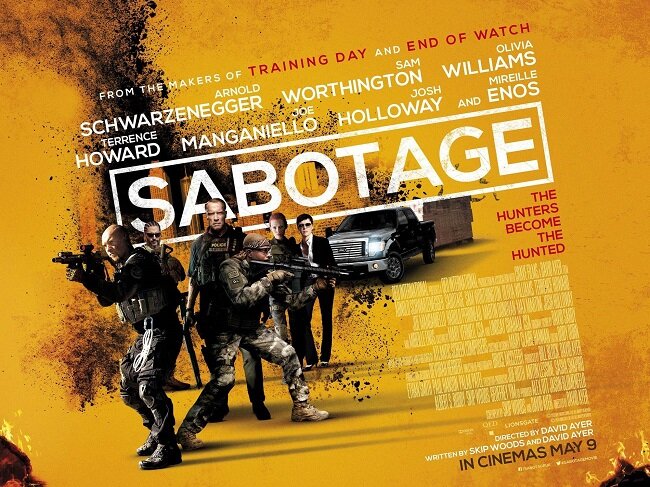
Arnold Schwarzenegger's return to the big screen after his political career has been uneven to say the least. His cameos in The Expendables and The Expendables 2 were well received, with their self referential charm and age related irony. Yet his first major movie The Last Stand, although competent, failed to find an audience. Escape Plan fared better at the box office but did not put Arnie back on the A list. Effectively there's a large percentage of the contemporary cinematic audience who were born after his heyday and are simply not overt fans of his work. His core audience is more than likely of the age group that consume most of their film entertainment at home. Which may explain why Sabotage tanked in the US upon release on March 28th 2014. It was the worst opening box office of Arnie's career. He used to break first day opening records.
Arnold Schwarzenegger's return to the big screen after his political career has been uneven to say the least. His cameos in The Expendables and The Expendables 2 were well received, with their self referential charm and age related irony. Yet his first major movie The Last Stand, although competent, failed to find an audience. Escape Plan fared better at the box office but did not put Arnie back on the A list. Effectively there's a large percentage of the contemporary cinematic audience who were born after his heyday and are simply not overt fans of his work. His core audience is more than likely of the age group that consume most of their film entertainment at home. Which may explain why Sabotage tanked in the US upon release on March 28th 2014. It was the worst opening box office of Arnie's career. He used to break first day opening records.
On paper Sabotage should work. Director David Ayer (Training Day) is capable of making a movie that are more than the sum of its parts and presenting us with a tale of loyalty among elite squads. Sadly he fails. Schwarzenegger strives to give a more in-depth performance as John “Breacher” Wharton, leader of a crack squad of DEA agents. Yet his endeavours are lost within the movie's numerous shortcomings. The cast are mainly wasted, being saddled with an immensely stupid, contradictory and mean spirited screenplay. Sporting such two dimensional names as “Neck,” “Monster” and “Tripod” there is precious little to like about the main characters. There's a lot of on screen violence but it is not in the usual idiom you'd expect from such a movie. It's just there because some producer thought that it was required. The dialogue is poor and littered with profanity that seems to be present to simply bolster the screenplay.
If you are looking for any kind of redeeming quality in Sabotage, then there is the spark of a decent subplot involving Olivia Williams and Harold Perrineau, playing the two officers investigating the alleged theft of ten million dollars by Wharton's team. There is a tangible sense of chemistry between them and they have some amusing banter. Sadly it does not have sufficient impact upon the rest of the movie with it's casual brutality, crass sexism and misogyny. If the film had been written from their point of view then it may well have been a superior product. As it stands Sabotage is perfunctory. I have no problem with a movie being earnestly dumb. It's when it's cynically dumb I feel that all involved should pause and take stock.
I am very curious as to what Schwarzenegger will do next because I think his immediate film has ground to a halt. It's curious that some box office stars and larger than life Hollywood legends have managed to maintain a successful career well into their autumn years. John Wayne and Clint Eastwood both maintained box office and critical acclaim well beyond their sixties. Sadly the contrived shenanigans of Sabotage are a far cry from True Grit and Gran Torino. Perhaps a change in direction away from action movies would be beneficial. Maybe a move to a major TV show would offer a chance for Arnold to find an appropriate audience.
Terminator: Dark Fate (2019)
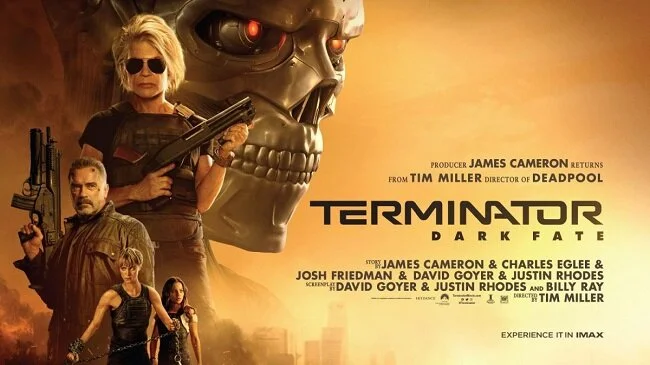
Sequels and reboots are hardly a new concept and have been a part of Hollywood culture since the 1930s. The success of the Universal Horror movies from that era being a prime example of direct follow ups and retconned movies. However, there is one fundamental rule that distinguishes a good sequel from a bad one. You should never mitigate, undermine or make irrelevant the events of the previous movie, just to provide your new film with a raison d'être. For example, the events of Aliens do not contradict or trivialise those that happened in Alien. In fact with that franchise there is a very clear logical progression between the two movies. The same is true for Mad Max and Mad Max 2 or Star Wars and The Empire Strikes Back. The key is to progress a story, enhance it or explore things from an alternative angle and bring something new to the cinematic table. Sadly this philosophy is all too often lost on corporate film making. Which means that many sequels are just tedious replays of prior films. Terminator: Dark Fate falls squarely into this category.
Sequels and reboots are hardly a new concept and have been a part of Hollywood culture since the 1930s. The success of the Universal Horror movies from that era being a prime example of direct follow ups and retconned movies. However, there is one fundamental rule that distinguishes a good sequel from a bad one. You should never mitigate, undermine or make irrelevant the events of the previous movie, just to provide your new film with a raison d'être. For example, the events of Aliens do not contradict or trivialise those that happened in Alien. In fact with that franchise there is a very clear logical progression between the two movies. The same is true for Mad Max and Mad Max 2 or Star Wars and The Empire Strikes Back. The key is to progress a story, enhance it or explore things from an alternative angle and bring something new to the cinematic table. Sadly this philosophy is all too often lost on corporate film making. Which means that many sequels are just tedious replays of prior films. Terminator: Dark Fate falls squarely into this category.
Objectively, Terminator: Dark Fate plays out as a greatest hits of the Terminator franchise. Due to the way that Terminator 2: Judgement Day concluded, the future existence of Skynet has been definitively stopped. Therefore for this new film to justify its existence it has to contrive another comparable future threat and does so with a new rogue AI called Legion. So despite Judgement Day being averted, we are simply presented with a new dystopian future (because obviously Legion perceives mankind as a threat) and a new Terminator (Rev-9 model played by Gabriel Luna) sent back in time. Naturally, if there’s a Terminator on the loose, then they have to have a target. This time round it is Daniella Ramos (Natalia Reyes), a young woman who works in an automobile assembly factory. She is rescued and protected (as was Sarah Connorin the original movie) by a soldier from the future. The major difference being this time, is that Grace (Mackenzie Davis) has been cybernetically enhanced thus making her more capable in tackling Terminators.
Perhaps the most egregious offense that Terminator: Dark Fate commits is dealing with the conundrum of John Connor. With Judgement Day averted both John and his Mother Sarah were theoretically free to live out the remainder of their lives in peace. But the production’s need to include actress Linda Hamilton into the story (and thus increase the film marketability) requires a rather mean spirit plot twist that effectively negates the entire point of the first two films. To say more would spoil the film’s plot for those who have yet to see it but it really is a poor idea and has upset many ardent fans of this franchise. This narrative device also paves the way to crowbar Arnold Schwarzenegger into the proceedings as yet another T-800 model Terminator from the original Skynet timeline. There are some attempts in the screenplay by David Goyer, Justin Rhodes and Billy Ray to try and play against type, with this particular Terminator living out the rest of his existence as an average member of society. But the scenario envisaged is purely designed for easy laughs and offers nothing of substance beyond its inherent novelty.
Effectively all that Terminator: Dark Fate offers during its 128 minute duration is a retread of previous plot elements from the other movies and a series of noisy and frenetic action scenes, all of which are derivative and soulless, with no genuine sense of threat. Is the film poorly made? No not at all. Is it entertaining on any level? Yes. In a superficial way. But it has nothing to offer beyond that and it is utterly redundant. Beyond the need to make a film studio some money, Terminator: Dark Fate cannot really justify its existence. It adds nothing to the existing canon and lore and makes for rather ponderous viewing. The return to an R Rating provides no tangible benefits either, other than the scope for violence for violence sake. Sadly, the mainstream film making industry has no concept of integrity or art and is utterly lacking in self awareness. So I’m sure given some time, a focus group will attempt to resurrect this franchise yet again at a future date, only to make exactly the same mistakes.
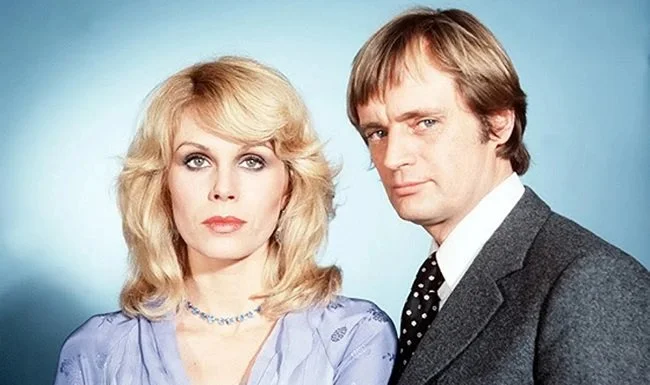

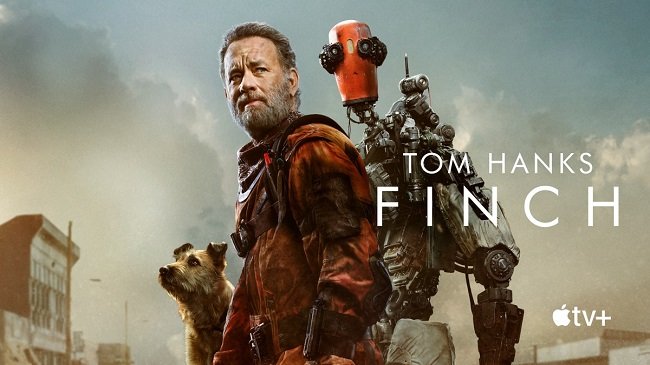
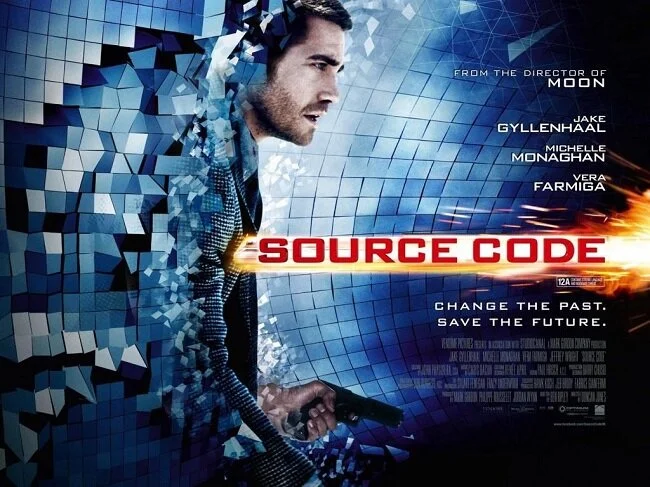






Rambo: Last Blood (2019)
The enduring appeal of the character John Rambo in First Blood comes from the fact that he is a traumatised ex- service man who keeps himself to himself as he drifts from job to job, trying to come to terms with his wartime experiences. His poor treatment at the hands of a small-town Sheriff is a succinct metaphor for the social and political indifference that Vietnam veterans were shown upon their return to the US. He’s a man with a code in a world that no longer has any use for him. His simple and honest patriotism is not returned and he is in fact viewed with shame by many from the nation he loves. Furthermore, the first movie does not paint him as a cold-blooded killer. Despite provocation he is not the first person to shoot to kill. Rambo is in many ways a victim. A broken man, who society has asked to do unspeakable things. Now society wants nothing to do with him and fears the “monster” they created. Although clearly an action movie, First Blood had narrative depth and a flawed but sympathetic protagonist. 37 years and four movies later, such dramatic themes have long left the franchise. The central character is indeed a caricature of its former self.
The enduring appeal of the character John Rambo in First Blood comes from the fact that he is a traumatised ex- service man who keeps himself to himself as he drifts from job to job, trying to come to terms with his wartime experiences. His poor treatment at the hands of a small-town Sheriff is a succinct metaphor for the social and political indifference that Vietnam veterans were shown upon their return to the US. He’s a man with a code in a world that no longer has any use for him. His simple and honest patriotism is not returned and he is in fact viewed with shame by many from the nation he loves. Furthermore, the first movie does not paint him as a cold-blooded killer. Despite provocation he is not the first person to shoot to kill. Rambo is in many ways a victim. A broken man, who society has asked to do unspeakable things. Now society wants nothing to do with him and fears the “monster” they created. Although clearly an action movie, First Blood had narrative depth and a flawed but sympathetic protagonist. 37 years and four movies later, such dramatic themes have long left the franchise. The central character is indeed a caricature of its former self.
After the events of Rambo (2008) John Rambo (Sylvester Stallone) returns to his home in Arizona, where he lives raising and selling horses which he manages with his Father’s old business partner Maria Beltran (Adriana Barraza), and her granddaughter Gabriela (Yvette Monreal). This surrogate family has provided John with stability and hope for the last decade and helped him face his inner demons. However, PTSD still plagues John and he often sleeps in a series of tunnels that he’s dug under his ranch as a form of self-therapy. Despite advice to the contrary, Gabriela goes to Mexico looking for her estranged Father. After meeting with an old school friend, Gizelle (Fenessa Pineda), a meeting is arranged but her Father rejects her. Upset by events, Gabriela goes to a nightclub with Gizelle to drown her sorrows. She is subsequently betrayed by her friend and falls into the hands of a human trafficking gang run by the Martinez Brothers. John comes looking for Gabriela and quickly has a run in with the violent gang. His actions have far reaching consequences leading to a show down at John’s heavily fortified ranch.
Rambo: Last Blood is curious hybrid genre film, sitting somewhere between Taken, Death Wish and a Friday the 13th movie. It’s quite different from previous instalments in both style and format. There are no covert missions, no skirmishes with foreign military forces and no schoolboy commentary on geopolitics. Instead director Adrian Grunberg (Get the Gringo) initially tries to focus on John Rambo coming to terms with his place in the world as he lives out his “retirement” on his Father’s ranch in quiet self-contemplation. The international version of the movie starts with an interesting prologue in which Rambo uses his tracking skills to try and rescue some tourist lost in a storm. His inability of save all of them triggers his PTSD. However, these scenes do not appear in the US and UK version of the movie. Furthermore, their relevance in the longer edit is soon lost as the movie quickly gives way to standard action movie and revenge tropes. From then on, we are subject to a generic kidnap and revenge fantasy, populated by decidedly two-dimensional characters. If you want copious amounts of action and gore then you have to wait 75 minutes for the final act, although there are a smattering of extreme unpleasantries along the way.
If Rambo: Last Blood had actually abandoned the premise of an action movie and instead been a character drama about John’s redemption through his adopted family, then this may well have been a far better film. But fans simply wouldn’t have supported such a radical change of direction and so we are subject to this tired and frankly uninspired undertaking. Although professionally made, it is best not to think too hard about narrative and themes of Rambo: Last Blood. Drug cartels and human trafficking are tough enough subjects to tackle in an intelligent and nuanced fashion. Even movies like Sicario struggle to dissect the complexities of these issues. Here they are simply just exploitation fodder, tinged with an undercurrent of racism. This is also a very mean spirited ending to John Rambo cinematic journey. Instead of finding some peace and a place in the world, he once again endures bereavement and a bleak future. As deluded right-wing revenge fantasies go this isn’t even a good one, because in winning he loses everything. Were both Stallone and Grunberg deliberately trying to make a statement that “wages of sin are death” and subvert the entire message of the franchise? No, I think they just painted themselves into a narrative corner due to the demands of fans and the producers to deliver what was expected.
American Sniper (2014)
It was hardly surprising that the movie adaptation of Chris Kyle's autobiography American Sniper, would cause controversy. The Iraq war, US Foreign Policy and national pride are seldom subjects that are discussed in a calm and measured fashion. And then there are the personal politics of director Clint Eastwood to consider. Hence there were claims from some quarters upon the movie’s release, that it was Islamophobic and counter claims that criticisms of the late Chris Kyle were unpatriotic. There still remain issues regarding the authenticity of events depicted in the source text and subsequently the movies screenplay by Jason Hall. Yet none of these factors have in anyway impacted upon the film's box office returns which currently stands at $247,900,417 worldwide.
It was hardly surprising that the movie adaptation of Chris Kyle's autobiography American Sniper, would cause controversy. The Iraq war, US Foreign Policy and national pride are seldom subjects that are discussed in a calm and measured fashion. And then there are the personal politics of director Clint Eastwood to consider. Hence there were claims from some quarters upon the movie’s release, that it was Islamophobic and counter claims that criticisms of the late Chris Kyle were unpatriotic. There still remain issues regarding the authenticity of events depicted in the source text and subsequently the movies screenplay by Jason Hall. Yet none of these factors have in anyway impacted upon the film's box office returns which currently stands at $247,900,417 worldwide.
American Sniper is directed by Clint Eastwood in his customary minimalist and no-nonsense fashion, allowing us to focus on the subject matter without any unnecessary embellishment. Tom Stern's cinematography is far from flamboyant and appropriately stark. The central performances by Bradley Cooper as Chris Kyle and Sienna Miller as his wife Taya Renae Kyle are both strong and clearly defined. Criticisms about a lack of depth and balance are misplaced as far as I'm concerned. If real people have strong views or convictions should that reality not be reflected in the script? Furthermore this is not a movie about the Iraq War itself and an exploration of the geo-political ramifications. It is simply a soldier’s story, told from his perspective. It is also a drama and not a documentary.
Eastwood has often explored within his movies the theme of violence and the impact it has upon all involved. In this instance he has chosen to focus upon one particular individual. Steven Spielberg, who was at one point associated with adapting this work, has indicated that he would have approached the subject differently. He intended to explore the curious duality between Chris Kyle and "Mustafa", his Iraqi rival and ex-Olympic marksman. Eastwood takes a different path depicting the emotional toll four tours of duty has upon Kyle and his family. Contrary to some opinions there is no triumphalist tone to the proceedings, nor are the action sequences overblown spectacles. They are straight forward and functional, very much in accord with the director’s approach to film making. The Iraqi's that are depicted in the movie are combatants and are treated as such. Beyond that there is no overt agenda against Islam nor does the film adopt any major political stance. The characters on screen certainly have their own views but American Sniper simply depicts them, rather than endorses them.
There are some flaws in the narrative but they are mainly procedural, rather than ideological. I would have liked to have seen more of Kyles home life between tours, as well as some exploration of the controversies surrounding his book. As for the codicil at the movies end regarding the news coverage of his subsequent death and funeral, again I see this as just a reflection of events rather than a specific commentary upon them. Overall these criticisms do not undermine the movie nor detract from the strong performances. However due to the emotive nature of US politics and even the reputation of its director, perceptions and opinions may well possibly have been skewed regarding the movie’s merits and its perspective.
A notable aspect regarding American Sniper is its soundtrack or virtual lack of one. Beyond three credited pieces of music used at strategic points in the story the movie has no overall score. However many viewers have drawn attention to the montage of news footage regarding Chris Kyles funeral shown at the end of the film. It plays out to a track called "The Funeral", composed by the great Ennio Morricone. The piece is a subtle variation of Taps, a tune played at dusk by the US military. The cue called Il Funerale was first used in the spaghetti Western “Il Ritorno di Ringo” AKA The Return of Ringo in 1965. Like so much of the composer’s work, its inherent beauty lends itself to intelligent use in other movies, thus it greatly compliments the final scenes of American Sniper.
Transporter 3 (2008)
Do I really need to present you with some sort of plot synopsis for Transporter 3? No, I didn’t think so. More of the same as Frank Martin (Jason Statham) and his police chum, Inspector Tarconi (Francois Berleand) become embroiled in yet another high-octane escapade. There's fights, car stunts, exotic international locations and a strong sense of humour. This time, the disposable love interest is a Ukrainian girl named Valentina (Natalya Rudakova) who fulfils her role succinctly. The film benefits by being set back in Europe, after the mistake of basing Transporter 2 in the US. This time, the story takes us to such locations as Budapest and Odessa. The international film crew once again bring a veneer of panache to the production that is conspicuously absent in US action movies. For a modest budget fil, Transporter 3 it looks very good. Again the proceedings are given a boost by a pertinent soundtrack by Alexandre Azaria and a selection of European “tunes”.
Do I really need to present you with some sort of plot synopsis for Transporter 3? No, I didn’t think so. More of the same as Frank Martin (Jason Statham) and his police chum, Inspector Tarconi (Francois Berleand) become embroiled in yet another high-octane escapade. There's fights, car stunts, exotic international locations and a strong sense of humour. This time, the disposable love interest is a Ukrainian girl named Valentina (Natalya Rudakova) who fulfils her role succinctly. The film benefits by being set back in Europe, after the mistake of basing Transporter 2 in the US. This time, the story takes us to such locations as Budapest and Odessa. The international film crew once again bring a veneer of panache to the production that is conspicuously absent in US action movies. For a modest budget fil, Transporter 3 it looks very good. Again the proceedings are given a boost by a pertinent soundtrack by Alexandre Azaria and a selection of European “tunes”.
The fight scenes and car chases are well crafted and pitched at the right level for a PG-13 rated action-fest. The devil is in the editing, which is done in a very modern idiom, as you would expect. It is this fast pace style that allows the film to be get away with some of the content. The violence is strong but not dwelt upon. There are also some subtle references within the fight sequences to other classic films. Particularly Fist of Fury and Game of Death. Film buffs will know them when they see them. The dry banter between Statham and the sundry heavies he dispatches works well and embellishes the action. The franchise by this instalment has developed a sense of self-parody and there’s an amusing scene in which Frank give chase, not via some high-performance car but by bicycle instead. The joke works well, which is a surprising for a film that is derivative of a genre, that in itself, is self-plagiarising.
Transporter 3 has no pretensions to be anything else, other than what it is. It is very dumb, stylised and no cliché is left unturned. Its tone is pitched just right for this sort of movie. There is a running joke about Frank not liking to get his suit dirty when fighting and his disrobing becomes a potential weapon. The underlying homoeroticism of previous movies is openly explored this time (“You’re the gay?”) and is rather amusing. All in all, this film delivers perfectly what you expect in such a genre offering. Director Olivier Megaton (Taken 2 and Taken 3) thrives on this sort of material and seems to know inherently how to handle it. For once the movies rating and content do not work against it. The Transporter franchise may well be commercial and disposable, but it is also very entertaining. This in some respects, is the best sequel. The TV series that followed was lacklustre and the 2015 reboot failed to ignite audiences’ interest, despite Ed Skrein doing his best. The shadow of Jason Statham looms large in this franchise.