
In the Mouth of Madness (1995)
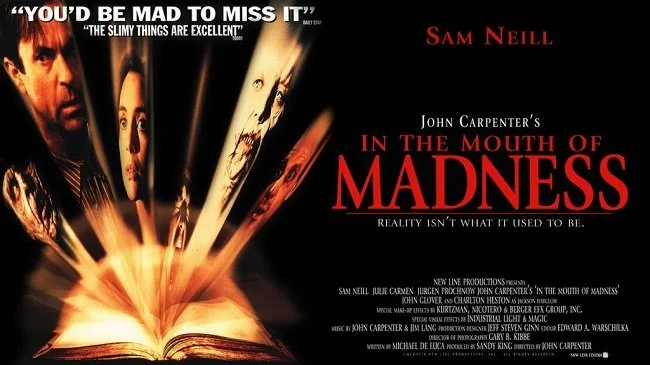
The arcane and esoteric works of author H P Lovecraft have often inspired horror directors. Sadly many of the films that have been made in homage to the Cthulhu Mythos have failed to capture its nightmarish mix of madness and mythology. John Carpenter's In the Mouth of Madness is not directly based on any of Lovecraft's specific works but screenwriter Michael De Luca draws his inspiration from many of this recurring ideas and concepts. He then adds a further homage to British writer Nigel Kneale, adding themes that are prevalent in his Quatermass series. Where others have failed, Carpenter successfully crafts a film that alludes to the baroque and eldritch qualities of the Cthulhu Mythos.
The arcane and esoteric works of author H P Lovecraft have often inspired horror directors. Sadly many of the films that have been made in homage to the Cthulhu Mythos have failed to capture its nightmarish mix of madness and mythology. John Carpenter's In the Mouth of Madness is not directly based on any of Lovecraft's specific works but screenwriter Michael De Luca draws his inspiration from many of this recurring ideas and concepts. He then adds a further homage to British writer Nigel Kneale, adding themes that are prevalent in his Quatermass series. Where others have failed, Carpenter successfully crafts a film that alludes to the baroque and eldritch qualities of the Cthulhu Mythos.
In the Mouth of Madness begins with John Trent (Sam Neill), an insurance investigator who has recently been "sectioned", telling his story to the resident psychiatrist. Hired to track down horror author Sutter Cane by his publishers, Trent finds the trail leads him to the town of Hobb's End. This is poses a perplexing problem as the town is fictional and shouldn't exist outside of the Cane’s novels. Using a hidden map on the cover of Cane’s book, Trent travels to Hobb’s End and watches the town collapse into madness, murder and monstrous transformations: the contents of Cane's novels manifesting in the material world. Furthermore this blight wants to spread! The dark forces working through Cane's text have designs to engulf the entire world.
In the Mouth of Madness is a surprising return to form by Carpenter during a time when his film making was very hit or miss. It is thoughtful, minimalist and has the brooding traits of a Lovecraft story along with the "science versus the ancient world" themes common in Kneale's work. There is clever imagery, some radical plot twists and a lot of black humour. However this is not a gorefest and the emphasis is on atmosphere and performances to create a disturbing tale. Sam Neil drives the narrative forward with a compelling lead performance. The viewer needs to watch very closely because the devil is very much in the detail leading to a thought provoking climax.
Overlooked at the box office, In the Mouth of Madness improves greatly with a second viewing. It's more an eerie vignette and a cunning critique of the horror genre, than a traditional horror. It’s not designed to shock or terrify, preferring to build a sense of disquiet. The cast such as David Warner and Jürgen Prochnow are well versed in the genre. The production design and physical effects are perfect for the tone of the film. This is very much a movie that leaves the viewer reflecting upon what they have seen. Certainly for those who are more patient and disposed towards the thoughtful, it's a rewarding experience. But that’s hardly surprising because John Carpenter’s work on a bad day (which this movie is not) is always more interesting than many of his peers on a good one.










Classic Movie Themes: Halloween
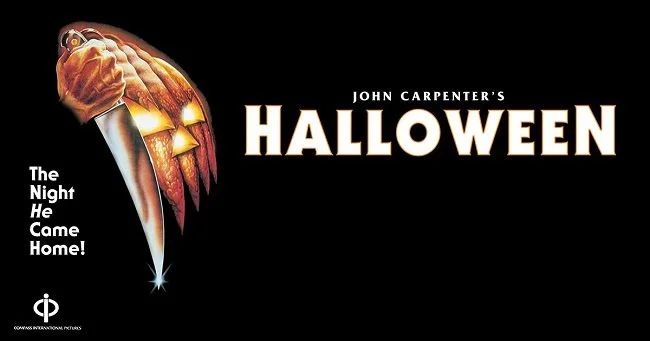
Halloween (1978) is both a genre and cinematic milestone. It made stars of Jamie Lee Curtis and director John Carpenter as well as kickstarting the slasher genre that dominated the box office for the next 15 years. Unlike many of the inferior imitations that followed in its wake, Halloween is not a gorefest but a far more suspenseful and unsettling film. It’s shocks and sinister atmosphere are the result of sumptuous panavision cinematography by Dean Cundey and inventive editing by Tommy Wallace and Charles Bornstein. Another invaluable asset to the film’s effectiveness is John Carpenter minimalistic synth and piano score which perfectly embellishes the film with an air of menace. After 33 years and various re-arrangements in subsequent sequels, the original Halloween Theme is still as effective today as it was when the film was first released.
Halloween (1978) is both a genre and cinematic milestone. It made stars of Jamie Lee Curtis and director John Carpenter as well as kickstarting the slasher genre that dominated the box office for the next 15 years. Unlike many of the inferior imitations that followed in its wake, Halloween is not a gorefest but a far more suspenseful and unsettling film. It’s shocks and sinister atmosphere are the result of sumptuous panavision cinematography by Dean Cundey and inventive editing by Tommy Wallace and Charles Bornstein. Another invaluable asset to the film’s effectiveness is John Carpenter minimalistic synth and piano score which perfectly embellishes the film with an air of menace. After 33 years and various re-arrangements in subsequent sequels, the original Halloween Theme is still as effective today as it was when the film was first released.
John Carpenter wanted a unique sound for Halloween despite the production’s modest budget. When composing the main theme he used the uncommon 5/4 time beat for a bongo drum and transferred that to piano, which resulted in the iconic melody. This uncommon sound works extremely well, clearly establishing a mood and tone that suits the film. Yet it also holds up well as a standalone piece of music. When used in the film, it is a practical audio cue to alert the audience to the presence of The Shape and potential onscreen danger. Yet the piece does not diminish in power, despite its repetition.The staccato piano rhythm with additional synthesizer chords combine to produce an evocative and infinitely flexible cue. It creates a palpable atmosphere for the film and its antagonist, yet it isn’t weighed down by excessive musical complexity.
30 years later and Halloween (2018) has proved to be a very interesting belated sequel. It features a new score by Carpenter, alongside his son, Cody Carpenter and godson Daniel Davies. The soundtrack revises the main theme and classic elements from the original as well as adding several new tracks. There is a broader use of contemporary synthesizers this time, as well as some interesting experimentation with guitar sounds. They add a real edge to a score which proves to be anything but an exercise in nostalgia. There is one cue that encapsulates the best elements of both the old and the new. The Shape Hunts Allyson. Featuring tremulous keyboards and punctuated witty grinding guitars and synths it captures an onscreen chase superbly. A variation of this cue was subsequently used at the climax of Halloween Kills (2021) and again is superbly effective in its powerful simplicity.






Classic Movie Themes: Assault on Precinct 13
Assault on Precinct 13 was John Carpenter's second feature film. The movies score was composed and recorded by Carpenter himself on a synthesizer over a period of three days. It features a minimalist style comprising of just four distinct music cues, which are used sparingly throughout the movie. The pulsating beats and elongated eerie notes combine with a mournful main melody. This lean, pared back approach suits the narrative perfectly and reflects the tonal trend of cinema at the time. There are hints of Morricone (who Carpenter later worked with on The Thing) and Lalo Schifrin in the soundtrack.
Assault on Precinct 13 was John Carpenter's second feature film. The movies score was composed and recorded by Carpenter himself on a synthesizer over a period of three days. It features a minimalist style comprising of just four distinct music cues, which are used sparingly throughout the movie. The pulsating beats and elongated eerie notes combine with a mournful main melody. This lean, pared back approach suits the narrative perfectly and reflects the tonal trend of cinema at the time. There are hints of Morricone (who Carpenter later worked with on The Thing) and Lalo Schifrin in the soundtrack.
It's interesting that Carpenter's subtle and understated compositions were perhaps more influential on minimalist electronic music, rather than on contemporary movie scores. Certainly Carpenter's style became grander and musically more complex as he continued to score his later movies such as Prince of Darkness and later In the Mouth of Madness. Although he may well best known for the Halloween theme, the Assault on Precinct 13 soundtrack provided the original musical blueprint and is in many ways its equal. Film composers working today could learn valuable lessons from its simple eloquence.