
No One Lives (2012)
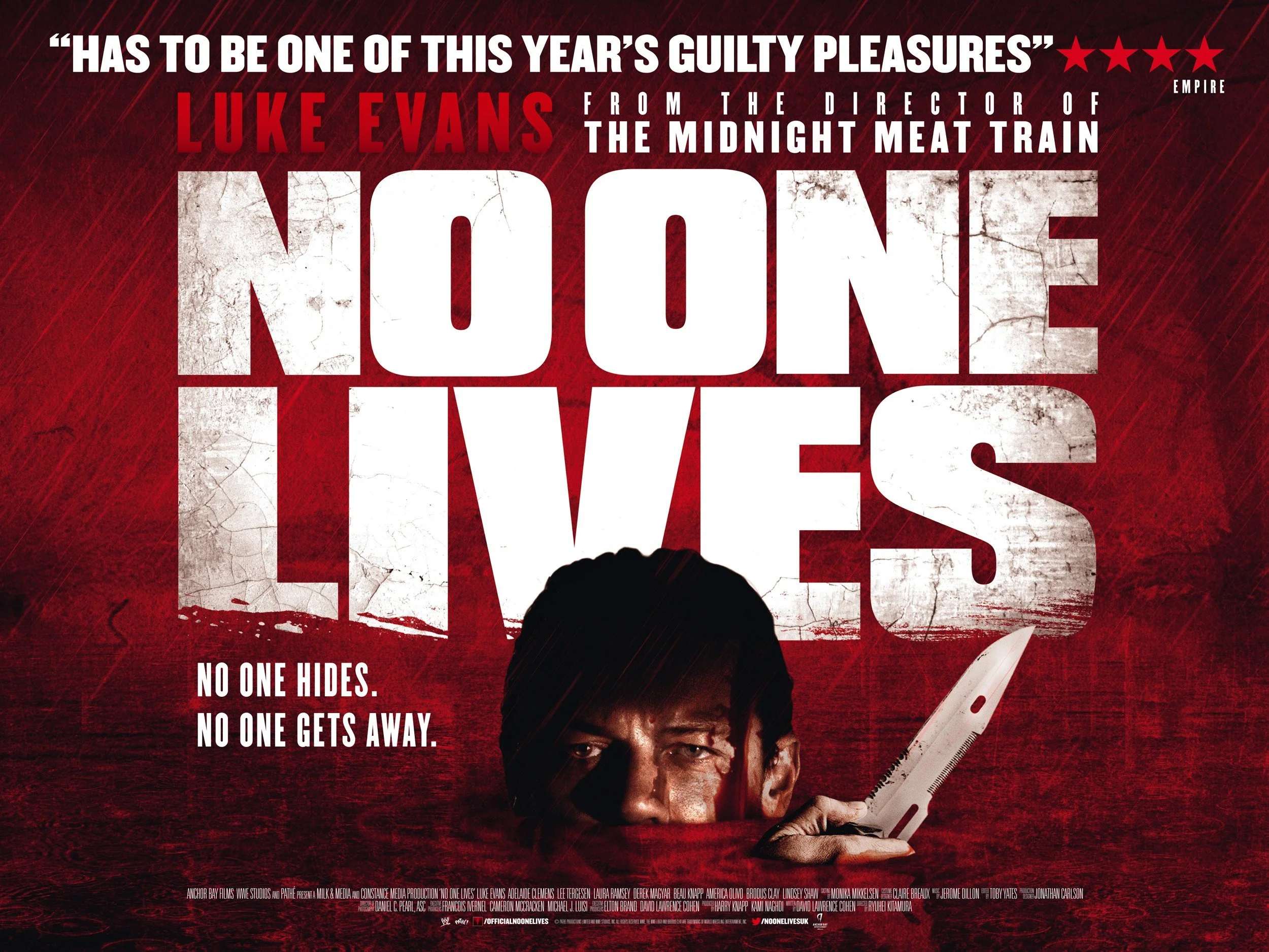
A lot of people may know Luke Evans from the live action version of Beauty and the Beast or Peter Jackson’s The Hobbit trilogy. With his matinee idol good looks, charming Welsh demeanour and his “smoky” tenor singing voice, he projects a sense of old school stardom. Which brings us to No One Lives; a film which is a radical departure from his previous work. His performance is disconcerting to say the least and the film is somewhat unhinged. Directed by Ryuhei Kitamura, who made an interesting adaptation of Clive Barker’s The Midnight Meat Train, this cinematic outing is similarly replete with robust shocks and gore. There are some interesting ideas about the nature of violence, Stockholm Syndrome and whether one should deny or embrace one’s nature. However, these are ultimately minor asides. Philosophical musings in between bouts of surprisingly striking unpleasantness.
A lot of people may know Luke Evans from the live action version of Beauty and the Beast or Peter Jackson’s The Hobbit trilogy. With his matinee idol good looks, charming Welsh demeanour and his “smoky” tenor singing voice, he projects a sense of old school stardom. Which brings us to No One Lives; a film which is a radical departure from his previous work. His performance is disconcerting to say the least and the film is somewhat unhinged. Directed by Ryuhei Kitamura, who made an interesting adaptation of Clive Barker’s The Midnight Meat Train, this cinematic outing is similarly replete with robust shocks and gore. There are some interesting ideas about the nature of violence, Stockholm Syndrome and whether one should deny or embrace one’s nature. However, these are ultimately minor asides. Philosophical musings in between bouts of surprisingly striking unpleasantness.
After a burglary goes awry, a small town gang of robbers consider how to recoup their losses. Led by Hoag (Lee Tergesen), the gang consists of his brother Ethan (Brodus Clay), his daughter Amber (Lindsey Shaw), his girlfriend Tamara (America Olivo), Amber's boyfriend Denny (Beau Knapp) and the volatile Flynn (Derek Magyar). Flynn targets a couple passing through town, assuming that the expensive car and trailer means that they’re rich and easy pickings. The couple, Betty (Laura Ramsey) and “The Driver” (Luke Evans) are taken to an abandoned gas station by Ethan while Flynn searches their car. Betty, clearly distressed by events, commits suicide. Meanwhile Flynn discovers a woman held captive in the car trunk. She is Emma Ward (Adelaide Clemens) who was kidnapped 8 months ago. The gang quickly realise they’ve crossed paths with a predator and are in serious danger.
No One Lives quickly sets out its stall and keeps moving over an efficient 86 minutes. What is effectively a blending of the slasher and revenge genres is somewhat elevated above the average by an enigmatic performance by Luke Evans. The screenplay by David Cohen focuses on the dynamic between kidnapper and victim. Adelaide Clemens gives a good performance as a woman determined to survive and not become just a “victim”. Luke Evans’character remains suitably vague, with little back story. He often lapses into introspective musing about his own nature, much to the confusion of his “mediocre” prey. When asked if he’s a serial killer he retorts “A serial killer? Sweet Jesus, no. Serial killers deal in singularities. I’m a numbers guy”. When another victim states how they don’t deserve what is happening, he blithely agrees and commiserates that she is “just unlucky”.
Shot on 16mm film, No One Lives has a grimy aesthetic that suits the subject matter. Cinematographer Daniel Pearl was the DP on Tobe Hooper’s Texas Chainsaw Massacre. Next to Luke Evans’ compelling presence, the second standout aspect of this film are the set pieces. Japanese Australian Director Ryuhei Kitamura constructs some singularly unpleasant death scenes and knows exactly how to fish hook horror fans. He also explores some interesting themes, for those who want something a little deeper but they are presented as optional extras. No One Lives will primarily appeal to horror aficionados due to several “squishy” WTF moments. It also works as a thriller but casual viewers may find the excess of unpleasantness a little too gruelling. The film is certainly an interesting addition to Luke Evans’ resume. I hope he does more like this.










Gangster Squad (2013)
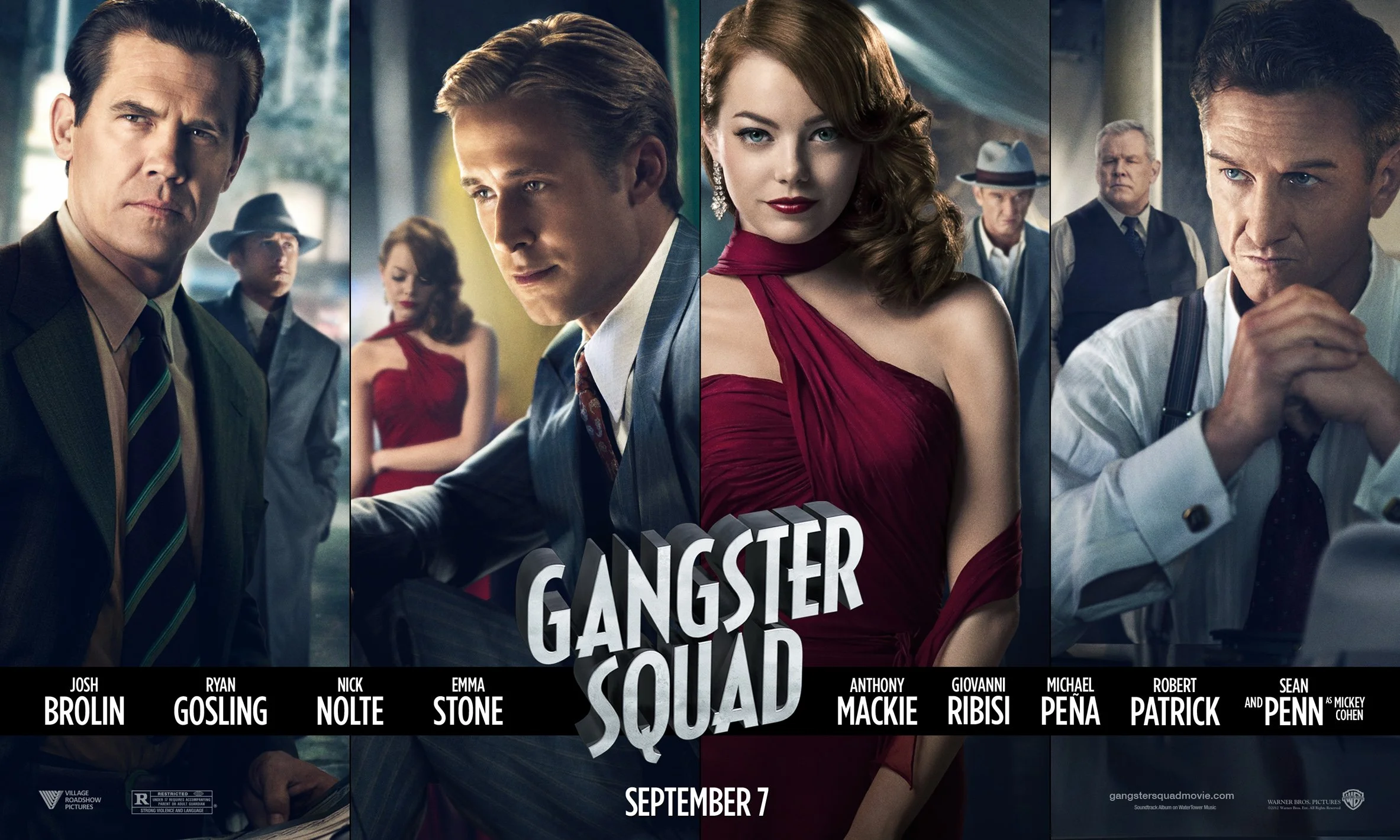
When I first saw the promotional trailer for Gangster Squad back in 2012, prior to its release, I wasn't especially impressed. I simply thought the film was another attempt to re-invent the gangster genre for a generation who were not especially familiar with it. I wasn't exactly overwhelmed with director Ruben Fleischer's resume either. I didn't particularly like Zombieland and haven't seen 30 Minutes Or Less. Then came the tragic mass shootings in Aurora, Colorado which led to the movie being delayed so that the original ending, which featured a shoot-out in a movie theatre, could be replaced. Hence when I finally watched this film recently, I wasn't expecting a movie up to the standards of say Once Upon A Time In America or Miller’s Crossing and it would seem that I was right do so. Gangster Squad is not especially noteworthy in any respect.
When I first saw the promotional trailer for Gangster Squad back in 2012, prior to its release, I wasn't especially impressed. I simply thought the film was another attempt to re-invent the gangster genre for a generation who were not especially familiar with it. I wasn't exactly overwhelmed with director Ruben Fleischer's resume either. I didn't particularly like Zombieland and haven't seen 30 Minutes Or Less. Then came the tragic mass shootings in Aurora, Colorado which led to the movie being delayed so that the original ending, which featured a shoot-out in a movie theatre, could be replaced. Hence when I finally watched this film recently, I wasn't expecting a movie up to the standards of say Once Upon A Time In America or Miller’s Crossing and it would seem that I was right do so. Gangster Squad is not especially noteworthy in any respect.
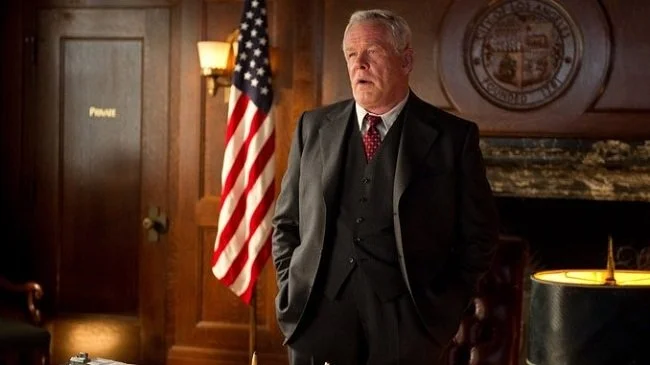
Set in 1949 Los Angeles, sadistic gangster Mickey Cohen (Sean Penn) expands his operations with the intention of controlling all criminal activity in the city. He has bribed sufficient officials and police, that no one is willing to cross him or testify against him. Everyone except Sergeant John O'Mara (Josh Brolin), a former World War II soldier, who wants to raise a family in a peaceful Los Angeles. Police Chief William Parker (Nick Nolte) decides to form a special unit to tackle Mickey Cohen, putting O'Mara in charge. O'Mara asks fellow cop and war veteran Jerry Wooters (Ryan Gosling) to join him. He initially refuses but reconsiders after he witnesses the murder of a young boy by Cohen's people. Despite initial setbacks, such as a casino raid thwarted by corrupt Burbank cops, the squad successfully starts to shut down key parts of Cohen’s operations, leading to violent reprisals.
Gangster Squad has a beautiful production design and a great amount of period detail lavished upon it. Unfortunately no such attention has been lavished upon the plot with Will Beall's screenplay playing like an over simplified version of The Untouchables. The movie attempts to bolster the ailing narrative with numerous action set pieces but these violent punctuation points lack any impact and are simply present out of necessity. The plot has none of the usual subtexts about poverty, honour among thieves, political or religious oppression that you usually find in this genre. Instead it’s all somewhat perfunctory. Gangster Squad suffers from all the usual problems of contemporary action films and thrillers. It looks great but rings hollow. The sort of film that you struggle to remember any specific detail a year later.
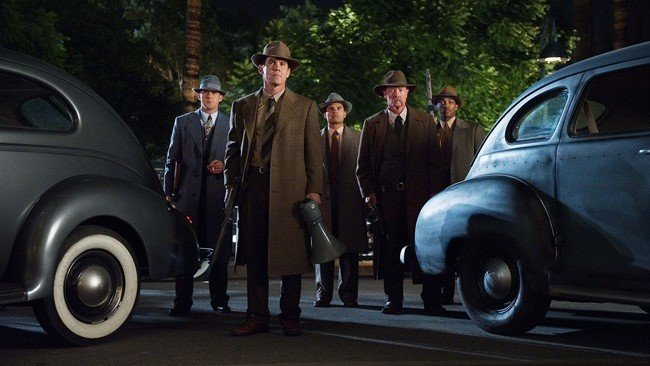
Sean Penn’s excessive performance as crime boss Cohen is trying and Emma Stone is miscast as a femme-fatale. The remainder of the cast, both old and young, struggle to bring any conviction to the uninspired dialogue. It is a criminal waste of such talents as Josh Brolin, Giovanni Ribisi and Nick Nolte. The movie’s hastily reshot conclusion is perfunctory, offering the spectacle of violence and precious little else. I was not overly concerned about the resulting plot holes arising from the rewrite, as I had precious little interest in the story or characters by this point. The overall impression I was left with after watching Gangster Squad, was that the entire production was a missed opportunity. It seems that everyone concerned with the film had obviously watched all the classics from the genre, but had sadly learned nothing from them.




The Chairman (1969)
The Cold War was a mainstay of many a thriller and action movie throughout the sixties, seventies and eighties. However, all too often it was depicted in terms of the US versus the Soviet Union. China didn’t seem to feature so much, although it was just as equally an “enemy” of the West. Hence when I recently read about The Chairman (which has just had a Blu-ray release), it was of interest to me. An espionage story, starring Gregory Peck with a hidden bug implanted in his skull, infiltrating China to steal a secret enzyme formula is quite an intriguing premise. Furthermore, director J. Lee Thompson had previously worked with Peck on The Guns of Navarone, which is a solid action movie. Therefore I was initially optimistic that this film which I was previously unaware of, would be an interesting diversion. Unfortunately, having now seen The Chairman, all I can really describe it as is a cinematic curiosity. One of numerous films produced by a big studio in the late sixties that failed to satisfy anyone's expectations.
The Cold War was a mainstay of many a thriller and action movie throughout the sixties, seventies and eighties. However, all too often it was depicted in terms of the US versus the Soviet Union. China didn’t seem to feature so much, although it was just as equally an “enemy” of the West. Hence when I recently read about The Chairman (which has just had a Blu-ray release), it was of interest to me. An espionage story, starring Gregory Peck with a hidden bug implanted in his skull, infiltrating China to steal a secret enzyme formula is quite an intriguing premise. Furthermore, director J. Lee Thompson had previously worked with Peck on The Guns of Navarone, which is a solid action movie. Therefore I was initially optimistic that this film which I was previously unaware of, would be an interesting diversion. Unfortunately, having now seen The Chairman, all I can really describe it as is a cinematic curiosity. One of numerous films produced by a big studio in the late sixties that failed to satisfy anyone's expectations.
Nobel Prize-winning scientist Dr John Hathaway (Gregory Peck) receives a letter from a former Professor Soong Li (Keye Luke), who now resides in The People's Republic of China, requesting his assistance. Raising concerns with the US authorities, Hathaway is "invited" by Lt. General Shelby (Arthur Hill) to visit the Professor, who has allegedly developed an enzyme that allows crops to grow in any kind of climate. Hathaway subsequently agrees and finds himself embroiled in a joint operation between the U.S. and the Soviet Union. A transmitter is implanted in Hathaway's skull which can be monitored by a satellite. He is not informed that the device also includes explosives that can be triggered by the Americans if necessary. Neither the U.S. nor the Soviet Union wants the enzyme to remain exclusively in Chinese hands. Hathaway flies to Hong Kong to request “authorisation” to visit China and meets Security Chief Yin (Eric Young) who is deeply suspicious of his motives.
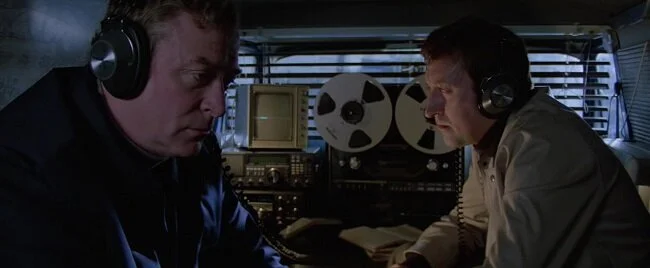
The Chairman has high tech trappings, similar to those seen in The Forbin Project or even Fantastic Voyage. Staff sit at computers monitoring Hathaways pulse and respiration, big screens track his locations and military staff pace up and down drinking coffee from plastic cups. The basic premise is sound and Peck makes for an unlikely hero. But once the plot has been established, very little happens. Hathaway goes to Hong Kong, meets the shadowy figure of Yin and then is granted permission to travel to China. There is a brief diversion when a Chinese agent attempts to seduce him while another searches his apartment but nothing is made of the plot device. On arrival in China Peck is given an official tour of the country, with a few nods to the continuous military presence everywhere. He next meets Mao Tse Tung (the chairman of the communist party and leader of China) who needs his help in finding a way to mass produce the enzyme. They trade political views and philosophy over a game of table tennis.
Peck is always compelling to watch and it’s interesting to see a story which attempts to explore the fear of China at the time. But there simply isn’t sufficient to sustain the narrative. There is an action sequence at the end of the film when Hathaway flees the remote experimental compound with the help of a deep cover Soviet operative played by Burt Kwouk. There’s then a chase to the border and an attempt to penetrate the minefield and electrified fences. But it’s too little, too late. The film ends with all three superpowers sitting on the information they all share and Peck attempting to place the information in the public domain for the benefit of mankind. It is a suitable ending and the film is quite concise at 98 minutes but it all feels very undeveloped and unremarkable. The main point of note is a solid score by the ever dependable Jerry Goldsmith.




The Marksman (2021)
Former United States Marine Corps Scout Sniper and Vietnam War veteran Jim Hanson (Liam Neeson) lives on a ranch on the Arizona-Mexico border. The mortgage on the property is in arrears after the death of his wife has left him medically bankrupt. One day while patrolling his property he encounters Mother Rosa (Teresa Ruiz) with her son Miguel (Jacob Perez) illegally crossing the border fence. He calls his step daughter Sarah (Katheryn Winnick) in the border patrol and reports them as they’re miles from any habitation. However, Rosa and Miguel are fleeing a drug cartel and Mauricio (Juan Pablo Raba), one of their enforcers. When Mauricio and his men try to forcibly take Rosa, Jim intervenes and a car chase and firefight ensue. Mauricio’s brother is killed and Rosa is fatally wounded. She gives Jim a note with her family's address in Chicago and he reluctantly agrees to take Miguel there.
Former United States Marine Corps Scout Sniper and Vietnam War veteran Jim Hanson (Liam Neeson) lives on a ranch on the Arizona-Mexico border. The mortgage on the property is in arrears after the death of his wife has left him medically bankrupt. One day while patrolling his property he encounters Mother Rosa (Teresa Ruiz) with her son Miguel (Jacob Perez) illegally crossing the border fence. He calls his step daughter Sarah (Katheryn Winnick) in the border patrol and reports them as they’re miles from any habitation. However, Rosa and Miguel are fleeing a drug cartel and Mauricio (Juan Pablo Raba), one of their enforcers. When Mauricio and his men try to forcibly take Rosa, Jim intervenes and a car chase and firefight ensue. Mauricio’s brother is killed and Rosa is fatally wounded. She gives Jim a note with her family's address in Chicago and he reluctantly agrees to take Miguel there.
The various trailers and advertisements for The Marksman give the impression that this is an action film but that is not the case. This thoughtful, low key drama is far more of a character study of the relationship between Jim and Miguel. The film explores bereavement and loss, the plight of migrants across the US border and what happens when the “American Dream” turns bad. It bears a lot of similarities to Clint Eastwood’s A Perfect World (1993). Critics claims that the story is formulaic are indeed true and there are not many plot surprises along the way. However, the film’s strength lies in the two central performances which are both very good. There is genuine pathos as opposed to contrived sentimentality and again we are reminded that Neeson is a serious actor who reinvented himself as an action star. Plus it helps that Neeson can do “gruff” and “sad” with his eyes shut. He does much with the simple dialogue to establish his Rooster Cogburn credentials. “Nobody needs to call me, and I like it that way” he exclaims when asked why he doesn’t own a cell phone.
The Marksman is obviously made on a modest budget yet its cinematography by Mark Patten is handsome and makes the most of the vistas and scenery of Arizona and Wyoming. The film does a good job of conveying the immense size and often remote nature of the US border states. The action scenes are functional and do not strain the viewer's sense of credulity. Neeson is supposed to be an ageing Marine and not a special forces operative. He handles himself well in a fight but he also takes a beating. Everything of this nature remains within the confines of the film’s PG-13 rating which is fine as this is a story about characters bonding rather than breaking bones. Director Robert Lorenz has one final trick up his sleeve after teasing us with an action movie and giving us a character drama for 100 minutes. The ending, as Liam Neeson takes a bus to return home, is very reminiscent of Midnight Cowboy. It’s a little unexpected but in step with the film’s overall tone. The Marksman is by no means a masterpiece but is certainly better than its marketing campaign implied.
The Fourth Protocol (1987)
Sometimes a perfectly competent film simply misses the boat. The Fourth Protocol is a prime example of this. Based upon the novel by Frederick Forsythe this well made, somewhat clinical thriller arrived in cinemas at a time when the cold war was coming to an end due to “glasnost” and the “red menace” was becoming a somewhat tired plot device. It didn’t help that a similar story about a rogue Russian mission to detonate a nuclear device on a US base had already featured four years earlier in the Bond film, Octopussy. Michael Caine spent several years trying to get the project off the ground, after initially reading the author’s draft manuscript of the novel. Veteran screenwriter George Axelrod was hired and John Frankenheimer was sought to direct the film. However, difficulties in financing the project led to changes in the production and Forsythe ended writing the screenplay himself, while John Mackenzie (The Long Good Friday) took on the direction.
Sometimes a perfectly competent film simply misses the boat. The Fourth Protocol is a prime example of this. Based upon the novel by Frederick Forsythe this well made, somewhat clinical thriller arrived in cinemas at a time when the cold war was coming to an end due to “glasnost” and the “red menace” was becoming a somewhat tired plot device. It didn’t help that a similar story about a rogue Russian mission to detonate a nuclear device on a US base had already featured four years earlier in the Bond film, Octopussy. Michael Caine spent several years trying to get the project off the ground, after initially reading the author’s draft manuscript of the novel. Veteran screenwriter George Axelrod was hired and John Frankenheimer was sought to direct the film. However, difficulties in financing the project led to changes in the production and Forsythe ended writing the screenplay himself, while John Mackenzie (The Long Good Friday) took on the direction.
MI5 officer John Preston (Michael Caine) discovers that British government official George Berenson (Anton Rodgers) is leaking government documents. Although his investigation is well received by British Secret Service official Sir Nigel Irvine (Ian Richardson), Preston's methods embarrass the acting Director of MI5, Brian Harcourt-Smith (Julian Glover) and he is reassigned to "Airports and Ports". Meanwhile in Russia, KGB General Yevgeny Karpov (Ray MacAnally) suspects that his immediate superior, General Gavorshin (Alan North) is mounting an unauthorised operation. He discovers that Major Valeri Petrofsky (Pierce Brosnan) has recently assumed a long established fake identity and been dispatched to the UK. In the meantime, Preston investigates the death of a Russain merchant seaman who was run over while trying to leave port without authorisation. While searching through his personal affects he discovers a metal disk. This is subsequently identified as polonium, which could be used as part of a detonator for an atomic bomb.
The Fourth Protocol has a very similar feel to The Day of the Jackal, insofar that it is procedurally driven and plays at times more like a faux docudrama rather than thriller. The fact they’re both written by the same author is obviously relevant. In the case of The Fourth Protocol, this very procedural approach to Preston’s investigation, juxtaposed with Petrofsky’s methodical collection of the various bomb parts, does come somewhat at the expense of character development. This is a film mainly about archetypes and political themes common to the spy genre. However the film does offer some great detail such as when Berenson (Anton Rodgers) is followed by an MI5 surveillance team across London. Petrofsky’s elimination of casual witnesses is also quite grim. The practicalities of creating a nuclear bomb are also starkly presented, although certain aspects of the process are ignored for practical and narrative reasons.
Caine and Brosnan do much of the heavy lifting and keep the drama afloat. The latter does very well considering he does have a minimal amount of dialogue. Caine has some smart one liners that he delivers with relish and the scene where he forensically deals with two skinheads on the London Underground who are racially harassing a passenger is spot on. The film has some very good yet somewhat low key stunts. The scene where Caine and his MI5 sidekick drive directly onto a platform at King’s Cross station and Caine leaps onto the moving train is well handled. The fact that it's executed within a single tracking shot makes it all the more impressive. The film also benefits from a solid score by Lalo Schifrin which underpins the action and enhances the drama. All in all, this is a solid thriller which keeps the viewer engaged for nearly two hours. Unfortunately, timing is important and public tastes change. Hence The Fourth Protocol was just a few years too late and didn’t quite make its mark.
Kiss Me Deadly (1955)
Film Noir often reflects the numerous things that influenced it. German expressionism, French poetic realism and American hardboiled fiction. Hence many films from this genre have a tendency to be stylised both visually and narratively speaking, with a fatalistic tone. Kiss Me Deadly, directed by Robert Aldrich in 1955, takes all these attributes as well as others and amplifies them in one of the bleakest and most uncompromising movies of the fifties. It features a brutal protagonist who isn’t even a decent detective and a plot that seems at first glance to come straight out of Greek mythology. Yet Kiss Me Deadly is compelling and lean without any superfluous scenes or narrative baggage. There’s also what appears to be the mother of all cinematic "MacGuffins" but once the film is over and the viewer reflects upon what they have seen, it can be argued that maybe the characters and the inevitability of their actions are actually the driving plot device instead.
Film Noir often reflects the numerous things that influenced it. German expressionism, French poetic realism and American hardboiled fiction. Hence many films from this genre have a tendency to be stylised both visually and narratively speaking, with a fatalistic tone. Kiss Me Deadly, directed by Robert Aldrich in 1955, takes all these attributes as well as others and amplifies them in one of the bleakest and most uncompromising movies of the fifties. It features a brutal protagonist who isn’t even a decent detective and a plot that seems at first glance to come straight out of Greek mythology. Yet Kiss Me Deadly is compelling and lean without any superfluous scenes or narrative baggage. There’s also what appears to be the mother of all cinematic "MacGuffins" but once the film is over and the viewer reflects upon what they have seen, it can be argued that maybe the characters and the inevitability of their actions are actually the driving plot device instead.
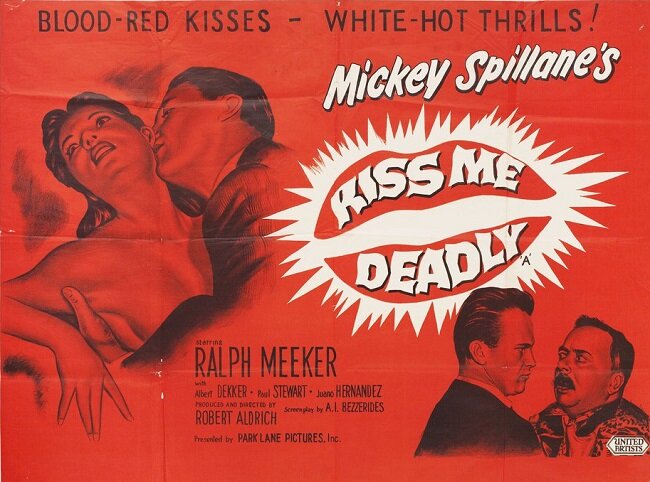
P. I. Mike Hammer (Ralph Meeker) is driving his sports car one evening when he is forced to stop due to a woman running barefoot along the road, wearing nothing but a trench coat. He offers her a lift and she identifies herself as Christina (Cloris Leachman). She then asks him to "remember me", regardless of what happens next, alluding to a poem by Christina Rossetti. The pair are subsequently run off the road by unseen assailants. Hammer is knocked out in the crash and briefly comes round to find himself in a house where Christina is tortured to death. Hammer is then put back in his car along with Christina's body and the vehicle is pushed off a cliff. He awakes in hospital, to find his secretary Velda (Maxine Cooper) waiting for him. He decides to investigate Christina's murder believing that it "must be connected with something big." He subsequently tracks down Lily Carver (Gaby Rodgers), Christina's roommate. Lily tells Hammer she is hiding from sinister forces who are trying to find a mysterious box that, she believes, has contents worth a fortune.
Author Mickey Spillane created the character of Mike Hammer in 1946 and he was never intended to be as cerebral or as reflective as other hard boiled literary P.I.s such as Philip Marlowe. Director Robert Aldrich refines the character even further. In an early scene Christina makes an intuitive assessment of Hammer stating that he is the sort of man that “never gives in a relationship, who only takes”. And take he does. Hammer is a cheap private detective who usually does nothing more than squalid divorce cases. He often involves Velda in his work who does his dirty work out of love and devotion.Things he uses to his benefit. He also takes a beating. Regularly. Due to a plot conceit involving a suspended gun permit, Hammer never pulls a weapon. He only makes progress with his case because the villains of the story briefly consider using him to their advantage. Hammer is lacking in sophistication or breadth of vision. He is indeed like his name, a very specific tool and sees everything “as nails”. In many ways like the US foreign policy during the era.
Robert Aldrich was a radical film maker who smuggled his anti-establishment ideas in what many would assume were mainstream films. Kiss Me Deadly is not really a hard-boiled crime drama but a parable about the risks of nuclear proliferation with the clear metaphor of opening Pandora’s box. He shows how violence, allegedly an anathema to the righteous and virtuous, often becomes a convenient tool as they pursue their cause. Hammer casually destroys an Opera lover's record collection in front of him, relishing his discomfort. He also slams a drawer on an old man’s hand for “reasons”. Aldrich is also far more enamoured with his female characters. Their clearly marginalised status in 1950s America affords them a far more introspective and philosophical nature. Velda quickly grasps the magnitude of the mysterious box that is being sought by multiple parties, referring to it at the great “whatsit”. Christina knows that her fate is sealed the moment she strays into the affairs of men.

The script for Kiss Me Deadly by AI Bezzerides, a left leaning blacklisted screenwriter at the time, is very precise and minimalist. Something that a lot of modern writers need to learn. The sumptuous black and white cinematography by Ernest Laszlo is inherently classic yet reflects the modernity that post World War II America exulted. Perhaps the most memorable aspect of Kiss Me Deadly is its ending. Aldrich saves his best metaphor for last. Is Lily, like the United States, so obsessed with the power inherent with destruction, compelled to open the lid to satisfy her insatiable curiosity? The denouement still leaves an impression today and it has clearly influenced many other filmmakers. Steven Spielberg references it during the ending of Raiders of the Lost Ark. And the concept of an all powerful force in the trunk of a car was similarly adopted by Alex Cox in his 1984 science fiction movie Repo Man.
Oh look, that’s similar…
Those Who Wish Me Dead (2021)
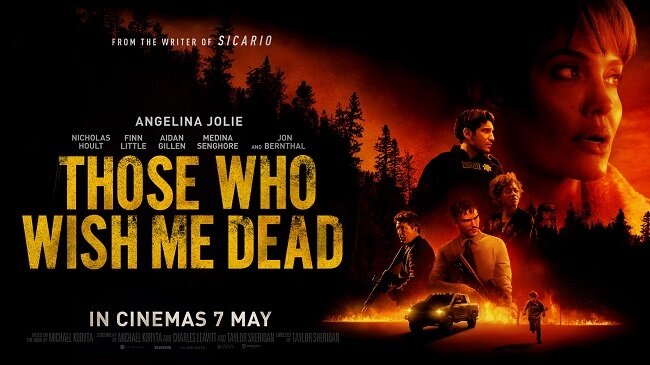
Forensic accountant Owen Casserly (Jake Weber) flees his home with his teenage son Connor (Finn Little) when he discovers he has been targeted by a pair of assassins (Nicholas Hoult and Aidan Gillen) who have been hired to stop him giving evidence in a major corruption case. Connor witnesses the murder of his father after their car is run off the road. Entrusted with important written evidence, he escapes into the dense forests of the Montana wilderness pursued by the killers. Seeking help he runs into smokejumper Hannah Faber (Angelina Jolie) who is stationed at a remote fire lookout tower. Hannah suffers from PTSD from a previous forest fire in which she was unable to save three young boys. Hannah attempts to lead Connor through the forest to safety. Meanwhile the assassins set fire to the forest to divert the attention of the authorities and cover their tracks.
Forensic accountant Owen Casserly (Jake Weber) flees his home with his teenage son Connor (Finn Little) when he discovers he has been targeted by a pair of assassins (Nicholas Hoult and Aidan Gillen) who have been hired to stop him giving evidence in a major corruption case. Connor witnesses the murder of his father after their car is run off the road. Entrusted with important written evidence, he escapes into the dense forests of the Montana wilderness pursued by the killers. Seeking help he runs into smokejumper Hannah Faber (Angelina Jolie) who is stationed at a remote fire lookout tower. Hannah suffers from PTSD from a previous forest fire in which she was unable to save three young boys. Hannah attempts to lead Connor through the forest to safety. Meanwhile the assassins set fire to the forest to divert the attention of the authorities and cover their tracks.
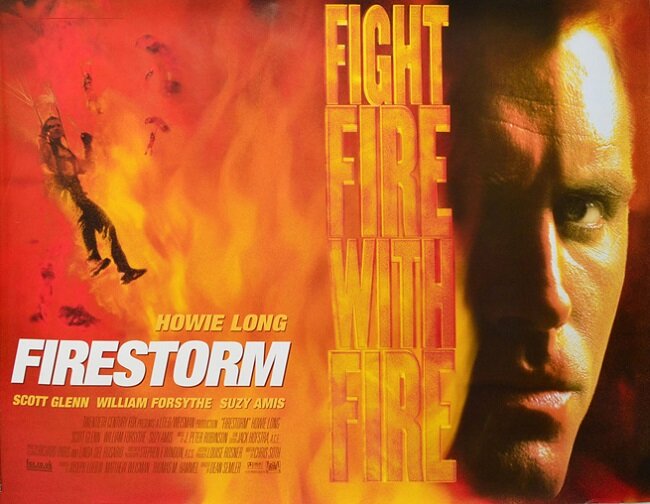
Upon reading the plot synopsis for Those Who Wish Me Dead, I immediately thought of the 1998 action movie Firestorm starring Howie Long. However upon further consideration the similarities lie purely in the setting. Those Who Wish Me Dead aspires to be a little more than just an action vehicle although it includes many familiar tropes. Angelina Jolie treads Liam Neeson territory with her “wounded Lion” role. The central character is a “wild card” with a past who is seeking redemption. However, despite a plethora of familiar plot themes, director Taylor Sheridan (Yellowstone) chooses to focus on character and story. There are some solid and somewhat brutal action scenes but they are not the heart of the proceedings. The film’s pacing is somewhat languid as a consequence. The writer of the source novel, Michael Koryta, is credited as having co-written the screenplay and it may be the case that he wanted to focus more on the characters nature, rather than their deeds.
Angelina Jolie acquits herself well and is very watchable, handling the physical demands of her role well. Finn Little similarly is a plausible young teenager, suitably traumatised and yet resourceful. Teenagers are so often depicted in a tiresomely formulaic manner in these sorts of films, so it is quite refreshing to have a more palatable character. Furthermore, Those Who Wish Me Dead flips several common place genre tropes. The two assassins are in fact brothers and this gives an interesting dynamic to their interactions. They’re both clearly psychotic and simply view their work as a process, which they undertake in a very matter of fact manner. We don’t necessarily learn a lot about them but they are more than just the standard “off the peg” bad guys required in action movies And then there’s the pregnant wife of the local sheriff, Alison played by (Medina Senghore) who quickly contradicts the woman in danger trope.
Overall Those Who Wish Me Dead is a more polished and finely honed action movie than your average studio genre material. It is raised to a higher standard because of the central performances and due to the competence of the cast. The digital FX work is also very good finding the right balance between creating spectacle and not overplaying its hand. As a result the burning forest seems a genuine threat. These high production values along with a story that is prepared to fly in the face of some of the genre’s more common attributes makes Those Who Wish Me Dead better than average. The presence of Angelina Jolie may well broaden the film’s appeal beyond action fans. She has the acting chops to play a firefighter, although she still doesn’t quite look the part. And if given a choice I would recommend Those Who Wish Me Dead over Firestorm.






Telefon (1977)
When one considers all the various elements involved in the production of Telefon, it makes it all the more disappointing that the movie fails to reach its potential. The basic idea about sleeper agents in the US is sound but the story doesn’t really go anywhere and not a great deal happens. The strong cast featuring Charles Bronson, Lee Remick and Donald Pleasance have to do their best with an undeveloped screenplay. Considering that it was written by Peter Hyams and Stirling Silliphant (from a novel by Walter Wager) it is quite surprising how lacklustre it all is. But perhaps the most saddening aspect of the film is the somewhat indifferent direction from Don Siegel, who by his own admission was not especially engaged with the story. Considering that he had scored a major hit the previous year with John Wayne’s swansong The Shootist, makes it more curious that he wasn’t more enthused. Even Lalo Schifrin’s score fails to bolster Telefon.
When one considers all the various elements involved in the production of Telefon, it makes it all the more disappointing that the movie fails to reach its potential. The basic idea about sleeper agents in the US is sound but the story doesn’t really go anywhere and not a great deal happens. The strong cast featuring Charles Bronson, Lee Remick and Donald Pleasance have to do their best with an undeveloped screenplay. Considering that it was written by Peter Hyams and Stirling Silliphant (from a novel by Walter Wager) it is quite surprising how lacklustre it all is. But perhaps the most saddening aspect of the film is the somewhat indifferent direction from Don Siegel, who by his own admission was not especially engaged with the story. Considering that he had scored a major hit the previous year with John Wayne’s swansong The Shootist, makes it more curious that he wasn’t more enthused. Even Lalo Schifrin’s score fails to bolster Telefon.
As the Cold War gives way to détente, the Soviet government purges old Stalin loyalists that do not favour peace. Nikolai Dalchimsky (Donald Pleasence), a rogue KGB member, flees to America, taking with him a document which contains details of obsolete sleeper agents. As he begins activating them, American counterintelligence is baffled by random acts of terrorism, committed by ordinary citizens against what were formerly top secret facilities. To prevent a war that neither side wants, KGB Major Grigori Borzov (Charles Bronson) is sent to neutralise Dalchimsky. Borzov has a photographic memory and hence retains all the information from the copy of the “telefon book” that Dalchimsky has taken. On arrival in the US, Borzov is assisted by longterm agent Barbara (Lee Remick). Together they seek a pattern to which agents that Dalchimsky is activating. Will they be able to stop him in time, while avoiding the US authorities.
The rights for the novel Telefon were acquired by MGM in late 1974 and the studio were confident that it would make a marketable thriller. Peter Hyams wrote the first draft of the screenplay and was hoping to direct the film himself. However, as his previous project for MGM, Peepers, had failed at the box office, he quickly realised that an alternative director would be assigned the job. So he wrote a second draft of the script for Richard Lester. However, Lester left the project and Don Siegel replaced him. The veteran director was mainly interested in working with Charles Bronson again and was not enamoured with Hyams work. So Stirling Silliphant wrote a third revision of the screenplay. The production then began filming in Finland which doubled for Russia, before returning to the US. The explosive set pieces and stunts were handled by Paul Baxley. Sadly, beyond the initial excitement of working with Bronson, Siegel found that the story didn’t “make much sense” and did not apply himself as diligently to his work as he had in previous years.
Telefon is clearly lacking in substance and does have a somewhat perfunctory quality to it. Yet there are some good ideas present and it offers at first glance a variation on themes seen previously in The Manchurian Candidate. Lee Remick is quirky, with a dry sense of humour. Bronson easily fills the role as a KGB Major. But there’s a lack of urgency to the screenplay and it feels too much like a TV movie from this era, albeit one with a bigger budget. Perhaps the film’s biggest mistake is it’s need to have a “happy ending”, as opposed to a more credible one. And as you’d expect from a production with such a history of change and artistic indifference, the press were equally ambivalent. Some critics accused the film of being anti peace. Others felt that Telefon was too pro Russian. Similarly, the film failed to find a consensus among cinema goers. Perhaps if Peter Hyams had directed his own first draft of the script, we may well have had a superior film. However, after departing Telefon, Hyams went onto write and direct Capricorn One, so one can argue that every cloud has a silver lining.
Slayground (1983)
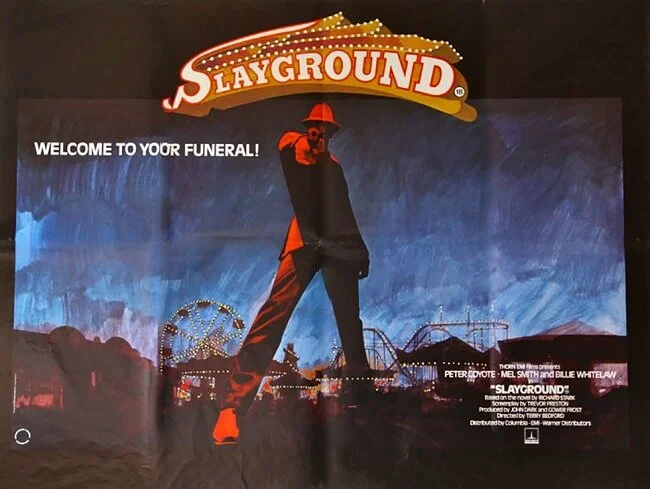
There have been several movie adaptations of the books of Jonathan Stark (AKA Donald E. Westlake) featuring his career criminal lead character, Parker. Sadly not all of them have fared well, either critically or at the box office. Many have deviated from the source material, often just using mere aspects of the original plot as the basis of their screenplay. Perhaps the most successful of these has been Point Blank (1967), directed by John Boorman and starring Lee Marvin. Slayground sadly follows the pattern set by previous adaptations. It changes several character names and takes two main elements from the source text and uses them as a premise. Specifically, a robbery that goes wrong which results in an accidental death and a climactic shootout in an out of season fairground. Due to the financing of the film, half of the story takes place in the US and the other in the UK. Much of the cast are British, resulting in a curious and at first glance somewhat incongruous film.
There have been several movie adaptations of the books of Jonathan Stark (AKA Donald E. Westlake) featuring his career criminal lead character, Parker. Sadly not all of them have fared well, either critically or at the box office. Many have deviated from the source material, often just using mere aspects of the original plot as the basis of their screenplay. Perhaps the most successful of these has been Point Blank (1967), directed by John Boorman and starring Lee Marvin. Slayground sadly follows the pattern set by previous adaptations. It changes several character names and takes two main elements from the source text and uses them as a premise. Specifically, a robbery that goes wrong which results in an accidental death and a climactic shootout in an out of season fairground. Due to the financing of the film, half of the story takes place in the US and the other in the UK. Much of the cast are British, resulting in a curious and at first glance somewhat incongruous film.
Long term thief Stone (Peter Coyote) and his accomplice Joe Sheer (Bill Luhrs) arrive in a rundown part of New York State to rob an armoured car. When their usual driver Laufman fails to join them, Sheer employs local driver Lonzini (Ned Eisenberg). Despite successfully undertaking their robbery, Lonzini collides with another car while making their getaway. When Stone investigates the wreckage he discovers all passengers are dead including a young girl. Shocked and outraged by this needless tragedy, Stone threatens to kill Lonzini, however, Sheer intervenes and the gang go their separate ways. But the Father of the dead girl (Michael M. Ryan), a wealthy sports businessman, hires charismatic assassin Costello (Phillip Sayer) and instructs him to find all involved in her death and to kill them. Stone soon learns that he is a marked man, when Lonzini is found brutally murdered. He flees to the UK and seeks out former associate Terry Abbatt (Mel Smith), in the hope of lying low and avoiding the price on his head. But Costello is tenacious and pursues him, relentlessly killing all in his path.
Slayground was written and adapted by British screenwriter Trevor Preston, a veteran of such British cop shows as The Sweeney. Hence several scenes reflect his customary gritty and hard boiled dialogue. The movie starts in a run down part of the US and then relocates to a comparably run down part of the UK. This narrative continuity may well have had a greater significance initially. But Slayground feels like a film that may have substantially re-edited prior to release. It runs for a tight 89 minutes and doesn’t waste it’s time on niceties or unnecessary embellishments. The direction by former cameraman Terry Bedford is uncomplicated and reflects the down-at-heel lifestyle and world of the main characters.
Yet there are major narrative gaps in the proceedings. Where Walter Hill wrote deliberately minimalist characters for The Driver, the flow of events in Slayground gives one the distinct impression that there is 10 to 15 minutes of expositional material is missing. Furthermore, the hitman Costello has a penchant for arranging the bodies of his victims. Yet these scenes are brief and their actual death sequences are conspicuously absent.
Hence the cast are left with precious little to do. Stone is no more of an archetype, rather than a fully rounded character. Billie Whitlaw has only a few scenes as Madge, the owner of a financially failing amusement park, although she gets by on the strength of her personality. And Mel Smith doesn’t arrive until the film’s final act. He delivers a particularly powerful soliloquy about a criminal’s lot in life and we get a brief glimpse of his straight acting talent. But again the proceedings surge ahead towards the climactic showdown between Stone and Costello and the production seems to dismiss the gaps in the plot . What we should have experienced throughout Slayground is a man’s journey through his past as he reflects upon the lifestyle he has chosen and its consequences. Sadly we are instead taken on a journey from A to B to C, where everyone we meet becomes another corpse within minutes of being introduced.
Yet despite its multiple shortcomings, there are a few aspects of Slayground that standout. The film starts with a small vignette that shows the fate of the original getaway driver, Laufman. It is a creative opening gambit. The hitman Costello is also an enigmatic character with his fedora hat and the way we never fully get to see his face. His playful tanting of his victims is an interesting foible. The denouement in the amusement park is suitably creepy, as the fairground automatons are caught in the crossfire. But ultimately this movie fails to reach its full potential, either because of ill conceived editing designed to “streamline” the story, or because the director simply didn’t have the experience to craft a more rounded and detailed narrative. As it stands, Slayground remains a curious anomaly. One of four films produced by Thorn EMI in the early eighties under the auspices of Verity Lambert. The others being Comfort and Joy, Morons from Outer Space and Dreamchild.
Classic Movie Themes: The Long Good Friday
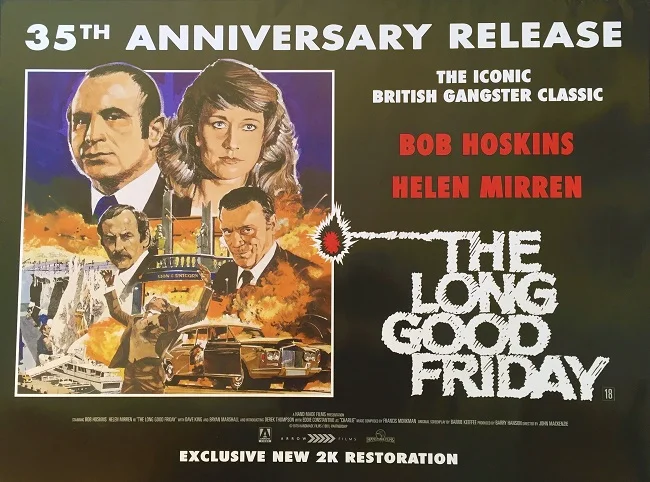
The Long Good Friday not only launched then career of Bob Hoskins but remains a uniquely British take on the gangster genre. Featuring authentic performances and a credible plot, the screenplay touches upon many of the social and political issues of the time; police corruption, the IRA, urban renewal and the decline of industry, along with EEC membership and the free-market economy. It’s a gritty and unrelenting drama that is still relevant today. Furthermore, the film is filled with quotable dialogue and has several stand out scenes that showcase Bob Hoskins’ smouldering performance. It’s also offers of “who’s who” of British character actors and there is one sequence still has the power to shock even today.
The Long Good Friday not only launched then career of Bob Hoskins but remains a uniquely British take on the gangster genre. Featuring authentic performances and a credible plot, the screenplay touches upon many of the social and political issues of the time; police corruption, the IRA, urban renewal and the decline of industry, along with EEC membership and the free-market economy. It’s a gritty and unrelenting drama that is still relevant today. Furthermore, the film is filled with quotable dialogue and has several stand out scenes that showcase Bob Hoskins’ smouldering performance. It’s also offers of “who’s who” of British character actors and there is one sequence still has the power to shock even today.
One of the many elements that contribute to The Long Good Friday being such a seminal movie is the score by Francis Monkman. A classically trained composer, conversant with multiple musical instruments, Monkman’ was the founder member of both the bands Curved Air and Sky. His score is a striking electronic synth hybrid featuring the talents of Herbie Flowers, Kevin Peek, and Tristan Fry. The addition of Stan Sulzmann and Ronnie Aspery on saxophone lends an interesting juxtaposition to the various tracks. It’s all evocative of mid-seventies UK police procedurals dramas with a blend of pulsing synths that you found in TV science fiction at the time. Yet despite its curious antecedents, it works very well on screen reflecting the story’s themes of old giving way to the new.
The Long Good Friday title theme is a brassy, pulsing affair. It is used several times throughout the film and works the best in an early scene when Harold Shand (Bob Hoskins) arrives at Heathrow airport after a flight on Concorde. It superbly establishes his character as he confidently strolls through customs after setting up a major deal with the Mafia in the US. “Fury” is a very interesting cue as it starts with a dark electronic passage as the Harold discovers the magnitude of his predicament. It evolves into a powerful and soulful sax driven piece as Harold washes the blood from himself after a frenzied attack. Both tracks are from the recent anniversary soundtrack album where the remastered score is finally available in stereo.










Tinker Tailor Soldier Spy (2011)
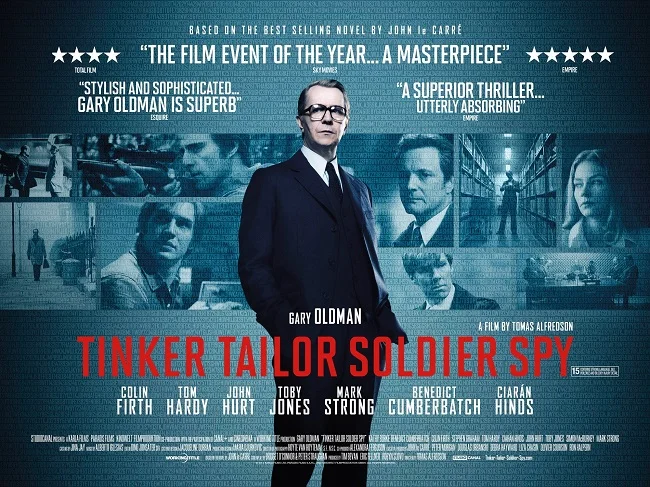
John le Carré's Cold War thriller Tinker Tailor Soldier Spy, is not only a good example of the spy novel genre, but a fine piece of seventies British literature per se. Therefore I was most surprised when I learned back in 2011 that it was to be made as a film. Could the complexities and subtleties of this cerebral and deliberately slowly paced book be adequately brought to the big screen, by today’s studio system? Could it compete with the previous BBC television adaptation starring Alec Guiness that was made in 1979? Thankfully, director Thomas Alfredson and Working Title films have successfully managed to distil the complex plot into the film’s 127-minute running time. Furthermore, the ensemble cast have a quality script to work with and the entire production benefits from the flair of a quality European director who brings an interesting outsiders dynamic to this very British tale.
John le Carré's Cold War thriller Tinker Tailor Soldier Spy, is not only a good example of the spy novel genre, but a fine piece of seventies British literature per se. Therefore I was most surprised when I learned back in 2011 that it was to be made as a film. Could the complexities and subtleties of this cerebral and deliberately slowly paced book be adequately brought to the big screen, by today’s studio system? Could it compete with the previous BBC television adaptation starring Alec Guiness that was made in 1979? Thankfully, director Thomas Alfredson and Working Title films have successfully managed to distil the complex plot into the film’s 127-minute running time. Furthermore, the ensemble cast have a quality script to work with and the entire production benefits from the flair of a quality European director who brings an interesting outsiders dynamic to this very British tale.
In October 1973, the head of British Intelligence, Control (Sir John Hurt), resigns after an operation in Budapest, Hungary goes seriously wrong. It transpires that Control believed one of four senior figures in the service was in fact a Russian Agent. The Hungary operation was an attempt to identify which of them was the mole. George Smiley (Gary Oldman), who had been forced into retirement by the departure of Control and changes within the corridors of power, is returned to office and tasked with the investigation into the alleged spy and preventing a major scandal. Rogue Agent Ricky Tarr (Tom Hardy) has evidence to suggest that the claims are true. Smiley also considers that the failure of the Hungary operation and the continuing success of Operation Witchcraft, which appears to be yielding significant Soviet Intelligence, may be linked. As smiley digs deeper into the affair he finds that much within British Intelligence is not what it seems.
Modern mainstream cinema is fast, frenetic and often fun. Yet it can also be bombastic, self-indulgent and lacking in depth. Although the technical aspects of film making is continuously advancing, I often feel that art of writing a tight, engaging and credible screenplay is in decline. Plot detail, character development and credible dialogue is frequently sidelined so that a narrative can be expedited. Fortunately, that is not the case with Tinker Tailor Soldier Spy. The skilful screenplay by Bridget O'Connor and Peter Straughan credits the audience with the necessary intelligence to keep up with the plot. The viewer has to be attentive to the dialogue, connect the dots myself and do a degree of thinking. Tinker Tailor Soldier Spy also requires an overview of the political status quo of the Cold War. However, those who engage with the ongoing story are rewarded with a high-quality, narrative driven film. It’s been a while since my brain was given such quality fodder as this.
Purists will be happy to know that Tinker Tailor Soldier Spy has not made any major plot alterations to their beloved source text. There have been some reordering of events for cinematic effect but by and large the story remains intact and true to the source text. Performances are outstanding and Gary Oldman makes the iconic role of George Smiley his own within minutes of being on screen. The look and feel of the time is suitably captured, especially the grimy down at heel world of the intelligence community. This is not the faux, stylised depiction of the era you’ve seen on television shows which still strive to make this decade chic in some fashion. It is ironic that such a quintessentially British product has been successfully brought to the screen, by Swedish director Alfredson. His Scandinavian sense of style and clinical attention to detail, previously shown in Let the Right One In, is ideal in realising this sort of period production.
I could extol the merits of many aspects of this film, such as the cinematography, soundtrack, production design and editing. But frankly it is much better for potential viewers to discover these things for themselves without any advance notification. Tinker Tailor Soldier Spy was rather arbitrarily and obviously labelled "old school" by some film critics upon its theatrical release. It is not. It is simply a succinct reminder of how quality cinema should be made. If you start with a good story, that is written well then you have a solid foundation for a good movie. That is as pertinent now as it was when film making was in its infancy. If you like strong stories and quality performances that play out over a measured running time, then Tinker Tailor Soldier Spy will be of interest to you. If you do not like having to think of yourself, listening or paying attention and prefer style over substance, then you may want to look for entertainment elsewhere.
The Standoff at Sparrow Creek (2018)
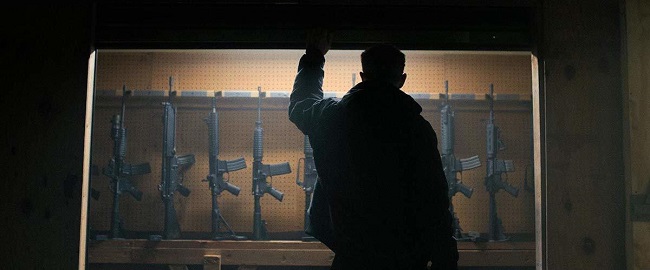
Inside a dark, remote warehouse, seven members of an unnamed midwestern militia meet. They’ve all heard via radio or police scanners that an unnamed, armed shooter armed with a modified AR-15 has opened fire on a police funeral. The assailant also plant IEDs and the casualty rate is therefore very high. This means the authorities will be scouring the countryside, raiding all known militia groups and their affiliates in the region. The men’s concern quickly turns to panic when they discover that one of their AR-15 is missing from their weapons cache, along with body armour and explosives. Is one of their own the shooter? Ford (Chris Mulkey), the group’s no-nonsense leader, asks fellow member Gannon (James Badge Dale), a former police interrogator, to question all the men and determine who is responsible. However, matters prove more complicated as Gannon knows that one other member, Noah (Brian Geraghty), is an undercover cop. Can a solution be found before the police inevitably come calling?
Inside a dark, remote warehouse, seven members of an unnamed midwestern militia meet. They’ve all heard via radio or police scanners that an unnamed, armed shooter armed with a modified AR-15 has opened fire on a police funeral. The assailant also plant IEDs and the casualty rate is therefore very high. This means the authorities will be scouring the countryside, raiding all known militia groups and their affiliates in the region. The men’s concern quickly turns to panic when they discover that one of their AR-15 is missing from their weapons cache, along with body armour and explosives. Is one of their own the shooter? Ford (Chris Mulkey), the group’s no-nonsense leader, asks fellow member Gannon (James Badge Dale), a former police interrogator, to question all the men and determine who is responsible. However, matters prove more complicated as Gannon knows that one other member, Noah (Brian Geraghty), is an undercover cop. Can a solution be found before the police inevitably come calling?
The Standoff at Sparrow Creek is a rather unique variation on a what is essentially a Reservoir Dogs scenario, which is in itself is just a modern riff on an Agatha Christie plot. The movie is a claustrophobic, sombre and dialogue driven slow burn. Director Henry Dunham’s presents a series of mind games,bluffs and double bluffs, all of which have a basis in psychology and police interrogation techniques. Gannon explores the men’s pasts and uses different tactics with each one. Morris (Happy Anderson), has a chip on his shoulder about the police, which as Gannon discovers, may be justifiable. Meanwhile Keating (Robert Aramayo), a hyper-intelligent young man who chooses not to speak has an annotated copy of The Catcher in the Rye among his possession. Something that Gannon feels may indicate repressed feelings of superiority. And as these frantic cross examinations play out police band radio indicates that the local attack has inspired other militia groups around the country and that a potential uprising is underway. Should the group try to distance themselves from events or simply embrace what is happening. It is after all what they’ve been preparing for.
The underlying strength of The Standoff at Sparrow Creek is in its central performances from seven distinct character actors. James Badge Dale provides a strong intensity to Gannon yet manages to remain ambiguous in his motivations. Morris (Happy Anderson) is belligerent and bellicose yet has a deeper story to tell when pushed. Hubbel (Gene Jones) also has a tale to tell of an everyday life that slipped out of control over a logistical tragedy. Patrick Fischler is interesting as the technically literate Beckmann, who handles most of the group’s radio communications. This expositionary role provides information from the outside world and is used as a means to up the ante within the sealed warehouse. Writer and director Dunham films the environment effectively, creating atmosphere with backlit wide shots, and cavernous corridors with occasional patches of light. Not only is this an aesthetic choice, possibly driven by the film budget, it contributes to the oppressive themes.
Because the acting is solid and the scenario absorbing, viewers are draw attention away from some of the screenplay’s weaker elements. The director clearly want to make metaphorical point and maintain the movies allegorical quality. Hence the politics of the militia and its members are not fully explored, beyond establishing the narrative. These are disillusioned men, but their wider goals and motivations are left ambiguous. As the plot clearly focuses on the need to protect the group there is naturally a strong bond between them, irrespective of their superficial dislike of each other. Yet this is put aside to make room for the films philosophical point, which comes at the story’s climax. However, irrespective of this deliberate choice by director Henry Dunham, The Standoff at Sparrow Creek remains a memorable directing debut offering a strong, thoughtful and well-acted ninety minutes of drama.
The Mule (2018)
Clint Eastwood is 88 years old and has a successful career spanning over six decades. During that time he has proved to be one of America’s most bankable box office stars and established himself as an actor and director of note among his peers. If The Mule turns out to be his swansong, then it is certainly a fitting end to a prestigious career. Because in many respects The Mule is a distillation of many of the themes and concepts, we’ve seen in previous Eastwood movies such as Gran Torino and The Unforgiven. Perhaps the core story of an ageing man trying to reconcile himself to a modern world and make peace with it, is in some way Eastwood commenting on the movie industry himself. It is very much his film and his performance underpins the proceedings.
Clint Eastwood is 88 years old and has a successful career spanning over six decades. During that time he has proved to be one of America’s most bankable box office stars and established himself as an actor and director of note among his peers. If The Mule turns out to be his swansong, then it is certainly a fitting end to a prestigious career. Because in many respects The Mule is a distillation of many of the themes and concepts, we’ve seen in previous Eastwood movies such as Gran Torino and The Unforgiven. Perhaps the core story of an ageing man trying to reconcile himself to a modern world and make peace with it, is in some way Eastwood commenting on the movie industry himself. It is very much his film and his performance underpins the proceedings.
Earl Stone (Clint Eastwood) is a dedicated horticulturalist who has spent his life putting work before his family. While competing in a flower show he misses his daughter’s wedding which further strains family ties. However online sales soon take a toll on his cottage industry and Earl finds himself in danger of the bank foreclosing on his house. “The internet has ruined everything” he grumbles. Only his granddaughter Ginny (Taissa Farmiga) has any time for him. After a row with his ex-wife Mary (Dianne Weist) at a family function, Early is approached by one of the guests who suggests that he can get paid for “just driving”. His spotless record, along with his age and ethnicity, make him potentially very useful to the local drug cartel. Caught between a rock and hard place Earl agrees to do just one job and becomes a drug mule.
The Mule is a leisurely movie and despite being set in the violent world of international drugs trafficking, is not steeped in action or mayhem. It is a character driven film in which Eastwood’s performance dominates. Earl is a microcosm of the ongoing societal age divide. He is polite, traditional and struggles with contemporary etiquette. In one scene he helps a stranded African American family whose car has a puncture and clumsily refers to them as “negros”. It’s not something done out of malice and highlights how he’s just a product of his generation. Earl also builds a rapport with the minor foot soldiers of the cartel who he meats when collecting and dropping off his shipments. He asks after their families and discusses trivial everyday things, revealing that for these men are just doing “a job”, often in default of anything else.
Beyond Eastwood’s charismatic performance, some of the other plot elements of The Mule are somewhat perfunctory. The parallel story that sees DEA Agent Colin Bates (Bradley Cooper) tracking the cartel and slowly closing in on its mules is functional but nothing more. The brief scene that Cooper and Eastwood share in a diner where they unwittingly swap homespun philosophy, is a little contrived. Also the machinations of the drug cartel and its internal power struggle is also just a functional plot device. However, the narrative does pick up in the third act where Eastwood and Wiest share several scenes together and reflect upon their failed marriage. It flirts dangerously with excessive sentimentality but mercifully stays on the right side of the line, due to solid acting and an air of earnestness.
The Mule lends itself to comparison with Robert Redford’s recent movie, The Old Man & the Gun. The latter is the better of the two, having a more nuanced plot and allowing the cast to contribute more to the proceedings. But because of the viewing public’s esteem for Clint Eastwood, I’m sure they will overlook the short comings of The Mule. As for the moral lesson that Earl is a “late bloomer” who finally learns that he needs to devote as much time to his family as to his flowers, it is a lesson that we can all reflect upon in todays busy world. Overall, despite a slow pace and numerous narrative digressions along the way, The Mule is a very accessible movie with the usually dour and grouchy Eastwood showing a far more amiable side to his persona. If it were any other actor, this would be a distinctly average movie.
American Gangster: Unrated Extended Version (2007)
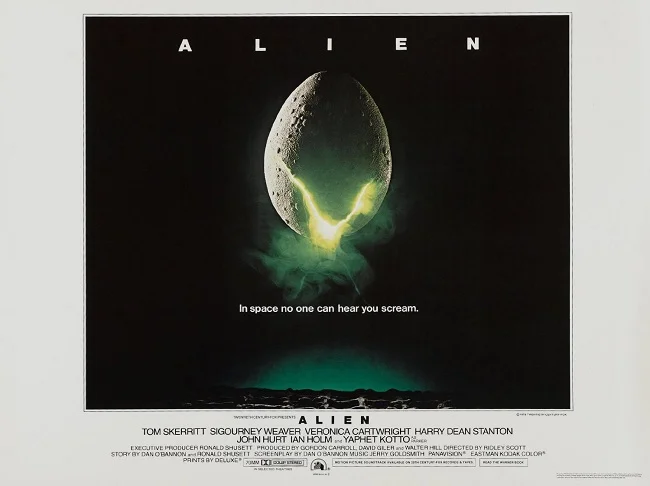
What is it with director Ridley Scott and his predilection for multiple edits of his films? Is he indecisive and a consummate tinkerer (like George Lucas) or a victim of studio politics? I suspect none of these are true. So how come there are always multiple cuts of his movies? Do his terms of employment always deny him final edit on a movie? I would think not. A film maker of his stature must surely get far more favourable terms when contract to make a film? Whatever the reason it leaves audience with a problem. How is one exactly to determine which is the best version of any of his films to see? For example, Kingdom of Heaven was greatly improved in its extended format. Yet his revised version of Alien is actually inferior to the original theatrical cut. And don’t even get me started on the plethora of versions of Blade Runner. His penchant for multiple edits therefore makes it difficult to debate his work.
What is it with director Ridley Scott and his predilection for multiple edits of his films? Is he indecisive and a consummate tinkerer (like George Lucas) or a victim of studio politics? I suspect none of these are true. So how come there are always multiple cuts of his movies? Do his terms of employment always deny him final edit on a movie? I would think not. A film maker of his stature must surely get far more favourable terms when contract to make a film? Whatever the reason it leaves audience with a problem. How is one exactly to determine which is the best version of any of his films to see? For example, Kingdom of Heaven was greatly improved in its extended format. Yet his revised version of Alien is actually inferior to the original theatrical cut. And don’t even get me started on the plethora of versions of Blade Runner. His penchant for multiple edits therefore makes it difficult to debate his work.
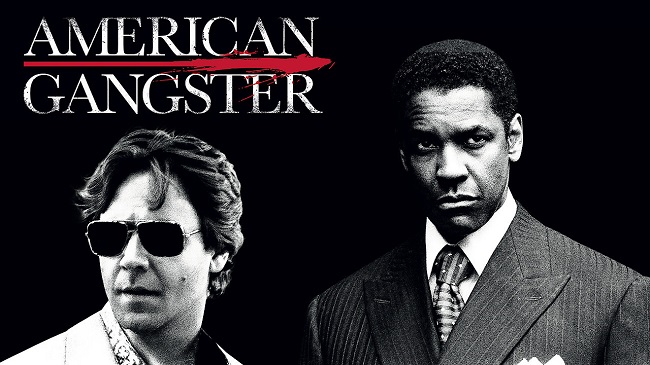
In 1968, Frank Lucas (Denzel Washington) a driver, bouncer and minor collector, witnesses the death of his crime boss and mentor Bumpy Johnson. The loss of leadership causes unrest in Harlem crime circles. Frank decides to import heroin directly from Bangkok, using US military airplanes from Vietnam to USA. The quality of his drugs along with the lower prices makes Frank Lucas the number one distributor of heroin in USA at the time. Meanwhile, in the Essex County, detective Richie Roberts (Russell Crowe) is studying for the Bar Examination. Due to his service record and tough stance on corruption, he is invited to join and head a Federal Investigation Team and set about bringing down all the biggest dealers in the US. Inevitably his path is destined to cross that of Frank Lucas.
I recently viewed the Unrated Extended version of American Gangster. I had not previously seen the theatrical release so can’t make any comments about major differences and which is the superior cut. What I can say is that it’s a well written drama with very strong central performances. Exactly what you would expect from such a director and cast. However, although the core subject is very interesting, American Gangster does not bring anything radical or new to the genre. It is absorbing, rather low key and driven by the two leads. It is not epic in its scope or especially illuminating with regard to the subject matter. Perhaps therein lies the problem. We have reached a point where we always expect the directors work to be visionary in scope and are therefore somewhat wrong footed when he sets his sights lower.
American Gangster doesn’t make the obvious mistake of glamorising the genre. Its portrayal of drug addiction is ugly and harsh, which is exactly as it should be. For a film that focuses on one of the most violent aspects of American culture, it is quite restrained in its depiction. The sub plot relating to Police corruption at times seems the more intriguing of the multiple story lines. The involvement of US Army personnel and the violation of the war dead, whose caskets are used for smuggling heroin could have been explored further. Considering the magnitude of this particular crime and the reverence with which the US public holds veterans, I had hoped this matter would have been played a greater dramatic part in the proceedings. However, the central performances are exemplary from both Denzel Washington and Russell Crowe, exactly as you would expect, although the films ending does somewhat strain one sense of credibility.
The gangster genre has not performed as well with critics in recent years as it has in the past. For example The Departed did not clinch the Best Film Oscar it so desperately wanted in 2006. The most interesting entries in this field of late have mainly been international releases, such as Mesrine and The Baader Meinhof Complex. All of which have brought a new European perspective to a traditional genre. American Gangster strives to be worthy and certainly covers a lot of ground (especially in the 176-minute Unrated Extended version) yet it strays too far from the historical facts and ultimately despite good performances, feels a little too routine and less than the sum of its parts. The story has many wider sub plots that are insufficiently developed and subsequently squandered. In many respects, the viewer is left wanting to know more despite the strong central performances. Overall, American Gangster is by no means a poor way to spend three hours, but viewers should adjust their expectations accordingly.
Bullitt (1968)
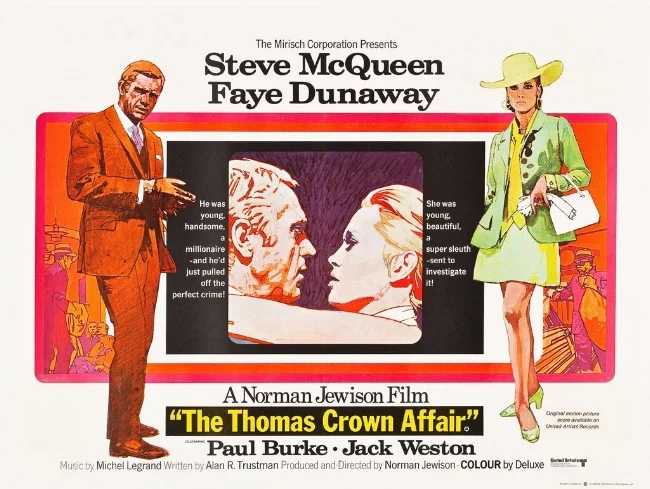
In a recent blog post I wrote about the difficulty that you can encounter sometimes when trying to watch movies that have been deemed “classic” by popular consensus. I listed 10 films of note that I intend to watch this year and to see if my views aligned with the various institutions and critics that praise them. The first on that list was the iconic sixties thriller Bullitt starring Steve McQueen. Having now watched the movie, I thought it would be prudent to collate my thoughts on it. Considering the immense amount of material that has already been written about it, I see no reason to present a review per se. Rather, here are my initial impressions for consideration. I’ve tried to highlight some specific aspects of the film that I think are of note or merit debate.
In a recent blog post I wrote about the difficulty that you can encounter sometimes when trying to watch movies that have been deemed “classic” by popular consensus. I listed 10 films of note that I intend to watch this year and to see if my views aligned with the various institutions and critics that praise them. The first on that list was the iconic sixties thriller Bullitt starring Steve McQueen. Having now watched the movie, I thought it would be prudent to collate my thoughts on it. Considering the immense amount of material that has already been written about it, I see no reason to present a review per se. Rather, here are my initial impressions for consideration. I’ve tried to highlight some specific aspects of the film that I think are of note or merit debate.
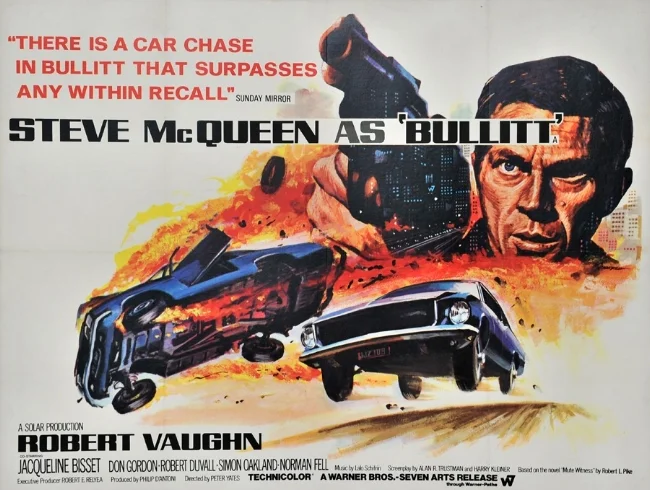
The cinematography in Bullitt is noticeably stylish and beyond the functional. William A. Fraker uses a lot of low camera angles, fluid camera movements and even embraces a Gonzo style for crowd scenes. The way bystanders congregate around crime scenes is depicted quite differently from other movies of the time. It is shown as rather unpleasant and insensitive act, often reflected in the snatches of dialogue that are heard. The famous car chase sequence is edited in similar fashion that places the viewer very much in the middle of the action. Rather than just rely on single shots from locked off cameras, the set piece is covered from multiple angles and frequently from the perspective of the vehicles themselves. It also conveys the fact that high speed pursuits are not just about performance vehicles but require skill from the drivers.
Then there is the matter of violence and the way in which it is depicted in the movie. Hollywood was shifting its stance on this weighty issue during the late sixties. As a result, there is a rather clinical shooting involving a shotgun. During the climatic shootout in the airport departure lounge there is an interesting concession to human collateral damage, when a security guard is gunned down in a very casual manner. We later see him getting the last rites from a passing priest, thus showing that death is seldom quick in such situations. Another interesting aspect is the depiction of two hired contract killers. They are not shown as sneering stereotypical gangsters but more as ageing business men. Furthermore, there is no snappy banter between them. Instead we are left with a measured silence and a few meaningful looks.
Something else that stands out about Bullitt is the accurate depiction of police investigation techniques of the time. There are no desktop computers and a lot of work is completed by copious note taking and attention to detail. We see evidence being meticulously being sorted through to see if it will yield any detail. The telephotography machine that prints suspects photos via the phone and a dot matrix printer is paradoxically archaic yet very contemporary. Then off course there’s the plot device of politics impinging upon police work. The sixties were a time when the default deference towards various public institutions was beginning to fade. Captains wanting an easy life and not wanting to rock the boat, as well as career driven Senators happy to tread on toes to get ahead, were new concepts back then.
Bullitt overall met and exceeded my expectations. The plot was interesting and its themes still relevant. Steve McQueen was effortlessly cool in the title role and the movie seemed to capture the changing mood of the period. The car chase was technically well executed and I can certainly see how the movies entire approach had a knock-on effect upon other thrillers and particularly cop movies. Sadly, Jacqueline Bisset’s character Cathy has precious little to do within the functional role of Frank Bullitt’s love interest. Sexual politics were obviously not on this film’s primary agenda. However, Lalo Schifrin’s superb jazz driven score is still a thing of beauty and reflects the idiom of the decade. Therefore, I appreciate why Bullitt enjoys the status that it currently does. It will be interesting to see if the next movie on my list also makes the grade.
Legend (2015)
Legend is an extremely lavish biopic. Despite being about a pair of notorious British villains it has both the look and feel of an American gangster epic. There is no real attempt to depict either the period or the locations accurately nor is the story of the Kray twins themselves factually correct. As ever with American productions of this nature both the era and the subject matter are viewed through a miasma of sentimentality and faux nostalgia. The Krays are portrayed as folk heroes rather than the petty thugs that they were. However if you are prepared to overlook these deliberate biases then Legend is can still be an entertaining movie.
Legend is an extremely lavish biopic. Despite being about a pair of notorious British villains it has both the look and feel of an American gangster epic. There is no real attempt to depict either the period or the locations accurately nor is the story of the Kray twins themselves factually correct. As ever with American productions of this nature both the era and the subject matter are viewed through a miasma of sentimentality and faux nostalgia. The Krays are portrayed as folk heroes rather than the petty thugs that they were. However if you are prepared to overlook these deliberate biases then Legend is can still be an entertaining movie.
There is a very slick and even Vogue-like aesthetic to Legend. The cinematography by Dick Pope is very luxuriant as it strives to recreate that Sixties look and feel. However, as so often is the case, the production design becomes a caricature of what it strives to achieve, resulting in distinct lack of authenticity. London was never that glamourous and no amount of Burt Bacharach or ambient period music can really convince us otherwise. This ersatz world of the Krays is also somewhat tonally inconsistent with the bloodletting and violence.
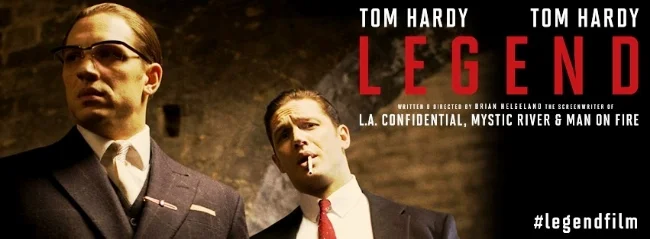
Naturally the dual roles played by Tom Hardy dominate the proceedings and the critical reviews. Such a daunting task as creating two unique performances is seldom undertaken by actors. I can only recollect two convincing prior attempts, namely Jeremy Irons in Dead Ringers and Sam Rockwell in Moon. In this instance Hardy’s portrayal of Reggie Kray is thoroughly credible. His performance with regard to Ronnie is shall we say a little more experimental. Ronnie has a somewhat comic element to his nature which at times veers from sinister to borderline Alan Partridge. The interaction between the twins is also inconsistent. On occasions you feel you are in the company of two genuine gangsters and at others it’s like you’re listening to Peter Cook and Dudley Moore discussing Shelley Winter’s in The Poseidon Adventure. Because of the focus on Hardy’s dual roles, it puts a lot of the rest of the cast in the shade which is a shame. There’s a lot of talent in the cast of Legend.
Legend has obviously been made for an international market and therefore plays to the tropes and memes of the genre. Emily Browning’s voice-over highlights this in every way as it attempts to sell this patently stylised mythology of the Krays. The violence depicted during the film is unpleasant but curiously mitigated by the patently phoney historical context. Although there were failings in Peter Medak’s 1990 movie The Krays, it got a lot more right and was far more powerful in its depiction of East End thuggery. It was also a more honest movie because it didn't try and sell us the folk hero myth that writer/director Brian Helgeland does in Legend.
If you are happy to accept from the get go that Legend is a commercial and stylised gangster story rather than a credible biopic then it may well grant you an undemanding evening’s entertainment. Tom Hardy is fascinating to watch and if the narrative is not to your liking then you can happily focus on the technical achievement of the movie. The seamless interaction between Hardy’s two performances is impressive. Legend is no The Long Good Friday or Sexy Beast, so don’t expect a film of commensurate calibre. This is very much a pop culture movie rather than a serious evaluation of Britain’s most infamous criminals. However as the legacy of the Kray twins has since become a commercial brand in itself perhaps Legend is the most appropriate form of depiction.