
Friday the 13th: The Final Chapter (1984)
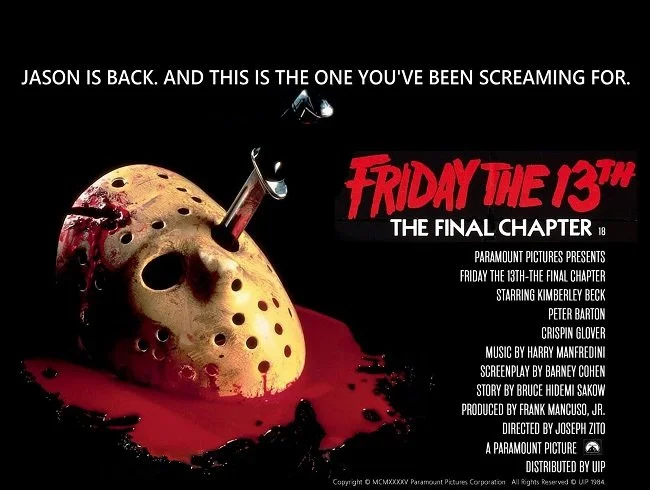
Friday the 13th: The Final Chapter is a popular entry among fans of the franchise. This is mainly due to the return of makeup artist, Tom Savini, who creates several notable death scenes and a bravura ending for Jason Voorhees. There is also an attempt by writer Barney Cohen to have a more involving story compared to previous entries in the series. Director Joseph Zito, who previously directed the above average slasher movie The Prowler AKA Rosemary’s Killer (1981), brings a harder edge to the proceedings, making Jason more menacing than in the previous instalment. As ever, the film was dismissed by the critics but performed well at the box office. Producer Frank Mancuso Jr fully intended for this film to be a definitive end to the series, as he was becoming increasingly concerned that his association with the franchise was having a negative impact upon his career.
Friday the 13th: The Final Chapter is a popular entry among fans of the franchise. This is mainly due to the return of makeup artist, Tom Savini, who creates several notable death scenes and a bravura ending for Jason Voorhees. There is also an attempt by writer Barney Cohen to have a more involving story compared to previous entries in the series. Director Joseph Zito, who previously directed the above average slasher movie The Prowler AKA Rosemary’s Killer (1981), brings a harder edge to the proceedings, making Jason more menacing than in the previous instalment. As ever, the film was dismissed by the critics but performed well at the box office. Producer Frank Mancuso Jr fully intended for this film to be a definitive end to the series, as he was becoming increasingly concerned that his association with the franchise was having a negative impact upon his career.
Opening immediately after the events of Part III, police arrive at the scene of Jason’s latest killing spree and are shocked to find him among the bodies. He is taken to the morgue but he soon revives, escaping from cold storage and killing two members of staff before returning to Crystal Lake. Meanwhile a group of teenagers arrive at a cabin they’ve rented for the weekend. This comprises two couples, Paul (Alan Hayes) and Sam (Judy Aronson), Sara (Barbara Howard) and Doug (Peter Barton), along with the awkward Jimmy (Crispin Glover) and joker Ted (Lawrence Monoson). The cabin is opposite the home of the Jarvis family, where the recently divorced Mrs Garvis (Joan Freeman) lives with her teenage daughter Trish (Kimberly Beck) and young son Tommy (Corey Feldman). It is not long before Jason makes his presence known and the bodycount begins.
Friday the 13th: The Final Chapter has a strong start with the police units descending on Jason’s previous crime scene at night. Illuminated by the searchlight of a helicopter, the paramedics take away the victims and the police remove the axe used on Jason Voorhees as evidence. There is a semi chaotic element to this scene which adds to its credibility as various law enforcement officials struggle to make sense of what has happened. Sadly, once Jaon’s body is taken to the morgue, we immediately encounter the first in a litany of obnoxious characters who will sorely try our patience for the next hour and a half. The first murder featuring a surgical saw is very inventive but once again, has been reduced to a bare minimum by the MPAA at the time. Once the story moves to the teenagers at the cabin, the film falls into its usual formula.
Two specific plot elements make things a little different this time round. The introduction of a camper, Rob Dier (E. Erich Anderson ), who is tracking Jason to seek revenge for his murdered sister. Then there is Tommy Jarvis, an intelligent yet somewhat isolated child who is destined to defeat Jason Voorhees. These storylines add a little more depth to the formulaic structure of the film. They also help alleviate from the grating improvised dialogue between Ted and Jimmy which is extremely wearing. Director Joseph Zito manages to make Jason a far more sinister threat than the previous film, where he simply was a lumbering death machine. Jason, played by veteran stuntman Ted White, appears to taunt his victims, often stopping and staring while stalking them. He also nails several corpses up to further terrorise the living.
Despite its title, the ending of Friday the 13th: The Final Chapter sends a clear signal that the story hasn’t quite ended. Subsequent box office returns of over $33 million meant that a sequel was inevitable. Although loved by fans, I find Friday the 13th: The Final Chapter to be a somewhat inconsistent film. It starts strong but quickly lapses into its own established cliches and excesses. Despite some interesting ideas, the film is hampered by possibly the most egregious group of teenagers thus far depicted in the franchise. It is also the most humourless entry. The original “shock” ending of the final girl Trish finding her dead mother in a bathtub was replaced for a more obvious scene implying all isn’t well with Tommy. Overall, despite many positive aspects Friday the 13th: The Final Chapter doesn’t quite meet its full potential. However, the franchise would face a major shake up with the next entry.










Friday the 13th Part III (1982)
Set directly after the events of the previous film, Friday the 13th Part III is again about a group of friends staying near Crystal Lake who encounter Jason Voorhees as he embarks upon another killing spree. Shot in 3D the film has a less sleazy tone than its predecessors although the formula remains the same. The set pieces and death scenes are more elaborate and less clinical, taking advantage of the 3D picture format. The film marks the first appearance of Jason's signature hockey mask, which subsequently became a trademark of both the character and the franchise. Originally conceived to be an end to the series of films, Friday the 13th Part III performed extremely well at the box office, earning $36.7 million on a budget of $2.2 million. As a result, the franchise was given a stay of execution and a further sequel was commissioned.
Set directly after the events of the previous film, Friday the 13th Part III is again about a group of friends staying near Crystal Lake who encounter Jason Voorhees as he embarks upon another killing spree. Shot in 3D the film has a less sleazy tone than its predecessors although the formula remains the same. The set pieces and death scenes are more elaborate and less clinical, taking advantage of the 3D picture format. The film marks the first appearance of Jason's signature hockey mask, which subsequently became a trademark of both the character and the franchise. Originally conceived to be an end to the series of films, Friday the 13th Part III performed extremely well at the box office, earning $36.7 million on a budget of $2.2 million. As a result, the franchise was given a stay of execution and a further sequel was commissioned.
First drafts of the screenplay for Friday the 13th Part III, focused upon the previous “final girl” Ginny Field (Amy Steel), who was trying to re-adjust to normal life after her traumatic experience at Crystal lake. However, Amy Steel declined the part and so writers Martin Kitrosser and Carol Watson opted to follow the established formula. Hence the story is about eight friends staying for a weekend at a holiday cabin near Crystal Lake. The property belongs to Chris Higgins (Dana Kimmel). Chris reveals to her boyfriend Rick (Paul Katka) that she was attacked by a deformed man two years earlier and has come home to face her fears. The other guests are Debbie (Tracie Savage), her boyfriend Andy (Jeffrey Rogers), prankster Shelly (Larry Zerner), his blind date Vera (Catherine Parks) and stoners Chuck (David Katims) and Chili (Rachel Howard).
As Friday the 13th Part III was filmed in 3D it had a higher budget than the two previous films. Director Steve Miner manages the pace well, providing two deaths early on to wet the audience’s appetite, then spending the next twenty five minutes on introducing the characters and building tension. The “teenagers” are not as grating as usual and there is minor comic relief from both Shelly and Chuck. The death scenes make good use of the 3D photography, with all manner of objects being hurled at the camera. The two kills that get the biggest audience reaction are Jason crushing a head with his bare hands, resulting in an eye popping out. Another character is bisected with a machete from his crotch to his navel, while walking on his hands. Harry Manfedini once again provides an appropriate score, with an especially funky theme during the opening credits.
Friday the 13th Part III is one of two instalments in the franchise that manages to rise above its exploitation roots. The other is the sixth, Jason Lives. The third instalment gained a veneer of quasi-respectability by being in 3D. It made the movie an “event” at the time of its release, as the revival of this format had not yet outstayed its welcome. From a continuity perspective the third film is all over the place. The events depicted are 24 hours after those of Part 2, technically making the film Saturday the 14th. Jason seems to have gained height and shaken off having a machete cleave his left shoulder. But none of it really matters. The film once again delivers what viewers want and this time in glorious 3D. It can even be argued that there is a degree of charm to it all or at least some sense of novelty. The film certainly suits the medium of 3D and it can be argued that it is the best in the series.
Friday the 13th Part 2 (1981)
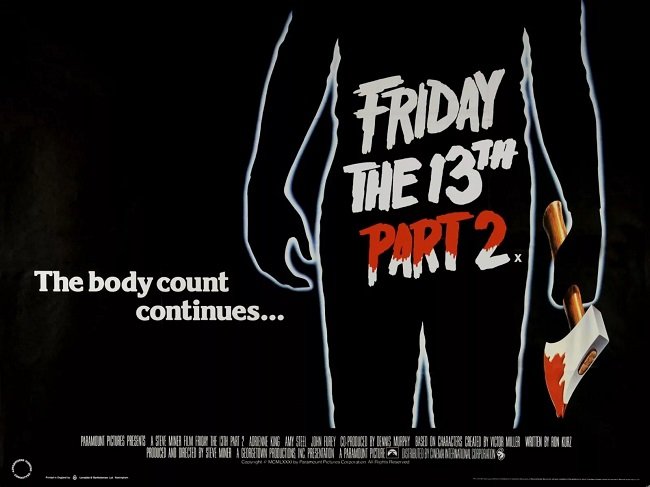
Originally, Friday the 13th Part 2 was intended to be an anthology film based on the superstition associated with the date. However, after the popularity of the original film's surprise ending, the producers opted to continue the story and mythology surrounding Camp Crystal Lake. This eventually became the parameters which all future films would broadly work within. Friday the 13th Part 2 is a more polished production than the first movie, benefitting from twice the budget of the original. The quick turnaround meant that Paramount Pictures could continue to capitalise on the popularity of the slasher genre. However, there was growing social pushback against these types of films, from Christian lobby groups and other “concerned parties”. Hence, Friday the 13th Part 2 ran into problems with the MPAA ratings board and cuts were imposed. Something that would continuously plague the franchise over the years.
Originally, Friday the 13th Part 2 was intended to be an anthology film based on the superstition associated with the date. However, after the popularity of the original film's surprise ending, the producers opted to continue the story and mythology surrounding Camp Crystal Lake. This eventually became the parameters which all future films would broadly work within. Friday the 13th Part 2 is a more polished production than the first movie, benefitting from twice the budget of the original. The quick turnaround meant that Paramount Pictures could continue to capitalise on the popularity of the slasher genre. However, there was growing social pushback against these types of films, from Christian lobby groups and other “concerned parties”. Hence, Friday the 13th Part 2 ran into problems with the MPAA ratings board and cuts were imposed. Something that would continuously plague the franchise over the years.
Second time round the film boasts a nominally stronger script by Ron Kurz with better defined characters. Amy Steel stars as camp counsellor Ginny Field and continues the tradition of a robust and dynamic “final girl”. Betsy Palmer makes a cameo appearance as the late Pamela Voorhees and prophet of doom, Crazy Ralph (Walt Gorney), returns briefly before an unpleasant demise. The boldest step in the screenplay is a major retcon of Jason Voorhees, who has now survived the drowning incident of his youth, having lived as a hermit in the woods for twenty five years. Like so many genre films, it’s best not to dwell too much on the plot details as they’re seldom logical. The larger budget meant better production values. The cinematography by Peter Stein is more atmospheric this time round. But the main focus of attention are the set pieces and death scenes.
Tom Savini passed on the opportunity to return and undertake the film’s makeup effects. Stan Winston was briefly involved in the production but then left due to scheduling conflicts. Finally Carl Fullerton, apprentice to the legendary Dick Smith, took on the project. He has crafted some excellent death scenes, two of which bear an uncanny similarity to those seen in Mario Bava’s A Bay of Blood. However, rather than this being a homage it would appear that they occurred purely by luck. Sadly most of these effects sequences were shortened by the MPAA to the point where it’s difficult to discern what is happening on screen. Thankfully the excellent new HD transfers by Shout Factory help with these details. I noticed for the first time that the throat cutting and the machete to the face scenes both use the wrong side of the weapon for safety reasons.
The final 25 minutes of Friday the 13th Part 2 are well conceived and executed. The chase between Jason and Ginny is well paced and tense. At one point Ginny hides from Jason under a bed and a rat scurries past her. It is discreetly implied that Ginny wets herself out of sheer fear, which is a curious but credible minor detail. The denouement in a dilapidated shack where Jason has a shrine to his dead mother Pamela Voorhees is suitably creepy. Due to the clarity of the Blu-ray transfer, details such as Alice’s body, the “final girl” from the previous movie, are far more apparent. Harry Manfredini’s score continues to be very effective, especially in the chase sequence. Overall this is a solid sequel, offering more of the same but with a little more attention to detail. Friday the 13th Part 2 lays the foundations for future instalments of the franchise. The only thing missing is Jason’s iconic hockey mask which doesn’t appear until the next film.
Friday the 13th (1980)
Writing any kind of review for the original Friday the 13th movie seems somewhat redundant, as it has been analysed and written about numerous times before. If you’re interested in the film’s production as well as its subsequent impact on US cinema at the time, then there is an excellent summary on Wikipedia. Having recently rewatched the entire franchise, courtesy of the Shout Factory’s Friday the 13th Collection Deluxe Edition, I have a few thoughts I’d like to share. The picture quality of all the films is very good, offering a lot more visual information compared to previous releases. The amount of “extras” included in the box set is prodigious. I suspect that these are the best versions that we’re ever likely to see. Fans hoping that one day all the cut footage will be found and re-integrated into each film are likely to remain disappointed. Some material has surfaced but sadly a lot of deleted and extended scenes have been destroyed.
Writing any kind of review for the original Friday the 13th movie seems somewhat redundant, as it has been analysed and written about numerous times before. If you’re interested in the film’s production as well as its subsequent impact on US cinema at the time, then there is an excellent summary on Wikipedia. Having recently rewatched the entire franchise, courtesy of the Shout Factory’s Friday The 13th Collection Deluxe Edition, I have a few thoughts I’d like to share. The picture quality of all the films is very good, offering a lot more visual information compared to previous releases. The amount of “extras” included in the box set is prodigious. I suspect that these are the best versions that we’re ever likely to see. Fans hoping that one day all the cut footage will be found and re-integrated into each film are likely to remain disappointed. Some material has surfaced but sadly a lot of deleted and extended scenes have been destroyed.
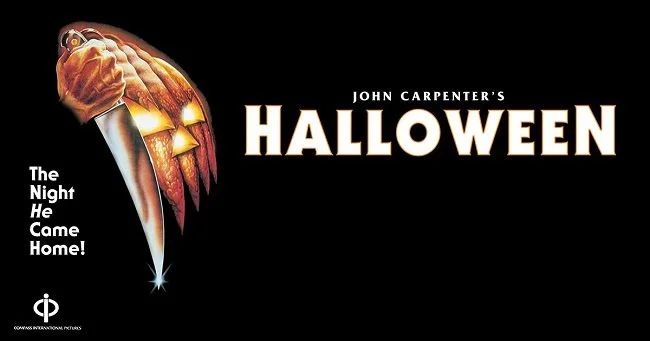
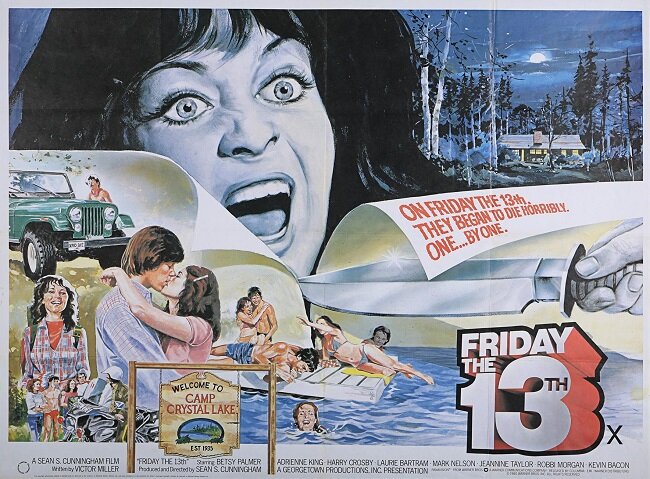
Made to capitalise on the success of John Carpenter’s Halloween (1978), Friday the 13th is a far more contrived and cynical piece of filmmaking. Director Sean S. Cunningham aimed to provide audiences with a cinematic “rollercoaster ride”. A horror experience which included all the things the target audience wanted. Specifically sex and violence. The screenplay by Victor Miller offers nothing more than the functional. The scene is set, the characters introduced and then the killing begins. There are a few red herrings along the way but there is little in the way of character development or thematic exploration. Instead we get a litany of stereotypes, although they are used effectively. The cinematography by Barry Abrams is simple, bordering on stark. The production was shot on a real Boy Scout Camp and it is suitably dilapidated giving the proceedings an authentic feel.
The film’s main innovation was the quality of the makeup effects and set pieces. These are jarringly clinical at times, courtesy of Tom Savini. The final revelation that the killer is in fact the mother of a boy who died at the summer camp is also a highpoint. Betsy Palmer’s performance is suitably unhinged. Several other members of the cast are of interest. Kevin Bacon appears as one of the camp counsellors and has possibly the best death scene. Bing Crosby’s son, Harry Crosby, also makes an appearance. Within a few years, he quit acting altogether and became an investment banker. Underpinning all of this is an atmospheric score by Harry Manfredini. Manfredini’s major innovation is a vocal motif, “ki ki ki ma ma ma”, which is played whenever the killer’s POV was used. Along with its use of strident strings during chase sequences, the score for Friday the 13th has become iconic.
Although made independently, Friday the 13th was distributed by Paramount Pictures. The studio was interested in the “youth market” during the late seventies and saw the film as a low risk investment. Paramount were not pleased by the negative reviews the film garnered and some senior executives did not like the studio being associated with such exploitation material. However, Friday the 13th grossed over $59 million at the box office worldwide. A significant achievement for a film that was made for half a million. Not only did it prove a sound investment for Paramount, it effectively started an entire sub-genre within horror movies. Film critics can sometimes find themselves at odds with audiences and Friday the 13th is a prime example of this. They failed to see that the film was a straightforward quid pro quo. Despite its rough edges, it gave audiences exactly what they wanted and they were happy to pay. It didn’t need to be any more than the sum of its parts.
Classic Movie Themes: Friday the 13th
It was Friday the 13th yesterday, so I thought it was about time that I added Harry Manfredini’s iconic score to the annals of Classic Movie Themes. The 1980 slasher movie Friday the 13th has become as legendary in the pantheon of cinematic horror history as John Carpenter’s Halloween. Although there are marked differences between these two films, both use minimalist musical scores extremely effectively to punctuate the proceedings and embellish the overall atmosphere. However, Manfedini did not want to provide viewers with obvious audio cues during scenes of building tension. He preferred to focus his score upon the activities of the franchise's iconic killer, Jason Voorhees, and hence have strong musical cues when he was on screen. This approach meant that he had to use a unique musical motif to denote potential tension, without diminishing its effect on the audience by excessive use of obvious and melodramatic cues.
It was Friday the 13th yesterday, so I thought it was about time that I added Harry Manfredini’s iconic score to the annals of Classic Movie Themes. The 1980 slasher movie Friday the 13th has become as legendary in the pantheon of cinematic horror history as John Carpenter’s Halloween. Although there are marked differences between these two films, both use minimalist musical scores extremely effectively to punctuate the proceedings and embellish the overall atmosphere. However, Manfedini did not want to provide viewers with obvious audio cues during scenes of building tension. He preferred to focus his score upon the activities of the franchise's iconic killer, Jason Voorhees, and hence have strong musical cues when he was on screen. This approach meant that he had to use a unique musical motif to denote potential tension, without diminishing its effect on the audience by excessive use of obvious and melodramatic cues.
Harry Manfredini’s solution was to craft a combination of simple echoing chords combined with a vocal track which repeated the phrase "ki ki ki, ma ma ma". The concept was that these words were some kind of subliminal message; a corrupt version of "kill her, mommy" which would plague Pamela Voorhees, the protagonist from the first movie. Over the course of the franchise, Manfedini became far more adept of using this motif, which he subsequently expanded with the addition of some frenetic strings. This motif would play when something was about to happen on screen, ramping up the tension rather than mitigating it by more overt musical telegraphing. John Williams used a similar technique with his original score for Jaws. Furthermore, Manfredini would often use variations of this cue as musical red herrings, often culminating in a non-fatal jump scare.
Due to the longevity of the Friday the 13th franchise, Harry Manfredini has revised and expanded his work many times. The theme used for the opening credits of the original movie is in many ways the best example. It encapsulates the immediacy of his work and incorporates the "ki ki ki, ma ma ma" motif at its most unique point in history. Another standout version of the main title theme is for Friday the 13th Part III (1982) which was released in 3D. He again reworked the essential principles of basic cue into a pulsing new version with a distinct synth and disco vibe. Finally as an added bonus, I wanted to quickly reference Friday the 13th: A New Beginning (1985) and the song that features while Violet (Tiffany Helm) indulged in that very eighties activity, robot dancing. His Eyes by Australian New Wave Band (and shameless Ultravox plagiarists) Pseudo Echo has gained a curious cult following over the years among Friday the 13th fans.






A Year in Gaming
As 2017 draws to a close, it is time once again time to reflect upon the subject of gaming as it has remained a primary form of entertainment for me over the last twelve months. I have enjoyed most of the new titles that I’ve bought this year but not all of them. There’s been some that have failed to please and others that have proven to be flawed. Then there has been my ongoing relationship with the MMO genre as I still have a handful of these games installed on my PC. Let it suffice to say that only one of these titles has managed to maintain my interest. I suspect that the MMO genre per se is in for a year of change in 2018. As for the wider aspects of gaming, I wouldn’t say it has been an especially edifying year for the game industry or the associated fan culture. The “goodwill” based band-aid that has remained in place for the last few years was finally torn off in 2017, exposing a festering self-inflicted wound.
As 2017 draws to a close, it is time once again time to reflect upon the subject of gaming as it has remained a primary form of entertainment for me over the last twelve months. I have enjoyed most of the new titles that I’ve bought this year but not all of them. There’s been some that have failed to please and others that have proven to be flawed. Then there has been my ongoing relationship with the MMO genre as I still have a handful of these games installed on my PC. Let it suffice to say that only one of these titles has managed to maintain my interest. I suspect that the MMO genre per se is in for a year of change in 2018. As for the wider aspects of gaming, I wouldn’t say it has been an especially edifying year for the game industry or the associated fan culture. The “goodwill” based band-aid that has remained in place for the last few years was finally torn off in 2017, exposing a festering self-inflicted wound.
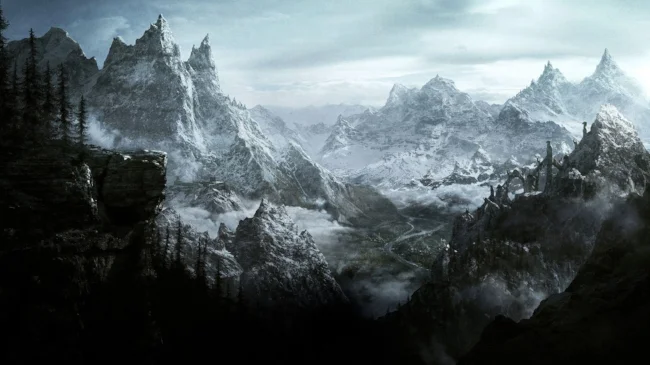
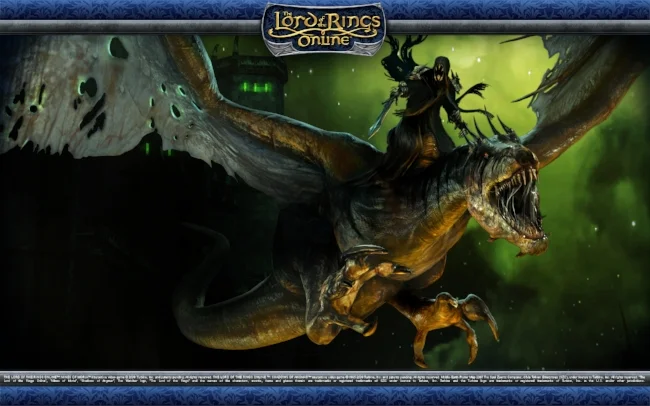
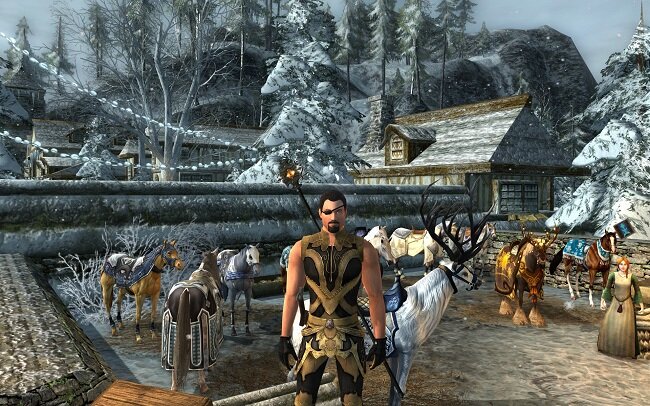
I started off the year by purchasing The Elder Scrolls Online Imperial Edition, as I fancied spending time in an MMO. Sadly, the game failed to grab my attention. This was mainly due to having spent so much time playing Skyrim and being somewhat burned out on the entire Elder Scrolls vibe. I also found the requirement for mods somewhat troubling, feeling that a game should have adequate UI facilities present. It’s also a very solo friendly MMO, which in some way negates its multiplayer status. Why not just play a fully customised version of one of the earlier games in the franchise? I also tried in 2017 to make a sustained return to LOTRO. Northern Ithilien held my interest but once the game moved onto the Black Gates it soon waned. Mordor is a great zone on paper but its grindy requirements and relentlessly dour environment killed my passion. STO remains a casual friendly experience and due to there being regular events throughout the year, it facilitates setting goals and achievements. I also jumped on the Destiny 2 bandwagon and was surprised how agreeable it is. Its genre spanning nature scratched several of my gaming itches.
My single player experience was also varied in 2017. For Honor proved to be exactly as I expected; gripping in principle but beyond my personal skillset to play to any degree of success. However, Sniper Elite 4 proved to be a sound buy. The main game and DLC were well conceived and their extensive game maps allow for multiple and varied play throughs. I also dabbled with co-operative play which proved a very interesting experience. Overall this was rewarding purchase as I clocked up over 91 hours in-game. Thanks to discount key sites, I managed to purchase several titles at low prices. I bought Mafia III after it was reduced by 75% and enjoyed the games central story. I also pre-ordered the Gold Edition of Middle-earth: Shadow of War and secured a discount. Although the structure of that game has been compromised to accommodate microtransactions, I still liked the gameplay and the preposterous lore-breaking narrative. 2017 also included some minor surprises. I was not expecting further DLC for Two Worlds II but Topware released both new single player and co-op content. I was also intrigued by the recent update to Star Trek: Bridge Crew, allowing the game to be played in conventional desktop mode, rather than VR.
Of course, it wouldn’t be a year in gaming without some sort of controversy and man did 2017 have one. The blight that is microtransactions which has been slowly spreading from mobile gaming to the so-called Triple A scene, reached a head November. Star Wars: Battlefront II received such a backlash from its customer base that the story even appeared in mainstream news. Disney eventually intervened and ensured that EA suspended the real money loot boxes in the game. It would appear that the genie is finally out of the bottle and loot box culture is now coming under the scrutiny of legislative bodies all over the world. Apple has recently waded into the debate as it wants loot box odds to be fully disclosed. What happens next is anyone guess but I think that game developers may have to rethink the monetisation of their games. I also think that the tide is slowly turning with regard to early access and games that launch in a patently broken state. I avoided buying Friday the 13th: The Game until six months after it’s problematic release and I still feel that it is very much a work in progress. Several high-profile gaming commentators are loudly advocating a boycott of this trend and I think it may be getting some traction. Time will tell.
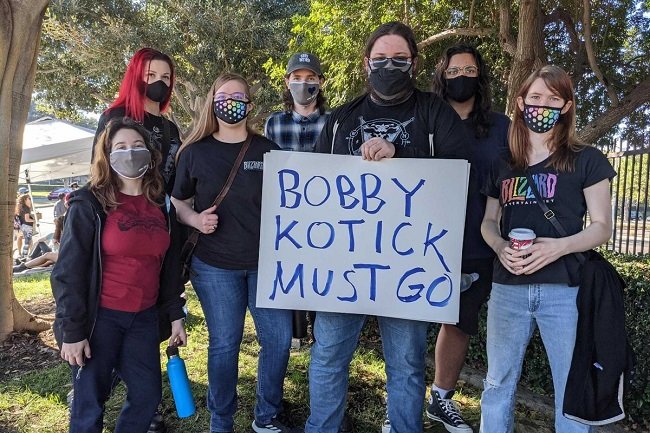
2017 once again validated my position of distancing myself from parts of the gaming community. The past twelve months have shown that a substantial number of gamers remain unreconstructed, self-centred, emotionally illiterate man-children. Developers, journalists and You Tube personalities are still regularly threatened and abused if something that is vaguely controversial is said. Outdated and blinkered views about gaming and its culture still abound. You only have to see how Jim Sterling’s Commentocracy has raised the hackles of the usual suspects, to recognise that gaming culture is still far from united. However, I believe this stems from a broader malady that seems to be permeating all aspects of modern life. But the hate, bile and stupidity are not the total picture and there are still many bloggers, streamers and content creators that celebrate and promote the positive side of gaming. I intend to make such individuals my focus in 2018. I’m not one for making predictions but I have a feeling that 2018 may be a milestone year for gaming. Potentially it presents an opportunity for the industry to either get on track or alternatively implode and suffer a slow long death. Perhaps next year’s review will have the answer.






Crystal Lake Memories: The Complete History of Friday the 13th
Crystal Lake Memories: The Complete History of Friday the 13th is an incredibly in-depth documentary that explores the making of one of the landmark horror franchises of the twentieth century. The film analyses the series from its low budget 1980s origin at a New Jersey summer camp to the blockbuster release of its 2009 “reboot.” It combines hundreds of rare and never-before-seen photographs and film clips, as well as outtakes, archival documents, conceptual art and behind-the-scenes footage. There is also a wealth of interviews with more than one hundred and fifty cast and crew members, spanning all twelve films and the television series.
Crystal Lake Memories: The Complete History of Friday the 13th is an incredibly in-depth documentary that explores the making of one of the landmark horror franchises of the twentieth century. The film analyses the series from its low budget 1980s origin at a New Jersey summer camp to the blockbuster release of its 2009 “reboot.” It combines hundreds of rare and never-before-seen photographs and film clips, as well as outtakes, archival documents, conceptual art and behind-the-scenes footage. There is also a wealth of interviews with more than one hundred and fifty cast and crew members, spanning all twelve films and the television series.
This documentary is pretty much the last word on the Friday the 13th franchise. Clocking in at over five hours it follows a set pattern exploring each movies development, casting, production and subsequent release. Narrated by Corey Feldman (of Tommy Jarvis fame) it is presented in an engaging and informative fashion. The personal anecdotes from the cast and crew prove to be extremely interesting and often reflect the reality of low budget film making. The documentary also catalogues the regular battles the producers had with the MPAA and shows a variety of out-takes and deleted material. Sadly some of the more violent content has been lost forever, as a memo from Paramount ordering the destruction of surplus footage shows.
Crystal Lake Memories: The Complete History of Friday the 13th also shows the great sense of camaraderie among the actors and crew that worked on these movies. It is often erroneously thought that appearing in such material is a low point in any actor’s career but this is not the case. Many in the acting profession embrace the practical realities of their industry and see merit and virtue in the most humblest of their work. They also see value in being part of a wider fan culture. Stuntman and actor Kane Hodder is especially gracious about the importance of fans and honest about how seriously he takes his work. Friday the 13th is a franchise that has always been driven by the enthusiasm of its audience. It is a shame that the current rights holders seem to have forgotten that.
The director Daniel Farrands previously made His Name Was Jason: 30 Years of Friday the 13th, but this new documentary puts that to shame. The sheer volume of information here is prodigious. However due to the sheer running time of Crystal Lake Memories: The Complete History of Friday the 13th it is not for everyone. For those with only a passing interest and less time available I would recommend the directors previous work. For the more dedicated film fan or Friday the 13th aficionado Crystal Lake Memories: The Complete History of Friday the 13th is the ultimate tribute to one of horror’s most iconic and enduring franchises.