
The Monkey (2025)
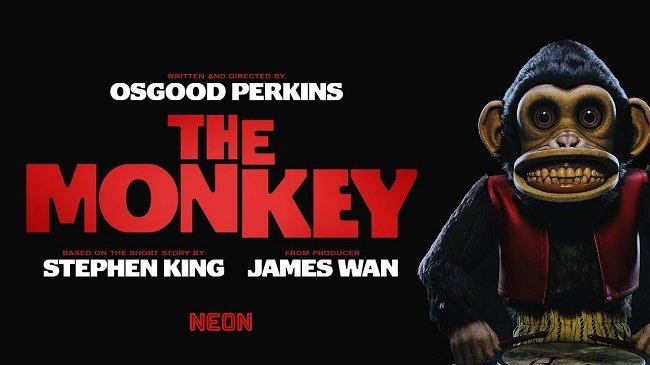
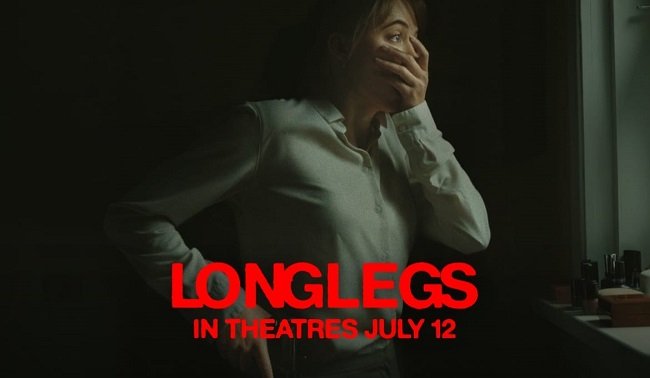
Osgood Perkins has a distinct visual style and tone to his films. It is why his previous film, Longlegs, was such a welcome change from standard genre outings. It was atmospheric both visually and tonally, demonstrating a keen understanding of horror cinema. Hence he is the perfect director to helm this adaptation of a Stephen King short story. The plot is greatly expanded and the screenplay takes a lot of liberties with the source material but the main themes of your past being inescapable and the power of guilt remain front and centre. Due to the extreme and bizarre nature of much of the onscreen deaths, the film wisely has a strong streak of gallows humour running through it which is extremely well handled. Comedy can often be used to defuse or mitigate violence which can be narratively dishonest (think Fred Krueger). Here it adds to the cruel and capricious nature of the random deaths.
Osgood Perkins has a distinct visual style and tone to his films. It is why his previous film, Longlegs, was such a welcome change from standard genre outings. It was atmospheric both visually and tonally, demonstrating a keen understanding of horror cinema. Hence he is the perfect director to helm this adaptation of a Stephen King short story. The plot is greatly expanded and the screenplay takes a lot of liberties with the source material but the main themes of your past being inescapable and the power of guilt remain front and centre. Due to the extreme and bizarre nature of much of the onscreen deaths, the film wisely has a strong streak of gallows humour running through it which is extremely well handled. Comedy can often be used to defuse or mitigate violence which can be narratively dishonest (think Fred Krueger). Here it adds to the cruel and capricious nature of the random deaths.
In 1999, airline pilot Petey Shelburn (Adam Scott) attempts to dispose of a drum-playing toy monkey at an antiques shop. He warns the proprietor that the automaton is evil and a death always occurs after it plays its drums. The monkey subsequently spontaneously plays its drum resulting in a bizarre accident where the shop owner is disemboweled by a harpoon gun. Shortly after this incident, Petey goes missing, leaving his wife, Lois, to raise their identical twin sons, Hal and Bill. The twins later find the monkey in a closet filled with their father’s mementos. They turn the key and again the monkey plays its drum. Later that evening the twin’s babysitter is killed in a freak accident at a hibachi restaurant. Further tragedies blight the twins lives, leaving them marginalised and estranged. 25 years later, despite being thrown down a well, the Monkey returns to dog the twins’ adult lives.
If you look beyond the over the top set pieces and wry humour, The Monkey attempts to explore various schools of thought surrounding the subject of death. It reflects upon the deterministic nature of our mortality and questions the relevance of human agency. The titular simian automaton is both scary and possibly symbolic. Is it an avatar of death itself? A biblically themed cameo at the film’s climax seems to imply such. Theo James gives two solid performances as the adult twin brothers and the film has several intriguingly quirky characters to enjoy. The gore is turned up to eleven and is both gross and amusing. Overall Osgood Perkins’ dark and droll approach to The Monkey is possibly for the best. If the story had been presented and explored in a more serious manner, it may well have been too po-faced or dour. Instead the film reacts to the absurdity of its antagonists’ random homicides in the only way it can. Namely, with ironic laughter.











The Night Flier (1997)
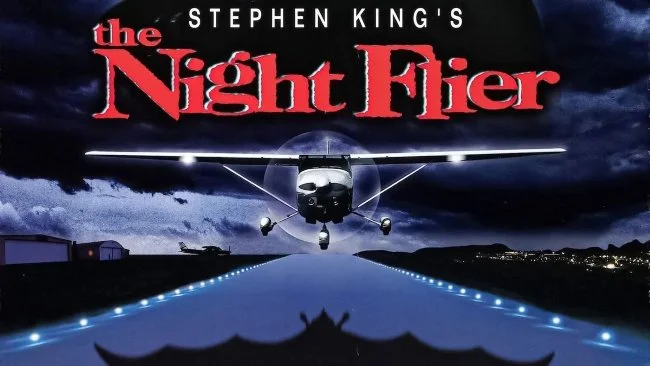
The key to success in the horror genre is to try and find an innovative new angle on tried and tested themes and tropes. The Night Flier is an often-overlooked gem, that takes a unique perspective on vampirism and features strong performances as well as an intelligent and thoughtful screenplay. It builds a sense of foreboding during it’s first two acts and teases audiences with some unpleasant prosthetic effects, courtesy of KNB EFX Group. The climax of the movie is both thought provoking and suitably unpleasant. Furthermore, The Night Flier even manages to make a coherent criticism of tabloid culture and morals of those journalists working in the industry. It’s a damn shame that this modest but well-crafted genre movie didn’t get the attention it deserved when it was initially released in 1997.
The key to success in the horror genre is to try and find an innovative new angle on tried and tested themes and tropes. The Night Flier is an often-overlooked gem, that takes a unique perspective on vampirism and features strong performances as well as an intelligent and thoughtful screenplay. It builds a sense of foreboding during it’s first two acts and teases audiences with some unpleasant prosthetic effects, courtesy of KNB EFX Group. The climax of the movie is both thought provoking and suitably unpleasant. Furthermore, The Night Flier even manages to make a coherent criticism of tabloid culture and morals of those journalists working in the industry. It’s a damn shame that this modest but well-crafted genre movie didn’t get the attention it deserved when it was initially released in 1997.
Jaded and cynical tabloid reporter Richard Dees (Miguel Ferrer) initially refuses the job of investigating a violent murder at a remote private airfield. So his boss and editor of Inside View (a National Enquirer style publication), Merton Morrison (Dan Monahan), assigns the case to rookie reporter Katherine Blair (Julie Entwisle). When it becomes apparent that there is a serial killer using the network of small, rural airfields and flying under the alias of Dwight Renfield, Dees takes over the assignment. However, Morrison asks Katherine to follow Dees as he’s grown tired of his ego and insubordination. As Dees uncovers more information regarding “The Night Flier”, he starts receiving warnings from the killer himself to stop his investigations. It soon becomes clear that there may well be more to the case than meets the eye and that Dwight Renfield is not a mere serial killer but a vampire.
There are several standout aspects of The Night Flier. The first and most important is the strong lead performance by the late Miguel Ferrer who excels as the journalist Richard Dees. Exactly what is his motivation beyond doing whatever is needed to get the story, is left intriguingly vague. Dees is a bitter and heartless character, but he’s driven and surprisingly good at what he does. Then there’s the intriguing use of the network of small, private airfields that exist across North America and the entire sub-culture of having a pilot’s license. It’s an aspect of life that is unknown to many people. And then there’s our undead antagonist, Dwight Renfield. There’s a fine line between being vague and insubstantial, compared to creating a sense of the enigmatic and uncanny. Yet director Mark Pavia manages to tread such a path, providing only a smattering of implied history for the villain of the piece, while maintaining our interest rather than indifference.
Overall, The Night Flier is a good and faithful adaptation of Stephen King’s novella with the only major creative difference being the bleaker ending adopted for the movie. It serves not only as a fitting and inevitable conclusion to the story arc, but also as an acerbic indictment upon the iniquities of tabloid journalism. All of which leaves Richard Dees philosophy on journalism ringing in one’s ears. "Never believe what you publish and never publish what you believe". Twenty-six years on from its initial release, word of mouth and a revised critical assessment means that The Night Flier is finally reaching a wider audience. In a world filled with so many poor and indifferent adaptations of Stephen King’s work, this “diamond in the rough” is an entertaining and engaging alternative and worth the time of discerning horror fans.
Needful Things: Extended TV Cut (1993)
Fraser C. Heston’s 1993 adaptation of Stephen King’s Needful Things did not fare well upon release. Despite having a robust cast of character actors and good production values, it was neither a critical nor commercial success. In more recent years there has been a growing critical reassessment of the film and its lack of success has mainly been attributed to audience fatigue. The eighties and nineties saw a wealth of King adaptations on both the big and small screen. It is also worth noting that condensing the sprawling and character filled books of Stephen King is an incredibly difficult thing to achieve within the parameters of a two hour movie. Which is why the TV miniseries has often proved a more successful format. Which brings me to the extended version of Needful Things that was prepared for television shortly after its theatrical release.
Fraser C. Heston’s 1993 adaptation of Stephen King’s Needful Things did not fare well upon release. Despite having a robust cast of character actors and good production values, it was neither a critical nor commercial success. In more recent years there has been a growing critical reassessment of the film and its lack of success has mainly been attributed to audience fatigue. The eighties and nineties saw a wealth of King adaptations on both the big and small screen. It is also worth noting that condensing the sprawling and character filled books of Stephen King is an incredibly difficult thing to achieve within the parameters of a two hour movie. Which is why the TV miniseries has often proved a more successful format. Which brings me to the extended version of Needful Things that was prepared for television shortly after its theatrical release.
The plot of Needful Things is straightforward. A new antique shop opens in the quiet coastal town of Castle Rock and its charismatic owner, Leland Gaunt (Max von Sydow) has an uncanny ability of discerning his customer needs and providing them with some item that is their heart’s desire. Yet these transactions are often dependent upon a “small service” to be carried out and it is not long before the seeds of discontent are sowed in Castle Rock. As arguments become feuds and feuds end in murder, Sheriff Alan J. Pangborn (Ed Harris) becomes increasingly suspicious of Leland Gaunt and his shop “Needful Things”. As ever with Stephen King, the literary strength of this story stems from the plausibility of his characters and the credibility of small town life that he depicts. These sumptuous details that exist on the page usually have to be cut to the bone when adapting for film. It certainly was a criticism levelled at the theatrical release of Needful Things.
However, shortly after a disappointing box office release, Cable TV network TBS commissioned distributor Columbia Pictures and director Fraser C. Heston to create a longer miniseries edit of three hours, that could air in a four-hour TV time slot with commercial breaks. Hence an hour of previously unused material was added back into the film which mainly extends or appends existing scenes. We see far more of the relationship between Sheriff Pangborn and his fiance, Polly Chalmers (Bonnie Bedelia). There is more exposition of Leland Gaunt manipulating young Brian Rusk (Shane Meier) and the feud between Wilma Jerzyck (Valri Bromfield) and Nettie Cobb (Amanda Plummer) goes through several stages of escalation before ending in murder. The most standout new material is an entire subplot about Cora Rusk (Lisa Blount) who becomes infatuated with a bust of Elvis Presley.
Director Fraser C. Heston integrates the new material skillfully into the extended TV cut subtly changing the pacing and making this version of Needful Things a much slower burn. It remains very much Max von Sydow’s film and the atmosphere increases noticeably when he is on screen. His performance is effortlessly sinister and charming. As this was a version prepared for nineties television there have been some concessions made to that medium. Some profanity has been replaced with alternative, less extreme dialogue but the violence from the theatrical edit remains. The extended TV cut is also presented in an aspect ratio of 4:3 to fit the television sets of the time. Fraser C. Heston has stated that this longer edit is not a director's cut and that he prefers the theatrical edit. Although still flawed, it certainly provides an alternate take on one of Stephen King’s best stories.
Salem's Lot by Stephen King (1975)
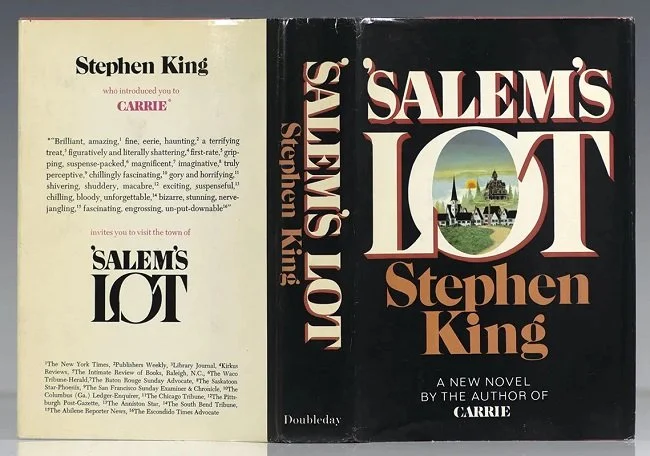
When a book is as well known, well loved and as critically revered as Stephen King’s Salem’s Lot, it seems somewhat redundant to write yet another review of it. I doubt I can add anything significant or original to say about its virtues and merits. So I won’t attempt to do so. I’ll simply share some thoughts on the book in question and leave it at that. Firstly, I read the novel in 1981 when it was more than half a decade old. I had already seen the 1979 television mini-series, directed by Tobe Hooper, which I had enjoyed immensely. Luckily, I had an exceptionally good English teacher at school at the time, who impressed upon me the challenges involved in adapting books for TV or film. Hence, when I actually sat down to read Salem’s Lot I expected it to be distinctly different to what I had seen already. And it was. An utterly enthralling story, that absorbed me totally and scared me shitless. It left a profound mark upon me. Last month, approximately 41 years later, I read it again and enjoyed it even more.
When a book is as well known, well loved and as critically revered as Stephen King’s Salem’s Lot, it seems somewhat redundant to write yet another review of it. I doubt I can add anything significant or original to say about its virtues and merits. So I won’t attempt to do so. I’ll simply share some thoughts on the book in question and leave it at that. Firstly, I read the novel in 1981 when it was more than half a decade old. I had already seen the 1979 television mini-series, directed by Tobe Hooper, which I had enjoyed immensely. Luckily, I had an exceptionally good English teacher at school at the time, who impressed upon me the challenges involved in adapting books for TV or film. Hence, when I actually sat down to read Salem’s Lot I expected it to be distinctly different to what I had seen already. And it was. An utterly enthralling story, that absorbed me totally and scared me shitless. It left a profound mark upon me. Last month, approximately 41 years later, I read it again and enjoyed it even more.
Salem’s lot contains a lot of the hallmarks of why people love King’s writing. He has an uncanny ability to depict everyday people with their flaws, quirks and vices. He will often devote a lot of time exploring the thoughts and feelings of characters, which often are not entirely necessary to expedite the plot but it just adds to credibility of the world he has created. In the case of Salem’s Lot, the town is ultimately defined by its people and not just the detailed description of the buildings and local geography. Hence King devotes a lot of time to interesting vignettes about Dud Rogers who runs the town dump, telephone repairman Corey Bryant and the graveyard digger, Mike Ryerson. The novel is at its best when getting to know the townsfolk, especially as things gradually take a turn for the worse. I appreciated this aspect of the book so much more the second time round, whereas my younger self craved the horror and panic of the book’s latter stages.
When the vampire infection begins to spread, King manages to generate a palpable sense of creeping dread. The vampires are not just a clumsy plot device but are wily and sophisticated foes. This is made worse by the close knit nature of the community and the fact that people are being hunted by those they know. The story fosters a keen sense of hopelessness, as it becomes clear that the remote and insular nature of Salem’s Lot is working against the interests of our protagonists, author Ben Mears, college graduate Susan Norton, school teacher Matt Burke, doctor Jimmy Cody, local boy Mark Petrie and local priest Father Callahan. The story reaches its peak when the vampire threat feels overwhelming both physically and spiritually. The ending is far from black and white and although it addresses and resolves some issues, it does not neatly conclude all the story lines. It implies a successful conclusion to a battle but not necessarily a definitive victory.
Salem’s Lot is a great example of vintage Stephen King, succinctly highlighting why he was a rising star at the time. The novel is a microcosm of the time it was written, capturing the neurosis and world weariness of the US public in the years after Watergate and the Vietnam war. It is about disillusionment and a fear of the future. A concern that forces are abroad that are unchecked and uncontrollable. It is also a metaphor for the continuous battle of wills between rural and urban America. Even the parochial town of Salem’s Lot is a bastion of modernity compared to the ancient and sinister powers of Kurt Barlow. But perhaps the jewel in the crown of this novel is King’s ability to capture the realities and cultural distinction of living in a small town. Salem’s Lot remains a milestone in horror writing and in American literature per se. It is a book I would recommend not only to horror enthusiasts but to anyone who enjoys well crafted characters. If you are a student of writing then Salem’s Lot has a lot to teach.




The Dark Tower (2017)
Stephen King’s body of work has proven to be an invaluable source of material for film and television over the last forty years. The results have often been as varied as the books themselves. Because of the inherent differences between the respective mediums, sometimes the complexity and sheer scope of King’s work can be lost in translation from one to the other. It’s happened before with several high-profile adaptations and it will no doubt happen again. The Dark Tower is a classic example failing to capture the essence of King’s work. Trying to distil and convey a mythos that is spread over eight volumes, into a single movie is a tall order for any director and screen writer. It can be cogently argued that material of this sort is better suited to television where lengthy, complex story arcs can be indulged and characters can be explored at leisure. In fact, during it’s time in development hell, The Dark Tower was at one point destined to be adapted for the small screen. However, the desire to create a lucrative film franchise ultimately prevailed.
Stephen King’s body of work has proven to be an invaluable source of material for film and television over the last forty years. The results have often been as varied as the books themselves. Because of the inherent differences between the respective mediums, sometimes the complexity and sheer scope of King’s work can be lost in translation from one to the other. It’s happened before with several high-profile adaptations and it will no doubt happen again. The Dark Tower is a classic example failing to capture the essence of King’s work. Trying to distil and convey a mythos that is spread over eight volumes, into a single movie is a tall order for any director and screen writer. It can be cogently argued that material of this sort is better suited to television where lengthy, complex story arcs can be indulged and characters can be explored at leisure. In fact, during it’s time in development hell, The Dark Tower was at one point destined to be adapted for the small screen. However, the desire to create a lucrative film franchise ultimately prevailed.
As an action fantasy, The Dark Tower is rather traditional in its themes, use of archetypes and narrative structure. Teenager Jake Chambers (Tom Taylor) has recurring dreams involving a Man in Black (Matthew McConaughey) who seeks to destroy a Tower and bring ruin to the universe. He also sees a Gunslinger (Indris Elba) who opposes him. Jake's mother (Katheryn Winnick) and stepfather believe that he has been traumatised by his father's death the previous year and arrange for him to be taken into psychiatric care. However, Jake recognizes the Doctor and her staff from his visions. They are in fact monsters wearing human skin, so he subsequently escapes. Finding a portal in an abandoned house, Jake travel to Mid-World where he meets the legendary Gunslinger Roland Deschain. However, Deschain is a broken man who only seeks revenge for the death of his father (Dennis Haysbert). Can Jake convince him to save the Dark Tower and universe that it protects?
Although I have read many of Stephen King’s book, I am not familiar with the source material in this instance, beyond its initial premise. Therefore, I approached The Dark Tower with little or no preconceptions and a distinct lack of fan based baggage. What became very apparent while watching the film, was the pacing of the story and the flow of the narrative, which were very fast. Characters were introduced, plot points were explained and the story arc was propelled forward at an unusually quick pace. All of which smacks of a movie that has been excessively re-edited and retooled. I suspect the original vision of the movie was changed in post-production and revised for a different demographic.The film as it currently stands has a very simplistic and linear trajectory. There is little or no depth to any of the central characters and no insight into Mid-World beyond what we are shown. As a result, the film lacks any tension or dramatic hold over the audience. The Dark Tower does look like a high budget movie but its overall narrative has precious little substance. Its ninety-five-minute running time is far too short and the film needs at least another twenty to thirty minutes to expand upon its themes.
There are only three action sequences of note in The Dark Tower but they lack impact due to their arbitrary nature. The movie is also somewhat shy of violence and I suspect that a lot material was edited out. The camera moves way from such content, rather than substituting it with more bloodless material, as is the norm with PG-13 rated movies. The devil is in the detail. At one point a sniper is shot through the telescopic sight of his rifle. The optics shatter, his head whips back and then there is a fast cut to the next step in the action scene. It feels like there is a specific bullet hit missing and the rhythm of the scene just feels off. The net result of this lack of gritty action, as well as the condensed narrative, is that the entire film is somewhat indifferent. Rather than feeling enthused by the characters and their fate, there’s a distinct air of “so what” when the film ends. It’s a shame because The Dark Tower could have been a welcome change to the usual fantasy and super hero driven franchises. However, it looks increasingly unlikely that we’ll see a sequel to this movie in the immediate future due to its poor box office and critical reception.




Rose Red (2002)
I've always been partial to a good ghost story and have recently rekindled my interest in the genre after finally reading Shirley Jackson's The Haunting of Hill House. I therefore approached Stephen King's Rose Red with moderately high expectations as it is in many ways homage to that story. However this four hour miniseries, directed by action stalwart Craig R. Baxley, failed to live up to these. The main problem is that King plagiarises virtually every major haunted house novel and movie of the last fifty years; Burnt Offerings, Legend of the Hell House, The Amityville Horror and even his own back catalogue. As a result there is too much derivative content and a distinct lack of a new perspective.
I've always been partial to a good ghost story and have recently rekindled my interest in the genre after finally reading Shirley Jackson's The Haunting of Hill House. I therefore approached Stephen King's Rose Red with moderately high expectations as it is in many ways homage to that story. However this four hour miniseries, directed by action stalwart Craig R. Baxley, failed to live up to these. The main problem is that King plagiarises virtually every major haunted house novel and movie of the last fifty years; Burnt Offerings, Legend of the Hell House, The Amityville Horror and even his own back catalogue. As a result there is too much derivative content and a distinct lack of a new perspective.
Dr. Joyce Reardon, a parapsychologist, leads a team of psychics into a mysterious haunted Seattle mansion named Rose Red. The house was built over ancient Indian burial ground, allegedly causing the estate and subsequent owners to become cursed. Due to its long history of supernatural events and unexplained tragedies, the house is a curious conundrum to the team of psychics. At least twenty three people have either disappeared or died there and the interior of the house appears to change or increase in size, yet only from the inside. It is not long before the team find that they have potentially been lured into a trap and that rather than lift the curse of Rose Red, they may well fall victim to it.
The production boasts a robust cast of good actors such as Nancy Travis, Kevin Tighe, Judith Ivey, Julian Sands and Matt Ross. The characters and initial premise involving an investigation of the haunted premises are efficiently set up. In fact the first hour seems quite promising. There is a particularly interesting plot element regarding a corridor in the house which is has been built with a forced perspective. It soon becomes apparent that it may indeed have a mind of its own. There is another sub plot involving one of the central characters battling with his pre-cognitive gift and an over bearing mother. The off screen deaths in the first act imply shocks to come.
Sadly before too long it all becomes very routine and formulaic, making that usual miniseries mistake of structuring the story around commercial breaks and feeling obliged to have a quota of scares or plot twists at regular intervals. The effects work is distinctly average and the denouement relies too much on spectacle rather than atmosphere. This adaptation certainly out stays its welcome by sixty minutes and would have definitely fared better with a faster pace and shorter running time. Stephen King adaptations always seem to be a very hit and miss affair. The 1979 version of Salem's Lot by Tobe Hooper still remains the bench mark to aspire to.