
Building Communities
Back in July 2014, a small group of podcasters banded together to launch The Gaming and Entertainment Network, a website which aggregated the content of eight independently produced shows. This eclectic group of podcasts covered a range of subjects such as gaming, movies, TV, hats and bacon as well as other aspects of popular culture. The project was conceived and implemented by Braxwolf from the popular blog Gaming Conversations. It was designed to raise awareness of the respective shows, as well promote group collaboration between the content creators. In addition to the website, TGEN (as it was abbreviated to) also had a presence on twitter, Facebook and Anook ensuring that the network was represented on all popular social media. Initially 8 podcasts participated in the project. Aggrochat, Battle Bards, Beyond Bossfights, Cat Context, Contains Moderate Peril, Couch Podtatoes, Massive Failure and Roleplay Domain.
Back in July 2014, a small group of podcasters banded together to launch The Gaming and Entertainment Network, a website which aggregated the content of eight independently produced shows. This eclectic group of podcasts covered a range of subjects such as gaming, movies, TV, hats and bacon as well as other aspects of popular culture. The project was conceived and implemented by Braxwolf from the popular blog Gaming Conversations. It was designed to raise awareness of the respective shows, as well promote group collaboration between the content creators. In addition to the website, TGEN (as it was abbreviated to) also had a presence on twitter, Facebook and Anook ensuring that the network was represented on all popular social media. Initially 8 podcasts participated in the project. Aggrochat, Battle Bards, Beyond Bossfights, Cat Context, Contains Moderate Peril, Couch Podtatoes, Massive Failure and Roleplay Domain.
The Gaming and Entertainment Network was intended to offer both convenience and choice to listeners. It was also supposed to foster and promote a collaborative ethos among the blogging community that had spawned it. As well as the individual shows, TGEN also produced its own quarterly round table podcast with a panel made up of members of each show. It was at times a little chaotic but the discussions were always fun due to the diverse spectrum of participants. Overall my memories of my involvement with the show are positive. Simply put they were good times. However, real life often trumps one’s aspirations. After three years, some of the podcasts started to fall into decline or stop altogether. Braxwolf, like so many of us, struggled to find the time to maintain the site while juggling work and family life. Inevitably TGEN finally closed and folk moved on. Not everyone though. Belghast and Scormus still regularly produce podcasts and Battle Bards is still a fixture of the community.
Setting aside the nostalgia, I guess what I really wanted to do was reference an example of collaboration between individuals from a shared community and highlight that such projects can be a success as well as a great deal of fun. I’ve been blogging for one and a half decades now and I was most fortunate to start at a time when blogs and podcasts were beginning to gain wider traction. From 2007 to about 2014 I was involved in such projects as The Newbie Blogger Initiative, the aforementioned The Gaming and Entertainment Network as well as the The Gaming Blog Nexus. All of which proved to be learning experiences and a great opportunity to meet and hangout with like minded people. Sadly, many have come and gone over the years but that is the nature of blogging. It has a very high rate of attrition. Some still soldier on, doggedly writing or producing shows. From time to time, someone long gone returns unexpectedly which is always a great surprise. Unfortunately, some members of the community have tragically passed away and left us too soon.
I really did enjoy the sense of belonging that came from the game blogging community back then. It’s still present today but it is a lot different because things change, especially myself. One can never recapture the events of the past but sometimes you can encourage others to try something, in the hope that they will also have a positive experience. I put a lot of stock in grass roots, community driven projects. So if you are a blogger, YouTuber or streamer and have a hankering to work collaboratively, build a community or simply just hangout with others, then don’t just think about it. Reach out to others and take the first steps. Doing is so much more rewarding than just endlessly planning. Even if things don’t work out at least you’ve tried and learned along the way. But there’s also a chance of creating something of value, finding new friends and making a lot of happy memories.





















Blog Comments
Leaving comments on a post is a perennial talking point among bloggers. A good comment is often encouraging, provides valuable feedback and is also personally rewarding. However, allowing them on your site is also an invitation for assholes to talk bollocks. Setting aside the overall debate, comments per se just seem to be in decline these days. I find that people will respond to a post on Twitter, where they saw the initial link to begin with. Although this is pleasant it doesn’t leave anything permanent associated with the post. But such is the nature of social media. And of course another major stumbling block to leaving comments are the foibles of the various websites and platforms themselves. All too often a site will just ignore or reject your comment. This itself then acts as a future disincentive.
Leaving comments on a post is a perennial talking point among bloggers. A good comment is often encouraging, provides valuable feedback and is also personally rewarding. However, allowing them on your site is also an invitation for assholes to talk bollocks. Setting aside the overall debate, comments per se just seem to be in decline these days. I find that people will respond to a post on Twitter, where they saw the initial link to begin with. Although this is pleasant it doesn’t leave anything permanent associated with the post. But such is the nature of social media. And of course another major stumbling block to leaving comments are the foibles of the various websites and platforms themselves. All too often a site will just ignore or reject your comment. This itself then acts as a future disincentive.
As it’s the New Year, I decided that as I read my Feedly RSS feed each morning, it would be “chummy” to leave comments and to try and reinforce that sense of community that only seems to come to the fore during writing events. Hence this morning, I left a few positive words on one website and everything worked just fine. I believe I logged in using my Twitter credentials. However, when I tried to do the same thing again on another blog, I couldn’t login and post anything. The process ground to a halt during the validation stage and after about two minutes, I got bored and moved on. It’s not the author of the blog’s fault. This just seems to be a random issue associated with some platforms. Even if you opt for a different method of logging in, such as Google or Facebook, the problem can often persist. And then if you wait for 24 hours it will work fine the next day.
This also happens on my Blog. As a host, Squarespace provide some useful functionality but this really isn’t the case with comments and “likes”. I will sometimes notice that a post has been “liked” several times but have absolutely no idea by whom. Which kind of makes the process somewhat redundant. Some folk have found leaving comments “problematic”, although I can never determine whether there’s a common factor to this. Thus, this is the current status quo. I am trying to leave more comments, something I’m usually really bad at doing but the circumstances are conspiring against me. I could leave a similar comment on the Blaugust Discord server, assuming that the author is active on that server and will see it. Not the best solution but the best I can come up with at the moment. Certainly want to maintain the positive feedback ethic, as I feel it’s needed at present.



Top Five Most Viewed Posts by Year
If you’ve been blogging for a while, it can be informative and fun to trawl through your statistical data. A common refrain from bloggers is that the post that they consider their best work is often the least read and that it’s the throwaway posts or articles written on a whim that find an audience. Both Wilhelm Arcturus and Belghast have analysed their website data and listed their respective top five most viewed posts by year. Having been writing for a comparable amount of time to these well known community figures, I thought I’d follow suit. Because I moved hosts to Squarespace and effectively started from scratch in August 2015 this will have to be my starting point. Although I exported all my content from my former hosted WordPress site, I have little statistical data. However, the six year period covered reveals some interesting details about what posts prove popular.
If you’ve been blogging for a while, it can be informative and fun to trawl through your statistical data. A common refrain from bloggers is that the post that they consider their best work is often the least read and that it’s the throwaway posts or articles written on a whim that find an audience. Both Wilhelm Arcturus and Belghast have analysed their website data and listed their respective top five most viewed posts by year. Having been writing for a comparable amount of time to these well known community figures, I thought I’d follow suit. Because I moved hosts to Squarespace and effectively started from scratch in August 2015 this will have to be my starting point. Although I exported all my content from my former hosted WordPress site, I have little statistical data. However, the six year period covered reveals some interesting details about what posts prove popular.
2015:
Posts on the MMORPG genre have always been a mainstay of my blogging. I’ve commented upon The Lord of the Rings Online since 2008 so it’s no surprise that such posts show in the top five for this year. I am curious about the Twitter related post although I seem to recollect this being linked to by another site. As for The Hobbit movie post, the franchise ran from 2012- 2014 with the extended editions being released a year after the theatrical versions. So as this post details what extra footage features in the longer version of the film, it makes sense being the most popular post of the year.
2016:
Again LOTRO features in the top five posts. This was the year that Standing Stone Games separated itself from developers Turbine. The movie review of Dawn of the Dead is actually of an obscure fan edit which tries to recreate the initial work print. It combines all the footage from George Romero’s Director’s Cut and the European version edited by Dario Argento. And it would appear the writing about vintage TV shows can also reach a wide audience. Again I think this post was linked to by a Gerry Anderson fan site, which explains how it got such traffic.
2017:
The post about a potential Silmarillion Movie, stemmed from speculation as to what Peter Jackson’s next project would be after The Hobbit Trilogy. By now a trend is apparent. Film reviews and movie related content has far greater longevity than gaming related posts. It also fares well with Google and my posts can turn up in the first two pages of search results. The Star Trek Online post reflects the fact that so much data regarding the game is generated in the official subreddit. There aren’t that many STO blogs that I know of, so I assume this is why this post got so much traffic.
2018:
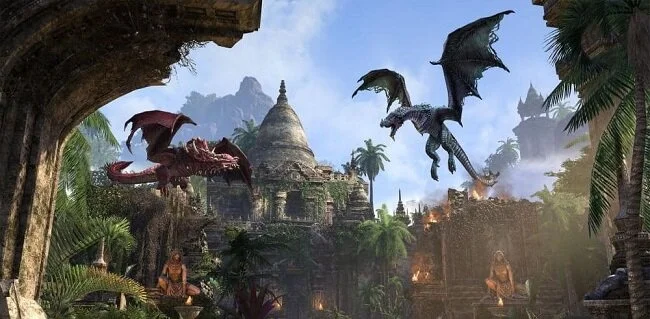
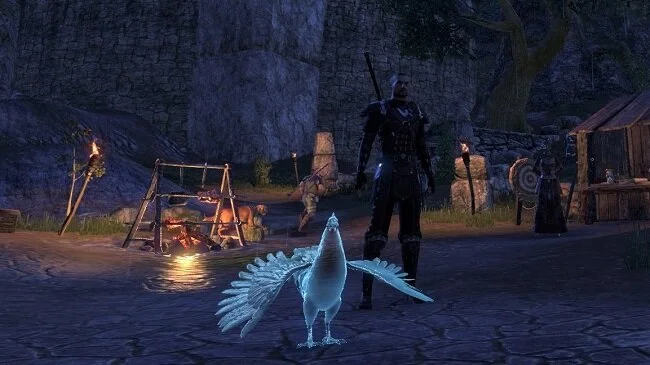
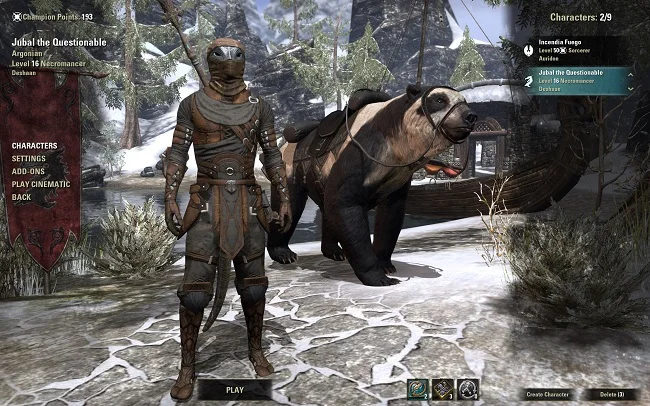
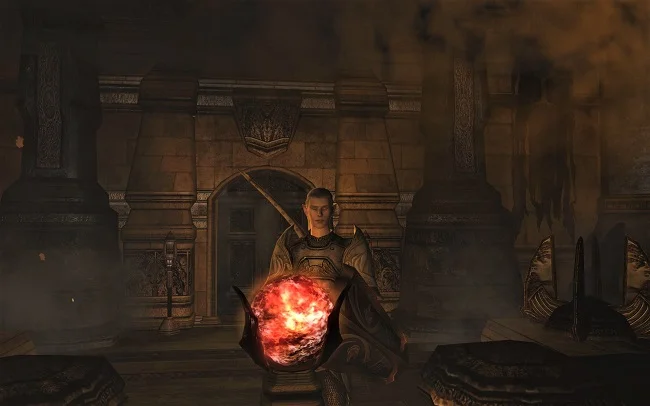
I started playing The Elder Scrolls Online for the first time since the beta in 2018 and therefore wrote a few posts about subjects that didn’t seem to be covered elsewhere. Dolmen farming is a common practise in the game so this simple guide was obviously in the right place at the right time. The disposable nature of gear prior to reaching level cap in ESO bothered me. I guess it bothered others too. Providing a summary of content on the LOTRO test servers always generates web traffic. So many people don’t want to have to install a second version of the game.
2019:
By last year I was fully aware of what “works” best on Contains Moderate Peril. The review of the “unrated” version of World War Z catalogues all the additional footage. It’s hardly surprising that people want to know, as the theatrical version was rated PG-13. An odd choice for a zombie movie. And once again anything that informs LOTRO players about what new content is coming up does well. Perhaps I can claim a marketing allowance from SSG? That ESO post is back again. I suspect it will stay there.
2020:
Obviously the top five for 2020 is not a full year (neither was 2015) but it clearly shows what content gets the most traction with readers. Over 50% of all my web traffic is from Google searches. Mainly movie reviews. Gamers also like guides. Provide them with simple clear instructions that tell them what to do and ensure there’s some pictures and you may have a winning formula. I write about a range of subjects, the scope of which gets wider every year. Although those posts get read, they do not get the sort of numbers as the film reviews and simple guides. I’m certainly not going to change the focus of my writing because of the data presented here. However, I have decided to write an ongoing tips and hints post for Star Trek Online as I do feel it will connect with an audience. I’ll make no bones about it. I write primarily for myself but I do enjoy the fact that my content finds readers.
COVID-19 Pandemic 2020 Part 5
The UK Government’s honeymoon period with regard to the COVID-19 pandemic is well and truly over. Irrespective of one’s political outlook, it is sensible and dare I say it, reassuring to want to get behind the Prime Minister and his cabinet in their attempts to tackle this dreadful situation. Some may have thought it would be the making of the man and way to bridge the political divisions caused by Brexit. But that was six weeks ago and such optimism has conspicuously withered on the vine. Many of the promises made and have proven empty and a decade of politically motivated austerity has left many key public services struggling. The government was under prepared, lacking in talent and driven by the same hubris inherent in all their political decisions. Namely that notions of British exceptionalism would somehow see us through. They haven’t. Despite the recently recovered Prime Minister (who caught COVID-19 due to not following his own instructions) standing at a podium on 27th April and claiming some sort of success, the reality is the complete opposite.
The UK Government’s honeymoon period with regard to the COVID-19 pandemic is well and truly over. Irrespective of one’s political outlook, it is sensible and dare I say it, reassuring to want to get behind the Prime Minister and his cabinet in their attempts to tackle this dreadful situation. Some may have thought it would be the making of the man and way to bridge the political divisions caused by Brexit. But that was six weeks ago and such optimism has conspicuously withered on the vine. Many of the promises made and have proven empty and a decade of politically motivated austerity has left many key public services struggling. The government was under prepared, lacking in talent and driven by the same hubris inherent in all their political decisions. Namely that notions of British exceptionalism would somehow see us through. They haven’t. Despite the recently recovered Prime Minister (who caught COVID-19 due to not following his own instructions) standing at a podium on 27th April and claiming some sort of success, the reality is the complete opposite.
The UK’s death toll currently stands at over 30,000. Key workers still do not have sufficient PPE. The economy is heading for a major recession and as a result of a lack of progress in the EU negotiations, a “No Deal Brexit”. Furthermore, the UK working population is reluctant to return to work if it means putting themselves in harms way. There is a growing lobby by big business for the lockdown to be eased and due to the lack of clarity in the message so far, there’s a risk of some people doing “their own thing”, resulting in a second peak. If the “furiously hard of thinking” only put themselves at risk, I’d be happy to let them do so but they don’t. They’re a threat to all those trying to their best and follow the rules. So overall, it’s back to business as usual with politics returning to its current default state. Namely a tribal driven culture war, based upon ill conceived slogans, driven by the lowest common denominator and those who make their money through everyone else’s hard work.
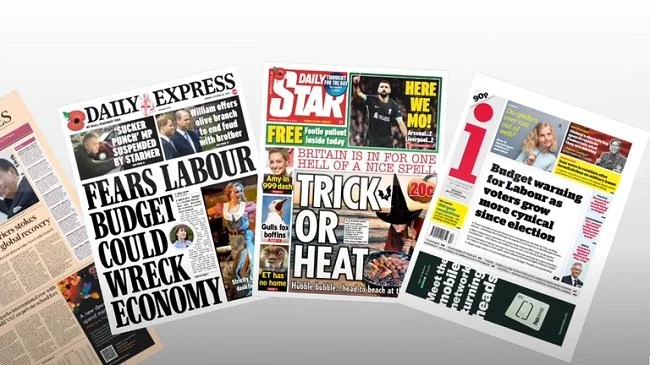
Having caught COVID-19 it does grant you a degree of insight. I was very fortunate and endured only a mild case, although I still have a persistent cough and am monitoring the situation. There’s a chance I may have sustained permanent lung damage. But as far as I'm concerned, irrespective of whatever loosening of the rules are mooted, I shall continue to stay at home, minimise my journeys out and contact with others. But many others are not in such a fortunate position as I. I have many self employed friends who need to return to work and start paying their bills. These are not irresponsible people, just merely caught between a rock and a hard place. I fully expect there to be trouble in the months ahead but I also expect the government to try and more than likely succeed in spinning their way out of it all. The tabloid press have returned to their default setting and are back to towing the establishment line, while the centre left broadsheets have gone back to making every issue a bipartisan bunfight.
Despite the pandemic clearly highlighting the massive inequalities in our society, I am not optimistic that there will be a new social contract between the electorate and the government, similar to that which emerged after World War II. Those who benefit from the existing status quo have no desire or intention of seeing any change. If anything, I suspect we may well see an exacerbation of the current divide between the haves and have nots. The government has undertaken an unprecedented amount of public spending, especially when you consider the ideological perspective of the Conservative Party. The need to address this debt may well prove ideal political capital to see a return to austerity or drive through yet more privatisation of public services. One of the few good things that could come from the COVID-19 pandemic is the opportunity for the UK to finally come to terms with the reality of modern geopolitics and find a new role that isn’t defined by our perceptions of the past. However, judging by the current state of politics, that is highly unlikely to happen.






















Political Campaigning in Video Games and the Gaming Community
I read an article on Kotaku this morning about Democrat Representative Alexandria Ocasio-Cortez from NYC and how she was using Animal Crossing: New Horizons as a means to meet the public. According to Kotaku “she was planning on visiting random people’s islands so she could “leave a doodle or note on their bulletin board”. She opened her DMs for four minutes, giving followers a chance to leave some Dodo codes so she could come visit, before heading off on an evening of being offered fruit and hopefully some wholesome online interactions”. Now I am not especially familiar with either Alexandria Ocasio-Cortez or Animal Crossing: New Horizons and my first thoughts were that this was essentially just a PR exercise. However, upon reflection and bearing in mind the recent focus on organisations such as Cambridge Analytica, it suddenly doesn’t sound so superficial after all.
An example of the “angry mobs” found in Animal Crossing: New Horizons
I read an article on Kotaku this morning about Democrat Representative Alexandria Ocasio-Cortez from NYC and how she was using Animal Crossing: New Horizons as a means to meet the public. According to Kotaku “she was planning on visiting random people’s islands so she could “leave a doodle or note on their bulletin board”. She opened her DMs for four minutes, giving followers a chance to leave some Dodo codes so she could come visit, before heading off on an evening of being offered fruit and hopefully some wholesome online interactions”. Now I am not especially familiar with either Alexandria Ocasio-Cortez or Animal Crossing: New Horizons and my first thoughts were that this was essentially just a PR exercise. However, upon reflection and bearing in mind the recent focus on organisations such as Cambridge Analytica, it suddenly doesn’t sound so superficial after all.
In this instance, as the politician in question has to be invited to interact with a member of the public, the process is conducted with mutual consent and such behaviour cannot be labelled as invasive. However, what I think is interesting here is the way in which politics is evolving and finding new ways to reach out to the electorate. The days of mass consensus governments are over in both the UK and US politics and electoral success now hinges upon making incremental and targeted gains with specific demographics. We have seen how Facebook has been used to reachout to specific age groups, therefore it comes as no surprise that video games and their associated communities offer a similar opportunity. So many games have a social element to them, be it in-game or via a third party online service such as Reddit or Twitch. They may not offer an unfettered political platform but they can certainly be used for targeted campaigning.
"Man talks utter bollocks”
It’s a common refrain from certain gamers to “keep politics out of video games” (although often this just means the politics they don’t like) but I think those days are well and truly over. Wherever there are large sums of money to be made, there is political lobbying. The recent “lootbox” debacle proved that video games publishers do not want any legal measures in place to curb their business practices and they mobilised a great deal of political leverage to do so. And then there is a growing trend for “shock jock” live streamers, offering “hot takes” on the latest talking points simply because it gets an audience and therefore generates revenue. “Popular online personalities” and “influencers” can offer political lobbyist access to groups they traditionally cannot reach. Extremist groups also use online gaming communities for recruitment and grooming. So when you consider how many people play games these days, be it on PC, console or phone, it’s surprising why politicians haven’t targeted such communities before now.




Blapril: Lessons Learned
I still think it was a good idea to move the scheduled August blogging event to April and take advantage of the lockdown. Many of us still have a lot more spare time on our hands than usual. However, upon reflection the lockdown has come with its own set of problems, one of which being a degree of mental discombobulation which does impact upon one’s motivation. So Blapril has felt a little different to last year’s Blaugust. The passion has still been present but I think this time round there’s also been a degree of catharsis. Writing can be good therapy for all sorts of problems. However, the uncertainty of the times and the worry it engenders has also impacted upon bloggers stamina. I was ill for a third of Blapril which threw my schedule. I’ve also been smitten with a degree of indolence that has made writing a bit of a struggle at times. I certainly don’t think I’ve applied myself to my mentoring role as well as previous years.
I still think it was a good idea to move the scheduled August blogging event to April and take advantage of the lockdown. Many of us still have a lot more spare time on our hands than usual. However, upon reflection the lockdown has come with its own set of problems, one of which being a degree of mental discombobulation which does impact upon one’s motivation. So Blapril has felt a little different to last year’s Blaugust. The passion has still been present but I think this time round there’s also been a degree of catharsis. Writing can be good therapy for all sorts of problems. However, the uncertainty of the times and the worry it engenders has also impacted upon bloggers stamina. I was ill for a third of Blapril which threw my schedule. I’ve also been smitten with a degree of indolence that has made writing a bit of a struggle at times. I certainly don’t think I’ve applied myself to my mentoring role as well as previous years.
A recurring follow on from every Blaugust and therefore inevitably Blapril, are the blogs that subsequently fall into decline or return to intermittent posting. Some folk want to write more often but can’t for various real world reasons. Many find that maintaining motivation outside of a community driven event can be a lot harder to do. Others discover that blogging on a regular basis is just not for them, which is fare enough. They either stop or become an occasional blogger. Hopefully participating in Blapril has still proven to be a useful and worthwhile experience. I still enjoy these events as I like being part of a friendly and supportive community and I like adding new blogs to Feedly (I currently track 127). There’s still a wealth of good content being produced and I get a great deal of pleasure by starting my day trawling through Feedly to see what everyone’s been up to.
As for me, I’ll just keep going as writing is something that has become an integral part of my life. I can take a break from time to time but I can’t really stop. I have several long form “think pieces” in development that I may try to hawk around and see if I can get any traction outside of my own blog. I also think it may be time for a new project. At the very least such an undertaking will result in a few blog posts as I usually document such things. However, looking back at what I’ve written about of late, I no longer see Contains Moderate Peril as being a blog about gaming, movies and popular culture anymore that I started so many years ago. Exactly what the right term is that defines it eludes me but it seems to be more than just “musings on video games, movies and popular culture”. I feel I now have a platform that allows me to express a broad range of thoughts and opinions. I also realise that the old adage about “if you throw enough shit at the wall, some of it will stick” is true.
"Git Gud"
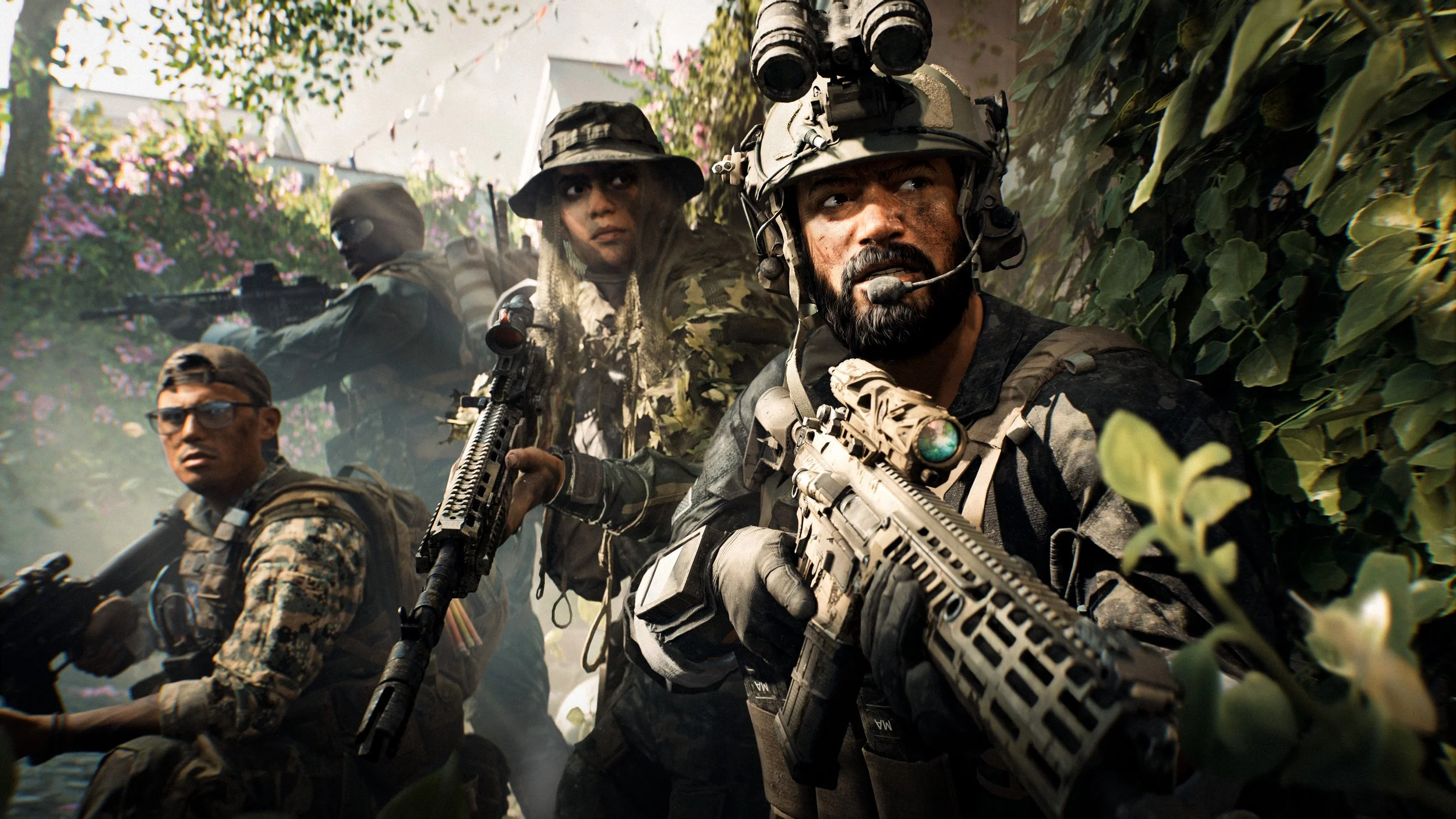
This post is about my attempts to improve my performance while playing Call of Duty Warzone which I’ve been doing for the last three weeks. However, many of the examples I reference are equally applicable to other games. Also, I want to clarify what my overall goals are. I’m not aiming to be the best of the best. I just want to be more accurate when aiming, learn some basic tactics and not make too many obvious “noob” errors. But I refuse to accept that age alone can exclude you from certain genres of games. Admittedly, quick reflexes may well be the prerogative of youth but age has no bearing on tactics. Hence I’ve spent some time looking into how I can become a better CoDWZ player and I must say that there has been an overall improvement that I’ve found useful. Here are a few points that have helped. Much of which is common sense advice that is often overlooked.
This post is about my attempts to improve my performance while playing Call of Duty Warzone which I’ve been doing for the last three weeks. However, many of the examples I reference are equally applicable to other games. Also, I want to clarify what my overall goals are. I’m not aiming to be the best of the best. I just want to be more accurate when aiming, learn some basic tactics and not make too many obvious “noob” errors. But I refuse to accept that age alone can exclude you from certain genres of games. Admittedly, quick reflexes may well be the prerogative of youth but age has no bearing on tactics. Hence I’ve spent some time looking into how I can become a better CoDWZ player and I must say that there has been an overall improvement that I’ve found useful. Here are a few points that have helped. Much of which is common sense advice that is often overlooked.
First off, there is only so much that you can figure out and solve yourself. Therefore, don’t be afraid or averse from learning from others. Do your research, which can be fun to do as long as you don’t make it a chore. YouTube is often a good place to start due to the old “show don’t tell adage”. Just remember that some YouTuber are good at expressing themselves and imparting information. Others are not. Also remember that some advice is in tablets of stone. For example, increasing armour stats improves your survivability in a game or adding a foregrip reduces weapon recoil. However, builds, loadouts and tactics recommendations can sometimes be very subjective. The contradictory nature of such advice can be very polarising, like shops offering too much choice. Sometimes you just have to make a decision, choose a course of action and stick with it until you know whether it works for you or not.
Don’t forget to explore your games settings as there are often a wealth of options that you can adjust. Changing such things as the field of view can make a world of difference. The more you can see, the quicker you can react. Experiment with your mouse sensitivity until you find an optimum performance. Remap keys to suit your needs, especially if you are left handed or do not favour specific kinds of default layouts. If need be, buy a gamepad for extra functionality at your fingertips. Some games will allow you to use a keyboard and mouse simultaneously with a game controller. I use this combination sometimes in games such as GTA and Ghost Recon, as I find an Xbox controller is better when using vehicles. Programmable keyboards or running macros can also be very useful for semi-automating complex key commands. Your graphics card software can also be a useful tool in optimising your game settings. It can sometimes fix graphical issues that you cannot correct using a game’s own internal settings.
The quality of your internet connection can also have a major impact upon your gameplay. If possible, connect your PC to your router via an ethernet cable. Carry out an internet speed test and determine the performance of your connection. The key stat is latency. Latency being the time/delay it takes to send information from one point to another. It is measured in milliseconds and you want it to be as low as possible. High levels are detrimental to online gaming and can result in very frustrating gameplay. With a game such as CoDWZ, latency can make all the difference between winning a gunfight. Often I’ll open fire on an enemy and they will respond. I then die and the killcam shows that they in fact shot first. But this happens when you find yourself joining multiplayer games with a high latency/ping level. Sometimes it may help to join games in different geographical regions to address latency. Ironically, just because a server is located nearer to where you live, doesn’t immediately mean that the latency will be lower.
Perhaps the most prudent advice to consider is to adjust your mindset. If you want to learn the mechanics of any game and improve your performance, then you have to reconcile yourself to the fact that failure is the best teacher. With a game such as CoDWZ you can join a game, find somewhere to wait it out and take a very defensive approach. It will earn you XP and you will increase your rank. But it also means you’re just playing a very fancy online version of “Hide and Seek”. You are not really learning anything other than the best places to conceal yourself and you can only go so far in the game with such tactics. If you come to terms with the fact that until you get better, you’re going to die, then why not play more experimentally? When someone shoots at you, don’t always tactically withdraw. Try and flank them and have a go at taking them down. If you die, you’ll still earn XP. You may even get lucky and encounter another player just like yourself.
Learning a new skill can be an enjoyable experience. But don’t try to walk before you can run, set yourself realistic goals and don’t push yourself too hard. Otherwise the entire process will become a chore and continuous defeat will become frustrating. I do not know the complex statistical formulas for most of the MMOs that I play. But I have learned sufficient to know what numbers I need to not be squishy. I’ve also reached a point where I know what is my optimal skills rotation. I may not be able to name the skills but I know from the icons on my hotbar what they are and the order they should be in. I know my limitations with regard to what I can achieve when playing video games. I will not be a high end player but I think there is scope for me to be a wild card and to have occasional flashes of inspiration when the pieces all fit together and I don’t play like a fool. When that happens, this will be my version of “git gud”.
A Month in Gaming
April has been an usual month. The ongoing lockdown here in the UK (and elsewhere in the world) has afforded me more gaming time than usual. The policy of social distancing has reduced my caring duties to just three hours a day. Hence I and many others like me have much more leisure time available. I initially thought that this situation would be the perfect time to try some of the many of the games that I have stockpiled over the years. However, despite trawling through many titles, I still failed to find anything that immediately took my fancy. So I decided to take stock of my overall gaming activities and whether it was time to revise them and try something new. And by new I don’t just mean just buying a new game but taking a step out of my current comfort zone into a genre I don’t usually play. So that’s exactly what I did and the results have been very interesting.
April has been an usual month. The ongoing lockdown here in the UK (and elsewhere in the world) has afforded me more gaming time than usual. The policy of social distancing has reduced my caring duties to just three hours a day. Hence I and many others like me have much more leisure time available. I initially thought that this situation would be the perfect time to try some of the many of the games that I have stockpiled over the years. However, despite trawling through many titles, I still failed to find anything that immediately took my fancy. So I decided to take stock of my overall gaming activities and whether it was time to revise them and try something new. And by new I don’t just mean just buying a new game but taking a step out of my current comfort zone into a genre I don’t usually play. So that’s exactly what I did and the results have been very interesting.
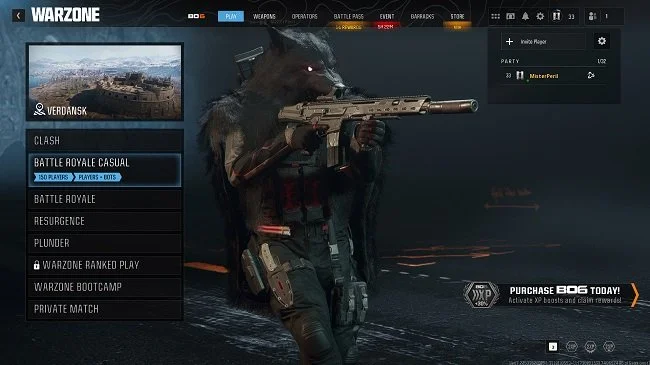
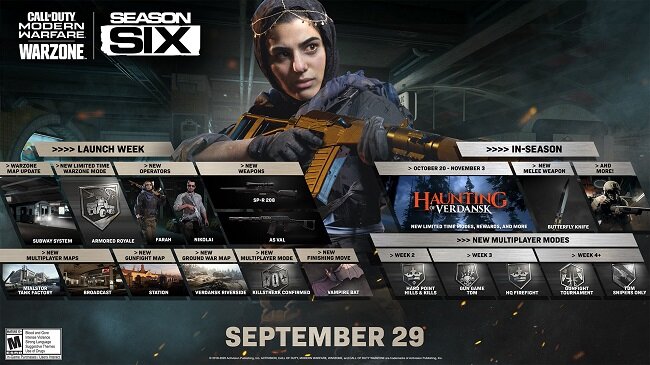
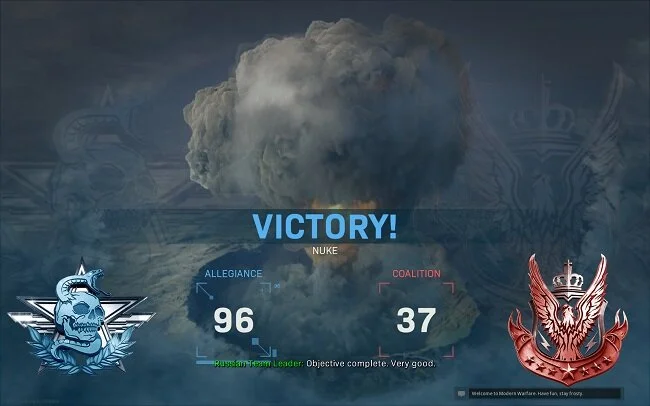
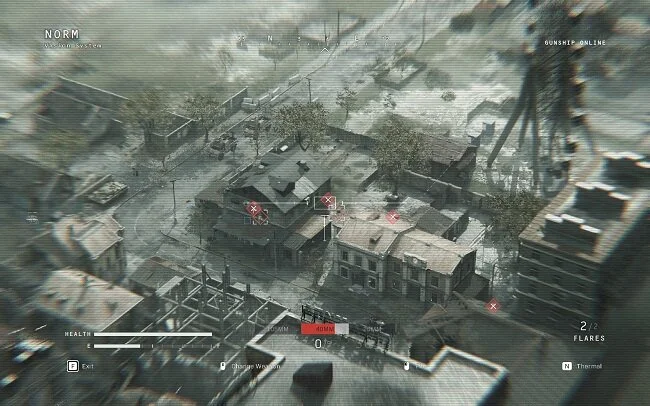
I have been curious about the Battle Royale genre for a while, since the explosive growth first of Player Unknown’s Battlegrounds and then Fortnite. I’ve read a lot about the success of both these games and the way that, despite offering essentially the same experience, they have pursued different audiences and markets. I have often considered trying either one of them but the demographics of their respective playerbase has put me off. The arrival of Call of Duty Warzone subsequently provided a tipping point, as I have prior experience of the franchise and the game offers a Battle Royale experience in a format that is acceptable to me. I’ve written elsewhere about the game and my attempts to improve my gameplay performance but to summarise here, it has been a positive experience to try something new. Although there is a strong element of twitch gaming in Call of Duty Warzone, it is not the only defining factor. There is much that a player can do to succeed in the game and progress through the ranking system.
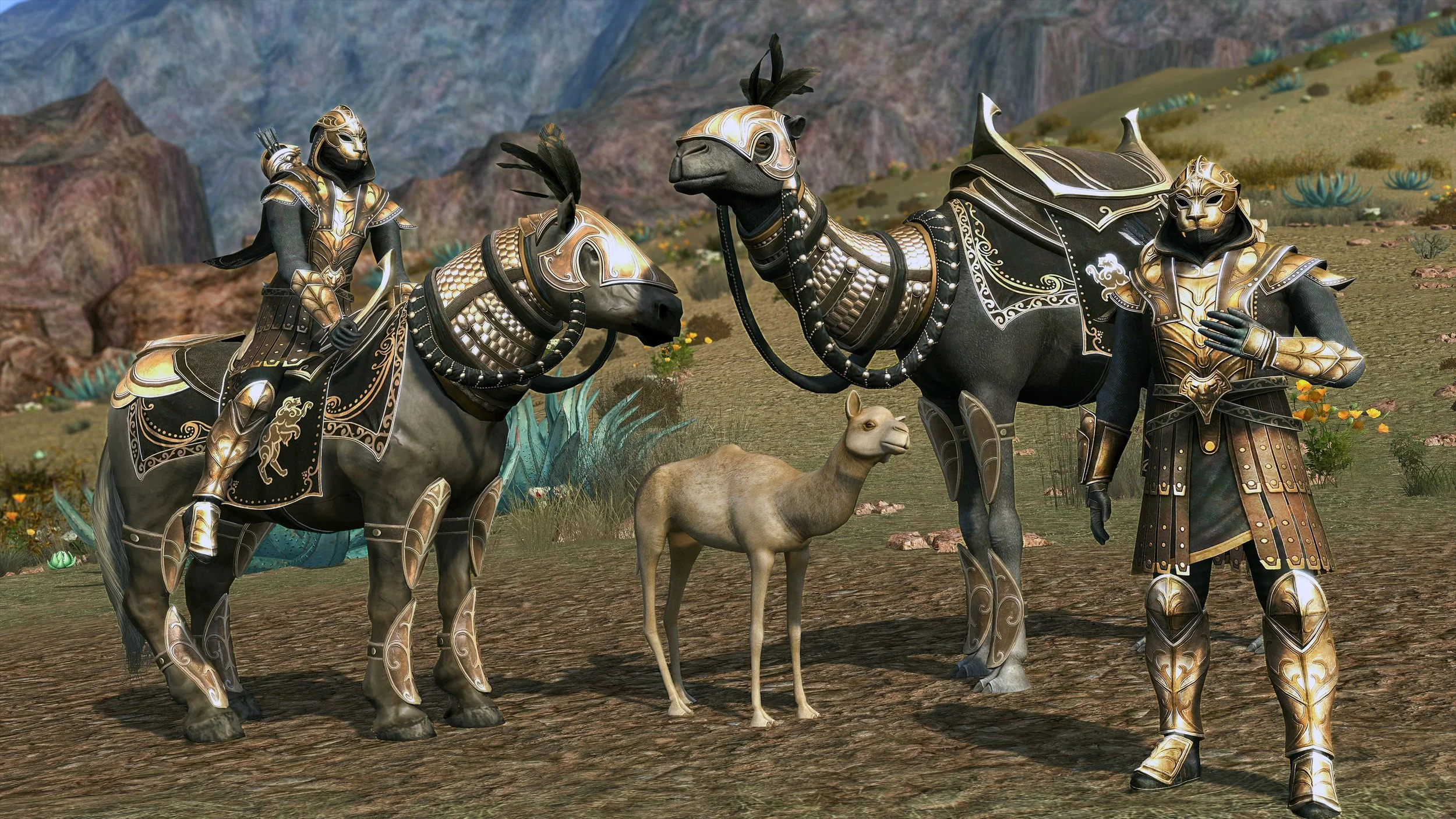
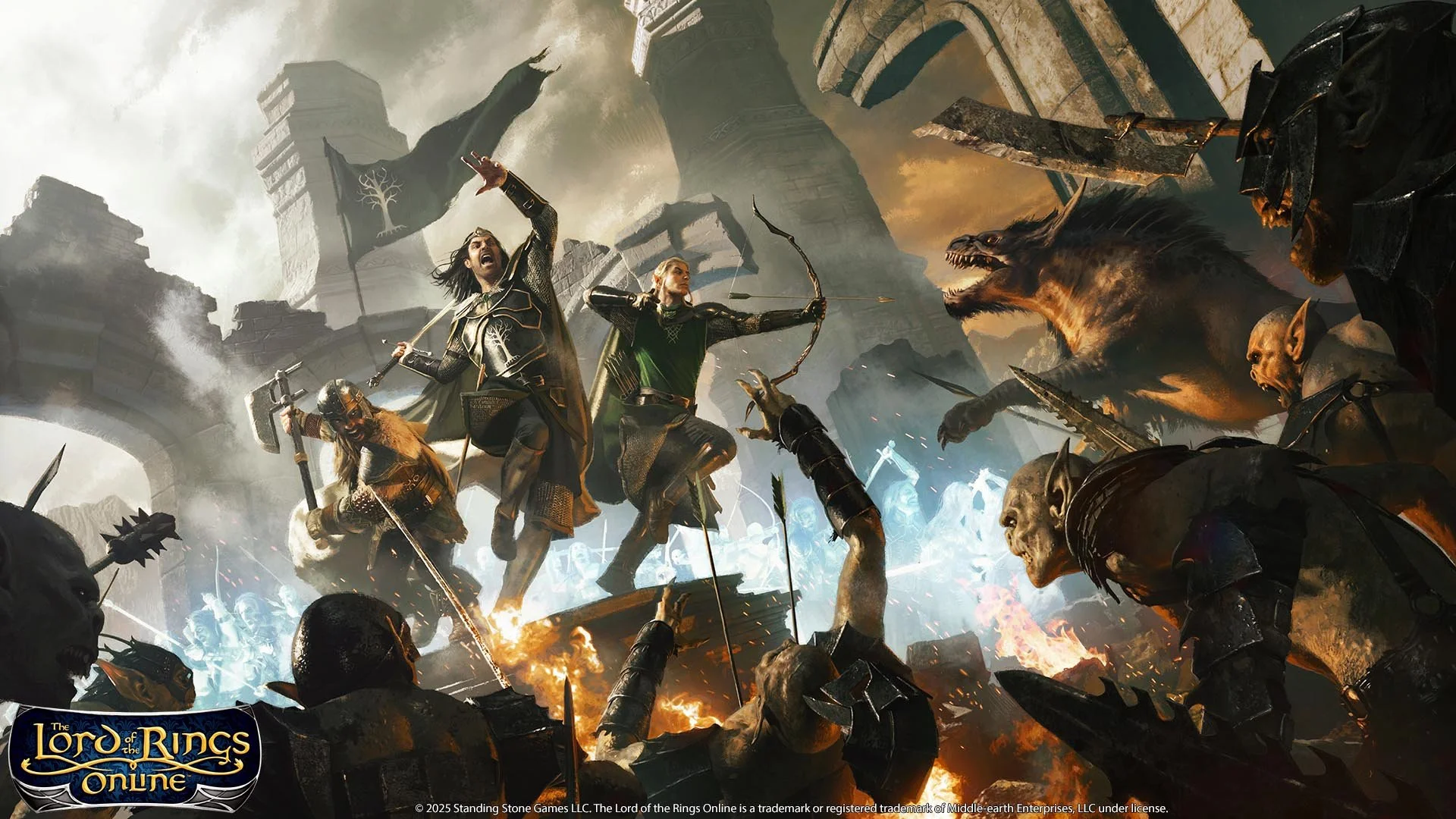
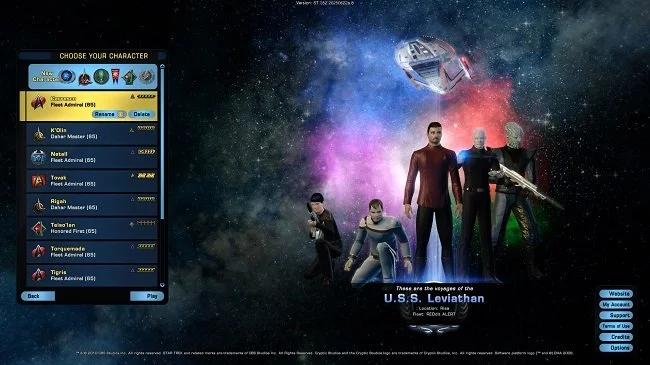
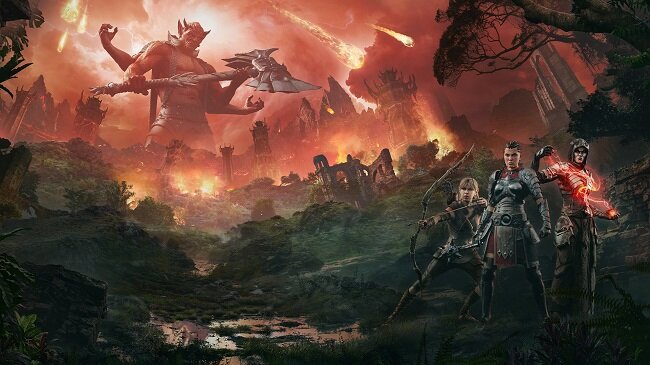
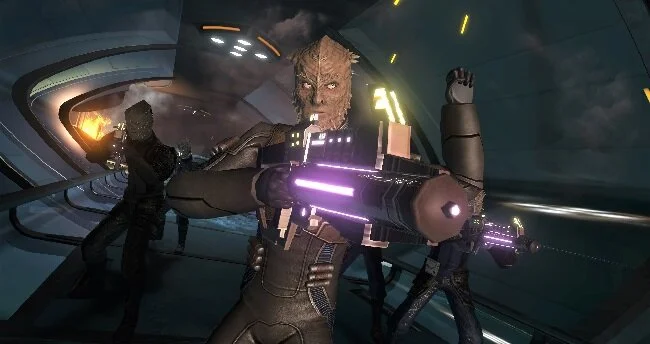
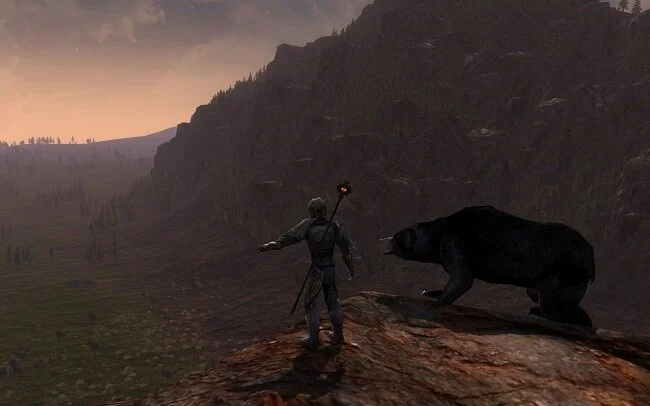
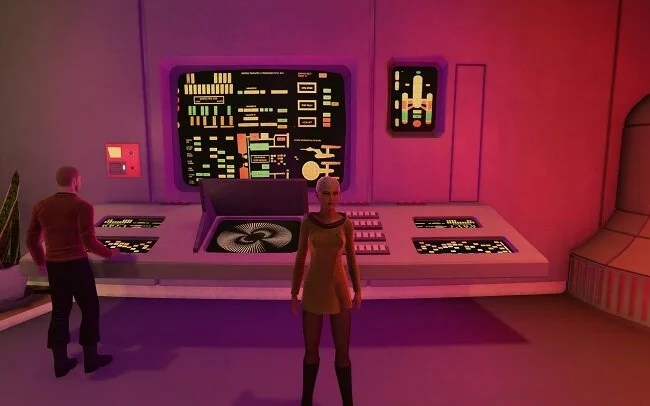
As a result of trying something new, I have temporarily sidelined The Lord of the Rings Online. I was surprised how quickly Update 26 (now called Mists of Wilderland) was released so soon after being previewed on the test server. And as a result the new zone launched with a lot of bugs. I don’t especially like questing in new areas when they’re swarming with players and find forming an orderly queue to kill a specific mob somewhat immersion breaking (and annoying). So I’ll return to LOTRO in a month or two when the area is a little quieter. My other MMO of choice, Star Trek Online, has been pulling out all the stops to keep players engaged and to entice those who have moved on to return. At present, I’m just logging in once a day to do a featured Task Force Operation. This earns a token that can be handed in for either a C-Store ship or for a stash of Lobi Crystals (which can be bartered for fancy gear, crew or yet more ships).
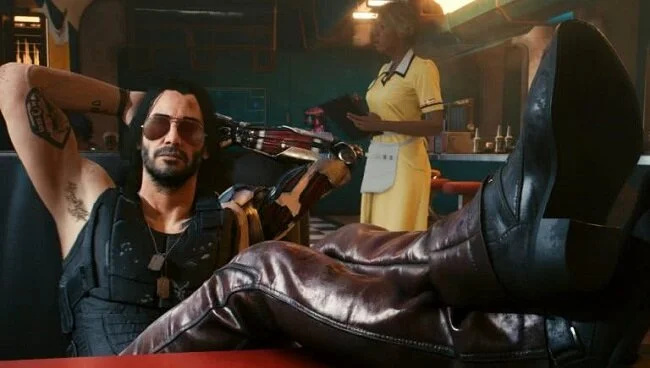
I briefly dusted off Sniper Elite 4 but my overfamiliarity with the maps soon put pay to that. I am really looking forward to the fifth iteration of the game as it really is such a different experience to the hectic pace of other game genres. As for May, I think I keep playing Call of Duty Modern Warfare. I’m still working my way through the campaign, playing multiplayer against bots as a means to practice my aiming and familiarise myself with the maps. And despite only being a distinctly average player, I am having a lot of fun in Warzone. My only complaint is that I play Solo Battle Royale and would like at some point to play as part of a four man squad. But I don’t know anyone else who plays the game and I am reluctant to join a PUG. However, with an excess of time on my hands, even that may change. No doubt next month’s post will highlight yet further changes in my gaming habits, as this seems to be a theme at present.




Gamer Motivation Profile
As so many Blapril contributors have posted their Gamer Motivation Profile, I thought I’d follow suit and write about mine. The survey is provided by Quantic Foundry who according to their own website are a “a market research company focused on gamer motivation”. Their aim is to “combine social science with data science to understand what drives gamers”. It’s all presented in a very slick and comprehensive fashion. As with all such services, you have to answer a series of questions designed to probe your gamer psychology and ascertain what drives you when playing video games. Once you complete the multiple choice questionnaire you’re presented with a graphic which shows your primary and secondary motivations, along with a written summary. You can drill down into the data and see how your answers determine the outcome.
As so many Blapril contributors have posted their Gamer Motivation Profile, I thought I’d follow suit and write about mine. The survey is provided by Quantic Foundry who according to their own website are a “a market research company focused on gamer motivation”. Their aim is to “combine social science with data science to understand what drives gamers”. It’s all presented in a very slick and comprehensive fashion. As with all such services, you have to answer a series of questions designed to probe your gamer psychology and ascertain what drives you when playing video games. Once you complete the multiple choice questionnaire you’re presented with a graphic which shows your primary and secondary motivations, along with a written summary. You can drill down into the data and see how your answers determine the outcome.
Apparently, I am Aggressive, Spontaneous, Relaxed, and Grounded. And as ever with such surveys, the results are ambiguous. I would certainly agree with the first statement but only when I’m playing specific types of games such as Call of Duty Warzone. I like to play aggressively as it often yields results. Spontaneity is also correct on this occasion. However, if I’m playing a different genre of game then these terms are less accurate. I guess the terms relaxed and grounded are also applicable to me if you consider them in terms of my approach to gaming per se. I play games for entertainment and amusement. I harbour no dreams of being the best of the best but I do like to succeed within the parameters I set myself. However, when reading the more detailed report, I do feel that the profile is more accurate. The Immersion Component shows that I focus on story, which I do. The Achievement Component accurately reflects why I play FPS games, clearly indicating its all about power. What can I say, I like shooting things with overpowered weapons.
The problem with surveys such as this, is that I often feel that I cannot answer many of the multiple choice questions. All too often my response is too nuanced or simply doesn’t feature in the spectrum of answers to choose from. Furthermore, as I’ve already indicated, my answers are frequently not universal to gaming per se but will vary depending upon what type of game I’m playing. I take a far more measured and methodical approach to playing an MMO, than I do with an asymmetrical multiplayer video game. I will take the time to plan and execute a long distance stealth kill in Sniper Elite 4. I’m often sidetracked from quests in games such as Red Dead Redemption 2, because of a compulsion to just go out and explore the world. And as for the recommendations that Quantic Foundry make on the strength of your survey results, they can be made just as successfully based on the titles I’m already playing.
Don’t get me wrong, I have no doubt that you can make very accurate gamer assessments based on data analysis. I just think it needs to be more than just a five minute, multiple choice survey. I think far more complex and flexible questioning is required. And let us not forget response bias, which is a general term for a wide range of tendencies for market research participants to respond inaccurately or falsely to questions. Perception plays a strong role in our lives. I’m sure some people worry at either a conscious or subconscious level, “does the survey results reflect well upon me” and then temper their responses. However at my age, I’m happy to embrace my flaws. I like to be OP and am not concerned if I can’t win a game with skill or aplomb. I’ll happily “camp”, “nade spam” and shoot you in the ass from behind. A win is a win and it’s all about that dopamine release.
Lost: Ten Years On
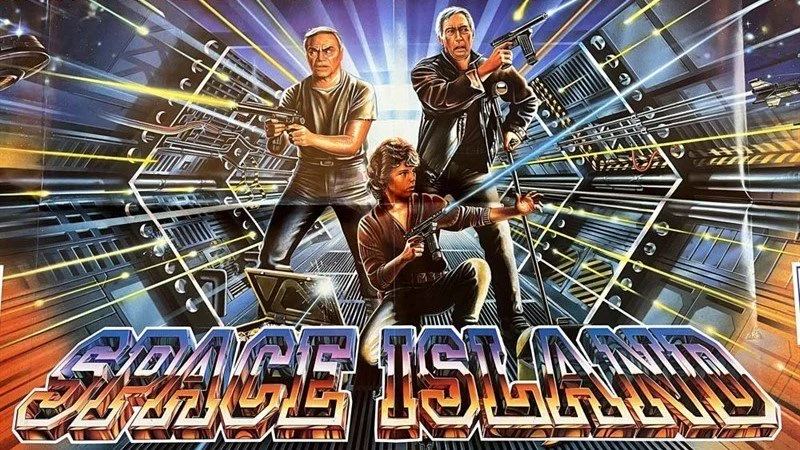
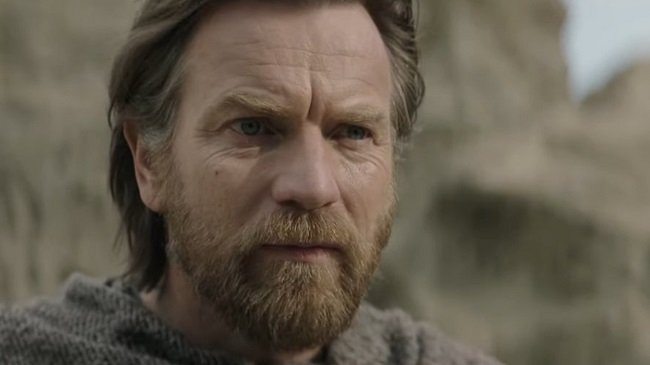
For those who may be unfamiliar with this particular example of cult television, Lost is an US drama television series that was originally broadcast on ABC from September 22, 2004, to May 23, 2010. The show ran for six seasons, comprising a total of 121 episodes. It was created by Jeffrey Lieber, J. J. Abrams and Damon Lindelof, containing elements of supernatural and science fiction. The story follows the survivors of a commercial flight flying between Sydney and Los Angeles, that crashes on a mysterious island somewhere in the South Pacific Ocean. The story is told in a heavily episodic manner. Each instalment would typically feature a primary storyline set on the island, augmented by flashbacks or flash forwards that provided additional insight into the various characters' backstories. Due to the convoluted plot and big production values, the show became a major talking point and fans became heavily invested in theories regarding the “plot”.
For those who may be unfamiliar with this particular example of cult television, Lost is an US drama television series that was originally broadcast on ABC from September 22, 2004, to May 23, 2010. The show ran for six seasons, comprising a total of 121 episodes. It was created by Jeffrey Lieber, J. J. Abrams and Damon Lindelof, containing elements of supernatural and science fiction. The story follows the survivors of a commercial flight flying between Sydney and Los Angeles, that crashes on a mysterious island somewhere in the South Pacific Ocean. The story is told in a heavily episodic manner. Each instalment would typically feature a primary storyline set on the island, augmented by flashbacks or flash forwards that provided additional insight into the various characters' backstories. Due to the convoluted plot and big production values, the show became a major talking point and fans became heavily invested in theories regarding the “plot”.
I watched 4 seasons of Lost before I gave up on the show. The intriguing premise and creative format was initially very entertaining. Just when you started to get a handle on the plot a new story element would wrong foot you and open up an entirely new narrative avenue to consider. It was also fun to discuss the show with others as it really was one of those rare cultural touchstones at the time. The cast was also very robust featuring solid character actors such as Terry O’Quinn and Micahel Emerson. I warmed to one particular character, Charlie Pace (Dominic Monaghan), who played a rock star whose fame had been usurped by his own brother and band member. And then there were the hints at the underlying nature of the island that the cast were stranded on. Was it some sort of temporal anomaly? Or was this a sinister corporate experiment? It all seemed to work so well at first.
But then there reached a point (at least from my perspective) when the stories were deliberately taking a “one step forward, two steps back” approach. Plot elements were being continuously added, along with contrived new genre themes and yet the story didn’t seem to be advancing. What started as a pleasing conundrum tipped into becoming an exercise in frustration. And it was roundabout the end of the fourth season with its multiple story threads set in the future, that I realised that this wasn’t a TV show with a well planned, longterm story arc but something the production team were tackling as they went forward. By that time there was quite a lot of information about the show productions in the public domain and it was clear that the core writing team were effectively “making it up as they went along”. Not only did this disappoint me but on some level I felt I was being conned.
Sometimes it can be very satisfying and even cathartic to give up on a TV show. Especially one which has a “buzz” surrounding it. On occasions it can even feel like you’re obliged to watch something or else you’ll be left standing on the periphery of some ongoing social event. I felt that way about Game of Thrones, which I ditched after two seasons. I just didn’t like the way the show attempted to manipulate its viewers. As for Lost, walking away from it felt like the right thing to do. I suspected that the show would never be able to produce a satisfactory conclusion and it would appear that the final episode polarised audiences at the time and is still hotly debated today. Don’t get me wrong, I’m not a fan of being spoon fed stories and I’m happy to countenance experimental and thought provoking content. But there’s a difference between such things and being deliberately misled by the smug and self indulgent. I still view Lost as a stunt a decade on. Curiously enough I still enjoy the bogus rock song by the fictional band Driveshaft, “You All Everybody”. It’s the one thing from the show that does’nt have any negative connotations for me.












Writing and Motivation
This week’s Blapril writing prompt is about “staying motivated”. It’s a perennial subject and one that is always relevant. Whenever writing events such as Blapril/Balugust are held, many of the participants are swept up in the initial excitement and camaraderie. At first they find both the time and the inclination to write. However, after a while, the realities of regularly writing become apparent. Finding the time may become more difficult, as does choosing material to write about. Something that was fun and enjoyable can eventually feel like a chore. Especially if you don’t receive any form of feedback. Hence it comes as no surprise that many blogs fall into decline and fade away. Content is posted far more intermittently and then there comes a point where the writer just stops. According to Google, only 167.4 million out of the 500 million plus blogs had been updated in the past 120 days.

This week’s Blapril writing prompt is about “staying motivated”. It’s a perennial subject and one that is always relevant. Whenever writing events such as Blapril/Balugust are held, many of the participants are swept up in the initial excitement and camaraderie. At first they find both the time and the inclination to write. However, after a while, the realities of regularly writing become apparent. Finding the time may become more difficult, as does choosing material to write about. Something that was fun and enjoyable can eventually feel like a chore. Especially if you don’t receive any form of feedback. Hence it comes as no surprise that many blogs fall into decline and fade away. Content is posted far more intermittently and then there comes a point where the writer just stops. According to Google, only 167.4 million out of the 500 million plus blogs had been updated in the past 120 days.
It is at this point in a blog post such as this, it is customary to reference some cunning lifehacks, tips and guidance to make writing “easier”. I have written such material before referencing the benefits of preparedness, keeping notes, allotting time, choosing an appropriate writing environment etc. But the bottom line is there is no universal strategy, set of rules or philosophical school of thought that can solve motivation issues. It may well sound glib but you will either write or you will not. If you want to maintain a blog and post on a fairly regular basis then you will. You will determine what is the best approach for you and do it. Alternatively, you may find yourself burning the midnight oil and rushing to get a post completed but even method still gets the job done. If you feel compelled to write, then you will find away.
I write because I enjoy it. I enjoy the process of planning and constructing a blog post. I like the way it helps me marshal my thoughts. Researching a subject can be very illuminating and presents an opportunity to learn. Writing has helped me expand my vocabulary, improved my analytical skills and provides me with a sense of satisfaction. I have very little leverage or agency in the real world (do any of us?) but I am in charge of my writing. I can pose questions, discuss and analyse things in an orderly way. It also affords me an opportunity to present myself and my thoughts to the world in a manner of my choosing. My writing is not determined by how I look or dress. Hopefully it is judged on its own merits. And because this is how I feel about writing, this is my source of motivation.
Now I’m sure there will be some people reading this post who think “that’s all fair and good but I don’t feel as passionate about writing as you do. I just like to do it for fun”. To which I reply “fine, then do it for fun”. Find the level that is good for you and don’t feel obliged to do anything else. Blapril is not a competition, a race or an exam. Everyone’s blogs are different because we’re all different. Focus on an approach that is good for you and then once you’ve determined that, stick with it. But no matter how you approach blogging there comes a point where you just have to do it. The words will only appear if you type them. Perhaps that is the ultimate motivation right there. The satisfaction in seeing something appear on the virtual page, that up until now has only existed in your head. And then knowing that you can share that with others at the click of a mouse.
Classic Movie Themes: The Pink Panther
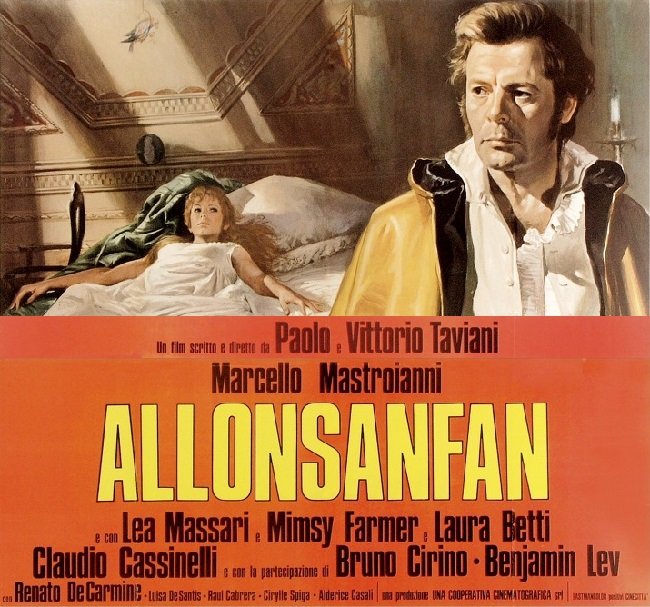
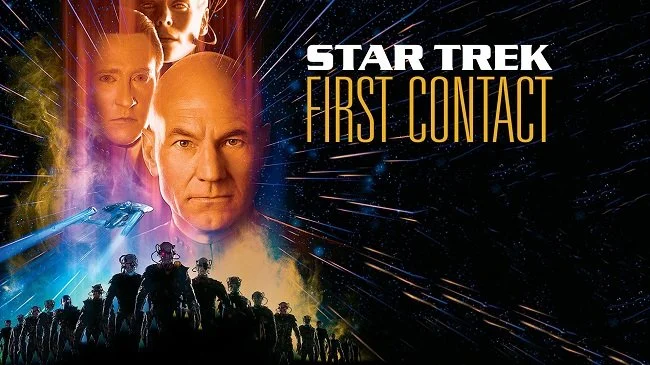
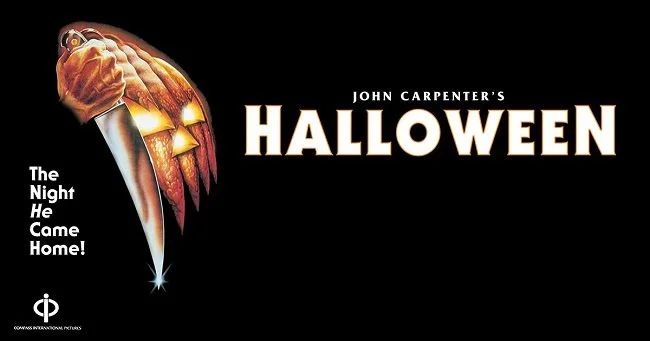
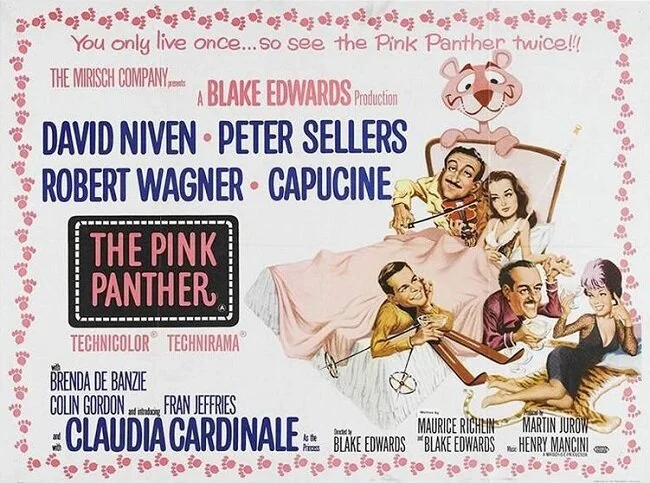
If you mention The Pink Panther (1963) I’d hazard a guess that most people will instantly think of Inspector Clouseau (and possibly throw in a quote in faux French about “Minkeys”) or hum or whistle the iconic theme tune. It’s blend of cool sixties Jazz and Lounge is both classy and evocative. Henry Mancini’s contribution to the Pink Panther franchise is commensurate to that of Peter Sellers and Blake Edwards. If you removed his musical scores from any of the films they would be greatly diminished. In fact one can argue that the movies made in the eighties after Sellers’ death are greatly bolstered by Mancini’s intelligent and accomplished musical accompaniment. The franchise may have run out of steam but Mancini never did so.
If you mention The Pink Panther (1963) I’d hazard a guess that most people will instantly think of Inspector Clouseau (and possibly throw in a quote in faux French about “Minkeys”) or hum or whistle the iconic theme tune. It’s blend of cool sixties Jazz and Lounge is both classy and evocative. Henry Mancini’s contribution to the Pink Panther franchise is commensurate to that of Peter Sellers and Blake Edwards. If you removed his musical scores from any of the films they would be greatly diminished. In fact one can argue that the movies made in the eighties after Sellers’ death are greatly bolstered by Mancini’s intelligent and accomplished musical accompaniment. The franchise may have run out of steam but Mancini never did so.
The Pink Panther theme, composed in the key of E minor, is unusual in Mancini's body of work due to its extensive use of chromaticism. In his autobiography Did They Mention the Music? Mancini talked about how he composed the theme music. “I told [the animators] that I would give them a tempo they could animate to, so that any time there were striking motions, someone getting hit, I could score to it.They finished the sequence and I looked at it. All the accents in the music were timed to actions on the screen. I had a specific saxophone player in mind; Plas Johnson. I nearly always precast my players and write for them and around them and Plas had the sound and the style I wanted”.
A Shot in the Dark (1964), like most other movies in the series, featured animated opening titles produced by DePatie-Freleng Enterprises. However, it did not use the iconic Pink Panther theme as an accompaniment on this occasion. Instead Henry Mancini wrote a new musical cue to reflect the fact that Inspector Clouseau was now the main focus of the film. It is a smooth big band piece with a period beatnik vibe. The film blends wordplay with physical comedy and in many ways is the most sophisticated and accomplished of the series. Mancini’s faux ambient Parisian music adds greatly to the atmosphere.
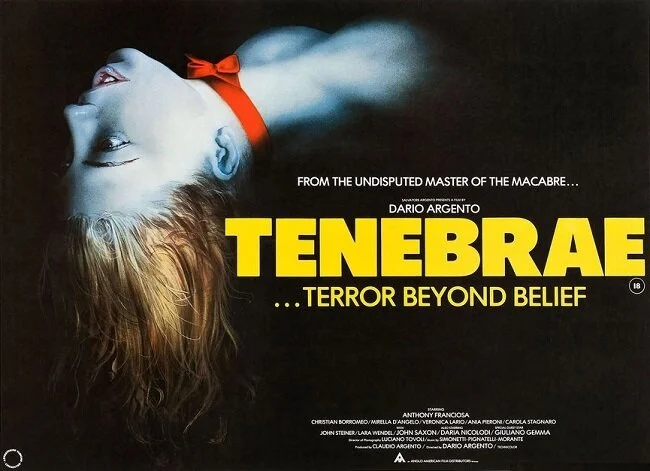
By the time The Pink Panther Strikes Again arrived in cinemas in 1976, director Blake Edwards had moved the focus of the films from straight forward slapstick and Clouseau’s verbal idiosyncrasies to elaborate comedy set pieces featuring destruction and mayhem. The Inspector’s fight with Cato satirises the martial arts trend in movies of the time and the editing style of Sam Peckinpah. The film also features a beautifully simple and low key theme specifically for Clouseau. It plays over a three minute sequence in which the Inspector tries to cross a moat and enter a castle. It underpins Seller’s pratfalls superbly, highlighting the difficulty of scoring comedy successfully. Something Mancini achieve’s here, effortlessly.










Brick Mansions (2014)
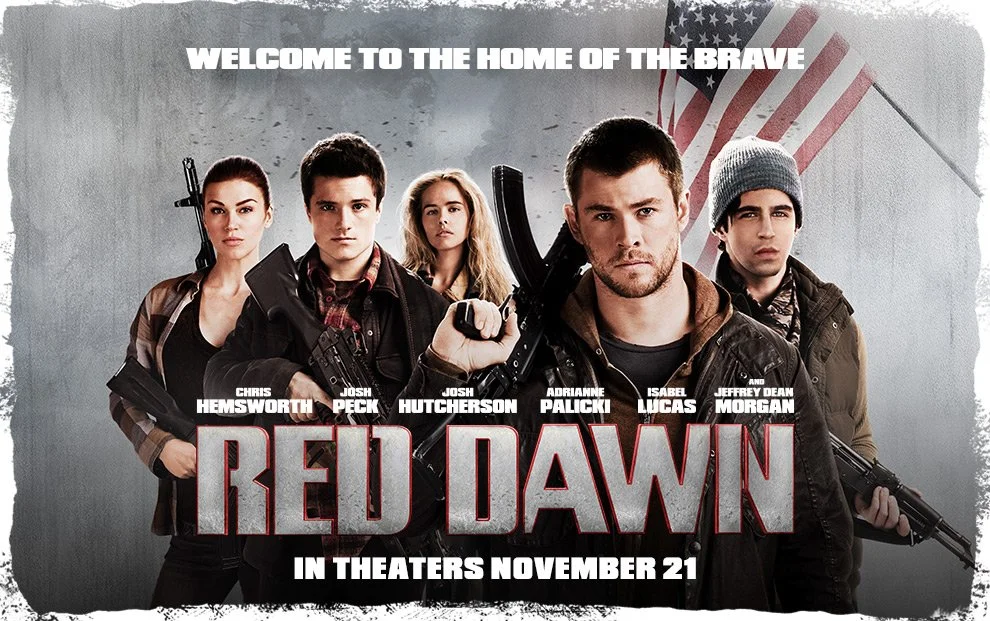
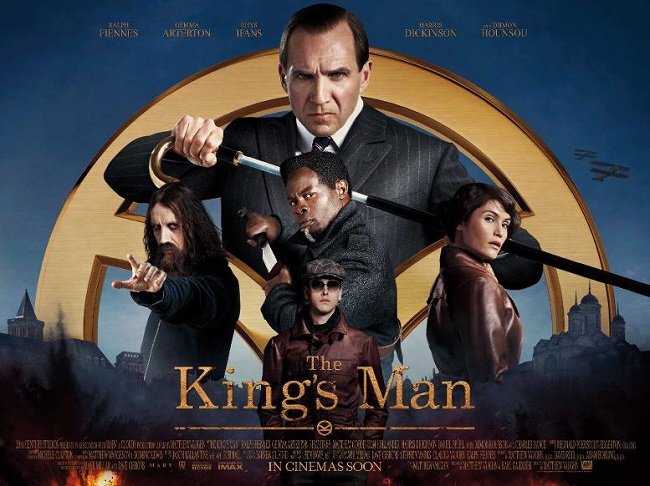
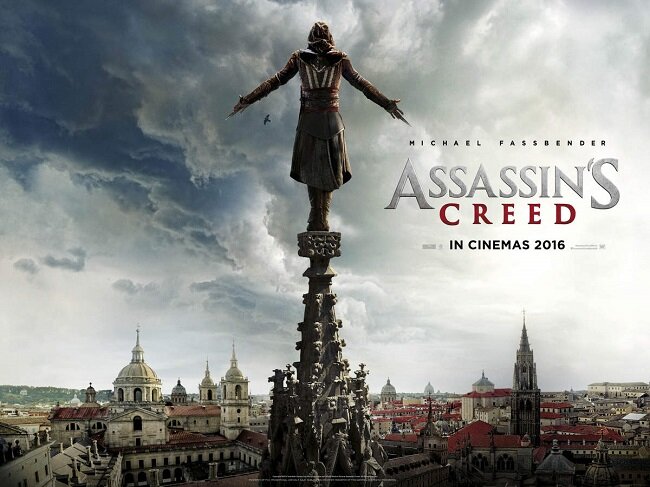
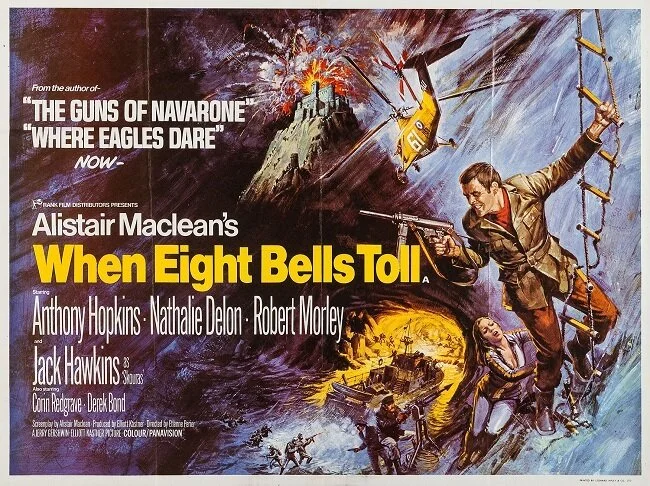
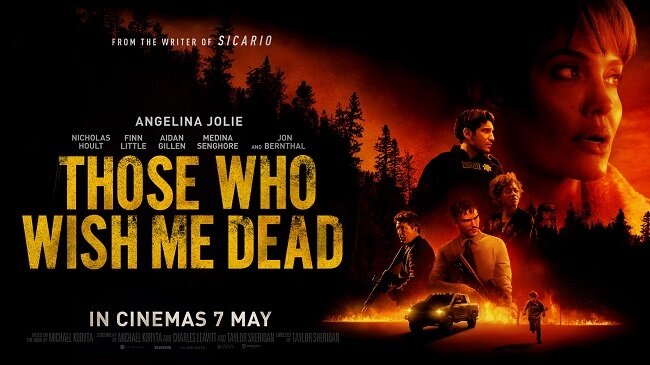
The original French movies District 13 and its sequel District 13: Ultimatum, conceived and produced by Luc Besson, were enjoyable variations of the Escape from New York theme. Their charm lay in their European pedigree and the skilful use of parkour. The two leads, David Belle and Cyril Raffaelli, were eminently suited to the minimalist roles and the screenplays were fun. Half of these movies appeal was the fact that they were not mainstream US products. Brick Mansions is the Hollywood remake of District 13, as well as being Paul Walkers’ final movie. Sadly, this film is far from a fitting epitaph, being devoid of any charisma or innovations. It is blandly shot , poorly edited and has been stripped of everything that made the original entertaining.
The original French movies District 13 and its sequel District 13: Ultimatum, conceived and produced by Luc Besson, were enjoyable variations of the Escape from New York theme. Their charm lay in their European pedigree and the skilful use of parkour. The two leads, David Belle and Cyril Raffaelli, were eminently suited to the minimalist roles and the screenplays were fun. Half of these movies appeal was the fact that they were not mainstream US products. Brick Mansions is the Hollywood remake of District 13, as well as being Paul Walkers’ final movie. Sadly, this film is far from a fitting epitaph, being devoid of any charisma or innovations. It is blandly shot , poorly edited and has been stripped of everything that made the original entertaining.
In the year 2018, the crime rate in Detroit has become so high, a wall has been built around the worst area, Brick Mansions. The decaying neighbourhood is run by drug lord Tremaine (RZA), who has plans to expand his criminal endeavours. Shady city officials supply him with a bomb, hoping that the subsequent political fallout from such a situation will lead to urban renewal. However, the police decide to send in Detective Damien (Paul Walker) along with Brick Mansion resident Lino (David Belle reprising his original role) to retrieve the explosive device. The situation is complicated by the fact that Lino's wife has been kidnapped by Tremaine. Cue running, jumping and assorted action scenes.
The failings of Brick Mansions are numerous. There's no sense of community within the decaying tenements. The original movies established the nature of the walled off enclave and gave us some insight into its citizens daily life and their struggles. It is completely absent here. The script and character development are negligible. The casting of RZA is frankly embarrassing as he delivers a mainly unintelligible performance. Exactly why the production saw fit to ask David Belle to return and reprise his role is a mystery. His voice has been dubbed and he has precious little to do in the lacklustre action sequences. The movie lacks any innovation or conviction and is the embodiment of the word perfunctory.
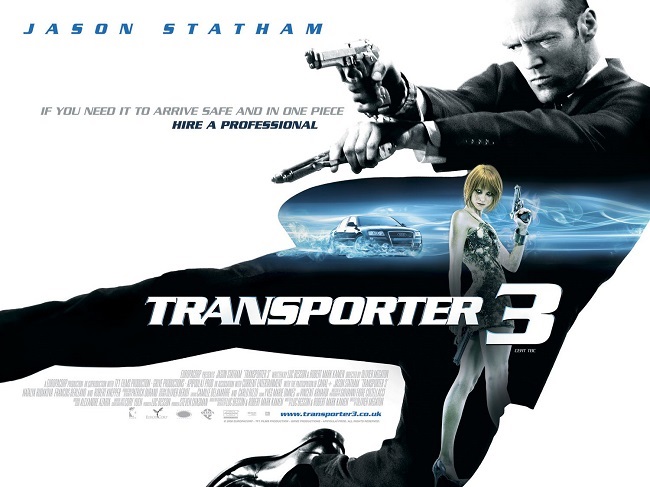
Director Camille Delamarre has a background in editing, having worked on other Luc Besson productions such as The Transporter 2 and The Transporter 3. However the current penchant for rapid cuts and shaky-cam techniques utterly kills the parkour element of the movie. The skill of those involved and the scope of the stunts that they are undertaking are diminished by appallingly ill conceived cinematography and post production editing. The visual style of the film is confusing and continuously misdirects you with regard to what you should be looking at. All involved would benefit from a return visit to film school to reacquaint themselves with the concept of visual narrative flow.
Time and time again we have seen that remaking international films in a contemporary, mainstream US idiom does not work. The process strips away the unique aspects of the original and replaces it with generic material inherent in sterile corporate American film making. Brick Mansions doesn't even try to be its own movie. It simply provides what it think's is required for the North American market. It is louder, less refined and incredibly stupid and not even in a fun way. This is the sort of stupidity that is born of cynicism and having no respect for your material or audience. It also does nothing for Parkour either which has now become just another tiresome marketing commodity, like other so called “action sports”. Do yourself a favour and skip this tedious movie and watch the originals instead.










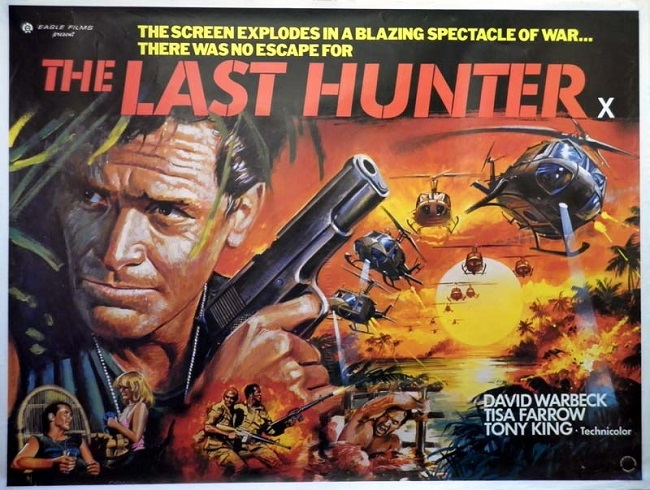
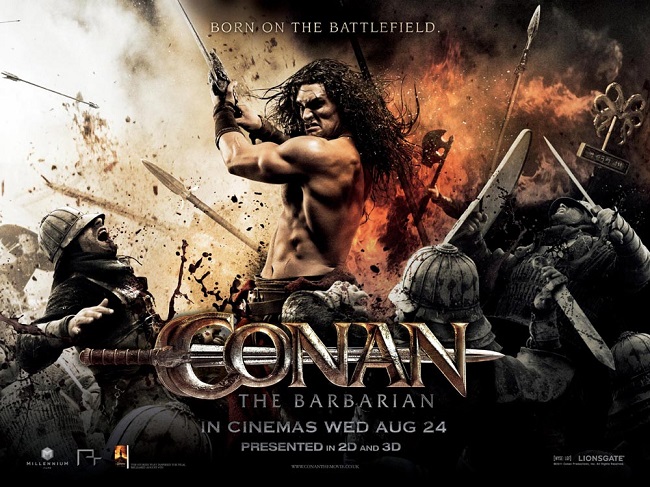
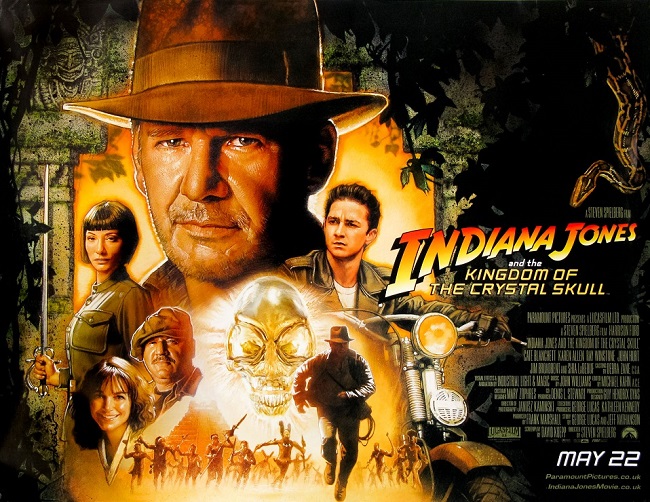
"Middle-aged"
I read a comment on a news website recently in which the author claimed to be “middle-aged”. They were 67 years old. This highlighted something I have considered for a long time; that this term is one of the most elastic and wilfully misused in the English language. And it may come as a surprise to you but this really bugs me. Because one’s age shouldn’t be a matter of anything other than numerical accuracy. However, it would appear that I’m swimming against the tide on this issue and perhaps many others. For many people, most forms of self scrutiny are refracted through the prism of their feelings and cultural assumptions. Hence what they think, see and feel about themselves is often quite different to objective reality. Your age falls into this category. And then there is the cultural bias towards youth which runs through every aspect of society. All things considered, it’s hardly surprising that people are going to stretch the term “middle-aged”.
Perfect teeth and an absence of haemorrhoids are one of many reasons why stock photos are bullshit
I read a comment on a news website recently in which the author claimed to be “middle-aged”. They were 67 years old. This highlighted something I have considered for a long time; that this term is one of the most elastic and wilfully misused in the English language. And it may come as a surprise to you but this really bugs me. Because one’s age shouldn’t be a matter of anything other than numerical accuracy. However, it would appear that I’m swimming against the tide on this issue and perhaps many others. For many people, most forms of self scrutiny are refracted through the prism of their feelings and cultural assumptions. Hence what they think, see and feel about themselves is often quite different to objective reality. Your age falls into this category. And then there is the cultural bias towards youth which runs through every aspect of society. All things considered, it’s hardly surprising that people are going to stretch the term “middle-aged”.
According to The Office for National Statistics, UK life expectancy for men is 79.2 years and 82.9 years for women. If we consider from 20 years onwards to be the start of a person’s adult life and 80 to be the average age of death, then the middle of this period is between 40 and 60 years. That seems to be a fair assessment to me and a logical way of determining a definition of “middle-aged”. As we are dealing with averages, there is naturally scope for the numbers to change nominally if you apply this school of thought to yourself or your family. I am currently 52 years old, so I am by this criteria clearly “middle-aged”. Furthermore, I have many of the characteristics associated with the term. Although I am relatively fit and healthy, I am not as active as I was 20 years ago. I suffer from low level medical issues associated with my age such as arthritis, myopia and fluctuating weight. However, I do not resent this term, nor the reality of my life. It is illogical to expect to maintain the same level of health and activity throughout your entire life.
Data from a YouGov survey from 2017 showing perceptions on age in the UK
Sadly, society does not see or quantify age as simply being the number of years you’ve existed. Age is something to be exalted and worshipped (in respect to youth) while simultaneously being a stick to beat you with (try being a woman in her sixties attempting to get served at a bar). Age is also a means of discrimination and a way of arbitrarily pigeon-holing people. But it is also a key factor in many cultural biases, such as views on sexuality, multiculturalism and wider considerations about the UK’s place in the world. There are many subtleties and paradoxes to wade through. Men age and become “distinguished”, where the tabloid press consider any woman who has the gall to grow old as being an utter disgrace. But the elephant in the room is how society as a whole takes a dim view of senior citizens. They are all too often portrayed as just tedious, social baggage. So when you consider the utter polarised and entrenched cultural views on age, I guess my logical categorisation is out of step with the wider world.
My Writing Process (The Recipe Analogy)
Easha Dustfeather suggested a Blapril writing prompt to catalogue your writing process “as if it were a recipe”. I like this idea so I thought I’d give it a go. My process is one of two distinct halves. Ideas for blog posts come through a variety of means. Sometimes while thinking, one will spontaneously occur. More often inspiration is derived through reading other people’s content or by simply addressing current news issues. I have mentioned before how I keep an ideas list and continuously add to it. The next stage which I shall detail here, is how I take an idea forward and develop it into an orderly post. Again I must reference how I was taught to write up a Science Experiment at school and how that process has stuck with me over the years. This recipe idea has a lot of similarity to this which is why I think it inherently appeals to the way my mind works.
Easha Dustfeather suggested a Blapril writing prompt to catalogue your writing process “as if it were a recipe”. I like this idea so I thought I’d give it a go. My process is one of two distinct halves. Ideas for blog posts come through a variety of means. Sometimes while thinking, one will spontaneously occur. More often inspiration is derived through reading other people’s content or by simply addressing current news issues. I have mentioned before how I keep an ideas list and continuously add to it. The next stage which I shall detail here, is how I take an idea forward and develop it into an orderly post. Again I must reference how I was taught to write up a Science Experiment at school and how that process has stuck with me over the years. This recipe idea has a lot of similarity to this which is why I think it inherently appeals to the way my mind works.
NB The example I shall be using here is for a real blog post that I shall publish the day after this one. Rather than deal with abstracts, I thought it would be more useful to show the development of a blog post from start to finish.
Stage 1: The Idea.
I saw a comment on a website in which the author claimed to be “Middle-aged”. They then admitted to being 67 years old. I thought this phrase could lead to an interesting discussion about age and everything that goes with it. The idea just popped into my head when I saw the phrase written down. Admittedly, semantics is a subject I’m interested in. Plus there’s an added social element to this because society seems to willfully misuse words these days and subvert their dictionary meaning. So to invoke the recipe analogy, the idea is effectively our intent to bake a cake. The nature of the idea determines what sort of cake.
Stage 2: Points and paragraphs.
With any blog post I write, I always like there to be some sort of structure, especially if debating a point. I often start with simple bullet points and then attempt to put more meat on the bones. So with a discussion about “Middle-aged”, I’ll cite differing perspectives on the subject and develop these into separate paragraphs. IE Age is a numerical construct. Therefore the middle can be broadly determined through mathematical means. However a counter argument would be based in ideas about societal notions about age. So within the terms of our recipe metaphor, this is about ingredients and finding the correct balance to achieve the blog post you desire.
Stage 3: Editing and polishing.
I always write first and edit afterwards. I find that spell checking and tweaking as I go greatly slows my writing. So I strive to get all relevant thoughts out of my head and onto the virtual paper quickly and then endeavour to whip them into shape. If something doesn’t work it goes and if I come up with something pertinent at a later stage, it gets neatly dovetailed into the proceedings. If a blog post is proving difficult or dealing with something potentially controversial, then leaving it and returning at a later point is sometimes necessary. A fresh perspective can help in finalising an article. I also like to take some time in choosing any pictures that are to go with a post. I see this process as adding the icing to a cake and fine tuning the presentation of a dish as we’re using a recipe analogy.
So this is the process I usually apply to writing my blog posts. Sometimes I will shoot straight from the hip and just write something right off the bat (the Omelette approach) but that’s not something I do often. I prefer a more structured approach. I was going to add a “Stage 4” about posting finished articles and promoting them on social media but I believe that really is a separate subject altogether and that self promotion deserves a post entirely to itself. Overall, I still like this recipe analogy due to the similarities between cooking and writing. Both are clear processes that require organisation and preparation. Additionally, both are ultimately more than the sum of their respective parts and dependent on an additional “je ne sais quoi”. Plus it is often down to others to determine whether you’ve been successful.
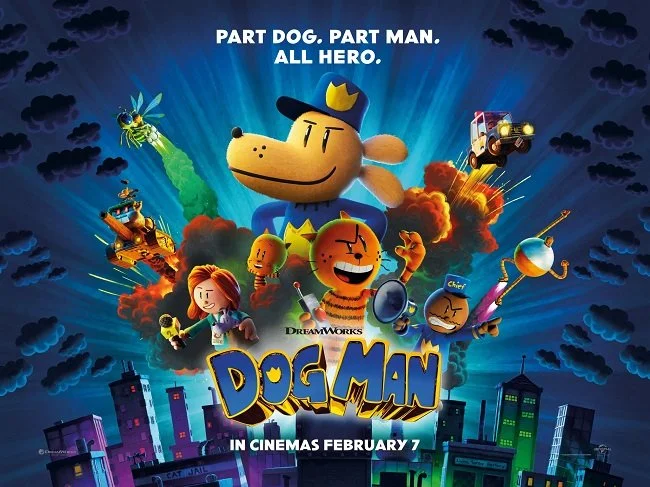
Noah (2014)
Darren Aronofsky's Noah is about as far removed from the traditional Cecil B. DeMille Biblical epic as you can imagine. In some respects it follows more closely the Jewish interpretation of the source material, rather than the Christian text. It is visually arresting and for the first two thirds of it's running time is a very engaging movie. It covers a multitude of theological and philosophical themes and depicts them in a creative fashion. Although the film may not find favour with fundamentalist faith denominations, it certainly has a great deal of appeal for the more liberal and progressive believer. It also has facets that are potentially of interest to the more secular viewer.
Darren Aronofsky's Noah is about as far removed from the traditional Cecil B. DeMille Biblical epic as you can imagine. In some respects it follows more closely the Jewish interpretation of the source material, rather than the Christian text. It is visually arresting and for the first two thirds of it's running time is a very engaging movie. It covers a multitude of theological and philosophical themes and depicts them in a creative fashion. Although the film may not find favour with fundamentalist faith denominations, it certainly has a great deal of appeal for the more liberal and progressive believer. It also has facets that are potentially of interest to the more secular viewer.
The central characters of Noah (Russell Crow), his wife Naameh (Jennifer Connelly) and Methuselah (Anthony Hopkins) are well defined and carry the narrative forward. However, Noah's extended family are not so well fleshed out with his wayward son Ham (Logan Lerman) being particularly vague. The bitter division between him and his Father lacks the drama it needs and Lerman simply broods like a petulant teenager. Emma Watson fairs marginally better as the adopted daughter Ila, but again more could have been done to underpin the importance of her role. Although I frequently enjoy the work of Ray Winstone, he is hardly taxed by his performance as Tubal-cain. The initial set up for the character is compelling but the role diminishes to the level of a Bond villain by the third act.
Despite its PG-13 rating, Noah is very strong in tone and in what it depicts. The rapid editing masks some of the violence but this is quite a graphic depiction of the antediluvian world. When humanity finally declines into cannibalism it is quite a shocking revelation. Yet these bleak themes are offset by some extraordinary visual imagery. The Watchers, a group of fallen angels who have elected to help man, are very striking. These rock giants are far more easier to understand if you consider them as Golems. The movie also has an interesting retelling of the creation myth which segues cleverly between evolution and the concept of Adam and Eve and the garden of Eden. Other creative nods towards reconciling science and religion are aerial shots of the earth showing a single continent, as well as the ark containing many mammal species that are now extinct.
Noah is by far the most commercial movie that director Aronosfsky has made, yet it thematically follows his exploration of people separated from society because of their compulsions and convictions. It treads a cautious path through the storyline, trying to be as appealing as it can be to each and every interest group. It descends into a little too much melodrama by the end but the overall message does not get lost. It is certainly a welcome change to see traditional material such as Noah, which most film studios won't touch for fear of offence or more importantly box office failure, being approached in such an ambitious manner.

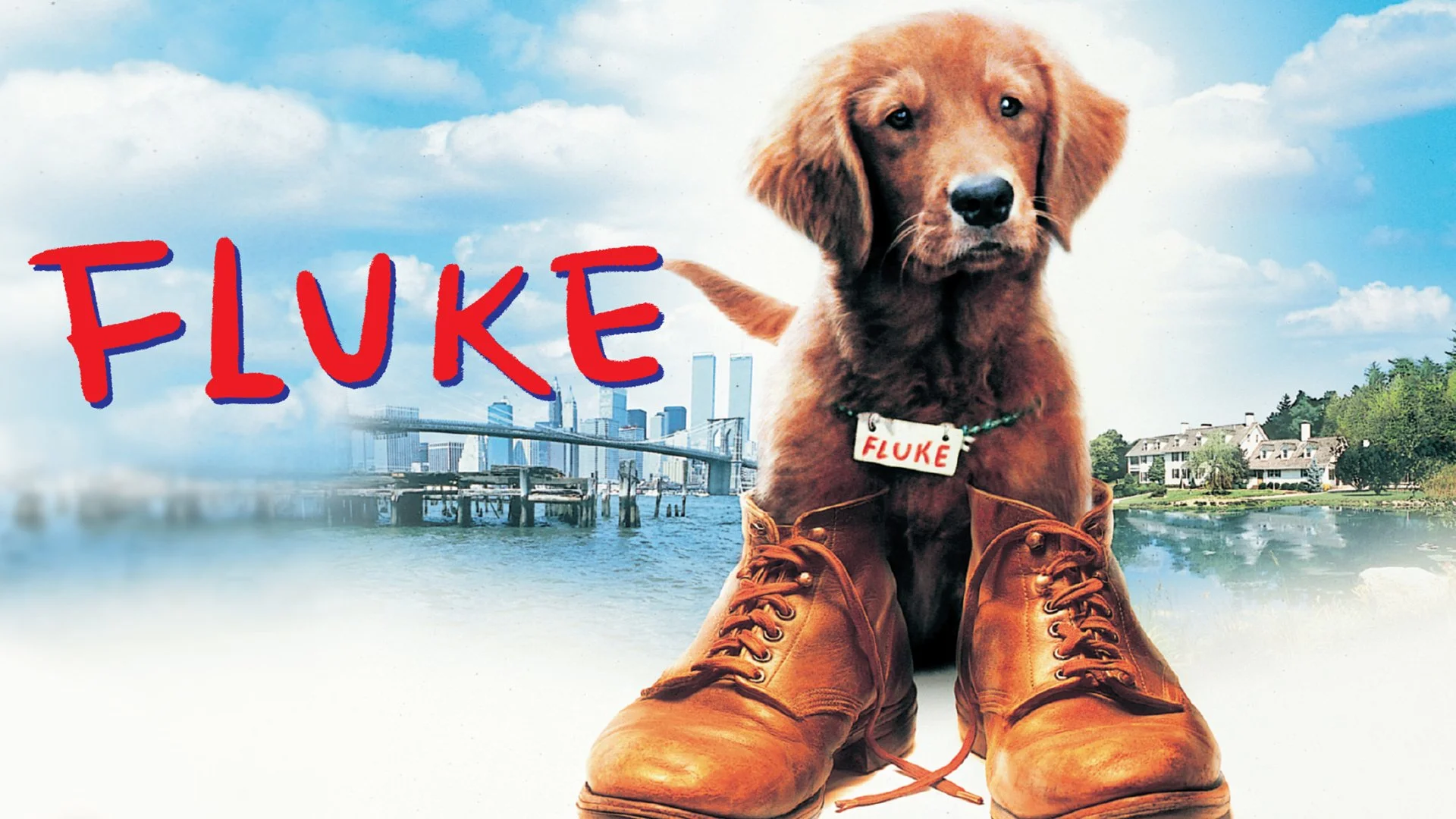

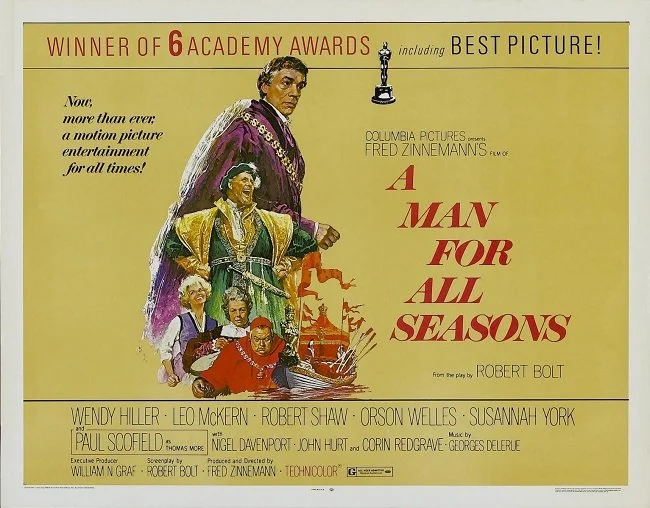








“My Five Favourite Game Series”
I was tagged in a Tweet recently by Belghast in which I was asked to name my five favourite game series. This question has subsequently gained traction and spread among the Blapril blogging community. Paeroka over at Nerdy Bookahs and Krikket from Nerd Girl Thoughts have already posted their thoughts on the matter and have made some interesting choices. So I thought I’d expand my initial response into something a little more substantial. As ever, this post comes with caveats. I don’t do “favourites” in the sense that such things are the abject apple of my eye above all other things. My selection of five represent what I consider to be good and robust franchises that have continuously delivered quality entertainment. They are more what I would call “exemplars”, although I enjoy them all.
I was tagged in a Tweet recently by Belghast in which I was asked to name my five favourite game series. This question has subsequently gained traction and spread among the Blapril blogging community. Paeroka over at Nerdy Bookahs and Krikket from Nerd Girl Thoughts have already posted their thoughts on the matter and have made some interesting choices. So I thought I’d expand my initial response into something a little more substantial. As ever, this post comes with caveats. I don’t do “favourites” in the sense that such things are the abject apple of my eye above all other things. My selection of five represent what I consider to be good and robust franchises that have continuously delivered quality entertainment. They are more what I would call “exemplars”, although I enjoy them all.
Sherlock Holmes. It is clear that Ukranian Developer’s Frogwares have an abiding love for Conan Doyle’s iconic sleuth. It manifests itself in so many little details in this series of adventure games. The games offer ever increasing sandbox landscapes, filled with clues to discover. The point-and-click game-play is ideal for this genre and this intellectual property. Players interrogate suspects via branching dialogue trees and gather evidence for their investigation. Characterisation of Holmes and Watson are spot on and the games ooze stylised period atmosphere and charm. There is even one entry that successfully strays into the Cthulhu Mythos without jumping the shark. If you like all things Holmes then these games are a must.
Call of Duty. You don’t have to be the world’s best FPS player to enjoy the Call of Duty franchise. If you like hyperbolic, overblown, raucous Michael Bay-esque set pieces and pseudo Geopolitics, then the single-player campaign in most of these games will offer such things in spades. Multiplayer is similarly “turned up to 11” and you can gain XP and unlock weapons simply by participating. You don’t have to be an “über” player. There are plenty of players of a comparable standard to yourself who will happily act as cannon fodder. Even a crap player gets lucky now and then. I rely on such metrics while playing CoD Warzone, which is far more fun than what it deserves to be. Someone parachuted into my helicopter rotors recently. What’s not to like?
The Elder Scrolls. For over 18 years The Elder Scrolls franchise has provided densely plotted and innovative role playing games. The narrative focus has always been on the rich and complex lore and the stories have never favoured binary notions of right and wrong. Furthermore, developers Bethesda Game Studios, have always encouraged and supported the modding of their games, ensuring their longevity. Players are still exploring Morrowind nearly two decades after its initial release. Although it took a while to find its feet, the franchise has successfully transitioned into the MMORPG genre with The Elder Scrolls Online. In many ways The Elder Scrolls is the benchmark for fantasy based RPGs.
Sniper Elite. The Sniper Elite franchise is at the opposite end of the gaming spectrum to Call of Duty. It is a game where you’re positively encouraged to take your time, pick your location and plan your shot. You’re rewarded for planning your strategy and considering your route around the various game maps. That’s not to say you can’t go in all guns blazing if you choose. But it’s so much more satisfying to find an optimal location, tag the nearby enemies and then make that perfect shot. And then there’s the x-ray killcam, where you can sit back and rewatch the carnage you’ve just caused. Furthermore, with each version the game just keeps getting more and more refined and polished.
Mario Kart. It’s always a bold statement to claim that a specific title is a near perfect game but Mario Kart in all its iterations is damn close to such a definition. It blends competitive racing with a degree of combat but its power ups and buffs level the playing field. The icing on the cake is that the game is couched in the Super Mario aesthetic, which is bright, cheerful and fun. Mario Kart has an innate ability to successfully transition to all new platforms and to deliver its core tenets. Few games achieve such a thing.
The Problem with Housing in MMORPGs
Housing in the MMORPG genre continuously fails to reach its potential. Despite the scope it offers both in functionality and gameplay, it has seldom progressed beyond offering storage and some arbitrary customisation. Hence this is a perennial subject of debate for many MMO communities. Given the popularity of this subject, it would appear to indicate that there’s a potential market for expanded housing functionality. And yet many MMO developers still display a blindspot for this issue. You’d think that the scope for monetisation would prove a big enough incentive but housing just doesn’t seem to be especially high on their priority list. It is odd considering that the MMORPG genre is a fundamentally social one. Housing in theory offers so much scope to capitalise and explore this aspect of gaming. Yet it remains a cul-de-sac and an afterthought.
Housing in the MMORPG genre continuously fails to reach its potential. Despite the scope it offers both in functionality and gameplay, it has seldom progressed beyond offering storage and some arbitrary customisation. Hence this is a perennial subject of debate for many MMO communities. Given the popularity of this subject, it would appear to indicate that there’s a potential market for expanded housing functionality. And yet many MMO developers still display a blindspot for this issue. You’d think that the scope for monetisation would prove a big enough incentive but housing just doesn’t seem to be especially high on their priority list. It is odd considering that the MMORPG genre is a fundamentally social one. Housing in theory offers so much scope to capitalise and explore this aspect of gaming. Yet it remains a cul-de-sac and an afterthought.
I have a Deluxe Premium House in The Lord of the Rings Online. It has crafting stations, storage, a “visiting banker” and a summoning horn which calls a vendor NPC. I have made an attempt to decorate it stylishly but beyond that I seldom visit it as it doesn’t offer anything else. There are some minor quests in the Cape of Belfalas housing zone but they are not repeatable. This is a real shame as they are quite enjoyable. Especially the one where you take an old and faithful dog out for a walk. The only real advantage my house offers is a fast travel skill that has a 1 minute cool down. I specifically chose a house at Bay Road as it is the nearest to a cluster of NPCs offering Auction House, Provisioner and Stable services. So my house mainly provides a travel hub service and nothing else. It all seems such a waste of resources. I suspect that the new Rohan based housing coming with Update 26 is not going to be anything radically different.
Star Trek Online deals with housing in a somewhat different way but ultimately still faces the same issues. Your ship is your house to all intents and purposes, providing shared storage and in some cases, access to the Exchange (auction house). You can visit Engineering, Sick Bay and your ship’s councillor and the NPCs will provide Duty Officer Missions. But again, there’s not much on offer beyond this. You can place trophies in the Captain’s Quarters and in the communal lounge. And you can also visit the bridge of your ship, although there’s only so many times you can sit in the Captain's chair and hit the “engage” emote before it gets old. Again this feels like a major missed opportunity. Some vessels offer minor variations on these services, such as bespoke Duty Officer Missions but it’s hardly a major selling point. Considering the amount of customisation you can do to your build and gear in STO, it would be nice to see the same ethos extended toward your ship interior.
If you ask a hundred MMO players what they want from housing in their game of choice, you’ll get 100 different answers. Perhaps that is one of the reasons why developers are reticent to tackle anything housing related. Personally, I’d like to see in LOTRO some sort of collective undertaking, similar to the Fleet Projects in STO. A system that allowed those living in a specific housing phase to contribute to group endeavours that would upgrade community resources. I’d like to see quests and tasks in housing areas. Why not give players a reason to visit their house and interact with their neighbours. Offering unique items can certainly be an incentive. In STO I’d like to see some quest content that offered you a chance to customise and augment your ship’s interior. Rather than just duty officer assignments, it would be nice to have some bespoke missions that involved the crew of your vessel. Something that would make your frequenting your ships various departments more than just a cosmetic exercise. It would certainly be useful to have all resources you find on Earth Spacedock available on your ship.
Although I never really warmed to the rebuilding of Hytbold in LOTRO, some of the systems found in that part of the game could be augmented and used in a housing scenario. Any form of interactivity is an improvement over just functionality. Perhaps a housing area could also have some sort of bespoke story quest line. Something that gives some character to an area, so it isn’t just a glorified storage service. What I don’t want to see is just an increase of cosmetic items. Although it is fun to be able to personalise the look of your virtual house, there needs to be more to it than just another collection to grind for. If customising leads to unlocking content then that would certainly add more depth. But I suspect that many developers simply prioritise PVE content development over everything else, for practical reasons. Although you can argue that taking a risk with housing could well pay off. But I suspect that it will remain an untap resource and all we’re likely to see in any new MMOs will be the straightforward “by and collect” approach we see in The Elder Scrolls Online.
Call of Duty Modern Warfare
I originally climbed aboard the Call of Duty bandwagon in 2009 when Modern Warfare 2 came out. I enjoyed the campaign and the multiplayer so much I promptly bought the first instalment. I then stuck with the franchise up until 2013. I didn’t especially like Ghosts, although I enjoyed the option to play as a dog which was different. Overall I was somewhat tired of the FPS genre from then on and so didn’t keep up with any further releases. For me the best iteration of the game was Black Ops in 2010. The campaign had a densely plotted story and the multiplayer was extremely polished. The multiplayer maps were well conceived allowing for fluid and engaging gameplay. Six years on and I recently got an itch to play Call of Duty again. The soft reboot of the franchise with Modern warfare in November 2019 promised a return to basics. The recent inclusion of a battle royale mode with the release of Warzone finally clinched the deal. So I bought a discounted version of the standard game recently and dived back in.
I originally climbed aboard the Call of Duty bandwagon in 2009 when Modern Warfare 2 came out. I enjoyed the campaign and the multiplayer so much I promptly bought the first instalment. I then stuck with the franchise up until 2013. I didn’t especially like Ghosts, although I enjoyed the option to play as a dog which was different. Overall I was somewhat tired of the FPS genre from then on and so didn’t keep up with any further releases. For me the best iteration of the game was Black Ops in 2010. The campaign had a densely plotted story and the multiplayer was extremely polished. The multiplayer maps were well conceived allowing for fluid and engaging gameplay. Six years on and I recently got an itch to play Call of Duty again. The soft reboot of the franchise with Modern warfare in November 2019 promised a return to basics. The recent inclusion of a battle royale mode with the release of Warzone finally clinched the deal. So I bought a discounted version of the standard game recently and dived back in.
This post is not intended as a review. There have been plenty of those already. What I mainly want to do is share a few thoughts on the way Call of Duty Modern Warfare handles the various kinds of multiplayer modes. The campaign is acceptable and does what it’s supposed to do. Does it go out of its way to be controversial? Yes but the franchise has form for this. But let’s face it, these games are bought for their multiplayer component and that is where the franchise strength and innovation has always been. At present (Season 3) there are over forty multiplayer maps available in the game. Some of these are small and deliberately confined, offering rapid gameplay for small teams (2vs2). Then there are medium maps offering a more traditional multiplayer experience. Some of these are remakes of classic maps from CoD4, CoD MW2 and CoD MW3. And then there are the larger ground war maps, designed for 64 players in total. These offer a far more tactical approach to the game, rather than pure run and gun gameplay.
Out of all game modes, I enjoy Team Deathmatch the most. For me this is the most purest multiplayer experience to be found in CoD MW, unburdened with complexity or gimmicks. However in the latest instalment of the game, the degree of my enjoyment is very dependent upon which map is being played. Some such as Azhir Cave or Hackney Yard offer a sufficient variety of environments to afford the player a good choice in loadouts. These maps provide fluid gameplay but the players still have a choice of strategy. This is CoD MW at its best. However, the dial gets turned up to 11 on many of the smaller maps such as Gulag Showers. These are fine if they are played with the correct size team but if utilised with larger populations they become just a frenzied free-for-all. Spawn, spray gun fire, die, rinse and repeat. It’s manic gameplay that means that everyone will get a number of kills simply by random chance. And then there’s the Ground War maps which work best if each team plays in a collaborative and coordinated manner. Or else you spend half your time just trying to find where everyone else is at. Alternatively you can dig in and camp.
Then there’s the Plunder Mode, where the objective is to collect cash hidden around the map and then arrange for its collection. The principle is sound but the reality of the situation is not the same as the concept that is sold during the tutorial. The matches often take far too long. They’re limited to either 30 minutes maximum (which is forever in this fast paced genre) or until either squad has collectively banked $1 million. All too often the majority of players are concentrated in one area of the map, focusing on the same stash of money. These fights again just become a free for all, which makes them initially amusing but such an approach gets old quickly. Unlike the Warzone multiplayer experience there is no mechanic that forces the gameplay along or advances the situation. As a result Plunder Mode often descends into a “wee stooshie”, robbing players who crave a more measured approach of any measured fun.
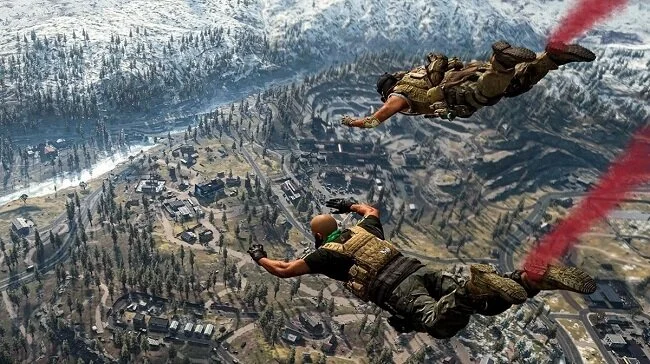
Finally, Warzone is a surprisingly good attempt at the Battle Royale genre from the Call of Duty developers. It manages to add just enough innovation to the formula to make it sufficiently different from other games. The standout mechanic is the chance to re-enter the game, if you die early on. You respawn in the Gulag Showers map armed with just a sidearm and go one on one with another player. The victor is redeployed in the Warzone. Then there’s the looting in the actual combat zone itself, which is streamlined and equitable in the initial stages of the game. However, there is the ability to have prebuilt loadouts air dropped into the game and this can make a sizable difference to proceedings. Experienced players therefore tend to end the latter stages of the game better geared and with useful killstreaks and buffs. Warzone also works better with team based gameplay as this encourages a more proactive approach to exploring the map and seeking out the enemy.
As ever with multiplayer games, the wild card in the proceedings is the human element. If you play with a group of friends then you’ll more than likely find the engaging gameplay you seek. Play with strangers and it becomes far more of a lottery. Players will abandon pick up groups if they underachieve or differ in skill. Playing Warzone with 150 solo players is also a challenge. The sensible thing to do is the aim for where you think the centre of the ever decreasing circle will be, grab a weapon and find somewhere to dig in. You can frequently find yourself in the last remaining 20 players this way but it doesn’t make for the most compelling gameplay. Also joining a game populated by experienced players who know the maps well and have unlocked optimal loadouts can also make Team Deathmatch an uphill struggle. The flaw in most of the multiplayer permutations in CoD MW is that you have to play a lot to unlock resources and learn your way around before you get the most out of the game. Hence newer players may well become despondent at being cannon fodder and thus leave the game.
However, CoD MW has a saving grace that can throw a lifeline to new players who find themselves battling the learning curve. There is a multiplayer practise mode which allows you to play against bots of varying difficulty. It allows you to customise your loadout (and there is an insane amount of scope to customize your weaponry), pick a specific map and experiment with the various game modes. Furthermore, the AI of the bots is quite challenging. There is also a tutorial for Warzone, although it is confined to a specific part of the map (The Quarry) and doesn’t offer the scope of the other multiplayer practise modes. I would certainly recommend practise mode, especially for those players who dislike live PVP and its associated “culture”. Overall, Call of Duty Modern Warfare offers exactly what it claims to and if approached with the right mindset, will provide varying degrees of entertainment. If you have friends you can play with, then you’ll experience the best that the franchise can offer. As ever dedicated servers are sorely missed and every now and then you’ll have a poor game due to the players or the host quitting. The developers also need to come up with an incentive for players to stick around until the end of the match. However such issues have always been inherent with any sort of PvP. If you bear all of this in mind then the latest instalment of CoD can offer you hours of entertainment.
Sabotage (2014)
Arnold Schwarzenegger's return to the big screen after his political career has been uneven to say the least. His cameos in The Expendables and The Expendables 2 were well received, with their self referential charm and age related irony. Yet his first major movie The Last Stand, although competent, failed to find an audience. Escape Plan fared better at the box office but did not put Arnie back on the A list. Effectively there's a large percentage of the contemporary cinematic audience who were born after his heyday and are simply not overt fans of his work. His core audience is more than likely of the age group that consume most of their film entertainment at home. Which may explain why Sabotage tanked in the US upon release on March 28th 2014. It was the worst opening box office of Arnie's career. He used to break first day opening records.
Arnold Schwarzenegger's return to the big screen after his political career has been uneven to say the least. His cameos in The Expendables and The Expendables 2 were well received, with their self referential charm and age related irony. Yet his first major movie The Last Stand, although competent, failed to find an audience. Escape Plan fared better at the box office but did not put Arnie back on the A list. Effectively there's a large percentage of the contemporary cinematic audience who were born after his heyday and are simply not overt fans of his work. His core audience is more than likely of the age group that consume most of their film entertainment at home. Which may explain why Sabotage tanked in the US upon release on March 28th 2014. It was the worst opening box office of Arnie's career. He used to break first day opening records.
On paper Sabotage should work. Director David Ayer (Training Day) is capable of making a movie that are more than the sum of its parts and presenting us with a tale of loyalty among elite squads. Sadly he fails. Schwarzenegger strives to give a more in-depth performance as John “Breacher” Wharton, leader of a crack squad of DEA agents. Yet his endeavours are lost within the movie's numerous shortcomings. The cast are mainly wasted, being saddled with an immensely stupid, contradictory and mean spirited screenplay. Sporting such two dimensional names as “Neck,” “Monster” and “Tripod” there is precious little to like about the main characters. There's a lot of on screen violence but it is not in the usual idiom you'd expect from such a movie. It's just there because some producer thought that it was required. The dialogue is poor and littered with profanity that seems to be present to simply bolster the screenplay.
If you are looking for any kind of redeeming quality in Sabotage, then there is the spark of a decent subplot involving Olivia Williams and Harold Perrineau, playing the two officers investigating the alleged theft of ten million dollars by Wharton's team. There is a tangible sense of chemistry between them and they have some amusing banter. Sadly it does not have sufficient impact upon the rest of the movie with it's casual brutality, crass sexism and misogyny. If the film had been written from their point of view then it may well have been a superior product. As it stands Sabotage is perfunctory. I have no problem with a movie being earnestly dumb. It's when it's cynically dumb I feel that all involved should pause and take stock.
I am very curious as to what Schwarzenegger will do next because I think his immediate film has ground to a halt. It's curious that some box office stars and larger than life Hollywood legends have managed to maintain a successful career well into their autumn years. John Wayne and Clint Eastwood both maintained box office and critical acclaim well beyond their sixties. Sadly the contrived shenanigans of Sabotage are a far cry from True Grit and Gran Torino. Perhaps a change in direction away from action movies would be beneficial. Maybe a move to a major TV show would offer a chance for Arnold to find an appropriate audience.