
Echoes of Angmar Stress Test Begins
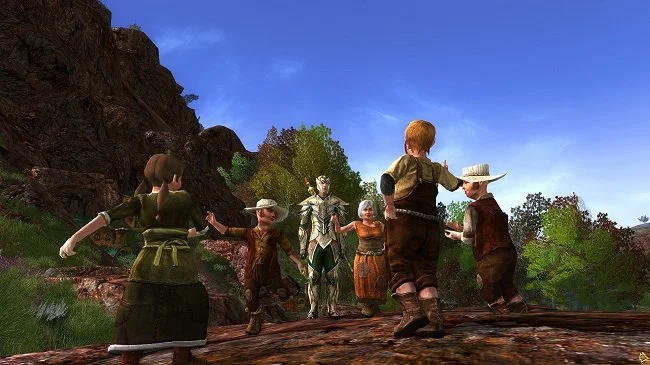
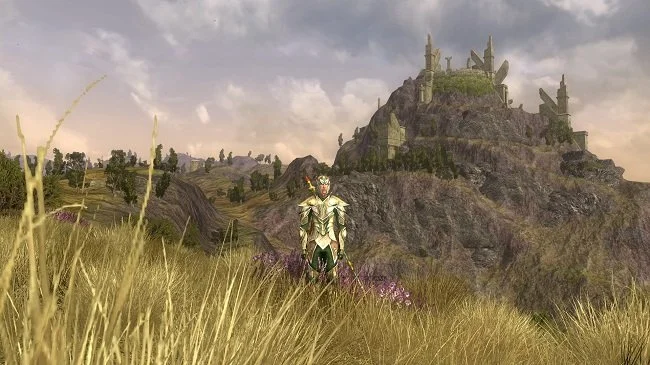
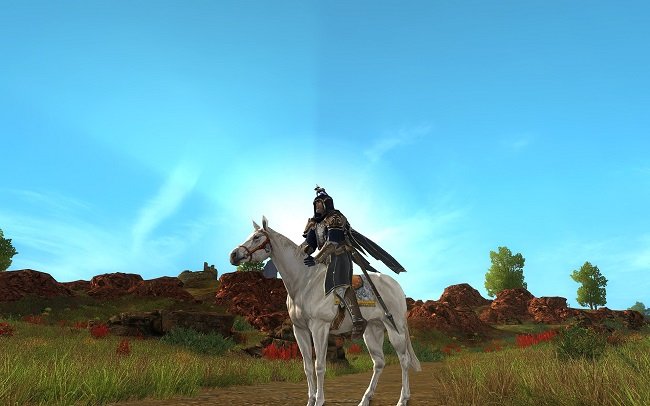
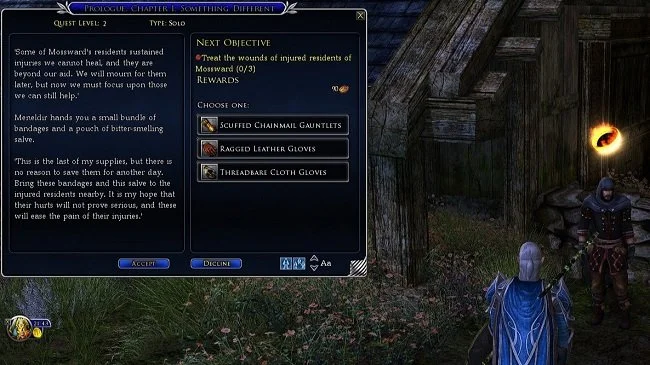
On Saturday 20th August the stress test began for the private LOTRO server Echoes of Angmar. This project is offering a version of the MMORPG The Lord of the Rings Online as it were in late November 2007. I have spoken to several players who have participated in this and other tests and so far the results have been positive. The server crashed on several occasions and the longest uninterrupted period of stability was two hours. Character creation is proving to be a slow process and some players have found that they cannot see other players when logging in. However, the majority of players could create alts and progress through the game as normal. The data generated from these tests has proven useful and the team overseeing the project are currently working on a revised build to improve stability. Further server tests are scheduled for Friday 26th August.
On Saturday 20th August the stress test began for the private LOTRO server Echoes of Angmar. This project is offering a version of the MMORPG The Lord of the Rings Online as it were in late November 2007. I have spoken to several players who have participated in this and other tests and so far the results have been positive. The server crashed on several occasions and the longest uninterrupted period of stability was two hours. Character creation is proving to be a slow process and some players have found that they cannot see other players when logging in. However, the majority of players could create alts and progress through the game as normal. The data generated from these tests has proven useful and the team overseeing the project are currently working on a revised build to improve stability. Further server tests are scheduled for Friday 26th August.
All information regarding these tests and the private server Echoes of Angmar is in the public domain and can be found via a simple Google search. The recent cease and desist request from Middle-earth Enterprises seems to have had little or no impact upon the project which is continuing with its testing schedule. It will be interesting to see if the new owners of Middle-earth Enterprises, Embracer Group, escalate the matter or whether this grey project will continue unhindered, like many other private servers. There certainly appears to be a lot more interest in this “original” version of LOTRO than some may have initially thought, judging by the activity on the Echoes of Angmar Discord Server and subreddit. As and when the stability issues are resolved, I am curious to see what sort of population this private server sustains and whether people will be content with the original base version of the game






Embracer Group Buys Middle-earth Enterprises
In February this year, I wrote a blog post about how Middle-earth Enterprises were seeking to auction off the various rights they hold for the works of J.R.R. Tolkien. Today the Embracer Group announced that it was buying these rights as part of an ongoing acquisition strategy. The Swedish video game and media holding company has also purchased Limited Run Games, Tripwire Interactive as well as Middle-earth Enterprises portfolio. They recently acquired premium titles such as Tomb Raider, Deus Ex, and Thief. The Embracer Group currently owns more than 100 studios including Borderlands developer Gearbox, Saber Interactive, and THQ Nordic. Saudi Arabia recently bought a $1 billion stake in Embracer, which is around 8% of the company’s total shares. Embracer’s recent purchasing spree comes months after it acquired Square Enix’s three major Western game studios. In a press release the cost of buying the right to Tolkien’s work is £653,000,000 ($786,000,000).
In February this year, I wrote a blog post about how Middle-earth Enterprises were seeking to auction off the various rights they hold for the works of J.R.R. Tolkien. Today the Embracer Group announced that it was buying these rights as part of an ongoing acquisition strategy. The Swedish video game and media holding company has also purchased Limited Run Games, Tripwire Interactive as well as Middle-earth Enterprises portfolio. They recently acquired premium titles such as Tomb Raider, Deus Ex, and Thief. The Embracer Group currently owns more than 100 studios including Borderlands developer Gearbox, Saber Interactive, and THQ Nordic. Saudi Arabia recently bought a $1 billion stake in Embracer, which is around 8% of the company’s total shares. Embracer’s recent purchasing spree comes months after it acquired Square Enix’s three major Western game studios. In a press release the cost of buying the right to Tolkien’s work is £653,000,000 ($786,000,000).
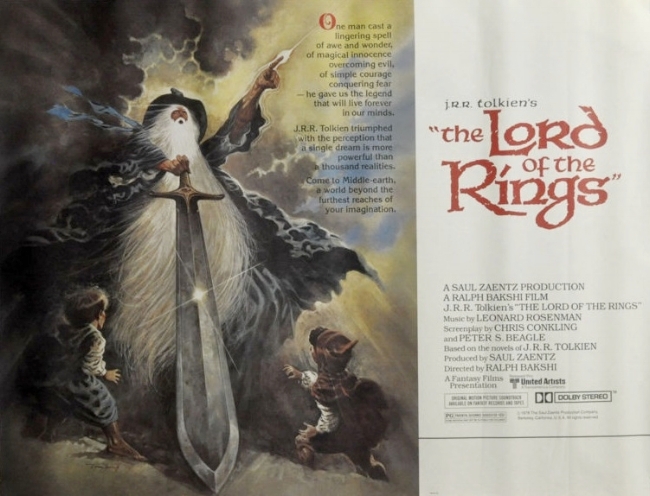
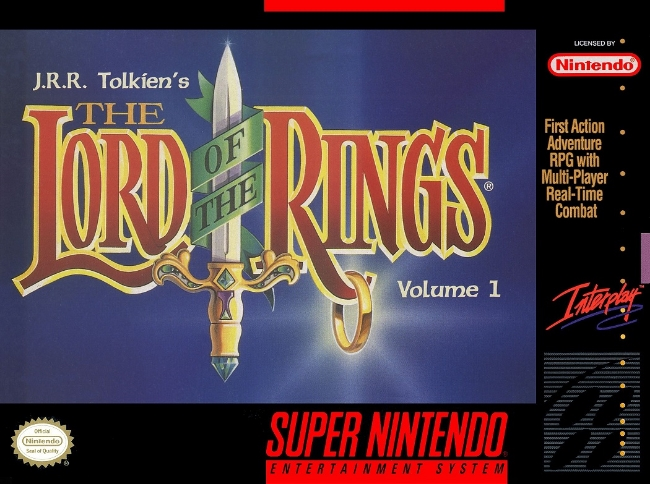
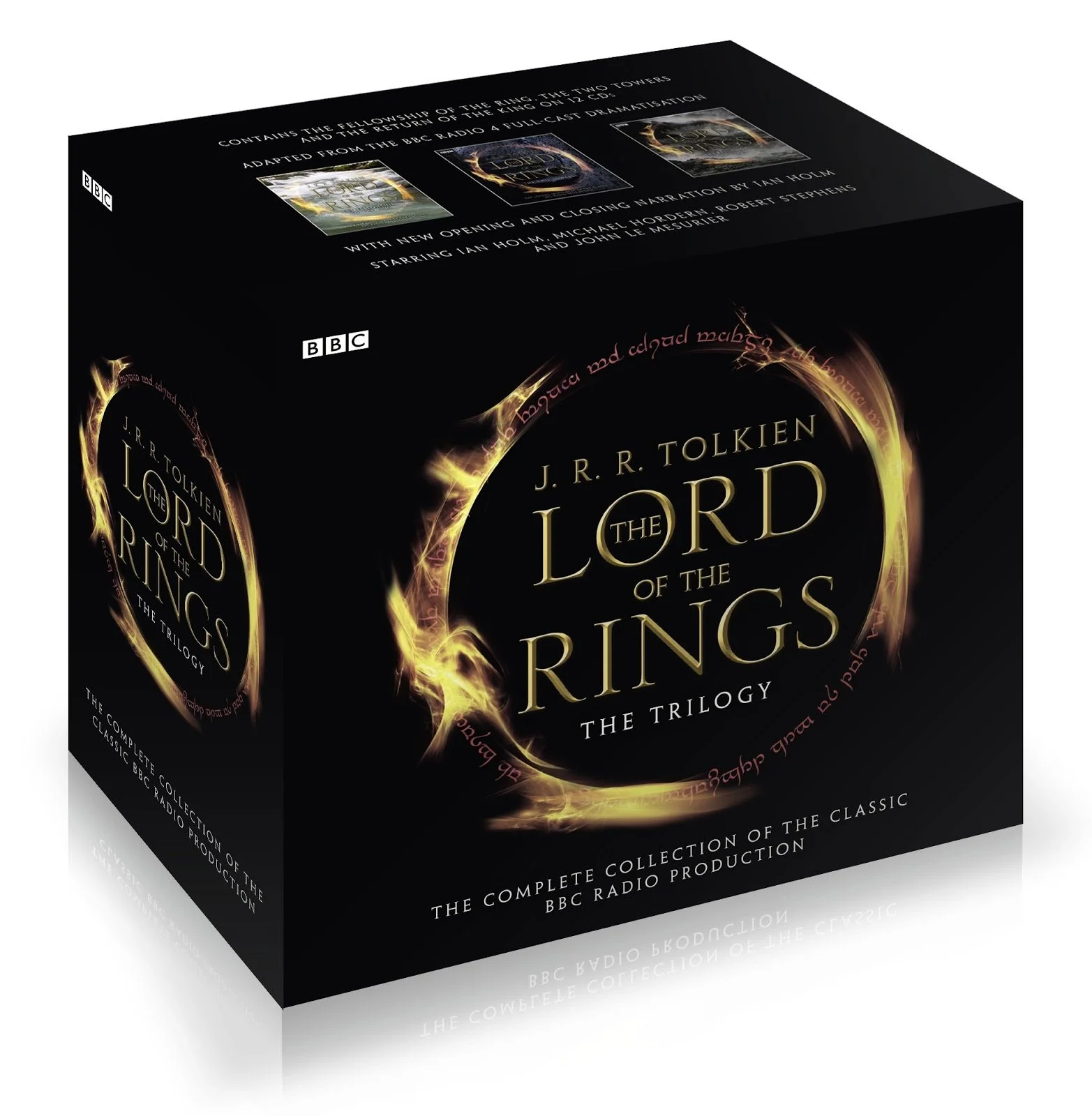
Middle-earth Enterprises was originally a division of The Saul Zaentz Company, a Hollywood production studio. In 1976 they bought all the rights associated with Tolkien’s literary work apart from the publication of the books which remained with Harper Collins. The acquisition was required to make the 1978 animated feature film version of The Lord of the Rings, directed by animator Ralph Bakshi. The initial purchase of rights also included the screenplay for John Boorman’s proposed live action adaptation of Tolkien’s iconic trilogy. Since then, any commercial undertaking seeking to use any of Tolkien’s intellectual property has been dependent upon a licensing arrangement with Middle-earth Enterprises. To date this has included motion pictures, video games, board games, theme parks, stage and wider merchandising. However, they do not cover television which falls outside of the scope of the rights.
Whenever there is a change of ownership of rights, it always tends to send a ripple of concern among companies that currently hold licences. Do those who now control the intellectual property intend to make any radical changes to the status quo. It is worth noting that during his lifetime Saul Zaentz who owned Middle-earth Enterprises was somewhat of a Tolkien purist. Hence apart from two cinematic trilogies and a handful of video games, Middle-earth related products and marketing has not become as ubiquitous as Star Wars or Marvel. However, after the death of Saul Zaentz in 2014 and Christopher Tolkien’s resignation from the Tolkien Estate in 2017, there seems to be a sea change in the positions of the various rights holders. Hence Amazon Prime secured the rights for a television show based upon the Appendices of The Lord of the Rings.
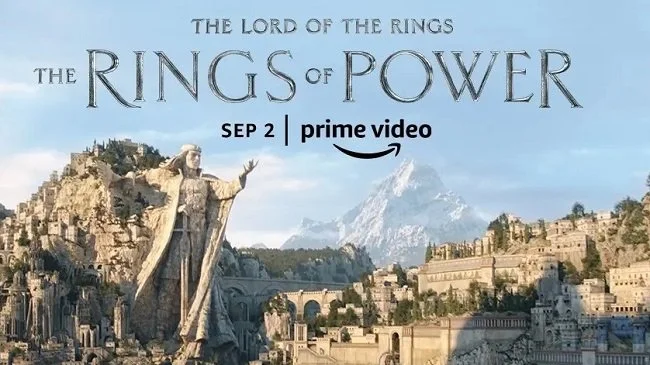
The Embracer Groups press release indicates that some ongoing projects will remain unaffected by the change of ownership. However, they also suggest that they have broader plans for the intellectual property they’ve acquired. “Key upcoming works set in Middle-earth, in which Middle-earth Enterprises has financial interests, include the much-heralded Amazon series The Lord of the Rings: Rings of Power which will premiere on September 2, 2022, set thousands of years before The Hobbit and The Lord of the Rings; the animated movie The Lord of the Rings: The War of the Rohirrim (Warner Bros), set for release in 2024, and the mobile game The Lord of the Rings: Heroes of Middle-earth (Electronic Arts).Other opportunities include exploring additional movies based on iconic characters such as Gandalf, Aragorn, Gollum, Galadriel, Eowyn and other characters from the literary works of J.R.R. Tolkien, and continue to provide new opportunities for fans to explore this fictive world through merchandising and other experiences”.
Naturally, as a long time player of the MMORPG The Lord of the Rings Online, I’m curious to see if this change in rights ownership will have an impact upon the game. At present LOTRO is developed by Standing Stone Games which is owned by Daybreak Game Company, which is in turn owned by Enad Global 7 (and not The Dave Clark Five). Recently after some changes in share ownership there may have been a reverse takeover and the former may own the latter. Regardless of this corporate structure, LOTRO is dependent upon a licence, previously from Middle-earth Enterprises. This was renewed circa 2017 and has not been raised since then by any party as a matter of concern. At present there are no obvious licensing issues for LOTRO and there appears to be a further expansion for the game in development. As ever, the best policy seems to be to watch, wait and enjoy the game for the present.





Middle-earth Enterprises and Echoes of Angmar
Last month I wrote about a private server that is based upon an early iteration of the MMORPG The Lord of the Rings Online. The project named Echoes of Angmar, is currently in development by a third party outside of the auspices of Standing Stone Games and will contain content up to and including Book11: Defenders of Eriador. Effectively this will be a version of the game as it was eight months after its initial release in 2007. Naturally, this private server has attracted a great deal of attention, as many LOTRO players have expressed an interest in a “classic” version of the game. However, the official developers of LOTRO have indicated that they have no desire at present to pursue such an undertaking. Some sources have claimed that it cannot be done, however video footage of Echoes of Angmar posted on YouTube seems to contradict such statements.
Last month I wrote about a private server that is based upon an early iteration of the MMORPG The Lord of the Rings Online. The project named Echoes of Angmar, is currently in development by a third party outside of the auspices of Standing Stone Games and will contain content up to and including Book11: Defenders of Eriador. Effectively this will be a version of the game as it was eight months after its initial release in 2007. Naturally, this private server has attracted a great deal of attention, as many LOTRO players have expressed an interest in a “classic” version of the game. However, the official developers of LOTRO have indicated that they have no desire at present to pursue such an undertaking. Some sources have claimed that it cannot be done, however video footage of Echoes of Angmar posted on YouTube seems to contradict such statements.
As I mentioned in a previous post, the team behind this project have been quite open about their work. There is a website for Echoes of Angmar which provides full details of this “unofficial” version of LOTRO as well as how to install the software to play on the private server, which will be undertaking stress tests on 19th August. There is also an active Discord server associated with the project. As a result, Echoes of Angmar has been discussed on numerous blogs, subreddits, and other online platforms. Someone even saw fit to create a thread on the official LOTRO forums a few weeks ago, although it was removed by Community Manager Cordovan. Hence, it was inevitable that sooner or later there would be a formal response by the owners of the intellectual property. The following post appeared on the official LOTRO forums this evening. It is a copy of a letter from Middle-earth Enterprises regarding Echoes of Angmar.
Dear Echoes of Angmar team,
We have noted the Echoes of Angmar game that you have posted and we appreciate and share your enthusiasm for the Tolkien works, and specifically for the developers and creators of the epic MMO, The Lord of the Rings Online. Judging from your website and Discord, you are individuals who possess a boundless enthusiasm for LOTRO, J.R.R. Tolkien, The Hobbit, and The Lord of the Rings. We’re here to acknowledge your enthusiasm, and thank you for your fandom. Unfortunately, we, as trademark holders and stewards of the Tolkien works, more often than we’d like, must deliver some potentially difficult news. As your business is using the Tolkien works and trademarks in an unauthorized manner without benefit of a license, we must ask you to cease.
As stewards of the Tolkien works, we take our role very seriously in order to protect the works for all time, on behalf of fans everywhere. As owners of the intellectual property rights, we are charged with protecting those rights both morally and legally. Unfortunately, Echoes of Angmar uses specific content from the books and from our Licensee for The Lord of the Rings Online without the benefit of a license. Honestly, it breaks our hearts to post letters like this one. It is not uncommon for fans to create things reflecting an affection for the Tolkien works. It is thus with a heavy heart that we must ask that you immediately cease all of your unauthorized use of Echoes of Angmar, and all other Tolkien-related IP on all platforms, including Discord, Youtube and on https://www.echoesofangmar.com/.
We welcome the opportunity to answer any questions you may have on the subject, and wish you all the best in your future duly authorized endeavors.
Kind regards,
Middle-earth Enterprises
This raises several questions. The Echoes of Angmar team have clearly spent a great deal of time and effort developing this project and know that it’s a copyright violation. Yet they do not seem to be concerned about this statement from Middle-earth Enterprises, implying they do not fear legal action. Will the server be based outside of Europe and North America? At present there are private servers for other games such as World or Warcraft and Star Wars: Galaxies which have escaped being shut down. Considering how litigious Activision Blizzard are as well as Disney, there must be some loopholes somewhere which are being cunningly exploited to prevent closure. I suspect that the Echoes of Angmar team have looked into this “grey” area carefully and have contingency plans or have taken a carefully calculated risk.
I was also struck by the conciliatory tone of this letter from Middle-earth Enterprise. It doesn’t sound like the sort of curt and bellicose statement usually associated with the legal profession. I was sent a snotty letter once myself when I posted screen captures from an advance online promotional event for a film back in 2015 and it didn’t mince its words. It makes me wonder what Middle-earth Enterprises are up to here. Is their reply just an arbitrary response to show they’re going through the motions of protecting their IP. Or is this a polite shot across the bow before a more robust follow up? Has the fact that an independent third party has done something that the official developers implied couldn’t be done, caused some embarrassment? Do Middle-earth Enterprises see the Echoes of Angmar project not so much as a threat but a potential business opportunity?
I must admit, I do find this entire situation very intriguing. I do have an interest in what Echoes of Angmar is trying to do but it is mainly out of intellectual curiosity. Revisiting LOTRO as it were in 2007 is something I would like to watch and observe. Personally, I don’t know if I would be able to play the game beyond a few levels as I don’t think I’d like being dependent on other players to progress. However, I do find the machinations and shenanigans of the video games industry just as engaging (and sometimes more so) as the games they create. I certainly have a lot of unanswered questions regarding the people behind this private server and their provenance. However, due to the nature of this undertaking I suspect they’re not going to share such information. All things considered, I don’t think this project is going to go away easily and I’m curious to see what happens next.
Middle-earth Enterprises to Auction Off Rights
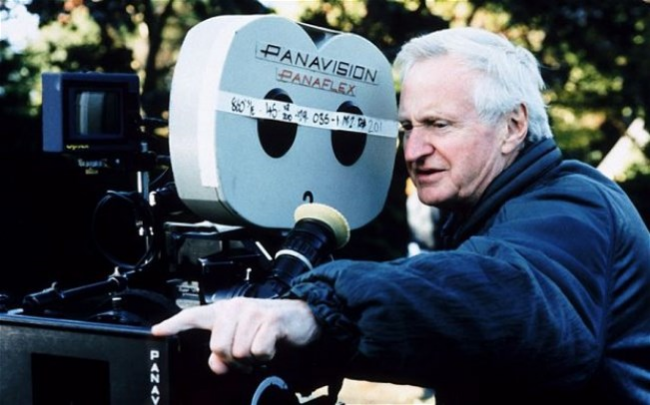
In 1969 J.R.R. Tolkien sold the motion picture, merchandising, stage and other rights to The Hobbit, The Lord of the Rings and other literary works to United Artists. UA were riding high at the time with the success of In the Heat of the Night and The Graduate. Allegedly Tolkien made the deal to pay off a tax debt, although this may be apocryphal. He was paid £100,000 which is equivalent to £1,680,000 today. He also retained a 7.5% royalty interest that has now been transferred to the Tolkien Estate. UA toyed with the idea of adapting The Lord of the Rings and many cinematic luminaries were associated with the project. In the early seventies British film director John Boorman was tasked with writing a screenplay. Boorman, an established director with a track record of being experimental, set about developing a script with his long term collaborator, Rospo Pallenberg. However, the project was cancelled due to costs and the studio getting “cold feet”.
In 1969 J.R.R. Tolkien sold the motion picture, merchandising, stage and other rights to The Hobbit, The Lord of the Rings and other literary works to United Artists. UA were riding high at the time with the success of In the Heat of the Night and The Graduate. Allegedly Tolkien made the deal to pay off a tax debt, although this may be apocryphal. He was paid £100,000 which is equivalent to £1,680,000 today. He also retained a 7.5% royalty interest that has now been transferred to the Tolkien Estate. UA toyed with the idea of adapting The Lord of the Rings and many cinematic luminaries were associated with the project. In the early seventies British film director John Boorman was tasked with writing a screenplay. Boorman, an established director with a track record of being experimental, set about developing a script with his long term collaborator, Rospo Pallenberg. However, the project was cancelled due to costs and the studio getting “cold feet”.
In 1976 United Artists sold most of their rights to Tolkien's work to the Saul Zaentz Company. Zaentz, an established film producer best known for One Flew Over the Cuckoo's Nest, then established Tolkien Enterprises to manage the rights that he'd acquired. Two years later, he produced Ralph Bakshi’s animated adaptation of The Lord of the Rings. The company name was later changed to Middle-earth Enterprises to avoid confusion with the Tolkien Estate. Over the next two decades Middle-earth Enterprises entered into various licensing and merchandising deals for both video and tabletop role-playing games. In 1997,a deal was struck with New Line Cinema for a live-action film adaptation of The Lord of the Rings. The trilogy of films released between 2001 and 2003, made over $3 billion at the box office. A further trilogy of films were made between 2013 and 2015, based upon The Hobbit.
Since the success of Peter Jackson’s films, you would have thought that Middle-earth Enterprises would have capitalised more upon the intellectual property that they controlled. Yet Saul Zaentz was quite a Tolkien purist and along with Christopher Tolkien (Tolkien’s son), was not keen to see the brand “debased”. However, Zaentz died in 2014 and in his last years Christopher Tolkien stepped from the Tolkien Estate, down due to ill health. Tolkien’s grandchildren apparently have a more innovative approach to the running of the Tolkien Estate. Hence in 2017, they made a deal with Amazon for the global television rights for The Lord of the Rings. Jeff Bezos is a consummate fan of Tolkien and beat Netflix and HBO in the bidding war for the TV rights, paying $250,000,000. Apparently, the Tolkien Estate is so pleased with the development of The Lord of the Rings: The Rings of Power that they have provided access to material from The Silmarillion and Unfinished Tales.
Which brings us neatly to yesterday’s announcement by Middle-earth Enterprises that they are to auction off the rights they own pertaining to Tolkien’s work. Episodic, big budget, fantasy television shows are a very lucrative business. If you want verification then cast your mind back to a popular HBO series based upon the works of George R.R. Martin. Hence, with The Lord of the Rings: The Rings of Power due for release in September of this year, Middle-earth Enterprises obviously thought it was the right time to sell their rights. Note that these include merchandise and video games. Two lines of business that have great commercial potential. It is logical to assume that Amazon will want to acquire these rights as it will compliment their existing Tolkien based portfolio perfectly. Middle-earth Enterprises rights are currently valued at $2 billion.
However, business is seldom black and white. I’m sure there may well be other interested parties such as Disney, Netflix or HBO. They may be “curious” about the intellectual property and what it can yield. Or they may be interested in curtailing the business ambitions of a competitor. Buying rights, intellectual properties and patents and then sitting on them is a thing. It’s not always about your own products but sometimes stopping other people’s. Furthermore, if Amazon do buyout Middle-earth Enterprises, what impact would that have upon existing licensed products? Daedalic Entertainment is currently developing a Gollum themed game. And then there is the long standing MMORPG, The Lord of the Rings Online. If the licence that Standing Stone Games currently rely upon isn’t renewed then it would mean the closure of the game. Yes, we’ve endured such shenanigans before. But last time Amazon wasn’t involved.
It’s also worth remembering that Amazon were developing their own MMORPG in conjunction with Athlon Games. However Athlon Games were bought out by Tencent Holdings and Amazon was “unable to secure terms to proceed with this title”. This raises some interesting questions. Was the game completed? What has happened to the code? Was it scuttled purely due to legal issues IE who got what percentage? If these “problems” were resolved, IE Amazon bought out Tencent’s stake, could the game go ahead? If Amazon did launch its own MMORPG based upon Tolkien’s work, would they want a competitor? Remember that Star Wars: Galaxies was closed to clear the path for Star Wars: The Old Republic. The auctioning of Middle-earth Enterprises rights at this time is not a coincidence. I have a suspicion that when the dust settles Amazon will be holding all the cards. And where there’s a winner there’s also a loser or losers.