The Hobbit: The Battle of the Five Armies Extended Edition (2014)
This December marks the 20th anniversary of the release of The Fellowship of the Ring, the first instalment of Peter Jacksons' adaptation of J.R.R. Tolkien’s iconic novel, The Lord of the Rings. To celebrate this occasion, I shall post new reviews of the extended edition of all three films, as well as those of The Hobbit trilogy, which were made a decade later.
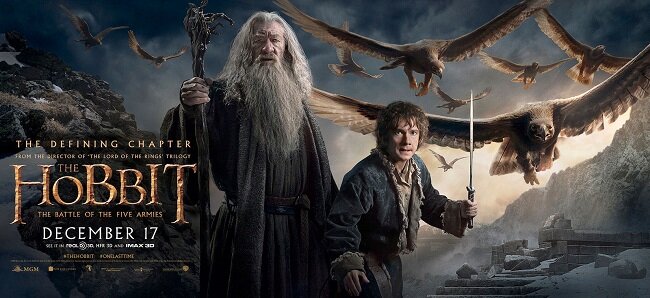
The Battle of the Five Armies is noticeably shorter than it's two predecessors, mainly because there is insufficient narrative to sustain the proceedings. Even the extended edition which adds a further 20 minutes to the running time, increasing it to 164 minutes, is mainly driven by one ongoing action sequence which is the titular battle. After the somewhat languid pace of the first movie and the bloated excess of the second, this further change of pace seems somewhat perplexing. Despite the more economical running time, events occur very rapidly. Perhaps a little too rapidly. It can be cogently argued that it somewhat diminishes the impact of some of them. Perhaps the biggest issue being the demise of Smaug. It comes promptly at the start of The Battle of the Five Armies and although spectacular, it quickly negates a major plot element.
This December marks the 20th anniversary of the release of The Fellowship of the Ring, the first instalment of Peter Jacksons' adaptation of J.R.R. Tolkien’s iconic novel, The Lord of the Rings. To celebrate this occasion, I shall post new reviews of the extended edition of all three films, as well as those of The Hobbit trilogy, which were made a decade later.
The Battle of the Five Armies is noticeably shorter than it's two predecessors, mainly because there is insufficient narrative to sustain the proceedings. Even the extended edition which adds a further 20 minutes to the running time, increasing it to 164 minutes, is mainly driven by one ongoing action sequence which is the titular battle. After the somewhat languid pace of the first movie and the bloated excess of the second, this further change of pace seems somewhat perplexing. Despite the more economical running time, events occur very rapidly. Perhaps a little too rapidly. It can be cogently argued that it somewhat diminishes the impact of some of them. Perhaps the biggest issue being the demise of Smaug. It comes promptly at the start of The Battle of the Five Armies and although spectacular, it quickly negates a major plot element.
Smaug is killed by Bard but his body falls on Lake Town leaving it in utter ruin. The survivors of Esgaroth are aided by the Wood Elves and both parties subsequently seek restitution from the Dwarves. The men of Lake Town hold the Dwarves accountable for their current situation and the Elves who harbour a longstanding grudge regarding outstanding debts that the Dwarves have not paid. However, Thorin refuses to help which leads to a diplomatic impasse. He summons his cousin Dain from the Iron Hills to provide reinforcements. In the meantime Azog then springs his trap and lays siege to Erebor and all camped outside, resulting in the battle between Dwarves, Elves, Men and Orcs. The film does resolve the major storylines, yet it does feel both a little rushed and contrived. Again the screenplay feels the need to reference and link to future events featured in The Lord of the Rings.
Lore purists will find The Battle of the Five Armies the hardest to stomach because Peter Jackson really does indulge his penchant for narrative simplification, restructuring events and the fetishization of weapons, armour and fantasy combat. The Fili, Tauriel, Legolas love triangle and associated fallout is simply too contrived and unengaging. The White Council's assault on Dol Guldur featuring a 92 year old Christopher Lee beating seven bells out of the Ringwraiths, although thoroughly amusing, does raise an eyebrow. The fact that you can conveniently ride from Lake Town to Mount Gundabad in a day and that Middle-earth is populated with Frank Herbert style giant worms, may also come as a surprise to the faithful. The less said about Beorn free falling from an eagle and turning into a Werebear on the way down, the better.
As I have mentioned in my previous reviews, the depiction of Thorin in these movies is woefully lacking, turning him into a broody, pouting, inaccessible caricature. This time round for want of a better description, Thorin goes a bit "Macbeth". I'll give credit where credit is due and state that Richard Armitage does provide a good performance. But the screenplay doesn't really do the character justice and the plot device about the "Dragon's sickness" is arbitrary to say the least. Yet every now and then, there are sequences and passages of dialogue that come directly from the book. Once again, for everything that Peter Jackson gets right, there's also something that is way off the mark. The pivotal point of the movie should have been Thorin's death but it lacks any emotional impact and is only saved by the presence of Martin Freeman.
Dain Ironfoot (Billy Connolly) makes an impressive entrance riding a War Boar and has an expanded role in the extended version. Beorn and Radagast appear briefly but serve no major purpose than to provide reinforcements to the climactic battle. And what on earth possessed Peter Jackson to kill off Stephen Fry so quickly in the story and yet keep Alfrid Lickspittle as some crass source of so-called comic relief? Mercifully, we still have stalwart performances from Martin Freeman and Sir Ian McKellen who do much of the heavy lifting. Lee Pace proves to be a more interesting character this time round, as Thranduil's motives prove to be less binary than those of Thorin Oakenshield. He tempers his desires for restitution when he sees the extent of the Elven dead and sees the folly of his actions.
As ever the set pieces are immaculately produced and push the violence levels for this kind of movie to the limit. They stay on the right side of the ratings board mainly because the bulk of the decapitations, impalements and bludgeonings happen to non-humans. The death of more central characters tend to be more discrete. The main problem with the frenetic action is that it strives to continuously outdo itself, resulting in scenes that tax the audience's credibility even for this genre of movie. For example Legolas climbs a flight of stone steps leading to a crumbling tower, literally as they fall away beneath him, proving that Elves are indifferent to the laws of physics. A better director would restrain themselves, rather than allow such self indulgence and excess. Also some of the mutilated Orcs and Trolls seem more at home in Clive Barker’s Hellraiser than in Tolkien’s The Hobbit.
If you like the aesthetic that Peter Jackson has created over the years, as well as grandiose spectacle, then The Battle of the Five Armies will prove to be an entertaining diversion. If you want anything more, then prepare to be disappointed. I find it ironic that a trilogy of movies about the adventures of Bilbo Baggins, seems so content to include so little of him on screen. By changing the shift of the story from his perspective, to that of the wider events in Middle-earth, something very important has been lost from these sprawling adaptations. Peter Jackson and his team may well be very knowledgeable in the works of Professor Tolkien but I do wonder if he has fully understood them. As I've said before, these movies are very much Jacksons’ interpretation of The Hobbit. I wonder if there would have been a greater emotional depth and perception of the source text, if these films had been directed by Guillermo del Toro as they were originally intended?


The Hobbit: The Desolation of Smaug Extended Edition (2013)
This December marks the 20th anniversary of the release of The Fellowship of the Ring, the first instalment of Peter Jacksons' adaptation of J.R.R. Tolkien’s iconic novel, The Lord of the Rings. To celebrate this occasion, I shall post new reviews of the extended edition of all three films, as well as those of The Hobbit trilogy, which were made a decade later.
I love the medium of film immensely. I like a wide range of genres and will happily watch weighty human dramas as well as the worst sort of trashy exploitation fodder. The key to reconciling such widely differing types of cinema is to judge them within their own context. Therefore don't compare the respective worth of Citizen Kane with The Golden Voyage of Sinbad, or Bicycle Thieves with The Medusa Touch. So because of the nature of Peter Jackson's adaptation of The Hobbit, I am prepared to make concessions to the fact that it is a big budget fantasy blockbuster franchise. Also the source material from which the film derives is quite sparse, often being nothing more than footnotes, or summations of history. Thus there is scope for a lot of "adaptation", artistic license and creativity. Jackson got a lot of this right with The Lord of the Rings trilogy, over a decade ago. I do not believe that to be the case this time round.
This December marks the 20th anniversary of the release of The Fellowship of the Ring, the first instalment of Peter Jacksons' adaptation of J.R.R. Tolkien’s iconic novel, The Lord of the Rings. To celebrate this occasion, I shall post new reviews of the extended edition of all three films, as well as those of The Hobbit trilogy, which were made a decade later.
I love the medium of film immensely. I like a wide range of genres and will happily watch weighty human dramas as well as the worst sort of trashy exploitation fodder. The key to reconciling such widely differing types of cinema is to judge them within their own context. Therefore don't compare the respective worth of Citizen Kane with The Golden Voyage of Sinbad, or Bicycle Thieves with The Medusa Touch. So because of the nature of Peter Jackson's adaptation of The Hobbit, I am prepared to make concessions to the fact that it is a big budget fantasy blockbuster franchise. Also the source material from which the film derives is quite sparse, often being nothing more than footnotes, or summations of history. Thus there is scope for a lot of "adaptation", artistic license and creativity. Jackson got a lot of this right with The Lord of the Rings trilogy, over a decade ago. I do not believe that to be the case this time round.
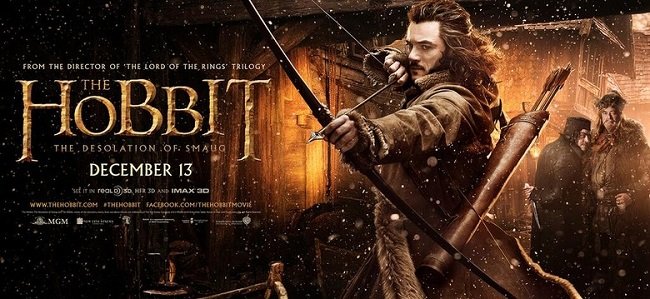
The Desolation of Smaug sets off at breakneck pace and continues at that speed throughout it's 186 minute running time. The extended edition is 25 minutes longer than the theatrical version. Again most of the new material is embellishments and does not significantly alter the storyline. Many of the new characters that are introduced are quite intriguing because the screenwriters have been effectively handed a blank canvas, due to the original text being so vague or simplistic (remember that Tolkien's book is a children's story). Thus we meet Beorn (Mikael Persbrandt) the skin-changer along with his Bear alter ego. This bold interpretation has him the last of his race, after being hunted for sport by the Orcs. The Elven King Thranduil, played by Lee Pace, is a greatly expanded role. He is shown as a ruler keen to secure his kingdom’s borders from the ills of the world and possibly someone who blames the Dwarves of Erebor indirectly for a family death. His riding an Elk is a wonderful visual embellishment and conceit. However, not all of the new ideas work. I found the concept of “the tombs of the ringwraiths” to be fundamentally lore breaking and foolish.
Modern film making, especially with regard to digital effects and editing afford directors far more visual freedom. As a result, the cinematography of Andrew Lesnie never remains still. He is unquestionably the master of crane and tracking shot, but it beggars the question are they always required? Would the story arc really suffer that much, if the pace slowed just for a while, to allow the viewer to digest the events that have happened so far? Tolkien certainly understood this issue of pace in his writing. Blame can also be laid at the door of editor Jabez Olssen, who constructs action scenes that are so fluid and rapidly cut together they are difficult to follow at times. And there are many such scenes in The Desolation of Smaug and they divert the story progression significantly.
After escaping the Orc, the Dwarves journey through Mirkwood only to be captured by the Elven King Thranduil (Lee Pace). Bilbo's battle with the spiders is concisely distilled. I loved the way he could understand their language when he put on the ring. Jackson excels at little embellishments like this. However, conversely his efforts to bolster the continuity with the previous trilogy can also be somewhat heavy handed. Bilbo's struggle with the allure of his newly found "precious" are far from subtle. The Dwarves' captivity and escape is deftly handled and I was even happy to go along with the introduction of Tauriel (Evangeline Lilly). I gritted my teeth and rolled with the return of Legolas (Orlando Bloom) and the contrived interaction he had with Gimli's Father, Gloin. The introduction of the Bard (Luke Evans) and the expanded role he plays within the story is quite inventive. I think it helps having him as a quasi Robin Hood figure with the Lake Town community makes him more plausible as a future leader. Stephen Fry’s cameo as the Master was indulgent but droll. The addition of Alfrid Lickspittle (Ryan Gage) as a comic foil is not so successful.
It was about two thirds into the movie that I began to feel that the narrative was becoming too ponderous and drawn out. It began to sag under the weight of its self satisfied approach. This was no longer Peter Jackson's adaptation of Tolkien’s The Hobbit, but simply Peter Jackson's The Hobbit. A lot of the “creative ideas” were not working and by the time the plot reached Smaug, I was fast losing interest. Tauriel “spiritual romance” with injured Kili (Aidan Turner) was stilted and frankly poorly written. Gandalf's excursion into Dol Guldur was melodramatic and contrived, especially the unnecessary manner that Sauron reveals himself to be the Necromancer. The idea of introducing Bolg, son of Azog as a second tier bad guy, to me just showed that the screenwriters (Peter Jackson, Fran Walsh and Philippa Boyens) are tying themselves in knots with their desire to dovetail in everything and anything from a lore perspective.
Now on the subject of Smaug “the chiefest and greatest of all calamities”, I must praise all at Weta Digital for creating the most awesome and truly terrifying dragon since Vermithrax Pejorative from Dragonslayer. Benedict Cumberbatch is perfect voice casting and I was initially impressed with the scenes between him and Bilbo. They captured the spirit of the book superbly. Sadly the director’s need for yet another inexorably long action scene that wasn't in the least required, soon killed my interest. Hence we had the preposterous attempts by Thorin and company to try and kill Smaug by smothering him in molten gold. The very climax of The Desolation of Smaug, that should have been the film’s crowning glory, was for me quite the opposite. I actually found myself wishing for the final thirty minutes of the movie to end as soon as possible.
The second movie in any trilogy is always a very difficult beast to master. There is a requirement for characters to grow and evolve. In box office terms there is a need to provide not just more of the same but increase the sense of spectacle. If done well you will potentially have a movie that is better than the first. Consider The Empire Strikes Back, Spiderman 2 or Aliens. Unfortunately this cannot be said of The Desolation of Smaug. New characters are lost in a cacophony of action scenes and mayhem. Be warned this movie pushes what you can get away within the PG-13 rating. And there are too many clumsy nods to The Lord of the Rings. It seems at times like a list of essential similarities, tropes and idioms is being ticked off. With regard to Jackson’s blank cheque to expand on story points and fill in the so-called blanks, there reached a point where I thought that he had simply strayed too far from what was canonically acceptable.
Like the previous film, one of my main criticisms is based upon the portrayal of certain characters. Bilbo has precious little to do in this instalment. Furthermore the significance of actions and his personal growth is not explored sufficiently. In the book it is this part of the story where the Dwarves begin to deem him a hobbit of merit and value his contributions to their quest. This theme is conspicuously lacking in The Desolation of Smaug. Also again I protest at Jackson's interpretation of Thorin Oakenshiled. In this film he becomes borderline unlikeable. The entire approach is just too binary and formulaic. This is a character that I am supposed to revere, admire and feel for. Again, as with the previous film, those feelings are reserved for Balin instead, played by the superb Ken Stott.
Raiders of the Lost Ark and movies like it have proven that blockbusters can be populist, stylish and entertaining as well as commercially successful. The Desolation of Smaug did indeed clean up at the box office. However it is a very self indulgent piece of cinema and sadly the embodiment of style over substance. Yes, I enjoyed facets of the production and found elements to praise. However, I will not allow my affection for the original book or for Peter Jackson's previous trilogy to colour my judgement. I have to call a spade a spade and say that The Desolation of Smaug is too focused on being a spectacle, at the expense of the story and cast. The extended edition does precious little to remedy this. It is too loud and sprawling and certainly will test the casual viewer’s patience.
The Hobbit: An Unexpected Journey Extended Edition (2012)
This December marks the 20th anniversary of the release of The Fellowship of the Ring. The first instalment of Peter Jacksons' adaptation of J.R.R. Tolkien’s iconic novel, The Lord of the Rings. To celebrate this occasion, I shall post new reviews of the extended edition of all three films, as well as those of The Hobbit trilogy, which were made a decade later.
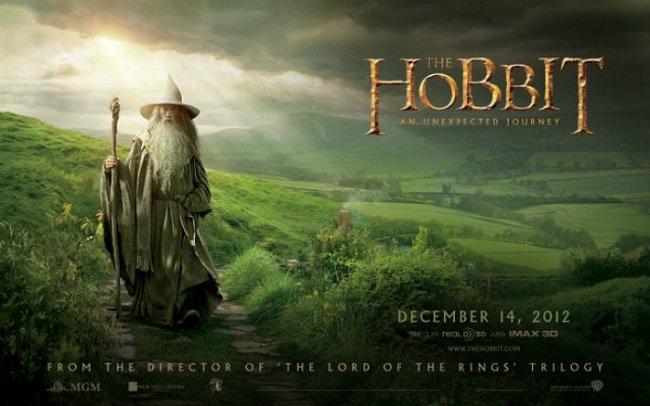
Firstly let me start by saying I think the word unexpected is very apt in respect of the first instalment of Peter Jackson's three part adaptation of Tolkien's prequel to The Lord of the Rings. It is genuinely surprising how well parts of the narrative had been adapted and interpreted. Similarly there are other aspects that are less successful. Overall the good outweighs the bad but only the most ardent fanboy or girl would think the movie flawless. When one considers its problematic production along with the change of directors, this is quite an achievement. I wonder how much of Guillermo del Toro’s material survived into Peter Jacksons, Fran Walsh and Philippa Boyens revised screenplay? Secondly, a decade on from The Lord of the Rings, there has been a further move away from physical visual effects and filming on photographic film. Both of these changes are noticeable in An Unexpected Journey but the presence of Peter Jackson and his very specific style of filmmaking maintains a very strong sense of continuity.
This December marks the 20th anniversary of the release of The Fellowship of the Ring. The first instalment of Peter Jacksons' adaptation of J.R.R. Tolkien’s iconic novel, The Lord of the Rings. To celebrate this occasion, I shall post new reviews of the extended edition of all three films, as well as those of The Hobbit trilogy, which were made a decade later.
Firstly let me start by saying I think the word unexpected is very apt in respect of the first instalment of Peter Jackson's three part adaptation of Tolkien's prequel to The Lord of the Rings. It is genuinely surprising how well parts of the narrative had been adapted and interpreted. Similarly there are other aspects that are less successful. Overall the good outweighs the bad but only the most ardent fanboy or girl would think the movie flawless. When one considers its problematic production along with the change of directors, this is quite an achievement. I wonder how much of Guillermo del Toro’s material survived into Peter Jacksons, Fran Walsh and Philippa Boyens revised screenplay? Secondly, a decade on from The Lord of the Rings, there has been a further move away from physical visual effects and filming on photographic film. Both of these changes are noticeable in An Unexpected Journey but the presence of Peter Jackson and his very specific style of filmmaking maintains a very strong sense of continuity.
Many of the production staff who worked on the original trilogy are present again for The Hobbit. Artists John Howe and Alan Lee as well as cinematography by Andrew Lesnie ensure that there’s a seamless continuation of the established aesthetic of Middle-earth. Howard Shore's magnificent score utilises leitmotifs we have previously heard in The Lord of the Rings trilogy. Furthermore, his new material is very strong and introduces some very portentous themes for the new characters. The film is technically superb but one expects nothing less from this film maker. Therefore I would like to focus more upon the narrative than the production design, because The Hobbit has been greatly expanded to accommodate its trilogy format. Is the story treated appropriately and presented in a way that will please both consummate fans and newcomers alike?
Broadly speaking I’d say yes. At least in this first instalment, An Unexpected Journey. If you are a Tolkien purist then you may be disappointed or upset by some of the changes that have been made. I sympathise with this perspective but understand the fact that Peter Jackson has to make the story accessible to a wider audience and that cinema is a very different medium to the written page. The key word is “adaptation” and the fact that film requires archetypes who have clear and traditional story arcs. Therefore characters and lore are altered to provide us with a definite hero and villain. That is not to say that the script deviates radically from the book, as it does not. The nuts and bolts of the story are there. But as with The Lord of the Rings, characters have to be refined and events compressed or augmented to satisfy the required tropes of cinematic “high adventure”.
Hence we just get a far more heroic Thorin Oakenshield played by an exuberant and somewhat bombastic Richard Armitage. The character is simplified and presented as someone to root for. He is an exiled King whose family has suffered death and ruin. We also get a specific enemy to boo and hiss in the form of albino orc Azog. The role of Radagast the Brown (Sylvester McCoy) is expanded upon and acts as a conduit between the central plot and the backstory of the rise of the Necromancer in Dol Guldur. McCoy’s performance is mercurial and quite engaging. Once again Ian McKellen dominates the screen as Gandalf, a role he seems sublimely suited for. The casting of Martin Freeman as the young Bilbo Baggins is similarly perfectly conceived. He plays the hobbit with an air of curiosity and confusion, as he strays from his comfortable home in The Shire, out into the wider and more dangerous world.
However I do think that An Unexpected Journey has a pacing issue. We start with a rather traditional framing device in which old Bilbo (Ian Holm) is writing his memoirs on the eve of his going away birthday as depicted in The Fellowship of the Ring. The story then shows the fall of Dale and Erebor to the Dragon Smaug (who is teased and not fully seen). Finally after establishing the entire point of Bilbo’s forthcoming adventure to retake Erebor, events turn to a younger Bilbo (Martin Freeman) and his subsequent meeting with Gandalf. Introducing the twelve dwarves is another problematic aspect of the film. Some are granted a fair amount of screen time where others are hastily added to the narrative. The use of songs directly from the text is another embellishment that although is laudable from a lore standpoint, is questionable from a cinematic perspective. It takes a while for the movie to get under way from Bag End. It's curious because Peter Jackson has managed to take lengthy passages of text in the past and condense them quickly and efficiently without any dramatic loss. Consider the Council of Elrond in The Fellowship of the Ring.
With regard to the expansion of text, some of it works very well. I found myself pleasantly surprised by Sylvester McCoy's portrayal of Radagast (although I still think the Bunny Sled is a bridge too far) as well as the depiction of the White Council. I loved the way Gandalf rolled his eyes at the arrival of Saruman (Christopher Lee) and the way that Galadriel (Cate Blanchett) clearly holds Mithrandir in high regard. The film also greatly benefits from its mainly British and Antipodean cast. The commonalities between cultures, idioms and dialect aids the realisation of Tolkien's written work. The humour present in the film is not out of place, especially in the way that Elves and Dwarves do not get along. However, where An Unexpected Journey succeeds the best is in the way it handles the most iconic scenes from the book. Bilbo's encounter with Gollum (Andy Serkis) is truly menacing and a highlight of the film. The exchange of riddles is superbly realised and the chemistry between the two performers is palpable.
Peter Jackson has gained a reputation over the years for being able to craft complex and frenetic action scenes. It has become a selling point. Sadly my biggest criticism about An Unexpected Journey, is that there are possibly too many action scenes, with some too close together. The escape from the Great Goblin (Barry Humphries) is a very complex and extravagant set piece. Blink and you’ll miss what’s happening as Goblin limbs and heads fly left, right and centre. As soon as Bilbo and the Dwarves escape the Misty Mountains there is immediately another fiery denouement, as Thorin and company climb a copse of fir trees to avoid a Azog and a pack of wargs. Although technically well implemented it is somewhat taxing to the senses and after a while actually becomes quite dull. I appreciate the need to end the film on a high point and dramatic climax but again there persists this sense of uneven pacing. I must add that the ending is tempered by a wonderful codicil involving Smaug that is certainly a wonderful taster of things to come.
I am a Tolkien fan and also someone who enjoys quality film making. Sometimes you have to curb your enthusiasm for much beloved source material, as the requirements of film as a medium are specific and different. “Show don’t tell” is the defining mantra of cinema which can be difficult when adapting lore heavy, narrative books. There are flaws in An Unexpected Journey but they do not derail the entire story. The film is still very creative and can be exciting. It is also quite strong in content with quite hard edged action sequences. At its heart still lies director Peter Jackson's love for the Professor's work and despite moments of indulgence, this still comes across. Compromise is not always a dirty word and in this case is possibly a necessary tool in bringing this story to as wide an audience as possible. However, Jackson still makes the mistake of reducing complex and venerable characters to somewhat binary representations. Thorin is not easy to warm too and it is Balin (Ken Stott) who comes across as far more sympathetic, likeable and wise.
The extended edition of An Unexpected Journey includes 13 minutes of additional material to the theatrical release, which brings the running time to 182 minutes. The extra scenes are mainly embellishments and I would argue that they do not dramatically alter the tone and feel of the film. My thoughts are mostly the same for both the theatrical and extended edition. I suspect the uneven pacing that I’ve referenced stems from Peter Jacksons’ extrapolation of the story. The White Council scenes are a great idea but they also smack of a need to “join the dots” between this trilogy and the former. The flashback to the Battle of Azanulbizar is also well conceived as a means to give weight to the recurring theme of the misfortunes of Durin’s folk and to bolster the kingly nature of Thorin. However, the fact that Thorin is subsequently somewhat bellicose undermines this. However, Martin Freeman stands out and often compensates for the excessive action scenes. Existing Tolkien fans are probably better disposed to this new trilogy by default. However, although entertaining, there is a somewhat forced quality to this adaptation of The Hobbit. Casual viewers may well find it a little too self serving.
Revisiting Peter Jackson's The Lord of the Rings
In December it will be the twenty year anniversary of the release of The Fellowship of the Ring. The first entry in Peter Jackson’s trilogy of film adaptations of Professor Tolkien’s iconic novel, The Lord of the Rings. I was utterly swept up in the hype and media frenzy that persisted for three years around these movies between 2001 and 2003. I certainly have fond memories of seeing each film on the first day of its release at the prestigious Leicester Square Odeon in London. Broadly speaking I was very impressed with all three films at the time of their release. However, over the years excitement and fandom has been tempered with a greater degree of critical analysis and appraisal. Having recently watched the Extended Editions of all three films, remastered in 4K, I now think it would be pertinent to revise my thoughts on them and repost them here on Contains Moderate Peril. This initial post is intended more as an overview on the trilogy. I shall write three new in depth reviews in due course.
In December it will be the twenty year anniversary of the release of The Fellowship of the Ring. The first entry in Peter Jackson’s trilogy of film adaptations of Professor Tolkien’s iconic novel, The Lord of the Rings. I was utterly swept up in the hype and media frenzy that persisted for three years around these movies between 2001 and 2003. I certainly have fond memories of seeing each film on the first day of its release at the prestigious Leicester Square Odeon in London. Broadly speaking I was very impressed with all three films at the time of their release. However, over the years excitement and fandom has been tempered with a greater degree of critical analysis and appraisal. Having recently watched the Extended Editions of all three films, remastered in 4K, I now think it would be pertinent to revise my thoughts on them and repost them here on Contains Moderate Peril. This initial post is intended more as an overview on the trilogy. I shall write three new in depth reviews in due course.
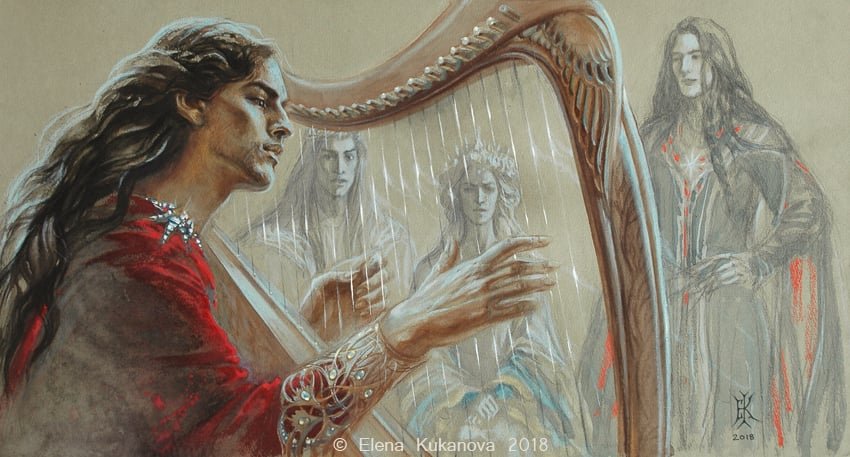
One of the most striking aspects of Peter Jackson’s films is the overall production design and the aesthetics of Middle-earth in the Third Age. Fans had already started becoming accustomed to a common visual approach to Tolkien’s work, care of John Howe and Alan Lee, the artists that publisher Harper Collins had been using for several years prior to 1999 when filming started. Inviting both to be artistic designers on the films provided a sense not only of continuity but also of a formal aesthetic across the entire intellectual property. Both artists have a knack for combining real world historical elements, with fantasy creating styles of armour, weapons, architecture and clothing that looks real and credible. There is incredible attention to detail present in every element of the production, just as there is in Tolkien’s source text.
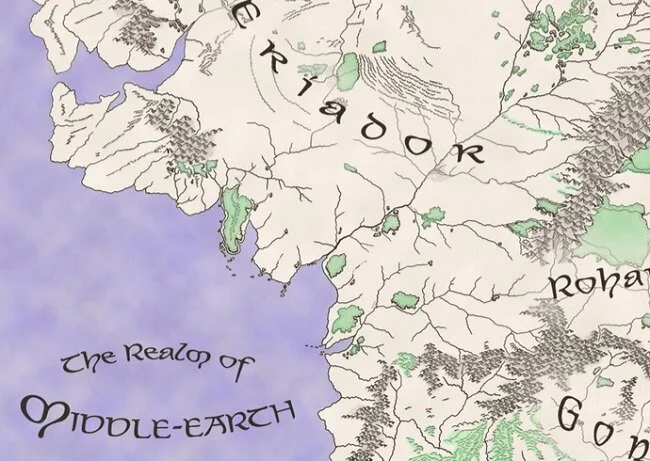
In a similar vein, filming in New Zealand was a wise decision as it provides such a diversity of environment and ecosystems. It really is ideal for recreating much of Middle-earth. Jackson’s visual realisation of The Shire is very lush and green. Similarly, the Southern Alps of the South Island effectively capture the spirit of Tolkien’s descriptions of the Misty Mountains and are very imposing. Filming outside of the US also had definite cost benefits to the overall production. However, not every geographical aspect of Middle-earth is as well represented. I have always felt that the Rangitata Valley did not adequately capture the rolling grass plains of Rohan. To my mind it wasn’t green enough. Rohirric culture is based upon both Goths, Scandinavians and the medieval Anglo-Saxons and so I envisage Rohan being more akin to European grasslands. However, such criticisms are far from a deal breaker in respect of one’s appraisal of the overall trilogy.
A key element in Tolkien’s writing is the use of music and how it is an integral part of all the cultures of Middle-earth. Composer Howard Shore wisely made Tolkien’s songs a key part of his soundtrack. As well as writing leitmotifs for central characters and recurring story themes, he also incorporated Sindarin text and other dialects into much of the ambient music to further embellish scenes. It really adds to the overall feeling of “world building”. In many ways his music for all three films feels like a character in its own right. His music also allows for the compression of the narrative and to convey plot points. When Aragorn heals the sick after The Battle of the Pelennor Fields, the music succinctly reinforces the visual images. Rather than having to explain that "the hands of the king are the hands of a healer" what the film shows is further reinforced by the accompanying score. However, although this is a joy for Tolkien fans, its subtleties may be lost on the casual viewer.
Peter Jackson also made a wise decision by casting a group of international character actors rather than smothering his production with box office stars. Sean Connery as Gandalf may well have broadened the appeal of the films but ultimately his larger than life persona would have been a poor fit for the nuances of the character. Casting Ian McKellen was a far more practical choice and proved infinitely more beneficial as the actor utterly made the role his own. Christopher Lee was another cany choice. Not only was he an experienced and subtle actor but a Tolkien scholar as well. The narrative complexity of The Lord of the Rings feature films did not need the additional burden of celebrity stars bringing their own baggage to the production. Using lesser known actors allowed audiences to focus upon their performances rather than be distracted by their sheer presence.
Tolkien’s body of work is remarkable for the way it successfully manages to encompass era defining events, yet still being able to tell the story of those caught up in them. This is something a lot harder to do on screen. Peter Jackson excels at creating complex and large scale set pieces but sometimes they tend to dominate the proceedings at the expense of narrative depth. It was one of the criticisms that Christopher Tolkien made, who felt that the focus of the movie was on action and spectacle at the expense of story and lore. I feel the reality lies somewhere in the middle. Certainly the Extended Editions of all three films addresses this issue, reinstating story content that was excised from the theatrical edits. Ultimately viewers have to come to terms with the fact that these three movies are Jackson’s “adaptation” and reflect upon the meaning of that term.
Hence we come to the thorny issue of how any film version of a complex book leads to key plot elements and characters being either simplified or removed for reason of accessibility. Personally I don’t especially like the “streamlining” of certain characters for the sake of the wider story, although I understand why Jackson did this. I feel that his portrayal of Theoden is somewhat bland, portraying him as a grief stricken King who is indecisive. I also feel it is incorrect to depict Aragorn as conflicted with self doubt. But these were done to make the plot more straightforward and understandable among mainstream viewers, who are not familiar with the books. I do like the extrapolation of the roles and relationship between Saruman and Wormtongue. Also having several Orc characters act as narrative conduits also works well. It is sad that Gil Galad and Elendil were also watered down or removed but it would have bloated the screenplay too much to include all canonical characters.
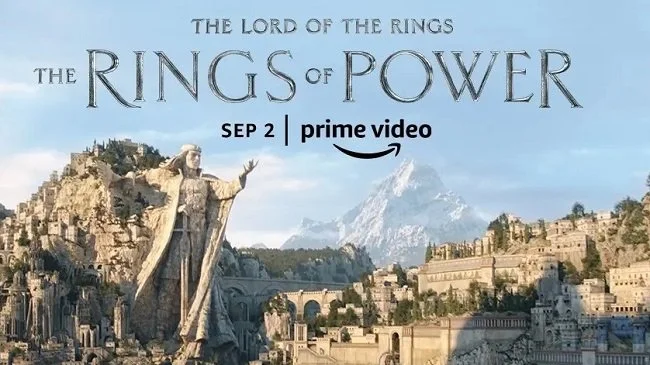
Twenty years on, I am not quite so enamoured with Peter Jackson’s trilogy and feel that there are elements that could have been improved or handled differently. However, there is still an inherent power to his films and he still merits a great deal of praise for crafting such an imposing adaptation of a book that many claimed was “unfilmable”. He definitely got specific elements one hundred percent right. The Amazon television production set in the Second Age of Middle-earth that is currently being filmed, is maintaining the same design and visual aesthetic. Howard Shore is also involved to keep a sense of musical continuity. All of which raises the point, will the next adaptation of The Lord of the Rings be via the medium of streaming television, rather than cinema? Such a platform is not burdened by running time constraints. It could therefore facilitate a more comprehensive realistion. Whatever the future brings, I don’t think Peter Jackson’s film will be the only ever adaptation of The Lord of the Rings.