
MMO Tropes: The Current Meta
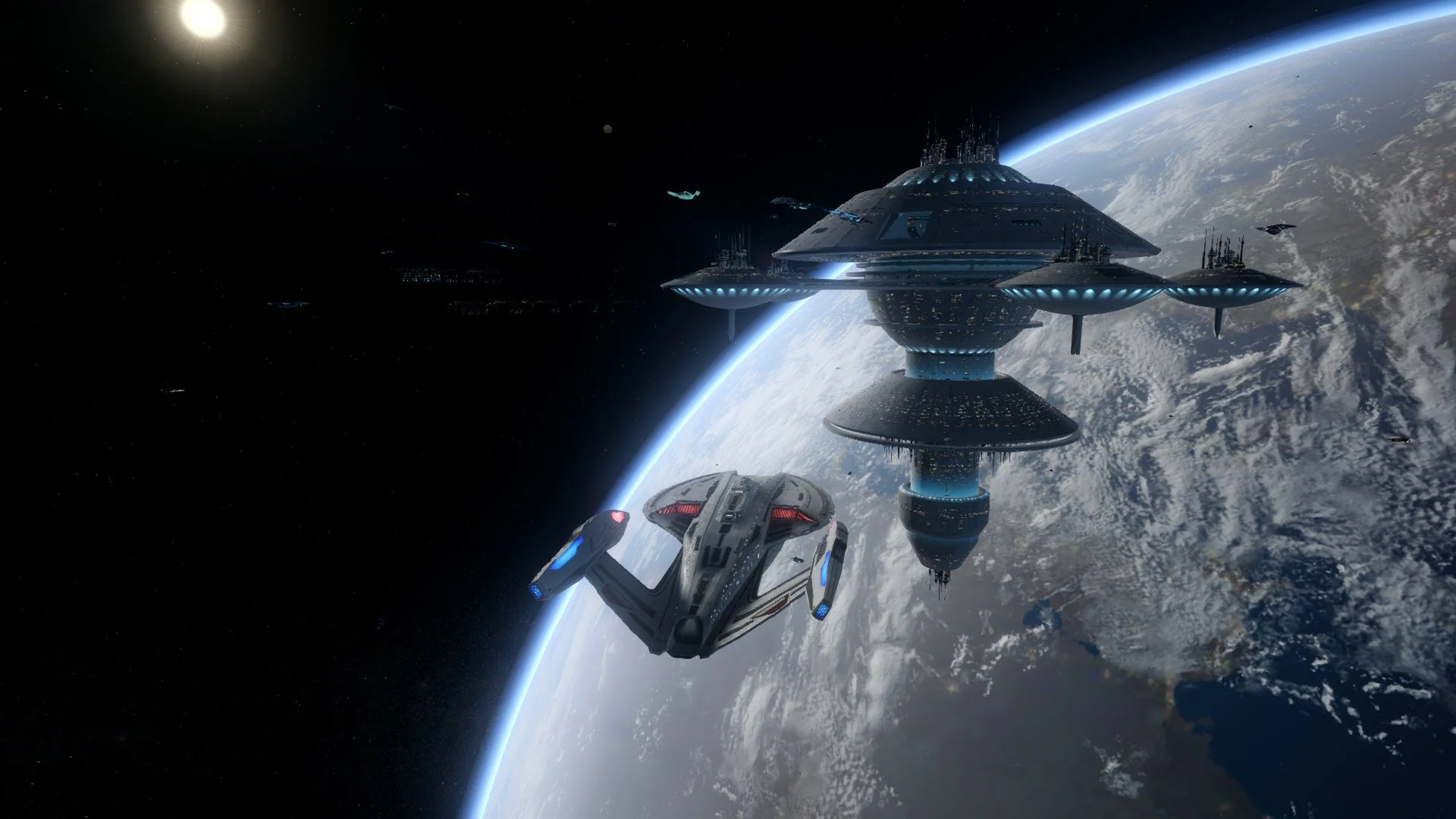
I recently read a post on Massively Overpowered about skills rotation in the MMORPG genre. I found the subsequent discussion in the comments fascinating. Mainly because I have never used a fixed rotation of skills in any of the MMORPGs that I play. I understand the reasoning behind such things and why some players want to optimise their combat performance. Using one’s skills in a specific order to maximise damage and manage their subsequent cooldown has a logical appeal. In Star Trek Online, some players go so far as to create keybinds for their rotations and assign it to a specific hotkey, which is then continuously pressed throughout combat. However, rotations are a blunt tool that lack flexibility, often being geared towards dealing with a single target or using an area of effect skill against a larger group. They may not be the optimal approach to combat when things do not go to plan.
I recently read a post on Massively Overpowered about skills rotation in the MMORPG genre. I found the subsequent discussion in the comments fascinating. Mainly because I have never used a fixed rotation of skills in any of the MMORPGs that I play. I understand the reasoning behind such things and why some players want to optimise their combat performance. Using one’s skills in a specific order to maximise damage and manage their subsequent cooldown has a logical appeal. In Star Trek Online, some players go so far as to create keybinds for their rotations and assign it to a specific hotkey, which is then continuously pressed throughout combat. However, rotations are a blunt tool that lack flexibility, often being geared towards dealing with a single target or using an area of effect skill against a larger group. They may not be the optimal approach to combat when things do not go to plan.
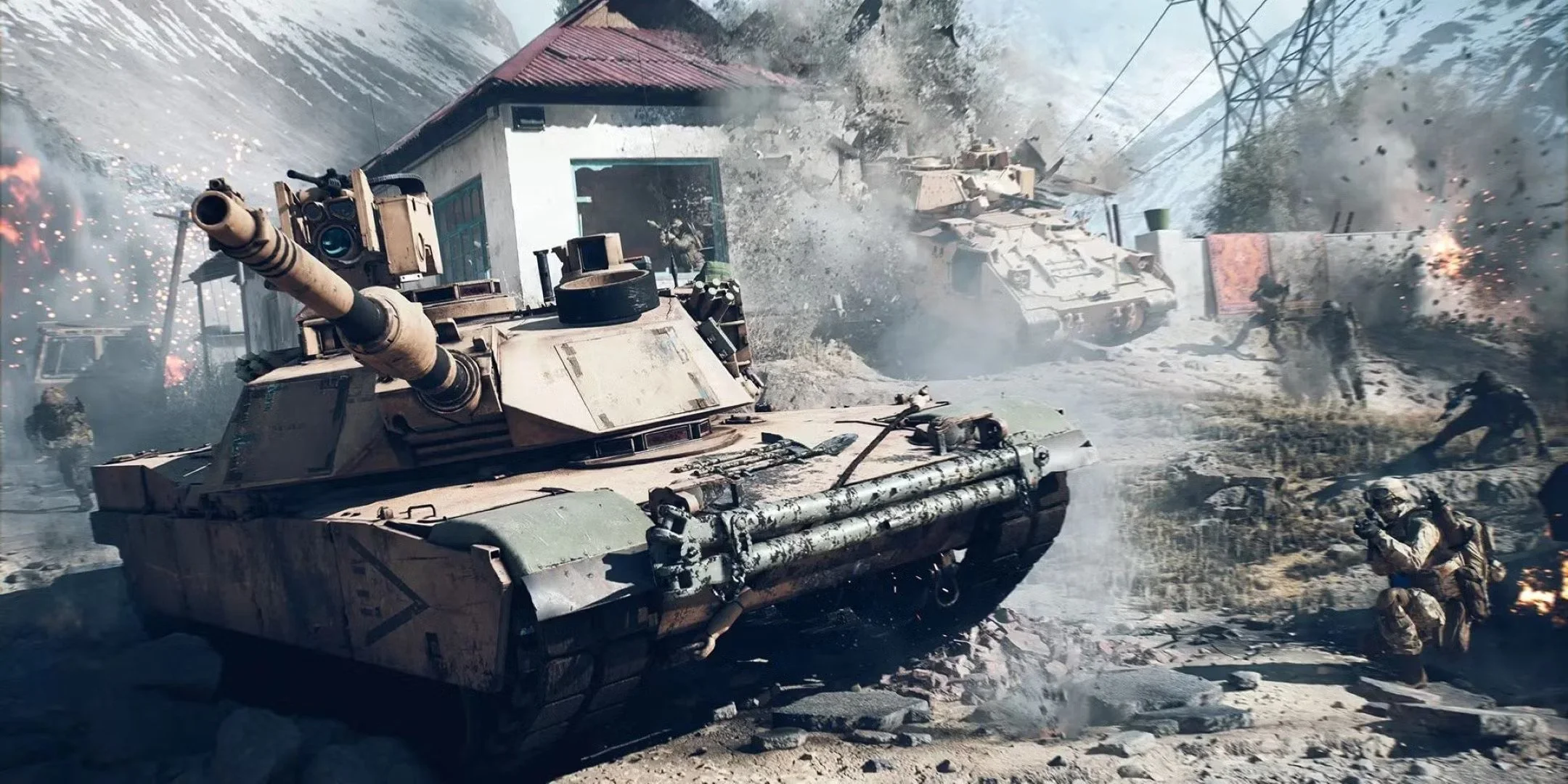
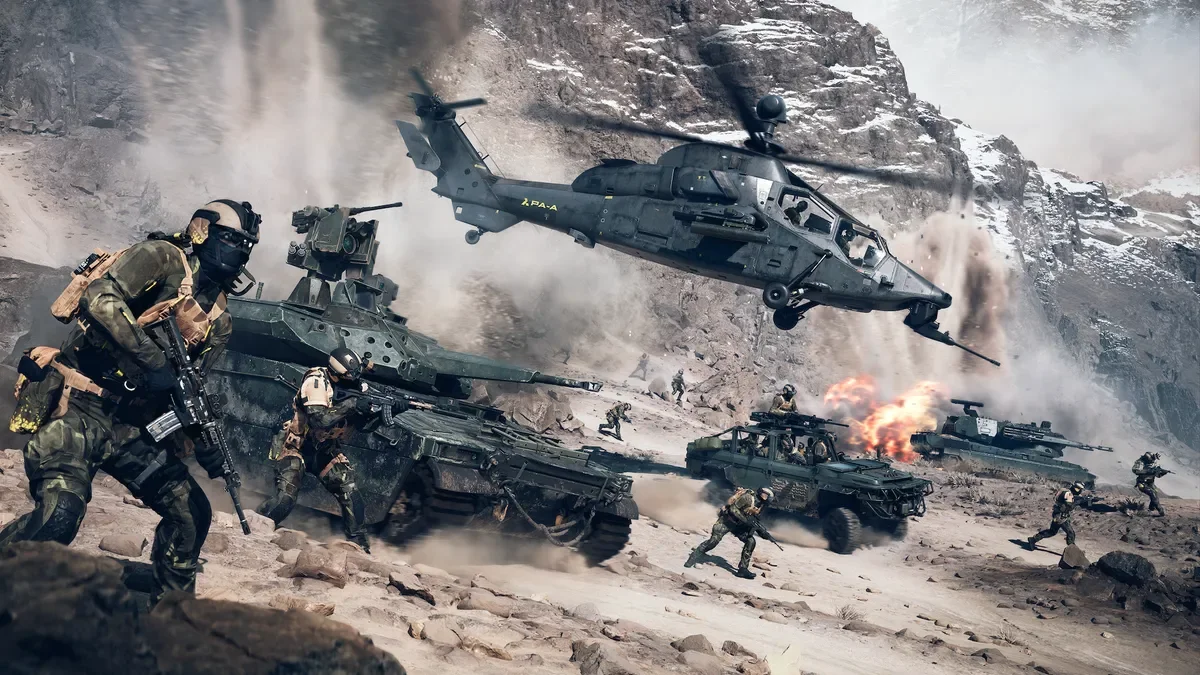
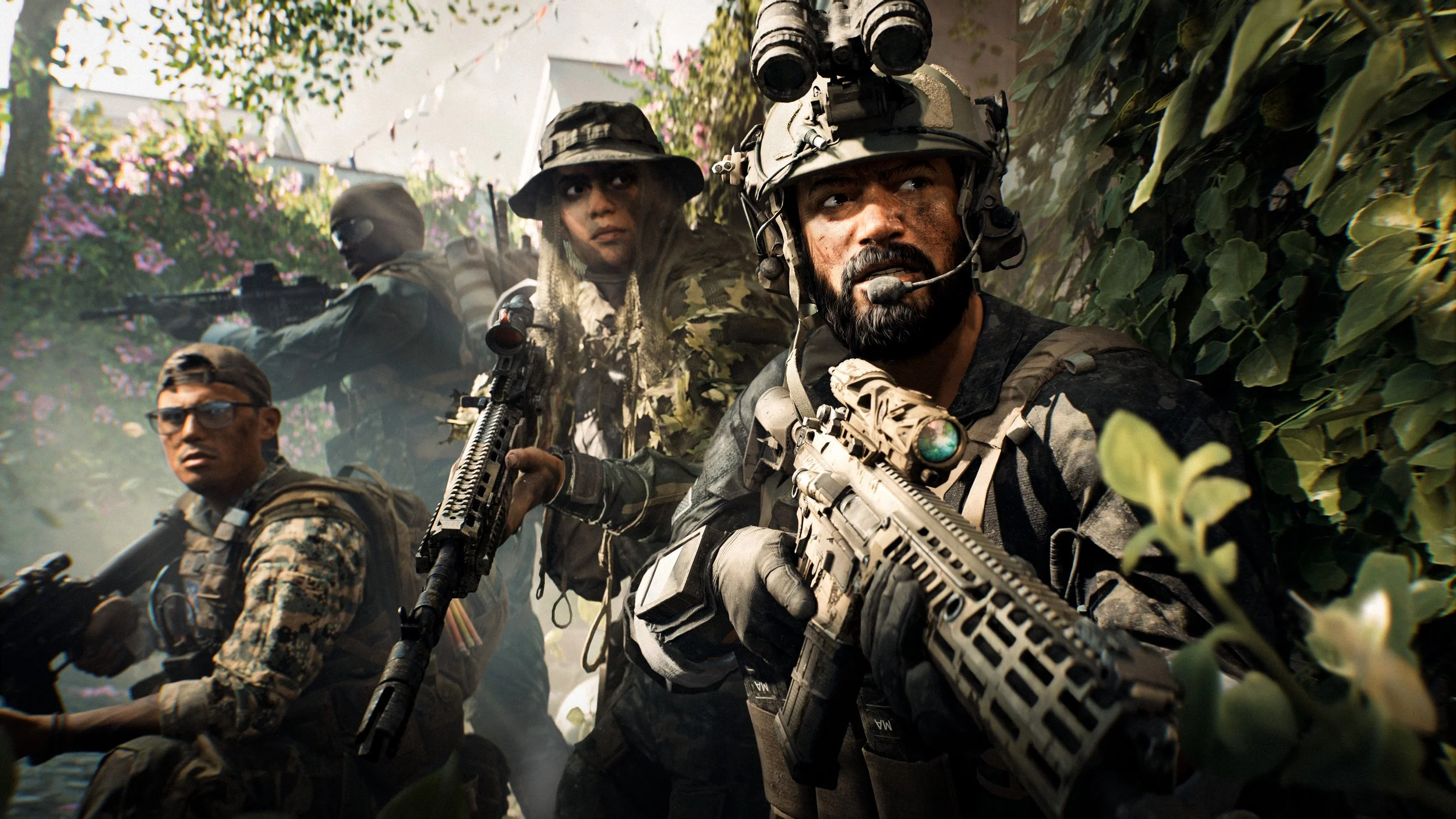
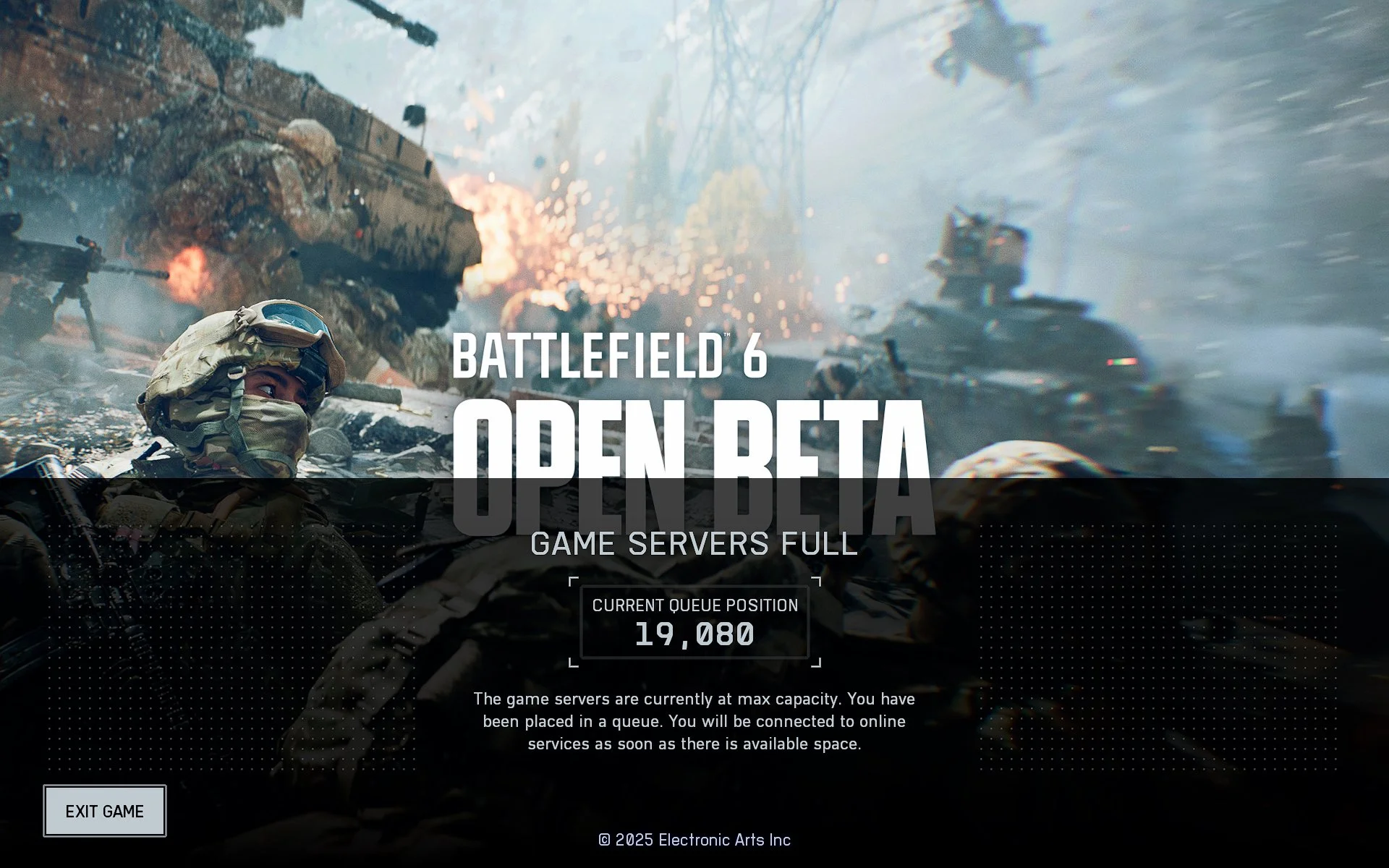
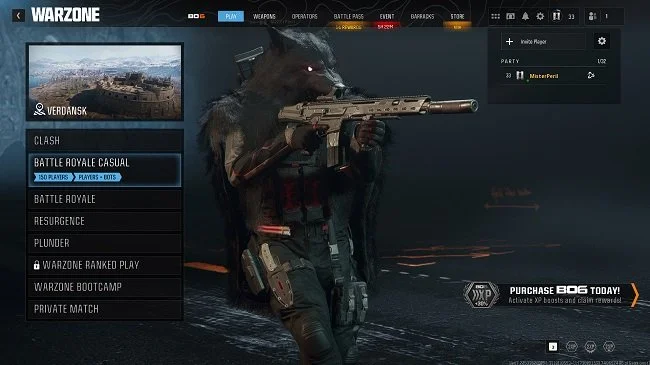
Skill rotations are just a part of a wider culture of optimisation and automation, not only in the MMO genre but in gaming per se. A lot of gamers seek to determine what is the best gear or overall build within a game and spend a lot of time min-maxing until they arrive at a consensus. Although these waters can be muddied by such things as play style, in a lot of games that are based around the acquisition and upgrading of gear, there usually tends to be specific items or combinations of them that yield the best results. Hence we see a prevailing game meta emerge. Meta being “most effective tactic available” although the term also covers loadouts and builds. A clear example of this is in Call of Duty: Warzone, where the “Holy Grail” of builds is a weapon with a high rate of fire and damage, with little recoil. Despite launching three weeks ago, a clear meta is emerging in Battlefield 6.
From a logical perspective, knowing which build or gear is the optimal is beneficial. However, the obvious downside to prevailing gaming metas is that they can limit player choice. Any item of strategy that is sub-optimal is redundant. Hence metas potentially remove fun and stifle creativity. It can also affect role-playing elements. Standardising aspects of a game can lead to a repetitive experience where players feel obliged to follow the meta to stay competitive. It also negates large swathes of gear and items, even classes, as they are deemed sub-par and therefore a poor choice. In multiplayer games, those who have not pursued the prevailing meta may find themselves excluded from group content as they may not be able to perform their respective role as efficiently. Additionally, the relentless pursuit of efficiency and overall optimisation can lead to a community of “tryhards” and “sweats”.
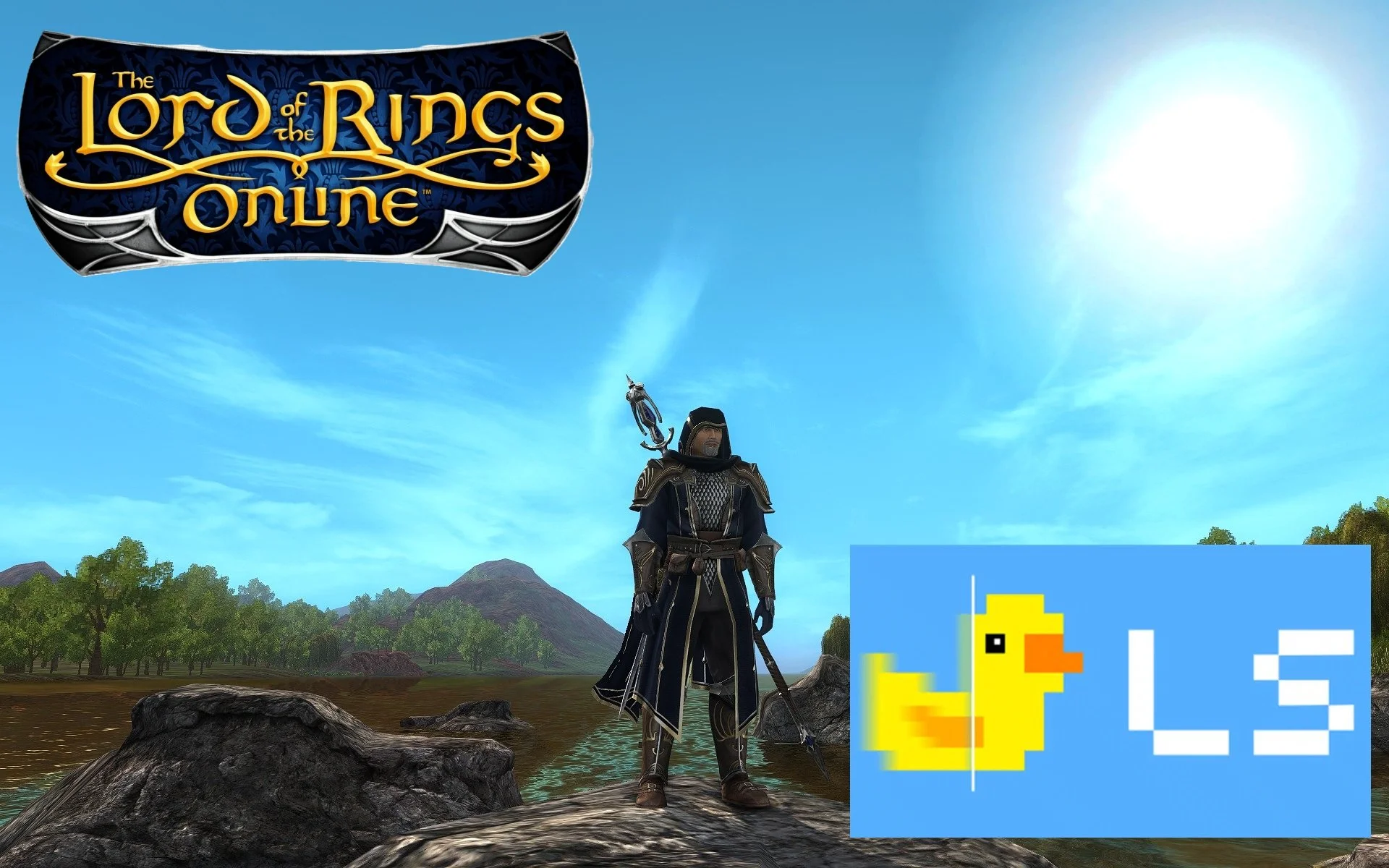
If all of these criticisms are correct then why do gaming metas prevail? One reason is the inherent complexity of modern video games, especially the MMORPG genre. There are a lot of systems to learn as well as game mechanics. Not all of these are immediately understandable and many have a basis in mathematics thus not universally appealing. When starting a new game, many gamers do not want to get bogged down in excessive tutorials and explanations. They simply want to learn as they play. If the complexities of a game are unappealing and you have neither the time or inclination to learn, then it is quicker and easier just to follow a meta build recommendation. I have been playing The Lord of the Rings Online for 17 years and I still only have the broadest understanding of the game’s statistical system. I know that Will is important for the Lore-master class but not exactly why.
Prevailing game metas also pose a problem for developers, as they strive to seek balance within their games. This requires continuous monitoring of data to inform adjustments. However, altering the meta through balance changes can anger players who have invested time and resources into the previous meta strategies, potentially leading to community issues. Developers need to regularly “shake up” the existing meta with new content or balance changes to keep the game fresh and prevent player burnout, which is crucial for long-term player retention in live-service games such as MMOs. Yet players always find ways to optimize the “fun out of a game” (as some players see it) faster than developers can anticipate. Sometimes, a meta related problem stems from a fundamental flaw in a core game mechanic, which might require a complex rework rather than simple numerical tweaks.
Emerging game metas seems to be a “chicken and the egg” problem and not just for the MMO and other multiplayer subgenres. Unless there are some fundamental changes to the standard mechanics used in most games, they will always emerge. Introducing “dynamic” mechanics is one approach, where systems can change due to external factors. The so-called Rock, Paper, Scissor approach where for every strategy or class advantage there is a hcounter-strategy, preventing any single approach from being universally dominant. This ensures the “best” strategy is situational and dependent on what the opponent is doing. However, this may be a little too close to “random”, which is seldom appealing. Then there’s the issue of skill. That however, is an entire blog post in itself. In the meantime, it is apparent that for the present prevailing metas will endure in games and we just have to live with them.

MMO Tropes: Alts
In massively multiplayer online games (MMOs), alts (short for alternate characters), are new characters created by a player in addition to their primary character (often called the “main”). Alts are often encouraged by developers as a means to keep players engaged with their game(s). Sometimes an MMO will actively reward the creation of alts either with access to exclusive content, or with additional skills or items previously unlocked by primary characters. As the myth that an MMO really begins at endgame still persists in gaming culture, some games sell boosts that will instantly raise the level of an alt to that of the current level cap. Creating alts is such a key aspect of the MMO genre, that some games will sell additional character slots, so that players can create further alts beyond the default amount allowed. There are many reasons why players create alts. Let us consider some.
In massively multiplayer online games (MMOs), alts (short for alternate characters), are new characters created by a player in addition to their primary character (often called the “main”). Alts are often encouraged by developers as a means to keep players engaged with their game(s). Sometimes an MMO will actively reward the creation of alts either with access to exclusive content, or with additional skills or items previously unlocked by primary characters. As the myth that an MMO really begins at endgame still persists in gaming culture, some games sell boosts that will instantly raise the level of an alt to that of the current level cap. Creating alts is such a key aspect of the MMO genre, that some games will sell additional character slots, so that players can create further alts beyond the default amount allowed. There are many reasons why players create alts. Let us consider some.
Trying different classes: Many MMOs offer diverse classes, races and specialisations. Alts allow players to experience these without abandoning their main character.
Experiencing alternative gameplay: Alts can offer a fresh perspective on the game world, allowing players to engage in different activities, storylines, or even roleplay.
Farming resources: In some MMOs, alts can be used to gather more resources, complete daily quests, or participate in other activities. These often offer rewards such as items or currency, which can benefit the player's main character.
Socialising: Alts can be used to play with different groups of friends, or to participate in content that requires a specific group of classes.
Avoiding burnout: Playing the same character for extended periods can lead to burnout, and alts can provide a break from the routine.
Roleplaying: Some players create alts for roleplaying purposes, developing unique backstories and personalities for each character.
Increased and unique rewards: Some MMOs offer rewards for having multiple characters, such as bonus experience, unique items or account wide unlocks.
The MMO genre handles the issue of alts in a broad fashion. Some older games such as Age of Conan (now Conan Unchained) only have one path through game content. If you roll a new alt you will still have to play through content you have already experienced. The Lord of the Rings Online takes a different approach with your character’s race determining their starter area. This offers a degree of difference for alts, although the storylines come together after a certain level. Guild Wars 2 takes a similar approach, again favouring race specific starters areas. In The Elder Scrolls Online, new characters begin in a tutorial area called Coldharbour's Wailing Prison, then are sent to their alliance's starting zone. After the tutorial, players can explore their alliance’s respective zone and choose which quests to pursue. Players then have the option to explore other alliances’ zones later.
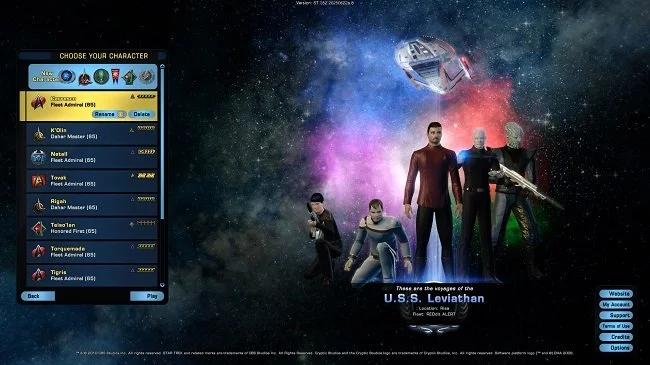
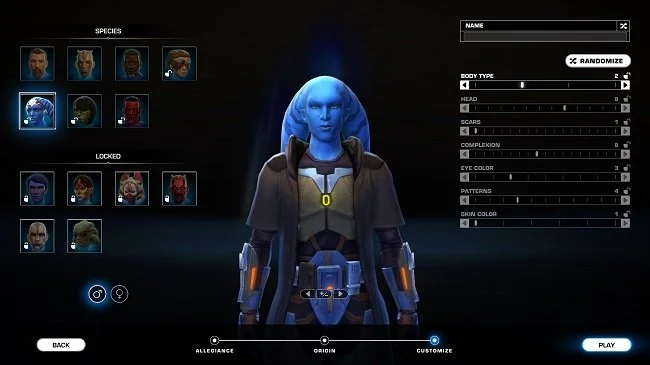
Star Wars: The Old Republic takes a far bolder approach to alts. The starting area for each character is determined by their chosen class. There are four starting planets shared between two classes. However, every class has a completely unique story that runs throughout the duration of the base game. This greatly improves the games replayability across the eight classes. Similarly, the MMO Star Trek Online offers bespoke stories across its six main factions before the stories converge into a unified episodic arc. The game also has regular events that unlock account wide rewards. Someone who has played the game regularly with a primary character, has the benefit of being able to access numerous bonuses and items whenever they create a new alt. Items, such as ships, bought in the cash shop are also available to all alts.
Alts are often encouraged and in some specific titles an integral part of that game’s lifecycle. The MMO genre certainly has a requirement for players to roll alts. They offer increased variety, engagement and sometimes additional resources within the game world. Where other genres struggle with replayability, MMOs fare far better via the medium of alts. However, alts are not a foolproof solution to player engagement. Alts often end up abandoned, especially if the new class on offer is not a good fit for a player’s style. Many are experiments or something undertaken on a whim. Many are created purely for storage or to perform specific tasks, such as resource farming. But some choice is better than no choice and alts are an opportunity to try new things. Whether we personally take advantage of them or not, it is a positive thing that they exist.
MMO Tropes: Name Unavailable
If you’ve ever played an MMORPG, then you have more than likely encountered this problem. Especially if you start playing a game that has been long established. You diligently create your character and spend time and effort customising them to suit your needs. All you’ve got to do next is choose a name, so you type in a pithy and droll title only to find that it has already been taken. So you quickly come up with another and that too is rejected. Next you try the same name but with some “alternative” spelling but the game resolutely tells you that even that permutation is already in use. I have found that even with a list of names that I’ve drawn up prior to playing the game, it can still take anything from 5 to 30 minutes to find one that is available. Naturally, this process is very frustrating, which is hardly the ideal user experience for a new player.
If you’ve ever played an MMORPG, then you have more than likely encountered this problem. Especially if you start playing a game that has been long established. You diligently create your character and spend time and effort customising them to suit your needs. All you’ve got to do next is choose a name, so you type in a pithy and droll title only to find that it has already been taken. So you quickly come up with another and that too is rejected. Next you try the same name but with some “alternative” spelling but the game resolutely tells you that even that permutation is already in use. I have found that even with a list of names that I’ve drawn up prior to playing the game, it can still take anything from 5 to 30 minutes to find one that is available. Naturally, this process is very frustrating, which is hardly the ideal user experience for a new player.
This problem is common to a lot of older MMOs. The Lord of the Rings Online, Star Wars: The Old Republic and Age of Conan are prime examples. Newer games tend to have a more flexible naming system often using a surname that is account wide. This often negates any issues with duplicate names. New players are often aware in advance that securing their name of choice in an older game is going to be problematic. The main issue is that a lot of these games do nothing to help beyond rejecting your choice. They do not give you any clues as to what names are available or any potential spelling changes that are required to bypass the problem. They basically say “no clues” and you’re left to randomly try various permutations until one is accepted. The problem with all this, is that if you do not secure your name of choice it can diminish your gaming enjoyment.
If you’re of a sceptical disposition about the monetisation of MMOs, then you’ll see a direct correlation between this inherent naming problem and the fact that renaming tokens are readily available to purchase in the respective game store. Such items can cost anything between £5 to £10 which seems excessive when you consider that the game itself has contributed to the player ending up with a name they’re not happy with. Although it may sound trivial to some gamers, having “the right name” is an important aspect of character creation for a lot of other players. I like to have character names that don’t obviously clash with the in-game lore and I don’t really care for “humorous” monikers. As previously mentioned, a new player should not really be having these sorts of problems. Surely the best business practice is to make their introduction to a new game as frictionless as possible?
My recent return to SWTOR was prompted by a scheduled “character name purge”. Developers Broadsword sent all players an email stating that inactive accounts would lose their names if they didn’t log into the game by a specific date. That date has now been and gone and as far as I’m aware a substantial amount of names have been released so that new players can access them. When I reclaimed my Age of Conan account recently, I had to rename my old character as a similar policy had been implemented. I didn’t complain as I last logged into the game a decade ago when it went free to play. All of which goes to show that game developers are fully aware of the importance of character names. In light of such, it would be nice if the MMO genre adopted a more equitable policy regarding them.
MMO Tropes: The Time Sink
It would appear that one of the reasons potential new players avoid the MMORPG genre is due to the perception that they are all time sinks. I wouldn’t argue against this assumption because the reality is that it’s true. However any game that you enjoy, irrespective of genre, can become a time sink. That being said, the main difference between other genres and MMOs is as follows. A new player can jump straight into a FPS game and within minutes enjoy some multiplayer action, whereas in an MMO, a new player has to play through a tutorial and several hours of a starter zone before they start making headway in the game. This distinction does not have to be a deal breaker. An FPS can provide a quick fix of gaming and as such fulfils a need. MMORPGs can provide long term entertainment which scratches an ongoing gaming itch. Both are valid ways to enjoy gaming.
It would appear that one of the reasons potential new players avoid the MMORPG genre is due to the perception that they are all time sinks. I wouldn’t argue against this assumption because the reality is that it’s true. However any game that you enjoy, irrespective of genre, can become a time sink. That being said, the main difference between other genres and MMOs is as follows. A new player can jump straight into a FPS game and within minutes enjoy some multiplayer action, whereas in an MMO, a new player has to play through a tutorial and several hours of a starter zone before they start making headway in the game. This distinction does not have to be a deal breaker. An FPS can provide a quick fix of gaming and as such fulfils a need. MMORPGs can provide long term entertainment which scratches an ongoing gaming itch. Both are valid ways to enjoy gaming.
Now that we’ve got that out of the way, I do want to talk about the time I have “invested” into two specific MMORPGs. That investment, or commitment if you prefer, is no small beer. It is a substantial period of time that I could have spent on other leisure activities. Or even non leisure activities, perish the thought. My spare time is possibly one of the most sought after commodities I possess, judging by the amount of businesses, organisations and bodies that pursue it. Hence, I don’t consider spending so much time on MMOs to be something arbitrary. It is a considered choice, one that I constantly review to ensure it is still proving to be satisfactory. The fact that I am still spending time regularly on these two games and enjoying them, validates the overall investment.
I have been playing The Lord of the Rings Online since December 2008. As of 18th November 2024, I have invested 7 months 1 week 6 days 1 hour 7 minutes 28 seconds into my primary character,a human Lore-master. That is 5426 hours. I have two other alts but they have a negligible amount of time spent on them. No more than a dozen or so hours each. Similarly, I have played Star Trek Online since its launch in 2010. However, I have created several alts and really didn’t start playing this MMO seriously until 2013 when the first major expansion was released and a lot of the game’s problems were resolved. My primary character, a Federation Tactical Officer has accrued to date, 72 days, 10 hours, 30 minutes, 33 seconds time investment. That is 1738 hours. Not as much as LOTRO but still a tidy sum.
The obvious question arising from this information is what else could I have done with that collective amount of time (over 7000 hours)? Well, the logical answer is lots of things. I could have learned another language during that time or taken a degree. Yet such introspection is misplaced because I don’t regret my choice. I really don’t. Some people go fishing, bake, play sport, paint lead figures, ring bells, collect stamps, plot world domination or spot trains. I play games. The time I’ve spent has always been “leisure time” and I have never played at the expense of other work or family obligations. If you crunch the numbers, out of the 15 years that have elapsed I have spent about 5% of that time playing MMOs. A similar amount of time could easily be spent watching football as millions of other people do.
Time sink is a loaded and somewhat hyperbolic term. It not only describes the chronological investment but it also infers that it is by its very nature a negative choice. Despite videos becoming a mainstream pastime, there still persists an attitude in certain quarters that they are a childish waste of time and that you’d be better served doing something “productive”. In fact I’ll go so far as to say I know people who still struggle to see the benefits of leisure time per se. They tend to be very two dimensional thinkers. I certainly do not consider investing time in a hobby, working towards goals and the associated positive social interactions as bad things. Quite the opposite. They are very good for one’s overall well being, as are the tangential activities that can arise from gaming, such as this blog. Perhaps we should retire the term time sink and replace it with something more benign like time investment or time intensive.
MMO Tropes: Loot
“The MMO genre is rife with its own set of tropes; recurring themes and motifs that have become established and ubiquitous. All of which are ideal material for a hastily produced, lazily conceived, recurring blog post”. One of the integral game mechanics of the MMORPG genre is the acquisition of loot. As you travel your virtual world of choice, committing random murder against all forms of flora and fauna, you acquire miscellaneous items by looting the corpses of the slain or stealing from houses and NPCs. Oh it’s a glamorous genre, the MMORPG. These random items can be crafting resources such as hides or ore. They may be food items or healing potions that provide some kind of statistical buff. If you’re fortunate, they may be gear that corresponds with your class or specific build, providing a much needed upgrade. Loot may also be the in-game currency, thus boosting your respective wealth. As you can see, loot comes in all shapes and sizes but how important is it?
Where is the phat loot?
“The MMO genre is rife with its own set of tropes; recurring themes and motifs that have become established and ubiquitous. All of which are ideal material for a hastily produced, lazily conceived, recurring blog post”. One of the integral game mechanics of the MMORPG genre is the acquisition of loot. As you travel your virtual world of choice, committing random murder against all forms of flora and fauna, you acquire miscellaneous items by looting the corpses of the slain or stealing from houses and NPCs. Oh it’s a glamorous genre, the MMORPG. These random items can be crafting resources such as hides or ore. They may be food items or healing potions that provide some kind of statistical buff. If you’re fortunate, they may be gear that corresponds with your class or specific build, providing a much needed upgrade. Loot may also be the in-game currency, thus boosting your respective wealth. As you can see, loot comes in all shapes and sizes but how important is it?
Loot has multiple purposes as a game mechanic. For many players of MMOs, looting is their primary means of earning in-game currency. Loot is farmed and then sold, providing “gold” that can be spent on other requirements. It is a cornerstone of MMO economies. Many of which are fair and equitable when a game is launched, only to go off the rails as players learn how to game the system. But that is another blog post. Returning to the matter of loot, its acquisition goes beyond the practical in some games, instead providing the actual raison d'etre for playing. Games such as the Diablo franchise are an exemplar of this concept and let us not forget that there is an entire genre of games that falls under the banner of “looter shooters”. There is something that appeals to many gamers on a very fundamental level, with regard to acquiring what is colloquially called “phat loot”. I can remember grinding for ages to get a 1st age weapon in The Lord of the Rings Online circa 2009. I was beside myself when I finally got one. I enjoyed it for a week until an expansion invalidated it with new and superior gear.
The Captain wasn’t happy with the quality of the loot
However, not all loot is equal. MMOs usually have various types of loot on an ever increasing scale of rarity and importance. Quality gear and useful item upgrades tend to be scarce, often tied to high level bosses or harder missions. Low value items are commonplace and are accurately labelled “vendor trash”. Many MMOs struggle to get the balance right when it comes to the quality and frequency of loot drops. Star Trek Online is a terrible offender when it comes to this. Specific missions have very good gear rewards but random loot acquired while fighting random mobs is usually of no value at all. It is often pointless low level items and selling them yields little financial reward. Conversely, in The Lord of the Rings Online, a level cap player can make a lot of gold, just by farming zones ten or so levels below them. Especially if they are pursuing deeds, such as killing 200 of a particular species.
MMOs also have another source of loot. Namely raids. These complex, time consuming group events have always been the favoured means for game developers of this genre, to gate the best quality gear. For many years MMO players would invest hours of their time, participating in raids in the hope of getting an opportunity to roll on a unique item. Yes, you read that right. Often there was only one item of high end gear in the loot. It may not have even been relevant to your class at all. If so you got nothing. If it was something you could use, then there was usually a random number generating facility in the chat window and you rolled a virtual dice. The person with the highest number got the item. Everyone else went home with nothing. Assuming the raid leader didn’t steal it for themselves, and then quit the game and the guild. As you can imagine this was the very definition of “fun”. If any old school gamer tries to convince you that MMOs were meritocracies back in the day, tell them to remove themselves to the nearest body of water.
Cheech and Chong themed cosmetic skins and weapon blueprint
However, things change. Video games have become more popular and game developers have gotten wise to the fact that a lot of their paying customers are buying an experience and an entertainment service. They don’t care about punishing rules and failure conditions. Hence we now live in an era where quality loot can be bought. It is a phenomenon that isn’t to everyone’s liking but again we need to step back from our own preferences and see video games as the transactional business that they are. Call of Duty sells weapon blueprints that are often superior to those available in the base game. Star Trek Online has a multitude of ships available in-game but the most desirable are those from lock boxes. As for me, whenever The Lord of the Rings Online raises the level cap, thus invalidating your current gear, I just spend my monthly subscriber stipend on loot boxes and be done with it, rather than re-gear by grinding.
Most people like getting loot when playing MMOs. Or at least they like the concept. Not necessarily the way the mechanic is implemented. I have often thought that we get superior gear at the wrong time. You don’t need it when you hit level cap (unless you buy into the maxim that the real game only begins at level cap) but rather as you’re levelling. Personally, I like upgradeable loot and the ability to keep a much loved item, as seen in Star War: The Old Republic. However it is implemented, loot is a constant in the MMO genre and that is unlikely to change. I don’t think any specific game has a system that is 100% perfect. Perhaps that all seeing oracle and minor deity, Raph Koster, will bring forth a definitive loot related game mechanic in his up and coming game, Stars Reach. Until then we’ll just have to endure the systems that we have. Now please excuse me, I have to sell 3 hides, a kumquat and a rusty ear trumpet for 4 gold.
MMO Tropes: Death
“The MMO genre is rife with its own set of tropes; recurring themes and motifs that have become established and ubiquitous. All of which are ideal material for a hastily produced, lazily conceived, recurring blog post”. Dying in an Massively Multiplayer Online Role-Playing Game is a clear and unambiguous fail state. A means by which to teach the player that they’re doing something wrong and that they need to rethink their strategy. IE Don’t mess with the foul Marmydons unless you have back up and are wielding the Sword of Kagnazax. Dying is a reminder to not get overconfident and maintain situational awareness. It teaches us to ensure you have the right gear and consumables, to be au fait with the mechanics of any fight you’re about to get into and that winning is not a given. Any enterprise that offers a tangible reward will come with potential risks and consequences. If you’re playing in a group then death provides a timely reminder not to rely on Colin.
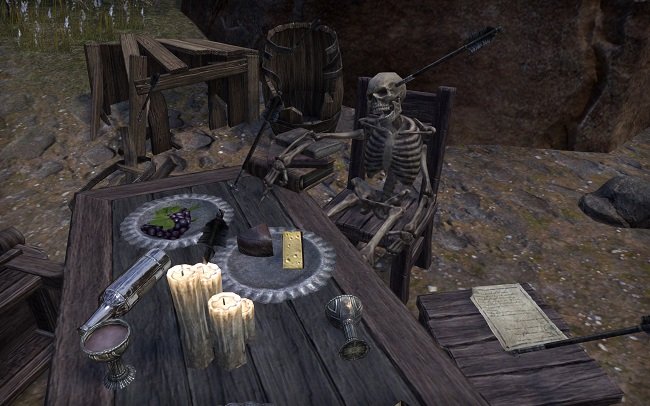
I use to be alive until I took an arrow to the cerebral cortex
“The MMO genre is rife with its own set of tropes; recurring themes and motifs that have become established and ubiquitous. All of which are ideal material for a hastily produced, lazily conceived, recurring blog post”. Dying in an Massively Multiplayer Online Role-Playing Game is a clear and unambiguous fail state. A means by which to teach the player that they’re doing something wrong and that they need to rethink their strategy. IE Don’t mess with the foul Marmydons unless you have back up and are wielding the Sword of Kagnazax. Dying is a reminder to not get overconfident and maintain situational awareness. It teaches us to ensure you have the right gear and consumables, to be au fait with the mechanics of any fight you’re about to get into and that winning is not a given. Any enterprise that offers a tangible reward will come with potential risks and consequences. If you’re playing in a group then death provides a timely reminder not to rely on Colin.
Over the course of its evolution, the MMORPG genre has handled death in many different ways. There’s the scorched earth policy of permadeath, in which your in-game character dies for good. You lose everything you’ve accrued and have to create a new character and start from scratch. Then there was the infamous “corpse run”, in which your character’s spirit spawns at a designated point on the in-game map and has to return to their own dead body to re-animate it. In the meantime, any passing player can pilfer your loot from your unattended cadaver. However, such draconian rules have fallen out of favour with modern MMOs, although you will still find them in many classic games that still linger online. Death is now treated as a minor penalty that temporarily inconveniences you. It may incur damage to your gear but it is no longer the setback that it used to be.
I’ve spent many a happy hour plummeting to my death in LOTRO
In the Lord of the Rings Online, death is politely called “defeat” and occurs when your morale reaches zero. While defeated your character remains immobile, unable to use any skills. You may then use a self-revive which has a two hour cooldown by default, assuming that the immediate area is safe. If however you cannot or do not wish to self-revive, you may “retreat” which will teleport you to the nearest rally point, which is a circle of stones in a safe area. This disadvantage of “retreating” is that it may take you a substantial distance from your previous location. This is particularly problematic if you are in an instance. However, if you are playing in a group you may be revived by a fellow player, if they are of a class that can revive others. It is not the best or worst example of death mechanics in an MMO but it can be managed. You can purchase an account unlock that reduces the two hour cooldown on “revive” to one or purchase additional consumable “revives” by using in-game currency.
Death is managed in a far more equitable fashion in Star Trek Online. During ground combat, if you are inconvenienced by dying you can simply respawn at the last unlocked respawn point. However, more often than not, your character is accompanied by your “away team”. This is a group of four NPC companions or “bridge officers”. While dead you may request “help”, in which case one will come and revive you. Depending upon the intensity of the ongoing combat, your companions may well all heroically die trying to save you. However, if you ensure that you have a holographic or android NPC on your away team, these have the ability to self-reboot. Hence if your entire group is wiped out, one will self-revive and then revive everyone else. Conversely, space combat in STO handles dying far more simply. There is a short 10 second cooldown and then you can opt to respawn in the combat zone.
“He’s dead, Jim. Oh shit, it is Jim”
I have always liked the way that Guild Wars 2 has made reviving others a key social aspect of the game. Each player can use a self-revive when “downed”, the stage between zero health and “defeat”. Alternatively, while “downed” if you manage to kill an enemy you will “rally” back to a state of health. However, once dead, they can either retreat to the nearest waypoint or look to an ally or the kindness of passing strangers to revive you. In dynamic events, where there are lots of players, it is commonplace to help players who are “downed” or “defeated” as it is practical to have as many functional players attacking a target as possible. There are traits in the game that improve reviving speed and potency. Gear can be augmented with runes, some of which can improve revival mechanics.
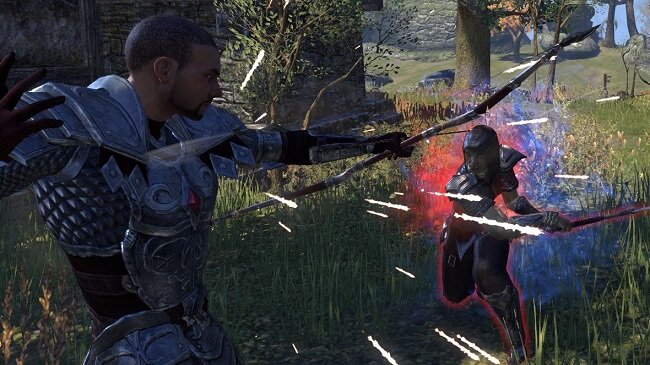
The Elder Scrolls Online dispenses with the intermediate stage of being “downed” and once your health is exhausted, you are officially dead. At this point, you can retreat to the nearest wayshrine or self-revive using a soul gem. Soul gems are consumable items that are initially empty. However, if the player slots the right skills, they are filled with the souls of enemies they defeat. Hence soul gems come with a cost. The player has to either make them themselves or buy them pre-made from the in-game store. Reviving yourself with a soul gem will grant you a spectral form for a short time that is unable to attack or be attacked, before returning to full health. This allows the player to strategically reposition themselves. Soul gems can also be used to revive other players. However, unlike Guild Wars 2, as you are using a resource with a value, players may not always be disposed to help you.
A poultry-geist
Most people are not overly enamoured by death mechanics. However, during solo PVE gameplay, it is broadly tolerated. However, in my experience, this changes significantly during group content. I jokingly mentioned earlier about death in instances or raids. It is a fact that players do not warm to dying in an MMO when it is due to the incompetence of another player. Group content in MMOs requires a substantial investment of time and resources. Death may lead to a wipe and failure to obtain the loot you desire. Which means when Colin fucks up and you all die, tempers will flare. It can ruin a game. Colin notwithstanding, death is a legacy penalty left over from the original hardcore days of MMOs. Its relevance seems to have diminished with age and continues to do so in this era of “live services”. It may eventually vanish from the genre as it ultimately stands in the way of player gratification. Unhappy players tend not to play or pay. Business doesn’t like that.
MMO Tropes: Running All the Way
“The MMO genre is rife with its own set of tropes; recurring themes and motifs that have become established and ubiquitous. All of which are ideal material for a hastily produced, lazily conceived, recurring blog post”. I was in London recently, idly walking to the Natural History Museum in South Kensington, when a group of tourists started running for no discernable reason. Someone I was with asked “ I wonder why they’re running” and I replied “perhaps they think they’re in an MMO”. The quips fell on deaf ears but that is a cross I often have to bear. This anecdote highlights one of the points of this post. Namely, why do our avatars in the MMORPG genre run by default? I would also like to discuss the manner in which MMOs address the issue of travel around an ever expanding virtual world. Is fast travel lazy? Our mounts a boon or a bane?
“The MMO genre is rife with its own set of tropes; recurring themes and motifs that have become established and ubiquitous. All of which are ideal material for a hastily produced, lazily conceived, recurring blog post”. I was in London recently, idly walking to the Natural History Museum in South Kensington, when a group of tourists started running for no discernable reason. Someone I was with asked “ I wonder why they’re running” and I replied “perhaps they think they’re in an MMO”. The quips fell on deaf ears but that is a cross I often have to bear. This anecdote highlights one of the points of this post. Namely, why do our avatars in the MMORPG genre run by default? I would also like to discuss the manner in which MMOs address the issue of travel around an ever expanding virtual world. Is fast travel lazy? Our mounts a boon or a bane?
Although MMOs are often proud of the size and scale of the virtual world’s they’ve created, getting around is time consuming and at times a chore. Hence, running in an MMO is usually the most expedient way of travelling. It’s not mandatory though, which is why you will sometimes see role players walking everywhere for realism. The trade off is that it takes longer and you look like a fool doing it. Each to their own. When you’re new to a game, discovering and exploring a major quest hub, such as Minas Tirith in The Lord of the Rings Online, is a source of enjoyment. However, roll on a few weeks and it soon becomes a nuisance that has to be managed and endured. Mercifully, most MMOs have various means of fast travel, via waypoints, shrines, or stables. This is done for convenience, although some will argue it comes at the expense of immersion.
As many MMOs are fantasy based, animal or beast themed mounts can provide a suitable, lore friendly means to travel around. Although fast travel from point to point is convenient, riding around and exploring the immediate environment can be a major point of appeal for an MMO. LOTRO does this very well as Standing Stone Games’ virtual Middle-earth is one of the biggest gaming maps available. The world is diverse and richly designed and there are many iconic places to discover. The Elder Scrolls Online similarly offers a varied and immersive open world to explore. Cryptic’s Star Trek Online handles the vastness of the galaxy well. Sector Space is big and takes a degree of time to traverse. This situation does improve once you hit the level cap and can access Quantum Slipstream drive which allows for much faster short bursts of speed. Star Wars: The Old Republic has a far more practical point to point, hyperspace travel system but I never liked the way it cost you money for fuel.
Another thing to consider about running in MMOs is that it does have some tactical applications beyond its functional use. For example, depending upon “aggro mechanics” it is possible in some games to run past or even through a group of mobs without alerting them. Even if you do trigger enemies, in many MMOs you can outrun them although such things do come with an element of risk. For example, in LOTRO it is entirely possible to run through Moria (with an alt at the same level of the content) from the West to East gates and survive, as long as you know the most expedient route. Then there are the practical benefits of a strategic withdrawal. Remember, “he who fights and runs away, lives to fight another day”. Temporary running buffs can also be useful when “retreating to victory”.
Single player games seem to handle travel differently and certainly have some advantages. I envy the fact that a game like Grand Theft Auto V or Red Dead Redemption 2 provide the players with access to public transport. I especially like riding the train between towns in RDR2 as it is very restful and highlights for a few minutes the detail of the open world. Similarly, using the L Train in GTA V adds to the illusion of a living city. It would be nice to see something like that in the MMOs genre. I also liked the way in LA Noire, if you don’t want to drive the car yourself from case to case, you simply use the passenger door and your NPC companion would be the designated driver. All goes to show that you can approach the matter of getting from A to B with a degree of creativity, rather than just running all the way.
MMO Tropes: Exploration
“The MMO genre is rife with its own set of tropes; recurring themes and motifs that have become established and ubiquitous. All of which are ideal material for a hastily produced, lazily conceived, recurring blog post”. Many MMORPGs are set in open worlds that are designed to mimic a real and living reality. Beautiful fantasy or science fiction themed environments, rich with diverse fauna and flora. Settlements are filled with people that go about their daily routine. There is often a day and night cycle and changing weather. All of which is intended to make the game world feel alive. Furthermore, these open worlds become a source of content of their own. Not only do they provide the environment for the various quests and missions that players undertake but a source of exploration and discovery. Something that many players value more than other types of game content.
“The MMO genre is rife with its own set of tropes; recurring themes and motifs that have become established and ubiquitous. All of which are ideal material for a hastily produced, lazily conceived, recurring blog post”. Many MMORPGs are set in open worlds that are designed to mimic a real and living reality. Beautiful fantasy or science fiction themed environments, rich with diverse fauna and flora. Settlements are filled with people that go about their daily routine. There is often a day and night cycle and changing weather. All of which is intended to make the game world feel alive. Furthermore, these open worlds become a source of content of their own. Not only do they provide the environment for the various quests and missions that players undertake but a source of exploration and discovery. Something that many players value more than other types of game content.
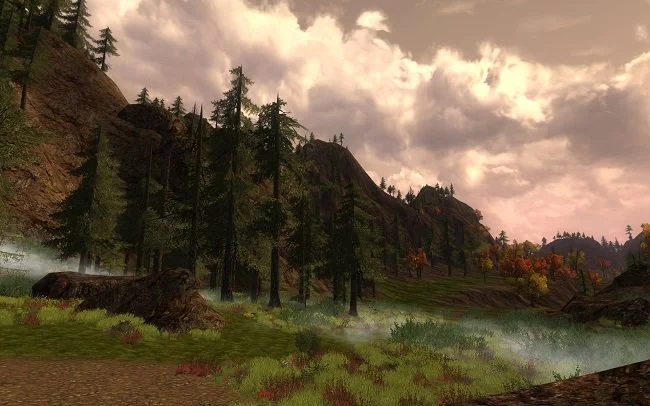
Over the last 20 plus years, the MMO genre has refined this notion of exploration, capitalising upon the fact that humans are curious animals and that they’ll happily set aside a story to simply go and see what is out there in a virtual world. Hence many games of this kind now make exploration a source of rewards. Achievements and accolades encourage players to look in every nook and cranny and leave no stone unturned in the hope of finding everything there is to discover in the game. The Lord of the Rings Online does this very well, drawing heavily upon established lore from the Tolkien Legendarium. Hence a player travelling through a canonical region such as the Trollshaws, will seek to find the Three Stone Trolls that captured Bilbo and the Dwarves. Similarly, an enthusiastic fan can marvel at the way Deep Space Nine has been faithfully recreated in Star Trek Online.
Guild Wars 2 takes an interesting approach to the way in which it presents its zone maps to the player. By default they’re vague and indistinct, giving the player a notion of the type of environment present, but nothing more. They are devoid of specific detail until you start travelling through the region and speaking to NPCs. Then the details appear. LOTRO used to do this upon release, calling the intentional obscuring “the fog of war” but it was later removed as a feature. Now the maps show the terrain clearly. Star Wars: The Old Republic similarly withholds map data but I find that this particular MMO’s environments are not as uniformly engaging as other MMOs. Some are certainly better than others. But for every character rich environment such as Alderaan, there are generic featureless wastes such as Tatooine and Hoth. Guild Wars 2 excels at making verticality interesting, especially now that they’ve introduced specialist mounts allowing players to reach obscure topographical features.
Curiously Star Trek Online, a game based upon a franchise predicated upon space exploration, doesn’t offer players a great deal of planetary content to discover. Only a small percentage of planets can be visited and these are usually small and self contained instances. However, space travel is substantive with the galaxy being divided into four quadrants, as referenced in the various TV shows. Another game that has interesting regional zones but which are heavily compartmentalised is The Elder Scrolls Online. Although they are visually diverse, I’ve never felt that Tamriel comes across as a coherent wider world, in the same way as Middle-earth does in LOTRO. Instancing, invisible walls and carefully constructed mountain ranges that funnel players in specific directions are a necessary evil in the MMO genre. However, some games just do it better than others maintaining the illusion of an open world.
My recent return to Guild Wars 2 has been greatly aided by the games focus on exploration. Perhaps lessons were learned from the Heart of Thorns expansion which introduced verticality into the game but relied on jumping and gliding skills to explore. Mounts address this mechanic in a far more practical and entertaining way. Exploration also compensates those not especially engaged by the lore of the game. The ability to reach obscure parts of the world map is very addictive and challenging. I begin to see the appeal of going “off map” which some players delight in doing. Exploration is now an integral aspect of the MMO genre and as such, players expect their searching to be rewarded by Easter Eggs and pop culture homages. Like the “killer rabbit” in a cave reference in LOTRO which is a nod to Monty Python and the Holy Grail. It raises the question as to whether this aspect of gameplay could become the foundation of an entire MMO. Something that No Man’s Sky has come close to over time.
MMO Tropes: “Kill Ten Rats” and Fetch Quests
“The MMO genre is rife with its own set of tropes; recurring themes and motifs that have become established and ubiquitous. All of which are ideal material for a hastily produced, lazily conceived, recurring blog post”.
The MMORPG genre is a curious subset of video games. Not only is it predicated on violence against the individual, institutions and “others”, as so many video games are but also species-specific genocide and general mass extinction of fauna and flora. It is easy to understand how this gaming specific trope came about. Early MMOs often had very little or no narrative driven quests and players simply levelled their characters by gaining XP from any sort of combat. Be that against other players, mobs or general in-game wildlife. What is far more perplexing is why such an arbitrary mechanic still persists in the modern MMO. Is it simply due to “laziness” and the fact that it’s easy to implement and rely upon? Or is there more to it than that?
“The MMO genre is rife with its own set of tropes; recurring themes and motifs that have become established and ubiquitous. All of which are ideal material for a hastily produced, lazily conceived, recurring blog post”.
The MMORPG genre is a curious subset of video games. Not only is it predicated on violence against the individual, institutions and “others”, as so many video games are but also species-specific genocide and general mass extinction of fauna and flora. It is easy to understand how this gaming specific trope came about. Early MMOs often had very little or no narrative driven quests and players simply levelled their characters by gaining XP from any sort of combat. Be that against other players, mobs or general in-game wildlife. What is far more perplexing is why such an arbitrary mechanic still persists in the modern MMO. Is it simply due to “laziness” and the fact that it’s easy to implement and rely upon? Or is there more to it than that?
Two decades or so ago, early MMOs and indeed the RPG genre needed to establish certain concepts to new players. Mechanics that now are so well known that they are even understood outside of gaming in wider popular culture. Specifically the idea of progression and levelling your character (not to be confused with “levelling up” and other nebulous political soundbites). Giving a new player a simple task to demonstrate levelling and XP gain, while they are still within the game tutorial is a logical learning tool. It clearly equates completing a task with the gaining of XP and thus increasing in level. Tutorials in MMOs tend to be within very controlled environments, so the player can tentatively undertake the task free from risk. Often these safe areas at the start of games take place in dungeons or a castle, thus the liquidation of rodents as an object lesson does not seem out of place.
And because the MMO genre is utterly self plagiarizing, this simple instructional mechanism quickly became commonplace, then ubiquitous, then a standing joke and eventually a tedious played out meme. Many MMOs have transplanted the “kill quests” from its functional place in the tutorial and made it a mainstay of PVE questing. Sometimes a great deal of effort will be put into contriving a narrative to justify such tasks but all too often it is just bandied about as filler content. Some games have even tried to make “kill ten rats” into something ironic and self-deprecating but these attempts to satirise the genre seldom work. A dull and uninteresting task can remain a dull and uninteresting task, especially if no effort has been put into the “packaging”.
“Kill ten rats” has morphed over time and has become subsumed into another MMO hardy perennial; the fetch quest. This is a mission that sends a player to a remote area(s) of the game world to collect a selection of items that are required for “reasons”. Often the desired object(s) are in a contested area that is densely populated by mobs, thus making acquiring them difficult, tedious or both. Frequently upon returning to the quest bestower, a follow up mission is provided in which you have to return once again to the contested area to collect further materials. Again, this was cutting edge MMO content two decades ago but nowadays, it is simply seen as an unnecessary and uninspired grind. Players are very familiar with the various tricks of the trade that game developers use and so such content doesn’t in any way enthuse those having to carry it out.
What both of these game mechanics highlight are the inherent limitations of what you can do within the confines of an MMO. Although the term MMO is appended with RPG, often these games do not have the technical sophistication of their single player cousins. Hence MMOs weighted towards progression systems, resource management, varying your build and so forth. As far as interaction goes within the game world, it is often based on “click” on a NPC for narrative, or a resource for collection, or on a mob to initiate combat. Stories, voice acting, narrative choices and cutscenes are the veneer applied to these things to make them engaging. A good game essentially asks you to “kill ten rats” but in such a way that it doesn’t feel like “killing ten rats”. Sometimes the developers get away with it. Other times they don’t. The latter is never a good thing.



MMO Tropes: The Hero
If I may quote myself “The MMO genre is rife with its own set of tropes; recurring themes and motifs that have become established and ubiquitous. All of which are ideal material for a hastily produced, lazily conceived, recurring blog post”. This time round, I would like to discuss the following. The Hero, the Chosen One, the Übermensch. As that is the role that we so often are assigned in this genre. Developers broadly assume that most players want a power fantasy and precious little else is on offer. Hence we find ourselves in a story in which we are destined to do great deeds in a virtual world, whether we wish to or not. I can see the superficial appeal of such a conceit. Most of us are not such overachievers in real life. So a game in which we get to do stuff to the world, instead of the world doing stuff to us has an inherent allure. But like most MMO tropes, unless it is implemented with some panache and creativity, it quickly becomes a tiresome cliche.
If I may quote myself “The MMO genre is rife with its own set of tropes; recurring themes and motifs that have become established and ubiquitous. All of which are ideal material for a hastily produced, lazily conceived, recurring blog post”. This time round, I would like to discuss the following. The Hero, the Chosen One, the Übermensch. As that is the role that we so often are assigned in this genre. Developers broadly assume that most players want a power fantasy and precious little else is on offer. Hence we find ourselves in a story in which we are destined to do great deeds in a virtual world, whether we wish to or not. I can see the superficial appeal of such a conceit. Most of us are not such overachievers in real life. So a game in which we get to do stuff to the world, instead of the world doing stuff to us has an inherent allure. But like most MMO tropes, unless it is implemented with some panache and creativity, it quickly becomes a tiresome cliche.
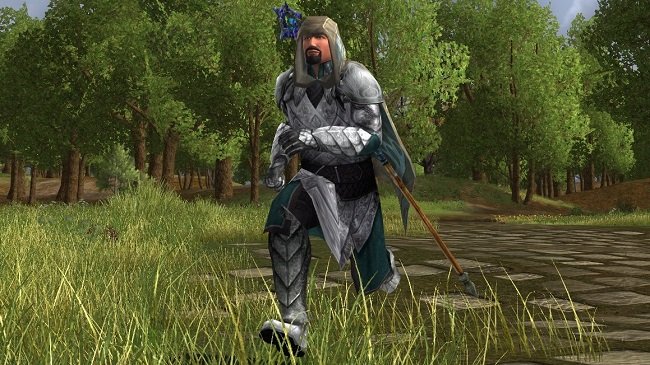
In The Lord of the Rings Online, upon creating a new character and entering Middle-earth, you soon find that even the most humble and parochial of Hobbits is destined for an epic adventure of the utmost importance. Due to the nature of the lore you cannot be an active member of The Fellowship of the Ring but your paths frequently cross. And you are revered as you progress through the game, as your fame and renown proceeds you. It’s hardly a low key affair. In Star Trek Online, your Federation character rapidly rises through the ranks of Starfleet, after you are forced to take charge in a crisis during your maiden voyage. The Klingon storyline takes an alternative approach with your avatar challenging the ship’s Captain to single combat after you discover their treachery. And in The Elder Scrolls Online, if you elect to follow the original primary storyline, you become the Vestige, empowered with unique abilities as a result of the temporary loss of your soul. Get you.
Although these examples all work within the internal logic of their respective games, they are all rather formulaic. After a while, if you’ve played several MMOs, then the archetype of the predestined hero becomes rather dull and at times actively annoying. But it is easy to understand why this narrative construct prevails in gaming. Because it is already the default setting of so much fantasy literature, film and television. Power fantasies per se are a mainstay of our popular culture, providing both the moral and ethical rectitude that is so sadly lacking in real life. In an MMO the bad guy will be dealt with and justice will be served, where in reality they tend to die in their own beds, rich and content while their victims scream into the abyss. Furthermore, power fantasies tend to be driven by robust archetypes who wield power justly. Hence it is John McClane the cop who defeats the terrorist by using force and cunning in Die Hard, rather than Colin McTavish, the junior photocopy clerk, who works in the administrative department of a small company making stilts for Dachshunds.
However, not every player wants to be a dashing hero or is comfortable with a never ending litany of quests and missions that are predicated upon mass murder and destruction. MMO players often revel in the low key fun of crafting, farming resources and trading on the auction house. In fact some will argue cogently that they desire a game where they can progress just by pursuing benign and benevolent activities such as being a jeweller or armorsmith. Every now and then, I am delighted when I read about a gamer who has managed to play through an MMOs by crafting or some other non-stabby and murderous means of progression. Sadly, this is not always possible or if it is, the player hobbles themself by missing out on vital drops or skills points that are gated behind story content. It’s a shame that game developers have not been more proactive in catering to players that desire a non heroic role. Some gamers are perfectly content with the prospect of just being an average citizen in a virtual world, as they are in real life.
I think one of the measures of a good MMO is how much choice it offers its players. The more the better. Given the complexity of branching narratives that contemporary games can support, it would be intriguing to see an MMO built upon such a system. I like the idea of being a foot soldier who can participate in battles but your personal actions directly affect career progression. If you just hold your position and fight the enemy then you’ve done your job. If you seek out additional tasks and risk, then you increase further in rank and responsibilities. This way you can seek to be a hero or choose to remain less assuming. And why not let players be a chef, a farmer or a quantity surveyor? There is scope for inventive gameplay within such disciplines. Instead of seeking the Sword of Kagnazax your goal could be the Mixing Bowl of Sha Ka Ree or the Trowl of House Harkonnen.
At present, the hero character is the default setting of the MMO genre and as such it must be endured by the player. And like most tropes common to the MMO genre, it is more of a means to an end, rather than something to be over analysed and dissected. Because if you do the latter, the logic of it all somewhat falls apart. It makes for an awkward situation when you swagger into a tavern, expecting to live large on your reputation as the bane of the foul Marmidons and vanquisher of the Nibble-Pibblies, only to find that everyone else present has done exactly the same. Too many cooks and all that. Plus who really wants to live in a virtual world, filled with nothing but heroes and over achievers? Nothing mundane or normal would ever get done. Who is going to deal with the blocked drains in the Lion’s Arch or treat Ultan Foebane’s haemorrhoids?
MMO Tropes: Shipwrecked
I have played more than “a few” MMORPGs over the years. It’s an enjoyable (and accessible) genre of video games. But like any other type of game, MMOs have a fairly standard formula based on a handful of game mechanics. There is levelling, gaining experience and the acquisition of skills and points. Gear such as armour, jewellery and weapons come and go as you progress through the game. Then there’s crafting, trading and gaining “gold”. Another key aspect is the social dynamic. Often there’s content specifically designed for groups to complete. But this homogeneity also extends beyond the systems that underpin the games. The MMO genre is rife with its own set of tropes; recurring themes and motifs that have become established and ubiquitous. All of which are ideal material for a hastily produced, lazily conceived, recurring blog post.
I have played more than “a few” MMORPGs over the years. It’s an enjoyable (and accessible) genre of video games. But like any other type of game, MMOs have a fairly standard formula based on a handful of game mechanics. There is levelling, gaining experience and the acquisition of skills and points. Gear such as armour, jewellery and weapons come and go as you progress through the game. Then there’s crafting, trading and gaining “gold”. Another key aspect is the social dynamic. Often there’s content specifically designed for groups to complete. But this homogeneity also extends beyond the systems that underpin the games. The MMO genre is rife with its own set of tropes; recurring themes and motifs that have become established and ubiquitous. All of which are ideal material for a hastily produced, lazily conceived, recurring blog post.
So where to begin? Ah yes,let us start with a commonly used trope that conveniently affords game developers with a means to orientate new players. Because it should never be assumed that a player is by default familiar with the basics of the game that they are playing. Hence many MMOs need a simple plot device at the start of a game that can justify or accommodate the need to explain everything. And one of the most common of these is the “shipwreck” trope. It covers all bases from a narrative perspective and is convenient. The new player finds themselves washed up on the beach, which is often a starter area and then has to go through some basic tasks that orientate them. These include movement via WASD keys, obtaining a weapon and combat, gaining XP, using consumables and interacting with NPCs. At first glance it’s a perfectly good idea and it achieves what it sets out to do. But if you encounter it too often it gets old very quickly.
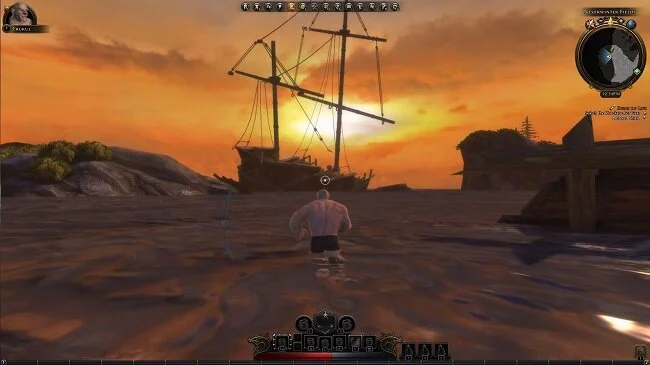
I first ran into this particular MMO trope when I played Age of Conan, circa 2009. The game had (and unless it has changed still does) a character creation process that starts on a ship in which you are a galley slave. As expected the ship sinks in a storm and your character is subsequently washed up on a beach on the island of Tortage. Cue the game tutorial. Then in 2013 when I played the Beta Test of Neverwinter, I encountered this trope for a second time. This time foul beasties destroy the ship you’re on and you wash up on the shore to again start a tutorial. If you play The Elder Scrolls Online, this plot device is used at the start of the Ebonheart Pact storyline. There is currently an ongoing Beta Test for another MMO (due to an NDA I cannot mention by name) that begins with yet another shipwreck and integrates it into the tutorial. This trope is also commonplace outside of the MMO genre and can be found in other games such as Monster Hunter: World and Risen and The Legend of Zelda: Link's Awakening.
Some old adages are themselves cliches but I still consider that there is some truth in “familiarity breeds contempt”. While playing this new MMO that cannot be named (go on, guess, it’s hardly difficult) I was somewhat disappointed when this trope was trotted out, as it further reinforced my opinion that this particular title doesn’t offer anything new. However, it is important to remember new players and that this title may well attract a lot of people who haven’t played an MMO before. Considering the marketing clout of the company that owns the developers, this game when released on August 25th, may well gain some initial traction. Bearing that in mind, the “shipwrecked” trope that I find hackneyed may well be an innovative and useful plot device to those who have not experienced it before.