
The Lord of the Rings: The Rings of Power Season 2
Two years ago, The Lord of the Rings: The Rings of Power premiered on Amazon Prime to mixed reviews and a tedious and predictable internet brouhaha. I have no interest in that debacle as I consider it spurious, to say the least. Representation is a commercial imperative for any big budget television production. As for any deviation from the established canon, that’s due to the show being an “adaptation” of Tolkien’s work. At no point were viewers promised a literal interpretation of the source text. Therefore I am only interested in legitimate critiques of the show based upon its production, writing and acting. As far as I’m concerned, the first season was broadly entertaining and had outstanding production values. Overall I enjoyed The Lord of the Rings: The Rings of Power as an exciting and inventive take on Tolkien’s legendarium. Hence, I have been looking forward to the second season, which began today.
Two years ago, The Lord of the Rings: The Rings of Power premiered on Amazon Prime to mixed reviews and a tedious and predictable internet brouhaha. I have no interest in that debacle as I consider it spurious, to say the least. Representation is a commercial imperative for any big budget television production. As for any deviation from the established canon, that’s due to the show being an “adaptation” of Tolkien’s work. At no point were viewers promised a literal interpretation of the source text. Therefore I am only interested in legitimate critiques of the show based upon its production, writing and acting. As far as I’m concerned, the first season was broadly entertaining and had outstanding production values. Overall I enjoyed The Lord of the Rings: The Rings of Power as an exciting and inventive take on Tolkien’s legendarium. Hence, I have been looking forward to the second season, which began today.
As I have only watched the first three episodes of Season 2, this is not a review. It is simply some initial thoughts. My opinion may change when I have seen all eight episodes. So far, relocation of the production from New Zealand to the UK does not appear to have had a detrimental impact on the show’s aesthetics or high quality. Weta FX and Industrial Light and Magic still continue to produce the lionshare of visual effects. Long term Tolkien illustrator John Howe, remains the main conceptual artist and although there has been changes in staff relating to costume and production design, there still appears to be a sense of visual continuity between this show and Peter Jackson’s feature films. Bear McCreary has also been retained to provide the score and has again provided some outstanding new themes. I was pleasantly surprised to see cast member Benjamin Walker singing “Golden Leaves” in Sindarin. Song is such an integral part of Tolkien’s work.
Narratively, Season 2 quickly resumes where the previous ended. Here are a few of the ongoing plot points. In an extended flashback we see why the transition of power from Morgoth to Sauron did not go well. We also get to see Sauron in an earlier physical guise played by Jack Lowden. The “meteor man” has reached Rhûn with Nori the Harfoot and it would appear that they are being tracked by the minions of a “Dark Wizard”. The unnamed sorcerer refers to the “meteor man” as an Istar, a Quenya term for “wise”. The Wizards of the Third Age were known as the Istari; “wise ones”. In Khazad-dûm, seismic activity caused by the eruption of Mount Doom leads to the collapse of many of the city’s light wells, disrupting the Dwarves’ means of food production. In Eregion, Sauron takes the guise of Annatar, Lord of Gifts and tricks Celebrimbor into making further rings of power.
So far it seems that show runners, J. D. Payne and Patrick McKay, are working more within the parameters of Tolkien’s legendarium than previously. This may be due to the story moving forward into more closely defined “history”. The addition of further canonical characters such as Narvi (Kevin Eldon) and Círdan (Ben Foster) certainly makes the proceedings feel more “Tolkienesque”. Adar, the Dark Elf chieftain of the Orcs, is played by a different actor to season one but due to the prosthetic makeup, it doesn’t make any significant difference. I am extremely curious to see Rory Kinnear as Tom Bombadil and I saw via the IMDb that Jim Broadbent is providing a voice for what may be an Ent. I find the presence of so many established UK actors reassuring. Also the fact that the show uses Hammer’s old studios at Bray, in Berkshire.
Season 2 of The Lord of the Rings: The Rings of Power has gotten off to a good start. With five more episodes to go, it can still cover a lot of ground. At present it is the non canonical material that holds my interest the most. The introduction of a “Dark Wizard” in Rhûn is not an implausible plot element. The Blue Wizards travelled to that region and were ultimately lost. Saruman himself dwelt there at one point. And then there is the Dark Elf Adar, allegedly one of the first to be corrupted by Morgoth. In another bold choice, there is a brief appearance in episode three of a female Orc holding an Orc baby. Rather than being perturbed by the creative choices of the showrunners, I find them a source of fascination. If I want pure Tolkien, then there are the source texts and audio productions to enjoy. The Lord of the Rings: The Rings of Power is ultimately just one of many interpretations of Middle-earth. I suspect in the years to come there will be more. Not all will be to everyone’s tastes. However, if they introduce people to the original texts then that is no bad thing.





The Lord of the Rings: The Rings of Power
Having watched the first two episodes of The Lord of the Rings: The Rings of Power, I wish to express my thoughts on what I’ve seen and my overall impressions so far. I do not think it would be fair to frame this post as a review as the two episodes only constitute 25% of the show’s total content. A formal review of the first season seems more appropriate when I have seen it in its entirety. Before I begin commenting on specific points about the two premier episodes, I wish to point out that I have no problem with “representation” and have expressed my thoughts on this matter in a previous post. It also covers the matter of “adaptation” and how complex texts can at times require augmenting to be made accessible to wider audiences. Hence those viewers who want 100% canonical purity are unrealistic in their expectations. Objections based in racism and sexism can simply be ignored. NB I shall endeavour to keep my thoughts spoiler free.
Having watched the first two episodes of The Lord of the Rings: The Rings of Power, I wish to express my thoughts on what I’ve seen and my overall impressions so far. I do not think it would be fair to frame this post as a review as the two episodes only constitute 25% of the show’s total content. A formal review of the first season seems more appropriate when I have seen it in its entirety. Before I begin commenting on specific points about the two premier episodes, I wish to point out that I have no problem with “representation” and have expressed my thoughts on this matter in a previous post. It also covers the matter of “adaptation” and how complex texts can at times require augmenting to be made accessible to wider audiences. Hence those viewers who want 100% canonical purity are unrealistic in their expectations. Objections based in racism and sexism can simply be ignored. NB I shall endeavour to keep my thoughts spoiler free.
It seems an obvious thing to say but the production design, visual effects and overall aesthetic for The Lord of the Rings: The Rings of Power is beautiful. The visual style created in Peter Jackson’s trilogy is broadly adhered to here and these two separate productions do not clash in this sense. The cinematography by Oscar Faura is sumptuous in its style and epic in its scope. The landscapes exude character and feel alive. So far the visual style is very cinematic and doesn’t look purely functional as some TV productions do. The visual effects both CGI and practical, are of a very high standard, as you would expect from such studios as Weta Digital and ILM.
One of the first things that strikes you about The Lord of the Rings: The Rings of Power is the music by Bear McCreary. It is in the idiom of material written by Howard Shore for the film trilogy (Shore has written the theme for the show). But McCreary’s material is very much his own. There is a striking Dwarven theme that plays when Elrond enters Khazad-dûm and I hope that the show continues to have memorable cues which add to the overall ambience and personality of the story arc.
At present there are four storylines running broadly in parallel. Galadriel’s ongoing hunt for Sauron, Elrond’s diplomatic mission to Khazad-dûm, Bronwyn and Arondir’s adventure in The Southlands beyond the Sea of Rhûn and the arrival of “meteor man” among the Harfoots. So far, all are engaging with many direct and indirect lore references. Classic character’s such as Gil-Galad, Celebrimbor and Durin III have already made an appearance thus inferring that certain major historical events will be depicted in future episodes and seasons. Original characters are used to expand historical events and bridge any narrative gaps. Also, there is a certain amount of compressing the time frame to accommodate the story pacing. This is not new and PeterJackson did this in his cinematic trilogy. Performances are fine and the absence of A list celebrity actors is a wise decision as that would no doubt detract from the proceedings. Director J.A Bayona creates a sense of tension in these first two episodes, especially around the first appearance of an Orc. He is, after all, an exponent of the horror genre.
I viewed the first two episodes of the show in HDR 4K on a 43 inch TV. Mrs P also watched and felt that there was no requirement to be a major fan to enjoy what was happening. She does not consider herself a Tolkien aficionado but has seen Peter Jackson's films several times and has read the source text once. The plot and characters are accessible and the story so far, is not excessively convoluted or arcane. So far there has not been anything included in this “adaptation of Professor Tolkien’s work that I consider to be beyond the pale or a deal breaker. Overall this is a robust and sumptuous imagining of Middle-earth, so we will certainly continue to watch The Lord of the Rings: The Rings of Power, mainly because we want to know more.
Adaptation, Representation and Those Who Don’t Like Either
I was perusing my Twitter timeline last night and a tweet appeared from someone who doesn’t seem to care for the casting of Lenny Henry as a hobbit in the upcoming Amazon Prime TV show The Lord of the Rings: The Rings of Power. If you’re not familiar with Lenny Henry he’s a British comedian and actor of Jamaican heritage, who was one of first people of colour to establish himself as part of the cultural mainstream in the UK. He’s funny, smart and well respected. However, this particular individual on social media (we will not dignify them with a name check) was not happy about canonical authenticity being subject to the whims of representation. They tried to portray their objections as legitimate criticism based on a good faith argument, but some of the terminology they used clearly showed their true intent was passive aggressive dog whistle racism.
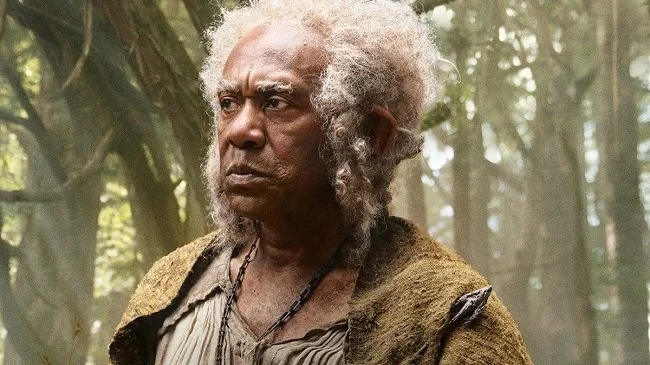
Lenny Henry as Sadoc Burrows
I was perusing my Twitter timeline last night and a tweet appeared from someone who doesn’t seem to care for the casting of Lenny Henry as a hobbit in the upcoming Amazon Prime TV show The Lord of the Rings: The Rings of Power. If you’re not familiar with Lenny Henry he’s a British comedian and actor of Jamaican heritage, who was one of first people of colour to establish himself as part of the cultural mainstream in the UK. He’s funny, smart and well respected. However, this particular individual on social media (we will not dignify them with a name check) was not happy about canonical authenticity being subject to the whims of representation. They tried to portray their objections as legitimate criticism based on a good faith argument, but some of the terminology they used clearly showed their true intent was passive aggressive dog whistle racism.
Setting aside twitter trolls, I’d like to briefly discuss the matter of representation, especially with regard to film and television. Simply put, representation is important. First off there are the moral and ethical reasons. Contemporary films and TV should accurately portray the world in which we live. Hence the diverse nature of society should be reflected both on the small and big screen. Furthermore, such depictions should be credible and fair. Secondly, representation is commercially viable. Paying audiences like to see people like themselves in the films and TV shows that they watch. Hence the success of the Blaxploitation genre during the seventies. Bruce Lee’s rise to fame also did much to make Asian actors and culture more accessible during the same decade. And if representation doesn’t matter, why does Hollywood continuously remake international films for its home market? Shall I also mention the commercial and critical success of Black Panther?
Films are commercial ventures. Directors and writers may well wish to talk about “art” but most major studios are in the movie business to make money. Films and TV shows are products. Representation increases financial viability. It’s as simple as that. So with this in mind, let us consider what happens when the rights to a major intellectual property, such as a beloved series of books, are sold to be adapted into a series of films or a lengthy TV show. The said IP will be repurposed to ensure that it meets certain criteria. These may include a specific rating, the inclusion of specific actors who have box office appeal, irrespective as to whether they are a good match for the part. And obviously representation is a factor. How exactly can a major production justify such potential changes from the source text? The key is the word “adaptation”. The bottom line is once the rights to an IP have been sold, all bets are off unless the original writer has some sort of creative control.
Hollywood has been altering plays, novels and other popular franchises since the film business started. Therefore, it is unrealistic to expect any adaptation of an IP that you enjoy to remain 100% authentic to the source text by default. You can make all sorts of arguments about why this shouldn’t be the case. For example, an author’s work should be respected and their artistic vision maintained and such like. However, such arguments seldom survive long outside of the rarified atmosphere of the classroom and tend to disappear upon contact with capitalism. The movie business is about making a return upon an investment and is not interested in philosophical arguments and ethical abstractions. If there reaches a point when the idea of a black actor portraying James Bond is deemed to be commercially viable, it will happen. Regardless of what the purists and the racists think or want.
Richard Roundtree as John Shaft
Returning to the matter of last night’s Twitter troll, what was noticeable was not so much their racist position which is tediously commonplace in fandom these days, but the way they lacked the courage of their convictions. They tried to represent their position as something it wasn’t. It wasn’t a good faith appeal regarding the sanctity of an author’s work, but just a cheap exercise in unsubtle bigotry. If you’re going to be racist, be upfront about it. As for all the other objections you hear when so-called fans aren’t happy about something, they’re equally as bogus. Despite claims to the contrary, no one can get into your head and retrospectively ruin your childhood. If you don’t like something, ignore it. Be an adult and rise above it. As for The Lord of the Rings: The Rings of Power, I hope it proves a success both critically and commercially. Especially if that pisses off all the bigots.







The Lord of the Rings: The Rings of Power Trailer
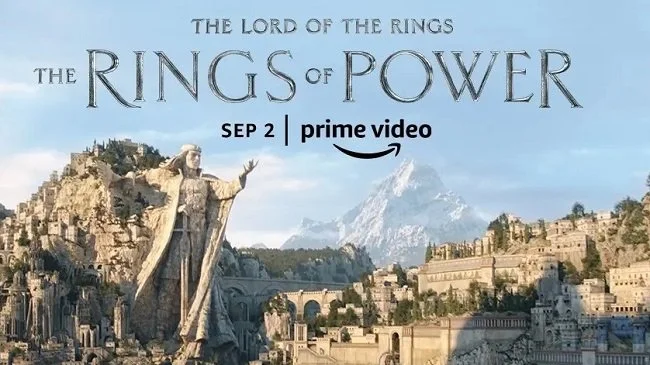
Finally the first teaser trailer for Amazon Prime’s forthcoming TV show set in the Second Age of Middle-earth has been released. The Lord Of The Rings: The Rings of Power will be released weekly on Amazon’s streaming service commencing September 2nd 2022. The first season consists of eight episodes. The series is a prequel to the events of The Lord of the Rings, depicting "previously unexplored stories" based on Tolkien's works. The show will include such iconic locations as the Misty Mountains, the elf-capital Lindon, and the island kingdom of Númenor. The Lord Of The Rings: The Rings of Power maintains the visual and design aesthetic of the existing Peter Jackson movies. Furthermore, composer Howard Shaw maintains his involvement as does artists and designer John Howe. Apparently, due to the Tolkien Estate being happy with the development of the show, Amazon had gained access to certain elements and passages from The Silmarillion and Unfinished Tales to include in the narrative arc.
Finally the first teaser trailer for Amazon Prime’s forthcoming TV show set in the Second Age of Middle-earth has been released. The Lord Of The Rings: The Rings of Power will be released weekly on Amazon’s streaming service commencing September 2nd 2022. The first season consists of eight episodes. The series is a prequel to the events of The Lord of the Rings, depicting "previously unexplored stories" based on Tolkien's works. The show will include such iconic locations as the Misty Mountains, the elf-capital Lindon, and the island kingdom of Númenor. The Lord Of The Rings: The Rings of Power maintains the visual and design aesthetic of the existing Peter Jackson movies. Furthermore, composer Howard Shaw maintains his involvement as does artists and designer John Howe. Apparently, due to the Tolkien Estate being happy with the development of the show, Amazon had gained access to certain elements and passages from The Silmarillion and Unfinished Tales to include in the narrative arc.
The trailer itself reveals no footage from The Lord Of The Rings: The Rings of Power. Its primary purpose is to formally announce the new TV show’s name and to set out its stall. However, it is worth noting that like the TV show itself, Amazon went all in with the actual trailer. The first season is alleged to have had a production cost of $465 million. Although no data appears to be available on the budget for the trailer, it features the talents of director Klaus Obermeyer, legendary special effects supervisor Douglas Trumbull renowned foundryman Landon Ryan. I’m sure such an ensemble production team does not come cheap. As for the teaser trailer itself, it is suitably evocative of ring forging and the threat of dark powers. The lush soundtrack is certainly in the established idiom of “the sound of Middle-earth”. It has piqued both mine and a good many other people's curiosity.
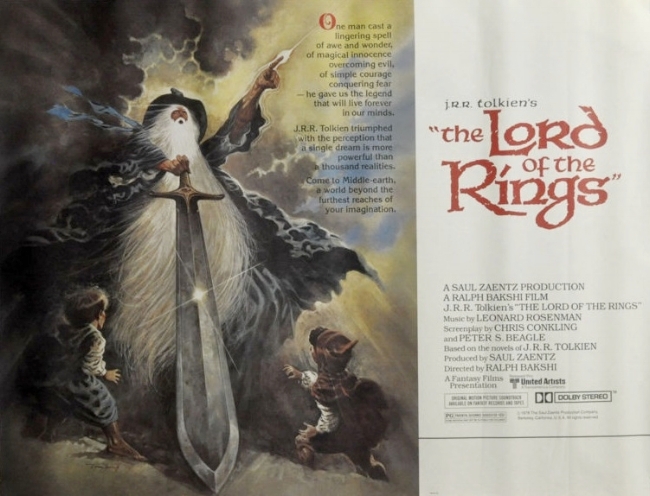
I recently discovered both of the original theatrical trailers for the 1978 animated version of The Lord of the Rings created by Ralph Bakshi. One is simply a portentous narration but the second is far more interesting. It features a montage of still images. Some of them are background paintings used in the movie, while others seem to be production art. The voice-over descends into hyperbole and is somewhat misleading, but you have to remember that the fantasy genre was not a common staple of the box office of the times. Like many films the pre-production process can often produce an inordinate amount of material that never makes it into the final edit. Some of this can be seen in the trailer. It’s interesting to see how Tolkien’s work has grown in popularity within popular culture over the last forty years and how that is reflected in the difference between the two trailers.