
5 of My Favourite Quality-of-Life Mechanics in MMOs
Over the years I’ve played numerous MMOs (to varying degrees of success). As a genre there are certain game mechanics that are standard and common to most games. Initially during the “golden age” of the MMORPG, there was a focus on collaborative team player. This meant that successfully undertaking group content required a spectrum of players in specific roles. This particular mechanic has diminished over the years but the genre still has numerous common tropes. Quest hubs, reputation factions, gear grinds and vertical levelling are just some that spring to mind. However, many developers in this field attempt to polish and refine these “default” systems, often with interesting results. So I thought I’d cite some specific examples of what I call “quality-of-life mechanics”. Frequently these are bog standard facets common to the MMO genre, that have been polished and refined in a particular game. Small things that just make a game more manageable and provoke a positive reaction as well.
Over the years I’ve played numerous MMOs (to varying degrees of success). As a genre there are certain game mechanics that are standard and common to most games. Initially during the “golden age” of the MMORPG, there was a focus on collaborative team player. This meant that successfully undertaking group content required a spectrum of players in specific roles. This particular mechanic has diminished over the years but the genre still has numerous common tropes. Quest hubs, reputation factions, gear grinds and vertical levelling are just some that spring to mind. However, many developers in this field attempt to polish and refine these “default” systems, often with interesting results. So I thought I’d cite some specific examples of what I call “quality-of-life mechanics”. Frequently these are bog standard facets common to the MMO genre, that have been polished and refined in a particular game. Small things that just make a game more manageable and provoke a positive reaction as well.
Neverwinter: Quest Path.
It frankly annoys me the way some game designers go out of their way to make navigating around their virtual world so damn difficult. Cities are often complex with non-linear road layouts and there are frequently esoteric quirks that you just have to figure out the hard way. I’m sure somewhere there’s a self satisfied dev whose smirking at how clever they’ve been, as you run around a major quest hub in an increasingly frustrated state, looking for a particular NPC or item. However Cryptic have addressed this matter head on with the Quest Path facility in the MMO Neverwinter. If you want a helping hand this game mechanic provides a sparkly trail that takes you directly to your next quest location. It is simple, functional and also purely optional. Purists can learn their way around if they prefer. Where as casual players, those with a poor sense of direction or individuals who prefer to focus on other aspects of the game can opt to avail themselves of this service. I really wish this was available in more MMOs.
The Elder Scrolls Online: Content Scaling.
Many older MMOs suffer from a common problem. Increases in level cap, along with an ever growing catalogue of content, lead to older material becoming redundant. There is no incentive to play older, lower level quests once you have reached level cap nor to revisit completed regions and instances. Furthermore, new players cannot play with veteran friends due to their obvious level differences. This is just poor game design and it also antagonises players. However, two years after its initial release, The Elder Scrolls Online tackled this very issue in late 2016 with the One Tamriel update. This allowed players of any level, in any faction, to travel to any other PvE zone and tackle appropriately-scaled content. Hence a veteran player can now group a newbie and both will equally benefit with regard to XP and loot drops. It is literally a “game changing” achievement that makes the game far more inclusive and open ups a wealth of previously gated content. Should this not be a default system in every MMO?
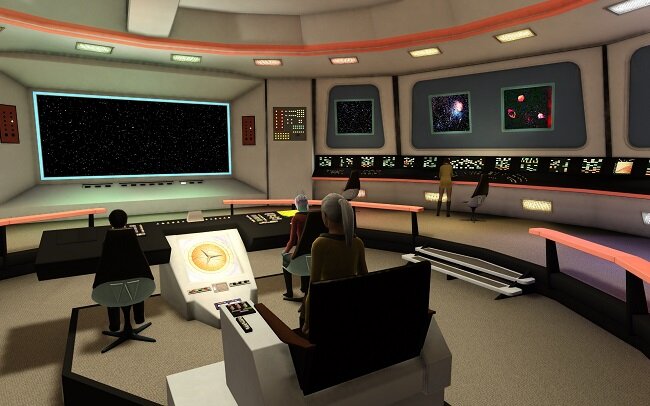
Star Trek Online: Upgrading Gear and The Exchange.
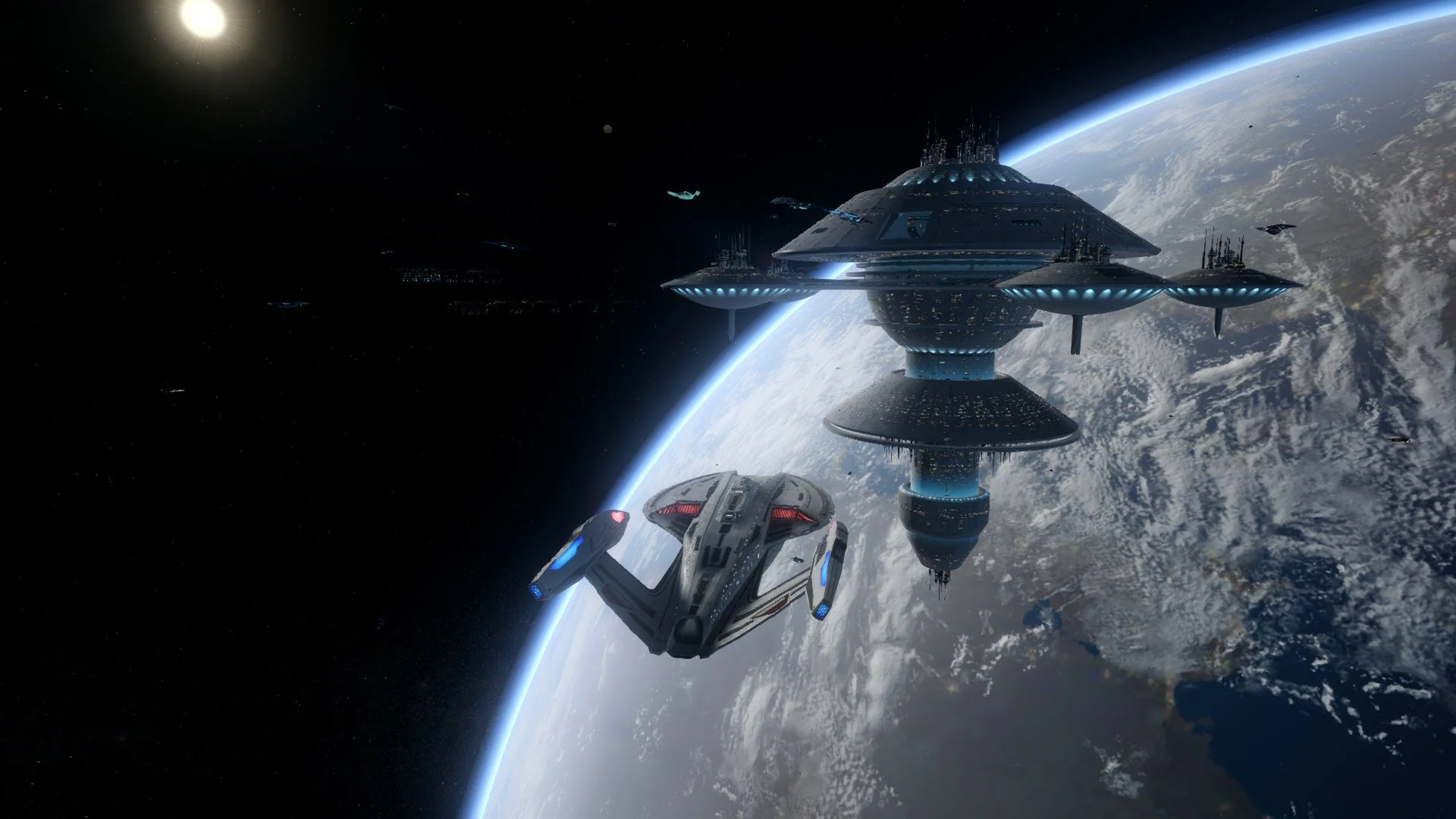
Cryptic’s MMO ode to the Star Trek franchise is far from perfect. Even after 10 years it still sports numerous bugs and as a game has never really hit its full potential. However, it does get a lot right and exudes an appropriate Trek vibe. It also includes not one but two straightforward systems that improve the game immensely. The first is the opportunity to upgrade gear and even change the statistical modifiers on it. Therefore if you take a liking to a Mark I item at the start of the game, you can retain it and upgrade it as your character progresses through the 65 levels. Yes, this can be quite a costly process with regard to using in-game resources but does means that not every item is doomed to obsolescence. You don’t have to unceremoniously ditch something you’ve worked hard to obtain. And the other thing that I feel STO does very well is its own unique version of “auction house” or The Exchange as it’s known in this case. Firstly STO runs on one shard, so there is a substantial customer base to interact with. Secondly, there are no listing fees at all. Thirdly, the moment an item sells you are notified and the cash (Energy Credits) go straight into your virtual wallet. Although hyperinflation is a thing (as it is in most MMOs), at least you don’t have to worry about selling items quickly and efficiently.
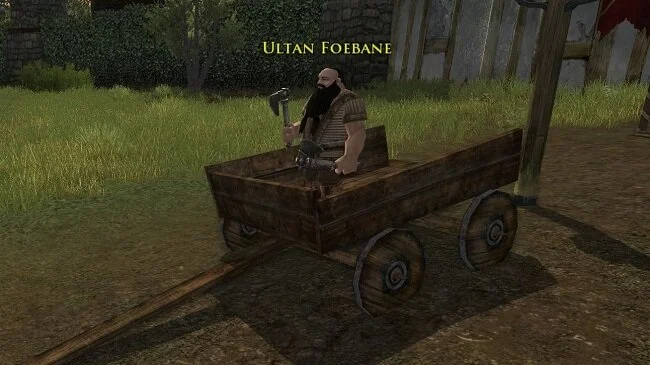
The Lord of the Rings Online: Auto Loot.
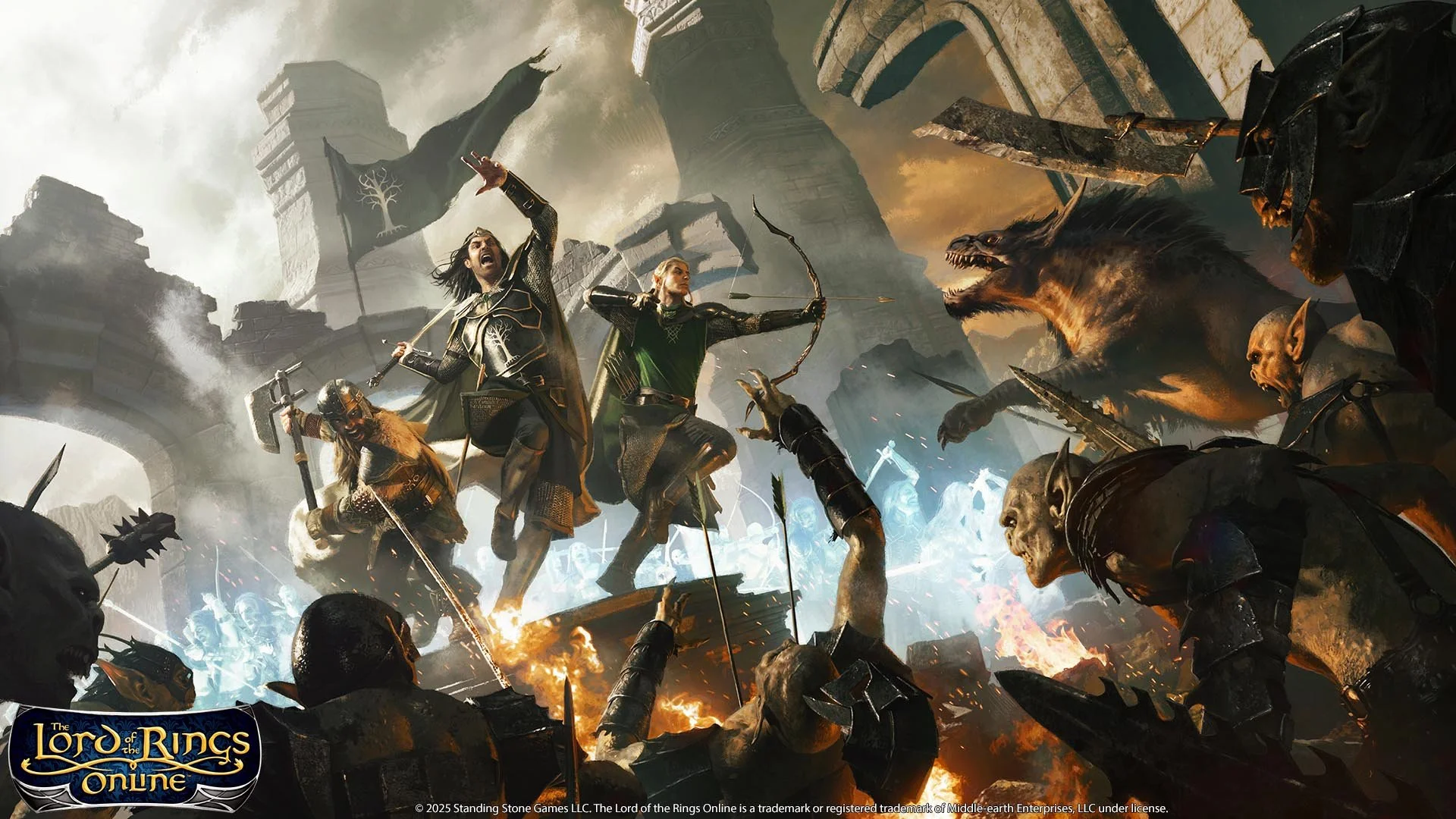
I find it ironic that one of the most old school and somewhat dated MMOs around, still manages to have a game system in place that is still lacking from more recent titles. The Lord of the Rings Online added auto loot to the game with the Rise of Isengard expansion back in 2011. Until then, you had to approach a defeated foe and manually collect your loot on a per item basis or as a whole. At the most you could assign this process to a specific key and hoover everything up within a small AoE but it was a pain. Sifting through loot at source always has been and remains so a potential problem. But auto loot changed this and did so in a radical fashion. The moment you now defeat an enemy, all loot is directly placed in your bags. Again for those who wish to sift manually, this setting can be toggled off but for us busy, lesser mortals, we can just blast through an area indulging in mass slaughter, safe in the knowledge that all loot has been collected. The only thing you have to be aware of is your respective bag space, and if you screw that up there’s a very generous overflow system. Again, shouldn’t this be the norm?
So these are five examples of “quality-of-life mechanics in MMOs” that I find invaluable. I’m sure there are plenty of others out there that can be referenced. Feel free to leave comments below of examples that you enjoy and would like to mention.



A Year in Gaming
Life is often cyclical, if you don’t believe me go watch The Lion King. I started 2018 playing The Lord of the Rings Online and by writing a post about how gamers collectively seem to repeat the same mistakes. And as the year and indeed the decade ends, I find myself once again playing the Yule Festival in LOTRO and reflecting upon how some games that garnered criticism over their egregious business models, have ended up as huge hits. It would appear that gamers are their own worst enemy. I shall leave the psychological analysis of paradox to others. From my perspective, irrespective of the iniquities of the video game industry and certain quarters of the gaming community, it has been a good year, gaming wise. I have enjoyed my time playing MMOs such as Star Trek Online, The Elder Scrolls Online and the aforementioned LOTRO. These and other titles have entertained me, provided me with an opportunity to unwind as well as affording me some much-needed social interaction. I particularly enjoy Wednesday evenings when I log into my Discord server and then chat and play collaboratively with longstanding gaming friends.
Life is often cyclical, if you don’t believe me go watch The Lion King. I started 2018 playing The Lord of the Rings Online and by writing a post about how gamers collectively seem to repeat the same mistakes. And as the year and indeed the decade ends, I find myself once again playing the Yule Festival in LOTRO and reflecting upon how some games that garnered criticism over their egregious business models, have ended up as huge hits. It would appear that gamers are their own worst enemy. I shall leave the psychological analysis of paradox to others. From my perspective, irrespective of the iniquities of the video game industry and certain quarters of the gaming community, it has been a good year, gaming wise. I have enjoyed my time playing MMOs such as Star Trek Online, The Elder Scrolls Online and the aforementioned LOTRO. These and other titles have entertained me, provided me with an opportunity to unwind as well as affording me some much-needed social interaction. I particularly enjoy Wednesday evenings when I log into my Discord server and then chat and play collaboratively with longstanding gaming friends.
In many ways, 2019 was just the same as any other year. If I may quote myself, I wrote on January 1st "it does not seem unreasonable to expect more shitty video games and questionable business practises in 2019” and broadly that has proven true. The video game industry shovelled out yet more substandard products such as Mario Kart Tour, Tom Clancy's Ghost Recon Breakpoint and NBA 2K20. All of which are essentially the bare bones games with further content gated behind paywalls and microtransaction. Yet despite the inherent dishonesty of the “pay to start” business model, these titles sold and sold well, thus reminding us that people are the fundamental problem and as a result we get the gaming industry that we deserve. And as for the video game industry itself, it hardly covered itself in glory (again). The latest “trick” seems to be to release a game, get it reviewed and rated and then add an in-game store at a later date. Thus you can avoid any negative publicity during the initial launch window. And then of course there was the Blizzard debacle which raised the inherent dilemma in doing business with an authoritarian country such as China. Oh and “crunch” culture, institutionalised misogyny and general male centric douche baggery still seems to prevail in the industry.
However, 2019 wasn’t all doom and gloom. There are always good titles to be found if you look hard enough. The Untitled Goose Game was an utter joy and certainly seemed to touch a cultural never but in a good way. The Outer Worlds found popular acclaim and seemed to compensate for Fallout 76 as a spiritual successor to that franchise. I personally was very pleased by the arrival of Red Dead Redemption 2 on the PC. Yes, the launch was somewhat farcical and I had to downgrade my PC’s BIOS to play the damn thing but the game certainly lived up to my expectations, with its complex and nuanced narrative. And not all video game developers are corporate monstrosities. Compare 2K or EA to Rebellion Developments and the contrast is obvious. The latter is a company that I don’t feel the need to take a shower after buying one of their games. Plus, 2019 proved that there are still plenty of game bloggers, streamers and podcasters who are interested in producing content in a thoughtful, constructive and engaging manner. Too many subreddits are insular, angry communities that “shit in their own watering hole”. Who needs that when you can find honest and genuine content from gamers who enjoy what they play, rather than recriminate over how they think the community and industry should be?
For me video games continue to provide an entertaining, social and economic leisure activity. They certainly dove tail neatly into my lifestyle and real-world commitments. And so as I await the arrival of 2020, I shall enter the new decade (when framed in such terms it sounds somewhat depressing) pretty much doing the same as I did twelve months ago. I see no reason to stop playing the three MMOs that have been the mainstay of my gaming activities for so long. They are functional and provide both long and short gameplay sessions as well as clear goals. As all these games are relatively healthy from a business perspective, there is regular new content throughout the year. No doubt I will try several single player games in 2020; some of which will be planned purchases where others will be bought on a whim. I may even investigate some of the free titles I’ve acquired from the Epic Store or some of the obscure games I’ve collected in discount bundles over the years. I’m certainly no expecting myself or the video game industry to have any sort of epiphany over the next twelve months. I shall just anticipate more of the same, which after all is life’s default position.















Login Incentives in MMORPGS
A major challenge for any MMO is to keep players logging in to the game. Obviously, regularly adding content and ensuring that there are sufficient quests, activities and tasks for players to undertake is essential. However, experience has shown that no matter how much content developers add to an MMORPG, players will always veraciously consume it and want more. Hence you need an additional “carrot on a stick”. Something that get’s player sufficiently interested to log into a game, even when they don’t have anything especially compelling to do. Login incentives are designed to do exactly that. They offer of some bauble or trinket that motivates you to log into a game once a day. Hopefully once you login, you may then find something to occupy yourself, either on your own or with fellow guild members. And of course the player who is actively playing may well even purchase something from the in-game store. At the very least, a successful login incentive contributes towards active player statistics. If those figures are presented in the right fashion on paper, they can bolster a declining population.
A major challenge for any MMO is to keep players logging in to the game. Obviously, regularly adding content and ensuring that there are sufficient quests, activities and tasks for players to undertake is essential. However, experience has shown that no matter how much content developers add to an MMORPG, players will always veraciously consume it and want more. Hence you need an additional “carrot on a stick”. Something that get’s player sufficiently interested to log into a game, even when they don’t have anything especially compelling to do. Login incentives are designed to do exactly that. They offer of some bauble or trinket that motivates you to log into a game once a day. Hopefully once you login, you may then find something to occupy yourself, either on your own or with fellow guild members. And of course the player who is actively playing may well even purchase something from the in-game store. At the very least, a successful login incentive contributes towards active player statistics. If those figures are presented in the right fashion on paper, they can bolster a declining population.
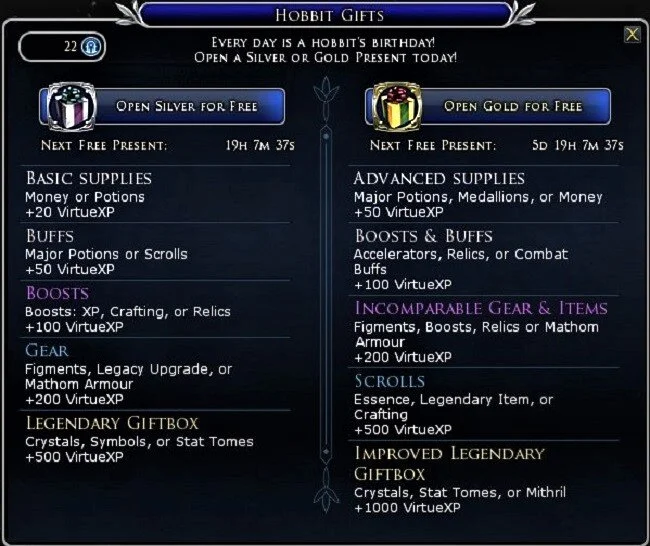
Hobbit Presents were added to The Lords of the Rings Online as part of Update 11: Treachery of the White Hand in May of 2013. Like any other login incentives, they do guarantee that players actively play the game but they provide another reason for LOTRO players to at least login and collect their “reward”. Broadly speaking these rewards are adequate. Silver presents are available daily and gold rewards once every seven days. Upon clicking on the Hobbit Presents interface, players receive a random in-game item. This can range from food, potions, XP, reputation and slayer deed buffs all the way to high-end armour and jewellery. All rewards are account bound so boxes containing level appropriate items can be transferred among players various alts. More often than not, most of the regards are trivial especially for level cap characters. However, they can be sold to vendors, so at the very least they can provide a small stream of revenue on a daily basis. Sometimes items such as the Universal Toolkit can be very beneficial.
Similarly, Daily Rewards were added to The Elder Scrolls Online with Update 18 in May 2018. At the start of each month, a calendar displaying rewards for each day becomes available and items can be claimed in chronological order. Again most of the items tend to be food and other consumables that provide a buff. There are also XP scrolls and modest stipends of the games various currencies. However, non-combat cosmetic pets are also included and there are usually free samples of the latest Crown Crates. These contain a broad spectrum of rewards and on several occasions, I have obtained a new mount just by using these free samples. The gold stipends are also a welcome top up to one’s overall in-game currency reserves. Like other MMOS these free rewards are not character bound so can be swapped between alts or they go into an account shared currency wallet. The Daily Rewards, like Hobbit Presents, can only be claimed by one alt a day.
The question remains, are these login incentives genuinely sufficient to get an indifferent player to log into a game? If you have become burnt out on a particular MMORPG, then I’d say no. I think you have to have some sort of ongoing commitment to a game to begin with. Then such incentives can be enough to give you a little nudge and sign into a game. Of the two systems I have mentioned, I personally prefer that found in ESO. I prefer to know in advance what rewards are available for the entire month. At present the December schedule shows that there are some free Crown Crates available on December 21st. I must therefore not skip too many days of logging in, or else I’ll find that the reward is inaccessible. If you fail to login each day, a reward is deducted from the end of the monthly schedule. The random nature of Hobbit Presents in LOTRO is less compelling system. The allocation of rewards is a lottery. However, there is potential to win something of note, so there is still a degree of motivation to login. Yet regardless of the quality of login incentives, they are still no substitute for having tangible activities to do in a game and should never bee seen as anything more than what they are.
The Esoteric Nature of Crafting in MMORPGs
I was initially going to call this post “crafting can fuck right off” but I felt that was a somewhat bellicose opening gambit and a little hyperbolic. So I’ve toned it down to “the esoteric nature of crafting in MMORPGS”. Now to begin with, I tend not to craft when playing MMORPGs. The effort to reward ratio is often insufficient and I have yet to find a crafting system that is engaging and fun. However, for me the biggest sin that crafting can commit is being deliberately arcane and obtuse “with malice of forethought”, if I may invoke legal analogy. Don’t get me wrong, I have no problem with game systems and mechanics being complicated. Intricacy can be both intriguing and rewarding if presented correctly. However, all too often game developers cross over the line, stepping from “complexity” to “fucking annoying”. For example some card games such as Poker can have complex rules but mastering them transforms the proceedings from random chance into a game of skill. But at the other end of the spectrum there’s Fizzbin, which was invented purely to be frustrating due to its arcane nature. I frequently find that crafting in MMOs is just like Fizzbin. Except they’re not amusing or ironic, just tedious and irritating.
I was initially going to call this post “crafting can fuck right off” but I felt that was a somewhat bellicose opening gambit and a little hyperbolic. So I’ve toned it down to “the esoteric nature of crafting in MMORPGS”. Now to begin with, I tend not to craft when playing MMORPGs. The effort to reward ratio is often insufficient and I have yet to find a crafting system that is engaging and fun. However, for me the biggest sin that crafting can commit is being deliberately arcane and obtuse “with malice of forethought”, if I may invoke legal analogy. Don’t get me wrong, I have no problem with game systems and mechanics being complicated. Intricacy can be both intriguing and rewarding if presented correctly. However, all too often game developers cross over the line, stepping from “complexity” to “fucking annoying”. For example some card games such as Poker can have complex rules but mastering them transforms the proceedings from random chance into a game of skill. But at the other end of the spectrum there’s Fizzbin, which was invented purely to be frustrating due to its arcane nature. I frequently find that crafting in MMOs is just like Fizzbin. Except they’re not amusing or ironic, just tedious and irritating.
I tried crafting in The Lord of the Rings Online fairly recently after playing for 11 years. Initially it was simply a case of gathering raw material, refining them and gaining XP in the appropriate skill. But after a while additional resources were needed to progress and advancement became ponderous. Hence, I quickly abandoned this aspect of the game. Sadly, I did not learn my lesson. While recently playing The Elder Scrolls Online, I discovered several Crafting Motif Books that allow you to cosmetically augment your gear. However, my hopes and dreams of looking dapper and stylish in-game were quickly dashed. The use of these books are dependent upon having certain crafting skills at a specific level. For example, Crafting Motif 13: Primal Style “Requires Rank 6 or greater of any one of the Metalworking, Tailoring or Woodworking passives”. Now at first glance I thought this meant that the I had to have any one of those three skills at level 6. Turns out that is not the case. Ranking is not equivalent to level. There are 50 levels and 10 ranks. Rank 6 is level 25. Now some of you may be asking at this point, “what’s the problem here”? Well, how about the fact that none of this information regarding skill levels and rankings is immediately available in the game? Turns out if you wish to comprehensively learn about crafting in ESO, you have to do so outside of the game.
“I am no one to be trifled with”
Now call me old fashioned but I have always thought that if a game makes you tab out while you’re actively playing, to find something out via a third-party website, then it is doing itself a major disservice. And that is putting it mildly. It is an abject failure by the game developers. It is also fucking annoying. So far, my experience with crafting in ESO can be filled under such. However, I am no one to be trifled with so I have doggedly worked on increasing my Blacksmithing skill. I am currently bankrupting myself in-game by buying purple heavy armour and two-handed weapons and deconstructing them. The XP gained has so far got me to level 15 but it has also cost about 25,000 gold. It may be financially more practical to farm Dolmen and deconstruct the various weapons drops, although this may well take longer as loot is random and not always of the type required. But I intend to use my Crafting Motifs, come hell or high water. And ZeniMax Online Studios can go piss up a rope, as can crafting per se in the MMO genre. I will not be prevented from looking fabulous in this or any other game due to the whims and caprices of those who don’t know the subtle difference between complex and esoteric.
International Picture Posting Month: The Elder Scrolls Online
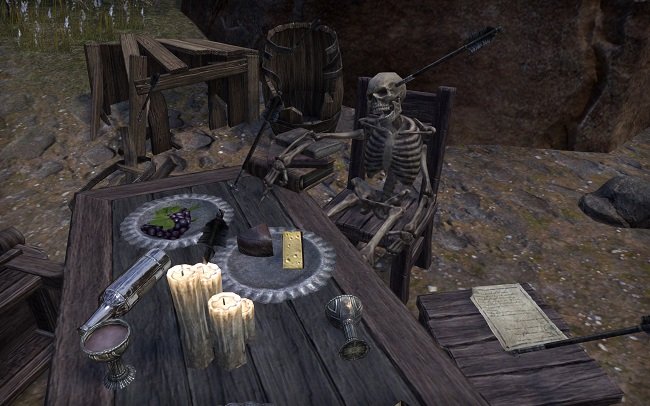
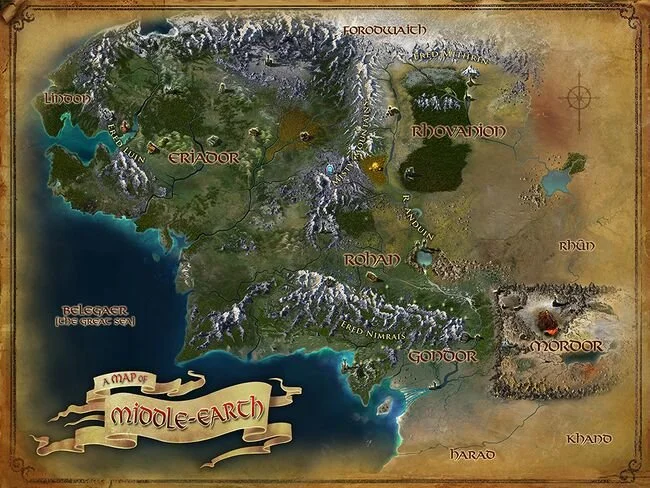
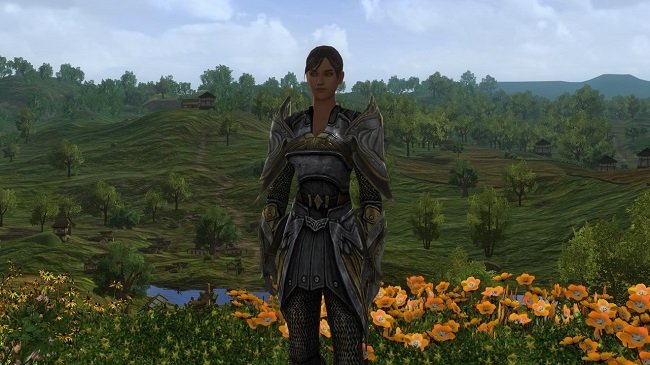
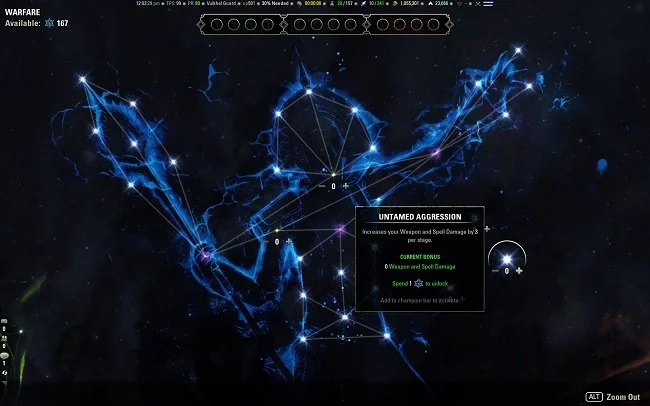
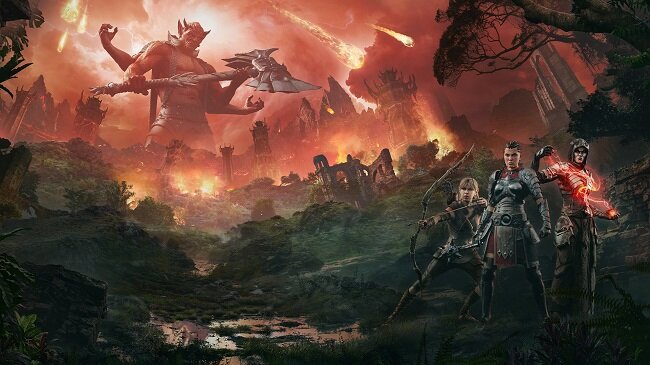
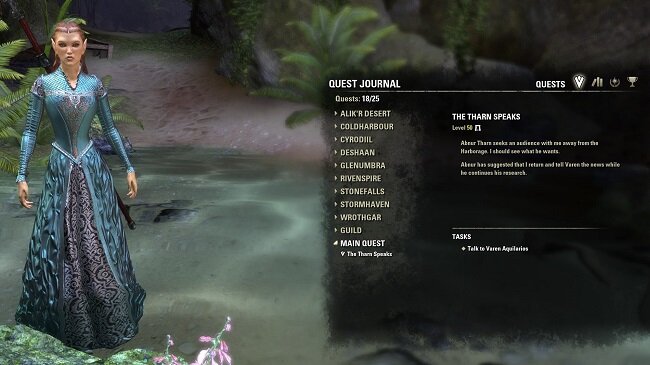
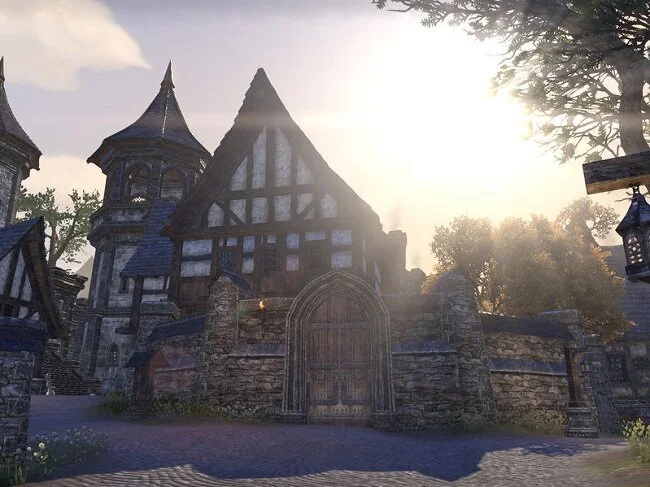
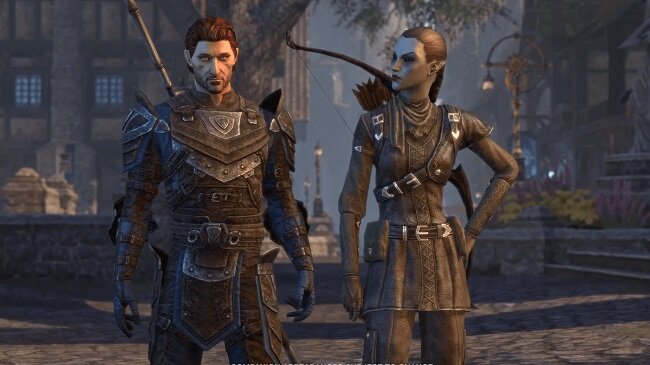
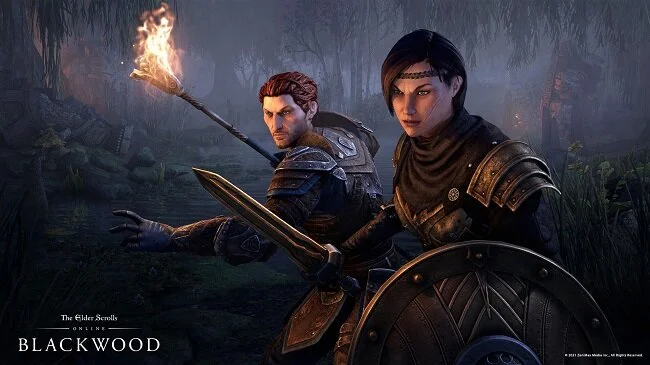
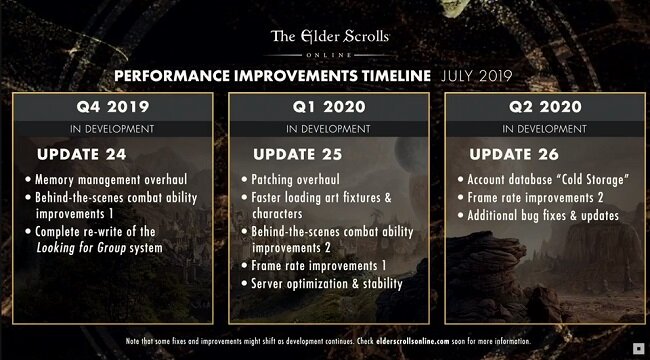
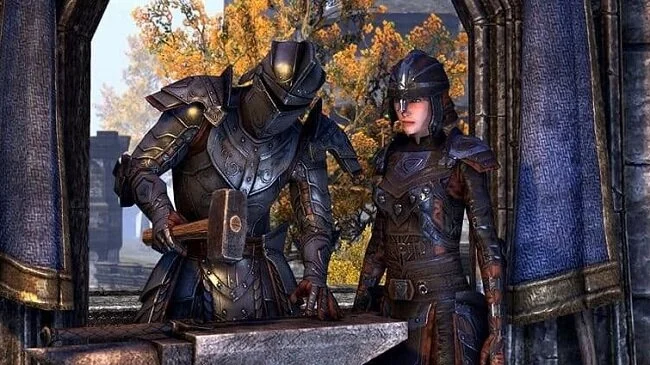
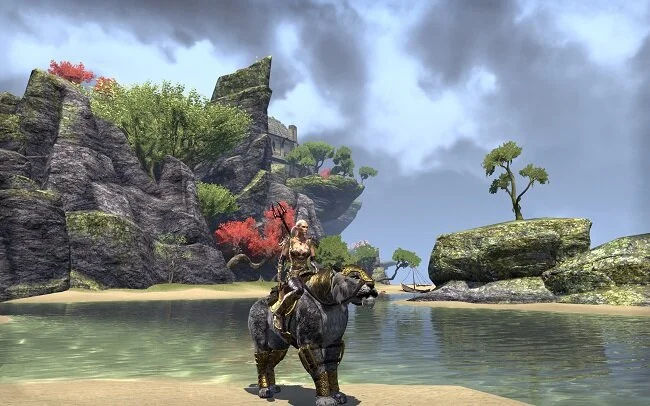
As my first post for International Picture Posting Month, I have decided to share some pictures and thoughts on the MMORPG, The Elder Scrolls Online. Out of the three games from this genre that I currently play, it’s the one that I’m currently enjoying the most. It has plenty of content to play through, the virtual world is immersive and the stories, characters and lore are very detailed and satisfying. As a more recent MMO, the game engine is robust and the visuals are far from dated. The game mechanics are multi-layered but combat is straightforward. There is no obvious skills bloat as you choose what you want on your hotbar. I also greatly enjoy the ambient music and recurring themes that play throughout the game. ESO is both solo and group friendly. You can also greatly augment your UI and the way you interact with the various systems, through the use of addons if you like. Alternatively, if you feel bold enough, then you can go with the default layout. From my perspective, ESO offers a great deal and ticks many of the boxes I favour. Yes it can have its foibles but name me an MMO that doesn’t?
As my first post for International Picture Posting Month, I have decided to share some pictures and thoughts on the MMORPG, The Elder Scrolls Online. Out of the three games from this genre that I currently play, it’s the one that I’m currently enjoying the most. It has plenty of content to play through, the virtual world is immersive and the stories, characters and lore are very detailed and satisfying. As a more recent MMO, the game engine is robust and the visuals are far from dated. The game mechanics are multi-layered but combat is straightforward. There is no obvious skills bloat as you choose what you want on your hotbar. I also greatly enjoy the ambient music and recurring themes that play throughout the game. ESO is both solo and group friendly. You can also greatly augment your UI and the way you interact with the various systems, through the use of addons if you like. Alternatively, if you feel bold enough, then you can go with the default layout. From my perspective, ESO offers a great deal and ticks many of the boxes I favour. Yes it can have its foibles but name me an MMO that doesn’t?
I currently have three characters at level cap in ESO. A High Elf Sorcerer (Aldmeri Dominion), an Argonian Necromancer (Ebonheart Pact) and an Imperial Dragonknight (Daggerfall Covenant). Although I’ve done the most content with my Sorcerer (she’s my oldest character), I’m actually enjoying the Dragonkinight the most, so I suspect they’ll end up as my primary alt. There’s something very satisfying about melee combat with a two-handed weapon. Combined with heavy armour and a strong Stamina build, I like the sheer survivability of the class. I use a bow as my secondary means of attack and find that it compliments things immensely. I can pick off one or two mobs before the third reaches me. Then I switch to my greatsword and swing away. I’m also trying to play through the game in some semblance of narrative order on this alt. This greatly enhances my gaming experience as I enjoy the complexity of the lore.
I recently decided to take advantage of becoming a Werewolf in ESO and its associated skills line. Unlike Vampirism that requires far too much maintenance for my liking, Lycanthropy provides not only a new Ultimate skill but an entire set of five skills while transformed. Furthermore, if used in a delve or dungeon, if you continuously “devour” your victims you can remain in Werewolf form for a considerable amount of time. It is also a good way of tackling boss fights in ESO as you become very robust while in this transformed state. Like other skills in the game, all the base Werewolf abilities can be morphed. I chose to augment the standard Werewolf Ultimate into Pack Leader, as it changes your appearance to that of a white Werewolf and also provides you with two Wolf support companions. I do not know if it is the best choice from a technical or statistical perspective but it certainly looks damn cool.
In addition to the pictures in this post, here is a link to a gallery of screenshots from ESO via Google Photos. All are available at the original screen resolution of 1920 x 1200. These include images of my various alts, Dolmen farming in the Alik’r Desert and the Pack Leader Werewolf transformation.




ESO: The Imperial City Storyline
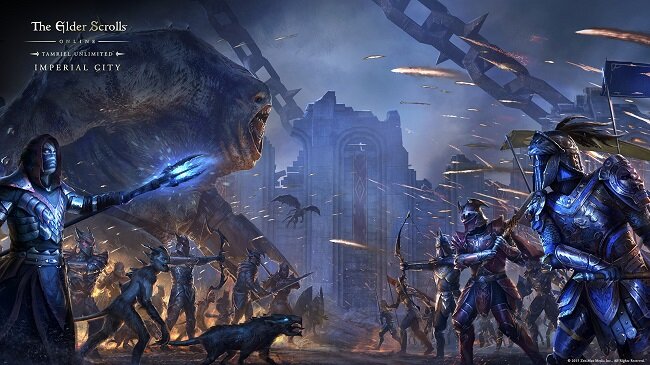
I raised the question in a previous post as to what’s the best way to follow the various stories in The Elder Scrolls Online in an orderly, coherent fashion. After some further research, it would appear that the most practical solution is to play through all the games DLC and chapters in release order. Hence, after finishing the main and faction storylines (in my case the Daggerfall Covenant), the next place to go is The Imperial City. Now I was under the impression that Cyrodiil was just a pure PVP zone but it would appear that there are 8 PVE quests that have a narrative arc. I was most pleased to learn this as I don’t like to miss out on content, especially if it sheds light on the lore and advances existing plot and themes. However, the problem with this series of quests is that despite being PVE content that requires you to kill Daedra mobs, you are still operating within an PVP zone. So you’re at risk of getting picked off by other players of differing factions while undertaking these quests.
I raised the question in a previous post as to what’s the best way to follow the various stories in The Elder Scrolls Online in an orderly, coherent fashion. After some further research, it would appear that the most practical solution is to play through all the games DLC and chapters in release order. Hence, after finishing the main and faction storylines (in my case the Daggerfall Covenant), the next place to go is The Imperial City. Now I was under the impression that Cyrodiil was just a pure PVP zone but it would appear that there are 8 PVE quests that have a narrative arc. I was most pleased to learn this as I don’t like to miss out on content, especially if it sheds light on the lore and advances existing plot and themes. However, the problem with this series of quests is that despite being PVE content that requires you to kill Daedra mobs, you are still operating within an PVP zone. So you’re at risk of getting picked off by other players of differing factions while undertaking these quests.
I discovered this the hard way. I was attempting the second quest in the series, The Imperial Standard, which takes place in the Nobles District of the Imperial City. At the time, the map indicated that the Daggerfall Covenant was broadly in control of this area. I had to defend three doors of a Garrison base from waves of Daedra. This in itself was quite challenging and would have been far easier in a group. However, a passing zerg from the Aldmeri Dominion put pay to my plans and I was summarily defeated. I made a second attempt to return to the area but by then the balance of power had shifted. It then became very apparent that successfully navigating the Imperial City and following this storyline was dependent on first being part of a competent group and secondly, on whether the various areas you have to visit are free from players from rival factions. I therefore withdrew from the PVP zone and returned to the Glenumbra. I have subsequently decided to play through the Orsinium DLC next.
Now I’m not a fan of the use of gated narrative of this kind and find these sorts of decisions by the developer’s to be very frustrating. There is a self-contained storyline set within The Imperial City DLC that makes for an enjoyable semi-sequel to the main story. I won’t spoil the plot but let it suffice to say that Molag Bol has a “plan B”. Not all MMO players are motivated by storylines and I’m sure many ESO players will not care that there is a narrative thread that they may miss out on. But equally there are plenty of players who are heavily invested in the “plot” of ESO. It would be nice if ZeniMax scould provide some sort of separate instanced mode where you could play through this content without ongoing PVP around you. If they wanted to strip out the rewards such as the Tel Var Stones (the premium currency that is bespoke to this PVP zone) then I would be fine with that. At the very least could they not provide an NPC elsewhere in the storyline, that gave a detailed summary of what happened in this part of the plot, if you have to miss it?
However I did find an interim solution to this problem. One which at least allowed me to follow the story. I did some digging around on YouTube and found a play through of the entire questline I missed. The video had all the dialogue options, sans the combat. It was also captured via a PS4, so it was interesting to see someone play just using the default UI, without any addons. I was fascinated by how haphazard navigating the map was with an addon mini map. Story wise, it was also nice to see the rogue Daedra Lyranth feature in the plot once again. One of the things the ESO writers do well it integrate characters into multiple story arcs. It makes perfect narrative sense that your path will cross the same people as you progress through the DLC etc. If like me, you don’t like to miss out on plot detail, here is the YouTube video of The Imperial City playthrough. I cranked the speed up to 1.5 and could still keep up with the dialogue. It also reduces the running time of the video accordingly.
Progressing in an Orderly Fashion in ESO
Whenever I start a new MMO I tend to research the various classes and make an informed decision about which one to choose as my primary character. This policy has worked out well over the years and therefore compared to other players, I don’t have multiple alts across numerous games. That’s not to say that I’m averse to creating a new character, I simply need a good reason to do so. When I do, its usually because there’s an option to experience a different story. Hence, I currently have three alts in The Elder Scrolls Online. Last night I reached the current level cap of 50 with my Imperial Dragonknight, having recently completed the Daggerfall Covenant storyline. I have now experienced all three faction stories (which I have enjoyed) and more importantly, have learned what is the best way for me to progress through the game. ESO offers players the chance to play the MMO in a manner that suits them. If you want to simply travel Tamriel and do things as you go along, then you may. It’s a very flexible in this respect. But if you want to play in a more structured way, it can be a little confusing navigating a linear path. So here are a few tips I’ve learned the hard way.
Whenever I start a new MMO I tend to research the various classes and make an informed decision about which one to choose as my primary character. This policy has worked out well over the years and therefore compared to other players, I don’t have multiple alts across numerous games. That’s not to say that I’m averse to creating a new character, I simply need a good reason to do so. When I do, its usually because there’s an option to experience a different story. Hence, I currently have three alts in The Elder Scrolls Online. Last night I reached the current level cap of 50 with my Imperial Dragonknight, having recently completed the Daggerfall Covenant storyline. I have now experienced all three faction stories (which I have enjoyed) and more importantly, have learned what is the best way for me to progress through the game. ESO offers players the chance to play the MMO in a manner that suits them. If you want to simply travel Tamriel and do things as you go along, then you may. It’s a very flexible in this respect. But if you want to play in a more structured way, it can be a little confusing navigating a linear path. So here are a few tips I’ve learned the hard way.
When you create a new character, if it is your first, then you will be obliged to play through your respective class tutorial. It’s not particularly complex and doesn’t last too long. It’s designed to provide an overview of basic combat and your skills. All subsequent alts can skip the tutorial. Which zone you start in comes down to which version of ESO you have purchased. If you’ve bought the base edition of the game, which now includes the Morrowind chapter (formerly called an expansion), you’ll find yourself here. If you’ve bought all subsequent chapters, you’ll start the game in Elsweyr. Now I understand from a business perspective why developer’s ZeniMax want new players to start in the latest zone but if you enjoy the MMO genre for narrative reasons, it can be confusing to begin the story here. So I would suggest starting the main story which sets up the lore and gives you an overview into the social and political situation in Tamriel.
To do this your new alt to the nearest major city in the zone you are currently in and you’ll be approached by a hooded figure who bestows Soul Shriven in Coldharbour quest. This will set you on the main story path. Not only does it establish the lore but it also rewards the player with some decent gear as well as skill and attribute points. There are 13 parts to the main story, however I would not recommend burning right through them all at once. Although content scales in ESO, some of these quests can be quite taxing, so you may want to attempt them when you have more skills and attribute points as well as robust gear. Therefore spread the main story quests out as you progress. There is also a questline that is specific to your faction. After you’ve completed the Soul Shriven in Coldharbour quest you will be ported to the first zone of either Aldmeri Dominion, Daggerfall Covenant or the Ebonheart Pact. This will start you on your faction storyline. Playing through this will further inform you about events in Tamriel and provide narrative continuity. You can also do simple regional quests in parallel to these as they are often linked.
If you are not interested in the story in ESO then you can simply do what you like with no consequences. However, a structured approach to content based upon the unfolding plot does have advantages. Clearing a zone using the in-game guide which lists all content, means that you’ll earn Skyshards (which provide additional skills points) and unlock achievements which give further rewards. However, it is beneficial to note the following while levelling. The main story, along with the stories for the Fighters and Mages Guilds reward players with some robust weapons upon completion. Therefore, you may want to hold off finishing the final quests associated with all of these stories until you are level 50. You will then be rewarded with purple quality level cap items that are appropriate for end game. If you receive these weapons while below 50, you will quickly out level them, rendering them useless.
ESO does at times feel like a game to two halves. Although levelling is fun and the quests are very engaging, all your armour and assorted gear feels very ephemeral. It’s not until you reach cap that you start to focus more upon the minutiae of your build. Unlike other MMOs, ESO doesn’t offer you a selection of quest rewards where you pick what’s appropriate for you class. So you can at times find yourself in a situation where you’re gear score is low because you haven’t received items that are suitable for your class. Now it can be argued that if you venture into a few public dungeons or do Undaunted daily quests you may obtain better armour and jewellery. Another solution is to craft what you want or to simply buy base level items from vendors and add Glyphs to append their stats. But not everyone wants to craft of do group content. My solution to this problem is to farm Dolmen in the Alik’r Desert. It won’t suit everyone but it’s a practical means to gain XP (especially if you use an Experience Scroll), earn gold and obtain relatively good gear. It is also a good way of levelling various skill lines and experimenting with different weapons.
How you play ESO is very much up to you. My approach works for me and the foibles of my personality but I’m sure it won’t suit everyone. Because I’m not in a major raiding guild and my gameplay is mainly PVE content and a few public dungeons, I’m not heavily invested in creating a really specific and bespoke build. I just want to be able to survive and do reasonable damage. Hence, I have followed generic builds that I’ve found online, equipped skills that are relevant to how I play and put my Champion points into practical resources. Also, there is no need for the average player to buy and equip themselves entirely with gold quality gear. Purple is fine for armour and jewellery, just ensure your weapon is gold and you’ll be adequately prepared. Just make sure that you put some thought into the stats and buffs that certain sets offer. So if you like to progress in an orderly fashion when playing MMOs, then it will be down to you to impose some structure upon ESO. You don’t need to keep notes and maintain a spreadsheet but it does help to have some idea of what you want to do, rather than just flying by the seat of your pants.
Skills Rotation
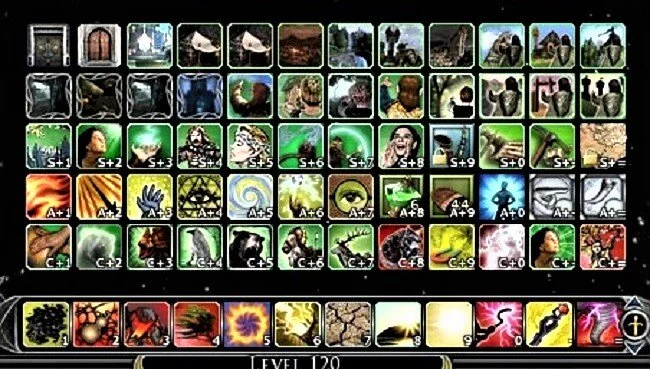
While conducting some general housekeeping in The Lord of the Rings Online, I decided upon streamlining my “quickslots” as developers Standing Stone Games refers to them. Being an MMORPG from well over a decade ago, the game has a multitude of skills. By the time your character reaches level cap of 120, it is entirely possible to have filled all 72 of the available slots. If you have a combat pet, then you’ll receive another 11 buttons to “mash”. Now this situation got me thinking. I recollect a conversation I had about a year ago, when I was doing some group content in LOTRO. It wasn’t going especially well so there was a discussion about tactics and what specific skills to use. To cut a long story short, it became apparent that many players (including myself) did not know the exact name of all the skills that adorned their quickslots. Furthermore not everyone was au fait with the nature and purpose of each skill and how one could trigger another. Similarly not all were aware that some skills could be augmented by the use of another.
While conducting some general housekeeping in The Lord of the Rings Online, I decided upon streamlining my “quickslots” as developers Standing Stone Games refers to them. Being an MMORPG from well over a decade ago, the game has a multitude of skills. By the time your character reaches level cap of 120, it is entirely possible to have filled all 72 of the available slots. If you have a combat pet, then you’ll receive another 11 buttons to “mash”. Now this situation got me thinking. I recollect a conversation I had about a year ago, when I was doing some group content in LOTRO. It wasn’t going especially well so there was a discussion about tactics and what specific skills to use. To cut a long story short, it became apparent that many players (including myself) did not know the exact name of all the skills that adorned their quickslots. Furthermore not everyone was au fait with the nature and purpose of each skill and how one could trigger another. Similarly not all were aware that some skills could be augmented by the use of another.
Naturally there will be high end players who will read this and scoff “well I know what every skill is and what it does”, to which I say, “good for you”. But putting aside the moral judgement that always seems to go hand in hand with these sorts of discussions, I suspect that there are many players, not only in LOTRO but many other MMORPGs, who do not use their skills in an optimal fashion. They simply select what works for them. I also think its safe to assume that some player have the skills on their quickslots in the order that they were acquired. When they play, the simply work through them from left to right. In more contemporary MMOs such as The Elder Scrolls Online, you get to pick what skills are on you hotbar and the number is restricted to six (5 regular and 1 ultimate) which makes things easier to manage compared to the skills bloat that you find in LOTRO. But I suspect that many ESO players still do not pay as much to attention to the specific details of their skills as the developer’s would like.
When the average player (and that in itself is a hotly debated term) starts a new MMO, they are faced with finding a suitable path between learning the game’s mechanics and progressing as well as having fun. At lower levels, skills in many MMOs are simple and straightforward to understand. But as you progress skills can become more complex and interconnected. In ESO there is the extra dimension of morphing skills and choosing between two subtle variations. It is often round about here that players may start skipping over such information. For everyone that loves number crunching, understanding the maths behind each skill and min-maxing, there are two other players that don’t want their leisure activity to become a job or a school lecture. I have at times been guilty of this, although now I am very aware that the wrong choice can mean that I gimp myself. But this mindset exists and manifests itself in many curious ways. I know players who will never use food or potions because it just “over complicates things”. Such systems means you have to carry more stuff in you bags and worry about when not use them.
I recently did some research regarding ESO because I was finding melee combat difficult with a my Dragonknight. Turns out my choice of skill wasn’t the issue and that I just needed to be more mobile in combat. Having cut my teeth playing older MMOs such as LOTRO, I still find myself at times remaining static when in combat, instead of moving around the target. I have also discovered the importance of a lot of the passive skills and how they can boost stats and augment combat. Again, I’m sure I’m not alone in being nominally oblivious to the depths of the games systems. Yet despite these gaps I both my and other players knowledge, it doesn’t seem to be as much an impediment to our enjoyment of the game as some would think. Although we may not be killing mobs as efficiently as we can, we’re having fun doing things our way and on our terms. If it ain’t broke, then don’t fix it. Until we reach a point in the game when we can’t beat a boss due to our poor grasp of the game mechanics and our own skills. Then it will be everyone else’s fault.
Dragon Farming, Black Dots and Continuity
I logged into The Elder Scrolls Online today to do some Dragon farming. The Dragon Rise event includes both an XP and gold acquisition boost throughout Northern Elsweyr. Broadly, speaking this is a similar activity to Dolmen farming in the Alik’r Desert, although it is time sensitive as the event ends on Monday October 14th. There are three locations around the zone where Dragons regularly spawn and attack. Although it is possible to travel between these locations using the Star Haven, The Stitches and Scar’s End Wayshrines, it is not easy to do so. You need a fast mount and to be well acquainted with the topographical foibles of the region. I prefer to stay at one location and remain part of the loitering zerg. The Dragons arrive at approximately ten-minute intervals and if there are more than twenty or so players, dies very quickly. If there is less of you, then it can be quite tricky. Situational awareness is the key to success. Keep an eye on the Dragon and where you’re standing. It’s certainly safer if you used ranged attacks.
I logged into The Elder Scrolls Online today to do some Dragon farming. The Dragon Rise event includes both an XP and gold acquisition boost throughout Northern Elsweyr. Broadly, speaking this is a similar activity to Dolmen farming in the Alik’r Desert, although it is time sensitive as the event ends on Monday October 14th. There are three locations around the zone where Dragons regularly spawn and attack. Although it is possible to travel between these locations using the Star Haven, The Stitches and Scar’s End Wayshrines, it is not easy to do so. You need a fast mount and to be well acquainted with the topographical foibles of the region. I prefer to stay at one location and remain part of the loitering zerg. The Dragons arrive at approximately ten-minute intervals and if there are more than twenty or so players, dies very quickly. If there is less of you, then it can be quite tricky. Situational awareness is the key to success. Keep an eye on the Dragon and where you’re standing. It’s certainly safer if you used ranged attacks.
It was while I was waiting and chatting to a friend on Discord, that I noticed what initially looked like a dead pixel in the top left-hand corner of my screen. However, a cursory check showed that the problem did not persist, when I tabbed outside of the game. The offending pixel vanished when I checked my desktop or launched any other application. Furthermore, if I placed my mouse cursor over the black dot, it couldn’t be seen. Now anyone who knows me, will tell you that I hate conundrums like this. So I quit the game (because I couldn’t concentrate on anything else) and set about troubleshooting the problem. Through the application of “Occam's razor” it became apparent that this had to be an addon related issue. A Google search subsequently indicated that I was not the first ESO player to have this problem. It turned out to be a bug associated with the Wykkyd Achievement Tracker. When inactive and minimised it leaves a single black dot on the screen. The solution was simply to disable the addon which I did.
The offending “black dot”
In other ESO news, I decided to play through the new Dragonhold prologue quests. I got wind of the fact that it ended in a solo Dragon fight, so I thought it best to use my primary character, a Magicka DPS Sorcerer with 200 plus champion points. It proved to be a wise decision because the final battle is quite tough. I ended up having to fight the offending beastie at close quarters to avoid the constant barrage of “Dragon shouts”. However, it was great fun and I liked the grappling bow as a means of traversing the multi-level tombs. As ever there were several puzzles but to successfully solve them all you got to do is read the quest text, although this seems like an anathema to some. The thing I was most curious about in this quest was the return Sai Sahan. In the main story of ESO, there reaches a point where you have to sacrifice one of the remaining Five Companions for complicated narrative reasons. I chose to sacrifice Sai Sahan when playing through with my Sorcerer, so I was interested to see what complicated reason the writers had used to justify his return. I laughed out loud at the vagueness of the explanation, although I’m sure it will be elaborated upon later on.
The Problem with MMO Economies Part 2
A few years ago, STO developers Cryptic, added a new system to the game that allowed players to re-engineer gear and alter the various modifiers associated with each item. One of the reasons behind this move was to reduce the hyperinflation associated with high end gear that has the most desirable statistics. If players could re-engineer the items that they desired it would undermine the trade in such items on the exchange. Needless to say this plan didn’t succeed and the market did not radically alter. The overall cost of the resources required to successfully re-engineer a piece of equipment ended up being comparable or even more than the price of a similar item being sold on the exchange. Similarly, the legendary progression servers in LOTRO had a brief period of economic stability and fiscal prudence when they were launched. Initially, no one section of the playerbase had more resources than others. A year on and now the same issues of inflation and excessive prices have happened with a tedious sense of inevitability. Can anything be done to stabilise MMO economies?
A few years ago, STO developers Cryptic, added a new system to the game that allowed players to re-engineer gear and alter the various modifiers associated with each item. One of the reasons behind this move was to reduce the hyperinflation associated with high end gear that has the most desirable statistics. If players could re-engineer the items that they desired it would undermine the trade in such items on the exchange. Needless to say this plan didn’t succeed and the market did not radically alter. The overall cost of the resources required to successfully re-engineer a piece of equipment ended up being comparable or even more than the price of a similar item being sold on the exchange. Similarly, the legendary progression servers in LOTRO had a brief period of economic stability and fiscal prudence when they were launched. Initially, no one section of the playerbase had more resources than others. A year on and now the same issues of inflation and excessive prices have happened with a tedious sense of inevitability. Can anything be done to stabilise MMO economies?
If MMO developers wanted to seriously address this matter, it would require designing a game with a far more controlled and regulated in-game economy. It would also require a far more interventionist approach in managing the ebb and flow of in-game resources. IE controlling the availability of specific resources and items, as well as imposing taxes and fees upon auction house transactions. Such an approach would certainly be perceived as “political” from certain quarters of the gaming community and would not be well received. Given the levels of political and socioeconomic illiteracy among some players, it would more than likely play into the ongoing culture wars we see across all levels of society in western democracies. And it can also be argued that “trading” is one of the few social elements left in the MMO genre. Plus it’s also a “game within a game” for many players. If this is fundamentally altered or regulated to the point of “no fun”, then its effectively just another nail in the coffin of the old school concept of the MMORPG. I’m not too sure how many nails the playerbase can endure.
Grinding out rewards and obtaining rare and unique items is a fundamental motivator for many MMO players. For those without the time to pursue such goals, buying these things from the in-game auction house is a credible alternative. There are still a few ships in STO that are demonstrably superior to others. If you are unable or unwilling to spend real world money on multiple loot boxes to get one of these ships, then there is always the exchange and the option to buy what you desire for energy credits. It may well be an immense uphill struggle but it can be done. If you remove such an avenue from the game you are effectively barring certain players from achieving their goal. That sends very clear message to the playerbase and not a positive one. There are already enough obstacles for new players of long established MMOs. If a player feels that they cannot reach their full potential then why should they continue to play. Life isn’t a meritocracy but we broadly seem to like the illusion of one.
Conversely, if resources and rewards are too readily available and easily acquired, it does much to mitigate a great deal of the challenge and motivation to play. It is always fun to log into a MMO test server and instantly receive all the gear you desire from the live server. But the novelty soon wears off. Players like to have goals to work towards and if you negate that you really are pulling the carpet out from under them. I don’t agree with the philosophy that things given freely have no inherent value but I do agree that familiarity breeds contempt. The optimal path is somewhere in between, so let players earn their rewards but make the journey credible. Overall, I don’t know what the long-term solution to this chicken and egg conundrum is, as it requires that developers and players alike must “unlearn what they have learned”. Perhaps it will fall to a small developer to make a bold experiment one day and create a game with an economy that breaks the existing mould. In the meantime I’m sure this problem will persist and we’ll still see regular articles decrying the status quo and asking for something to be done. Gaming like any other aspect of human culture is cyclical.
The Problem with MMO Economies Part 1
I have a very mixed relationship with MMO economies. In The Lord of the Rings Online I have adequate supplies of in-game gold but most of the items I seek to buy on Auction House are insanely overpriced. In Star Trek Online, earning energy credits is so problematic, the developers have had to add them as part of the daily personal endeavour rewards. Again, there is runaway inflation and the most desirable items such as Tier 6 ships are ridiculously priced. And in The Elder Scrolls Online, the gold slowly builds up over time but the lack of a server wide auction system means that finding and purchasing quality gear at credible prices is an arcane undertaking. There was a point a few years ago when I use to play the LOTRO economy and as a result, I had sufficient means to buy what I wanted. But maintaining that level of wealth and financial leverage is time consuming and requires adhering to a strategy. As I do not play the game, or indeed any other MMO, to that level anymore, my personal wealth in all of them has declined accordingly.
I have a very mixed relationship with MMO economies. In The Lord of the Rings Online I have adequate supplies of in-game gold but most of the items I seek to buy on Auction House are insanely overpriced. In Star Trek Online, earning energy credits is so problematic, the developers have had to add them as part of the daily personal endeavour rewards. Again, there is runaway inflation and the most desirable items such as Tier 6 ships are ridiculously priced. And in The Elder Scrolls Online, the gold slowly builds up over time but the lack of a server wide auction system means that finding and purchasing quality gear at credible prices is an arcane undertaking. There was a point a few years ago when I use to play the LOTRO economy and as a result, I had sufficient means to buy what I wanted. But maintaining that level of wealth and financial leverage is time consuming and requires adhering to a strategy. As I do not play the game, or indeed any other MMO, to that level anymore, my personal wealth in all of them has declined accordingly.
Over the years there have been many articles written about the iniquities of MMO economies and whether anything can be done to run them in a more equitable fashion. For example, last Wednesday, there was an interesting post by Ben Griggs over at Massively Overpowered about the short comings of the Guild Trade system in ESO. Then today, there was a further article about how to acquire in-game wealth in Guild Wars 2, by Bree Royce. Both highlight the recurring problems and complaints that MMO economies regularly generate. A cursory look at the comments on both posts show that there isn’t a prevailing consensus among gamers, as to which is the best way to run an MMO economy. Furthermore, game developers seem to all too often throw in the towel when a games economy starts to get out of control and hyperinflation sets in. It’s as if it is just assumed that this is an inevitable course of events and simply something endemic to the MMORPG genre. And I’m beginning to think that perhaps they are right.
Video games are commercial products. Yes, they can be art as well but MMORPGs are not developed by altruistic, Franciscan monks out of a sense of social obligation. All the resources required to create a game come with a cost. In many ways video games are the ultimate expression of consumerism in western, capitalist countries. The controversies surrounding the monetisation of a leisure activity such as video games, is the epitome of a “first world problem”. However, when you consider the economic factors that determine the creation and sales of video games, it is hardly surprising to find the same dogma perpetuated within the virtual worlds they offer. Therefore, there is little or no will to create a game with a radically different economy to that of the real world to begin with. The mantra that “time is money” has always been the under-pinning ideology of game economies. Those with any advantage in this respect will always find themselves succeeding more than those who have a time deficit. And any MMO that has existed for several years or more, will have a core player base that owns superior resources to that of any newcomers.
Over time MMO developers have often tried a variety of methods to try and mollify these problems. Tinkering with drop rates of valuable items or reducing how often resource nodes spawn. Then there’s binding items to account or to characters. Some games have even put a specific cap on how much in-game gold a player can own. But players always seem to be one step ahead and all too often such restrictions are circumnavigated. Hence, we see bots and scripts implemented by players to farm resources. I’ve even subcontracted out my own resource gathering in LOTRO in the past. You can also find third party websites where rare items are traded for real money. Player in ESO will use the gifting mechanic to achieve sales that can’t be facilitated by traditional means. And if the developers are too vociferous with the bind to character mechanic, then people will just sell accounts. It’s a blunt tool but it works. All of these issues persist because neoliberalism that exists in real life economies, bleeds into the MMO games design.
Do MMOs Have a Specific Window of Opportunity?
World of Warcraft was the MMO that broke the mould. The reasons for its success are too numerous and complex for this blog post, so let it suffice to say that it rode a perfect storm of factors and has maintained a strong presence for fifteen years. And as a result, subsequent developers have often sought to duplicate its success. Yet frequently the opposite has happened. In fact several MMOs have launched and experienced a brief time “in the sun” only for things to come crashing down thereafter. Perhaps the most well-known example of this was SWTOR which experienced a triumphant launch in December 2011, yet within three months the majority of players had left for pastures new. It took the game going F2P and a lot of hard work by BioWare to claw back the playerbase. It has also been argued that many MMOs have grown too big for their own good? It is true that a new player starting a game such as LOTRO today has a long slog ahead of them and some may simply find that too daunting.
World of Warcraft was the MMO that broke the mould. The reasons for its success are too numerous and complex for this blog post, so let it suffice to say that it rode a perfect storm of factors and has maintained a strong presence for fifteen years. And as a result, subsequent developers have often sought to duplicate its success. Yet frequently the opposite has happened. In fact several MMOs have launched and experienced a brief time “in the sun” only for things to come crashing down thereafter. Perhaps the most well-known example of this was SWTOR which experienced a triumphant launch in December 2011, yet within three months the majority of players had left for pastures new. It took the game going F2P and a lot of hard work by BioWare to claw back the playerbase. It has also been argued that many MMOs have grown too big for their own good? It is true that a new player starting a game such as LOTRO today has a long slog ahead of them and some may simply find that too daunting.
The reason I mention these two points is because I think they are linked and reflect a shift in mindset towards MMOs. Many of the older MMOs were originally based around group content and the formation of guilds. As a result many titles have a sizeable community of players that have reached level cap with multiple alts. Players such as this have played through pretty much all the content that the game has to offer. They play within guilds that have lasted years and have strong social bounds. Now consider a new player that has just started playing LOTRO for example. They have a prodigious amount of content to play through before they reach level cap. Furthermore because many players now prefer to play solo, they have an even more arduous task ahead of them.
Now I know some will argue that it's not about racing to level cap but the journey itself. This is a fair point if you are a player who is content to work through content in this fashion. However many games developers are still focused on the so-called endgame and creating new content for those at level cap. If you start playing LOTRO today, the only way you can reach Western Gondor or The Grey Mountains is if another player summons you there. It's a shame that so many of the older titles are hindered by such a linear approach to landmass and content but that's the way these titles were created. I personally would like to see more of an open world approach like The Elder Scrolls Online where content scaled according to your level and you are broadly free to go where you want.
So considering these points, I am beginning to think that for many MMOs there is an initial window of opportunity as to when it is most favourable to start playing the game. I started playing LOTRO in late 2008, just after The Mines of Moria expansion launched. As I was playing through The Shire, Bree and The Lonelands, senior members of my guild were levelling from fifty to sixty in Moria. However because I was very invested in the game at the time (it was my first MMO) I managed to catch up within nine months. I am now part of the group of players permanently at level cap and I can therefore immediately enjoy whatever new content Standing Stone Games develops for the game.
The Elder Scrolls Online and Guild Wars 2 are both relatively new titles, so I think one could start playing these games and still be participating during the optimum window of opportunity. Plus they do not have such a difficult levelling curve or level cap that is extremely high. Is this the same case with EVE Online, Final Fantasy XIV or Black Dessert Online? I'm not so sure. These are games where the key to success is the investment of time. Some MMOs have mechanics or store items that will allow you to level quickly but does that really solve the issue? There is an inherent contradiction in selling an item to boost your level, hence paying money to bypass playable content. But levelling through intermediate level content can be a lonely process sometimes. Zones can be devoid of other players. At least in Guild Wars 2 the game downscales players to the zones specific level thus providing an incentive for the veteran player to return. Sadly many other titles do nothing to encourage players at cap to revisit lower level areas.
I also think this window of opportunity may be tied to wider factors, other than the games progression system. Many MMOs experience a period when the fan base thrives and produces a wealth of content. This can be blogs, guides, podcasts, You Tube videos or livestreams. However this tends to be cyclical. Due to the rise of the casual player and their migratory nature, this if often more pronounced. I remember sites like the LOTRO Combo Blog that used to aggregate fan related blogs. It has long since gone. Another example you can see is the way your Twitter timeline may be awash with content regarding a new title and then over time it simply fades away. Twitch TV is also another interesting litmus test. A look at the homepage will quickly tell you what is popular and what is not. Is the window of opportunity for MMOs therefore not only verifiable but also clearly getting shorter?
There are other genres and franchises that experience similar optimum windows of opportunity. Harry Potter and Friday the 13th are two examples from the movie industry. There was a clear period in time when both were immensely successful franchises. However, their transition from silver screen to multiplayer game took a lot longer and perhaps the proverbial boat was missed. The Wizarding World eventually found a home in the mobile gaming market and not as an MMO. Friday the 13th fared slightly better as a multiplayer game and captured a nostalgia wave. Yet it was ultimately hamstrung by legal issues surrounding the rights to the franchise. MMOs take a lot of time to develop and the market trends can change during that time. Amazon Game Studio appears to have halted the development of New World. Is this game now going to be repurposed to tie in with their Middle-earth themed TV show. If that is the case the game may launch during the optimum window of interest.
Finally there is an odd codicil to this question. We have seen recently a trend towards “Classic” servers which strive to serve up a broadly comparable experience to that of launch and the first year of an MMO. Is nostalgia the key to successfully creating a second window of opportunity for a game. Is it sustainable? Or is it going to have an even shorter arc? So far, the LOTRO Legendary Servers seem to be ticking over and I have not at present seen any data pointing to a decline in population. Perhaps the launch of World of Warcraft Classic on the 27th August will provide a greater insight into the longevity of nostalgia. In the meantime there is much to reflect upon, as the points raised here have barely scratched the surface of the matter. Because when we talk of a window of opportunity for an MMO, there is the player perspective and then there’s the business perspective. For all the market research and data analysis, I suspect that there are also some other factors that are much harder to quantify.
Quest Bestowal in MMOs
When playing a massively multiplayer online role-playing game, such as The Lord of the Rings Online, acquiring quests is a very straightforward process. Key locations such as towns, villages or anywhere with a stable are usually quest hubs. Non-playable characters denote that they have quest(s) available by having a glowing ring icon above their heads. It’s not subtle but you’d have to have a bag over your head to miss such an obvious clue. Most MMOs have some version of this bestowal system. A clearly visible means to show that an NPC or object is the starting point for a quest. It’s a rather unsophisticated system but it gets the job done. Hence it has been around for quite a while in the genre (silence, dissenting old school gamers, blathering on about how in the good old days, MMOs didn’t have quests).
When playing a massively multiplayer online role-playing game, such as The Lord of the Rings Online, acquiring quests is a very straightforward process. Key locations such as towns, villages or anywhere with a stable are usually quest hubs. Non-playable characters denote that they have quest(s) available by having a glowing ring icon above their heads. It’s not subtle but you’d have to have a bag over your head to miss such an obvious clue. Most MMOs have some version of this bestowal system. A clearly visible means to show that an NPC or object is the starting point for a quest. It’s a rather unsophisticated system but it gets the job done. Hence it has been around for quite a while in the genre (silence, dissenting old school gamers, blathering on about how in the good old days, MMOs didn’t have quests).
Now this functional process has limitations. Quest giving NPCs tend to be static for practical reasons. You don’t want them perambulating around the town, making you have to search them out. So while those not bestowing quests can have all sorts of fancy animations to try and bring the illusion of life to area, quest giving NPCs just stand around, breaking the immersion that other aspects of the game have worked so hard to build. Plus in LOTRO, there is seldom any voice acting beyond the first line of the quest bestowal text. Therefore, it’s a somewhat dull process. In the MMO Star Trek Online, NPCs will sometime hail you while you’re in-sector space, as a means to imparting a mission. It certainly seems more natural and is totally in the correct idiom of the intellectual property. Plus, as a gamer, if you find this process intrusive, you can turn it off. Hence, different developers have tried to polish this quest giving system and make it more dynamic and feel more natural. ZeniMax have certainly tried a different approach with The Elder Scrolls Online. But it comes with its own consequences.
Even if you own just the base version of ESO, you notice that not all quest bestowals come via the traditional NPC, lounging around and lollygagging in the various towns and ports of Tamriel (although the game certainly has these). You may be riding past a farm, only for an NPC to come running out and declare that “Brother Numpsie* has been kidnapped by the foul Myrmidons” or some such standard fantasy-based reason. This mixture of proactive solicitation, along with voice acting is initially quite compelling. You may find yourself diverging from your current course of action to rescue the imperilled individual. Certainly this approach to quest bestowals suits an open world where players my just want to go out and explore, rather than follow a clearly delineated plan. However, this process can become a nuisance. At present, whenever I enter the Mages Guild, I am greeted by Arch-Mage Shalidor who invites me to participate in the next part of a quest line. I am frequently pursued in most towns by an Orc courier named Stuga, who tells me how long she’s been looking for me. Nag, nag, nag.
Joking aside, this interactive game mechanic can get a little wearisome. If you accept some quests it will remedy the problem of the quest givers overt diligence. But on occasions this can lead to immediate instanced content, so you may not wish to accept them. I am currently looking into the various game’s settings in ESO to see if there is a way of disabling or at least controlling this process. I bet there’s an addon to address it, somewhere. Oddly enough, ESO has another alternative way of starting quests or at least the main storylines of all major DLC. Wrapper missions can be launched from the Collections tab in-game. You don’t have to be in a zone and seek out the NPC who starts things. However, it would seem that no game has yet managed to design a creative quest bestowal system that doesn’t have some sort of drawback, limitation or even nuisance factor. Again I can hear the true sandbox devotees shouting about the why there has to even be a requirement of quests per se? But I like narrative driven content and don’t want to put my faith in emergent content. So until the developers improve the situation, I’ll continue to ask Billy No-Mates in LOTRO if they have any quests, and get chased round Tamriel, Benny Hill style, by the Prophet and Abnur Tharn.
*There seems to be a conspicuous lack of consensus with regard to how you spell Numpsie.
The Changing Face of MMOs
The above promotional video for Guild Wars 2 (dated July 19th, 2011) came up in an online discussion recently. The game as it exists today is radically different to this eight-year-old marketing presentation. It got me thinking about MMOs, how they evolve and those that have fallen from grace. Naturally the spectre of World of Warcraft looms large in such a discussion, because for many years this was the game to beat. Subsequently the market was awash with clones, which proved to be an unwise business tactic. The tumultuous life of Star Wars: The Old Republic along with the closure of Warhammer: Online, Vanguard and recently WildStar indicates that more of the same is not necessarily what players want or at the least, insufficient to keep them engaged. Guild Wars 2 initially deviated noticeably from the perceived wisdom but then contradicted its own ideology out of necessity to remain financially viable. Subsequent expansions have proven far more “traditional”. A decade on from the MMO boom, the genre has had to become far more niche to survive. MMOs exist and make money, but the are no longer seen as cash cows.
The promotional video for Guild Wars 2 (dated July 19th, 2011) featured below, came up in an online discussion recently. The game as it exists today is radically different to this eight-year-old marketing presentation. It got me thinking about MMOs, how they evolve and those that have fallen from grace. Naturally the spectre of World of Warcraft looms large in such a discussion, because for many years this was the game to beat. Subsequently the market was awash with clones, which proved to be an unwise business tactic. The tumultuous life of Star Wars: The Old Republic along with the closure of Warhammer: Online, Vanguard and recently WildStar indicates that more of the same is not necessarily what players want or at the least, insufficient to keep them engaged. Guild Wars 2 initially deviated noticeably from the perceived wisdom but then contradicted its own ideology out of necessity to remain financially viable. Subsequent expansions have proven far more “traditional”. A decade on from the MMO boom, the genre has had to become far more niche to survive. MMOs exist and make money, but the are no longer seen as cash cows.
So what has changed? Well for a broad overview, I’d recommend watching a selection of episodes of The Jimquisition; Jim Sterling’s show that critiques the video games industry. He regularly explores the main problems that are endemic with mainstream, triple A games publishing. But one particular issue seems to be the root cause. Although game developers may well have artistic intentions and want to create a content that delights audiences, such motives are subordinate to the commercial requirements of the publisher and their shareholders. The industry is primarily focused on what sells and how to monetise any new product to ensure increasing financial growth. Hence after numerous efforts to make a WoW clone, most companies have discovered that such projects take too long to develop, cost to much up front and don’t have the adequate return on investment in the short term. Hence you seldom see such grandiose projects in development anymore. But what about Star Citizen, I hear you say. Yes indeed, what about it, I say in return? I’ll let you know when there’s an open beta and a release date on the horizon.
Now to clarify, the MMO market does have regional differences. In the China and South Korea large budget titles are still produced and prove viable, but this is due to major differences in the core market. The player base often embrace mechanics rejected in the West and monetisation is perceived differently. Hence many titles remain conspicuously absent from the North American and Europeans markets. Therefore, in recent years MMOs have had to adapt in the West to such an extent that the term itself is now being redefined. Older notions about persistent, immersive worlds, filled with group activities and nurturing communities have been replaced with more flexible concepts. Such as any game that supports a large body of players in an open world or instanced set of maps. Thus GTA Online, The Division 1 and 2, as well as the Destiny franchise find themselves as part of ever growing MMO Venn Diagram. Naturally old school purest protest, but from the industry perspective, “money talks and bullshit walks”.
Therefore, I am not optimistic about there ever being any weighty IP based MMORPG projects that are of a traditional nature. Perhaps the last big MMO was indeed The Elder Scrolls Online. The website Massively Overpowered lists numerous MMOs in development but the reality is that many of these are doomed to failure. Crowd funded vanity projects or indulgences by gifted fans or old school development staff who haven’t quite adjusted to the realities of the contemporary market. Titan after all got canned and parts of it became Overwatch. Amazon Game Studio’s New World may not get beyond its recent Alpha Test and could be augmented into something else with a more marketable IP. Hence, we are left with a handful of titles that are established and survive purely on the whims of their playerbase. New content costs money to develop but will bring in some profit. But to reduce content output risks bored players who’ll go elsewhere. If a publisher is content with the realities of their projected revenue, then games can tick over. However, if they seek all the money in Christendom, then things may go ill.
Perhaps the MMORPG has had its day in the sun. A cursory look at other leisure industries shows that trends come and go. Different genres of movies and music rise and fall, proving lucrative for a while and then fading away. When you compare the likes of Ultima Online with Guild Wars 2 there is a considerable gulf in mechanics and systems. Would the former sell well today? Fifteen years of changing consumer tastes may well put pay to such time-consuming games. With time being such a precious commodity these days, is there room for such a genre as the old school MMO? I played The Lord of the Rings Online heavily between 2008 and 2011, mainly because it was a period of my life where I was available to do so. I simply cannot do something comparable today. Furthermore older players who lived through the era of subscription models are often averse to modern monetisation methods. Live services are not embraced by this demographic, where younger players who prefer the quick fix nature of competitive multiplayer games are not so concerned. All of which leaves me increasingly disposed towards the idea that the MMO genre is going to be relegated to the sidelines in the years to come. A few will exist in their own bubbles of fandom, but they will be a relic of the past. Just like cinematic musicals, westerns and “poodle perm” rock.
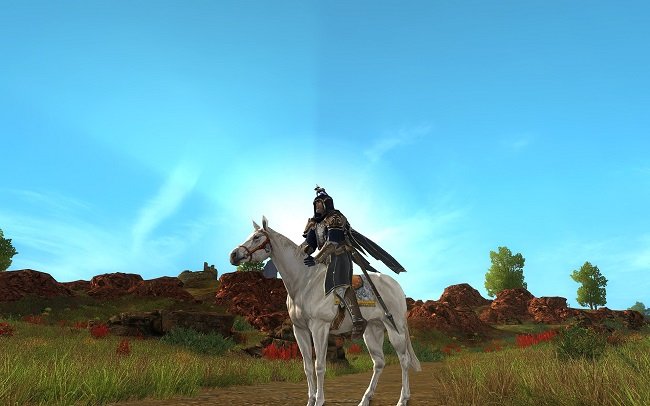

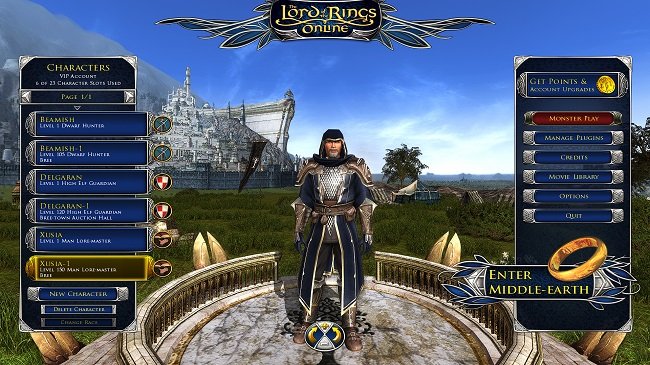
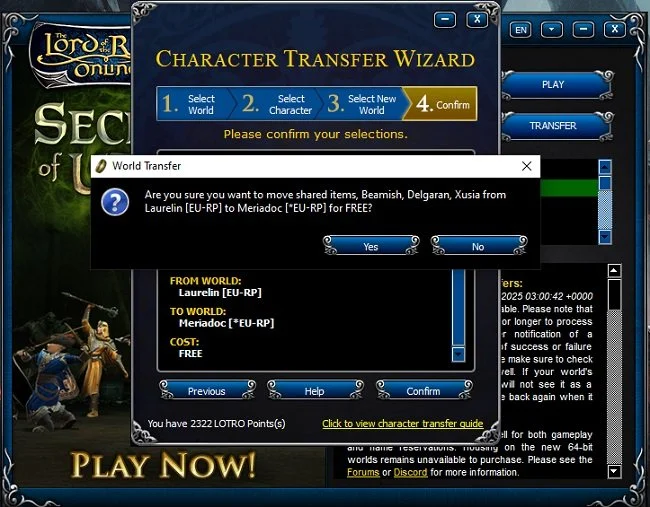
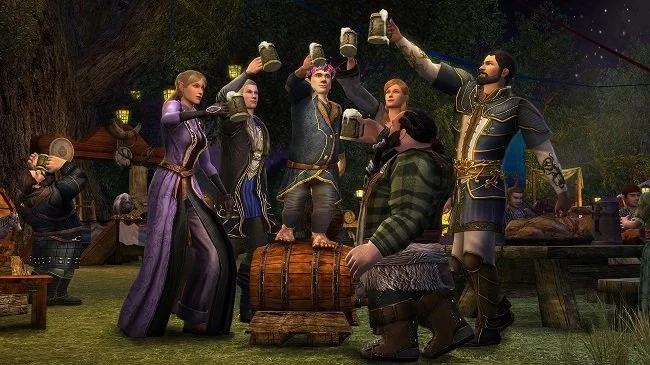

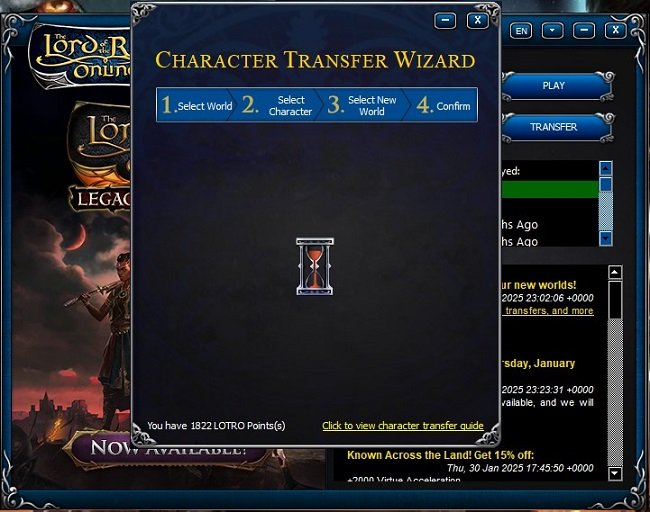
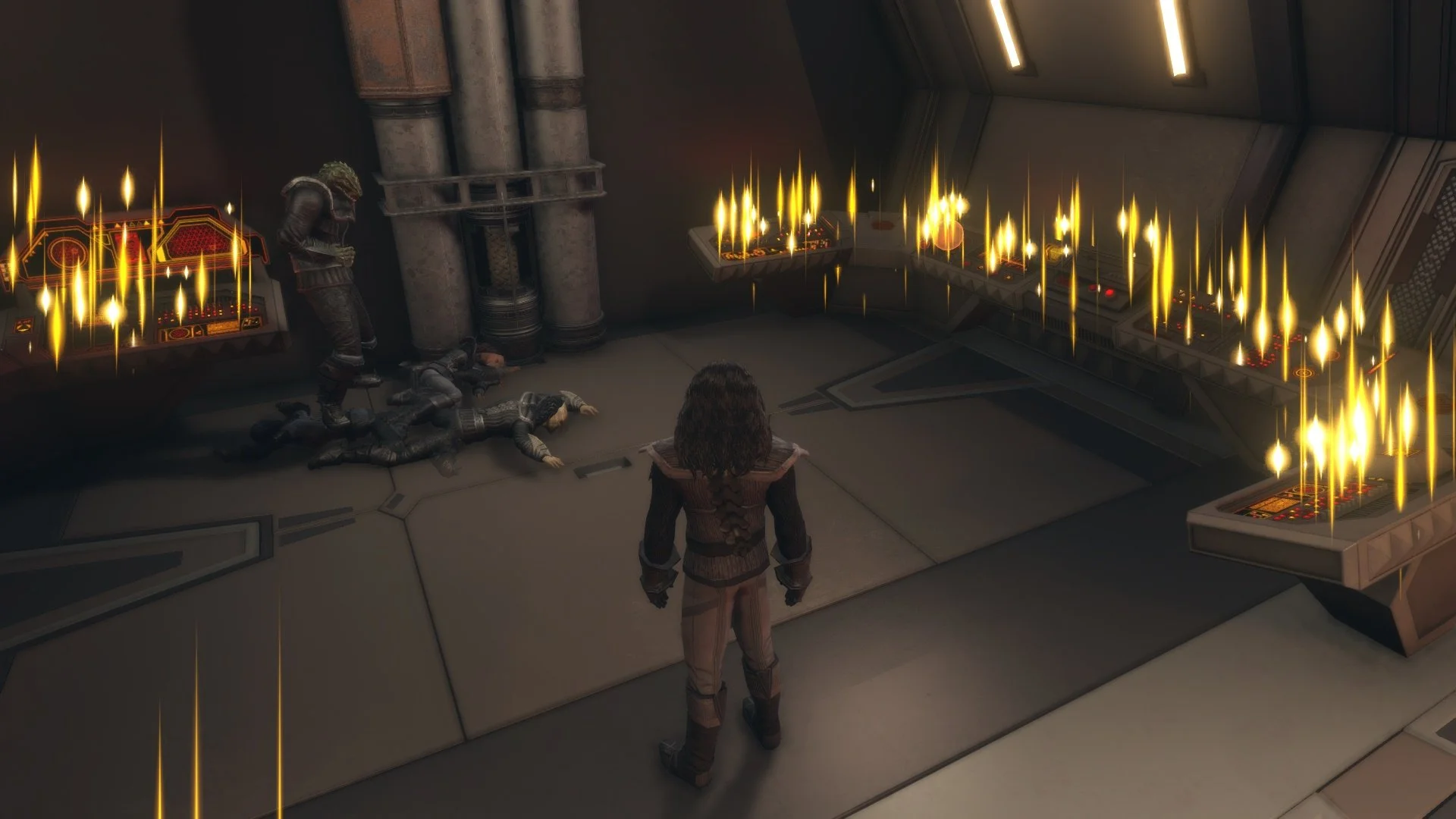
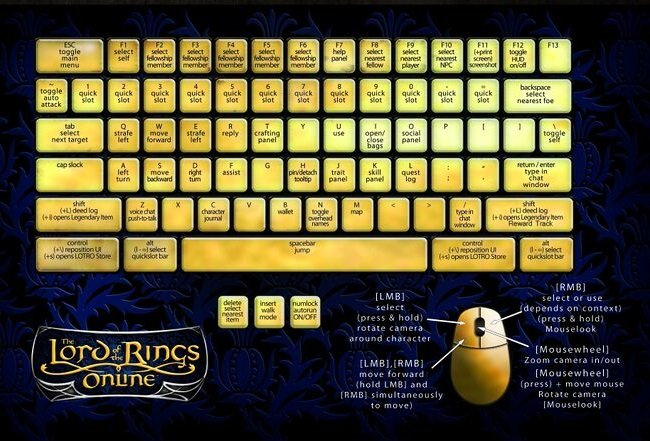

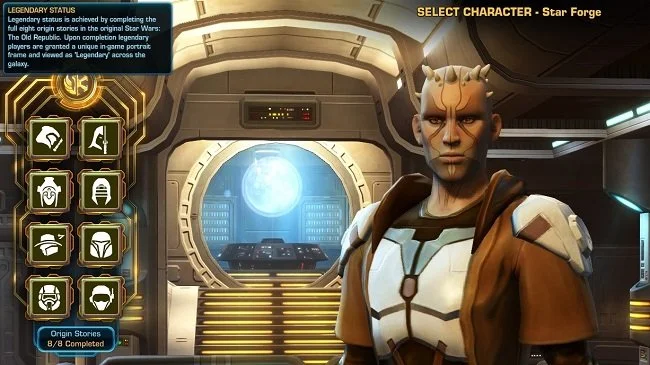
Addons, Dependencies and Libraries in ESO
Once again, I’m writing a post not out of technical enthusiasm but to try and spare someone else the tiresome bullshit I’ve just had to endure this evening. I wrote earlier this year about the duality of addons in The Elder Scrolls Online. They can be a great boon to the player but they can also be fiddly to configure and frequently break when the game is updated. You’re dependent on the good will of a third party to maintain them. Naturally the recent addition of Elsweyr to ESO meant that a bunch of addons were broken by the expansion. Oddly enough I didn’t initially notice that several of mine had stopped working because I’ve been away from the game for a while, plus I was busy trying to transfer various settings from my previous character to my new alt. However, once I actually got down to the business of traversing Tamriel and questing, it came to my attention that lots of details were missing from my map. Hence, I discovered that all was not well in “Addonsville”.
Once again, I’m writing a post not out of technical enthusiasm but to try and spare someone else the tiresome bullshit I’ve just had to endure this evening. I wrote earlier this year about the duality of addons in The Elder Scrolls Online. They can be a great boon to the player but they can also be fiddly to configure and frequently break when the game is updated. You’re dependent on the good will of a third party to maintain them. Naturally the recent addition of Elsweyr to ESO meant that a bunch of addons were broken by the expansion. Oddly enough I didn’t initially notice that several of mine had stopped working because I’ve been away from the game for a while, plus I was busy trying to transfer various settings from my previous character to my new alt. However, once I actually got down to the business of traversing Tamriel and questing, it came to my attention that lots of details were missing from my map. Hence, I discovered that all was not well in “Addonsville”.
To cut a long story short when I brought up on screen the list of addons, there were several that had “Dependency” in red text next to the author details. A little research indicated that the addon relied upon a library and that this was out of date. According to Wikipedia “in computer science, a library is a collection of non-volatile resources used by computer programs, often for software development”. On the left-hand side of the addon menu there is a little triangular arrow next to each one that is installed. If you click on this, a list appears of all the libraries that the addon uses. Again several of these were written in red text, indicating they were out of date. Thus I checked on each addon that indicated and out of date dependency and made a note of which libraries needed replacing. This included such all-time classics as LibDebugLogger, LibDateTime andLibMapPing.
I ended up with a list of 11 libraries that needed to be updated. Mercifully, these were all easy to find and install via everyone’s favourite mod manager, Minion. I then logged back into ESO and found that all installed addons were now working, there were no further dependencies showing in red and I now had Skyshards and other collectables showing on the map. However, there’s a very good chance that the next lot of DLC or quality of life patch will fubar everything again. I would therefore suggest to ESO players who are not technical inclined, to regularly check their libraries as described to ensure they are not inconvenienced. So far ESO is still proving to be a fun and entertaining game but it is becoming increasingly high maintenance. I don’t mind tweaking things from time to time but the list of items to check and monitor with regard to addons seems to be growing. For gamers such as I, it can be a dangerous thing to upset the fun to effort ratio.
Creating Alts and Copying Settings in ESO
If you are a veteran player of The Elder Scrolls Online, this post will simply be a statement of the “bleedin’ obvious”. However I have written this article for the benefit of those relatively new to ESO as well as the occasional or casual player who are not au fait with all the subtleties and nuances of the MMORPG. If I can spare someone the hassle that I’ve had over the past 48 hours trying to figure this shit out, then I consider that a valuable social service. Because unlike other MMOs, creating a new alt in ESO causes some additional problems to arise. If you know about them in advance, they are a lot easier to manage. If, like me you were not aware of them, then it can be frustrating attempting to trouble shoot them on the fly.
If you are a veteran player of The Elder Scrolls Online, this post will simply be a statement of the “bleedin’ obvious”. However I have written this article for the benefit of those relatively new to ESO as well as the occasional or casual player who are not au fait with all the subtleties and nuances of the MMORPG. If I can spare someone the hassle that I’ve had over the past 48 hours trying to figure this shit out, then I consider that a valuable social service. Because unlike other MMOs, creating a new alt in ESO causes some additional problems to arise. If you know about them in advance, they are a lot easier to manage. If, like me you were not aware of them, then it can be frustrating attempting to trouble shoot them on the fly.
In older games such as The Lord of the Rings Online and Star Trek Online, you can customise you UI and key mapping easily and when complete save all relevant settings to a file. Hence when you create a new alt, once you finished the important task of tweaking their appearance you can start the game and load all your customary settings. You bags, hotbars and other onscreen paraphernalia is all where you expect it to be. You can now focus on the game rather than fine tuning your HUD etc. However, things are not so simple in ESO. New alts enter the game world with defaults settings. Yep, you read that right. All changes made to the key mapping of your other character are not present. Furthermore, assuming you want to use the same addons on your new alt, all those settings have not by default been carried over. Hence hours of tweaking await you if you’re unprepared.
So, before you start the process of creating your alt, get ahead of these potential issues by installing the following addons (yes, it takes an addon to solve and addon problem). Joviex's Addon Settings Transfer (Updated) and Voltan's Keybinder. Once these have been added to your existing collection, log into your primary character whose settings you wish to replicate. Use the command line /jovast to bring up the addon settings transfer window. You then highlight which characters you wish to transfer settings from and to. Congratulations, you’ve now duplicated all your addons settings and GUI locations to your new alt. While still logged into your primary alt, press the Esc key and navigate to Controls and then to Settings. You’ll find Standard Keybinds and Addon Keybinds listed. If you investigate further, you’ll find that all the existing keybind settings have a tick box next to them. Use this to choose which key mappings are duplicated on your new alt.
Following the above steps will save you time and a lot of bother. But due to the foibles of ESO there are still a few settings that have to be dealt with manually. For example, some onscreen displays only show during combat. Chat can also fade if not active. If you want to change such settings you have to alter a drop-down box or toggle a switch. None of the above tools port these settings and you’ll have to make them manually. So I would advice making a comprehensive list beforehand, taken from your primary alt or if you have a second monitor, simply take some screen captures and use them as a crib sheet to fine tune your new character. I suspect that if you implement this process several times, eventually it will become second nature as you refine it and make it more efficient. If you are feeling particularly generous you could categorise this foible of ESO as part of the game’s charm. I wouldn’t go that far myself but now that I’ve learned the hard way, I have no intention of being bothered again in the future with other alts. Forewarned is forearmed.
The Elder Scrolls Online and Action Combat
I was recently gifted a copy of Summerset in The Elder Scrolls online by a friend. Naturally this act of generosity lead to me returning to the game. Although I participated in the beta test, I only seriously started playing ESO from January to July last year. I created a High Elf Sorcerer and levelled to the current cap of 50 and then started working on gaining Champion Points, which currently stand at 187. Although I enjoyed the experience, especially from a narrative perspective, I did struggle to a degree with the action combat. It can be a quite a culture shock playing ESO after years of traditional, older MMOs that have a more static combat system. There is a tendency to default to old habits and ways that frequently leads to mistakes. Older MMOs often share common key mappings and system methodologies. ESO often flies in the face of that, so you find yourself having to “unlearn what you have learned” to coin a phrase. It can be done and you can adapt. I managed last year but now, due to the time elapsed, I am now having to do so again.
I was recently gifted a copy of Summerset in The Elder Scrolls online by a friend. Naturally this act of generosity lead to me returning to the game. Although I participated in the beta test, I only seriously started playing ESO from January to July last year. I created a High Elf Sorcerer and levelled to the current cap of 50 and then started working on gaining Champion Points, which currently stand at 187. Although I enjoyed the experience, especially from a narrative perspective, I did struggle to a degree with the action combat. It can be a quite a culture shock playing ESO after years of traditional, older MMOs that have a more static combat system. There is a tendency to default to old habits and ways that frequently leads to mistakes. Older MMOs often share common key mappings and system methodologies. ESO often flies in the face of that, so you find yourself having to “unlearn what you have learned” to coin a phrase. It can be done and you can adapt. I managed last year but now, due to the time elapsed, I am now having to do so again.
With MMOs such as The Lord of the Rings Online or Star Trek Online, combat is based around Tab Targetting. By pressing the tab key you highlight the nearest enemy and if you continue to press, cycle through all potential threats in the immediate vicinity. Once you’ve selected your target of choice you can attack it by using the skills on your hotbar. Due to Hard Locking, unless there’s an algorithm designed to make you occasionally miss, you will never do so. It’s a practical and straight forward form of combat. Hitting your enemy is not exactly difficult, although it can be argued that the expertise lies in the choice of skills used and their specific rotation. Different enemies with different buffs, strengths and weakness need to be approached accordingly.
The FPS genre offers a far more taxing approach to combat. Favouring a No lock system, the player is required to accurately aim a reticule to efficiently land hits upon a target. This is approach requires a level of skill right from the get-go and is very dependent upon the player’s situational awareness and reflexes. It’s one of the reasons I don’t play such games much these days as I have slowed with age. However, MMOs with action combat such as ESO have compromised with both Tab Targetting and No Lock mechanics. Although the tab key will select an enemy, and the reticule has to be aimed, there is a degree of assistance provided. Hence if your aim is slightly off, yet broadly in the right direction, then your attacks will reach the target although there may be a reduction in efficiency, the more your aim is out. This Soft Lock system requires a more mobile approach to combat. Standing your ground and key mashing is far from effective. Soft Lock also means that ranged attacks will ignore obstacles in the way, such as other mobs.
The net result of the fluid combat in ESO is that players have to be aware when to attack and when to defend. Dodging is essential in certain situations. Blocking via the right mouse button is also important in melee combat or close quarter situations. Then there are different types of primary attacks, other than your hotbar skills. The left mouse button governs attack types. Tap it once for light attack and hold it down for heavy. What you have to learn is to how to manage combat for your class. You have to consider your enemy and their skills so you can work out an appropriate strategy. Navigating the PVE content may not be too taxing but much of the group instance content does require a measured approach. Again, old school key mashing tends not to work and will result in death, inconvenience and in extreme cases, rage quitting.
As I’ve already mentioned, it is entirely possible to adapt to this contemporary approach to MMO combat but it require practise. There are lots of common mistakes that are made while trying to embrace this new methodology. Having the reticule on the screen is perhaps the primary difference that old school MMO players may immediately struggle with. I instinctively try to click on skills and instead simply find my character rotating or accidently attacking whatever is nearby. It takes a while to press the “.” key first to bring up the mouse arrow. The simple act of aiming takes a while to become second nature. It can also seem odd swapping between weapons type in mid-combat. However there are certain advantages to be had over old style MMO combat. The reduction in hotbar skills and the nature of action combat means that induction animations tend to be relatively quick and players are less likely to get caught out by Animation Lock. ESO also spares players from excessive and superfluous skills bloat on the hotbar by imposing limits.
Because there has been a year long gap in my playing ESO, when I logged in the other night, I was naturally rusty with regards to basic key mapping and navigating the UI. Furthermore, I had completely forgotten whether I had assigned some of my addons to the keyboard or the mouse. However, I found once again that Dolmen Farming was not only profitable, but useful as a training environment. So I immediately travelled to the Alik’r Desert and spent some time bouncing between the three Dolmen’s that regularly appear there. As for action combat, I have mixed feelings about it. This mobile approach is more credible and suits the idiom of the Elder Scrolls IP. But it does present a slightly higher barrier to entry than older, more static combat systems. Yet it also creates an additional motivation for co-operative play and grouping. If you find that the subtleties of fighting in ESO allude you, there is safety to be found in numbers.
Death in MMOs
There was a post today over at Keen and Graev’s Gaming Blog, which raised the subject of “corpse runs” in old school MMOS such as Ultima Online. In-game death came with penalties back then and there was the prospect of XP loss or that your corpse could be looted, and you could potentially lose rare gear. It got me thinking because I’ve never played an MMO that has had, to my mind, such harsh sanctions. In fact game mechanics such as permadeath, corpse runs, and the loss of equipment will put me off playing any such game that has them. I suspect that unless you’re a player who is particularly motivated by achievement, competitiveness and challenge, then such systems are seen mainly as an inconvenience and impediment.
There was a post today over at Keen and Graev’s Gaming Blog, which raised the subject of “corpse runs” in old school MMOS such as Ultima Online. In-game death came with penalties back then and there was the prospect of XP loss or that your corpse could be looted, and you could potentially lose rare gear. It got me thinking because I’ve never played an MMO that has had, to my mind, such harsh sanctions. In fact game mechanics such as permadeath, corpse runs, and the loss of equipment will put me off playing any such game that has them. I suspect that unless you’re a player who is particularly motivated by achievement, competitiveness and challenge, then such systems are seen mainly as an inconvenience and impediment.
Death in MMOs and the function it is supposed to serve, is just another aspect of the genre that has changed over time. The genre is not the same time sink it used to be and an ageing player base has meant that many core mechanics have had to become more flexible and accommodating to shorter periods of gameplay. Many players who played MMOs because of the raiding, competitive PVP and the culture of league tables and results have moved on to other games that still focus on such systems. For me, MMOs are about the narrative, levelling and occasional social gameplay. Death is mainly an inconvenience and not something I wish to have any greater impact than it does already. Gaming is for me a primarily a leisure activity.
In STO, death means just respawning and mainly serves as a warning to change your strategy or to consider revising your build. If you play the TFOs at a higher level, then your ship will get damaged if destroyed, but the cost of repair is hardly prohibitive. In LOTRO defeat is again not a major setback. If you’re playing in a group, then your team mates can revive you and the only cost incurred is your armour repairs. However, reviving yourself is limited to once per 2 hours, which means that if you cannot do so, you must retreat to a Rally Circle. This is a nuisance in the more recent zones as SSG doesn’t seem to be so generous with the quantity of rally circles in the game. Also being kicked from an instance can mean a major journey back to the entrance. ESO has a similar mechanic with either self-resurrection via Soul Gems or retreating to a Wayshrine. However, I found that stockpiling Soul Gems is an easy undertaking, therefore easily mitigating death.
I’ve mention in the past that as games have become more mainstream and more monetised, players have subsequently revised their own perspective on death mechanics. If you aren’t interested in the challenge of planning a carefully considered strategy to avoid death, its presence just becomes a source of annoyance. Especially if you see video games more as a leisure service, rather than means of testing yourself. Being inconvenienced by a mechanic in a game that you are paying for is a difficult line to tread. An incentive that shapes your gameplay is one thing. A penalty that wastes your time is something entirely different. Hence, I think it is something we will continue to see diminished in mainstream MMOs, yet I suspect it will linger as a key component of more challenging games.
The Elder Scrolls Online and Addons
After recently watching several friends stream The Elder Scrolls Online, I have re-installed the game (funny how that often happens). I played quite consistently last spring and the game finally “clicked” for me. The narrative driven structure is something I enjoy, and I also like way you can pick and choose the content you undertake. So after letting the 70.9 GB game client download overnight, I fired up the game yesterday and found my level 50 High Elf Sorcerer in Auridon, where I left them last Easter. The first thing that immediately stood out was the plain vanilla default UI, which is minimalist to say the least. After a heavy sigh, I realised that if I wanted to continue efficiently playing ESO I would have to install a bunch of addons via Minion. The only minor problem was that after replacing my Hard Drive last November, despite backing up most data, I had not made a note of which addons I was using. Luckily, a friend who still had the game installed went through their current installation, so I was able to collate a suitable list.
After recently watching several friends stream The Elder Scrolls Online, I have re-installed the game (funny how that often happens). I played quite consistently last spring and the game finally “clicked” for me. The narrative driven structure is something I enjoy, and I also like way you can pick and choose the content you undertake. So after letting the 70.9 GB game client download overnight, I fired up the game yesterday and found my level 50 High Elf Sorcerer in Auridon, where I left them last Easter. The first thing that immediately stood out was the plain vanilla default UI, which is minimalist to say the least. After a heavy sigh, I realised that if I wanted to continue efficiently playing ESO I would have to install a bunch of addons via Minion. The only minor problem was that after replacing my Hard Drive last November, despite backing up most data, I had not made a note of which addons I was using. Luckily, a friend who still had the game installed went through their current installation, so I was able to collate a suitable list.
I don’t feel inclined to debate the rights and wrongs of addons in this post, simply let it suffice to say that they are a necessary evil in the case of ESO. Not having them makes playing a lot less efficient and frankly less enjoyable. However, third party addons need to be regularly updated and maintained but as their creators are not paid professionals, contractually bond to do so, they effectively become a lottery, to say the least. Then there is the issue of conflicts, UI errors and poor documentation, all leading to hours of tweaking settings and loading and unloading each add-on to get it to work as described. At present I have this tedious chore ahead of me because as you can see from the screen capture, my UI is an absolute dog’s dinner at present. However, once I’ve sorted the issue out according to my preferences, the presences of 16 addons should enhance my gameplay experience and I can get on with enjoying ESO.
Considering that ESO seems to be doing well within the MMO market and that developer ZeniMax are regularly producing new content and expansions for the game, I find it curious that there is still a reliance upon third party addons. Surely some time and attention could be spent improving and upgrading the UI, officially. Could ZeniMax not take a lead from the most popular addons and create something comparable and officially integrate them into the game? Doesn’t Blizzard Activision have a similar policy with World of Warcraft? It seems odd in an age of corporate control and the monetisation of all aspects of a game, that there is still a relatively free and unregulated culture of third-party addons allowed in some MMOs. Perhaps it’s a cultural hangover from the success of Skyrim? In the meantime I’ll get around to tweaking my own addons in ESO and hopefully won’t have to worry about them for a while. Not until the next expansion Elsweyr is released on June 4th and promptly breaks them all.
The Dilemma of Skill Points
This post stems from an issue that came up recently while progressing through The Elder Scrolls Online. However, similar situations have occurred in other MMOs that I’ve played over the years. Most games of this genre have a standard mechanic in which the player is awarded skill points as they level up through the game. These points are subsequently spent unlocking new abilities or improving existing skills. Often there are a finite amount of skill points to earn in the game. Naturally, at some point, even the most casual MMO player will have to consider how they intend to spend their skills points, because they do have an impact upon your build. That is the entire point of the skills point mechanic. You customise your skills according to how you play and what type of build you wish to achieve. More often than not, the new player who is still at a relatively low level, will simply read what abilities can be unlocked and make an intuitive choice. At this stage, putting a few skill points into health, stamina, or increasing your DPS seems a sensible choice.
This post stems from an issue that came up recently while progressing through The Elder Scrolls Online. However, similar situations have occurred in other MMOs that I’ve played over the years. Most games of this genre have a standard mechanic in which the player is awarded skill points as they level up through the game. These points are subsequently spent unlocking new abilities or improving existing skills. Often there are a finite amount of skill points to earn in the game. Naturally, at some point, even the most casual MMO player will have to consider how they intend to spend their skills points, because they do have an impact upon your build. That is the entire point of the skills point mechanic. You customise your skills according to how you play and what type of build you wish to achieve. More often than not, the new player who is still at a relatively low level, will simply read what abilities can be unlocked and make an intuitive choice. At this stage, putting a few skill points into health, stamina, or increasing your DPS seems a sensible choice.
But then there reaches a point in the game, where you find yourself hoarding a lot of skills points and faced with a multitude of options. Suddenly, its no longer simple. Unless you have a very clear idea about how you intend to develop your build, it becomes a very confusing prospect. Do you put points into flower arranging, so you can increase you Lupin attack, or do you go for heavy embroidery? The fear is that you’ll make the wrong choice and gimp yourself, further down the line. Now most MMOs have a system in which you can refund skill points, should you require to change your allocation. However, this often involves a significant expenditure of in-game currency or worse still, a purchase from the cash shop. As a result, this potentially punitive system will often dissuade players from experimenting. This was certainly the case with me recently, while I was levelling through ESO. I also had a similar experience in STO when the revised the skill tree system was introduced. The only MMO that I currently play that allows a greater degree of choice is LOTRO. By default, the game offers three skill point slots, allowing you to create bespoke builds to swap between.
Now, the easiest resolution to this dilemma is to find a specific build online and to slavishly copy it. I have done this myself both with STO and ESO, but I resent it on some level. Yes, it is quick and easy solution, but it is also robbing the player of the opportunity to learn and experiment in the game. And buying gating the ability to reset your skill points behind some sort of financial penalty, the developers are contributing to creating a culture of risk aversion among players. Don’t get me wrong, I’m not advocating turning an MMO into a job and I am not a fan of having to watch hours of videos to discover the esoteric intricacies of a game (yes, I’m looking at you ESO). However, it is beneficial to allow the player to experiment within reason, without imposing a penalty for the luxury of change. Hence, I believe that the LOTRO option of having three skill points slots is an equitable compromise.
Choice is always a good thing but there’s also a wise old adage about having “too much of a good thing”. Games such as MMOs need to encourage the player to try different builds and embrace experimentation. However, I appreciate that this is a fine line to tread. If you offer too much assistance, then it’s only a matter of time before the usual suspects throw their toys out of the pram, claim that everything is being dumbed down and that their life has once again “been ruined”. I think that this “dilemma” as I’ve described, is just a symptom of a wider problem associated with the MMO genre. That of providing optional information, advice and suggestions to the player, so they can get the most out of the game. Few games have adequate tutorials and “tip” systems. However, that is another blog post altogether (insert Airplane gag here). Returning to ESO, I must applaud ZeniMax for including their Skills Advisor system in the last patch. It provides exactly the sort of broad guidance I was looking for. Other MMOs please take note.