
Video Game Monopolies
Less than two weeks after we learned that Microsoft would be purchasing Activision Blizzard for $70 billion, today it was announced that PlayStation Studios (AKA Sony) is to buy Bungie for $3.6 billion. Both Microsoft and Sony have extolled the virtues of their respective acquisitions and claim that gamers will benefit. Game passes will become better value for money with new titles added to them. Accessibility and crossplay may well increase due to each company’s technological innovations. Console prices could even be reduced. And at a company level, restructuring and streamlining presents a potential opportunity to purge some developers of many of the toxicity issues that blight them. If you believe the press releases from both Sony and Microsoft, then the future of gaming is in safe hands and looking good. And so far there hasn’t been one mention of NFTs.
Less than two weeks after we learned that Microsoft would be purchasing Activision Blizzard for $70 billion, today it was announced that PlayStation Studios (AKA Sony) is to buy Bungie for $3.6 billion. Both Microsoft and Sony have extolled the virtues of their respective acquisitions and claim that gamers will benefit. Game passes will become better value for money with new titles added to them. Accessibility and crossplay may well increase due to each company’s technological innovations. Console prices could even be reduced. And at a company level, restructuring and streamlining presents a potential opportunity to purge some developers of many of the toxicity issues that blight them. If you believe the press releases from both Sony and Microsoft, then the future of gaming is in safe hands and looking good. And so far there hasn’t been one mention of NFTs.
However, if one steps back as a gamer and considers the nature of monopolies and their historical precedent, then things don’t look so great. Typical problems associated with monopolies are as follows. Higher prices than in competitive markets. A decline in consumer surplus. Monopolies have fewer incentives to be efficient. Possible diseconomies of scale. Monopolies often have monopsony power in paying a lower price to suppliers. All of which can lead to poor quality, unoriginal, expensive video games made by overworked developers in poorly paid and bad working conditions. And let us not forget the industry's ongoing and ever increasing infatuation with blockchain technology and non-fungible tokens. The days of paying once for a game are on the way out. The prospect of gaming being a second job is on the horizon.
I find my interest in gaming waning on a daily basis. Have I outgrown gaming? No. Not at all. I still enjoy many aspects of playing a well conceived and implemented video game. But I have outgrown the hype, the tribal and partisan nature of video game culture and I’m as tired as hell with many generic, uninspired and frankly unenjoyable titles. Like good quality films, you need to cast your net far and wide to find decent video games these days. Or defer to older classics. The prospect of large monopolies dominating the video game industry hardly assuages my concerns. However, monopolies are not bulletproof institutions. When reflecting upon successful companies like De Beers, do not forget the fate of Pan Am, IBM and AOL. And if contemplating the machinations of big business is too depressing for you, consider The Very Big Corporation of America from Monty Python’s The Meaning of Life.





A Year in Gaming
Usually in a post such as this, my primary focus would be writing about the games that I’ve played over the last twelve month and what it was about them that I specifically enjoyed. However, this year I feel that I must address the wider issues that have dominated the news regarding the video games industry. Simply put, several very high profile and successful triple A video game companies have been beset by scandals over the last twelve months. And these have been of such a nature that they have finally laid to rest the myth that some still cling to, that working “in video games” is somehow different from working in more traditional industries because it’s “cool”. It turns out that it has all the same failings as TV, music and film. The people at the top are abusive and broken and maltreat those at the coalface who do all the real work for precious little reward.
Usually in a post such as this, my primary focus would be writing about the games that I’ve played over the last twelve month and what it was about them that I specifically enjoyed. However, this year I feel that I must address the wider issues that have dominated the news regarding the video games industry. Simply put, several very high profile and successful triple A video game companies have been beset by scandals over the last twelve months. And these have been of such a nature that they have finally laid to rest the myth that some still cling to, that working “in video games” is somehow different from working in more traditional industries because it’s “cool”. It turns out that it has all the same failings as TV, music and film. The people at the top are abusive and broken and maltreat those at the coalface who do all the real work for precious little reward.
Hence, I feel that there is now a moral dilemma in buying games from certain companies and that their products are in a way “tainted”. The same way as there is shopping at certain stores that are known for their unethical practises. However, a consumer boycott is not always the most effective form of protest and on occasions can do more harm to those parties one wishes to demonstrate a degree of solidarity with. However, one can still voice one’s unhappiness with the situation and that is what seems to be happening at present. Negative PR seldom goes unnoticed and as and when it impacts upon share prices, the message eventually reaches the top of the food chain. Action gets taken sooner or later but what the Activision Blizzard, Ubisoft and Bungie scandals highlight are a wider societal malaise. The abhorrent behaviour that we’ve read about seems to be ingrained in specific socioeconomic stratas. Fixing that is a much harder issue than just replacing a few managers and CEOs.
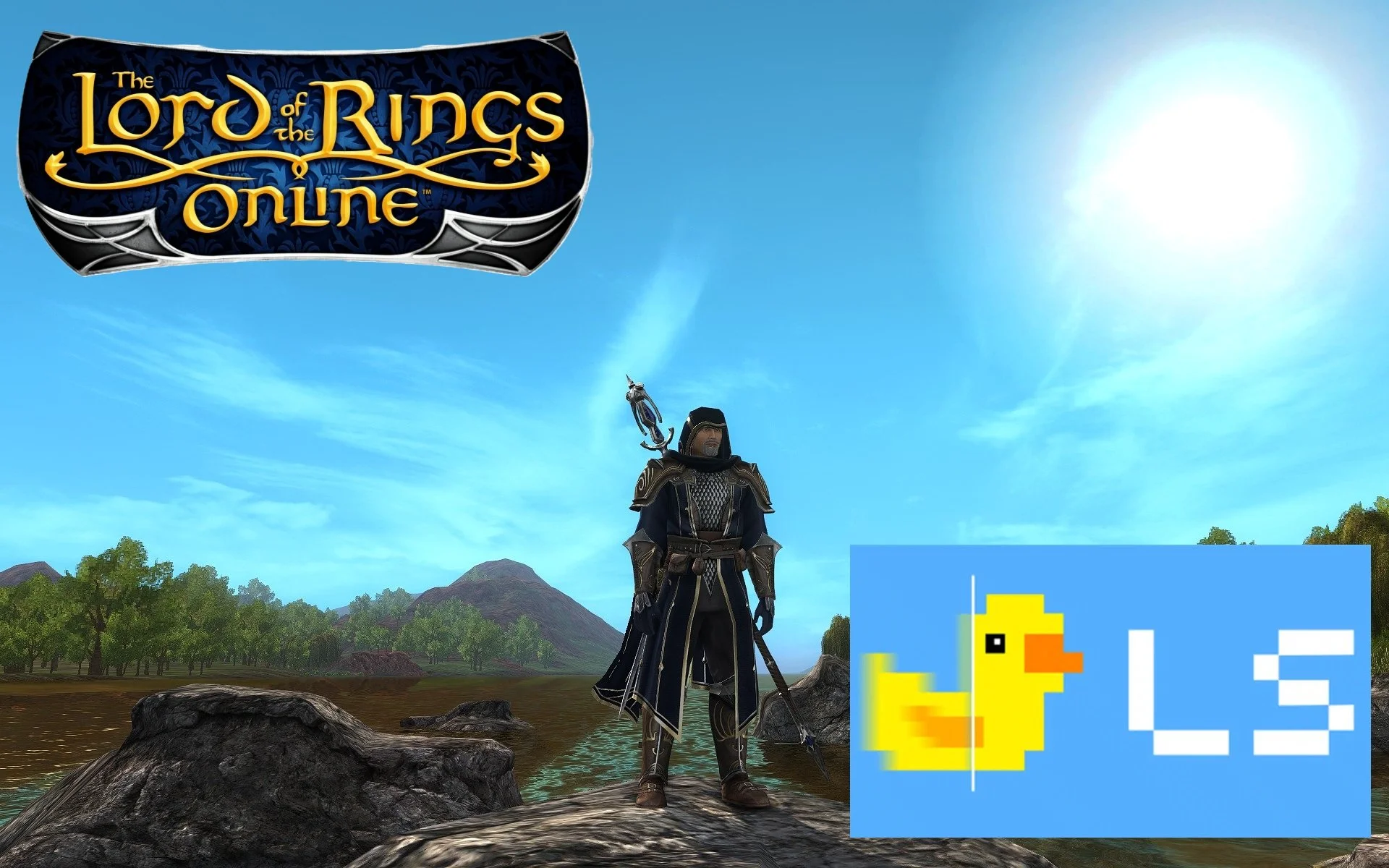
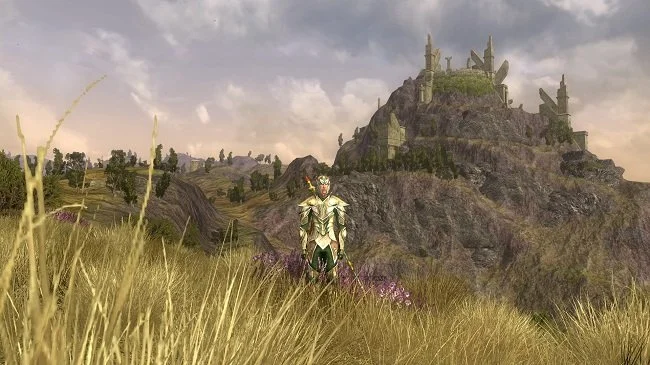
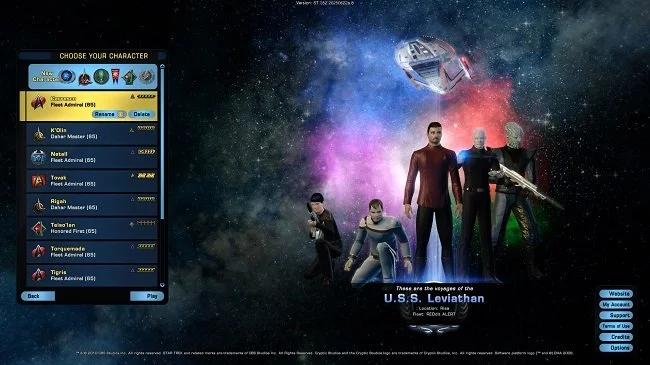
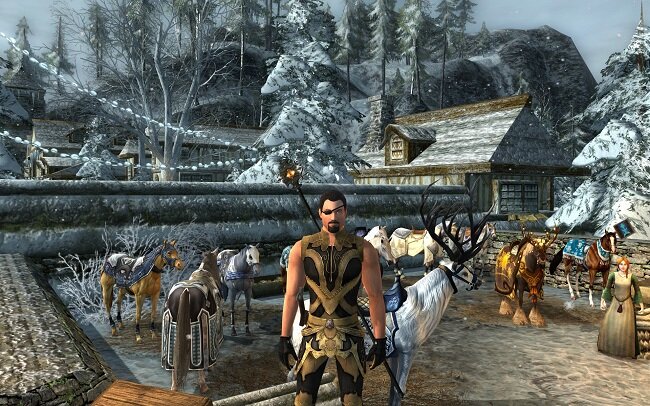
Moving on from how shitty the video game industry seems to be, personally speaking this has not been the most exciting year for my relationship with video games. As 2021 draws to an end my PC’s hard drive is filled with games that I’ve abandoned and become bored with. Cyberpunk 2077, GreedFall and Days Gone are a few examples of games that showed promise but became somewhat routine and pedestrian. I did enjoy my first major foray into the Assassin’s Creed franchise. Black Flag proved to have an engaging story and an unusual setting, hence I completed the game. My gaming mainstays, the MMORPGs The Lord of the Rings Online and Star Trek Online, also kept me busy this year. This was mainly due to the way this genre lends itself to “quick fix” gaming. STO in particular continuously runs events that afford the player a reason to log in and undertake a quick task. Yet despite this engagement, I don’t feel I’ve done anything significant in either game.
The jury is still out as to whether my Nintendo Switch has been a good or bad investment. It gets used mainly when my granddaughters come to visit and then Mario Kart is a firm favourite. But personally I have yet to find a game that enthrals me. I think I’m just culturally conditioned to do my gaming on a PC. And in other news, my love hate relationship with Fall Guys: Ultimate Knockout continues. There is fun to be had playing this game but the moment specific races and events appear, they instantly kill my passion. I have still yet to win a crown. This failure to achieve this particular goal bothers the heck out of me. I suspect that overall, my relationship with gaming is shifting. As a pastime it is becoming very much like mainstream cinema. There’s no shortage of content but it’s all rather generic, formulaic and mediocre.
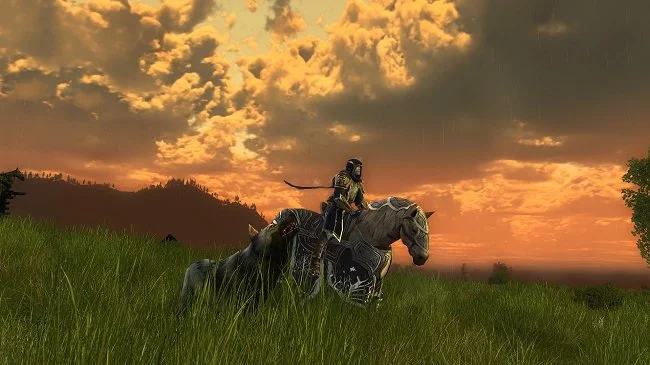
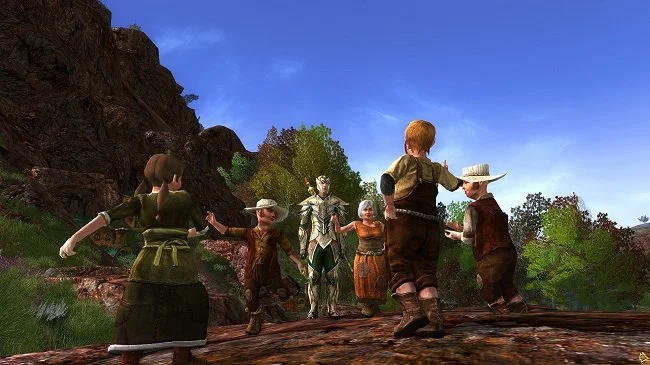
As for 2022, well for the present I shall just continue to push on with LOTRO and STO. I have nearly finished the new expansion in LOTRO, Fate of Gundabad and have reached the current level cap of 140. I finally got on top of the new Legendary Item system and have managed to create a rather robust new weapon. I think I may soon make a return to The Elder Scrolls Online and see what content I have waiting for me. I usually enjoy playing for a few months continuously and feel that subscribing improves the overall experience. I shall also keep a weather eye on the video game industry to see if and how it bounces back from the recent scandals assailing it. It already looks like the player uptake of NFTs is not going to be as easy as some publishers have anticipated. Maybe I’ll chance upon some hidden video game gems in the next 12 months and my enthusiasm will be restored. Time will tell.


















The Cost of Doing Business with China
In the last few days, a great deal has been written about Activision Blizzard and their subsequent banning of a Hearthstone player who expressed support for the Hong Kong protestors during a competition live stream. The US-based game developer and publisher has also chosen to withhold the prize money he would have earned from competing in the tournament. As a result of this media coverage, I do not feel obliged to address the rectitude of Blizzard’s decision. It was never going to be anything different than what it was. They made their choice regarding ethics and morality the moment they decided to expand their business operations in mainland China. Because once you decided to enter into a business partnership with a totalitarian regime that actively runs “re-education camps”, you’ve pretty much nailed your colours to the mast and chosen a side. It’s not just business, despite what apologists may tell you. Judge a man or a business by the company they keep.
The moment Chung “blitzchung” Ng Wai made his protest
In the last few days, a great deal has been written about Activision Blizzard and their subsequent banning of a Hearthstone player who expressed support for the Hong Kong protestors during a competition live stream. The US-based game developer and publisher has also chosen to withhold the prize money he would have earned from competing in the tournament. As a result of this media coverage, I do not feel obliged to address the rectitude of Blizzard’s decision. It was never going to be anything different than what it was. They made their choice regarding ethics and morality the moment they decided to expand their business operations in mainland China. Because once you decided to enter into a business partnership with a totalitarian regime that actively runs “re-education camps”, you’ve pretty much nailed your colours to the mast and chosen a side. It’s not just business, despite what apologists may tell you. Judge a man or a business by the company they keep.
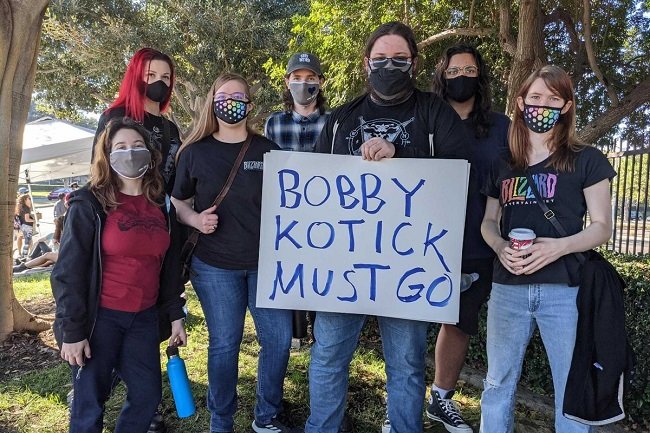
However, there are two wider issues that have arisen from this situation that perhaps can be seen as broadly positive. Firstly, parts of the gaming community have finally had the scales lifted from their eyes regarding the true nature of the video games industry. Secondly, people are now becoming more aware of the extent of Chinese business influence both in the US and other countries and to what extent Western business is happy to appease them. Let us take a moment to consider the first of these. I have been banging on for years about how so many gamers erroneously think that the companies that make their favourite games are somehow their friend. In many ways Blizzard has been the embodiment of this fallacious and specious notion. Although there are some developers or community managers who are genuinely reasonable and measured individuals, these are not the people driving the company. Corporate policy is decided at a much higher level by people such as Bobby Kotick. And like a lot of other modern CEOs, ethics, morality and generally being a decent human being are not top priorities. In fact they’re a major hindrance. Do some research of your own on Mr Kotick (or ask Jim Sterling) and decide for yourself what sort of man he is.
Bobby Kotick. Personally worth about $1 Billion plus
So a lot of gamers have suddenly got wise to the fact that the company they used to think was cool because staff don’t wear suits to work and can unicycle around the office, is in fact just another corporate behemoth striving to make as much money as possible, irrespective of the consequences. Blizzard is tainted and now some gamers are worried about guilt by association. It’s an odd situation to be honest. Some gamers are obviously staggeringly naïve but there again, that’s hardly surprising as people are surprisingly politically illiterate these days. I don’t mean this is a pejorative sense, it’s just a simple truth. A lot of people are not in any way credibly informed about domestic politics, let alone the complexities of international relationships. And then there’s another element to this. The gamer who suspects that there’s an unethical wider picture to the video games industry but chooses to not “know about it”. I heard similar arguments regarding eating meat, which go something like this. “I choose to remain wilfully ignorant of the iniquities of the meat industry. I suspect that livestock are treated appallingly but if I choose not to know, I can enjoy eating meat without any moral burden and maintain my claim that I’m a good person”. Yep, gamers have their own version of this, too.
Moving on to the second potentially positive point that’s come out of this whole sorry affair; people have now realised that it is not just Activision Blizzard who are happy to self-censor and generally side with China whenever there’s a conflict of interest between West and East. Over the last few days, several websites and subreddits have compiled substantial lists of companies towing the political line to appease China and keep the revenue flowing. Furthermore, because China is such a big market for mainstream Hollywood movies these days, it’s come to light that a lot of screenplays are being tailormade for its specific “political and social” requirements. And irrespective of the need to “accommodate” China for “business reasons”, people are now beginning to become aware of the scope and reach of Chinese business in the West per se. This isn’t really the place for an in-depth dissection of what they do and do not own but if you do some research, you’ll find China is involved with key US and UK industries such as farming, logistics and utilities. And then there’s the issue of land banking. All of which can be used for political leverage if required.
You get the idea?
Now as a result of this debacle, there has been a plethora of tediously predictable kneejerk reactions. As usual some gamers have been calling for a boycott of Blizzard products. There’s also been the “restless lynch mob” mentality on social media and moral outrage has been turned up to 11. Such hastily contrived bandwagons often fizzle out and can do more harm than good. However, a measured campaign of publicly questioning the cognitive dissonance inherent in being an American business that consorts with a dictatorship, may yield results in the long term. Raising questions via your political representative can take time but the wheels do turn. Now it has been pointed out by the “usual suspects”, that it’s a bit rich getting all “high and mighty” about the ethics of this one issue, when our consumer lives are rife with Chinese products. But I refute the intellectual bankruptcy of this faux argument that seems to think that one can only have an ethical position of worth, if you are 100% morally pure. Bullshit. Yes, we are all to a degree complicit in bolstering China by our consumer choices but that doesn’t mitigate the worth or rectitude of beginning to make a stand. It takes time to inform people and then get them to change their views and habits.
And as for those people who think that this whole situation is just business doing what business does, please stop assuming that your lack of morals and empathy is also the default position of society. It isn’t. People do actually expect a degree of ethical behaviour from corporations. Now that may be foolish but it remains a valid view. And as big business has shown time and time again that it doesn’t have a shred of human decency, the only way we are going to get companies to act in a vaguely appropriate fashion is to legally compel them to do so and sanction them when they do not. Doing business with China is not the same as doing business with any other democratic country. It is a Faustian arrangement which comes with caveats. Caveats that may put a company at odds with the inherent principles of their own country. There is a price to pay for such an arrangement and that is your “corporate reputation”. I still find it odd that people and business that act appallingly try to cultivate an image of “be nice”. I have far more respect for the “bastard” that’s content to be one.
The fate of Tank Man remains unknown to this day
For those who still remain unconvinced that the censoring and sanctioning of Chung “blitzchung” Ng Wai by Blizzard is anything to worry about, let me remind you of what China’s top broadcaster, government-run CCTV, stated recently about the concept of freedom of speech. That it should not be extended to points of view counter to the ruling Communist Party’s. “No comments challenging national sovereignty and social stability fall within the scope of freedom of expression”. Reflect upon that. Blizzard and many other companies are in a business relationship with a regime that is at odds with Western values. Furthermore, these international companies choose to actively collude with a government in its acts of oppression, because of the financial opportunities available. At the very least that is immoral. At the worst they are benefitting from blood money. If you thinks that’s hyperbolic please remember the 1989 Tiananmen Square protests when China mobilised 300,000 troops on the streets of Beijing and fired upon student protesters. A historical event that is still supressed in China itself. And considering the current events in Hong Kong, one that may be soon repeated? Blizzard and many other companies need to reflect upon this, although I suspect they won’t. I’m not sure if they are capable.






















World of Warcraft: Looking for Group (2014)
Despite having played a broad spectrum of games in my time, I've never really had much dealings with the Blizzard. Beyond owning Overwatch, a game I’ve long stopped playing and trying a free trial of both World of Warcraft and Hearthstone, I have little personal experience of their games. However, I am fully aware of their product range and their reputation within the gaming industry. Overwatch has taught me how well-conceived and polished their games can be. Blizzard may not be incredibly innovative, but they learn from others and produce titles with all the elements that work well. Sadly, I have no real affinity to their flagship MMORPG, as my point of entry with that genre was LOTRO. My interest in World of Warcraft mainly stems from a business perspective and the place it holds in gaming history. Overall my curiosity about the game, its community and culture is mainly academic. So, I finally got around to watching the documentary World of Warcraft: Looking for Group that showcased at Blizzcon in 2014 and was subsequently released on You Tube thereafter.
Despite having played a broad spectrum of games in my time, I've never really had much dealings with the Blizzard. Beyond owning Overwatch, a game I’ve long stopped playing and trying a free trial of both World of Warcraft and Hearthstone, I have little personal experience of their games. However, I am fully aware of their product range and their reputation within the gaming industry. Overwatch has taught me how well-conceived and polished their games can be. Blizzard may not be incredibly innovative, but they learn from others and produce titles with all the elements that work well. Sadly, I have no real affinity to their flagship MMORPG, as my point of entry with that genre was LOTRO. My interest in World of Warcraft mainly stems from a business perspective and the place it holds in gaming history. Overall my curiosity about the game, its community and culture is mainly academic. So, I finally got around to watching the documentary World of Warcraft: Looking for Group that showcased at Blizzcon in 2014 and was subsequently released on You Tube thereafter.
Despite being three years old and there being major changes to the game in that period, I was hoping that the hour-long film would be relatively informative about the MMO. Sadly, World of Warcraft: Looking for Group is a curious mix of marketing, nostalgia, talking heads and self-congratulation rather than an in-depth analysis of a financially successful game and cultural phenomenon. If you are looking for a rigorous dissection of how Blizzard created one of the most financially lucrative games ever and the way it changed the gaming landscape, then look elsewhere. This is not an independent analysis but more of an ode to the community and the fans. That in itself is not without merit and certainly it’s nice to see the community recognised. But it means that the discussion is somewhat partisan and contains all the tropes and memes one associates with modern day public relations. Viewers may well learn something of the game’s history, but it's not as thorough as some may hope and a lot of the sound bites from the players are somewhat generic. They are often applicable to any MMO.
Overall, I think that World of Warcraft: Looking for Group is ultimately meant as a tribute to the games player base, as a friendly “attaboy” or virtual high five for their loyalty and support over the years. Sometimes a bit of mutual back slapping goes a long way in buying good will. One thing is for certain; there aren't any other Western MMORPGs that warrant or could justify having such a documentary of this nature made about them. Blizzard's ongoing success with World of Warcaft is a prodigious feat and is attributal an esoteric mixture of skill, business acumen and being in the right place at the right time. The latter quality is possibly a reason why they haven’t seen fit to create a second game of this nature. Although metaphors about lightning striking twice are technically inaccurate, they certainly applicable in this case. So, if you have a history with World of Warcraft then you may wish to watch World of Warcraft: Looking for Group for a fix of nostalgia. For those seeking a more nuanced analysis, you may wish to try another gaming documentary, which appears to be a growing genre.