
Brick Mansions (2014)
The original French movies District 13 and its sequel District 13: Ultimatum, conceived and produced by Luc Besson, were enjoyable variations of the Escape from New York theme. Their charm lay in their European pedigree and the skilful use of parkour. The two leads, David Belle and Cyril Raffaelli, were eminently suited to the minimalist roles and the screenplays were fun. Half of these movies appeal was the fact that they were not mainstream US products. Brick Mansions is the Hollywood remake of District 13, as well as being Paul Walkers’ final movie. Sadly, this film is far from a fitting epitaph, being devoid of any charisma or innovations. It is blandly shot , poorly edited and has been stripped of everything that made the original entertaining.
The original French movies District 13 and its sequel District 13: Ultimatum, conceived and produced by Luc Besson, were enjoyable variations of the Escape from New York theme. Their charm lay in their European pedigree and the skilful use of parkour. The two leads, David Belle and Cyril Raffaelli, were eminently suited to the minimalist roles and the screenplays were fun. Half of these movies appeal was the fact that they were not mainstream US products. Brick Mansions is the Hollywood remake of District 13, as well as being Paul Walkers’ final movie. Sadly, this film is far from a fitting epitaph, being devoid of any charisma or innovations. It is blandly shot , poorly edited and has been stripped of everything that made the original entertaining.
In the year 2018, the crime rate in Detroit has become so high, a wall has been built around the worst area, Brick Mansions. The decaying neighbourhood is run by drug lord Tremaine (RZA), who has plans to expand his criminal endeavours. Shady city officials supply him with a bomb, hoping that the subsequent political fallout from such a situation will lead to urban renewal. However, the police decide to send in Detective Damien (Paul Walker) along with Brick Mansion resident Lino (David Belle reprising his original role) to retrieve the explosive device. The situation is complicated by the fact that Lino's wife has been kidnapped by Tremaine. Cue running, jumping and assorted action scenes.
The failings of Brick Mansions are numerous. There's no sense of community within the decaying tenements. The original movies established the nature of the walled off enclave and gave us some insight into its citizens daily life and their struggles. It is completely absent here. The script and character development are negligible. The casting of RZA is frankly embarrassing as he delivers a mainly unintelligible performance. Exactly why the production saw fit to ask David Belle to return and reprise his role is a mystery. His voice has been dubbed and he has precious little to do in the lacklustre action sequences. The movie lacks any innovation or conviction and is the embodiment of the word perfunctory.
Director Camille Delamarre has a background in editing, having worked on other Luc Besson productions such as The Transporter 2 and The Transporter 3. However the current penchant for rapid cuts and shaky-cam techniques utterly kills the parkour element of the movie. The skill of those involved and the scope of the stunts that they are undertaking are diminished by appallingly ill conceived cinematography and post production editing. The visual style of the film is confusing and continuously misdirects you with regard to what you should be looking at. All involved would benefit from a return visit to film school to reacquaint themselves with the concept of visual narrative flow.
Time and time again we have seen that remaking international films in a contemporary, mainstream US idiom does not work. The process strips away the unique aspects of the original and replaces it with generic material inherent in sterile corporate American film making. Brick Mansions doesn't even try to be its own movie. It simply provides what it think's is required for the North American market. It is louder, less refined and incredibly stupid and not even in a fun way. This is the sort of stupidity that is born of cynicism and having no respect for your material or audience. It also does nothing for Parkour either which has now become just another tiresome marketing commodity, like other so called “action sports”. Do yourself a favour and skip this tedious movie and watch the originals instead.







Noah (2014)
Darren Aronofsky's Noah is about as far removed from the traditional Cecil B. DeMille Biblical epic as you can imagine. In some respects it follows more closely the Jewish interpretation of the source material, rather than the Christian text. It is visually arresting and for the first two thirds of it's running time is a very engaging movie. It covers a multitude of theological and philosophical themes and depicts them in a creative fashion. Although the film may not find favour with fundamentalist faith denominations, it certainly has a great deal of appeal for the more liberal and progressive believer. It also has facets that are potentially of interest to the more secular viewer.
Darren Aronofsky's Noah is about as far removed from the traditional Cecil B. DeMille Biblical epic as you can imagine. In some respects it follows more closely the Jewish interpretation of the source material, rather than the Christian text. It is visually arresting and for the first two thirds of it's running time is a very engaging movie. It covers a multitude of theological and philosophical themes and depicts them in a creative fashion. Although the film may not find favour with fundamentalist faith denominations, it certainly has a great deal of appeal for the more liberal and progressive believer. It also has facets that are potentially of interest to the more secular viewer.
The central characters of Noah (Russell Crow), his wife Naameh (Jennifer Connelly) and Methuselah (Anthony Hopkins) are well defined and carry the narrative forward. However, Noah's extended family are not so well fleshed out with his wayward son Ham (Logan Lerman) being particularly vague. The bitter division between him and his Father lacks the drama it needs and Lerman simply broods like a petulant teenager. Emma Watson fairs marginally better as the adopted daughter Ila, but again more could have been done to underpin the importance of her role. Although I frequently enjoy the work of Ray Winstone, he is hardly taxed by his performance as Tubal-cain. The initial set up for the character is compelling but the role diminishes to the level of a Bond villain by the third act.
Despite its PG-13 rating, Noah is very strong in tone and in what it depicts. The rapid editing masks some of the violence but this is quite a graphic depiction of the antediluvian world. When humanity finally declines into cannibalism it is quite a shocking revelation. Yet these bleak themes are offset by some extraordinary visual imagery. The Watchers, a group of fallen angels who have elected to help man, are very striking. These rock giants are far more easier to understand if you consider them as Golems. The movie also has an interesting retelling of the creation myth which segues cleverly between evolution and the concept of Adam and Eve and the garden of Eden. Other creative nods towards reconciling science and religion are aerial shots of the earth showing a single continent, as well as the ark containing many mammal species that are now extinct.
Noah is by far the most commercial movie that director Aronosfsky has made, yet it thematically follows his exploration of people separated from society because of their compulsions and convictions. It treads a cautious path through the storyline, trying to be as appealing as it can be to each and every interest group. It descends into a little too much melodrama by the end but the overall message does not get lost. It is certainly a welcome change to see traditional material such as Noah, which most film studios won't touch for fear of offence or more importantly box office failure, being approached in such an ambitious manner.







Sabotage (2014)
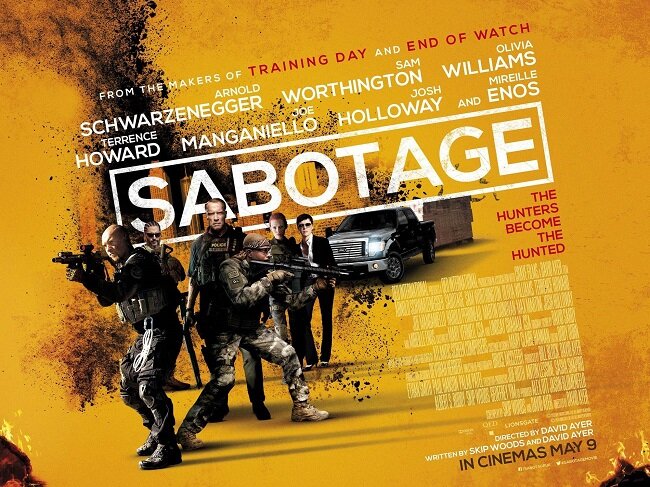
Arnold Schwarzenegger's return to the big screen after his political career has been uneven to say the least. His cameos in The Expendables and The Expendables 2 were well received, with their self referential charm and age related irony. Yet his first major movie The Last Stand, although competent, failed to find an audience. Escape Plan fared better at the box office but did not put Arnie back on the A list. Effectively there's a large percentage of the contemporary cinematic audience who were born after his heyday and are simply not overt fans of his work. His core audience is more than likely of the age group that consume most of their film entertainment at home. Which may explain why Sabotage tanked in the US upon release on March 28th 2014. It was the worst opening box office of Arnie's career. He used to break first day opening records.
Arnold Schwarzenegger's return to the big screen after his political career has been uneven to say the least. His cameos in The Expendables and The Expendables 2 were well received, with their self referential charm and age related irony. Yet his first major movie The Last Stand, although competent, failed to find an audience. Escape Plan fared better at the box office but did not put Arnie back on the A list. Effectively there's a large percentage of the contemporary cinematic audience who were born after his heyday and are simply not overt fans of his work. His core audience is more than likely of the age group that consume most of their film entertainment at home. Which may explain why Sabotage tanked in the US upon release on March 28th 2014. It was the worst opening box office of Arnie's career. He used to break first day opening records.
On paper Sabotage should work. Director David Ayer (Training Day) is capable of making a movie that are more than the sum of its parts and presenting us with a tale of loyalty among elite squads. Sadly he fails. Schwarzenegger strives to give a more in-depth performance as John “Breacher” Wharton, leader of a crack squad of DEA agents. Yet his endeavours are lost within the movie's numerous shortcomings. The cast are mainly wasted, being saddled with an immensely stupid, contradictory and mean spirited screenplay. Sporting such two dimensional names as “Neck,” “Monster” and “Tripod” there is precious little to like about the main characters. There's a lot of on screen violence but it is not in the usual idiom you'd expect from such a movie. It's just there because some producer thought that it was required. The dialogue is poor and littered with profanity that seems to be present to simply bolster the screenplay.
If you are looking for any kind of redeeming quality in Sabotage, then there is the spark of a decent subplot involving Olivia Williams and Harold Perrineau, playing the two officers investigating the alleged theft of ten million dollars by Wharton's team. There is a tangible sense of chemistry between them and they have some amusing banter. Sadly it does not have sufficient impact upon the rest of the movie with it's casual brutality, crass sexism and misogyny. If the film had been written from their point of view then it may well have been a superior product. As it stands Sabotage is perfunctory. I have no problem with a movie being earnestly dumb. It's when it's cynically dumb I feel that all involved should pause and take stock.
I am very curious as to what Schwarzenegger will do next because I think his immediate film has ground to a halt. It's curious that some box office stars and larger than life Hollywood legends have managed to maintain a successful career well into their autumn years. John Wayne and Clint Eastwood both maintained box office and critical acclaim well beyond their sixties. Sadly the contrived shenanigans of Sabotage are a far cry from True Grit and Gran Torino. Perhaps a change in direction away from action movies would be beneficial. Maybe a move to a major TV show would offer a chance for Arnold to find an appropriate audience.
A Million Ways to Die in the West (2014)
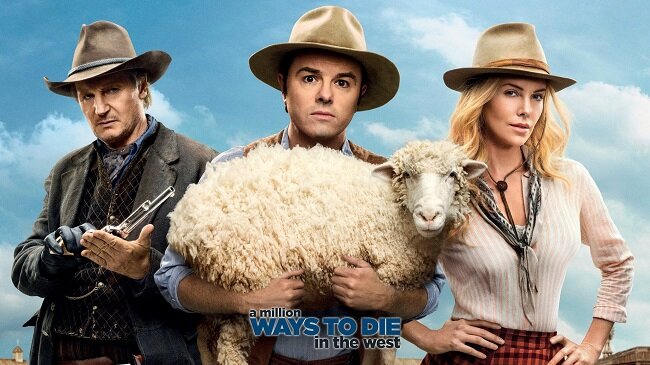
You could quite easily lose thirty minutes from A Million Ways to Die in the West. Tighter pacing would certainly shorten the gaps between the genuinely funny material. As it is, the movie is somewhat baggy and surprisingly middle of the road. Yes it has all of Seth McFarlane's usual hallmarks as far as extreme humour but it lacks the occasional moments of satire and social commentary that you see in Family Guy and in Ted (his best movie to date). The movie is very much aware of what it is and focuses a little excessively on observational humour based on traditional tropes and memes of the Western genre. You frequently get the feeling at times that it’s trying very hard to be “funny” in a “Seth McFarlane” idiom but it smacks a little of “art imitating art”.
You could quite easily lose thirty minutes from A Million Ways to Die in the West. Tighter pacing would certainly shorten the gaps between the genuinely funny material. As it is, the movie is somewhat baggy and surprisingly middle of the road. Yes it has all of Seth McFarlane's usual hallmarks as far as extreme humour but it lacks the occasional moments of satire and social commentary that you see in Family Guy and in Ted (his best movie to date). The movie is very much aware of what it is and focuses a little excessively on observational humour based on traditional tropes and memes of the Western genre. You frequently get the feeling at times that it’s trying very hard to be “funny” in a “Seth McFarlane” idiom but it smacks a little of “art imitating art”.
Perhaps it was a mistake for McFarlane to cast himself in the lead as the Sheep Farmer hero who's been recently dumped by his girlfriend (Amanda Seyfried). Charlize Theron carries a lot of the movie as the sharp-shooting wife of an infamous outlaw played by Liam Neeson. Quite why she takes a liking to McFarlane is mystery. It is fun to see Mr. Neeson send himself up, yet I was left with the feeling that there could have been much more done with his role. Neil Patrick Harris camps it up nicely as Seyfried’s new lover and the ongoing relationship between town prostitute (Sarah Silverman) and smitten virgin (Giovanni Ribisi) is a great idea but sadly loses momentum. Family Guy often wrestles with multiple story lines and random asides but still manages to carry them off well. It is exactly this ability which is missing from A Million Ways to Die in the West.
As ever with McFarlane's work, it is the incidental jokes and tangential humour that works the best. There's a droll cameo by Gilbert Gottfried as Abraham Lincoln and Christopher Lloyd makes an appearance as Doc Brown from Back to the Future. Keep an eye out for lots of other uncredited cameos. Another one of the directors strength's is with his musical acumen. The soundtrack by Joel McNeely is eminently suitable and compliments the movie nicely. The cinematography by Michael Barrett effectively captures the harsh environment of a frontier town. He also shows a keen awareness of how classic Westerns were shot.
Perhaps one of the reasons A Million Ways to Die in the West fails to live up to expectations is because it tries too hard to not be Blazing Saddles. However, if it had focused more on the way that seminal movies are constructed it may well have benefited. As it is A Million Ways to Die in the West is a mixed bag. It fared adequately at the box office but failed to find any popular consensus with both critics and fans alike. It may come as no surprise that Ted 2 was expedited to try and re-establish the commercial viability of the Seth McFarlane brand. Finally, I stumbled upon a curious piece of trivia connected to this film. There is an audio book of A Million Ways to Die in the West available, based on the movie's screenplay, read by Jonathan Frakes. WTF?




Battle Beyond the Stars (1980)
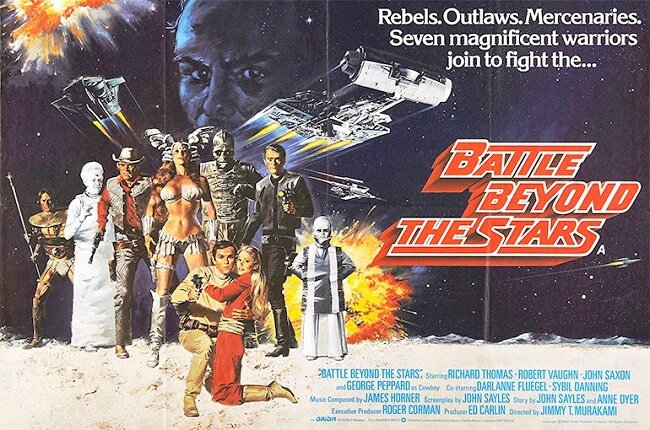
I was 12 years old when I first saw Battle Beyond the Stars during its UK theatrical release. I remember that I enjoyed it and thought it was an action packed movie. Being young, lacking the critical faculties that come with age and exposure to a wider variety of cinematic material, a lot of the films plus points were lost on me. I recollect that I did pick up on the fact that this film was more ghoulish than the other “Space Operas” that flooded theatres at the time. But beyond that, all I saw was a fun and enjoyable science fiction movie. I cheered when the Malmori were defeated and was saddened when Space Cowboy died. It is only after subsequent viewing over the years, that I’ve realised that this film is a microcosm of all the things that made Roger Corman productions so successful and unique. Despite its low budget, the visual effects were good and innovative for the times. There was more sex and violence present, than in comparable productions. And the crew is a veritable who’s who of talent that went on to wider success.
I was 12 years old when I first saw Battle Beyond the Stars during its UK theatrical release. I remember that I enjoyed it and thought it was an action packed movie. Being young, lacking the critical faculties that come with age and exposure to a wider variety of cinematic material, a lot of the films plus points were lost on me. I recollect that I did pick up on the fact that this film was more ghoulish than the other “Space Operas” that flooded theatres at the time. But beyond that, all I saw was a fun and enjoyable science fiction movie. I cheered when the Malmori were defeated and was saddened when Space Cowboy died. It is only after subsequent viewing over the years, that I’ve realised that this film is a microcosm of all the things that made Roger Corman productions so successful and unique. Despite its low budget, the visual effects were good and innovative for the times. There was more sex and violence present, than in comparable productions. And the crew is a veritable who’s who of talent that went on to wider success.
For those who may have missed this movie, it’s premise is straightforward. Battle Beyond the Stars is The Magnificent Seven (and thus Seven Samurai) in space. Sador of the Malmori (John Saxon) and his army of mutants deliver an ultimatum to the peaceful planet of Akir. Surrender and become a vassal state, or he will use his Stellar Converter and destroy all life. He gives the planet seven days to prepare. Young farmer Shad (Richard Thomas) takes the last remaining Corsair Class ship and sets about trying to hire mercenaries to defend his home. He manages to find Space Cowboy (George Peppard), a space trader from Earth. Gelt (Robert Vaughn), a veteran assassin looking for a place to hide. Saint-Exmin (Cybil Danning), a Valkyrie warrior looking to prove herself in battle and Nanelia (Darlanne Fluegal), a young scientist. Shad is also joined by Nestor, five telepathic clones and Cayman (Morgan Woodward), the last surviving member of the Lazuli who has a score to settle with Sador. The seven ships return to Akir and prepare for a ground assault.
There are a combination of factors that make Battle Beyond the Stars superior to many of the low budget Star Wars knock offs that flooded the market in the late seventies and early eighties. First off, the screenplay by John Sayles is noticeably above average and it is clear that he has a solid grasp of such material. Sayles has a great deal of experience writing genre scripts for such movies as Piranha, Alligator, The Howling, and The Challenge. There is action, the right kind of humour and a sense of the theatrical and flamboyant. However, all these elements are tempered and do not undermine the audience’s investment in the central characters. And then there’s the casting, which apparently took the lion share of the budget. Robert Vaughn essentially reprises the same role he had in the original Magnificent Seven back in 1960. George Peppard effortlessly fills the shoes of Space Cowboy, exuding the cocky charm while smoking cigars and drinking Scotch.
Battle Beyond the Stars also boasts a surprisingly good production design and visual effects. Corman initially hired James Cameron as a model maker after being impressed with his short film Xenogenesis. When the original art director for the film was fired, Cameron became responsible for the majority of the film's special effects. There is also a great score by James Horner (which has subsequently been reused in numerous other Corman productions). It made an impression with the executives at Paramount Studios who hired him to write the score for Star Trek II: The Wrath of Khan. But ultimately all these unique and positive aspects coalesce because of the guiding hands of Roger Corman, who knows exactly how to sell this sort of material. Battle Beyond the Stars is the epitome of low budget, exploitation fodder, done right. There’s action, romance, heaving cleavage, violence, explosions, pathos filled death scenes and a surprising amount of philosophy. What’s not to like?






The Devil Inside (2012)
Following in the wake of The Last Exorcism (2010) which enjoyed box office success, The Devil Inside also includes two staples of horror cinema: supernatural possession and the found footage/faux documentary genre. On paper these themes have the potential to yield an interesting drama. Sadly that is not the case with The Devil Inside which excels at neither and is distinctly average at best. It lacks the gravitas and visceral power of The Exorcist and even the sensational shock value of Paranormal Activity. The plot focuses upon Isabella (Fernanda Andrade), an American woman who sets out to make a documentary about her mother who murdered three members of the clergy. She was judged insane and subsequently sent to a mental hospital in Italy. Isabella meets two priests, Father Ben Rawlings (Simon Quarterman) and Father David Keane (Evan Helmuth) who explain that her mother's condition may be due to demonic possession.
Following in the wake of The Last Exorcism (2010) which enjoyed box office success, The Devil Inside also includes two staples of horror cinema: supernatural possession and the found footage/faux documentary genre. On paper these themes have the potential to yield an interesting drama. Sadly that is not the case with The Devil Inside which excels at neither and is distinctly average at best. It lacks the gravitas and visceral power of The Exorcist and even the sensational shock value of Paranormal Activity. The plot focuses upon Isabella (Fernanda Andrade), an American woman who sets out to make a documentary about her mother who murdered three members of the clergy. She was judged insane and subsequently sent to a mental hospital in Italy. Isabella meets two priests, Father Ben Rawlings (Simon Quarterman) and Father David Keane (Evan Helmuth) who explain that her mother's condition may be due to demonic possession.
The Devil Inside explores an alleged Catholic conspiracy as well as the perceived conflicts between science and religion, through a very familiar classic plot device. The film subsequently proceeds to tick off many standard genre conventions such as physical contortions, torrents of verbal abuse, knowledge of secrets and of course sporadic bouts of violence. The story unfolds from the perspective of two priests who are the subject of a documentary film. The performances are adequate from a relatively unknown cast, although British actor Simon Quaerterman has subsequently gained wider exposure through his recurring role in HBO’s Westworld. The narrative has occasional elements of interest in-between the standard genre tropes. For example, it is nice to see a depiction of a priest who is not questioning his vocation for a change.
The Devil Inside is simply too insubstantial to carry any cinematic weight. There are a few jolts and jumps along the way, but they are often contrived and telegraphed. Plus most people will not accept the basic conceit of this film that the Catholic Church conducts exorcisms willy-nilly. However, I did find the denouement of this movie to be interesting. It is incredibly abrupt and for many viewers potentially unsatisfactory, leaving a multitude of unanswered questions. This sort of nihilistic ending is very reminiscent of seventies cinema. It is obvious that the contrived ending is driven more by marketing, as the movie closes with a statement that the case is still under investigation and provides a URL for further details. The website is now defunct but you can view an archived copy via the Wayback Machine.
The Devil Inside provides at most a minor diversion for casual viewers. It certainly is not going to win any fans among longterm horror fans. Yet the depressing fact remains that this sort of low budget, derivative exploitation fodder fares well at the box office. The viral marketing appeals to the youth market, who like these films due to their similarity to the “creepypasta” you find on YouTube. Hence The Devil Inside made $101,758,490 worldwide. Not bad for a movie that cost $1,000,000 to make. Therefore, if you are new to the horror genre, do yourself a favour and watch The Exorcist or even The Blair Witch Project rather than The Devil Inside. The commercial success of such movies may mislead new horror fans into thinking that this is as good as it gets.





Riddick (2013)
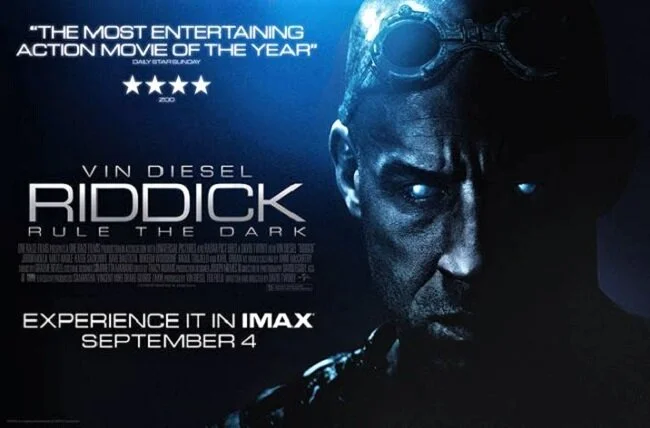
Contrary to the endorsement on the above poster, Riddick was not "the most entertaining action movie of the year" in 2013. It was just an adequate third instalment in a rather ambitious franchise, that has failed to grab the wider public's attention. That’s not to say that they didn’t make money. This is after all the third movie. Writer and Director David Twohy has done his best to try and make the character of Riddick (Vin Diesel) more than the sum of his parts and I admire both of them for their persistence. Unfortunately, Riddick just isn't engaging or complicated enough a protagonist to sustain a franchise of this nature. The anti-hero was sufficient to drive the original Pitch Black back in 2000 which had some good ideas but just couldn't sustain the overarching and overblown Chronicles of Riddick in 2004. This instalment is competently made but ultimately superfluous.
Contrary to the endorsement on the above poster, Riddick was not "the most entertaining action movie of the year" in 2013. It was just an adequate third instalment in a rather ambitious franchise, that has failed to grab the wider public's attention. That’s not to say that they didn’t make money. This is after all the third movie. Writer and Director David Twohy has done his best to try and make the character of Riddick (Vin Diesel) more than the sum of his parts and I admire both of them for their persistence. Unfortunately, Riddick just isn't engaging or complicated enough a protagonist to sustain a franchise of this nature. The anti-hero was sufficient to drive the original Pitch Black back in 2000 which had some good ideas but just couldn't sustain the overarching and overblown Chronicles of Riddick in 2004. This instalment is competently made but ultimately superfluous.
After the epic scope of part two, Riddick is a far more minimalist movie and in some ways is a partial reboot of the original, following a broadly similar plot. Leaving the Necromongers and Vaako (an incredibly brief cameo from Karl Urban), Riddick is betrayed and marooned on a barren planet. Wounded, he finds himself having to fend of a group of bounty hunters, some of whom have specific personal grudges against him. Writer and director Twohy once again toys with the idea of trying to redeem a morally reprehensible murderer and we have such arbitrary tropes as generic bad guys who sneer and look mean, as well as the old cliché of grudging respect between men of war. The dialogue is hard boiled and most of the plot elements have an all too familiar ring to them.
The acting and script are nothing special and although neither are they shockingly bad. It is all just predictably obvious. There a rather crass sub-plot involving lesbian mercenary Dahl (Katee Sackhoff) who begins to warm to the heterosexual charms of Riddick, which is dumb even by genre standards and considering contemporary sexual politics, somewhat insulting. As ever, the production values are slick despite the lower budget with plenty of creature mayhem, violence and macho posturing. Twohy has an eye for planetary vista's and can certainly craft a good action scene. Free from the pretensions of Chronicles of Riddick and trying to create a more complicated franchise, this third instalment returns to a more standard and user friendly formula. The character of Riddick is better suited to a more focused narrative such as this.
After twenty years and three movies, I think it would be wise for both Messrs Twohy and Diesel to call it a day with regard to the ongoing adventures of Riddick. I don't really see where you can take this particular anti-hero next and more importantly, I am not sure if many viewers would be especially disposed to do so. Again I feel that praise is due for director Twohy, for at least trying to do something different and for the determination in trying to sell the character of Riddick to the public. However, I think it's clear that there is not enough narrative meat on the bones to make people care about him. It will be interesting to see if a fourth sequel emerges or whether Twohy moves on from this franchise. Perhaps the latter would be wiser as his previous movies such as Below and A Perfect Getaway were very promising.
NB. There are two versions of Riddick available. The standard theatrical cut and an extended Director’s cut, which includes 5 minutes of slightly expanded dialogue scenes and some additional nudity. This review is based upon the latter.
Classic Movie Themes: Friday the 13th
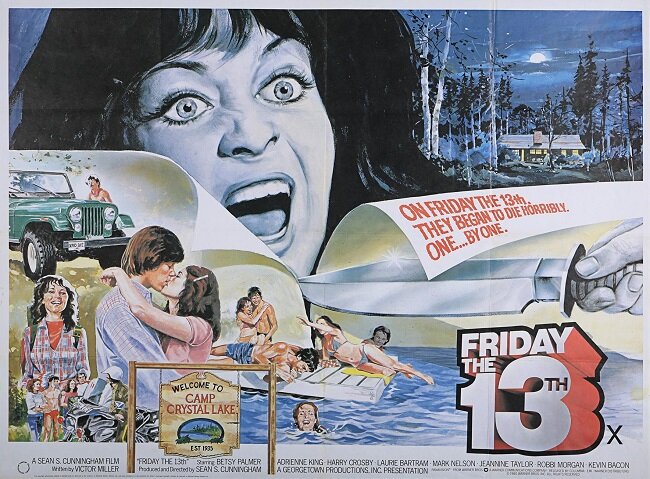
It was Friday the 13th yesterday, so I thought it was about time that I added Harry Manfredini’s iconic score to the annals of Classic Movie Themes. The 1980 slasher movie Friday the 13th has become as legendary in the pantheon of cinematic horror history as John Carpenter’s Halloween. Although there are marked differences between these two films, both use minimalist musical scores extremely effectively to punctuate the proceedings and embellish the overall atmosphere. However, Manfedini did not want to provide viewers with obvious audio cues during scenes of building tension. He preferred to focus his score upon the activities of the franchise's iconic killer, Jason Voorhees, and hence have strong musical cues when he was on screen. This approach meant that he had to use a unique musical motif to denote potential tension, without diminishing its effect on the audience by excessive use of obvious and melodramatic cues.
It was Friday the 13th yesterday, so I thought it was about time that I added Harry Manfredini’s iconic score to the annals of Classic Movie Themes. The 1980 slasher movie Friday the 13th has become as legendary in the pantheon of cinematic horror history as John Carpenter’s Halloween. Although there are marked differences between these two films, both use minimalist musical scores extremely effectively to punctuate the proceedings and embellish the overall atmosphere. However, Manfedini did not want to provide viewers with obvious audio cues during scenes of building tension. He preferred to focus his score upon the activities of the franchise's iconic killer, Jason Voorhees, and hence have strong musical cues when he was on screen. This approach meant that he had to use a unique musical motif to denote potential tension, without diminishing its effect on the audience by excessive use of obvious and melodramatic cues.
Harry Manfredini’s solution was to craft a combination of simple echoing chords combined with a vocal track which repeated the phrase "ki ki ki, ma ma ma". The concept was that these words were some kind of subliminal message; a corrupt version of "kill her, mommy" which would plague Pamela Voorhees, the protagonist from the first movie. Over the course of the franchise, Manfedini became far more adept of using this motif, which he subsequently expanded with the addition of some frenetic strings. This motif would play when something was about to happen on screen, ramping up the tension rather than mitigating it by more overt musical telegraphing. John Williams used a similar technique with his original score for Jaws. Furthermore, Manfredini would often use variations of this cue as musical red herrings, often culminating in a non-fatal jump scare.
Due to the longevity of the Friday the 13th franchise, Harry Manfredini has revised and expanded his work many times. The theme used for the opening credits of the original movie is in many ways the best example. It encapsulates the immediacy of his work and incorporates the "ki ki ki, ma ma ma" motif at its most unique point in history. Another standout version of the main title theme is for Friday the 13th Part III (1982) which was released in 3D. He again reworked the essential principles of basic cue into a pulsing new version with a distinct synth and disco vibe. Finally as an added bonus, I wanted to quickly reference Friday the 13th: A New Beginning (1985) and the song that features while Violet (Tiffany Helm) indulged in that very eighties activity, robot dancing. His Eyes by Australian New Wave Band (and shameless Ultravox plagiarists) Pseudo Echo has gained a curious cult following over the years among Friday the 13th fans.







Scary Stories to Tell in the Dark (2019)
I’m not familiar with the original series of children’s books that Scary Stories to Tell in the Dark is based upon. From what I’ve read, it would appear that the film manages to channel the spirit (if you’ll pardon the pun) of the short stories by Alvin Schwartz, via the four supernatural vignettes that feature in the movies plot. Furthermore, the illustrations featured in the original publications, by Stephen Gammell, have obviously influenced the visual effects and production design of the movie. However, despite being marketed as a portmanteau movie, Scary Stories to Tell in the Dark is much more than that. The framing story is more than just an arbitrary pair of cinematic bookends, designed to wrap around the proceedings. It is entwined into the central narrative and the four supernatural meta stories. Rather than being a pure anthology movie, Scary Stories to Tell in the Dark is at its heart, a film about the nature and inherent power of stories themselves.
I’m not familiar with the original series of children’s books that Scary Stories to Tell in the Dark is based upon. From what I’ve read, it would appear that the film manages to channel the spirit (if you’ll pardon the pun) of the short stories by Alvin Schwartz, via the four supernatural vignettes that feature in the movies plot. Furthermore, the illustrations featured in the original publications, by Stephen Gammell, have obviously influenced the visual effects and production design of the movie. However, despite being marketed as a portmanteau movie, Scary Stories to Tell in the Dark is much more than that. The framing story is more than just an arbitrary pair of cinematic bookends, designed to wrap around the proceedings. It is entwined into the central narrative and the four supernatural meta stories. Rather than being a pure anthology movie, Scary Stories to Tell in the Dark is at its heart, a film about the nature and inherent power of stories themselves.
Set in the small town of Mill Valley, Pennsylvania, in 1968, the plot focuses on three high school students. Stella (Zoe Colletti), Chuck (Austin Zajur) and Auggie (Gabriel Rush) go out to celebrate Halloween. When a prank goes wrong, they're chased by the school bully Tommy (Austin Abrams) and forced to hide at the local drive-in. A mysterious drifter Ramón (Michael Garza) let's them hide in his car and in return for his help, they decide to take him to the neighbourhood haunted house; the infamous Bellows Mansion. The town was founded by the Bellows family who grew rich from the paper mill they built. However, local legends state that the Bellows family incarcerated their daughter Sarah and kept her locked in a darkened room. She would whisper ghost stories through the wall to scare the local children. While investigating the derelict mansion, Stalla finds an old book which appears to be Sarah's. She takes it home and while reading it, a new story appears before her very eyes. It appears to be about the local bully Tommy. The following day he is reported as missing. Another story subsequently appears in the book. This time it’s about Auggie. Is the book hunting the three friends?
Scary Stories to Tell in the Dark makes the most of its $28 million budget. It has a stylised late sixties production design, along with vivid and colourful lighting. The visual aesthetic of Roman Osin’s cinematography greatly adds to the atmosphere. The youthful cast are engaging and deliver good performances. The screenplay by Dan and Kevin Hageman focuses upon their perspective of events and confines adults characters such as the local Sheriff (Gill Bellows) and Stella’s Father (Dean Norris) to the sidelines. The spectre of the Vietnam War, the national draft and the oppressive nature of small town life also hangs over the proceedings. Our protagonists are on the periphery of the adult world and their respective futures do not look especially good. Posters for Richard Nixon seeking election encapsulate this dismal period in US history. It is against this backdrop that the story explores the power of words and narratives. How they can have both a positive and negative effect. And that adult life is filled with ambiguity and this often manifests itself in the use of nuanced language.
The actual “scary stories” that befall the cast are grim and inherently creepy rather than overtly violent. Yet that is not to say that they are not disturbing. And therein lies the rub or at least has been a talking point associated with this movie. Scary Stories to Tell in the Dark despite being drawn from children’s literature, is too ghoulish and frightening for such a young demographic. Despite being rated PG-13 in the US, the BBFC saw fit to award it a 15 rating in the UK and a lot of that simply comes down to tone. Something that you cannot address by re-editing. Hence we have a story about teenagers having to deal with the supernatural, which is potentially of more interest to adult viewers, rather than its target audience. Gore hounds of all ages will be disappointed. However, despite this possible contradiction, the film still performed acceptably at the box office and may well garner a sequel. The story certainly has scope for one.
Because of the pedigree of all associated with this production, Scary Stories to Tell in the Dark makes for absorbing viewing and superior genre entertainment. The assured direction by André Øvredal (Trollhunter, The Autopsy of Jane Doe) offers not only a series of grim supernatural tales but also a degree of emotional intelligence and metaphorical depth. The adult world is not as black and white as our heroes think and coming of age is often bittersweet. Where The Monster Squad explored such themes through horror and humour, this movie achieves it with ghosts and melancholy. The ending resolves the immediate plot but does not deliver a textbook happy ending. The surviving characters are changed and realise that their future lies outside of Mill Valley. I would definitely like to know what happens next and see the central characters progress on their emotional journey. The answers to which lies in Sarah Bellow’s book of stories. I hope it is opened again.
Countdown (2019)
I believe that Countdown received an unnecessarily hard time from the US critics. Don’t get me wrong, I’m not saying that Countdown is a masterpiece. It is not. But it is adequate. A phrase that a lot of people could do with reacquainting themselves with. I won’t retread old ground, as I’ve written about this subject before. I simply think that many people (and critics are people) just have unrealistic expectations when it comes to movies. Not every film created should be, or can be a boundary pushing, cinematic masterpiece. Once again I will invoke my cuisine analogy. There are Michelin five star rated restaurants and then there are fast food franchises. Both serve a purpose, cater for a specific market and can provide relative pleasure. Therefore comparing “like for like” is a critical mistake and based upon a misplaced assumption of false equivalence. Which brings me onto Countdown. It is not The Shining. Nor is it Plan 9 from Outer Space. But it is as I said, “adequate”.
I believe that Countdown received an unnecessarily hard time from the US critics. Don’t get me wrong, I’m not saying that Countdown is a masterpiece. It is not. But it is adequate. A phrase that a lot of people could do with reacquainting themselves with. I won’t retread old ground, as I’ve written about this subject before. I simply think that many people (and critics are people) just have unrealistic expectations when it comes to movies. Not every film created should be, or can be a boundary pushing, cinematic masterpiece. Once again I will invoke my cuisine analogy. There are Michelin five star rated restaurants and then there are fast food franchises. Both serve a purpose, cater for a specific market and can provide relative pleasure. Therefore comparing “like for like” is a critical mistake and based upon a misplaced assumption of false equivalence. Which brings me onto Countdown. It is not The Shining. Nor is it Plan 9 from Outer Space. But it is as I said, “adequate”.
A group of friends download an app called "Countdown" that predicts when the user will die. When Courtney sees that she has just a couple of hours to live, she refuses a ride home from her drunken boyfriend Evan. She is later killed by a supernatural creature when the “countdown” app on her phone reaches zero. Evan crashes his car at the same time of her death. A branch pierces the passenger seat, where she would have sat. At the hospital, Evan tells nurse Quinn Harris (Elizabeth Lail) that he is afraid to have surgery as the app predicts that he will die at the same time. Sceptical of the teenagers concerns, the hospital staff decide to download the app and Quinn learns that she has only three days of life. When Evan mysteriously dies in an accident, Quinn buys a new phone only to find that the app is already installed. She subsequently meets Matt Monroe (Jordon Calloway) when leaving the phone store and learns that his imminent death has also been predicted by the app. So the pair team up and their subsequent investigations uncover a spate of deaths associated with it.
Countdown is a low budget, modern take on the classic ghost story Casting the Runes by M. R. James, with more than a nod towards the Final Destination franchise. Gone are scraps of parchment with runic symbols which are neatly replaced by phone app. This in a nutshell, is what Countdown has to offer; a modern spin on a classic and established plot concept. The film makes a decent attempt at creating a sense of atmosphere and the jump scares are efficiently delivered. There is a recurring visual device in which victims keep seeing an indistinct figure in reflections, which is never there when they turn and look directly. It is a simple device but effective. The mixing of modern technology and biblical demonology also works quite well as the screenplay by Justin Dec doesn’t overthink it, or try to explain every aspect of it. The lead protagonists are not obnoxious, as they so often are in this genre and some of the supporting characters are quite quirky and droll. Derek the cell phone store manager and Father John, the expert on the occult, being clear examples of this.
Countdown also widens its narrative scope by including a subplot about a senior doctor who’s a sexual predator. This brings some interesting and very contemporary moral and ethical questions into the story. Something that gets amplified in the final act, when it is mooted that maybe this abusive man could be used as a surrogate sacrifice, to save another “more deserving” persons life. Another bold piece of moral manoeuvring comes when the lead characters need to examine the terms and conditions of the “killer app”; something they naturally neglected to do themselves initially. So they persuade a drunken conspiracy theorist (who is also a Holocaust denier) to install the app, thus potentially putting him in harms way. I didn’t expect such a plot device and I quite enjoyed it. It’s an indication that Countdown is at least trying to do more than just retread familiar territory. The film’s resolution does “takes liberties” with its own rules and there is a set up for a possible sequel. However, if viewed as convenient and undemanding entertainment, then Countdown serves its purpose. You’ll find far worse horror movies available.
Doctor Sleep Director’s Cut (2019)
Bringing Doctor Sleep to the big screen is a tall order for any filmmaker. Yet director Mike Flanagan (who also wrote the screenplay) manages to tread boldly along this difficult cinematic path. He delivers not only a credible sequel to Kubrick’s unique movie but also manages to adapt Stephen King’s follow up book fairly coherently. Yes, compromises have been made as Kubrick’s version of The Shining strayed far from the source text and therefore trying to dovetail legacy lore into King’s multi-layered follow up novel is a difficult task. However, Flanagan manages to craft a thoughtful and character driven tale which advances the themes present in both the previous film and the source text of the original book and its follow up. Doctor Sleep is not a rollercoaster ride filled with jump scares and convenient gore. It is a slow burn that builds atmosphere and tension. It also offers a strong sense of continuity and fans of the previous instalment will enjoy the sense of nostalgia this new film provides with it’s litany of subtle homages and asides. It is not without flaws but it is an interesting example of a more cerebral horror movie.
Bringing Doctor Sleep to the big screen is a tall order for any filmmaker. Yet director Mike Flanagan (who also wrote the screenplay) manages to tread boldly along this difficult cinematic path. He delivers not only a credible sequel to Kubrick’s unique movie but also manages to adapt Stephen King’s follow up book fairly coherently. Yes, compromises have been made as Kubrick’s version of The Shining strayed far from the source text and therefore trying to dovetail legacy lore into King’s multi-layered follow up novel is a difficult task. However, Flanagan manages to craft a thoughtful and character driven tale which advances the themes present in both the previous film and the source text of the original book and its follow up. Doctor Sleep is not a rollercoaster ride filled with jump scares and convenient gore. It is a slow burn that builds atmosphere and tension. It also offers a strong sense of continuity and fans of the previous instalment will enjoy the sense of nostalgia this new film provides with it’s litany of subtle homages and asides. It is not without flaws but it is an interesting example of a more cerebral horror movie.
It becomes apparent quite quickly while watching Doctor Sleep, that this isn't your run of the mill horror film. The standard of writing, performances and general tone of the film is far more nuanced than most genre outings. The screenplay doesn’t shy away from showing Dan Torrence (Ewan McGregor) hitting rock bottom, as he becomes an alcoholic to drown out the “shining”. A one night stand, in which he robs the woman he’s slept with, has far reaching consequences. Yet far from alienating audiences, the clever writing fosters a sense of sympathy as Dan subsequently moves to a new town and meets Billy Freeman (Cliff Curtis), an ex-alcoholic who helps him turn his life around. As he embarks on a new voyage of self-discovery, Dan finds a positive use for his “gift” when he starts work in a Hospice. He comforts patients as they approach death, calming them with personal visions from their past.
Running in parallel with Dan Torrence’s story, is that of Abra Stone (Kyliegh Curran). Abra has a similar “shining” ability to Dan but of a far greater magnitude. It frightens her parents and alienates her from her school friends. As she reaches out with her psychic abilities, she attracts the attention of Rose the Hat, who is the leader of the cult the True Knot. Rose (Rebecca Furguson) and her group are psychic vampires that feed upon “steam” or psychic essence. The group kidnap, torture and kill children to feast upon their steam, as it keeps them young and fuels their supernatural powers. Once aware of Abra’s presence, Rose sets her sights on her as a potential limitless food supply. Inevitably, Dan crosses path with both Rose the Hat and Abra, leading to a confrontation that can only be resolved by revisiting the now deserted Overlook Hotel. Perhaps the demons that await Dan there, can serve another purpose.
Doctor Sleep has certainly more highs than lows and focuses on being a disturbing character study with a building atmosphere, rather than a gorefest. Apart from one murder which is very disturbing by its very nature, rather than what is actually shown, the film is not overly reliant on violence. Performances are good and there is some very clever casting of actors who have a comparable style and appearance to Shelley Duvall, Jack Nicholson and Scatman Crothers. Some plot elements such as Dan’s struggle to not become his Father are explored well. Abra brings something more to the proceedings, rather than just the standard trope of a teenager with a supernatural power. Sadly, Rose the Hat is somewhat lacking as a villain. This has nothing to do with Rebecca Furguson per se but mainly the way the character is realised. Simply put Rose is not threatening enough and doesn’t exude sufficient malevolence, despite her penchance for child murder. Yet despite these minor shortcomings, there is sufficient depth to Doctor Sleep to keep discerning horror fans engaged.
I did not see the theatrical cut of Doctor Sleep upon its release in UK cinemas. I watched the Director’s Cut which adds an additional 30 minutes of character development to the film. This version is well paced, brooding and encompasses a broad spectrum of plot elements. However, even this extended version still leaves some themes and characters underdeveloped. Dan’s recovery from alcoholism is somewhat swift and his job as an orderly is shown but not fully explored. Bruce Greenwood has an interesting cameo as Dr. John Dalton and it would be nice to find out more about the man. But Stephen King is notorious for multiple characters in his books and that cannot always be easily accommodated in the confines of a mainstream film. All things considered, Mike Flanagan could have ended up falling between two stools while trying to to justice to King’s intricate work and riffing off Kubrick’s seminal movie. The results are not 100% perfect but Doctor Sleep strives to do justice to both groups of fans. The film offers a reassuring sense of familiarity to those wedded to Kubrick’s vision and manages to take the characters forward and allow them to grow and tell a new story, rather than just retread old ground. Popular consensus is that the extended version is the more successful of the two edits.
Terminator: Dark Fate (2019)
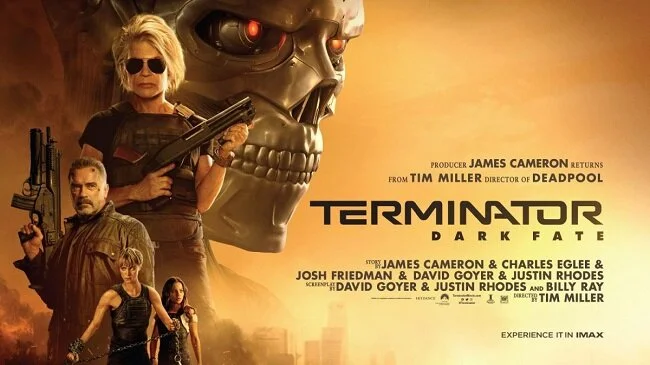
Sequels and reboots are hardly a new concept and have been a part of Hollywood culture since the 1930s. The success of the Universal Horror movies from that era being a prime example of direct follow ups and retconned movies. However, there is one fundamental rule that distinguishes a good sequel from a bad one. You should never mitigate, undermine or make irrelevant the events of the previous movie, just to provide your new film with a raison d'être. For example, the events of Aliens do not contradict or trivialise those that happened in Alien. In fact with that franchise there is a very clear logical progression between the two movies. The same is true for Mad Max and Mad Max 2 or Star Wars and The Empire Strikes Back. The key is to progress a story, enhance it or explore things from an alternative angle and bring something new to the cinematic table. Sadly this philosophy is all too often lost on corporate film making. Which means that many sequels are just tedious replays of prior films. Terminator: Dark Fate falls squarely into this category.
Sequels and reboots are hardly a new concept and have been a part of Hollywood culture since the 1930s. The success of the Universal Horror movies from that era being a prime example of direct follow ups and retconned movies. However, there is one fundamental rule that distinguishes a good sequel from a bad one. You should never mitigate, undermine or make irrelevant the events of the previous movie, just to provide your new film with a raison d'être. For example, the events of Aliens do not contradict or trivialise those that happened in Alien. In fact with that franchise there is a very clear logical progression between the two movies. The same is true for Mad Max and Mad Max 2 or Star Wars and The Empire Strikes Back. The key is to progress a story, enhance it or explore things from an alternative angle and bring something new to the cinematic table. Sadly this philosophy is all too often lost on corporate film making. Which means that many sequels are just tedious replays of prior films. Terminator: Dark Fate falls squarely into this category.
Objectively, Terminator: Dark Fate plays out as a greatest hits of the Terminator franchise. Due to the way that Terminator 2: Judgement Day concluded, the future existence of Skynet has been definitively stopped. Therefore for this new film to justify its existence it has to contrive another comparable future threat and does so with a new rogue AI called Legion. So despite Judgement Day being averted, we are simply presented with a new dystopian future (because obviously Legion perceives mankind as a threat) and a new Terminator (Rev-9 model played by Gabriel Luna) sent back in time. Naturally, if there’s a Terminator on the loose, then they have to have a target. This time round it is Daniella Ramos (Natalia Reyes), a young woman who works in an automobile assembly factory. She is rescued and protected (as was Sarah Connorin the original movie) by a soldier from the future. The major difference being this time, is that Grace (Mackenzie Davis) has been cybernetically enhanced thus making her more capable in tackling Terminators.
Perhaps the most egregious offense that Terminator: Dark Fate commits is dealing with the conundrum of John Connor. With Judgement Day averted both John and his Mother Sarah were theoretically free to live out the remainder of their lives in peace. But the production’s need to include actress Linda Hamilton into the story (and thus increase the film marketability) requires a rather mean spirit plot twist that effectively negates the entire point of the first two films. To say more would spoil the film’s plot for those who have yet to see it but it really is a poor idea and has upset many ardent fans of this franchise. This narrative device also paves the way to crowbar Arnold Schwarzenegger into the proceedings as yet another T-800 model Terminator from the original Skynet timeline. There are some attempts in the screenplay by David Goyer, Justin Rhodes and Billy Ray to try and play against type, with this particular Terminator living out the rest of his existence as an average member of society. But the scenario envisaged is purely designed for easy laughs and offers nothing of substance beyond its inherent novelty.
Effectively all that Terminator: Dark Fate offers during its 128 minute duration is a retread of previous plot elements from the other movies and a series of noisy and frenetic action scenes, all of which are derivative and soulless, with no genuine sense of threat. Is the film poorly made? No not at all. Is it entertaining on any level? Yes. In a superficial way. But it has nothing to offer beyond that and it is utterly redundant. Beyond the need to make a film studio some money, Terminator: Dark Fate cannot really justify its existence. It adds nothing to the existing canon and lore and makes for rather ponderous viewing. The return to an R Rating provides no tangible benefits either, other than the scope for violence for violence sake. Sadly, the mainstream film making industry has no concept of integrity or art and is utterly lacking in self awareness. So I’m sure given some time, a focus group will attempt to resurrect this franchise yet again at a future date, only to make exactly the same mistakes.
Midway (2019)
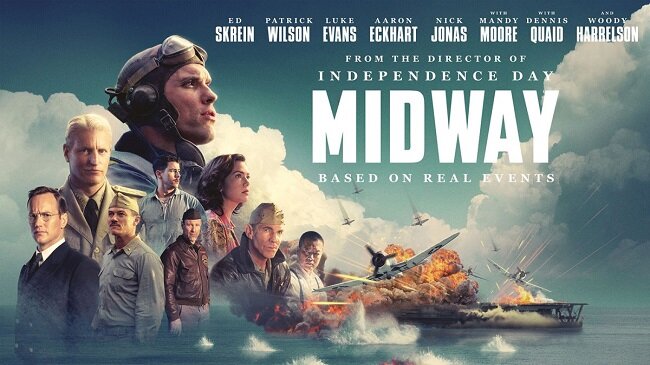
Big budget, historically driven movies that set out to recount key events of World War II are a rarity these days. If you ignore the bombastic inanities of Michael Bay’s Pearl Harbor (2001), then you have to go back to the late seventies to films such as A Bridge Too Far to find a suitable example. This is why Roland Emmerich’s Midway came as a genuine surprise. When I saw a trailer for the film last October, I was flummoxed that such a production had been made. My initial concerns were that it would focus on spectacle rather than historical fact and trivialise events of great military and historical importance. After having watched Midway, I am pleased to report that this is a surprising throwback in many ways. The film covers the events of the Japanese attack on Pearl Harbor, the subsequent Doolittle Raids on Tokyo by the US and the Battle of Midway, both succinctly and accurately. Furthermore, much of the cast play real veterans who participated in these events. Overall this is an entertaining and informative movie that feels like a relic from fifty years ago. However, its docudrama aspirations also make for somewhat generic character development.
Big budget, historically driven movies that set out to recount key events of World War II are a rarity these days. If you ignore the bombastic inanities of Michael Bay’s Pearl Harbor (2001), then you have to go back to the late seventies to films such as A Bridge Too Far to find a suitable example. This is why Roland Emmerich’s Midway came as a genuine surprise. When I saw a trailer for the film last October, I was flummoxed that such a production had been made. My initial concerns were that it would focus on spectacle rather than historical fact and trivialise events of great military and historical importance. After having watched Midway, I am pleased to report that this is a surprising throwback in many ways. The film covers the events of the Japanese attack on Pearl Harbor, the subsequent Doolittle Raids on Tokyo by the US and the Battle of Midway, both succinctly and accurately. Furthermore, much of the cast play real veterans who participated in these events. Overall this is an entertaining and informative movie that feels like a relic from fifty years ago. However, its docudrama aspirations also make for somewhat generic character development.
Midway faces the dilemma that historical movies of this kind often encounter. How to balance the exposition of factual events along with a plethora of real life characters and weave both elements into a narrative arc. All too often characters have little scope for development and end up being simple archetypes. Ed Skrein as Lieutenant Richard Dick Best, typifies this. He tries to bring a sense of urgency to the proceedings as he journeys from strong headed risk taker to a seasoned officer, responsible for the men in his command. Sadly the screenplay presents this in a very formulaic way. Patrick Wilson has perhaps the greatest dramatic scope as Lieutenant Commander Edwin T. Layton, who is driven to ensure that Naval Intelligence gets things right at Midway after the disaster at Pearl Harbor. Overall, the strong cast of character actors does not get in the way of the proceedings but you do feel that you’d like to know more about them all, other than just a basic text book summary.
It is obvious that a great deal of research has gone into the visual effects in Midway. Broadly, the depiction of both Naval and air battles ring true. But at times there is an element of digital “showboating” when the onscreen action slips into spectacle, possibly at the expense of technical accuracy. Dive bombing is by its very nature a high risk undertaking but is there really a need to embellish the drama with last minute escapes from explosive fireballs and planes skimming the wave as they desperately attempt to climb? CGI also lacks the sense of mass and physical presence that filming with real ships and aircraft offers. But as such relic of World War II are in short supply, one cannot be too critical of the films production design. Midway tries to present the scale of the loss of life on both sides without getting bogged down in too much graphic violence. Broadly in works well within the confines of the PG-13 rating.
Unlike older war movies, Midway is not driven by a gung-ho imperative and does not arbitrarily paint the Japanese as two dimensional caricatures. There are brief nods to Japanese geo-political expansion at the beginning of the film and Japanese Naval tactics and motivations are shown to balance those of the US. Midway does go on to show the consequences of the Doolittle Raid and how the Chinese Nationalists faced reprisals for helping American pilots. There is no mention of Japanese-American internment. Overall, if you are interested in military dramas or are looking for an action driven war movie, then Midway can provide both. The character development and screenplay are somewhat basic but they successfully underpin the action sequences and move the story from A to B. Despite the very modern approach to direction, editing and aesthetics, there is a retro quality to the film. It is interesting to see a modern production whose primary remit is to educate, rather than just to provide disposable entertainment.
Bad Monster Movies
I was chatting with some friends recently about monster movies and creature features as they have been a mainstay of cinema for as long as the medium has existed. At it’s best, a good cinematic monster or monsters are a metaphor for examining a societal ill or it can also be a clever MacGuffin to explore the human condition. Clive Barker’s troubled film, Nightbreed being a prime example of this where the monsters are the persecuted protagonists and the humans are terrible creatures, lacking empathy. However, be your narrative deep or simple, if you’re going to have a monster in your film, then try to do it right. A poorly realised design or badly implemented, low budget visual effects can work against the credibility of your creature and there are no shortage of cinematic examples. So I thought it would be fun to list a few “bad” movie monsters. I try to provide some context with each example as to why each particular monster didn’t quite work. Naturally I have not in anyway created a definitive list and would be happy for readers' comments if they have other examples they’d care to share.
I was chatting with some friends recently about monster movies and creature features as they have been a mainstay of cinema for as long as the medium has existed. At it’s best, a good cinematic monster or monsters are a metaphor for examining a societal ill or it can also be a clever MacGuffin to explore the human condition. Clive Barker’s troubled film, Nightbreed being a prime example of this where the monsters are the persecuted protagonists and the humans are terrible creatures, lacking empathy. However, be your narrative deep or simple, if you’re going to have a monster in your film, then try to do it right. A poorly realised design or badly implemented, low budget visual effects can work against the credibility of your creature and there are no shortage of cinematic examples. So I thought it would be fun to list a few “bad” movie monsters. I try to provide some context with each example as to why each particular monster didn’t quite work. Naturally I have not in anyway created a definitive list and would be happy for readers' comments if they have other examples they’d care to share.
Watchers (1988). Here is a great title to start with, being a very poor adaptation of Dean R. Koontz novel of the same name. The subtleties and pathos of the original story have been replaced with eighties big hair courtesy of Corey Haim. On the plus side, Michael Ironside provides a characteristic performance of borderline psychosis. The downside being the OXCOM, the renegade government experiment at the centre of the story. It really is a shoddy example of uninspired animatronics and full body prosthesis.
Prophecy (1979). John Frankenheimer’s environmental thriller features a monster that Starburst magazine referred to as Smokey the Bear with acne. The creature created by the Burman studios, remains hidden or only partially glimpsed for most of the film’s running time. However, a few scenes do make it abundantly clear that it is nothing more than a man in a suit, diminishing the tension. The crew seemed to fail to grasp how to light and reveal the beastie effectively. A flambéd Yogi Bear has only so much shock value.
Conan the Destroyer (1984). Carlo Rambaldi’s Dagoth is interesting design, yet the physical execution is extremely poor to the point of being laughable. Even director of photography Jack Cardiff with all his skills cannot light or frame the scenes featuring this creature in such a way that improves them. It is curious that a film of this budget, with an otherwise handsome production design, tolerated such a poor effects sequence. Perhaps stop motion would have been a better option?
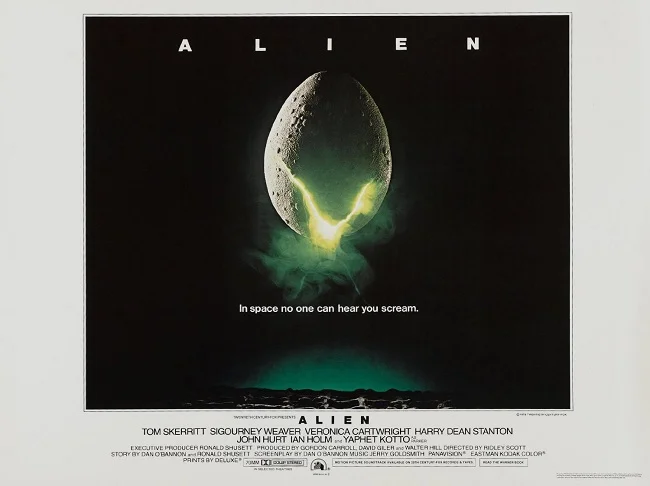
Contamination (1980). This Italian cash in of Alien features numerous sequences of people exploding after exposure to an extraterrestrial’s eggs. When it is finally revealed, the monstrous alien Cyclops is a rather uninspired and conspicuously static creature. Using the hypnotic power of its glowing eye, it lures badly dubbed actors to their death via it’s rubber proboscis. You expect poorly realised monsters in low-budget films, but there’s a fine line between poor and crap.
The Dark (1979). Originally intended as a zombie film to be directed by Tobe Hooper, the producers changed their mind halfway through shooting and decided to cash in on the Star Wars boom. Subsequently, after a change of director, The Dark became an alien entity on the rampage movie. This particular alien resembles a rather tall homeless person, with a poor complexion and lasers shooting from his eyes. Only watch this if you have a black belt in bad movie tolerance.
White Buffalo (1977). Wild Bill Hickok (Charles Bronson) and Crazy Horse (Will Sampson) join forces to defeat a mythical White Buffalo that has blighted their lives. Nice John Barry score, good performances from the lead actors in this odd cross genre western that was poorly marketed. The titular beastie, courtesy of Carlo Rambaldi (again), can be clearly seen on tracks. Much of the mechanical apparatus used to create the creature’s movements is also on display. With some better editing this could have all been avoided.
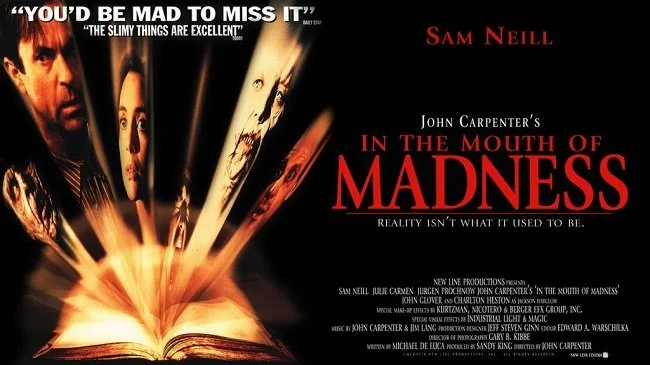
Slugs (1988). Loosely based on Shaun Hutson’s book, this low-budget horror features killer mutant slugs that have somehow evolved large pointy teeth etc. Most of the effects work consists of a rubber slugs applied to wound prosthetics and these scenes work well. However, on a few occasions the slugs are shown in close-up as the pictures above shows. Utterly ludicrous I’m sure you’ll agree. Pass the salt.
Rawhead Rex (1985). Clive Barker’s short story about an elemental pagan god and its subsequent rampage through an Irish Town, is intelligent and has many themes. All such subtleties are jettisoned in this low-budget horror exploitation film. The nine-foot beast from the source text is replaced by a tall man in ragged clothes with animatronic head. It all looks a bit silly, especially when he urinates on a priest. The monster’s technical shortcomings should have been left off camera as much as possible.
Island of Terror (1966). The “Silicates” featured in Island of Terror are a form of life based upon Silicon instead of Carbon. Spawn from an accident while trying to find a cure for cancer, these beasties digest human bone, leaving a shapeless corpse behind. They can also divide and multiply like any other kind of cell. Peter Cushing may well save the day in this unusual science fiction horror movie but he cannot distract us from the exceeding cheap and immobile creature effects.
I Am Legend (2007). The Vampires of Richard Mathesons’s original story are replaced by Darkseekers in this adaptation. These are emaciated quasi zombies that fear light. The film itself is a poor adaptation, by an uninspired director, starring a former box office star. It features unimaginative CGI created monsters that are devoid of any threat, substance or pathos. If you want a textbook example of a big budget monster movie that utterly fails to understand the genre, look no further.
Classic Movie Themes: Game of Death
Game of Death was Bruce Lee’s fourth Hong Kong martial arts movie. Due to the success of his previous films he found himself in a position where he could finally write and direct a project himself. Filmed in late 1972 and early 1973, the film was put on hold midway through production when Hollywood offered him a starring role in Enter the Dragon. He died shortly after completing the US backed movie that made him an international star, so Game of Death remained unfinished. Several years later the rights to the raw footage were sold and recycled for a new movie, that kept the name but bore little resemblance to Lee’s original vision. For most of Game of Death, Kim Tai-jong and Yuen Biao double for Bruce Lee and it is only in the final act that audiences actually get to see about 12 minutes of material that he shot himself. The 1978 release of Game of Death, directed by Robert Clouse, is a mess but remains a cinematic curiosity. The scenes which genuinely feature Bruce Lee are outstanding, even in an abridged form.
Game of Death was Bruce Lee’s fourth Hong Kong martial arts movie. Due to the success of his previous films he found himself in a position where he could finally write and direct a project himself. Filmed in late 1972 and early 1973, the film was put on hold midway through production when Hollywood offered him a starring role in Enter the Dragon. He died shortly after completing the US backed movie that made him an international star, so Game of Death remained unfinished. Several years later the rights to the raw footage were sold and recycled for a new movie, that kept the name but bore little resemblance to Lee’s original vision. For most of Game of Death, Kim Tai-jong and Yuen Biao double for Bruce Lee and it is only in the final act that audiences actually get to see about 12 minutes of material that he shot himself. The 1978 release of Game of Death, directed by Robert Clouse, is a mess but remains a cinematic curiosity. The scenes which genuinely feature Bruce Lee are outstanding, even in an abridged form.
Game of Death was marketed to capitalise on Lee’s international fame and appeal. Due to his iconic status it was packaged in a comparable idiom to a Bond film. Hence the opening credits to Game of Death are lurid and literal; very much like the work of Maurice Binder on the various James Bond movies. And then there is the score by John Barry that lends a certain classy ambience to the proceedings. The main theme is brassy, sumptuous and oozes style in the same way that Barry brought those qualities to the 007 franchise. Variations of this cue are subsequently used during all the major fight scenes in the film. Musically it works best with the footage in the film’s climax which was shot by and features Lee himself. The presence of such a noted film composer elevates the status of Game of Death, despite its many flaws. However, the Catonese and Mandarin dialogue versions of the movie feature an alternative soundtrack by Joseph Koo, who was an established composer in the Hong Kong movie industry.
The complete soundtrack for Game of Death was recently released by Silva Screen and also includes the score for Roger Vadim’s Night Games from 1980. The soundtrack contains all major cues featured in the film along with the song “Will This Be The Song I'll Be Singing Tomorrow” performed by Colleen Camp, who also starred in the film. I suspect it was hoped that this number would do well on the strength of the movie but it is far from memorable with its overly fastidious lyrics and melancholy tone. Here is the main title theme which underpins Game of Death. It is instantly recognisable as a John Barry compositions, as it exhibits all his musical hallmarks. It is far more grandiose in its scope than the quirky scores of Bruce Lee’s earlier work. If Lee had lived perhaps the Hollywood studios would have attempted to pigeonhole him into more sub Bond style movies as Game of Death strives to. Irrespective of such idle speculation, John Barry’s work remains as iconic as Lee himself and effortless reflects his charisma and physical prowess.
Ad Astra (2019)
In the near future, a series of mysterious power surges strike the Solar System, endangering all human life. Astronaut Major Roy McBride, is selected by U.S. Space Command (SpaceCom) to investigate their source near Neptune. The surges are linked to the "Lima Project", a failed experiment from 26 years earlier, that was intended to search for intelligent life outside of our solar system. The ship’s antimatter drive is potentially malfunctioning and responsible for the energy surges. Roy’s investigation is further complicated by the fact his Father H. Clifford McBride (Tommy Lee Jones), led the "Lima Project" and has not been heard from for 16 years after reaching Neptune. Having been told that Clifford may still be alive, Roy is joined by his father's old associate Colonel Pruitt (Donald Sutherland) whose loyalties remain ambiguous. Roy, who is noted for remaining calm under pressure, shows little emotional reaction to the news about his Father. As he and Pruitt travel covertly from Earth, to the moon and then onto Mars, it becomes clear that there is more to the mission than meets the eye. Will Roy remain emotionally detached or will old wounds impair his judgement?
In the near future, a series of mysterious power surges strike the Solar System, endangering all human life. Astronaut Major Roy McBride, is selected by U.S. Space Command (SpaceCom) to investigate their source near Neptune. The surges are linked to the "Lima Project", a failed experiment from 26 years earlier, that was intended to search for intelligent life outside of our solar system. The ship’s antimatter drive is potentially malfunctioning and responsible for the energy surges. Roy’s investigation is further complicated by the fact his Father H. Clifford McBride (Tommy Lee Jones), led the "Lima Project" and has not been heard from for 16 years after reaching Neptune. Having been told that Clifford may still be alive, Roy is joined by his father's old associate Colonel Pruitt (Donald Sutherland) whose loyalties remain ambiguous. Roy, who is noted for remaining calm under pressure, shows little emotional reaction to the news about his Father. As he and Pruitt travel covertly from Earth, to the moon and then onto Mars, it becomes clear that there is more to the mission than meets the eye. Will Roy remain emotionally detached or will old wounds impair his judgement?
Many critics felt that Ad Astra fell between two stools with its cold, clinical approach to space travel and its intermittent action scenes. I did not feel this way for the first third of the movie and accepted the lunar chase scene as relevant to the plot. Within the confines of the story, the Moon is colonised by multiple nations and there are territorial disputes. Hence violating borders could indeed provoke a military response. However the film contradicted its own adherence to science at the end of the first act to accommodate a most unusual, unexpected but ultimately superfluous suspense sequence. This somewhat jaded my view of Ad Astra for the remainder of its running time and I got the distinct feeling that perhaps there was studio pressure put upon writer and director James Gray to balance the existential self contemplation of the plot with some accessible action sequences for the less “intellectually invested” viewers. Furthermore the much anticipated ending in which Father and Son meet, lands wide of the mark, failing to meet expectations both narratively and philosophically.
One cannot fault the quality of the production with much of the technology and science on display in Ad Astra being credible and well realised. The 100 million dollar budget seems to have gone mainly into the films visual effects and production design. Performances from all involved are good, as you would expect from such an ensemble cast. But as Ad Astra progresses the ideas run out of steam and suddenly there is nothing to sustain the drama beyond the visuals and the hope that matters will be resolved in a satisfactory or at the least adequate fashion. And it is sadly the latter that is only achieved. For a movie that strives to deal with the near future in a Kubrickeques manner and explore the complexity of family relationships in an idiom similar to Greek Mythology, it fails to deliver at its dramatic climax. Furthermore, not only is the accurate depiction of science suspended when it finds itself at odds with the drama, so is narrative credibility. One scene where Roy is discovered illegally stowing away on a rocket, ends so abruptly and violently that it verges on the absurd.
However, despite losing its way Ad Astra does at least do something unusual that flies in the face of popular belief with one of the stories core themes. It postulates the idea that there is no other intelligent, sentient life in the universe and that we are as a species are just an anomaly that is utterly alone. Such a statement is very bold and thought provoking. But the Science fiction genre often works best when it is a MacGuffin for a human story. And there is a lot on offer in Ad Astra that could fuel that very process. Yet the production seems to have made the classic mistake of getting the cart before the horse and focusing more on the aesthetics and ambience of space travel, at the expense of the emotional heart of the story. But I will also give the film credit for having the best unnecessary primate attack and explosive decompression scene in any movie. It’s just a shame that it served no real purpose here than to add some contrived tension, in lieu of the genuine article.
Star Wars: The Rise of Skywalker (2019)
Two years ago The Last Jedi was released to mixed reviews. A vocal percentage of fans complained bitterly about various aspects of the movie. Some of their assertions such as the episodic pacing of parts of the story had merit. While other criticisms regarding diversity and gender categorically did not. However, Disney were cognisant of the fact that Star Wars fans were not universally enthralled by the movie although it turned a healthy profit. And then the following Easter Solo “underperformed” at the box office and journalists started talking about how the franchise had overreached itself and was in decline. Alarm bells obviously went off at board level and something had to be done. It would appear that The Rise of Skywalker is very much a movie designed to put the franchise back on track and wrap up the narrative proceedings of the last 42 years. However, there is a cost in offering such a colossal “fan service”. The latest instalment starts at a breakneck pace and continues in that idiom for over two hours. Action scenes, canonical references and homages are piled on, one after another. But narratively things are somewhat thin, recycling ideas and concepts from earlier movies. Some of the plot devices are never explained and therefore seem somewhat contrived. The Rise of Skywalker is most certainly entertaining. But it requires its core audience to be forgiving and to a degree complicit in its indulgences and failings.
Two years ago The Last Jedi was released to mixed reviews. A vocal percentage of fans complained bitterly about various aspects of the movie. Some of their assertions such as the episodic pacing of parts of the story had merit. While other criticisms regarding diversity and gender categorically did not. However, Disney were cognisant of the fact that Star Wars fans were not universally enthralled by the movie although it turned a healthy profit. And then the following Easter Solo “underperformed” at the box office and journalists started talking about how the franchise had overreached itself and was in decline. Alarm bells obviously went off at board level and something had to be done. It would appear that The Rise of Skywalker is very much a movie designed to put the franchise back on track and wrap up the narrative proceedings of the last 42 years. However, there is a cost in offering such a colossal “fan service”. The latest instalment starts at a breakneck pace and continues in that idiom for over two hours. Action scenes, canonical references and homages are piled on, one after another. But narratively things are somewhat thin, recycling ideas and concepts from earlier movies. Some of the plot devices are never explained and therefore seem somewhat contrived. The Rise of Skywalker is most certainly entertaining. But it requires its core audience to be forgiving and to a degree complicit in its indulgences and failings.
If you have seen any of the marketing and advertising material associated with The Rise of Skywalker, then you will already know one of the key plot points of the film. Emperor Palpatine survived the destruction of the second Death Star and is “recovering” on the Sith home world of Exegol. When tracked down and confronted by Kylo Ren, Palpatine reveals that he was behind the creation of the First order and manipulated Supreme Leader Snoke. The Emperor then offers Ren a secret fleet of Star Destroyers along with complete control of the galaxy, if he hunts down and kills Rey. Meanwhile, a spy within the First Order informs the Resistance of Kylo Ren’s activities. Rey, Poe, Finn and Chewbacca subsequently embark on a search for Exogel, using Luke Skywalker’s notes on Jedi texts. Will Kylo Ren carry out the Emperor’s wishes and betray Rey? Will Rey give in to the dark side of the force and discover her true destiny? Will the Resistance fight alone or will the oppressed citizens of the galaxy rise up and fight the First Order in one final struggle?
The Rise of Skywalker is a finely tooled but somewhat arbitrary conclusion to the Star Wars franchise. Director J. J. Abrams turns the action and pacing up to eleven, offering a cavalcade of digital set pieces and bombastic spectacles. The weightier plot elements raised by The Last Jedi have been jettisoned in favour of action, melodrama and keeping core fans happy. Where Rian Johnson reflected upon the hubris of the Jedi and how they were the architects of their own demise, Abrams is more content to shoehorn in as many cameos possible into the movies 142-minute running time. Furthermore, the object lesson that General Leia taught Poe Dameron about the nature of command, which was so well written by Rian Johnson, has now been forgotten in this instalment. Poe has reverted back to a headstrong character who rashly rushes into situations. The film parallels several iconic scenes from both The Empire Strikes Back and Return of the Jedi. It is debatable as to whether this is a cunning plot device showing history between Jedi and Sith repeating itself, or whether it is simply lazy writing designed to get the story out of the corner it has painted itself into.
As you would expect with this franchise, the quality of the production is outstanding. The scope of many of the digital action scenes are breath taking and there is also a lot of great physical effects and old school stunt work. As ever the Star Wars universe looks and feels very credible and lived in. Yes, the science behind many ideas is way off base but that was never what this series was about. Star Wars has always been and remains science fantasy and high adventure, as opposed to pure science fiction. Dan Mindel’s cinematography is very creative and often it’s the minor attention to detail that makes a scene. For example, there’s a wonderful reverse tracking shot where Poe and Finn advance along a corridor picking off Stormtroopers who fall dead, into the frame. The obvious physical humour of the previous movie has gone and the emphasis is once again on dry quips and asides. This is much more like A New Hope and is far less of a distraction. As ever I cannot praise enough, the artistry of the great John Williams. Once again, his score permeates every aspect of the film and is a living character, providing the emotional heart and soul of the proceedings. And as far as I’m concerned, whenever an actor from the classic trilogy was on screen, The Rise of Skywalker really hit its stride. Yes you can argue the Lando Calrissian was an underdeveloped character to begin with but Billy Dee Williams has a presence and a natural charisma. It was great to see him fly the Millennium Falcon one more time.
Although I will happily admit that The Rise of Skywalker is very entertaining and winds up the story suitably, I can’t help but feel I’ve been shamelessly manipulated; in the same way as watching a renown illusionist do a show at Las Vegas. It’s all great fun but you know that everything is a contrivance and a deliberate misdirection. Key cast members are sent to classic locations and iconic structures have conveniently survived catastrophic events. The story also feigns the death or imperils much loved characters, only to reveal these events to be bluffs later on. And too many of the major plot twists and turn just defy established lore for the sake of narrative convenience. I was often reminded while watching The Rise of Skywalker, of the classic Simpson’s episode “When You Dish Upon a Star” during which Homer pitches a movie screenplay about “"killer robot driving instructor that travels back in time for some reason". Every time something implausible, contradictory or convenient happens in The Rise of Skywalker, I would just think “for some reason” and it pretty much summed things up every time.
I suspect that for many Star Wars fans, the fundamental flaws inherent in The Rise of Skywalker will be outweighed by the cameos, homages and overall fan service that Disney have produced. I did just that and accepted the movie for what it is and broadly I enjoyed it. For example, exactly why Dominic Monaghan had such an obvious guest appearance, I’m not quite sure. But as C-3PO once said “It’s nice to see a familiar face”. As for the staggering crass expositionary dialogue that crops up from time to time, you have to remember that event movies such as this bring a lot of casual viewers and non-fans to the movie theatre. Plus the last instalment in any major, much beloved franchise is always a tough gig to undertake. However, there will be those who will not be at all pleased about this movie and I fully expect an internet outrage at some point soon. Once again, if a film is poorly made or under written, then these are legitimate grounds for criticism and complaint. If you’re peeved because a film didn’t pan out the way you wanted it to, then tough luck. Frankly it is good that the original Star Wars story arc has come to an end. Its broadly been a fun ride but the franchise has attained too much pop culture baggage. I personally think that the standalone movies about classic characters and scenarios are the way forward. I really like Rogue One and I’m currently enjoying The Mandalorian. As for classic Star Wars, I’ll settle for this ending on the understanding that it’s now time to part company.






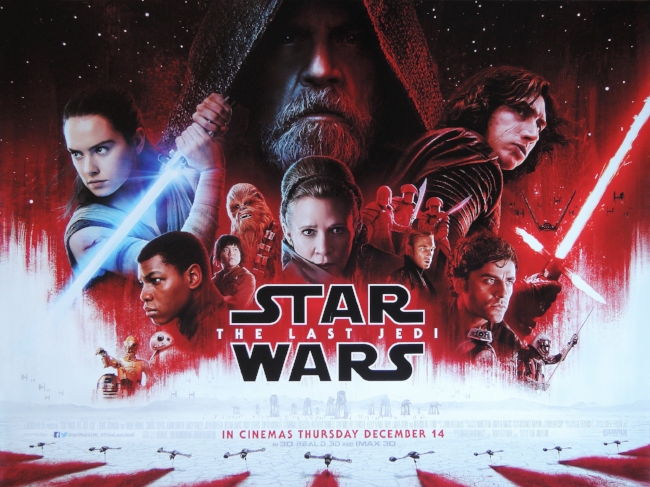



A Christmas Carol (1997)
It’s interesting that so many adaptations of Charles Dickens’ iconic seasonal story are brought to us via the medium of animation. Naturally, this is a far more economical means of depicting the story with its period detail and supernatural elements, compared to a live action production. However, for an animated version of A Christmas Carol to work successfully, it needs three things. An innovative and striking production design, robust voice acting and a screenplay that keeps the core themes while offering significance difference compared to prior adaptations. You’ll find all of these elements in Richard Williams’ 1971 animated short. Sadly they’re conspicuously absent from the 1997 version. Despite the presence such talents as Tim Curry, Ed Asner and Whoopi Goldberg, this is a distinctly arbitrary animated film. Considering that the screenplay was written by Jymn Magon who has years of experience working for Disney, I had hoped this would be better endeavour.
It’s interesting that so many adaptations of Charles Dickens’ iconic seasonal story are brought to us via the medium of animation. Naturally, this is a far more economical means of depicting the story with its period detail and supernatural elements, compared to a live action production. However, for an animated version of A Christmas Carol to work successfully, it needs three things. An innovative and striking production design, robust voice acting and a screenplay that keeps the core themes while offering significance difference compared to prior adaptations. You’ll find all of these elements in Richard Williams’ 1971 animated short. Sadly they’re conspicuously absent from the 1997 version. Despite the presence such talents as Tim Curry, Ed Asner and Whoopi Goldberg, this is a distinctly arbitrary animated film. Considering that the screenplay was written by Jymn Magon who has years of experience working for Disney, I had hoped this would be better endeavour.
A Christmas Carol presents a very non-specific realisation of Dickensian London. The costumes seem more Edwardian in style and the city is a little too contemporary in design. Scrooge (Tim Curry) is depicted in a very generic way, complete with long nose, angular features and balding head. He also has a canine companion named Debit who acts as a comic foil and tempers some of the more sinister elements of the story. The film sports a rather lurid colour scheme, with characters wearing lots of bright red and green. The various spirits that visit scrooge deviate from the source text in their depiction. The Ghost of Christmas Past is presented as a street urchin, which I thought was quite a creative touch. The Ghost of Christmas Present is voiced by Whoopi Goldberg so the spirits gender and ethnicity reflect those of the actor. And then there are the songs. Yes, this is yet another musical adaptation filled with indifferent songs that simply fill the gaps in the proceedings. None of them stay with you.
At 72 minutes this version of A Christmas Carol does not outstay its welcome. Despite being rather uninspired it is broadly tolerable, although I appreciate that such a statement is damning with faint praise. Occasionally there are some minor details lifted directly from the source text, which I always look to see. This time round it is Jacob Marley’s face appearing in the painted tiles that surround the fireplace in Scrooge’s lodgings. The film also has a few creative ideas, such as a Jacob Marley that looks more like Theodore Roosevelt than a ghost. I also liked that Scrooge finds common ground with Tiny Tim through their finding escape through books and mutual love of the novel Robinson Crusoe. If you can tune out the songs and concentrate on the animated sequences that accompany them, as well as overlook the rather pointless inclusion of the dog Debit, then this version of A Christmas Carol may be of interest to fellow completists. Casual viewers will be better off seeking out a more accomplished adaptation.




Rambo: Last Blood (2019)
The enduring appeal of the character John Rambo in First Blood comes from the fact that he is a traumatised ex- service man who keeps himself to himself as he drifts from job to job, trying to come to terms with his wartime experiences. His poor treatment at the hands of a small-town Sheriff is a succinct metaphor for the social and political indifference that Vietnam veterans were shown upon their return to the US. He’s a man with a code in a world that no longer has any use for him. His simple and honest patriotism is not returned and he is in fact viewed with shame by many from the nation he loves. Furthermore, the first movie does not paint him as a cold-blooded killer. Despite provocation he is not the first person to shoot to kill. Rambo is in many ways a victim. A broken man, who society has asked to do unspeakable things. Now society wants nothing to do with him and fears the “monster” they created. Although clearly an action movie, First Blood had narrative depth and a flawed but sympathetic protagonist. 37 years and four movies later, such dramatic themes have long left the franchise. The central character is indeed a caricature of its former self.
The enduring appeal of the character John Rambo in First Blood comes from the fact that he is a traumatised ex- service man who keeps himself to himself as he drifts from job to job, trying to come to terms with his wartime experiences. His poor treatment at the hands of a small-town Sheriff is a succinct metaphor for the social and political indifference that Vietnam veterans were shown upon their return to the US. He’s a man with a code in a world that no longer has any use for him. His simple and honest patriotism is not returned and he is in fact viewed with shame by many from the nation he loves. Furthermore, the first movie does not paint him as a cold-blooded killer. Despite provocation he is not the first person to shoot to kill. Rambo is in many ways a victim. A broken man, who society has asked to do unspeakable things. Now society wants nothing to do with him and fears the “monster” they created. Although clearly an action movie, First Blood had narrative depth and a flawed but sympathetic protagonist. 37 years and four movies later, such dramatic themes have long left the franchise. The central character is indeed a caricature of its former self.
After the events of Rambo (2008) John Rambo (Sylvester Stallone) returns to his home in Arizona, where he lives raising and selling horses which he manages with his Father’s old business partner Maria Beltran (Adriana Barraza), and her granddaughter Gabriela (Yvette Monreal). This surrogate family has provided John with stability and hope for the last decade and helped him face his inner demons. However, PTSD still plagues John and he often sleeps in a series of tunnels that he’s dug under his ranch as a form of self-therapy. Despite advice to the contrary, Gabriela goes to Mexico looking for her estranged Father. After meeting with an old school friend, Gizelle (Fenessa Pineda), a meeting is arranged but her Father rejects her. Upset by events, Gabriela goes to a nightclub with Gizelle to drown her sorrows. She is subsequently betrayed by her friend and falls into the hands of a human trafficking gang run by the Martinez Brothers. John comes looking for Gabriela and quickly has a run in with the violent gang. His actions have far reaching consequences leading to a show down at John’s heavily fortified ranch.
Rambo: Last Blood is curious hybrid genre film, sitting somewhere between Taken, Death Wish and a Friday the 13th movie. It’s quite different from previous instalments in both style and format. There are no covert missions, no skirmishes with foreign military forces and no schoolboy commentary on geopolitics. Instead director Adrian Grunberg (Get the Gringo) initially tries to focus on John Rambo coming to terms with his place in the world as he lives out his “retirement” on his Father’s ranch in quiet self-contemplation. The international version of the movie starts with an interesting prologue in which Rambo uses his tracking skills to try and rescue some tourist lost in a storm. His inability of save all of them triggers his PTSD. However, these scenes do not appear in the US and UK version of the movie. Furthermore, their relevance in the longer edit is soon lost as the movie quickly gives way to standard action movie and revenge tropes. From then on, we are subject to a generic kidnap and revenge fantasy, populated by decidedly two-dimensional characters. If you want copious amounts of action and gore then you have to wait 75 minutes for the final act, although there are a smattering of extreme unpleasantries along the way.
If Rambo: Last Blood had actually abandoned the premise of an action movie and instead been a character drama about John’s redemption through his adopted family, then this may well have been a far better film. But fans simply wouldn’t have supported such a radical change of direction and so we are subject to this tired and frankly uninspired undertaking. Although professionally made, it is best not to think too hard about narrative and themes of Rambo: Last Blood. Drug cartels and human trafficking are tough enough subjects to tackle in an intelligent and nuanced fashion. Even movies like Sicario struggle to dissect the complexities of these issues. Here they are simply just exploitation fodder, tinged with an undercurrent of racism. This is also a very mean spirited ending to John Rambo cinematic journey. Instead of finding some peace and a place in the world, he once again endures bereavement and a bleak future. As deluded right-wing revenge fantasies go this isn’t even a good one, because in winning he loses everything. Were both Stallone and Grunberg deliberately trying to make a statement that “wages of sin are death” and subvert the entire message of the franchise? No, I think they just painted themselves into a narrative corner due to the demands of fans and the producers to deliver what was expected.
The Kentucky Fried Movie (1977)
Written by Jim Abrahams, David Zucker, Jerry Zucker and directed by John Landis, The Kentucky Fried Movie is an eclectic collection of skits, parodies and bogus commercials, lampooning what you’d see on seventies TV or in the movie theatres of the time. The sketches are fast paced and many feature well known faces from TV and cinema such as Bill Bixby, George Lazenby, Donald Sutherland and Henry Gibson. Some of the parodies may not “connect” with modern audiences who may not get the source references but for every skit that misses the mark, there are at least two others hit the target. Overall, it’s a litany of visual gags, stupid humour and endless puns and wordplay. Just what you’d expect from the team that went on to bring you Airplane! and Top Secret! The Kentucky Fried Movie is at its best when it satirises the movie industry, with such wonderful faux movies trailers as Cleopatra Schwartz; a blaxploitation action movie featuring a foxy African American vigilante and her devout Hasidic Jew partner.
Written by Jim Abrahams, David Zucker, Jerry Zucker and directed by John Landis, The Kentucky Fried Movie is an eclectic collection of skits, parodies and bogus commercials, lampooning what you’d see on seventies TV or in the movie theatres of the time. The sketches are fast paced and many feature well known faces from TV and cinema such as Bill Bixby, George Lazenby, Donald Sutherland and Henry Gibson. Some of the parodies may not “connect” with modern audiences who may not get the source references but for every skit that misses the mark, there are at least two others hit the target. Overall, it’s a litany of visual gags, stupid humour and endless puns and wordplay. Just what you’d expect from the team that went on to bring you Airplane! and Top Secret! The Kentucky Fried Movie is at its best when it satirises the movie industry, with such wonderful faux movies trailers as Cleopatra Schwartz; a blaxploitation action movie featuring a foxy African American vigilante and her devout Hasidic Jew partner.
There’s some rather broad humour in The Kentucky Fried Movie. But it also serves quite well as a reflection of cinema and public attitudes of the time. The trailer for the faux porno flick Catholic High School Girls in Trouble, not only crassly raises a wry smile ("More shocking than Behind the Green Door. Never before has the beauty of the sexual act been so crassly exploited!") but reminds us that pornography was on the fringes of becoming mainstream and was seriously analysed by some movie critics. And then there are some dry send ups of public service announcements. In United Appeal for the Dead Henry Gibson speaks at great length about how “death” is the number one killer in the United States and what his charity can do to help those who have died lead a normal life. That's Armageddon, featuring George Lazenby, parodies every Irwin Allen disaster flick made. There’s even an angry Gorilla sketch that includes an early Rick Baker ape costume. And let’s not forget Danger Seekers, the show that follows those intrepid men who live for the thrill of adventure and risk.
However, the movie's centrepiece, A Fistful of Yen, is by far the jewel in the crown. This spot-on parody of Enter the Dragon and the martial arts genre clocks in at thirty plus minutes. The UK government hires Loo (Evan C. Kim playing a Bruce Lee lookalike with an Elmer Fudd voice) to penetrate Dr. Klahn's (Han Bong-soo) mountain fortress and destroy his operation. Loo refuses the mission at first, but happily agrees once he is told “but you’ll have the chance to kill fifty, maybe sixty people”. The jokes are not only obvious takes on standard tropes of martial arts cinema but there’s also a clever deconstruction of the pseudo philosophy and dialogue inherent in the genre (“you have our gratitude”). This is the most obvious precursor to later Jim Abrahams, David Zucker and Jerry Zucker productions such as The Naked Gun. It should also be noted that the actual fight scenes in A Fistful of Yen are competently constructed and hold up quite well on their own.
The Kentucky Fried Movie is not in any way a sophisticated satire. The humour is far from nuanced or cerebral but it barrels along at a pace, throwing gag after gag at viewers. By the law of averages, whatever your taste in humour, some of them will land. If it’s watched on its own terms and with an eye on the context of the times (IE not being politically correct) then it will entertain. Both the writing team and the director went onto bigger and better things in the years after the movies’ release. But their style and many longstanding jokes were created and refined here. For example we see an early iteration of the See You Next Wednesday gag, common to many subsequent John Landis movies. Also Jim Abrahams, David Zucker, Jerry Zucker reference their abiding love for The Wizard of Oz at the end of A Fistful of Yen. A theme that later showed up in Top Secret!