
Wake Wood (2009)
Sometimes when making a film, less can indeed be more. Practical things like keeping the scope of your story simple, working within your budget and not feeling obliged to justify or explain every aspect of the plot can prove invaluable. If you can do all of these things with a robust cast, intelligent direction, while maintaining your viewers attention, then you have achieved something that many studios and independent filmmakers usually cannot do. Director David Keating has managed to do this with the 2009 horror film Wake Wood. Along with Brendan McCarthy who he co-wrote the screenplay with him, Wake Wood efficiently and charismatically tells its tale. It is well paced, with relatable characters and good performances. The atmosphere builds and there are some jolting moments of horror. Furthermore, it is both unusual and rewarding to see pagan rituals portrayed as an extension of rural life, in the same way as farming and animal husbandry. It is neither malevolent or benign but just an ever present force.
Sometimes when making a film, less can indeed be more. Practical things like keeping the scope of your story simple, working within your budget and not feeling obliged to justify or explain every aspect of the plot can prove invaluable. If you can do all of these things with a robust cast, intelligent direction, while maintaining your viewers attention, then you have achieved something that many studios and independent filmmakers usually cannot do. Director David Keating has managed to do this with the 2009 horror film Wake Wood. Along with Brendan McCarthy who he co-wrote the screenplay with him, Wake Wood efficiently and charismatically tells its tale. It is well paced, with relatable characters and good performances. The atmosphere builds and there are some jolting moments of horror. Furthermore, it is both unusual and rewarding to see pagan rituals portrayed as an extension of rural life, in the same way as farming and animal husbandry. It is neither malevolent or benign but just an ever present force.
Vet Patrick Daley (Aiden Gillen) and his wife Louise (Eva Birthistle), a pharmacist, move to the rural village called Wake Wood, after their daughter Alice (Ella Connolly) is mauled to death by a dog. Louise struggles to come to terms with her loss and the fact she can have no further children. One evening after their car breaks down, Patrick and Louise go to the nearby house of Patrick's veterinary colleague, Arthur (Timothy Spall), for assistance. Louise witnesses Arthur conducting a pagan ritual but says nothing to Patrick. Lousie becomes increasingly aware that something is not quite right with the village and that Arthur saw her observing the ritual. Soon afterwards a farmer is killed by his own bull while Patrick is tending to it. Horrified by another accidental death the couple plan to leave, but Arthur convinces them to stay. He claims he can bring their daughter back but only for three days and only if she has been dead for less than a year. The conflicted couple agree to his offer on the understanding that they must remain in Wake Wood forever.
If you are familiar with The Wicker Man, Don’t Look Now or any of the adaptations of Stephen King’s Pet Sematary then you’ll find several similar themes present in Wake Wood. This is a film about loss, how people cope with bereavement and what personal sacrifices you would make just to see your loved one again. Fortunately for such a character driven story, performances are universally good. Aiden Gillen is very plausible as a man throwing himself into his work to avoid his feelings. Eva Birthistle excels as a Mother who cannot move on after the death of her only child. Timothy Spall compliments the cast as retired veterinarian Arthur. He brings an air of normalcy to the pagan elements of the plot and his performance is quietly understated rather than overtly theatrical.The Irish setting and cultural heritage gives a uniquely Celtic feel to the proceedings and provides sufficient difference from other genre movies that have trodden a similar path. Overall, Wake Watch does not overreach itself and contains some rather flamboyant Fulci-eque violence to boot. Hence it is a superior genre movie. Competitors should take note.











The Man Who Could Cheat Death (1959)
The stories of Hammer films “horsetrading” with the British Board of Film Censorship (as the BBFC were called at the time) make for some interesting reading. If you're interested in the history of the studio I thoroughly recommend the book A New Heritage of Horror: The English Gothic Cinema by David Pirie. However, the BBFC felt that they’d been hoodwinked after the release of The Curse of Frankenstein in 1957, which had managed to smuggle additional unpleasantries into the final theatrical edit. Henceforth the board took a more formidable stance when dealing with Hammer and all subsequent releases. Hence The Man Who Could Cheat Death feels somewhat tame compared to earlier Hammer films. Although cuts were made to the final edit of the movie, one gets the impression that maybe the more salacious and graphic content was possibly reduced when writing the screenplay. However, with that all said, The Man Who Could Cheat Death is still a handsome, performance driven Hammer horror.
The stories of Hammer films “horsetrading” with the British Board of Film Censorship (as the BBFC were called at the time) make for some interesting reading. If you're interested in the history of the studio I thoroughly recommend the book A New Heritage of Horror: The English Gothic Cinema by David Pirie. However, the BBFC felt that they’d been hoodwinked after the release of The Curse of Frankenstein in 1957, which had managed to smuggle additional unpleasantries into the final theatrical edit. Henceforth the board took a more formidable stance when dealing with Hammer and all subsequent releases. Hence The Man Who Could Cheat Death feels somewhat tame compared to earlier Hammer films. Although cuts were made to the final edit of the movie, one gets the impression that maybe the more salacious and graphic content was possibly reduced when writing the screenplay. However, with that all said, The Man Who Could Cheat Death is still a handsome, performance driven Hammer horror.
In 1890, Dr. Georges Bonnet (Anton Diffring) is the talk of the Parisian art scene due to his lifelike sculptures and his ongoing affair with his model Margo Philippe (Delphi Lawrence). At a party to unveil his latest work, Bonnet meets Dr. Pierre Gerrard (Christopher Lee) and his companion Janine Du Bois (Hazel Court). Janine had a torrid romance with Dr. Bonnet ten years ago in Italy. Against his better judgement Bonnet resumes his affair with Janine, although he refuses to explain why he vanished a decade prior. In the meantime, Bonnet awaits the arrival of his lifelong friend, Dr. Ludwig Weiss (Arnold Marlé) from Switzerland. Weiss is a pioneer in his medical field and Bonner is dependent upon him to perform a unique operation that he needs to stay alive. However, when Weiss finally arrives he has suffered a stroke and can no longer use his right hand. Perhaps Dr. Gerrard can be persuaded to perform the procedure. However, matters are further complicated not only by the love triangle between Bonner, Janine and Gerrard but by a visit from Inspector Legriss (Franics De Wolff), who is investigating the sudden disappearance of Margo Phillippe.
The Man Who Could Cheat Death is a typical Hammer production in so far as it is studio based with little or no exterior shots. The sets are suitably atmospheric and gothic, though some were redressed from the previous production, The Hound of the Baskervilles. Cinematographer Jack Asher used pastel coloured filters when lighting the more sinister scenes, especially when Dr. Bonnet is in his laboratory, drinking his elixir or suffering the ill effects of his medical condition. As ever with Hammer films, the lead cast do much to carry the plot and distract the viewer from the shortcomings of the screenplay. Sadly, as mentioned previously, the horror content is rather light in this film. Several murders happen either offscreen or with the killer blocking the audience's view. There was some additional nudity shot for the European and Asian markets but no such material made it into the UK and US release. The most ghoulish scene occurs at the film’s denouement and also features some interesting stunt work.
The Man Who Could Cheat Death is neither the best example of Hammer Film Productions output from the fifties nor the worst. Anton Diffring does well in the lead role which was originally intended for Peter Cushing. The film does not out stay its welcome with a running time of 83 minutes, although it is rather verbose with the emphasis upon narrative drama, rather than action. Naturally judged by today’s standards it is all rather tame but films such as this were causing quite a stir at the time and there was a lot of critical disdain for these lurid, technicolor horror stories. However Hammer chose to focus on the box office returns and so continued producing to a tried and tested formula. They had a knack for making their films look more sumptuous than they really were due to clever production design and inventive photography. They also new that sex sells and were not averse to focusing on the moral corruption that usually goes hand in hand with violence and horror.
The Reptile (1966)
After his brother Charles dies in mysterious circumstances, Harry Spaulding (Ray Barrett) inherits his cottage in the Clagmoor Heath, Cornwall. He quickly moves in with his new bride, Valerie (Jenifer Daniel), with a view to finding out what happened. However, he is shunned by the locals apart from the village publican, Tom Bailey (Michael Ripper), who befriends him. The only other resident in the vicinity of the cottage is Dr. Franklyn (Noel Willman), the owner of the nearby Well House. He lives with his daughter Anna (Jacqueline Pearce), who is attended by a silent Malay servant (Marne Maitland). Anna is a strange girl who seems to be harbouring a secret. Her father treats her contemptuously and does his utmost to keep her confined to Well House. When the local village eccentric, Mad Peter (John Laurie), dies in a similar fashion to Charles Spaulding, both Harry and Tom decide to take matters into their own hands and to investigate further.
After his brother Charles dies in mysterious circumstances, Harry Spaulding (Ray Barrett) inherits his cottage in the Clagmoor Heath, Cornwall. He quickly moves in with his new bride, Valerie (Jenifer Daniel), with a view to finding out what happened. However, he is shunned by the locals apart from the village publican, Tom Bailey (Michael Ripper), who befriends him. The only other resident in the vicinity of the cottage is Dr. Franklyn (Noel Willman), the owner of the nearby Well House. He lives with his daughter Anna (Jacqueline Pearce), who is attended by a silent Malay servant (Marne Maitland). Anna is a strange girl who seems to be harbouring a secret. Her father treats her contemptuously and does his utmost to keep her confined to Well House. When the local village eccentric, Mad Peter (John Laurie), dies in a similar fashion to Charles Spaulding, both Harry and Tom decide to take matters into their own hands and to investigate further.
Filmed simultaneously with The Plague of Zombies with which it shared several sets, The reptile is a slower paced, more thoughtful film that prefers to focus on the psychological collapse of its central characters, rather than set pieces. It is one of the best Hammer movies from the sixties which blends traditional horror elements with more mainstream period costume dramas. The production design is stylish and captures the atmosphere of a claustrophobic Cornish village. The interiors of Well House are an interesting juxtaposition to this, with Dr. Franklyn’s exotic flowers and penchant for Indian culture. As for the Reptile makeup by Roy Ashton, it works well by the standards of the time. Director John Gilling wisely keeps scenes featuring the transformed Anna, to a minimum and lights them favourably. Another ghoulish embellishment is the way the victims turn black and purple after being bitten.
However, it is the central performance by Jaqueline Pearce which is the standout feature of The Reptile. She gives a haunting performance often relying purely on her demeanour, rather than dialogue to express her torment. Noel Willman, who was a substitute for Peter Cushing, is also notable as Anna’s guilt wracked father. He is the architect of both his own and his daughter’s ruin while also being a victim of her curse. Another enjoyable aspect of The Reptile is seeing Hammer stalwart Michael Ripper in an expanded role and not meeting a grisly demise. Sadly, some cuts originally made to the film by the BBFC for its theatrical release, still persist and the material has not been found or restored to the current Blu-ray release. Yet The Reptile remains a superior example of Hammer’s work from this era, before they felt compelled to make their content more salacious to stay competitive.
Slayground (1983)
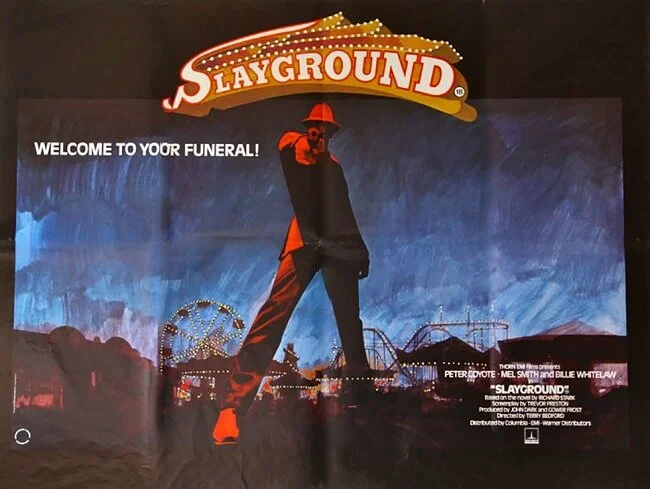
There have been several movie adaptations of the books of Jonathan Stark (AKA Donald E. Westlake) featuring his career criminal lead character, Parker. Sadly not all of them have fared well, either critically or at the box office. Many have deviated from the source material, often just using mere aspects of the original plot as the basis of their screenplay. Perhaps the most successful of these has been Point Blank (1967), directed by John Boorman and starring Lee Marvin. Slayground sadly follows the pattern set by previous adaptations. It changes several character names and takes two main elements from the source text and uses them as a premise. Specifically, a robbery that goes wrong which results in an accidental death and a climactic shootout in an out of season fairground. Due to the financing of the film, half of the story takes place in the US and the other in the UK. Much of the cast are British, resulting in a curious and at first glance somewhat incongruous film.
There have been several movie adaptations of the books of Jonathan Stark (AKA Donald E. Westlake) featuring his career criminal lead character, Parker. Sadly not all of them have fared well, either critically or at the box office. Many have deviated from the source material, often just using mere aspects of the original plot as the basis of their screenplay. Perhaps the most successful of these has been Point Blank (1967), directed by John Boorman and starring Lee Marvin. Slayground sadly follows the pattern set by previous adaptations. It changes several character names and takes two main elements from the source text and uses them as a premise. Specifically, a robbery that goes wrong which results in an accidental death and a climactic shootout in an out of season fairground. Due to the financing of the film, half of the story takes place in the US and the other in the UK. Much of the cast are British, resulting in a curious and at first glance somewhat incongruous film.
Long term thief Stone (Peter Coyote) and his accomplice Joe Sheer (Bill Luhrs) arrive in a rundown part of New York State to rob an armoured car. When their usual driver Laufman fails to join them, Sheer employs local driver Lonzini (Ned Eisenberg). Despite successfully undertaking their robbery, Lonzini collides with another car while making their getaway. When Stone investigates the wreckage he discovers all passengers are dead including a young girl. Shocked and outraged by this needless tragedy, Stone threatens to kill Lonzini, however, Sheer intervenes and the gang go their separate ways. But the Father of the dead girl (Michael M. Ryan), a wealthy sports businessman, hires charismatic assassin Costello (Phillip Sayer) and instructs him to find all involved in her death and to kill them. Stone soon learns that he is a marked man, when Lonzini is found brutally murdered. He flees to the UK and seeks out former associate Terry Abbatt (Mel Smith), in the hope of lying low and avoiding the price on his head. But Costello is tenacious and pursues him, relentlessly killing all in his path.
Slayground was written and adapted by British screenwriter Trevor Preston, a veteran of such British cop shows as The Sweeney. Hence several scenes reflect his customary gritty and hard boiled dialogue. The movie starts in a run down part of the US and then relocates to a comparably run down part of the UK. This narrative continuity may well have had a greater significance initially. But Slayground feels like a film that may have substantially re-edited prior to release. It runs for a tight 89 minutes and doesn’t waste it’s time on niceties or unnecessary embellishments. The direction by former cameraman Terry Bedford is uncomplicated and reflects the down-at-heel lifestyle and world of the main characters.
Yet there are major narrative gaps in the proceedings. Where Walter Hill wrote deliberately minimalist characters for The Driver, the flow of events in Slayground gives one the distinct impression that there is 10 to 15 minutes of expositional material is missing. Furthermore, the hitman Costello has a penchant for arranging the bodies of his victims. Yet these scenes are brief and their actual death sequences are conspicuously absent.
Hence the cast are left with precious little to do. Stone is no more of an archetype, rather than a fully rounded character. Billie Whitlaw has only a few scenes as Madge, the owner of a financially failing amusement park, although she gets by on the strength of her personality. And Mel Smith doesn’t arrive until the film’s final act. He delivers a particularly powerful soliloquy about a criminal’s lot in life and we get a brief glimpse of his straight acting talent. But again the proceedings surge ahead towards the climactic showdown between Stone and Costello and the production seems to dismiss the gaps in the plot . What we should have experienced throughout Slayground is a man’s journey through his past as he reflects upon the lifestyle he has chosen and its consequences. Sadly we are instead taken on a journey from A to B to C, where everyone we meet becomes another corpse within minutes of being introduced.
Yet despite its multiple shortcomings, there are a few aspects of Slayground that standout. The film starts with a small vignette that shows the fate of the original getaway driver, Laufman. It is a creative opening gambit. The hitman Costello is also an enigmatic character with his fedora hat and the way we never fully get to see his face. His playful tanting of his victims is an interesting foible. The denouement in the amusement park is suitably creepy, as the fairground automatons are caught in the crossfire. But ultimately this movie fails to reach its full potential, either because of ill conceived editing designed to “streamline” the story, or because the director simply didn’t have the experience to craft a more rounded and detailed narrative. As it stands, Slayground remains a curious anomaly. One of four films produced by Thorn EMI in the early eighties under the auspices of Verity Lambert. The others being Comfort and Joy, Morons from Outer Space and Dreamchild.




White Noise (2005)
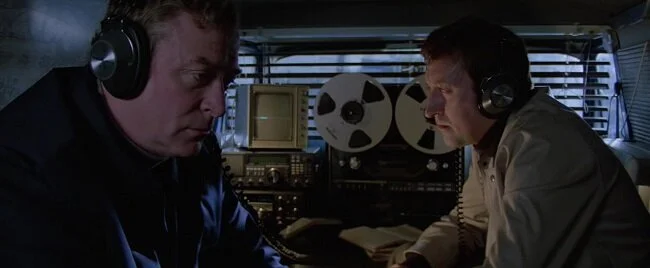
Successful writer Anna Rivers (Chandra West) goes missing prior to the launch of her new book. Shortly after, her car is found abandoned by the roadside and her body is discovered in the harbour. The Police conclude that there's been a tragic accident. Her husband, architect Jonathan Rivers (Michael Keaton), is devastated by her loss. When he is approached by Raymond Price (Ian McNeice), who claims he has recorded messages from Anna through electronic voice phenomena (EVP), Jonathan is both sceptical and angry. However, his curiosity eventually gets the better of him and he meets with Raymond and quickly becomes immersed in EVP phenomenon. As Jonathan experiments with EVP recording he begins to discern messages from the dead. However, it soon becomes apparent that these communications are of a precognitive nature and that there are more sinister forces at work.
Successful writer Anna Rivers (Chandra West) goes missing prior to the launch of her new book. Shortly after, her car is found abandoned by the roadside and her body is discovered in the harbour. The Police conclude that there's been a tragic accident. Her husband, architect Jonathan Rivers (Michael Keaton), is devastated by her loss. When he is approached by Raymond Price (Ian McNeice), who claims he has recorded messages from Anna through electronic voice phenomena (EVP), Jonathan is both sceptical and angry. However, his curiosity eventually gets the better of him and he meets with Raymond and quickly becomes immersed in EVP phenomenon. As Jonathan experiments with EVP recording he begins to discern messages from the dead. However, it soon becomes apparent that these communications are of a precognitive nature and that there are more sinister forces at work.
White Noise is a slick and glossy production, sporting a modern clean aesthetic that reflects the world of its central character. Much of the story takes place in Jonathan’s home which is a brightly lit, glass palace. The visual style along with the use of what was contemporary technology effectively juxtapose the arcane nature of the supernatural. In this film the shadowy forms of the dead appear on TV screens and monitors, instead of dimly lit corridors. It’s an interesting divergence from typical ghost story tropes but it alone cannot sustain the story. Pretty much everything else about White Noise is formulaic and predictable. That’s not to say that the production is poorly constructed. Director Geoffrey Sax keeps proceedings on track and the story doesn’t out stay its welcome. It’s just that there’s very little that’s different on offer. Keaton and the rest of the cast rely on their acting personas to keep the audience engaged, as all characters are not especially well defined.
It is not easy to quickly and efficiently establish a loving relationship in the first act of a film, and make it seem natural. It requires subtle writing and a talent for focusing on the little things that we share daily with our loved one, to imbue such scenes with a sense of credibility. You’ll find it in Poltergeist (1982) and its depiction of the Freeling family. In White Noise, the opening scenes that try and convey the love between Anne and Jonathan just seem contrived and perfunctory. Hollywood’s predilection for alway making successful, white, middle class men the protagonist in most films, is also an impediment when it comes to generating emotional investment. Beyond the superficial, IE a man who is grieving, it is not difficult to warm to Jonathan Rivers. He’s not a bad man, just a bland one. The way he sidelines his young son due to his growing obsession is hardly endearing either.
Fifteen years on, despite its visual style, White Noise already seems somewhat dated. The continual advance of technology being every film’s Achilles’ heel. It’s quite nostalgic to return to a world filled with CRT TVs and monitors, MiniDiscs, Nokia phones, audio cassettes and VHS tapes. But beyond this minor appeal, the film is underdeveloped and lacking in distinguishing attributes. The story as it is, would be better suited as an episode of The Twilight Zone. The scares are mainly of the “quiet, quiet, loud” variety and any unpleasantness falls squarely into the shallow end of the PG-13 rating. If you want a straight forward, uncomplicated, horror-lite supernatural tale, then White Noise may well scratch that itch. But for genre enthusiasts, this is a somewhat indifferent film, which is possibly a bigger failing than being a bad one.
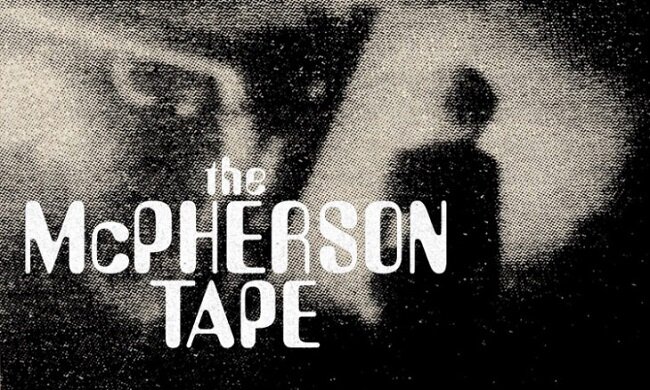
The McPherson Tape (1989)
In many ways the story behind The McPherson Tape is a lot more interesting than the film itself. This early found footage movie from 1989, was shot on home video on a virtually non-existent budget. The director Dean Alioto eventually found a distributor but on the eve of the movie’s home video release, the warehouse burned down and allegedly destroyed the master tape and all the promotional artwork. Yet this was not the end of the story. It was common practice in the eighties for small distributors to send advance copies to local independent video stores. Hence The McPherson Tape found its way into the pirate video ecosystem. It then migrated to the UFO community where it was circulated as being a video of a legitimate alien abduction. Dean found himself in the unusual position of having to debunk his own work. Three decades later due to the intriguing tale associated with The McPherson Tape, it has been remastered from the newly rediscovered 3/4" tape and re-released.
In many ways the story behind The McPherson Tape is a lot more interesting than the film itself. This early found footage movie from 1989, was shot on home video on a virtually non-existent budget. The director Dean Alioto eventually found a distributor but on the eve of the movie’s home video release, the warehouse burned down and allegedly destroyed the master tape and all the promotional artwork. Yet this was not the end of the story. It was common practice in the eighties for small distributors to send advance copies to local independent video stores. Hence The McPherson Tape found its way into the pirate video ecosystem. It then migrated to the UFO community where it was circulated as being a video of a legitimate alien abduction. Dean found himself in the unusual position of having to debunk his own work. Three decades later due to the intriguing tale associated with The McPherson Tape, it has been remastered from the newly rediscovered 3/4" tape and re-released.
On the evening of October 8, 1983, the Van Heese family gather in the Connecticut mountains to celebrate the birthday of 5-year-old Michelle. The family consists of Ma Van Heese (Shirly McCalla), her three sons Eric (Tommy Giavocchini), Jason (Patrick Kelley), and Michael (Dean Alioto), Eric’s wife Jamie (Christine Staples), his daughter Michelle (Laura Tomas) and Jason’s girlfriend Renee (Stacey Shulman). Michael uses his hand-held camera to record the night’s events, much to the amusement and irritation of his family. They chat and argue as families do as the evening progresses. However when a circuit breaker trips the brothers go outside to restore power. An unusual red light overhead arouses their curiosity so they walk to a neighbouring property, only to find a spacecraft has landed. They flee back to their own house when they are noticed by the extraterrestrial occupants. Armed with shotguns they nervously await pursuit. When something tries to enter via a window, Eric shoots it and brings the body into the house as “evidence”. Is this the end of the siege or do further perils await them?
There is the germ of a good idea in The McPherson Tape and first time writer and director Dean Alioto should be applauded for trying to do something so unusual and ambitious like this back in 1989, when this genre was still in its infancy. But the film struggles to sustain its relatively short hour running time. Despite all the logical concessions that you can make to both the production and cast, this is a ponderous undertaking and a tough watch. It genuinely does at times come across as exactly watching someone’s home videos. Despite restoration, the picture quality is poor however that does work in the films favour to a degree. The characters act in a relatively plausible fashion, arguing among themselves and generally acting impulsively and without any critical thinking. But events take too long to go anywhere and by the time we reach a point where things start to get “interesting” the film ends because it has achieved its purpose.
Hence, I cannot recommend The McPherson Tape to the casual viewer, as it doesn’t really meet mainstream entertainment standards. This is most definitely a niche market product that will best suit the genre completist and aficionado. The editing is minimal and cleverly disguised making The McPherson Tape look very much like a continuous piece of footage. The camera at times is out of focus or points at a plate or the floor. Keeping things simple in scope certainly helps the proceedings and therefore we only see a small amount of the UFO and the aliens themselves. The commentary track on the new Blu-ray release is by far the biggest selling point and it is fascinating to learn how a small budget film ended up fuelling alien abduction conspiracy theories. The director later went on to remake the film with a larger budget and studio backing in 1998, under the title Alien Abduction: Incident in Lake County.

I, Monster (1971)
I, Monster is a low budget Amicus production and a cunning retelling of Robert Louis Stevenson’s “The Strange Case of Dr. Jekyll and Mr. Hyde”. Due to copyright reasons, these names are not used in the film and are replaced with new characters, Marlowe and Blake respectively. However, despite the modest budget and the aforementioned legal issues, this is a very faithful adaptation of the original gothic novella. Milton Subotsky’s screenplay incorporates all the essential elements of the source text which is both a boon and a bane. A boon because it really does capture the essence of Stevenson’s concept, which has been drastically misrepresented by previous adaptations. And a bane in so far that the original novella is a little too insubstantial to sustain a feature film. Even at a modest 75 minutes running time I, Monster feels somewhat “thin”.
I, Monster is a low budget Amicus production and a cunning retelling of Robert Louis Stevenson’s “The Strange Case of Dr. Jekyll and Mr. Hyde”. Due to copyright reasons, these names are not used in the film and are replaced with new characters, Marlowe and Blake respectively. However, despite the modest budget and the aforementioned legal issues, this is a very faithful adaptation of the original gothic novella. Milton Subotsky’s screenplay incorporates all the essential elements of the source text which is both a boon and a bane. A boon because it really does capture the essence of Stevenson’s concept, which has been drastically misrepresented by previous adaptations. And a bane in so far that the original novella is a little too insubstantial to sustain a feature film. Even at a modest 75 minutes running time I, Monster feels somewhat “thin”.
Psychologist Charles Marlowe (Christopher Lee), a strong advocate of Sigmund Freud, argues about man’s capacity for evil with his colleagues at his Gentlemen’s club. Dr. Lanyon (Richard Hurndall) refutes his assertions on medical grounds. Enfield (Mike Raven) reflects on a life based upon self gratification. Utterson (Peter Cushing), Marlowe’s Lawyer argues that human civilisation is based upon governing our passions. But Marlowe feels that research in this field could reduce patient’s inhibitions, which are often the root cause of their problems. He subsequently uses a drug he has created on two of his patients. It seems to either make the subject docile or facilitate their secret urges. As he ethically cannot risk any further tests, he takes the drug himself, releasing his alter ego Edward Blake. At first Blake is content with the most obvious worldly pleasures but over time he becomes more violent and uncontrollable. Marlowe’s friends are unaware of his experiments and fear that Blake is simply a ruffian that is blackmailing the doctor.
I, Monster is a somewhat set bound production with a few locations scenes. As the screenplay is true to the novella, a lot of Blake’s crimes are discussed retrospectively by the main cast and not shown on screen. There is a knife fight and a chase scene that culminates in a murder but overall, the film is some what light on unpleasantries for a horror film. It isn’t especially long either which is another issue. However, Christopher Lee’s performance is compelling and does much to mitigate the production’s shortcomings. Unlike other film adaptations there are no overly theatrical transformation scenes. When Lee initially “releases” his alter ego, we simply see his stern Victorian demeanour relax into a rather sinister and lascivious smile. Over time Blake’s features become coarser. His rictus smile is like that of a slavering beast and his complexion reflects his debauched lifestyle. Simple make-up is effectively used to reinforce Lee’s physical performance.
The rest of the cast provide robust support, with Peter Cushing as ever bringing dignity, gravitas and conviction to his modest role. There is a simple fight scene at the end of the film which takes place within a small room. Filmed through the exterior windows, it does “quite a lot with very little” and works well. It makes the conflict between Utterson and Blake very personal. This is where the film’s budget provides some creativity and innovation. Sadly, despite practical cinematography by Moray Grant, the film has an unpleasant colour palette with an emphasis on greens and yellow. This may be due to a 3D process that was originally intended but subsequently abandoned prior to release. Ultimately I, Monster did not perform well at the box office. Its brevity and lack of scope couldn’t compete with bigger budget, more contemporary horror movies that were replacing the gothic genre. However, the film has seen a critical reassessment in recent years, mainly due to Lee’s strong performance.
I Walked With a Zombie (1943)
Until today, I have never seen the iconic horror movie, I walked With a Zombie. Some classic titles just seem to fall through your “movie net”, as it were. However, BBC iPlayer has a selection of RKO films available to watch for free (sadly, only for UK viewers), so as I had a convenient gap in my schedule, I finally caught up with this seminal title today. As expected it was visually an utter delight. Other aspects of the movie are more subtle and require some reflection to determine their virtue. The lurid title, doesn’t in any way do the film justice and was forced upon the production by studio executives. Essentially this is a romantic drama fused with the supernatural and set in an exotic location. The Caribbean setting and culture along with the voodoo element add an undercurrent of sexual tension to the central love, cleverly augmenting what is essentially a gothic tale by placing it in an alien setting.
Until today, I have never seen the iconic horror movie, I walked With a Zombie. Some classic titles just seem to fall through your “movie net”, as it were. However, BBC iPlayer has a selection of RKO films available to watch for free (sadly, only for UK viewers), so as I had a convenient gap in my schedule, I finally caught up with this seminal title today. As expected it was visually an utter delight. Other aspects of the movie are more subtle and require some reflection to determine their virtue. The lurid title, doesn’t in any way do the film justice and was forced upon the production by studio executives. Essentially this is a romantic drama fused with the supernatural and set in an exotic location. The Caribbean setting and culture along with the voodoo element add an undercurrent of sexual tension to the central love, cleverly augmenting what is essentially a gothic tale by placing it in an alien setting.
Betsy Connell (Frances Dee), a young Canadian nurse travels to an island in the West Indies to care for Jessica Holland (Christine Gordon), the wife of plantation manager Paul Holland (Tom Conway). Jessica has been diagnosed by Dr Maxwell (James Bell) as suffering from a form of mental paralysis as a result of tropical fever. Betsy finds Paul Holland aloof and dour, yet strangely compelling. Wesley Rand (James Ellison), the plantation overseer and Paul’s half brother implies that Jessica’s condition is due to something Paul has done. Mrs Rand (Edith Barrett), mother to both sons, befriends Jessica. She runs the local pharmacy and has a deep understanding of local customs. Betsy suspects she may well know more than she says regarding the enmity between Wesley and Paul and the reason for Jessica’s condition. Eventually Betsy realises that modern medicine cannot provide a solution to Jessica’s malady and begins to suspect that the island’s voodoo heritage may provide an answer.
I walked With a Zombie was the second collaboration between producer Val Lewton and director Jaques Tourneur. The high concept of transposing the plot of Charlotte Brontë’s Jane Eyre to the West Indies and juxtaposing the traditional love triangle (or in this case more of a love square) with the more sensational and salacious aspects of voodoo works very well. The traditional gothic beats played out against prophetic calypso songs and pagan customs add to the atmosphere and create a subtly different supernatural experience compared to traditional Hollywood fare of the time. Director of cinematography J. Roy Hunt uses light and shade to great effect. Traditional european architecture and graveyards are replaced by heavily backlit sugar cane fields and colonial plantation houses steeped in shadows. It is a remarkably eerie environment. The highlight of the film being Betsy and Jessica’s night time journey through the canefields, as they pass voodoo talismans and animal offerings, eventually ending in their iconic meeting with the towering somnambulist Carre-Four.
Jacques Tourneur's direction creates a palpable sense of fear and the film uses its 69 minute running time most efficiently. The film does not feel the need to explain all aspects of the island’s culture and its voodoo rituals. It provides just enough details to allow a degree of ambiguity to remain. Nor does the script shy away from the iniquities of slavery and it’s lasting effect on the population. There is also an element of religious symbolism with a ship's figurehead that is fashioned to represent Saint Sabastian. Performances are acceptable, although the gender roles and period attitudes may seem “dated” to modern viewers. The film reaches a suitably melodramatic climax which concludes the story in the only credible fashion possible. However, the film uses narration from the perspective of Betsy Connell to frame the story and the closing codicil suddenly introduces a degree of previously absent moral judgment. I found this a little incongruous.
After watching I walked With a Zombie, it is clear where many of the tropes and mainstays of the horror genre come from. The movie doesn’t really offer a zombie in the modern sense, preferring to let the viewer decide if Jessica Holland is the victim of a bona fide medical condition, whether she’s been drugged and left virtually catatonic by esoteric native drugs, or if she has been truly cursed through the use of voodoo. The imperfections and character flaws of the two half brothers and their respective love for Jessica, is presented surprisingly even handedly. The moral sentiments that are espoused at the story’s climax strike me as an afterthought, forced upon the studio by the moral lobbyists of the time. Oddly, this is just another aspect of the film that makes it fascinating. If watched superficially, I walked With a Zombie offers a ghoulish love story with a supernatural subtext. But if one pays attention to detail there is a great deal of social commentary and existential angst to be found. Things seldom touched upon by contemporary horror movies.
Fandom Memories
Syp over at Bio Break leads the charge with today’s Blaugust Promptapalooza writing prompt, with this interesting question. “What is your earliest memory related to one of your core fandoms?” Please do read his thoughts on going to see Return of the Jedi upon its original release back in 1983. It is something I can certainly relate to. I’m a decade older than Syp and so I can recollect actually seeing Star Wars for the first time at my local cinema. However as that was a starting point for a specific fandom rather than an “ongoing” example, I won’t cite it here. I have even earlier recollections of going to Longleat Safari and Adventure Park and having the extra bonus of seeing the Doctor Who Exhibition which ran there from 1973 to 2003. This would have been in August 1974 and I was six at the time. I have dim recollections of all the exhibits being mainly from the Jon Pertwee era and the Daleks being the high point of my day.
Syp over at Bio Break leads the charge with today’s Blaugust Promptapalooza writing prompt, with this interesting question. “What is your earliest memory related to one of your core fandoms?” Please do read his thoughts on going to see Return of the Jedi upon its original release back in 1983. It is something I can certainly relate to. I’m a decade older than Syp and so I can recollect actually seeing Star Wars for the first time at my local cinema. However as that was a starting point for a specific fandom rather than an “ongoing” example, I won’t cite it here. I have even earlier recollections of going to Longleat Safari and Adventure Park and having the extra bonus of seeing the Doctor Who Exhibition which ran there from 1973 to 2003. This would have been in August 1974 and I was six at the time. I have dim recollections of all the exhibits being mainly from the Jon Pertwee era and the Daleks being the high point of my day.
But as the question is about “core fandoms” I think I’ll reference a more contemporary example. One that I can recollect more clearly and so provide a more specific anecdote about. So I’d like to talk about my love of the horror genre and how as I got older, became a consummate fan. I’ve recently written about how during the 80s and 90s the UK home video market endured some rather restrictive regulations that lead to a lot of horror films being unavailable or heavily edited. Due to magazines such as Fangoria and Starburst, fans would be aware of both mainstream US and independent productions long before they were released in the UK. Hence we’d often become aware of those occasional titles that had already caused a stir “stateside” or in Europe and would therefore naturally run into distribution and censorship issues when it came to a British release. How could such films be shown in the UK? The answer was the “film festival”, which provided a limited or one off showcase, where the audience could be strictly regulated. Such events weren’t providing mainstream national distribution.
Now film festivals per se are always a great occasion for fans. I find that watching a cult classic with a like minded audience in a traditional movie theatre setting, rather than watching at home on your own, is a superior way to enjoy a film. I believe there is some truth to the “shared experience”. For example I feel the slapstick shenanigans of Charlie Chaplin work a lot better when viewed with a group. Bearing this in mind, on Saturday 24th February 1990, not only did I get the chance to indulge this theory by going to my first film festival but I was afforded the oppurtunity to see a controversial film that was heading into trouble. That film being Henry Portrait of a Serial Killer. The Splatterfest 90 film festival was held at the Scala Cinema, in Kings Cross, London. The venue was a known private cinema that excelled at hosting such events, as well as regularly showing bizarre and baroque movies.
I remember quite clearly, the atmosphere in the cinema. The Scala was a sumptuous but somewhat dilapidated 1920s building, which lent itself well to its niche market purpose. Between films it was quite noisy with fans talking and constantly going to and fro to the lobby. But when Henry Portrait of a Serial Killer started the audience settled and fell silent. The film was a gruelling 83 minutes experience which left the audience shocked, uncomfortable yet utterly engaged with the proceedings. I subsequently learned that several examiners from the BBFC had attended the screening as an opportunity to “research” a movie they knew would be “problematic” when it eventually sought a formal UK theatrical release. There was a very interesting Q&A with director John McNaughton which shed a lot of insight into the film and its production.
There were several other movies shown that night making Splatterfest 90 a very enjoyable film festival. Brian Yuzna’s Bride of Re-Animator which is a great sequel to the original Re-Animator, was very well received. As was the excellent documentary Document of the Dead, which was made during the filming of George A. Romero’s Dawn of the Dead. However, one film did not go down particularly well. The Comic, a “psychological drama” about a stand up comedian who murders his way to success in a dystopian future, was met with derision, objects hurled at the screen and cries of “for fuck’s sake, turn this shit off”. Director Richard Driscoll was due to be interviewed after the screening but bid a hasty retreat after his film’s suboptimal reception. Overall Splatterfest 90 was a very good introduction to film festivals and was certainly a “grassroots” experience of fandom. I’ve been to many similar events since then but none have had quite the same impact or left such memories as this one.
An Ode to the VCR
Sometimes it really helps to have “been there” to fully appreciate an event or cultural phenomenon. We now live in an age where there is easy access to a multitude of television channels and movies, 24 hours a day. TVs are no longer bulky, luxury items that sit in a corner of your lounge. They are now elegant flat screened devices that occupy nearly an entire wall, offering crystal clear, high definition picture quality. Movies are now available for home viewing a lot sooner after their theatrical release and the current pandemic has brought the era of simultaneous release on all platforms just a little bit closer. And even the most obscure and niche market films are accessible in a remastered, HD or UHD format. It’s all a far cry from my youth when cinema and television were far more compartmentalised and consumers had far less choice along with access. All of which you can explain to those born into this modern world of plenty but they’ll never fully comprehend the realities of living such a life and in such times.
The Sony C6 Betamax VCR. A “Titan” in the format wars
Sometimes it really helps to have “been there” to fully appreciate an event or cultural phenomenon. We now live in an age where there is easy access to a multitude of television channels and movies, 24 hours a day. TVs are no longer bulky, luxury items that sit in a corner of your lounge. They are now elegant flat screened devices that occupy nearly an entire wall, offering crystal clear, high definition picture quality. Movies are now available for home viewing a lot sooner after their theatrical release and the current pandemic has brought the era of simultaneous release on all platforms just a little bit closer. And even the most obscure and niche market films are accessible in a remastered, HD or UHD format. It’s all a far cry from my youth when cinema and television were far more compartmentalised and consumers had far less choice along with access. All of which you can explain to those born into this modern world of plenty but they’ll never fully comprehend the realities of living such a life and in such times.
I shall try to keep my reminiscing to a minimum for reasons of brevity. Anyone who is familiar with my writing will know that film played an integral part of my youth. My parents loved cinema as it was the primary form of entertainment when they grew up. Hence by the age of ten or so, I was well versed in classic Hollywood, mainly through watching films on TV with my family at weekends. However, we had little say over what they watched. Firstly it took several years for major films that had been successful at the box office to be broadcast on TV. Major titles tended to be shown at either the Christmas or Easter when audiences were potentially the biggest. Also, when a “big” movie finally got shown on TV there were often broadcast in a sanitised, re-edited version. Furthermore, if a film was originally shot in an aspect ratio such as 2:35:1 then it would be panned and scanned to accommodate the 4:3 academy ratio of TV screens. And let us not forget that commercial networks would have advertising breaks throughout. So the optimal way to view a film would be at the cinema. Watching at home on TV was an inferior experience but it was what we knew, so we accommodate it.
Bond movies came to UK TV approximately 4-5 years after their theatrical release during the 70s and 80s
Another aspect to consider was that TV companies would license the showing of movies and naturally wanted as much bang for their buck as possible. Certainly the BBC offered a broad choice. But you would often find that a lot of content just didn’t make it onto TV. Or if it did, it would be shown at obscure hours. If you failed to watch something then you missed your opportunity to do so. There was a culture of financially successful films getting re-released at the cinemas. Disney has always been an exponent of this, understanding quickly the benefits of controlling supply and demand. But broadly speaking, what you could watch was decided and controlled by private companies and driven by vested interests. So the advent of the home video cassette recorder (VCR) was a major cultural and consumer revolution. Video tape recorders (VTR) had existed since the 1950s but were mainly industry products. But the moment the technology was made available for domestic use in the 1970s via bespoke cassette formats, it quickly gained traction.
The ability to record TV programs from one station while watching another was exceedingly novel at the time. Often big TV networks prided themselves upon making viewers make a tough choice over what shows they watched at prime time. As a child I remember having to decide whether to watch either Doctor Who or Space 1999 (season 2). It’s one of the reasons why UK viewing figures for popular shows were so high at this time. This and the fact that until 1982, there were only 3 terrestrial analogue TV stations broadcasting. So naturally the VCR was met with a lot of pushback from network TV. There was a lot of talk over the legality of recording shows etc. but it was too late and the genie was out of the proverbial bottle. And then there was the second aspect that the VCR offered consumers; pre-recorded tapes containing movies or other content. Initially the big studios simply didn’t grasp that people would want to watch a movie of their own choice, at home, at a time that suited them. When they began to see how independent distributors were getting on the bandwagon they sought to “fight fire” with lawyers. The Motion Picture Association of America (MPAA) were especially aggrieved. But common sense and business acumen prevailed, leading to the growth of the video rental market, the rise of Blockbuster and the social etiquette of rewinding a tape and returning it on time.
BBFC rating title card
Now the next anecdote is specific to the UK. As soon as cinema became a popular form of entertainment in the early twentieth century, then a regulatory body was set up. A film had to be rated by the British Board of Film Censors before it could be shown in cinemas. Hence the establishment guarded public morals and suppressed sentiments and subjects it didn’t like. Mercifully this doesn’t happen now. The BBFC has changed radically in the last 20 years. It is now formally the British Board of Film Classification and it’s focus is rating. Censorship is now mainly self imposed by distributors who seek the most commercially lucrative rating. But that is a separate subject. Back in the late seventies, all cinema releases required a BBFC rating or else they didn’t get shown. VCRs, like most technological changes, caught the establishment off guard. All of a sudden there was a medium for distributing content outside of the auspices of the BBFC, free from any form of censorship. Overnight small independent video companies sprung up, disseminating any material they could get their hands on. A wealth of european exploitation cinema suddenly found its way into UK households. For someone like me it was hog heaven but it didn’t go down well with lobbyists concerned with declining morals.
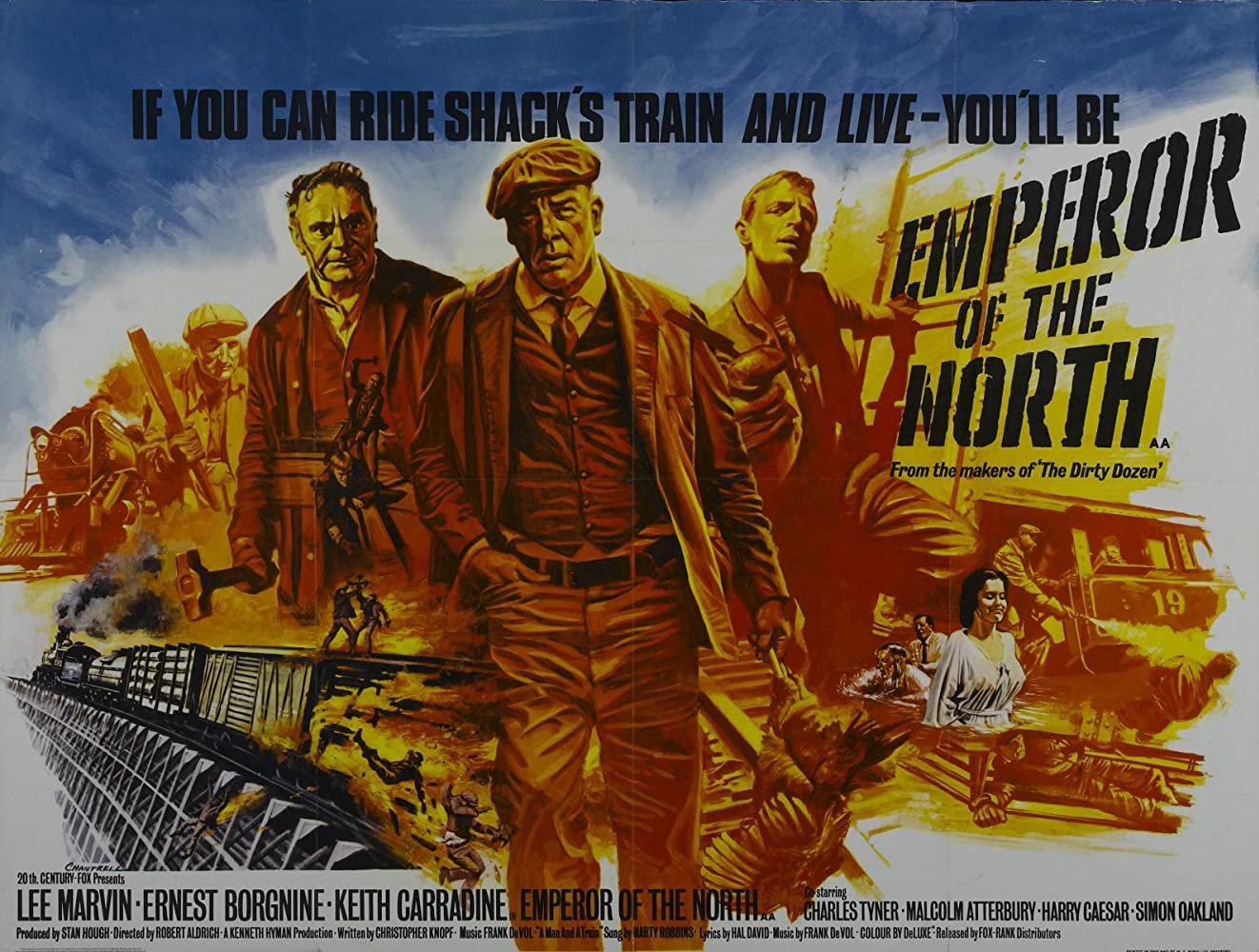
In 1982 our household became a proud owner of a Sony C6 Betamax VCR. We already had an older C5 but that was a top loader. The C6 stylishly loaded tapes from the front. By now our family was fully immersed in video rental culture. There seemed to be a video rental store on every street corner. Even newsagent and corner shops would have a rack of tapes to rent for £1 or so. At this point VHS had not fully won the format wars in the UK and most stores had material equally available on both formats. I remember one that even rented V2000 tapes. At one point my Dad had rental cards for about six different establishments. We’d rent films to watch as a family and then my parents would indulge myself and my sister, so we’d often come back home with horror films. I remember one store in Burnt Ash Hill Road in Lee Green, which used to put the most lurid VHS cases in the shop window. I and my school friends would gawp at the likes of Driller Killer, Cannibal Holocaust and Zombie Flesh Eaters. But this brief halcyon period of unfettered access to uncut eurosleaze quickly came to an end.
UK poster for Lucio Fulci’s Zombi (1979)
The eighties were a decade with a strong streak of moral and social conservatism running through it. This was embodied by the National Viewers' and Listeners' Association (NVLA) led by christian lobbyist Mary Whitehouse (known to her enemies as Mary Shitehouse; a shitehouse being UK slang for a toilet). The organisation lead campaigns against the publication and broadcast of media content that it viewed as harmful and offensive, such as sex, violence, profanity and blasphemy. To cut a long story short the unregulated video market became an easy target and the NVLA and the “popular press” went for it like a dog with a bone. They coined the hyperbolic phrase, “video nasty” to describe exploitation films such as I Spit on Your Grave. As usual, the least informed and poorest thinkers among our parliamentary representatives saw an easy bandwagon to jump on. And then tragically in 1993 a two year old boy, Jamie Bulger, was murdered by two ten year old children, Robert Thompson and Jon Venables. It was an horrendous case made even worse by the tabloid feeding frenzy. It was alleged in some newspapers that the attack on Bulger was inspired by the film Child's Play 3. There was no evidence for this but the campaign against unregulated videos gained support and ultimately led to the Video Recording Act of 1984. This granted the BBFC powers to rate existing and all future video releases and ushered in a decade of censorship. Many titles simply became unavailable for nearly twenty years, such was the sense of social hysteria.
But time and tide wait for no man. The VRA had some very interesting side effects. A cottage industry of fanzines sprung up, reviewing and analysing many of the horror movies that were “temporarily available”. I met many people through this medium, participated in film festivals and partook of the black market trade in second generation VHS copies that sprung up. As the eighties gave way to the nineties and the BBFC still enforced arbitrary cuts to most mainstream films, I discovered the Laser Disc format and imported uncut movies from the US and Japan and so moved away from video tapes. Laser Disc and VHS were subsequently replaced by DVDs and by the time the year 2000 arrived, the BBFC in the UK had a major change in policy once the longstanding incumbent Director, James Ferman, retired. Censorship as I mentioned previously, is not really an issue anymore although a BBFC rating is still required to show a film theatrically or to distribute on home media. Most streaming TV platforms and VOD services rate their content in accordance with BBFC guidance. Despite my dislike of censorship, I believe in rating movies for consumer advice and believe the BBFC do a very good job of it nowadays. Leopards can sometimes change their spots.
The Pioneer DVL-909 combination Laser Disc and DVD player was a thing of beauty
I like the advances that have been made in home cinema. I prefer to watch films in the correct aspect ratio and in the best picture quality available. Hence I do not miss the technical limitations of the VHS or Betamax tapes (especially the NTSC VHS EP tapes which had awful washed out colours). But having been in the past, a consummate film collector, I still fully understand the allure of physical media. Whenever I see an old VHS rental tape at a collectors fare, it briefly rekindles that sense of excitement I got as a child. Because our access to entertainment was not as ubiquitous as today and we were also not aware of every aspect of a film production due to the internet, a VHS tape of a movie you hadn’t seen before held so much promise. When you combine this allure with an impressionable child who considers watching exploitation cinema as a test of endurance, it becomes clear why such a strong association was created and remains. VCRs, video rental stores and “video nasties” were my generations Rock and Roll, which is why just a small part of me nostalgically misses those days.





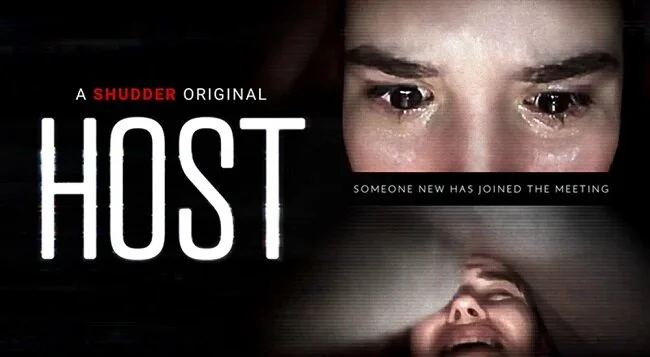
Host (2020)
In his review in the New York Times Kyle Turner states that the new horror movie Host “seems to speak to a collective id” and serves as “an analogy for mourning the recent past”. I’ve read several other critiques of this nature that both praise the film and make similar philosophical musings upon its nature. As a long standing horror aficionado I am always a little sceptical when a new movie quickly gains a lot of traction and a critical consensus swiftly forms. Especially when a genre product suddenly gains the attention of the mainstream media who subsequently stray into hyperbole and hype. This happened last year with Midsommar which was hailed as a groundbreaking horror movie and indicative of a renaissance in the genre. Although an intelligent and disturbing film, Midsommar is not without flaws and is far from universally accessible. It is also frustrating the way the mainstream media is oblivious to the ongoing financial and critical success of the horror genre that has existed since the inception of cinema.
In his review in the New York Times Kyle Turner states that the new horror movie Host “seems to speak to a collective id” and serves as “an analogy for mourning the recent past”. I’ve read several other critiques of this nature that both praise the film and make similar philosophical musings upon its nature. As a long standing horror aficionado I am always a little sceptical when a new movie quickly gains a lot of traction and a critical consensus swiftly forms. Especially when a genre product suddenly gains the attention of the mainstream media who subsequently stray into hyperbole and hype. This happened last year with Midsommar which was hailed as a groundbreaking horror movie and indicative of a renaissance in the genre. Although an intelligent and disturbing film, Midsommar is not without flaws and is far from universally accessible. It is also frustrating the way the mainstream media is oblivious to the ongoing financial and critical success of the horror genre that has existed since the inception of cinema.
However, my ambivalence notwithstanding, in the past few days positive comments about Host have constantly appeared in my social media timelines, many of which come from grass roots sources that I trust (such as the Evolution of Horror podcast). Hence I signed up to a seven day free trial of the streaming service Shudder and watched Host under optimal conditions. IE knowing as little about the plot as possible and in a darkened room, late at night. Having had time to reflect upon my viewing and go through my notes, I believe that the popular consensus surrounding Host is certainly justified. The film is a finely honed 59 minutes, that is an intelligent reinvention of many classic horror tropes. Cleverly crafted, dovetailing modern fears and social angst with the traditional, it provides an array of scares while maintaining a tense atmosphere in that allegedly benign environment; the modern home. Is it a genre defining milestone? Not necessarily so but what it does do is tap into a lot of the psychological concerns prevalent in the current climate and integrate those into the established fear of the supernatural. Host is certainly very pertinent and “of the moment”.
Six friends, Haley, Jemma, Emma, Radina, Caroline and Teddy meet online via a Zoom video conference call. All are at home or living with partners during the ongoing lockdown. Rather than playing games or having a quiz Haley has hired a spiritual medium to hold a seance. Emma, Radina and Caroline are a little scared by the prospect of such a thing but Eddy and Jemma are both sceptical and prone to mocking it. Medium Seylan reminds the group to be respectful of the spirits and briefs them on managing their thoughts and most importantly how to correctly leave the “circle” if they become uncomfortable with the situation. As the seance progresses, Jemma screams when something touches her neck and she finds herself thinking of a friend from school called Jack who hung himself. Seylan is then disconnected from the call and one by one, each of the friends experience supernatural occurrences in their homes. Rather than contacting a benevolent spirit it becomes clear that they’ve enabled a far more malign force. Can they close the seance circle and dismiss the spectral guest?
One of the film’s greatest assets is the medium in which it is filmed. Buy using Zoom and phones on selfie sticks, there is a great sense of immediacy and the common place tech makes events more accessible. The narrative touches upon the frustrations and alien nature of the current lock down, something that is perhaps more keenly felt among the young. The characters are broadly likeable as well as plausible and the cast perform well. They’re behaviour is also in line with how people react in unknown situations. Some cope well, others go to pieces. As this is a UK production and there is a healthy dose of British colloquialisms and profanities. Where Host excels is in the effective use of its running time. The plot set up, introduction of the characters and dissent from normality into panic is perfectly paced. The idea of having the film last the length of a free Zoom call is sublime.
When supernatural events start to occur, they are initially small in scale and well implemented. Chairs move, a glass shatters and noises are heard off camera. There’s also an innovative use of the filters that come with contemporary phones and video conferencing software. In one scene the filter is triggered by the presence of the spirit and it is a genuinely scary and original sequence. Host handles the building tension well and has plenty of robust and jolting scares. If you are a long standing horror fan who has watched a prodigious amount of genre material, then you well may be able to predict some but not all. The creepy music box is an obviously telegraphed example but others will wrong foot you. The denouement is in some respects inevitable but that does not diminish its power. By the time it comes round you are so invested and engrossed in the proceedings that you still hope that things may work out.
Host is well made, inventive and exceedingly timely. It meets viewers expectations and delivers a white knuckle experience in spades. It’s also a textbook example of how the genre re-invents itself by taking its essential tropes and themes and interpreting in a way that is relevant for a modern audience. Host will especially resonate with the youth market but is still totally accessible to older horror fans who will recognise much that is traditional and de rigueur. I’m not sure if there is a universally accepted term for such movies as Host yet. Wikipedia classifies such productions as “computer screen films” and a subset of the “found footage” genre. However, I’m sure those associated with the production of Host such as director Rob Savage and writers Gemma Hurley and Jed Shepherd will find themselves much sought after. They’ll no doubt be a flood of inferior films in the months to come. But they won’t stand out like Host which has found an audience through talent, enterprise and a genuine appreciation of the genre.
Firestorm (1998)
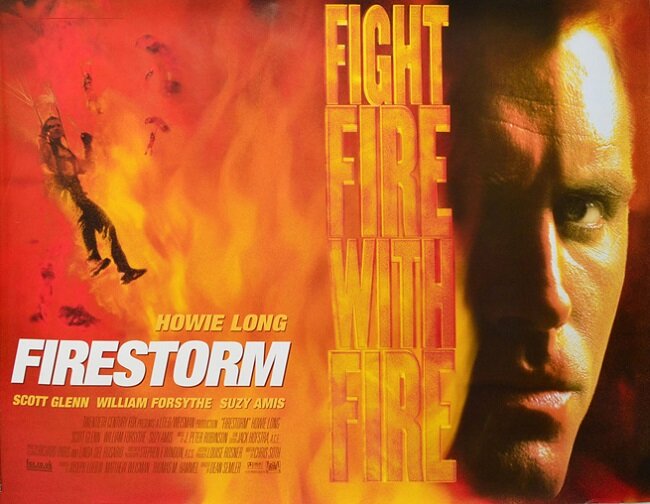
Firestorm was originally written as a vehicle for Sylvester Stallone, however when the production company Savoy Pictures went bankrupt the screenplay was bought by Twentieth Fox and the scope of the movie reduced to suit a lower budget. It’s broadly similar to Cliffhanger in so far as the lead character is a specialist in a certain field who runs afoul of criminals in a perilous environment. Whereas Cliffhanger is set in the Rocky Mountains, Firestorm takes place in the forests of Northern Wyoming. After the script was revised four times, the finished screenplay was given a final “polish” by Graham Yost who has considerable experience with the action movie genre. As stallone was no longer associated with the project and the production had been repurposed to be less extravagant, the movie was assigned to former NFL star Howie Long. Long had already appeared in the John Woo movie Broken Arrow (1996) and the Firestorm was seen as a means to give him a star vehicle.
Firestorm was originally written as a vehicle for Sylvester Stallone, however when the production company Savoy Pictures went bankrupt the screenplay was bought by Twentieth Fox and the scope of the movie reduced to suit a lower budget. It’s broadly similar to Cliffhanger in so far as the lead character is a specialist in a certain field who runs afoul of criminals in a perilous environment. Whereas Cliffhanger is set in the Rocky Mountains, Firestorm takes place in the forests of Northern Wyoming. After the script was revised four times, the finished screenplay was given a final “polish” by Graham Yost who has considerable experience with the action movie genre. As stallone was no longer associated with the project and the production had been repurposed to be less extravagant, the movie was assigned to former NFL star Howie Long. Long had already appeared in the John Woo movie Broken Arrow (1996) and the Firestorm was seen as a means to give him a star vehicle.
Jesse Graves (Howie Long) is a “smokejumper”; an elite group of firefighters who parachute into areas on fire and tackle them from “ground zero”. He and his mentor Wynt Perkins (Scott Glenn) are dealing with a series of forest fires in Northern Wyoming which threaten to merge and cause a firestorm. When additional help is drafted in from the local state penitentiary, a group of convicts led by the notorious Randall Alexander Shaye (William Forsythe) use the fire as cover for an escape and go in search of Shaye’s stolen haul. Disguised as Canadian firefighters the gang kidnap Jennifer (Suzy Amis), a passing ornithologist who is in the forest studying a rare species. Jesse parachutes into the forest after seeing Shaye and his men from the air and quickly ascertains that they are not who they say they are. A game of cat and mouse ensues as Jesse rescues Jennifer and seeks to escape the blazing forest as well as Shaye who is hellbent in retrieving his cash and tidying up any loose ends.
Firestorm is both formulaic and by the book. It is tightly paced and does not out stay its welcome at a running time of 89 minutes. It is competently directed by Dean Semmler, who is an established cinematographer. As action vehicles are not usually designed to have complex narratives, the focus is mainly upon action scenes and the charisma of the lead actor. Howie Long certainly does not disgrace himself with his performance but the role is very two dimensional, presenting firefighter Jesse Long as nothing more than a squared jawed archetype. The presence of stalwart character actors such as Scott Glenn and Willaim Forsythe does much to bolster proceedings, as they effortlessly carry off their respective roles. As for the action scenes and visual effects, they are relatively low key and as a result work quite well. There’s a bike chase that ends in a high fall and parachute jump and some solid hand to hand fist fights. The blazing forest is a mixture of digital and physical effects.
Despite doing as much as possible with the resources at hand, Firestorm was not a box office success. Perhaps the audience wanted a more complex narrative or just more bang for their buck. Despite its R rating the movie is not excessively violent or profane. The bravura demise of the central villain and an unpleasant undercurrent of threatened sexual violence from a character who is a rapist, may have been the reason why the rating went above PG-13. Firestorm is not a terrible movie by genre standards nor is it an overlooked gem. It is filled with plot holes (exactly why are canadian firefighters in Wyoming?) and is a high concept idea designed to facilitate a series of action scenes. But this is standard practise in the action movie genre. There are also worse “charisma vacuums” than Howie Long (I’m looking at you Brian Bosworth). Perhaps the film’s failure was simply due to its timing or publicity. 22 years on it can provide an undemanding diversion if you require one.






Greyhound (2020)
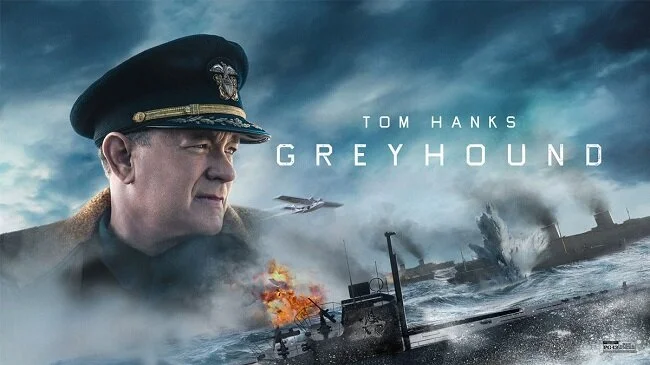
Greyhound is a curious film in that it flies in the face of one’s expectations. When I (and possibly others) see an advertisement or trailer for a World War II movie starring Tom Hanks, I naturally assume that the lead actor has been hired for his prodigious acting talent and that he’ll be providing an in depth character study. I was expecting Greyhound to be the story of an untested US Naval Commander enduring an ordeal by fire on his first escort mission. And that is to a degree what director Aaron Schneider provides but instead of the narrative arc focusing on Ernest Krause’s emotional struggles with his duties, we instead get a docudrama focusing on the technicalities of naval warfare. The latter approach is certainly engaging and at times tense and exciting but this decision narrows the appeal of the film. I personally would have preferred the former.
Greyhound is a curious film in that it flies in the face of one’s expectations. When I (and possibly others) see an advertisement or trailer for a World War II movie starring Tom Hanks, I naturally assume that the lead actor has been hired for his prodigious acting talent and that he’ll be providing an in depth character study. I was expecting Greyhound to be the story of an untested US Naval Commander enduring an ordeal by fire on his first escort mission. And that is to a degree what director Aaron Schneider provides but instead of the narrative arc focusing on Ernest Krause’s emotional struggles with his duties, we instead get a docudrama focusing on the technicalities of naval warfare. The latter approach is certainly engaging and at times tense and exciting but this decision narrows the appeal of the film. I personally would have preferred the former.
Based on the 1955 novel The Good Shepherd by C. S. Forester and adapted for the screen by Tom Hanks himself, Greyhound is the story of Commander Ernest Krause during his first war-time assignment. The USS Keeling, codenamed Greyhound, is the lead ship in a multi-national escort group defending a merchant ship convoy. As the allied vessels enter the aptly named "Black Pit"; the Mid-Atlantic gap where they are out of range of air support, a five day game of cat and mouse begins with a German U-boat Wolfpack. Will Commander Krause’s “by the book” approach be sufficient in countering the German threat? Can an unproven Commander deal with the pressure of naval warfare during the Battle of the Atlantic, only months after the U.S. officially entered World War II?
Several critics have raised the question as to whether Greyhound went through a major re-edit just prior to its release. As I have not read about anything to this effect I must conclude that this is not the case. Therefore it must be assumed that the brevity of this film and its focus on naval procedure and tactics was intended. As Tom Hanks is an actor often associated with in-depth character studies, many people (myself included) expected a movie which not only explored the Battle of the Atlantic but also dealt with the burden of command. The film gives us hints regarding Commander Krause. We see his fiancée give him a Christmas gift of monogram slippers. There are several scenes where he prays, implying that faith is a key facet of his personality. There is also a recurring joke in which he misses all the meals his steward prepares for him. All of these could have been expanded into broader vignettes and indeed I was hoping they were. However, they remain as simple asides.
From a technical perspective, Greyhound is both compelling and accurate. The naval tactics depicted are factually correct and well realised. The visual effects by DNEG (formerly Double Negative) are of a high standard. The ocean is a difficult medium to represent digitally but the action sequences focus upon technique rather than spectacle, so they offer a higher degree of realism than those in similar movies such as U-571. However, therein lies the main criticism of Greyhound. It is very much a facts driven WWII naval docudrama, as opposed to a character study about the men taking part. We see several members of the ship’s crew but beyond their duties we know little about them. I suspect there was more of a human element in C. S. Forester book. As it stands, Greyhound is a good film with niche market appeal. An extra 30 minutes of expanded character development may have turned a good film into a great one.
Scoob! (2020)
Scoob! is one of several movies that was slated for a theatrical release this summer but ended up being premiering on VOD instead due to the global pandemic. As a result, it is difficult to ascertain exactly how successful this animated film has been. A lot of trade newspapers have indicated that rentals have been high and that the film has proven more popular than Tom Hardy’s new movie Capone. Some industry sources have estimated a gross of $100,000,000 in a two week period. I suspect that the current lockdown has provided a market of children craving new entertainment and parents happy to pay for 90 minutes of peace and quiet. Hence Scoob! appears to have been in the right place at the right time. Whether that popular success would have happened if the movie had been released theatrically is another matter.
Scoob! is one of several movies that was slated for a theatrical release this summer but ended up being premiering on VOD instead due to the global pandemic. As a result, it is difficult to ascertain exactly how successful this animated film has been. A lot of trade newspapers have indicated that rentals have been high and that the film has proven more popular than Tom Hardy’s new movie Capone. Some industry sources have estimated a gross of $100,000,000 in a two week period. I suspect that the current lockdown has provided a market of children craving new entertainment and parents happy to pay for 90 minutes of peace and quiet. Hence Scoob! appears to have been in the right place at the right time. Whether that popular success would have happened if the movie had been released theatrically is another matter.
Scoob! is a computer-animated comedy mystery film produced by Warner Animation Group. Canonically, it’s both an origins movie and a soft reboot of the beloved Scooby Doo franchise. The film starts with a friendless young Norville "Shaggy" Rogers, adopting Scooby Doo as a pup. The two subsequently meet Fred Jones, Daphne Blake, and Velma Dinkley while out trick or treating on Halloween. Their subsequent exploration of a local haunted house leads to the unmasking of a local criminal. Hence the friends decide to form Mystery Inc. “I mean, like, how many scary monsters could there be?” Shaggy asks which ushers in possibly the highlight of the entire movie; a loving recreation of the original title sequence from Scooby Doo Where Are You! (Season 2). Sadly, it all goes rapidly down hill after this. Ten years later the gang splits after a business deal with Simon Cowell (yes you read that correctly) displeases Shaggy and Scooby. The pair are subsequently attacked by an army of small robots called “rottens” while bowling but are rescued by Dee Dee Skyes, Dynomutt, and the Blue Falcon. Scooby learns that he is being hunted by none other than Dick Dastardly who needs him to unleash Cerberus (from Greek mythology) from the underworld.
And therein lies the fundamental problem with Scoob! There seems to have been a lack of faith in the basics of the franchise. IE Scooby and the gang solving haunted house mysteries. Hence the production tries to crowbar in other Hanna-Barbera characters in an attempt to pander to the current cinematic vogue for superheroes. Then there’s Dick Dastardly (voiced by Jason Isaacs who is clearly having a lot of fun) and his comedy robot sidekicks which smacks of Gru from Despicable Me and his minions. Captain Caveman also makes an appearance for no real reason. So if you were expecting to see a back to basics reimagining of the adventures of Mystery Inc in Scoob! then you’re in for a “surprise”. Although in fairness, it should be noted that Scooby Doo did team up with the Blue Falcon and Dynomutt in the past but this was during the middle seventies and not during the classic original two seasons of Scooby Doo Where Are You!
The other major issue with Scoob! is the way the screenplay by Matt Lieberman, Adam Sztykiel, Jack Donaldson, Derek Elliott (yes it took four of them to write this) tries to throw a few jokes, references and homages to the adult viewers. It’s a common enough practise in animated films but the gags are somewhat varied and a few are even questionable. There’s a joke where Dick Dastardly’s crimes are discussed and not paying for Netflix is among them. If you read the list on the police database quickly you'll also find tripping old ladies in Lagos. These quips work well but others fall flat, often referencing the obscure. Plus hasn’t Simon Cowell’s notoriety now faded from popular culture? Wasn’t that all two decades ago? And of course Scoob! suffers from the inclusion of my personal cinematic bête noire; the overlong, excessively loud action sequence. Scooby Doo Where Are You! was all about comedic chases and not explosions.
So upon mature reflection and sobre analysis, I think it’s fair to say that Scoob! is a visually chaotic and tonally mixed viewing experience. It certainly won’t delight lifelong fans raised on reruns of the original incarnation of the show. The film smacks of a production driven by focus group and committee. The kind so brilliantly satirised in RoboCop 2. However, despite the qualms of adult fans and professional critics, it should be noted that I watched this movie (twice) with my 5 year old Granddaughters. They loved it. And that is possibly all that Warner Bros. Animation Group care about. I suspect that there’ll no doubt be a Scoob! 2, in the not too distant future. In the meantime, if you have small children that need to be entertained, then Scoob! will do just that. If you are a fan of the franchise then I’m sure I’m not the first to say Scooby Don’t.




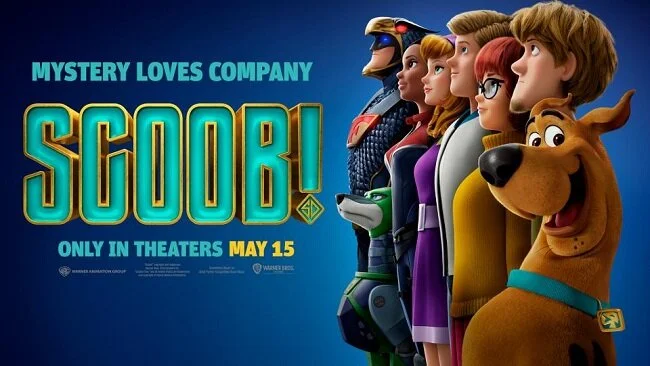


Top Cat: The Movie (2011)
The first I found out about Top Cat: The Movie was when I received an email from an events company that was handling promotional screenings, prior to the film’s UK release in the summer of 2012. For some reason I missed the usual pre-production publicity that comes with the rebooting of a popular franchise. One of the benefits of this was that I didn't have time to fret or fuss about this reimagining of an integral part of my childhood. I must admit I was flummoxed that this 50-year-old franchise was subject to a makeover and was even more discombobulated to find out that the original show was a massive hit in Mexico and had garnered a huge cult following. This was why Warner Bros. subcontracted this production to Mexico's Anima and Argentina's Illusion studios. Subsequently Don Gato y Su Pandilla (Top Cat and His Gang) opened on 16th September 2011 in Mexico to weekend box office returns of 41m pesos ($2.9m). It subsequently became the highest-grossing independent animated films released in the United States that year.
The first I found out about Top Cat: The Movie was when I received an email from an events company that was handling promotional screenings, prior to the film’s UK release in the summer of 2012. For some reason I missed the usual pre-production publicity that comes with the rebooting of a popular franchise. One of the benefits of this was that I didn't have time to fret or fuss about this reimagining of an integral part of my childhood. I must admit I was flummoxed that this 50-year-old franchise was subject to a makeover and was even more discombobulated to find out that the original show was a massive hit in Mexico and had garnered a huge cult following. This was why Warner Bros. subcontracted this production to Mexico's Anima and Argentina's Illusion studios. Subsequently Don Gato y Su Pandilla (Top Cat and His Gang) opened on 16th September 2011 in Mexico to weekend box office returns of 41m pesos ($2.9m). It subsequently became the highest-grossing independent animated films released in the United States that year.
Now apparently, when Top Cat was originally shown in Mexico, the show was re-scripted and re-dubbed extensively to suit the local market. Something about TC's irrepressible personality and his anti-authoritarian high jinks resonated with the audience and they took him to their hearts. The original show became a major hit and remained in syndication for years. This needs to be considered when watching Top Cat: The Movie, as it is a production that has been created specifically for the Latin American market and then rendered back into a English friendly product. It is therefore a little left field and not entirely identical to the source material. The story has a contemporary setting and animation is a mixture of 2D characters within a CGI environment. The style is very much in the idiom of contemporary shows that you see on the cartoon network. However, that is not a bad thing. There are three versions of the movie available. A Spanish dialogue version. A US version featuring additional voice acting from Rob Schneider and Danny Trejo and a UK version where these actors are not present.
As to the film’s plot, Top Cat and his gang are all present as is his foil, Officer Dibble. The voices are not radically different, although Choo Choo has become even camper and now appears to be pink. However, I chose to overlook these changes as he is one of the most enjoyable members of the cast. The story is odd to say the least, revolving around a rogue robot police force and the villainous commissioner. At one point Top Cat goes to Dog Prison which raises a wealth of questions. The humour veers from gags cribbed from the original show to more modern double entendres and nudge, nudge humour. There is also some love interest introduced to the plot, but it is poorly handled and is hardly going to do any favours for the representation of women in movies. Overall, the narrative is somewhat haphazard and all over the shop. Yet it avoids complete failure due to the inherent fact that Top Cat and his gang are likeable. Top Cat: The Movie also wins by default because in direct comparison to recent reboots of old cartoon franchises such as The Smurfs and Yogi Bear, it’s simply not as bad.
Undemanding children unfamiliar with the heritage of the show will more than likely find Top Cat: The Movie acceptable. There’s enough slapstick humour and frenetic chases to keep the uncritical eyes of the young occupied. Bizarrely enough I did not object to this reboot anywhere near as much as I thought I would. It is different and certainly not as I expected but when you consider the films pedigree and the fact that the concept has been translated from one culture to another and then back again, it still retains facets of the original show. Perhaps the essential dynamics of Top Cat, his gang and their timeless shenanigans are simply too strong to be eradicated even by current studio perceptions of audience tastes and postmodern sensibilities. If you are a dyed in the wool Top Cat purist, then avoid this movie. If you are curious and have an interest in animation then give it a go. Overall I still think the Top Cat: The Movie should be filed under odd.
Ray Harryhausen
Today Ray Harryhausen would have been 100. Sadly he died on 7th of May 2013. He is one of a handful of creative artists who due to his skill, passion and good nature, influenced generations of fans and had a significant impact on filmmaking worldwide. In 2010 I had the pleasure of attending Ray’s 90th Birthday celebrations held at the British Film Institute. Hosted by charismatic director John Landis, all manner of celebrities, actors and filmmakers queued to heap praise on this quiet and retiring gentleman. It was a wonderful evening and a fitting way to honour a man who was not only a pioneer in the visual effects industry but a great source of inspiration for so many. His work was so influential that it has shaped many aspects of contemporary fantasy cinema. For six decades Ray Harryhausen made unique movies where he breathed life into monsters and mythical creatures. Through the medium of stop motion animation he endowed all of his creations with a unique character. He quite simply made dreams real. And that unique gift had a colossal impact
Today Ray Harryhausen would have been 100. Sadly he died on 7th of May 2013. He is one of a handful of creative artists who due to his skill, passion and good nature, influenced generations of fans and had a significant impact on filmmaking worldwide. In 2010 I had the pleasure of attending Ray’s 90th Birthday celebrations held at the British Film Institute. Hosted by charismatic director John Landis, all manner of celebrities, actors and filmmakers queued to heap praise on this quiet and retiring gentleman. It was a wonderful evening and a fitting way to honour a man who was not only a pioneer in the visual effects industry but a great source of inspiration for so many. His work was so influential that it has shaped many aspects of contemporary fantasy cinema. For six decades Ray Harryhausen made unique movies where he breathed life into monsters and mythical creatures. Through the medium of stop motion animation he endowed all of his creations with a unique character. He quite simply made dreams real. And that unique gift had a colossal impact
As a child growing up in the seventies, audiences had a subtly different relationship with blockbuster movies and special effects than they do today. They were not as ubiquitous or cynical as contemporary films and hence had an immense impact upon young and impressive minds. Jason and the Argonauts, The First men in the Moon and One Million Years B.C. had a profound influence upon me and subsequently shaped my future tastes, not only in terms of film but also in TV and literature. I studied Classical Civilisation at school in part due to my curiosity in ancient Greece that Ray had inspired. His work also sparked for me an interest in the technicalities of filmmaking. Something I still revel in today. I don’t just like to watch a film, I enjoy learning about the entire production and the creative choices made by all involved. Cinema is after all a collaborative process. My love of his work is also one of the reasons I blog about films today and through writing I often encounter others who were equally inspired by his unassuming genius.
One of the things that came across a decade ago when I saw this softly spoken man, was how passionate and genuine he was, even at the age of 90. He was more disposed to talk about others than his own work. Something his good friend Ray Bradbury pointed out in a video message. Ten years on, although Ray’s talent is no longer with us, his work and the art of stop motion animation still lives on through his foundation, I'd like to say thank you Ray for the hours of wonder and joy you gave to us all. Not only for the visual delights you entranced us with but for the honest storytelling with its gentle morality that under pinned it all. By giving us Medusa, Talos, Ymir (and even Bubo) you also gave us Rick Baker, Peter Jackson, Tim Burton, Peter Lord, Phil Tippett and so many others. You were an innovator and a true artist. Those who collaborated with you, such as Bernad Herrmann and Miklós Rózsa, knew this. Your profound influence will continue to inspire future generations and your work will always find news fans because it is timeless. True art always is.

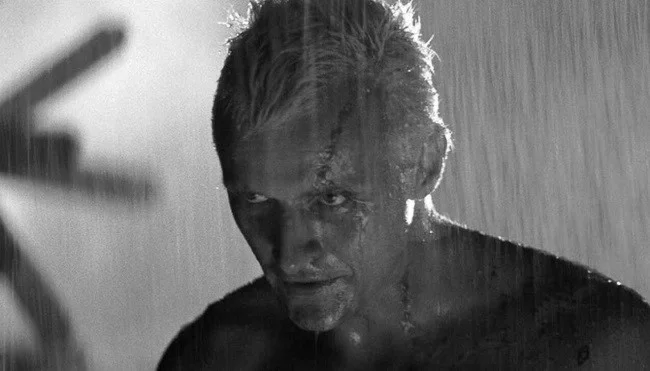



Dawn of the Dead: Complete Cut (1978)
Five years ago, I wrote about a fan edit of George Romero’s horror classic Dawn of the Dead that attempted to recreate the original rough cut of the movie. The so-called “Extended Mall Hours” cut was composed of the 139 minute Cannes edit of the film and the 117 minute Dario Argento version. It was a very interesting project but as it consisted of DVD quality material (including deleted scenes) it was not an optimal presentation. Being a fan edit, there were obvious issues regarding legality, so I never really expected to see anything comparable to this version being officially sanctioned or released. So I was therefore most surprised to learn that a recent Blu-ray boxset release by Austrian distributors XT Video included a “Complete Cut” which similarly combines all available material. This is presented in 1080p, at a ratio of 1:85:1 and runs 155 minutes. It is superior in quality to the “Extended Mall Hours” cut and is most likely the nearest any fan is ever going to get to seeing Romero’s initial edit of the film.
Five years ago, I wrote about a fan edit of George Romero’s horror classic Dawn of the Dead that attempted to recreate the original rough cut of the movie. The so-called “Extended Mall Hours” cut was composed of the 139 minute Cannes edit of the film and the 117 minute Dario Argento version. It was a very interesting project but as it consisted of DVD quality material (including deleted scenes) it was not an optimal presentation. Being a fan edit, there were obvious issues regarding legality, so I never really expected to see anything comparable to this version being officially sanctioned or released. So I was therefore most surprised to learn that a recent Blu-ray boxset release by Austrian distributors XT Video included a “Complete Cut” which similarly combines all available material. This is presented in 1080p, at a ratio of 1:85:1 and runs 155 minutes. It is superior in quality to the “Extended Mall Hours” cut and is most likely the nearest any fan is ever going to get to seeing Romero’s initial edit of the film.
Having recently watched the “Complete Cut”, I again reiterate the same comments I made when watching the “Extended Mall Hours” fan edit. The film takes on a somewhat bleaker tone with some additional dialogue scenes between Peter and Stephen. The expanded “Biker Raid” adds to the action and certainly increases the threat that they pose to our protagonists. And there is a lot more additional zombie related violence. However, this version does a far better job of adjusting the soundtrack to accommodate the additional material. Some tracks by Goblin that were not used in previous edits of the film have been integrated back into the movie. Hence we do not get too much repetition of cues. The visual elements are of a superior quality this time round so there is no significant disparity between old and new material. The editing is also seamless and the addition of new content does not disrupt the narrative flow or the overall pacing of the film.
The addition of this version of Dawn of the Dead to the existing three cuts of the film raises the inevitable question of which is best? Although I often prefer the most comprehensive version of movies, I’d advise those who have not seen the film before to start with the standard theatrical version first. It has a sense of immediacy that makes it possibly the most accessible edit. Other versions are best watched once an opinion of the base movie has been established. Some of the material in the “Complete Cut” may mainly be of interest to completists who want to see additional zombie footage. However, some of the extra make up effects and action scenes are not quite as polished as those that have always been present, which may well be the reason that director George Romero removed them. However, if you are an aficionado then this version of the film is worth seeing for scholarly reasons. However, please note that the boxset that contains this cut was a limited edition and is now very expensive to obtain.
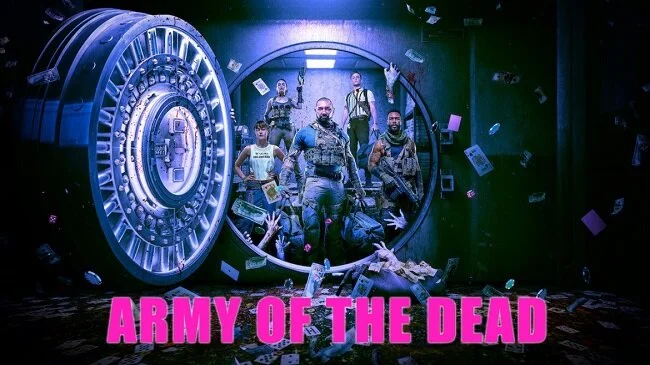

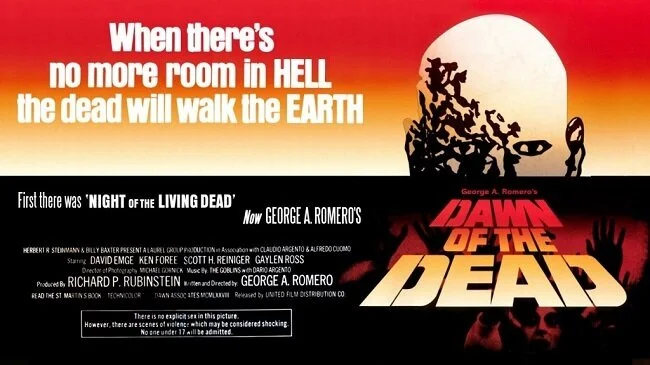

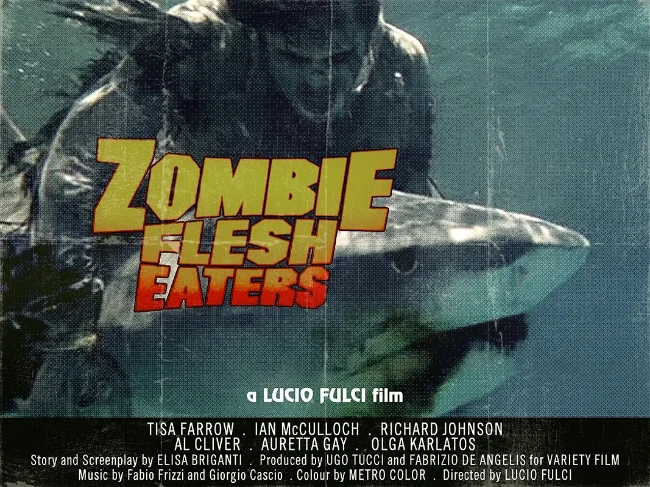
Classical Music in Movies
Classical music has often been used to great effect in cinema since the advent of sound. It has certain advantages over bespoke compositions, in that it can imbue a scene with a sense of gravitas and emotionally connect with viewers who may already be familiar with the piece being played. Legendary director Stanley Kubrick famously rejected Alex North’s score for 2001: A space Odyssey after finding the classical tracks he used for the temporary soundtrack complement the visuals perfectly. Over the years, some particular pieces of classical music have proven to be very popular and flexible, thus appearing in a wide variety of films across multiple genres. Hence, I have chosen two well known tracks that demonstrate this. I would also like to highlight contemporary classical music and have also selected one example that I feel demonstrates how the genre sublimely compliments cinema.
Classical music has often been used to great effect in cinema since the advent of sound. It has certain advantages over bespoke compositions, in that it can imbue a scene with a sense of gravitas and emotionally connect with viewers who may already be familiar with the piece being played. Legendary director Stanley Kubrick famously rejected Alex North’s score for 2001: A space Odyssey after finding the classical tracks he used for the temporary soundtrack complement the visuals perfectly. Over the years, some particular pieces of classical music have proven to be very popular and flexible, thus appearing in a wide variety of films across multiple genres. Hence, I have chosen two well known tracks that demonstrate this. I would also like to highlight contemporary classical music and have also selected one example that I feel demonstrates how the genre sublimely compliments cinema.
Symphony No7. II. Allegreto (A Minor) by Beethoven.
This rather portentous piece builds over its 9 minute duration. The movement is structured in a double variation form. It starts with the main melody played by the violas and cellos, an ostinato. This melody is then played by the second violins while the violas and cellos play a second melody. Because of the music’s ominous quality it has featured in numerous films. It plays over the montage showing Charlotte Rampling’s and Sean Connery’s ageing and death at the end of John Boorman’s Zardoz (1974). It is also used in Alex Proyas’ science fiction thriller Knowing (2009) when Nicholas Cage returns home to his estranged Father as the world is consumed by solar flares.
Adagio in G minor ("Albinoni's Adagio").
This sombre track is commonly attributed to the 18th-century Venetian master Tomaso Albinoni but was actually composed by 20th-century musicologist and Albinoni biographer Remo Giazotto, purportedly based on the discovery of a manuscript fragment by Albinoni. The piece evokes a sense of loss and melancholia. Hence it was used to great effect in Peter Weir’s influential World War I movie Gallipoli (1981). It features in Kenneth Lonergans’ human drama Manchester by the Sea (2016), although some critics felt that the piece’s ubiquity was actually distracting. Irrespective of this criticism it remains a very moving piece of music.
Lacrimosa by Zbigniew Preisner.
Taken from Polish composer Zbigniew Preisner Requiem for a Friend, this track appears in Terrence Malick’s experimental philosophical drama The Tree of Life (2011). It features during the “creation of the universe” sequence, which is itself a fascinating work of art. This scene, which features practical visual effects by famed special effects supervisor Douglas Trumbull, is further imbued with religious ambience and a sense of the divine by the power of this piece and the beauty of the soprano vocals by Sumi Jo. As the cosmos coalesces, there is a profound sense of both human insignificance and wonder.




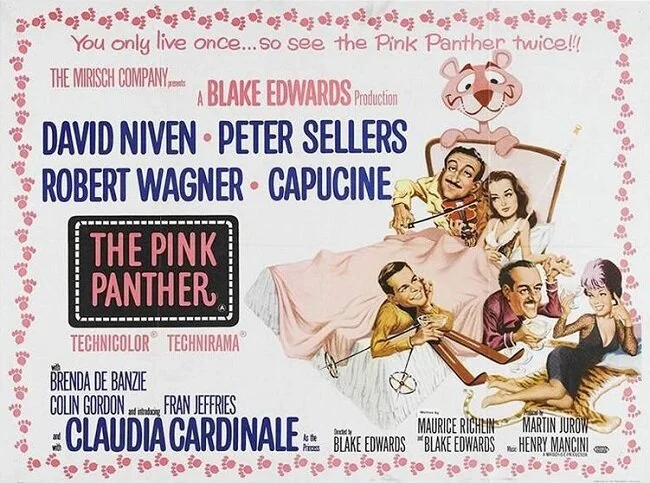
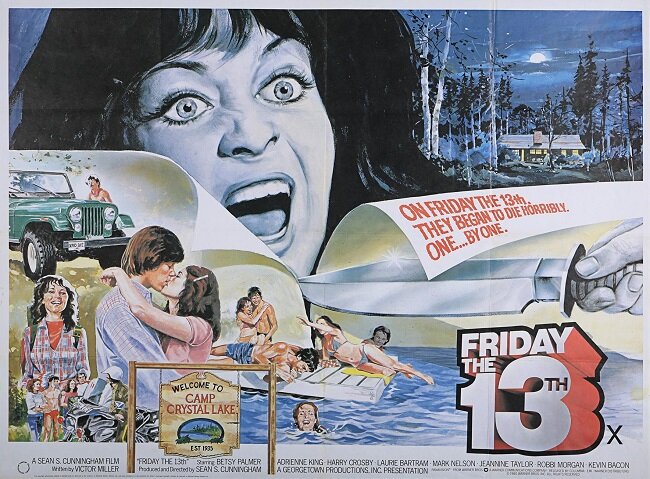


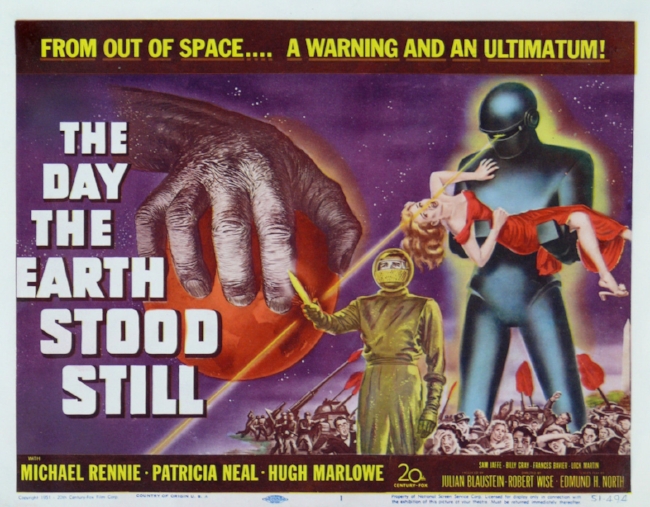
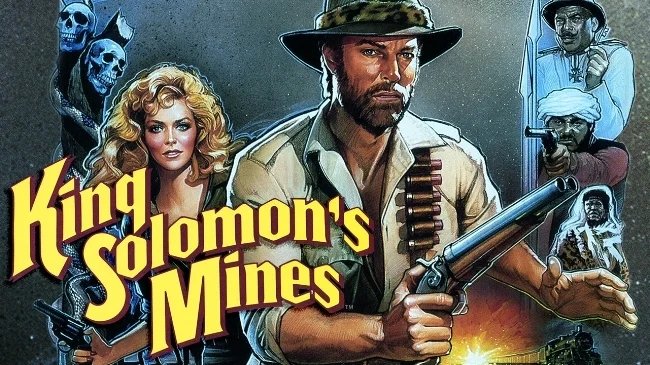


The Last Broadcast (1998)
The Last Broadcast is a curious beast that straddles both the “mockumentary” and “found footage” genres. Shot entirely on consumer level video equipment, it effectively captures the look and feel of public access cable TV from the times. Released before the massive commercial success of The Blair Witch Project, The Last Broadcast did not find a comparable mainstream audience at the time, although it remains a favourite with genre fans. However, the movie has been recently re-released on Amazon Prime and subsequently become a talking point once again. Elements of the plot have proven very prophetic, such as the popularity of “ghost hunting” reality shows and the integration of online interactivity into live television. But the one standout aspect of The Last Broadcast which polarises viewer opinion is its ending. This is often seen as either a clever “sting in the tail” or an ill considered “jumping the shark” cop out.
The Last Broadcast is a curious beast that straddles both the “mockumentary” and “found footage” genres. Shot entirely on consumer level video equipment, it effectively captures the look and feel of public access cable TV from the times. Released before the massive commercial success of The Blair Witch Project, The Last Broadcast did not find a comparable mainstream audience at the time, although it remains a favourite with genre fans. However, the movie has been recently re-released on Amazon Prime and subsequently become a talking point once again. Elements of the plot have proven very prophetic, such as the popularity of “ghost hunting” reality shows and the integration of online interactivity into live television. But the one standout aspect of The Last Broadcast which polarises viewer opinion is its ending. This is often seen as either a clever “sting in the tail” or an ill considered “jumping the shark” cop out.
Filmmaker David Leigh (David Beard) is making a documentary about the murders of the hosts and crew of a cable TV show called Fact or Fiction. Presenters Steven "Johnny" Avkast (Stefan Avalos) and Locus Wheeler (Lance Weiler), along with sound recordist Rein Clackin (Rein Clabbers) and psychic Jim Suerd (James Seward) travel to the Pine Barrens in search of the Jersey Devil. Only Jim Suerd returns in a state of disorientation. The police mount a search and subsequently find the mutilated bodies of Wheeler and Clackins. Avakast remains missing although his hat is found by a pool of blood. Subsequent viewing of the video footage shows tensions between Suerd and the others and physical evidence soon leads to a quick conviction. However, Suerd dies in custody under mysterious circumstances while his appeal is pending. David Leigh subsequently obtains tape footage that was missing from the police investigation. Although damaged he hires data retrieval expert Michelle Monarch (Michelle Pulaski) to search for any viable material. Will this content reveal the truth?
The Last Broadcast does a good job of establishing its central characters and building up a credible biography on each through faux interviews with friends and officials. It also accurately reflects the “home brew” nature of cable TV and public access TV from the era. The use of IRC as a means for viewers to interact with the show’s hosts is an interesting snapshot of the times. Another clever aspect of the plot is the way in which the supernatural is teased and then sidelined. The Fact or Fiction hosts go in search of the Jersey Devil but viewers are not given a summary of the associated legend nor does the story go out of its way to imply that the murders are of a supernatural nature. Far more time is spent exploring whether Jum Suerd is a gifted psychic or a deluded, dangerous loner. Documentary filmmaker David Leigh also remains an enigma, although on face value he is simply investigating a story and hence shouldn’t be the focus of his own film.
The Last Broadcast proceeds at a measured pace and is a slow burn. There are some minor jump scares when interviews with people suddenly cut to pictures of the crime scene but overall the focus is on maintaining a mysterious atmosphere. The elephant in the room is the film’s climax, in which a computer enhanced image reveals the solution to the mystery. There is then a major shift in the technical style of the remainder of the movie which will either delight viewers or prove to be a deal breaking WTF moment. To say any more would be an overt spoiler. It is also worth noting that it is this aspect of the film that has kept the movie on fans radar and often becomes the focal point of discussion. Irrespective of this, there are many other aspects of The Last Broadcast that were ahead of its time. If you are a fan of this genre or a movie aficionado, then I’d recommend a viewing so you can decide upon the merits of the controversial ending.
Classic Movie Themes: The Pink Panther
If you mention The Pink Panther (1963) I’d hazard a guess that most people will instantly think of Inspector Clouseau (and possibly throw in a quote in faux French about “Minkeys”) or hum or whistle the iconic theme tune. It’s blend of cool sixties Jazz and Lounge is both classy and evocative. Henry Mancini’s contribution to the Pink Panther franchise is commensurate to that of Peter Sellers and Blake Edwards. If you removed his musical scores from any of the films they would be greatly diminished. In fact one can argue that the movies made in the eighties after Sellers’ death are greatly bolstered by Mancini’s intelligent and accomplished musical accompaniment. The franchise may have run out of steam but Mancini never did so.
If you mention The Pink Panther (1963) I’d hazard a guess that most people will instantly think of Inspector Clouseau (and possibly throw in a quote in faux French about “Minkeys”) or hum or whistle the iconic theme tune. It’s blend of cool sixties Jazz and Lounge is both classy and evocative. Henry Mancini’s contribution to the Pink Panther franchise is commensurate to that of Peter Sellers and Blake Edwards. If you removed his musical scores from any of the films they would be greatly diminished. In fact one can argue that the movies made in the eighties after Sellers’ death are greatly bolstered by Mancini’s intelligent and accomplished musical accompaniment. The franchise may have run out of steam but Mancini never did so.
The Pink Panther theme, composed in the key of E minor, is unusual in Mancini's body of work due to its extensive use of chromaticism. In his autobiography Did They Mention the Music? Mancini talked about how he composed the theme music. “I told [the animators] that I would give them a tempo they could animate to, so that any time there were striking motions, someone getting hit, I could score to it.They finished the sequence and I looked at it. All the accents in the music were timed to actions on the screen. I had a specific saxophone player in mind; Plas Johnson. I nearly always precast my players and write for them and around them and Plas had the sound and the style I wanted”.
A Shot in the Dark (1964), like most other movies in the series, featured animated opening titles produced by DePatie-Freleng Enterprises. However, it did not use the iconic Pink Panther theme as an accompaniment on this occasion. Instead Henry Mancini wrote a new musical cue to reflect the fact that Inspector Clouseau was now the main focus of the film. It is a smooth big band piece with a period beatnik vibe. The film blends wordplay with physical comedy and in many ways is the most sophisticated and accomplished of the series. Mancini’s faux ambient Parisian music adds greatly to the atmosphere.
By the time The Pink Panther Strikes Again arrived in cinemas in 1976, director Blake Edwards had moved the focus of the films from straight forward slapstick and Clouseau’s verbal idiosyncrasies to elaborate comedy set pieces featuring destruction and mayhem. The Inspector’s fight with Cato satirises the martial arts trend in movies of the time and the editing style of Sam Peckinpah. The film also features a beautifully simple and low key theme specifically for Clouseau. It plays over a three minute sequence in which the Inspector tries to cross a moat and enter a castle. It underpins Seller’s pratfalls superbly, highlighting the difficulty of scoring comedy successfully. Something Mancini achieve’s here, effortlessly.