LOTRO: The Problem With MMOs and Mathematics
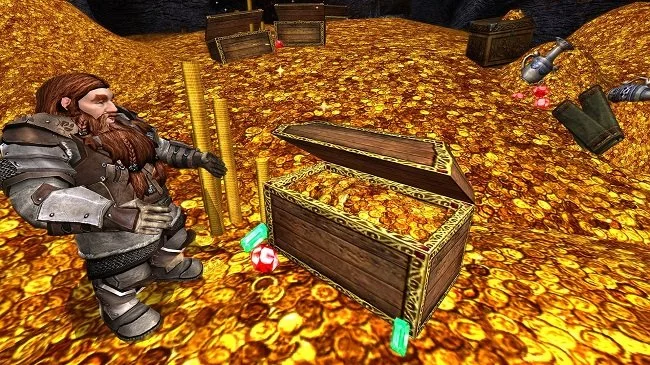
Let’s start with a quote from a classic Walter Hill film, The Warriors. “Can you count, suckers?” says Sirus. The gang leader was referring to the number of Police in New York City at the time. Whereas, for the purpose of this post, I am referencing how many Delving Writs a player needs to acquire 6 pieces of level cap armour in LOTRO. Because, next to the gear you get from endgame instances and raids, Delving gear is a good alternative.. It is marginally better than the items you can get from lootboxes. Hence, Delving armour is a good source of high end gear for the solo player. Through the miracle of mathematics, the number of Delving writs required to acquire a full set of this armour is 9,000. At first glance, that seems like a lot. If you then do some further research to put the number in context, you realise it is indeed a lot and a substantial undertaking.
Let’s start with a quote from a classic Walter Hill film, The Warriors. “Can you count, suckers?” says Sirus. The gang leader was referring to the number of Police in New York City at the time. Whereas, for the purpose of this post, I am referencing how many Delving Writs a player needs to acquire 6 pieces of level cap armour in LOTRO. Because, next to the gear you get from endgame instances and raids, Delving gear is a good alternative. It is marginally better than the items you can get from lootboxes. Hence, Delving armour is a good source of high end gear for the solo player. Through the miracle of mathematics, the number of Delving writs required to acquire a full set of this armour is 9,000. At first glance, that seems like a lot. If you then do some further research to put the number in context, you realise it is indeed a lot and a substantial undertaking.
Like most repeatable activities in The Lord of the Rings Online and indeed the MMORPG genre, there is a cap on how many a player can undertake a day. The point being to time gate the rewards and possibly foster a sense of achievement. You work toward a goal and deferred gratification. Or if you’re more cynical about this mechanic, it is designed to draw out content and keep players “occupied”. Whatever the reason, in LOTRO you can only do a maximum of 10 Delvings a day. Delvings are scalable and the harder they are, the more Delving Writs you receive as a reward. Theoretically, you can play 10 Delvings a day. On Tier 12 (the maximum tier) each Delving yields 50 Delving Writs. Hence you can potentially earn 500 Delving Writs a day. Thus you can possibly earn your full set of Delving armour in 18 days.
However, the average player is more than likely not to play that many Delvings and not at Tier 12. I find Tier 7 a manageable challenge and such Delvings reward the player with 30 Delving Writs. I tend to play no more than 4 Delvings a day, mainly because I like some more than others and there is a daily rotation so you don’t always get the ones you prefer. Therefore, players such as I on average can earn 120 Delving Writs per day. To earn 9,000 at this rate will take 75 days. Although I don’t mind a degree of challenge in an MMO, these numbers simply seem too much of a grind and a chore. I play for amusment and such an undertaking falls squarely out of the “amusement zone”. When compared to the gear I can get from lootboxes, the Delving armour is only a little better and that is the final nail in the coffin of this potential enterprise. Essentially maths has allowed me to make an informed choice and the choice is a resounding “no”.
I fully appreciate that lots of LOTRO players do not have the same transactional mindset as I do. As such they will happily set themselves this goal and diligently undertake it. Good for them. I however often find that the numbers that Standing Stone Games’ set for specific in-game rewards are not to my liking. They are simply too grindy in my opinion. I have a far more egalitarian opinion on what constitutes a “quid pro quo”. It’s also why I have no real interest in many of the festivals in LOTRO because you’re mainly rewarded with cosmetic items and not anything that I considered to be truly beneficial. But I digress. If you’re considering working towards a full set of Delving armour, then consider the numbers and the time frame that I’ve summarised here. Number crunching is your friend in this genre of gaming. Choose accordingly.




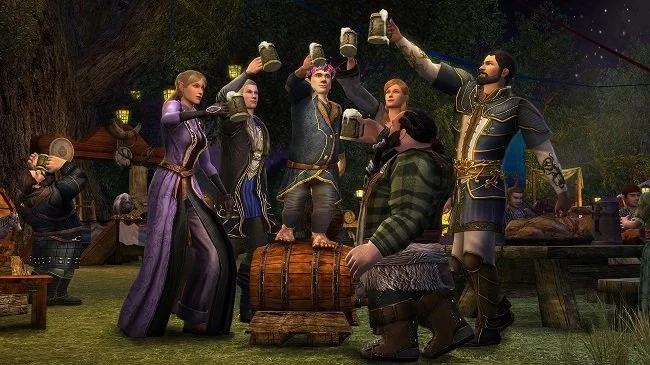





Managed Decline
“Managed decline” is a phrase that refers to the processes associated with the end of a specific lifecycle, with the goal of minimizing costs or other forms of loss. The concept originated in business where it referred to the management of companies and industries. More recently it is used in wider contexts. The concept gained prominence with regard to urban policy, particularly in the UK during the eighties when several major cities suffered economic and political collapse. Of late, the term has been applied to the UK, encompassing a systematic weakening of the economy, social structures, and cultural values, as well as its global political and diplomatic force. In each case, managed decline involves making strategic choices about resource allocation and accepting the consequences of those decisions. It is a complex issue with ethical and practical considerations, often sparking debate about the best way to address decline and reverse the process.
“Managed decline” is a phrase that refers to the processes associated with the end of a specific lifecycle, with the goal of minimizing costs or other forms of loss. The concept originated in business where it referred to the management of companies and industries. More recently it is used in wider contexts. The concept gained prominence with regard to urban policy, particularly in the UK during the eighties when several major cities suffered economic and political collapse. Of late, the term has been applied to the UK, encompassing a systematic weakening of the economy, social structures, and cultural values, as well as its global political and diplomatic force. In each case, managed decline involves making strategic choices about resource allocation and accepting the consequences of those decisions. It is a complex issue with ethical and practical considerations, often sparking debate about the best way to address decline and reverse the process.
When I was in my early twenties and beginning my working life (circa 1990) there was still a strong belief held within the UK that overall, things improved for each generation. By this we meant working conditions and pay, opportunities, both career and social, as well as healthcare and life expectancy. To a degree it held true. By the time I was thirty I was earning far more each year in IT than my father had ever earned as a mechanical engineer. However, there were some disadvantages to this era, the most noticeable being buying a house. In the UK there has always been and remains a strong culture of home ownership. Like it or not, it is considered one of the criteria by which we define success. Sadly from the nineties onwards, buying a home has become increasingly more expensive to the point where it becomes an impossibility for those on low pay or a single income.
My son’s generation (he is in his early thirties) has a very different perspective on their personal future and that of the nation. The post war social contract is dead and the welfare state is unsustainable. Jobs seldom offer a salary sufficient to cover living costs, therefore one’s future is one of constant work and managing personal debt. As for retirement, it is seen as an impossible dream. The expectation is that one will have to work continuously, primarily to pay for rented accommodation. As for wider political issues, there is a growing consensus that traditional politics and parties cannot or will not fix the most immediate problems. Hence there is a growing interest in new parties and populism and a misplaced hope that they will reset the status quo. Sadly, populist leaders around the world have proven they are not up to the job and despite promises simply increase the existing wealth gaps and social disparity.
I no longer believe that the problems facing the UK can be fixed. The existing political system is not fit for purpose and attracts the worst of us. We have an ageing population and a diminishing workforce that expects continued access to the welfare state and healthcare at the standard that they have always enjoyed. All of us want national infrastructure and institutions such as the courts, police and schools etc to work but no one wants to pay the increased costs required to run them. As for the loaded subject of immigration, the real issue is not illegal immigrants but the number of legitimate migrants who come to the UK to fill the jobs caused by the ever increasing skills gap. We are failing to learn the skills required for a modern economy and today’s world. Both these issues are integral to our current problems and contribute to our national decline.
Another factor is the breakdown of social interaction and our national discourse, the replacing of community with the cult of the individual and the erosion of critical thinking. Nuance, context, knowledge and reason are now rare skills which are often met with hostility. Social media and the internet are certainly a factor in this cultural shift. All of which makes discussion and compromise impossible. Everything from what is your favourite brand of coffee to national politics is presented as a binary choice. Those who don’t favour your choice are, by default, your enemy. This cancerous mindset is spreading everywhere and into everything. Unable to counter “feelings” with logical arguments, the rational thinkers retreat, ceding territory to the furious hard of thinking. Nothing gets better because those who now have what they craved, namely power without knowledge, just break things and move on when they lose interest or fail to achieve their misplaced goal. Of course it’s always someone else’s fault.
Managed decline is a gradual process, although global events can exacerbate it. Hence I don’t see an immediate economic and social collapse. Governments will continue to tinker at the periphery of problems and there may be occasional lulls in problems and even minor economic booms, depending on wider global economic issues. But I do see pay stagnation, increases in the cost of living, public services struggling to work and infrastructure failing. Food shortages are also possible due to war and failing supply chains. Crime will increase as poverty grows and civil unrest will increase as frustration grows. As ever, it will be the poor and vulnerable who will bear the brunt of these problems. Civil rights and freedoms will also be curtailed as we voluntarily give more and more information to big companies. As AI becomes more ubiquitous it won’t be a case of robots oppressing us but simply a case of “the computer says no” because you failed to meet some spurious criteria within an algorithm.
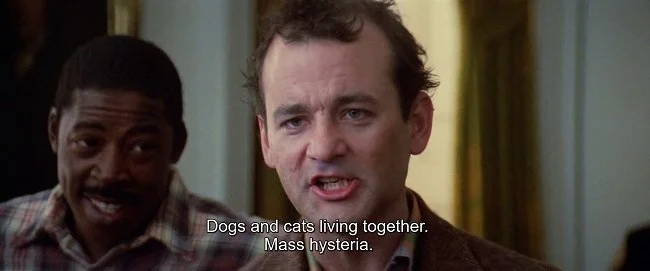
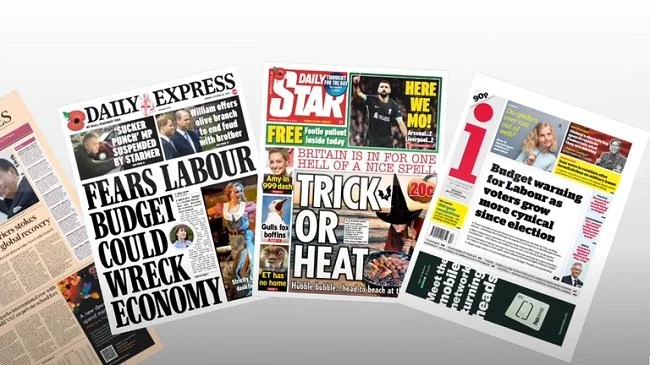
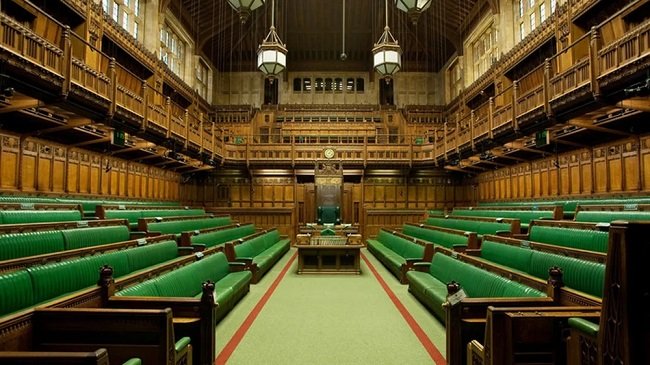
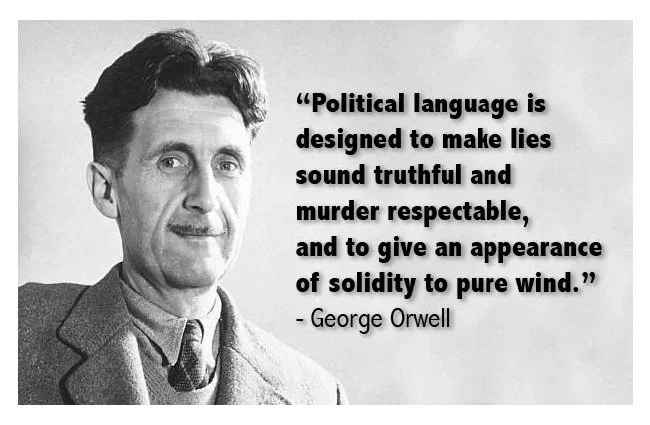
What does one do in the face of such inevitability? At 57 I’m pretty much going to do nothing, because there is nothing I can do. There are no credible political parties and the process of government as it stands is unable to facilitate change. As for the younger generation, posting “ I stand with [insert cause here]” on social media, that isn’t going to help either. Traditional forms of lobbying and striving for political change are no longer effective. Plus, we don’t all want the same thing, due to the way we compartmentalise our lives and pick “sides”. Hence the future politically in the UK will be distinctly Pythonesque. Frankly, there comes a point where you have to cease feeling concerned and powerless about domestic and global politics because it is such a burden. So you just continue to live your life, the best you can, doing small acts of kindness as and when you can. Perhaps I’ll be dead before the worst of it happens, although I suspect that isn’t going to be the case.










LOTRO Tips
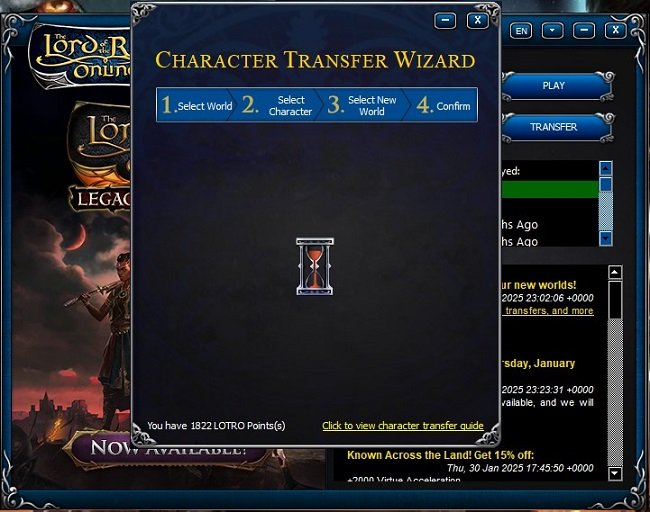
I am currently enjoying a renewed interest in the MMORPG The Lord of the Rings Online since I migrated all my characters from the old 32-bit servers to the new 64-bit replacements. I’ve created a new High Elf Lore-master on Peregrin server and am currently levelling them in a targeted play through of the Epic Story, supplemented by curated side quests. While playing recently, I realised the game UI on this alt wasn’t as I usually have it laid out. So I checked through the various documents on my PC and found a text file I had created many years ago that had a few hints and tips written down. I’ve added a few more and decided to share them as a blog post. I’m sure veteran players will be familiar with many of them but a lot of them are worth repeating. They may prove useful to those new to LOTRO or returning to the game after a long hiatus.
I am currently enjoying a renewed interest in the MMORPG The Lord of the Rings Online since I migrated all my characters from the old 32-bit servers to the new 64-bit replacements. I’ve created a new High Elf Lore-master on Peregrin server and am currently levelling them in a targeted play through of the Epic Story, supplemented by curated side quests. While playing recently, I realised the game UI on this alt wasn’t as I usually have it laid out. So I checked through the various documents on my PC and found a text file I had created many years ago that had a few hints and tips written down. I’ve added a few more and decided to share them as a blog post. I’m sure veteran players will be familiar with many of them but a lot of them are worth repeating. They may prove useful to those new to LOTRO or returning to the game after a long hiatus.
Saving and loading your customised interface:
Once you’ve arranged your LOTRO user interface to your liking simply type the following command in the chat window. /ui layout save X (X being the name of choice for this saved setting). You can then load this layout for any further alts by typing the following in the chat window. /ui layout load X
Filter loot, quests and sounds:
Alt + R opens the in-game filter windows. This allows you to filter out specific quests and their subsequent reminders. It can also be used to ignore unwanted loot. I use it to avoid lootboxes that frequently drop and fill your bags. It can also be used to filter out specific in-game sounds. This is especially handy if you find certain sounds annoying, such as Minstrels constantly yelling or the incessant whinnying of horses at stables.
Renaming pets and skirmish/landscape soldiers:
The Lore-master and Captain’s classes in LOTRO have combat pets that can be renamed by right clicking on them. Skirmish/landscape soldiers can similarly be renamed. Cosmetic pets cannot have their name altered in this fashion. However, you can rename them by typing the following command in the in-game chat window. /cpet rename X (X being your name of choice).
Checking to see how much time you have spent playing a specific alt:
Type the following command in the in-game chat window in chat to see how long you've played that specific character. /played
Select which quest icons are shown on the mini-map:
If you go into Options>UI Settings and tick “Show Trivial Quest Icons in Radar” the game will display the quest icons (rings) for those quests that are below your current level, on your mini-map.
Change the order of your alts on the character select screen:
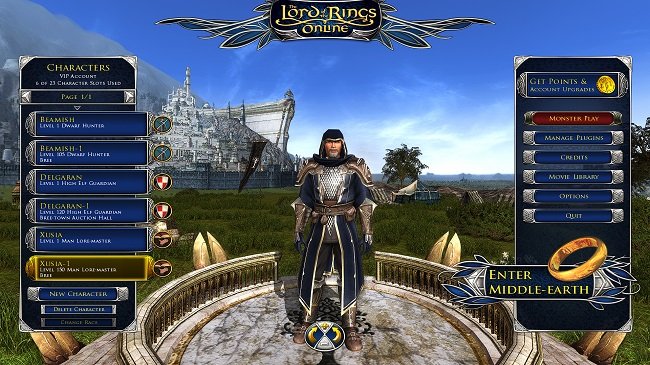
If you want to sort your characters, prior to clicking on “Enter Middle-earth” click on the small triangle just below where it says “Page”. You can then choose between Name, Level, Class and Last login.
Quick travel skills:
Travelling around the various zones in LOTRO can be difficult at lower levels. Stable access is often gated by quests and reputation etc. There are some travel locations that are more useful than others due to the amount of locations they offer. Return to Glân Vraig is one such location. Based in the Ettenmoors, this skill can be earned at level 20 just by completing the tutorial quest in the Ettenmoors. It offers quick travel to West Bree, Thorin's Gate, Michel Delving and Rivendell. From Rivendell Stables numerous other travel locations are available. Return to Glân Vraig also has the advantage of only having a 5 minute cooldown. Players just starting out in LOTRO, may wish to purchase Return to Lalia's Market skill for 3 mithril coins. It teleports the player to the centre of Bree which is an important travel hub.
Disable combat music:
Whenever you aggro an enemy in LOTRO, the game plays combat music specific to that zone. These audio cues can be useful in notifying that you’ve triggered combat. However, it can also become quite annoying, especially if you’re focused on the ambient score. Hence, you can go into Options>Audio>Sound Features and check the “Disable Combat Music” button, if you wish.
The LOTRO keymap:
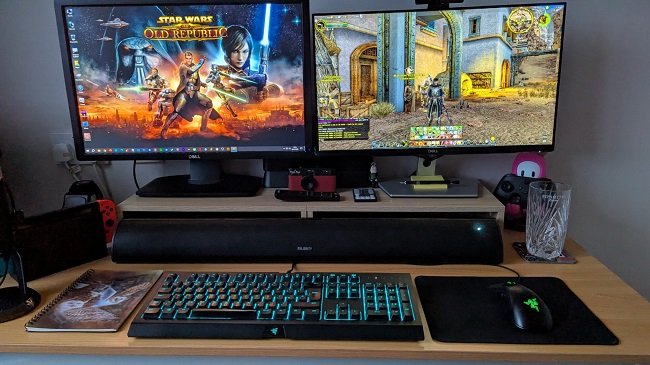
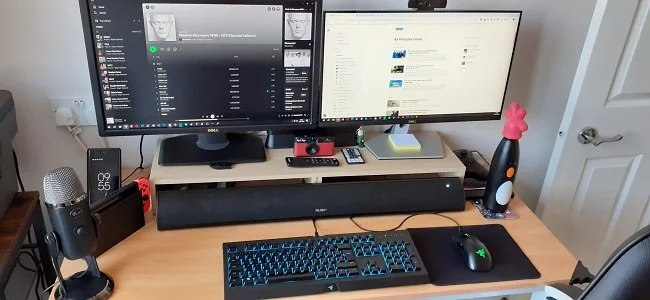
I have two monitors attached to my PC. I play LOTRO on the right hand screen and have the game’s default keymap as the desktop wallpaper on my left hand screen. Despite playing the game since 2008 I still forget many of the handy keyboard commands, so it is useful to have a visual reminder in my line of sight. You can find a large keymap image here.
COVID-19 and the Pandemic: Five Years On
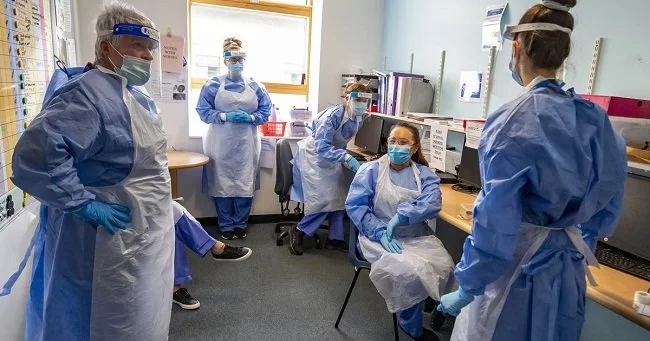
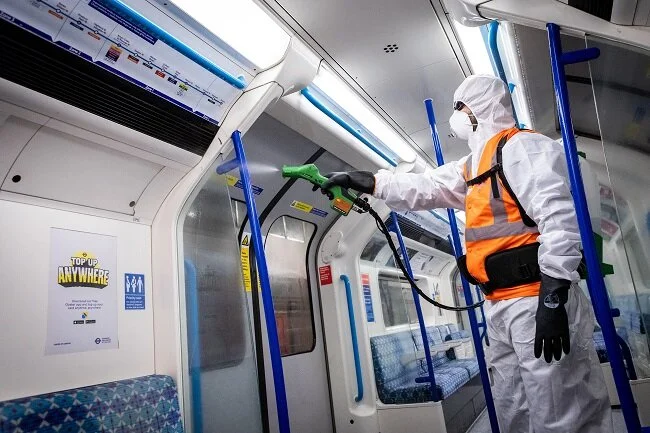
It’s been five years since the COVID-19 global pandemic. At the time it was an utterly alien and tumultuous experience. However, due to the way numerous institutions responded (but not the government), many people thought there would be a great deal of social and political change in the UK afterwards. The pandemic highlighted the impotence of the NHS, as well as those who work in jobs designated as essential. It also shone a spotlight on many of the country’s inequalities. Due to our national character, a real sense of community emerged. Something that had been absent for a very long time. Briefly, we got a glimpse of what the UK could be when we all broadly worked together. There was a sense that now was the time to change the status quo. Sadly, nothing changed. As soon as the vaccination program was launched, the UK quickly slipped back into the mire it’s been wallowing in since the end of WWII.
It’s been five years since the COVID-19 global pandemic. At the time it was an utterly alien and tumultuous experience. However, due to the way numerous institutions responded (but not the government), many people thought there would be a great deal of social and political change in the UK afterwards. The pandemic highlighted the impotence of the NHS, as well as those who work in jobs designated as essential. It also shone a spotlight on many of the country’s inequalities. Due to our national character, a real sense of community emerged. Something that had been absent for a very long time. Briefly, we got a glimpse of what the UK could be when we all broadly worked together. There was a sense that now was the time to change the status quo. Sadly, nothing changed. As soon as the vaccination program was launched, the UK quickly slipped back into the mire it’s been wallowing in since the end of WWII.
I caught COVID-19 in early April 2020. This was hardly surprising as I was at the time caring for both my elderly parents. They lived one road away from me and I visited everyday to undertake chores. There were also healthcare professionals coming and going all the time, so despite rigorous hygiene protocols, the increased risk made catching COVID-19 inevitable. It was a most unpleasant experience that lasted about a fortnight. The initial flu-like symptoms soon increased in intensity, resulting in constant head and muscle pain, violent coughing and a sense that I was in a constant bear hug, making it difficult to breathe. I slept for most of the day and had very low energy levels. Once the virus had run its course, I had extreme fatigue for the remainder of the year. It took a full twelve months to return to what I consider to be my normal state of health.
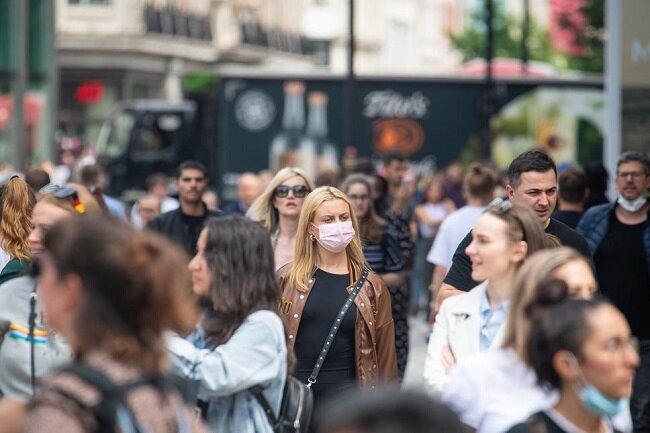
Regent Street, London, during lockdown 2020
The standout aspect of the pandemic were the three lockdown periods. Everyone has their own perspective on these based upon their own personal experience. For me the lockdowns were not a big deal. I was a carer with a very fixed routine. I continued to undertake my duties and the only difference was having to wear a mask when out and standing apart from others in queues. When the restrictions were reduced, Mrs P and I would go for walks and visit local parks. I remember vividly how much less traffic there was and how that impacted upon ambient noise levels. The air quality in South East London noticeably improved. COVID-19 did not interfere with my hobbies and so I continued writing and gaming. In fact it was a “golden age” for the latter. I spent a lot of time playing Warzone, which had just launched and Fall Guys. As someone who finds the hustle and bustle of contemporary life quite tiring, the lockdowns were an interesting change of pace.
However, for many the pandemic brought bereavement. As a carer of two elderly parents, I came to know a great many other ageing residents in the local area. Over the summer months of 2020, many would pass away after catching the virus. People who I knew from my mother’s hairdressers and those I often saw at surgeries and clinics. Several residents in my street died and not all of them were old. My son also lost colleagues at TFL due to the nature of their work. And then I lost my father in August. Ironically he did not catch COVID-19 but instead caught pneumonia after a chest infection. He survived the pneumonia but was left exhausted and frail. He elected to decline any further treatment and died on 16th September 2020. Due to the lockdown I only visited him once during the four weeks he was at hospital and was not with him when he passed away.
National COVID Memorial Wall London
I find that post pandemic, my sense of the passing of the years has been derailed. I have a clear sense of events up to 2019 but from 2020 onwards it all gets confused, due to the unusual nature of that time. Five years on, COVID-19 is still trotted out as a political excuse for anything not working or underperforming. As for the hoped for social change and political renaissance, it never happened and frankly was never going to. Many in the top 1% used the pandemic as a means to further enrich themselves and the country’s social divides are still there, bigger than ever. The pandemic has also been a contributory factor in the growth of nationalism, which is now looming large. Overall it is hard for me to summarise and quantify my thoughts on the pandemic. To quote Dickens’ “It was the best of times, it was the worst of times, it was the age of wisdom, it was the age of foolishness.”








Smiling
Prior to writing this post, I clocked a picture on a news website of the now disgraced TV presenter (and nonce) Gregg Wallace. I noticed that he doesn’t smile as such but tends to “gurn” instead. So does UK politician (and cunt) Nigel Farage. He always has his mouth open and his face contorted in some curious rictus, in most of the pictures you see of him. Mind you, I also don’t photograph especially well and any pictures of me smiling tend to look sinister or with a heavy hint of irony. The bottom line is not everyone is good at smiling. It doesn’t come naturally to all of us. This can be a problem at times or in social situations, because smiling is an integral part of our culture. On many occasions, I’ve been walking along, my face in a state of natural repose, only to be harangued by some twat shouting “cheer up, it may never happen”. A phrase I haven’t quite fathomed out, even to this day.
Conrad Veidt as Gwynplaine, in The Man Who Laughs (1928)
Prior to writing this post, I clocked a picture on a news website of the now disgraced TV presenter (and nonce) Gregg Wallace. I noticed that he doesn’t smile as such but tends to “gurn” instead. So does UK politician (and cunt) Nigel Farage. He always has his mouth open and his face contorted in some curious rictus, in most of the pictures you see of him. Mind you, I also don’t photograph especially well and any pictures of me smiling tend to look sinister or with a heavy hint of irony. The bottom line is not everyone is good at smiling. It doesn’t come naturally to all of us. This can be a problem at times or in social situations, because smiling is an integral part of our culture. On many occasions, I’ve been walking along, my face in a state of natural repose, only to be harangued by some twat shouting “cheer up, it may never happen”. A phrase I haven’t quite fathomed out, even to this day.
Firstly, let us first define what smiling is. According to Google, to smile is “to form one’s features into a pleased, kind, or amused expression, typically with the corners of the mouth turned up and the front teeth exposed”. As to the function of smiling within society, it is a powerful form of non-verbal communication that serves multiple functions. These include expressing emotions, improving mood, and influencing social interactions. It's a universal signal of happiness and can foster positive connections with others. It is a tool for social bonding and has positive benefits such as stress reduction and mood enhancement. Outside of human society among the other primates, smiling primarily serves as a social signal, often indicating appeasement, submission, or even fear, rather than a straightforward expression of happiness. Fascinating stuff.
Amanda Bearse in Fright Night (1985)
Setting aside the sociological and behavioural complexities of smiling, let us focus on the realities of smiling in society. Smiling is a facet of expected behaviour. On paper that’s not such a bad thing. A smile lets other people know that things are okay. It can be a polite social nicety like saying please and thank you. However, there is scope for this simple social cue to become a far more tyrannical tool, especially for women. Across most forms of media, it is rare to find an image of a woman who is not smiling. Something which is not true of men. Research shows that women smile 62 times per day on average, while men smile only 8 times. Smiling is therefore seen by many as a social expectation, even obligation. A curious offshoot of asking how someone is, with the understanding that you don’t answer negatively. Hence, the cat calls and the aforementioned comments.
One of the things that boils my piss, to invoke a contemporary expression, is the inherently flawed assumption that if you’re not smiling, you’re unhappy. My default facial expression is one of repose. IE neutral. I am not in any specific emotional state and more than likely contemplating something like a sandwich or what are the toilets like in Star Trek. The complexities of my psychological disposition, conveyed via the medium of my face, is obviously too complex a concept for some people who exist in a simple binary state. They, however, they can fuck off with their unwarranted social expectations. I will smile as and when I see fit and not before. I believe that any form of social expression, if used ad nauseum, loses its value. Which is exactly what has happened to smiling. Those who smile incessantly are either lying bastards, trying to sell you something or a couple of sandwiches short of a picnic.










Dianne & Vito: Red Hot and Ready
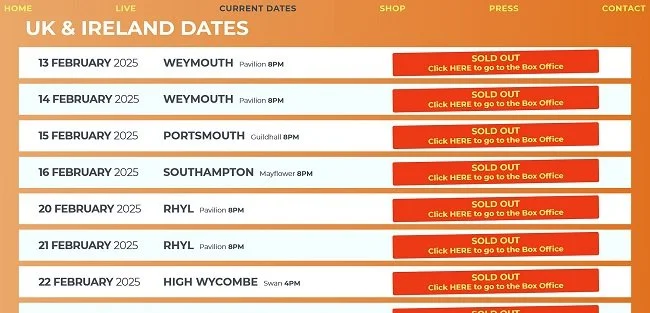
At the beginning of April, Mrs P and I went to the Churchill Theatre in Bromley to see Speakeasy, a dance show starring Karen Hauer and Gorka Marquez (of Strictly Come Dancing Fame). It was 100 minutes of Mamba, Salsa, Charleston, Foxtrot and Samba dance numbers and it was very well received by the audience. I don’t usually go to such shows but I enjoyed it because it was focused, dynamic and “did exactly what it said on the tin”, to invoke a cliché. As a result, we promptly booked tickets for a similar show that was scheduled for July. This one, Dianne & Vito: Red Hot and Ready, features Vito Coppola and Dianne Buswell, another two of the professional dancers from Strictly (as the cool kids call it). Once again the show was at the Churchill Theatre, which is proving to be quite a good local venue.
At the beginning of April, Mrs P and I went to the Churchill Theatre in Bromley to see Speakeasy, a dance show starring Karen Hauer and Gorka Marquez (of Strictly Come Dancing Fame). It was 100 minutes of Mamba, Salsa, Charleston, Foxtrot and Samba dance numbers and it was very well received by the audience. I don’t usually go to such shows but I enjoyed it because it was focused, dynamic and “did exactly what it said on the tin”, to invoke a cliché. As a result, we promptly booked tickets for a similar show that was scheduled for July. This one, Dianne & Vito: Red Hot and Ready, features Vito Coppola and Dianne Buswell, another two of the professional dancers from Strictly (as the cool kids call it). Once again the show was at the Churchill Theatre, which is proving to be quite a good local venue.
Tonight we finally went to the show and I am happy to report that I enjoyed it even more than the previous one. I think what surprised me the most was that the format was different and although there were a lot of very well conceived musical numbers, there was also a great deal of interaction with the two stars and the audience. Tonally, this show was a horse of a different colour to the previous one. Speakeasy was very raunchy and hot, Dianne & Vito: Red Hot and Ready had more of a celebratory nature with several dance sequences focusing upon key aspects of the dancer’s lives. The first was a montage of Dianne’s life in Australia culminating in her following her dream to dance and move to the UK. The second was Vito’s love for his brother, which was depicted through some amazing physical interpretative dance with Brazilian dancer, Jaih Betote.
In between musical numbers Diane and Vito sat on a sofa facing the audience and indulged in some scripted banter. They leaned into comic caricatures of themselves and indulged in stereotypes associated with Australian and Italian culture. The ability to send one’s self up is a worthy skill and the pair were happy to do this. Not all the jokes landed but it was broadly amusing mainly due to Vito and Dianne’s personalities. It was interesting to see these two popular dancers branching out in this fashion. I suspect both stars have an eye to moving into other forms of entertainment and media. The audience certainly enjoyed these “off-piste” moments and it was clear that there was a substantial contingent of über fans attending this evening’s performance.
One of the standout aspects of Dianne & Vito: Red Hot and Ready, are the support dancers and musicians. The other dancers, Jaih Betote, Rose Carne, Lois Faith, Talia Fowler, Robbie Kmetoni, Harijs Locs, and Ana Riera are all outstanding in their field. The two singers, Sam Turrell and Lois Faith, also maintain a high standard of delivery throughout the show. Furthermore, the songs and music were all cleverly arranged by Gareth Weedon (who also played keyboards). Henry Soriano drove the beat of the show with his expert drumming and percussion. The set design was minimalist but still managed to lend itself to several scenarios. The lighting was dynamic and responsive to the mood of the various songs. My only complaint was that some of the lights would on occasion shine directly into the audience’s line of sight but it was not a major problem.
Dianne & Vito: Red Hot and Ready isa good show, which offers more than just the dancing. The numbers cover a variety of styles including ballet and contemporary and the choreography by Jason Gilkison is technically driven and interesting. The various members of the company get to show off their impressive skills, with everyone contributing to the overall experience, rather than competing. As such, this show is a celebration of the two stars’ passion for dance and the opportunities that it has brought them. Upon reflection, some of the comedic asides need some fine tuning but I appreciate that the two stars have chosen to broaden the established format of such musical dance productions. Overall, Dianne & Vito: Red Hot and Ready is an uplifting two hour experience and a great showcase of their talent.





















The Idiot Box
Thoughts on TV shows and my current viewing habits.
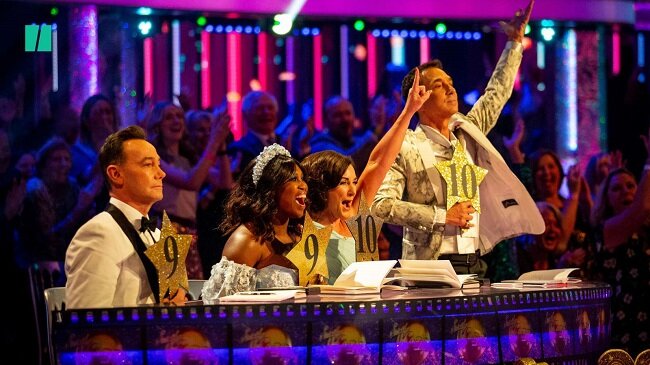
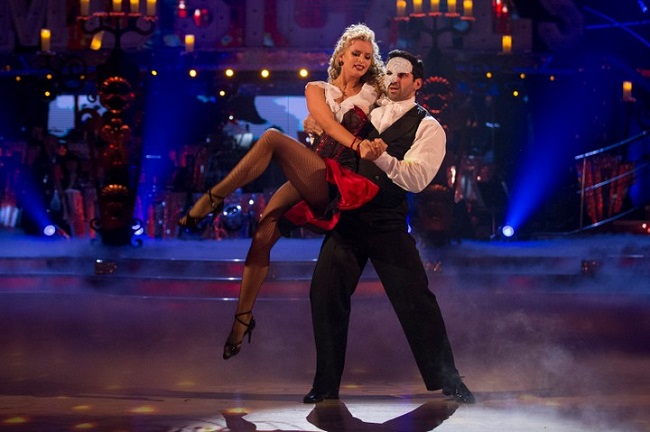
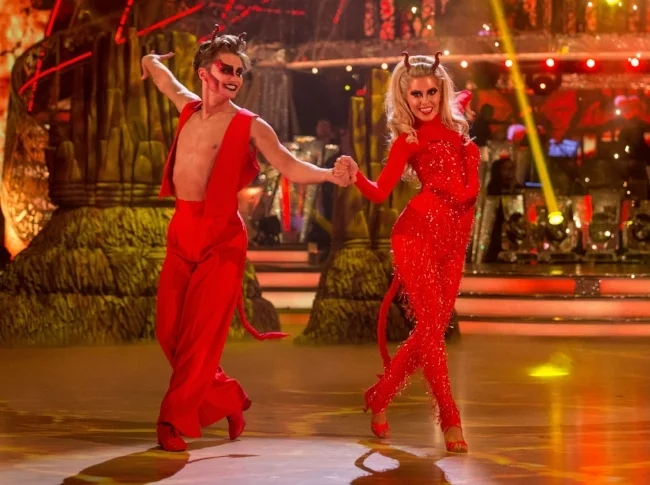
I last wrote a blog post in this series back in February 2022. Then for various reasons, I stopped. Possibly because my relationship with TV has changed in recent years. It’s fair to say at present that viewers are spoilt for choice. There are lots of very good shows around. Conversely, there is also a lot of bland, generic, filler as well. I appreciate that not every television series has to be an industry milestone and there are times when I’m content to watch undemanding content. However, I am very protective of how I spend my leisure time at present. I am not prepared to sink 6 or 8 hours into a show that is just “okay”. Hence I’m becoming very particular about what I watch. If something isn’t working for me in any fashion then I just abandon it and am happy to do so.
Thoughts on TV shows and my current viewing habits.
I last wrote a blog post in this series back in February 2022. Then for various reasons, I stopped. Possibly because my relationship with TV has changed in recent years. It’s fair to say at present that viewers are spoilt for choice. There are lots of very good shows around. Conversely, there is also a lot of bland, generic, filler as well. I appreciate that not every television series has to be an industry milestone and there are times when I’m content to watch undemanding content. However, I am very protective of how I spend my leisure time at present. I am not prepared to sink 6 or 8 hours into a show that is just “okay”. Hence I’m becoming very particular about what I watch. If something isn’t working for me in any fashion then I just abandon it and am happy to do so.
NCIS: Origins. The first season of this prequel to NCIS has been a proverbial breath of fresh air. Where NCIS has become a cartoonish caricature of itself, NCIS: Origins is the polar opposite. The characters are well defined, plausible and interesting. The cast is good and the stories are centred around everyday cases, rather than hyperbolic “let’s save the world” scenarios. It really is a case of less is more. Mercifully, CBS have had the sense to renew the show for a second season. As for NCIS, it continues its slow decline, as it gradually morphs from a military police procedural drama into something akin to Murder She Wrote.
Teacup. Loosely based upon the novel Stinger by Robert R. McCammon, Teacup centres around a group of neighbours in rural Georgia who are trapped on a farm and forced to confront a mysterious and deadly threat. As they struggle to survive, they must overcome rising tensions and uncover the truth behind the strange occurrences. Teacup has a strong start and then continues the pace over its subsequent 8 episodes. The shorter 30 minute episode format works to the show’s advantage. There are some solid jump scares and a fair amount of gore. I like the idea of a horror film turned into an episodic TV show but commissioning network Peacock obviously didn’t and cancelled the show.
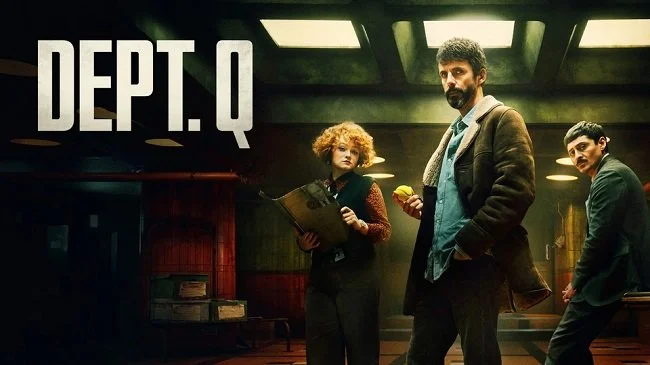
Dept. Q. Every now and then, someone makes a police procedural drama which takes a different approach to the genre. Based on a series of books by Danish writer Jussi Adler-Olsen, Dept. Q relocates the stories from Copenhagen to Edinburgh. Detective Chief Inspector Carl Morck (Matthew Goode), a disliked but talented detective, returns to police work after being shot and is given a cold case unit to run. It is naturally a “poison chalice”, set up for political reasons. He is assisted by enigmatic, civilian employee Akram (Alexej Manvelov) who may have worked for the Syrian Police prior to moving to Scotland. This nine part Netflix drama is well written, with an involving plot and compelling characters. It doesn’t pull its punches and the language is ripe. Its inherent differences to standard genre fodder is what makes it such good viewing. Akram is also one of the most enigmatic characters I’ve seen in a drama for a while.
Bookish. Set in London after WWII, Bookish is a beautiful distillation of the classic detective and whodunnit genres. Blending Sherlock Holmes, Poirot and Miss Marple (and much more) Bookish is written and stars Mark Gatiss. In lesser hands this could have ended up a rather self congratulatory fan service but, here it is a multifaceted drama that blends the cosy, with the classic detective tropes. It also alludes to wider social commentary, with the lead character, Gabriel Book, being in "lavender marriage” with his wife Trottie. Beautifully shot in both the UK and Belgium and sporting an interesting modern take on period music, Bookish has all the hallmarks of a genuine hit show.
Star Trek: Strange New Worlds. I am very pleased to see this iteration of Star Trek return for a third season. It’s nearly been two years since the last episode was broadcast. Despite being set in a time period where large swathes of the existing, canonical lore can potentially hem the show in, it still manages to innovate and expand in a very creative way. Furthermore it does this without crossing too many lines with its retconning. There are several standout characters, especially Doctor M’Benga, played by the superb Babs Olusanmokun. I am also happy with the return of classic crew members such as Spock and Scotty and the opportunity to explore their past more. I feel this show totally eclipsed Star Trek: Discovery, from which it was a spinoff. I look forward to watching the remainder of the season.


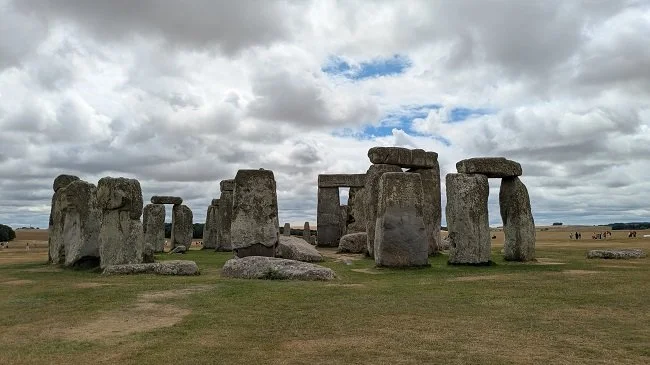
Stonehenge
Stonehenge is so much more than just a neolithic, historical structure of note. It is of great spiritual importance to many, representing ceremonial practices and ancient worship. It is also seen as a conduit to a wider connection to the cosmos. It is after all a celestial calendar, according to one of the theories regarding its purpose. It also has a strong significance in pop culture. Hence, due to its history, symbolism, religious connotations and overall sense of mystery it is a UNESCO World Heritage Site and a globally recognised symbol of ancient Britain. As such, it has always been somewhere that I have wished to visit. Today, as we were relatively nearby in Ringwood and the weather was pleasant, Mrs P and I decided to go to Salisbury and see this iconic structure for ourselves.
Stonehenge is so much more than just a neolithic, historical structure of note. It is of great spiritual importance to many, representing ceremonial practices and ancient worship. It is also seen as a conduit to a wider connection to the cosmos. It is after all a celestial calendar, according to one of the theories regarding its purpose. It also has a strong significance in pop culture. Hence, due to its history, symbolism, religious connotations and overall sense of mystery it is a UNESCO World Heritage Site and a globally recognised symbol of ancient Britain. As such, it has always been somewhere that I have wished to visit. Today, as we were relatively nearby in Ringwood and the weather was pleasant, Mrs P and I decided to go to Salisbury and see this iconic structure for ourselves.
Stonehenge is maintained by English Heritage, a charity that manages over 400 historic monuments, buildings and places throughout England. Tourists are greeted by a substantial visitors centre upon arrival, featuring an exhibition regarding the history of Stonehenge and various support facilities such as cafe, shop, picnic areas and toilets. There is a large car park which requires the PayByPhone app for payment. English Heritage members park for free, as long as they clearly display their membership sticker. Visitors can walk to the stones, which takes about 25 to 30 minutes, depending on your pace. Alternatively, there is a shuttle bus service that regularly travels between the two sites. This takes between 5 to 10 minutes. A path goes all the way around the circle and is a mixture of both hard-standing and grass. At some points, you are as close as 5m (16 feet) from the stones.
The stones at Stonehenge are approximately 4,500 years old, dating back to the late Neolithic period around 2500 BC. But they are far more than the sum of their parts. There is an interesting atmosphere among the visitors, many of whom are pursuing a spiritual dimension to their pilgrimage. Despite the background noise of traffic passing on the nearby A303 road, there is an air of stillness surrounding the stones themselves. I found most of my fellow visitors were quite quiet, as people tend to be when they visit a cathedral. As for Stonehenge itself, it is suitably impressive. It has a very organic ambience, despite obviously being hand crafted from stone. You can completely walk around the circle and photograph it from all sides. During our visit it became quite overcast, which in many respects made the photos I took on my phone more atmospheric.
After spending about 30 minutes or so, contemplating the stone circle, we returned to the visitor centre and the exhibition. The current exhibition explores the story of not only the stone circle but the wider landscape, as well as the people who lived in the vicinity. Using a combination of audio-visual displays and ancient objects, it seeks to show what life was like at the times and what part the stone circle played within the local community. There are over 250 archaeological objects and treasures that have been discovered in the immediate area. Ranging from jewellery, pottery and tools, to ancient human remains. There is a forensic reconstruction of a 5,500 year old man, based on the aforementioned bones found near Stonehenge. Yet despite the amount of data available, much still remains unknown.
Stonehenge is a singularly enigmatic place of interest, mainly due to the age of the site and the degree of mystery that still persists around how it was built and what its exact purpose was. Irrespective of the crowds of visitors and the temperamental nature of the weather, Stonehenge maintains an imposing presence. It certainly lends itself to a great deal of contemplation. That being said, it doesn’t have to be all serious. As ever I lapsed into thinking about the various pop culture references regarding Stonehenge, such as Halloween III: Season of the Witch, Night of the Demon and of course Spinal Tap. Overall, I found my visit to this iconic stone circle very rewarding. I suspect it is even more enthralling at specific times of year, such as the summer solstice when sunrise aligns with specific stones within the circle. I suspect I shall make a return visit in the future.




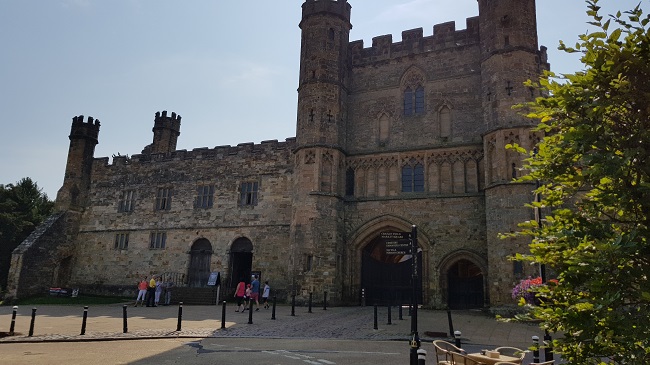
The Sea
I enjoy visiting the coast. I always have. I find the sight and sounds of the sea very calming and thought provoking. There is something about seeing the ocean stretch out to the horizon and its implied enormity, that gives you a sense of perspective. The UK is a seafaring nation and therefore it is an integral part of our history and national identity. Hence a strong nautical theme and a sense of its importance has bled through into our popular culture. It is therefore quite common for people to have a positive attitude towards the sea and its associated leisure activities. I like to visit the coast at various times of the year and walk along the beach, just listening to the waves, lost in my own thoughts. This is not a hard thing to do in the UK, as no one lives further than 70 miles (113 kilometers) from the coast.
Hythe Beach
I enjoy visiting the coast. I always have. I find the sight and sounds of the sea very calming and thought provoking. There is something about seeing the ocean stretch out to the horizon and its implied enormity, that gives you a sense of perspective. The UK is a seafaring nation and therefore it is an integral part of our history and national identity. Hence a strong nautical theme and a sense of its importance has bled through into our popular culture. It is therefore quite common for people to have a positive attitude towards the sea and its associated leisure activities. I like to visit the coast at various times of the year and walk along the beach, just listening to the waves, lost in my own thoughts. This is not a hard thing to do in the UK, as no one lives further than 70 miles (113 kilometers) from the coast.
I often write summaries of my various travels and they are frequently just summaries of a few historical facts associated with the places I’ve visited. I would, on this occasion, like to discuss two places that I’ve recently been to and offer a different perspective. The first is Swalecliffe, which lies between Whitstable and Herne Bay. This small coastal area looks out over the North Sea. It has a rugged strip of grassland that leads down to the pebble beach, which has wooden groynes to prevent shoreline erosion. The road, Marine Crescent, runs parallel to the beach and the houses along it all have balconies, observation decks or other means by which their owners can sit and enjoy the seaview. There is a promenade adjacent to the beach and various facilities available along it, including some very colourful beach huts.
Swalecliffe Beach
We visited the beach on 30th April, roundabout 10:45 AM. We were making our way along the coast, Eastward, stopping anywhere along the way that took our fancy. What attracted us to the beach at Swalecliffe was the fact that there was a sea mist at the time, although it was receding. So we parked up and took a leisurely stroll. At the time the beach was mainly empty. There were some dog walkers and a few people fixing their beach hut. The sea mist was at the time halfway up the beach but slowly vanishing in the sunlight. It was very picturesque but there was also a vague supernatural aspect to it all. I immediately thought of a particular M. R. James’ ghost story that featured a sinister figure, obscured by sea mist and on the periphery of one’s vision. Sadly, the moment didn’t last long. In less than 30 minutes the mist had gone leaving just a scenic pebble beach but it was a striking experience.
Today, Mrs P and I visited Southbourne Beach, located in Bournemouth. It is a popular, Blue Flag award-winning beach known for its cleanliness and wide sandy and shingle expanse. It is one of those beaches that is popular with locals but not necessarily well known to the wider population. Tourists tend to head to Bournemouth. Southbourne beach, set below a cliff, is accessible via the zigzagging Fisherman's Walk from Southbourne High Street. It offers amenities like accessible toilets, kiosks, and lifeguard services. It is an extremely clean and tidy beach, with wide expanses of sand and shingle. When it is warm and sunny, such as today, it is the sort of beach where you can happily spend hours just relaxing and daydreaming. It has ample facilities and a great ambience. It also has the benefit of not being crowded.
Both of these visits highlight the fascinating quality of the sea. The sea mist at Swalecliffe invoked a sense of fascination at a natural phenomenon that I had never seen before. It also had a sense of mystery as it is an occurrence that has been used as a plot device in many books over the years. My experience at Southbourne beach was far more about the inherent calmness of the environment. It is the perfect place in good weather to switch off and relax, or ruminate upon benign, idle thoughts. Furthermore, irrespective of the season or indeed the beach itself, I think that it is the rhythmic quality of the sea that is the key to its calming presence. That combined with the sea air and its negative ions seem to have a very uplifting effect upon one’s mood. Yet despite all these factors, I have never felt disposed to venture out upon the sea. I much prefer just to observe and contemplate it.
More Wise Quotes
Is there truly any real wisdom to be found in quotes? According to Google the answer is most definitely yes. They can offer valuable insights, perspectives, and guidance on various aspects of life, often encapsulating complex ideas in concise and memorable phrases. However, quotes can equally be annoying, tedious and pompous. If used incorrectly, a pithy quote can quickly backfire making the person using it look like a smug, self-aggrandising, pseudo intellectual. However, irrespective of these two contrasting views, quotes can also provide a quick and convenient blog post that can be hastily cobbled together when you’re up against a deadline. So without any further ado, here are ten carefully curated quotes for your enjoyment and edification, that impart wisdom and provide food for thought.
Is there truly any real wisdom to be found in quotes? According to Google the answer is most definitely yes. They can offer valuable insights, perspectives, and guidance on various aspects of life, often encapsulating complex ideas in concise and memorable phrases. However, quotes can equally be annoying, tedious and pompous. If used incorrectly, a pithy quote can quickly backfire making the person using it look like a smug, self-aggrandising, pseudo intellectual. However, irrespective of these two contrasting views, quotes can also provide a quick and convenient blog post that can be hastily cobbled together when you’re up against a deadline. So without any further ado, here are ten carefully curated quotes for your enjoyment and edification, that impart wisdom and provide food for thought.
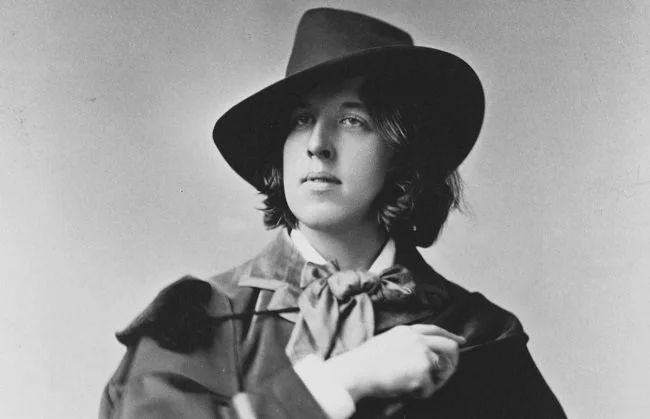
“Be yourself; everyone else is already taken.” Oscar Wilde
“Life is what happens to you when you are busy making other plans.” John Lennon
“A wise man can learn more from a foolish question than a fool can learn from a wise answer.” Bruce Lee
“If you want something said, ask a man; if you want something done, ask a woman.” Margaret Thatcher
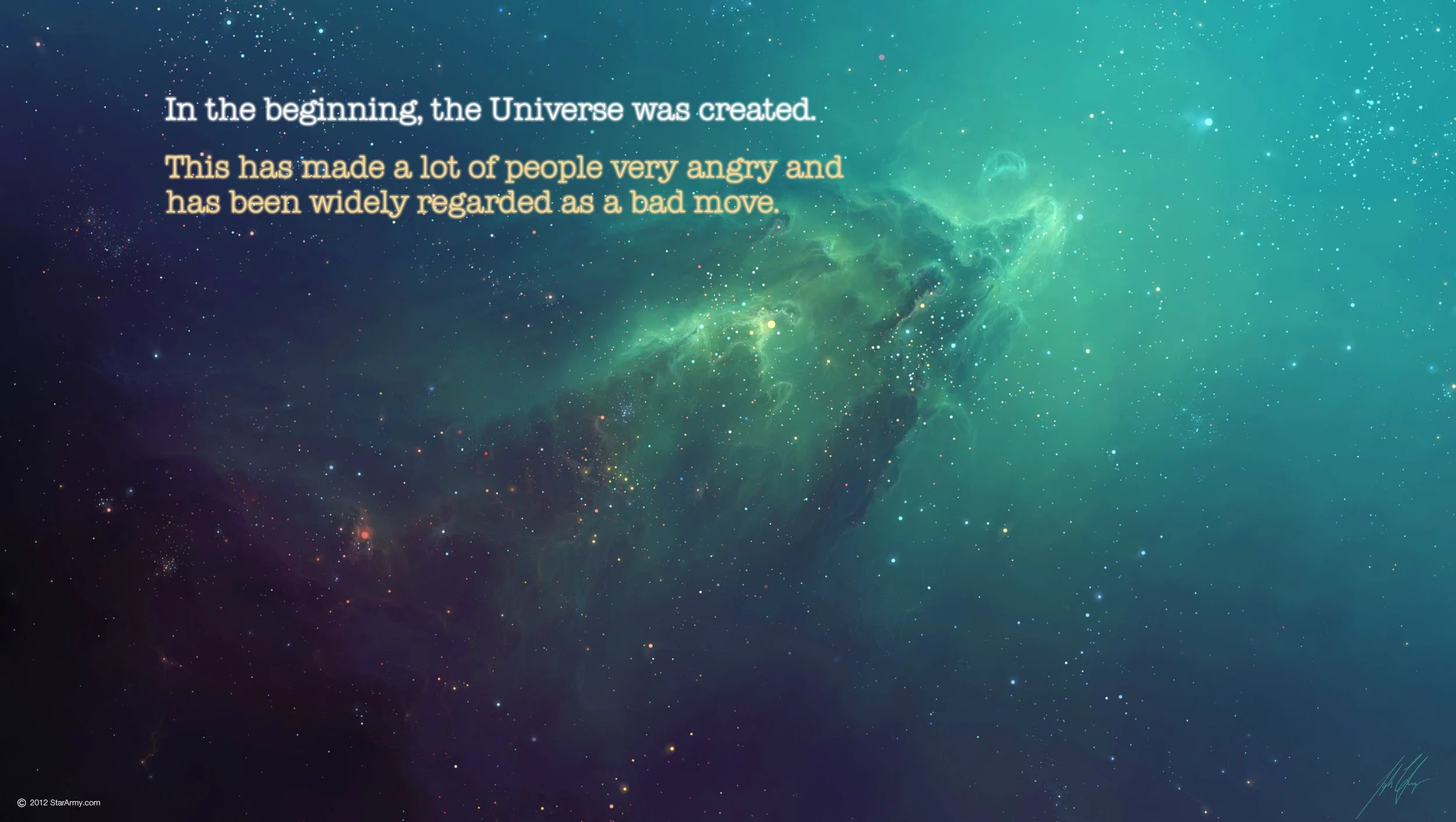
“In the beginning the Universe was created. This has made a lot of people very angry and been widely regarded as a bad move.” Douglas Adams
“Never put a sock in a toaster.” Suzy Eddie Izzard
“I don't need you to remind me of my age. I have a bladder to do that for me.” Stephen Fry
“Instant gratification takes too long.” Carrie Fisher
“Comedy is simply a funny way of being serious.” Peter Ustinov
“They say a woman's work is never done. Maybe that’s why they get paid less.” Sean Lock

LOTRO: Everything Old Is New
In mid-March, while the server migration debacle raged, I created a new alt for the MMORPG, The Lord of the Rings Online, on Peregrin server. The idea was to play casually through content focusing on enjoyment, rather than worrying about progression. I was to level at a pace that suited me and had no specific plans to develop my alt in any particular way. I have been playing LOTRO since 2008 and have a primary level-cap character that has been my main focus over the years. Hence I have previously experienced all story content from all the expansions and am therefore very familiar with what the game has to offer. Which is why I thought I’d do things differently this time. So I started my new Lore-master in Mossward in Swanfleet, the new starting area added to the game in 2022.
In mid-March, while the server migration debacle raged, I created a new alt for the MMORPG, The Lord of the Rings Online, on Peregrin server. The idea was to play casually through content focusing on enjoyment, rather than worrying about progression. I was to level at a pace that suited me and had no specific plans to develop my alt in any particular way. I have been playing LOTRO since 2008 and have a primary level-cap character that has been my main focus over the years. Hence I have previously experienced all story content from all the expansions and am therefore very familiar with what the game has to offer. Which is why I thought I’d do things differently this time. So I started my new Lore-master in Mossward in Swanfleet, the new starting area added to the game in 2022.
Levelling via the Before the Shadow expansion is a far more streamlined and efficient process than doing so via the original starter areas in Shadows of Angmar. The main storyline (Epic Quests) offer far superior gear as rewards and more XP. Cardolan and Swanfleet are well designed and very atmospheric zones. They are diverse in game content and have some of the best ambient music in the entire game. The main story involving the disgraced ranger Meneldir trying to warn his former colleagues about the threat of Saruman is well conceived and fits into the existing story arcs well. Once you move onto Bree and pick up the main story there, you quickly notice the pace slow down as this is some of the oldest content in the game. It is still enjoyable but you soon realise that a lot of the gear rewards are lacklustre compared to the previous zone.
I decided to concentrate on the main story while playing my new character and if I found myself at too low a level, I would do skirmishes and missions, rather than side quests. Having played LOTRO for so long, I also benefited from various account unlocks. Hence I had access straightway to some cosmetic outfits, thus did not have to play through early levels looking like a sartorially challenged “murder hobo”. I also used my stockpile of LOTRO points to purchase a lot of travel and milestone skills to make traversing Middle-earth easier. Due to many areas of the game being restructured over the past 18 years, you do find yourself progressing across Eriador quite rapidly. I quickly found myself at Gath Forthnír and the prospect of having to navigate the nearby enemy stronghold, Barad Gúlaran. I balked at this, so I decided to move on and after some thought, I chose to tackle Moria.
Moria has been revamped several times and its current iteration is a lot more user friendly than the version which existed back in 2008/9. However, what made the Moria prologue different this time round was the new introduction to the revised Legendary Item system. I actually found the tutorial for this aspect of the game quite helpful. Mainly because an entry level LI has only a few tracery slots open and is therefore a lot easier to manage. It was also nice to find familiar NPCs moved to far more intuitive locations, making it a lot easier to hand in completed quests. Moria also has far more stables now and is therefore a lot easier to navigate. However, despite these quality of life improvements, the expansion still maintains that air of wonder that was there in 2008. Khazad-dûm is still visually very impressive, showcasing Dwarven culture at its height. Yet it also has a palpable sense of decay.
The last few months of playing my new Lore-master have certainly highlighted the substantial changes that have been made to LOTRO over its lifecycle. The addition of areas such as Yondershire, the Wildwood in Bree-land and the Angle of Mitheithel, plus the new starter area in Swanfleet give players a great deal of choice when levelling. In fact large swathes of LOTRO can be bypassed if the player so desires. The in-game store also has a major impact on gameplay. As I mentioned, I bought various skills that reduced my fast travel ability to a five minute cooldown. I also had access to a mount within minutes of creating my new alt. All of which significantly alter the pace of LOTRO compared to how it was 15 years ago. Although the journey to level cap (150) still takes time, it is most certainly not the grind it used to be.
The new 64-bit servers have also had a positive impact upon the player population. If a player wants company or to join a kinship, then this is far easier at present as all major in-game hubs such as Bree of the 21st Hall in Moria have players coming and going. The chat channels are busy for those who like such means of communication. Hence LOTRO, despite its age, seems very dynamic and novel at the moment. The servers are busy and there is plenty of social activity if you want it. The game content seems fresh mainly due to the amount of choice a player has. This stems from new zones and a wealth of revisions made over time. For me at present, everything old is new. This coupled with my long term experience of the game, means that I can stop as I progress through Middle-earth and take stock of what is around me. Something that can be overlooked when playing for the first time.
The Problem With Fruit Trees
In many suburban streets throughout Greater London, gardens at the front of a house have been replaced over time by off road parking. Often the entire area adjacent to the road, which was previously home to flowers, shrubs and trees are now just drives made of blocks, concrete or gravel. All of which is due to the increase in car ownership per household, over the last five decades. The rectitude of which I shall not discuss here. However, not all drives comprehensively obliterate all traces of previous front gardens. Next door to my own home, the neighbouring house has a third of its front garden remaining. This includes a rose bush, a lot of brambles and a fruit bearing tree, that I recently found out was some species of plum. The neighbours themselves are hampered in conducting garden maintenance by the terms of their lease. As a result the garden is left unmaintained by their landlord.
In many suburban streets throughout Greater London, gardens at the front of a house have been replaced over time by off road parking. Often the entire area adjacent to the road, which was previously home to flowers, shrubs and trees are now just drives made of blocks, concrete or gravel. All of which is due to the increase in car ownership per household, over the last five decades. The rectitude of which I shall not discuss here. However, not all drives comprehensively obliterate all traces of previous front gardens. Next door to my own home, the neighbouring house has a third of its front garden remaining. This includes a rose bush, a lot of brambles and a fruit bearing tree, that I recently found out was some species of plum. The neighbours themselves are hampered in conducting garden maintenance by the terms of their lease. As a result the garden is left unmaintained by their landlord.
Trees, like most other forms of flora, are not respectful of property boundaries. The one in our neighbours garden is approximately 18 feet high and unfortunately right next to the wall separating houses. After some cursory research I think it may be a Mirabelle Plum tree. Currently, the fruit it bears are ripe and falling onto both properties. Over the last few days, I’ve had to go outside each morning and sweep up the windfall fruit and deposit them into our garden recycling waste. If I don’t do this, the fruit is crushed under foot and inevitably trodden into the house. There is also scope for the fruit to cause an accident such as a twisted ankle. They also attract a lot of insects, such as flies and wasps. Due to the sheer volume of fruit, it can sometimes take a week or two for it all to fall. In the meantime it is effectively a nuisance and it creates work.
If you take the time to walk around the local area, there are quite a few fruit bearing trees and bushes located in vestigial gardens. A hangover from the days when people didn’t plant such things for cosmetic reasons but actively cultivated fruit. As a child neighbours up and down my street would exchange homemade jams, marmalades, chutneys and relishes. During the seventies there was a time when home winemaking was popular and fruit trees were a great source of free ingredients. I remember going on excursions via local alleyways and side streets with my father, collecting fruit from trees and bushes which he then used for winemaking or homemade desserts. Apple crumble, stewed plums and raspberries and cream were common seasonal dishes during my youth. The notion of letting such a commodity go to waste was unheard of.
Sadly, such days have gone. No one knocks on your door and asks if they can pick your fruit crop anymore and hence it is left to waste, across various drives, and pavements in boroughs such as mine. Something that was once of a practical benefit is now just seen as an inconvenience. I have spoken to our neighbours and will try to liaise with their landlord so that the plum tree in question can be either cut back substantially or at least pollarded. It may even be more cost effective to have the entire tree removed, although that does seem somewhat drastic. I’m sure it does offer environmental benefits, just not to humans. And that is the problem in a nutshell. It is another example of how humans want the environment that they live in to accommodate their needs. Anything that doesn’t becomes a problem to be fixed, irrespective of its impact elsewhere in the ecosystem.
Sapphire & Steel (1979-1982)
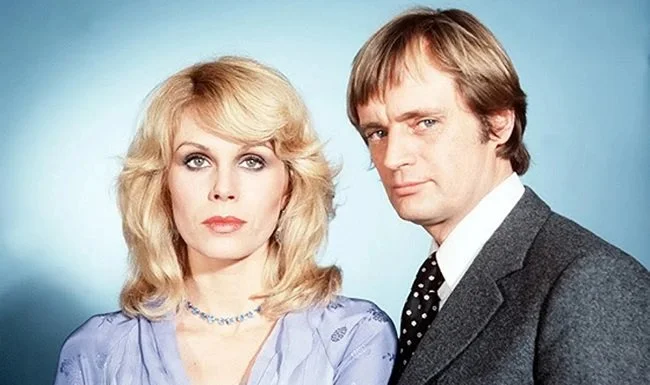
The seventies was an interesting time for UK genre television. Despite small budgets and often low key visual effects, there was no shortage of good ideas and creativity. Sapphire & Steel is a prime example of a show couched in a high concept, produced on a shoestring. It also credits its audiences with some degree of intelligence. Rather than spoon feeding the narrative in a didactic manner, it hints and implies, then leaves the rest to its viewers imagination. Created by Peter J. Hammond, a veteran TV writer, Sapphire & Steel centres on a pair of interdimensional operatives named Sapphire and Steel. They are two of a number of elements that assume human form. Over the course of three seasons little is revealed about the pair but they appear whenever there is any anomalous temporal activity. Time itself is portrayed as a sentient and malignant force that seeks to make incursions into the present reality, through weaknesses in the fabric of space.
The seventies was an interesting time for UK genre television. Despite small budgets and often low key visual effects, there was no shortage of good ideas and creativity. Sapphire & Steel is a prime example of a show couched in a high concept, produced on a shoestring. It also credits its audiences with some degree of intelligence. Rather than spoon feeding the narrative in a didactic manner, it hints and implies, then leaves the rest to its viewers imagination. Created by Peter J. Hammond, a veteran TV writer, Sapphire & Steel centres on a pair of interdimensional operatives named Sapphire and Steel. They are two of a number of elements that assume human form. Over the course of three seasons little is revealed about the pair but they appear whenever there is any anomalous temporal activity. Time itself is portrayed as a sentient and malignant force that seeks to make incursions into the present reality, through weaknesses in the fabric of space.
Shot on video like many UK TV productions at the time, the main appeal of Sapphire & Steel lies in the thought provoking scripts and the relationship between its two lead characters. Sapphire (Joanna Lumley) is graceful, empathetic and flirtatious in her relationship with Steel (David McCallum). He in turn is somewhat curt and focused. Both can communicate telepathically. Sapphire can discern data from objects such as their age and can also manipulate time, usually backwards for short periods. Steel can lower his body temperature and freeze “ghosts” and any other rogue fragments of time. He also has telekinetic abilities, such as opening locked doors or paralysing people with a look. All these powers are never depicted in a bravura manner, mainly due to the technical limitations of the production. Like so many other aspects of the show, they are done in a subtle manner.
Although most of Peter J. Hammond’s stories are effectively science fiction, many of the recurring plot devices, such as old objects and locations being temporal triggers, imbue the proceedings with a supernatural feel. There are often ghosts which turn out to be time related echoes. Several of the protagonists throughout the three seasons are beings that exist outside of our reality “at the beginning and end of time”. There’s a faceless entity that exists in all photographs and a non-corporeal force called “Darkness” that feeds on human resentment and other negative emotions. Like other shows from this TV era, Sapphire & Steel is often quite sinister and somewhat bleak. Unlike modern shows that frequently feel disposed to champion modern idealistic sensibilities, this one does no such things. Characters die, sometimes unjustly.
The main weakness of Sapphire & Steel is its pacing. TV productions from the seventies and eighties ran at a much slower pace. Each episode is 25 minutes long and the first 2 to 3 minutes of each instalment is a recap of the previous cliffhanger ending. Some of the stories are 8 episodes long and it does feel somewhat dragged out. The fourth story is a near perfect 4 episodes long and it’s a shame more weren’t written so economically. The acting from the support cast is very much of its time. Although it seems a little unfair to criticise the chroma key driven visual effects, they are a weakness when viewed with a contemporary eye. The production both then and now relies heavily on the charisma of its two leads, especially Joanna Lumley who has a natural screen presence. It is interesting to see David McCallum play such a dour character.
Sapphire & Steel has some very interesting recurring themes. It clearly champions modernity and through its various stories, strongly implies metaphorically that clinging to the past is potentially dangerous. This certainly was a subject of wider debate in the UK in the late seventies when the country was in economic decline due to outdated socioeconomic practices. The science fiction elements of the various plots also share themes with those common in the works of writer Nigel Kneale, with malign, energy based, cosmic entities and ghosts that are in fact a curious form of recording, held within the fabric of an environment. The show also shares a similar dark tone to that of Doctor Who from the same era. A sense of decay and a fear of old institutions is present in the scripts.
Despite gaining a loyal audience, Sapphire & Steel was beset with issues that impacted upon its production. Its two main stars’ existing film and TV commitments made the shooting schedule erratic and the commissioning TV company, ATV, was acquired and became Central Independent Television. There was also industrial action during the show’s original run which disrupted its broadcasting. Hence Sapphire & Steel was eventually cancelled, leaving the final story on a cliffhanger ending that has yet to be canonically resolved. It’s a shame because the show had great promise, due to its interesting premise and refusal to simplify itself to gain a wider audience. Sapphire & Steel may still prove entertaining to those who are at ease with material from the same time, such as classic Doctor Who or Blake’s Seven. The original three seasons are currently available on Amazon Prime and on the ITV Retro YouTube channel.










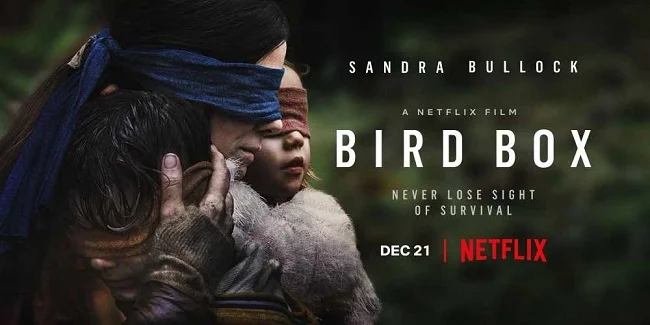
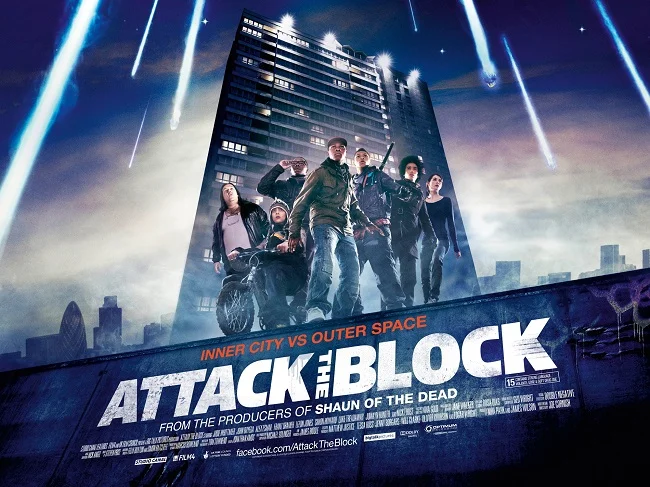

UK Heatwave
Temperatures are forecast to increase across the UK over the weekend. They have gradually risen over the last few days and are expected to reach the official “heatwave” threshold in some places for the third time this year. Highs of 34°C (93.2°F) are likely today and possibly on Saturday and Sunday, with above average temperatures continuing into early next week. The UK Met Office has predicted that south-east Wales, central southern and south-east England are likely to see the hottest weather. The UK Health Security Agency (UKHSA) has extended yellow heat health alerts to cover every region in England, which will remain in place until 10:00 BST on Tuesday 15 July. The warnings mean that health and social care services could be significantly affected by the weather, due to increased demand or a rise in deaths.
Temperatures are forecast to increase across the UK over the weekend. They have gradually risen over the last few days and are expected to reach the official “heatwave” threshold in some places for the third time this year. Highs of 34°C (93.2°F) are likely today and possibly on Saturday and Sunday, with above average temperatures continuing into early next week. The UK Met Office has predicted that south-east Wales, central southern and south-east England are likely to see the hottest weather. The UK Health Security Agency (UKHSA) has extended yellow heat health alerts to cover every region in England, which will remain in place until 10:00 BST on Tuesday 15 July. The warnings mean that health and social care services could be significantly affected by the weather, due to increased demand or a rise in deaths.
Such extremes of temperature are becoming common in the UK. Growing up, I have memories of the summer of 1976. The unprecedented heatwave led to drought conditions in rural areas and a temporary water shortage. That was an anomaly at the time and for many years it remained a talking point and source of nostalgia. Since then there have been periods that have met the heatwave criteria in 2018, 2019, 2021 and 2022. While linking climate change with specific individual extreme weather events can be difficult, scientists say climate change is generally making heatwaves hotter, longer and more frequent. UK temperatures over the next few days will be around 7-10°C (44-50°F) above average for mid-July. The main problem arising from this phenomenon is the country’s inability to cope. The UK’s infrastructure, architecture and institutions are predicated on the notion that the country has a temperate climate.
The UK is ill-equipped to deal with high temperatures due to a combination of factors. Older buildings are particularly vulnerable, often designed to retain heat in the winter but becoming excessively hot in the summer. I live in a brick bungalow that was built in the early 1930s. It has been insulated with modern materials and although it retains heat during cold weather it fails to prevent heat transfer during summer, causing indoor temperatures to rise significantly. Air conditioning is not a standard feature in most UK homes or on public transport, although the latter is getting better. Buses in London now have better climate control but travelling on the underground or railway is often unpleasantly hot. Also, simple solutions such as awnings and canopies are still not standard features on UK buildings.
Hence a heatwave in the UK is seldom universally welcomed. I personally find that once the temperature rises above 25°C (77°F) then I am out of my comfort zone. However, I have invested in several good quality fans in the last few years and although they only circulate the air, they do make things more tolerable. As for my definition of a “good quality” fan, it is defined by whether or not the device is quiet. Thankfully, my office is in the front of the house overlooking the street and facing North. The lounge at the back of the property looks out over the garden and gets a lot hotter due to the aspect and the glass patio doors. Subsequently, Mrs P and I keep the curtains and blinds shut all day in the lounge and kitchen and it does make a difference. Hopefully we will cope with the coming heatwave. Others may not be so lucky.
Countries that regularly face high temperatures usually develop an appropriate culture of safety and responsibility. The importance of staying hydrated and liberal use of sun protection products become an everyday part of life during the summer. Hats also become more than just de rigeur. There is also a heightened awareness of fire safety with rural areas being increasingly dry. Sadly, this mindset is not commonplace in the UK and many people are irresponsible once the weather gets hot. Hence, there are numerous cases of heat exhaustion, sunburn and dehydration. Sadly, pets also suffer in this weather. No doubt there will be increased reports of such in the UK media next week, although the tabloids will reserve the most vitriol for the various hosepipe bans that have been announced. In the meantime, stay cool. Literally.
Blaugust 2025
August is fast approaching, so you know what that means? Yes, the annual Blaugust: Festival of Blogging is nearly upon us. This long established (twelve years now), community driven event is designed to extol the virtues of blogging and encourage everyone and anyone to give it a try. In an age where video and audio based content are often favoured for their immediacy and reach, we advocate strongly for the joys and benefits that come through traditional writing. Blaugust strives to motivate those who have thought about writing online in some shape or form, but have never got around to doing so, as well as rallying those who have tried it already but fallen by the wayside. We try to provide practical support, writing prompts and advice to all who participate. There is an optional Discord community where participants can hangout, exchange ideas and share their writing. The emphasis is on powering through “writer’s block” and most importantly, having fun.
August is fast approaching, so you know what that means? Yes, the annual Blaugust: Festival of Blogging is nearly upon us. This long established (twelve years now), community driven event is designed to extol the virtues of blogging and encourage everyone and anyone to give it a try. In an age where video and audio based content are often favoured for their immediacy and reach, we advocate strongly for the joys and benefits that come through traditional writing. Blaugust strives to motivate those who have thought about writing online in some shape or form, but have never got around to doing so, as well as rallying those who have tried it already but fallen by the wayside. We try to provide practical support, writing prompts and advice to all who participate. There is an optional Discord community where participants can hangout, exchange ideas and share their writing. The emphasis is on powering through “writer’s block” and most importantly, having fun.
If you’re looking for more specific details regarding Blaugust, then head over to Nerd Girl Thoughts and read Krikket’s very informative post. It has details regarding the philosophy of Blaugust, the simple set of rules (most of which are mainly for guidance) and the various awards and accolades that can be earned by participating. Please note these are mainly virtual “attaboys”, rather than high value items or sacks filled with banknotes. If Blaugust sounds like the sort of thing you’d like to participate in or you feel it could be the first step on a path to global domination, then you can sign up for the event here. There is no commitment or any sort of obligation if you do join this year’s festival. You can do as much or as little as you like. The only standout rule associated with Blaugust is that it celebrates written material created by people. As such, blogs based upon entirely AI generated content are politely asked not to participate.
I have maintained an online presence of some kind or another, for eighteen years. This personal blog, Contains Moderate Peril, has been hosted on Squarespace since August 2015. There are times when I take a break from writing for a while, but I always end up coming back. I have a compulsion to express myself through words. I find writing to be very cathartic and a great way to process my thoughts and feelings. I like being part of a blogging community and gain a great amount of pleasure reading other bloggers’ material. I also consider the ability to express yourself through writing to be an important skill. To be able to think and articulate your opinion, as well as how to collate a compelling and factually accurate argument are waning skills. I like YouTube videos as much as the next person. However, sometimes I want more than just an upbeat summary. I like longform articles that can both inform and analyse.
However, Blaugust doesn’t have to be as “heavy” as that and often isn’t. People write about a broad variety of subjects, hobbies and interests. All of which are very engaging and informative. If there is a single piece of advice that I have learned from my association with Blaugust over the years, it is not to overthink writing and to just do it. Writing is like any other activity in so far as the more you do, the better you become at it. You can also learn a great deal by reading other peoples blogs. There are also specific techniques and processes that you can use that will potentially improve your writing. Furthermore, by becoming part of the blogging community you can often find ideas and writing prompts to help you with your writing. But ultimately, after all the reading and planning you have to sit down in front of your keyboard and start writing. Blaugust is there to give you the impetus to start, or if need be, a gentle nudge.




















Knole
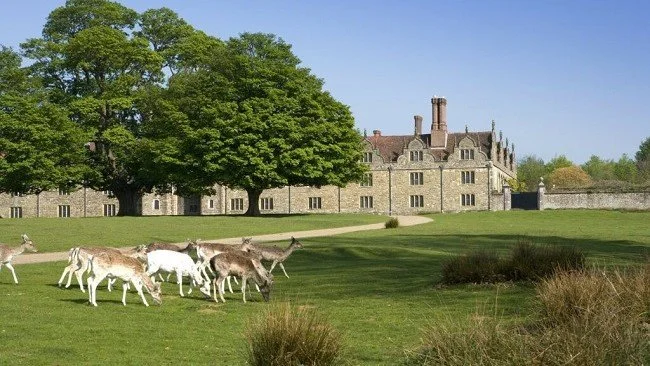
Knole is a country house in England and a former archbishop’s palace that is currently owned by the National Trust. It is located within Knole Park, a 1,000-acre (400-hectare) estate that lies to the south-east of Sevenoaks in west Kent. The existing structure of the house dates back to the mid-15th century, although there were significant expansions in the 16th and particularly in the early 17th centuries. Its Grade I listing signifies its combination of late-medieval to Stuart architectural styles. This is especially evident in its central façade and state rooms. In 2019, a comprehensive conservation initiative titled “Inspired by Knole” was completed to restore and enhance the buildings’ structures. This was beneficial to the preservation of its significant collections. The adjacent deer park has also endured since 1600.
Knole is a country house in England and a former archbishop’s palace that is currently owned by the National Trust. It is located within Knole Park, a 1,000-acre (400-hectare) estate that lies to the south-east of Sevenoaks in west Kent. The existing structure of the house dates back to the mid-15th century, although there were significant expansions in the 16th and particularly in the early 17th centuries. Its Grade I listing signifies its combination of late-medieval to Stuart architectural styles. This is especially evident in its central façade and state rooms. In 2019, a comprehensive conservation initiative titled “Inspired by Knole” was completed to restore and enhance the buildings’ structures. This was beneficial to the preservation of its significant collections. The adjacent deer park has also endured since 1600.
Today, Knole is a well-preserved early Jacobean renovation of a medieval archbishop’s palace. Constructed and expanded by the Archbishops of Canterbury after 1456, it evolved from an even older manor house. During the Tudor period, it became a royal residence when Henry VIII hunted in the area and deemed it a suitable home for his daughter, during his separation from her mother, Catherine of Aragon. Elizabeth I is also reported to have visited the estate. From 1603 onwards, Thomas Sackville transformed Knole into an aristocratic treasure house for the Sackville family, who were notable and influential figures in court circles. The showrooms of Knole were designed to impress guests and showcase the family's wealth and status. Over the span of more than 400 years, his descendants undertook three additional phases of rebuilding and furnishing Knole.
Frances Cranfield, the Countess of Dorset, and Richard Sackville, the 5th Earl of Dorset, were married in 1637. This alliance between the Sackville and Cranfield families played a pivotal role in the restoration of the Sackville fortunes following the Civil War, during which numerous paintings and pieces of furniture at Knole were sold. Furthermore, it ensured that the collection of furniture and paintings gathered by Frances’ father would ultimately be transferred to Knole. The life and career of their son, Charles Sackville, the 6th Earl of Dorset, significantly influenced the Knole we know today. At the close of the 17th century, Charles procured Stuart furniture and textiles from royal palaces due to his position as Lord Chamberlain of the Household to William III.
In spite of such wealth, Charles nearly brought Knole to financial ruin, a predicament that was resolved by his son, Lionel, through a succession of successful public roles, culminating in his elevation to the title of 1st Duke of Dorset in 1720. Lionel’s grandson, John Frederick Sackville, the 3rd Duke of Dorset, was a notable patron of the arts. He acquired European Old Master paintings alongside works by contemporary English artists, thereby establishing a collection of national importance. Many of the pieces he collected are displayed in the showrooms today, including paintings and sculptures he obtained during his Grand Tour of Europe. He also acquired works by Thomas Gainsborough and maintained a close friendship with and patronage of Sir Joshua Reynolds.
The Knole offers a well curated route through the house that highlights many of its stand out features and key items from its textile, furniture and painting collections. Highlights include “the Great Screen” in the main hall with its rich carvings and embellishments. Then there is the reclining statue, “La Baccelli”, by John Baptist Locatelli next to the main staircase. There are numerous guides and volunteers available to answer questions and provide insight into various aspects of the house and grounds. Outside in the park, there are three walks around the estate of varying distance and difficulty. They are rugged and suitably picturesque, affording an opportunity to see the extremely tame park deer. If you have an interest in places of historical interest and country walks, Knole has a great deal to offer. It is also ideally placed, being a short distance from Sevenoaks which offers a wealth of attractions itself.
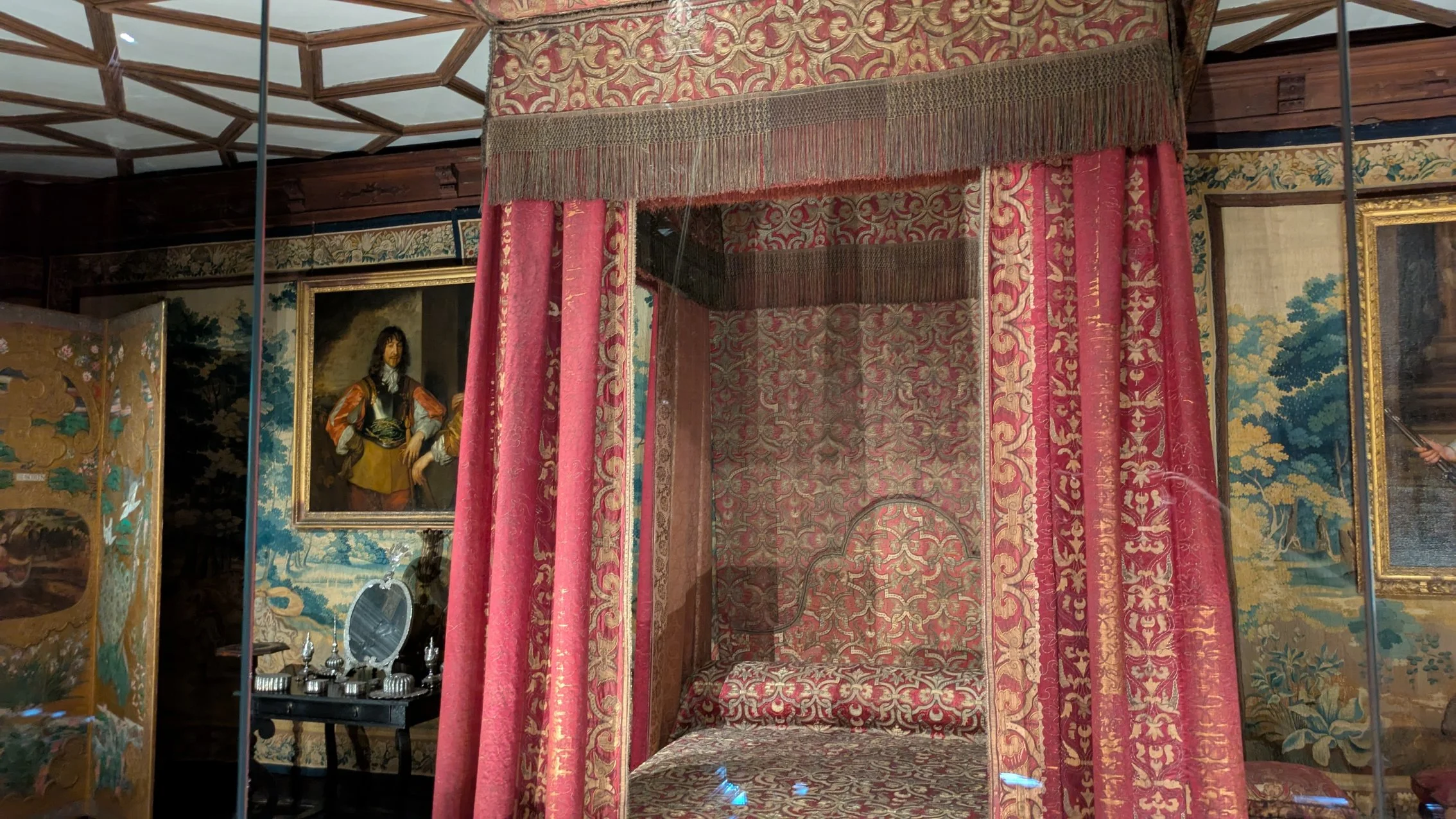
MMO Tropes: Alts
In massively multiplayer online games (MMOs), alts (short for alternate characters), are new characters created by a player in addition to their primary character (often called the “main”). Alts are often encouraged by developers as a means to keep players engaged with their game(s). Sometimes an MMO will actively reward the creation of alts either with access to exclusive content, or with additional skills or items previously unlocked by primary characters. As the myth that an MMO really begins at endgame still persists in gaming culture, some games sell boosts that will instantly raise the level of an alt to that of the current level cap. Creating alts is such a key aspect of the MMO genre, that some games will sell additional character slots, so that players can create further alts beyond the default amount allowed. There are many reasons why players create alts. Let us consider some.
In massively multiplayer online games (MMOs), alts (short for alternate characters), are new characters created by a player in addition to their primary character (often called the “main”). Alts are often encouraged by developers as a means to keep players engaged with their game(s). Sometimes an MMO will actively reward the creation of alts either with access to exclusive content, or with additional skills or items previously unlocked by primary characters. As the myth that an MMO really begins at endgame still persists in gaming culture, some games sell boosts that will instantly raise the level of an alt to that of the current level cap. Creating alts is such a key aspect of the MMO genre, that some games will sell additional character slots, so that players can create further alts beyond the default amount allowed. There are many reasons why players create alts. Let us consider some.
Trying different classes: Many MMOs offer diverse classes, races and specialisations. Alts allow players to experience these without abandoning their main character.
Experiencing alternative gameplay: Alts can offer a fresh perspective on the game world, allowing players to engage in different activities, storylines, or even roleplay.
Farming resources: In some MMOs, alts can be used to gather more resources, complete daily quests, or participate in other activities. These often offer rewards such as items or currency, which can benefit the player's main character.
Socialising: Alts can be used to play with different groups of friends, or to participate in content that requires a specific group of classes.
Avoiding burnout: Playing the same character for extended periods can lead to burnout, and alts can provide a break from the routine.
Roleplaying: Some players create alts for roleplaying purposes, developing unique backstories and personalities for each character.
Increased and unique rewards: Some MMOs offer rewards for having multiple characters, such as bonus experience, unique items or account wide unlocks.
The MMO genre handles the issue of alts in a broad fashion. Some older games such as Age of Conan (now Conan Unchained) only have one path through game content. If you roll a new alt you will still have to play through content you have already experienced. The Lord of the Rings Online takes a different approach with your character’s race determining their starter area. This offers a degree of difference for alts, although the storylines come together after a certain level. Guild Wars 2 takes a similar approach, again favouring race specific starters areas. In The Elder Scrolls Online, new characters begin in a tutorial area called Coldharbour's Wailing Prison, then are sent to their alliance's starting zone. After the tutorial, players can explore their alliance’s respective zone and choose which quests to pursue. Players then have the option to explore other alliances’ zones later.
Star Wars: The Old Republic takes a far bolder approach to alts. The starting area for each character is determined by their chosen class. There are four starting planets shared between two classes. However, every class has a completely unique story that runs throughout the duration of the base game. This greatly improves the games replayability across the eight classes. Similarly, the MMO Star Trek Online offers bespoke stories across its six main factions before the stories converge into a unified episodic arc. The game also has regular events that unlock account wide rewards. Someone who has played the game regularly with a primary character, has the benefit of being able to access numerous bonuses and items whenever they create a new alt. Items, such as ships, bought in the cash shop are also available to all alts.
Alts are often encouraged and in some specific titles an integral part of that game’s lifecycle. The MMO genre certainly has a requirement for players to roll alts. They offer increased variety, engagement and sometimes additional resources within the game world. Where other genres struggle with replayability, MMOs fare far better via the medium of alts. However, alts are not a foolproof solution to player engagement. Alts often end up abandoned, especially if the new class on offer is not a good fit for a player’s style. Many are experiments or something undertaken on a whim. Many are created purely for storage or to perform specific tasks, such as resource farming. But some choice is better than no choice and alts are an opportunity to try new things. Whether we personally take advantage of them or not, it is a positive thing that they exist.
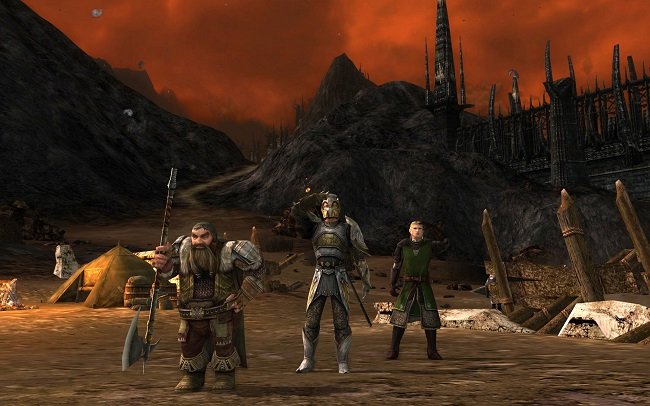
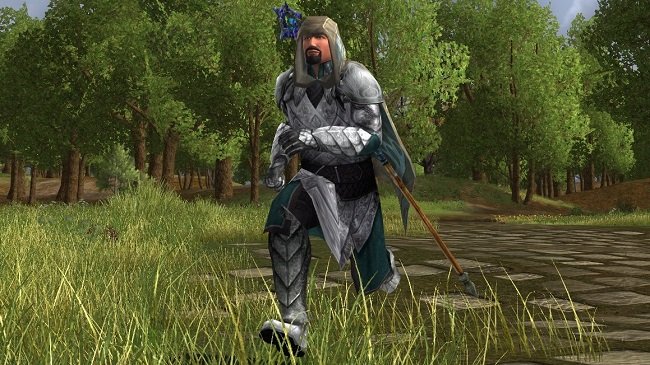
Politicians
I still maintain a legacy presence on Twitter/X and I follow my local MP (member of Parliament) Louie French. It’s not something I especially relish as I am not a supporter of the Conservative party (or any other) and I did not vote for him in the last election. I just like to know what he is up to as he is the political representative for our constituency. As the Conservatives are out of power at present, to all intent and purposes, Mr French is a backbench MP although he has a minor position as Shadow Parliamentary Undersecretary (Culture, Media and Sport). However, with that being said he is hardly a key member of the shadow cabinet. Hence he focuses on constituency work and that which is generated by his shadow posting. He will also lend his voice, when required, to any major policy decision or statement made by his party.
I still maintain a legacy presence on Twitter/X and I follow my local MP (member of Parliament) Louie French. It’s not something I especially relish as I am not a supporter of the Conservative party (or any other) and I did not vote for him in the last election. I just like to know what he is up to as he is the political representative for our constituency. As the Conservatives are out of power at present, to all intent and purposes, Mr French is a backbench MP although he has a minor position as Shadow Parliamentary Undersecretary (Culture, Media and Sport). However, with that being said he is hardly a key member of the shadow cabinet. Hence he focuses on constituency work and that which is generated by his shadow posting. He will also lend his voice, when required, to any major policy decision or statement made by his party.
Like most contemporary parliamentary representatives he uses social media as a major communication tool. Hence it is a valuable source of information. I can also look on the UK parliamentary website and see when he has spoken in the House of Commons, any bills he is associated with or advocates for, as well as his overall voting record. There is also a list of interests that he has declared, most of which are declarations of meetings and hospitality via the sports industry as that is his current shadow brief. All the above is occasionally supplemented by news reports or newspaper articles in which Mr French features. All of which provides a constituent such as I, a useful means to assess how well our MP is performing. I try to set aside my personal bias regarding his political party of choice and their historical legacy to which he has contributed.
After reflecting upon all of the information at my disposal regarding my local MP, I am struck by how generic, superficial and tediously partisan his political activities and communications are. Every point made is always couched within a statement that seeks to blame others and ruffle the feathers of the electorate. Any point of contention or debate pertaining to services or activities in London is always portrayed as the fault of the current mayor Sadiq Khan, a Labour party politician. This always comes with an undercurrent of dog whistle racism although I sure it would be denied. It simply seems to be a standard political tool if you are on the right of politics. Essentially Mr French conducts his politics in trite, factually dubious, soundbites. It is always simplistic, partisan and imbued with a false sense of rectitude and misplaced confidence.
The tragedy of this situation is that it is representative of the broader manner in which politics is conducted nationally in the UK. There are few exceptional politicians these days. The defining term that springs to mind of our overall political representation is mediocrity. Gone are the days where your MP was well educated, well versed in business or statecraft and conducted themselves with decorum and dignity. Too many contemporary MPs seem to be ill equipped across multiple disciplines to do the job in hand. They all seem to indulge in the worst sort of political communication, which makes it impossible for them to be able to express an opinion or answer a question in case it comes back to haunt them at a future date. They are disingenuous, often petulant and petty when rightly challenged to justify their position and more often than not utterly forgettable. Politics is simply a stepping stone in a wider career and is not driven by passion, ideology or love of one’s country.
I am reminded of the following quote from the BBC comedy Yes Minister/Yes Prime Minister. In which the fictional Prime Minister James Hacker (played superbly by Paul Eddington) rails against his backbenchers and MPs per se. It is as relevant now as it was back in 1986 when the episode was first broadcast. “Being an MP is a vast subsidised ego trip. It's a job for which you need no qualifications, no compulsory hours of work, no performance standards. A warm room and subsidised meals for a bunch of self-opinionated windbags and busybodies who suddenly find people taking them seriously because they got letters MP after their names”. If we wish to improve the calibre of our national politics, then we need to start by establishing a set of standards and criteria that prospective MPs must meet.
Thoughts on Holidays
Mrs P and I travelled to Croatia on Friday 13th June for our summer holiday. We spent one week in Makarska, which is located on the Dalmatian coast. My last international holiday was to Malta in 2004. Since then we have done a lot of travelling in the UK and Mrs P has vacationed abroad with other family members. However, she stated last September that she wanted to go “somewhere warm” for our next holiday. So this trip was booked and has been “something to look forward to”, or a source of stress slowly inching closer, depending upon your perspective. In many respects this holiday has been a big deal for me. I don’t enjoy travelling at all with all its accompanying logistical, bureaucratic and “people” issues. However, I have no problem with being elsewhere. I eagerly await teleportation technology to become commonplace. Once I arrived at our hotel, I quickly switched to holiday mode and I am happy to confirm that I thoroughly enjoyed myself.
Mrs P and I travelled to Croatia on Friday 13th June for our summer holiday. We spent one week in Makarska, which is located on the Dalmatian coast. My last international holiday was to Malta in 2004. Since then we have done a lot of travelling in the UK and Mrs P has vacationed abroad with other family members. However, she stated last September that she wanted to go “somewhere warm” for our next holiday. So this trip was booked and has been “something to look forward to”, or a source of stress slowly inching closer, depending upon your perspective. In many respects this holiday has been a big deal for me. I don’t enjoy travelling at all with all its accompanying logistical, bureaucratic and “people” issues. However, I have no problem with being elsewhere. I eagerly await teleportation technology to become commonplace. Once I arrived at our hotel, I quickly switched to holiday mode and I am happy to confirm that I thoroughly enjoyed myself.
I knew that travelling from London Gatwick, even in the earlier hours of the morning, was going to be stressful. The airport is busy 24 hours a day. So I took the precaution of booking a room at the Premier Inn the day before our flight, so we didn’t have to get a taxi at “stupid o’clock”. Hence we spent the afternoon and evening relaxing in the bar and restaurant on Thursday and retired at a sensible time, as we had to get up at 3:00 AM the next day. Early Friday morning we dropped off our baggage and went through security. Both of which were extremely busy. Fortunately, I had booked us into an airport lounge, so we didn’t have to wait in the public area which was already heaving by 5:00 AM. The seating in the lounge was comfy and there was a buffet available. It certainly helped reduce my stress levels. It was also very close to our departure gate, so all we had to do was relax and wait. I indulged my hobby of “people watching”, which proved most illuminating as it so often does.
Boarding the plane old school
Our flight was fine once it actually took off. Two hours fifteen minutes is hardly an arduous journey. My beef is with how long it takes getting passengers on and off the plane and the time that is lost waiting to take off. As ever with holidays to warmer climates, we were greeted by a wall of heat as we stepped off the plane. The average temperature in Croatia in June is usually 24°C (76°F). Due to a heatwave across the Mediterranean, it was often 27°C (81°F) during our stay. There was a rep from the holiday company waiting at Split airport and we were quickly directed to the coach that took us to our hotel. What I didn’t realise is that the Dalmatian coast is on the other side of a mountain range and so we subsequently had another two hour journey. However, this did afford an opportunity to spend some time familiarising myself with the Croatian landscape which is similar to that of Greece and Cypress, but more verdant.
According to their website, the Valamar Meteor Hotel is “stylish, bright and brimming with facilities” and I am happy to concur. Set next to a shady pebble beach near the heart of Makarska, this four star hotel features gorgeous outdoor and indoor pools, as well as a sun terrace overlooking the Adriatic sea. The stylish and contemporary furnished air conditioned rooms and suites offer views of either the sea or mountain. Immaculately presented with incredibly friendly and helpful staff, this is one of the best hotels I have ever stayed in. There are plenty of activities available for both adults and children, as well as excursions and tours. The bar and the main restaurant were outstanding. The latter offers the most extensive breakfast and dinner buffets I have encountered. Local delicacies, Mediterranean cuisine and simple staples were all available. I felt incredibly relaxed all the time and there were absolutely no language issues.
Krka National Park
Mrs P likes to sun herself on holidays. I will do this to a degree but will go walkabout when I’ve had my fill. Thankfully, the hotel had a game lounge furnished with half a dozen PlayStation 5s. There was often musical entertainment in the evenings and it was to a surprisingly good standard. We went on several excursions during the week. One to Krka National Park which was most impressive with its abundance of waterfalls. We also went on a tour of Trogir and Split. I particularly liked the Cathedral of Saint Domnius and the remains of Emperor Diocletian’s Palace. An unexpected place of interest was a visit to the Olive Museum and later a trip to an olive farm. In such modern times it is easy to forget the importance of certain traditional industries and their significance to the history and economy of a country or region.
The Dalmatian Coast
The whole point of a holiday is to rest, relax and do things you may not do in the course of your daily life. My week in Croatia satisfied all these needs. On one occasion I left the hotel and walked through the town of Makarska. It was similar to any community with supermarkets and pharmacies. Being a resort there were a lot of shops selling souvenirs and such like and numerous restaurants. The cost of living is lower than that of the UK, giving me the brief illusion during my stay of being wealthy. The other stand out feature of Makarska was how clean and well maintained it is. But as 23% of Croatia’s GDP comes from tourism, such high standards seem self explanatory. Overall, this holiday has certainly done much to revise my views on international travel. It ultimately comes down to doing your research and making a discerning choice. I’m already considering where to go next and I may not wait until next year.

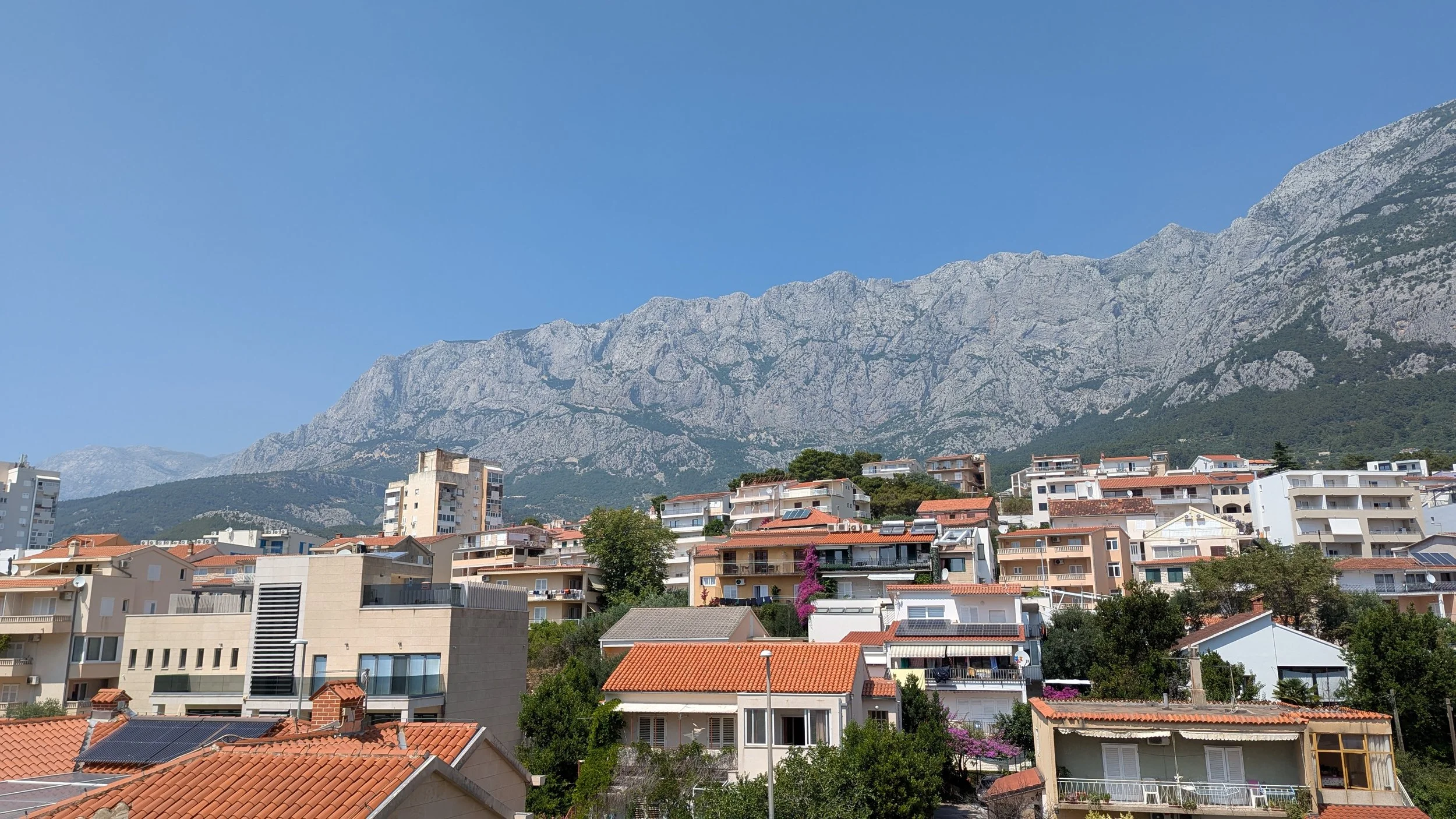
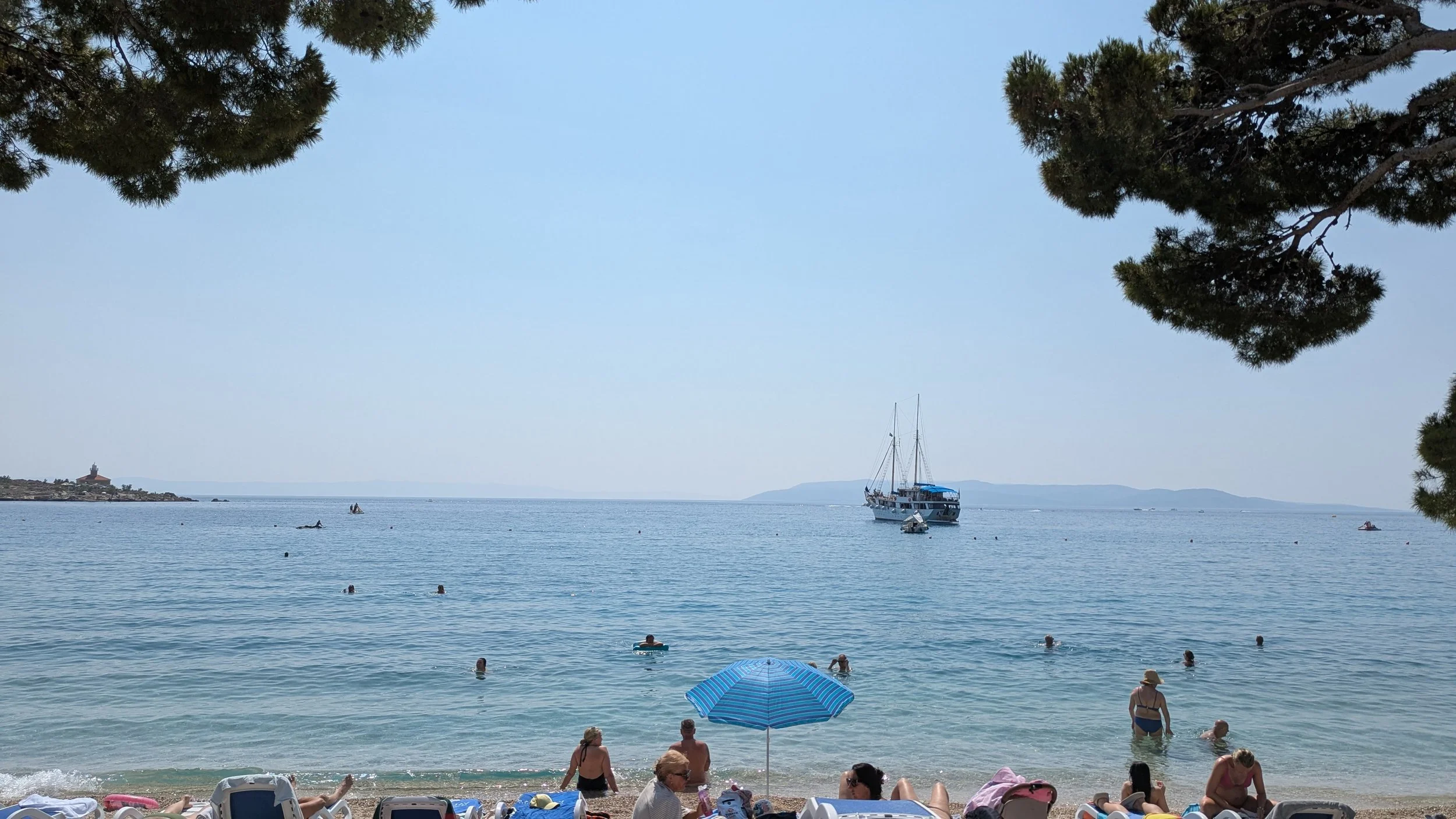

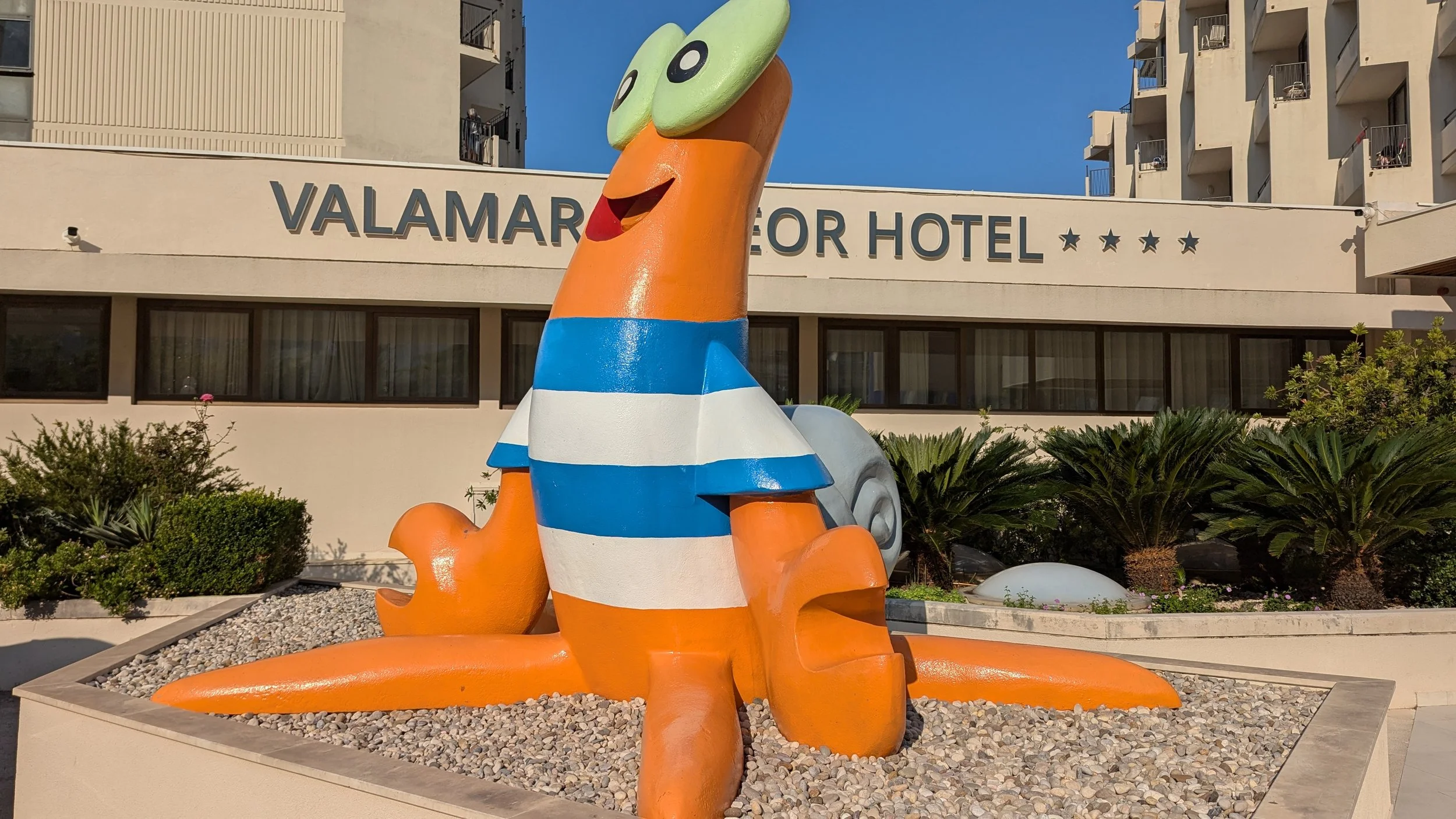
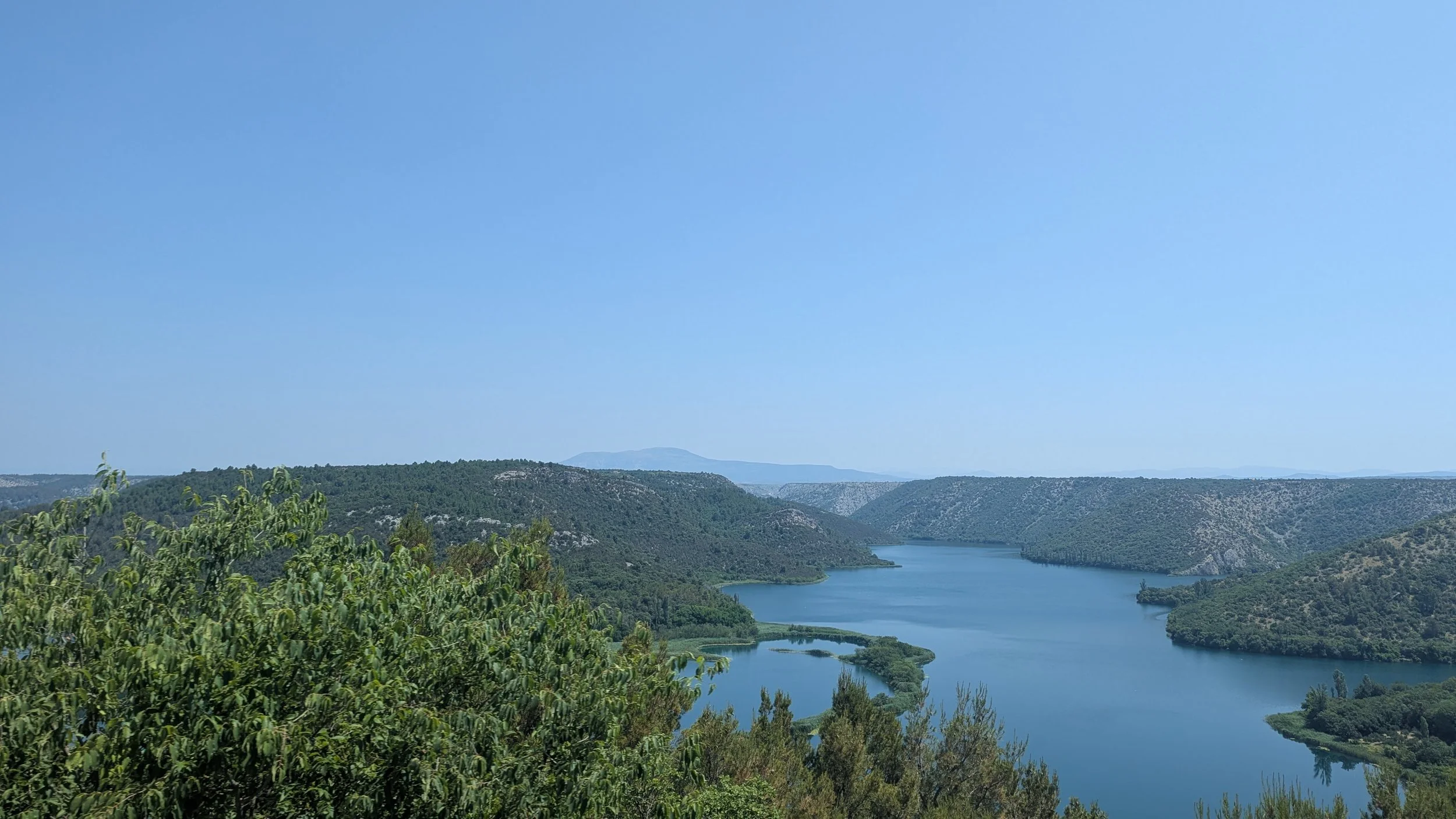
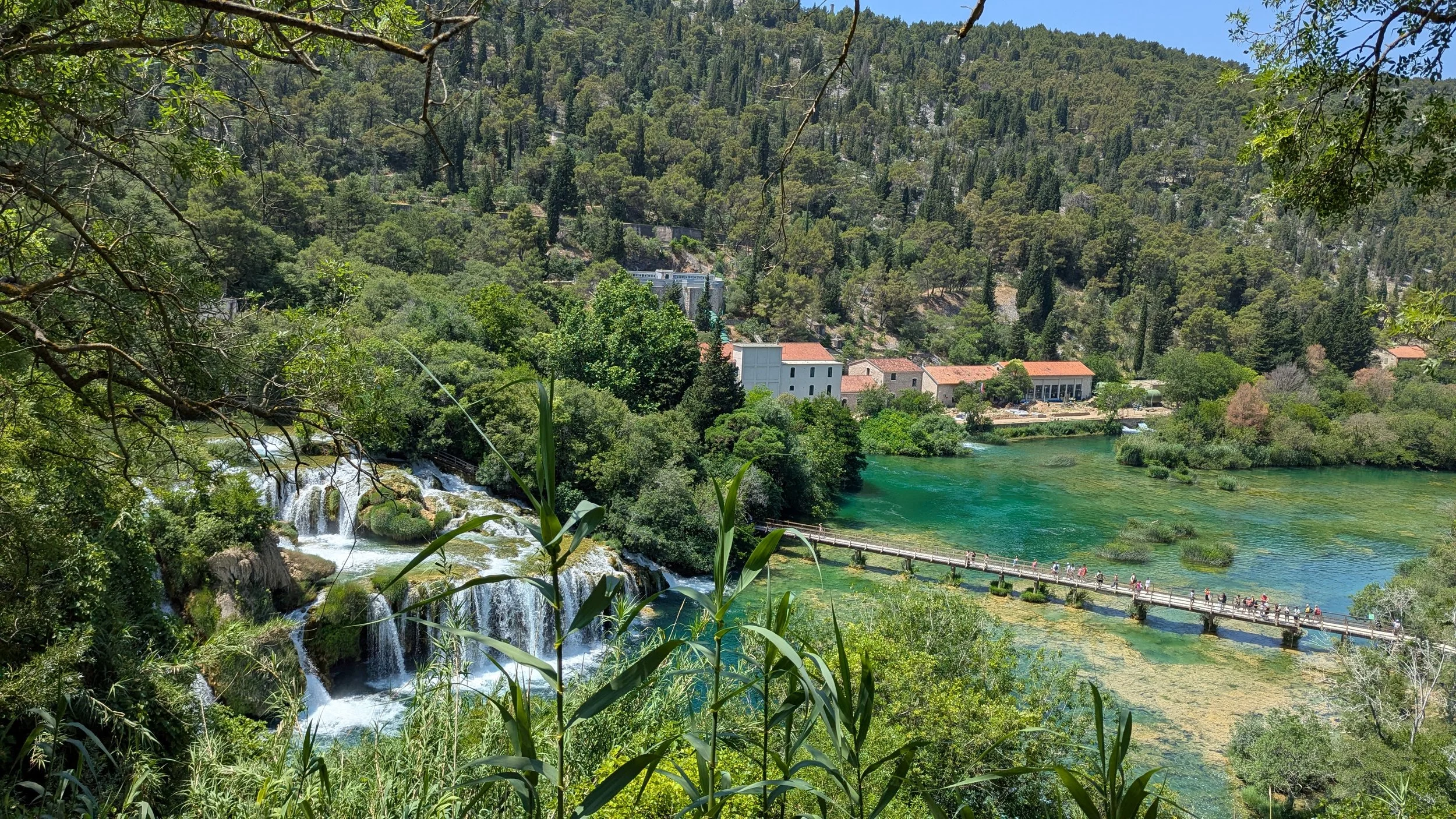
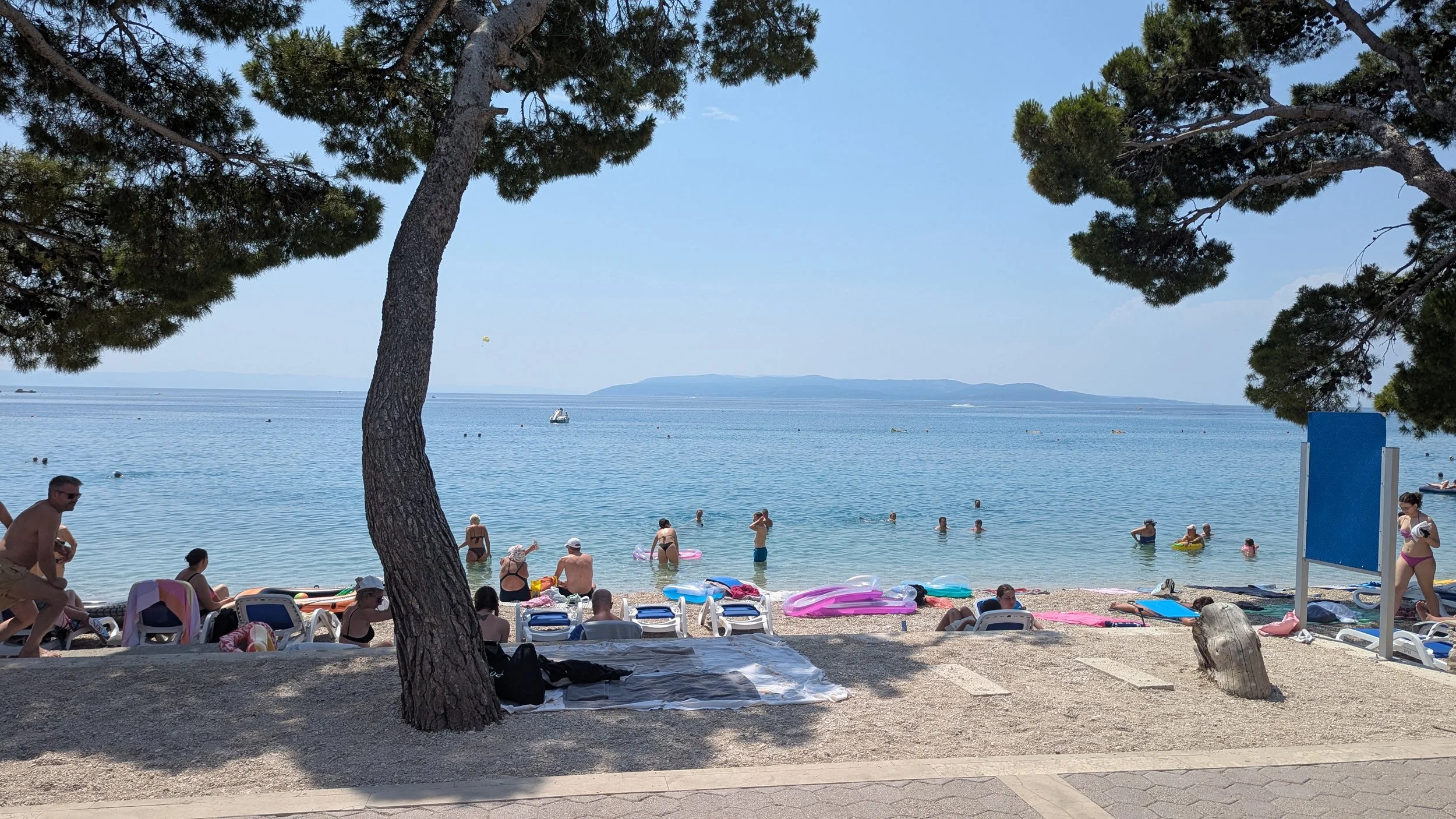
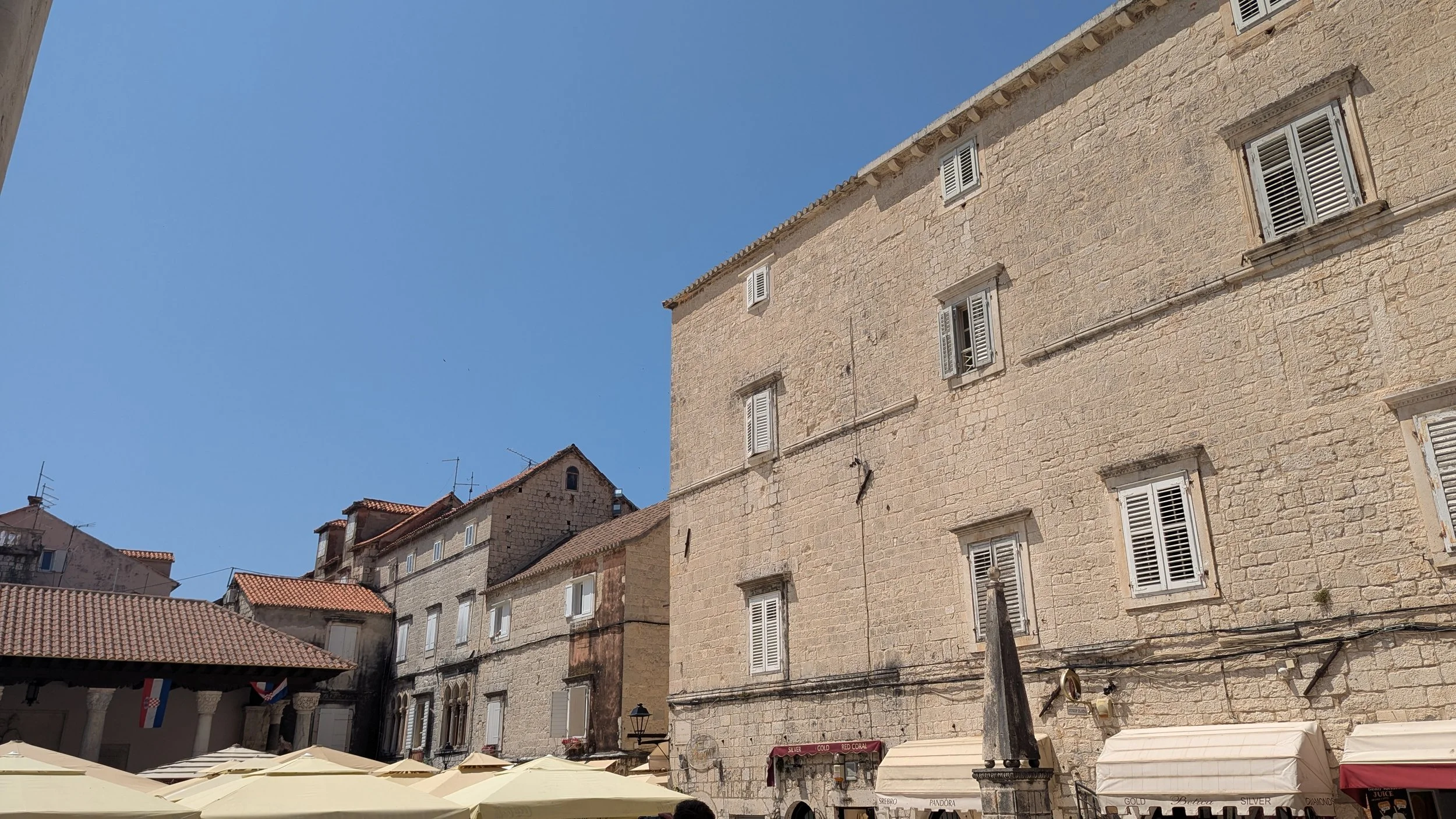

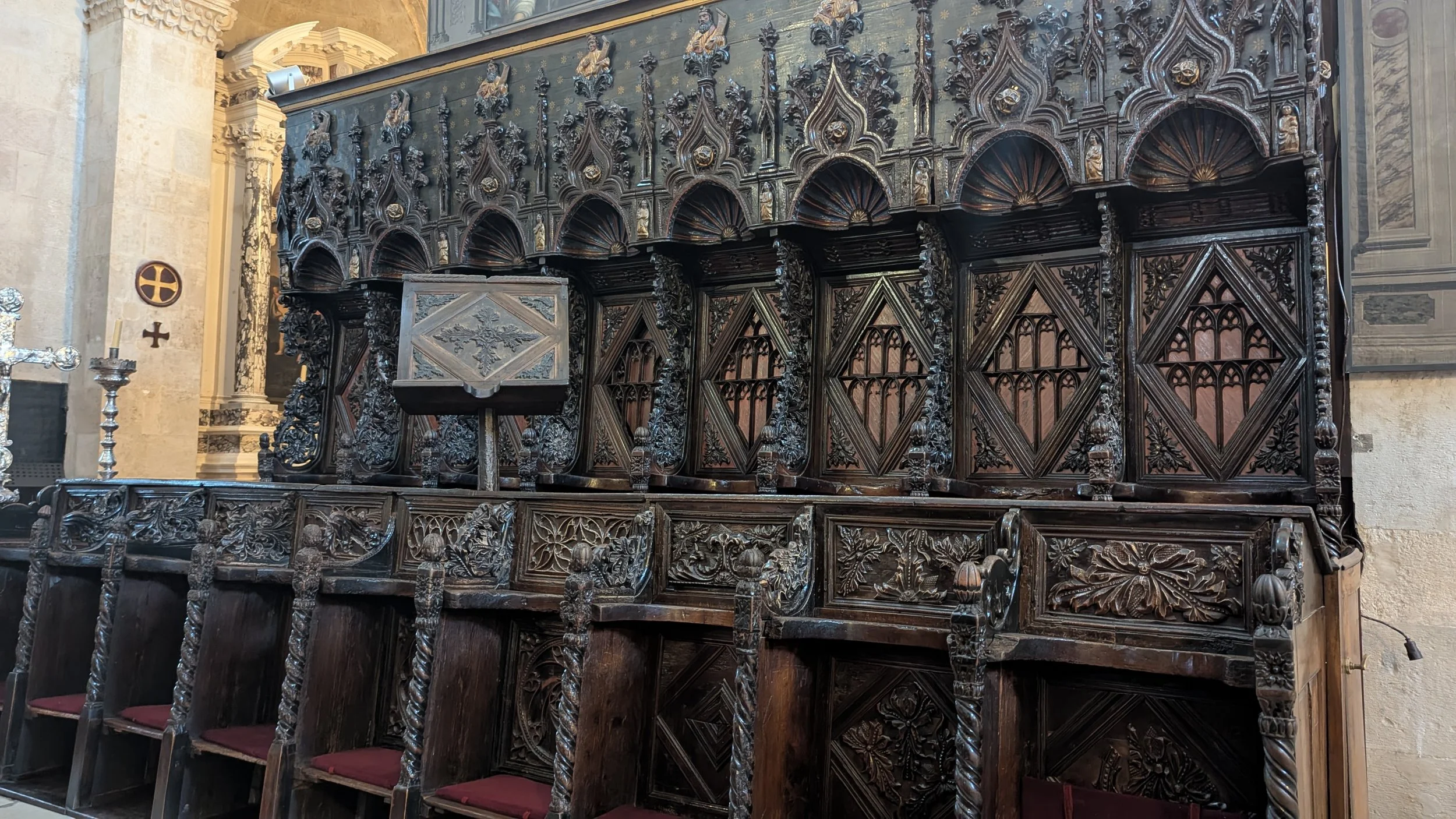

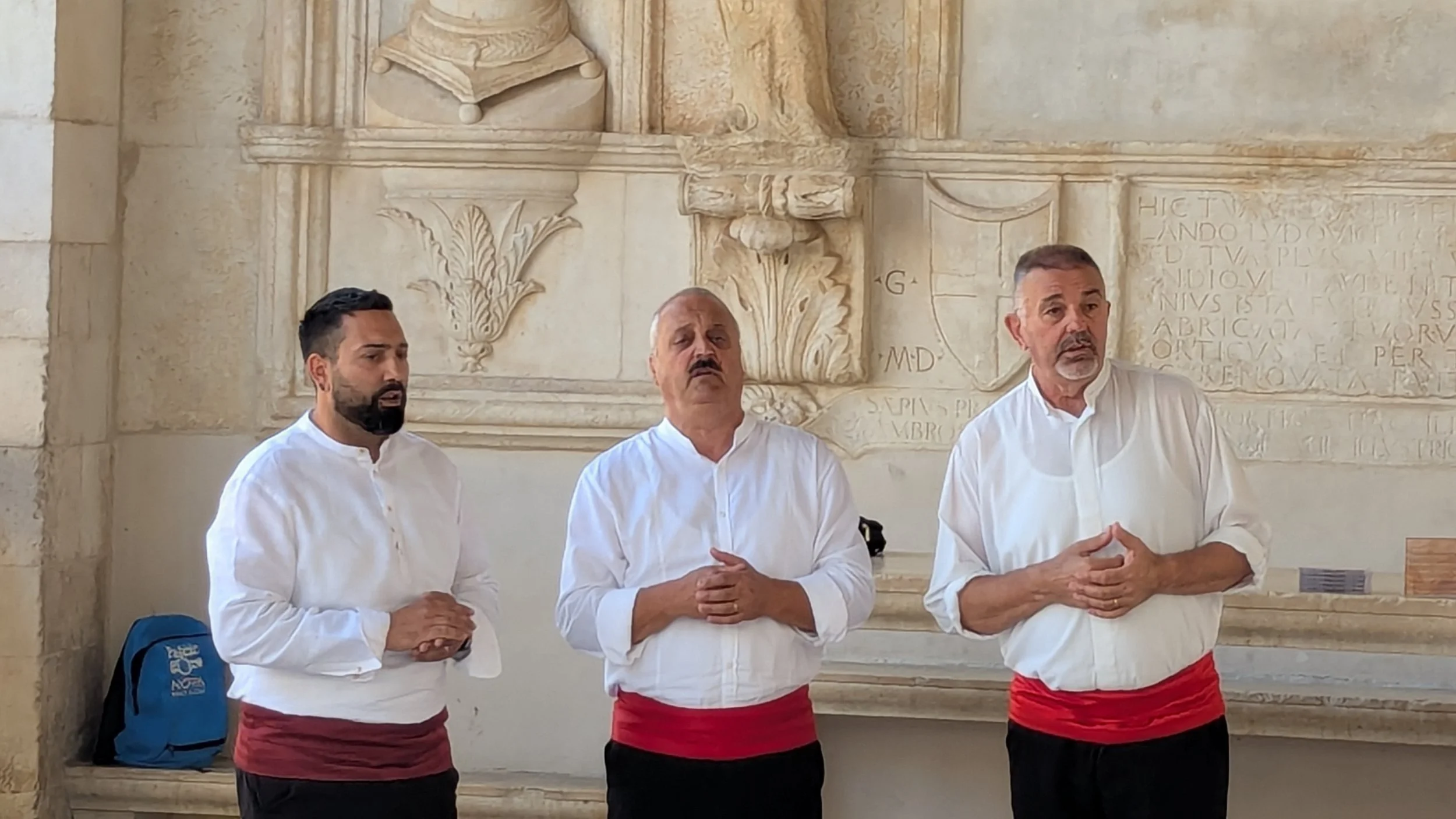
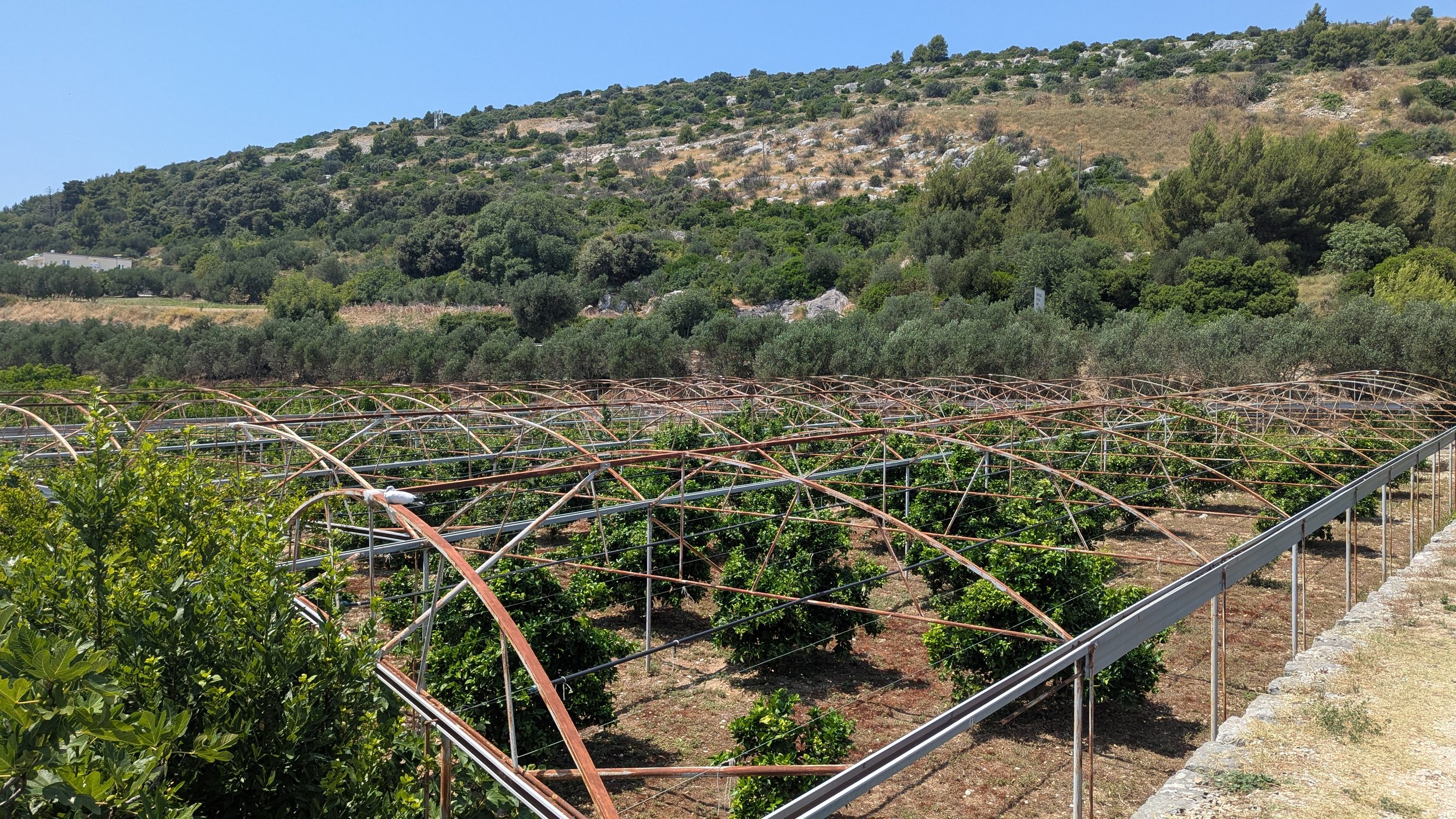
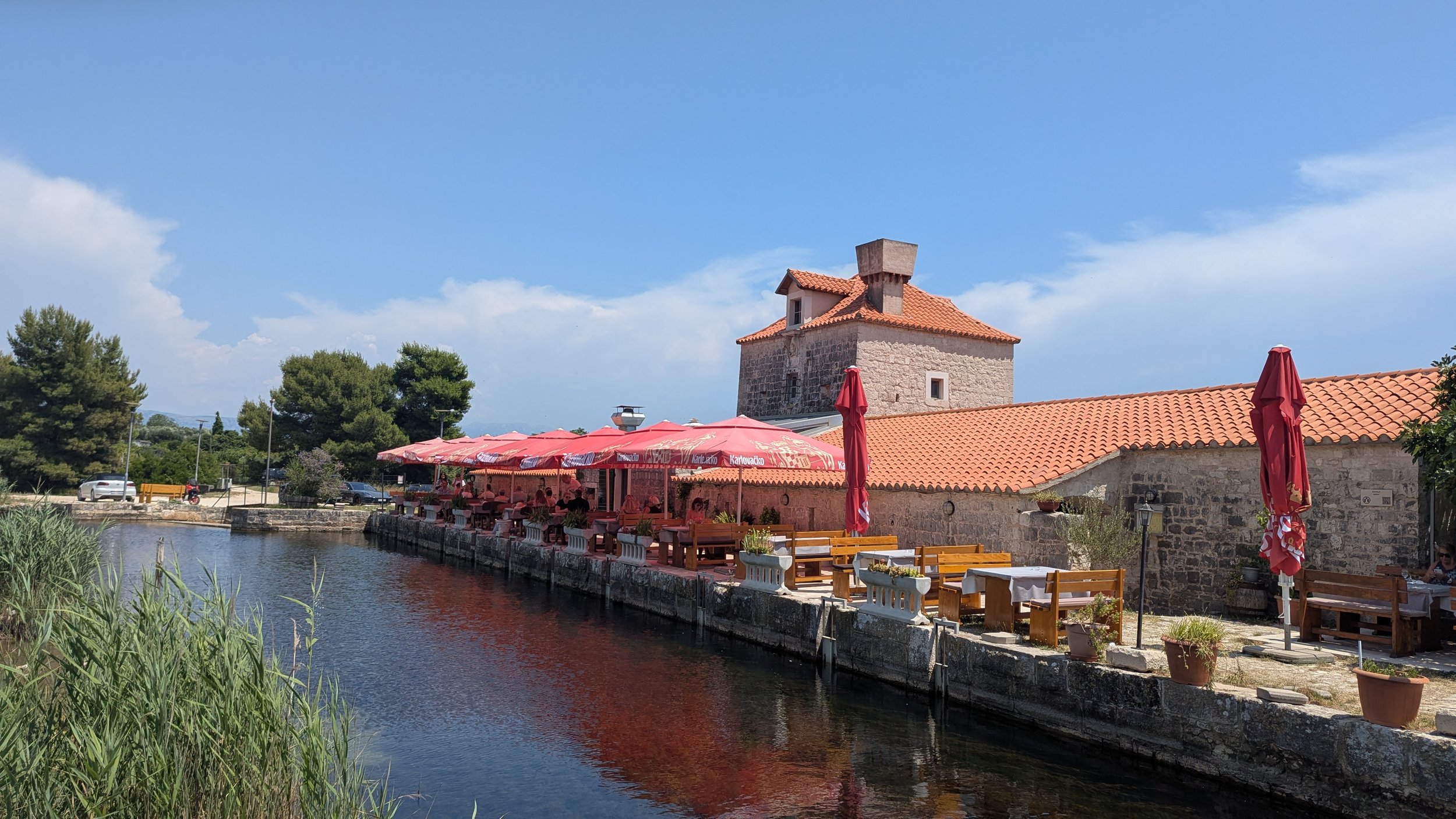
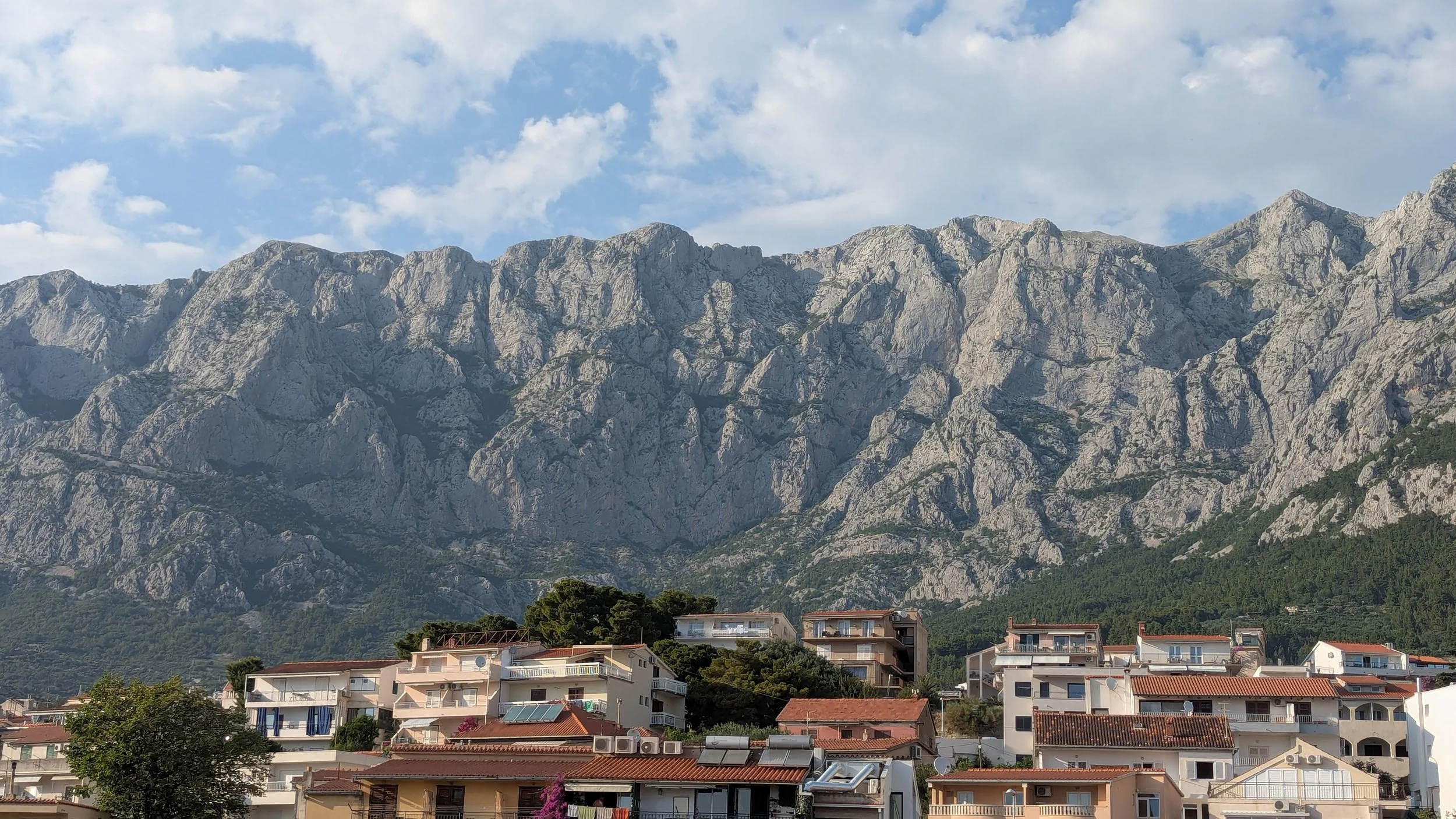
Playing Against Bots in Warzone
Warzone added a new “casual mode” to its Battle Royale at the start of Season 4. This reduced the number of real players in-game and substituted them with AI bots. The ratio is approximately one fifth real players, four fifths bots. This new mode for Battle Royale solos, duos and quads was well received, especially among the mainstream players who are more focused on fun than progression. Veteran players who still wanted the challenge of playing against real players were free to continue playing the traditional BR modes. Hence all parties were pleased as they were both being catered for. However, and there is always a “however” when it comes to Call of Duty, the developers saw fit to remove the standard solo Battle Royale mode, leaving just the Battle Royale Casual mode with AI bots. Subsequently, a lot of players were perplexed and annoyed, as taking away choice is seldom good customer service. As a result of subsequent backlash, the mode was added back to the game mid-season.
Warzone added a new “casual mode” to its Battle Royale at the start of Season 4. This reduced the number of real players in-game and substituted them with AI bots. The ratio is approximately one fifth real players, four fifths bots. This new mode for Battle Royale solos, duos and quads was well received, especially among the mainstream players who are more focused on fun than progression. Veteran players who still wanted the challenge of playing against real players were free to continue playing the traditional BR modes. Hence all parties were pleased as they were both being catered for. However, and there is always a “however” when it comes to Call of Duty, the developers saw fit to remove the standard solo Battle Royale mode, leaving just the Battle Royale Casual mode with AI bots. Subsequently, a lot of players were perplexed and annoyed, as taking away choice is seldom good customer service. As a result of subsequent backlash, the mode was added back to the game mid-season.
After several months of consistently playing the new casual mode, I wanted to share my thoughts on replacing players with bots. It is in many respects both a boon and a bane. The principle is sound enough, replacing veteran players with less skilled bots ensures that new or less skilled players (IE the majority of the playerbase) don’t get repeatedly stomped on and thus driven from the game. However, the way the bots behave in-game is inconsistent, resulting in some rather anomalous behaviour. As there is no data publicly available regarding how the bots “work”, all I can provide are my own observations. Overall the bots mimic player behavior. If a bot sees you, it will engage. It will also pursue you but it can be lost. They will use skills such as air strikes and mortar attacks to flush players out. However, they also use some unique abilities to keep the game play “engaging”.
I play Warzone cautiously. I often go to specific locations on the map which are easier to defend or can be used for cover. I will often wait in elevated positions observing and not directly engaging in firefights happening around me. Theoretically, such a strategy should leave me unassailed except by the occasional and genuinely random incursion by a bot. But this is not the case. After a while of what the game probably classifies as inactivity, bots often appear close by. I suspect that they simply spawn near me. Similarly, the moment I collect my loadout of choice from a drop, this will often trigger a bot attack, irrespective of whether I’m in an “active area” or not. It would also appear that as your kill count against the bots goes up, the bots themselves become harder to kill. That is not to say that they become more skillful but they seem to increase their ability to be “bullet sponges”.
Another matter worth considering is that of server tick rate. Warzone has a tick rate of 20Hz, meaning the game server updates player actions and the overall game state 20 times per second. This is lower than many other popular first-person shooters, which then contributes to issues such as hit registration and perceived lag. Simply put, I can start shooting at a bot (or a real player if need be) who then returns fire but I lose the exchange. The killcam then shows the opposite of what happened with the bot firing first. Even when you take into account the type of weapons being used and their respective quality, this seems to happen a little too often. You can engage a bot who has demonstrably inferior weapons and still get “short changed”. As a player, you instinctively know when you’ve encountered this problem and the fact that it’s a known issue that persists due to infrastructure costs, makes it more annoying.
Overall, playing in a casual manner against bots and a handful of players works quite well. From time to time you’ll find a skilled real player who plays this mode to effectively troll the other players. So far I have not found that to be a common experience. Personally, I would like it if we had the option of playing a private Warzone game, exclusively against bots that you could vary the skill settings. It would finally dispense with the risk of anyone abusing voice or text chat, which is still an issue. As it stands at the moment, the casual mode is acceptable and fun, as long as you’re aware of the concessions the developer’s have made to make the game feel like a regular Warzone game. Hence you will get bots behaving as described and don’t get to play exclusively on your own terms. If you embrace this trade off then you can enjoy casual mode.